REVELATION OR RUT?
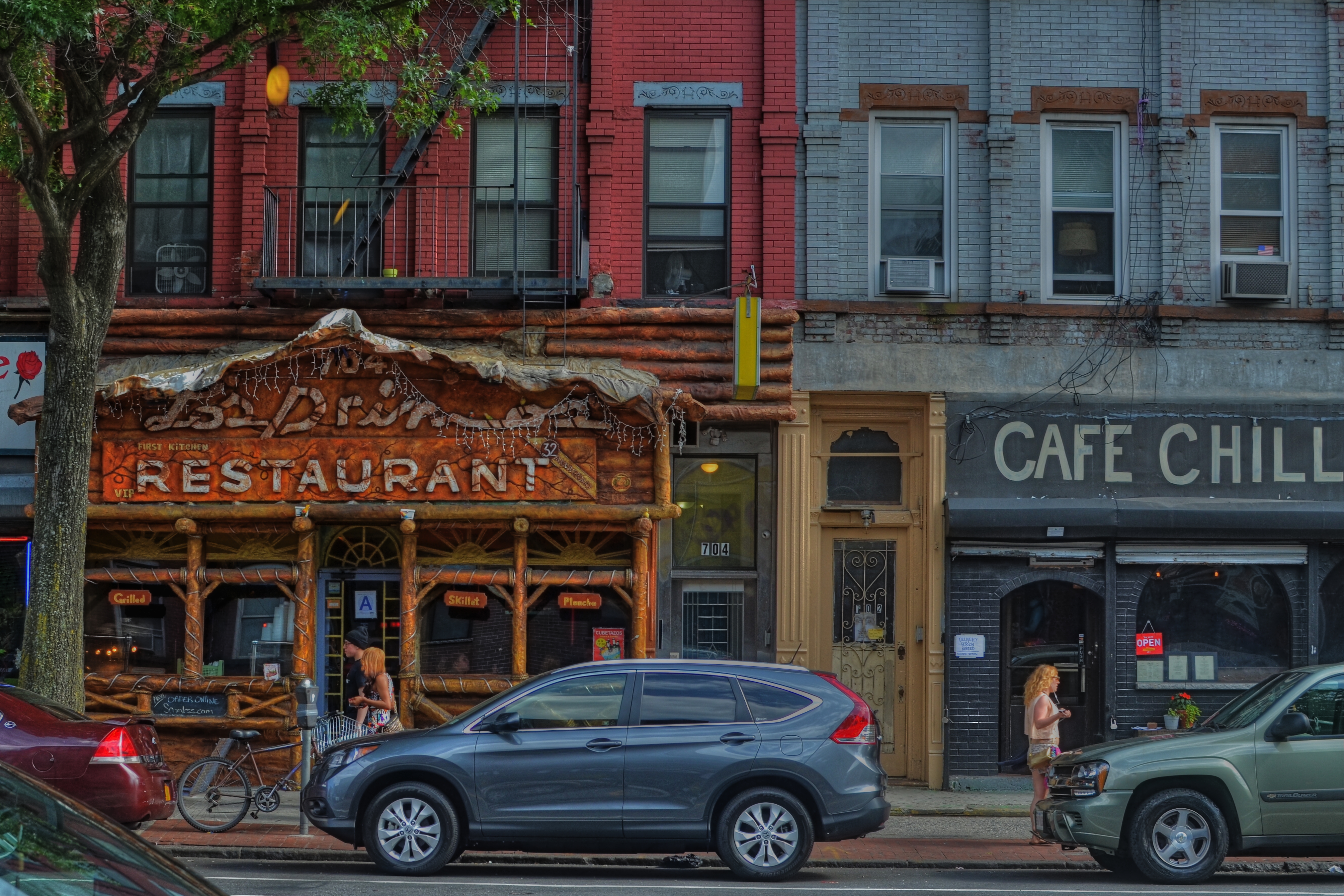
Cafe Chill, Brooklyn, 2013. 1/200 sec., f/5.6, ISO 100, 35mm.
By MICHAEL PERKINS
IT’S OFTEN DIFFICULT FOR PHOTOGRAPHERS, UNDER THE SPELL OF A CONCEPT, TO KNOW WHETHER THEY ARE MARCHING TOWARD SOME LOFTY QUEST or merely walking in circles, their foot (or their brain) nailed to the floor. Fall too deeply in love with a given idea, and you could cling to it, for comfort or habit, long after it has yielded anything remotely creative.
You might be mistaking a rut for revelation.
We’ll all seen it happen. Hell, it’s happened to many of us. You begin to explore a particular story-telling technique. It shows some promise. And so you hang with it a little longer, then a little longer still. One more interpretation of the shot that made you smile. One more variation on the theme.
Maybe it’s abstract grid details on glass towers, taken in monochrome at an odd angle. Maybe it’s time exposures of light trails on a midnight highway. And maybe, as in my own case, it’s a lingering romance with dense, busy neighborhood textures, shot at a respectfully reportorial distance. Straight-on, left to right tapestries of doors, places of business, upstairs/downstairs tenant life, comings and goings. I love them, but I also worry about how long I can contribute something different to them as a means of telling a story.
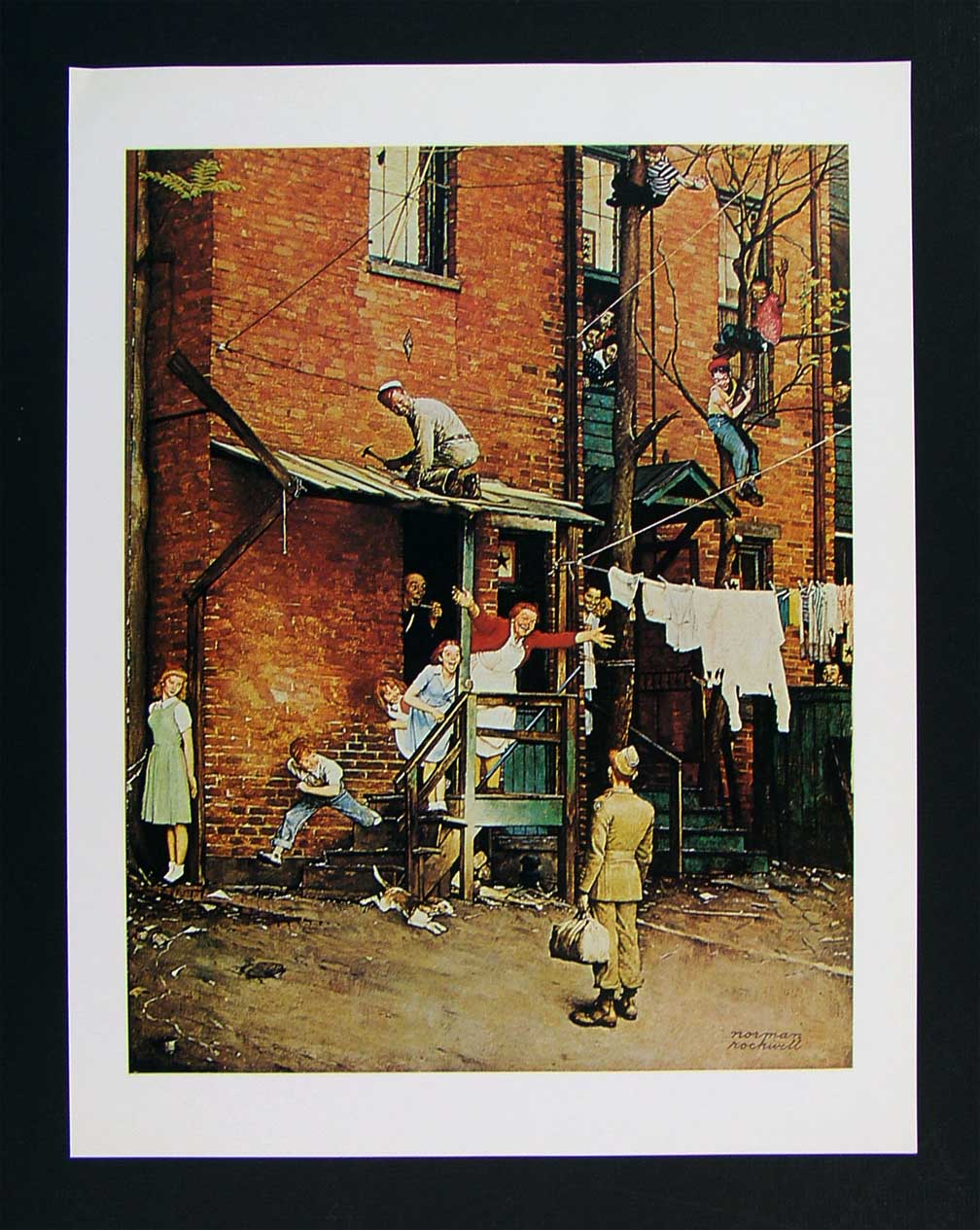
As staged as a Broadway show, Norman Rockwell’s idealized neighborhoods are still alluring in their appeal.
- The bustling tenement neighborhoods of early Norman Rockwell paintings appealed to me, as a child, because the frames were teeming with life: people leaning out of windows, sitting on porches, perching on fire escapes, delivering the morning milk…they were a divine, almost musical chaos. But they were paintings, with all the intentional orchestration of sentiment and nostalgia that comes with that medium. Those images were wonderful, but they were not documents…merely dreams.
That, of course, doesn’t make them any less powerful as an influence on photography.
When I look at a section of an urban block, I try to frame a section of it that tells, in miniature, the life that can be felt all day long as the area’s natural rhythm. There are re-gentrified restaurants, neglected second-floor apartments, new coats of paint on old brick, overgrown trees, stalwart standbys that have been part of the street for ages, young lovers and old duffers. Toss all the ingredients together and you might get an image salad that captures something close to “real”. And then there is the trial-and-error of how much to include, how busy or sparse to portray the subject.
That said, I have explored this theme many times over the years, and worry that I am trying to harvest crops from a fallow field. Have I stayed too long at this particular fair? Are there even any compelling stories left to tell in this approach, or have I just romanticized the idea of the whole thing beyond any artistic merit?
Hopefully, I will know when to strike this kind of image off my “to do” list, as I fear that repetition, even repetition of a valid concept, can lead to laziness….the place where you call “habit” a “style”.
And I don’t want to dwell in that place.
THE GLORY OF THE INVISIBLE
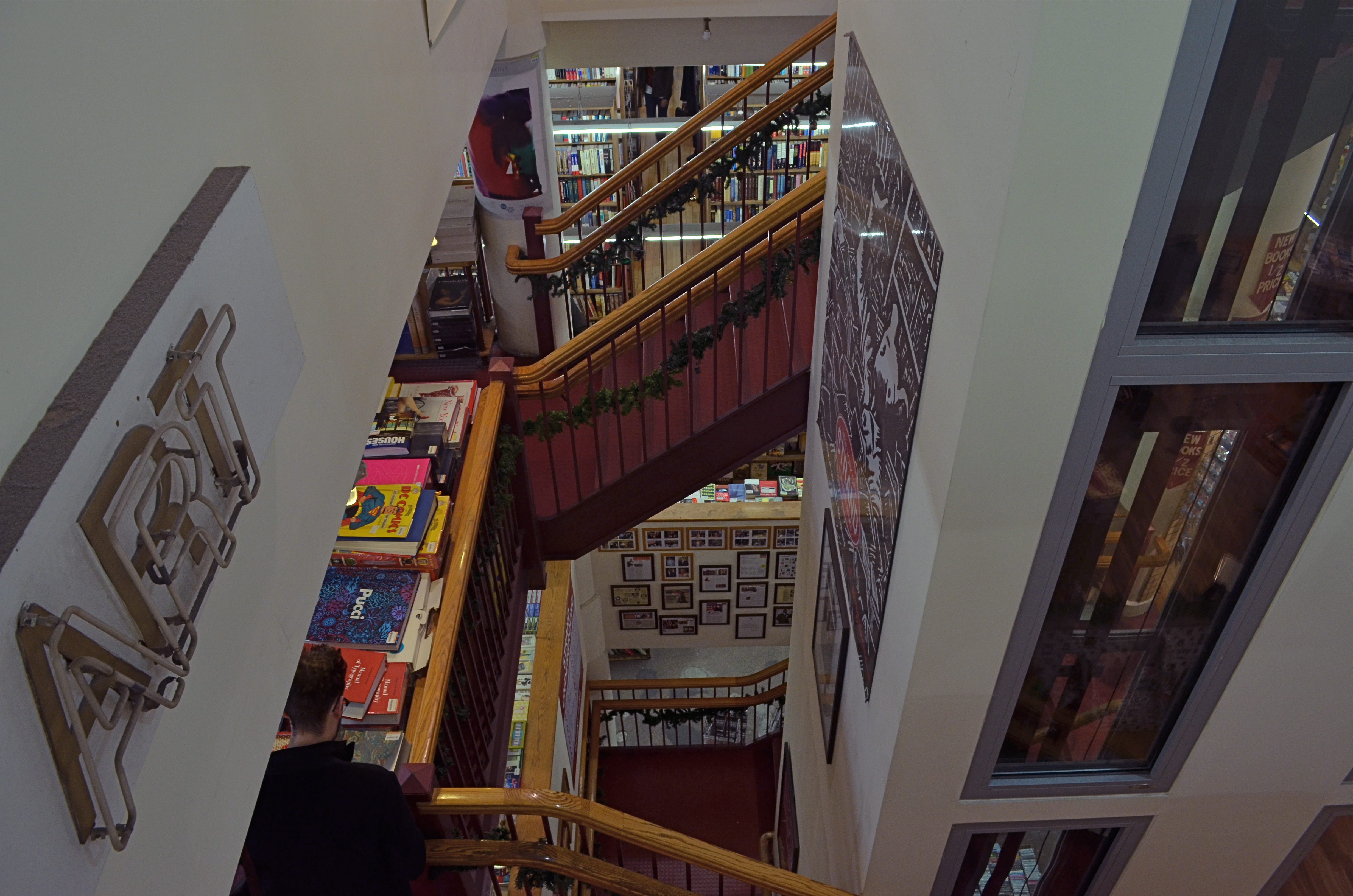
I thought of trying to capture the vastness of Manhattan’s Strand Bookstore in a single wide shot, but finally preferred this view, which suggests the complexity and size of the store’s labyrinthine layout. 1/40 sec., F/7.1, ISO 500 at 18mm.
THE FRAME OF AN IMAGE is the greatest instrument of control in the photographer’s kit bag, more critical than any lens, light or sensor. In deciding what will or won’t be populated inside that space, a shooter decides what a personal, finite universe will consist of. He is creating an “other” world by defining what is worthwhile to view, and he also creates interest and tension by letting the view contemplate what he chose to exclude. What finally lies beyond the frame is always implied by what lies inside it, and it is the glory of the invisible that invites his audiences inside his vision, ironically by asking them to consider what is unseen….in a visual medium.
Each choice of what to “look at” has, inherent in it, a decision on what to pare away. It is thus within the power of the photographer to make a small detail speak for a larger reality, rendering the bigger scene either vitally important or completely irrelevant based on his whim. Often the best rendition of the frame is arrived at only after several alternate realities have been explored or rejected.
Over a lifetime, I have often been reluctant to show less, or to choose tiny stories within larger tapestries. In much pictorial photography, “big” seems to serve as its own end. “More” looks like it should be speaking in a louder voice. However, by opting to keep some items out of the discussion, to, in fact, select a picture rather than merely record it, what is left in the frame may speak more distinctly without the additional noise of visual chatter.
“If I’d had more time”, goes the old joke, “I’d have written you a shorter letter”. Indeed, as I get older, I find it easier to try and define the frame with an editor’s eye, not to limit what is shown, but to enhance it. Sometimes, the entire beach is stunning.But, in other instances,a few grains of sand may more eloquently imply the beach, and so enable us to remember what amazing details combine in our apprehension of the world.
Thoughts?
 thenormaleye