HUE MONGOUS
By MICHAEL PERKINS
THE PHOTOGRAPHIC COMMANDMENT TO ALWAYS SHOOT IN BRIGHT LIGHT MAY NOT BE THE IRONCLAD RULE IT ONCE WAS (such are the advances of technology), but many generations were taught the habit as a “Photo 101” default. Especially back in the days of slower film emulsions, we were always told that brighter is better, with the more detailed how-to manuals explaining how to compensate for cloudy or overcast days. One of the reasons this “well, duh” rule made sense is how sunlight affects color.
As a consequence, light is always best regarded as a temporary, precious thing. There is only so much of it, and you’d better shoot while the shooting is good, and so forth. But just as temporary as the ways light shape color is how the changing state of things themselves can influence it. Like light itself, the condition of your subject will dictate what kind of color can be captured from it.
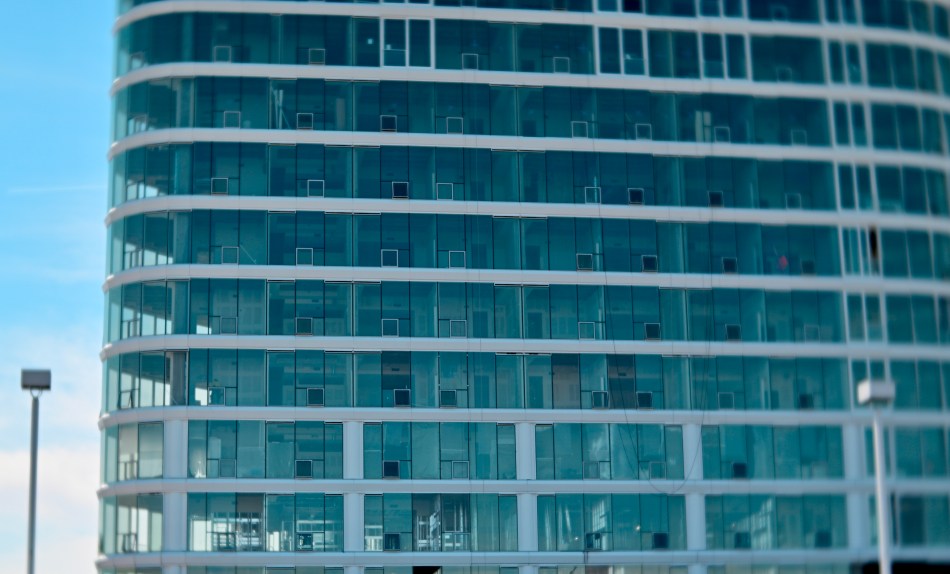
Take as an example the unfinished high-rise building seen here. The intensity of the sunlight affording us the ability to look clear through the empty structure, from one side to the other, is but one consideration in making this picture. Also to be factored in is how the lack of internal decor and furnishing will flavor the primarily bluish translucency of the tower. The exact same building shot three months later, in exactly the same light, but filled with desks and wall hangings, flesh tones, and a symphony of new shadows, will produce vastly different results, simply because the color relationships that the light illuminates in this shot will have been altered.
So, in addition to how much light we need, and what type of light we prefer it to be, we have to evaluate the things we are shooting and how their constituent colors play upon each other. With some subjects, a great seasonal or temporal shift will occur if we wait minutes, days, or months to make our attempts. Which goes back to the inherent complexity of making photographs, recognizing that there is no single way to “capture” or “fix” a thing in time. Whose time? Which reality? Which version of the truth?
CRY FREEDOM
By MICHAEL PERKINS
IT OCCURRED TO ME, RECENTLY, TO LIST SOME OF THE WORKS OF ART that have imparted the greatest sense of peace to me, and to take note of how many of them were first conceived in a spirit of resistance or struggle.
A few come to mind at once: the stirring finale of Tchaikovsky’s 1812: the stirring images of Dust Bowl Americans striving to emerge from devastation and despair: nearly every page of every Dickens novel. Many of the things we recognize as artistically eternal or universal were originally created as protests, as deliberate acts of soulful sabotage against the prevailing darkness. Any act of art, including a photograph, can begin as a raised fist against something unthinkable, but the photograph itself can defy the odds in a different way: by being a defiant declaration of joy.
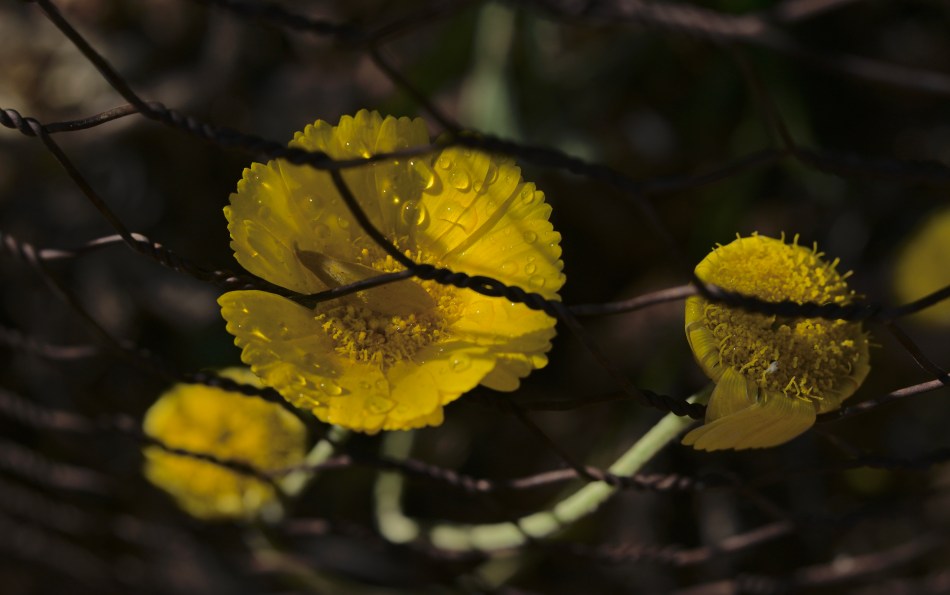
Journalistic images certainly play a key role in combating fear and ignorance, shining a light where some prefer it not be shone. But the very act of art is, itself, a protest….against the view that life is worthless, against the seductive pull of despair. Art is the affirmation of life, the insistence that it continue, even thrive. Like the flower peeping through the wire seen in this image, we aspire…we arc ourselves toward whatever light there is. And so, it’s easy to make a list of pictures that have gone beyond mere reportage to become celebrations of the things in the world that are still elegant, beautiful, and soul-sustaining.
There are days, like those of the present age (and countless ages before this), when it seems that night will never end, and, for those days, art that cries freedom, that re-certifies the best of us, is surely a revolutionary act. It’s more than merely “cheering up”, and it’s certainly not a turning away from “reality”. It is, instead, a refusal to go quietly, an act of resistance that says that hope is not only possible, but the only perpetually blooming human instinct that can bore through the stone of silence, the barriers of hate.
Photographs are part of this refusal to lie down and die, a tool that the artist can use to stoop down into the rubble and resurrect something that will outlast the night. In measuring light inside our magic boxes, we preserve it, sanctify it, and, in so doing, all of us, one image at a time, begin to save the world entire.
STUMBLING ONTO SECRETS
By MICHAEL PERKINS
REGARDLESS OF WHETHER YOU CONSIDER YOUR PHOTOGRAPHY TO BE JOURNALISTIC BY NATURE, you will, over the course of your shooting life, have the visual evidence of other people’s stories dumped into your lap. In most cases, it’s the physical aftermath of some human event that you are arriving at after the fact. Leave-behinds from a mystery. Who left this here? What happened here? Who made this, and why?
Photogs regularly stumble onto other people’s secrets, or at least the litter of secrets. People abruptly break camp and move on from the site of their strangest whims, leaving clues that may or may not make their original intentions clear. And since we take just as many images of the things we don’t understand as those we think that we do, we snap away at the strange archaeological digs people abandon when they go on to the next thing in their lives. The fact that we don’t comprehend just what it is that they left behind doesn’t make the pictures any less compelling. In fact, quite the contrary.
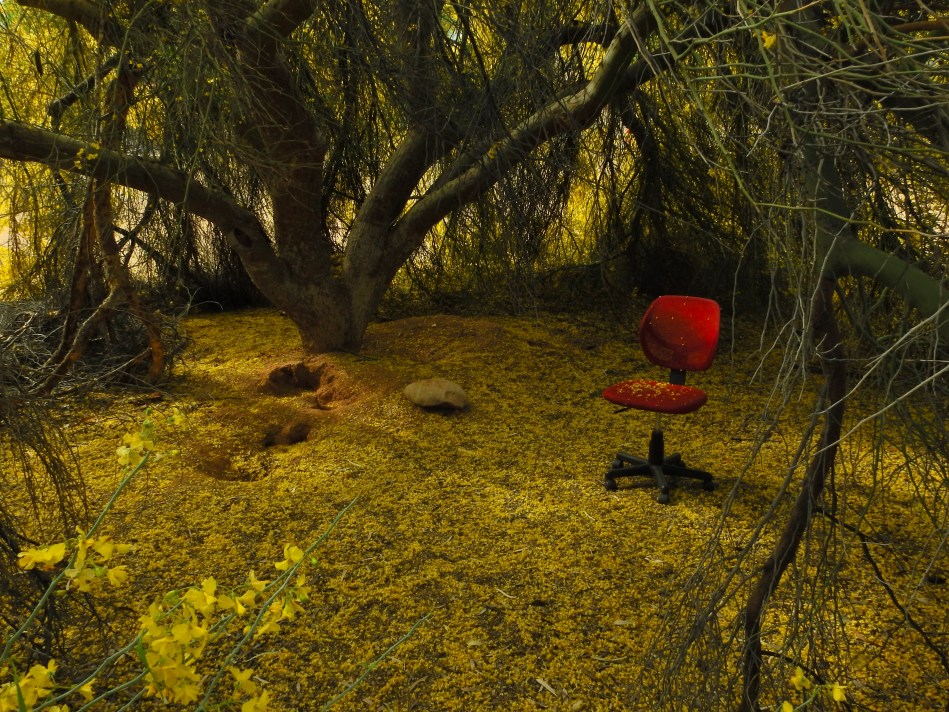
This office chair was discovered just where you see it, under the golden canopy of a single enormous palo verde tree in full spring blossom. The shady seclusion of the scene seems to indicate a desire to shelter, to escape, to carve out a quiet spot of contemplation. And while that may indeed be the case, the whole thing invites a lot of other questions. Why this chair? Was it the person’s favorite, or, conversely, a perch so hated that dragging it here was the next best thing to lugging it to the town dump or pouring lighter fluid on it? What was motivating enough to transfer a chair from the nearest office suite (about a tenth of a mile away) and finding a place where it could be left with no fear of discovery? Was the site scouted, or merely happened upon? How many times did the person come to sit in the chair, and why and for how long? Was it the object of reward (in an hour I’ll be able to escape to the chair) or some kind of desperate relief (if I don’t get away from these people, I’m going to just lose it..)?
One picture conjures all of this, and more, additional plot lines which I’m sure even the casual viewer can supply without much effort. That’s the beauty of even the untold stories captured in photographs. They tell us enough to keep the seeker coming back for more. We think, as photographers, that we want to reveal everything, but, in reality, many of our most treasured images are of other people’s secrets, unrevealed, and, hence, irresistible.
PUTTING THE “O” IN ORACLE
By MICHAEL PERKINS
PHOTOGRAPHY IS NOT A PLACE TO ESCAPE THE FEELINGS OF UNCERTAINTY THAT COLOR nearly every human endeavor. If you’re looking for a sure thing, you’d best not ever pick up a camera. Like ever.
In a tsunami of tech-talk designed to assure and soothe the anxious snapper, perhaps we can only move forward by going back, in a return to the only universally recognized authority on how to conduct the affairs of man with clarity and surety.
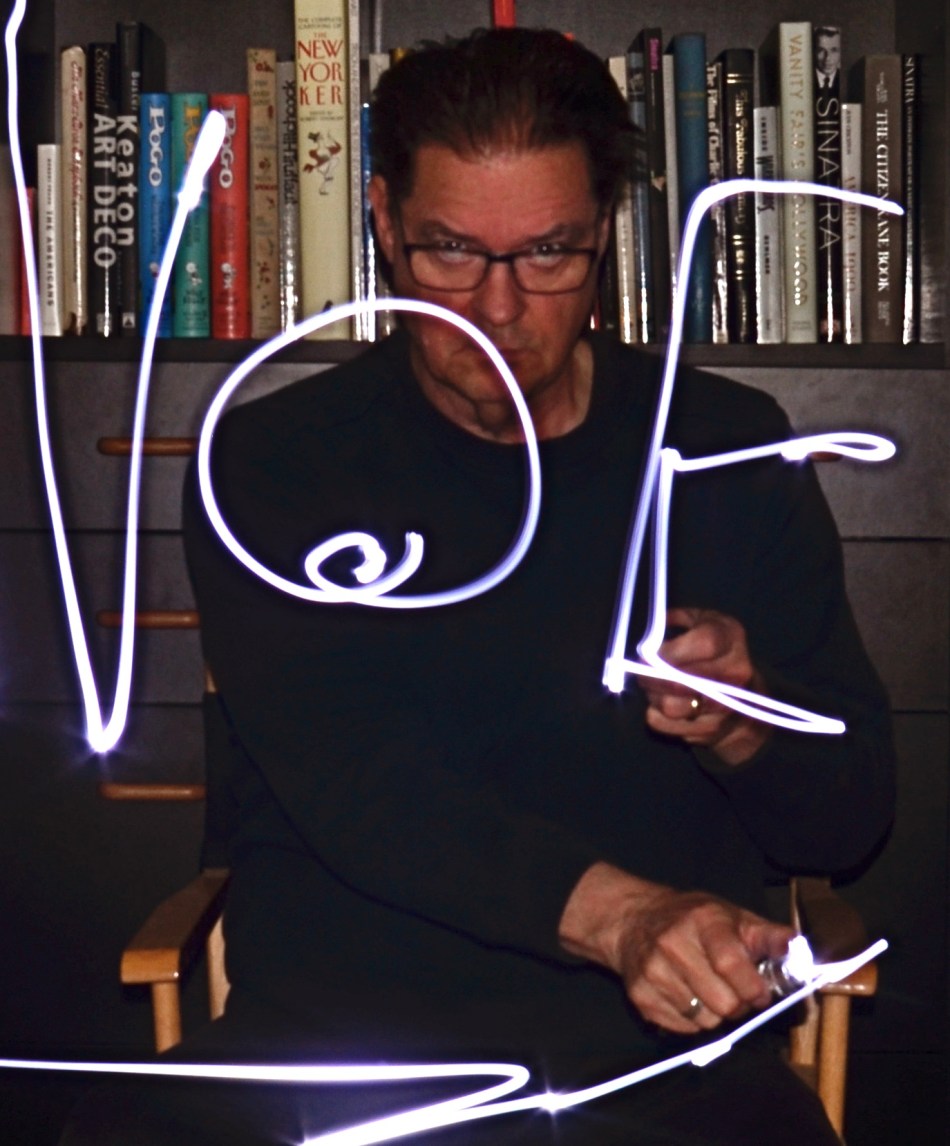
I’m suggesting that we all dig into our toy chests and begin, once again, to trust the Magic 8-Ball.
Hey, if it was good enough to pronounce on whether that cute boy in Math likes you, or whether you’ll win a million dollars, it should be wise enough to help you make better pictures. Some of the Ball’s responses even seem to be custom-made for the modern photographic age.
Will my last good battery die just before the bride and groom cut the cake?
You may rely on it
Is this on-line equipment reviewer on the level, or is he just a corporate shill who gets his gear for free?
Better not tell you now
Will my new, cutting-edge have any manufacturer support from the manufacturer beyond, say, my next birthday?
Outlook not so good
Even in 2022, can I still manage to forget to remove my lens cap?
It is decidedly so
Will this editing software help me rescue my crappiest pictures?
Very doubtful
Should I perhaps share just one of the thirty-five frames I shot of my adorable cat in a Batwoman costume?
It is certain
Will more than one shot on a twenty-four exposure role of film from my plastic toy camera not make me cringe?
My sources say no
And, finally, should I just sell all my cameras and learn to paint? By the numbers, maybe?
Reply hazy, try again
Maybe trying to remove the risk from photography is the wrong approach (spoiler alert: it is). Maybe the uncertainty is not only the point, but the entire thrill. Perhaps pulling something organized and intentional out of randomness is why we do it in the first place. As to our chances for occasionally beating the odds and freezing something wonderful inside a box, the ball has the last word: outlook good.
THE STREET GIVETH…
By MICHAEL PERKINS
IT’S BEEN CALLED SPYING, PRYING, PREDATION, and, occasionally “art”….the strange cross between eavesdropping and journalism that is collectively known as “street” photography. The elements of it that reveal something universal or profound about the human condition are hailed with exhibitions and awards, while the worst of it is considered rude, intrusive, even cruel. For those of us who only want our picture taken when we give specific permission, or when we are “ready”, street work can feel like theft, that is, something that is stolen from us. Then again, it also, sometimes, nails the truth about someone else’s vulnerabilities or foibles, and that, miraculously, we seem to be able to live with.
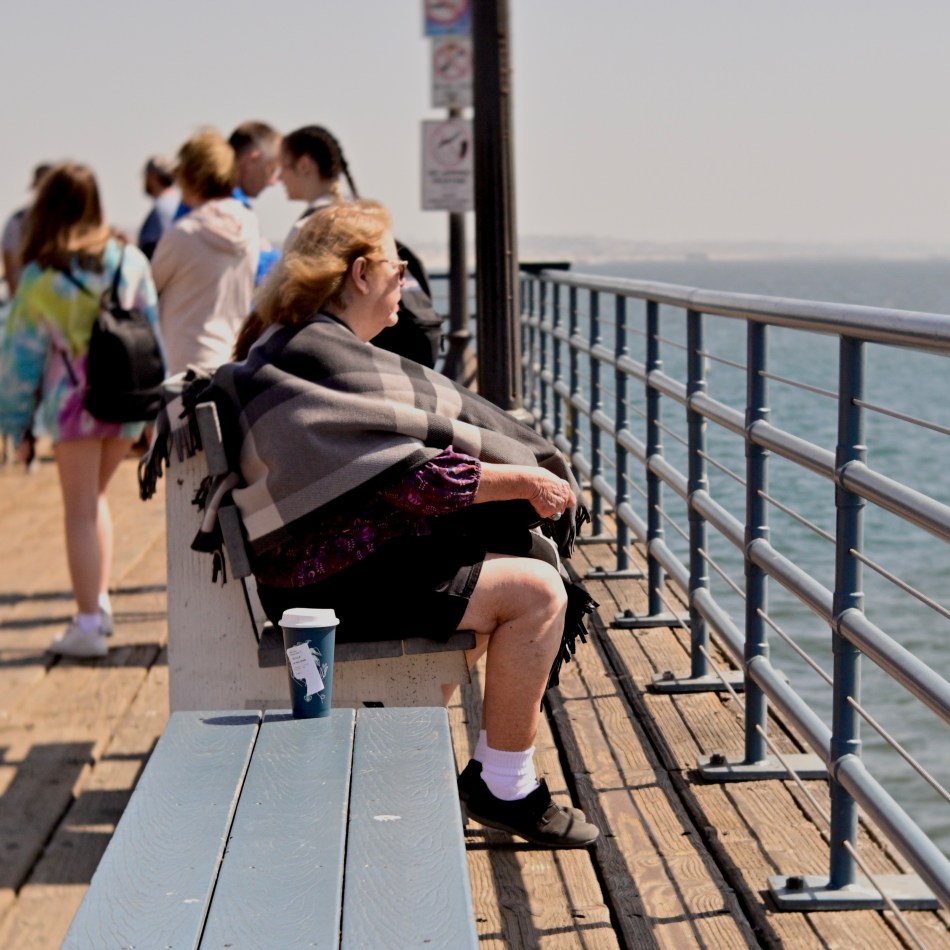
In a world in which billions of images are snapped globally each day, and in which most shutters are absolutely silent, and flash is on the endangered species list, it seems as if we have long since passed the point of no return in terms of privacy. We emotionally demand it even though we have no logical right to expect it. Every day there are more and more places where cameras can not only intrude, but intrude with laser precision, and we must reluctantly admit that, effectively, we are all under surveillance, always.
We have almost unlimited access to everyone’s quiet inner moments, at least the ones they play out in public. Does everyone deserve to have every part of their life laid bare, and who is to decide? If you come upon a private moment, such as the one seen above, does slicing off a sample of it for public use cheapen that moment? Or does it in some way celebrate it as emblematic of something essential about being human, something we all recognize, even share?
I shake up all these arguments on a day-by-day and frame-by-frame basis, and I don’t always come up with a coherent answer. The street giveth and the street taketh away, and photographers pluck their harvest from it like an army of insatiable fruit pickers. Are we bad? Are we wrong? Can anyone say for sure?
LOSING FOCUS
By MICHAEL PERKINS
WITH THIS GENERATION’S NEARLY UNIVERSAL EMBRACE OF CONSUMER-FRIENDLY EDITING SUITES LIKE PHOTOSHOP has come a new vocabulary to describe the new freedoms made possible by their use. Terms like painterly, dreamy, and atmospheric signal the reemergence of a far more interpretive kind of photography that has finally broken the long reign of the Cult Of Sharpness that valued crispness and “realism” above all other considerations in picture-making for nearly a century.
The idea, espoused by Ansel Adams and other from the photo group f/64 (a name that refers to what was then supposedly the sharpest f-stop possible), was that only a keen, precise measurement of light and tone could be regarded as “straight” photography and that all other more impressionistic renderings were somehow less authentic. This idea was itself a severe reaction to an even earlier school of photography called Pictorialism, which favored the tweaking of processing and printing tech to manipulate mood in much the same way that painters had always done. Some shooters like Adams regarded P-word pictures as the dead opposite of photography, as a non-scientific surrender to the painting tradition. Ansel, never the mealy-mouthed observer, once even went so far as to refer to Pictorialist William Mortensen as “the anti-Christ.” And so, as a consequence of the f/64 coven’s influence, the historical door on the dreamier side of photography was officially slammed shut and the word went out for decades afterward, to both pro and amateur alike that Sharpness is King.
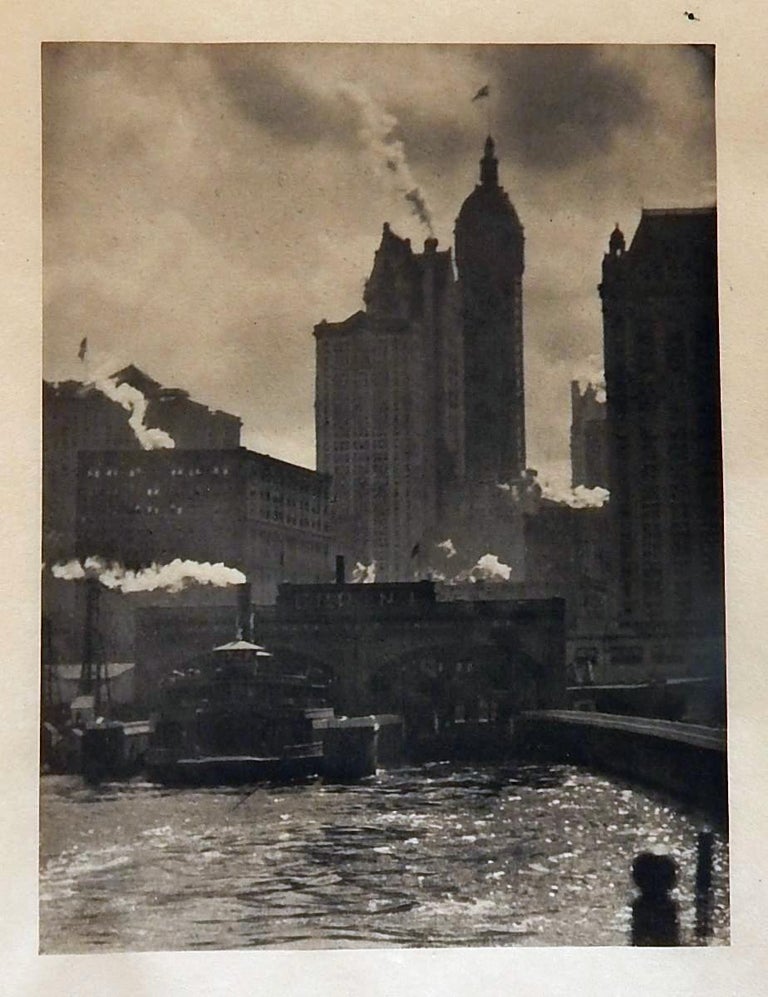
City Of Ambition, a Pictorialist photogravure by Alfred Stieglitz (1910)
Pictorialists’ images, like the NYC scene from Alfred Stieglitz seen here, were created by odd mixes of cross-mixed chemicals, the etching of pictures on printing plates, deliberate degradation of negatives, and dozens of other interventions done after the shutter click to deepen contrast, soften hard edges, and widen the range of tones for dramatic effect. Think of it as analog beta-testing for the tricks we now do with a few mere mouse clicks. Several generations of tech later, the sheer number of editing choices in the present day has led to a strong reassertion of soft or selective focus, of textures and tones that go beyond the real world in amazing and exciting ways. It’s led even those who still shoot film, like the toy camera devotees of Lomography, to re-evaluate what focus and sharpness are in a picture are actually for, and when to attenuate or even turn them off completely. It’s also led to the success of companies like Lensbaby, who sell all-manual lenses to digital shooters who want an interpretive tool, rather than a scientific instrument, to help them make images.
And so everything old is new again. Indeed, photography may have finally entered a phase in which “eras” and “trends” are just words, a time in which all times (and schools of thought) are equal. Here’s to the opportunity that that implies, and to an art that is just beginning, in its third century, to spread its new butterfly wings.
MAYBE A CIGAR, ANYWAY
By MICHAEL PERKINS
A FACE ONLY A MOTHER COULD LOVE. That’s the standard cliche in describing someone so unlovable that he or she has, at best, a devoted audience of maybe one. The saying used to apply solely to physical beauty, but can, these days, define anyone or anything that is just this side of universally loathsome. Substitute the word picture for face and photographer for mother, and you’ve summed up what some of us feel for our rejected images, the ones we bitterly hate and desperately love at the same time.
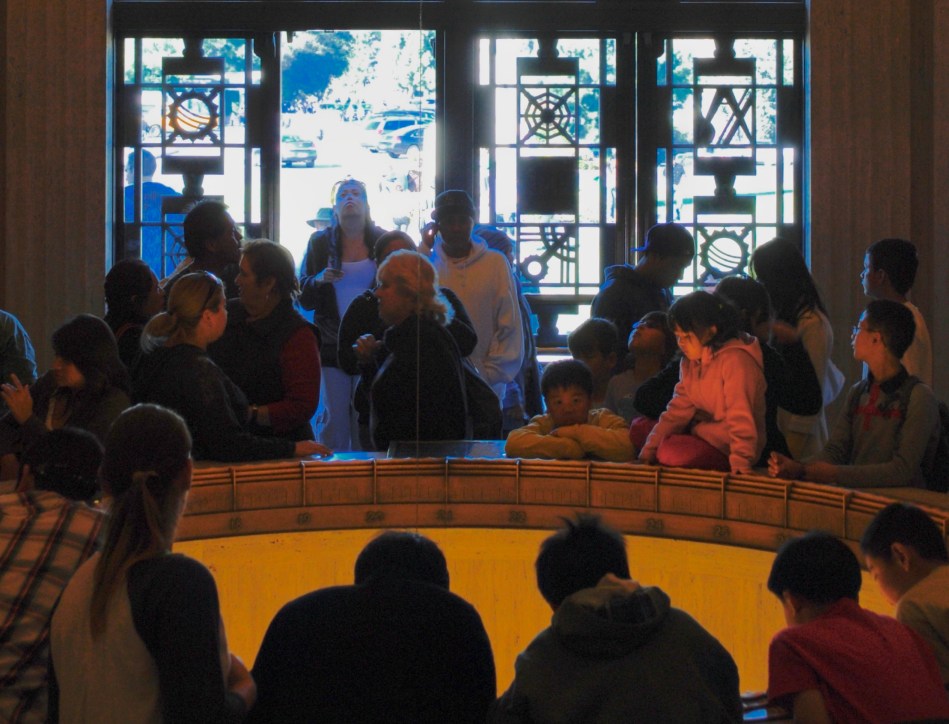
The image see here is one of my own top five red-headed stepchildren, a picture that is so close to being exactly what I wanted of it, yet so technically flawed that any person of taste or perception would immediately consign it to the rubbish bin, and with good reason. And yet, year after year, doing my annual “rehab tour” of pictures that I somehow can’t permanently destroy, it pops up, begging for love or at least a little maternal forbearance. My attitude is not so much close, but no cigar as much as can I have just one hit off of YOUR cigar? For effort?
The shot was taken in the circular rotunda that acts as the initial vestibule of entry to Griffith Observatory, which sits like a gleaming Art Deco Sci-Fi castle atop a promontory that overlooks downtown Los Angeles. The Keck rotunda’s walls are rich with murals that celebrate the great celestial and scientific discoveries of the ages, and the Foucault pendulum, seen here as the recessed circle that several patrons are starting into, bathes faces in a warm uplight that makes them look like glowing participants in a Maxxfield Parrish painting. In this snap (and it was a “snap”, with no more planning or intention than the word implies) the random poses of the crowd, including the young woman doing an “oh, wow” as she enters through a door, look impossibly staged, something that endears it to me years later.
But, then there’s that total blowout of high blue and white light from the parking lot, taken in an attempt to capture the entrance’s unique metal grillework. I mean, the entire effect of the picture screams “preliminary sketch”, only I didn’t go back and do the technical work that would have corrected the contrast, color rendition or overall exposure. Never has so much raw material been presented with so little in the way of decent execution.
And therein lies the face “only a mother could love”. Like any mom, we love in spite of what our kids actually are, in spite of what they actually achieved. And we weep a little about what might have been, of what little more effort it might have taken to actually win the cigar.
WORTH A THOUSAND PICTURES
By MICHAEL PERKINS
A LITTLE RESEARCH REVEALS THAT THE MOST POPULAR NAME FOR ALL OF THE PHOTOGRAPHS ever published over two hundred-some years’ time is, simply, “untitled”. This used to strike me, in my younger days, as laziness or dullness on the part of the photographer, but now I often see it as the perhaps the best approach. A picture may, indeed, be worth a thousand words, but it only takes a handful of those words to diminish an image’s effect.
Adding a title or caption to a photo can actually bruise its power. Titling anchors an image by telling the viewer what it is supposed to be (or not be), a function that should fall to the image alone. Giving a picture a simple name, like Niagara Falls Vacation, 1969 is an act of cataloguing, but any ability the photograph has to be universal or timeless is hemmed in by whatever words accompany it, so that even a basic title can have an unintended effect.
And then there are the acts of people other than the original photographer, an editor for example, who may arbitrarily assign context or “meaning” to an image by labeling it later. This has obviously resulted in real mischief by those who want to appropriate a photo to bolster their own messages, a practice which could lead to its impact being prostituted or used for any variety of nefarious aims.
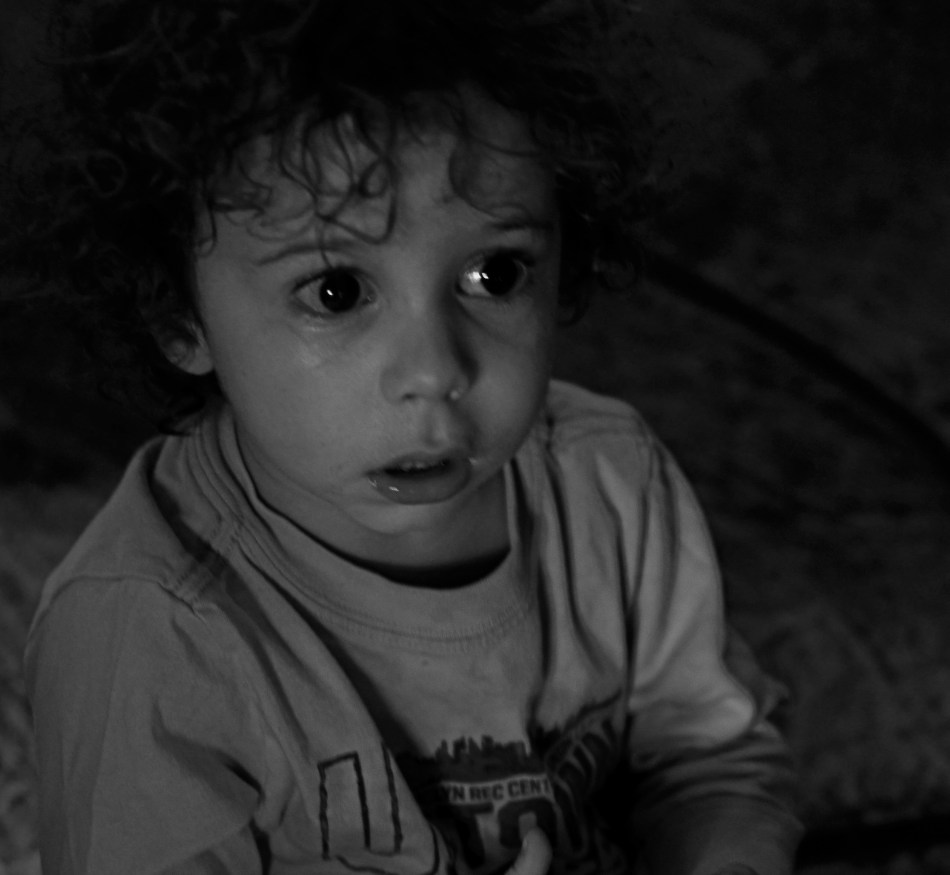
Absent a caption, a photograph is forced to speak for itself. As an exercise: in the above image, is the child tired, discouraged, frightened, jealous, in pain, at risk, even joyful or grateful? If I reveal the rather ordinary truth about the image, that it was taken of a boy who was disappointed at not being able to remain longer in a zoo’s gift shoppe, that short-circuits any other meaning that the viewer might want to bring to it. It stunts its impact.
And, yes, it might be too cute by half if I craft some playfully obscure name for the picture (as I tend to) or just number it, or even call it “untitled”, but that, at least, puts the viewer back into a kind of exchange with the author about what the picture could be by supplying that information himself. Images are powerful things. However, in trying to catalogue or explain them, we can greatly reduce that power, even neutralize it. Letting pictures speak for themselves….well, it’s why we make them in the first place, isn’t it?
 thenormaleye