TRANSMISSION
By MICHAEL PERKINS
MY MOTHER’S PASSING, JUST A LITTLE OVER A WEEK AGO AT THIS WRITING, has understandably released a tornado of feeling, not all of it tragic. More specifically, the portion that is purely sad is actually quite compact; intense, certainly, and at times devastating, but by no means the dominant current in my head. Gratitude occupies the space within my heart far too greatly to yield much real estate to mere sorrow.
Looking over the many images of Mother for use in the usual tributes, I find myself wishing that someone, somewhere, had taken far more pictures of just the two of us together. That unique transmission of energy, hope, and love between parent and child is a rare quality, and is, in photographs, as visually elusive as heat lightning. Candids from birthdays, Christmases and graduations hint at it; few fully capture the entire miracle.
But, this morning, as I was once again bemoaning how few of those grownup-kid transmissions I possessed to comfort me in her absence, I saw that exact energy in a shot I had made of strangers, a single frame among hundreds in a sequence that I had glanced at once and filed away under For Future Consideration. Suddenly that “future” was upon me, as I rediscovered the image you see here.
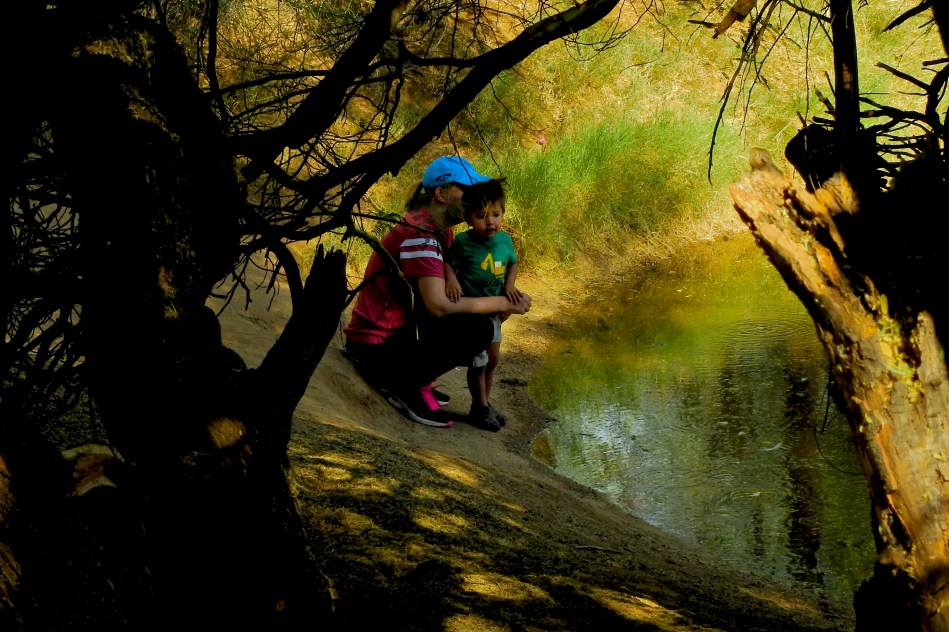
Like many photos, it’s as evocative for what it doesn’t show as what it does. I can’t tell if this is merely a tender moment, or one in which the small boy is excited, bewildered, tired or just clingy. And nothing of the mother’s face can be seen at all. In some ways, the picture is unfinished, a rehearsal for something more eloquent promised for a few moments later. However, there is the feeling that these two people are, for this one instant, totally sufficient to each other. Their connection is wonderfully profound. They are of each other, and the rest of the world is, at least for now, irrelevant. Looking at it through the filter of my recent loss, the image is no longer invisible to the current me. It’s now an essential possession, something magical that I was luckier than I knew just to witness.
For a moment, looking at the picture, I forgot about reality, and experienced the feeling that I’d love to show it to Mother. But, in her wisdom and her love, it’s nothing, really, that she hasn’t seen before, nothing she and I haven’t lived before. And that’s enough for now.
A CLIENTELE OF ONE
By MICHAEL PERKINS
MAN’S NEED FOR THE APPROVAL OF HIS TRIBE, as envisioned in photographs, is one of the great unifying themes of the visual arts. We make pictures about how we need each other, how we struggle to maintain an identity within this or that group, how we qualify for membership in the human club. Strangely, however, it is the need of the individual to shine or to distinguish itself from the masses that gives art its voice and authority. We can’t do honest creative work by merely miming everything that has gone before.
Which begs the question, why do we strive, in social media, for endless approval of the pictures we make?
Not only do we want our pictures seen (an urge that could actually lead to growth or enlightenment), we crave for those who see them to approve of them. In all too many cases, we allow the value or worthlessness of a photograph to hinge on whether we can chalk up a requisite number of “likes”, thumbs-ups, or stars for it. Many photographers who have never entered any kind of formal art competition judged by like minds readily submit their ideas to a vast sea of unseen jurors in some increasingly needy quest for validation. But art doesn’t get done that way, and producing pictures for anyone outside of a clientele of one is the very opposite of creativity.
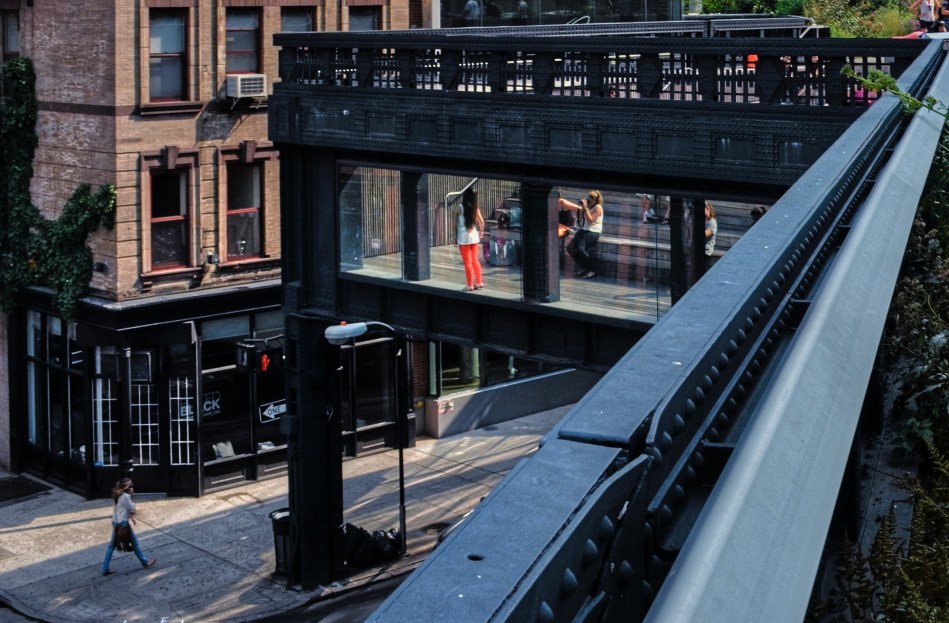
Making any kind of art means walking your own path.
The trap inherent in all this hunger after “likes” is that it is progressive, like any other addiction. The amount of approval one gets today becomes the minimum baseline for the amount of it that will satisfy us tomorrow. Even though our art can never ascend on a steadily uphill plane without dips and reverses, we grow to expect that the tide of approbation for it will continue skyward forever, or else, who are we? Art that is based on popular approval becomes mere pandering, putting our work at the service of whatever will make the crowd smile on a given day. That leads to repetition, imitation, and eventually self-parody. And it’s the end of pictures that build or feed the soul.
As the first Age Of A.I. threatens the very concept of authorship, challenging what makes an image “ours”, photographers must be more convinced than ever before of the value of their personal art. That means that we need to be content within ourselves, not endlessly second-guessing the vacillations of public taste. Make your pictures for yourself. If their stories are true and universal, others will find them. Chasing after likes is running away from what qualifies a photo as a narrator in the first place, and that resides only in the person who created it.
TALISMAN
By MICHAEL PERKINS
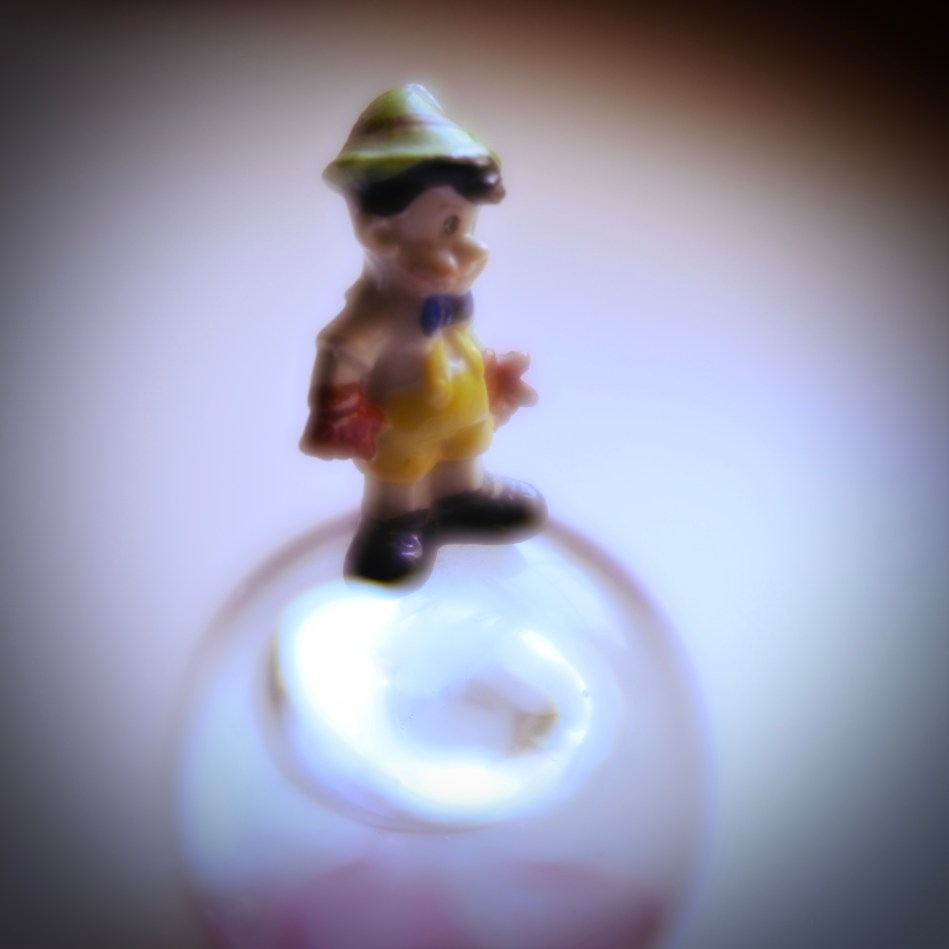
WEEKS AGO, DURING WHAT WOULD PROVE TO BE MY FINAL VISIT TO MY MOTHER, my sister, who had long served as her in-house caregiver, presented me with something of a family relic; a small porcelain figurine of Pinocchio that I had not seen since my toddler days. I still don’t know if she simply found it in some cranny of the family home, or whether Mother, who certainly knew she was gravely ill, had somehow deputized her to give it to me. I didn’t ask any questions, but quickly secured the little guy in my shaving kit, where he would nap on the way back home.
I’m even unclear as to how the little statue, just over an inch high, even made it into our first house, that is, the first house I remember as a child. Mother liked to post it on the packed soil around various potted plants in our living room, and may have even moved it around as a sort of game for me. I had a tendency to want to own Pinocchio for myself, and frequently slipped him into my small hand, studying his little face, his red gloves, his green Tyrolean cap. And now, after all these years, here he was back again, staring at me from a curio shelf, a souvenir of a life that was all shadows and a Mother that was about to become, well, something that dwelled in them.
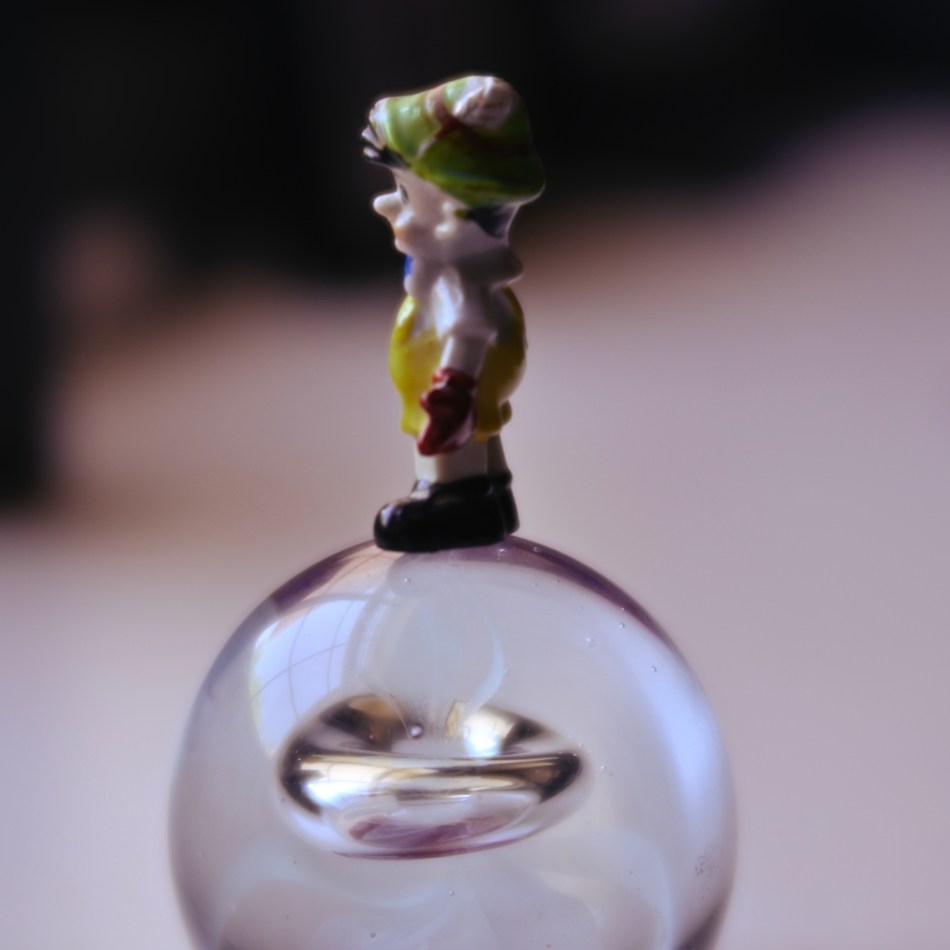
In these first days following her death, the figurine has come to symbolize something that I wanted my camera to help…explain. I wanted an image that captured the magic and mystery of the object, to make it appear suspended in space and time, floating between memory and prophecy. The fact that the figure was of a toy who yearned to be a real boy struck me as mystical in a way, and I dreamed of making a picture that suggested that. But the mystery remains. Why does he return to me now, at the nexus of an irretrievable past and an unknowable future? Am I the toy that once again must aspire to becoming “real”? And can I, or anyone, ever make a picture of all that?
In these first few strange days without my mother in the world, even though I was blessed to have her for nearly a century, all things seem equally real and unreal. Maybe this little toy/boy has come to me just now for some reason.
Or maybe it’s mere sentiment, fantasy.
Either way, I’m glad he’s home.
TOWARD A MESSIER MOI
By MICHAEL PERKINS
I SPENT THE FIRST TEN YEARS OF MY PHOTOGRAPHIC LIFE in a more or less constant state of frustration, given that I had not mastered the mechanical basics of the art, measuring the “success” of my pictures only in that light. The “if only’s” ruled my thoughts; if only I had a better camera; if only I could get more even results; if only I could make my subjects look more “realistic”. Everything in those early years….personal emotion, vision, impact….was subordinated to a worshipful pursuit of technical precision. I shot like I was recording illustrations for a travel brochure.
Miraculously, the digital age has eliminated a lot of the risk that used to confound me and other shooters. In such an era, we, more often than not, get some kind of usable picture, freer than ever before from technical defects. In this way, our cameras protect us from our messier selves. But that, in turn, can lead us to another kind of failure, one in which we neglect the unpredictable but potentially exciting irregularities that stamp our personalities onto our images. In recent years, almost as a kind of correction or recoil, photogs in the Age Of Guaranteed Outcome have sought to retro-fit photographs with the feeling that this is not a perfect process. This shift has been seen in several trends: the re-introduction of lo-fi film cameras, which actively seek the accident or the tech fail; post-processing apps which aim not merely to evoke the look of other eras, but to illustrate that uncertainty and imprecision are key parts of memory; and art glass and instant photography that romanticize the random.
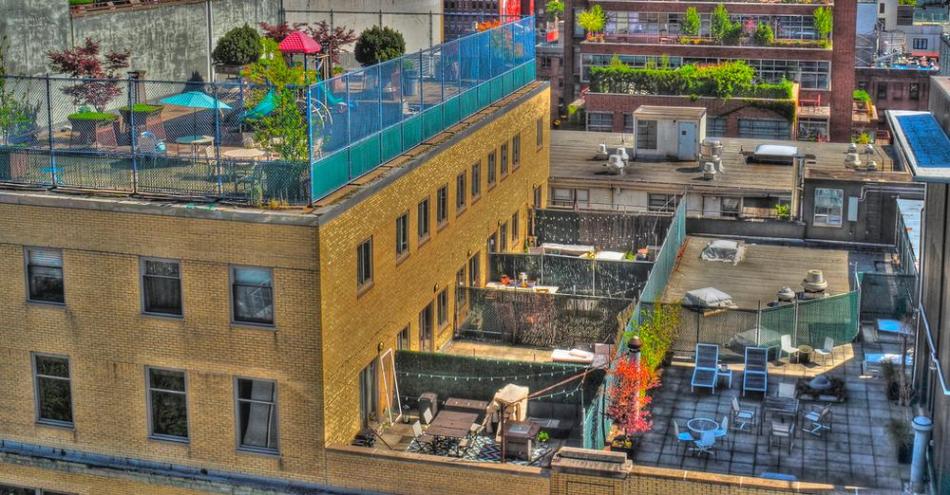
I have come full circle in these times, opting occasionally to overrule reality in pursuit of feeling. The master shot of the above image, taken at some distance, originally smoothed out the rougher textures of the urban rooftops, or at least those that I saw in my mind. The un-retouched “reality” of the subject was too pretty, if you will, straight out of the camera. A quick HDR conversion, however, brought every brick and stone into gritty relief; meaning that I had to deliberately re-flaw the image to make it truer, saying a polite “no thanks” to the “actual” look delivered by my advance device. I needed some wrongness to be put back in the scene to make it right.
When we express ourselves with a minimum of even well-meaning interference between initial vision and final result, we produce a really inconsistent mix of correct and incorrect execution, making our hits nearly as mysterious as our misses. But this personal autographing of our images is important, more so than ever before, especially as we peer into the dark, spooky cave of A.I. and wonder how to keep our work truly ours. One thing is sure; authorship, properly asserted, cannot be counterfeited or aped, and photographs can never merely be about a mixtures of processes. It’s in the sloppy soup of the actual human brain that anything pretending to true “art” resides, and that unique product can never be assimilated or simulated.
ALWAYS KEEP ON THE SUNNY SIDE (OR DON’T)
By MICHAEL PERKINS
IF YOU RELISH VIEWING A LOT OF PHOTOGRAPHIC DISCUSSIONS THAT BEGIN with either “I always” or “I never”, enter “Do You Use Flash Photography?” into a search engine, stand back, and brace for impact. I check such forums on a fairly regular basis as I personally believe that, with fewer and fewer exceptions, we are generally entering the twilight of the flash era, and I am curious as to why the hangers-on still defend its use, exclusive of very special situations.
Hmm. Reading back that last sentence, it sounds as if I’m trying to start a grudge match of some sort. I am not. All I am doing, as a photographer of some fifty years’ experience, is relating my own experience and comparing it with that of others. I tend to see flash as a tool that once was needed by nearly everyone, which is much the same view I have of, say, tripods. Both tools were once much more essential to good results than they are today, simply by virtue of the evolving acuity and sensitivity of current tech. Cameras cannot absolutely copy the eye in all its operations, but increasingly intuitive functions have been engineered across more and more shooting scenarios, including much faster and more precise evaluation of things like contrast and color temperature. As a result, the benefit of flash is often counter-weighted against all the things that can go wrong with flash (including bulk, expense and difficulty of consistent results), leading people like myself to go for years at a space without ever shooting a single frame with it.
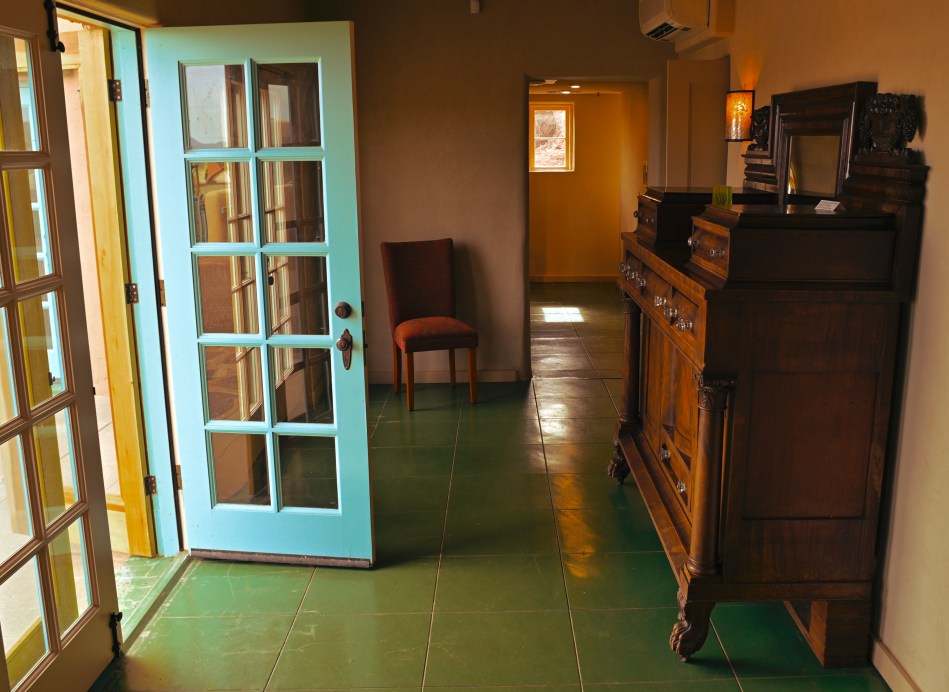
Today’s cameras have drastically redefined the phrase “adequate light”. Is flash photography headed for the scrap heap of history?
The signs of change abound: wedding shoots, once a key domain for flash, are increasingly flashless upon the insistence of either the bridal party or venues that simply don’t allow it; more full-service cameras are being marketed with no flash hot shoe whatsoever, achieving the needed thirst for additional light with larger sensors and greater ISO ranges; and while cellphone cameras still default to the use of flash, the chance to opt out of it altogether has been offered for more than a decade now.
Nikon’s global ambassador (and shooter extraordinaire) Joe McNally once defined “available light” as “any damn light that’s available” and he has taught millions how to keep flash on something of a short leash, using it to balance or enhance rather than to actually serve as primary illumination. For me (and that’s the only person I can speak for), the meeting of advanced technology and a better understanding of how all light works has reduced the number of must-flash situations to a short list. That said, many people continue to produce miracles using it, meaning that it may never completely wink ot of existence.
IN CHARGE OF THE MAGIC
By MICHAEL PERKINS
YOU FEEL IT THE FIRST TIME YOUR GRANDCHILD HAS TO HELP YOU access an app or activate a new toy, that uneasy fear that you are falling behind the latest technological wave….that the bus is leaving the terminal, and you ain’t on it. And of course, you, along with everyone else, tend to interpret such apprehension as a direct by-product of “aging”, but, is it really? Experience would seem to prove that, whatever our stage in life, we are estranged or intimidated by all kinds of processes or inventions; the only real issue is whether we merely use the magic without understanding it (turn the switch on and the gadget just works) or, by our level of engagement, actively pair our own energy with the magic, actively partnering with it.
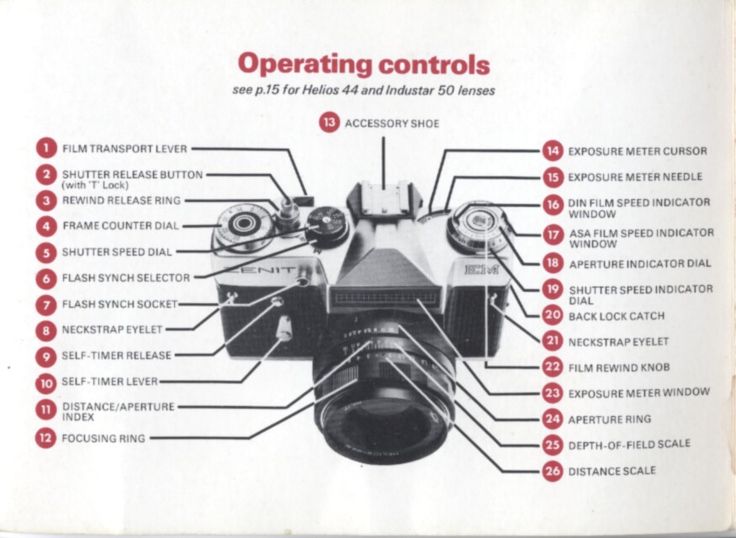
I believe that’s the reason the technical end of photography has continued to hold its central appeal to me over a lifetime, not only because I apprehend, at least in general, how it works, but also because I see a part for myself in helping make it work. The media analyst Marshall Mcluhan famously said that all media were extensions of the human body. The wheel was an extension of the foot; the loudspeaker was an extension of the ear; and the camera was an extension of the eye. Photography is a mechanical process that is initiated only after an impression or idea is formed in the mind and eye. Its recording capacity is deaf and dumb until a concept propels and shapes it. Its interpretive process is completely non-existent except at the service of the eye’s guidance. Even the most automatic, “intuitive” cameras, such as those in cellphones, can never be set on full “automatic”. The computer has the means to be easily programmed, but the program itself, the code that is written between the shooter’s ears, must be supplied first.
There are many places in which my connection to tech is that of a user only, a relationship in which the magic arrives fully formed and I merely consume it. Snap on a light, open up the water tap. But with a camera in my hand, I am in a collaboration. Neither the tech nor I have the means to reach our ends without the other. That makes the workings of a lens and shutter sacred to me, since they are the pens I write with, the crayons I draw with, the extensions of myself. Nothing is automatic, and nothing is guaranteed, except that I am always in charge of the magic.
NEVER SAY ALWAYS SAY NEVER
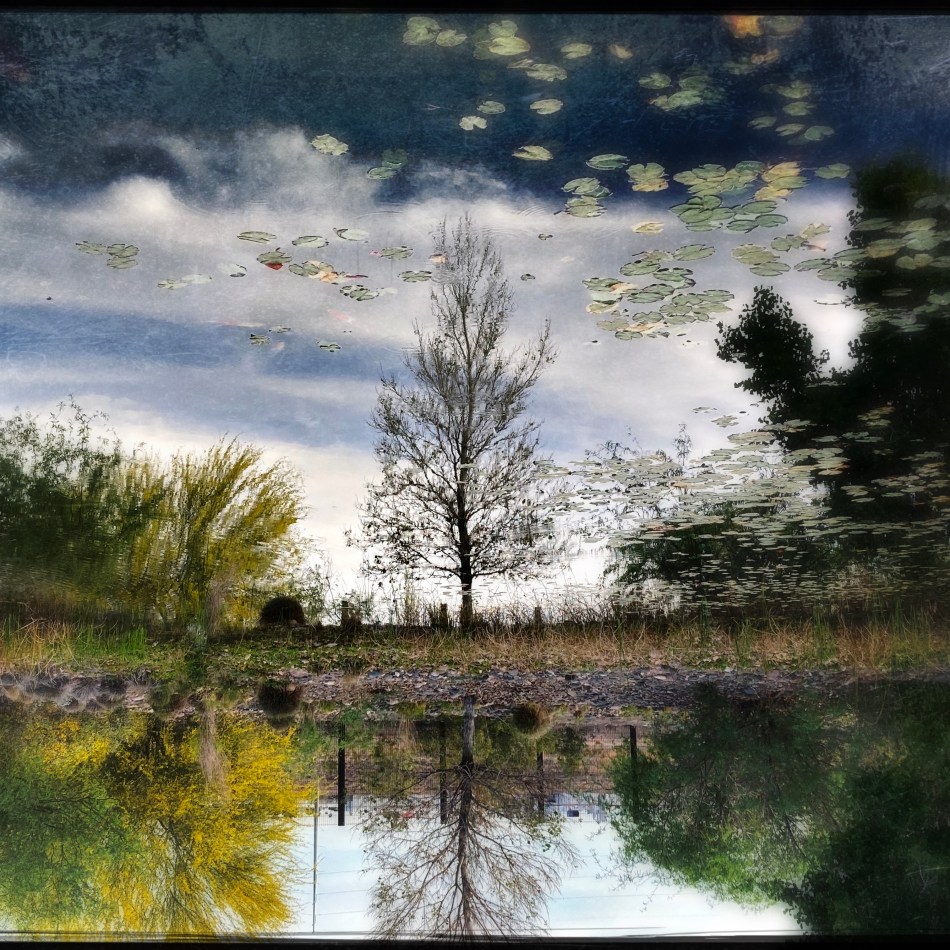
A texture and feel beyond the real: An iPhone snap rendered through the Love 81 film emulator within the Hipstamatic app.
By MICHAEL PERKINS
TALKING ABOUT “TRENDS” IN PHOTOGRAPHY, AS IF THEY SIGNIFY ANYTHING, is like standing near the ocean and commenting on individual waves, as if any one of them will be the standard for all waves forever going forward. More than any other of the graphic arts, picture-making is not so much a strict canon of laws but a seismic measure of our most mercurial moods in a given moment.
As an example, as of this writing (May 2023, in case you wind up reading this in archive), it seems that there has been a recent turn away from the realism of formal photography, once again swinging the pendulum toward apps and software that deliberately muck up precision, processes that celebrate flaws (even artificially created ones), rip pictures free of specific time-era “looks” and otherwise make them sloppier or more random in their result. We are, at the moment, looking for the total effect of an image, including everything that is formally “wrong” about it. Maybe because there is something wrong about it.
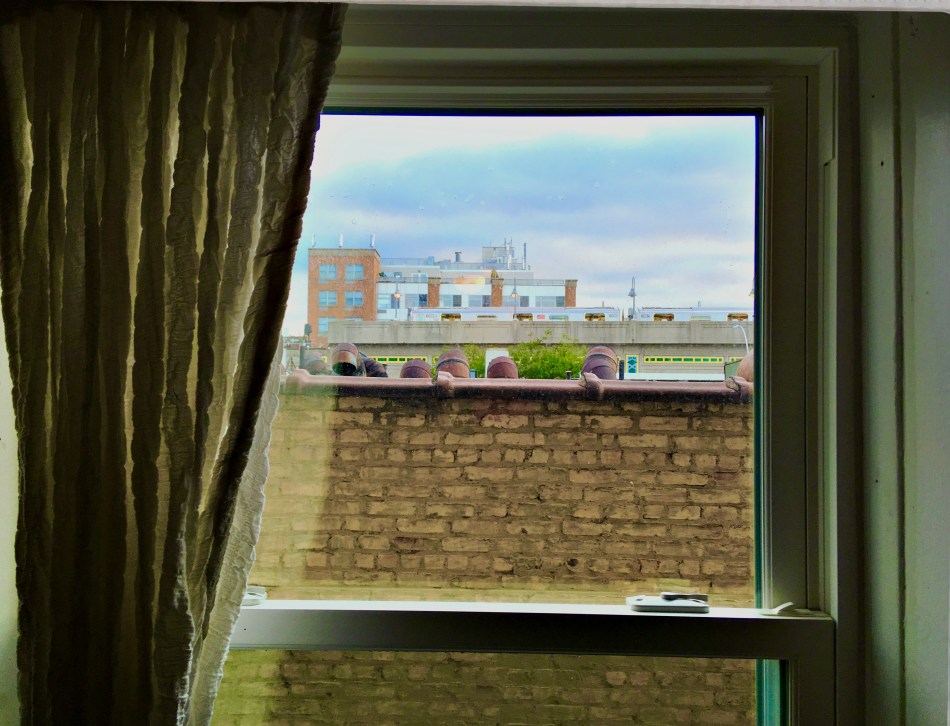
The iPhone-bred Hipstamatic alternative to a “serious” picture of the same scene I had taken with my “real” camera.
I am looking at this phenomenon through somewhat fresher eyes these days, even though I have been a long-time user of the ubiquitous and long-running Hipstamatic platform, which has been offering lo-fi tweaks to shooters almost since the dawn of the cell phone era. Problem is, the uneven, customized look of the pictures I created with it have often been categorized in my brain as “something I just do for fun with my phone” versus making “actual” pictures with my “real” cameras. The result was that, over the past ten years, I built up an enormous folder of orphan Hipstamatic images, pictures that I seldom shared and almost never published because I regarded them as cheats, gimmicks, or “just screwing around”….in other words, unworthy of consideration in the same arena as the product of, say, a DSLR.
Which is to say that I have wasted a lot of time trying to arbitrarily disqualify a lot of photos that, upon recent review, really ain’t so bad.
The specific “film” emulator within Hipstamatic that I prefer, a filter effect called Love 81, has emerged over all others as having the proper blend of weathered texture, selective focus, and hyper-saturation that looks both like specific eras or none at all, depending on how it’s applied. And I guess that’s its big strength; the ability to make certain shots come unstuck in time, or to at least suggest times that are unavailable to those of us anchored in the present. Sometimes, like any process, it can ruin what began as a basically okay image, and, also like any process, it can’t make a great picture out of a lousy one. Thing is, our present era is really the best era ever, a world in which photographers can permanently float between disciplines, blithely floating from Never to Always and back to Never at our whim. What could be more human, and more like a photograph?
FEEL LIKE MEXICAN?
By MICHAEL PERKINS
I NEVER GOT TO SEE the titanic floating pig that wafted over stadiums for the Pink Floyd Animals tour. And my only in-person glimpse of the Macy’s Thanksgiving Parade uber-balloons was at street level, the year a horrific wind storm necessitated yanking Underdog and Bullwinkle almost as low as the tops of city busses. Let’s just say that my overall resume on epically inflated beasties is, to be kind, thin.
But, hey, I’ll always have the ginormous Pastel Burro.
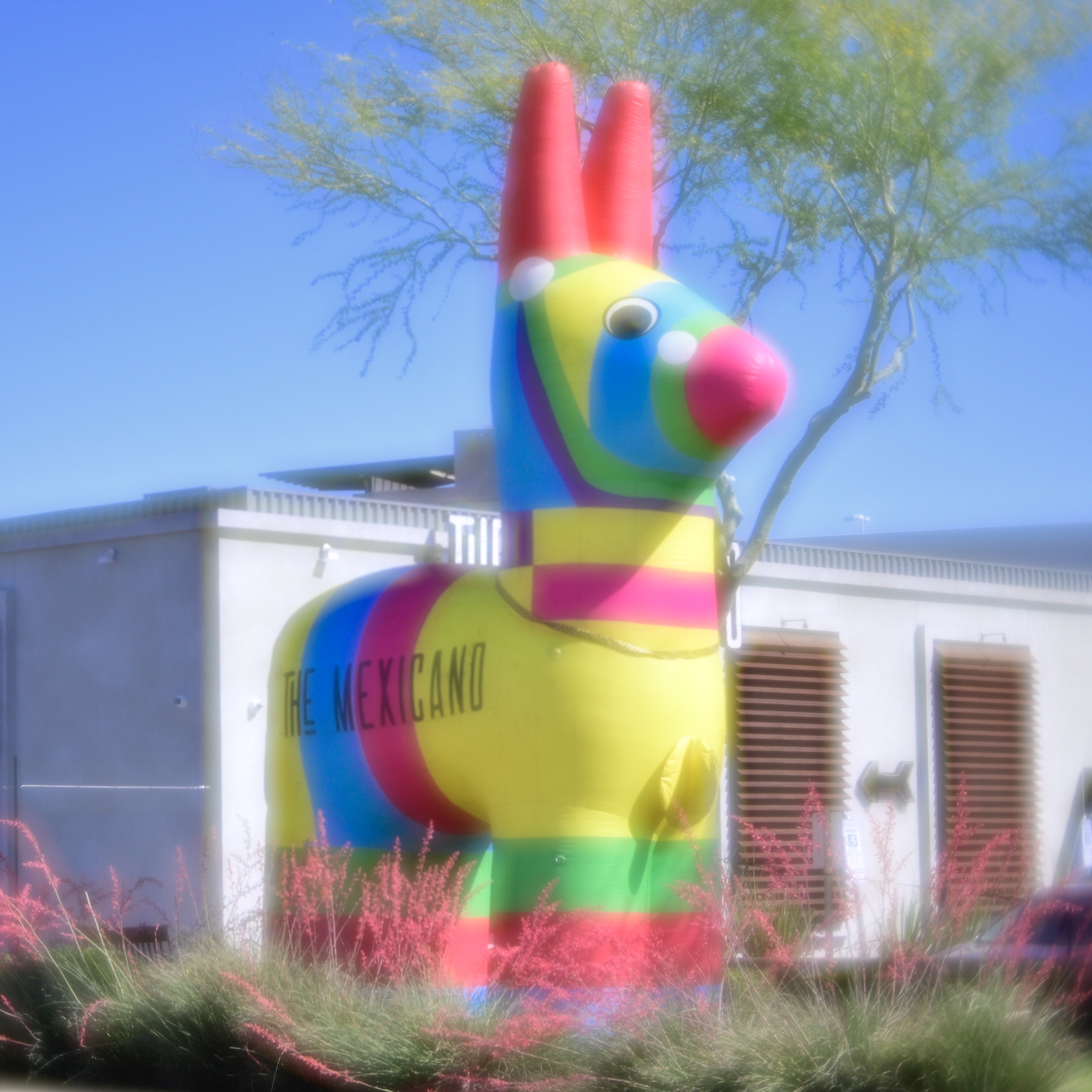
That is, at least as long as a local Phoenix restaurant touts its Cinco De Mayo celebrations by mounting this oversized donkey, resplendent in its delightful dumbness, alongside Cactus Road in Paradise Valley.
Hi, burro. Long time admirer, first-time shooter.
Once I finally decided to park roadside and take a crack at it, I figured a dreamy art lens like the Lensbaby Velvet 56 would render it properly. Too weird to be real, too wonderful to be fake.
Maybe I’ll drop in for a quick fish taco.
It pays to advertise.
MAGICAL (PHOTOGRAPHIC) THINKING
By MICHAEL PERKINS
HOLLYWOOD LOVES STILL CAMERAS, exploiting them for dramatic impact in thousands of films over the first one hundred years of the movies. Entire plots hinge on the ability of protagonists, from intrepid reporters to dogged private eyes, to save the day or solve the mystery with a judicious snap, images that spring up in the eleventh-hour of a murder case or point to the tough truths in a medical inquiry. Seems Our Hero (or Heroine) is always on hand with some photographic device that ties the story together and brings it in for a successful landing, ofttimes making his/her camera a key player in the story. Magical thinking regarding photography is a part of the collective movie myth.
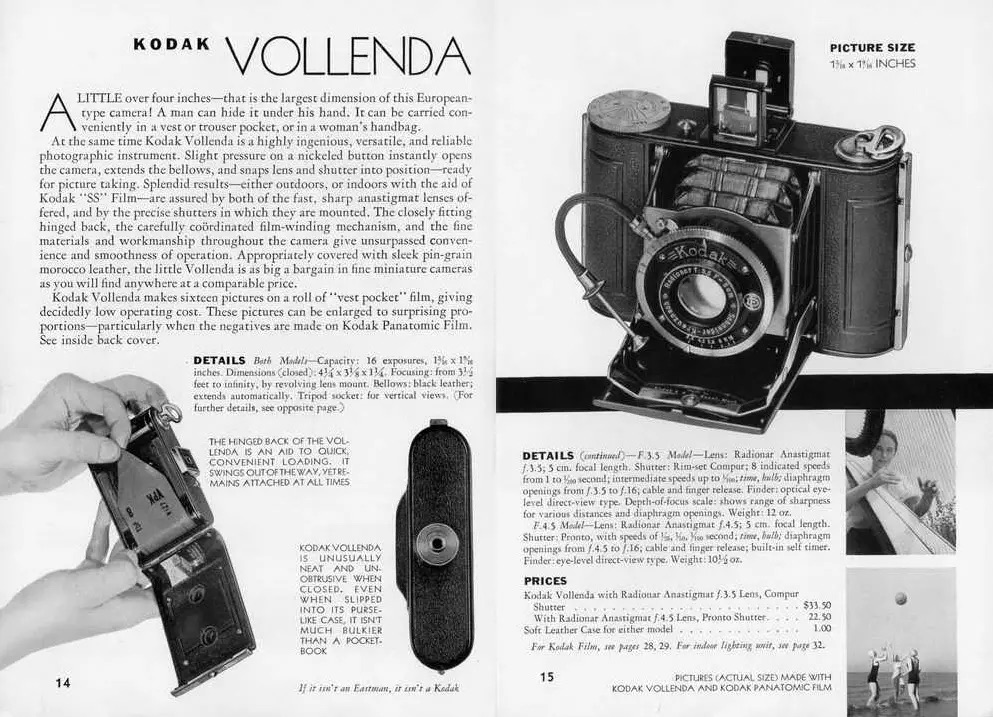
HBO’s recent (and successful) re-boot of the old Perry Mason series is the latest case of a camera becoming a key agent of action in a teleplay, spawning scads of on-line theories about the make, model and performing properties of the sleuth/attorney’s chosen kit. The candidate with the most votes so far looks to be the Kodak Vollenda, a compact folding model (see original ad, above) created by German optical wunderkind and former Zeiss employee August Nagel in 1929 and marketed in the U.S. after he entered into a co-operative deal with Kodak in 1931, the year before the Mason stories are set. The early versions of the camera produced images of roughly 1.25 x 1.62 inches, each taking up half a frame on 127 roll film, giving the shooter better bang for his film buck in terms of picture count but also limiting the size of its negatives, and, in turn, how sharp enlargements (for those climactic courtroom scenes) could be. For your average superstar lawyer shooting a lot of medium and long shots in natural light (or even darkness) with a maximum aperture of f/3/5, this could spell trouble, at least if you were counting on the results for critical evidence. Hooray for Hollywood.
The Vollenda in Perry Mason’s era would probably have fed on the old Verichrome Pan film, with a not-too-aggressive ASA (or ISO) of 125…again, pretty good in brightly lit situations, but not so great when skulking around dark alleys or spying on suspects misbehaving across nightlit streets. But, ah, well, the thing looks amazing in actor Matthew Rhys’ hands, and is historically consistent with the period, despite the fact that its original $33.50 list price would equate to well over $600 in today’s currency, a bit steep for a down-on-his-luck gumshoe in the middle of the Great Depression. But, ah, well, as Billy Shakes often said, the play’s the thing, and Hollywood’s greatest photographic illusion is in selling us all the fantasy of a super camera that save the day by the end of the final fadeout.
Cut.
Print it.
 thenormaleye