LIGHTNING IN A BOTTLE
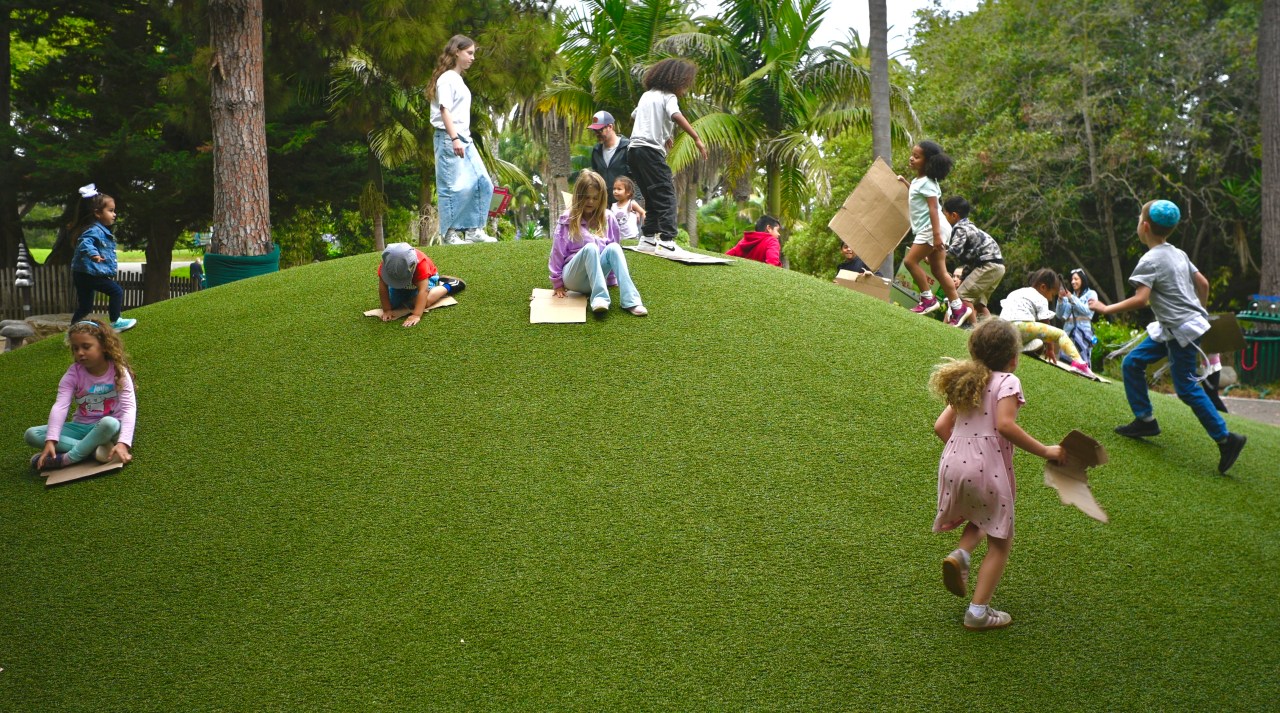
In shooting children’s activities, you only have a nanosecond to find the central story.
By MICHAEL PERKINS
IF YOU WERE TO CONNECT THE ENERGY OF A ROOMFUL OF CHILDREN to a dynamo, you could power the eastern seaboard and have enough power left over to make all the marquees in Time Square blink “Happy Birthday”in Morse code. Making photographs of kids is just slightly less challenging than snapping images of summer lightning. They are dynamic, unpredictable, driven by whim, and poised on a knife’s-edge. And that’s their resting state.
For a photographer, shooting kids is both a treat and a trap. A treat, because, within seconds, you are presented with more visual information than you can use in a year, and a trap, because what you select or capture out of that flow can either be the very definition of storytelling or its dead opposite. Happening by when a flock of children are sharing an activity, with all the joy, risk and, yes, competition that’s on display (Mom! watch me!!), a photographer has to make insanely fast choices of what to scoop up and what to leave alone. With luck, he/she delivers a great narrative, a shot which contextualizes and explains itself in an instant, a document of the joy of being young. But, without luck (or judgement), the result is, well, a picture of kids playing.
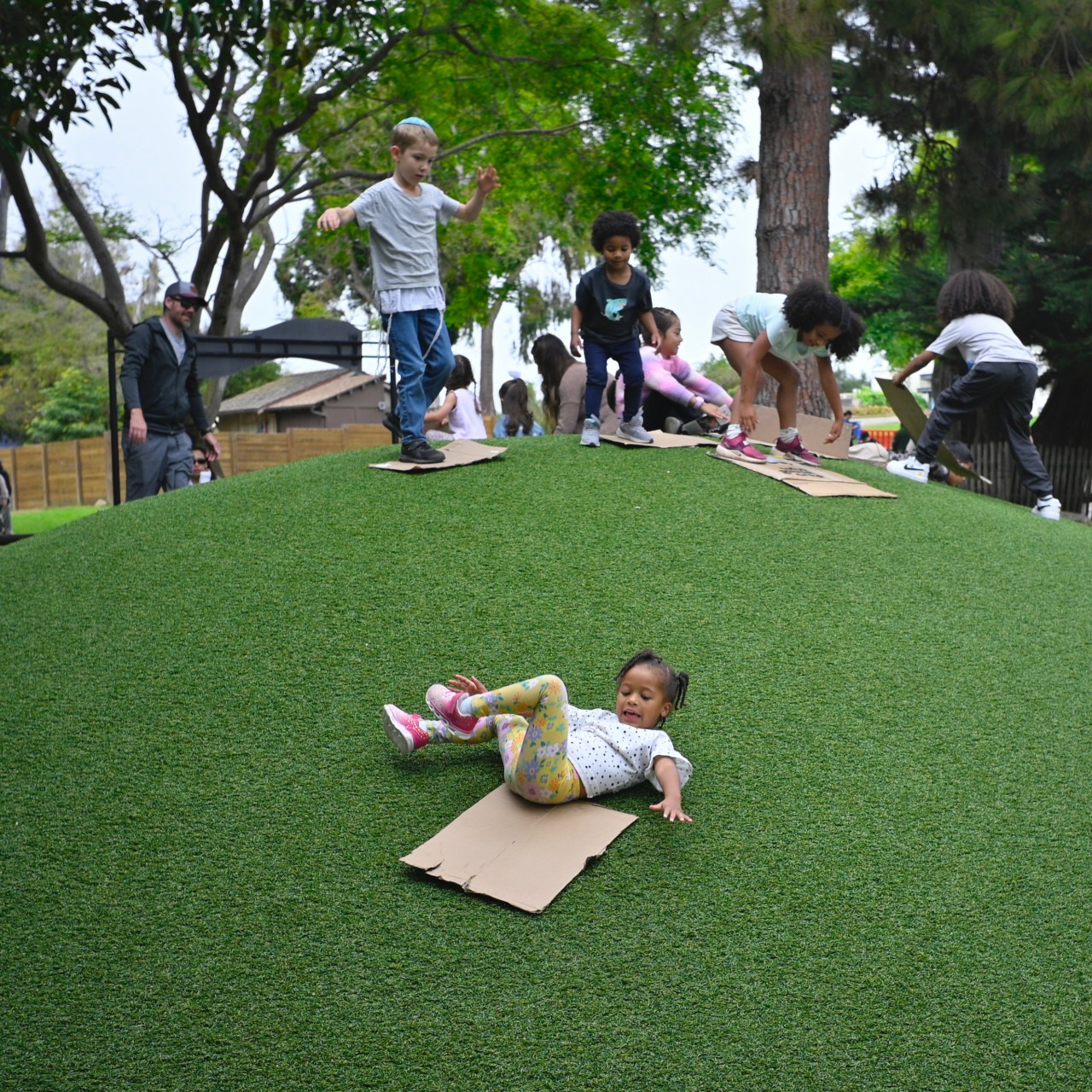
One slider, many background participants. But is this the story you’re seeking?
Of course, such moments cannot, dare not, be coached or posed, meaning that their importance must be weighed, then gathered or rejected, in an incredibly short amount of time. No one second can be repeated or replicated: it’s either caught or it escapes. If the overall story line of the two pictures shown here is “sliding down a hill”, that message can actually be muddled by the right mixture of visual information. For example: how many active sliders need to be shown in motion at one time, when getting the number wrong can potentially drag the eye all over the frame without asking it to focus on a central impact? If the emphasis is on the throng, then the top shot is an example of a potential keeper. However, if one child is all that’s needed to demonstrate the activity, with the other kids shown in various stages of preparation, then the second frame will deliver. Of course, in all candor, I’ve not shown, here, the other seven frames I originally took, where all these “missions” get even muddier or less organized. Child photography is true photography, in that the act of extracting an instant from the constant flow of time could not be clearer than in trying to isolate an ideal illustration of their play. Getting it right really is equivalent to capturing lightning in a bottle


Leave a Reply