HOORAY FOR STANLEYWOOD
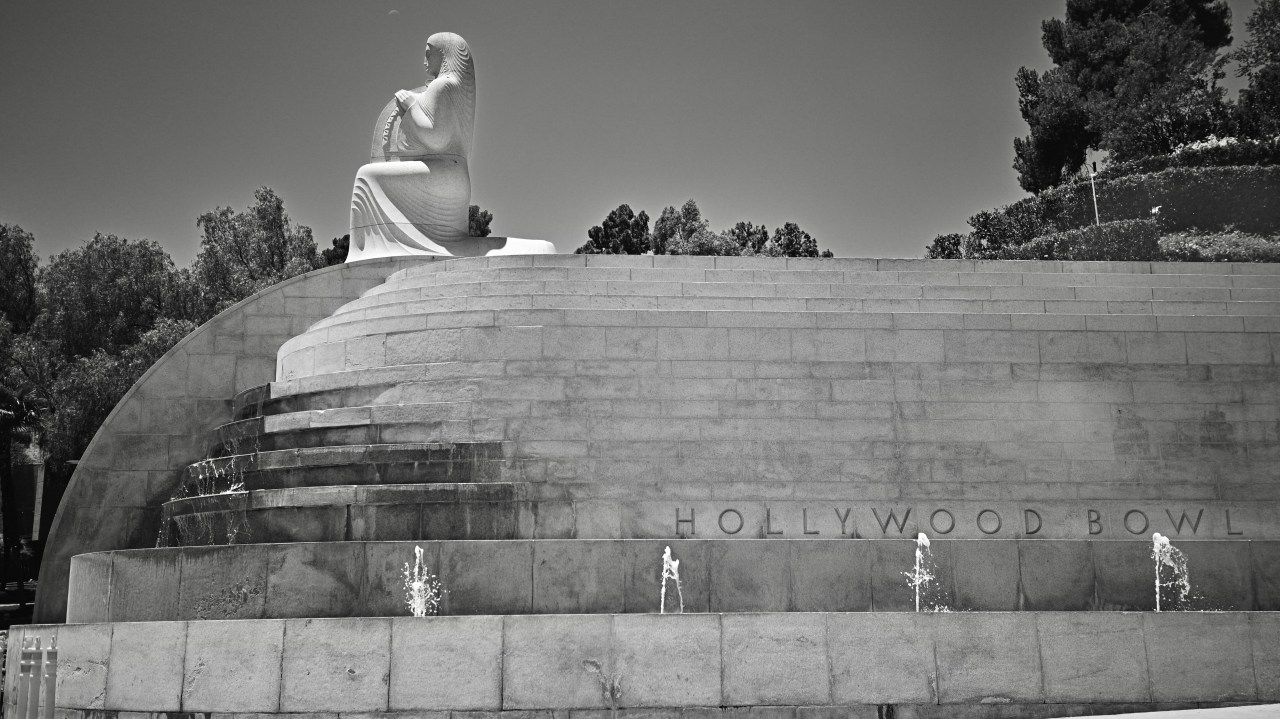
One of the figures of the three muses (Music, seen here), dance, and drama, created by sculptor George Stanley for the monumental fountain which serves as the entrance to the Hollywood Bowl in Los Angeles.
By MICHAEL PERKINS
LA LA LAND, BEING THE CHIEF MANUFACTURER OF DREAM IMAGES FOR THE WORLD, has seen, in its century-and-a-quarter history, many of those images flicker and be forgotten once the title THE END flickers off the screen. However, both in and out of the movies, Los Angeles at large has seen visual souvenirs of its various eras survive to become icons that outlast time, forever emblematic of a city that feeds on the frenetic energy of hope. These symbols of L.A. life are visited or seen by millions, their origins rendered irrelevant, as if they, like the mountains and the tar pits, have simply always been here.
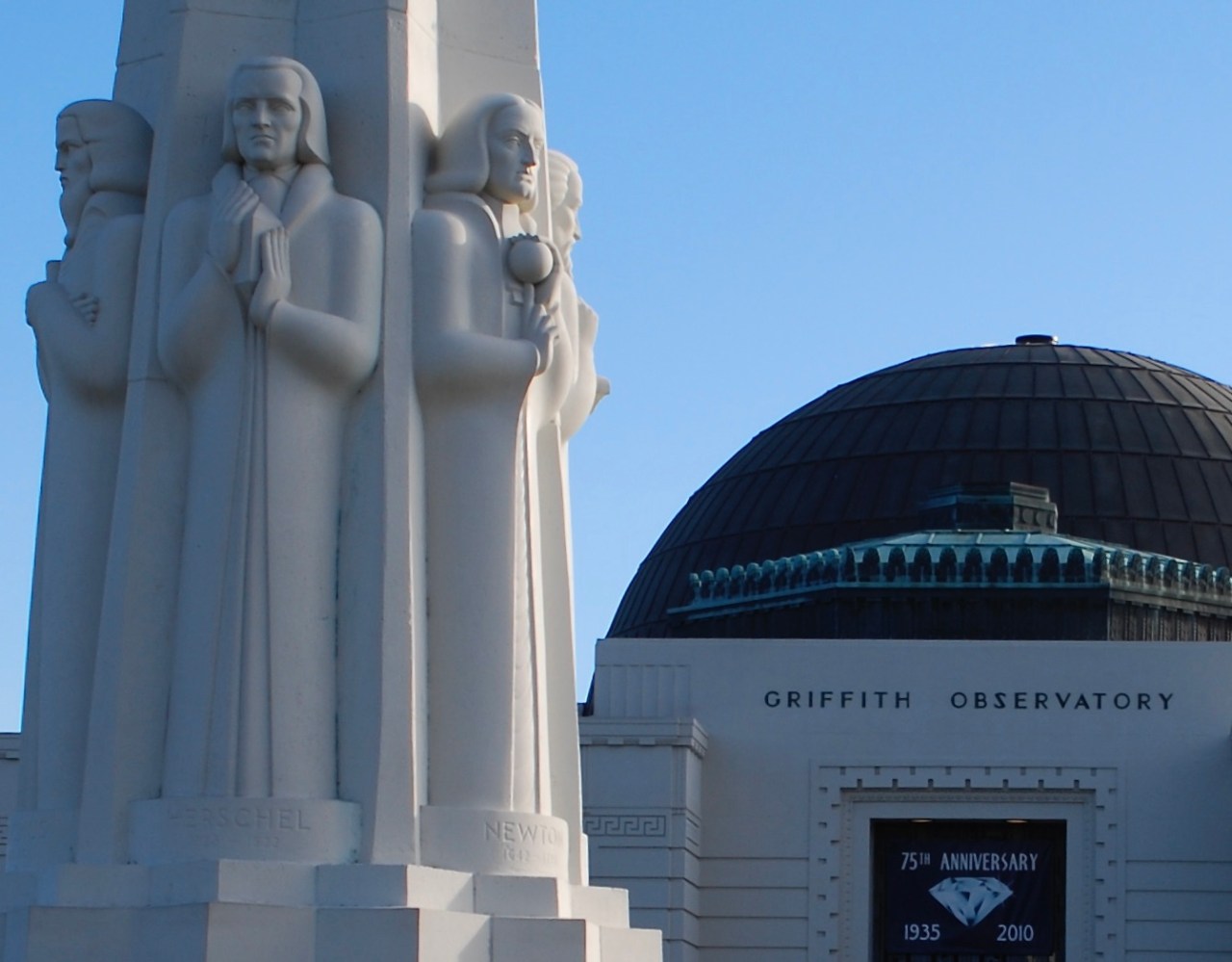
George Stanley’s sculpture of Sir Issac Newton (at right), taking its place among other sculptors’ tributes to great astronomers at the entrance to Griffith Observatory in L.A.
The names of some of the creators of these landmarks survive, and others, like sculptor George Stanley, morph into questions on Jeopardy or side entires on Wikipedia. But that’s a little ungrateful of us. as we adore the man’s works with no notion of the man himself. Like many Angelenos, George Maitland Stanley was an immigrant from within greater America, arriving in the 19-oughts from a small parish in Louisiana, growing up in the town of Watsonville near Monterey Bay. In 1923 he enrolled in L.A.’s Otis Art Institute, where he studied and later taught sculpture, before transferring to the Santa Barbara School for the Arts, where he was also on the faculty. George’s first major commission, and the one which made him renowned to this day, was the sculpting for the Oscar statuette, which he designed in 1927 from a sketch by an MGM executive and which can arguably claim to be the most famous sculpture in the world.
The first third of the twentieth century was an insane growth spurt for Los Angeles, and George Stanley had a literal hand in the symbology for some of its most enduring destinations. The circle of statues that celebrate the world’s essential astronomers, which graces the front entrance to Griffith Observatory, was a collective work, with a separate commission issued for each of the scientists on the plinth. Stanley sculpted the figure of Sir Issac Newton in 1934. Just six years later, he created yet another indelible marker of California culture, creating the streamlined Deco fountain that ushers concertgoers onto the grounds of the Hollywood Bowl. The triple sculpture that crowns three corners of the two-hundred-foot-side fountain base, depicts the three muses of Music, Dance and Drama, and stands over twenty-five feet tall. Situated just where freeway traffic exits the 101 and spills onto Highland Avenue, the fountain has become a kind of unofficial front gate for Hollywood itself.
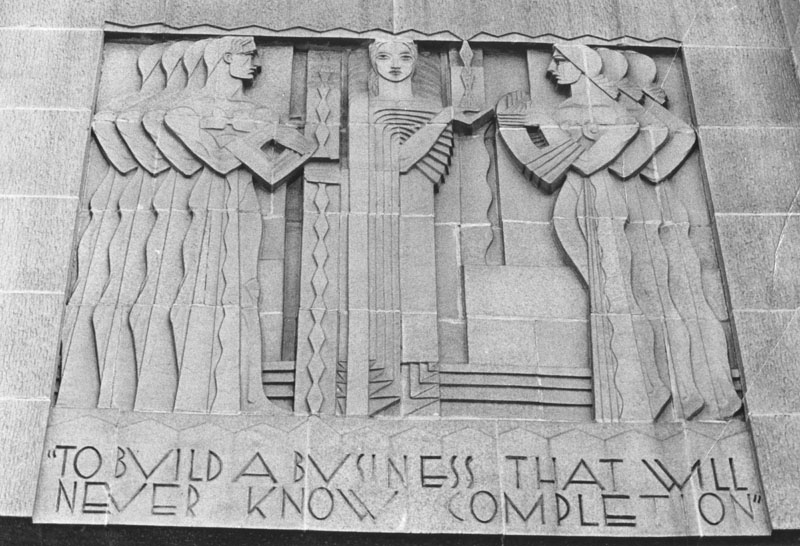
Stanley’s frieze for the entrance to Bullock’s Department Store on Wilshire Boulevard, 1929.
Stanley’s other works, some of which do not survive to the present day, include the dramatic frieze atop the main entrance to the majestic Bullock’s department store building, as well as some reliefs and murals at various churches scattered across the state. In a town that worships image, he created the visual signatures of many essential local landmarks, and photographers and historians alike have long realized that you cannot tell with story of Los Angeles without citing his elegant touch.
Did this article do it for you? Like, Share, Subscribe!


Leave a Reply