JIM MORRISON IS NOT READY FOR HIS CLOSE-UP
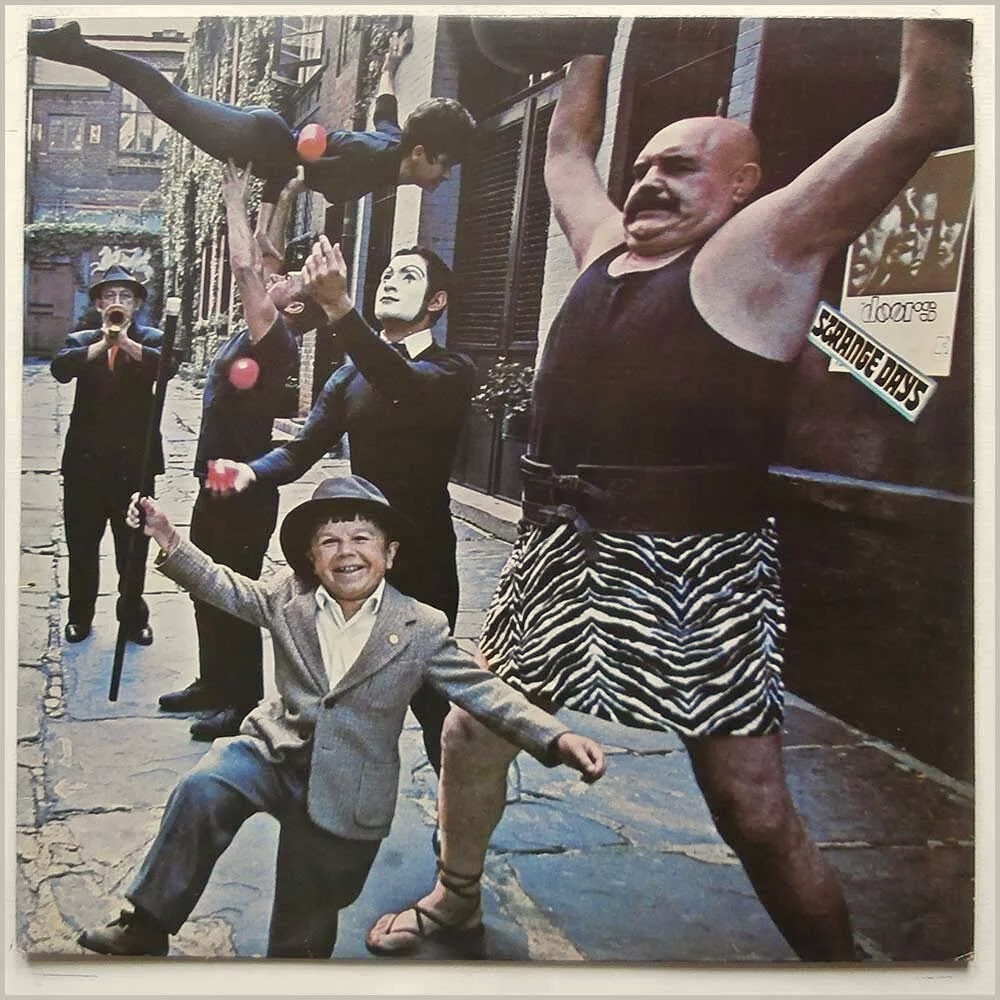
The 1967 cover for the Doors’ album Strange Days, shot by Joel Brodsky.
By MICHAEL PERKINS
WHEN LIFE SLAMS FOUR DOORS IN YOUR FACE, open a fifth one, as a “Plan B”.
A dilemma faced the folks at Elektra Records in the fall of 1967, a year in which the entire concept of album marketing was being turned on its head. The label was issuing a strike-while-the-iron-is-hot follow-up to the debut album by the band the Doors, a record that, half a year after its release, was still atop the charts. The music for the group’s sophomore effort was strong, with advance singles already garnering national radio airplay. There was only one problem: Jim Morrison and the other members were refusing to pose for a conventional photo for the cover.
The long-time practice of designing album covers with attractive images of the artists and a few words about the content inside, a system which had been the norm just a few years prior, was suddenly out the window following the cover of Sgt. Pepper’s in summer of ’67. Suddenly, album covers were no longer just billboards; they were statements, original concepts, a bit of performance art that was, yes, done in support of the record inside, but also created to have a life of its own. The shift across music of the “counter-culture” was immediate. You didn’t just shoot a cover; you designed it.
Faced with a Doors-less Doors album cover, Elektra’s art director William Harvey decided to capitalize on the record’s title, Strange Days, by staging a tableau of bizarre street performers as living proof that, indeed, these days were strange, and getting stranger. He decided to create the cover outdoors, with veteran photographer Joel Brodsky along for the ride, at an old carriage house storage alley between East 36th Street, between Lexington and Third Avenues in Manhattan called Sniffen Court. Unable to round up enough authentic street performers, he had Brodsky’s assistant play the part of the juggler and paid a cab driver in the area five dollars to pretend to be playing the trumpet. Identical twin dwarves were hired (one for the front cover, one for the back), and a bouncer at the Friar’s Club was pressed into service as a circus strongman.
In what would be referred to by contemporary movie fans as an “Easter Egg”, Brodsky managed to sneak one of his group portraits of the Doors onto a wall as a kind of poster. In those days, he was frequently shooting with Ektachrome slide film, which may account for the blue-green color rendering, but no notes survive the shooting, so there is no way of confirming that, or of reconstructing the mix of natural and bounce light in the shot or identifying the lenses used. The shot is fairly sharp from front to back, and it looks deep, suggesting a wide-angle at maybe f/5.6 or somewhere in that ballpark, but it’s all guesswork. The image stands out a bit in Brodsky’s work, which includes dozens of the most iconic covers shot in the rock era, most of them prominently featuring a portrait of the billed artist (as in every other one of his Doors, btw). But Harvey and Brodsky’s quirky “plan B”for Strange Days turned out to be a classic on its own terms, a lemons-to-lemonade “save” for the ages.


What a wonderful story hidden behind the widely known image.
Thank you
August 30, 2026 at 8:28 AM