WE MEANT TO DO THAT (OF COURSE)
By MICHAEL PERKINS
IN 2026, BEATLES FANS THE WORLD OVER ARE CELEBRATING the 60th anniversary of the debut of the group’s seminal album Rubber Soul, a record which dramatically re-set the terms of engagement between the world’s greatest pop band and its audience. Long-playing records, prior to the mid-60’s, tended to be composed mostly of songs that were originally released as independent singles, with the priority on reaching the “youth market” placed primarily on 45’s rather than 33’s. By the second phase of their fast-evolving life as recording artists, however, the Beatles were, by ’66, moving quickly from being a “live” band that recorded to a studio to a band that was unbound by either the formal moon-june-spoon songwriting rules of I Want To Hold Your Hand or the limits imposed by what could be performed on the road. Rubber Soul, like Brian Wilson’s Pet Sounds from the same year, was a document of that new-found freedom, of the studio-as-instrument, or as an album as a feature-length construct rather than a hits package.
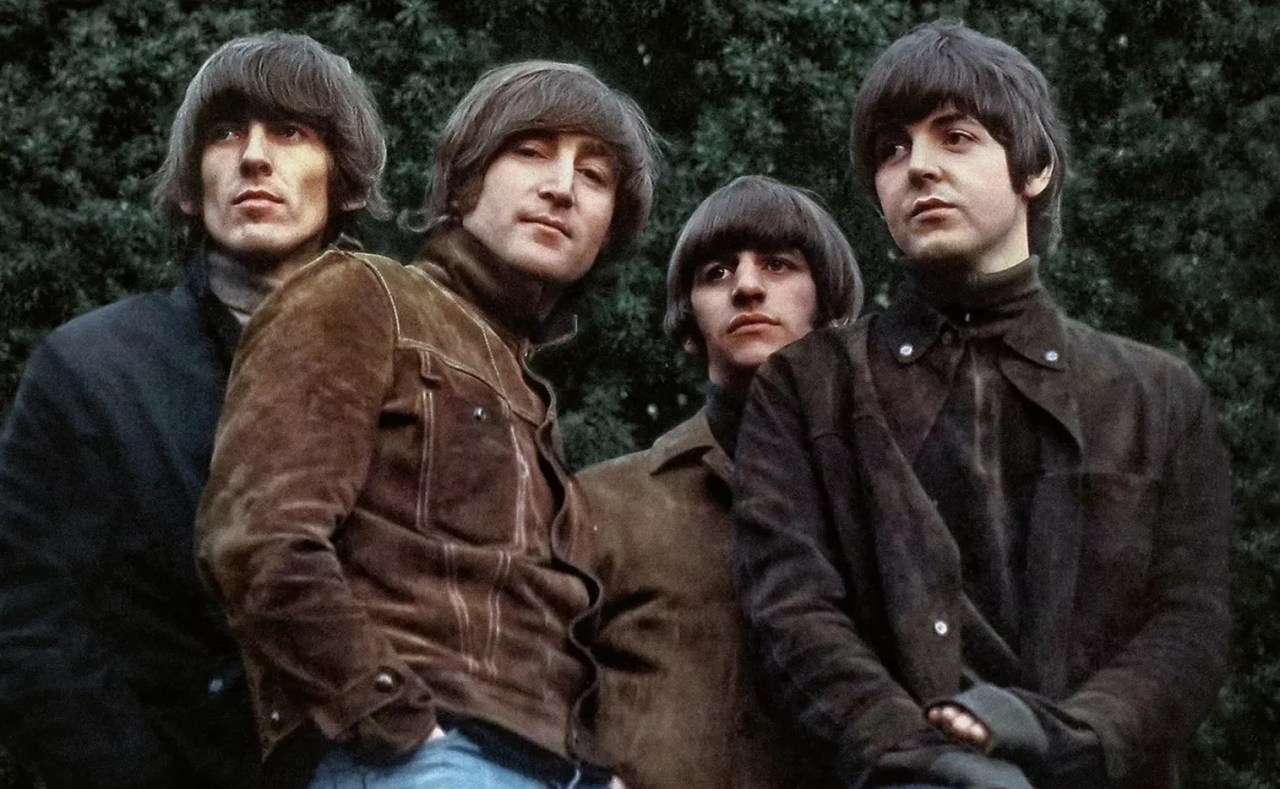
One of photographer Robert Freeman’s original test shots for the cover of the Rubber Soul album in 1966.
Alongside the band’s expanding bag of tricks as musicians was their interest in extending that control to the actual graphics of their album covers, leading, from Rubber Soul onwards, to a mutiny against the record industry’s habit of labels assigning cover design to formal studio photographers. The Beatles truly led the charge in the idea of bands being photographed more “in the wild”, choosing their own favorite shooters and settings as well as contributing directly in the process of the shoots. The title of the album, a bit of a pun but also their way of expressing how “soul” could be elastic enough to embrace a variety of musics…..that is, “stretchable, or “rubber”, was in their mind when they first viewed possible group shots for the album cover.
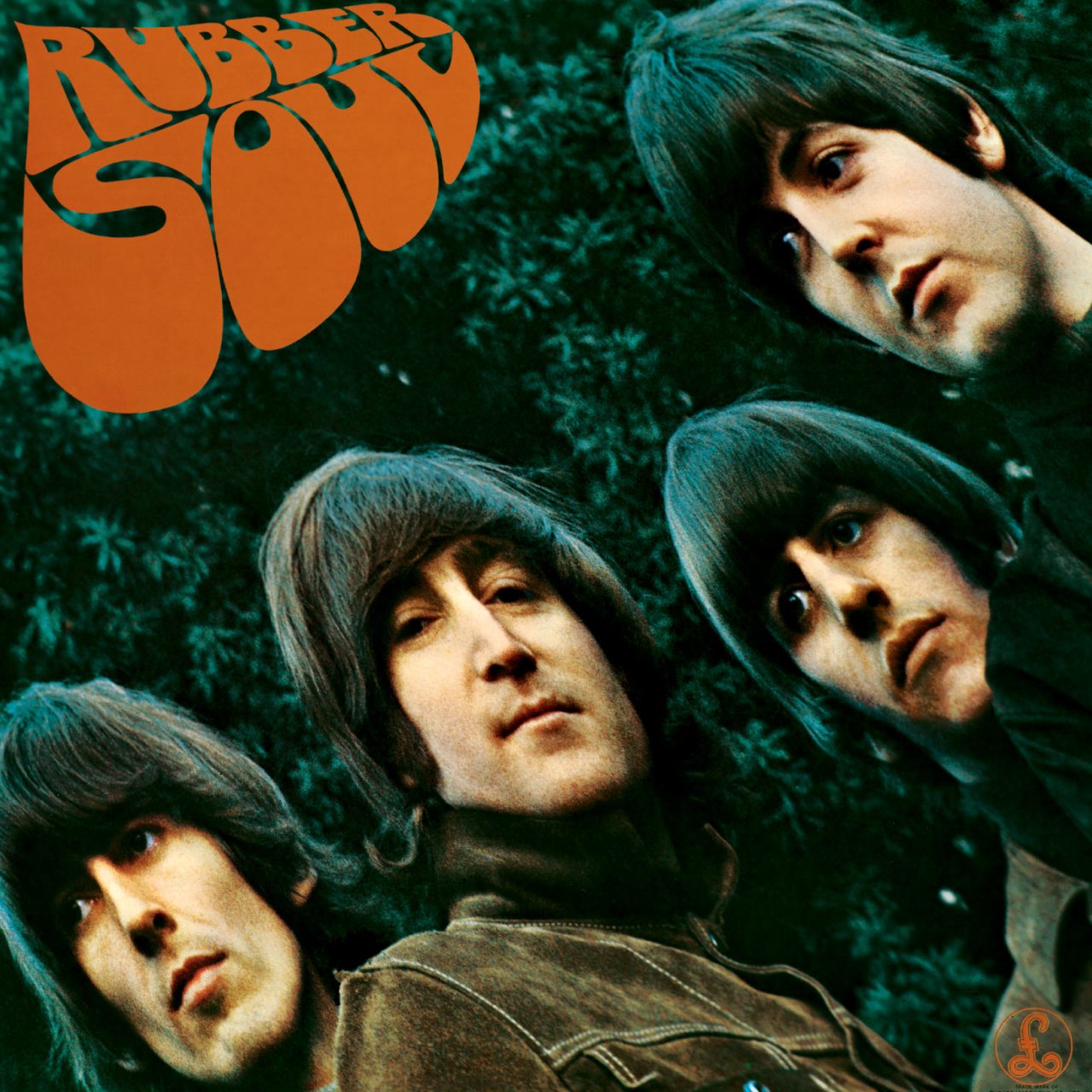
The accidental distortion of the top image that inspired the Beatles to a trippier approach to the cover.
At the time, photographer Robert Freeman had a set method for helping groups get an idea of what their covers might look like at scale, projecting color slides from his shoots onto bits of white cardboard sized to resemble the dimensions of a record jacket. In showing proofs of the Rubber Soul shoot to the Fab Four, Freeman’s cardboard fell backwards a bit, distorting the image, making the band look stretched, or “rubbery”, in a rather trippy way. The group immediately asked if the finished cover could intentionally be made that way, and thus was born one of the most iconic, if accidental, images of a very psychedelic decade. Soon after, artists began to routinely lobby for their own input on album packaging, but, as in so many other ways, it was the Beatles who initially decided not only to bend the rules, but to chuck the rule book out the window altogether.


Leave a Reply