THE EASY WAY OUT. OR BACK IN.
By MICHAEL PERKINS
THE FIRST COMMERCIAL EXPLOSION IN CAMERA SALES that began in the late 1800’s was a triumph of design innovation, as manufacturers created devices that answered the two main barriers to the adoption of photography as a general hobby instead of a tinkerer’s plaything. Ease of operation and affordability combined to induce people to purchase their first cameras and to use them regularly. This was not an ingenious plan to sell more cameras.
It was an ingenious plan to sell more film.
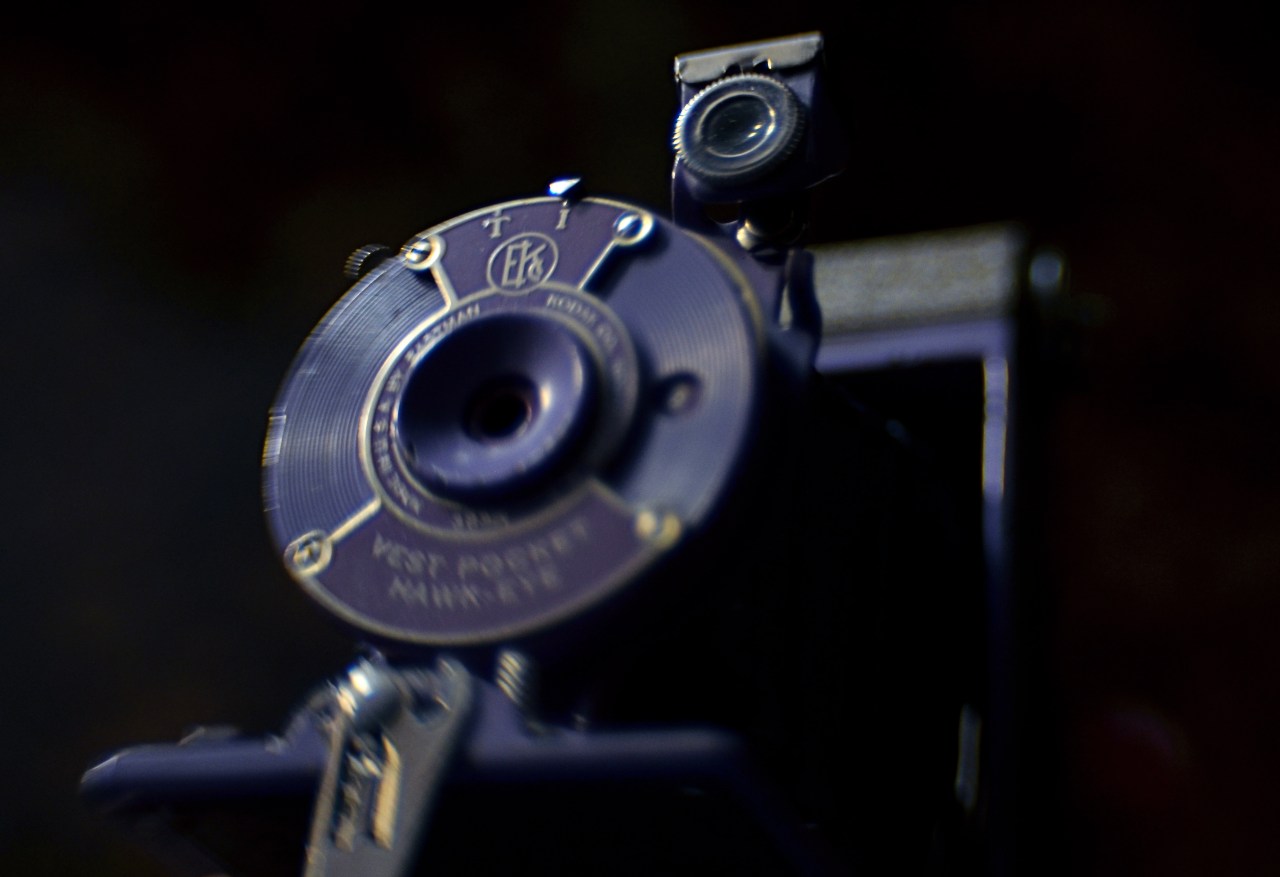
The idea was simple. Make it easier and more enjoyable to take pictures and people will do it more often. Oh, and we also make film for the camera, btw. This revolution was repeated throughout the 20th century and into the first part of the 21st, as technical improvements began to warrant users against failure. As the cameras became ever simpler and the results are more predictably satisfactory, interest remained high, as did film sales.
Now, in a largely filmless world, makers have continued to anticipate more and more of the annoyances that would inhibit the taking of lots and lots of pictures, the aim being to make devices that are so intuitive that they present no obstacle whatever to quick and frequent use. But is convenience, or the guarantee of at least a usable image every time, enough for the shooter who chooses to expand his/her mastery or knowledge? Taking the cell phone as the largest and most dependable baseline of camera use worldwide, can a significant number of people be counted on to grow beyond said phones, to want devices that are a smidge more complex than the world’s most dominant point-and-shoots?
If recent statistics are to be trusted (I’m writing this toward the end of 2026), there has been a modest but definite upsurge in the sale of compact cameras, hardly a return to the sales levels they once enjoyed, but a confirmable swing away from the deep dips of the last fifteen years or so. There are several potential reasons for the rise: some consumers have expressed a longing for a stand-alone camera rather than one which is merely one more feature within their phones: others have indeed expressed an interest in something that is still small and portable but which simply “does more” than their pocket cells. Still others have been lured by nostalgia, as manufacturers are working classic visual cues into their designs, creating a longing for a simpler era. And, finally, there is the inclusion of many features which were confined to more upscale, full-function models only a few years ago. Result: compacts are staging a comeback.
Those of us who rode our pet dinosaurs to school back in the Before Times were more than accustomed to the fact that people would buy a series of cameras over a lifetime, spurred on by either a hunger to go deeper on tech or a bigger budget or both. The idea of “outgrowing” a camera was considered a basic part of one’s evolution. Now that the act of snapping a frame has been reduced to its very simplest terms, some will find that “good enough” is, well, not good enough, and find themselves shopping for the next big thrill. Convenience is still, as in the days of the one-button Kodak, a huge selling point. But, as it turns out, humans will sometimes opt for the unpredictable or risky in the name of growth.


Leave a Reply