TATTERED BEAUTY
By MICHAEL PERKINS
ONE OF THE MOST MIRACULOUS FEATS OF PHOTOGRAPHY, TO ITS ORIGINAL 19TH-CENTURY AFFICIONADOS, was to freeze time, to arrest or isolate the continuum of progress. Indeed, if you think about it, the act of snatching a fragment of life, of holding it immobile for endless examination, is truly amazing, even at this late date in the art’s development. We spend a huge part of the time that is trying to grab a souvenir of what’s about to become was.
Photography’s great gift, being able to document time’s passing….its ravages, its wear and tear on the things of this life is often focused on the living world; people, trees, the temporary aftermath of a rainstorm, the quick passing of a sunset. But it can be an intriguing way to measure the impact of time on inanimate thing as well. Slicing, dicing, magnifying, and parsing time as we do with cameras, we can concoct an infinite number of ways to pore over the details of things that, in previous ages, only the poets fixated upon. The world has become our microscope lab, a petri dish for experiments in seeing and analyzing.
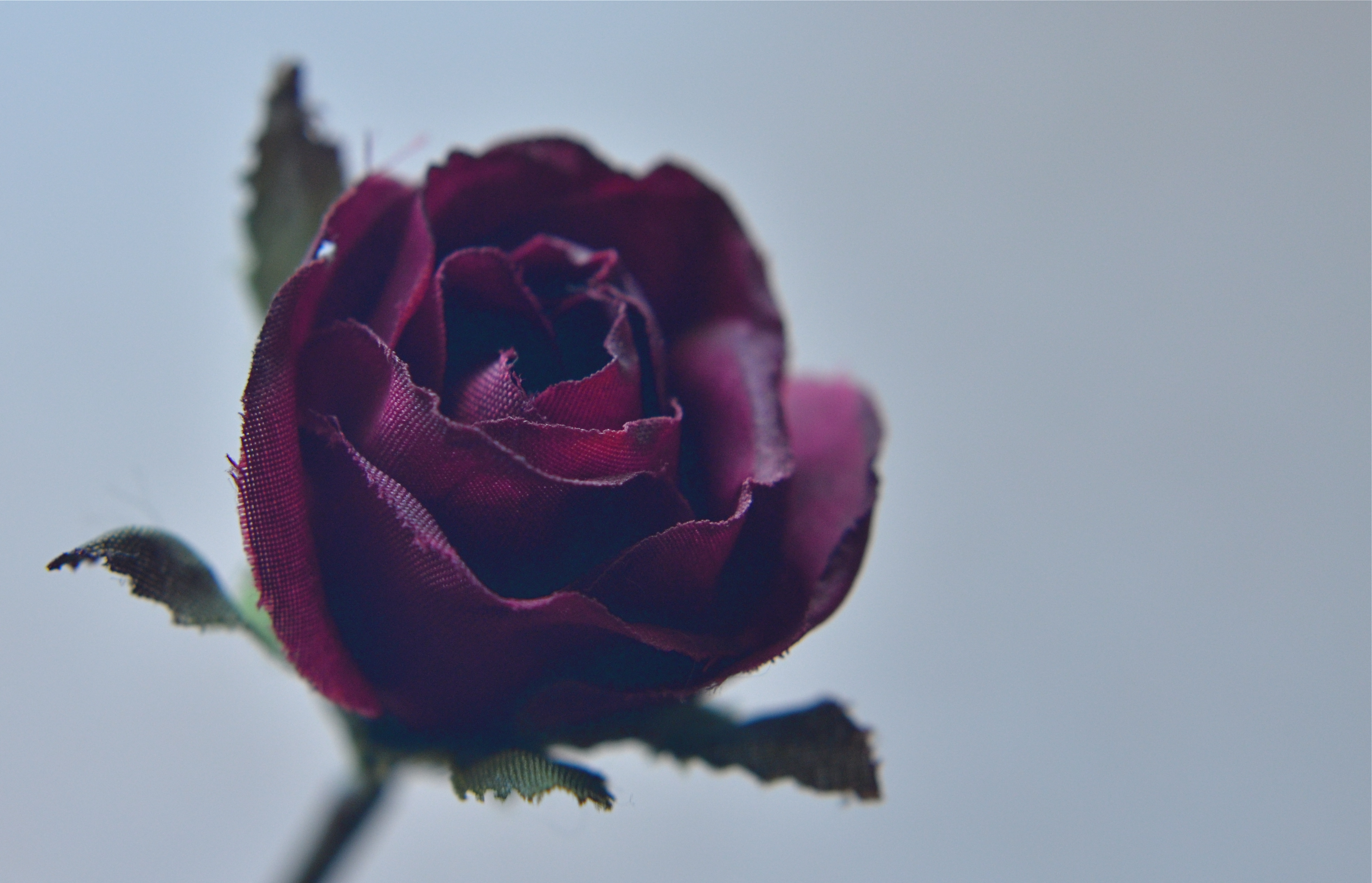
“A rose is a rose”. Unless it’s a ragged, fake rose. 1/50 sec., f/4.5, ISO 640, 35mm.
What started this whole train of thought was the recent discovery, under a bed, of an old fabric rose. Sadly, I have long since passed the point where I can actually throw anything away without having some kind of debate inside my skull about whether it’s worth looking at, one more time, before a lens. In this case, I was intrigued by how frayed and threadbare the thing had become over time, its petals and leaves bereft of any ability to create even the illusion of beauty. Its magic, and thus its reason to exist, had vanished.
I always keep a stack of three magnifying diopters handy to attach to the front of my prime 35 lens, giving me a poor-man’s macro at about 10x magnification, and I was soon within tight enough range to see the ragged edges and unraveled texture of the faux rose. It looked just a bit flat illuminated by soft window light, though, so I tilted the blossom away from the window a tad to deepen the shadows in some petals and give it a little added depth. Too me five minutes to find out the answer to the everlasting photo question, “is this anything?”
Even if such little exercises don’t result in great pictures, they do result in a speedup of the learning curve, and as practice, as seeing everything in as many ways as possible.
Not a big lesson. Just a lot of little ones bunched together.
Follow Michael Perkins on Twitter @MPnormaleye.
Related articles
- framing an emotion (afternoonwalks.wordpress.com)
THE COLORS OF DREAMS
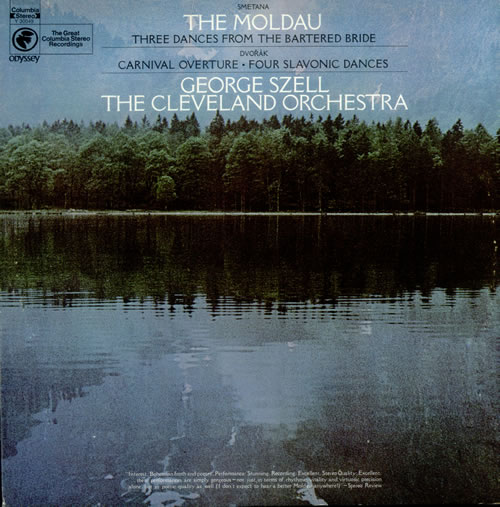
I will never know the name of the stock photographer at Columbia Records who shaped me with this image. But I know his genius.
By MICHAEL PERKINS
ONE OF THE TRICKIER PARTS OF BEING MY AGE is that I have been carrying around certain creative influences inside my skull for so many consecutive decades that their origins often blur. Who said it? Where did I brush up against that angle, that idea? Where did I see it? Book? Movie? Conversation? Who brought me into contact with this treasure? Inspiring mentor? Loving teacher? Teaching lover?
Of course, it can be argued that what you walked through the door to discover matters more than the door itself.
Maybe. But for me, the door and the room it leads to are two halves of one whole.
For most of my life, I have been fascinated by the intentional “un-realing” of color, the hypnotic spell of hues that weren’t “that way in nature”, but, through interpretation, could add drama and impact, even magic to the final version of an image. About a week ago, I was reminded of one important reason why I feel that way.
Researching composer Bedrich Smetana’s gorgeous musical love poem to his homeland, The Moldau, I set eyes on an image that I had not seen for over forty years; the cover photograph for a recording of Moldau by George Szell and the Cleveland Orchestra that I purchased in the 1970’s. My own copy of the original LP is long gone, but I still own a reissue of the performance, music that afforded my teenage self a serenity, a dream quality, a magic that travels within me to this day. In true “multi-media” fashion, I never listened to the original album without its cover within clear sight, its blue-green image of a soft-focus lake and forest quieting my nerves, inducing the music’s spell again and again.
One one level I knew that the colors in the photograph were not “natural” in the strictest sense, but they were nonetheless hypnotic. Through them, I saw Smetana’s homeland, its villagers, its folks rituals, and the beautiful river Vlatava. For me, the picture was the music, and the music was the picture. Energy flowed seamlessly from one conception of beauty to the other.
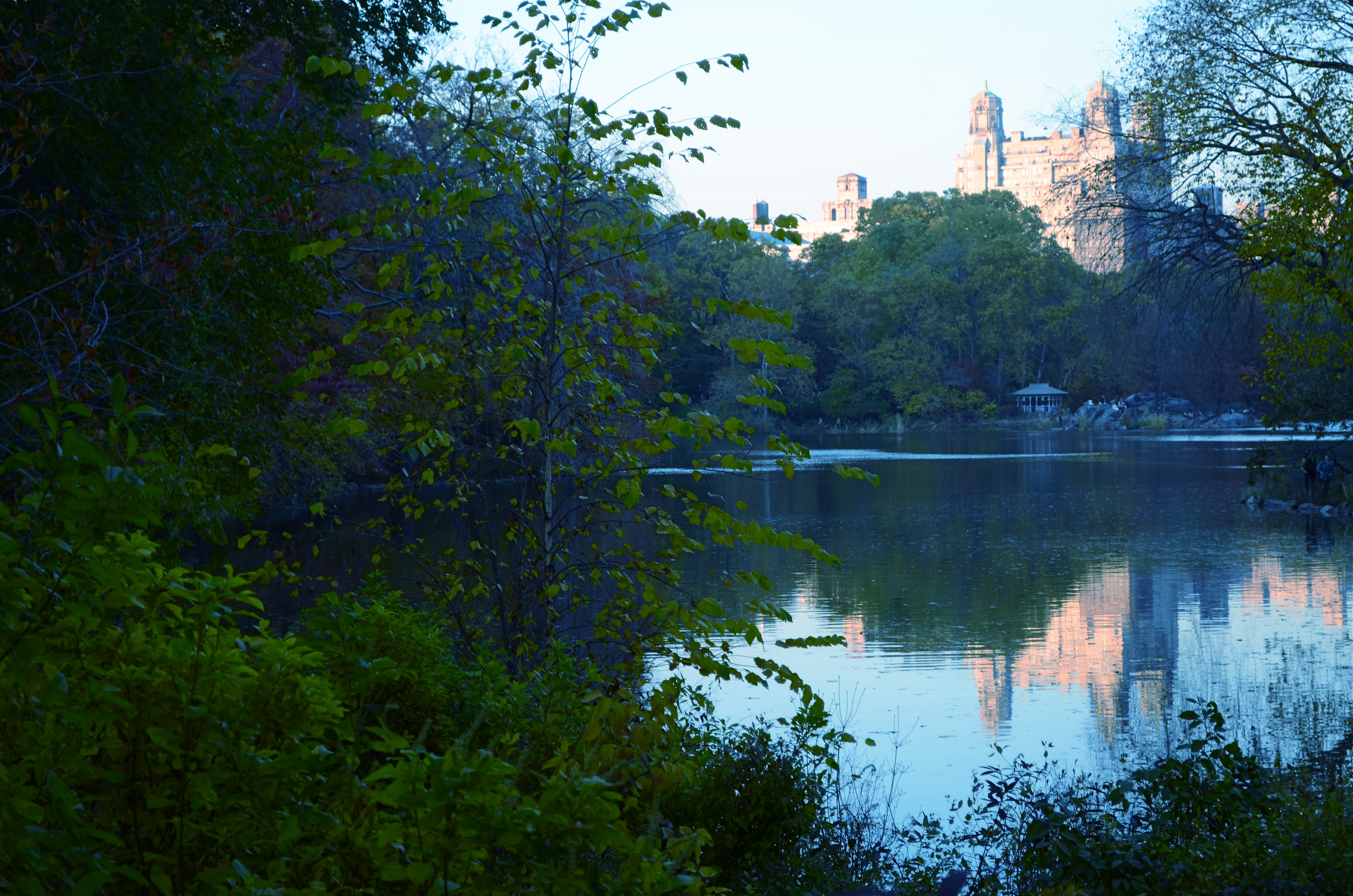
The Lake, Central Park West, NYC., 2011. 1/80 sec., f/5.6, ISO 160, 50mm.
Some of my own work, naturally, strives for this quality, the ability of a photograph to unchain the mind, to allow feelings to flow, to allow color to be abstracted, just like language or music. Some will call it influence, others imitation. I prefer to think of it as respect. And while I will never know the name of the stock photographer whose image was probably slapped onto The Moldau’s album cover as a clerical afterthought, I love it when I see his work leak through my fingers, if only a little.
Shade your dreams however you like.
And let the music surrender its colors.
Follow Michael Perkins on Twitter @MPnormaleye.
 thenormaleye