lower case G’s
By MICHAEL PERKINS
THE HUMAN VANITY WITH WHICH ALL PHOTOGRAPHERS, much like disposable cameras, come “pre-loaded” would have our audiences believe that all our work is the product of meticulous, deliberate planning, a “vision” that flows, fully formed, from our marvelous minds through the lens. Of course, anyone who’s taken the requisite number of rotten pictures needed to attain any skill whatever knows that this is a fantasy.
The raw fact is that many, many of our most wonderful photographic notions die a-borning. Either they come up short because we don’t possess enough skill to execute them or they fall prey to a thousand random factors that occur in the instant an exposure is made. And while we are more than willing to parade our successes as if they are de rigueur, something that happens effortlessly everytime we trip a shutter, we don’t tout the many happy accidents that sometimes work out better than what we started out to achieve. We aim at upper-case “Greatness” and, instead, get lower-case “gifts” from the Gods Of Camera Randomness.
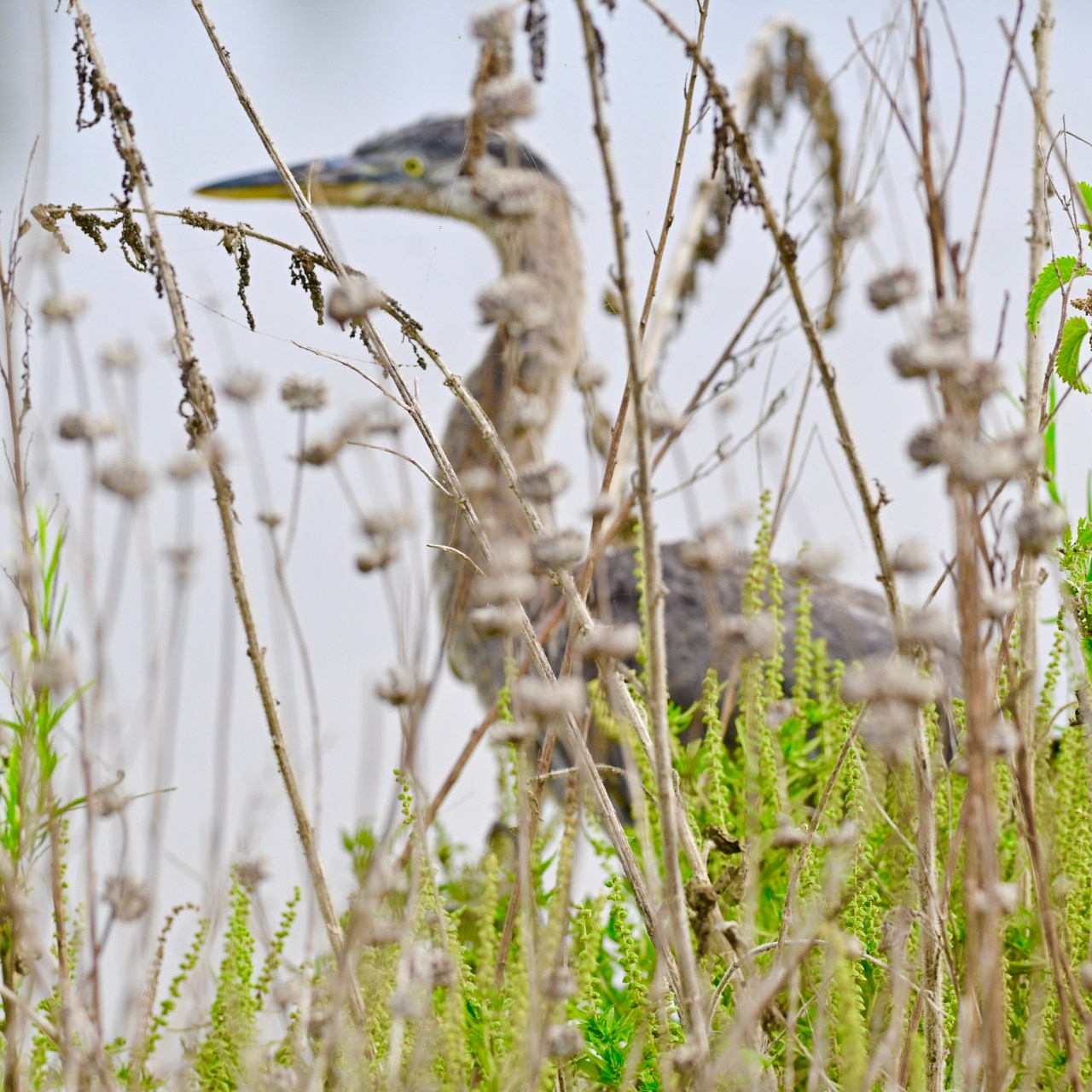
This image began as a gift, then had the brief potential for Great, then receded back down to a lesser gift. The juvenile heron you see here was pausing in a tall pond bank of reeds and flowers just twenty feet from where I and a group of birders were standing. Our binocular and telephoto gazes had been fixed on other birds, farther out in the water, when we suddenly realized this gorgeous creature was practically standing next to us, young enough to be unspooked by a cluster of aging hobbyists. The race was then on to grab some kind of image before he realized that he would be far better off putting some distance between us and him.
The foliage in front of him made autofocus useless, in that my lens would try to render the closest thing to it in sharpest relief, blurring out the bird. Switching to manual, I was racing against the clock to lock in the heron’s face before he could move even an inch and go back out of focus. I got five frames cranked off before he took wing, none of which had been in perfect register. Had I failed? Was I left with a generally bad batch, or could at least one image be said to deliver something more than a perfectly sharp frame might have? I had failed to capture “Greatness”, but had I truly been given a “gift”?
I know what you’re thinking. Photographers are all too eager to excuse their failures and try to see them as strengths, like an indulgent parent who sees a budding Picasso in his child’s incomprehensible crayon scrawl. I’m certainly not immune to my own ego, nor my bias toward whatever wretched messes emerge from my camera.
Still….
YOU AS DEFAULT
By MICHAEL PERKINS
THERE IS AN ONGOING, BUT SELDOM HOSTILE, debate among photographers over whether manual or automatic focus is superior, or in which cases one or the other performs better. This forum is not an attempt to settle that issue, any more than I’d squeeze myself in between two auto aficionados to weigh in on either manual or automatic transmissions. Suffice it to say that nearly every shooter I know has a preference, if not an outright belief, on the subject. So be it. Peace, love, dove. Make pictures, not war. Anything in the following that sounds like a recommendation is merely a description of what works, or doesn’t work, for moi.
Autofocus systems are, in fact, an attempt by technology to make it easier to check off at least one box from your “before I can take the picture” list, making cameras a smidge more intuitive so that it’s easier to concentrate more on the why of making the image and less on the how. Of course, your mileage may vary on whether you regard this as a kindly assist or an untoward interference. Photographers of a certain age predate the autofocus era, and so had no choice but to master manual until the AF option was introduced. For those who started making pictures in the last thirty years or so, however, AF pretty much came with any toy you bought, and there may be little occasion to even read up on how to approach things manually. And then there are those, like myself, who lean in one direction (manual) while toggling the other way in special cases. I cal this the “me as default” system.
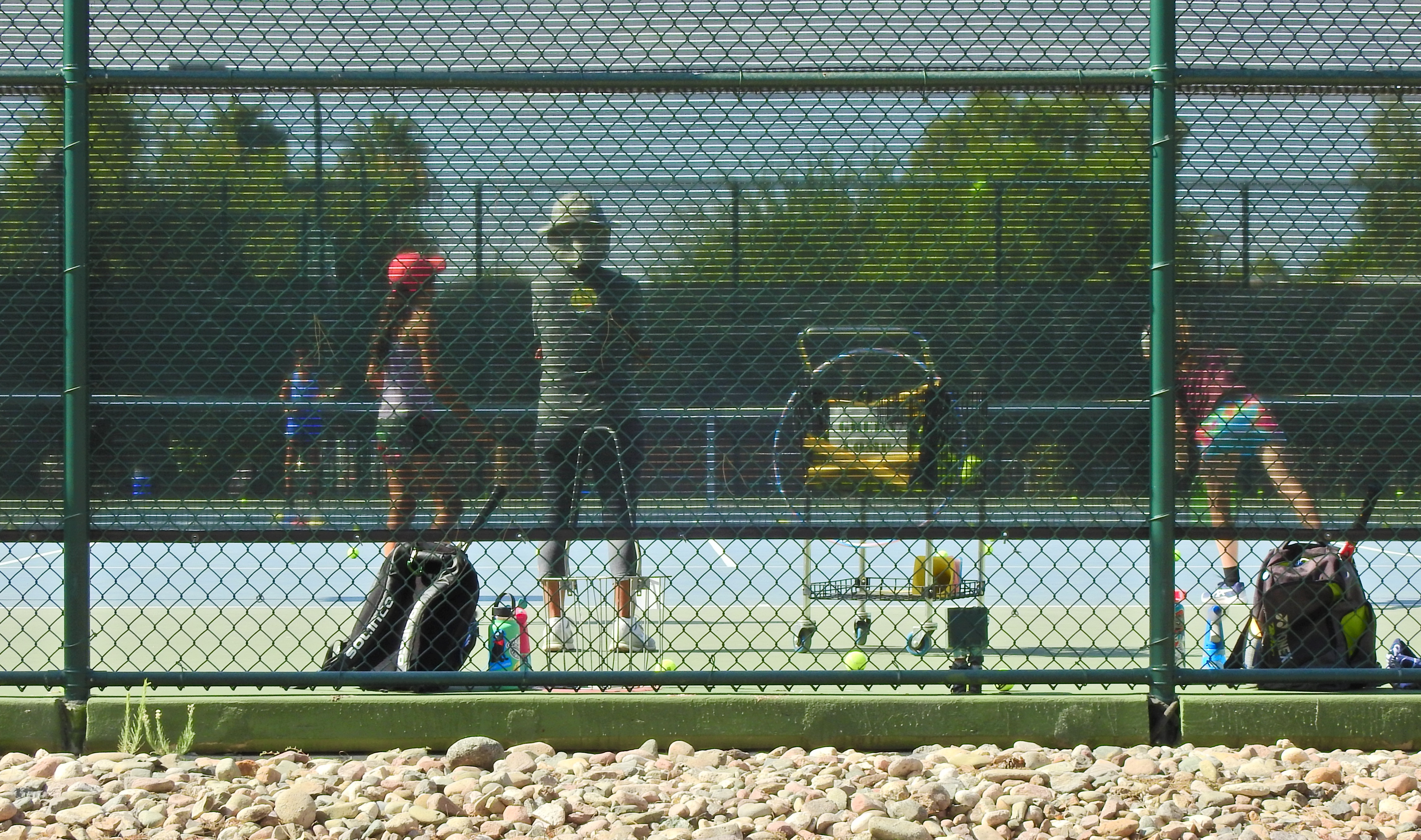
How to give an auto-focus system the nervous fits.
There are certainly times when the sheer speed of autofocus is bloody convenient, such as so-called “run and gun” situations where conditions on an event or person are in a constant state of flux (think little league baseball, bird watching), at which times I will gratefully lean on AF to avoid missing shots. However, I am often reminded how many things, from low light to the wrong combination of elements in a composition to time exposures, will absolute leave the autofocus searching, grabbing and blunder-blind. These will vary depending on the age of your camera, manufacturer, even the design bias of a particular lens. I have spent a long time trying to nail manual focus with less and less reaction time, and, to that end, I shoot for long stretches without changing lenses so as to become more instinctual about what a given chunk of glass will do. There’s also the idea of personal agency. In manual mode, I am not delegating to the AF the decision on what should be in focus: it’s my call completely. This, again, is a very personal decision, and there is no right or wrong choice. For me, being responsible for every major decision in making an exposure is the only way for me to feel as if it’s my picture. That said, I no longer mess around with a light meter or figure out flash settings with a slide rule and a sextant, so I can easily be called out for my hypocrisy. Still.
And then there’s the occasional oddball situation, like the above image, in which you can get a little playful with what either AF or manual can or can’t do. But as I said at the start, we are not here to settle this issue as we might decide the winner in a boxing match. If your pictures come out the way you want, then it matters little if you even had a lens on the camera. Both manual and AF shooting situations have their travails. I guess what I’m finally getting to is that both approaches will serve you in certain times. Find out what those occasions are, and master them, and yourself, in the process.
A BRIEF AUDIENCE WITH THE QUEEN
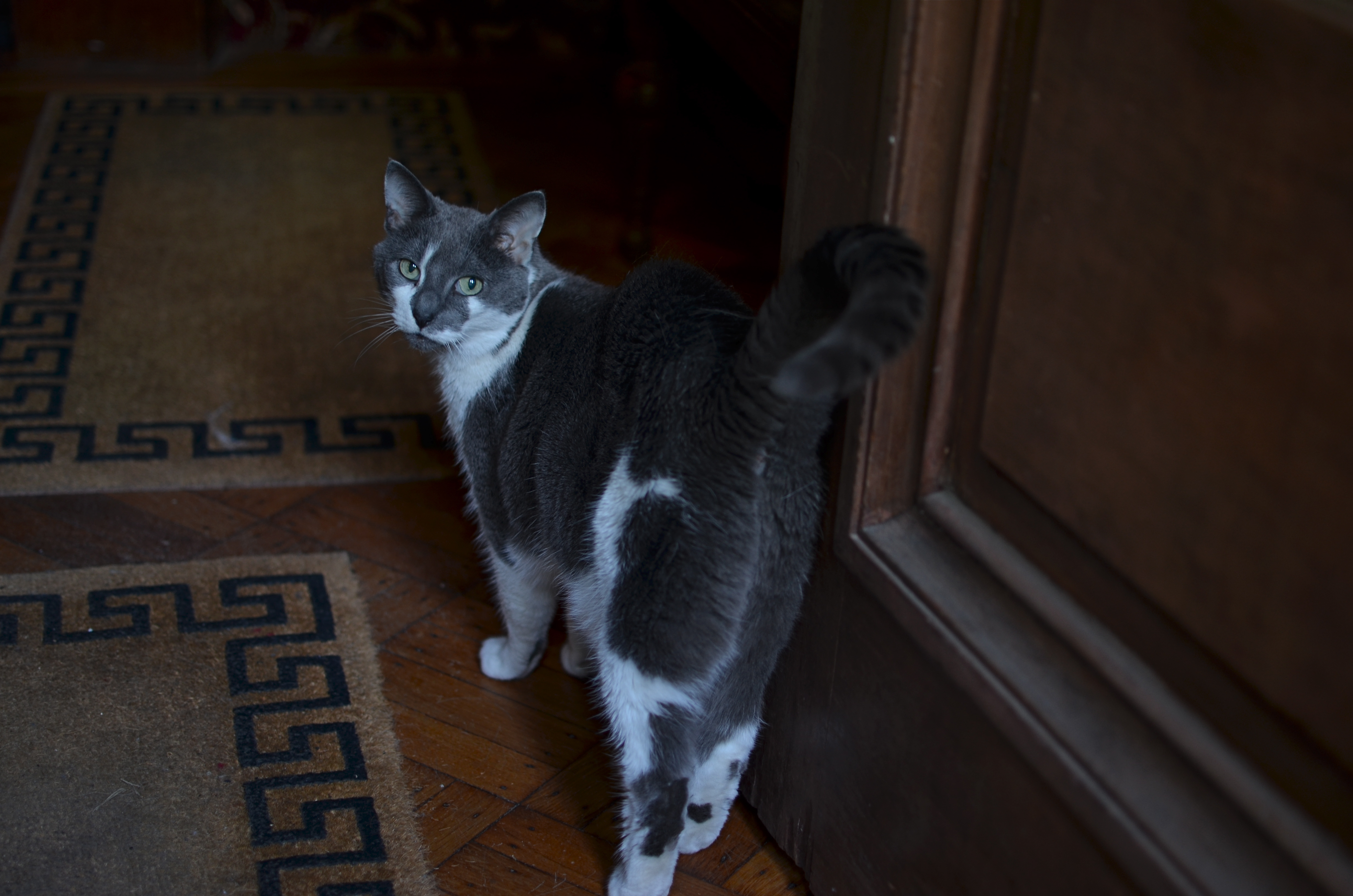
What, are YOU still here? 1/40 sec., f/1.8, ISO 100, 35mm.
By MICHAEL PERKINS
THERE IS ONLY ONE KIND OF PICTURE YOU WILL EVER TAKE OF A CAT, and that is the one she allows you to take. Try stealing an image from these spiritual creatures against their will, and you will reign over a bitter kingdom of blur, smear, and near misses.
It’s trickier to take photos of the ectoplasmic projections of departed relatives. But not by much.
I recently encountered this particular lady in a Brooklyn brownstone, a gorgeous building, but not one that is exactly flooded with light, even on a bright day. There are a million romantically wonderful places for darkness to hide inside such wonderful old residences, and any self-respecting feline will know how to take the concept of “stealth” down a whole other road. The cat in the above photo is, believe me, better at instant vaporization and re-manifestation than Batman at midnight in Gotham. She also has been the proud unofficial patrol animal for the place since Gawd knows when, so you can’t pull any cute little “chase-the-yarn-get-your-head-stuck-in-a-blanket” twaddle that litters far too much of YouTube.
You’re dealing with a pro here.
Her, not me.
Plus she’s from Brooklyn, so you should factor some extra ‘tude into the equation.
The only lens that gives me any luck inside this house is a f/1.8 35mm prime, since it’s ridiculously thirsty for light when wide open and lets you avoid the noticeable pixel noise that you’d get jacking up the ISO in a dark space. Thing is, at that aperture, the prime also has a razor-thin depth of field, so, as you follow the cat, you have to do a lot of trial framings of the autofocus on her face, since getting sharp detail on her entire body will be tricky to the point of nutso. And of course, if you move too far into shadow, the autofocus may not take a reading at all, and then there’s another separate complication to deal with.
The best (spelled “o-n-l-y”) solution on this particular day was to squat just inside the front foyer of the house, which receives more ambient light than any other single place in the house. For a second, I thought that her curiosity as to what I was doing would bring her into range and I could get what I needed. Yeah, well guess again. She did, in fact, approach, but got quickly bored with my activity and turned to walk away. It was only a desperate cluck of my tongue that tricked her into turning her head back around as she prepared to split. Take your stupid picture, she seemed to say, and then stop bothering me.
Hey, I ain’t proud.
My brief audience with the queen had been concluded.
I’ll just show myself out……
Follow Michael Perkins on Twitter @mpnormaleye.
 thenormaleye