GASLIGHTING WHILE GLASS PLATING
By MICHAEL PERKINS
THE 19th CENTURY ENTREPRENEUR P.T. BARNUM, the Victorian era’s grand master of humbuggery, marketed the unbelievable and the fantastic to millions with a wink to his audiences, as if he knew that they knew that this or that latest marvel was an utter fraud, but that it was all in good fun, since his customers loved to be lied to almost as much as he loved taking their dimes and quarters to accommodate their desire to be snookered. In that way, Barnum foretold the relationship we in the 21st century still have with fakery. It is thus easy to see how A.I. slop has continued to blur the line between the real and unreal, especially as regards photographs. If you want to see what we’ll fall for, look back at what we have already fallen for.
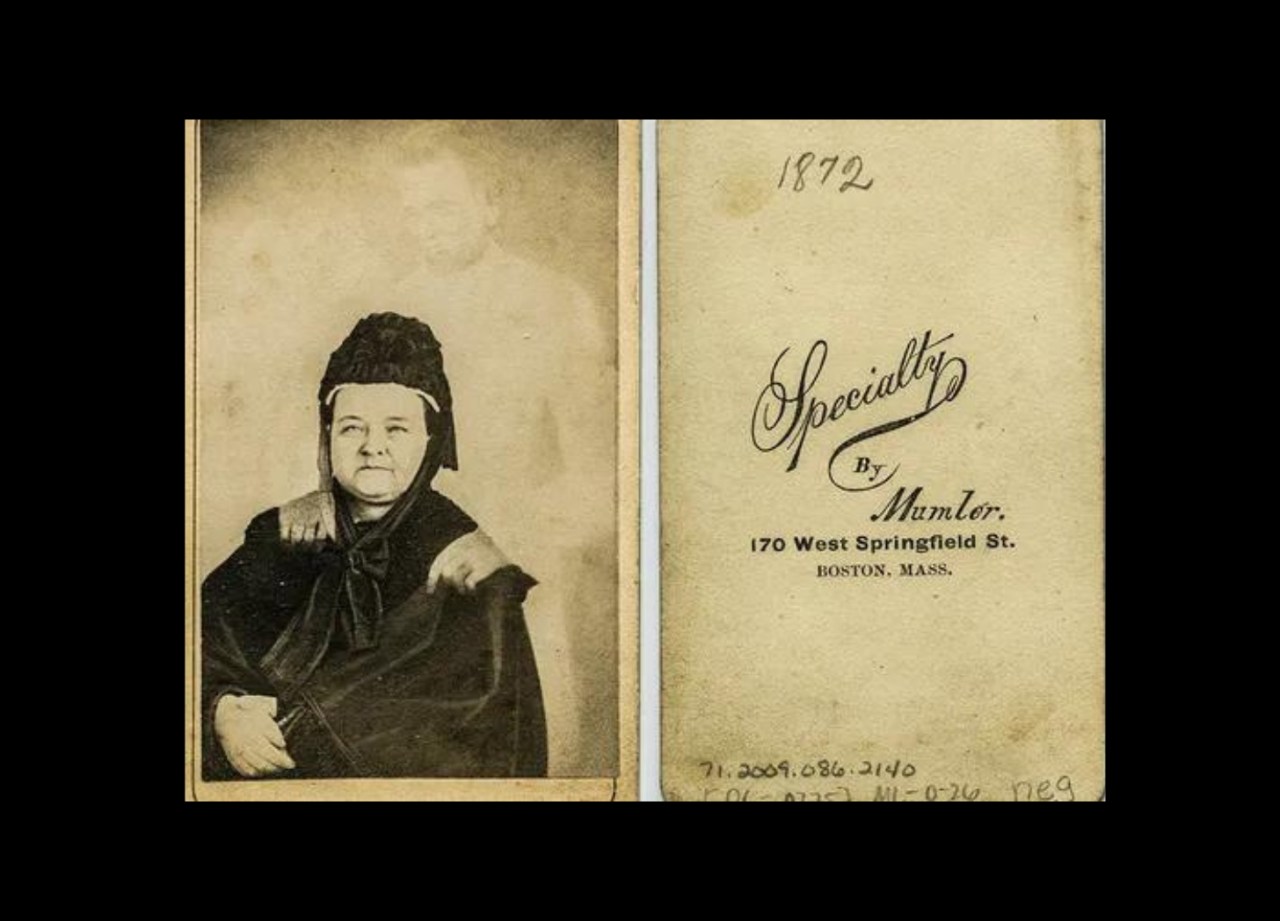
In 1861, the re-use of an improperly re-cleaned glass plate in the lab of photographer William Mumler made his finished print appear to show his own self-portrait “accompanied” by the shadowy figure of a girl. Mumler wrote the whole thing off as a lark, and forgot all about it until a spiritualist journal concluded that he had, in fact, captured a ghost inside his camera. Such publications were thriving in the back half of the 19th century, as the world was enthralled by the study of paranormal phenomena, and, smelling an easy payday, Mumler began marketing himself as the possessor of a unique “spirit camera”, scheduling sittings for bereaved people eager to pose with their departed loved ones. Insane? Well, consider in context: photography was such a new craft at the time that many were uncertain just what feats were even possible for it. After all, a soulless machine that could freeze time? Create a convincing record of reality with greater fidelity than the most skilled painter alive? What couldn’t the camera do?
Mumler made mad stacks of cash, and not only from the suckers, er, sorry, believers who flocked to his studio to be photographically reunited with the departed; he also played upon the grief and sentiment of the public at large, selling prints of the widowed Mary Todd Lincoln, seeming to be comforted by the ectoplasmic presence of her slain husband. The entire business seemed threatened when the Grand Fakeroo of the World, no less than P.T. Barnum himself, commissioned a photographer to create an image of himself with a shadowy presence in the background to demonstrate how easily the “spirit” effect could be achieved, and testified personally against Mumler at his trial for fraud. Acquitted by a judge, Muller simply started up where he had left off, cranking out the ghost pictures while also conducting legitimate experiments. At his death in 1884, he was celebrated for his greatest technical success, a system that made it possible to generate affordable and accurate prints from photo-electrotype plates, a technique which is still called the Mumler process. These days, with fraud walking hand-in-hand with art in the new golden age of manipulated images, it’s fascinating to remind ourselves of just how baked-in fakery has been across the entire history of photography. The camera may not lie, as the old saying goes, but the person holding the camera will often bear watching.
TRUE LIES
By MICHAEL PERKINS
NO SOONER HAD THE INFANT ART OF PHOTOGRAPHY asked the world of the 1800’s to trust it as the ultimate in visual verity (the camera doesn’t lie!) than it also began to turn itself into the most unreliable of narrators. Truth-telling and bald-face lying grew up side-by-side in the picture-making world, and they have been conjoined twins ever since. If P.T. Barnum was right that “there’s a sucker born every minute”, then certainly every one of those chumps has had his very own faked photograph.
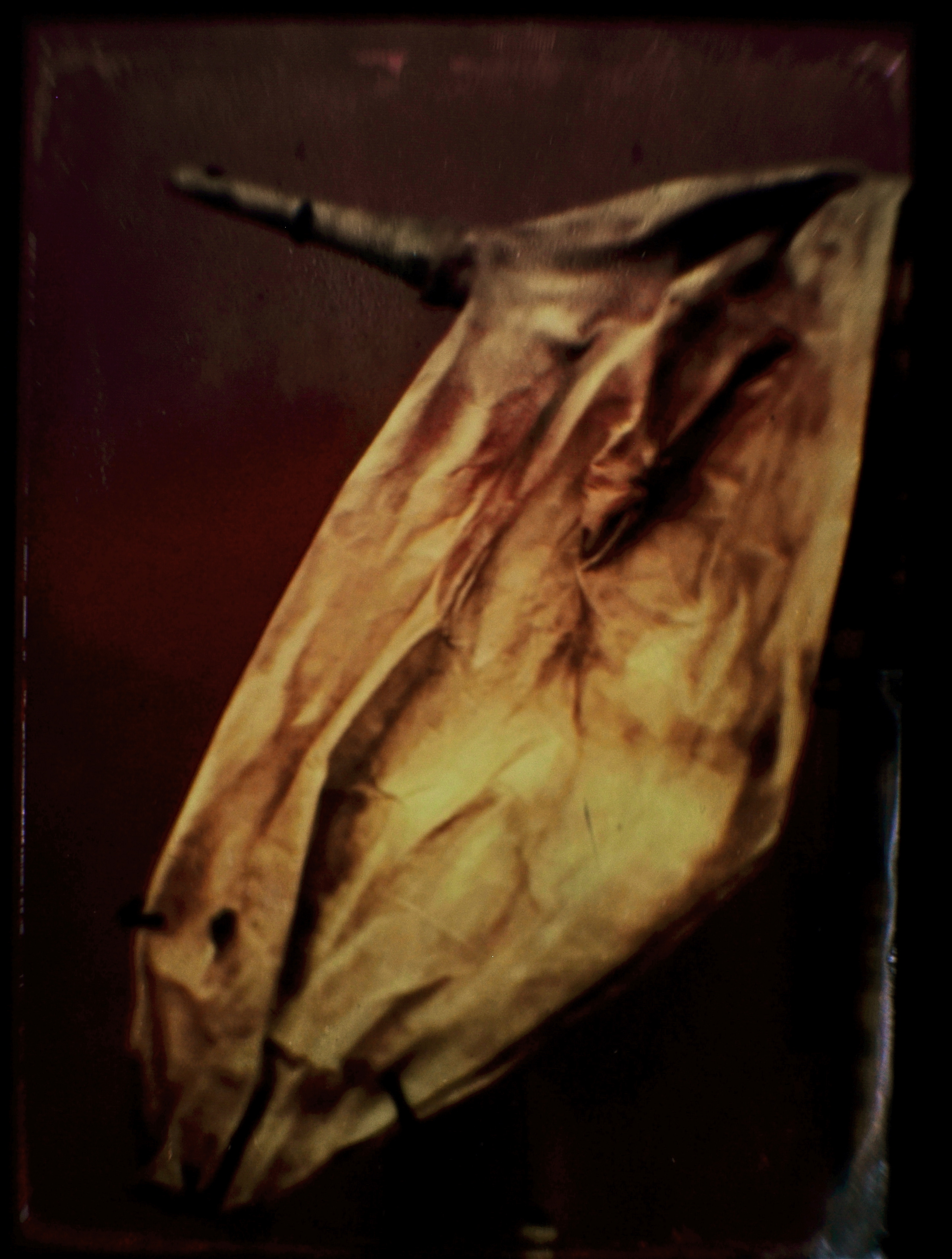
Barnum’s “Mummified Unicorn“, 1893 (?)
Some of the fraud has been benign, as when Julia Margaret Cameron dressed up her friends to portray the great authors and heroes of history, or when landscape artists combined seashores from one negative with clouds from another for a pleasing montage. Other fakes were more sinister, with nations manufacturing claims of war crimes against their foes or tabloids “proving” conspiracy theories with massaged “evidence”. And somewhere in the middle has always been the “that’s not real, is it?” photo, something which we can’t allow ourselves to either believe or resist, the charming charlatan, the obvious put-on.
Barnum and his bunch were fairly coy about their fakery, filling the first era of mass-produced press photography with doctored images that were literally too good to be true and challenging all comers to verify their veracity. Today, fakes are more ironic than compelling, since the tools to concoct them are so universally available as to make them commonplace. The object isn’t so much to actually fool anyone, but to comment on how easy it is to make the camera lie.
Years after Barnum’s death, the circus that later bore his name actually made a half-hearted attempt to concoct its own “unicorn” for its shows, something even the great humbug himself never did. Using a phone app, indifferent lighting and focus, and the freakishly arranged shape of an old bagpipe on display at Phoenix’ Musical Instrument Museum, I worked up a reasonable fake tintype of a unicorn’s mummified head, the like of which might have graced the master showman’s old dime museum. It took me about five minutes.
The main difference between the fakery of the Victorian age and the variety we practice today is that, in the 21st century, the fakers, myself included, confess right away. We want to get the points for being oh, so clever. And since you know we have the means to show you anything, we already know you believe almost nothing, so it’s no longer about convincing you a unicorn exists. It’s about the ride.
Photography didn’t just arrive at the place where truth is negotiable, anymore than fiction just recently became about “making stuff up”. We pitcher folk have always been, to a degree, untrustworthy. But as Barnum said, “the bigger the humbug, the better people will like it”. Hurry, hurry, hurry…… step right up….

