FINAL ANSWER ( FOR NOW, ANYWAY…)
By MICHAEL PERKINS
IF YOU LIVE LONG ENOUGH, YOU’LL QUESTION DAMN NEAR EVERYTHING that you once regarded as either undeniable or settled. I am old enough to remember when many of the shoppes that offered film processing would advertise the service as “photo finishing“, as if images actually had a defined beginning, middle and end point to their lives. “A photograph is never finished”, said Ansel Adams, “only released.” Certainly, for him, a man who often reinterpreted the same negatives half a dozen times over decades, photography was a process, not a product; an organic, evolving, breathing thing rather than a set series of steps from inception to completion. That’s both the frustration and the hope involved in making pictures.
Take a serious look at your own work over the years. Consider which images, regardless of age, that you would willingly take another crack at. We’re not talking about re-doing the initial capture, unless you truly want to return to the scene of your crimes and approach a given subject from scratch, as if the version of it that you shot is essentially unsalvageable. No, we’re speaking here of a shot that was fundamentally sound, but in need of an editorial…. re-imagining. Could be a simple crop, or just the rescue of detail from darker portions of the frame. really anything that, processing-wise, you’d undertake to take a basically adequate picture and squeeze just a bit of extra precision or narrative power from it. How big a list would you come up with?
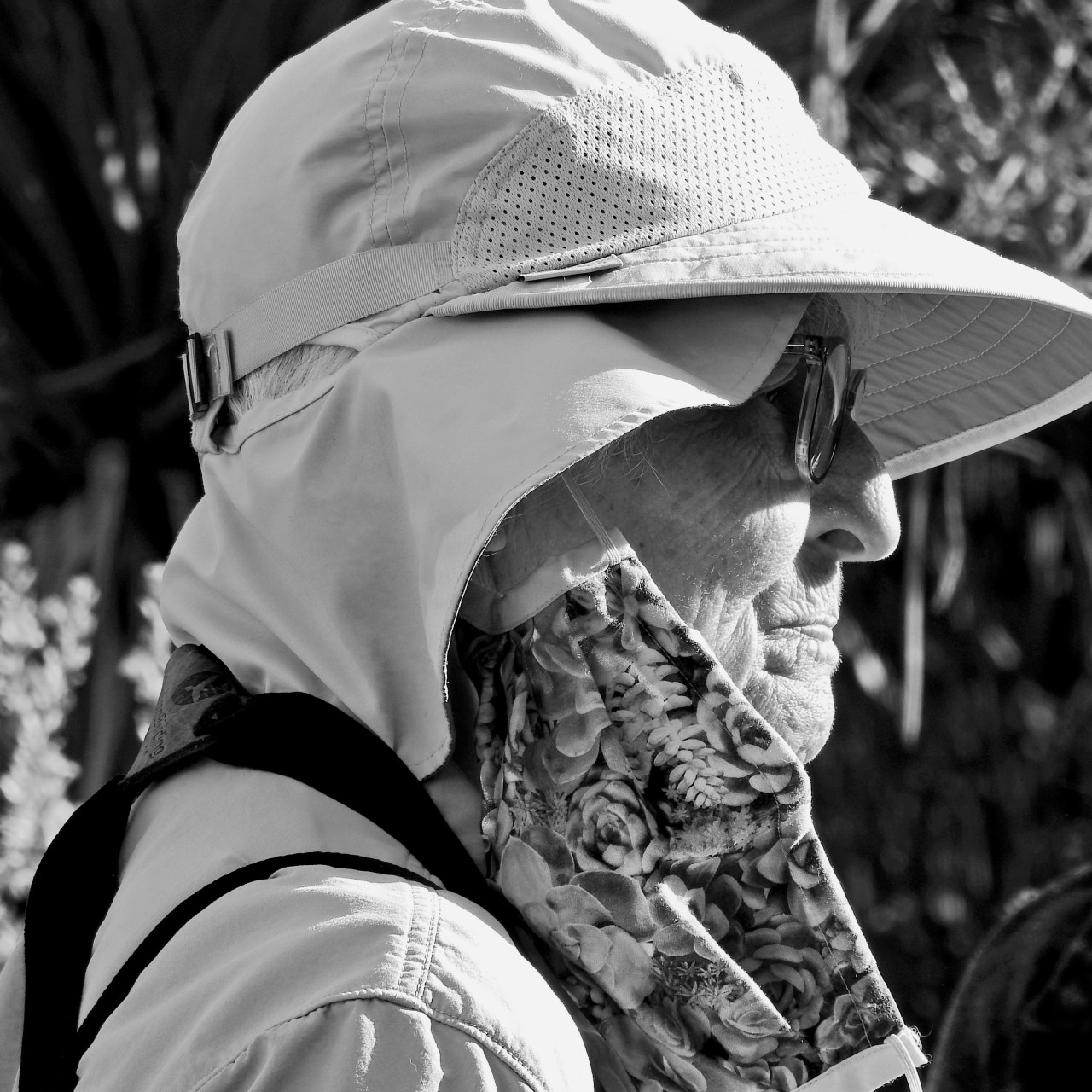
Bird Lady Rampant, 2022
Of course, you may also start with a shot that you previously believed was too flawed, too off the mark, only to find that a very small adjustment changed how it spoke (as in the case of the portrait shown here, now in its fifth rethink since being taken four years ago). Think of these images as the pictorial equivalent of a homeless guy, who after a shave, a shower, a hot meal and a decent suit turns out to be quite the Dapper Dan. The point (Ansel’s) is that a photograph will always be re-evaluated over time anyway, either through a change in social context or a shift in fashion, or people just regarding the subject matter in ever-new terms, so that we are forever adjusting how we judge a picture, whether we are thinking about doing it or not. Thus it’s not weak or silly or self-indulgent to look upon one’s creation from time period “A” and see how, in time period “B”, its power can be re-interpreted. It’s all right to release a photo, like a trained bird, then call it back at will. In fact, it’s better than all right. It’s the key to the growth of our work overall.


Leave a comment