IN “VOICES OF OLD PEOPLE”, THE POIGNANT SOUND MONTAGE of eldercare patients assembled by a young Art Garfunkel for the 1968 Bookends album, one sentimental senior, unable to find an old snapshot, remarks that he would give “without regret, one hundred dollars for that picture”, a sentence that is saturated with a longing that can no longer be satisfied. That one utterance imprinted on my sixteen-year-old self, forever establishing the value of both the photographs left behind, but, even more, the ghostly essence of the images lost to time. Now, as I have reached (and probably surpassed) the age of the old man in that montage, I find that photographs are, more than ever, a kind of testimony for me, as well as a trail of bread crumbs for my children, who may be even more keenly aware than I that time is running short, and that certain information must be mustered.
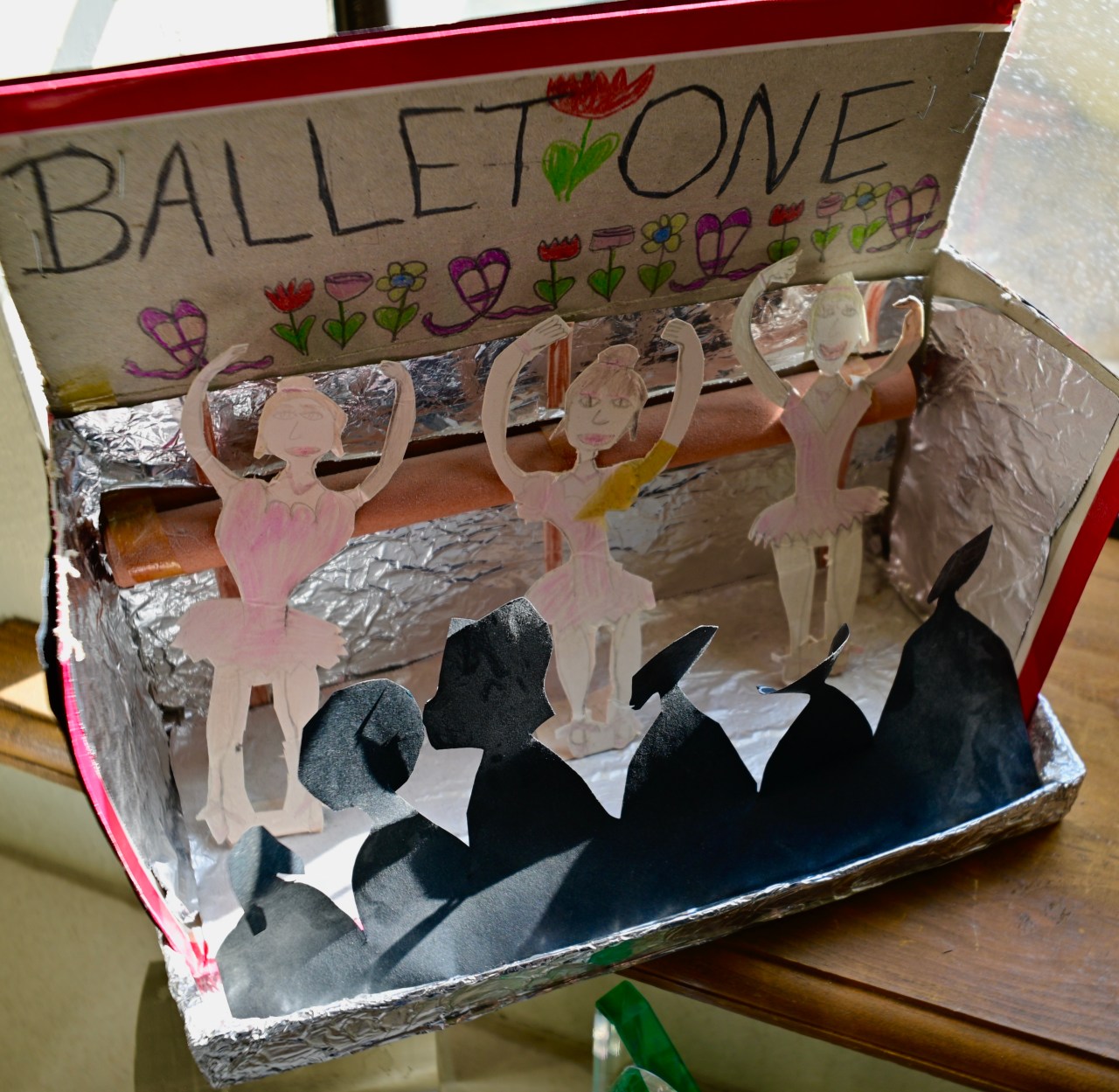
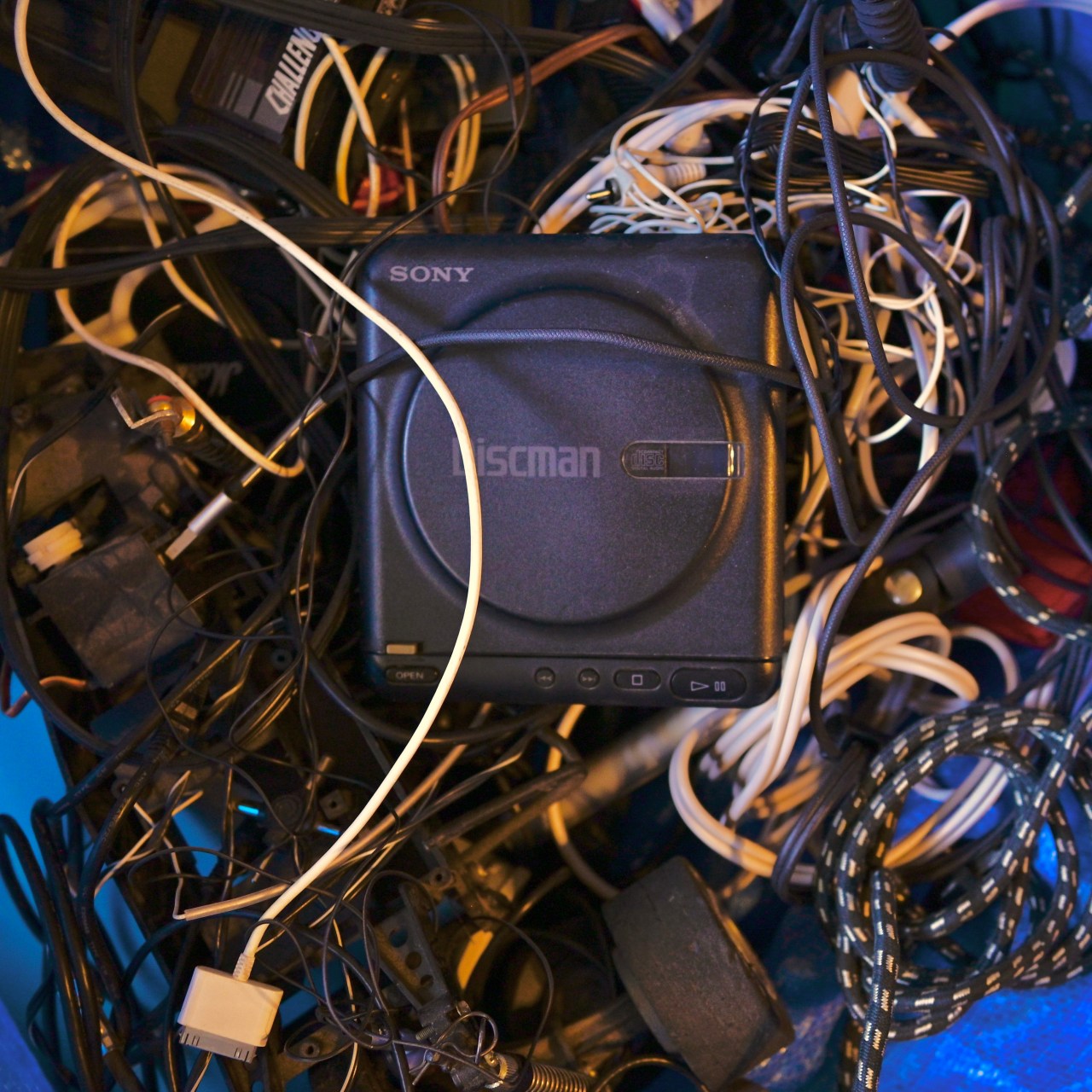
That may be why, as Marian and I took on the daunting task, two years ago, of disposing of over half our earthly possessions in order to downsize to a more manageable space, we very deliberately photo-catalogued many items that were too troublesome to carry forward, but which still might have the power to spark fond memory, for us and especially our kids. We were caught up in the newly popular practice of Swedish Death Cleaning, the discipline involved in just leaving less stuff behind for others to sort through and clean up once one leaves the stage. These pictures of various trophies and keepsakes were not rushed, like random snapshots, but done in as close to studio conditions as our very short timeline permitted. After all, they have to capture the elusive essences that made us hoard the objects for long. They are storage batteries for a very personal energy.
The diorama that Marian’s daughter made of her dream dance studio back in grade school (top) and my fond farewell to my enormous “kit bag” of electronic connectors and adapters (above) shared the same fate, i.e, the “discard” pile, but not before they posed for their respective close-ups. They shared “studio” space with wall art, old book friends, Art Deco teapots, shirt-pocket radios and a swarm of other life markers. It’s amused us to consider that, having gotten rid of one kind of junk pile, i.e., the actual physical souvies of a lifetime, that we merely swapped it for an electronic cache that will also have to be decoded by our loved ones, if they are so inclined. Hard to know if that’s really progress, but……
At the end of Simon & Garfunkel’s Bookends song cycle, as two friends, both advanced in age (“how terribly strange to be seventy..”), share a park bench, they again underscore the value of a physical memento of their shared adventures:
long ago, it must be……I have a photograph…….preserve your memories…..they’re all that’s left you……..
There was actually a time when I thought this image was “good”. That time has now passed.
By MICHAEL PERKINS
DURING MY CAREER IN RADIO, I lost count of how many times I heard people react to recordings of their voice with the remark, “that doesn’t even sound like me”. The statement is funny because it’s both true and false. As a series of stored electromagnetic signals that are a scientific record of sound, the tape certainly recreates the original noises we make: and yet our inner version of ourself seems distorted, as if we’re looking in a funhouse mirror. That can’t be us. Fact is, we’re often the world’s worst authority on what we are or are not, something that’s measured by the things we create.
Stay with me.
The current Great Hibernation that we’re all enduring is a great opportunity to clean house, to get to those dreaded “someday” lists that somehow always involve getting rid of things, of paring down. For photographers, this can involve finally curating old online images (not originals), a process which, like hearing our recorded voices, introduces us to versions of ourselves that we no longer recognize. Put enough distance between yourself and a picture you made a while ago and you can actually forget what it was about the thing that seemed a good idea at the time. And when you become estranged from an idea, it’s tough to love it enough to keep it around. Delete.
Of course, there are the other cases, in which you can clearly recall what you were after, and how, sadly, the result differs greatly from your “vision”. I don’t know which is worse, not recognizing your original intention or recognizing it all too well and wanting to distance yourself from it. Delete.
Some images are orphans. You posted them, you tagged them, you continued to love them, but no one else wanted to come to the party. “They” didn’t get it because….why? A million reasons. Whatever the missed connection was due to, these fatherless kiddos aren’t your best work. Delete.
There are also special circles of my own private hell for “lipstick on a pig” pictures. You know the ones. They’re inadequate or ill-conceived, but you are convinced that by torturing them into new versions of themselves with apps or software (see above, gulp), you can somehow make up for the fact that you blew the master image. That’s not just putting lipstick on a pig, that’s telling yourself that the pig is actually Sophia Loren. Delete.
There is actually an upside to this process. With all the chaff you will also review all the wheat, occasionally astonishing yourself at how lucky/persistent/prescient you were. This is truly an investment in hope, since, it stands to reason, if you could mine gold once, you might, just might be able to do it again. Taken in full, a healthy and brutal review of past sights and other blights is as valuable as going out today to shoot all new stuff. More valuable, actually, because everything you shoot today is a by-product of all the keepers and weepers that went before. Understanding who you were informs who you will be. And while it’s humbling to find that you’re not always perfect, it’s a genuine comfort to know that sometimes you ring the bell.
 thenormaleye
PAST SIGHTS AND OTHER BLIGHTS
There was actually a time when I thought this image was “good”. That time has now passed.
By MICHAEL PERKINS
DURING MY CAREER IN RADIO, I lost count of how many times I heard people react to recordings of their voice with the remark, “that doesn’t even sound like me”. The statement is funny because it’s both true and false. As a series of stored electromagnetic signals that are a scientific record of sound, the tape certainly recreates the original noises we make: and yet our inner version of ourself seems distorted, as if we’re looking in a funhouse mirror. That can’t be us. Fact is, we’re often the world’s worst authority on what we are or are not, something that’s measured by the things we create.
Stay with me.
The current Great Hibernation that we’re all enduring is a great opportunity to clean house, to get to those dreaded “someday” lists that somehow always involve getting rid of things, of paring down. For photographers, this can involve finally curating old online images (not originals), a process which, like hearing our recorded voices, introduces us to versions of ourselves that we no longer recognize. Put enough distance between yourself and a picture you made a while ago and you can actually forget what it was about the thing that seemed a good idea at the time. And when you become estranged from an idea, it’s tough to love it enough to keep it around. Delete.
Of course, there are the other cases, in which you can clearly recall what you were after, and how, sadly, the result differs greatly from your “vision”. I don’t know which is worse, not recognizing your original intention or recognizing it all too well and wanting to distance yourself from it. Delete.
Some images are orphans. You posted them, you tagged them, you continued to love them, but no one else wanted to come to the party. “They” didn’t get it because….why? A million reasons. Whatever the missed connection was due to, these fatherless kiddos aren’t your best work. Delete.
There are also special circles of my own private hell for “lipstick on a pig” pictures. You know the ones. They’re inadequate or ill-conceived, but you are convinced that by torturing them into new versions of themselves with apps or software (see above, gulp), you can somehow make up for the fact that you blew the master image. That’s not just putting lipstick on a pig, that’s telling yourself that the pig is actually Sophia Loren. Delete.
There is actually an upside to this process. With all the chaff you will also review all the wheat, occasionally astonishing yourself at how lucky/persistent/prescient you were. This is truly an investment in hope, since, it stands to reason, if you could mine gold once, you might, just might be able to do it again. Taken in full, a healthy and brutal review of past sights and other blights is as valuable as going out today to shoot all new stuff. More valuable, actually, because everything you shoot today is a by-product of all the keepers and weepers that went before. Understanding who you were informs who you will be. And while it’s humbling to find that you’re not always perfect, it’s a genuine comfort to know that sometimes you ring the bell.
Share this:
June 10, 2020 | Categories: Commentary, Conception, Criticism | Tags: archiving, Editing | Leave a comment