20 x 50=31
By MICHAEL PERKINS
I AM STILL RETRENCHING AND REFRESHING AFTER A FIRST YEAR IN CALIFORNIA which saw me using full auto to a far greater degree than is normal for me. In this honeymoon phase, sensory overload was the word of the day, with new places and experiences cascading with such speed that I found myself shooting reactively, hoping, in many cases, that some of the snaps I took in haste would later be re-done with a finer degree of control. My prescription for this feeling that the process was doing me, instead of the reverse, was to retreat into fully manual work for at least my non-wildlife stuff. This meant re-acquainting myself with the lens that served as the foundation for most of my earliest writings in THE NORMAL EYE some fourteen years ago, a 50mm f/2.
There is something to be said for taking full responsibility for your shots and for using what serves many as “the only lens I need”, regardless of the setting or situation. The more stringent rules of engagement, from framing to exposure calculation to focus, actually work to free a photographer, in that he always knows what to expect of the lens, both in its limitations and its ease and simplicity of operation. The so-called “nifty fifty” is cited by many shooters as not only their go-to, but their entire kit. And for this year, I wanted to investigate some of he best third-party 50’s from the late analog era, 1975-1985 mostly.
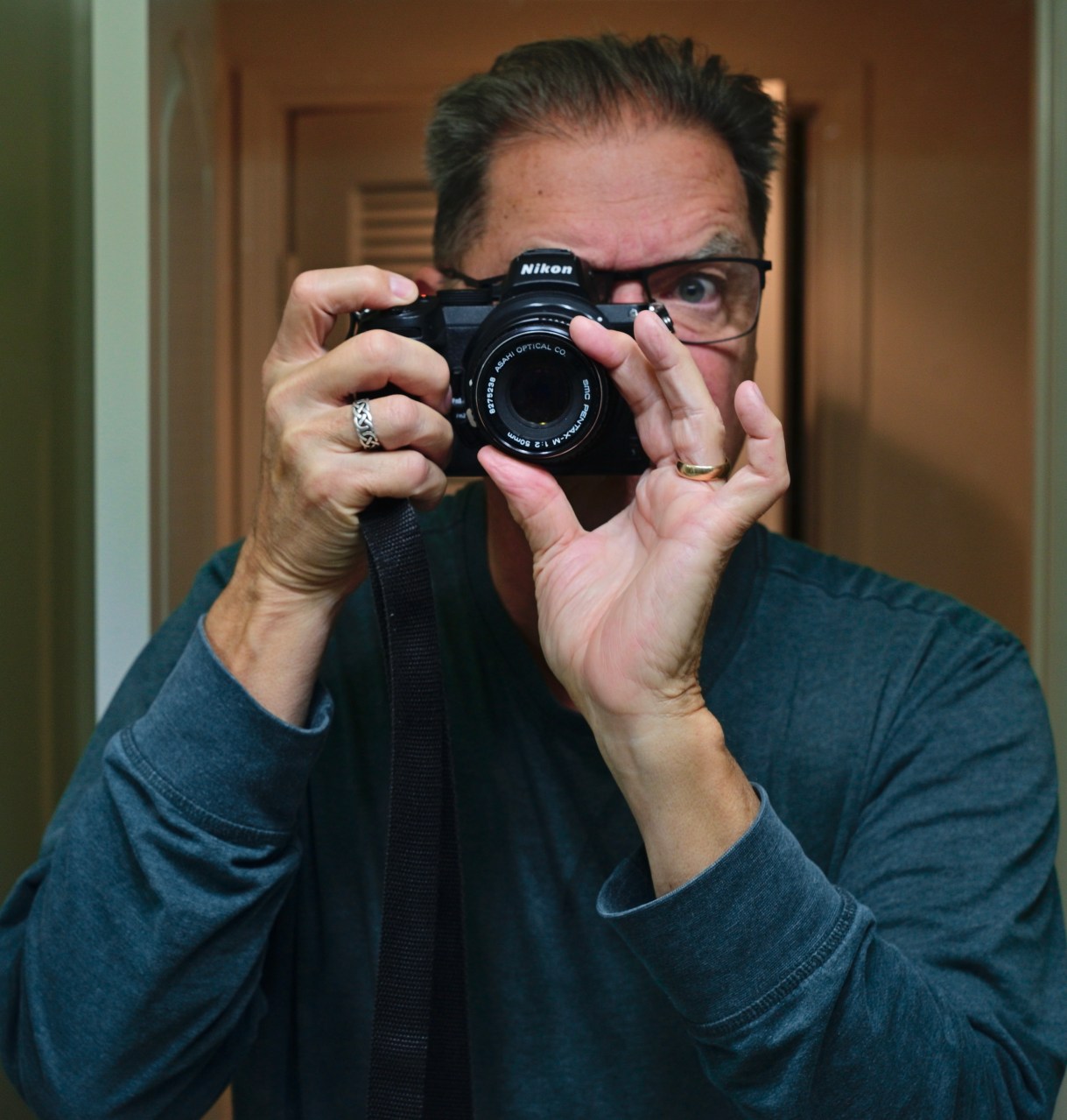
A Pentax-M 50mm f/2, built from 1975-1982, adapted for use on a Nikon Z5 body for under $40.
For years, I had stayed on Team Nikon, using an f/1.8 50 manufactured in the late seventies. It was my sole companion for an entire year, comprising much of the work I collected into a book bearing this blog’s name. This year, I had a light-bulb moment and robbed the 50 off the front of my old Minolta SRT-100, truly shooting for free. More recently, after borrowing an old Leica Summicron f/2 from a buddy and driving it around the neighborhood, I became curious about which other 50mm primes from the period would nearly perform as well for less cash, like a lot less. 50’s of every brand were produced in the millions in the late 20th century, being the default kit lens for many models, and are, therefore, the very definition of cheap thrills. Enter the Pentax-M Asahi f/2 seen here (similar to the lenses used by the Beatles on their first cameras, way back in 1964), which I harvested off the internet for 20 dollars American.
And so, with renewed vigor, I’ve decided to shoot everything, not for a year, but at least for the 31 says of December 2025, with just this puppy. It is sharp and light, even with the $15 dumb adaptor that allows it to be mounted to my Nikon Z5. The lens does not share information with the body, but that’s what I am for, supposedly. Let me be honest; I love many auto features. I sometimes even love when my camera anticipates what I need, even when I don’t know what that is. But sometimes you have to go back to basics and remind yourself how to directly make a picture, armed only with your own native cunning and $20 worth of glass.
NOT AS ULTRA
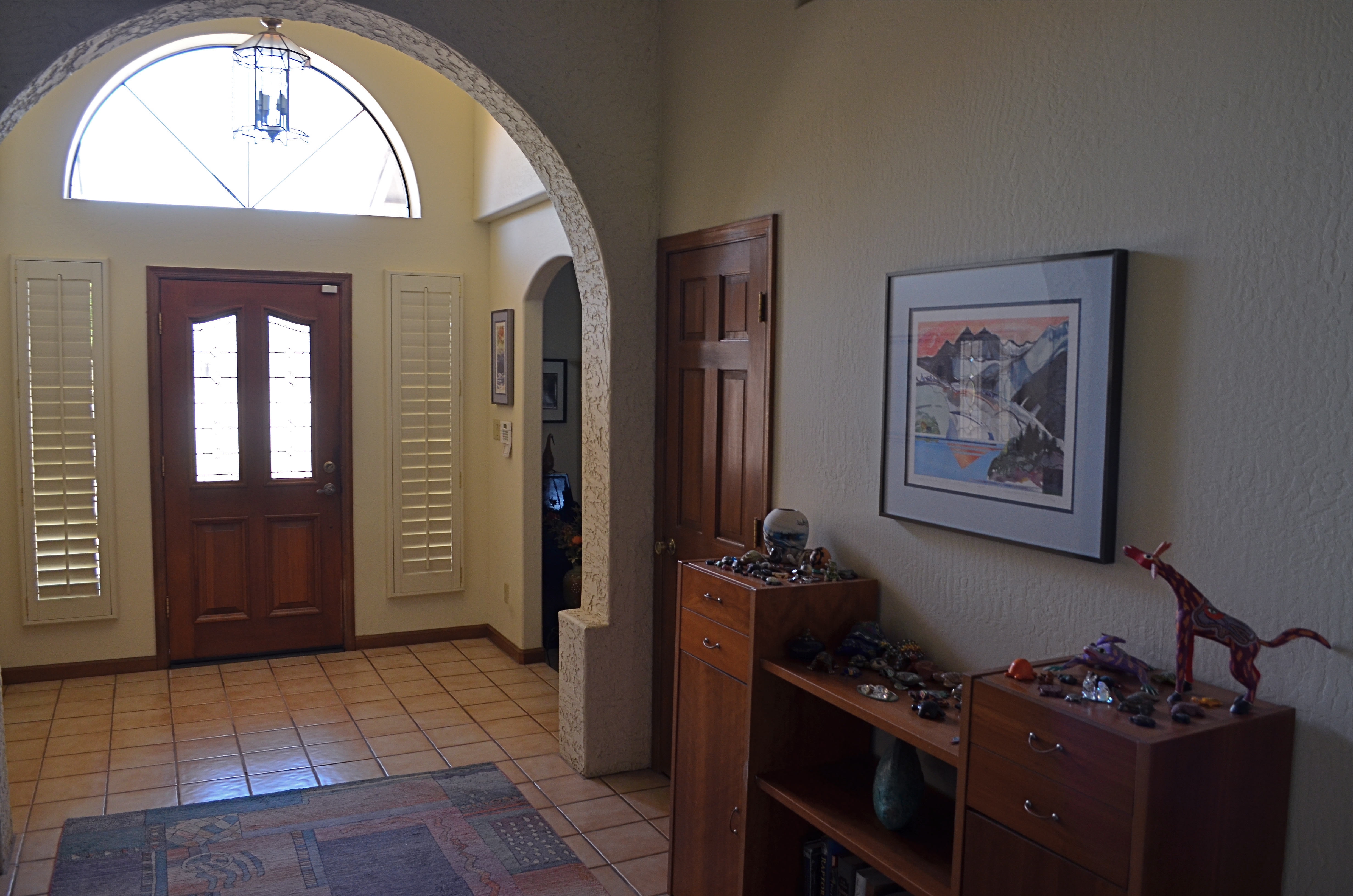
At its widest (18mm) setting, an 18-55 lens exaggerates front-to-back distances and slightly distorts the shapes of objects.
By MICHAEL PERKINS
SINCE THE 1990’s, THE MOST COMMON BASIC HUNK OF PHOTOGRAPHIC GLASS for new DSLRs has been the 18-55mm wide-angle, dubbed the “kit lens”. It allows beginners to move from landscape-friendly wides to moderate zooms without switching lenses. Depending on how much a given shooter experiments, the kit can allow for a lot of nuanced compositional options between the lens’ range.
If you find yourself shooting at the widest angle most of the time, then you are really using an effects lens, since, at 18mm, the lens is more than wide enough to distort angles and distances in ways that, while dramatic, don’t reflect the way your eyes actually see. This makes for expansive vistas in crowded urban streets and a little extra elbow room for mountain views, but is substantially more exaggerated than focal ranges from 35-50mm, which produce proportions more like human eyesight. However, the focal length you eventually choose has to be dictated by what you care to create; there can’t be any yardstick than that, all people’s opinions off to the side.
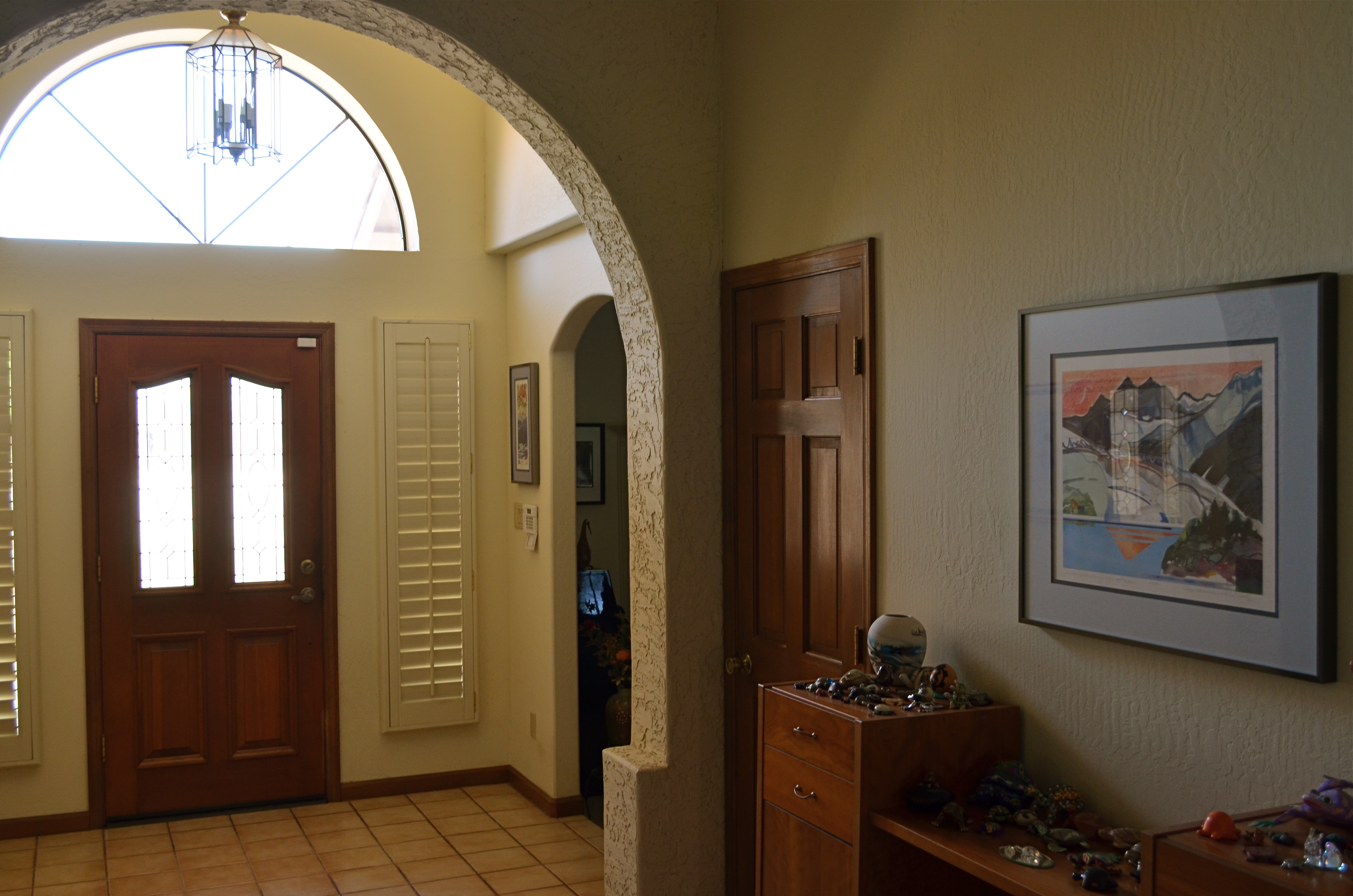
The same scene, taken from the same location at 24mm. Still plenty wide but displaying more normal space and perspective.
I have found a personal sweet spot by going a tad narrower, back to 24mm, and I also work with a dedicated prime lens that will only work at that exact focal length. By trimming back from 18mm, I find the distances from front to back in an image are a little more natural to my eye, and that I still have a yard of room from side to side without ushering in that Batman-type bending of perspective.
For comparison, I have re-shot subjects that I’d photographed at 18mm and found, at 24, no loss in impact. In the images in this post you can see the difference in how the two settings frame up. The composition in the 24 is a little tighter, but, if that’s not wide enough for you, you can simply step back a bit and there’s the same composition you saw in the 18, albeit with a little more normal proportion.
The most important thing with a variable focal length lens is to give yourself the flexibility of being able to get good results all through the focal range, simply to avoid getting too comfortable, i.e., sliding into a rut from always doing everything in the same way. Putting yourself into unfamiliar territory is always a good route to growth, and playing with your gear long enough to know everything it has to give you is the best way to periodically refresh your enjoyment.
When Grandma serves broccoli, you don’t gotta eat and pound-and-a-half of it, but heck, try it. You might like it.
NEW WINE FROM OLD BOTTLES
Wide-angle on a budget, and in a time warp: a mid-70’s manual 24mm Nikkor prime up front of my Nikon D5100.
By MICHAEL PERKINS
MANY OF US WHO BEGAN THEIR LOVE FOR PHOTOGRAPHY IN THE DAYS OF FILM have never really made a total switch to digital. It just never was necessary to make that drastic a “clean break” with the past. Far from it: through the tools and techniques that we utilized in the analog world, we still carry forth viewpoints and habits that act as foundations for the work we produce in pixels. Photography was not “re-invented” by digital in the way that transportation was when we moved from horse to car. It was refined, adding a new chapter, not an entire book.
Digital is merely the latest in a historical line of ever-evolving recording media, from daguerreotypes to salted paper to glass plates to roll film. The principles of what makes a good picture, plus or minus some philosophical fashion from time to time, have not changed. That means that tons of toys from the analog world still have years of life left in them, especially lenses.
Call it a “reverse hack” mentality, call it sentiment, but some shooters are reluctant to send all their various hunks of aged camera glass to the ashcan simply because they were originally paired with analog bodies. Photography is expensive enough without having to start from scratch with all-new components every time a hot new product hits the market, and many of us look for workarounds that involve giving a second life to old lenses. New wine from old bottles.
Some product lines actually engineer backwards-compatibility into their lenses. Nikon was the first and best company to spearhead this particular brain flash, making lenses for over forty years that can be pressed into service with the latest Nikon body off the production line. In my own case, I have finally landed a Nikon 24mm f/2.8 prime, not from current catalogues, but from the happy land of Refurbia. It’s a 1970’s-era gem that is sharp, simple, and mine-all-mine, for a fifth of the cost of the latest version of the same optic.
My new/old 24 gives me a wide-angle that’s a full stop more light-thirsty than the most current kit lenses in that focal length, and is also small, light, and quick, even as a manual focus lens. And it can be argued that the build quality is better as well. Photography is about results, not hardware, so how you get to the finish line is your business. And yet, sometimes, I must admit that shooting new pictures with legendary lenses feels like photography, as an art, is building on, and not erasing, history.
 thenormaleye