I COME FROM FAR AWAY
By MICHAEL PERKINS
ONE OF THE LENSES WHOSE PRICE TAG I HAVE NEVER QUITE BEEN ABLE TO JUSTIFY is a dedicated macro, an optic made almost exclusively for super-close work. Perhaps if I had specialized in such shots, almost to the degree of a personal signature, I might have laid out the necessary cash, but my normal bent is to buy lenses that do at least two things well and cut down on the one-trick-ponies when I can. Call me cheap (as indeed, I am) but most of my glass is capable of at least a limited bit of multitasking. If macro ability is one of several tricks a lens can do (the Lensbaby Velvet series comes readily to mind) then great. Fact is, over the last ten years, I have done most of my macro work with a telephoto.
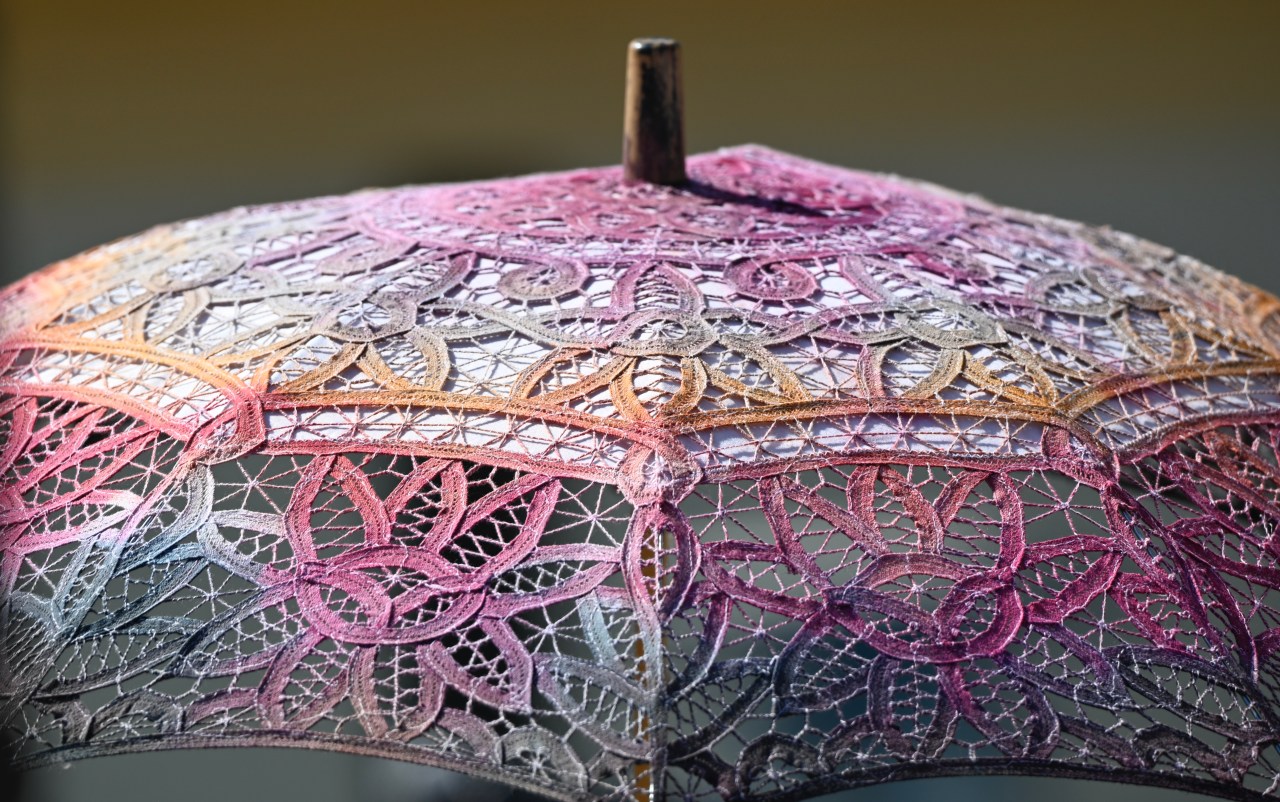
A parasol held by a woman dancing to a concert in a crowded courtyard some forty feet away from me. My Nikkor 180-600mm zoomed in for a faux-macro shot that I could never have made at close quarters. And with an aperture of f/6.3, I got good detail almost to the back edge of the umbrella.
I have certainly done my share of precariously hovering mere inches from a blossoming bloom, but I have achieved results that are just as satisfying standing thirty feet or more away from the flower and zooming in. Thing is, I hadn’t realized for years how many other people were doing the exact same thing. There are distinct advantages, such as a better control of natural light (my body can’t cast shadows on something from which I’m so far removed), a more generous depth of field (macros tend to be pretty shallow), and the ability to sneak into places that are too congested close at hand (like, for instance, the five other photographers who decided that they’d like to frame up “your” rose at the same time you’re trying it).
Of course, zooming in tight enough to produce great results with minute details is not without its problems. For one thing, there’s the stability issue. The farther away you zoom from, the greater is the risk of camera shake, where even minor movements like a shaky breath will be magnified to blurry effect. There is also the need to isolate your subject from the stuff behind or beside it, since that can create a cluttered result. The case I’m making here is not necessarily that packing a true macro isn’t a great idea at times. It’s really my ongoing argument for heading out with as little gear as possible, since a bagful of over-specialized glass can be weighty, unwieldy, and increases the risk of missed shots that flit away while you’re changing from one lens to another. If there’s one sentence I try to live by these days, it’s do the most with the least. A telephoto that occasionally doubles as a macro is one step toward that ideal.
Did we frame up our idea well? By all means, like, share, subscribe!
NOT AS ULTRA
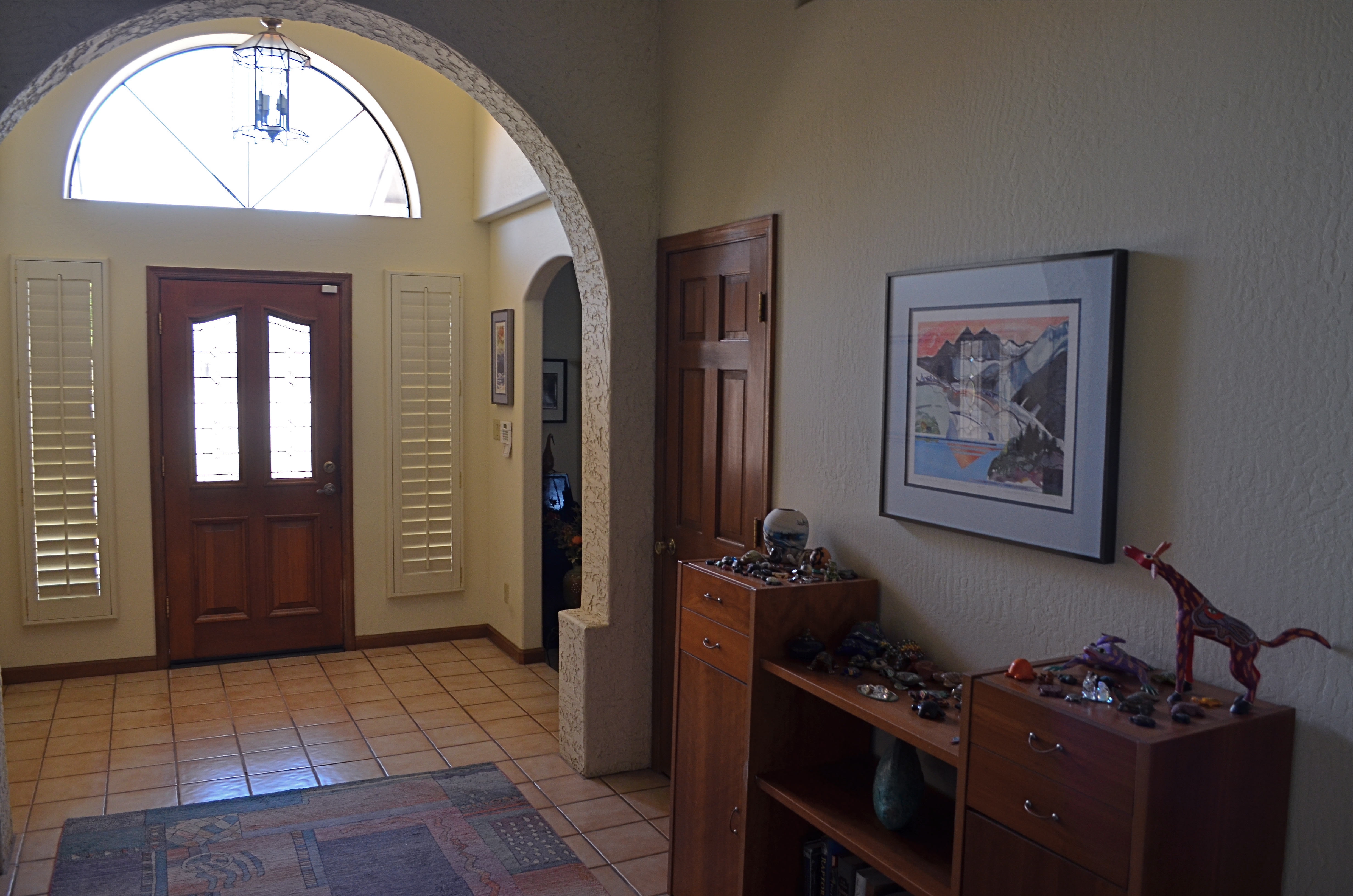
At its widest (18mm) setting, an 18-55 lens exaggerates front-to-back distances and slightly distorts the shapes of objects.
By MICHAEL PERKINS
SINCE THE 1990’s, THE MOST COMMON BASIC HUNK OF PHOTOGRAPHIC GLASS for new DSLRs has been the 18-55mm wide-angle, dubbed the “kit lens”. It allows beginners to move from landscape-friendly wides to moderate zooms without switching lenses. Depending on how much a given shooter experiments, the kit can allow for a lot of nuanced compositional options between the lens’ range.
If you find yourself shooting at the widest angle most of the time, then you are really using an effects lens, since, at 18mm, the lens is more than wide enough to distort angles and distances in ways that, while dramatic, don’t reflect the way your eyes actually see. This makes for expansive vistas in crowded urban streets and a little extra elbow room for mountain views, but is substantially more exaggerated than focal ranges from 35-50mm, which produce proportions more like human eyesight. However, the focal length you eventually choose has to be dictated by what you care to create; there can’t be any yardstick than that, all people’s opinions off to the side.
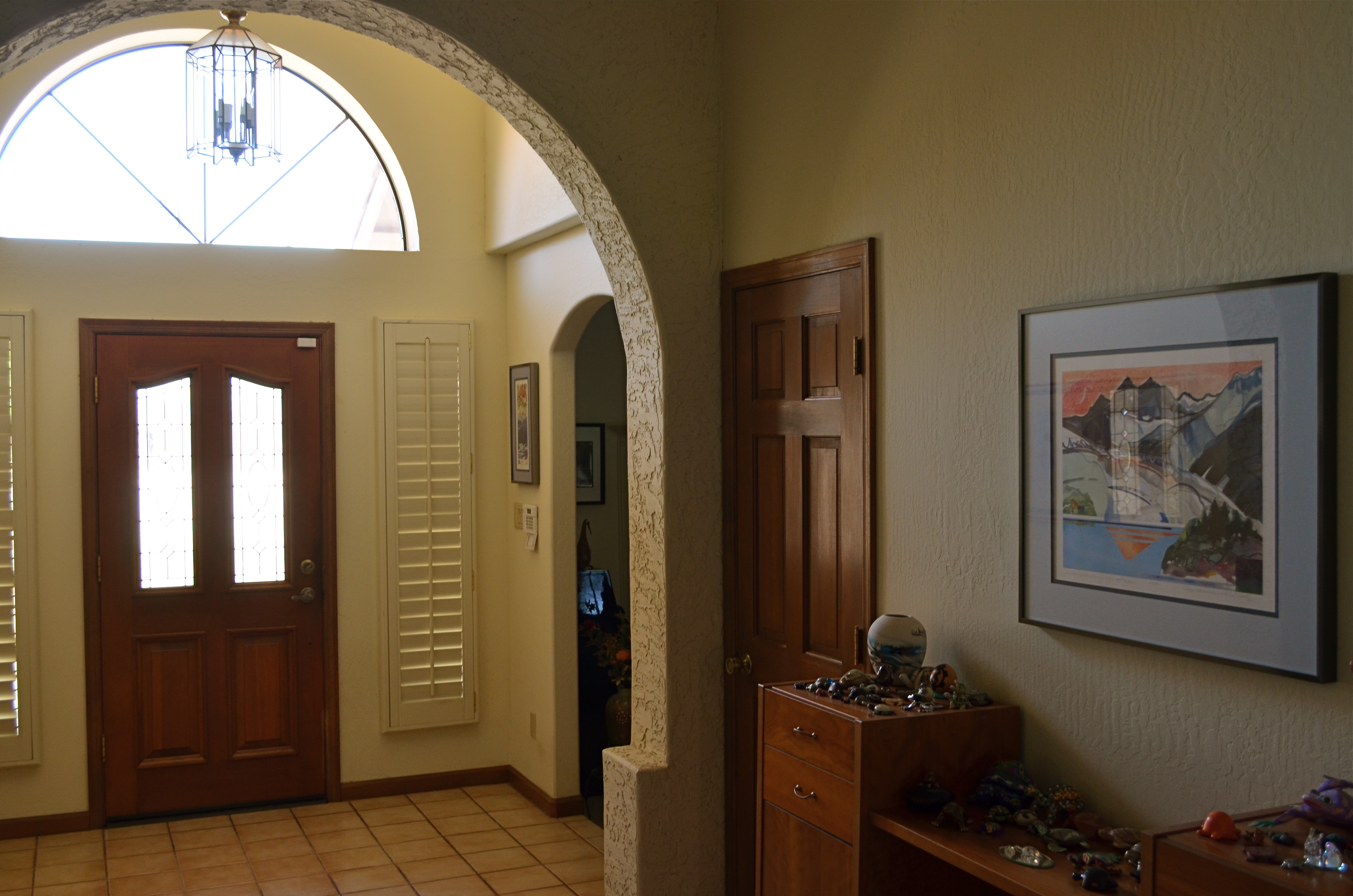
The same scene, taken from the same location at 24mm. Still plenty wide but displaying more normal space and perspective.
I have found a personal sweet spot by going a tad narrower, back to 24mm, and I also work with a dedicated prime lens that will only work at that exact focal length. By trimming back from 18mm, I find the distances from front to back in an image are a little more natural to my eye, and that I still have a yard of room from side to side without ushering in that Batman-type bending of perspective.
For comparison, I have re-shot subjects that I’d photographed at 18mm and found, at 24, no loss in impact. In the images in this post you can see the difference in how the two settings frame up. The composition in the 24 is a little tighter, but, if that’s not wide enough for you, you can simply step back a bit and there’s the same composition you saw in the 18, albeit with a little more normal proportion.
The most important thing with a variable focal length lens is to give yourself the flexibility of being able to get good results all through the focal range, simply to avoid getting too comfortable, i.e., sliding into a rut from always doing everything in the same way. Putting yourself into unfamiliar territory is always a good route to growth, and playing with your gear long enough to know everything it has to give you is the best way to periodically refresh your enjoyment.
When Grandma serves broccoli, you don’t gotta eat and pound-and-a-half of it, but heck, try it. You might like it.

