SUPER STAND-INS
By MICHAEL PERKINS
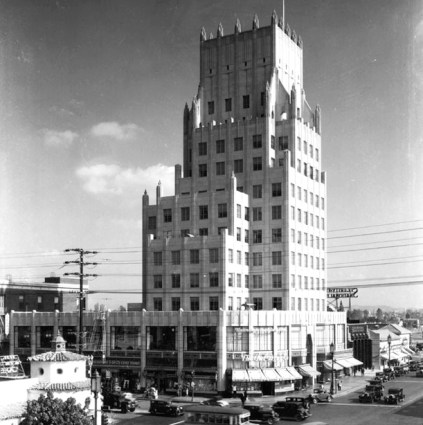
Los Angeles’ E.Clem Wilson building, the first structure to portray the Daily Planet on film.
SINCE ITS VERY BEGINNINGS, THE MOTION PICTURE INDUSTRY has made bank by creating and marketing alternative realities, visions of what they hope we’ll believe, at least until the last frame of film clears the projector gate. So lasting are some of these illusions that they become more authentic than the actual in-life objects or locations that were used to generate them.
In my own case, one of the first and most influential times a thing from the “real” world was re-purposed to stand for something else was in my daily viewing of reruns of The Adventures Of Superman, in which exteriors of various Los Angeles landmarks were substituted for key locations in the Man Of Steel’s fictional world. Of course, at the age of seven, I tended to take everything Hollywood presented to me at absolute face value; if the storytellers told me a thing was so, that was it, as far as I was concerned. So of course, when I saw a shot of the E. Clem Wilson building (in the earliest episodes of the show) or the Los Angeles City Hall (for the later stories), I knew that actually, they were the headquarters of the Daily Planet, the hallowed shrine of journalism in which Clark and Lois and Jimmy clacked away at Royal typewriters in pursuit of The Next Big Scoop.
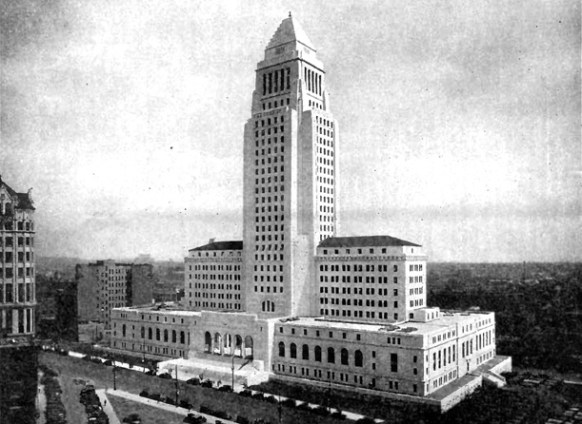
Los Angeles City Hall, which followed the Wilson building as the second version of the Planet on the Adventures Of Superman TV series.
Of course, as a lad, I I knew nothing of the film industry’s century-long habit of saving a buck by using stock shots to stand in for something that they didn’t want to build from scratch. I saw exactly what they wanted me to see, and thought about it exactly how they wanted me to think. At that age, I certainly didn’t have any sense that film-makers, just like propagandists or documentarians, could make me look at an image and draw associations from it that had no root in fact. A few years later, as I stumbled into photography, I developed my own ideas on how to idealize the things I shot. Being a total noob, I thought everything I pointed my camera at was important, or beautiful, because that’s what the process of making a picture felt like to me. Years later, when I looked at my earliest “good” pictures, I was amazed at how truly horrible many of them were, and how, in my my mind’s eye, I had wildly over-inflated their value. Eye of the beholder and all that.
At this writing, in early 2025, yet another cinematic reboot of the Superman myth is being readied for the screen, and yet another visual symbol of the Planet building will be needed for the present generation. However, unlike the producers of Adventures Of Superman, who were bringing in every episode of the show at a rock-bottom budget of about $15,000, the new crew won’t have to settle for just shooting some random place and merely renaming it. CGI and other tools will make literally anything possible. And yet I still find myself going back to the L.A. City Hall, where, somewhere in one of the Planet’s vast corridors, there is that miraculous storage room into which Clark Kent disappears to become The World’s Mightiest Mortal. For my inner seven-year-old, you can’t get any more “real” than that. And that’s the superpower of photography. Superman may be able to bend steel in his bare hands, but a picture can twist reality to any purpose.
SMUDGES OF MEMORY
By MICHAEL PERKINS
AS A METHOD OF INFORMATION STORAGE, the human mind leaves a lot to be desired. We take comfort in the belief that our inner vaults contain flawless, “official” versions of our accumulated experiences, but, in time, we realize that our memories are, at best, unreliable narrators, and, at worst, bald-faced liars. Our master files, our records of “what really happened” are as riddled with drop-outs, jump cuts, and gravy stains as any other account that has been told and retold over time. Small wonder that the devices we use to aid our recollections, such as photographs, can, themselves either reveal or conceal varying editions of “the truth”.
When you pair imperfect beings with even more imperfect machines tasked with documenting the big deals in their lives, you get inaccuracy piled on inaccuracy. When we are feeling generous, we label the inaccuracies “interpretations”. When we more clinical, we call them “flawed”. Thing is, there are many parts of our lives that no longer exist in the physical universe, or are at least placed beyond our reach. Many of these parts have left no trace in the world except the images made of them. Our actual vacations, long gone, are supplanted in memory by our pictures of those vacations, eventually becoming that experience in a much more real sense than whatever fragmented mental archives exist of the true event. The pictures remain static, and thus seem permanent, fixed, but over time they will be judged against the changing context of our faulty inner files.
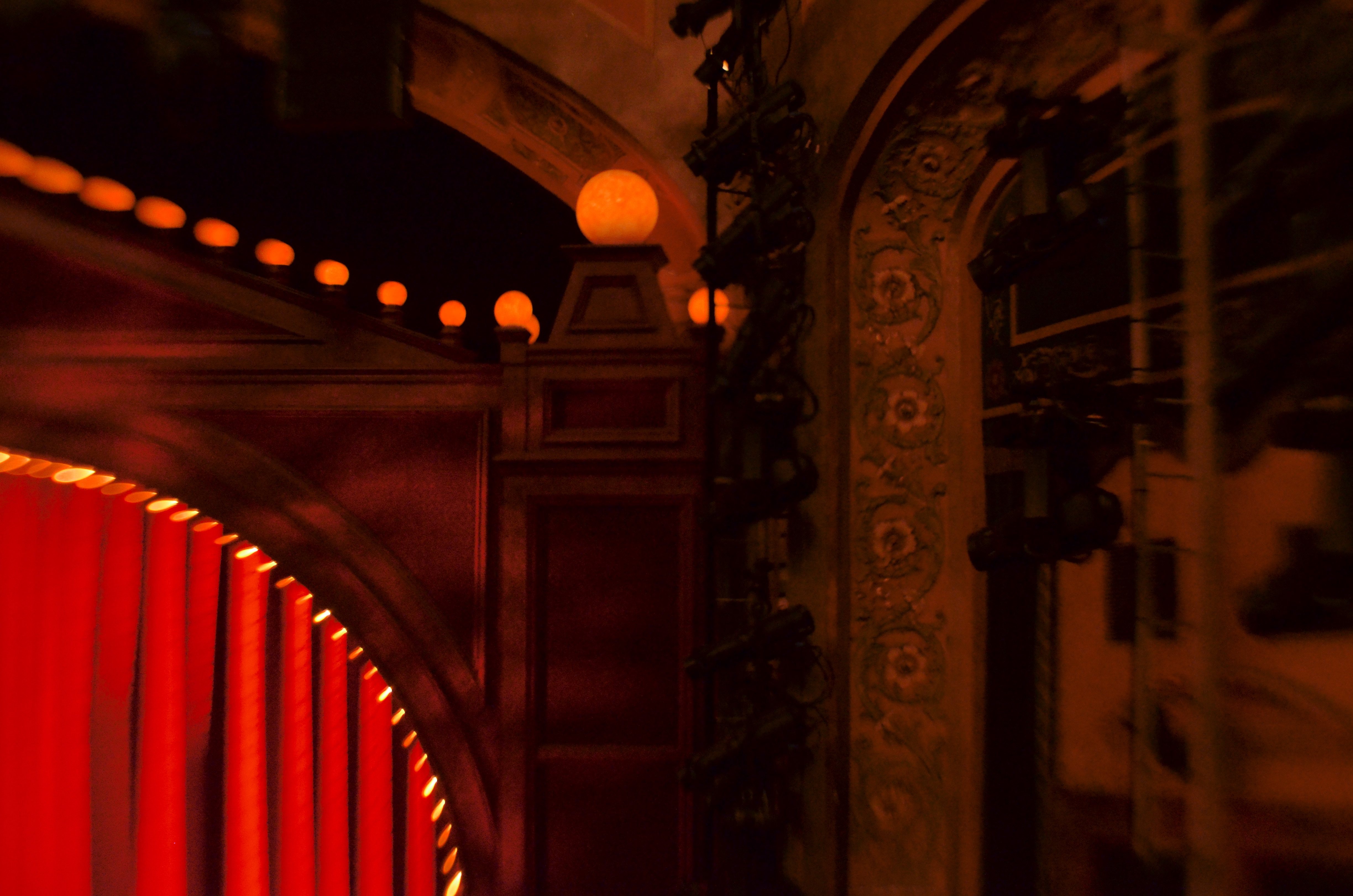
In the present era, when many of the things that we have captured in cameras are, for the moment, physically unavailable to us, the symbolic power of pictures of events past is amplified greatly. The image seen here, deliberately shot to be a bit dreamy, is open to multiple interpretations beyond the restricted scope of the original location. I know, mentally, that it was taken inside a Broadway theatre, but I can no longer swear to the name of the actual venue or what I saw there. In the absence of the fullness of my own memory, this picture has now become all theatres, in all cities, at all points in time. And while it looks like that’s what I was going for at the time, the point is that even the events that I believe I clearly remember are victims of my own brain decay over time, with the pictures I made of them expanded in their value, since they are now open to wider and wider impact as symbols. The pictures are less about what happened and more about the magic of what I prefer to have happened. The hard, clean line of reality is supplanted by the smudge of memory.
That is the amazing elasticity of a photograph. It is both truth and lie, symbol and substance. Photography is an art because it is so magically malleable, because an image can bear the personal stamp of its creator, no less than a statue or a painting. Designed to immortalize parts of our world, they do precisely that, often having a life of their own beyond the physical limits of the things they were used to depict. If that’s not art, what is?
THE DAY THE UNIVERSE CHANGED
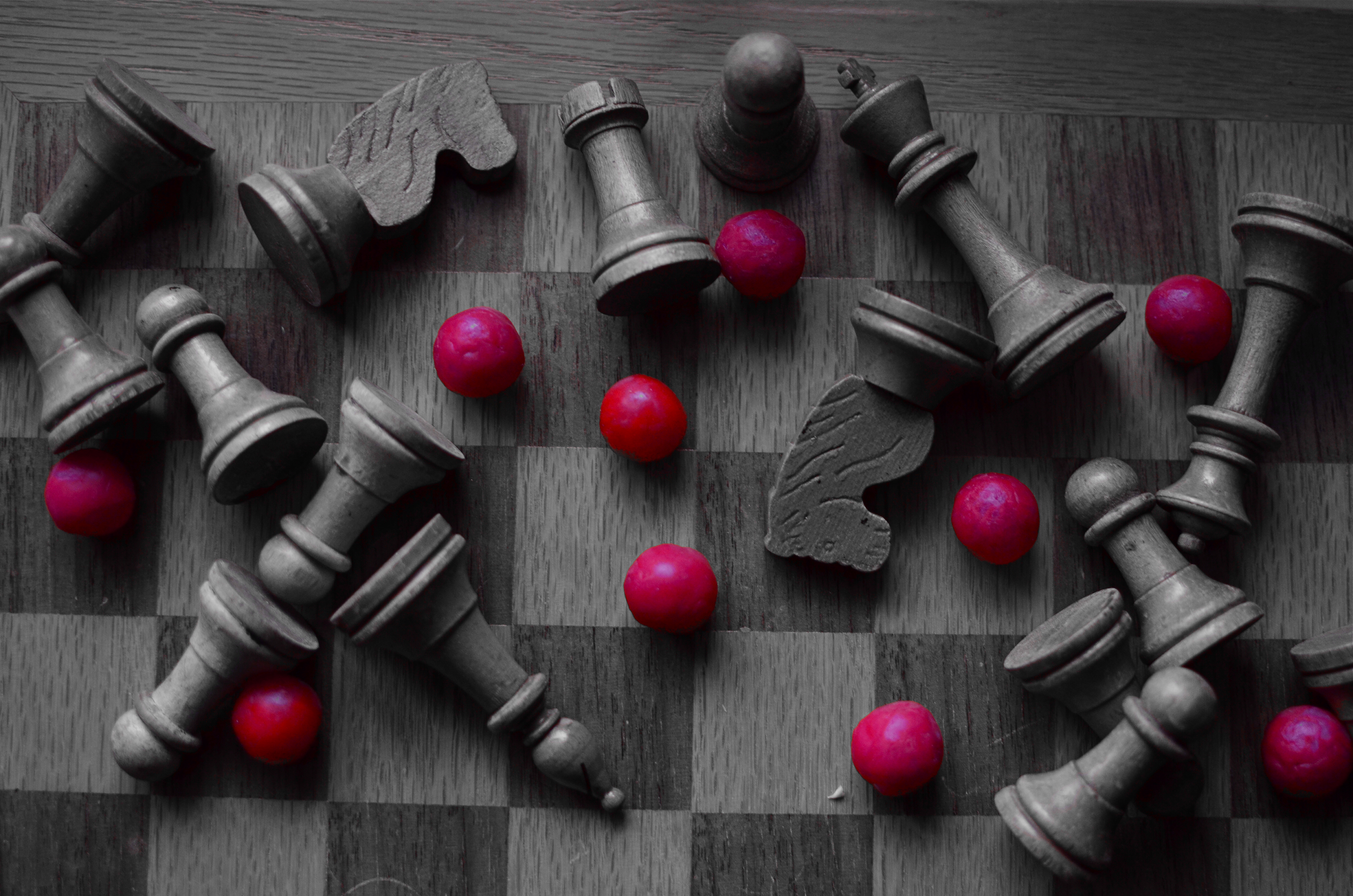
Outgunned, 2015. 1/30 sec., f/2.8, ISO 400, 35mm. Copy of color original desaturated with Nikon’s “selective color” in-camera touch-up option.
By MICHAEL PERKINS
IT WAS NEARLY A GENERATION AGO that Professor James Burke was the most admired media “explainer” of history and culture on both sides of the Atlantic, largely as a result of video adaptations of his hit books Connections and The Day The Universe Changed. Burke, trained at Jesus College in Oxford, was spectacularly talented at showing the interlocking linkages of events and human development, demonstrating the way they meshed together to act endlessly upon history, like gears locked in one large rotation. The result for viewers on PBS and the BBC was better than an ah, ha moment. It was more like an of course moment. Oh, yes, I see now. Of course.
In Universe especially, he examined the specific moments when everything we “knew” was altered forever. For example, we all “knew” the earth was flat, until we knew the exact opposite. We all “knew” that the sun rotated around the Earth, right up until that belief was turned on its ear. Our ideas of truth have always been like Phoenix birds, flaming out of existence only to rise, reconfigured, out of their own ashes. Burke sifted the ashes and set our imaginations ablaze.
As photographers, we have amazing opportunities to depict these transformative moments. In the 1800’s, the nation’s industrial sprawl across the continent was frozen in time with photo essays on the dams, highways, railroads and settlements that were rendering one reality moot while promising another. In the early 1900’s we made images of the shift between eras as the horrors of World War One rendered the Victorian world, along with our innocence, obsolete.
I love exploring these instants of transformation by way of still-life compositions that represent change, the juncture of was and will be. Like the above arrangement, in which some kind of abstract artillery seems to have un-horsed the quaint army of a chess set, I am interested in staging worlds that are about to go out of fashion. Sometimes it takes the form of a loving portrait of bygone technology, such as a preciously irrelevant old camera. Other times you have to create a miniature of the universe you are about to warp out of shape. Either way, it makes for an amazing exercise in re-visualizing the familiar, and reminds us, as Professor Burke did so well, that truth is both more, and less, than we know.
 thenormaleye