FROM ONE CHAMP TO ANOTHER
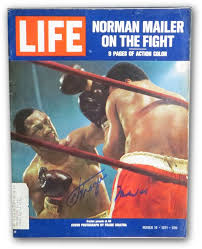
Frank Sinatra’s “amateur” image from the 1971 Frazier-Ali fight.
By MICHAEL PERKINS
THERE IS NO GREATER THRILL IN PHOTOGRAPHY than when one scores what is often disparagingly called “a lucky shot”, a term that’s usually applied by other teeth-gnashers whose luck wasn’t running on that particular day. To be sure, there are times when fortune seems to play the decisive role in the success of a picture, but, in truth, just as there are no coincidences, there are also no pure accidents….that is, shots that were totally a matter of good luck. I don’t believe that skill, strategy or vision are ever completely absent from a good photograph. We always stamp something of our experience and technique onto the process to some degree.
Which brings us to a classic example of a great photograph that has long been saddled with the tired “lucky shot” label. The story carries a little extra cachet because of the players involved, to wit:
When Frank Sinatra managed to wangle ringside tickets for the hottest event on earth, the 1971 Frazier-Ali fight at Madison Square Garden, he was already calling in every chit he had for the privilege of merely being in the house. What’s more, he wasn’t seated with the “regular” high-rollers, the Diana Rosses and the Streisands, who had, let’s admit, pretty premium seats to “the fight of the century”. He was right at the canvas’ edge…..a sub-set of celeb juice beyond the reach of standard juice, prime real estate that was typically comprised of the press pool photographers. And Frankie had figured out how to crash that little party, baby.
There seems to be some disagreement, all these years later, as to exactly how Sinatra approached Ralph Graves, the managing ediitor of Life Magazine, about the possibility of sitting with the other shooters and cranking off shots with his own camera. After all, Graves had plenty of talent assigned to the fight, so why would he need more shots by an amateur? Amazingly, Graves actually seems to have taken a “what do we have to lose” attitude toward Sinatra’s snaps, saying later that, although he was ankle deep in Life images, “it’s nice to have a horseshoe inside your glove.” Whatever the precise terms, Frank was in.
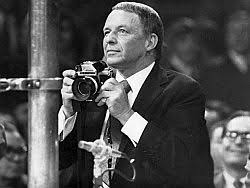
The Chairman waits for his moment.
Whether for publicity or artistic reasons, Life decided to use five Sinatra images instead of their own, featuring four in an inside article written by Norman Mailer and the coveted cover shot, with byline. A few carpers complained that if the same pictures were taken by Joe Schmoe no one would have given them a second look, which is where the dreaded “lucky shot” dig was first applied, as if a goat with the right camera could have taken as good a picture. No matter. History is written by the winners, and, while Frank Sinatra never saw a gallery exhibition dedicated to his photographic “body of work”, the pictures still stand on their own. And we all go on pretending that luck has no part in our own wondrous art, that there is some mystical power we possess that the unanointed do not.
Meanwhile, I wonder what kind of pictures Streisand might have captured?
HOME SWEET STUDIO
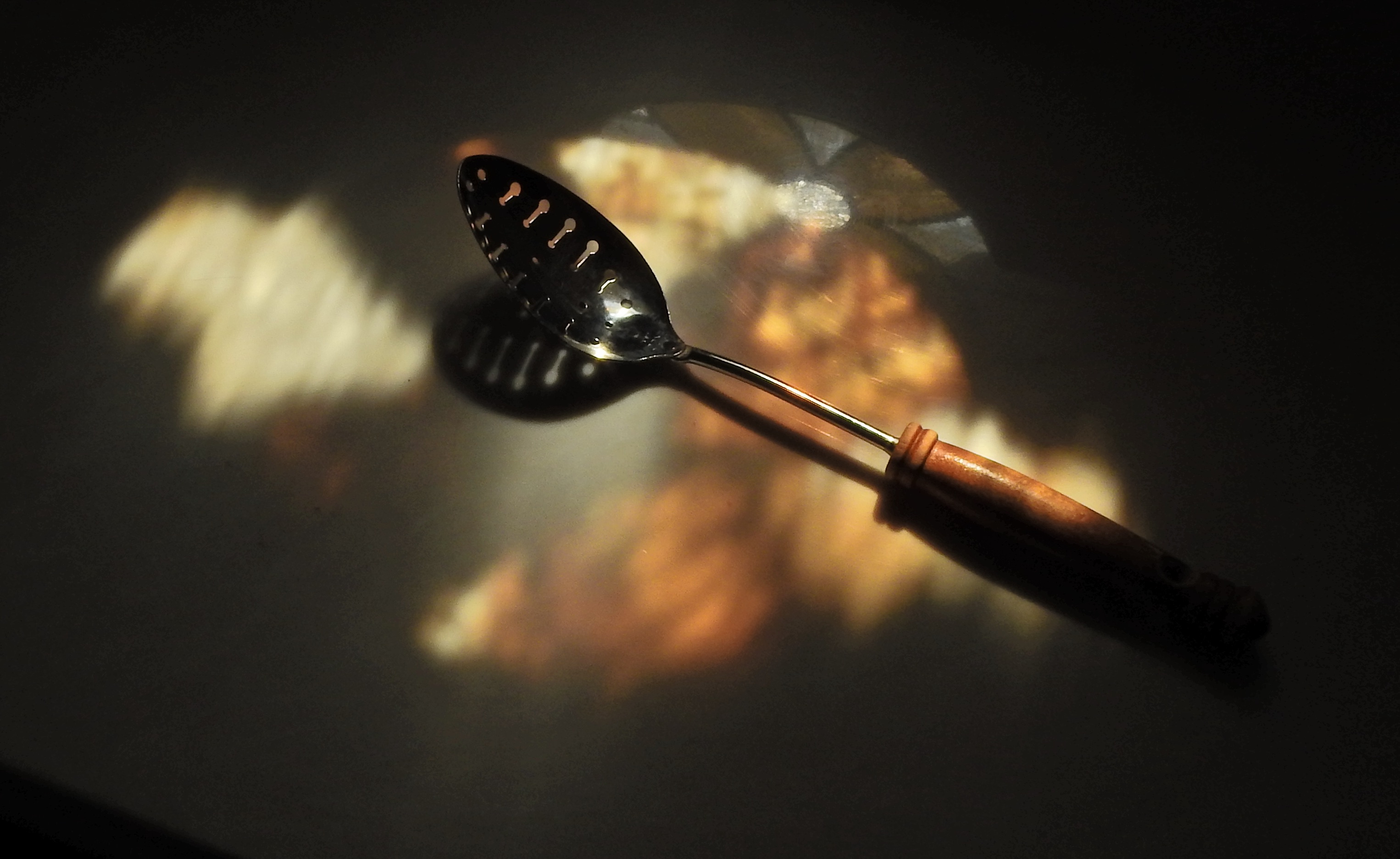
Stained Glass Study One, 3 p.m., April 21, 2020. 1/320 sec., f/8, 24mm, ISO 100.
By MICHAEL PERKINS
FOR PEOPLE WHO OPERATE ON INSTINCT SO MUCH OF THE TIME, photographers certainly can make things unnecessarily complicated. We buy gear we don’t need, thinking that machinery alone will unstick our stuck imaginations. We overthink set-ups. We overthink post-processing. We put a lot of junk in our own path, thinking that more of everything will make better pictures. Maybe it’s a native human need to exercise control. But sometimes, as now, we are all reminded that control can be elusive, or worse yet, a mirage.
Making photographs isn’t about having all the conditions we’d prefer. It’s more about managing the conditions we’ve got. That’s always been the case, although our present Great Hibernation has made it a lot more obvious. Take the idea of a “studio”. The term can conjure visions of vast banks of backdrops, lights, high-end gear…a professional space, if you will. But at bottom, it’s really just a place to work, and, ideally, to exercise choice over technique and intentions. There are really no official tools, no approved physical location for a studio. Like many others, I’ve been recently reminded that we only need a few things to create one: a knowledge, inside our homes, of where light goes and what it does during the day: the ability to tell time: and a fair bit of awareness of what our camera can and cannot do. If you have these things, you’ve got a studio.
Think through the process: if you have windows, and if you know which way the sun tracks across the sky hour by hour, you already have multiple sites to get different kinds of light depending on your need. One window for harsh midday high-contrast illumination, a dirty one for diffused, etc. As to tools, absent formal studio gear, everything in your house is a potential prop. And then there’s the advantage afforded by all the extra time we find ourselves awash in: that is, the leisure to plan a shot, whether over hours or days. In essence, you’ve got time to tweak like you’ve never tweaked before.
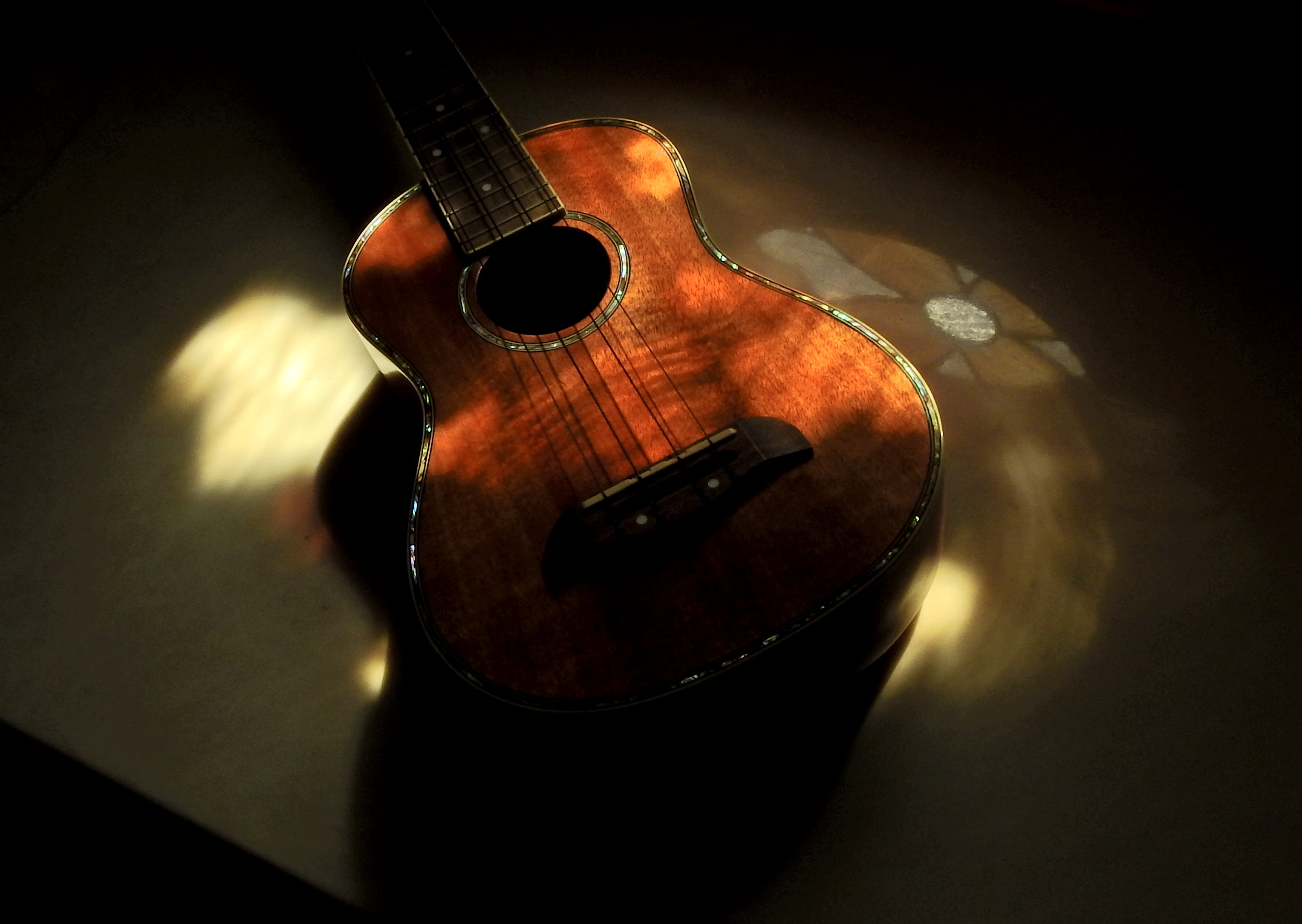
Stained Glass Study Two, 3 p.m., April 25, 2020. 1/200 sec., f/7.1, 24mm, ISO 100
Working within a finite interior space over an extended period, you can really learn its every feature and behavior. For example, I discovered, earlier this week, that a small stained glass window in my guest bathroom casts an intense kaleidoscopic pattern on a reflective counter-top for only fifteen minutes every afternoon. Stumbling on this, I threw a random object into the warm orange glow just to see what kind of permanent image I might eventually want to make with it. I didn’t get back to the room for another three days, by which time I had a rough concept for what I wanted to model the light on. Using the original shot’s shooting data, replicating the exact time of day and exposure settings (and then varying from them) posed no problem, and so I had, in very rudimentary terms, the control normally associated with a “studio”, whatever that word means.
All workspaces are equal once they are maximized and personalized. You don’t need a special locale to make pictures…..or, more to the point, you can make any locale special once you’ve bent it to your will. Right now, we’re trying to bar entry to all invaders from outside, but light will always get a pass. Harness that, and the rest will fall into line.
BARRIERS
By MICHAEL PERKINS
OBVIOUSLY, OUR CURRENT DILEMMA ISN’T THE FIRST TIME PHOTOGRAPHERS ACROSS THE WORLD have been fixated on walls. Wars, natural disasters, imprisonment, confinement of any kind present unique challenges of access and opportunity for shooters. Isolation is often the barrier between story and storyteller. If only we could see around, past, under, we could complete our narrative. But the Great Hibernation we are all undergoing at present is a little different. Separating inside from outside is one thing. Separating each of us from all of the rest of us is another kind of isolation altogether.
Our imaginations can fire fantasies about things we can, for the moment, not depict directly. When memory and speculation fail, those of us who are physically hemmed in head for the windows, those finite little tele-screens that open onto at least a portion of the greater world. What are the neighbors up to? Are the blossoms out? Is the mailman coming today? Does the world look, in any way, normal?
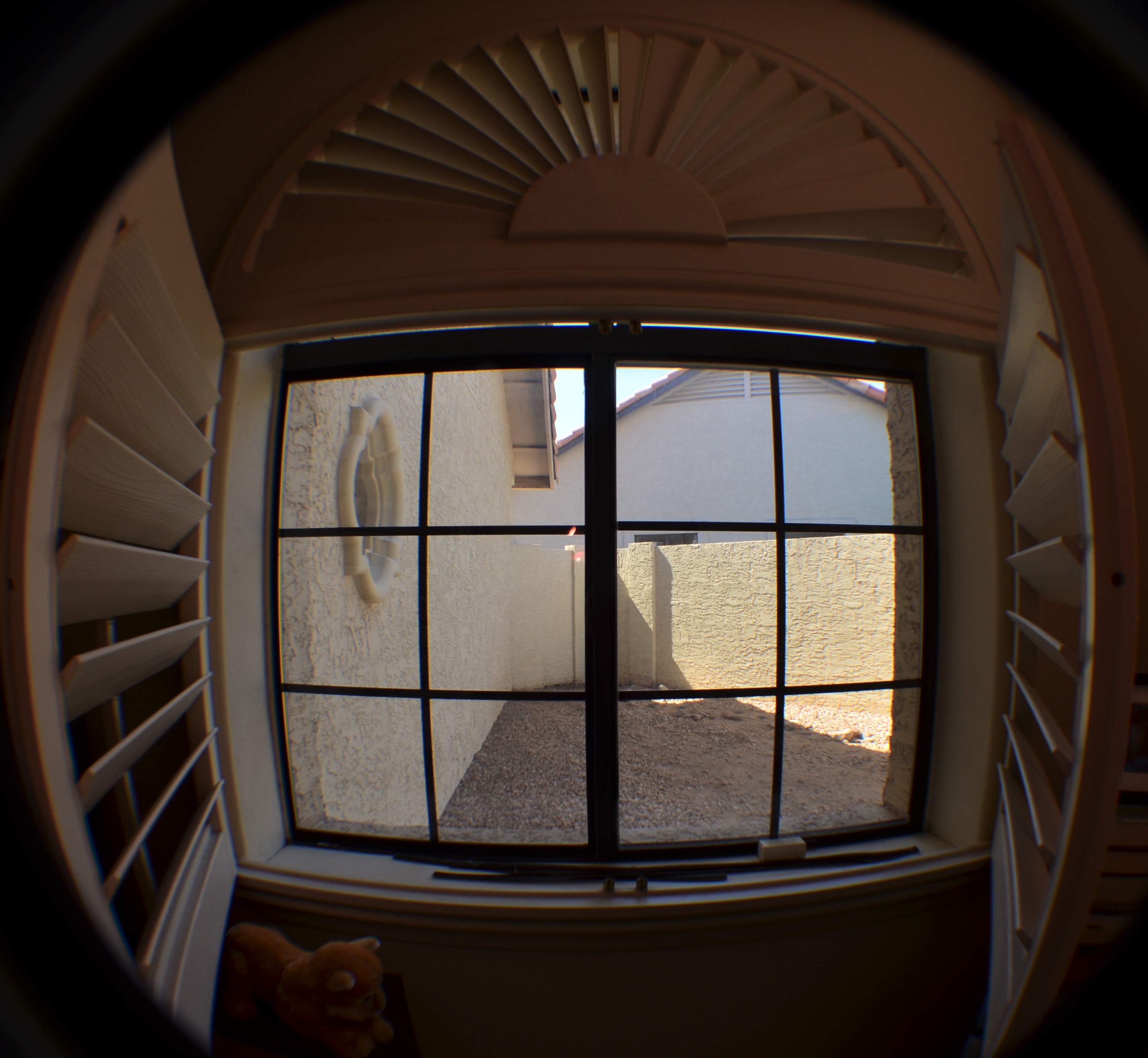
No Escape, April 2020
And then there are those windows that open to an airshaft, a blank wall, or alleys ( which are, themselves, windows of another kind). In my house, I have one such “dead” window, which, normally, is only used as a light filter, as it’s framed in thick louvers designed to let in illumination even as it keeps the midday Arizona heat out. The louvers only come wide open when additional light is needed for a room that acts as a default natural-light studio of sorts. Thus, most of the time, the fact that it delivers a particularly worthless view is simply forgotten.
But a few days ago, I wanted to see that view, to feel it as a metaphor or a link to everyone else for whom being able to see out their windows is, in some ways, worse than confinement. A tease. Information without value. Here in the southwest, many residential homes deliberately hide their side and back yards from view with masonry barriers. We are so wall-oriented that the things really become invisible. We learn not only not to care about what they conceal but about them as concealers. But that’s the way our world typically works.
Somehow, then, maybe out of an attempt at solidarity with all the other stranded wall-gazers in this Weird New World, I wanted to make a picture of what it feels like to look out upon nothing, to have the world walled in, and then walled in beyond that. The fisheye lens allowed me to frame the louvers and the sill in the same image in a way that made the opening narrow even as it was strangely wide. Barriers and photographers make lousy companions. We always want them all down, even they conspire to keep us ever within. Maybe that’s a kind of definition of art.
And maybe I’ve just been in the house too flaming long.
REALITY 2.0
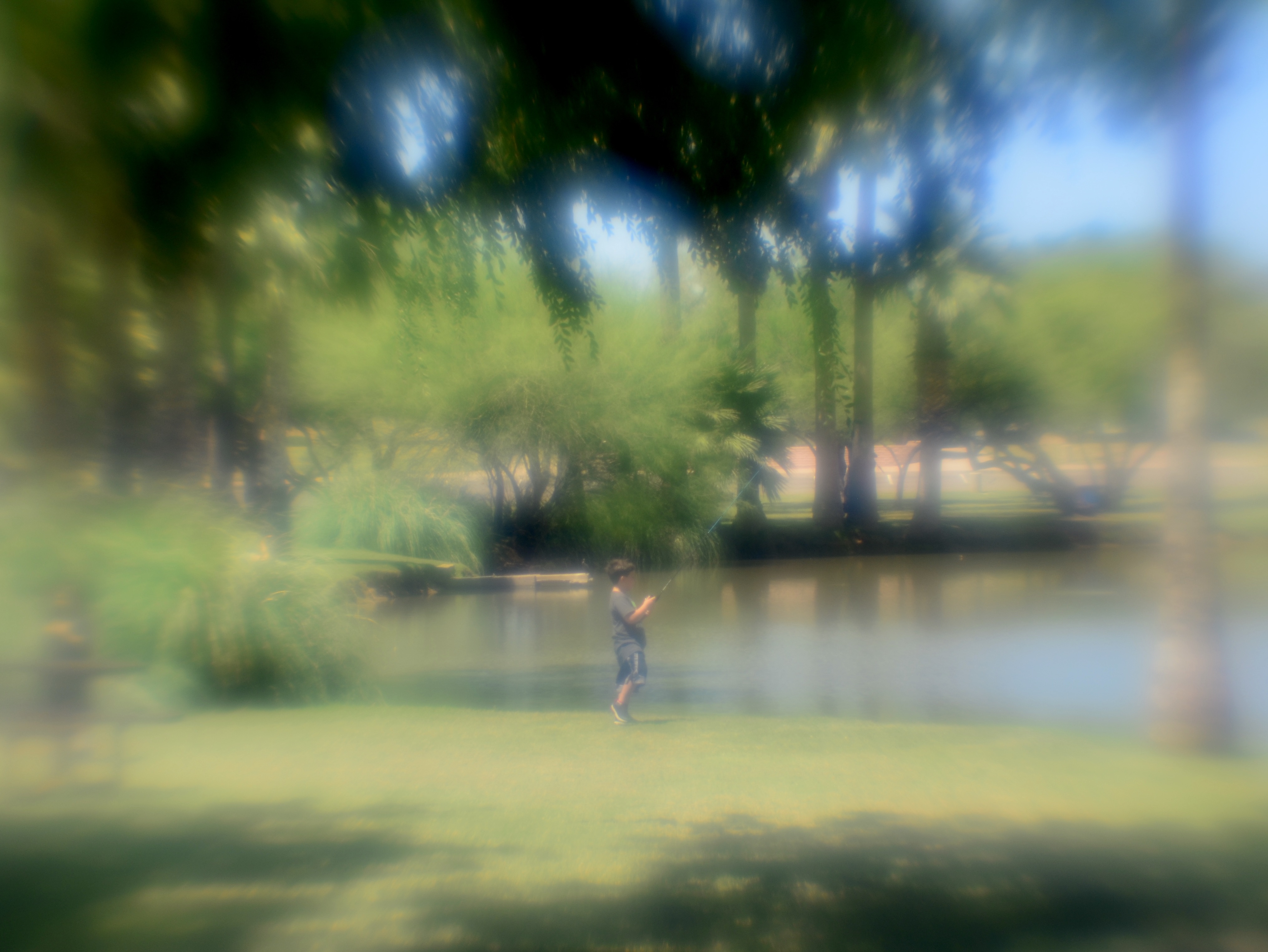
The Angler, April 2020.
By MICHAEL PERKINS
EVEN THOSE OF US WHO HAVE BEEN UNDER QUARANTINE FOR A VERY BRIEF TIME have learned how quickly our concept of “reality” becomes almost abstract. The immediate and local evidence of our senses, our measure of the smaller environments we currently inhabit, become the measure of all actuality, with everything else in the outside world growing less and less concrete. We imagine what the battlefields of the disease look like: we speculate about how much of the greater world has been warped or scarred beyond recognition. But our view of what lies beyond our own four walls can quickly become like a dream. Or a nightmare.
That’s why, even with a fairly regular resurfacing for errants or exercise, the photographer in me can look at things that were formerly almost invisible with new eyes. The formerly commonplace becomes the extraordinary. And because nothing is quite as it was, we are drawn to drastically update our approach to the everyday. In the case of this week’s trip to a local park, I was immediately struck by how normal everything, and everybody, looked. I almost expect the landscape beyond the house to resemble the bombed-out streets of London, during the blitz, and when it looks like, for example, just a park full of people walking, biking, or playing, it’s even more jarring than if the whole thing looked destroyed. I wanted to try to photographically render that feeling of unreality, of being in a dream state.
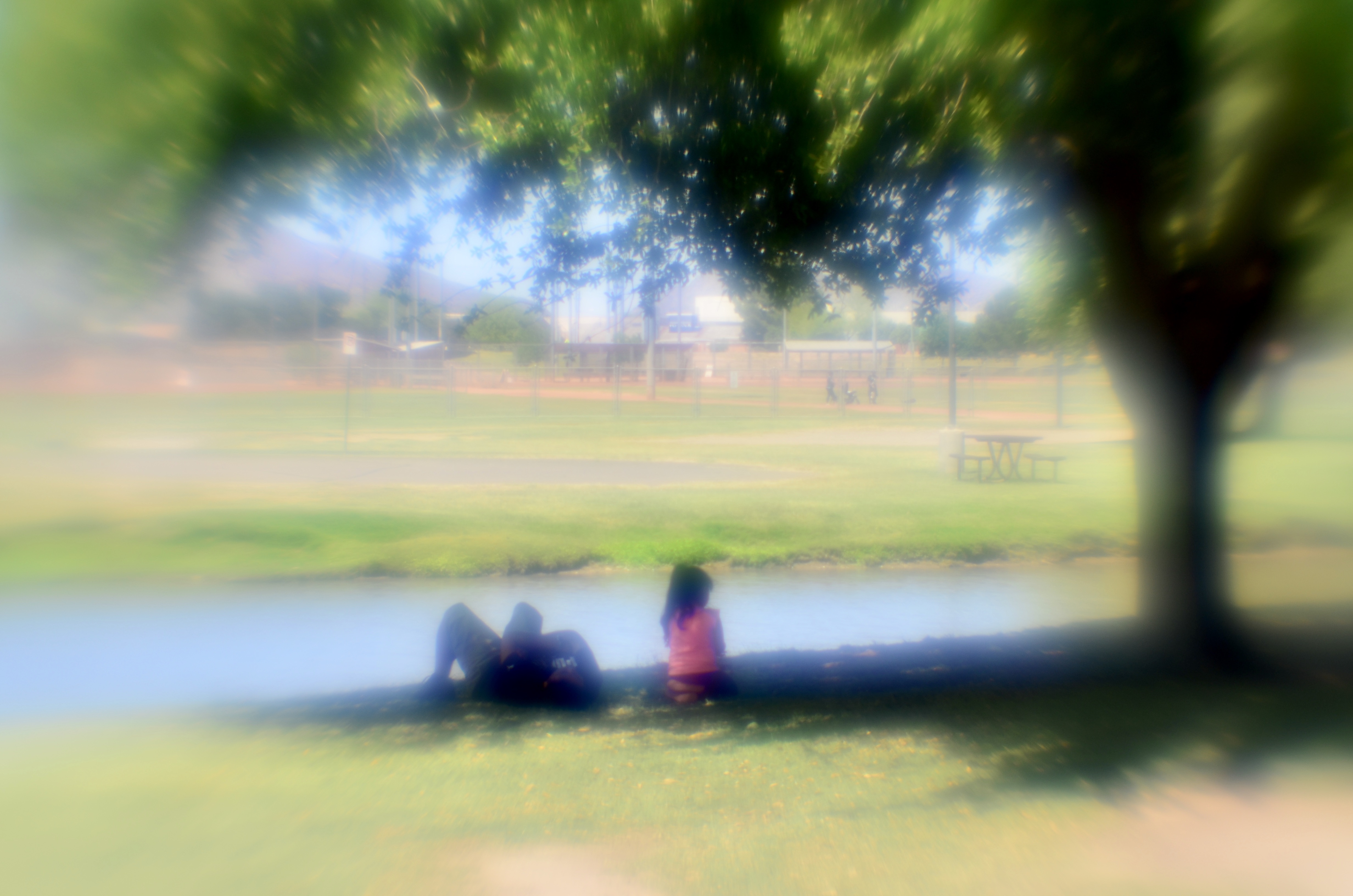
Papa And Me, April 2020.
I decided to try to shoot these, for lack of a better word, “real” scenes in an unreal fashion, using a Lensbaby Single Glass Optic shot wide open at f/2. Now, with any lens, this huge aperture means a very shallow depth of field, but this particular piece of glass adds its own artifacts. It’s a bit of a time machine, a throwback to the way lenses used to operate for everyone. It’s uncoated, for one thing, meaning that the usual factory treatment that now helps lenses avoid color fringes and flaring are deliberately left off, allowing these “mistakes” to be captured rather than prevented. The lens’ incredible softness is actually a fairly focused image beneath a thick overlay of glow, or what we used to call the “Vaseline” effect. This gauzy look is most pronounced at the edges but adds a very warm look to the entire frame. The pictures made with such a lens are also very high in contrast, with everything registering as either a high or deep, deep color. Details are sacrificed in favor of a hallucinatory, painterly result. And then there’s exposure. Here in sun-abundant Arizona, I had to shoot very fast, almost 1/4000 sec.
Finally, there was a distinctly personal reason for making these pictures in this way, as there always is for any photographer. We try to craft the re-creation of a world we “see”, whether that world is a hopeful or horrible one. And so these pictures represent an article of faith. In the face of the millions of images we are currently seeing of loss, horror, and fear from all around the world, we must remind each other that sacrifice, honor, and, yes, an occasional moment of fun are also “part of the world.” Call it Reality 2.0.
The beta version.
The 35MM SHRINE
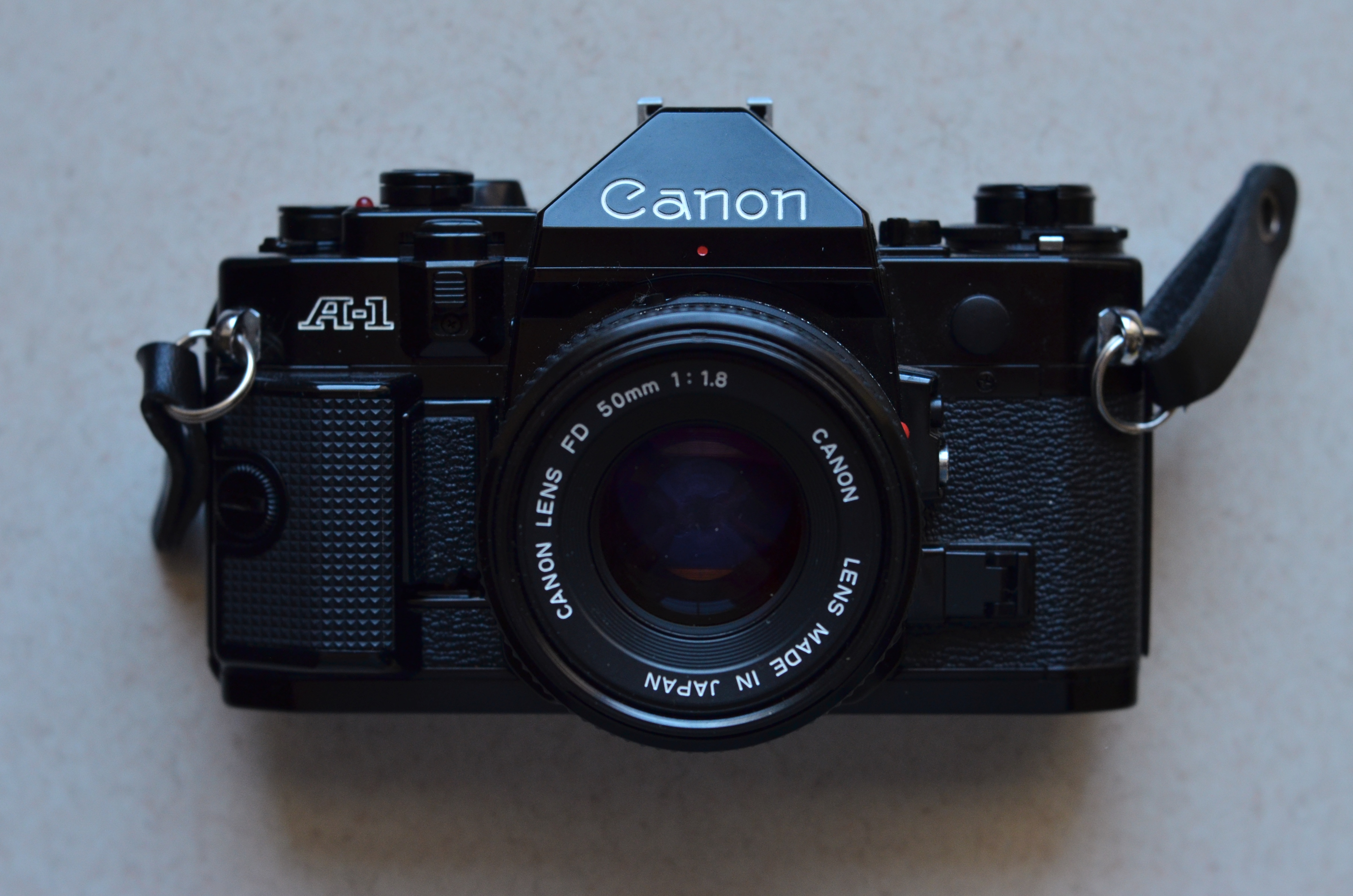
The legendary Canon A-1 35mm SLR.
By MICHAEL PERKINS
MY FRIEND PAUL IS GONE, but I am holding a small part of him in my hand.
He passed late last year, adroitly avoiding the current Great Hibernation and all its horrors. By that time, he had survived a hardscrabble farmer’s childhood, the armed forces, half a dozen skin cancer scares (the farm years’ legacy), several strokes, a fused spine, and nearly eighty years of other scrapes which he largely dismissed with a wide smile and a cackle of a laugh. Before the turn of this year, however, he finally met an enemy that was too big to side-step, and now he is gone.
I hold a part of him in my hand because his wife and friends recalled, in the grief-driven process of finding homes for his various possessions, that I liked to make pictures. And so Paul’s camera gear….including lenses, brackets, cases, bigger cases to hold the smaller cases, cleaners, filters and flash units…became mine. I wasn’t chosen for the higher purpose of carrying on his legacy, or even understanding what he did with all this stuff. But it’s mine now. Much of it, I can’t practically use, but absent even one photograph of us together after a seven-year friendship, these gizmos are, now, rather sacred to me.
Annie Liebovitz and other shooters have made entire sub-careers photographing the personal belongings of people, from Emerson to Eleanor Roosevelt, that are themselves beyond the reach of portraits in the classic sense,. The gloves Lincoln wore to Ford’s Theatre. Annie Oakley’s performance costume. Paul’s cameras are like that to me. They can’t resurrect him the way a picture would, but they are talismans that summon a part of his spirit nonetheless.
Paul was an exhaustive student of rock ‘n’ roll, taking his youthful love for that music to a scholarly extreme. He didn’t just worship Buddy Holly:he traveled to Texas and became personal friends with Buddy’s widow, Maria Elena, a relationship that moved her to give him several ultra-rare studio recordings that you’ll never find in any textbook or collection anywhere. He could rattle off the personal histories of every one-hit-wonder in Top 40 history, and, coming from my own background in pop radio, I knew he was dead-bang perfect on every detail. He was also a natural gift for any kind of technical analysis, having worked as a TV repairman in the 1950’s and for IBM back in the punch-card era, and so I can easily imagine him applying that same degree of precision to the making of pictures. The quality and condition of the gear also argues for his orderly mind, as in the case of this pristine Canon A-1, the company’s first-ever SLR with fully automatic exposure, a camera from the 1970’s that is still influencing every element of camera design in the twenty-first century. I may never be able to make pictures with it. But it makes memories for me, even as a 35mm shrine sitting on a shelf.
I often read the user’s manual, and wonder if Paul needed to. After all, he seemed to live his life as if he had already figured out the instructions all by himself. In the end, his brain did all the best kind of work that people usually credit a camera with. That means that even if I never snap a frame with Paul’s camera, he’s already taught me, through his friendship, a vision that transcends gear.
Thanks, pal.
THE DEAR (RECENTLY) DEPARTED
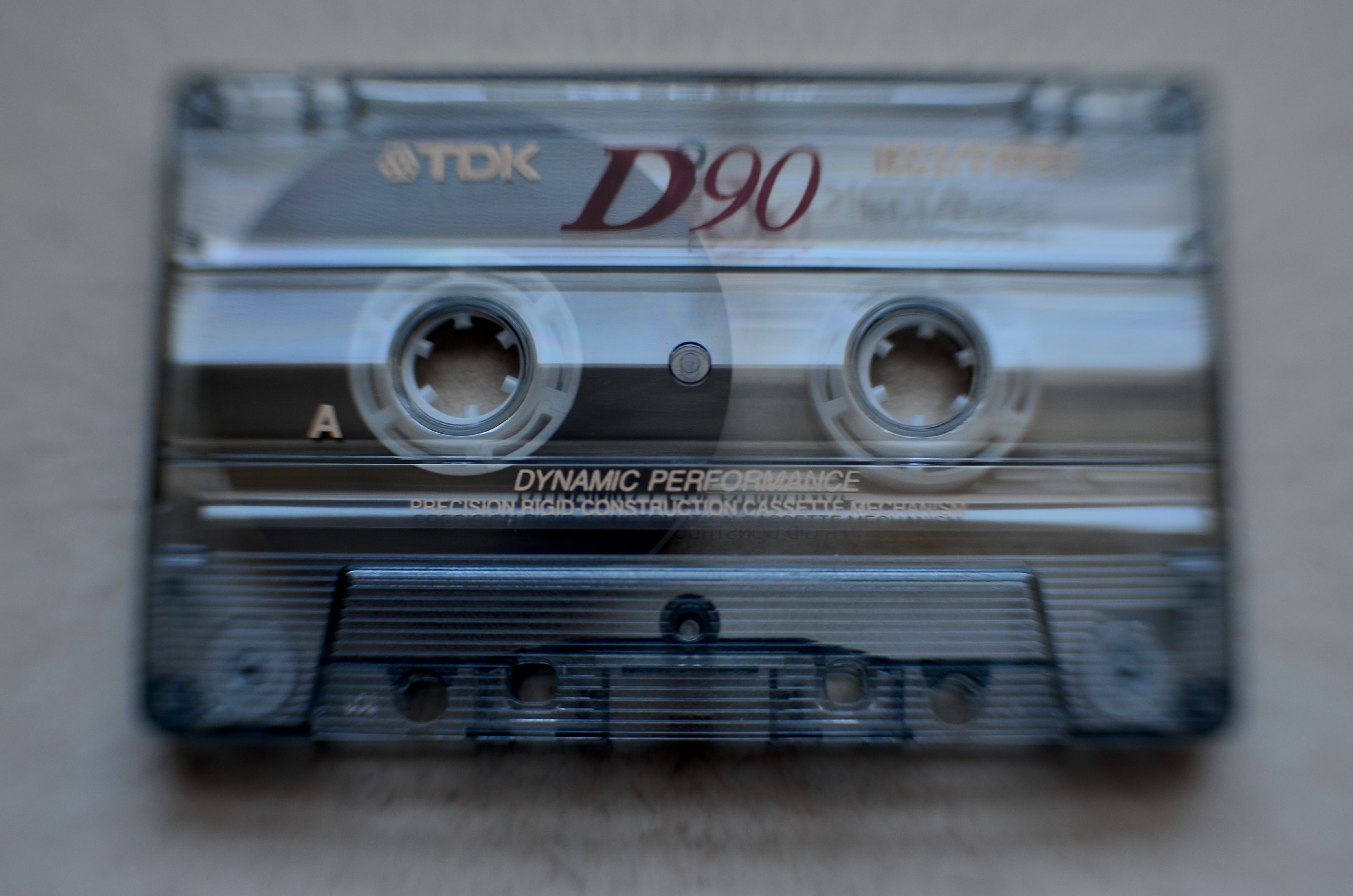
Anna Logg’s Greatest Hits, 2020
By MICHAEL PERKINS
REFLECTION TAKES A KIND OF MENTAL TALENT. Others would say that it takes humility. Or wisdom.
But mostly, it takes time.
Looking back is not a speedy process. First, it helps for us to personally advance to the point where certain things are in the past, since the distancing of ourselves from the immediacy of events invites and facilitates our thoughtful analysis of them. Perspective requires distance, a way to separate ourselves from the blindness of our immediate environment. The questions then become obvious: what did all that stuff mean? Which parts of it can I learn from? Does it all deserve to go away?
The process of reflection in photography also waits, if you will, for enough time to pass, allowing the artist to re-evaluate things, to take a second crack at trying to understand them. Once an experience floats far enough away from us, we are free to either appreciate it anew or merely release it as less than essential. The dear departed, once we get far enough away from them, become open to interpretation by many means, the camera among them. Everyday objects can tend to be invisible, because we mainly see only their use. With time, we can often re-visit them, seeing new elements in their design, the context of why they were important in the first place, or other considerations.
Think Andy Warhol’s Campbell’s soup can.
By forcing a conversation about a seemingly banal object, forcing it into “serious” art galleries as an important thing, Warhol made us look at why we consume things, as well as what we would, going forward, consider “art”. Lately, in the age of the Great Hibernation, many photographers are picking through the accumulated stuff of their immediate environment, looking for something from which to craft images. In so doing, we’ll inevitably stumble across things we have forgotten, or simply don’t consider anymore on an everyday basis. Some of these objects have only recently drifted out of the flood of impressions that make up our daily world, like the cassette seen here. How could anything have been more ubiquitous at the height of its popularity? What could be anymore superfluous than it is now? And yet…
Using the camera and our increasing distance from familiar things can free those things from their popular associations. They can become our soup can, sparking some interesting questions. Why did we use this thing? Why did it not last? And now that it is, truly, just a thing, what can we learn about ourselves by looking at it from a new direction? This is not as ridiculous a rainy-day project as it seems. We still visit places whose famous sites are so over-photographed that we have to labor to say anything new about them, to, in effect, make the Eiffel tower our Eiffel tower. The whole idea of re-visualizing dear, recently departed is really part of the same exercise, done one cassette at a time.
WE ARE ALL WAR CORRESPONDENTS NOW
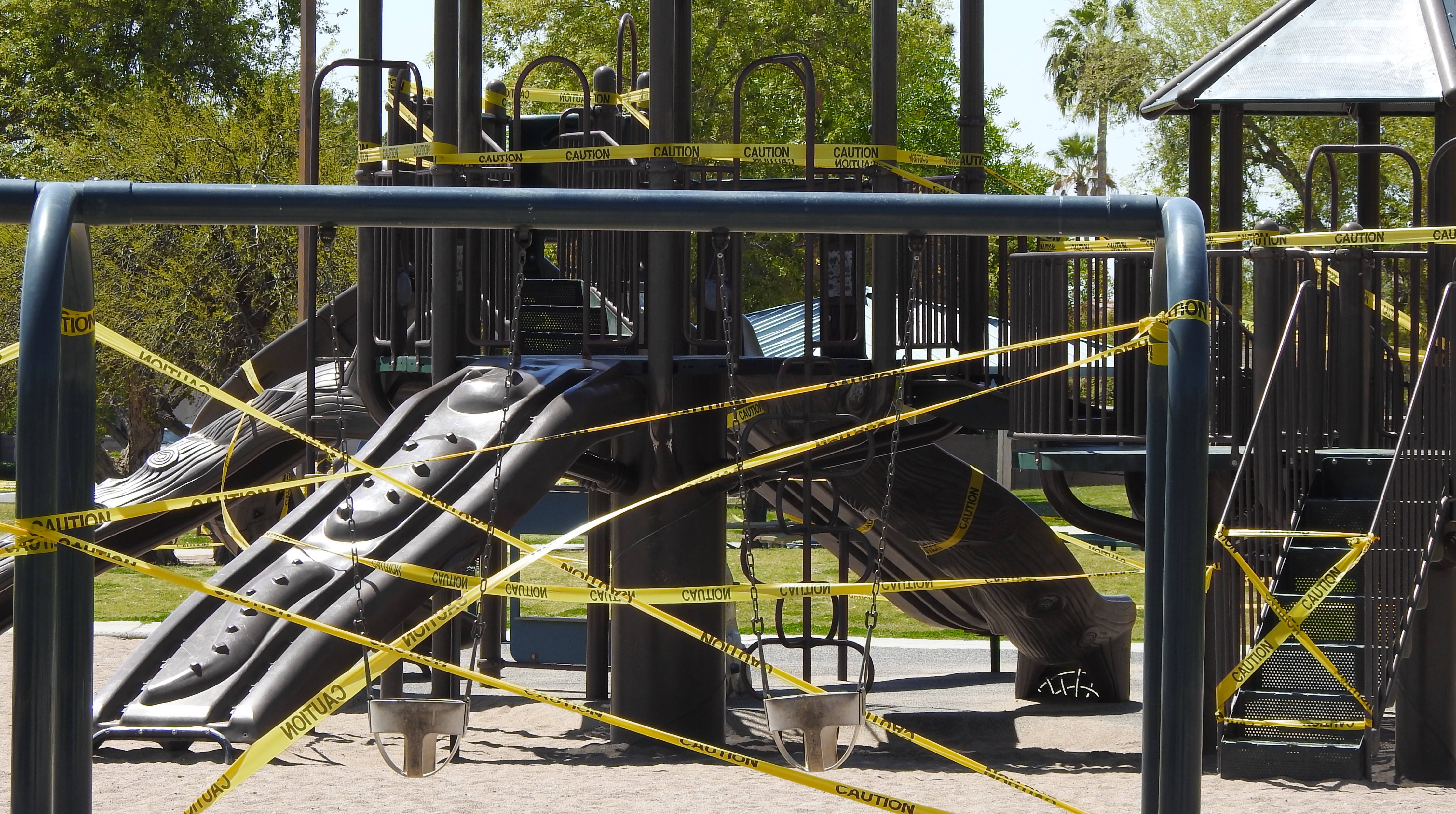
We’re Not Playing Around Here, Phoenix, Arizona, 2020
By MICHAEL PERKINS
I HAVE ALWAYS ARGUED THAT THE PRINCIPLE AIM OF PHOTOGRAPHY is twofold: firstly, to capture what is splendid in the world, celebrating the order of beauty, the majesty of nature, the grand talents of the enterprising soul: and, secondly, to point unflinchingly to what needs correction, to what challenges and threatens us. You can’t have life without both these drives, and you certainly can’t call photography an art if it doesn’t address them equally.
The world is at war at the moment. Our tragedies and losses in this conflict are not incurred by shells and bombs, but by the most primal forces in the natural world. For those who fall before this horror, the results are as final as if they had occurred during a bombardment or battle. The visual ways in which we measure our fear and dislocation are in some ways similar to those seen in regular wars. They are not symbolized by a single, terrible image, but by a million little pictures of very ordinary things, some of which we must put away for awhile as we arm our hearts for what is to come. In this very real way, every one of us that is armed with a camera becomes, in some sense, a war correspondent.
The image seen here is certainly not sinister in the true sense. It’s hard to summon a negative association with playground equipment. But that’s in peacetime.
During times of turmoil, the normal rhythms of life are not yanked away in one clean rip-of-the-bandaid jerk. Rather, they are eroded. Narrowed. You can only do your favorite thing on certain days, at certain hours, and under certain conditions, for the time being. Updates will be posted…
I sat before this scene for several moments before I could unpack why it upset me so. In personal terms, I had walked through the very same park several days prior. Nothing was different now, except…the tape. The word on the tape. And the implied message: this thing that typically gives you joy is now to be avoided. Normal is suspended.
In the short term, there will be many pictures that will break our hearts far more fundamentally than this one ever can. Images that will test our resolve. Touch off volatile emotions. This photo is nothing by comparison to what’s to come. And yet, it is part of the mosaic we are creating during this Great Hibernation (my gentle name for a horrific reality). Each tile in the mosaic is a story of some way that some part of the larger tragedy effected someone among us. I know that I, myself, will create other pictures that are far more jarring than this one. But, as always, it’s the little things that can have the biggest impact. Because when reality shifts, it happens one routine, or one playground, at a time.
A PRIVATE KIND OF TESTIMONY
By MICHAEL PERKINS
What moves me about what’s called “technique”…is that it comes from some mysterious deep place. I mean it can have something to do with the paper and the developer and all that stuff, but it comes mostly from some very deep choices somebody has made that take a long time and keep haunting them.” – Diane Arbus
ONE EVERLASTING ARGUMENT ABOUT PHOTOGRAPHY centers on whether there is any such thing as a “pure” picture…..that is, an image which is merely the recording of reality without the slightest hint of intervention by the photographer. I believe that, in making pictures, we convince ourselves that we have only made a “document” of life, that our own thumbs don’t touch the scale in favor of any kind of bias. But I also believe that, no matter what we tell ourselves about the process, it is impossible for us to retreat to the mere act of punching the shutter button, since even that simple motion has some level of choice inherent in it. The objectivity we believe that we practice is largely an illusion: the impact of our photographs is in direct proportion to just how much we do interfere.
So if just punching the button is at one end of the interference spectrum, then self-portraiture, the age’s dominant obsession, is clear over at the other extreme. In trying to take our own picture, we do nothing but interfere. And stage. And shape. And edit. And perform. Most of this very hands-on approach to immortalizing ourselves is a matter of mere human vanity. We want to come off well. Is my hair all right? Do I look pleasant? Does this make me look too fat/serious/lonely/decisive? In the largely theatrical sphere of selfies, the massage is really the medium.
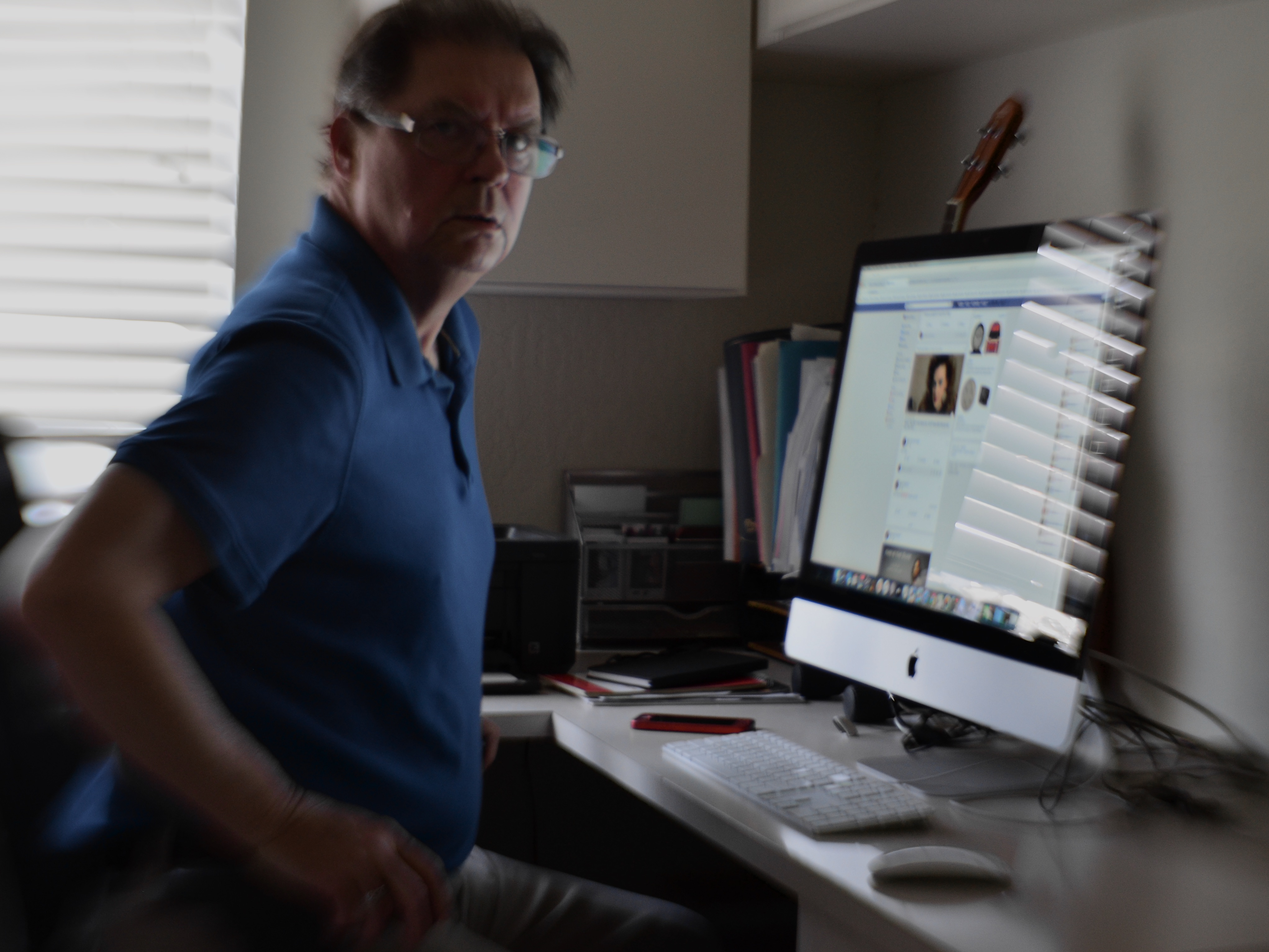
Have You Seen This?, 2020
But, just because we’ve tried to frame our truth in the most sympathetic light doesn’t mean our self-portraits are automatically untrustworthy. In some very real way, we are trying to reveal something about ourselves that no one else has seen, or in Arbus’ words, to show “very deep choices” we have made “that take a long time” and keep “haunting” us. One of the most personal things about what I call our current Great Hibernation is the care or worry that’s etched on our faces in our unguarded moments, those minutes when we’re not sending along recipes and cheery memes on Facebook, or taking online classes, or catching up on our reading. There are real photographs to be made of the anguish and uncertainty we’re all experiencing, even if they can’t be taken in real time. The self-portrait you see here admittedly involves some acting, as it’s a purposeful re-creation of emotions once truly experienced in full, albeit in isolation. As a consequence, I stipulate that the result is imperfect, even though it may still be “true”. My thought process actually proceeds from an experiment in which, after making this picture, I’d show it to others and ask, “does this look like what you’re feeling right now?” In turn, the responses I got made me wonder if I should ever confess that I was the photographer as well as the subject, since I was afraid that such as admission would, for some, render the picture void, since, after all, aren’t we the worst judge of how we look, or should look, in an image?
But what if we’re not? What if our own knowledge of ourselves is so unique that we are, indeed, qualified to say to the world, I know this isn’t a true “candid”, but so what? Yes, it’s true that, in this photo, I wasn’t “caught unawares”. What you see here is a re-creation of how I felt, and will again feel. Still, who is around in my otherwise quiet house to tell this tale more effectively? Am I disqualified because I am trying to make art out of my own life? Diane Arbus also said that a photograph is a secret about a secret. Perhaps the most important pictures we can make, to plumb our own secrets, is to try to map our anxieties…in the moment, if we can, but as faithfully as we can after the fact, even when they’re re-constructed from memory.
 thenormaleye
FROM THE GENERAL TO THE SPECIFIC
Better We Shouldn’t Go Out, 2020
By MICHAEL PERKINS
THE GREAT HIBERNATION OF 2020 has done, in the ages of fragmented audiences and unlimited media choices, what prehistoric TV networks used to do all the time…that is, knit the country together with universally shared experiences. Back in the days of three or four channels, we all went through the same big events generally at the same time. Bereft of the time-shifting and endless repeat patterns of our present video age, the narrow range of viewing choices in those days gave people of a certain age a common cultural baseline. We tended to experience one official version of large things, from coronations to assassinations to the first earth orbit to the last episode of The Fugitive (which was watched by 78,000,000 viewers). Now the events that we all experience in real time, together is limited to the Super Bowl and a few nervous election nights. Everything else we view, well, when we choose to view it, if it’s not on a platform that we ignore altogether.
The global virus tragedy has come closer to give us a shared, real-time experience than almost anything else in the lifetime of people under fifty. And yet, through the medium of art and the journeys of our own personal struggles, we are filtering it into our memory in very distinctive ways, taking this titanic problem from the general to the specific. We all begin at the same starting point as the emergency first breaks, and then, we customize the ways we internalize it, with every conceivable form of expression: diaries: drawings: essays: cartoons: memes: movies….
And photographs.
Alone at home, I must comment on the crisis in ways that sustain my own sense of hope. Also in ways that use distance to help me hold onto my reason. Some of that is just my circumstantial lot: I will never be, for example, a photojournalist on the front lines of this battle. I may never even walk the deserted streets that have become the haunting visual signature of the story. Within the confines of my reduced living space, I have little in the way of photographic tools besides my imagination or whatever humor I can muster in the moment. Sometimes, as you see above, I come down on the side of whimsy. Other times things get so heavy I don’t know if I’m capable of making an image that faithfully records that. I guess I’ll find out.
The Great Hibernation has snapped many people of my age back to the memory of other globally shared events from years ago…some tragic and some magic. We are certainly fragmented as compared to those days, but the amazing outpouring of heroism and sacrifice that have marked our reaction to this horror….well, that feels like a bond, anyway. And perhaps the art that we use to chronicle our feelings, even if they are very individual emotions, can occasionally strike a universal chord. It’s worth a try.
Share this:
April 12, 2020 | Categories: America, Commentary, Experimentation | Tags: covid-19, editorial photography | Leave a comment