BONES ON UP
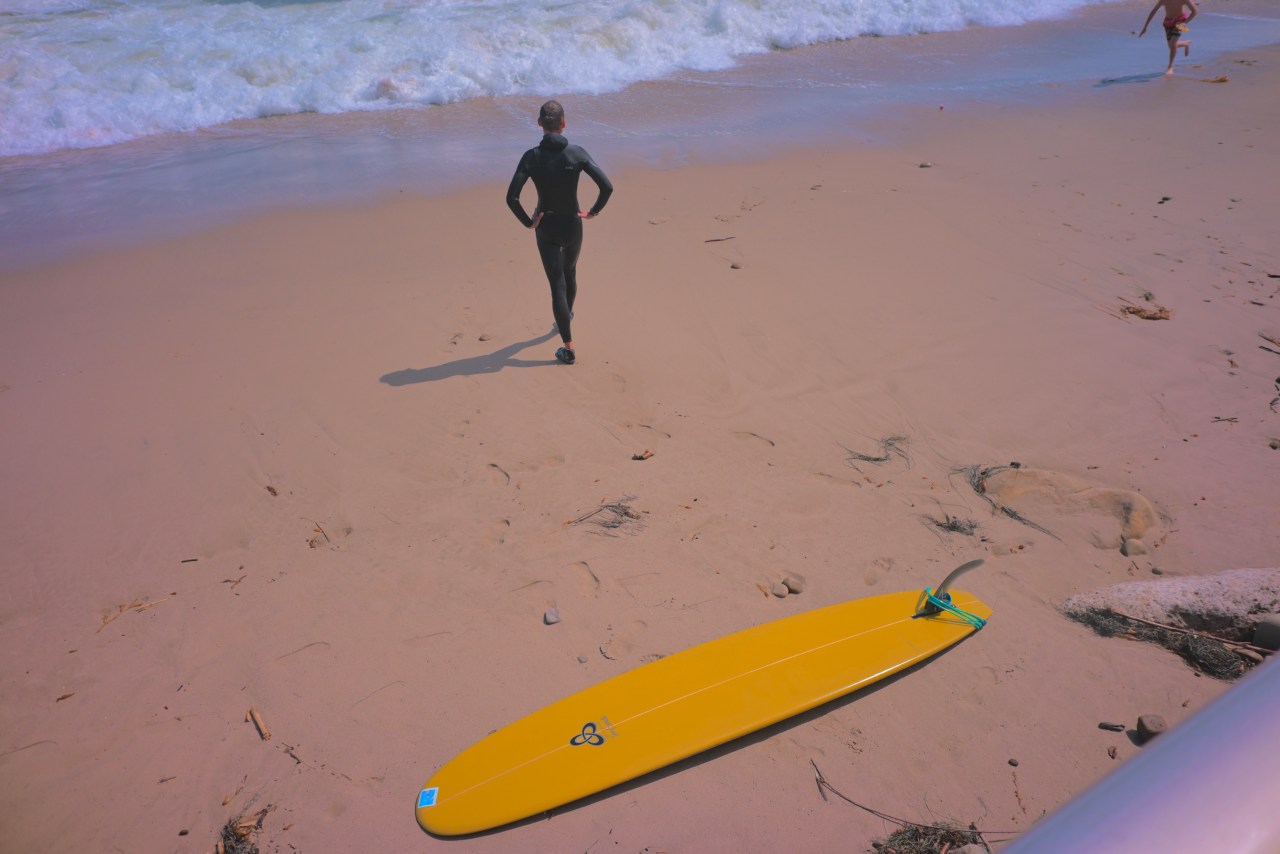
On the way to being a decent image, but some judicious use of the scissors is in order.
By MICHAEL PERKINS
THE ILLUSTRATOR HAL FOSTER, who authored and drew the legendary comic strip Prince Valiant, was often praised for the naturalistic appearance of his drawn figures, an effect he attributed to the practice of building them up in stages. Foster told interviewers that he began at the skeletal level for the people he was drawing, then added in layers of muscle and skin, and finally clothing to make the figures as structurally sound as possible. Photography, in which many pictures are not so much composed as re-composed, can benefit from the same “bones up” approach.
Many of the scenes we snap in the moment are fixed in post-processing, with cropping being the most common tool. We amplify what is needed to tell our visual story and shave away the surrounding distractions. So take this idea a step further, if you will, and imagine that, instead of slicing off unneeded data that “fights” our picture, we are actually beginning with a tabula rasa (blank page) and selectively building elements into it until we get just enough data to make the image effective.
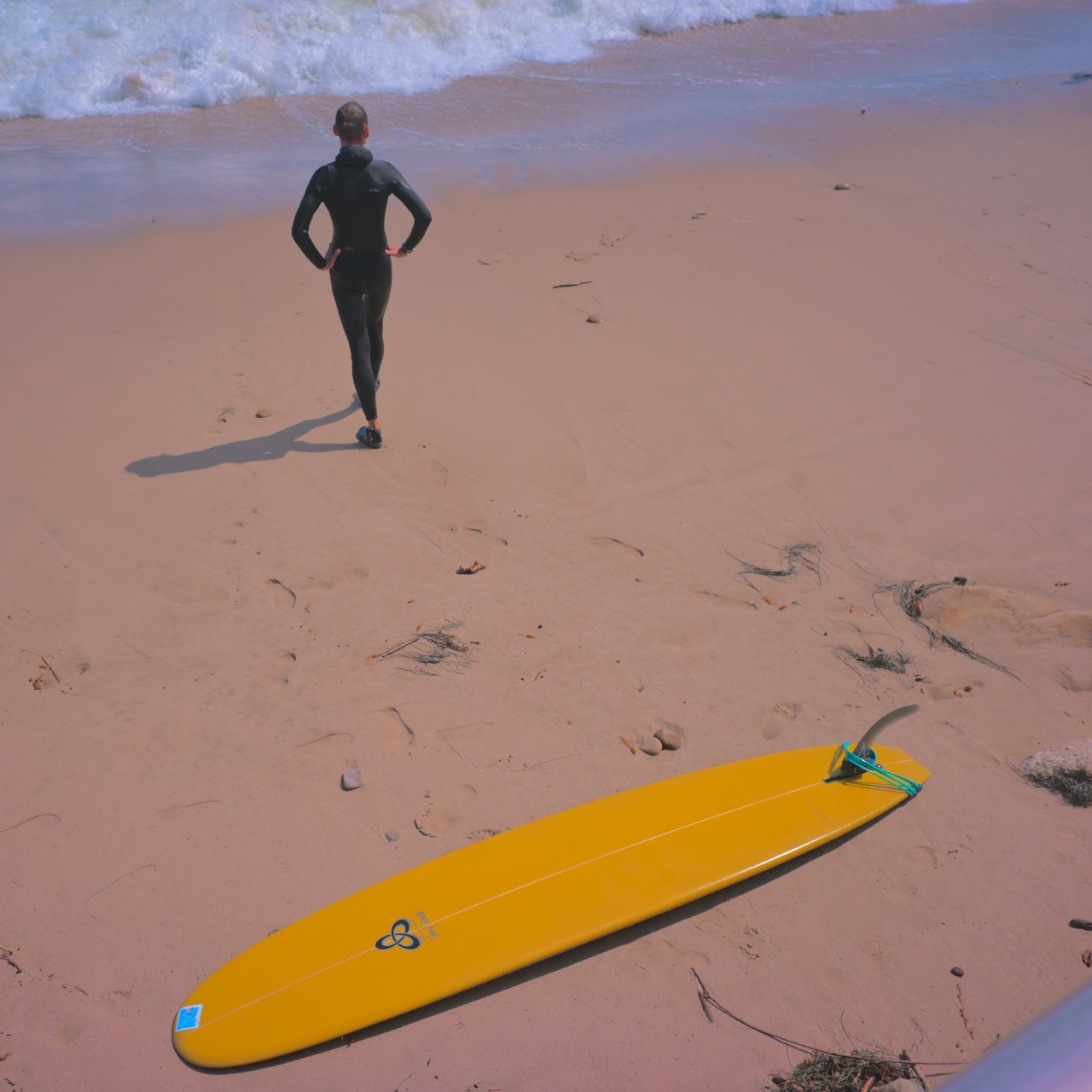
Two snips later; everything I need and nothing that I don’t need.
Take our friend on the beach here. Were I visualizing this scene as if I were building it up piece by piece, I would decide that I needed three main elements; the ocean, or at least a hint of it, explaining the surfer’s purpose; his stance on the sand, which indicates contemplation or intention; and the board, which is not in use, speaking to his unresolved thought process. Do I go now? What’s my approach?
That’s it. That’s the picture. Whether I have those elements in balance at the time I snap it, or crop it back to just those factors afterward, I have visualized the photo as I want the final version of it to be. Of course, in a real-life situation, my frame has also invited other elements that are either distractive or unneeded. For instance, I don’t need more of the waves to the surfer’s left, as they tell me nothing I can’t see with a closer crop, so out it goes. Mosto of the bit of seawall at lower right also conveys nothing important, nor does the other occupant on the beach to the upper right, so, snip, they’re out. And now comes the important question; is what I have left everything I need? Is there anything else that, by being removed, will actually boost the effectiveness of the resulting photograph? If the answer is “no”, then we’re done. I’ve done a Hal Foster, building the picture from the bones up and then stopping. Finis.
All of which goes to underscore that cropping is not merely a “fix” but an active tool. You’re not just cutting things away so much as you’re requiring them to earn their place in the valuable real estate in your images. You’re not losing “the big picture”; you’re inching closer to “the right picture.”


Leave a Reply