LOMO MOJO
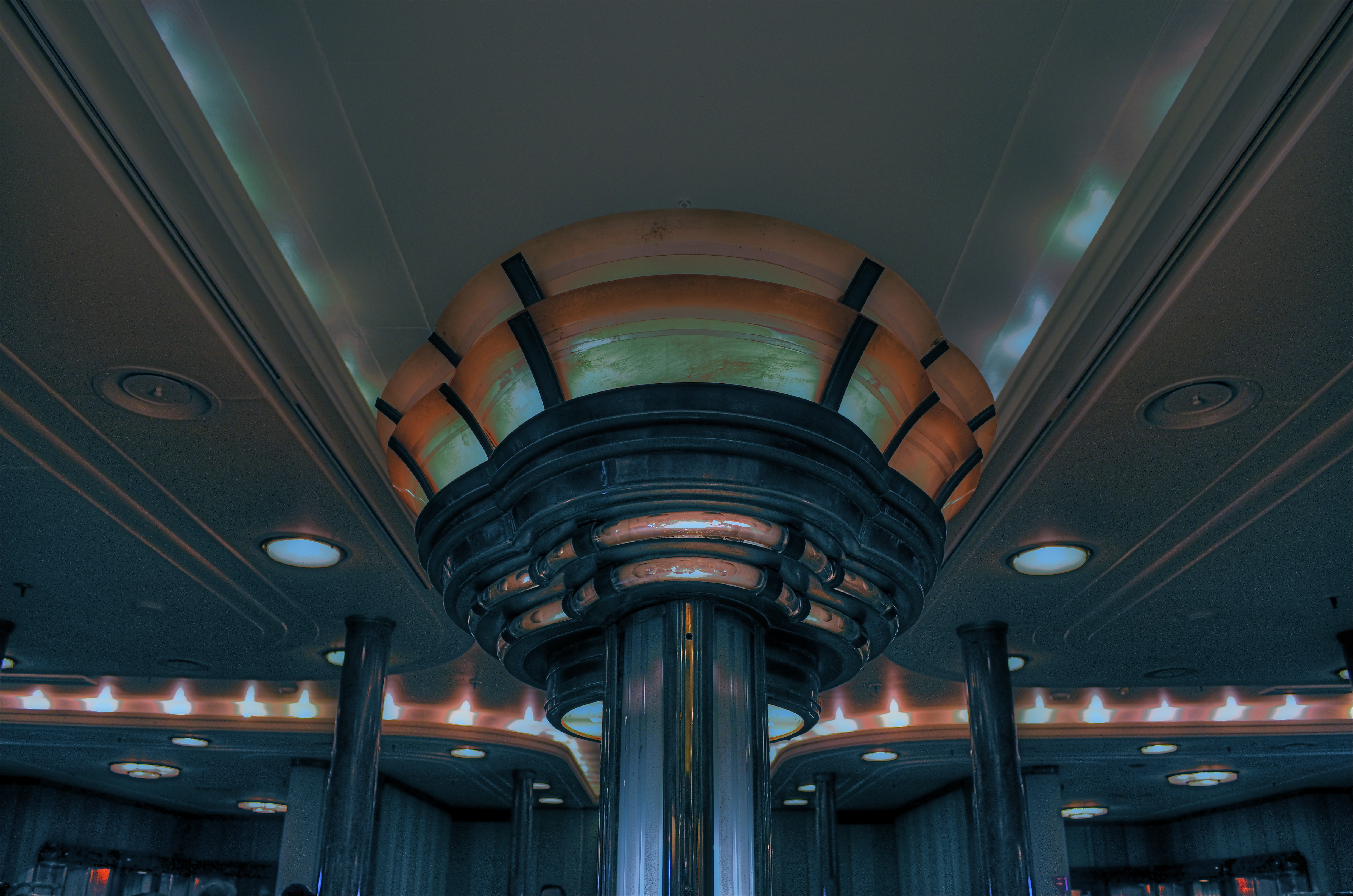
A perfectly average handheld interior shot taken without flash in 2012. What is amazing, to an old geezer like myself, is how completely impossible it would have been, back in the day, to capture even this modest shot with the very same type of toy plastic camera now being sold to “lomography” enthusiasts and marketed as “hip”. Light leaks and color streaks do not an image make.
I AM INTERESTED MOST IN WHAT MAKES PEOPLE WANT TO TAKE PICTURES, as well as what makes them take the best ones. In that spirit, I have been recently re-examining the decade-long debate on the trend known as lomography, or the use of plastic bodied, low-tech toy cameras as serious imaging instruments. In renewing the impact of “lomo”, with its rudimentary shutter speeds and fixed-focus meniscus lenses, I have pored over four bazillion angry diatribes by those who condemn the cameras’ extreme technical limits and dismiss their enthusiasts as trendy phonies. I have also tracked its rabid defense by ardent users who celebrate lomo cameras as a way back to a kind of artistic innocence, a return to a photographic Eden in which we all shoot with our hearts instead of our heads. At the end of it all, does it matter what anyone thinks about how we take pictures if something, anything comes along to want them to take more of them? Probably not, and I certainly can’t decide the issue, if it needs deciding at all. Still, a brief re-examination of the whole concept, as I see it, might be worth a run-through. Your mileage may vary…
And, yes, before we proceed, I freely admit that a few world-class photos have been taken with cameras that are one step above drawing the image yourself with a crayon, just as a few amazing canvasses have been created by artists who hurl paint the way a monkey flings poo. I leave it to your discretion whether these accomplishments are vindication of a great vision, or happy accidents granted by the randomness fairy.
Backstory section: as a lifelong shooter, I enthusiastically began taking pictures with the very types of cameras which lomo fans so highly prize. This was dictated purely by economics, not art. It’s fair to say that, with the opening of every new packet of prints that arrived from the processor in those days, I spent more time cursing the smotheringly narrow limits of my light-leaky box and its take-it-or-leave-it settings than I spent cheering the results as some kind of creative breakthrough. I knew what real cameras could do. My father had a real camera. I had a toy, a toy which would betray my best efforts at breathtaking captures pretty much at will.
I didn’t feel avant-garde. I didn’t feel edgy.
I felt like I wanted a real camera.
Turns out that the manufacturers of my Imperial Mark XII, along with the Holga, the Diana, and other constellations in the lomo firmament, eventually came to the same conclusion. Many of their cheap products were made in the underdeveloped economies of iron-curtain countries.They cranked these babies out with the chief object of making a quick buck on undemanding first-time buyers and children. There was no attempt to market these clunkers as serious instruments; they were the fixed-focus, plastic-lensed equivalent of a bootlegged Dylan album taped off the mixer board. Eventually, these companies went on to other ways of separating the rubes from their rubles.
Now factor in the effect of time, nostalgia and (wait for it) ironic marketing. In the beginning of the digital age, photography arrives at a crossroads. Film is being challenged, if not falling under actual attack. Photography seems, to some, to have surrendered to a soulless technology rather than the “warm”, “human”, “hands-on” feel of analog picture-making. And as for the black arts of post-processing, the digital darkroom begins to be demonized only slightly less than the clubbing of baby seals. The unexpected, the unforseeable, the random begins to be attractive, simply because it spits in the eye of all this robo-gearhead slide toward pixels and light sensors.
A longing for a simpler time is observed among the young, who long to dress in forty-year old clothes and who regard vinyl records as more “authentic” than digital audio, not in spite of the scratches, but because of them. Film photography and its worst accidental artifacts becomes “retro” product, to be marketed through trendy boutiques and vintage stores. The sales message: anyone can take a picture (true, actually). The box isn’t important (less true). None of it’s important (outright lie). Shoot from the hip! Look, it made a weird rainbow streak on the picture, isn’t that cool?
Cool at a premium cost, as well. Cameras that went for $5.00 as toys in the ’60’s are now topping $100.00 for the same optics and defects in 2012, with one principal, cynical difference; in the newly produced cameras, the optical defects are being engineered in on purpose, so that every frame comes saturated not only with garish color but attitude as well. Every click produces a tic. This kind of salesmanship makes Andy Warhol’s Campbell’s soup cans seem absolutely honorable by comparison.
Tolerance disclaimer: can great art be created with a rudimentary tool? ABSOLUTELY. Cave dwellers made wheels good enough to move their carts to market well before Sears Craftsman came on the scene. I can make a sort of painting using dried sticks, but somehow I suspect that a supple, tapered brush gives me more fine-tuned control. In the field of combat, I can open someone’s airway with the shaft of a Bic pen (see your favorite M*A*S*H* re-run) but writing instruments are not, typically, the tool of choice in the operating rooms at the Mayo. We don’t use sealing wax to send love letters anymore, we don’t take the family horse on a Sunday jaunt to the county seat, and we don’t eat peas off a knife. Of course we could. But what is our motivation to do so?
The historic arc of photography bends toward technical development, not fallback. As soon as glass plates were developed, their limits implied the need for film. Once film first froze movement, we needed it to do it faster. No sooner had pinhole apertures allowed a picture to be crudely focused than the market cried out for dedicated glass to refine those pictures. And while many were just getting over the novelty of recording events in monochrome, some dreamed of harnessing all the shades in the rainbow.
Tolerance disclaimer #2: the only reason to use a technique or system is if it gives you the pictures you want. Once your dreams exceed the limits of that medium, however, it’s time to seek a better system. Prevailing over the limits of your medium because that’s all there is can be noble. However, there is no artistic triumph in deliberately using bad equipment to take great pictures. Lomo cameras may entice people to begin shooting, then move on once they outgrow the warps, distortions and flares that these toys produce. Thus the trend will at least have given them time to experiment and master the basics. But for the most part, for me,there are already far too many obstacles to making good pictures to allow the camera itself to be one of them.
Even in the name of cool.
Thoughts?
I WANT TO BE A PART OF IT…..
One belongs to New York instantly. One belongs to it as much in five minutes as in five years.
-Tom Wolfe
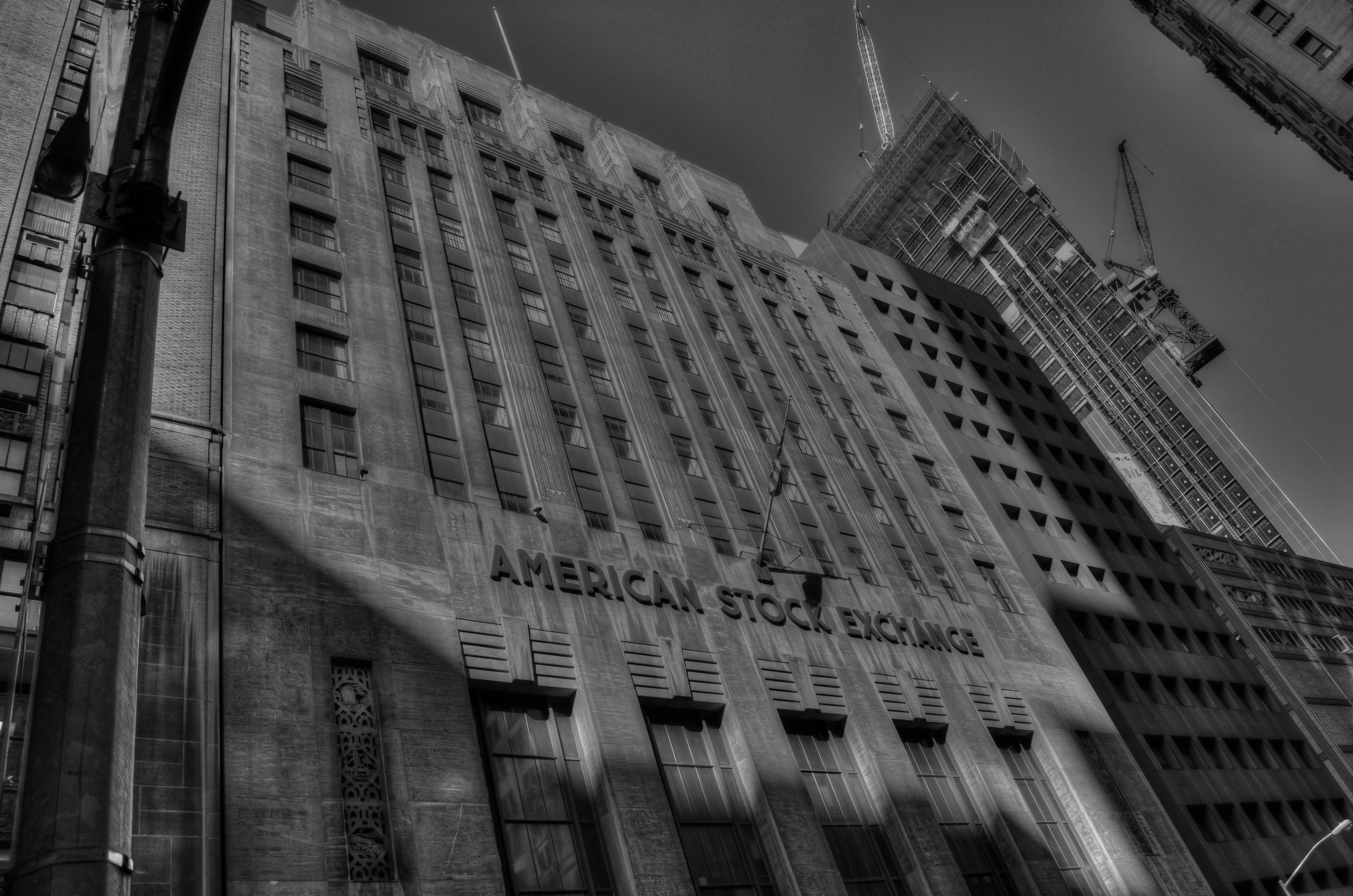
Old power, new power. The American Stock Exchange, a titan of the might of another era, stands in lower Manhattan alongside the ascending symbol of the city’s survival in another age, as the frame of WTC 1 climbs the New York sky. The tower, recently surpassing the height of the Empire State Building, will eventually top out, in 2013, at 1,776 feet. Single-image HDR designed to accentuate detail, then desaturated to black & white. 1/160 sec., f/8, ISO 100, 18mm.
THERE IS NO GREATER CANDY STORE FOR PHOTOGS than New York City. It is the complete range of human experience realized in steel and concrete. It is both a monument to our grandest dreams and a mausoleum for all our transgressions. It casts shadows that hide both joy and fear; it explodes in light that illuminates, in equal measure, the cracked face of the aged contender and the hopeful awe of the greenest newcomer. There is not another laboratory of human striving like it anywhere else on the planet. Period period period. Its collapses and soarings are always news to the observer. Bob Dylan once said that he who is not busy being born is busy dying. New York is, famously, always busy doing both.
I would give the greatest sunset in the world for one sight of New York’s skyline.
-Ayn Rand
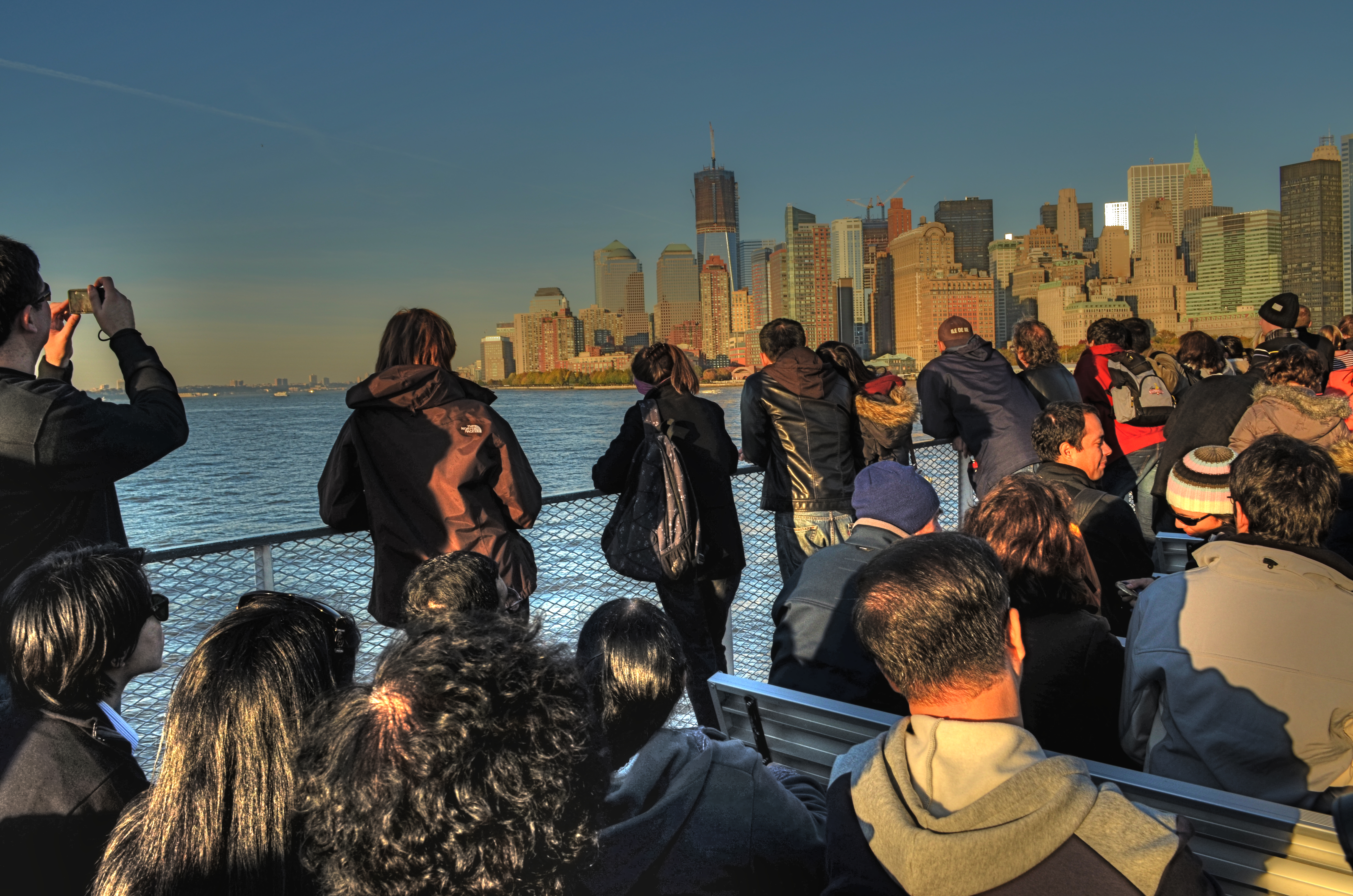
Returning from Liberty Island and Ellis Island in November 2011, a packed tour boat’s passengers crowd the rail for a view of WTC 1, rising as the new king of the New York skyline.
This month’s announcement that the new WTC 1 (built on the site of the old 6 World Trade Center building, itself a rather short edifice) has finally surged past the height of the Empire State Building (a repeat champ for height, given the strange twists of history) is a bittersweet bulletin at best. Cheers turned to tears turned back into cheers. In the long-view, the inevitable breathe-in-breathe-out rhythm of NYC’s centuries-old saga, the site’s entire loop from defeat to defiant rebirth is only a single pulse point. Still, on a purely emotional, even sentimental level, it’s thrilling to see spires spring from the ashes. The buildings themselves, along with their daily purposes and uses, hardly matter. In a city of symbols, they are affirmations in an age when we need to remain busy being born.
Thoughts?
“WHAT” IS THE QUESTION
ONE OF THE MOST FREQUENTLY ASKED QUESTIONS of shooters is, “what’s that supposed to be?”, usually asked of any image that is less obvious than a sunset shot of the Eiffel Tower or a souvenir snap of Mount Rushmore. You may have found, in fact, that the number of times that the question is asked is directly proportional to how intensely personal your vision is exercised on a given project. As much as the hidden aspects of life fascinate us, the obvious recording of familiar objects soothe the eye, like a kind of ocular comfort food. The farther you wander in your own direction as a photographer, the greater journey you also ask of your viewers. Sometimes the invitation is taken. Sometimes you must face “the question”.
What’s that supposed to be?
How, actually, in a world shaped by our own subjective experience, an image is “supposed” to be anything is a little baffling. It’s probably safe to say that what we present, as artists is probably supposed to be the view as one’s mind filters it through his or her accumulated life. When we use the camera as a mere recorder, it may make it easier, presenter-to-viewer, to agree on that image’s terms of engagement, but that may or may not reveal what we actually felt about when creating it. If I use the same three colors to render a picture of the American flag as everyone else uses, I may get into fewer arguments about how appropriate the resulting image is, but then, I don’t get to open up the discussion to any other conceptions of that flag. Back in the first days of the environmental movement, the simple use of green on the original, Old-Glory-derived ecology flag suggested an alternative way of being American, of living your life. As I recall, some viewed the design as sacrilegious, while others embraced it as liberating.
Over 150 years after the first photographs were regarded as a threat to the painter’s domain, we are still most at ease with pictures that ape the painting’s method for framing the world. Oddly, it is always outlaws and amateurs that break free of these pictorial chains first; the professionals must protect the turf they have so carefully mapped out for themselves in the mainstream. There remains, then, an ongoing battle over what should or should not be called a “picture”. Abstractions, arranged or perceived patterns, even selected details or drastic re-imaginings of small parts of the so-called “actual” world must always fight for their place at the table alongside the technically accurate mirroring of easily named subjects. We still regard that which is realistic as being the most real, and the most worthy of praise.
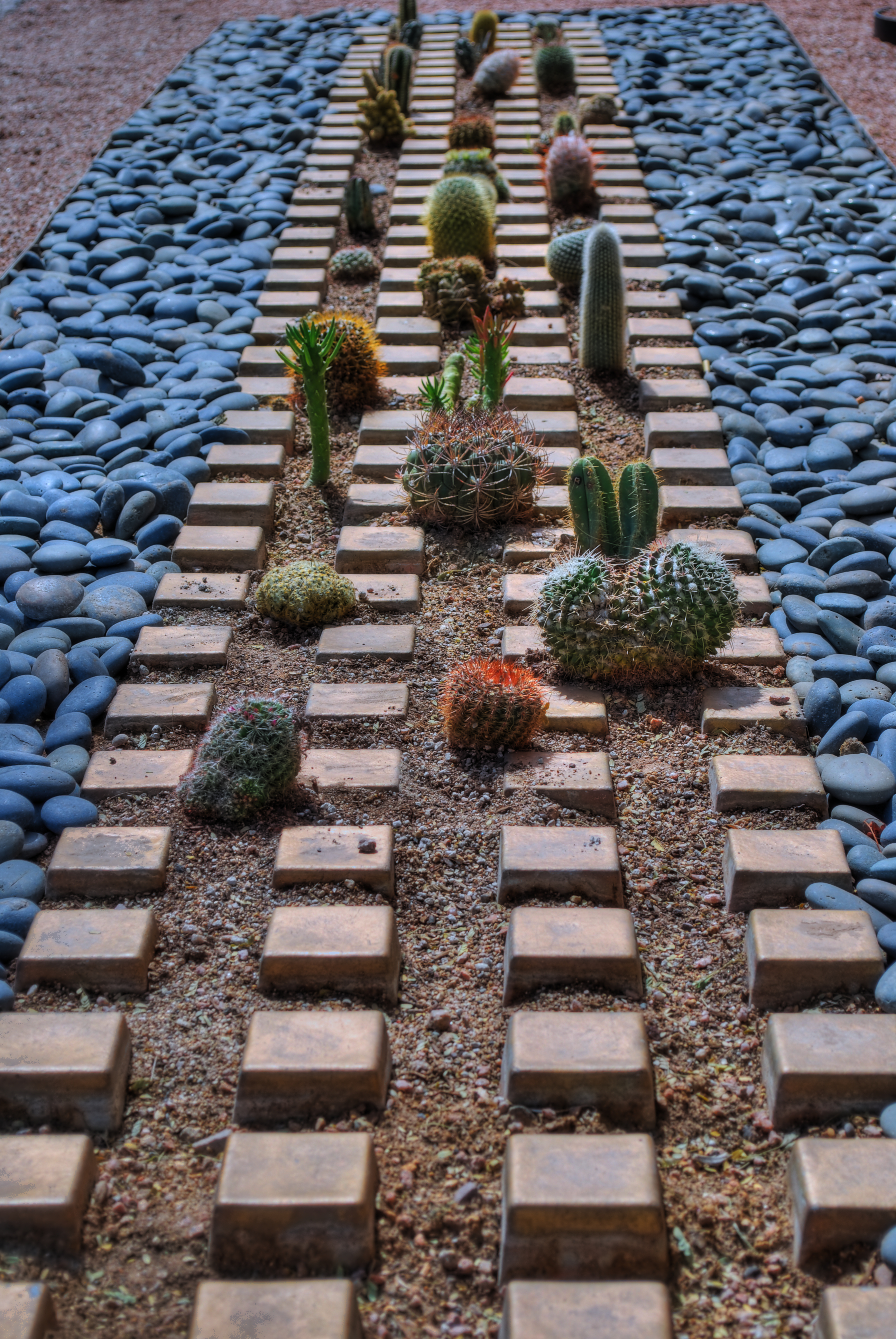
Cactropolis, 2011. Three bracketed shots about a half-stop apart combined into an HDR composite. CLICK TO ENLARGE.
To want to show something for its own sake on our own terms is to move into more personal territory, and hence onto shakier ground for critical evaluation, but occasionally we strike a balance between what people want to see and what we must show. In the above image, I only wanted to focus attention on an arrangement that was a very small and visually ignored accent along a heavily travelled public street. An unsung landscaper’s arrangement of tiles, gravel, paving rock, and succulent plants, was in plain view, and yet, at only a few inches in height, easily missed by the thousands of daily passersby speeding along the street. To me, when framed close to ground level, it resembled a kind of desert cityscape, blocks of abstract skyscrapers, a cactus metropolis, and that’s how I tried to frame and process it. Of course, it us, after all, just a pattern, and anyone who looks at the image can fill in their own blanks with impressions that are just as valid as my kind of toy idea.
The vital point is that no one else’s take on your dream can be wrong, just because it differs with yours. Art is not a science, which is why we don’t become photographers, or as the word implies, “light writers” just by pushing a button.
We become photographers by pushing everyone’s buttons.
What is it “supposed to be”? You tell me, and I’ll tell you.
Thoughts?
 thenormaleye