HOLDOVERS
By MICHAEL PERKINS
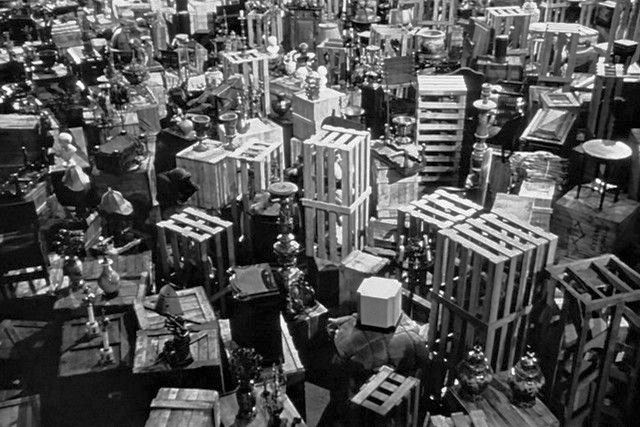
THE ARMY OF LABORERS, reporters and lookers-on that sift through a millionaire’s lifelong horde of loot at the finish of Orson Welles’ Citizen Kane share several emotions, among them amazement, curiosity, and. flat-out bewilderment at the sheer acreage of stuff acquired in the name of mere desire. What is this junk? Who would want it, or, more to the point of it, so damned much of it? One of the workers charged with cataloguing it all makes note of yet another Venus de Milo statue found in the obscenely vast field of material debris, while another remarks that $25,000 is “a lot of money to pay for a dame without a head”. In the end, all of Kane’s accumulated wealth amounts to little more than booty, transferred from place to place until it becomes merely a massive mess left behind for others to clean up. And, as film lovers will recall, his most valued possession, buried in mountains of clutter, accidentally goes to the furnace, up the chimney in a curling billow of black smoke.
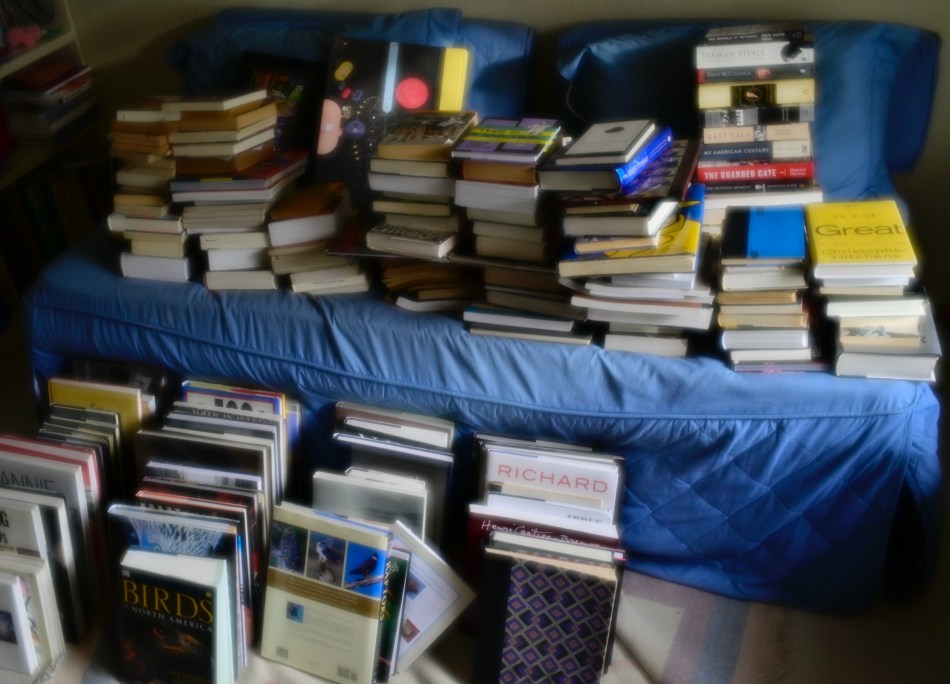
That same feeling of bewilderment will hit anyone who clears a house before moving out of it, sparking the nagging question, why did I keep this? In some cases, we actually know why, but in many others, the mystery lingers unanswered. And as I look, here, at the books from a life defined by the love of books, I know the story behind many of them. Why I bought them, what I gleaned from them, what made me drag them from house to house over a lifetime. But, then there is the other pile, the “Venuses” that won’t make the jump to the next home. Those aren’t shown here because, frankly, it’s a bit embarrassing to (a) ponder just how bloody many of them there are and (b) to confront the fact that books cling to me like barnacles to a ship.
No one quite understands the process, but it’s safe to say that, as a narrative, my life “story” is always in dire need of an editor. And so, for a photographer, another set of choices emerges, as a home of twenty years is de-constructed, piece by piece, and there is a strong urge to, as with Kane’s minions, catalogue at least the process if not the meaning of it all. To look upon the weird temporary still-lifes that are springing up all over the house and wonder if there are any Rosebud sleds lurking in the depths. Or should it all just go to the furnace?
LATE ARRIVALS
By MICHAEL PERKINS
FIFTY-TWO YEARS AGO, IN 1972, FRANK SINATRA RELEASED the most experimental album of his career. Watertown, a unified song cycle or “concept album” rather than a random collection of individual tracks, was devoid of the hip glamour of the Rat Pack, running cross-grain to everything the Chairman Of The Board’s fans expected of him. As a consequence, The album sank like a stone.
Watertown is a study in the isolation and despair inside the Great American Small Town, as told through the eyes of a man whose wife has left him to care for his two small children alone, her dreams unknowable, her grievances uncertain. Several of the songs center on the center of the town, the local railroad depot. The nexus of comings and goings. Hopes. Disappointments. Soft escapes. Quiet desperation.

Recently, my mind travelled back to my student film days, when Watertown was new and I used its opening song as the soundtrack to one of my four-minute Super 8 epics, shot in my mother’s birthplace of Wellston, Ohio, a place which spent much of the 20th century and all of the 21st slowly sliding into oblivion. Years later, the film is long since lost, but, thanks to a critical re-evaluation and revised appreciation of Watertown, the inspiration for it, as well as newer images, survives, as Sinatra intones:
Old Watertown
Nothing much happenin’
Down on Main
‘Cept a little rain
Old Watertown
Everyone knows
The perfect crime;
Killin’ time
And no one’s goin’ anywhere
Livin’s much too easy there
It can never be a lonely place
When there’s the shelter of familiar faces
Who can say
It’s not that way
Old Watertown
So much excitement
To be found
Hangin’ round
There’s someone standing in the rain
Waiting for the morning train
It’s gonna be a lonely place
Without the look of familiar faces
But who can say
It’s not that way
Sinatra, a singer known for signature albums like Only The Lonely, collections that wrung every last drop of sadness out of the particular kind of heartbreak that is America, really swung for the fences with Watertown, making more of a solid commitment to contemporary material than was typical in much of his later years. Half a century on, many critics have realized what a treasure the doomed project really was. There’s also a lesson in there for photographers, or anyone who ventures into unknown territory. Even when the trip seems to go nowhere, the journey is often worth the taking.
LAYERS AND LIFETIMES AGO
By MICHAEL PERKINS
I HAVE ALWAYS THOUGHT OF NEW YORK YEARS in the same way we often refer to dog years. Like Fido and Spot and Shep, the greatest city on earth crams a lot of living into every page of every calendar. A year away from Manhattan is enough for what I call The Eternal Facelift to have razed millions of memories and paved them over with shiny new ones. Neighborhoods you admired as Up & Coming on your previous visit are now yesterday’s scenes, with the focus shifting to confer Hot District status on what were, just a breath ago, ruins. New York, where American theatre was birthed, is itself like some eternally running Broadway show that is perpetually in revival. Now appearing in the role of The Apple is… The Apple, Revisited. Held over. Tickets still available at popular prices…..

As I write this, on Easter Sunday in the Year of Good Lord 2024, it has been nearly five years since I set foot on those streets, an insanely long sensory drought for a gent graced, for nearly two decades, with the chance to visit at least twice per year, sometimes more. Marrying into a family that called a place home that Midwestern, landlocked corncob me always regarded as an unattainable fantasy has gifted me with the privilege to see the place through the eyes of natives rather than from a double-decker tour bus, and that, as Robert Frost said, has made all the difference. Sadly, as it did for the locals, Covid-19 started the new decade off by turning us all into terrified house cats, scrubbing the cooties off our counters after the groceries were delivered by ghosts in hazmat suits, collapsing into cocoons of hoodies and p.j.s, waiting for the resurrection.
Perhaps this Easter Week has made me more conscious of transitions, as has the unfurling question of my immediate future, as Marian and I make preparation to leave our home of more then twenty years for a new perch in California, or about as far away from NYC as you can get without walking into the ocean. It’s sent me flipping through an endless trove of images collected by countless walks uptown, downtown, midtown, from towers, bridges, dark dank subway stations and bright, glistening new steel fingers jutting up into the sky. I don’t mind saying goodbye to my immediate environs in Arizona, but boy howdy how I’d like to spend just a fat weekend in, as the locals call it, The City, just to convince myself that it’s still there, still morphing and mutating, still living to defy the odds and confound the naysayers and hayseed haters. After all the places I’ve lived and visited, my heart tells me that America largely boils down to West and East Coast, with a vast vaporous something occupying the space in between them. I have read a lot of the books within the country’s library, and it’s still the bookends, the left and right bowers, that are most real to me, and to whatever eye I’ve acquired with a camera. It’s a strange truth to arrive at, but there it is. And so, toggling between two shores, am I.
SHOOT IT AND BOOT IT

By MICHAEL PERKINS
IT’S BEEN NEARLY TWENTY YEARS since the last time I changed residences, and the process of taking inventory of the trail of quaint trash accumulated over that period is both hilarious and humbling. Hilarious, because I recognize a lot of stuff that I somehow justified bringing along the last time I moved, and humbling because I hadn’t heretofore acquired the discipline required to just consign much of it to the dustbin. It’s not merely a case of asking “what was I thinking?” once and being done with it, but, in the present sorting process, posing that question several dozen times each day.
One way to calm the emotional unease of parting with stuff that you can’t logically justify hanging onto is to make formal photos of the items on their way out. We are physically downsizing our total household load of chazerei by quite a lot on the way to a much smaller joint, a process which makes it easier to make quick keep/trash decisions than if we were relocating to same-size digs. That strikes a lot of purely sentimental things off the list right away, like china my wife has carried from house to house simply because it’s always been in her family (top) or souvenirs of the 1939 New York World’s Fair (below) that I retained in hopes of someday creating a massive showcase display, a project which I now realize only exists between my ears. Some bits are old friends, automatically transferred to each successive house or apartment over decades. Many of them cannot accompany us on this one last adventure.

We will probably recall a lot these passing bits in detail for as long as our minds remain intact. For those that we have partially forgotten, there will be the pictures. For those that we have totally forgotten, there will be more room for other things in the crowded attic between our ears. In any event, there will be far less weird lore for our children to sift through later, wondering, as they go, what the devil this or that thingamajig was used for, or who in hell would want to hang onto it. There again, the pictures may provide a clue. Or not. And so it goes.
LAST IMPRESSIONS
By MICHAEL PERKINS
THIS WEEK, AS I PREPARE TO MOVE OUT OF ARIZONA after twenty-five years, one of the things that will be hardest to leave behind will be my eleven years as a mentor and guide at Phoenix’ astounding Musical Instrument Museum. I have done a lot of volunteer work here and there over the years, but no other assignments compare with the miraculous gifts I have received on every single day of service at MIM. And that also covers the creations of a heaping helping of photographs.
You would think that, after tracing millions of steps over the museum’s vast layout, often with camera in hand, I would have somehow found “the” picture, the image that captures the blessings that this place have conferred upon me. There are pictures of every hall, every meeting room, hundred of exhibits, and thousands of objects in every kind of light, snapped on every imaginable occasion, from concerts to field trips, training sessions to corporate events to award celebrations. There are wide-angles, selective focus art effects, fisheyes, macros, and double exposures, taken with every piece of kit in my arsenal. And yet, after wading through all that in an attempt to draw a line under all my years there, I find that it’s one of the first, almost accidental photos I made in my inaugural year that still has the greatest impact on me.
The guide shown here is instructing a young girl on how to play the Theremin, one of the earliest practical electronic instruments from the 1920’s, and the earliest influence on synthesizer pioneer Robert Moog, who taught himself its magical circuitry by making repairs on surviving models when he was fresh out of college. It’s also the only instrument in MIM’s collection that must be played without touching.

As the image indicates, one needs to be taught how to position one’s hands to create a bit of electrical connection between the device’s two steel poles (which both oscillate at distinct frequencies) and whose silent transmissions can create both audible volume and pitch variations when guided by the player. Explaining the theremin would require a separate technical essay, but that’s not what the picture is “about”. It’s about the wonderment that is playing across the face of the small girl, no doubt a young woman by now, possibly with girls of her own to astound. As I head for the museum’s exit one last time, it is this moment that I will remember, because all of us spent every day in joyful pursuit of That Face. A-Ha moments. Lightbulb moments. I couldn’t capture all of the wonders every day, either by trying to explain them to guests or by photographing them. But this time, this one time, I got lucky, and something magical jumped into my box.
Which is, really, what keeps all of us coming back for more, camera in hand.
Because, at the end of the day, you might go home with a miracle.
And that is music to everyone’s ears.
ALONE BUT NEVER LONELY
Every photographer in history has been where you now are, that is, staring into a huge question mark.
By MICHAEL PERKINS
ART IS AT LEAST PARTLY PRODUCED TO BE SEEN, to act as public testimony to the artist’s ideas, a record of his having passed this way. And there is a natural need for that work to be evaluated by others, to be perceived as a common thread in the overall fabric of the human condition. I see a thing, and I make something that comments on or interprets that thing. And I hope you see what I see.
The problem for art, though, in our increasingly public lives, becomes an exaggerated need for our work to not only be seen but to be approved of. When we post or publish in this age, we are not really looking for a debate or analysis of what we’ve created. Instead, what we seem, increasingly, to be seeking is validation. Likes. That’s a danger to any fully realized sense of art.

Art is solitary. Art is lonely. And the truest of it is generated when we trust our inner pilot light, even when, especially when, no one else “gets it”, or puts a star next to it, or tells us how wonderful we are to have made it. As artists, photographers inherit both the instinct to follow one’s own North Star and the desire to be told how much we are loved. Both urges are normal, but it is the second one which can get us into trouble. I was recently reminded of how grounded Ernst Haas, one of my very favorite photographers, always remained, how he consistently reminds us, through his writings and interviews, that the work counts all by itself, irrespective of result or reward. One quote especially echoes in my head in moments when I worry about “getting it right”:
Every work of art has its necessity; find out your very own. Ask yourself if you would do it if nobody would ever see it, if you would never be compensated for it, if nobody ever wanted it. If you come to a clear ‘yes’ in spite of it, then go ahead and don’t doubt it anymore.
We live in an age that is increasingly defined by how we are regarded by others. And that can make us pre-edit ourselves on the fly, choked by worries about how our work will “play”, as if that had anything to do with why we really do it. So, go, make pictures that may or may not ever garner you a smidgen of approbation. The essential honesty of that act will imbue your work with something that can please you beyond the power of any “like” or heart icon. And that, over time, is all you need to sustain you.
ONE AND A HALF EYES
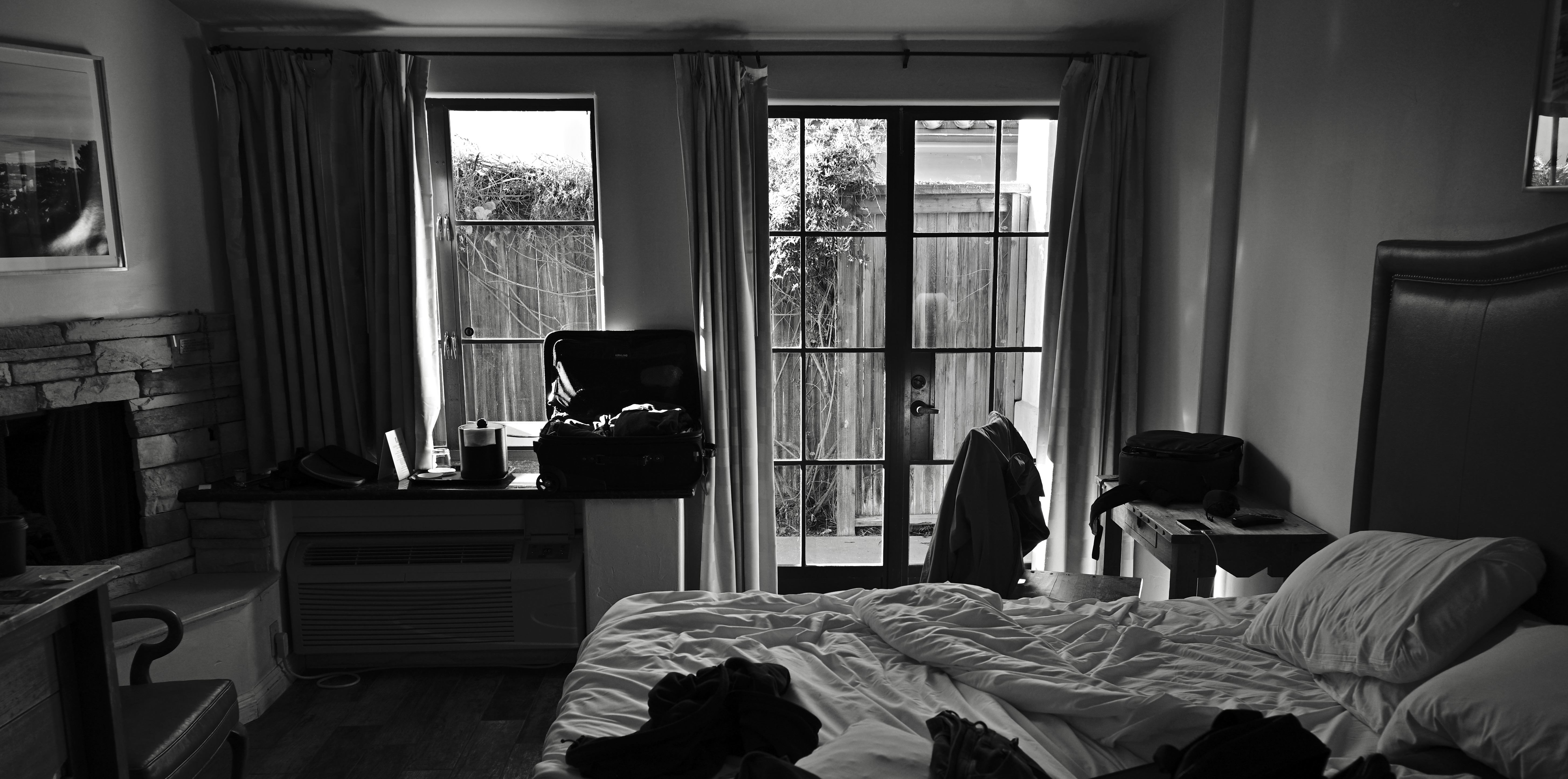
The settings stored on the “U1” mode button on my Nikon Z5 instantly produce this classic mono effect.
By MICHAEL PERKINS
OF ALL THE OCEANS OF INK SPILLED, OVER THE LAST GENERATION, on stories about the debate between photography’s analog and digital camps, relatively few have centered on the most salient difference between film-based and sensor-based devices, which is that the latter are truly miniature computers. Digital has never been about merely finding non-mechanical means to measure light, but truly about an explosion in options, tech that allows the shooter to store thousands of choices outside his own brain, creating, in effect, a database of preferences that he can call upon to instantly render any look he imagines. It’s like adding an extra half an eye to the two you were born with.

The stored “U2” settings deliver a pretty good Kodachrome fake.
Consider, as just a single example of what’s hanging from these new super-tool belts, the “user” buttons that come with nearly every camera on the market, slots where dozens of specific settings that add up to a particular “look” for an image can be stored on a mode button that, when dialed up, immediately creates that look without the need for further adjustment. Of course, in the film era, we could manually make many such custom adjustments, but they required doing so in the moment, one image at a time, cutting the implement time for shots and practically guaranteeing that many moments would simply be lost in fiddling. But now, since we make pictures with a computer, it’s nothing at all to sculpt all those elements, from focus to ISO to tonal range to, well, anything, and park them on a button that’s as easy a go-to as Manual, Shutter Priority, or Aperture Priority. Click to the user mode “button” that you’ve previously programmed, and go.

Another mode (“U3”), another tweak, this one miming an early 90’s Fujichrome slide film.
In my own case, my Nikon’s U1, U2, and U3 modes are programmed to three different kinds of film emulation. U1, seen at the top, is a monochrome look very similar to Kodak Tri-X, with contrasts and resolution that are much keener than anything straight out of the Auto mode. U2 is a pretty good approximation of Kodachrome, a recipe I copped from various online pundits, and U3 is dedicated to a fair facsimile of one of my favorite Fujichrome slide film emulsions. The beauty of having these modes pre-loaded is that, in those confusing moments when I’m unsure which approach to take with a given subject, such as the early morning hotel room seen here, I can crank off three “takes” on it very quickly, comparing them all to my fourth likeliest option of full manual in just a few seconds. This is the heaven of carrying a third half-eye in your pocket: the ability to shorten the lapse between what you see, what you shoot and what you get. It’s a menu of possibilities that no film camera ever afforded me, and further proof, as if I needed it, that this is the absolute best time ever to be a photographer.
DRAMA BY DEGREE

A typical wide-angle shot (28mm) of a subject where mostly all proportions are rendered normally.
By MICHAEL PERKINS
WATCH ENOUGH COP OR LAWYER SHOWS, and you’ll see it: the establishing shot which shows the hero’s home base, be it the local police HQ, the county courthouse, or an Uber-powerful law office, stretched to angles of ultimate exaggeration by super-wideangle lenses. Normal optical proportions may be used for all other shots that follow in the episode, but that kickoff image, like as not, will make the locales seem larger than life, seething with drama. Something important is happening here, goes the message. The look is a perfect photographic blend of effect and intention. We want these particular buildings to look unreal, simply because outsized things are occurring within them.
In everyday photo work, however, we often tend to use an effect for its own sake because, well, it looks so cool. We aren’t really justifying all that distortion and surreality with any narrative purpose. We fall in love with the custom look of selected optics, for example the bend-stretch of an ultra-wide, without always asking ourselves if their use serves any other purpose except, “I like it”. I fully cop to this in my own case. I sometimes go from discovering how to master the technical use of an effect and slide easily into the habit of shooting damn near everything with it, until, eventually, I come to my senses.

Same subject, taken from the same distance, but with an ultra-wide, 11mm diagonal fisheye. One question comes to mind: why??
After indifferent luck over the years with variously priced “fisheye” wide angles, I decided to lay off the enclosed circular framings that they delivered, as the bending at the edges, not to mention the color fringing and uneven sharpness, seemed claustrophobic to me. Then, last year, I discovered the very different experience of shooting with a so-called “diagonal” fisheye, which renders a rectangular full-frame image with a wider area of bending at the perimeter. Problem was, I was so relieved to finally get the kind of nearly panoramic images I had been seeking for so long that I started applying the look to things that, for the sake of visual story-telling, don’t really call for it. I was, in effect, shooting too many normal buildings and making them look like Shot One On A Cop Show.
The two images seen here, shot on a 28mm wide-angle and an 11mm diagonal fisheye, show that the features of the hotel in the images are not particularly well-served merely by giving it the Silly Putty stretch treatment. In fact, it actually draws attention in the wrong direction. For me, there is always a risk that, during the break-in period for a new piece of kit, I will mistake the novelty of the results for a true all-purpose go-to approach to shooting any and everything. Eventually I sober up, but, while the high lasts, my work can go a bit giddy. Such is life.
THE TERROR DIARIES
By MICHAEL PERKINS
THIS MONTH MARKS THE FOURTH ANNIVERSARY OF THE DAY EVERYTHING STOPPED. Work. Play. Worship. Commerce. Social Interaction. The Arts. Everything, it turned out, except the microbial mass murder that spent all of 2020 whipsawing its way into every public and private space of our lives. There was no escape, perhaps not even delay: we watched as the tsunami decimated both family and stranger, drowning commoner and king alike. People were swept away in the space of hours, if they did not linger in a physical purgatory so dire that death came, for some, to almost feel welcome, an end to the agony.
My wife and I, like millions of others, scrubbed, washed, worried, masked, kept our distance, crossed our fingers. Maybe we prayed. As a photographer, I knew the images that mattered were, for the most part, closed to my eyes. We glimpsed pieces of the scourge through the shocked faces of authorities, the exhausted visages of caretakers, the ashen echoes of our friends flickering on Zoom hookups. We hoped we’d never get close enough to see the big picture in person.

April, 2020. “Bad News On The Doorstep…I Couldn’t Take One More Step…”
I took this image of my wife during what had become, just one month into the nightmare, her morning ritual, watching the daily broadcast summary of statistics and strategy from her beloved New York, a grim recitation of risk and ruin presided over by then-Governor Cuomo. Charts. Advisories. Updates. Warnings. Her daughter was half a country away in Queens, which, in the earliest days of our terror diaries, was the epicenter of the epicenter of Covid. Beyond the reach of hugs, reassurances, comfort of any kind. As parents, in a second marriage, of two sets of kids scattered from coast to coast, we dared not utter our greatest fear: that those we loved most in the world might wink out without a goodbye, without us near them to calm their terror.
In over twenty-plus years of chronicling every aspect of Marian’s life, I find this picture unique among thousands of candids from trips, anniversaries, daily doings and big events. In seeing it now, I can viscerally re-connect with that time’s sense of hopelessness, of drift, the feeling that you were being carried with the current toward the edge of a raging cataract. Amazingly, I hear people, in 2024, who seem to have submerged or even erased the memory of those days. Hey, we’re all still here, aren’t we? How really bad could it have been, after all?
I’m grateful that I have this much visual armor against the madness of amnesia, and that I took this picture. And I pray to God I’m never called on to take another one like it.
AIR THROUGH A REED
By MICHAEL PERKINS
MERE HOURS AFTER MY NINETY-FOUR-YEAR-OLD FATHER and I shared a recent conversation on the creative process, I found myself staring at the computer screen in amazement. Both Dad and I have been photographers, musicians and writers over our lifetimes, and we have long marveled over the miracle of creation, and how it tends to happens not by us, but through us. The old metaphor of air whistling through a hollow reed to make music is not lost on us. We know that, when the muse is on us to any serious degree, it, not us, is in charge. And so, looking through my day’s shots a little after our conversation, I could not fail to be struck when I finally got around to reviewing this image:
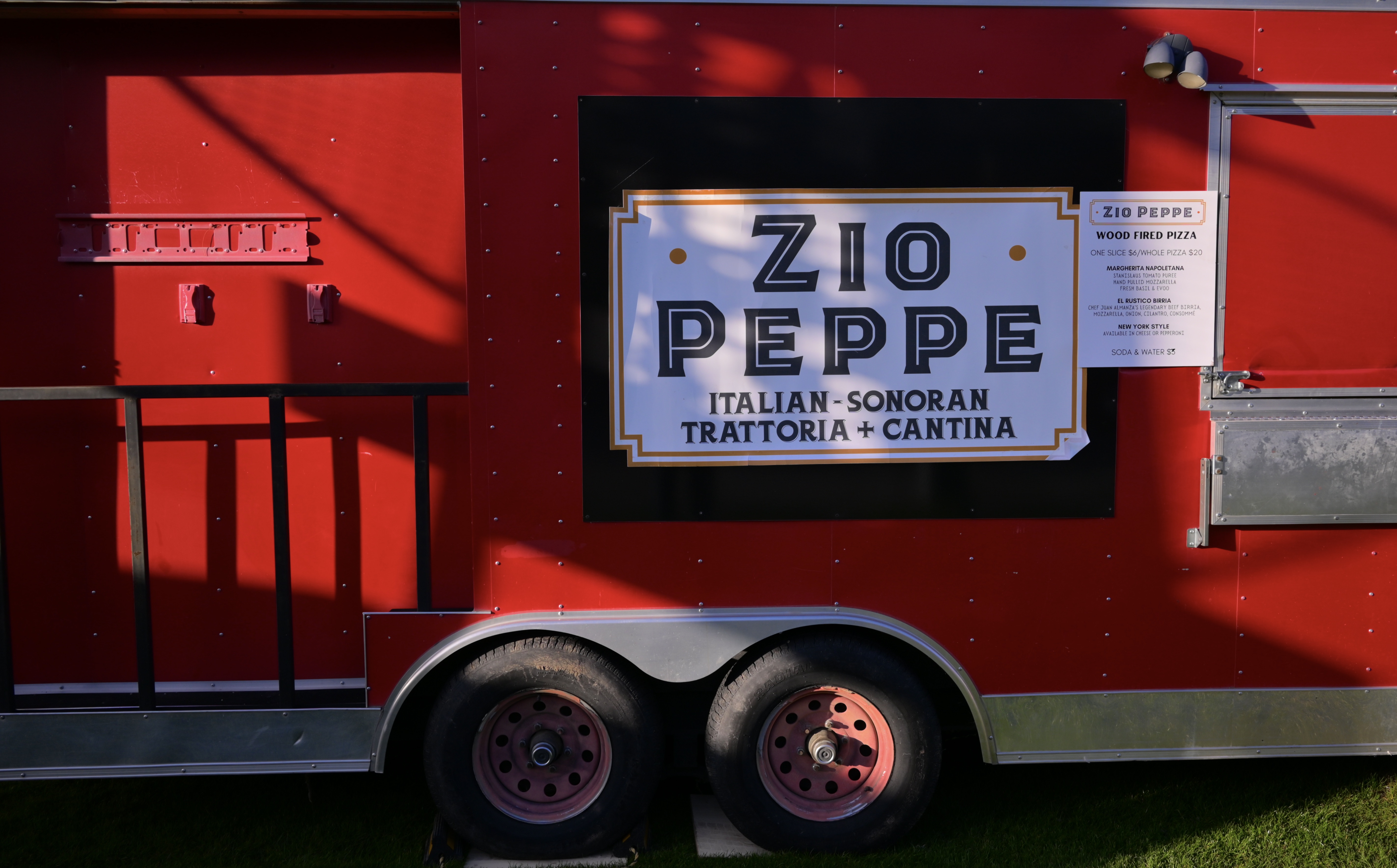
I took this with about three seconds of forethought. The light, the color, the spareness of the composition, all coalesced very quickly, as did my belief that the entire inspiration had been my own. Following my talk with Dad, however, it struck me as merely my re-channeling of things I already “knew” from the work of other photographers, things that were operating on me far beyond the limits of mere influence. And, in looking at this random shot of a food truck at sunset, I searched my memory for what I believed to be the true genesis of the appeal of the shot. It didn’t take long.
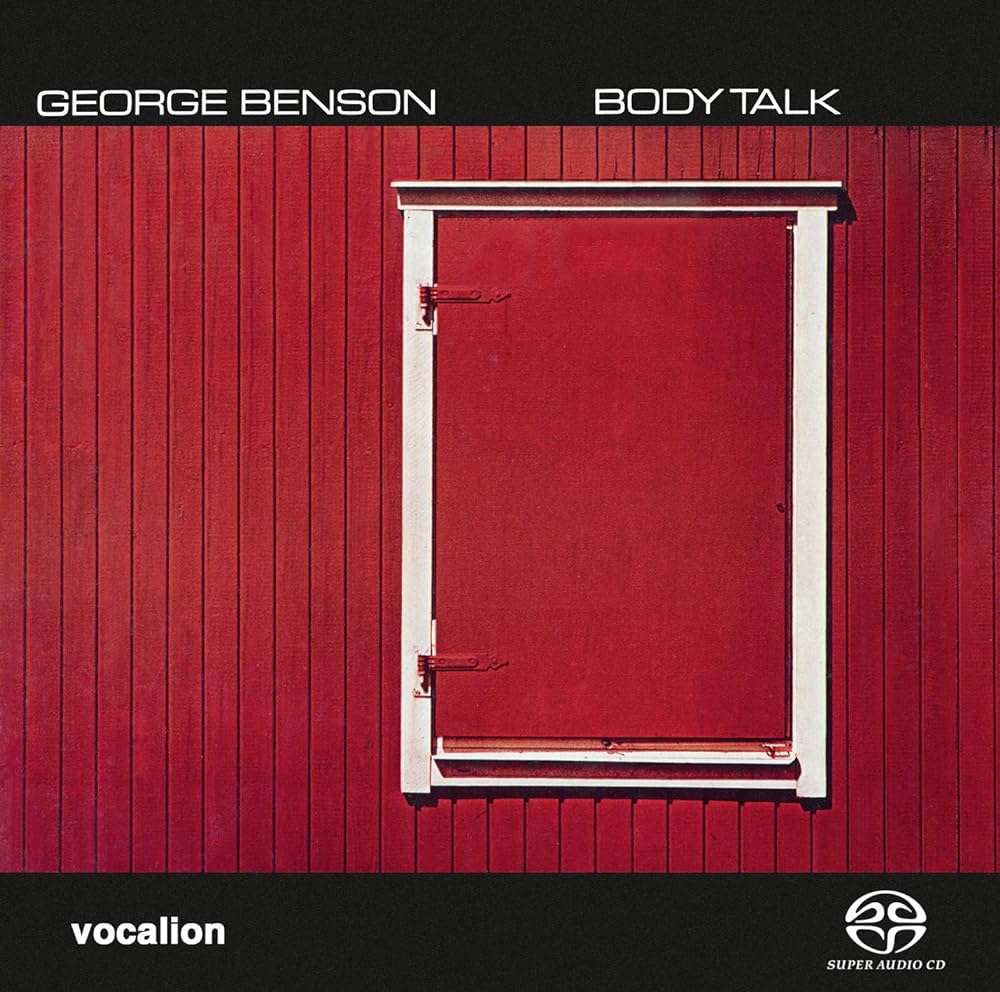
Pete Turner (1934-2017) was not, for the most part, a photographer who was commissioned to create album covers from scratch. In fact, many images from his existing body of work were often chosen by art directors at various record labels who just liked the pictures for their own sake. His photographs were not, then, “about” the featured artist or album title: they were just, as photographs, purely themselves. His cover here, for the George Benson album Body Talk, is typical, and, like many of the other covers I owned by him, it stunned me in its simplicity and directness. Years later (last week), I was not trying to “copy” Pete, nor create an homage to this shot; it simply bubbled up in some form in a way that was both unwilled and uncontrollable.
Photographers who fret too much about establishing their own “style” need not be dismayed when fragments of other artists come to the surface in their own work. No one can undertake the creative process without someone else’s hand on their shoulder. The trick is to celebrate what perhaps someone else has celebrated before you. The fact that you weren’t the first to enjoy smelling a rose does not make it smell less sweet. Let the air flow through you, and sing.
SKYBOUND SOUVIE
By MICHAEL PERKINS
SOME OF THE WORLD’S MOST STRIKING LANDMARKS ARE OBJECTS that have essentially slipped the bonds of time, surviving their original contexts or intentions to become, not mere signposts or symbols to other attractions, but attractions on their own terms. The Eiffel Tower is untethered to the 1889 Exposition that commissioned it: the Unisphere in Flushing Meadows Corona Park was once the centerpiece of the 1964 New York World’s Fair, but now stands unchallenged in open green space as a rallying point for generations who never experienced it as a meet-up point in a sea of super-pavilions. And the skybound souvie you see here serves a city who has had decades to forget why it was created in the first place.
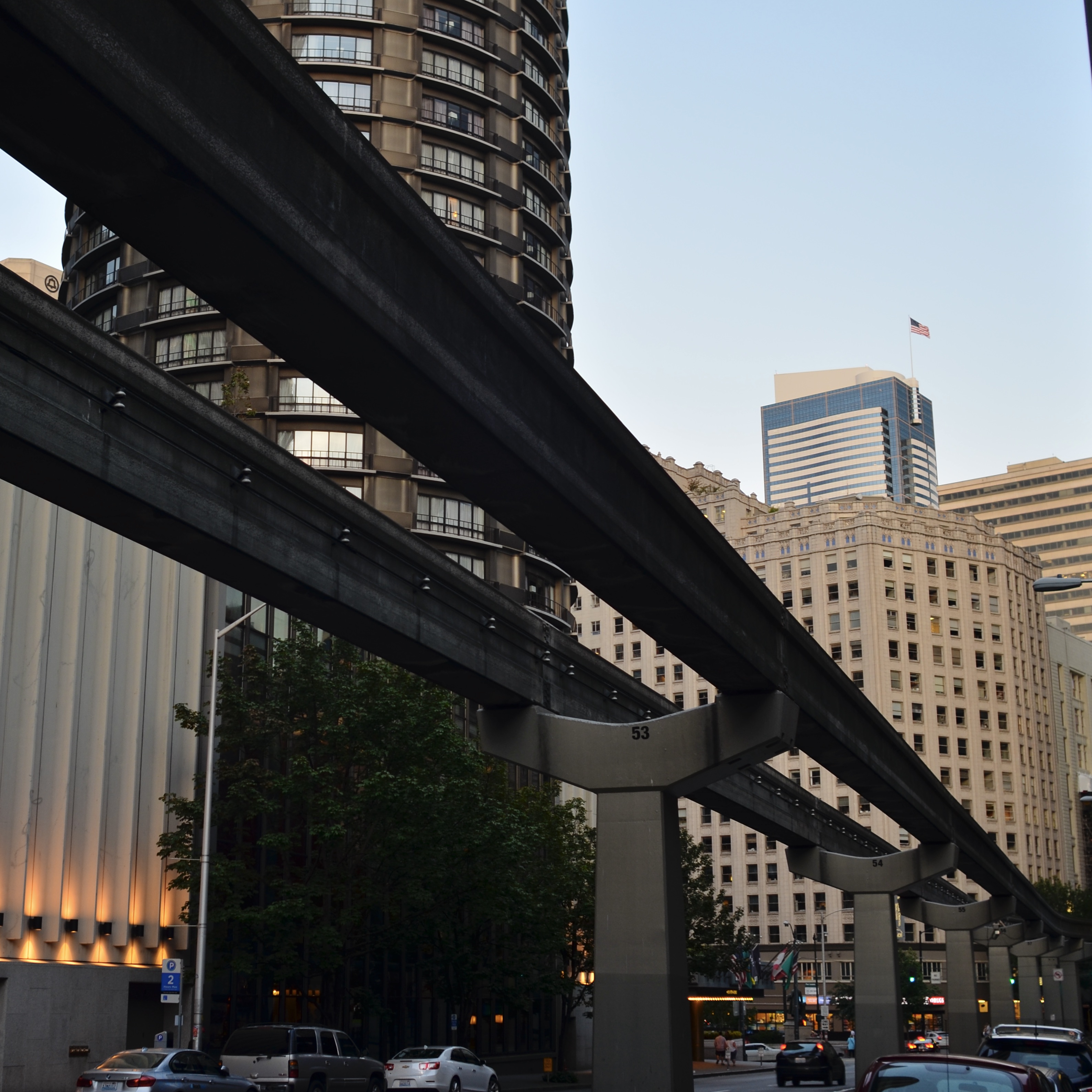
Urban planners in Seattle, Washington had floated plans for an aerial tram for the city as early as 1910. One such proposal would have linked the city with Tacoma, over thirty miles away. Another idea was pitched to use the monorail as a replacement for the local streetcar line, a variant on the “els” of Chicago and New York. The discussions waxed and waned for decades with no result, until, in preparation for the 1962 World’s Fair, approval was finally given to construct a 0.9-mile (1.4 km) span along 5th Avenue between Seattle Center, where it would deliver visitors right to the foot of the other surviving feature of the fair, the Space Needle, connecting Seattle Center to Westlake Center, making no intermediate stops. Far from being a mothballed museum piece, the monorail in the 21st century survives as a major tourist attraction to this day, operating as a regular public transit service with trains every ten minutes running for up to 16 hours per day. It was designated an historic landmark in 2003.
As Donovan said, “first there is a garden, then there is no garden, then there is”. Photographing the symbols of earlier eras far removed from those eras is a little like getting unstuck in time yourself. Riding a monorail designed as a forward-thinking prediction of “life in the future” for a World’s Fair is allowing yourself to envision both periods simultaneously, to reevaluate objects in ever-emerging and fresh contexts. And for the purpose of making images, the human imagination is a subject that never fails to astonish.
PROMETHEUS IN TERRA-COTTA
By MICHAEL PERKINS
FOR PHOTOGRAPHERS, THE EARLIEST AMERICAN SKYSCRAPERS are treasure troves of the kind of cultural lore that seems, increasingly, to be an exclusive artifact of the early 20th century. Not only did we design the basic shells of these supertowers in a vastly different way from how we might conceive one today, but we also had a different agenda for how they should be adorned. As public buildings evolved from the hyper-gothic scrollwork and busy exteriors of the Gilded Age to the streamlined decor of the Art Deco period, so too did our idea of what statements should be featured to create wonder or inspiration for passersby. Today, reading the outside of these aging headstones for the industrialists and bankers of the ’20’s and ’30’s (which is largely what they are) is to get a true peek into what they thought of as essential in the telling of their individual sagas.
Buildings from this period frequently featured repeating geometric patterns or other abstract lines, but in the first globally industrial century, there were also specific depictions of mankind mastering the very elemental forces of nature. Reflecting an new era of machines, innovation, and the birth of the first mass media, the symbols on skyscrapers began to celebrate our ability to harness Nature itself, with terra cotta, steel, tile, and mural art showing our newfound dominion over electricity, motion, speed….all tamed in the service of profit and progress.

1931’s General Electric headquarters in NYC, complete with disembodied arms holding lightning bolts, as one does….
Like Prometheus stealing fire from the gods, we celebrated our harvesting of raw energies in the universe and their re-purposing to make the world over in our own image. Buildings like this one at 570 Lexington Avenue in New York were especially illustrative of the modern world and the power of symbols as integrated features of the new breed of mega-structures. Originally proposed in 1929 as the first national headquarters of the Radio Corporation Of America, the building wasn’t completed until 1931, by which time RCA decided to house its corporate digs in the brand-new Rockefeller Plaza instead. As a subsidiary of General Electric, the broadcast giant decided to cede 570 Lex to GE, which proceeded to mount its cursive logo at the center of an enormous clock above the northeast entrance to the building, directly below two disembodied arms holding bolts of lighting. Additional abstract zigzag patterns suggestive of electrical power were added all the way up the building and in accents within the lobby.
Today, photographers can play the “hidden picture” game on structures that show the speed and sweep of automobiles and trains, the power of hydroelectric dams, the towering scale of ocean liners and dirigibles, the reach of radio and telegraphy….any and all manifestations of Mankind’s new role as landlord of the earth and sky. Many of the buildings created in this golden age are gone; others have been repurposed, but the clues to the dreams of its creators live on, the heiroglyphic record of what we claimed and what we dared.
DAYS OF FUTURE PASSED
By MICHAEL PERKINS
WHEN I HEAR PEOPLE WINGEING ON ABOUT the “romance” of the vanishing platform known as the newspaper, I immediately recall two familiar images of just how fast the immediacy of any media forum withers on the vine. One image is of a hobo stuffing yesterdays gazette into his shoes to shore up holes in his soles; the other is of a street vendor using last week’s front page to wrap fish. The point here being that reality, as reported on by anything, anywhere, warps out of context so quickly that it can seem to mock the very ways by which we tried to record its passing. Photographs, of course, are not resistant to this phenomenon, but they can serve as a chronicle of how very hot, and how very transient, all our fashions proved to be.
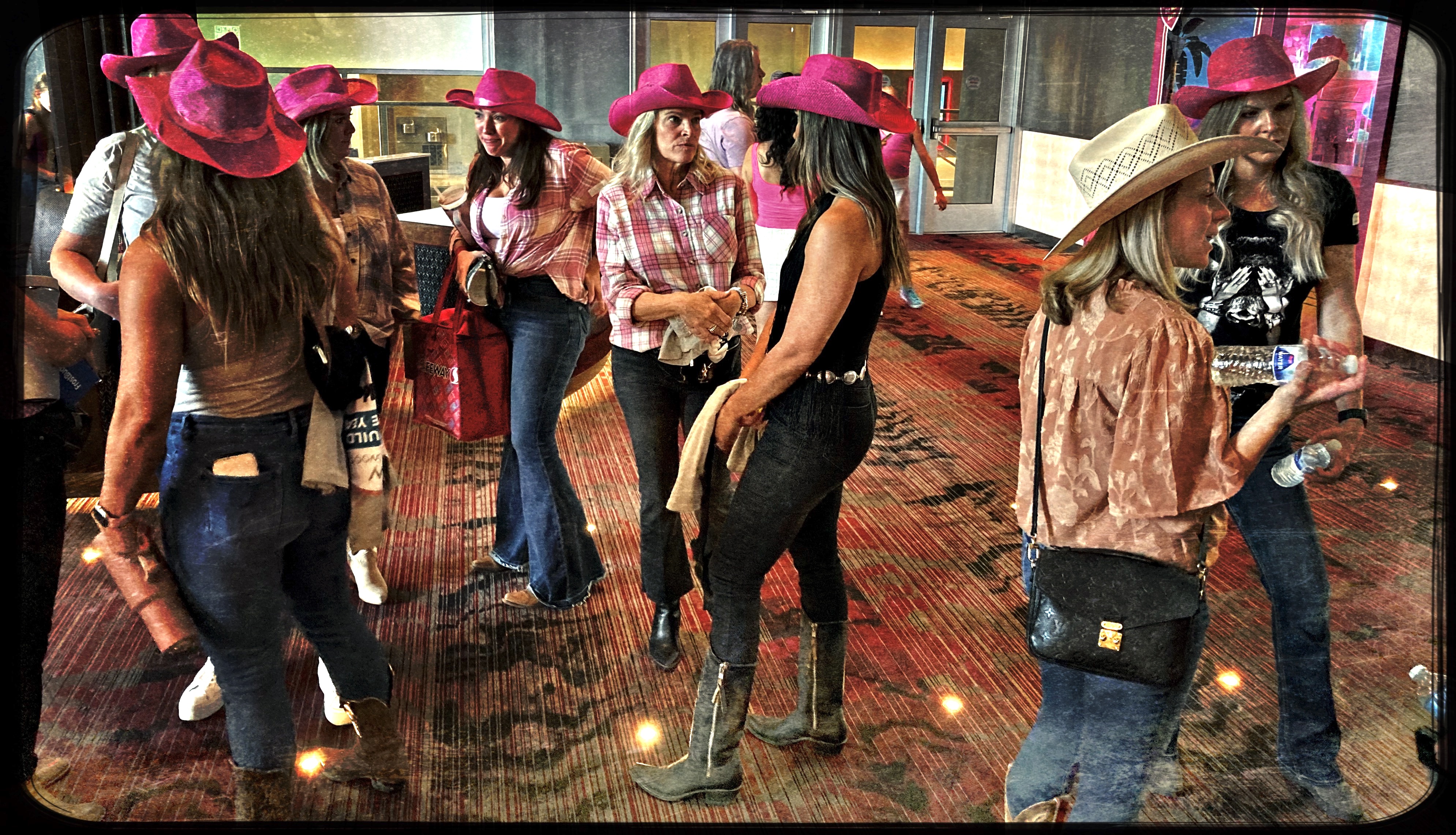
“Hi, Barbie, Hi Barbie, Hi, Barbie…”
This image is not even a year old, and it already seems…strange. 2023’s tidal wave of Barbie-ism is on track to rival the hula hoop and line dancing to Achy, Breaky Heart as something that briefly enthralled a public starved for distraction, then dissolved as quick as Splenda in hot coffee. I actually shot this image on my way out of a showing of Greta Gerwig’s delightful sendup/homage to America’s Real First Lady, and the group seen here was queueing up to catch the next screening. The power of the movie was one thing, but its ability to create spontaneous social riffs like this “hey, let’s all dress up like cowgirls, but with pink hats” variant. Were all these women longtime friends? Did they, in their individual lives, actually fulfill the various alternate ambitions of Business Barbie, Mom Barbie, Astronaut Barbie, Dr. Barbie? Or was this merely a moment of what-the-hell-let’s-do-it? The photo does what many pictures do: it reveals everything about “the time” and not much about the people living in it.
A famous news photo of the 1920’s showed a young flapper, bobbed hair and all, using a pencil to thumb through a miniature dictionary mounted on her wrist like a bracelet. The book was a handy way to search for possible solutions to clues in her daily pursuit of crossword puzzles, which had, in that decade, recently been introduced to feverish delight among the novelty-hungry kids of the Jazz Age. Through that photograph, we see a day of future passed, a world largely vanished, leaving only a fading picture to tell its story. Most of the news of the day will, indeed, eventually be used to mentally “wrap fish”, but pictures can remind us that not all of it deserved to be stuffed into our shoes.
AN EYE FOR AN EYE
By MICHAEL PERKINS
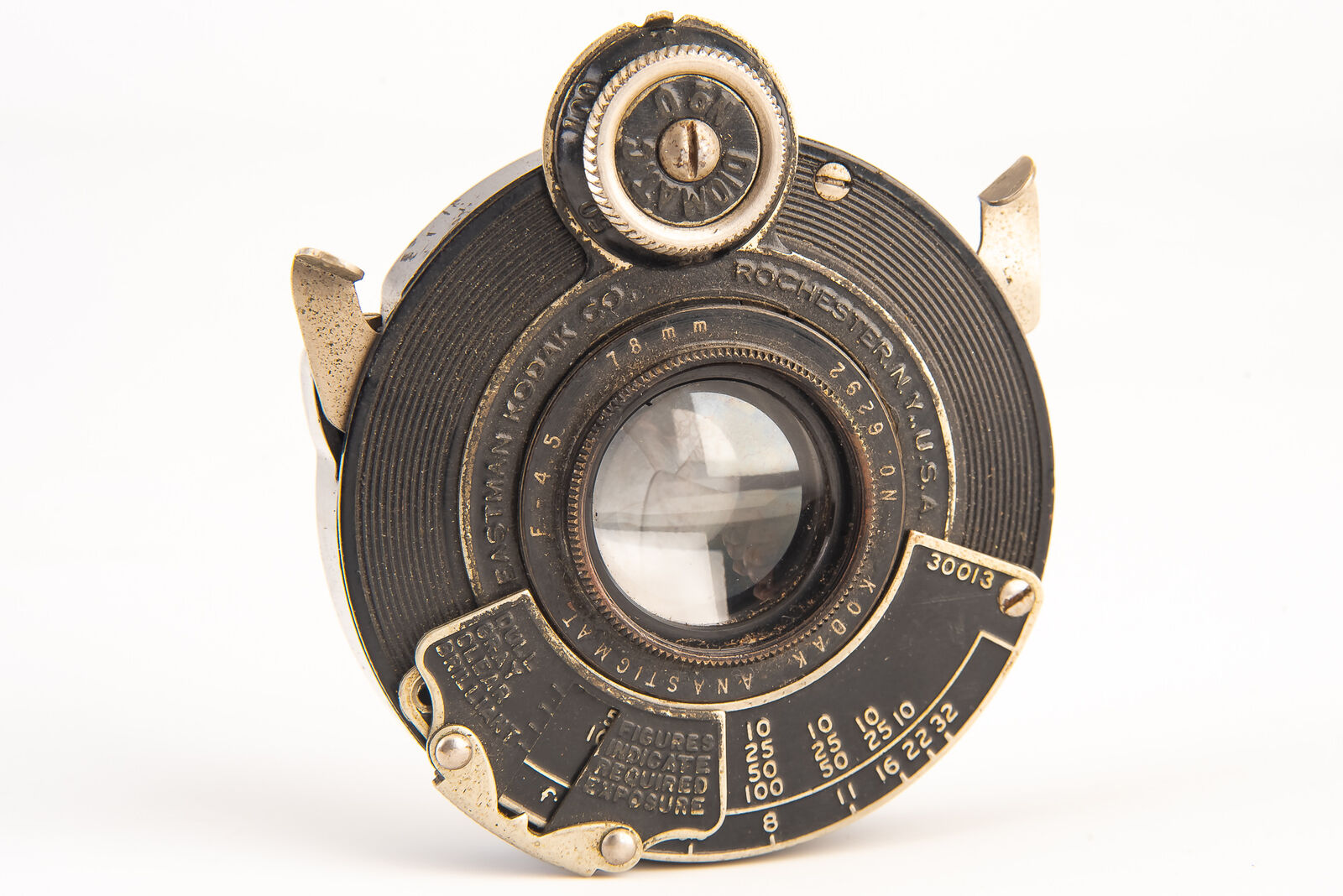
IT WAS NEARLY FIFTY YEARS AFTER THE ADVENT OF PHOTOGRAPHY that practical mechanical shutters ushered in the first era of fine control in the making of images. The lenses in the first cameras of the early 1800’s were always either “open” (lens cap or shield physically removed) or “closed” (cap back on). Exposure was a matter of experiment and guesswork. Once mass production entered the scene and shutters became a permanent part of every camera sold, photography passed from a tinkerer’s hobby to a mass pastime. Thousands of variations and refinements followed, but the mechanical shutter has remained an essential part of every image from snapshots to studio portraits for a century and a half.
At this writing, however, the evolution of the electronic shutter has reached something of a set point, making these byproducts of the digital age serious competitors for their mechanical counterparts, and, for more shooters than ever before, a superior option. Nikon and other manufacturers have, by early 2024, already released professional-level cameras that contain electronic shutters only, even as opinions pro and con on the two choices rage on among users. Some shooters see mechanical shutters as the biggest killers of cameras, since they are one of the only parts in new gear that can still wear out due to heavy use. Those of us who have sought bargains on the resale market are accustomed to seeking a “shutter count” on the unit we’re eyeing, so see what its remaining life span is likely to be. Electronic shutters, on the other hand, have no moving parts, capturing the image by reading exposure information directly from the digital sensor.
This can mean that ESes support a faster frame rate, allowing for shooting up to 20 frames per second, while also delivering exposures as quick as 1/2,000. On the other hand, fans of mechanical shutters say that they create fewer flash synch mishaps and avoid uneven exposures. Both camps agree that the virtual elimination of vibration from a mechanical shutter greatly reduces the chance of camera shake, and that electronic shutters are also completely silent, a valuable tool in stealth situations. And the debate rages on.
This article from Photography Life offers more factual fuel for both sides of the argument than can be summed up here. However, one thing seems clear: the lightning advance of today’s tech guarantees that the elimination of any practical flaws in electronic shutters is just a matter of time, with the mechanical shutter soon going the way of the physical film transport system, the light meter and other legacy tools that eventually are viewed as quaint but unwieldy obstacles between photographer and photograph.
WHEN THE CHURCHYARD ISN’T BIG ENOUGH
By MICHAEL PERKINS
Every man’s death diminishes me.
John Donne, No Man Is An Island
IT DOESN’T TAKE A SEER TO GET THE IMPRESSION THAT, these days, we seem to be, more than ever in our history, a nation of mourners. No longer do we merely express the formal, private grief that marks the graveside service or the official funeral. The far reach of death into nearly every arena of public life has made grief more of a communal phenomenon than can be contained in the local churchyard. And since loss is occurring in more and more settings, mourning has likewise burst the bounds of the cemetery. We mark the lost where they have fallen…which is amongst us all.
Just as the photography of our grandparent’s loss was partially defined by images of closed factories and shantytowns, the images of our day are increasingly crowded with our own epidemic of loss, in what could be called the Great Age Of The Public Shrine. Enormous dumps of flowers, drawings, plush toys, hand-written sentiments heaped onto sidewalks near the sites of shootings; floods of mementos strewn near the places where soldiers, athletes, film stars, or even, as seen recently in Manhattan, a briefly wild owl have closed out their lives. The new surge sees tidal waves of sadness and sympathy playing out on every street in every city, as if grief had reached flood stage and jumped its banks across the entire world. Photographs of these scenes are both part of the display, composed of effigies of the lost, but created anew as well, an active commentary on what Civil War historian Drew Gilpin Faust called the Republic of Suffering.
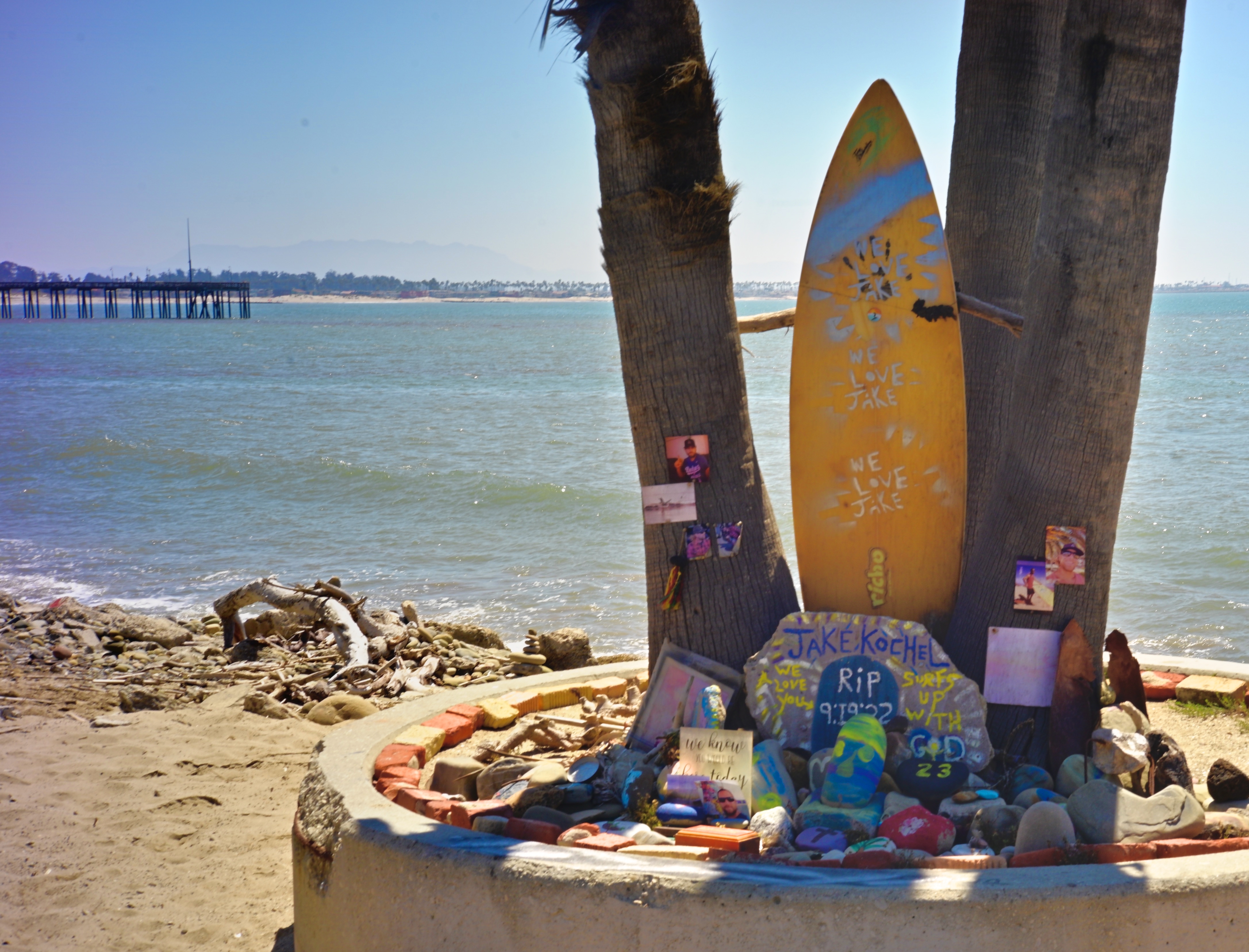
I happened upon this improvised memorial along a beach in Ventura, California. To his friends, “Jake” deserves no less a marker than the war generals or explorers frozen in marble in parks across the country. Those traditional monuments celebrate general loss, while our new unbounded churchyards measure the impact of the individual upon other individuals. In capturing these new variants on sacred space, we can share a unique process in which all of humanity feels linked to all other humanity. It’s a new kind of mourning, all inclusive, ubiquitous. Shared.
LP 101
By MICHAEL PERKINS
ONE OF THE MOST FREEING OF TIMES FOR PHOTOGRAPHY occurred about half-way through my childhood, and it made its biggest impact on me as rock music entered its own first great age. In the mid-1960’s, the cover art for record albums finally became untethered from the contents on the discs, so instead of merely being billboards for the music that lay within the package, photographs for popular releases became free to be created purely under their own aesthetic. The impact of Pop Art and the avant-garde, which was already playing out on the fronts of weekly magazines and advertising campaigns of the day, finally made its way to “the kids'” tunes via the covers of Sgt. Pepper’s Lonely Hearts Club Band, Axis: Bold As Love, Disraeli Gears and dozens of other iconic albums. The images ranged from solarized color to fisheyes to collage, but one thing was true of them all. As art, they were about themselves, and themselves only.
The great thing about the recent return of the vinyl album is that the rangy 12-inch canvas that was lost to the music world during the cassette and CD eras has finally come back, with artists once again designing visions that define only the work itself, rather than the record’s musical content. It’s allowed a new generation of artists to enroll in what could be called “LP 101”, or the art of getting attention. In too many cases, of course, the covers of albums were of far greater artistic value than the tunes inside, something we sadly discovered after slipping off the shrink wrap and dropping the needle. Even so, the entire movement inspired Baby Photog Me to stop looking for alibis for my own “outlier” visions. A photograph did not have to be anchored to reality! Or better yet, it could be tied to my own, personal reality, something which did not have to be explained or excused, but which merely was.
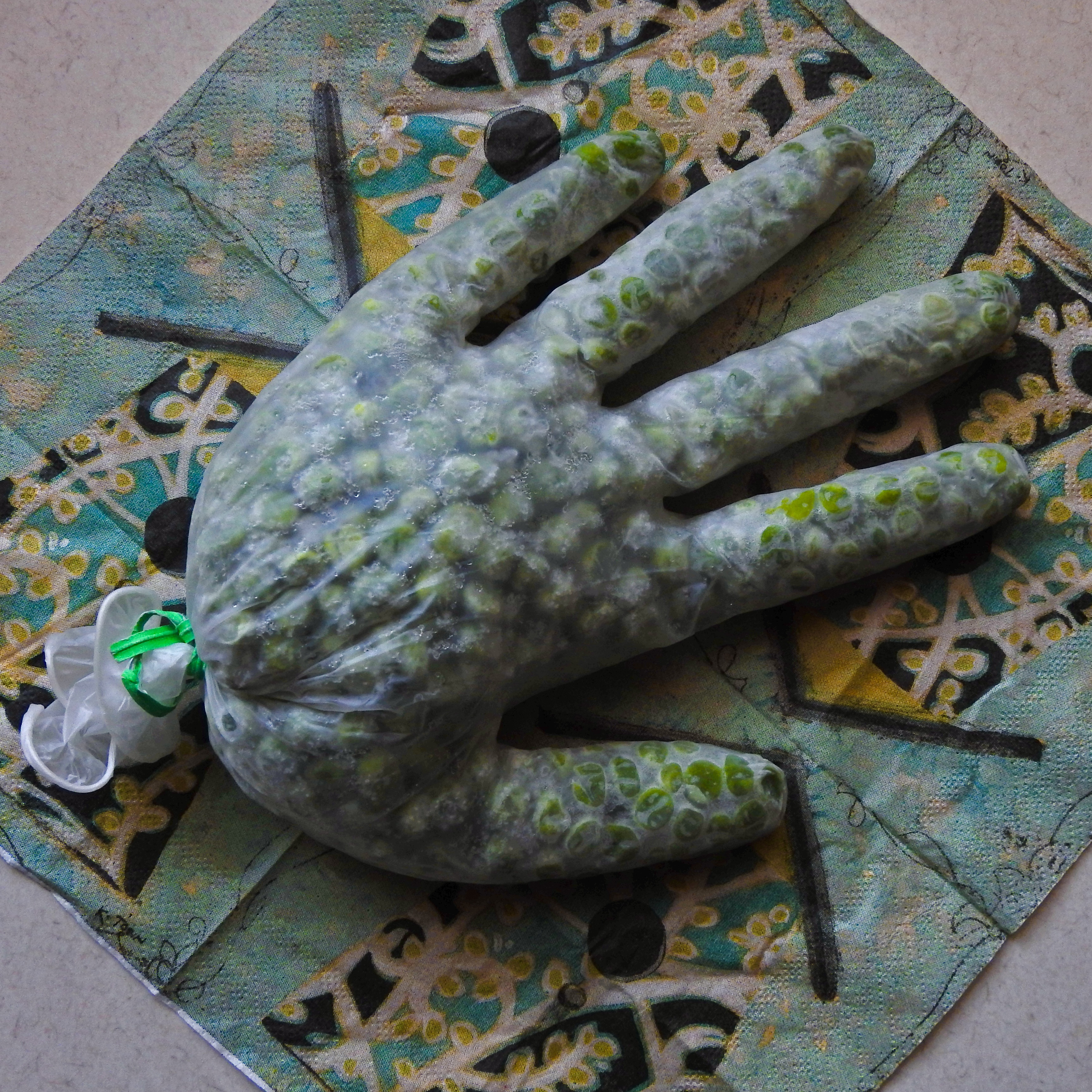
I don’t know where images like this come from. I never have. The intoxicating thing about them is that there is less delay and fuss between their first popping into my head and eventually landing in my camera. The cover designers of the ’60’s had to urge and conjure their heads off with film-based, pre-computer tech to realize their mad visions. Who knows how close the results were to their original brainstorms? Hey, you work in the world you have. All the same, having lived in both times, I’m grateful for the tools I have at hand now, when the distance between a dream and a deed is measured in inches instead of miles.
Speaking of “Miles”, have you seen that cover for Bitches Brew? Outtasite.
TWIN-AXIS ACCESS
By MICHAEL PERKINS
EVERY TIME I PHOTOGRAPH BIRDS, I lament the fact that I started in at it so late in life. Indeed, if I had not married a birdwatcher, I might never have strayed into wildlife work to any degree. Just being in the moment as I peer into the very special domains of living creatures has enriched my life. Being able to enrich the lives of others with what I capture from that experience has proven a much more random thing. That is to say, since I started year after others did, I may not live long enough to get really good at the whole thing. Sigh.
Bird shooting is really a double quest, a twin-axis access. Finding the bird, the first axis, is one thing. Finding a reliable way to record them is the second axis, and getting the two tracks to intersect perfectly is not a project for the faint of heart.
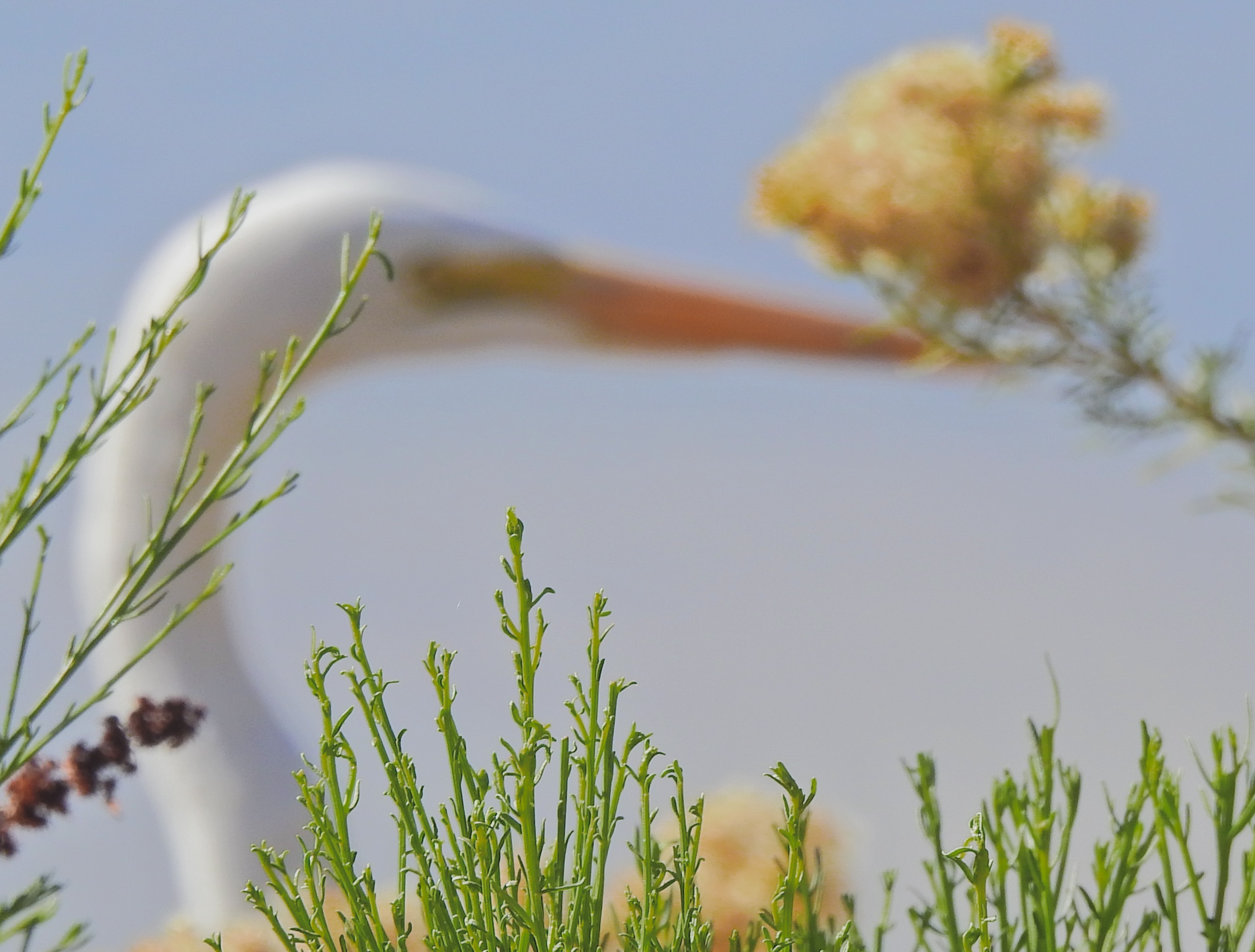
My aim was to render a sharp close-up of a heron behind some decorative pond clutter. Auto-focus, however, had other ideas.
With me, focus is a bigger issue than any other shooting consideration. Entering the world of birds as I did with a modestly priced “superzoom” rather than a dedicated (and far pricier) telephoto, I was exhilarated that, with the ridiculous reach of such cameras, I could suddenly get at least some pictures that had historically been the stuff of fantasy. However, just bringing the birds closer was only the first part of the challenge. Many superzooms (and some upscale telephotos) struggle to nail autofocus quickly enough to register bird shots sharply, and much of this problem is exacerbated by the subject’s surroundings. A single blade of grass interposed between your target and your lens can mean a tack-sharp picture of that blade of grass, backed up by a completely blurred bird (see embarrassing example above). Thus, shooting birds in a dense thicket or tree can make it nearly impossible to isolate your subject, resulting in more spoiled shots than my Irish temperament can comfortably endure. I’d like to say that images like the one shown here are rare in my portfolio, but I’d be lying through my tightly gritted teeth.
Of course, some bird photogs are expert in going the other way, and opting for completely manual focus. This, over the span of the unavoidable learning curve, will mean even more missed shots, given the little darlings’ tendency to dart about suddenly. Even when using a tripod to help minimize camera shake at longer focal lengths, nailing focus manually takes a lot of practice, the result being that most shooters would rather swallow bleach than rely on it, but, hey, different strokes and all that. As is the case in almost all types of camera optics, lenses which have the fastest and most responsive rates of precision in auto-focus modes can only be had by laying out serious dollars. This is one of the last barriers to a truly inclusive world for all photographers, and needs to be addressed. It shouldn’t cost thousands to make a beautiful picture, and more and more of photographic tech is all about addressing that issue. Alas, long-range, autofocus-dependent wildlife work is one area where the playing field sorely needs to be leveled. We ought to be able to easily show what we see.
OUT AND ABOUT
By MICHAEL PERKINS
PHOTOGRAPHS ARE NOT MERELY RECORDS OF WHAT THINGS LOOKED LIKE: they are also echo chambers of who we were, what we incorporated into our lives, what we aspired to. The daily objects, the cultural “set design” of our lives sometimes survives outside their original era of dominance, and thus become unanchored, strange, lacking a backstory. Look at that thing. Imagine having one of those. What were they even for? Who were the people who used them? How do ya work it?
Among many other things that were designed to define their owners, or at least distinguish them from each other, automobiles may rank as some of the most personal. Their power, as symbols of having “made it” in some material measure, seems to have peaked between the 1920’s, when owning one first became an attainable dream for the many, and the 1970’s, when safety and economy concerns began to change the very idea of auto design, making more and more of them matter less and less. And somewhere, in that wondrous stretch of dream farming, came this car.
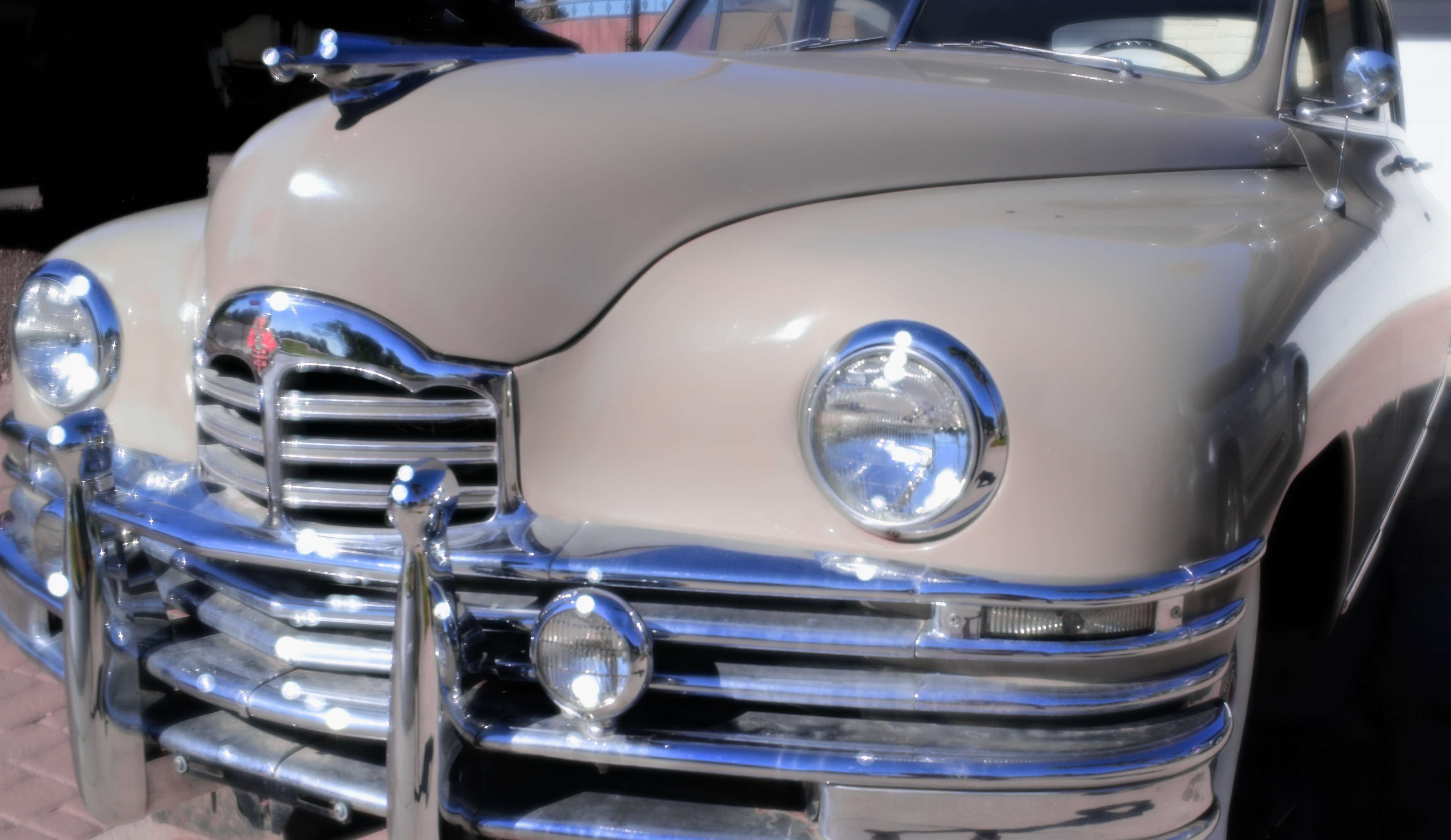
This 1949 Packard Series 23 Club Sedan seems to us more than merely a means to get from point “A” to point “B”: it’s also about the pleasure, the luxury of getting there. It’s a machine that pre-dates mechanized car washes, with small armies of Dads and apprentices caressing its every curve with chamois and newspaper after hosing it off in the driveway on a Saturday, the object being to ready it for dates on Saturday nights and family drives, to nowhere in particular, on Sundays, as if the very act of sitting in the thing were a destination all its own. It’s thick, heavy….substantial. Its interior appointments go beyond upholstery, resembling the coachwork of the recently-bygone age of horse-drawn elegance. Its engine, blissfully heedless of the environment, is a small factory of roaring power, a beast barely contained within a heaving heart of sheet metal and chrome. It’s grand and noisy and massive and garish and hideously unsafe and, now untethered from our everyday experience, something of a dream machine.
How could you see this thing in someone’s driveway, as I recently did, and not stop, not try to tell its story, not attempt to convey its force? Photographs are never, ever mere records. When we make an effort to craft them, they are portals, sneak peeks into the used-to-be’s that are on the way to becoming the never-was’es, and curating that process is a privilege.
MULTIPLE RECKONINGS
By MICHAEL PERKINS
CERTAINLY SINCE THE DAWN OF DIGITAL PHOTOGRAPHY, and, with it, the fall of the last economic barrier to the making of many, many pictures, my urge to document simply everything that comes into my daily experience is stronger than at any time in my life. In short, I can afford to make many more attempts to document my journey through life than was even thinkable in the film-dominant age of my youth.
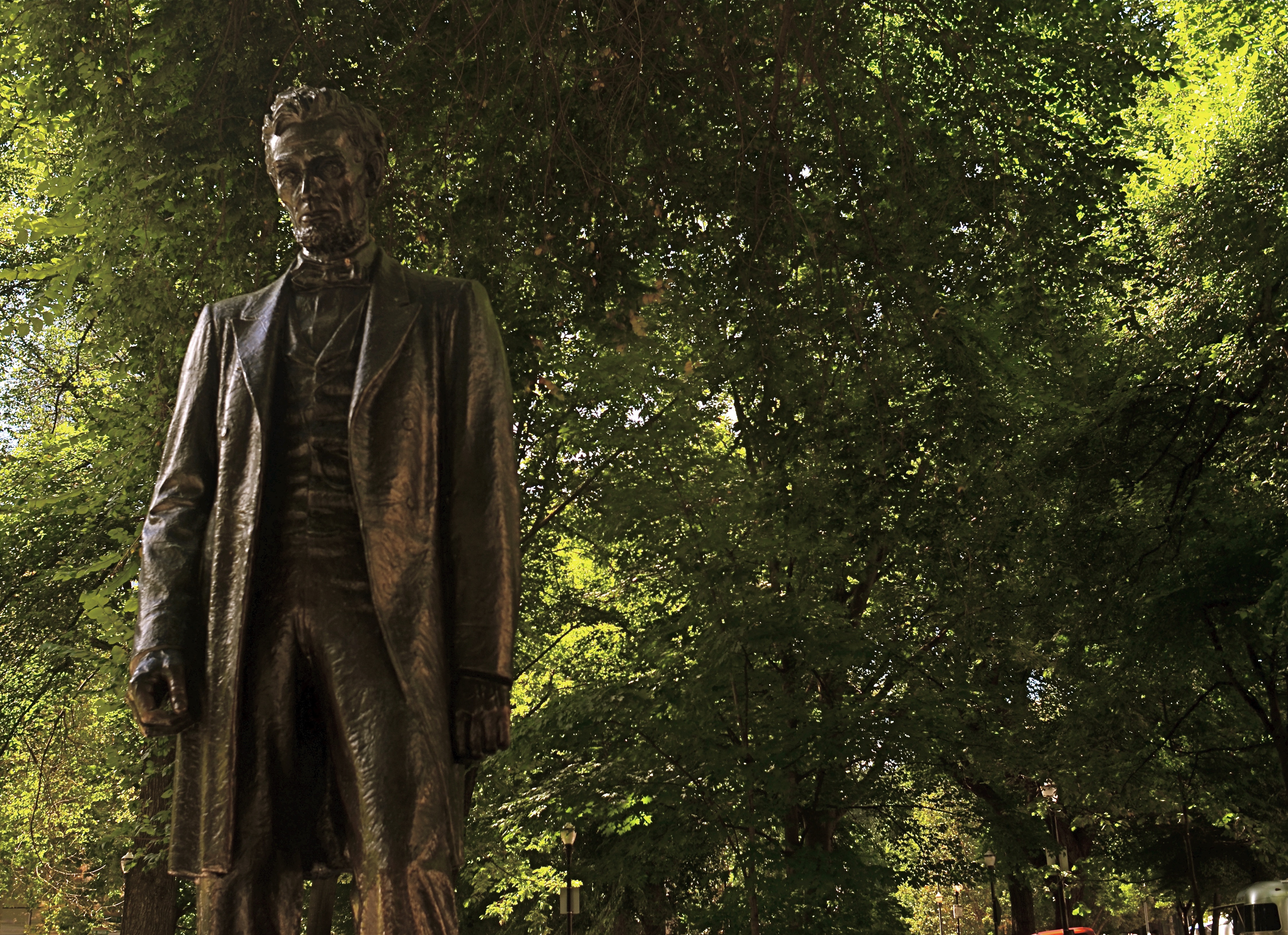
This means that I wind up recording much more of the world, and, accordingly, preserving more from its ever-changing churn of events. That fact came roaring home to me the other day when I was looking at some shots from a walking tour of Portland, Oregon that I took in 2018. One of the then-constant sights within the city’s South Park Blocks district was George Fite Waters’ statue of Abraham Lincoln, and, in happening upon it, it seemed like a no-brainer to take a quick snap of it. In reviewing the image, I idly wondered just how many public statues of the 16th president had actually been produced in the 163 years since his death. Turns out he may be the most memorialized figure in American history, with sculptures in over thirty American cities as well as carved effigies in Mexico, England, Norway, Scotland and even Russia (where he is depicted shaking hands with the Tsar…you may want to fact-check that event). Waters’ statue is perfectly average in every respect, except for the fact that, since I last viewed it, it just isn’t there anymore.
Apparently a particularly boisterous 2020 protest on the annual Indigenous Peoples’ Day Of Rage resulted in the toppling of not only the Lincoln statue but a marble depiction of Teddy Roosevelt’s Rough Rider days, with the result that both works are presently in a protective suspended state. Of course, what with all the tortured re-evaluations of the American Civil War seen in recent seasons, it seems consistent that Honest Abe himself remains as controversial as when he walked among us. At this writing the mayor of Sandy, Oregon still has an offer on the table to host both statues in his town, but the entire issue remains in limbo. Which allows me to circle back to my original point: nothing could be easier in the digital age but shooting any and everything that catches your fancy, for any reason. You don’t even have to have an opinion on whether something should be. The mere fact that it is, as well as the knowledge that, at a moment’s notice, it might no longer be, is enough to merit a picture. Snap away.
TROUBLE CHILD
By MICHAEL PERKINS
AS I LIMP PAST “GO” AND COLLECT $200 at the turn of another birthday this week, I have to admit that I’m having trouble with the ongoing tradition of taking a semi-formal self-portrait to mark the occasion. I can usually manage to make a flattering image of nearly anyone I photograph, but, this year, I am experiencing a distinct challenge finding something in my own face that I like, or want to look at.
I do about as many random, quick “selfies” as the next guy during the balance of each year, but, as February approaches, I try to sit myself down and discover something, anything that is new, deeper, more nuanced about this grizzled old mug that, by my 70’s, I have often looked at but maybe not always seen. And this year, it’s proving to be a substantially tougher task.
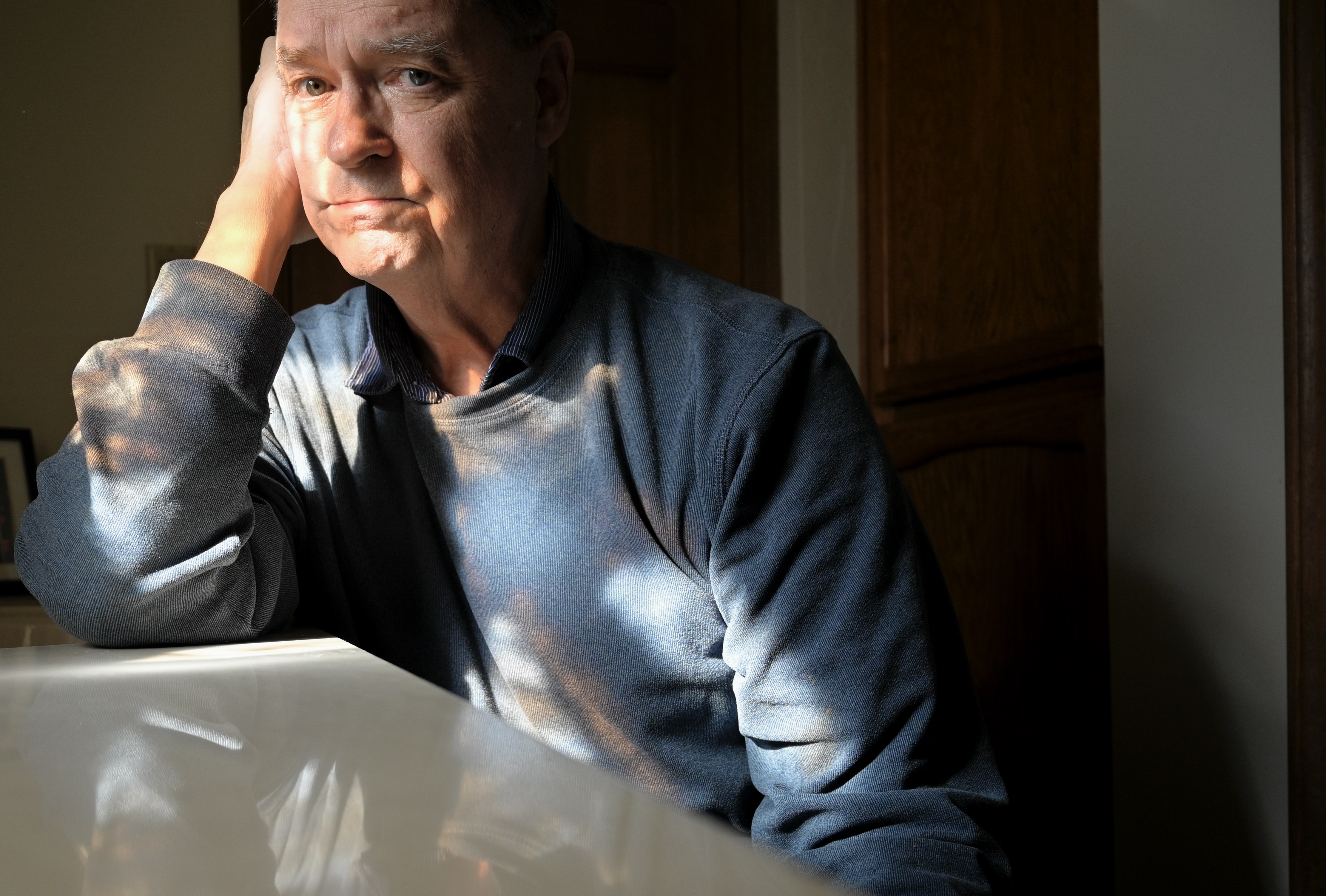
“I AM smiling. Sorta…”
To be clear, I’m not seriously dismayed by the encroachment of wrinkles, the thinning of hair, even a mini-jowl or two, which I more or less consider the price of playing poker. I don’t mind looking as if I’ve been around a while, because I have. But, this year, the wear and tear is registering on some higher level. There have been losses. Some rough grinds. A few stiff tests. So far, a fairly average grocery list of effects typical to the aging male, right? But, for some reason, the face that I see coming back from my trial images seems more grim, sadder, resigned to a life that might translate loosely as “less”. And so, since I usually share the final portrait with friends and family, I “face” a choice between faking some kind of benign bravery (the better for public consumption), or showing what I am truly going through.
Of course, in some very real sense, I need to get over myself.
The importance of the entire exercise is largely in my head: the world at large is not waiting breathlessly for the results, and the entire project could easily be skipped without notice. As a photographer, however, I’m both fascinated and horrified by the visual evidence of the toll of time, and I don’t see how I can claim to be an honest broker of reality and yet turn away when the view gets a bit too close for comfort. One thing’s for sure: merely saying “Cheese” ain’t gonna get it.
 thenormaleye