BLACKTOP GYPSIES
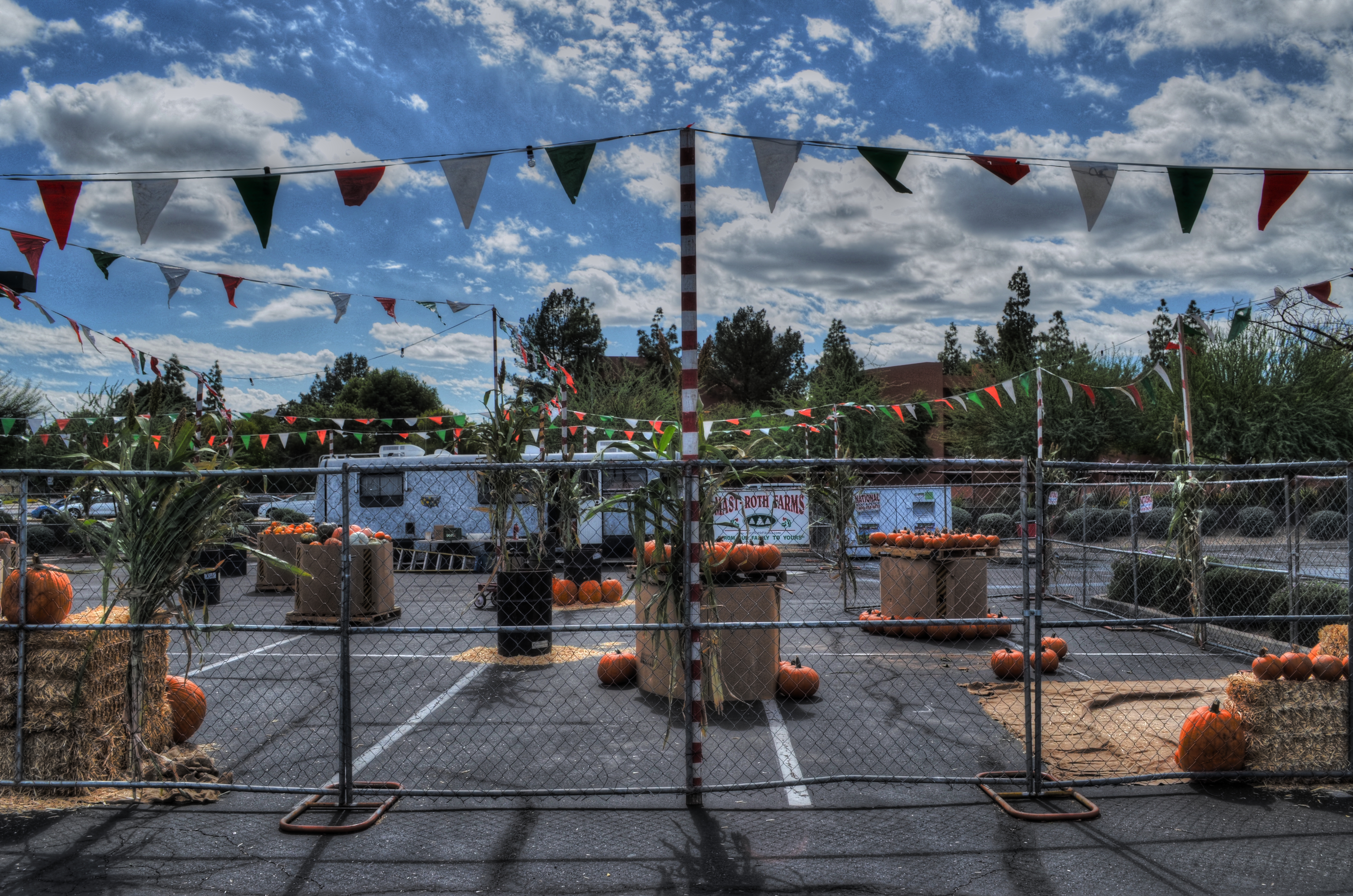
Low overhead? Hey, we invented it. A parking lot, some pumpkins, and opportunity. For the merchants and you.
By MICHAEL PERKINS
RETAIL CHAINS ARE STARVATION FOR A PHOTOGRAPHER, a barren field where nothing grows, at least visually. America used to be a place where, in our business doings, our petticoat showed a bit; a certain raw vitality showed through our saggy banners, our improvised displays, our homespun marketing. It’s no wonder that the photojournalists of the Great Depression or the choniclers of the Lower East Side of the early 1900’s made poetry out of our back-of-the-truck veggie stands, our horse-drawn pushcarts, our roadside tag sales. There was texture there. There was the real drama of struggle, and it was a pictorial gold mine.
Of course it’s not all gone, and we are not, uniformly, Wal-Mart Nation. Not yet.
As picture makers, we have so much more to work with looking at the human, the risky, the uncertain in our do-it-yourself capitalism. There are stories in it. There are real people on the front lines of the culture to watch and capture. It’s also a hell of a lot more fun than trying to find drama in the grand opening of, say, Kwikie Mart # 3425.
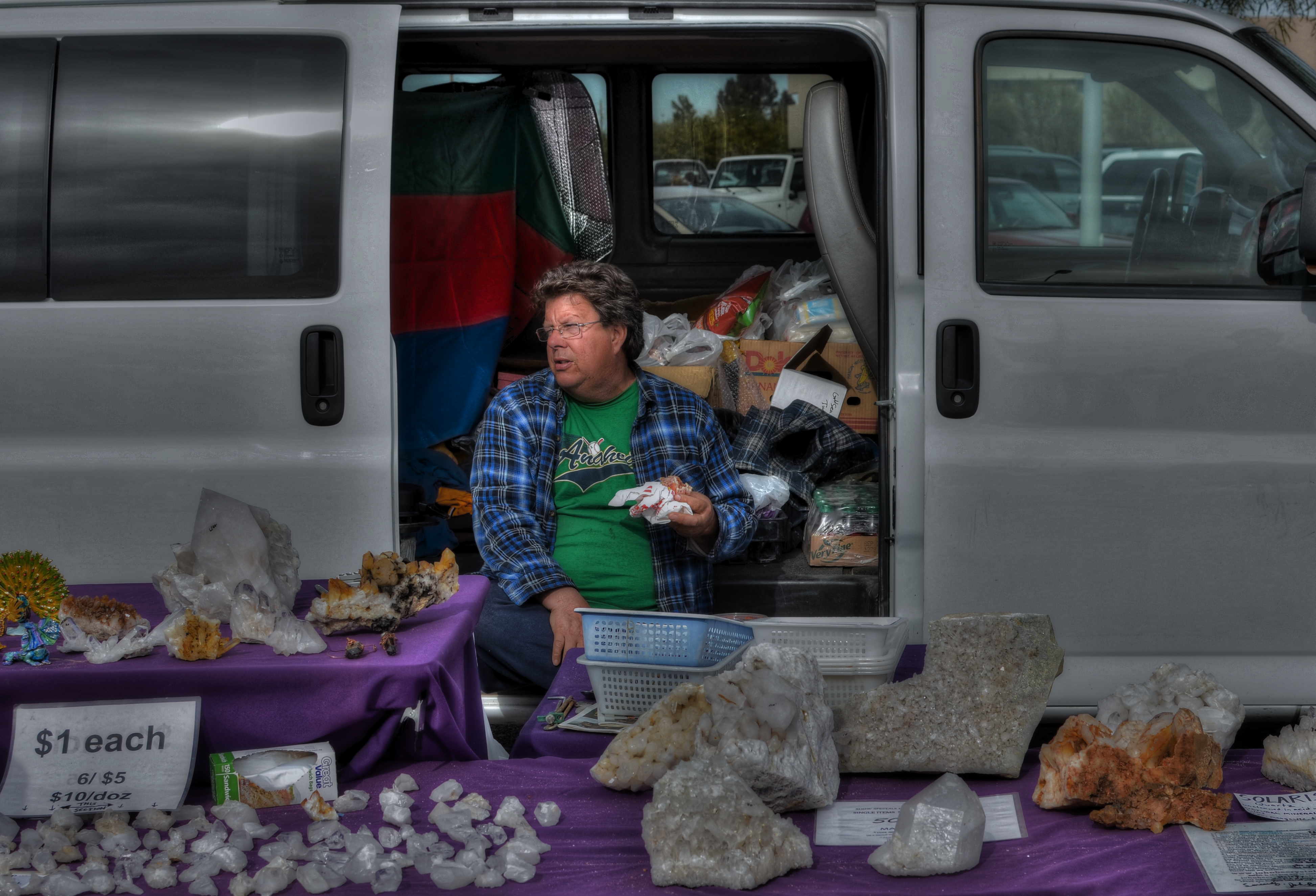
Look Around, See If You Like Anything, I’m Almost Done With My Lunch….
And picture opportunities, created by the blacktop gypsies of our time, are still setting up shop across the country…..six days in a Target parking lot to sell fireworks, four hours in a church driveway to hawk cakes and pies, three weeks in a vacant lot to peddle Christmas trees. And then there are the fairs, the craft shows, and the garage sales, those stubborn little machines of mercantile faith. You can’t not grab gold in these fields.
There may be a great epic just waiting to be shot inside a massive wholesale warehouse, but I prefer my drama smaller, and a little more on the human side. Show me a guy trying to make a buck against all odds and I’ll show you a picture.
Or make you one.
ON THE ROAD TO FINDOUT
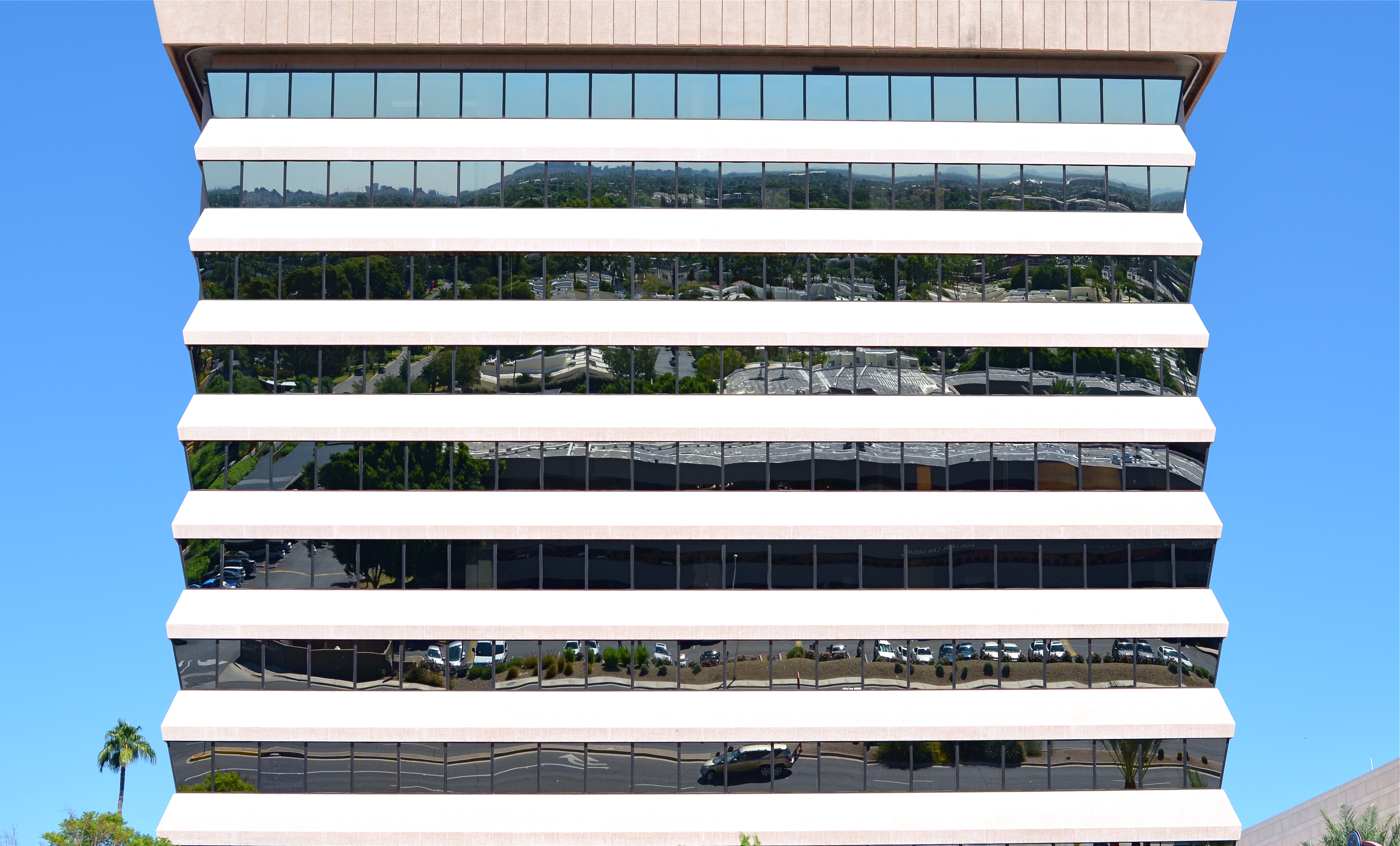
A box of mirrors: 1/500 sec., f/5.6, ISO 100, 35mm.
By MICHAEL PERKINS
LATELY I’VE TAKEN TO GRABBING LYRICS OR TITLES FROM POP SONGS TO SUM UP WHAT I WANT TO SAY IN A GIVEN POST, and apparently I haven’t yet kicked the habit. Like the searcher in Cat Stevens’ early ’70’s tune, I am sure that (a) I don’t really know where I’m going most of the time, and (b) the place I’m eventually going to will explain all, eventually. Pretty sunny outlook for a burned out old flower child, I’ll admit, but, especially in photography, the journey is the quest. What we encounter “on the road to findout” is worth the price of the trip.
That’s a fancy-pants way of saying that, frequently when I’m on a photo walkabout, I only think I know what I’m looking for. Sometimes I actually snag the object of the expedition, then find that it’s as disappointing as winning that cheap plush toy that looked so wonderful behind the carnival barker’s counter. Such a thing happened this week, when I drove five miles out of my way to revisit a building that had grabbed my attention several months prior. Short term result: mission accomplished…building located and shot. Long term result: what did I think that was going to be? Ugh.
I was walking off my mild disappointment, heading back to my car, and then the mundane act of stowing my camera forced me to rotate my gaze just far enough to see what the midday light was doing to the building across the street. It’s masses of glass looks rather flat and dull by morning, but, near noon, it becomes a slatted mirror, kind of a giant venetian blind, reflecting the entire street scene below and across from itself. The temporary light tilt transforms the place into a surreal display space for about thirty minutes a day, and, had I not been standing exactly where I was across the street at that moment, I would have missed it, and missed the building as a subject for the next, oh, 1,000 years.
Kurt Vonnegut had a dear friend from Europe who always parted from him by hoping that they would meet again in the future if the fates allowed. Only the idiom got crumpled a little in translation, coming out as “if the accident will”. Vonnegut loved that, and so do I.
On the road to findout, we may take wonderful pictures.
If the accident will.
Follow Michael Perkins on Twitter @MPnormaleye.
CORNERING
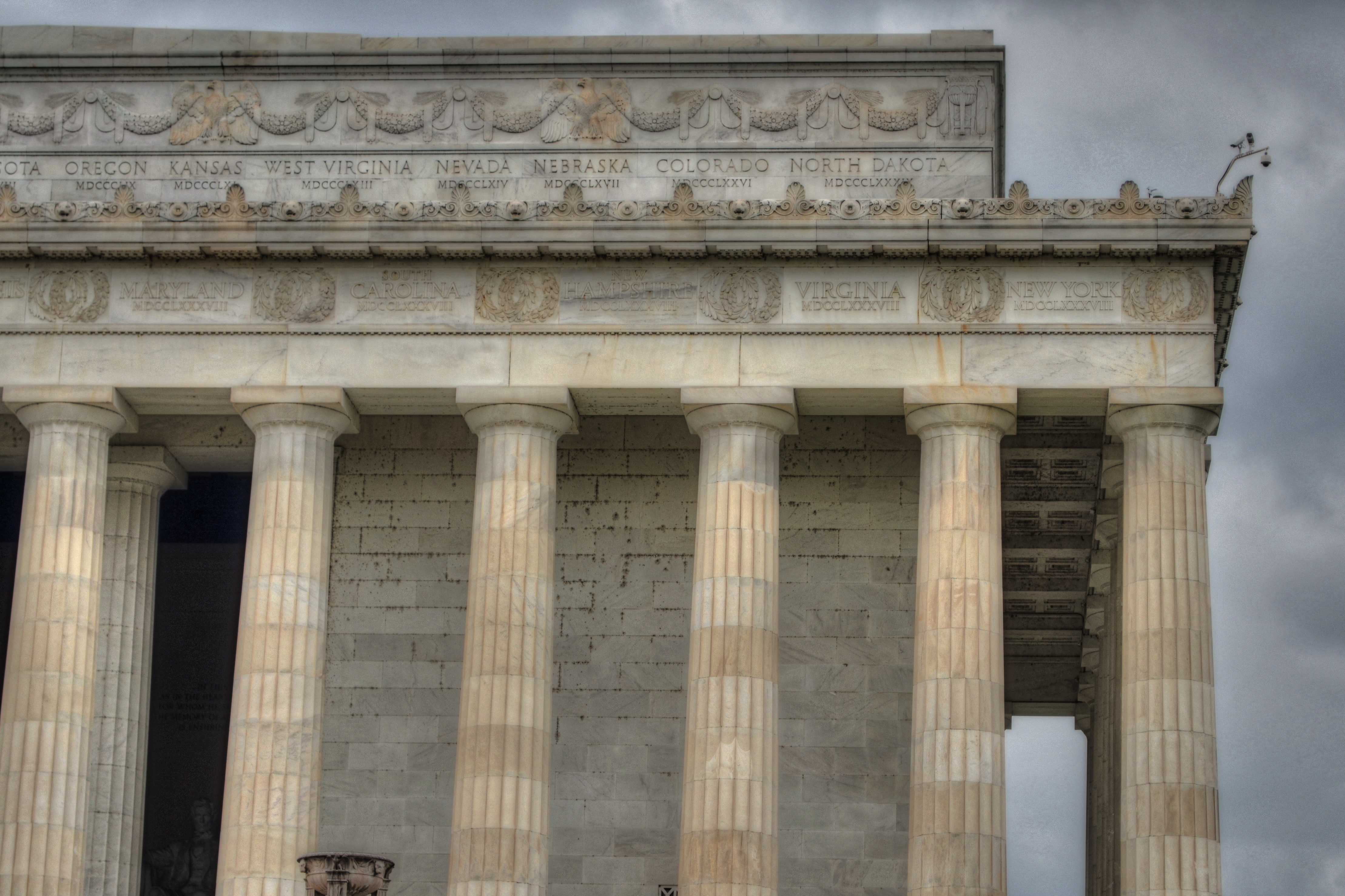
Tackle a big subject in parts, and thus re-frame its context. A blend of two bracketed exposures with varied shutter speeds, both f/5.6, ISO 100, 55mm.
By MICHAEL PERKINS
PHOTOGRAPHERS ALL HATE THE TASK OF SHOOTING OVERLY FAMILIAR SUBJECTS. The famous. The iconic. The must-stop, we’ll-be-getting-off-the-bus-for-ten-minutes “sights” that decorate every postcard rack, every gift store shelf, in their respective cities. The Tower, the Ruins, the Once-Mighty Palace, the Legendary Cathedral. Things that have more pictures taken of them by breakfast than you’ll have taken of you in three lifetimes. Scadrillions of snaps, many of them composed for the “classic” orientation, an automatic attempt to live up to the “postcard” shot. It’s dull, but not because there is no fresh drama or grandeur left in a particular locale. It’s dull because we deliberately frame up the subject in almost the same way that is expected of us.
There must be a reason we all fall for this.
Maybe we want everyone back home to like our pictures, to recognize and connect with something that is easy, a pre-sold concept. No tricky exposures, no “arty” approaches. Here’s the Eiffel Tower, Uncle Herb, just like you expected to see it.
Yeah, well…
On a recent walking shoot around D.C.’s National Mall, snapping monument upon monument, I was starting to go snowblind with all the gleaming white marble and bleached alabaster, the perfection of our love affair with our own history. After a few miles of continuous hurrahs for us and everything we stand for, I perversely looked for something flawed….a crack in the sidewalk, a chipped tooth on a presidential bust, something to bring forth at least a little story.
Then I defaulted to an old strategy, and one which at least shakes up the senses. Photograph parts of buildings instead of the full-on official portrait of them. Pick a fragment, a set of light values, a selection of details that render the thing new, if only slightly. Take the revered and venerated thing out of its display case and remove its normal context.
The Lincoln Memorial proved a good choice. The basic shot of the front looked like just a box with pillars. A very, very white box. But shooting a bracket of three exposures of just the upper right corner of the roof , then blending them in an exposure fusion program, revealed two things: the irregular aging and texture of the stone, and the very human bit of history inscribed along the crown: the names of the states, with the years they came into the union below them. All at once something seemed unified, poetic about Abraham Lincoln sitting inside not a temple to himself, but a collection of the states and passions he stitched back together, repaired and restored into a Union.
The building had come back alive for me.
And I didn’t even have to shoot the entire thing.
follow Michael Perkins on Twitter @mpnormaleye.
REVELATION OR RUT?
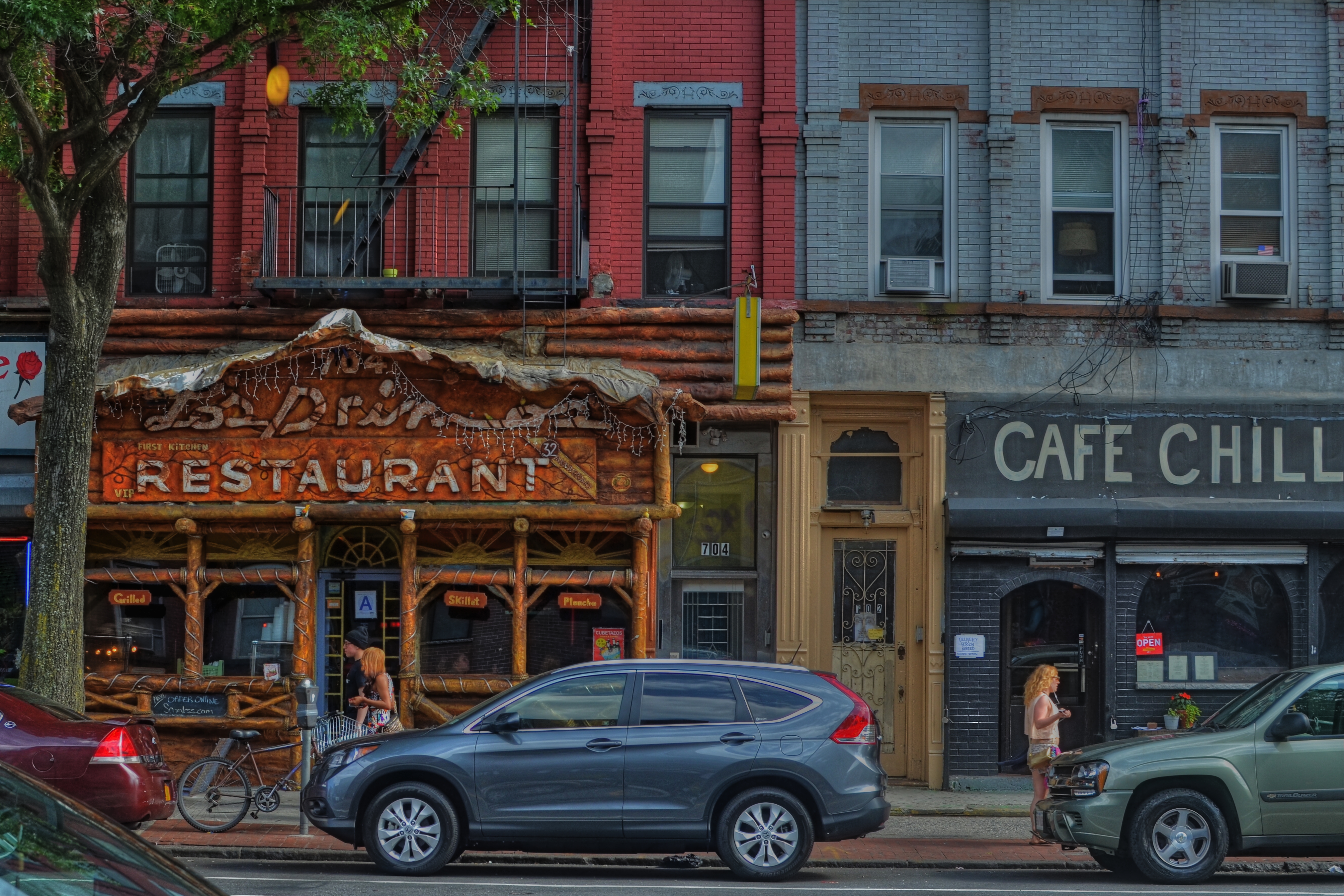
Cafe Chill, Brooklyn, 2013. 1/200 sec., f/5.6, ISO 100, 35mm.
By MICHAEL PERKINS
IT’S OFTEN DIFFICULT FOR PHOTOGRAPHERS, UNDER THE SPELL OF A CONCEPT, TO KNOW WHETHER THEY ARE MARCHING TOWARD SOME LOFTY QUEST or merely walking in circles, their foot (or their brain) nailed to the floor. Fall too deeply in love with a given idea, and you could cling to it, for comfort or habit, long after it has yielded anything remotely creative.
You might be mistaking a rut for revelation.
We’ll all seen it happen. Hell, it’s happened to many of us. You begin to explore a particular story-telling technique. It shows some promise. And so you hang with it a little longer, then a little longer still. One more interpretation of the shot that made you smile. One more variation on the theme.
Maybe it’s abstract grid details on glass towers, taken in monochrome at an odd angle. Maybe it’s time exposures of light trails on a midnight highway. And maybe, as in my own case, it’s a lingering romance with dense, busy neighborhood textures, shot at a respectfully reportorial distance. Straight-on, left to right tapestries of doors, places of business, upstairs/downstairs tenant life, comings and goings. I love them, but I also worry about how long I can contribute something different to them as a means of telling a story.
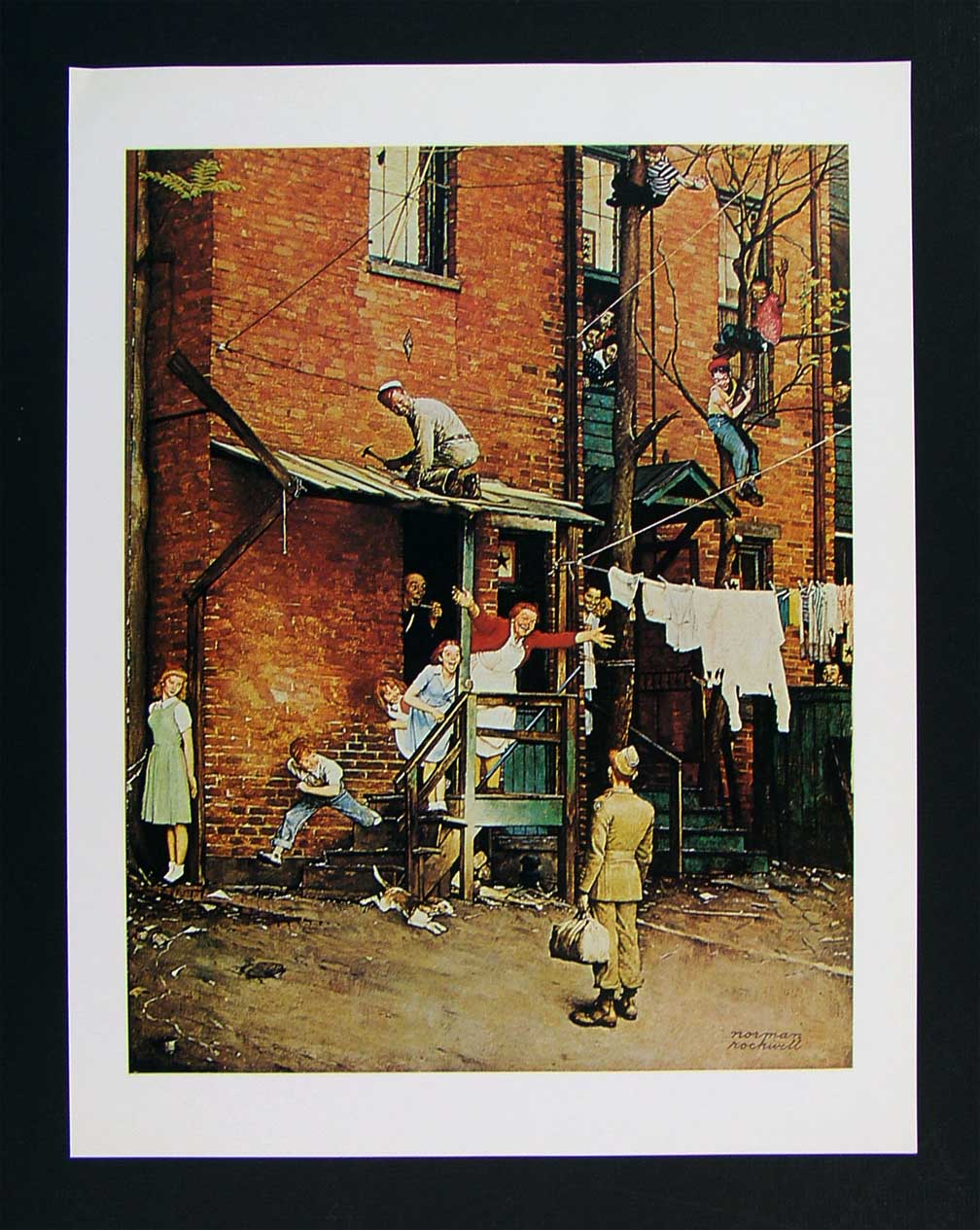
As staged as a Broadway show, Norman Rockwell’s idealized neighborhoods are still alluring in their appeal.
- The bustling tenement neighborhoods of early Norman Rockwell paintings appealed to me, as a child, because the frames were teeming with life: people leaning out of windows, sitting on porches, perching on fire escapes, delivering the morning milk…they were a divine, almost musical chaos. But they were paintings, with all the intentional orchestration of sentiment and nostalgia that comes with that medium. Those images were wonderful, but they were not documents…merely dreams.
That, of course, doesn’t make them any less powerful as an influence on photography.
When I look at a section of an urban block, I try to frame a section of it that tells, in miniature, the life that can be felt all day long as the area’s natural rhythm. There are re-gentrified restaurants, neglected second-floor apartments, new coats of paint on old brick, overgrown trees, stalwart standbys that have been part of the street for ages, young lovers and old duffers. Toss all the ingredients together and you might get an image salad that captures something close to “real”. And then there is the trial-and-error of how much to include, how busy or sparse to portray the subject.
That said, I have explored this theme many times over the years, and worry that I am trying to harvest crops from a fallow field. Have I stayed too long at this particular fair? Are there even any compelling stories left to tell in this approach, or have I just romanticized the idea of the whole thing beyond any artistic merit?
Hopefully, I will know when to strike this kind of image off my “to do” list, as I fear that repetition, even repetition of a valid concept, can lead to laziness….the place where you call “habit” a “style”.
And I don’t want to dwell in that place.
 thenormaleye