STICK AROUND AFTER THE CREDITS
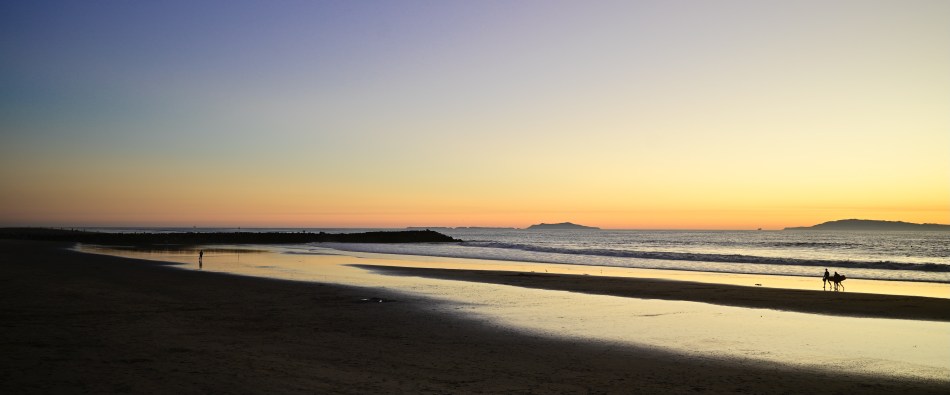
December 1, 2024, 6:06:50pm, Ventura Harbor Village, California. f/4.5, 1/20 sec., ISO 100
By MICHAEL PERKINS
BACK IN THE DAYS WHEN SOME A-LIST MOVIES WERE PRESENTED as so-called “road shows”, there was an inducement to get people to stay in their seats even after the picture ended. The road show treatment, reserved for such wide-screen wonders as Ben-Hur, How The West Was Won, Lawrence Of Arabia and other epics was created so exhibitors could command premium ticket prices on select films at select prestige theaters, grand palaces where the movies could be stretched into an entire evening’s entertainment. The show included music overtures before the film, the actual dramatic drawing of a theatre curtain, a mid-feature intermission (many of these pictures were quite long), and, after the end title, so-called “exit music”, an orchestral re-statement of the major themes of the score, used to accompany the audience’s departure. The music was so beautiful that it was not uncommon for people to keep their seats until it was finished. Hooray for Hollywood.
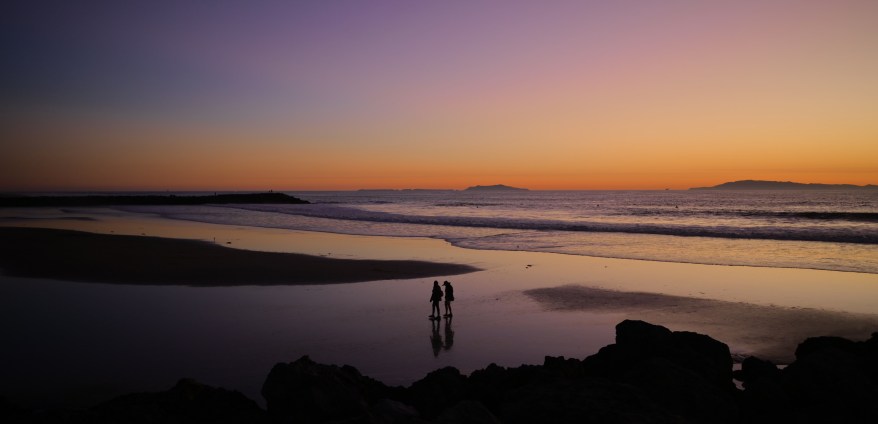
6:09:22. f/3.5, 1/80 sec., ISO 100
All of which I’m mindful of when trying to capture a sunset. Of course, we all want the big money shot of the blazing red/orange ball of sun just as it kisses, and then slips below, the horizon. But some of the best and most dramatic displays of light and color happen in the minutes after the ball drops. Some photographers actually prefer the sky’s “exit music” to the sun’s formal “the end”.
And I’m one of them.
The three shots, scene here, of a sunset on the first day of December in Ventura, California illustrates how dramatically, and rapidly, shifts in tone happen within just minutes after a sunset. The earliest frame up top sees the orange from the just-vanished sun radiating more than halfway up in the sky, blending into the last vestiges of a daylight blue. In the second, the red at the horizon has intensified, blending now into a deep purple at it tracks skyward. And finally, all the reds are receding, as a new, deeper blue begins to set the scene for night. All within the space of five minutes.
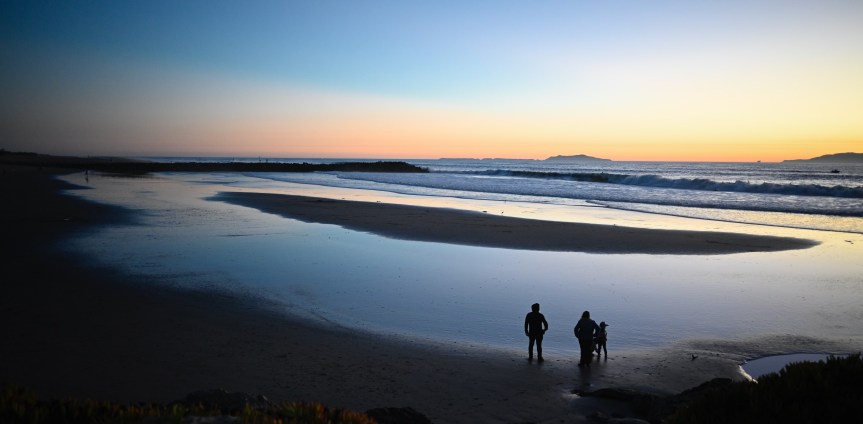
6:12:38pm, f/2.8, 1/125 sec., ISO 1600. Suddenly, it’s a blue world….
You get the idea. A blazing sun is spectacular at sundown, to be sure; however, the light show that follows, after the movie ends, is so wonderful, you may want keep your seat until the last bit of exit music fades…
CAN’T GET THERE FROM HERE
By MICHAEL PERKINS
THE “U.S.A.” OF THE EARLY NINETEENTH CENTURY was, in every way, a collection of separate and unconnected “Americas”. Cities were fewer in number, and the ones that did exist were hermetically sealed off from each other, each in their own orbits in a way that would end when telegraph wires and railroad tracks annihilated distance on the continent forever. At one end of the 1800’s, each town and village was its own distinct universe; at the other end, it was only one of many dots on a line chain-linking the nation as one entity.
In the 21st century, there is only spotty evidence of the days when your town was, in a very real way, the predominant version of “the world” to you. The terms of survival were so very different. “In town” and “out of town” were measured in blocks, not miles. There was a pronounced sense of “how we do things around here”. Local accents were a clearer stamp of identity. News from outer regions arrived slowly. People’s lives impacted each other directly. And the towns first canvassed by photographers reflected the isolation of one city from another, for good or ill.
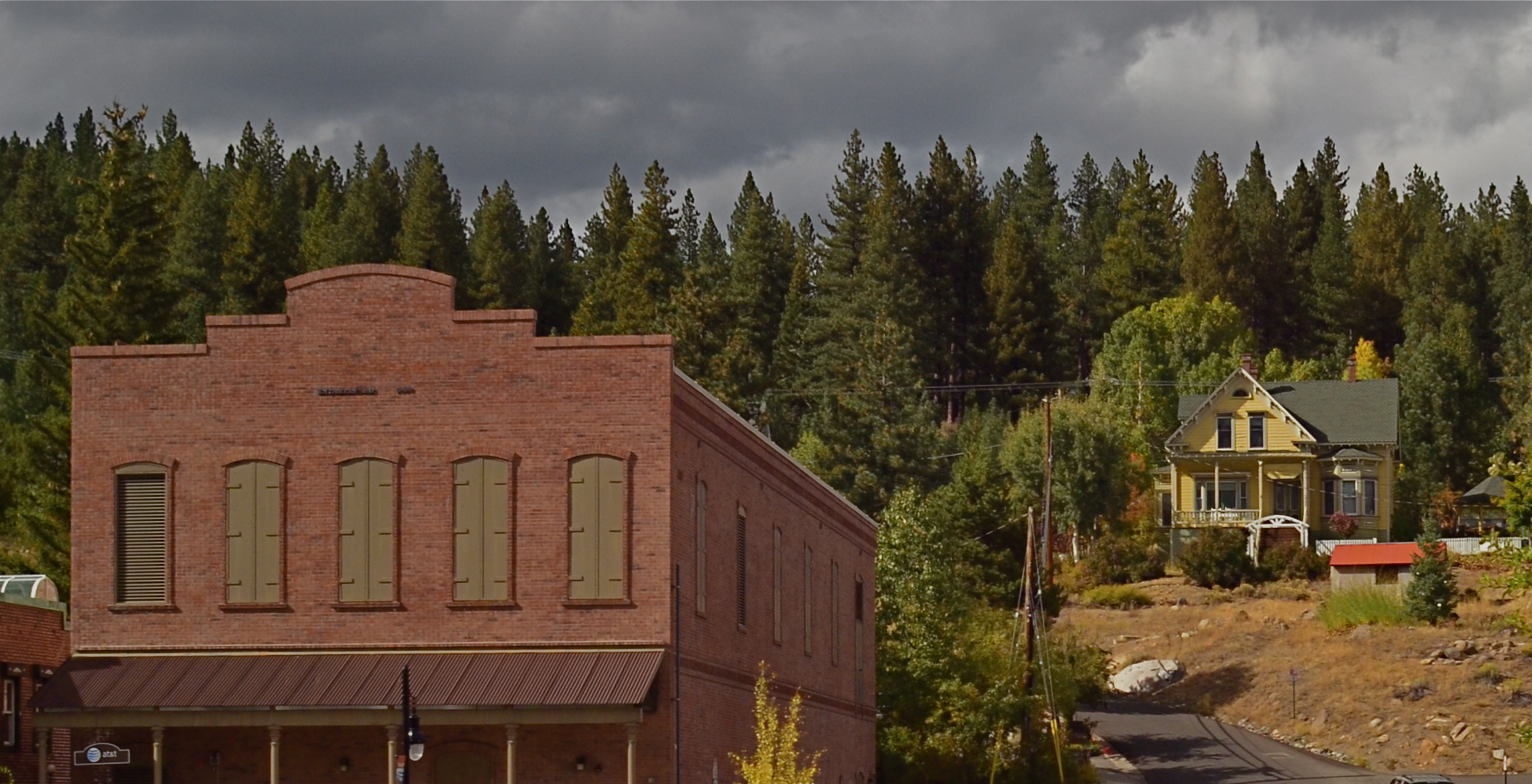
My parents met each other in a town that started small and stayed that way. It’s contracted now, the way a grape shrinks to a raisin; there is still enough of its old essence to identify what it was, but no hope for a future that resembles the past in any remote manner. I love making photographs of places in America where the feeling of apartness is still palpable. It is harder to be hidden away now. We are all one coast-to-coast nervous system, with impulses crossing the void in nanoseconds. The places which still say “our town” are often baffled off from other towns by raw geography….the mountains someone forgot to cross, the rivers no one wanted to ford. And, in the towns walled off by those last remaining barriers, as in this view of Truckee, California in the Sierras, there are still stories to be told, and images to be captured.
I was struck in this picture by how close the residential and business parts of town were to each other, long before we all started spreading out and, well, getting away from each other. It creates a longing in me for something I can’t fully experience, and a desire to use my camera to come as close as I can.
BITE-SIZE BEAUTY
By MICHAEL PERKINS
IN PHOTOGRAPHY, WE OFTEN HAVE THE OPPORTUNITY TO ADMIRE THINGS THAT ARE, STRICTLY SPEAKING, beyond our capabilities. The world is rife with people who master exposure, composition, editing and conceptualization in ways which make us gasp in a mixture of awe and envy. Sometimes, we are so amazed by artists outside our own area of expertise that we emulate their passion and, in doing so, completely remake our own art. Other times, we just glimpse their greatness like a kid peeking inside the tent flap at the circus. We know that something marvelous is going on in there. We also sense that we are not a part of it.
That’s pretty much been my attitude toward landscape work.
Much of it leaves me impressed. Some of it leaves me breathless. All of it leaves me puzzled, since I know that I am missing a part of whatever mystical “something” it is that allows others to capture majesty and wonder in the natural world, their images looking “created” my own looking merely “snapped”.
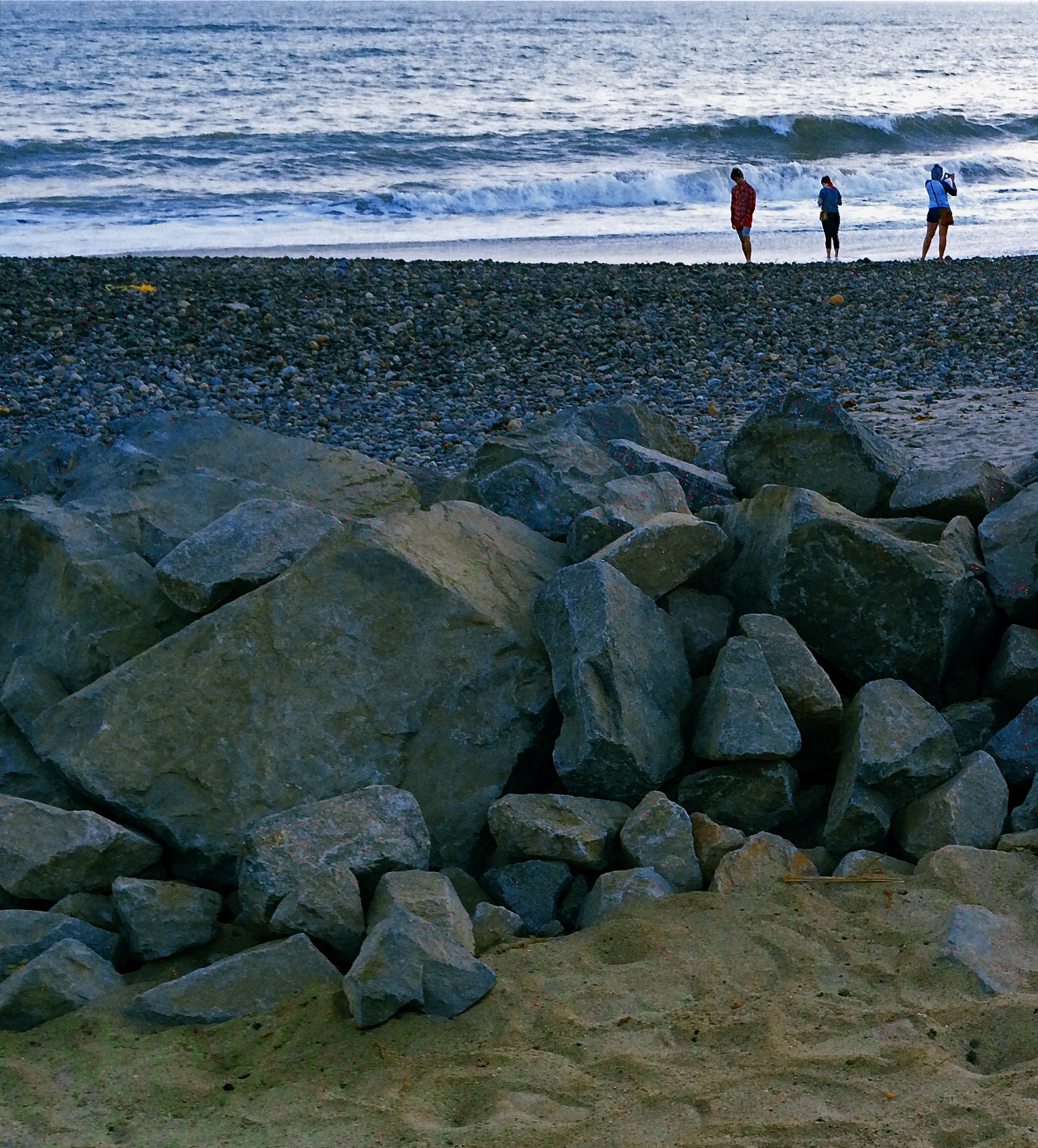
Sometimes the sheer size of nature’s canvas panics my little puppy brain, and I retire to smaller stories.
It’s not the same with urban settings, or with anything that bears the mark of human creativity. I can instinctually find a story or a sweet point of focus in a building, a public square, a cathedral. I can sense the throb of humanity in these places and I can suggest it in pictures. But put me in front of a broad canvas of scenery and I struggle to carve out a coherent composition. What to include? What to cut? What light is best? And what makes this tree more pictorially essential than the other 3,000 I will encounter today?
The masters of the landscape world are magicians to me, crafty wizards who can charm the dense forest into some evocative choreography, summoning shadows and light into delicate interplay in a way that is direct, dramatic. I occasionally score out in the woods, but my failure rate is much higher, and the distance between what I see and what I can deliver much greater. Oddly, it was the work of scenic photographers, not street shooters or journalists, that originally conveyed the excitement of being a photographer to me, although I quickly devolved to portraits, abstractions, 3D, hell, anything to get me back to town, away from all that scary flora and fauna.
Medium or bite-sized natural subjects do better for me than vast vistas, and macro work, with its study of the very structures and patterns of organic things works even better. But I forever harbor a dream of freezing a forest in time in a way that stuns with its serene stillness and simple dignity. I have to keep putting myself out there, hoping that I can bridge the gap between envy and awareness.
Maybe I’ll start at the city park. I hear they have trees there….
CUT YOUR LOSSES
By MICHAEL PERKINS
ANYONE WHO’S SLOGGED THROUGH MORE A FEW OF THESE DISPATCHES knows all too well that I am a passionate preacher for shooting images completely on manual, not because it’s a more “pure” form of photography (and thus deserving of nobility and praise), but because I prefer to exercise as much personal control as possible. This, again, is not a quality judgement, since amazing pictures are made every day with the use of either complete or partial automodes. I just feel that I, personally, learn more by trying more, and manual settings place so much direct pressure on me to innovate and experiment that even my gross failures serve as education.
Sometimes. And other times they’re well, just gross.
The mode known in Nikon as Aperture Priority (“Av” on Canons) is the only semi-auto mode I use with any regularity, and always because I make an educated guess, before going on a shoot, about what conditions will likely prevail. AP allows you to manually dial in your aperture on those occasions when you want a uniform depth of field in everything you’re shooting, with your camera metering light on the fly and providing the shutter speed you need for a correct exposure. AP tend to be a rare bird for me because, in many cases, I am not shooting so fast that I can’t pause at least a few seconds between frames to dial in every exposure factor. However, there are cases when the technology gives you a decided edge.
Landscapes, especially in rapidly variable weather, call upon the shooter to react to conditions that could last, at best, for only seconds at a time. When skies are crystal clear and you have ample time to set up a shot, then, by all means, rely on your own experience shooting on full manual. If, however, you are moving and shooting quickly from dark to medium to extreme light and back again, then you might consider AP as a way to cut your reaction time in half. At this point, full manual may be costing you shots rather than making them better.
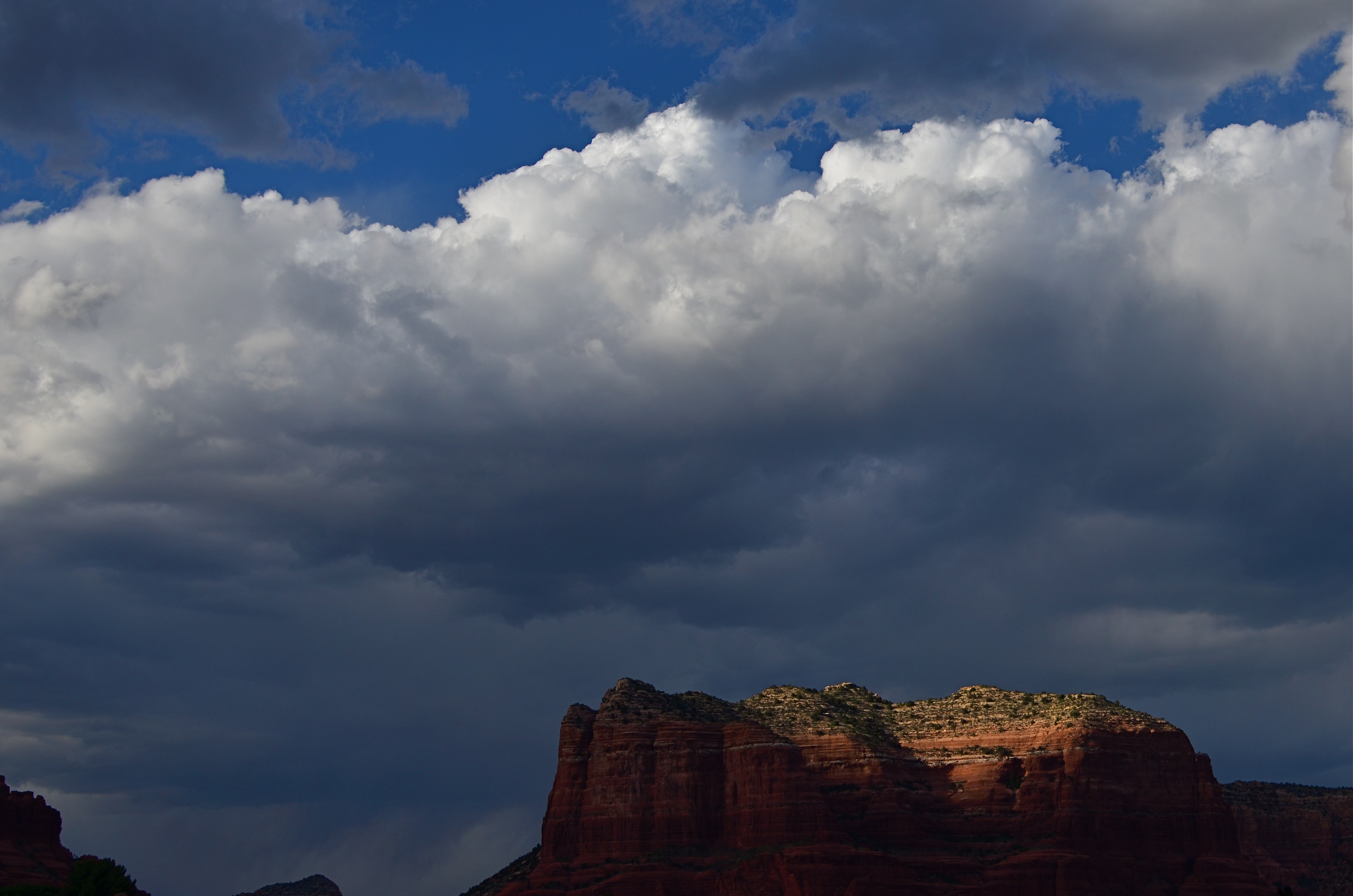
Last Embers (2016), taken on Nikon’s Aperture Priority setting. 1/640 sec., f/6.3, ISO 100, 35mm.
On the day the above image was taken, the town of Sedona, a miraculous array of red-tinged mountains in northern Arizona, was colored variously by a swiftly shifting broken cloud cover. One moment, the crest of a butte might take on a crimson glow, then be swallowed in shadow just moments later, with the gulch next door temporary hyper-lit in the same fashion. The clouds over Sedona were also backed by a decent headwind, shortening the stretches between scene changes even more. Moreover, the sunlight added a ton of contrast to the clouds themselves, making the sky a more attractive compositional component, with typically indistinct shapes rendered more sharply (because contrast is sharpness, right?).
As a result, the combination of light you see in this shot lasted exactly fifteen seconds, so, if I had paused to shoot a couple of trial frames on manual, just to try to nail the lighting, I likely would have missed this moment completely. Again, at this point, assist modes ain’t a compromise; they’re strategy.
The best practice is to anticipate, as much as possible, where you’ll be shooting and what the “game on the ground” is likely to be. Fashion shooters, journalists and other pros swear by Aperture Priority as insurance against lost shots. You may almost certainly find that to be true for some situations yourself . But the name of the game is Get The Picture, so, at the end of the day, the mode that makes you smile is the “right” mode. And don’t let nobody tell you no differnt.
 thenormaleye