STOLEN STILLNESSES
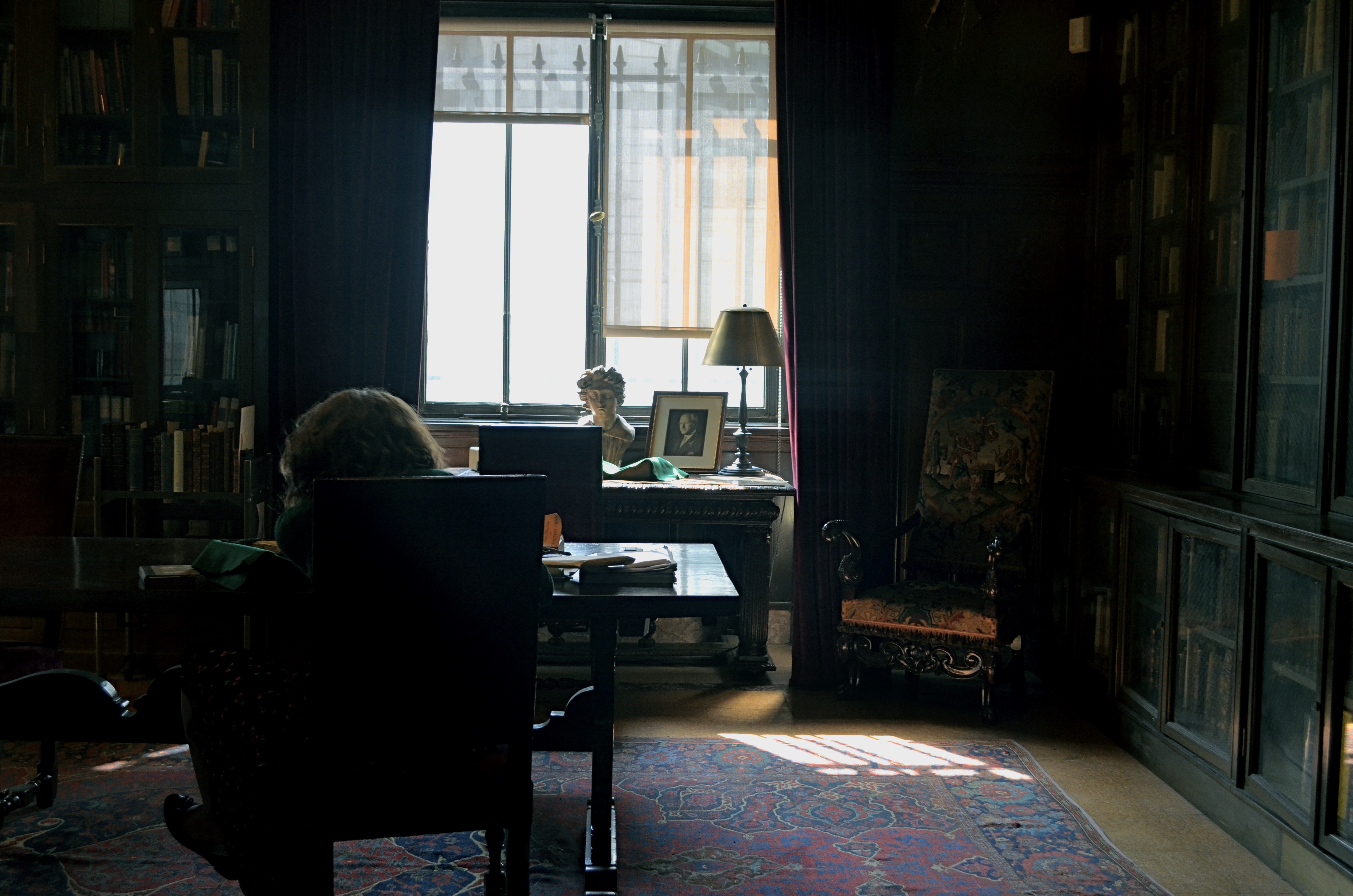
The Quiet Hour, 2013
By MICHAEL PERKINS
THIS ONGOING CHRONICLE, for anyone who is relatively new to it, is more about the motivations, rather than the methods, behind photography. The mechanical techniques of snapping a picture can only ensure that you will, in fact, produce an image. Everything else….the shaping, the conceptualizing, the intention of making a picture, happens outside the camera, inside yourself. What I’m leading to here is that, between you and your device, your device is far less crucial. This is why people can take good pictures with bad cameras, and why you can make a lousy image with a Leica. If I believed that photography was, like xerography, just a means of recording, then I could have saved you and me both the meanderings and mutterings of the last nine years.
Photography is a strange art because it begins with real subject matter and renders it surreal. Once an instant is yanked out of its rightful place in the orderly crawl of time, once it’s isolated and arrested in its flight forever, it becomes something else than what we first aimed at. We make a decision, in the present, to preserve something, and, in that instant, that object becomes something ago. Part of the past. Not only that, but it takes on the biases of the shooter, who decided that this light, rather than that light, should be the storytelling medium, that this composed frame should be chosen over all other possibilities. We dedicate ourselves, in a sense, to making things look “real”, while the very act of photography renders that reality null and void. The final picture of a thing is either real-plus, or real-minus, but, being filtered through both the camera and our own perceptions, it can never be merely “real” again.
We also decide what is worth photographing, as if the act of taking a picture of something could confer importance on it. Certainly, we are right at least some of the time. Some moments are, by their own nature, vital, essential to an understanding of the world. But then again, who is to say what’s meaningful and what’s banal? Perhaps the best thing you can say about a photograph is that it’s an argument, like a summary made before a jury. Well argued, the photograph is seen by one’s peers as necessary, as having added something to the overall experience….that is, the jury finds for your “truth”. Badly made, the argument that is a photograph is rebuffed or, worse, ignored. When I use the phrase the normal eye as the title for this screed it, means the process of teaching the eye to see in its own way, devoid of the interpretations or prejudices of others. To develop your most normal way of seeing. The trick of selecting little seconds of time to steal and preserve is quickly taught, in the purely mechanical sense. But as we soon learn, that’s only the first baby step in the quest for a photograph. That inner journey takes a lifetime.
(the image seen on this page is part of a new collection of Michael Perkins’ images, “Fiat Lux: Illuminations In Available Light”, available from here from NormalEye Press.)
OF ITSELF, LIKE ITSELF
By MICHAEL PERKINS
I FIRST ENCOUNTERED THE WORD MONOGRAPH in the early pages of Arthur Conan Doyle’s A Study In Scarlet, as I was just becoming acquainted with the thoroughness of Sherlock Holmes’ deductive process. The word was applied to, in this case, an extensive study of different kinds of cigar ash as a tool in the identification of criminals, but I came to know the word to denote a collection of thoughts around a common central subject, an examination of a theme over much time and many case histories. And, while the word is predominantly used to label written studies….collections of essays, the building of a theory, etc., I have always admired the “monographs” which have become the signature works of great photographers.
Robert Franks’ iconic The Americans is surely a monograph, as his eye builds a mosaic-like profile of this country across all its race and class lines. The first eerie series of portraits by Diane Arbus is also a monograph, as is Edward Steichen’s staggering museum exhibit The Family Of Man. In this age of self-publishing, it’s possible for photographers to organize book collections of their work along whatever thematic lines they choose, and, even though its role is vastly different in the present century, the book format is at least a way to contain one’s theme within fixed physical borders. And that may be why I still find it a comfortable format.
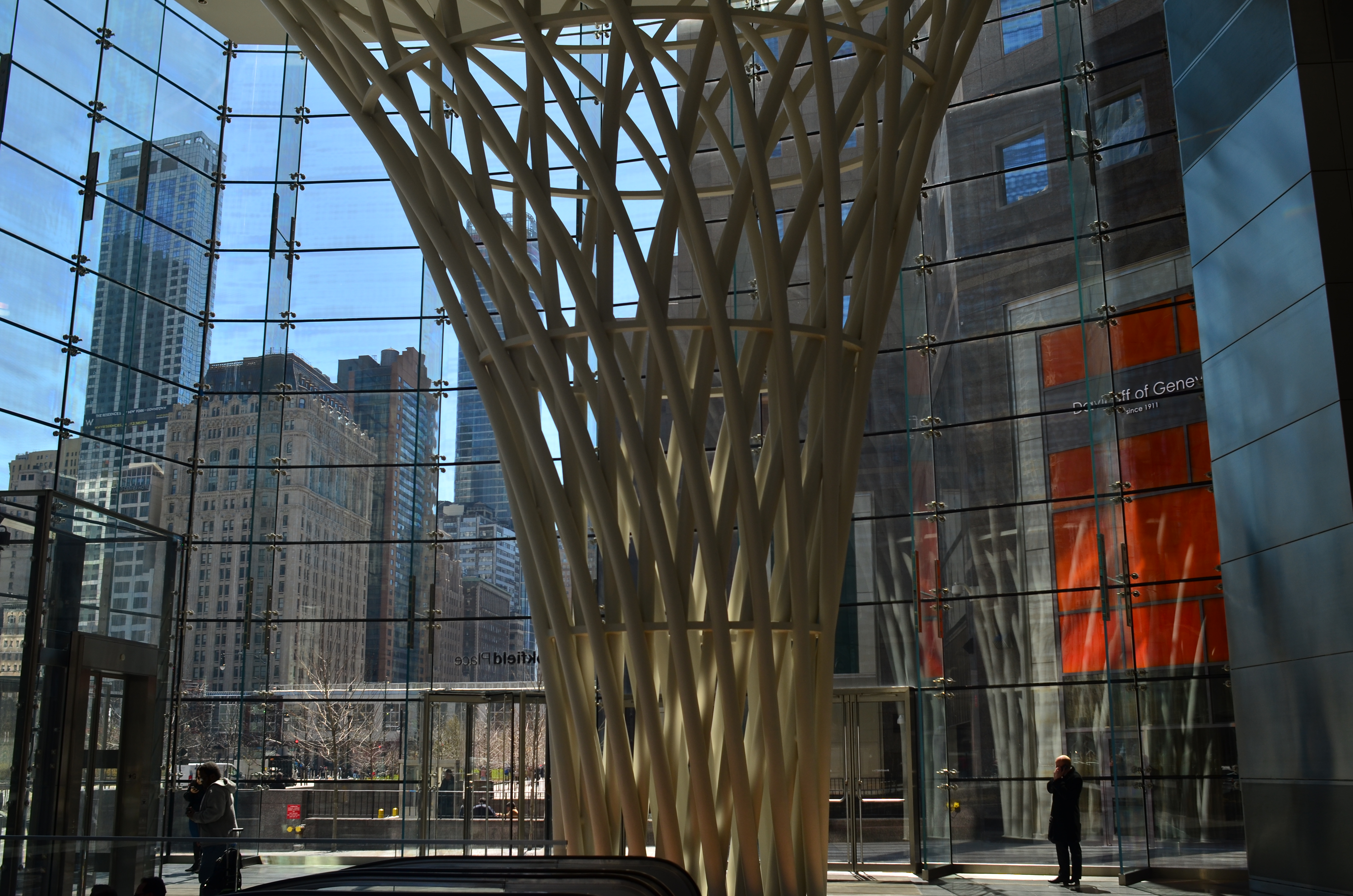
From the new book Fiat Lux, a series of available light images I’ve made over the past twenty years.
It’s been some time since I tried such a project (such as the one with which this blog shares its title), mostly because I never seemed to have quite enough images to flesh out the theme I was trying to present. And then there’s the problem of subject matter. People naturally expect photo collections to be “about” something, and the thing that unifies a set selection of pictures for me may be absolutely meaningless to the viewer. But with the distance of some twenty years of shooting in the digital domain, I’ve given it another go. My new book Fiat Lux (Let There Be Light) is nothing more than a chance to examine, in as broad a variety of pictures as I can, of the properties of “available light”. I never set out to deliberately boycott flashes or artificial illumination, but I find that the preparation that accompanies their use tends to slow me down and make me lose shots. Moreover, I find that the modeling properties, mysteries and drama of light often makes it the star of a picture all by itself. Most importantly, I see the original object of photography, that is, harnessing light to one’s purpose, as its most enduring and seductive feature, and I always choose the most direct route, from simple cameras to fast lenses, to achieve that goal.
The other objective in compiling Fiat Lux is to force myself into an editorial conundrum. I deliberately kept the total number of images in the book low to make myself make tough choices about (a) whether I have a style at all, and (b) which shots are essential to an understanding of that style, assuming I’d vanish off the earth tomorrow with nothing but this slim volume to explain myself to interested parties. I’ve had several people ask me, over the years, why I didn’t “just put out a book”, but, of course, I never “just” do anything, and so a certain amount of self-doubt and agony has gone into the process. Anyway, if you are so inclined, a sneak preview of some of the collection’s pages, as well as the option to order it, can be found here. Is it a monograph? Perhaps more of an autograph. Or an autobiography. Captions and labels are pretty useless, anyway, if the pictures aren’t there. The important thing is to show what you can show, and move on to the next picture. Thank God there’s always another picture.
FROZEN FLOWS
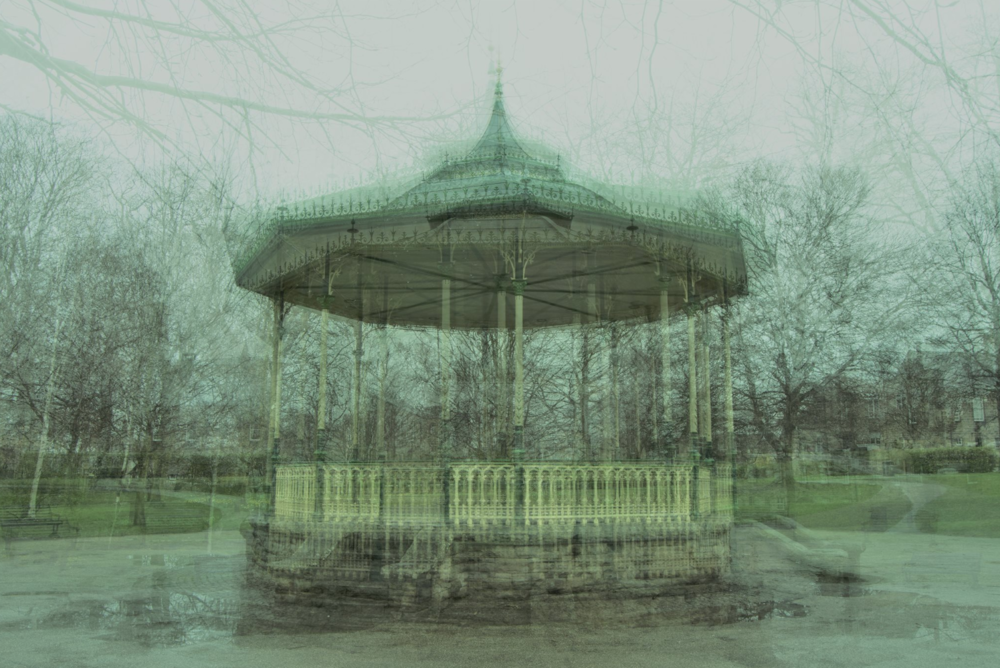
Pep Ventosa’s images are actually stacks of many frames of the same subject, taken from different angles and layered into a composite.
By MICHAEL PERKINS
MOST OF STILL PHOTOGRAPHY IS BASED ON EDITING CHOICES, on the selection of one key instant which stands in for an entire experience. The frozen moment when a runner breaks the tape. The isolated frame of one flap’s worth of an eagle’s descent. Single pieces of seconds that symbolize the complete flow of time. Still images are not really expected to show everything that happens in a scene, from Beginning to End, the way motion picture images are. And yet, there are always groundbreaking visionaries who can create astounding exceptions to that rule. Pep Ventosa is such an artist.
In your first view of Ventosa’s images of carousels, streetcars, or monuments, you could be forgiven for thinking you were looking at an impressionistic painting, a kind of lively Picasso-style mashup of viewpoints melded together in a single frame. But his work is completely photographic; it just comes packed with way more information than you encounter in a normal image. Because they aren’t images at all, but layers of images, sometimes hundreds of them, all taken at up to 360 degrees of difference from each other and blended artfully into composites. The actual concept is simple. Pep chooses a common part of an object or scene that he establishes as a center (like the carousel platform at left), and then rotates himself and his camera around that point to shoot multiple “takes” on a single scene, all shot at slightly different angles. Imagine yourself walking all the way around a tree and shooting frames during every part of the circuit. He then calls upon his lifelong experience in both film and digital darkrooms to give all those layers different levels of prominence, sculpting the color and the detail that will be both active and passive in the final composite. What he winds up with could be called a frozen movie, since his resulting photos are a recording of long sequences of activity, different in result from, say, a time exposure, but with the same intent.

Coke Crystal, 2020. My own tabletop adaptation of Pep’s technique.
Just as the cubists tried to create static paintings that included all the different ways of viewing an object married into a single canvas, Pep Ventosa is freeing the photographic process from having to choose one “decisive moment” of a subject to use a static format (the print) to suggest movement in time. And while he really has no equal in the way that he manages this process, he has begun to inspire others to do their own mini-Peps with still life or tabletop images, with far fewer building blocks of, say, a dozen or so exposures assembled in programs like Photoshop that are universally available.
In the image of a Coca-Cola drinking glass seen at left, I shot about 18 frames, merely rotating the glass a bit between shots and keeping the camera on a tripod triggered by a remote. I was careful not to let the central core of the glass move too far left or right, using it as the anchor for the project, allowing the embossed script on the outside of the glass, as well as the shadows created by its vertical ribs, to flow into shapes that simply could never be rendered in a single image. I’m just starting to get a feel for what kind of subject matter will work best with the process, starting small, rather than heading for the local skyscraper, where the rotating process would be reversed, with the building staying constant while I circled around it.
In either small or large cases, what Ventosa has done (and something which is damned hard to achieve in photography’s third century) is to say, in a completely original fashion “oh, you thought you knew what a picture was…..but how about this?” In the making of photos, as in any other visual art, there can be no more important question.
MORE/LESS THAN ITSELF
By MICHAEL PERKINS
“Photography has become one of the principal devices for experiencing something, for giving an appearance of participation.” –Susan Sontag, On Photography
IS AN OBJECT, A PLACE, A PERSON only worth noticing if we’ve officially “noticed” it with a camera? By constantly being in “capture mode”, i.e., looking for something to “take a picture of”, do we substantially shortchange ourselves of the memory of recording an experience rather than savoring the memory of having lived the experience itself? If we were to come back from a trip having taken no photographs at all, would we consider ourselves the poorer for it?
Perhaps the answer lies in some blend of direct and indirect experience. That is, maybe we should sometimes limit our photography to things that already have some meaning or connection to us, only using images to create a reminder of that which we have true memory of. In the case of the building you see here, that was certainly the case.
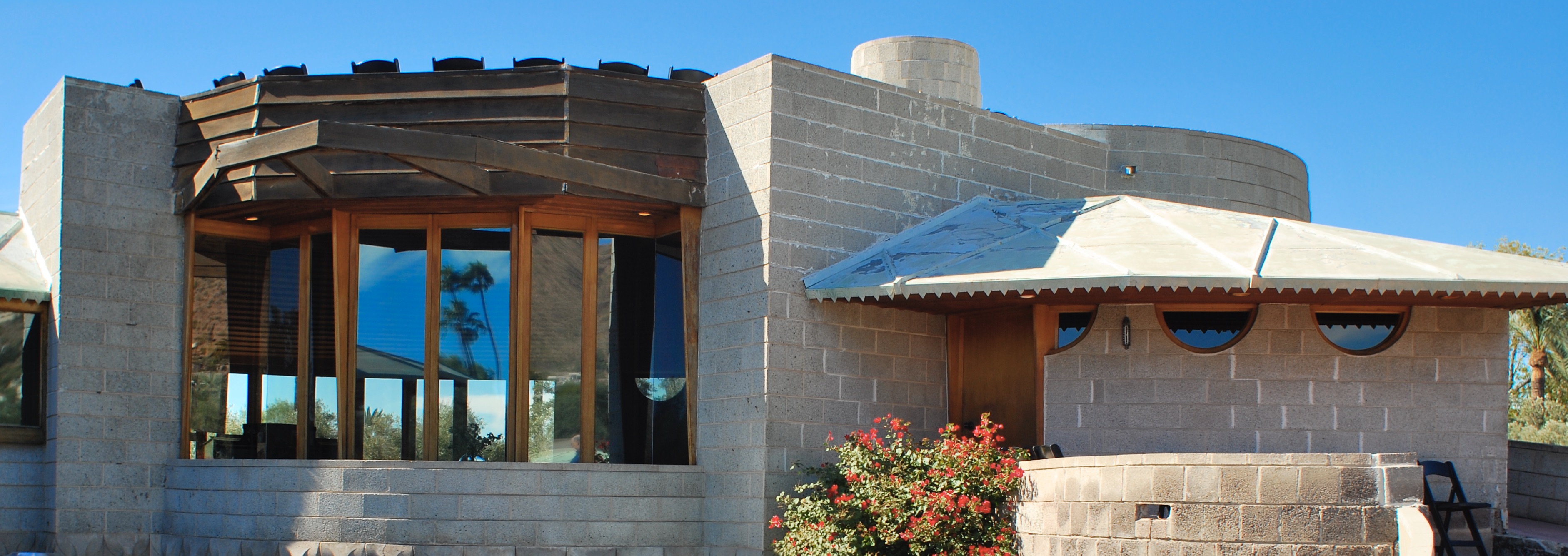
The second-floor entry door and family room window of the David and Gladys Wright House, designed in 1950 by Frank Lloyd Whatshisname.
Several years ago, when the fate of the last residential design by Frank Lloyd Wright in Phoenix, Arizona was decidedly uncertain, I had the chance to work briefly as a tour guide on the grounds of a dwelling that some regard as a dress rehearsal for the Old Man’s final masterpiece, New York’s Guggenheim Museum. The David and Gladys Wright House had passed, over the years, to parties that intended to raze the structure for “development”, at which time a local millionaire purchased the house just to protect it. Preservation and restoration being extremely expensive (if needful), he explored plans to convert the house into a learning center/museum, trying to partner with Arizona State University and others to get the project off the ground. Locals from the neighborhood, fearing that their property values would be undone by artsy invaders, freaked. Somewhere in that mad timeline of contention, the house was opened to the public in an effort to sway opinion. Not in my backyard, saith the locals.
As of this month, then, the property was resold, this time to a team of people who had actually worked at the Frank Lloyd Wright school of architecture, also headquartered in Phoenix. Again, the motive was to keep the house out of the clutches of apartment builders and others who would bulldoze it into dust. And here’s where the value of photographs comes in, at least for me; the same wheel of chance that allowed me to explore a place that otherwise would be completely off-limits to me has now spun ’round to close that door again, making the images of my time there doubly precious. At least for this particular photographic subject, the door has closed, and is likely to remain so. I certainly have my direct experience of the time to comfort me, but it was the indirect experience, the making of images after I had thoroughly taken in the scene with my raw senses, that imparts extra value to the pictures that remain. So, in the strictest sense, I didn’t just randomly wander onto the place and start clicking. That’s the stuff of snapshots. All of the house’s history was of value to me long before I ever aimed a camera at it. My pictures weren’t taken to make it important, or make it mine, like a trophy. They are now keepsakes of the most valuable kind.
(For the curious: the tabs at the top of this page are links to various personal photo essays, including Wright Thinking, a selection of views of the house taken during its days as a public attraction. Cheers.)
THE DIAL-BACK
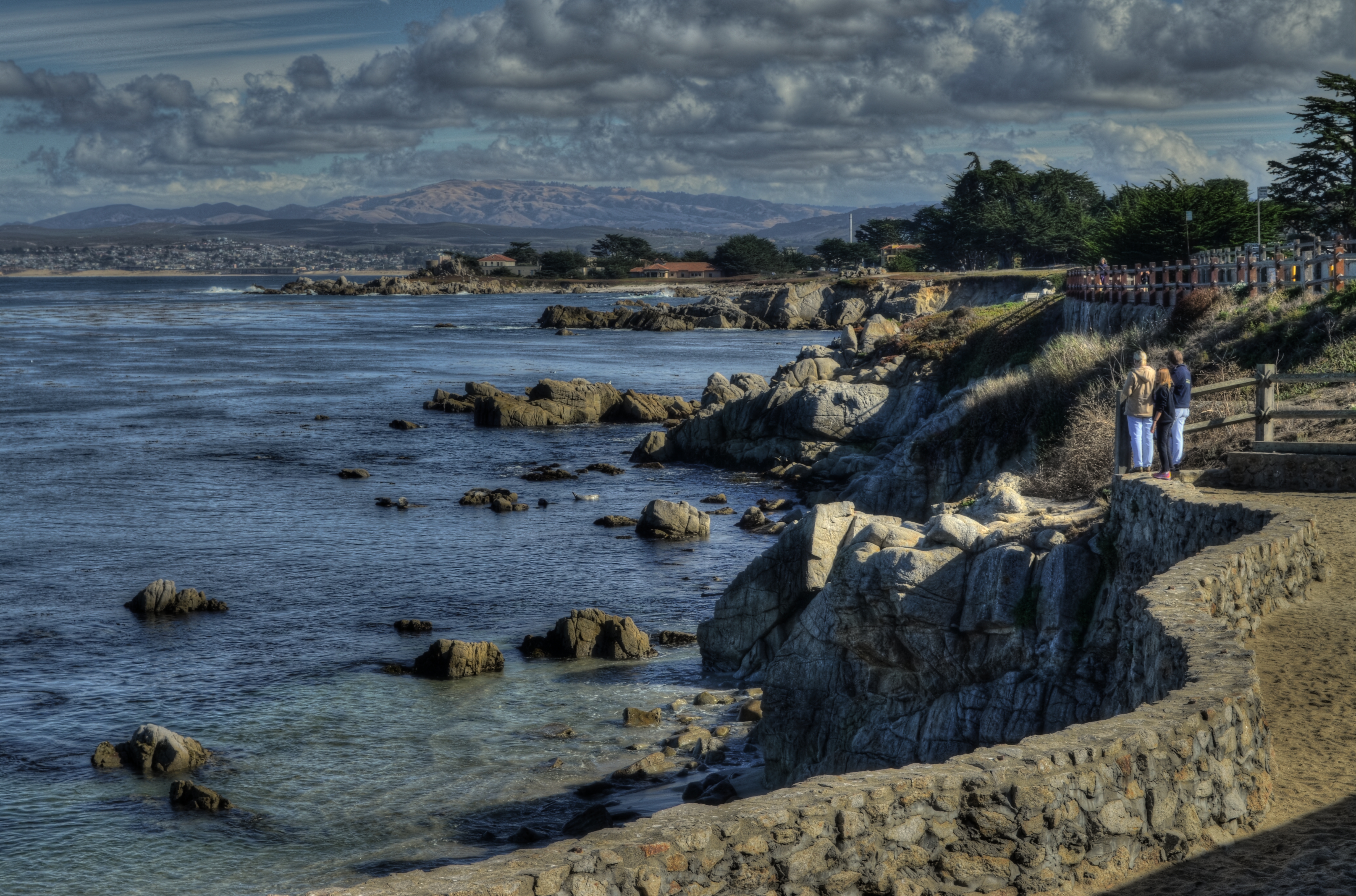
Lover’s Point, Monterey, California, 2012, original HDR mix. Ugh.
By MICHAEL PERKINS
ONE OF THE BIGGEST BENEFITS I’ve derived by overseeing this forum over the past nine years has been the great gift of being able to distance myself from my earlier work, to get far enough away from techniques I once embraced to regard them with a mixture of bemusement and horror. The shorthand for this sensation is a variant on the phrase “what was I thinking?”
The important thing is not to either completely repudiate or uniformly defend earlier versions of one’s photographic output, but, in evaluating each piece separately, to find that some work shows a shift in perspective, an evolution in the way of doing things. Absolute consistency over years is not only unlikely but unhealthy. Art can’t breathe in a vacuum.
Lately, in reviewing some images shot within the last decade, I have run head-on into a huge clutch of pictures that, although they may have been pretty balanced in the master shots, were absolutely overwrought in post-processing. It wasn’t a case of putting lipstick on a pig, but of slathering it onto a fairly attractive woman, or maybe like the cartoonist who had the habit of ending the sentences in every one of his dialog balloons with TWO exclamation points, regardless of the content. In many of these shots I seemed on some kind of quest for the ultimate rendering of detail, coupled with a love of the most extreme contrasting and color saturation. HDR was where I committed my gravest sins but I was gooping up pictures in other processes as well. For some reason, I was proceeding as if there were no image that could not be “improved” simply by tinkering a little longer with it. The results were, shall we say, uneven.
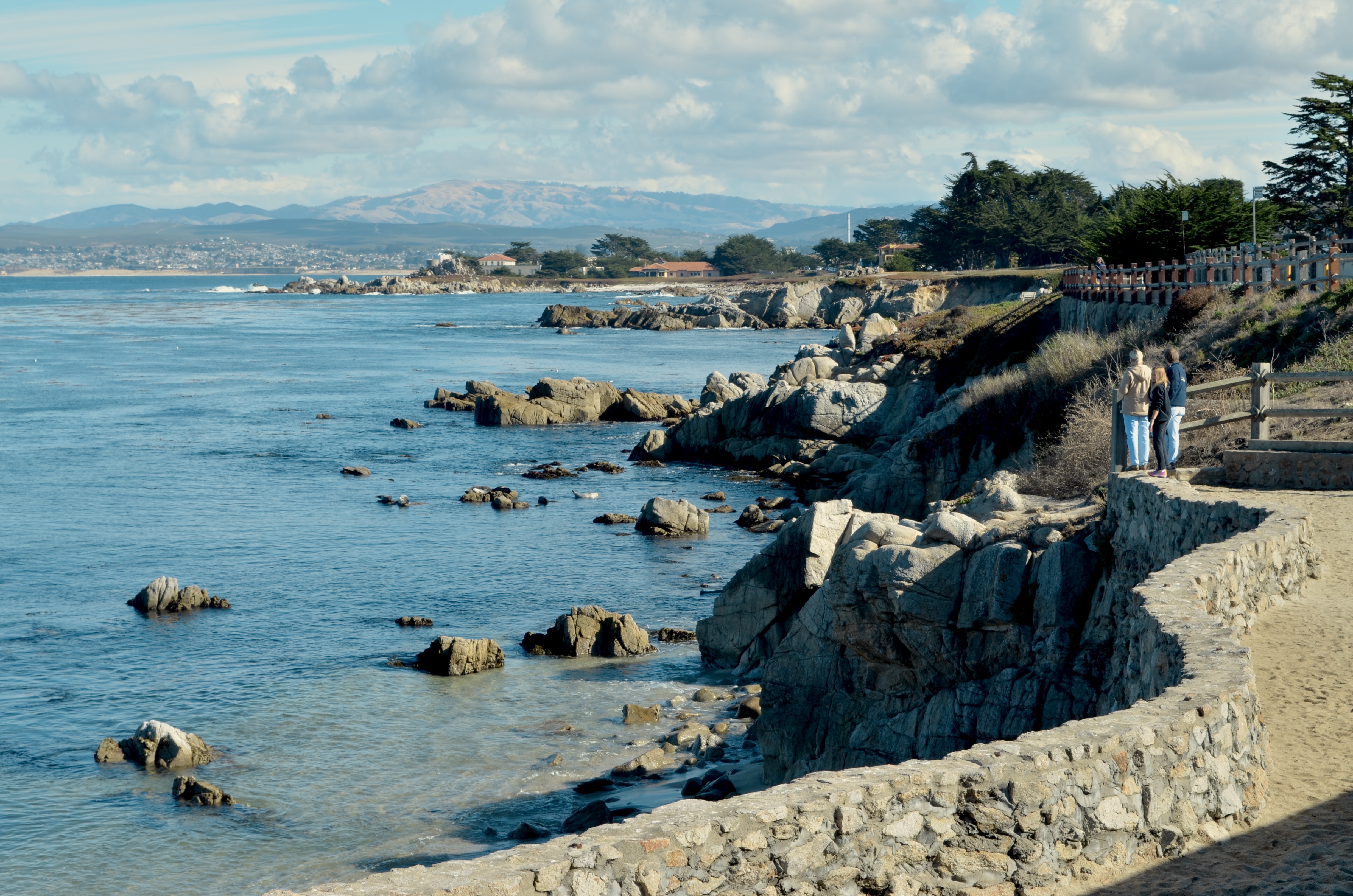
Once more on the soft pedal. The sadder-but-wiser remix from 2020.
Look at the way I processed a simple coastal vista from a trip I made to Monterey, California in 2012 (see top image). Man, you can count every damn grain of sand on that beach, cantcha? And how about all that stone texture, eh? And then there are the clouds, which, in my heavy-handed treatment, were transformed from fluffy accents to signs of impending doom. Whole thing appears a bit grim, as if the apocalypse is definitely coming any second, and, golly ned, kids, you’d better run for it. The second, dialed-back version from this year allows for a slight tweak in color balances and luminescence, but then it’s hands off the steering wheel. Which place would you rather head to for a relaxing holiday? One scene actually appears somewhat inviting, while the other is like El Greco after an evening of far too much wine.
Sometimes I think that photography, rather than being labeled a “profession” or a “hobby”, should be referred to as a “practice”, since the constant addition and subtraction of skills and experience is similar to what a doctor tries to do. Fortunately, no one died as a result of my artistic malpractice, although I feel a little sick myself facing up to my shortcomings. But on we go. I may not, in fact, be able to tell you, years later, what I was thinking during earlier versions of myself. I only hope I was thinking at all, and that the needle has moved just a little, from there to here.
SOMEWHAT BEYOND “WE’RE OPEN”
By MICHAEL PERKINS
ANYONE WHO’S RIFFED THROUGH EVEN A MODEST SAMPLING of my photography will soon deduce that I am a sucker for storefronts. If eyes are the window to the soul, the street-facing faces of businesses great and small are my favorite kind of mystery game. Who dwells within? What’s for sale? Why that name? Why this sign? And of course my insatiable curiosity about the lives of the people who bravely flip over the “open” sign every morning. Long before the customer steps inside to check out a merchant’s wares, he is “asked for the order”, so to speak, by the visual language of the storefront.
I once knew a gent whose urban shop had an enormous double showcase windows, a space far too big for the mounting of anything large or expensive. As the windows, which flanked his front entrance, both had shalow ledge shelves, he filled them with about a half dozen black rubber cat-toy rats. Nothing else. No signs, no specials, no mannequins. Just….rats. Guy was an exterminator, and he had been in his particular neighborhood for so long that he no longer needed to blow money on fancy advertisements or weekly specials. Maybe his name was on the building, but I’m not even sure of that. Got rats? I get rid of rats. End of story.
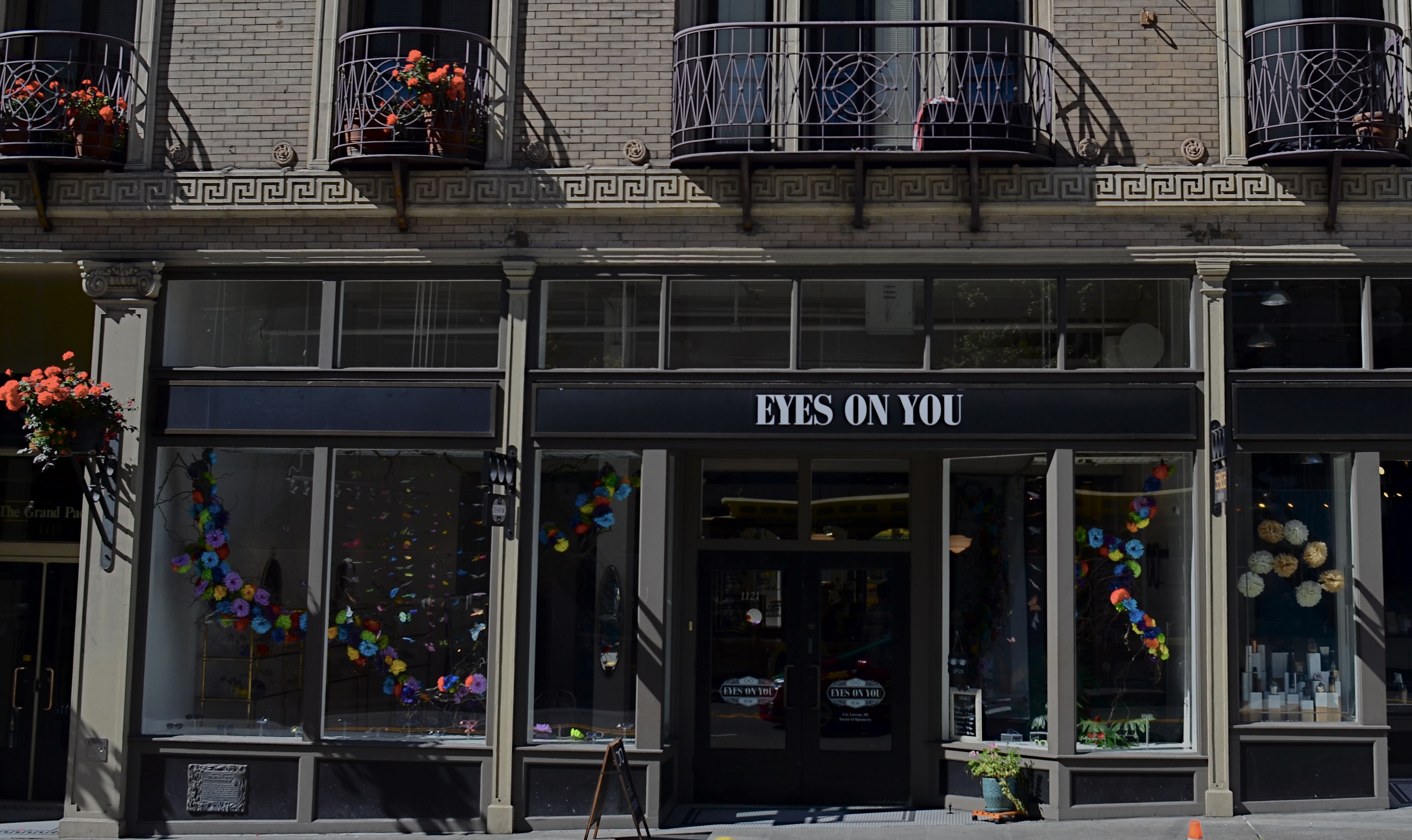
Okay, kids, let’s head over to ‘Eyes On You” to pick up some….glasses, maybe?
And there you have my quest in a nutshell. I love storefronts which boldly state that ground beef is going for $1.40 a pound or that “we repair any shoe”, but my absolute favorites are always the conundrums, the “exactly what is this place”-type businesses, where even a creatively decorated scheme is zero clue as to what is transpiring within….sort of like the shop seen here. And, yes, there are some tiny clues that Eyes On You is a place that sells glasses, as there are, indeed, a few of them just visible in a small niche in the right-hand windows. But what is all that other stuff? And what does it have to do with selling, well, anything? It doesn’t matter; half the fun, as the cruise lines used to say, is getting there, and decoding the marketing mysteries of small businesses is fun in the way that a brisk game of Twenty Questions can be. Photographs, as we often remind ourselves, both reveal and conceal….sometimes at the same time. Loving where and when that happens is the spice of the game.
THE NEIGHBORHOOD KID
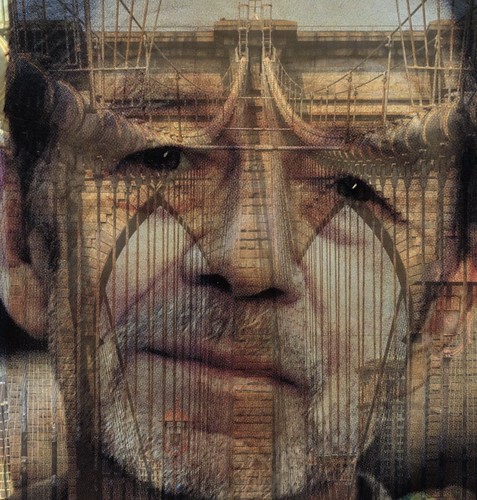
In the streets. Of the streets.
By MICHAEL PERKINS
IT’S FORTUNATE FOR PHOTOGRAPHERS THAT THERE AREN’T MORE THAN A FEW WRITERS IN THE WORLD who can render a sense of place, of emotional truth, or of vivid detail as effectively as did Pete Hamill, the peerless New York journalist who passed earlier this week in this, 2020, the year of the Great Hibernation. Indeed, if the world was more generally peopled with people of his skill and passion, there would be no need of cameras. None.
This little hometown newspaper has, over the years, offered up brief sketches of the great shooters, from Walker Evans and Ansel to Diane Arbus, as well as gifted amateurs like Lewis Carroll. But this week, in my grief over the passing of a man who was a stranger to me personally, but, just as personally, as important as a blood relative, I realize that he, too, must be enshrined in a gallery of people who mostly shone in purely visual terms. Because, for those who live in and love the greater New York area, William Peter Hamill, Jr. did everything a good photographer strives to do, creating many images on the page that rival anything that even the best shooter could create.
Pete’s career as a columnist, novelist, essayist and teacher is the stuff of solid legend, but others have a far greater handle on the details of that story than I, like the New York Times, whose obituary on him is offered here. What I am talking about, in this forum, is the way he rendered the streets of Manhattan and the outer boroughs for those who had never had the privilege to walk them in person. He knew those streets the way a mother of twelve knows her kids…their names, their birthdays, their talents, their torments. In a city that never stands still long enough to linger over memory, Pete could dig through the strata of centuries in any neighborhood on the island, drilling all the way down to the gray schist that the Dutch stepped onto at the beginning of the entire mad experiment. Peeling those layers apart, he could place the territories of any immigrant from any tribe; where they landed, where they wandered, where they built legends, where they perished. In Hamill’s hands, the word nostalgia did not merely mean a sentimental ache for things lost or demolished. Certainly he kept score on what the city had sacrificed in its everlasting dash toward The Next Big Thing, but it was the details beyond mere longing that made his stories sing. It was what made him an indispensable guide for Ric Burns’ epic New York PBS miniseries, and Downtown: My Manhattan as indispensable a tool for newcomers as the Fodor’s travel guides. And it was what made even his darkest accounts of things great and small elicit, in the reader, a wry smile of recognition. “The tragic sense” he observed with true Irish fatalism, “opens a human being to the exuberant joys of the present.”
Like a photographer, Pete Hamill knew how to compose a frame to make your eye go directly to the most important thing. He knew where to lavish light and where to accent with darkness. He felt the value of negative space. He had a photo editor’s instinct for where to wield the cropping scissors. And he realized that the best human stories are simple, universal, direct things. Pete did with a Royal what the greatest photographers do with a Leica, but the result was the same. Immediacy. Truth. And the wisdom to ensure that his readers would always see The Big Picture.
HUMILITY ON THE WING
By MICHAEL PERKINS
IF YOU REALLY THINK YOU KNOW ANYTHING ABOUT PHOTOGRAPHY, take a moment to consider what you typically shoot. After all, there comes a point, with practice and experience, at which you will get pretty good at making pictures of the things you’re used to making pictures of. Shoot enough skyscrapers and you can eventually become The Skyscraper Guy. But then, in the pursuit of humility, start making 100% of your shots of something about which you know next to nothing. Better still, shoot things that seldom, if ever, pique your interest….and then see how you do.
I am on record in these pages as admitting that I am always playing defense when it comes to nature work. It’s not my first interest, and it’s far from my comfort zone. However, I do derive enjoyment from the thought that I might ,at some point, have a chance of getting better at it. That’s not the same as actually getting better at it, but…..
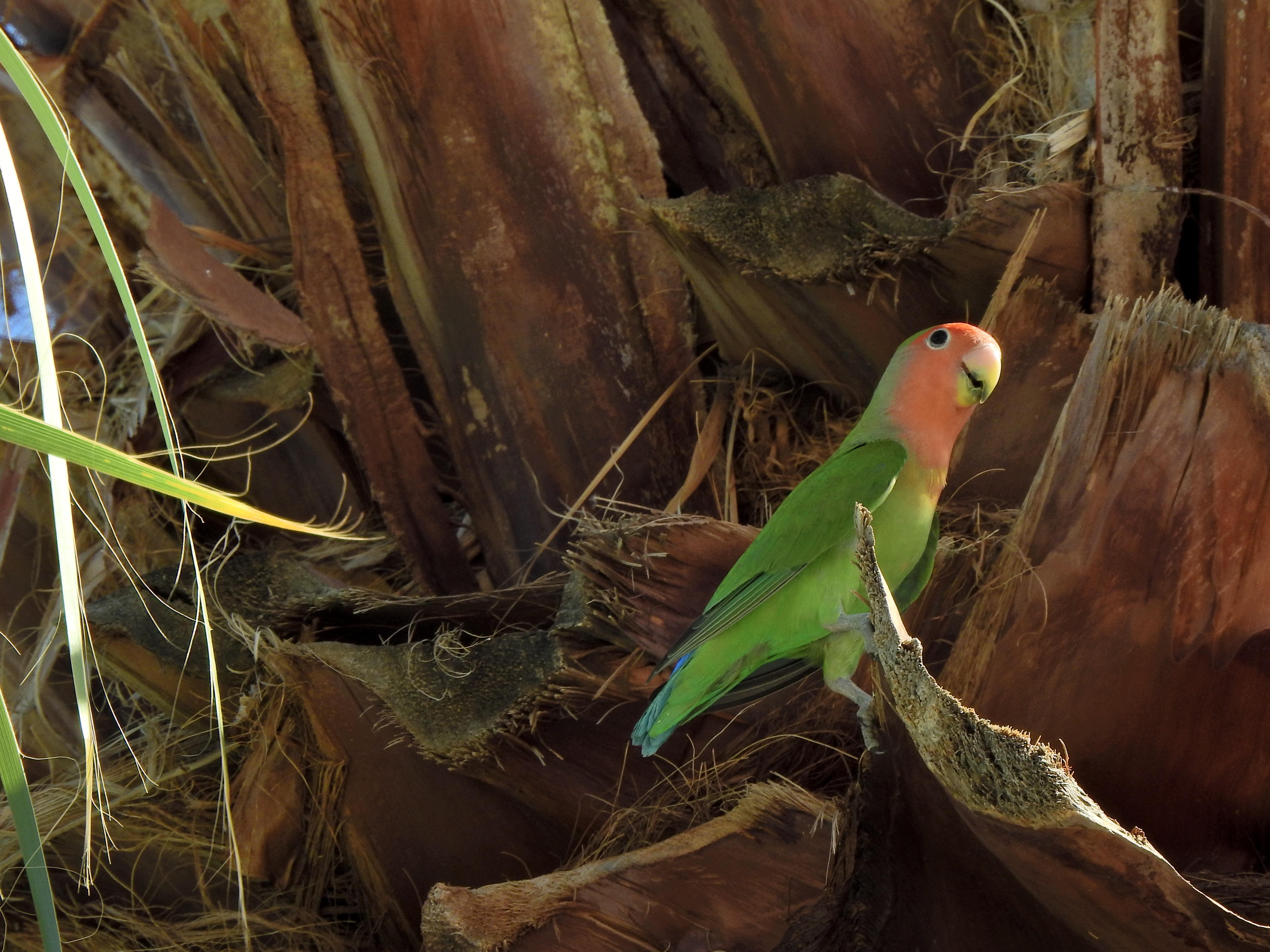
Insofar as I can see a personality in a bird, I can almost make an acceptable picture of it.
Over the last five years, I’ve begun to dip my toe into work with birds, mostly because it allows me and my birder mate to do more things together. However, on many expeditions in search of the Rump-Roasted Titbill or the Green-Throated Flipwing I am as likely to shoot the surrounding wildlife as I am the official quarry, simply because I know, at some level, that my success with birds is random and unpredictable. In short, I may actually have the wrong personality to be good at capturing the little darlings.
First of all, I only possess the cardinal (sorry) virtue of patience in limited supply. That’s not helpful, since, as I hinted at the start, shooting outside your comfort zone will instantaneously reverse-morph you back to the clueless twelve-year-old you were when you first picked up a camera. And yes, bird photography is that different, in that it has many exclusive techniques that no other kind of photography will completely prepare you for. And then there is the expense. Basic cameras will occasionally (underscore that word) bring you good results, but the precision required for the best bird work, the “ahh”-inducing shots, can only be had for money. A good deal of it. It’s just a fact that we’ll never know how many of us would have become excellent bird photographers simply because many cannot afford the gear necessary to produce the best results. That’s not sour grapes, no more than it is whiny to say that I can’t explore the surface of the moon with a $100 pair of binoculars.
So what’s to do? Well, decent pictures can be made with modest equipment, but the work will be harder, and the accumulation of skill will be exponentially slower. The bird shots that I truly like come from approaching birds as I might a human subject, that is, by observing behavior long enough to get a sense of the bird as a “person” the way I might with a portrait subject. The more time I spend with an individual bird, the more I convince myself that I am locked into his thoughts or reactions. Of course, I could just be crazed with the heat (always wear a hat), but that mindset just barely gives me the courage to try something I will likely not do very well for some time to come. Humility, on the wing. Cool.
Now, can I go take a picture of a skyscraper?
EXALT, IN YOUR COPY
By MICHAEL PERKINS
I ONCE ASSEMBLED A SHORT BOOK CALLED “Juxtapositions” in which I flanked images of my own with quotations by great photographers on their craft. It was an amusing if inconsequential exercise, and helped me compile a miniature library of ruminations on why we do what we do. Some shooters were as eloquent in print as their pictures were, while others preferred to remark very briefly, content to let their images speak for them. I never thought, at the time, to seek out general philosophical treatises on creativity, to see the photographer’s motives discussed in general artistic terms. That now strikes me as short-sighted. It’s like doing a master thesis on breakfast and failing to consider eggs.
So let me make amends by pasting up the following passage and suggesting that it actually describes photography more perfectly than the words of any one shooter that I can recall. It doesn’t deal in the technical aspect of making a picture, since it actually predates the popularity of the medium, but perfectly describes what the photographer is seeking to do when he/she picks up a camera. From Ralph Waldo Emerson’s essay Art:
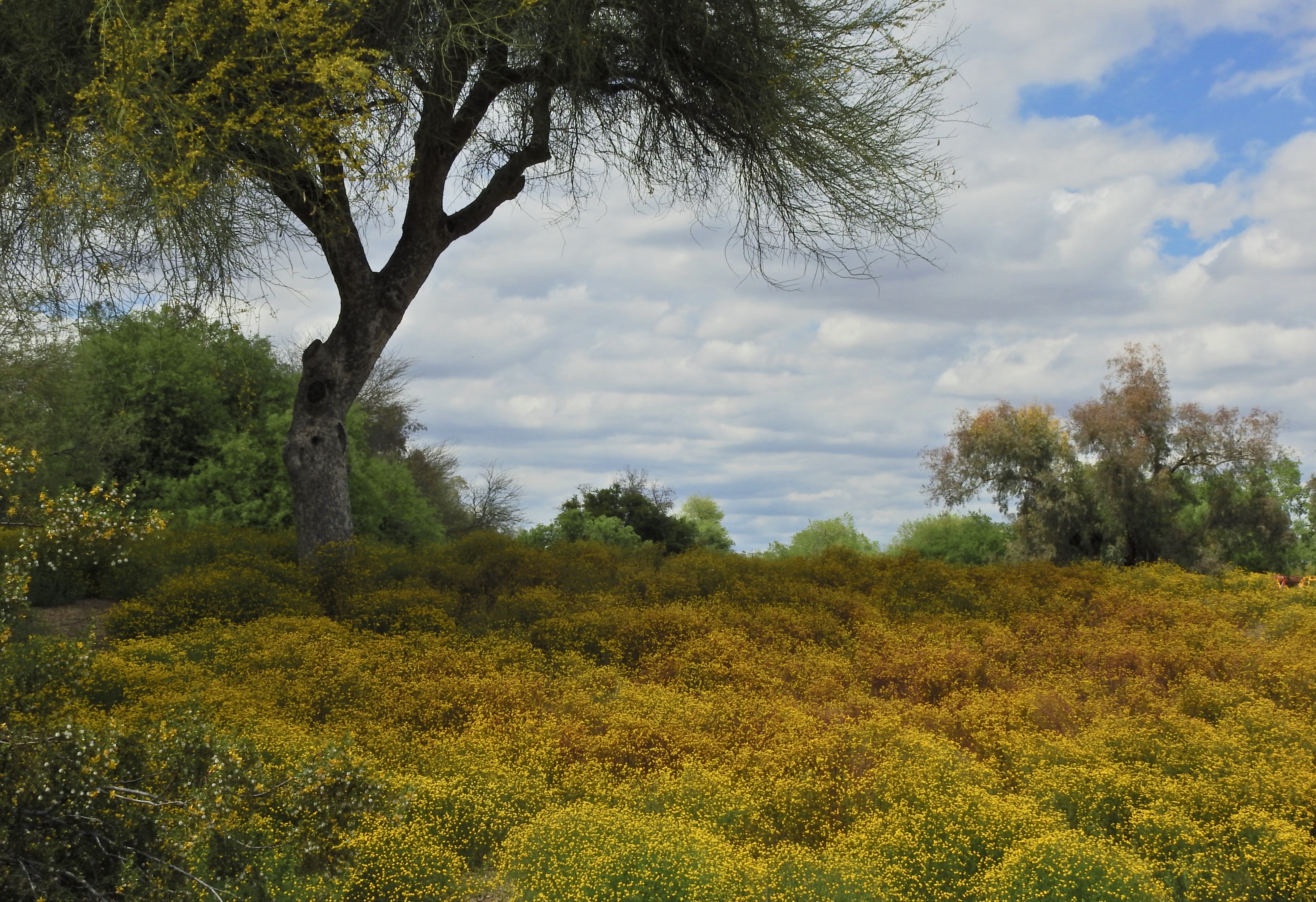
Much of the best in photography is, essentially, “based on a true story”.
“Because the soul is progressive, it never quite repeats itself, but in every act attempts the production of a new and fairer whole. This appears in works both of the useful and the fine arts, if we employ the popular distinction of works according to their aim, either at use or beauty. Thus in our fine arts, not imitation, but creation is the aim. In landscapes, the painter should give the suggestion of a fairer creation than we know. The details, the prose of nature he should omit, and give us only the spirit and splendor. He should know that the landscape has beauty for his eye, because it expresses a thought which is to him good: and this, because the same power which sees through his eyes, is seen in that spectacle; and he will come to value the expression of nature, and not nature itself, and so exalt in his copy, the features that please him. He will give the gloom of gloom, and the sunshine of sunshine. In a portrait, he must inscribe the character, and not the features, and must esteem the man who sits to him as himself only an imperfect picture or likeness of the aspiring original within.”
In making pictures, we craft compromises between what is visible and what our mind “sees”, between the mundane details of reality and the larger cues it feeds to our spirit. This is why the word “take”, in reference to the creation of a photograph, is so inadequate. We do certainly “take” something from the physical world, but we add personal intangibles to it, “making” an image out of a mix of both recordable and emotional information. As Emerson says so brilliantly, we “omit” the “prose of nature” and try to give “only the spirit and splendor.” If we’re lucky, we are not only faithful to our own vision, but instrumental in sharing something that another soul may recognize as familiar. That’s when a photograph has truly been “made”. It seems like magic because it is magic, as we exalt, in our copy, the features that please us.
 thenormaleye