By MICHAEL PERKINS
NOSTALGIA, AS YOGI BERRA FAMOUSLY REMARKED, ain’t what it used to be. Photography often feeds on a longing for the past, either in the artificial retro-rendering of the way we used to capture images (think faux tintypes), or an affection for the actual life events we chose to preserve Back In Der Day (see every old shoebox of snaps you own). And now, in an unusual twist, Gen-Z shooters are experiencing their own time-specific manifestation of this pleasant pang, focusing on the very beginning of the digital era.
Suddenly a significant number of media influencers and Instagram mavens have turned away from cell phones as their default cameras and re-embraced the earliest days of pixelated point-and-shoots. Raiding Mom’s junk drawer for a working Canon Powershot or Kodak Easyshare, a growing number of Z-ers are seeking the lo-fi tech that accompanied many of their most important personal memories, peppering their online feeds with uploads of delightfully (and intentionally) flawed photos. So try to track this, history lovers: we have gone from film cameras to primitive digital cameras to more advanced digital cameras to remarkably advanced phone-based point-and-shoots back to primitive digital…all in the service of (sing it with me) Memories…light the corners of my mind…misty, water-color memm…...(ahem, sorry).
In some ways, this mini-trend echoes the fascination many young hipsters have long held for analog film as well as the crappy cameras that make them look even more, well, filmic, as if the technically derelict pics that emerge from them are somehow more tactile, more authentic than those from the latest iPhone or Android. And while I understand this desire to return to some Eden of lost youth, I cannot truly share the sensation.
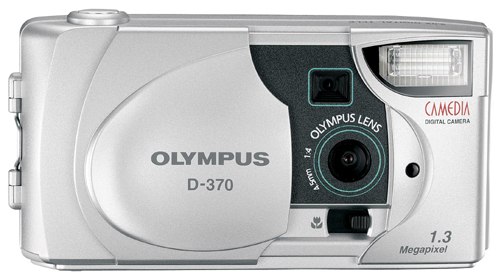
I mean, look at this thing.
Behold my first-ever digital, a p&s from 2001 that boasted a Herculean 1.3 MP in raw, beefy picture power. For those of us who’ve forgotten the math, that’s a whopping 1280 x 960 worth of resolution, not exactly the stuff of dream enlargements or even decent screen quality, but hey, the picture’s ready right away (hear me talkin’, oh Polaroid pioneers!) Such cameras were, to the first generation of digi-users, a P.O.C. (proof of concept) that was also a P.O.C. (piece of crap). Full disclosure: my actual D-370 has long since disintegrated in my hand, meaning that I had to scan the interweb for an image of it. And yet, with such devices, say the young-un’s in the Then-Was-Better movement, I captured my prom, I chronicled our rafting trip, we giggled through Graduation Day. The remarks of one of the uber-young who are re-experiencing their salad days says expresses the sensation thus: “I feel like we’re becoming a bit too techy. To go back in time is just a great idea.”
Pardon me if I restrain my giddy joy.
I never took a technically acceptable picture with this peashooter, and I ran into the welcoming arms of my first DLSRs with unbridled optimism. Now, it could be argued that I finally can take technically acceptable pictures, but haven’t yet learned how to breathe a soul into them, but that’s a confession for another time. Some of those returning to first-gen digitals claim that the experience is one of simplifying or slowing down their picture-making, and on that count, I wish them godspeed. Whatever (and whenever) it takes to make a picture you love, from daguerreotypes to Kodachrome, you do you, and ignore all the old sods that say Don’t.



 By MICHAEL PERKINS





ALONE AGAIN, NATURALLY
By MICHAEL PERKINS
TAGGING, OR MARKING A BUILDING WITH GRAFFITI, seems to me one of the strangest bids for immortality that an artist can undertake. It’s obviously, on one level, a plea not to be ignored: I was here. But since so much of the information in its various signatures and symbols are rigidly encoded, it’s only a testament to some people for some vague stretch of time. Soon, like the grass reclaims the battlefield, rust and amnesia efface the artist just as surely as if he had never passed this way.
When infrastructures rot and fail, they either collapse in catastrophe (like a fallen bridge) or needless suffering (like a municipal water system), and, as their pieces are hauled away, every cultural element tied up in their daily use, especially signs or writing, are taken away as well, robbing the tagger of his/her shot at immortality. Other times, the rot just stands, useless and unmourned amidst other changes in our daily world, still emblazoned with the phantom scrawlings of earlier poets who now cannot rely on either memory or context to make their work persist in meaning.
The strange legend on this disintegrating trestle bridge in Ventura, California was explained to me by a local as a reference to a heinous crime that occurred in the area. She didn’t seem to recall the precise details nor the time frame, although I assume it does not pre-date the invention of aerosol spray paint. Point is, even though the bridge has the year of its erection, 1909, stamped into it at the back and front, the span’s name, to everyone who passes until it plunges into the river, will be “the ‘Baby Girl’ bridge”. Unfair to the anonymous scribe who sought to freeze a horrific event in time, but eventually a moot point.
I wanted to shoot the bridge because of the textures of its deterioration, but then I realized that, eventually, I was also making what would, eventually, become the lone record of a message that someone, somewhere, thought important enough to stamp onto the trestle’s oxidized remains. Maybe, in some way, I think it’s important as well. Artists hate the idea of other artists dissolving into history. We come into the world by ourselves, and, after mingling with the world, we all end up, as the song goes, alone again. Naturally.
Share this:
Posted by Michael Perkins | November 13, 2022 | Categories: Uncategorized | Tags: Commentary, history, memory | 1 Comment