By MICHAEL PERKINS
SOME OF MY WORST AND BEST PICTURES share a common bond; their origin usually begins with desperation.
They happen when I’m stalled, knotted-up, stuck. The times when you not only don’t know what the next image will look like, you don’t know if it will even be taken. Hell, you may be done. Poured out, squeezed dry, nothing left to say. Put the cameras in the next neighborhood garage sale and take up, I dunno, knitting.
Written down, this whole sequence of thought seems, well, crazy. And yet, I know that from time to time, something will knock me off course and, for a while, I will just not care if I ever take another picture ever again. It usually occurs as a consequence of a physical injury or illness, the kind of sidelined status where life is boiled down to its absolute essence, when, weighed against photography, makes the pursuit seems trivial, a ridiculous luxury. Earlier this year, in learning how to use a new telephoto lens in the field, I miscalculated how to transfer its nearly six pounds between my two arms, and I pulled some muscle tissue in my right shoulder. We’re talking X-rays, physical therapy, the whole deal, with me stuck with the irony of having waited years to get my hands on this prized toy, only to have it cripple me. I were not thrilled with life.
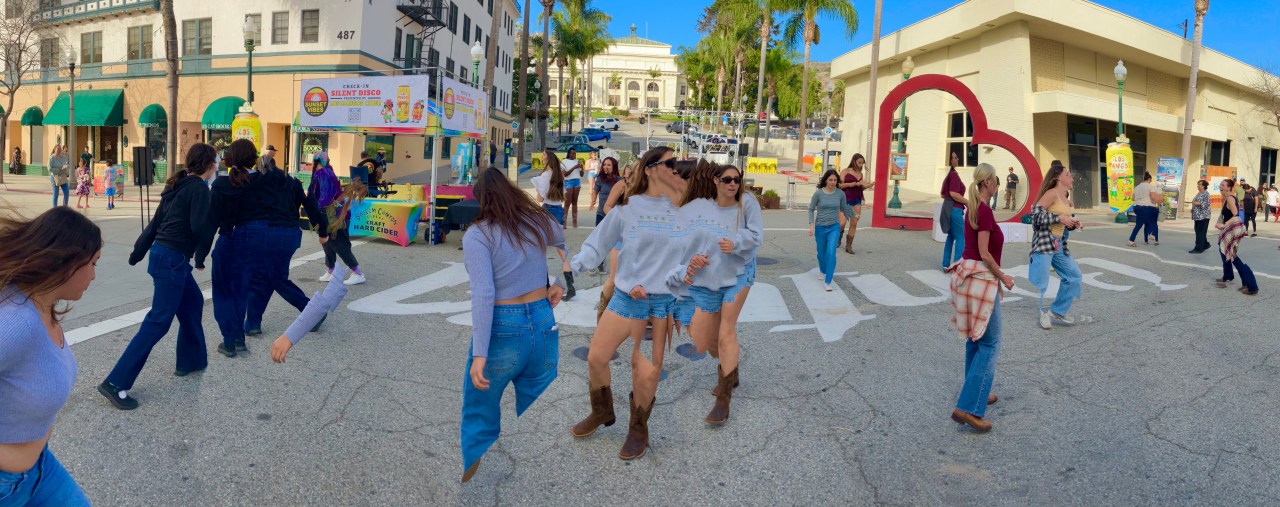
At this writing, a pinched nerve in my lower back has come along right on the heels of the shoulder, pushing photography even further back into “I can’t deal with this right now”-land and resulting in a week in which I shot virtually nothing. Yesterday, as I watched an impromptu dance mob take form in an arts festival, I knew I had to shoot something. Anything. To remind myself why I was gnashing my teeth from the sidelines. To re-prove to myself that images at least had to be tried. This very strange panorama is the result.
It’s not a great picture. It was available. And it was important for it to be available. Now, while my back hurts. Now, while I’m grouchy and nervous. At the moment, I don’t need home runs. I need to step up and swing at every pitch. Meanwhile, toss this one in the “under consideration” pile, and move on. To anything.


 thenormaleye