WAITING FOR THE REVEAL
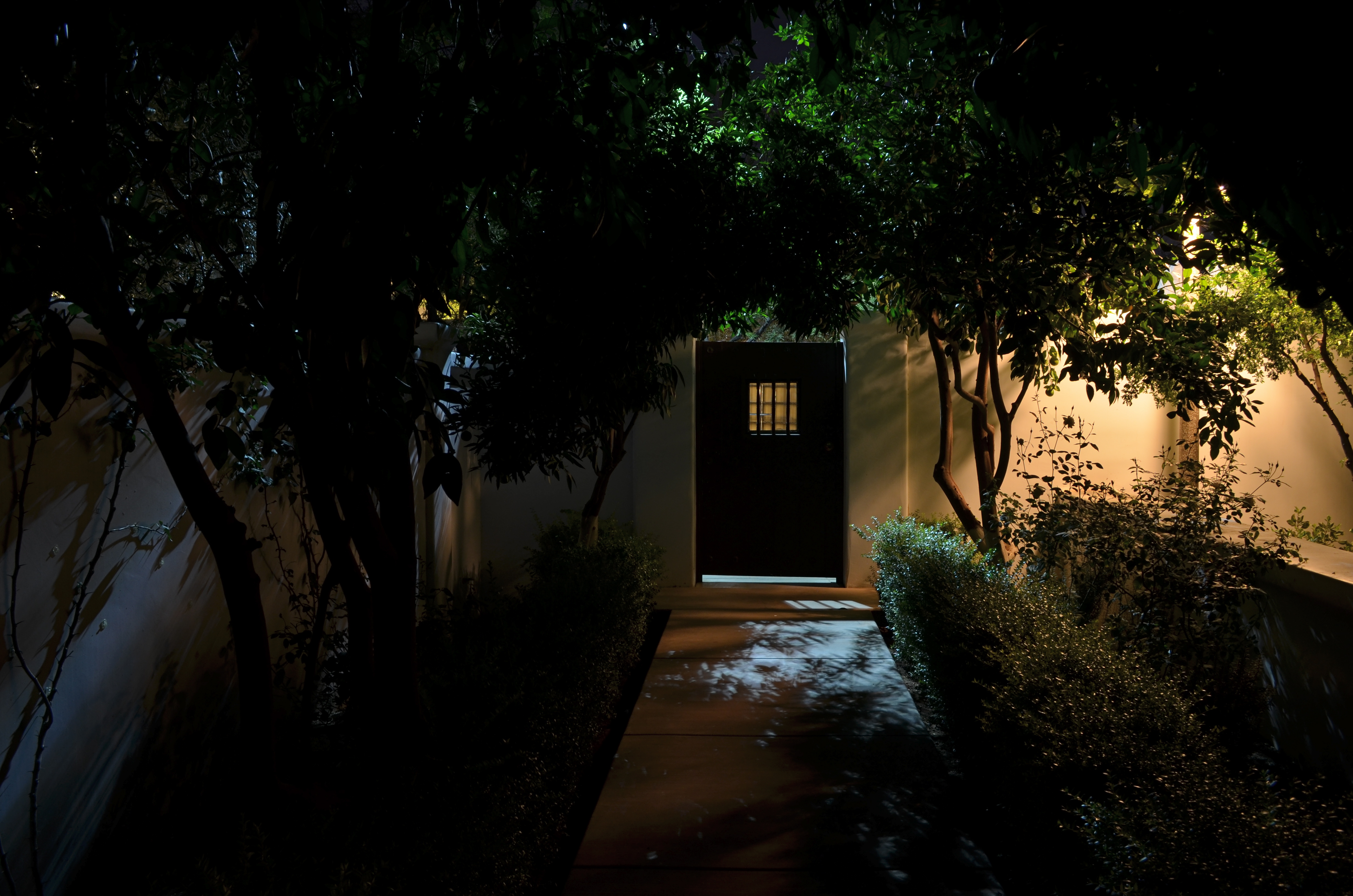
What lies beyond that door? Probably nothing to match the outside mood afforded to this forgotten delivery entrance by the onset of night. Hey, this is all about the magic, right? 15 second time-exposure, f/9, ISO 100, 20mm.
By MICHAEL PERKINS
THERE’S A REASON BATMAN DOESN’T SWING THROUGH THE SKY AT HIGH NOON. Or that Shakespeare didn’t have his witches crowded around a cauldron during the mid-morning coffee break. And, of course, there are no love ballads bearing the title By The Light Of The Silvery…Sun. Mood is everything in photography and many subjects just don’t convey mystery or romance when brightly lit. This is no truer anywhere else than in the American southwest.
In Arizona, New Mexico, and California, there are plenty of places where the sun blazes away like a Hollywood klieg light during most of the day. The light is harsh, white, glaring. By mid-morning across the summer months most of the richer colors are blasted right out of the sky, and the only way to capture beauty is to wait for the hours warmed by low light.
Or no light.
I’ve always been a big believer in the transformation of familiar materials once night falls, and, going back to my old baby box camera days, I have always marveled at the simple miracle of holding a shutter open long enough to wring a few extra drops of light—just enough–from the deepening dark. I call it waiting for the reveal, and it never fails to serve up surprises.
One night last week, I was waiting on the sunset to fully finish behind a destination restaurant in Paradise Valley, Arizona (that’s really the name of the town…kind of like naming your city “Wonderfulville”). The front entrances and patios were gorgeous, of course, but after about a half hour I found myself getting restless with the utter postcardiness of it all. I was looking for something off the grid, forbidden even.
I found this door around the side of the resort, hidden by an overgrown, narrow walkway and illuminated by a single bleak bulb. As a location, especially in the daytime, this is no one’s idea of a choice spot. Except at this precise moment. It actually works better because of how much you can’t see, and I can’t justify shooting it at all, except that the reveal was working for me. And, while I liked the more conventional Chamber of Commerce shots I had taken earlier, there is something iffy and offbeat about this frame that I keep coming back to.
Sometimes the underdog is the best dog in the fight.
BASIC CABLE
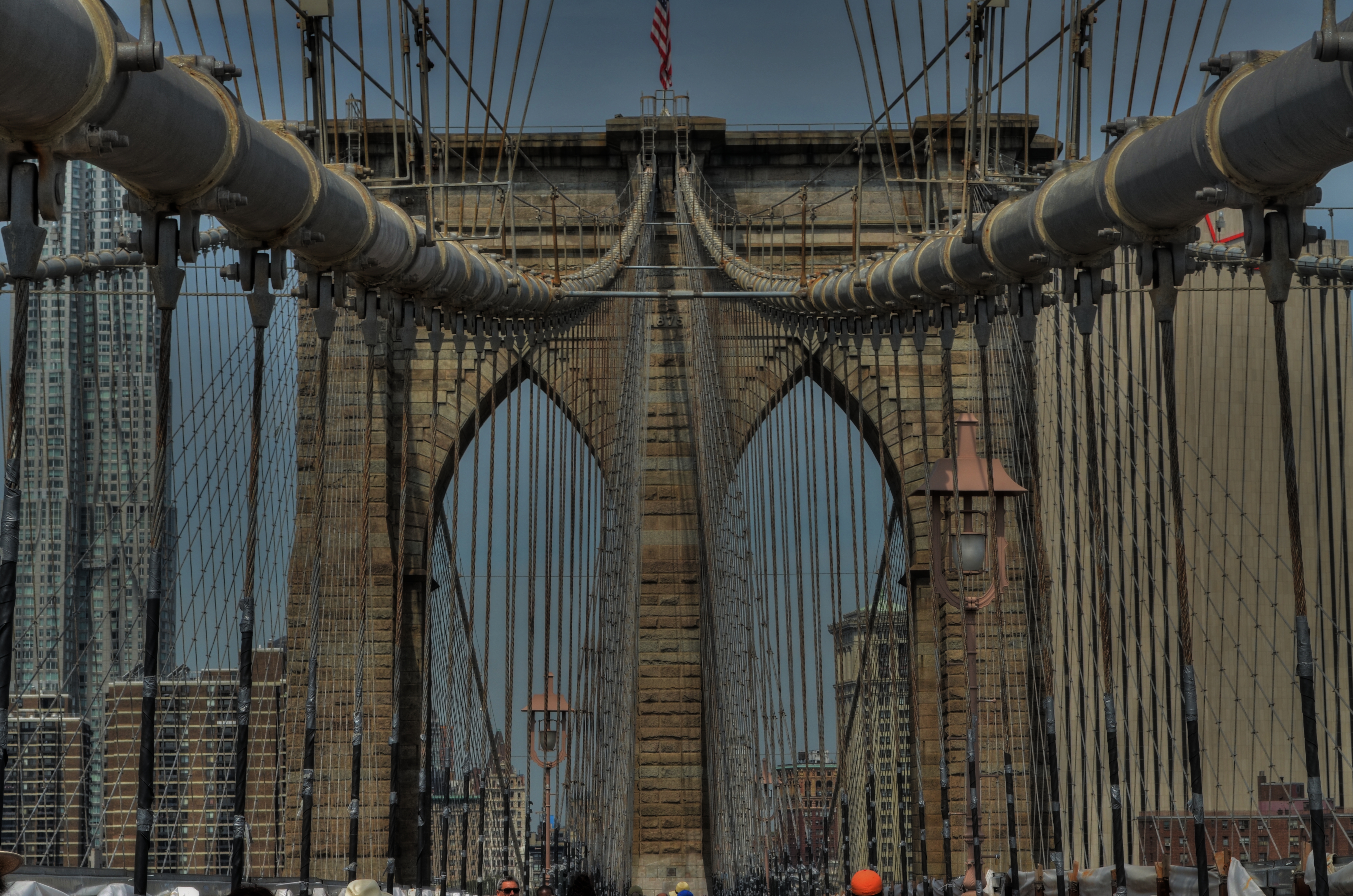
In many ways, the Brooklyn Bridge, although not a “land” edifice, is the first of New York’s skyscrapers, and an elegant reminder of a bygone era. Three-shot HDR blend, shutter speeds of 1/160, 1/200, and 1/250 sec., all F/11, ISO 100, 55mm.
By MICHAEL PERKINS
THERE ARE ANY NUMBER OF LANDMARKS IN THE GREATER NEW YORK AREA which reward repeated viewings. Their mythic impact is such that it is never dulled or diminished. On the contrary, these special places (in a city which boasts so many) actually reveal distinctly different things to different visitors, and, doing so, cannot be exhausted by the millions of interpretations of them that flood the photographic world.
We make pictures of these objects, pictures of the pictures, a tribute picture to someone else’s picture, an impression of someone’s painting. We shoot them at night, in close-up, in fisheye, in smeary Warholian explosions of color, in lonely swaths of shadow.
For me, the Brooklyn Bridge is about two things: texture and materials.
After more than a century over the East River, John and Washington Roebling’s pioneering span, the first steel cable suspension bridge in the world, shows its wear and tear as a proud trophy of its constant service. The delicate and yet sinewy cables, amazingly strong interwoven strands of what Roebling manufactured under the name “steel rope”, are the most amazing design elements in the bridge, presenting an infinite number of kaleidoscopic web patterns depending on when and where you look.
As simply stunning as its two towers are, it is its grid of steel that mutates, shimmers, and hypnotizes the visitor as he makes his way past the crushing mobs of walkers, runners, skaters and cyclists that clog the span’s upper promenade from dawn to dusk. To show the bridge and only the bridge is a challenging trick. To get the dance of angles and rays that the cables have to offer in a way that speaks to you is both frustrating and fun.
Browse through several hundred amateur views of the bridge in one sitting sometime: marvel at how many ways it stamps itself onto the human imagination. Here, I tried to show the steady arc of the master cables as they dip down from the eastern tower, lope into a dramatic dip, then mount to the sky again to pass through the anchors on the western tower. HDR seemed like the way to go on exposure, with three separate shots at f/11, blended to maximize the detail of this most decorated of urban giants.
Next time, some other picture will call out to me, and to you. The bridge will display all the ways it wants to be seen, like a magician fanning out a trick deck. Pick a card, it invites, any card.
Doesn’t matter which one you choose.
They’re all aces.
Thoughts?
Related articles
- Video: Building the Brooklyn Bridge (history.com)
- Brooklyn Bridge Manhattan (markd.typepad.com)
SUM OF THE PARTS
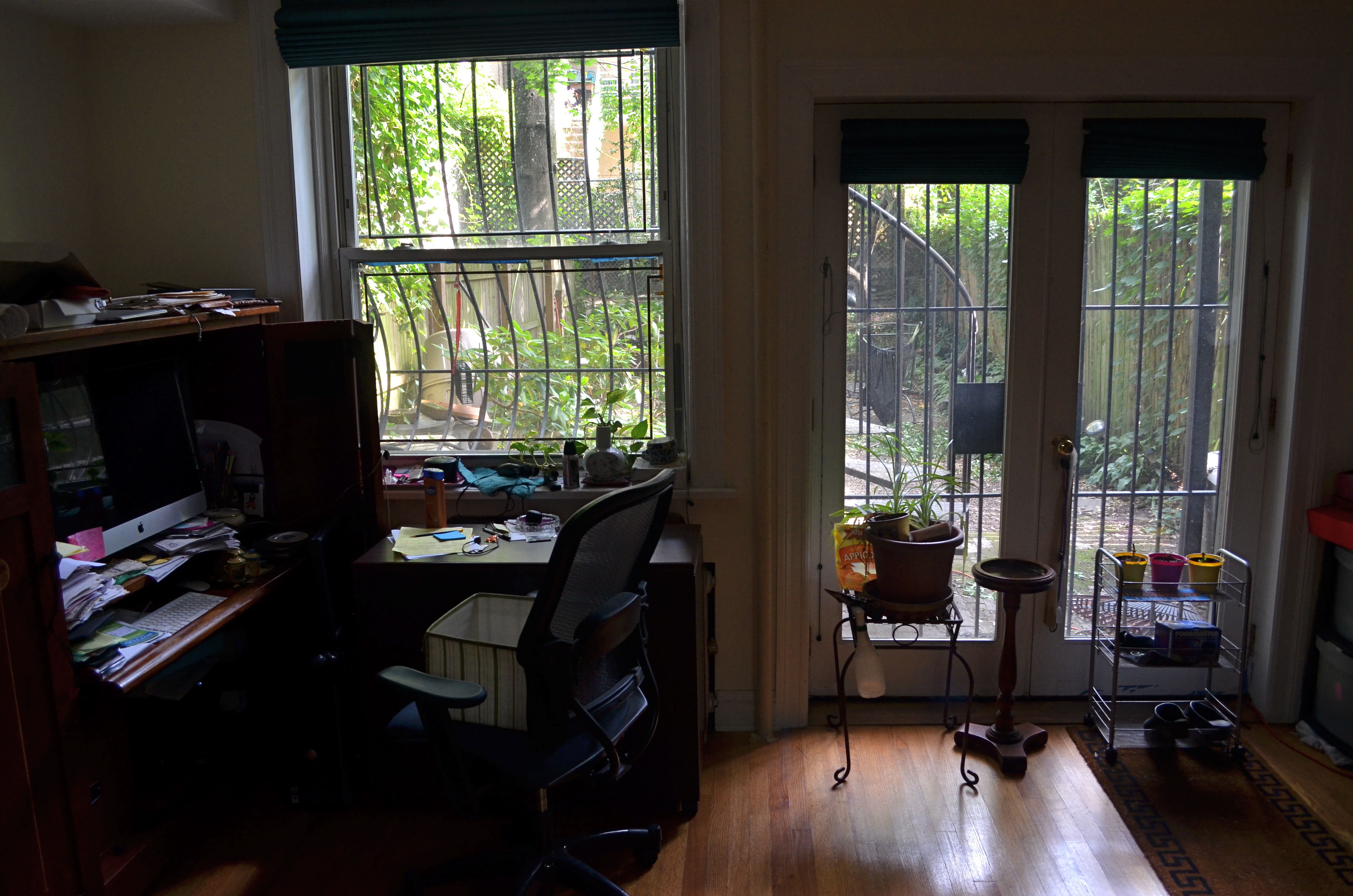
No one home? On the contrary: the essence of everyone who has ever sat in this room still seems to inhabit it. 1/25 sec., f/5.6, ISO 320, 18mm.
By MICHAEL PERKINS
FOR ANNIE LIEBOVITZ, ONE OF THE WORLD’S MOST INNOVATIVE PORTRAIT PHOTOGRAPHERS, people are always more than they seem on the surface, or at least the surface that’s offered up for public consumption. Her images manage to reveal new elements in the world’s most familiar faces. But how do you capture the essence of a subject that can’t sit for you because they are no longer around…literally? Her recent project and book, Pilgrimage, eloquently creates photographic remembrances of essential American figures from Lincoln to Emerson, Thoreau to Darwin, by making images of the houses and estates in which they lived, the personal objects they owned or touched, the physical echo of their having been alive. It is a daring and somewhat spiritual project, and one which has got me to thinking about compositions that are greater than the sum of their parts.
Believing as I do that houses really do retain the imprint of the people who lived in them, I was mesmerized by the images in Pilgrimage, and have never been able to see a house the same way since. We don’t all have access to the room where Virginia Woolf wrote, the box of art chalks used by Georgia O’ Keefe, or Ansel Adams’ final workshop, but we can examine the homes of those we know with fresh eyes, finding that they reveal something about their owners beyond the snaps we have of the people who inhabit them. The accumulations, the treasures, the keepings of decades of living are quiet but eloquent testimony to the way we build up our lives in houses day by day, scrap by personal scrap. In some way they may say more about us than a picture of us sitting on the couch might. At least it’s another way of seeing, and photography is about finding as many of those ways as possible.
I spent some time recently in a marvelous old brownstone that has already housed generations of owners, a structure which has a life rhythm all its own. Gazing out its windows, I imagined how many sunrises and sunsets had been framed before the eyes of its tenants. Peering out at the gardens, I was in some way one with all of them. I knew nothing about most of them, and yet I knew the house had created the same delight for all of us. Using available light only, I tried to let the building reveal itself without any extra “noise” or “help” from me. It made the house’s voice louder, clearer.
We all live in, or near, places that have the power to speak, locations where energy and people show us the sum of all the parts of a life.
Thoughts?
9/11: ANOTHER KIND OF ANNIVERSARY
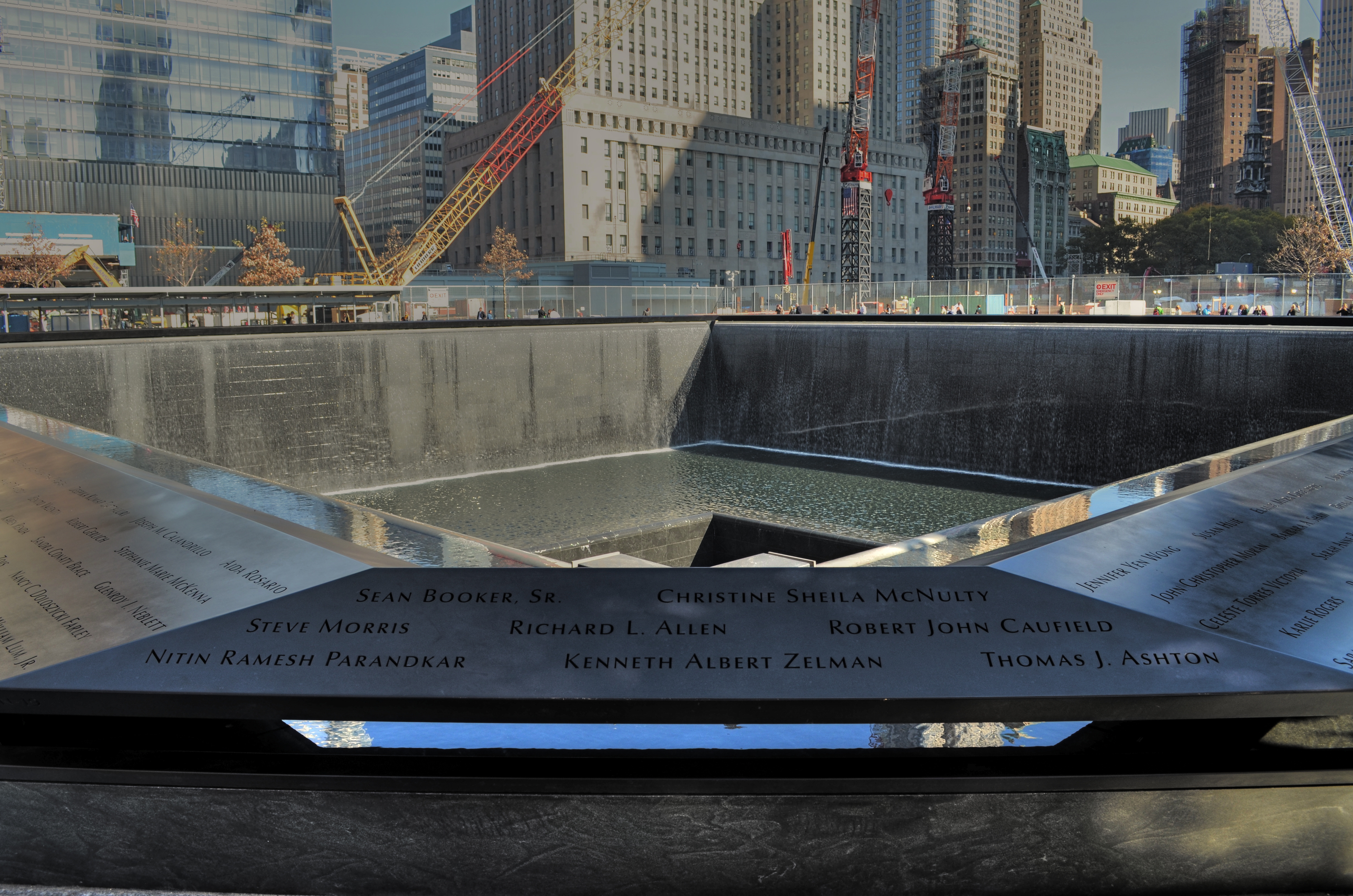
One of the two pools marking the foundations of the original Twin Towers. This began as a single exposure, then was augmented by copying the shot, adjusting the copy, and blending the two into a kind of synthetic HDR image in Photomatix.
By MICHAEL PERKINS
THIS WEEK, THE SPACE AT GROUND ZERO marks an anniversary that is slightly different from the annual reverences afforded the fallen of September 11, 2001. Even as we put a little more chronological, if not emotional, distance between ourselves and the unspeakable and obscene events that tore the fabric of history on that morning, we begin a second era of sorts, as we mark the first year of operation for the 9/11 Memorial that tries so nobly to advance, if not complete, the healing process. The site, specifically the pools marking the foundational footprints of the north and south towers of the World Trade Center, is no less noble because it has been asked to provide an impossible service. Some things are beyond our reach, but that does not mean that the reaching effort should not be made. Something must endure that physically, visually states who our lost brothers and sisters were. And even a compromised version of that effort, wrested from people’s individual hearts and needs in an agonizing discussion, needs to be attempted.
Visiting the site just two months after its opening last year, I asked myself, how could we have done better, or more? Is there enough, just enough here, to fight off our lazy national habit of collective amnesia? Is there at least a start, marked on this spot, at trying to makes these names matter and persist in memory?
Every day, thousands ask that same question, and there are endless versions of the answer. It’s a gravesite, but a gravesite that is missing many of those being remembered. It is a memorial, but unlike most memorials, it is not located on a neutrally designated “elsewhere”, but on the actual place where the victims fell. It is a beautiful thing that evokes horror, and it is a place of horror where beauty is sorely needed to make going forward imaginable. Standing at the pool’s perimeters, you are struck silent, and you worry over the day when silence may not be the first response to this vista, as, properly, it still is at Gettysburg and Pearl Harbor. And we wish we could know that there was even one atom of comfort afforded by this effort to those left behind, many of whom were annihilated no less in spirit than their loved ones were in fact. If you ever pray here, that’s what you pray for.
Shooting the above image, I wanted to wait for the morning surge of visitors to clear away as completely as possible. I felt, and still feel, that the site itself is at last, a noble thing, and neither I nor any other people around it can help breaking the visual serenity it presents. My shot is also, now, a bit of a time machine, since the rebuilding of the WTC site is now nearer completion by a year. The weather that morning was flawless, in a way in which, on every other place on the earth, does not automatically trigger a feeling of foreboding. I wished I was a better photographer, or that, on that morning, I could become one, if even for an instant. Looking around, I saw many others making the same vain wish. And, in the end, I still feel that I left something untold. But, whatever I captured was at least my personal way of seeing it, and it was about as close to “right” as I was going to get.
And getting “as close we can” is what we have to settle for, at this point in time, in processing the events of 9/11. I am always struck, in reading the remembrances from surviving families and spouses, by how absent of hate and anger most of them are. They fight only to understand, to place it all in some kind of workable context for living. Many of us may never get there. However, life is a journey, and, today, as with all of the anniversaries of this tragedy, we have to hope that we can at least stay on the path toward discovery and peace. The memorial is the first step in that journey.
Related articles:
- NYC 9/11 memorial surpasses 4 million visitors (kfwbam.com)
A BLOCK OF THE MILE
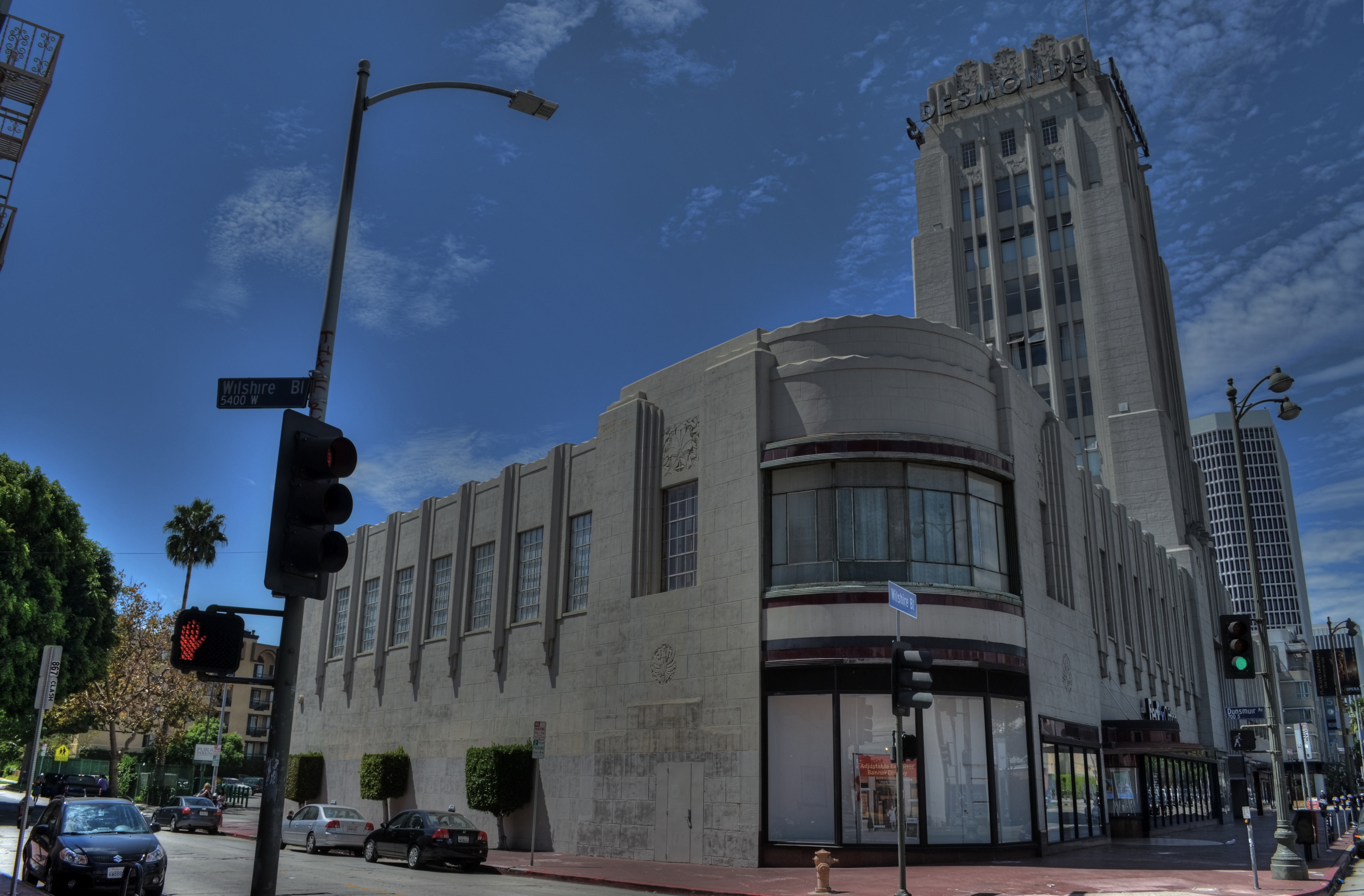
The building that originally housed Desmond’s department store, and one of the mostly intact survivors of a golden age of Art Deco along Los Angeles’ historic “Miracle Mile”.
By MICHAEL PERKINS
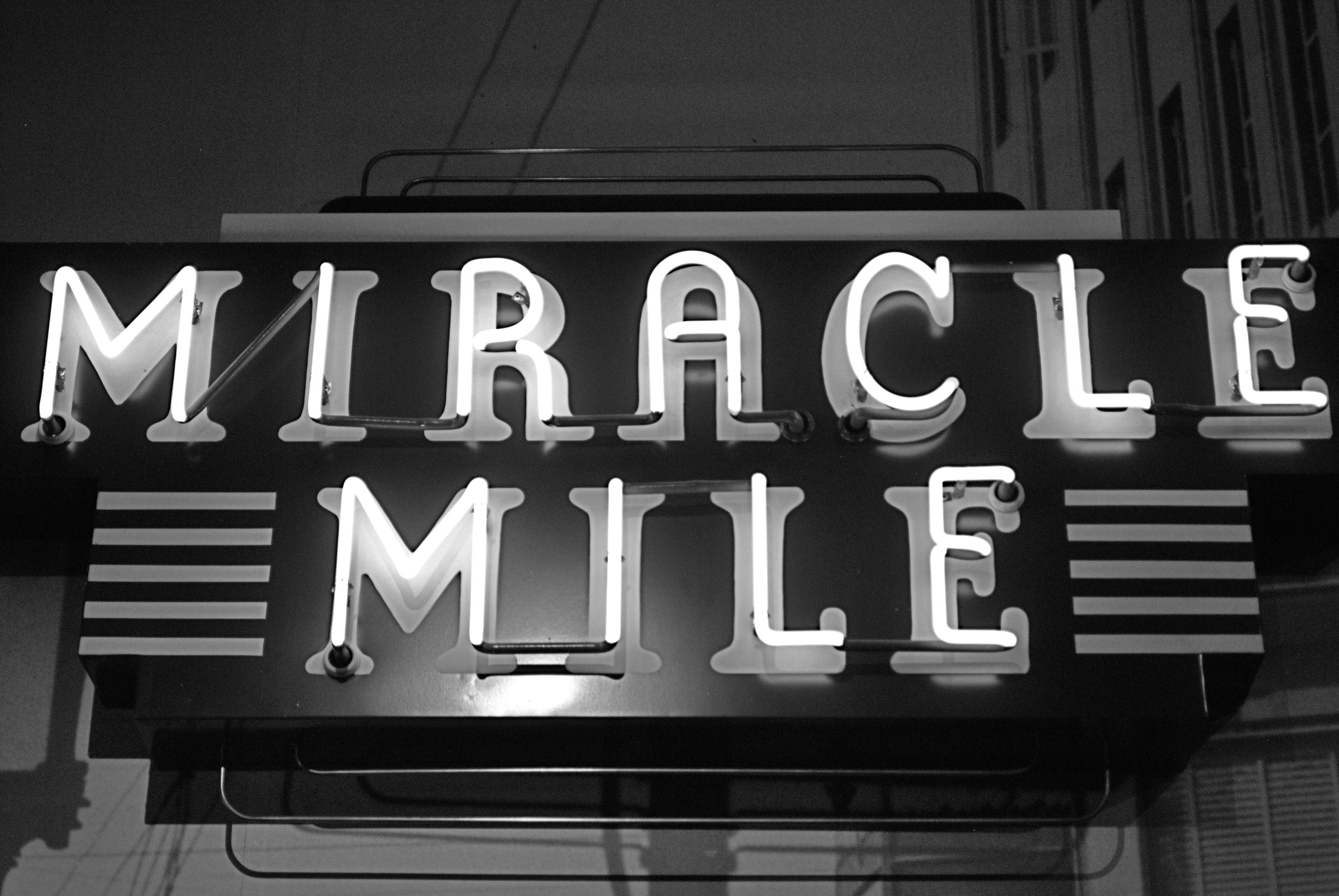 CALIFORNIA’S CITIES, FOR STUDENTS OF DESIGN, contain the country’s largest trove of Art Deco, the strange mixture of product packaging, graphics, and architectural ornamentation that left its mark on most urban centers in America between 1927 and the beginning of World War II. The Golden State seems to have a higher concentration of the swirls, chevrons, zigzags and streamlined curves than many of the country’s “fly over” areas, and the urban core of Los Angeles is something like a garden of delights for Deco-dent fans, with stylistic flourishes preserved in both complete buildings and fragmented trim accents on business centers that have been re-purposed, blighted, re-discovered, resurrected or just plain neglected as the 20th century became the 21st. And within that city’s core (stay with me) the up-again-down-again district once dubbed the “Miracle Mile”, centered along Wilshire Boulevard, remains a bounteous feast of Deco splendor (or squalor, depending on your viewpoint).
The Miracle Mile was born out of the visionary schemes of developer A. W. Ross, who, in the 1920’s, dreamed of drawing retail dollars to an area covered in farm fields and connected only tentatively to downtown L.A. by the old “red car” trolley line and the first privately owned automobiles. Ignoring dire warnings that the creation of a massive new business district in what was considered the boondocks was financial suicide, Ross pressed ahead, and, in fact, became one of the first major developers in the area to design his project for the needs of passing car traffic. Building features, display windows, lines of sight and signage were all crafted to appeal to an auto going down the streets at about thirty miles per hour. As a matter of pure coincidence, the Mile’s businesses, banks, restaurants and attractions were also all being built just as the Art Deco movement was in its ascendancy, resulting in a dense concentration of that style in the space of just a few square miles.
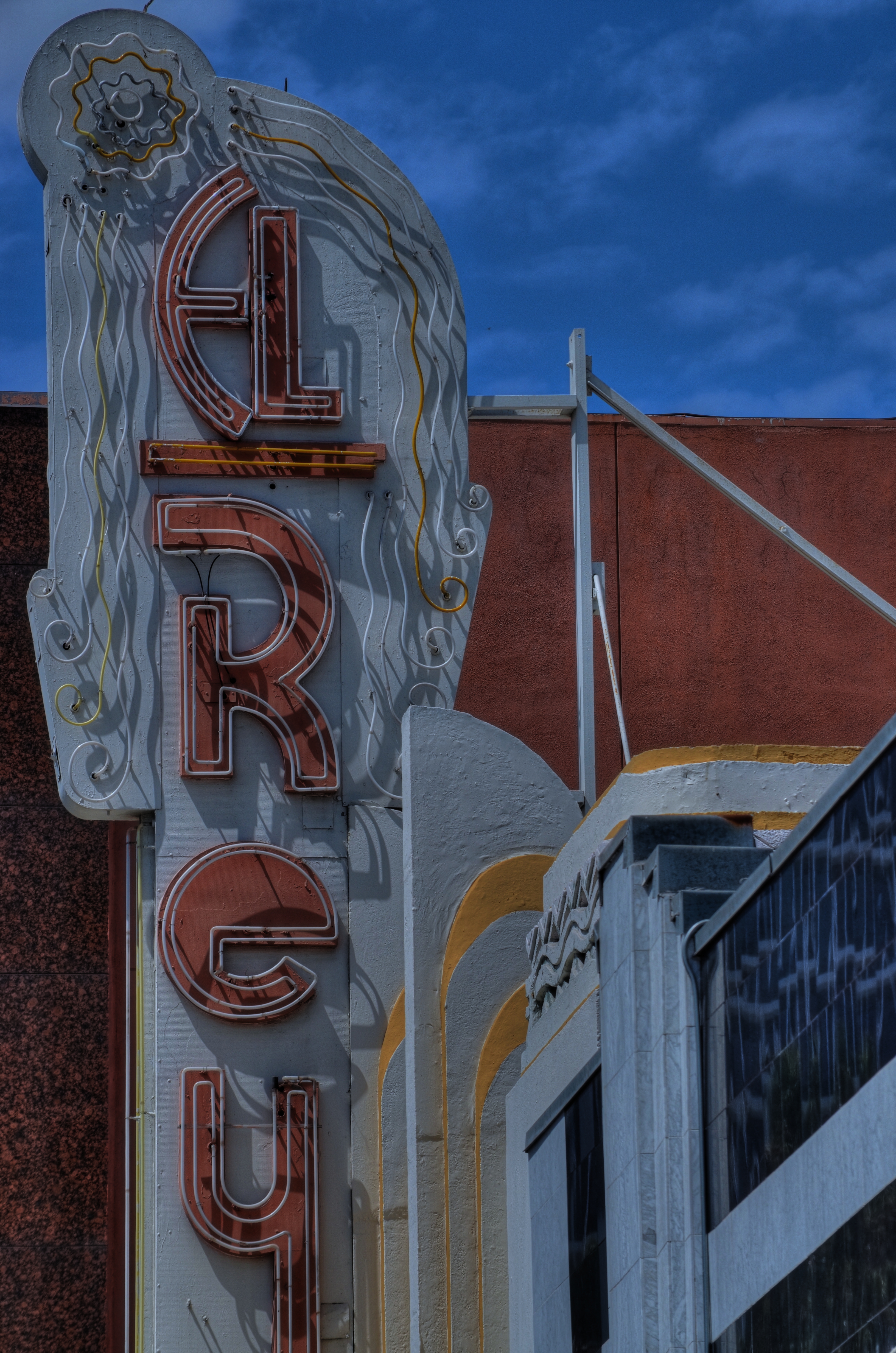
The period-perfect marquee for the legendary El Rey Theatre, formerly a movie house and now a live-performance venue.
It was my interest in vintage theatres from the period that made the historic El Rey movie house, near the corner of Wilshire and Dunsmuir Avenue, my first major discovery in the area. With its curlicue neon marquee, colorful vestibule flooring and chromed ticket booth, the El Rey is a fairly intact survivor of the era, having made the transition from movie house to live-performance venue. And, as with most buildings in the neighborhood, photographs of it can be made which smooth over the wrinkles and crinkles of age to present an idealized view of the Mile as it was.
But that’s only the beginning.
On the same block, directly across the street, is another nearly complete reminder of the Mile’s majesty, where, at 5514 Wilshire, the stylish Desmond’s department store rose in 1929 as a central tower flanked by two rounded wings, each featuring enormous showcase windows. With its molded concrete columns (which resemble abstract drawn draperies), its elaborate street-entrance friezes and grilles, and the waves and zigzags that cap its upper features, the Desmond had endured the Mile’s post 1950’s decline and worse, surviving to the present day as host to a Fed Ex store and a few scattered leases. At this writing, a new owner has announced plans to re-create the complex’s glory as a luxury apartment building.
The details found in various other images in this post are also from the same one-block radius of the Wilshire portion of the Mile. Some of them frame retail stores that bear little connection to their original purpose. All serve as survivor scars of an urban district that is on the bounce in recent years, as the Los Angeles County Museum of Art (installed in a former bank building), the La Brea Tar Pits, and other attractions along the Mile, now dubbed “Museum Row”, have brought in a new age of enhanced land value, higher rents and business restarts to the area. Everything old is new again.
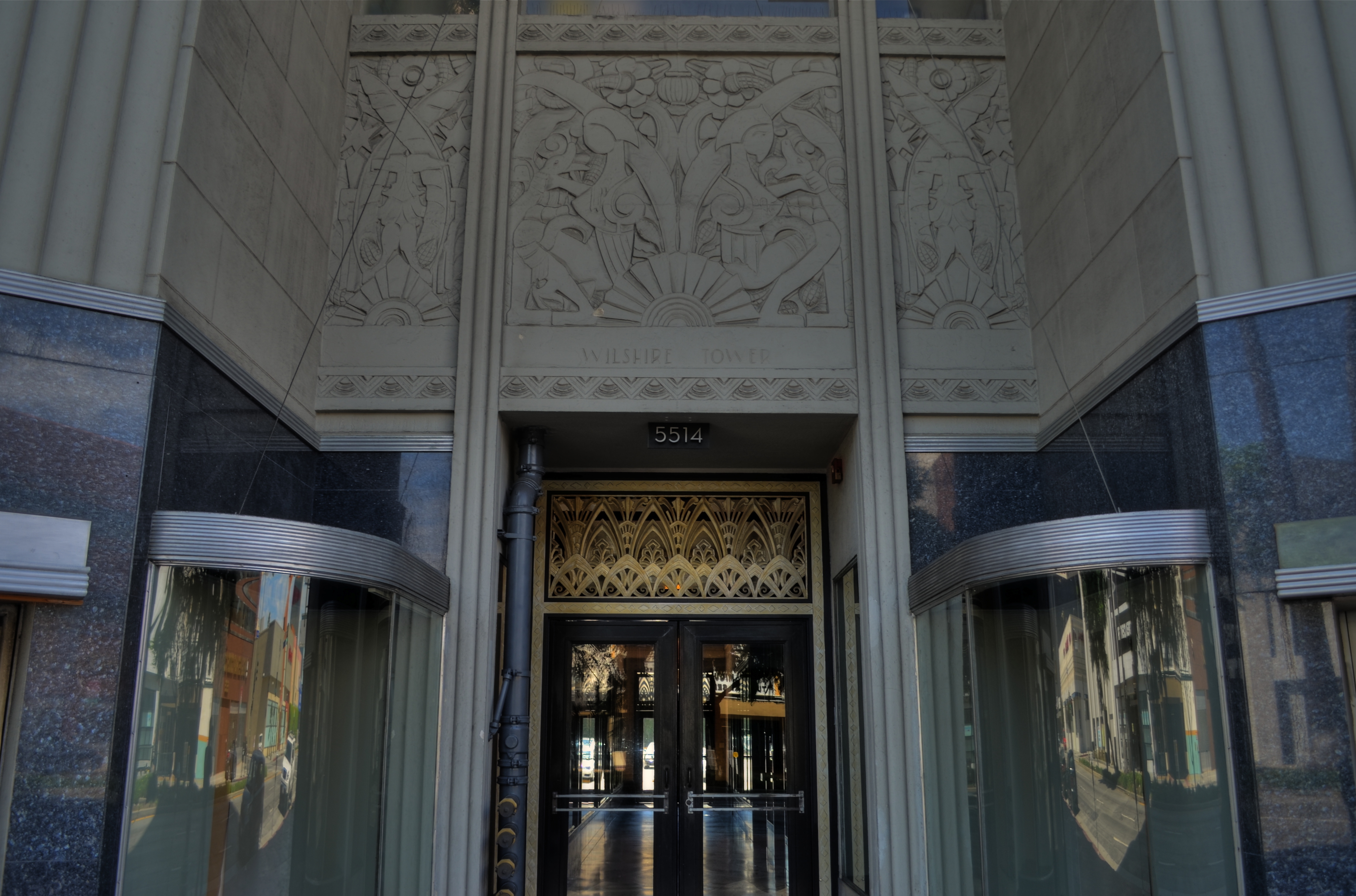
The Wilshire Boulevard entrance to Desmond’s, with its period friezes, ornate grillwork and curved showcases intact.
Ironically, the district that A.W. Ross designed for viewing from behind the wheel of a car now rewards the eye of the urban walker, as the neighborhoods of the Miracle Mile come alive with commerce and are brought back to life as a true pedestrian landscape. Walk a block or two of the Mile if you get a chance. The ghosts are leaving, and in their place you can hear a beating heart.
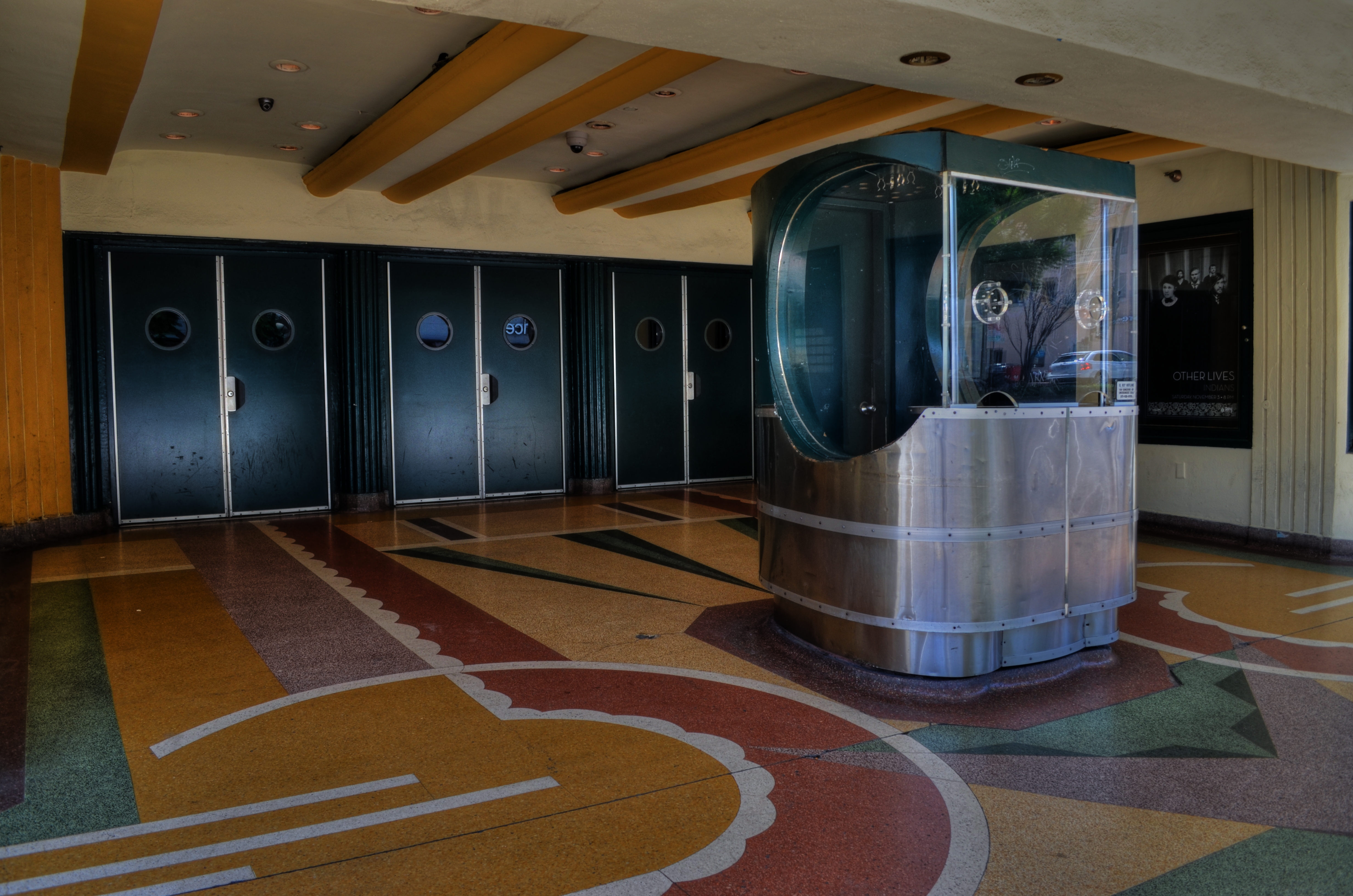
The wonderfully patterned lobby floor and streamlined ticket booth of the El Rey.
Suggested reading: DECO LAndmarks: Art Deco Gems of Los Angeles, by Arnold Schwartzman, Chronicle Books, 2005.
Suggested video link: Desmond’s Department Store http://www.youtube.com/watch?v=yJj3vxAqPtA
TRAVEL JITTERS
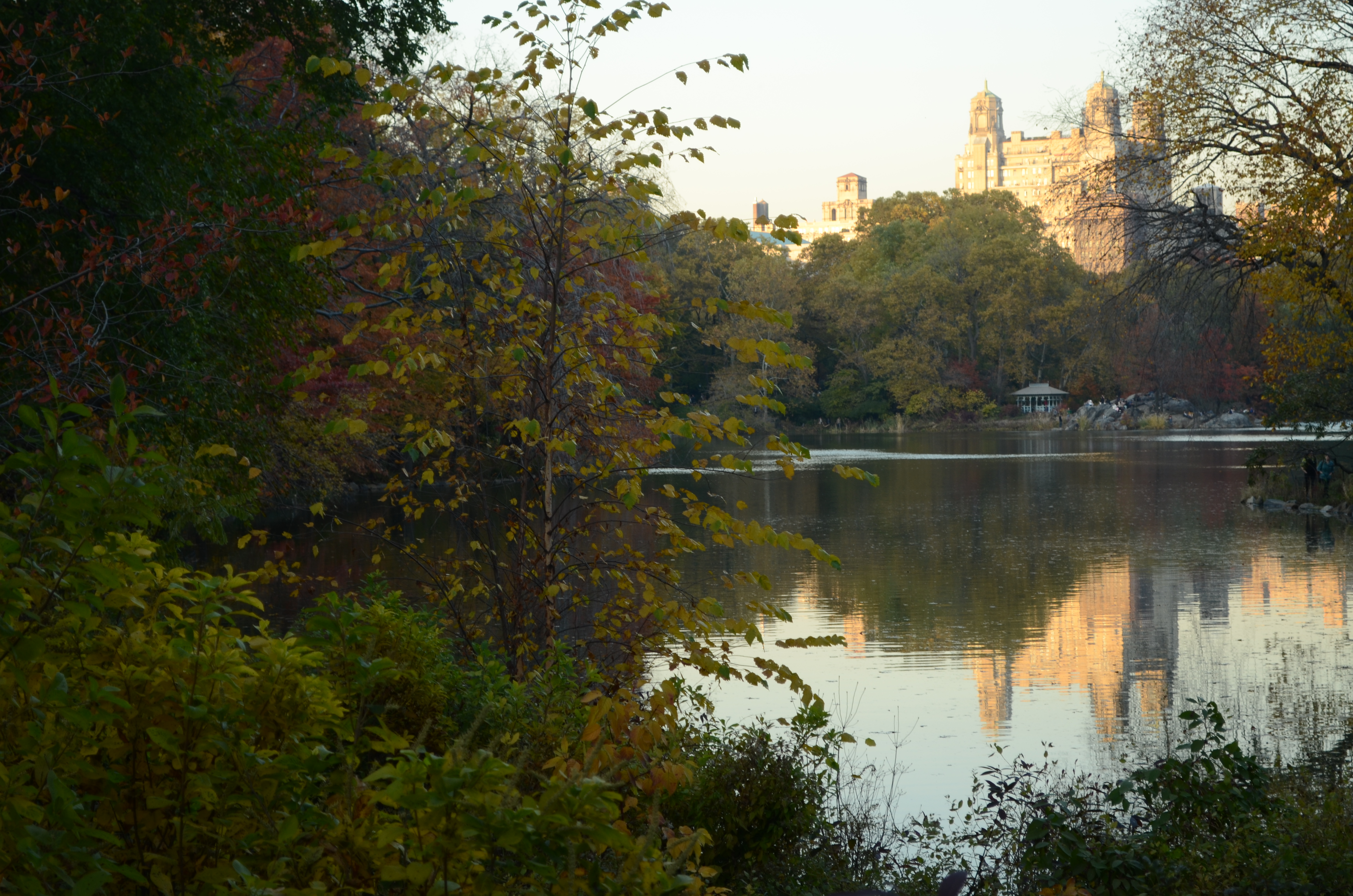
“Autumn in New York, why does it seem so inviting?” A shot inside Central Park, November 2011. 1/60 sec., f/5.6, ISO 160, 50mm.
By MICHAEL PERKINS
IF THERE IS SUCH A THING AS PHOTOGRAPHIC STAGE FRIGHT, it most likely is that vaguely apprehensive feeling that kicks in just before you connect with a potentially powerful subject. And when that subject is really Subject One, i.e., New York City, well, even a pro can be forgiven a few butterflies. They ain’t kidding when they sing, if I can make it there I can make it anywhere. But, of course, the Apple is anything but anywhere…….
Theoretically, if “there are eight million stories in the Naked City”, you’d think a photographer would be just fine selecting any one of them, since there is no one single way of representing the planet’s most diverse urban enclave. And there are over 150 years of amazing image-making to support the idea that every way of taking in this immense subject is fair territory.
And yet.
And yet we are drawn (at least I am) to at least weigh in on the most obvious elements of this broad canvas. The hot button attractions. The “to-do list” locations. No, it isn’t as if the world needs one more picture of Ellis Island or the Brooklyn Bridge, and it isn’t likely that I will be one of the lucky few who will manage to bring anything fresh to these icons of American experience. In fact, the odds are stacked horribly in the opposite direction. It is far safer to predict that every angle or framing I will try will be a precise clone of millions of other visualizations of almost exactly the same quality. Even so, with every new trip to NYC I have to wean myself away from trying to create the ultimate postcard,to focus upon one of the other 7,999,999 stories in the city. Even at this late date, there are stories in the nooks and crannies of the city that are largely undertold. They aren’t as seductive as the obvious choices, but they may afford greater rewards, in that there may be something there that I can claim, that I can personally mine from the rock.
By the time this post is published, I will be taking yet another run at this majestic city and anything additional in the way of stories that I can pry loose from her streets. Right now, staring at this computer, nothing has begun, and everything is possible. That is both exhilarating and terrifying. The way to banish the travel jitters is to get there, and get going. And yes, I will bring back my share of cliches, or attempts at escaping them. But, just like a stowaway on a ship arriving in the New World, something else may smuggle itself on board.
I have to visit my old girlfriend again, even if we wind up agreeing to be just friends.
And, as all photographers (and lovers) do, I hope it will lead to something more serious.
Thoughts?
SPLITTING THE DIFFERENCE
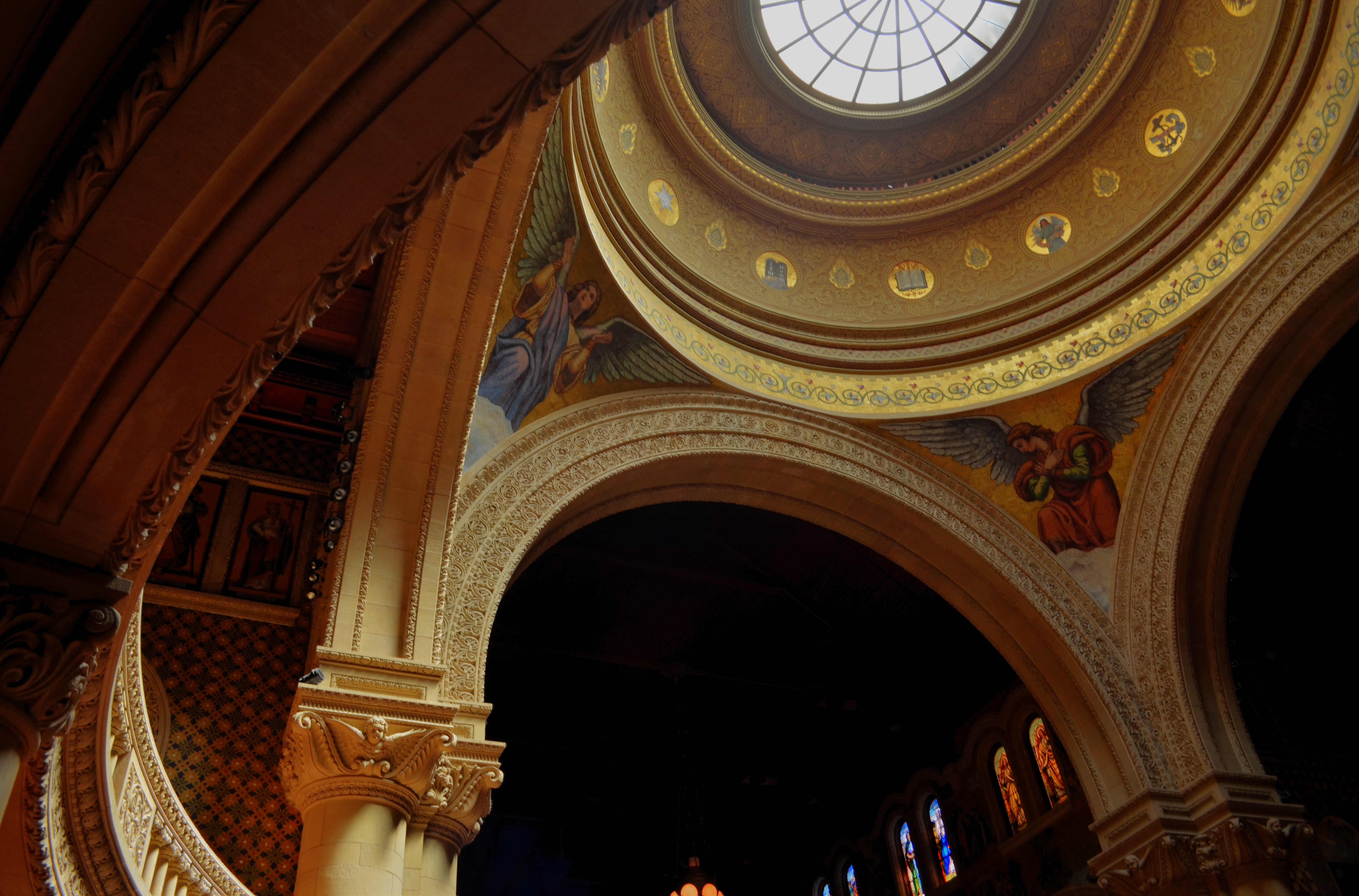
Really dark church, not much time. An HDR composite of just two exposures to refrain from trying to read the darkest areas and thus keep extra noise out of the final image. Shot at 1/15 and 1/30 sec., both exposures at f/5.6, a slight ISO bump to 200 at 18mm. Far from perfect but something less than a total disaster with an impatient tour group wondering where I wandered off to.
By MICHAEL PERKINS
THE MOST EXASPERATING WORDS HEARD ON VACATION: Everyone back on the tour bus.
Damn. Okay, just a second.
Now. We’re going NOW.
I’ve almost got it (maybe a different f-stop….? …..no, I’m just standing in my own light….here, let’s try THIS….
I mean it, we’re leaving without you.
YES, right there, seriously, I’m right behind you. Read a brochure will ya? Geez, NOTHING’S working…….
Sound remotely familiar? There seems to be an inverse proportion of need-to-result that happens when an entire group of tourists is cursing your name and the day you ever set eyes on a camera. The more they tap their collective toe wondering what’s taking so looooong, the farther you are away from anything that will, even for an instant, give you a way to get on that bus with a smile on your face. It’s like the boulder is already bearing down on Indiana Jones, and, even as he runs for his life, he still wonders if there’d be a way to go back for just one more necklace….
Dirty Little Secret: there is no such thing as a photo “stop” when you are part of a traveling group. At best it’s a photo “slow down” unless you literally want to shoot from the hip and hope for the best, which doesn’t work in skeet shooting, horseshoes, brain surgery, ….or photography. Dirty Little Secret Two: you are only marginally welcome at the tomb or cathedral or historically awesome whosis they’re dragging you past, so be grateful we’re letting you in here at all and don’t go all Avedon on us. We know how to handle people like you. We’re taking the next delay out of your bathroom break, wise guy.
A recent trip to the beautiful Memorial Church at Stanford University in Palo Alto, California was that latest of many “back on the bus” scenarios in my life, albeit one with a somewhat happy outcome. Dedicated in 1903 by the surviving widow of the school’s founder, Leland Stanford, the church loads the eye with borrowed styles and decorous detail from a half-dozen different architectural periods, and yet, is majestic rather than noisy, a tranquil oasis within a starkly contemporary and busy campus. And, within seconds of having entered its cavernous space as part of a walking campus tour, it becomes obvious that it will be impossible to do anything, image-wise, other than selecting a small part of the story and working against the clock to make a fast (prayerful) grab. No tripods, no careful contemplation; this will be meatball surgery. And the clock is ticking now.
So we ducked inside. With many of the church’s altars and alcoves shrouded in deep shadow, even at midday, choices were going to be limited. A straight-on flash was going to be an obscene waste of time, unless I wanted to see a blown-out glob of white, three feet in front of me, the effect of lighting a flare in a cave. Likewise, bumping my Nikon’s ISO high enough to read a greater amount of detail was going to be a no-score, since the inner darkness was so stark, away from the skylight of the central basilica dome, that I was inviting enough noise to make the whole thing look like a kid’s smudged watercolor. No, I had to find a way to split the difference; Show some of the light and let the darkness alone.
Instead of bracketing anywhere from 3 to 5 shots in hopes of creating a composite high dynamic range image in post production, I took a narrower bracket of two. I jacked the ISO for both of them just a bit, but not enough to get a lethal grunge gumbo once the two were merged. I shot for the bright highlights and tried to compose so that the light’s falloff would suggest the detail I wouldn’t be able to actually show. At least getting a good angle on the basilica’s arches would allow the mind to sketch out the space that couldn’t be adequately lit on the fly. For insurance, I tried the same trick with several other compositions, but by that time my wife was calling my cel from outside the church, wondering if I had fallen into the baptismal font and drowned.
Yes, right there, I’m coming. Oh, are you all waiting for me? Sorry…..
Perhaps its the worst kind of boorish tourism to forget that, when the doors to the world’s special places are opened to you, you are an invited guest, not some battle-hardened newsie on deadline for an editor. I do really want to be nice. However, I really want to go home with a picture,too, and so I remain a work in progress. Perhaps I can be rehabilitated, and, for the sake of my marriage, I should try.
And yet.
Related articles
- The Ultimate Guide to HDR Photography (pixiq.com)
PLAN B, C, D…..
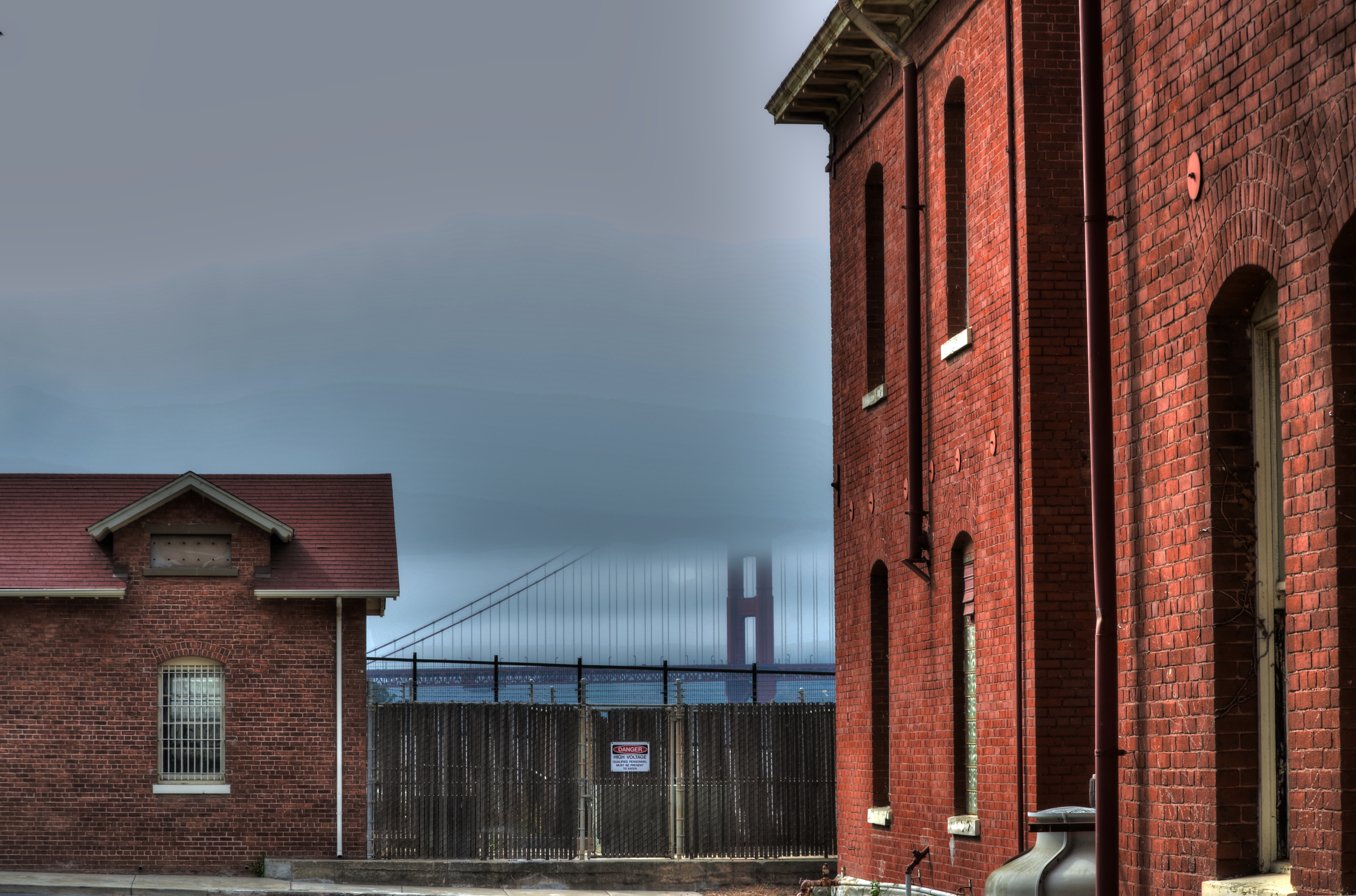
San Francisco decides what to give you, weather-wise. You have decide to accept or reject it, picture-wise.
By MICHAEL PERKINS
SOME ICONIC SUBJECTS ACTUALLY SUBVERT CREATIVE PHOTOGRAPHY, since they fire a normal human urge to record “your take” of an image that literally millions have taken before. There is a strong temptation to merely simulate or re-create the ideal depictions of such objects, be they skyscrapers or mountains, cathedrals or canyons. There is an inherent trap in this process, of course. Why strive to merely match what others have done, to ape or emulate the “ideal” shot? Why settle for the chance to render a Xerox of someone else’s vision?
However, just because I can recognize this trap doesn’t mean I haven’t fallen into it. Indeed, as recently as last week, I found myself despondent because I was being denied the “perfect” shot of San Francisco’s #1 visual trademark…the Golden Gate Bridge. I was visiting the marvelous new Walt Disney Family Museum, housed inside re-purposed buildings in the Presidio, whose severe, spartan brick buildings are an inspiring reminder of their original role as a line of national defense for this vital port. However, for me in 2012, they were attractive chiefly because they were the last layer of urban development before the bridge. I drooled over the images on the museum’s website. It’s right in their backyard! Moreover, the only place in the Disney museum where photography is allowed is along a glass walled gallery specifically designed to serve up the perfect shot of Big Red. Perfect, right?
Except that, on the day I visited the museum, a stubborn canopy of fog had refused to clear the bridge towers, even in the clear light of late afternoon sun. There goes plan A. I left the building convinced that I could shoehorn a telephoto shot in between Presidio buildings and still get my “optimum” shot. I soon realized, however, that plan B was also unworkable. The fog stubbornly persisted in eclipsing the top of the south tower, while the property fence in my immediate view was chopping into a clear shot of its foundations. What remained looked cluttered, wrong, unconventional. Then plan C came into focus. Shoot something. Try to save this. Can I make a composition out of these stark brick blocks of space, with a glimpse of the tower in between? I was on total instinct by this time. My wife was waiting in the car, we were both tired after a day of flying, and it was just a whole helluva lot easier to just walk away. Enter the rationale: The bridge isn’t going anywhere. There have to be a million places to stand and get the “right” shot I want. Run away and live to fight another day.
And yet.
There was just a twinkling of an idea….not really a fully formed concept, just a seed pod. The bridge is, given the local weather, always in the process of being concealed and revealed. Photographers have made great images of the bridge not only when it can be seen but when it coyly hides, like Salome, beneath the veils of weather. In fact, many of the best pictures of the bridge have been made under adverse conditions. Artistically, I was in good company. The bridge is always teasing, always taunting: come and find me. Try to define me. I dare you to capture me. I am not easy.
I am not obvious.
To hell with it.
I decided to wedge the partially visible tower between two dead blocks of brick, and make the picture. Like an immigrant who has to look through a dirty window to see a fast, smeared glimpse of Lady Liberty as he enters New York harbor, I knew I was stealing a view, snatching a fragment, a bit of hope, a shard of truth. I had to settle. I had moved plan C up to A position and was determined to live with the choice. Strangely, I will, upon future visits to San Francisco, feel a little cheap taking the “perfect” shot, if it ever presents itself.
I am no longer so certain of the best way to approach this subject. Whether I really got something or whether I am merely rationalizing my long shot in a lousy situation, I can no longer determine. But I am happy with what happened. And that’s supposed to be what this is all about.
Thoughts?
Related articles
- In The Presidio: Hard To Imagine, But There Wasn’t Always A Bridge Across The Golden Gate (sf.curbed.com)
- Plans Set, Drivers Brace For Golden Gate Bridge 75th Anniversary (sanfrancisco.cbslocal.com)
BEYOND THE PATH OF THE GLACIER
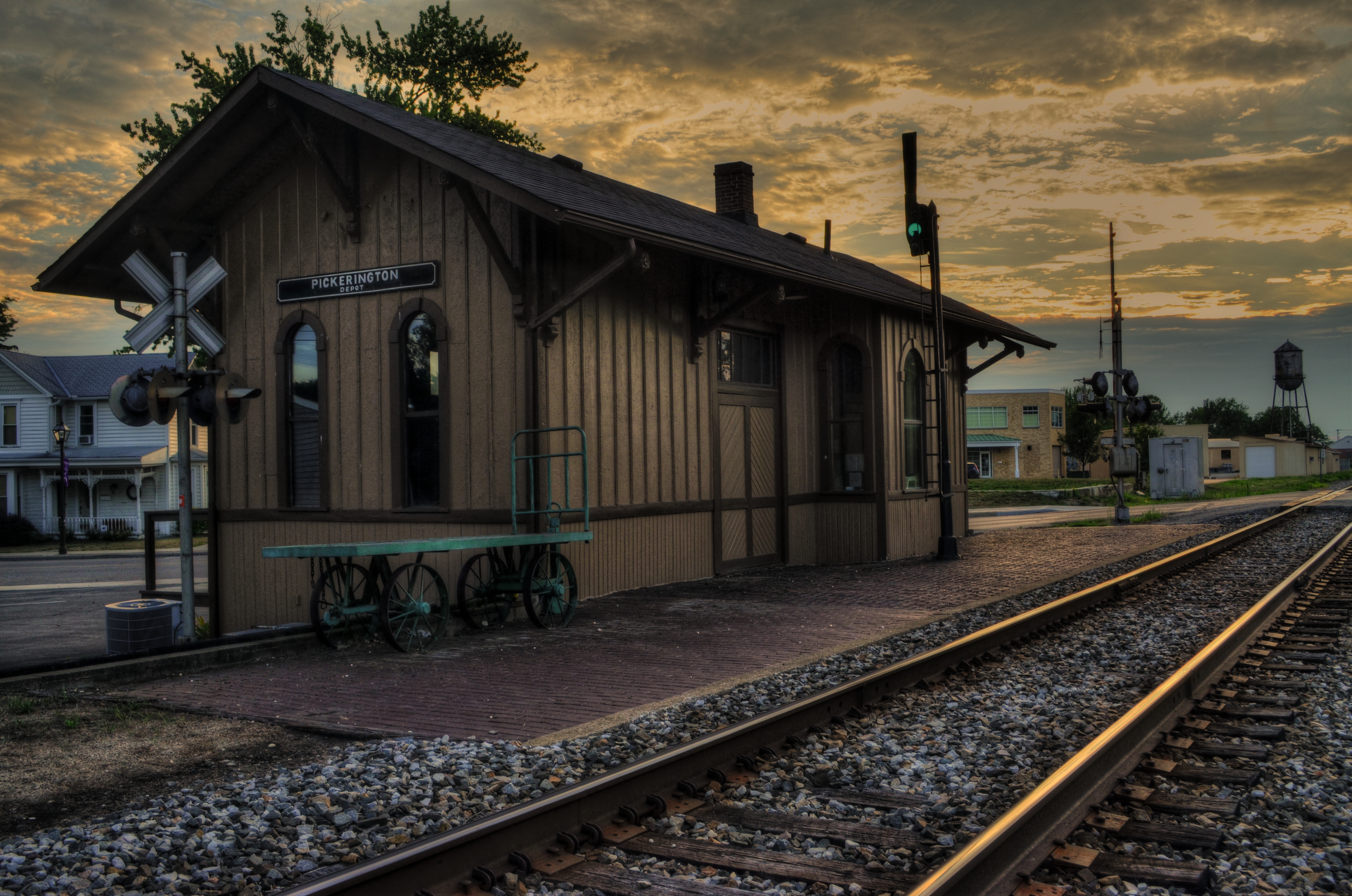
Sentimental Journey: the original depot building for the Toledo & Ohio Central railroad, still standing in Pickerington, Ohio. Just because.
By MICHAEL PERKINS
IN AMERICA WE GET ACCUSTOMED TO SEEING OUR URBAN HISTORY REGULARLY REDUCED TO RUINS, not because our cities are laid to waste by invaders or sacked by conquerors, but because we are such paltry stewards of the architectural legacies we share in this essentially young nation. Obvious nationalistic images aside, the wrecking ball, our answer to the crushing glaciers of history, is the real visual signature of the USA. We get tired of looking at old stuff. We knock the old stuff down. And in doing so, we squander the value of things to which we once attached great importance, rendering them moot, as if we really never cared about them at all.
The change glacier usually sweeps through the vast canyons of our larger cities, cutting a swath of wreckage that levels, implodes or simply knocks down any testimony to history, fashion, flair, whimsey, and the thing we most dread, uselessness. Every town has its casualties; stadiums, grand hotels, transportation hubs, retail centers, neighborhoods…it’s simply not American to get too attached to anything. It’s all going away, all of it, and with it, any sense of continuity, memory, or a contextual place in time.
Fortunately, it is the tendency of the glacier to “think big” that keeps the crushing onslaught of “renewal” concentrated in the larger urban centers, often leaving more survivors in small towns and rural communities. That means that some things in off-track towns, being below the radar of macro-change, are simply left alone, allowed to survive, because they are neglected by the bigger sweep of things.
This means that the “in-between” parts of the country still hold some treasures, a few gentle ties to times we have largely disposed of in the major hub cities. And while no one is suggesting that we bring back the village blacksmith and the local cobbler’s shop, it’s comforting in some way to be able to see and touch what in other parts of the nation are merely footnotes in books. That is, if we haven’t burned the books.
The building pictured at the top of this post is such a survivor. Built in 1879 just as the Toledo & Ohio Central railroad was being cut across the small village of Pickerington, Ohio (just southeast of Columbus), this compact little structure was the nerve center of trade and travel for “Picktown” for more than half a century. Its three rooms included an entry area for freight, an arrival room for passengers, and, in the center, an office for the combined jobs of depot agent and Western Union telegrapher. It was not until the hiring of its first female depot agent in 1947 that the facility could boast indoor plumbing, but the T&O’s tracks, during rail’s heyday, criss-crossed the tiny town with spur lines to a lumberyard, a grain mill, a hoop factory and warehouses.
Amazingly, the depot survived an extended closure from 1958 to 1975, when private money made its restoration possible. Lanterns, tools, bottles, wall maps, schedules, freight wagons, and a fully functional Western Union telegraph key were all assembled to visually cement the station in time. And there it stands to this day, serving no other “function” than to mark where the town, and we, have passed on our way to the inevitable.
Better than my luck in finding this place was in finding it just as dusk was streaking across the sky, giving me the perfect visual complement to the passing of time. And yet, here, out of the path of the glacier, time was allowed to tick just a little slower, slower enough to teach. And remember.
Thoughts?
ATYPICAL

This is Arizona? Well, for several months a year, it can be. Trading our non-stop blue skies for a little seasonal sky drama affords some unique shooting, especially just after dawn.
By MICHAEL PERKINS
IF YOU LIKE UNPREDICTABILITY in the look at feel of a region, it’s hard to beat (or escape) the clock-like consistency of the American southwest. Here in Arizona and in many parts of the region, the TV weatherman’s gig is slightly easier than that of the town drunk. Sunny, Hot, Blue Skies, Dry. That’s it. Repeat as necessary for nearly the entire year, every year, forever. It’s one of God’s little jokes in that, for photographers, there are magnificent subjects to shoot out here under the western sky…..but, typically, the western sky ain’t one of them. Featureless, glaringly bright, and unremittingly azure, the visual pickings, overhead, are rather limited. There are golden sky periods at sunrise and sunset, but midday is like one big unforgiving strobe. Inside an oven.
Enter the annual season we call “the monsoon”. Hardly like the tropical megastorms that the name implies, monsoon in Arizona is merely a time of increased humidity (still dry as toast to people in other climes) and an increased amount of short, speedy rain dumps and attendant dust storms. The talcum-powder textured grit that the monsoon drives under our doorsills is a pain, as is the sudden onset of zero visibility when the gusts are really cranking and the comedy of errors that is the average ‘Zonie motorist on wet roads. It’s the bizarro world reverse of blizzard season in Minnesota, with a dash of weird added for good measure. However, it is the one time that Arizona skies are, for days or weeks at a stretch, a little more theatrical, and thus worthy of a shot or two. Mother nature dabbles in drama overhead for a short season, and suddenly all of our “normal” shoots become something out of an El Greco painting.
Early morning coffee runs, even in over-developed urban areas (i.e., everywhere in Arizona) can reward the patient with clouds that streak, darken, and swirl. Neutral colors deepen. Rich hues run all the way into foreboding. In season, objects framed against the freakish overcast take on new aspects…some inviting, some fearsome. Last Sunday morning I saw a sunrise that was struggling to break free of a mask of freakish cloud cover, popping through in several breaks, and providing a sinister background for a business building that normally wouldn’t merit a second look. Don’t ask me why, but the juxtaposition of the various elements just cried, jump out and shoot. And so I did.
Here in Arizona we boast about how many days out of the year we serve up pure sunshine. Sometimes, however, during our darkest days, we can serve up pure gold.
Thoughts?
Related articles
- Fourth of July monsoon floods homes, streets in Arizona City (azfamily.com)
- Why There are Bridges in Phoenix (brightlightsbigcacti.wordpress.com)
SMALL MAY BE ALL
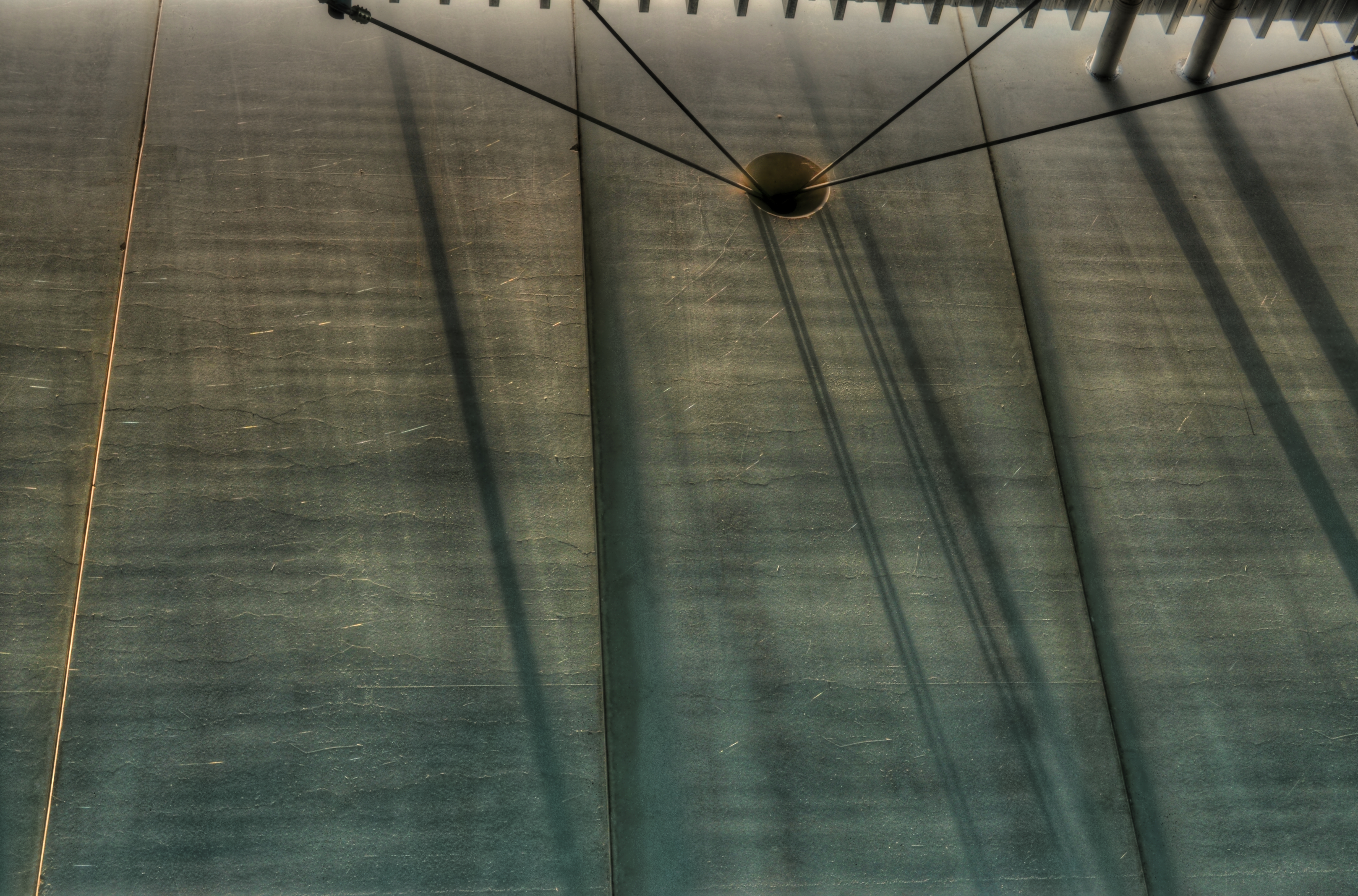
Along came a (light) spider. Intense mid-day light on Summer Solstice 2012 creates dramatic shadows and heightened texture in this HDR image.
By MICHAEL PERKINS
SOME SUBJECTS SEEM AS IF THEY ARE GOING TO FOLLOW A SURE PATH, then dog-leg on you in the doing. Last week I was fascinated to attend a celebration of the summer solstice in a building designed to highlight the drama of its unique light. Phoenix’ Burton Barr Library reading room, an enormous space bordered by shaded glass on its north and south faces and slab concrete for its west and east walls, has, since its opening, hosted an annual midday demonstration by its architect, Will Bruder centered on the longest day of the year. First, a capacity crowd watches intense light crawl dramatically down the library’s west wall, seeming to sweep shadows downward like a rapidly descending curtain until the entire west surface fairly glows with light. For a few minutes, under this enhanced illumination,what normally appears as a seamless monolith of concrete shimmers with a million tiny fractures, creases, and flaws, rendering the usually dull surface alive with small but perceptible dances of color.
Immediately following this subtle but sweet show, as the sun travels to the west over the top of the library, the same display begins in reverse on the east wall, as shadows begin to crawl up from the floor and eventually confine sunlight on the concrete surface to a narrow slit at its top. The same intense reveal on every facet of the slab’s surface is seen again, and, along the ceiling, the library’s carefully designed support pillars, all positioned under individual circular skylights in the reading room’s roof, begin to resemble glowing candles. The entire phenomenon, subtle and quiet, yet beautiful in aspect, is all completed within a half hour.
In that half hour, my original shooting strategy, an overall wide shot to show the amazed onlookers inside the vast room, craning their necks to observe the miracle between rows of book shelves, moved from “sure thing” to “what was I thinking”? As it turned out “the story” was too big to be trusted to a big picture (!), and I came to realize that the heart of the light effect might best be told, for me, in one part of one wall. All the other props inside the structure provided so much visual information that nothing true was going to emerge in any attempt at an overall “coverage” image. I decided to show the shadowy tendrils trailing from a single part of the ceiling structure, but to shoot a three-shot bracket of exposures, all at ISO 100, to be combined later in High Dynamic Range software, to glean as much information (and the widest range of tone) on the texture revealed by the travel of the light across the wall.
The result was a shot that eliminated the rest of the overall solstice story as I tried instead to show object, shadow and detail combining as elements in one integrated design. It’s up to anyone as to whether I made the correct decision, but it’s safe to say that it was correct for me at the time. Sometimes a thing is interesting to look at by itself, for itself, without context or alibi. Of course I realize that I have provided both those things by writing this, but this forum is dedicated to the urge that makes us all throw something at the wall (excuse the expression) to see if anything sticks, so maybe it’s not wrong to give this a bit of backstory. Eventually, however, it’s either a picture or it’s not.
Thoughts?
Related articles
- Spiritual Significance of the Summer Solstice (aquariuschannelings.com)
 thenormaleye