AS DIFFERENT AS DAY AND NIGHT
By MICHAEL PERKINS
PHOTOGRAPHY OFTEN PRESENTS ITSELF AS A SUDDEN, REACTIVE OPPORTUNITY, a moment in time where certain light and compositional conditions seem ripe for either recording or interpreting. In such cases there may be little chance to ponder the best way to visualize the subject at hand, and so we snap up the visualization that’s presented in the moment. It’s the kind of use-it-or-lose-it bargain we’re all acquainted with. Sometimes it yields something amazing. Other times we do the best with what we’re handed, and it looks like it.
Having the option to shape light as we like takes time and deliberate planning, as anyone who has done any kind of studio set-up will attest. The stronger your conception to start with, the better chance you have of devising a light strategy for making that idea real. That’s why I regard light painting, which I’ve written about here several times, as a great exercise in building your image’s visual identity in stages. You slow down and make the photograph evolve, working upwards from absolute darkness.
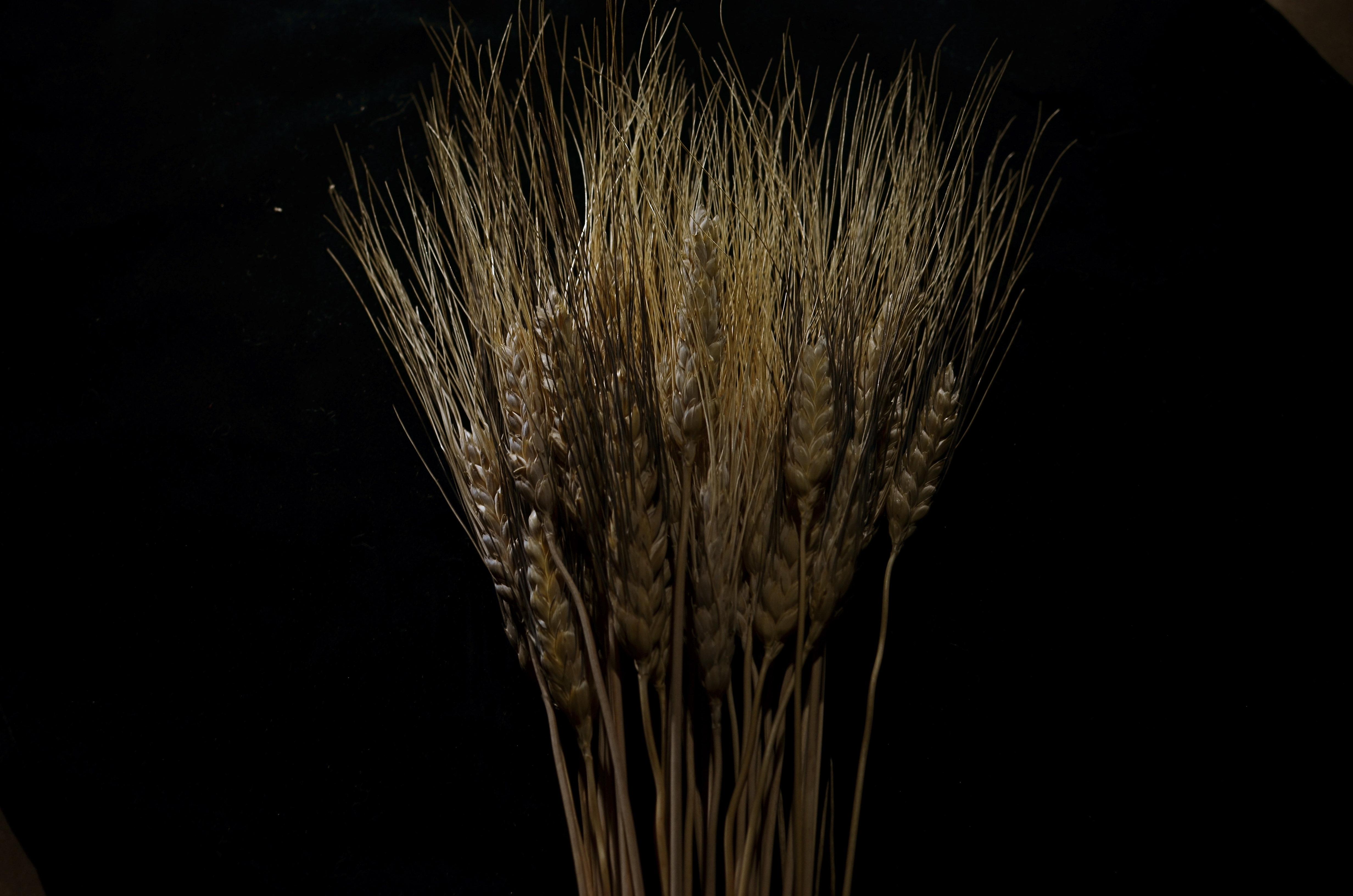
Shock-Top, 2014. Light-painted with a hand-held LED over the course of a six-second exposure, at f/5.6, ISO 100, 35mm.
To refresh, light painting refers to the selective handheld illumination of subjects for a particular look or effect. The path that your flashlight or LED takes across your subject’s contours during a tripod-mounted time exposure can vary dramatically, based on your moving your light source either right or left, arcing up or down, flickering it, or using it as a constant source. Light painting is different from the conditions of, say, a product shoot, where the idea is to supply enough light to make the image appear “normal” in a daytime orientation. Painting with light is a bit like wielding a magic wand, in that you can produce an endless number of looks as you develop your own concept of what the final image should project in terms of mood. It isn’t shooting in a “realistic” manner, which is why the best light painters can render subjects super-real, un-real, abstract or combinations of all three. Fact is, the most amazing paint-lit photos often completely violate the normal paths of natural light. And that’s fine.
In light painting, I believe that total darkness in the space surrounding your central subject is as important a compositional tool as how your subject itself is arranged. As a strong contrast, it calls immediate and total attention to what you choose to illuminate. I also think that the grain, texture and dimensional quality of the subject can be drastically changed by altering which parts of it are lit, as in the shock of wheat seen here. In daylight, half of the plant’s detail can be lost in a kind of brown neutrality, but, when light painted, its filaments, blossoms and staffs all relate boldly to each other in fresh ways; the language of light and shadow has been re-ordered. Pictorially, it becomes a more complex object. It’s actually freed from the restraints of looking “real” or “normal”.
Developed beyond its initial novelty, light painting isn’t an effect or a gimmick. It’s another technique for shaping light, which is really our aim anytime we take off our lens caps.
PRIVATE, NOT IMPERSONAL
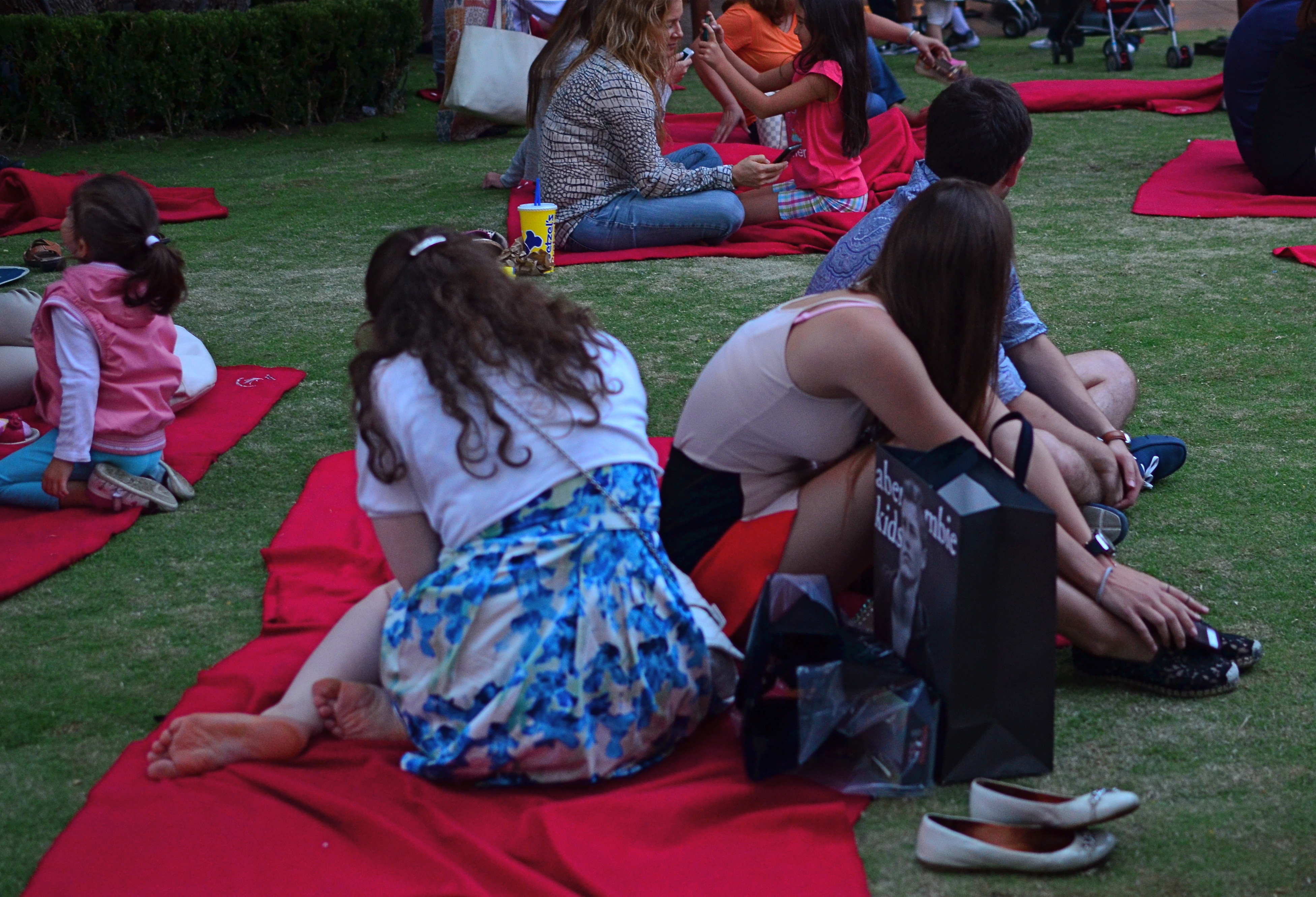
Dusk Concert, 2014. 1/40 sec., f/2.8, ISO 500, 35mm.
By MICHAEL PERKINS
PORTRAITURE IS RATHER NARROWLY DEFINED BY MOST PHOTOGRAPHERS as an interpretation of a person’s face, the place wherein we believe that most of his/her humanity resides. The wry smile. The upturned eyebrow. The sparkling eye. It’s all there in the features, or so we seem to profess by valuing the face over nearly all other physical features.We stipulate that there are notable exceptions where the body carries most of the message, as in crowd scenes, sports action, or combat shots. But for the most part, we let the face hold the floor (and believe me, after a few misspent nights, my face has held the floor plenty of times).
It’s interesting, however, in an age where privacy has become a premiere issue, and in which the camera’s eye never blinks, that we don’t explore the narrative power of bodies as much as we do faces. The body, after all, carries out the intentions of the mind no less than does the face. It executes the physical action that the mind intends, and so creates a space that reveals that intention. Just like a face. And yet, we have a decidedly pro-face bias in our portraiture, to the point that a portrait that does not include a face is thought by some not to be a portrait at all.
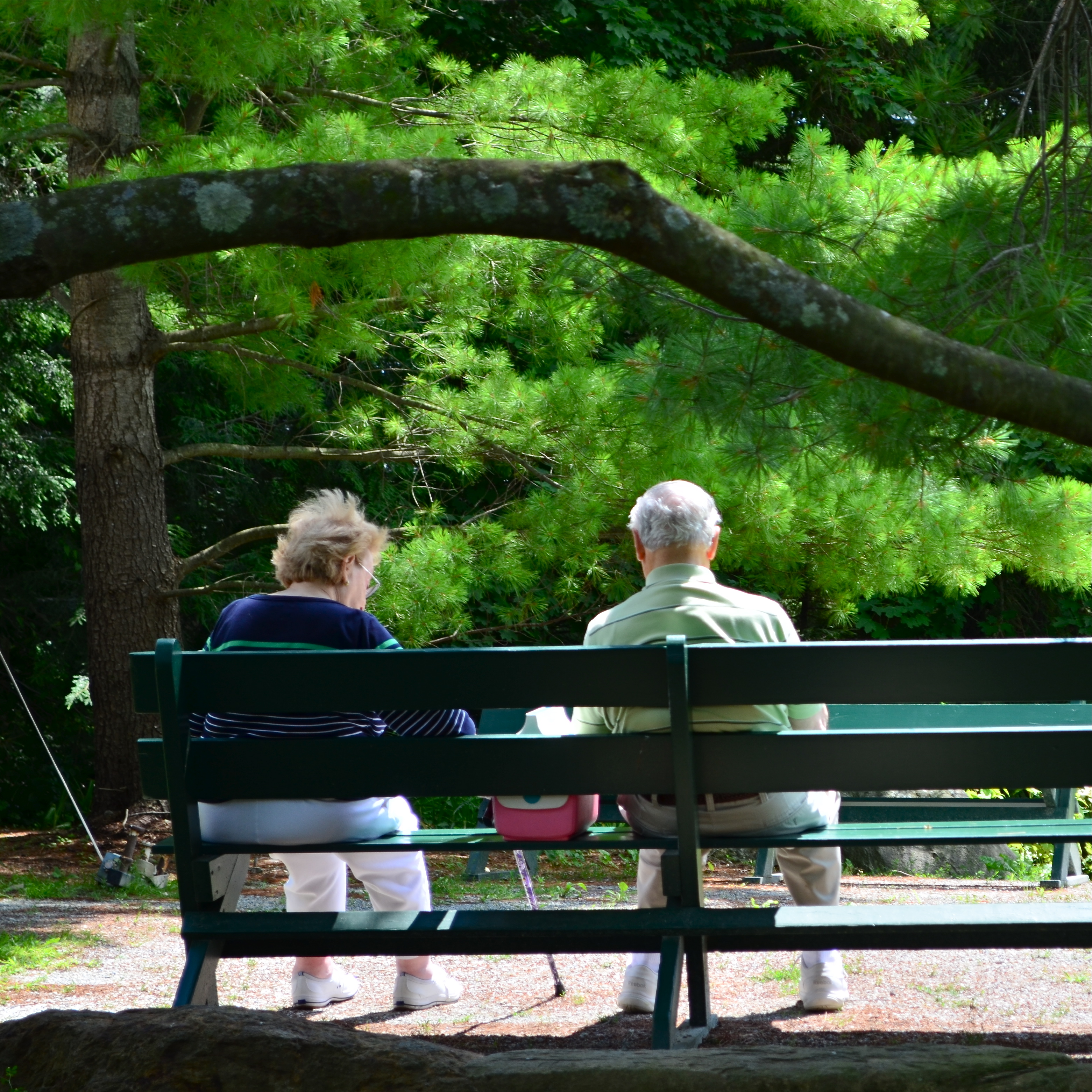
Side By Side, 2014. 1/160 sec., f/5.6, ISO 100, 55mm.
But let’s keep the discussion, and our minds, open, shall we? I love to work with random crowds, and I like nothing better than to immortalizing emotions in a nice face-freeze. However, I strongly maintain that, absent those obvious visual “cues”, a body can carry a storyline all by itself, even enhance the charm or mystery involved in trying to penetrate the personality of our subjects.
Consider for a moment how many amazing nude studies you’ve seen where the subject’s face is completely, even deliberately obscured. Does the resulting image lack in power, or does the power traditionally residing in the face just transfer to the rest of the composition?
Portraits (I insist on calling them that) that are more “private” for being faceless are no more “impersonal” than if the subject was flashing the traditional “cheese!” and beaming their personality directly into the lens.
Photography is not about always getting the vantage point that we want, but maximizing the one we have at hand. And sometimes, taking away a face also strips away a mask. But beyond that, why not actually court mystery, allow ourselves to trust our audiences to supply mentally what we reserve visually?
Ask yourself: what does a photograph of understatement look like?
THE ENVELOPE
By MICHAEL PERKINS
HAVING LIVED IN THE AMERICAN SOUTHWEST FOR OVER FIFTEEN YEARS, I HAVE NEGOTIATED MY OWN TERMS WITH THE BLAZING OVERKILL OF MIDDAY SUNLIGHT, and its resulting impact on photography. If you move to Arizona or New Mexico from calmer climates, you will find yourself quickly constricting into a severe squint from late breakfast to early evening, with your camera likewise shrinking from the sheer overabundance of harsh, white light. If you’re determined to shoot in midday, you will adjust your approach to just about everything in your exposure regimen.
Good news, however: if you prefer to shoot in the so-called “golden hour” just ahead of sunset, you will be rewarded with some of the most picturesque tones you’ve ever had the good luck to work with. As has been exhaustively explained by better minds than mine, sunlight lingers longer in the atmosphere during the pre-sunset period, which, in the southwest, can really last closer to two hours or more. Hues are saturated, warm: shadows are powerful and sharp. And, if that dramatic contrast works to your advantage in color, it really packs a punch in monochrome.
This time of day is what I call “the envelope”, which is to say that objects look completely different in this special light from how they register in any other part of the day, if you can make up your mind as to what to do in a hurry. Changes from minute to minute are fast and stark in their variance. Miss your moment, and you must wait another 24 hours for a re-do.
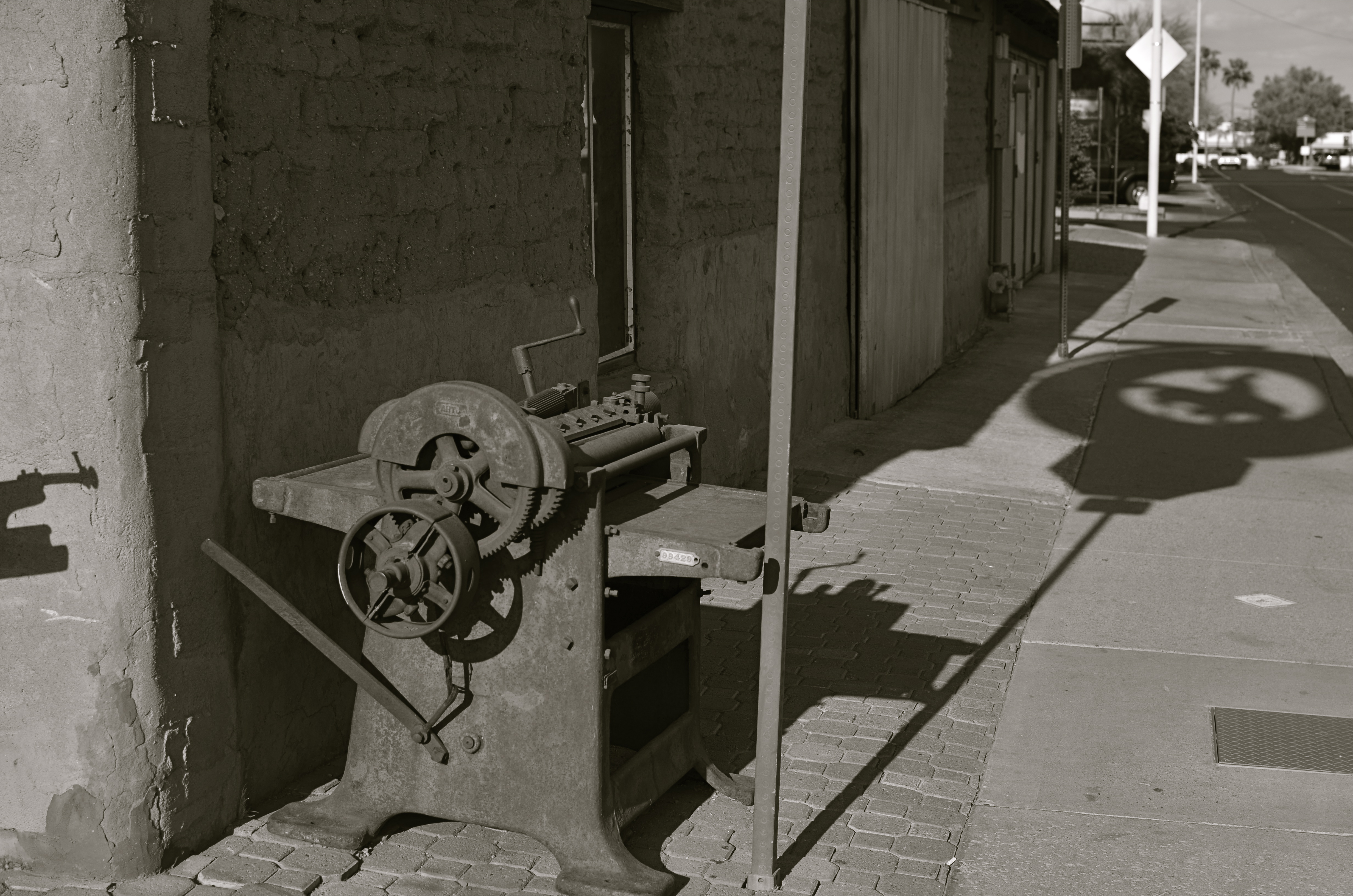
In the west, the best action actually happens after High Noon. Just before sunset in Scottsdale, AZ: 1/500 sec., f/4.5, ISO 100, 35mm.
The long shadow of an unseen sign visible in the above frame lasted about fifteen minutes on the day of the shoot. The sign itself is a metal cutout of a cowboy astride a bucking bronco, the symbol of Scottsdale, Arizona, “the most western town in the USA”. The shadow started as a short patch of black directly in front of the rusted bit of machine gear in the foreground, then elongated to an exaggerated duplicate of the sign, extending halfway down the block and becoming a sharper and more detailed silhouette.
A few minutes later, it grew softer and eventually dissolved as the sun crept closer to the western horizon. There would still be blazing illumination and harsh shadows for some objects, if you went about two stories high or higher, but, generally, sunset was well under way. Caught in time, the shadow became an active design element in the shot, an element strong enough to come through even in black and white.
If you are ever on holiday in the southwest, peek inside “the envelope”. There’s good stuff inside.
KICK-STARTING THE ENGINE
By MICHAEL PERKINS
THE POPULAR IMAGE OF A BLOCK-STRICKEN WRITER HELPLESSLY STARING AT A BLANK PAGE is enough to send an empathetic chill up the spine of anyone who has ever been haunted by a deadline or stymied by a narrative suddenly gone dry. And I am convinced, as both a writer and a photographer, that there is an equivalent “block” lurking in the shadows for any shooter, a visual desert that produces stretches of formless, pointless images, dry spells that are terrifying because they are open-ended. No one knows why, for everyone from time to time, the pictures stop coming, and no one can predict when they will come back.
It’s terrifying, because it’s as if vision or imagination were accounts that one can overdraw, bouncing artistic checks all over town and leaving you feeling, like Alice, that there is no bottom, only more hole. At least it’s terrifying to me.
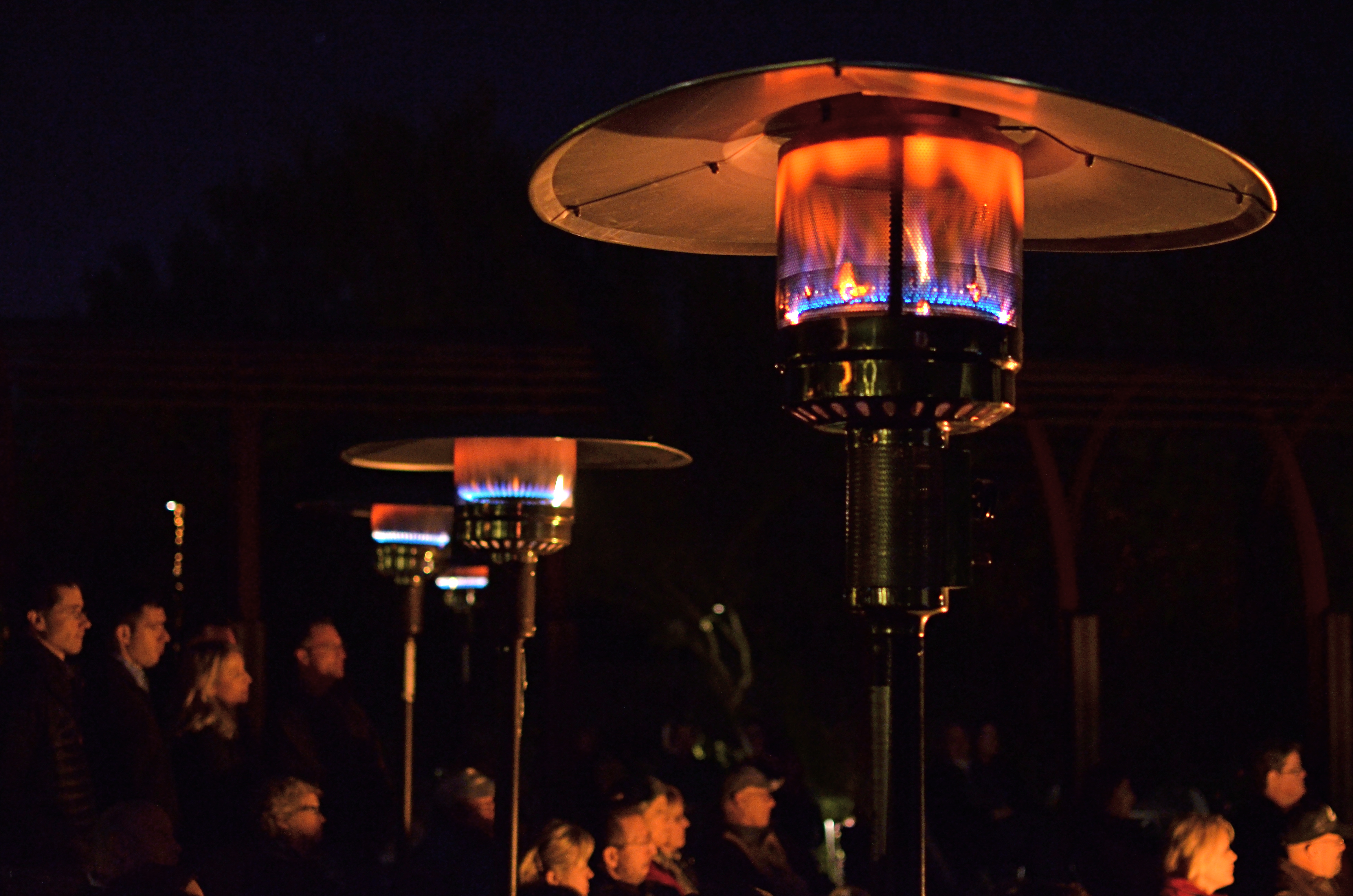
Torchlight Parade, 12/14/13. 1/40, f/2.5, ISO 1000, 35mm. You work your way through dry spells with what’s at hand.
As I write this, I have just come off several weeks of scrapings and scraps that should have been photographs but instead are equivalent to something smeared by an ape on his cage wall. I have seldom experienced such an extended period of mega-nothing, and it is only my unswerving oath to myself to shoot something, anything, every single day, that has allowed me to keep faith with the inevitable return of whatever eye I sometime possess. But, I have to admit, I am also suppressing strong urges to, like Norman Bates, lock my camera inside a car trunk and seek out the nearest swamp.
Okay, that’s a tad dramatic, but my current case of the “drys” is unnerving for a particular reason. I am typically able to conjure pictures out of nearly nothing, which is more liberating than having to wait for obvious or “big” projects. You can shoot daily if you can get off on still lifes of plastic spoons. You can’t shoot daily if you need a vacation, a birthday, or a mountain for inspiration. So it’s doubly troubling if you can’t even summon up the humble crumbs needed for some kind of image.
I know, that, at one point or another, something will demand my attention/obsession, and we’ll be off to the races again. But there is always the nagging question. What happens if I can’t kick-start the engine? Everything has a beginning and an end. So…?
Oh, wait, the light is doing something really cool just now…..
 thenormaleye