BRING BACK THE SHOE BOX?
By MICHAEL PERKINS
AS WITH MOST REVOLUTIONS, THE FAIRLY RECENT ROCKET RIDE INTO THE DIGITAL DOMAIN has created a few casualties. There simply is no way to completely transform the very act of photography without also unleashing ripples into how we view and value the images we’ve created. One of the most frequently lamented losses along these lines has to do with holding a “hard copy” picture in your hand, of having a defined physical space in which they can be easily catalogued and viewed by all. In speaking with various people about this, I sense a real emotional disconnect, a pang that can’t be satisfied by knowing that the pictures are “somewhere out there” in cyberspace. We tossed away the old family photo shoe box in all its chaos, but a key human experience was also sacrificed along the way.
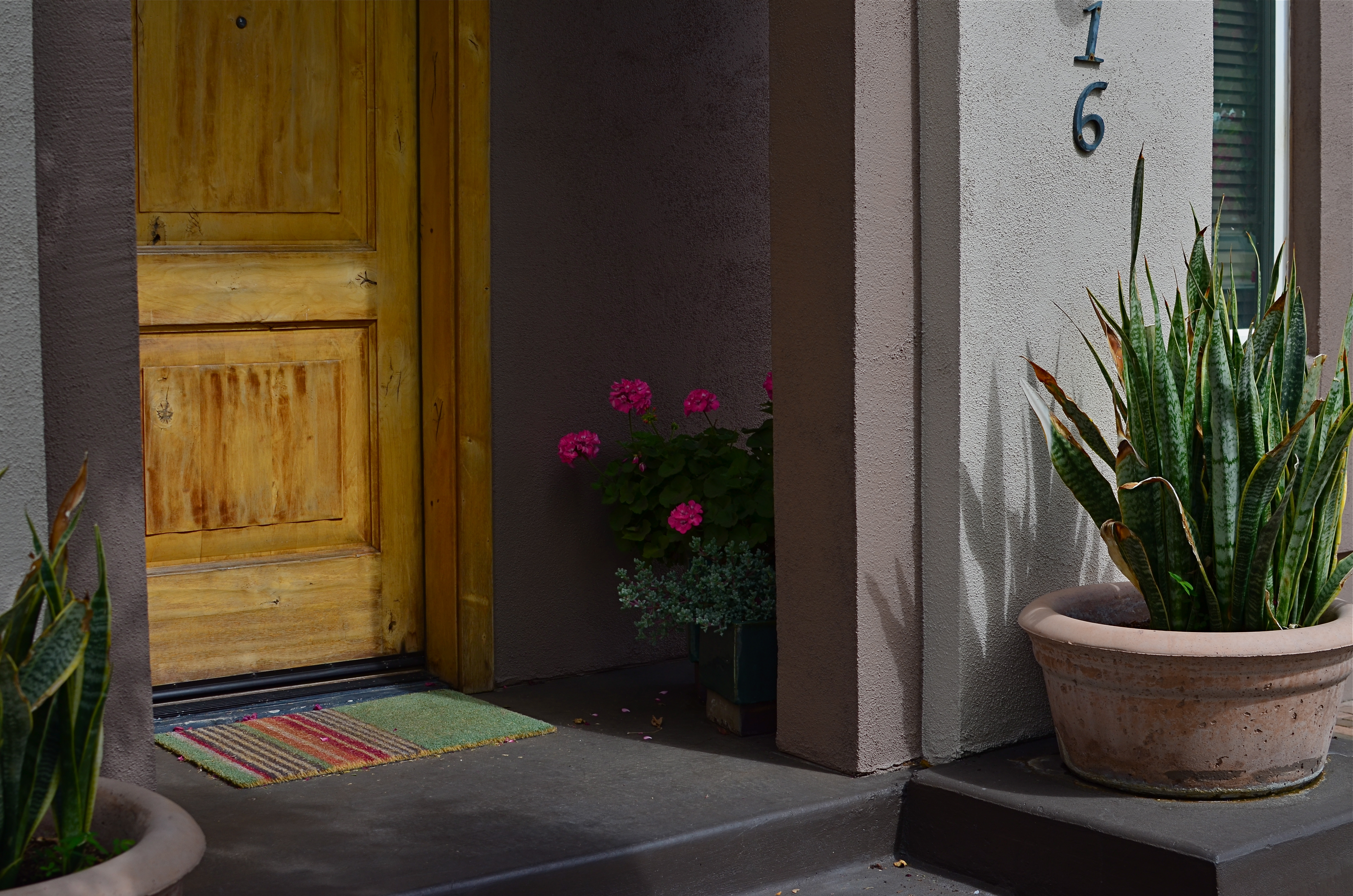
If you never take the time to review the thousands of images you shoot, you lose the joy of the occasional jewels and the lessons of the near misses.
One of the consequences of the end of film is the complete banishment of numerical barriers that used to keep our photographic output at a more controllable size. A roll of film held you to 24, maybe 36 exposures. You had to budget your shots. There were no instant do-overs, no chance to shoot bursts of 60 shots of Bobby kicking the soccer ball. Now we have an overabundance of choices in shooting, which, ironically, can be a little intimidating. We can produce so many thousands of pictures in a given year that our senses simply become overwhelmed with the task of sorting, editing, or prioritizing them. Gazillions of photos go into the cloud, many unseen past the first day they are uploaded. Our ability to organize our images in any comprehensible way has not kept pace with the technology used to capture them.
I truly feel that we have to work harder than ever, not on the taking of pictures, which has become nearly intuitive in its technical ease, but on the curating of what we’ve produced. For every five hours we spend shooting, I feel that fully half that time should be spent on the careful review of everything we’ve shot, not merely the quick “like/don’t like” card shuffle many of us perform when zipping through a large batch of captures. And this is not just for we ourselves. Think about it: how can our families and friends think of our photography as a visual legacy in the way we once regarded that shoe box if they have no real appreciation of what all is even in the new, virtual equivalent of that box? If it takes us months after we do a shoot to have even a rough idea of what resulted, we are missing the occasional jewel as well as the instructive power of the many near misses. That’s having an experience without availing yourself of any idea of what it meant, and that is crazy.
There is a reason that McDonald’s only offers Coke in three serving sizes. As consumers, we really crash into paralysis when presented with too many choices. We think we want a selection consisting of, well, everything, but we seldom make use of such overwhelming sensory input. I’m a huge fan of being able to shoot as many images as you need to get what will become your precious few “keepers”. But trying to keep everything without separating the wheat from the chaff isn’t art. It isn’t even collecting.
It’s just hoarding.
COMMANDER-IN-GRIEF
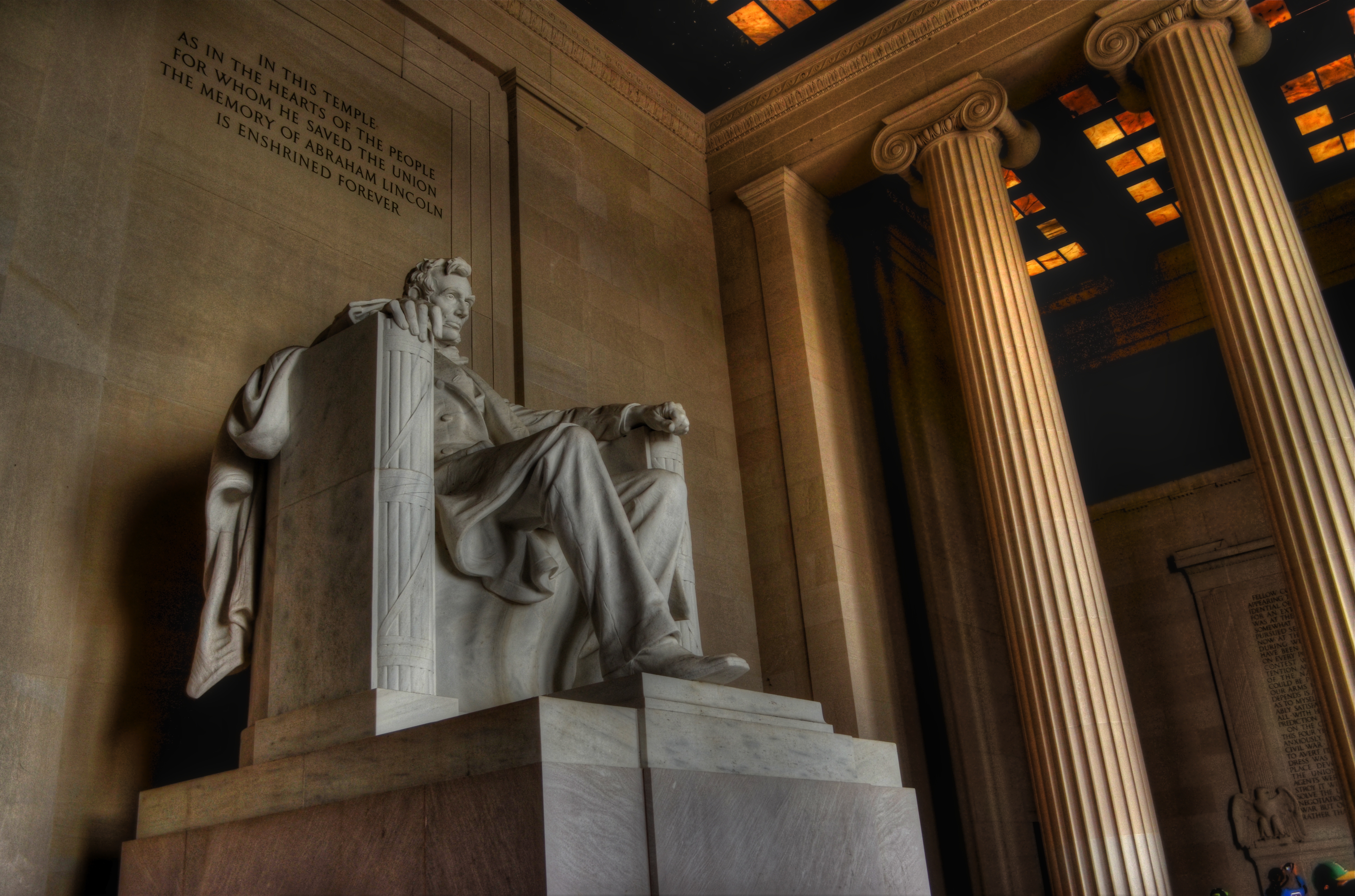
Mr. Lincoln’s vigil continues. See below for details on the making of this image.
By MICHAEL PERKINS
MANY OF THOSE WHO TRAVEL TO WASHINGTON, D.C.’s VARIOUS MONUMENTS each year generally strike me as visitors, while those who throng to the memorial honoring Abraham Lincoln seem more like pilgrims. Scanning the faces of the children and adults who ascend the slow steps to the simple rectangular chamber that contains Daniel Chester French‘s statue of the 16th president, I see that this part of the trip is somehow more important to many, more fraught with a sense of moment, than the other places one may have occasion to view along the National Mall. This is, of course, simply my subjective opinion. However, it seems that this ought to be true, that, even more than Jefferson, Washington or any other single person attendant to the creation of the republic, Lincoln, and the extraordinary nature of his service, should require an extra few seconds of silent awe, and, if you’re a person of faith, maybe a prayer.
This week, one hundred and fifty years ago, the gruesome and horrific savagery of the Civil War filled three whole days with blood, blunder, sacrifice, tragedy, and finally, a glimmer of hope, as the battle of Gettysburg incised a scar across every heart in America. Lincoln’s remarks at the subsequent dedication of the battlefield placed him in the position of official pallbearer for all our sorrows, truly our Commander-In-Grief. Perhaps it’s our awareness of the weight, the loneliness, the dark desolation of that role that makes visitors to the Lincoln Memorial a little more humble, a little quieter and deeper of spirit. Moreover, for photographers, you want more of that statue than a quick snap of visiting school children. You want to get something as right as you can. You want to capture that quiet, that isolation, Lincoln’s ability to act as a national blotter of sadness. And then there is the quiet resolve, the emergence from grief, the way he led us up out of the grave and toward the re-purposing of America.
The statue is a simple object, and making something more eloquent than it is by itself is daunting.
The interior of the monument is actually lit better at night than in the daytime, when there is a sharp fall-off of light from the statue to the pillars and colored glass skylights to its right and left. You can crank up the ISO to retrieve additional detail in these darker areas, but you risk the addition of grainy noise. In turn, you can smooth out the noise later, but, in so doing, you’ll also smear away the beautiful grain in the statue itself.
In my own case, I decided to take three bracketed exposures, all f/5.6, , nice and wide at 20mm, low noise at ISO 100, with shutter speeds of 1/50, 1/100, and 1/200. In blending the three later in Photomatix’ Detail Enhancement mode, I found that the 1/200 exposure had too little information in it, so a composite of the three shots would have rendered the darkest areas as a kind of black mayonnaise, so I did the blend with only two exposures. Stone being the main materials in the subject, I could jack up the HDR intensity fairly high to accentuate textures, and, for a more uniform look across the frame, I gently nudged the color temperature toward the brown/amber end, although the statue itself is typically a gleaming white. The overall look is somewhat more subdued than “reality”, but a little warmer and quieter.
Abraham Lincoln was charged with maintaining a grim and faithful vigil at America’s bedside, in a way that no president before or since has had to do. Given events of the time, it was in no way certain that the patient would pull through. That we are here to celebrate his victory is a modern miracle, and the space his spirit occupies at the Lincoln Memorial is something photographers hunger to snatch away for their own.
What we try to capture is as elusive as a shadow, but we need to own something of it. The commander-in-grief’s legacy demands it.
Follow Michael Perkins on Twitter @mpnormaleye.
Related articles
- Other Proposed Designs for the Lincoln Memorial (ghostsofdc.org)
- Lincoln Memorial Under Construction (ghostsofdc.org)
THE EASIEST ABSTRACTION
By MICHAEL PERKINS
YOU’VE HEARD THE JOKE ABOUT THE WRITER WHO TAGGED A NOTE TO A FRIEND BY SAYING, “If I’d had more time, I’d have written you a shorter letter”. That line speaks volumes about how we increase the power of communication by leaving things out. Just as great books are not so much written as re-written, so photographs often gain in eloquence when everything but the essence of the message is pared away.
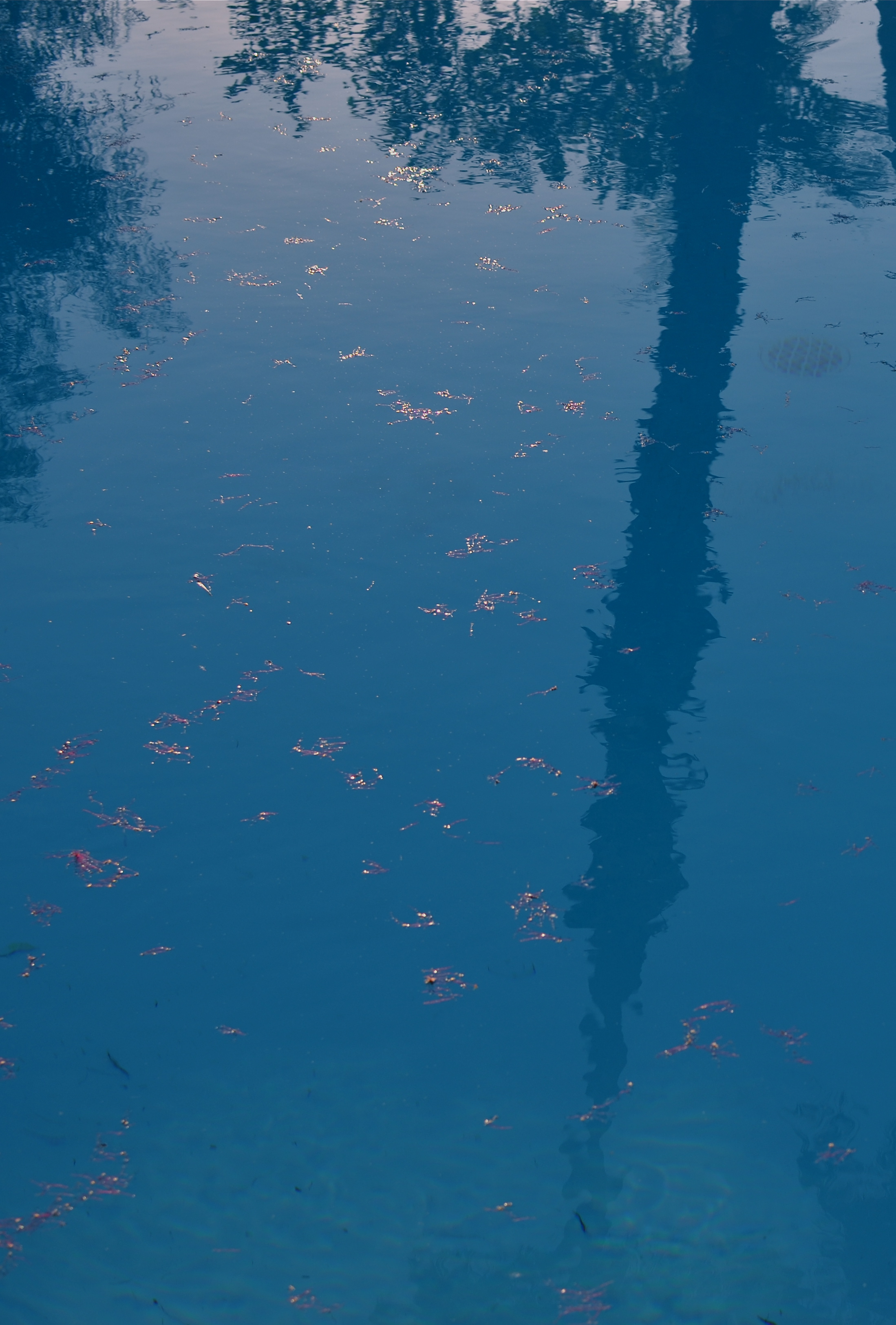
You already know a tree “goes with” this reflection..but is it needed to complete the image? 1/500 sec., f/5.6, ISO 100, 35mm.
It means being your own best editor, and, to do that, you have to be able to hate on your own work a little bit. Tough love and all that. Spare the picture and spoil the image. No sacred cows, just because they are your cows. There is no avoiding the fact that no real art comes about unless you take direct, often brutal action, to overcome the imperfections of a raw first effort. You have to intervene, again and again, in the shaping of your conception.
You can probably infer from all this that I am no fan of automodes, or of any other abdication of responsibility that lets a device, for Pete’s sake, dictate the outcome of image-making.
A few basic truths to keep before you:
Your camera is a machine with an eye attached.
You are an eye with a brain attached.
One of you is supposed to be in charge.
Guess which one.
When we merely snap a scene, freezing an arrangement of whatever we see in frame, we are only making a record. Creativity comes with abstraction, of exploring what is beyond the obvious cause-and-effect. The standard approach to showing things should actually be called the “average” approach. Look, here’s a tree, and, below, here is its shadow. Behold, here’s a scenic object next to the water, and, in the water, a reflection of that object. This simple reproduction of “reality” involves craft, to be sure, but something that falls short of art. Abstracting, adding or taking away something, and actively partnering with the viewer’s imagination take the photograph beyond a mere recording.
And that, boys and girls, is where the “art” part comes in.
Take away even a single obvious element and you change the discussion, for better or worse. Does the tree always have to be accompanied by its shadow? Does the mountain and its reflection always need to be presented as a complete “set”? It’s interesting to take even the “perfect” or “balanced” shots we cherish most and again take the scissors to part of them. Can the picture speak louder if we trim away the obvious? Can the image turn out to be something if it just stops trying to be everything?
The easiest abstractions come from changing small things, and editing can often, oddly, be an act of completion. Pictures taken in the moment are convenient, but too many images are trusted to the ease of leaning on automodes, and almost no photo is fully realized “straight out of the camera.” Believe this if you believe nothing else: nothing truly excellent ever results from putting your imagination in neutral. You have to decide whether you or the machine is the principal picture-taker.
That decision decides everything else.
Follow Michael Perkins on Twitter @mpnormaleye
 thenormaleye