SMUDGES OF MEMORY
By MICHAEL PERKINS
AS A METHOD OF INFORMATION STORAGE, the human mind leaves a lot to be desired. We take comfort in the belief that our inner vaults contain flawless, “official” versions of our accumulated experiences, but, in time, we realize that our memories are, at best, unreliable narrators, and, at worst, bald-faced liars. Our master files, our records of “what really happened” are as riddled with drop-outs, jump cuts, and gravy stains as any other account that has been told and retold over time. Small wonder that the devices we use to aid our recollections, such as photographs, can, themselves either reveal or conceal varying editions of “the truth”.
When you pair imperfect beings with even more imperfect machines tasked with documenting the big deals in their lives, you get inaccuracy piled on inaccuracy. When we are feeling generous, we label the inaccuracies “interpretations”. When we more clinical, we call them “flawed”. Thing is, there are many parts of our lives that no longer exist in the physical universe, or are at least placed beyond our reach. Many of these parts have left no trace in the world except the images made of them. Our actual vacations, long gone, are supplanted in memory by our pictures of those vacations, eventually becoming that experience in a much more real sense than whatever fragmented mental archives exist of the true event. The pictures remain static, and thus seem permanent, fixed, but over time they will be judged against the changing context of our faulty inner files.
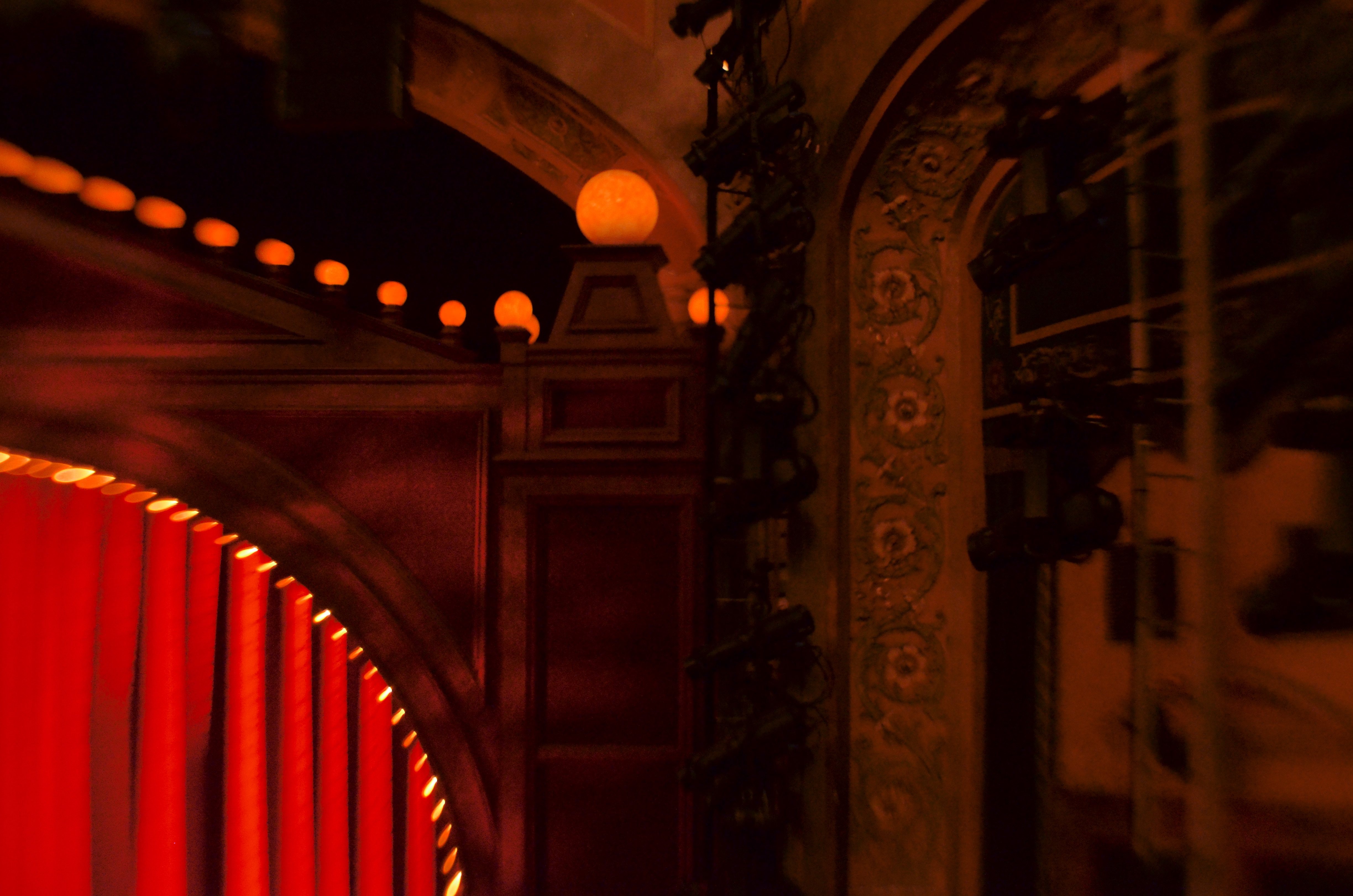
In the present era, when many of the things that we have captured in cameras are, for the moment, physically unavailable to us, the symbolic power of pictures of events past is amplified greatly. The image seen here, deliberately shot to be a bit dreamy, is open to multiple interpretations beyond the restricted scope of the original location. I know, mentally, that it was taken inside a Broadway theatre, but I can no longer swear to the name of the actual venue or what I saw there. In the absence of the fullness of my own memory, this picture has now become all theatres, in all cities, at all points in time. And while it looks like that’s what I was going for at the time, the point is that even the events that I believe I clearly remember are victims of my own brain decay over time, with the pictures I made of them expanded in their value, since they are now open to wider and wider impact as symbols. The pictures are less about what happened and more about the magic of what I prefer to have happened. The hard, clean line of reality is supplanted by the smudge of memory.
That is the amazing elasticity of a photograph. It is both truth and lie, symbol and substance. Photography is an art because it is so magically malleable, because an image can bear the personal stamp of its creator, no less than a statue or a painting. Designed to immortalize parts of our world, they do precisely that, often having a life of their own beyond the physical limits of the things they were used to depict. If that’s not art, what is?
NEARLY NAKED
By MICHAEL PERKINS
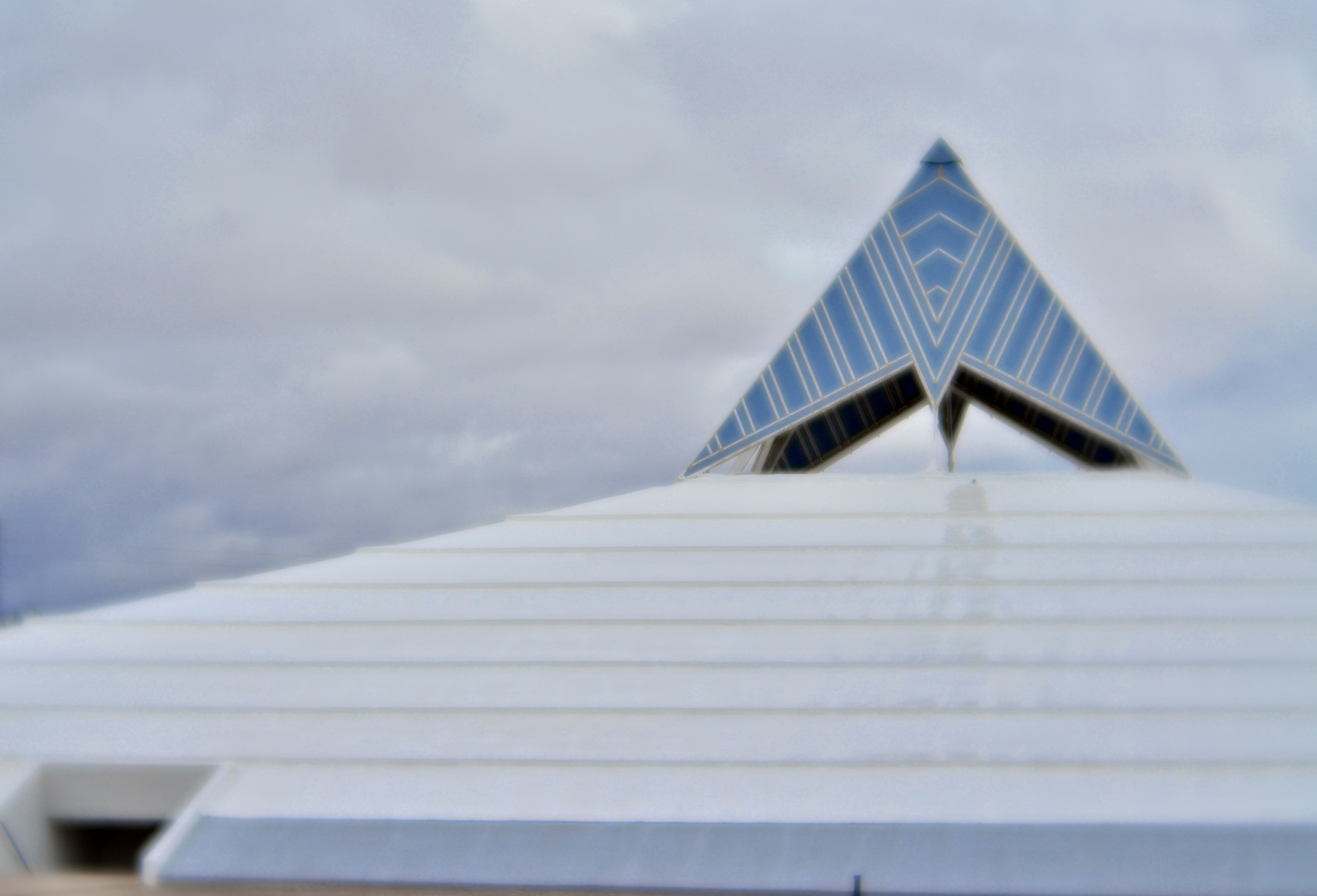
No One Knew What Lay Within, 2021.
ONE OF THE BY-PRODUCTS OF PROLONGED ISOLATION is the re-training of the artist’s eye, as more and more information is gleaned from fewer and fewer sources. The lifer convict thus knows more about masonry than the non-prisoner, simply because he is forced to stare at it longer. Or, to put it another way, as a person’s physical world contracts, as it has for many in the present era, things that are repeatedly re-seen can reveal more data than those that are quickly glimpsed. Notice that I am into my fourth sentence before uttering the dread word minimalism. And yet here we are.
I almost never deliberately seek out minimal compositions, at least not as part of some aesthetic religion; that is, I don’t set set out to make pictures that are, as I call them, “nearly naked”, stripped of all decoration or ornament. However, during the various stages of the creation of an image, I often decide that simpler is better, and re-set my course accordingly. And, as the worldwide Forced Hibernation has dragged on, I have found that a certain streamlining of many of my pictures is kicking in organically. Some of it occurs because I am forced to work with the same limited subject matter again and again, since traveling to a wider numbers of locations is presently off the menu. That can mean doing more than one “pass” on some pictures, and discovering. in that process, that I can, indeed, say more with less.
Those who already possessed sage wisdom or a certain Zen zeal might remark here that I should always have been on this journey, this growing sense of how to go about de-cluttering my vision. And to that, I would answer a resounding “maybe”. The image you see here is so simple a composition that I always would have approached it without the need for passing airplanes, utility poles, the surrounding parking lot, etc. However, where, before, I might have favored more detailed tableaux, I am finding, in a newly compelling way, that increasingly simpler pictures are calling to me these days. Likewise the rendering of excess detail or texture, which you’ll see is fairly absent from this picture. Does this mean I am growing as a person? Let’s not get ahead of ourselves. I am making pictures in a different creative environment for the moment, albeit with no guarantees that my technique will be fundamentally altered once I’m allowed out of the house more often (this site is three miles from my home). Still.
“There are two ways to be rich” children’s author Jackie French Koller wrote in 1948. “One is by acquiring much, and the other is by desiring little”. So, while I’m looking more intently at the masonry within my cell these days anyway, I might as well find out if that richer way of seeing will follow me once I’m sprung. In the words of another sage, Chuck Berry, “C’est la vie, say the old folks, it goes to show you never can tell…”
RADICAL RE-ASSIGNMENT
By MICHAEL PERKINS
YEARS AGO, A BROAD STUDY ON HOW OUR BRAINS INTERPRET COLOR included an experiment in which the familiar hue “cues” stored in our brains were upended, much to the dismay of selected test audiences. In one such experiment, an assortment of familiar foods had their native colors radically reassigned, resulting in green beef, pink peas, turquoise potatoes, and so forth. In many cases, the test group found that the meal, which they had been informed had been prepared from highest-quality ingredients, was simple inedible. Merely changing the color of something “known” had rendered it alien.
 Almost immediately after mastering the accurate rendering of color, which took decades, photographers began deliberately toying with “wrong” representations of color in various film, and later, digital processes, the object being to challenge how we digest what we see, and to re-imagine the familiar as the strange. One such method which has survived to the present day is infrared photography, in which, through either filters or re-engineered sensors or both, we reconfigure cameras to “see” the light wavelengths that are typically invisible to the naked eye. The results, which can reverse the object-shadow relationship and freakishly re-color skies and landscapes, are the stuff of dreams.
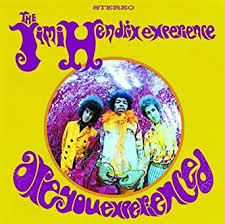
One of the best-known infrared images (which is also shot with a fisheye lens, for double freakiness) is the cover of the classic Are You Experienced? album by Jim Hendrix (see insert at left). The average DSLR can be rigged to shoot infrared, and the web is a-slosh with tutorials on how to shortcut and/or cheat if you don’t want to do costly camera conversions or arcane calculations.
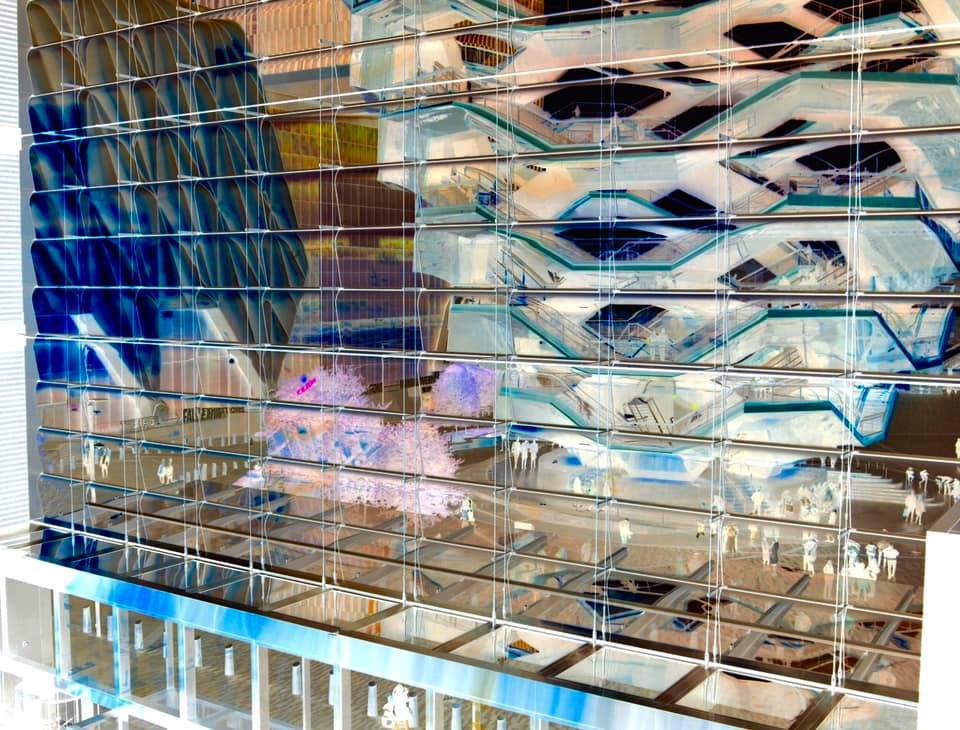
Hudson Yards And Vessel, 2019. A fake infrared created with the free phone app Negative Me.
My own cheapo-cheapo alternative to true infrared has been in the use of phone apps like Negative Me, which renders a fake negative of any image shoved through it. This achieves the first part of infrared, in that it reverses the relationship between an object and its shadows or textures. Sending that image back to your phone allows for all the color tweaking and contrast enhancement you’d use for any image, depending on how deranged/extreme you want the result to be, aping another aspect of true infrared. There are people who love the look of monochrome infrared, and, for those folks, I’d recommend skipping the phone adjustment of the negative image completely just sending it back to your main suite of processing software to either re-color or convert to mono, since that seems to preserve sharpness and allow for finer-tuning. As with many app-PC-laptop conversions, the fewer copies of copies of copies you can avoid, the better. For the record, the image seen here was master-shot on a DSLR, sent to my phone, sent to Negative Me, sent back to my phone image file, tweaked, sent to Facebook, then sent back to Photos for Mac. A long way around the horn, admittedly, and yet it’s still passable, in that it doesn’t look any more unreal than you’d expect.
As with the green steaks, you may decide that you don’t have a lot of, um, appetite for the infrared look at all. Even better: doing a quickie mock-up of what a real infrared might look like could save you time, trouble and dough on a pricey experiment. Or, like me, you might decide that you use this kind of effect just enough to justify doing a “not bad” version of it for cheap. In any event, just have fun.
And remember, no dessert until you finish your pink peas.
A SOFTER TOUCH
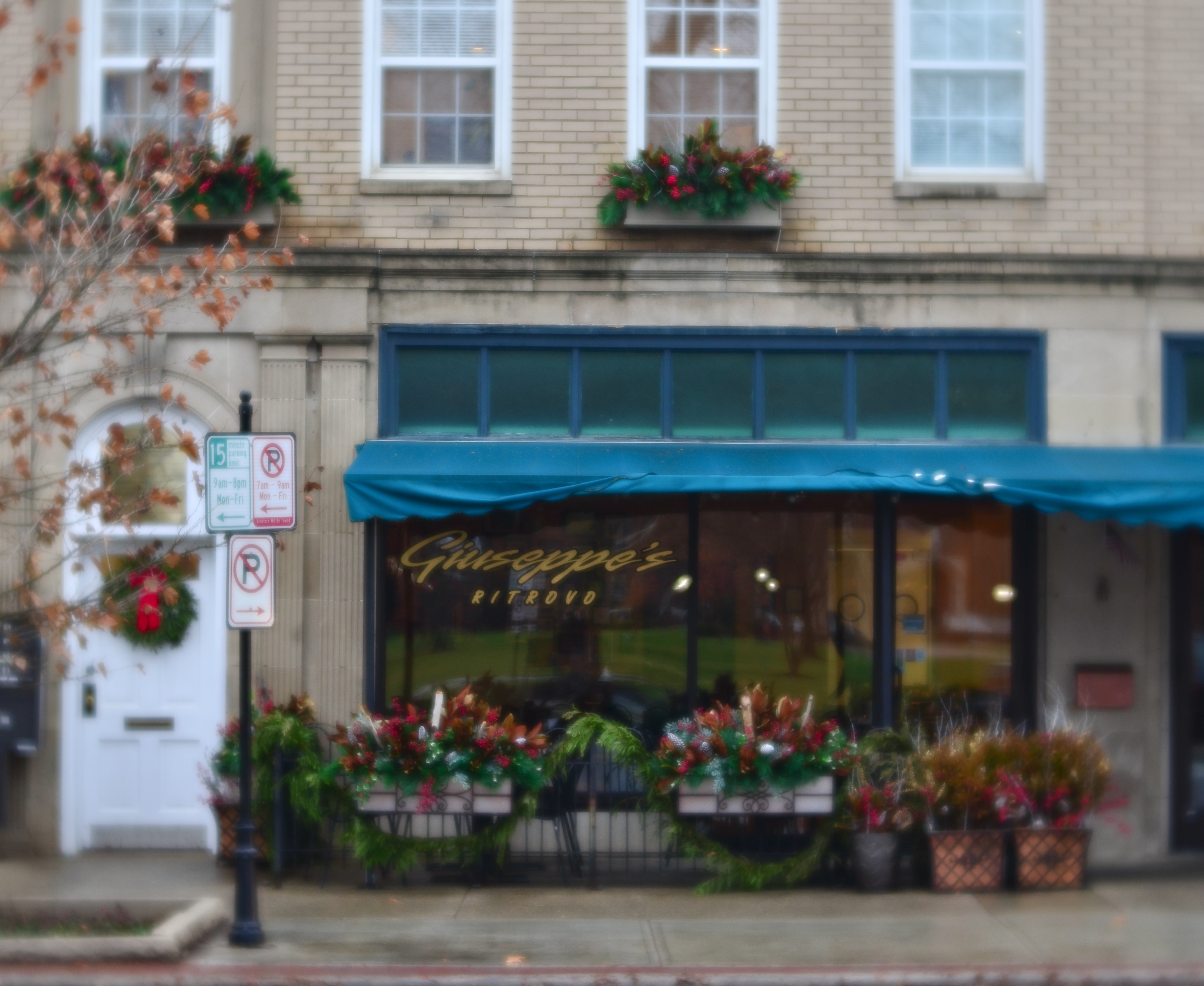
At its widest apertures, the Lensbaby Velvet 56 lens adds an overlay of glowing softness to focused images.
By MICHAEL PERKINS
THE CREATORS OF THE OPTICAL REVOLUTION known as Lensbaby lenses are more than mere inventors; many are also refugees from the conventional rules of professional photography, or, more precisely, the predictability that adherence to mere technical “perfection” can produce. From their first product over fifteen years ago through their constantly expanding line of lenses and accessories, LB is about embracing the same random artifacts (blur, flares, bokeh, chromatic aberration, etc.) that engineers have forever labored to design out of camera gear and allow them to be put back into the making of pictures, but at the shooter’s whim rather than as mere accidents.
Over the years, The Normal Eye has devoted nearly twenty posts to the unique freedom this concept confers on photography, allowing users to, in the company’s words, “see in a new way.” In my own work, which was shaped over fifty years ago by the influence of print journalists, the idea of control once consisted of adherence to a rigid rulebook governing acceptable precision and uniform sharpness. As I have grown older, however, I have learned that there is more than one way to define control, and that gear that helps me work more instinctively might have to step outside the bounds of mere technical “rightness”.
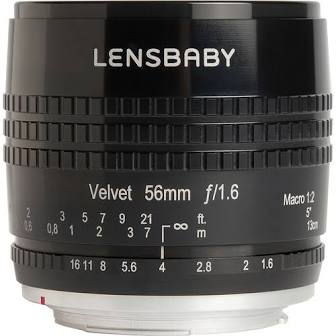
The Lensbaby Velvet 56.
Nowhere is that newfound freedom more manifest than in the Lensbaby “Velvet” prime lenses, available in a variety of mounts for DSLRs and mirrorless bodies in 28, 56 and 85mm focal lengths. Like all LB optics, these lenses are completely manual, and thus will not share complete shooting data with your camera. For those who seldom shoot on “M” and thus have more limited experience making all the decisions that govern the creation of a shot, this will present a bit of breaking-in, but with that forced preparation comes the habit of deliberately, intentionally creating a photograph. The risks are all yours, but so are all the benefits. As in the days of film, shooting with a Lensbaby entails slowing down and making a plan. These lenses are not for snapshots.
At its wider apertures (f/1.6 to 5.6), the Velvets create an overlay of glow over your images, almost as if they were lit from within or behind, even as the details within them remain focused (see above image). To picture the effect, think of the shortcut Hollywood studios used to produce soft, almost airbrushed portraits of the stars with either gauze or vaseline placed ahead of their lenses. Now, imagine what it can do for your own dreamy portraits. This is not the “low-fi” randomness of cheap, plastic, light-leaking toys, but the “alternate-fi” of real choice.
For any kind of standard street or landscape work, narrower apertures in the Velvets produce conventional sharpness that matches any general-purpose lenses. The V’s are also extremely effective as macros, with a 1:2 ratio (reproducing objects at half-size). Thus, armed with three strong talents in a single lens, the Velvet can easily be left on your camera for extended stretches as an all-purpose go-to. Better still, the softer Velvet effect, as well as the effects of any LB optic, is achieved totally in-camera, without the need of additional post-processing.
In my own work, the harsh detail and sharper edges inherent in architectural or urban scenes can, with my Velvet, take on a warm, even nostalgic feel, selectively smoothing surface textures and lending the whole scene a sort of idealized, fantasy appearance. For sample images from Flickr members around the world, click on the link to their Velvet 56 page. There’s also my own Lensbabyland gallery tab at the top of this page, as well as a shortcut to the first day of Lensbaby’s Shoot Extraordinary workshop for 2020, a great source of inspiration for newcomers.
Lensbabys are not intended as the solution to every photographic challenge. They are augmentations to your existing technique, not a replacement for it. And, yes, I know the term art lens can sound a bit snotty, but, when you generate effects that once were the province of chance or accident and purposely harness them as tools in the making of your images, that certainly bespeaks an “artistic” attitude, and many agree that the LB line of products help you deliberately and uniquely shape your vision. There is more than one kind of photographer, and thus there must be more than one kind of control.
THE CHEETA IN ALL OF US
 By MICHAEL PERKINS (author of the new image collection FIAT LUX, available from NormalEye Press)
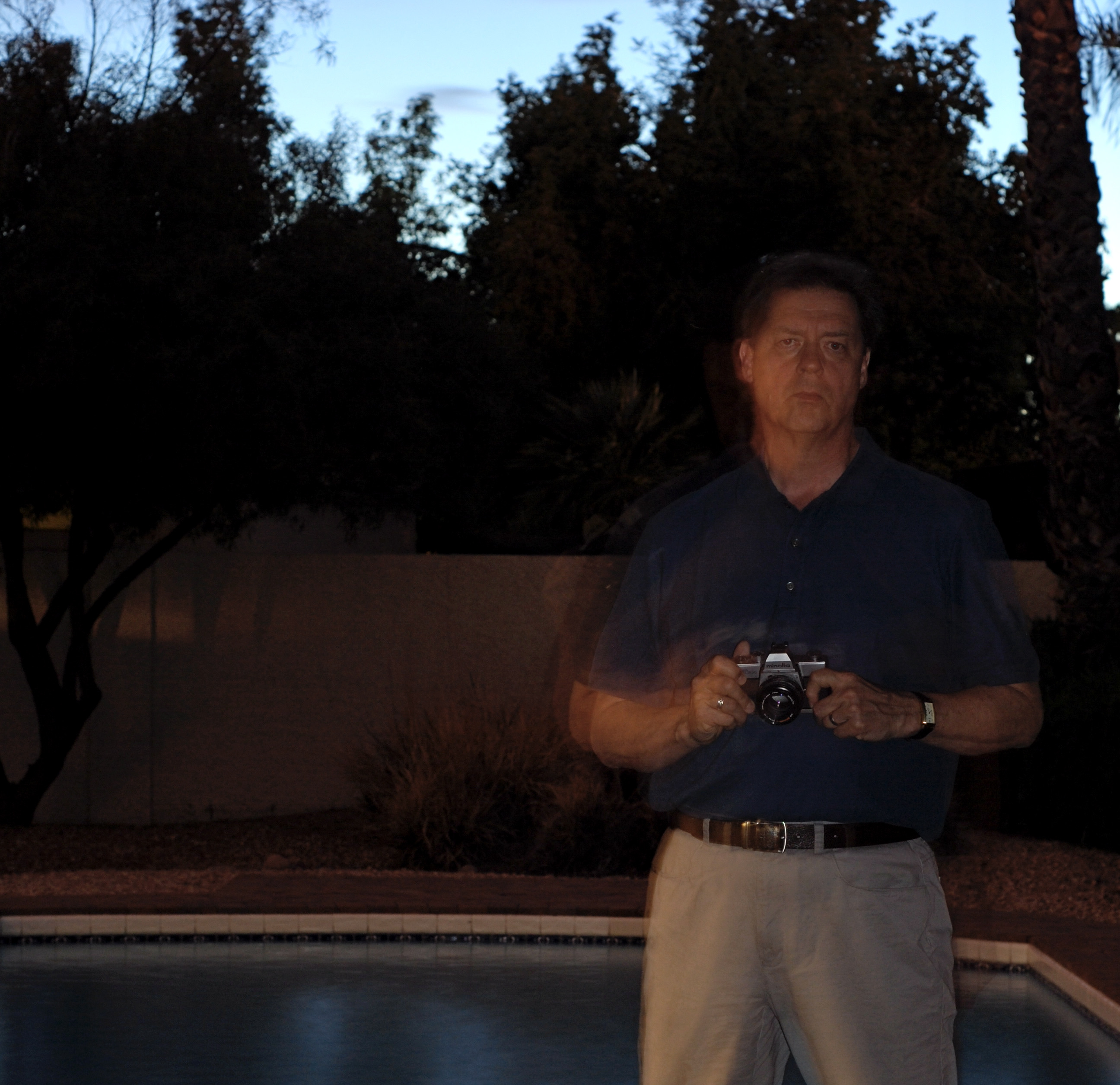
IF YOU ARE IN THE RANKS OF THOSE PHOTOGRAPHERS who still shoot film on occasion, you will, in the return to your old analog ways, find yourself suddenly cured of a habit we all have acquired to varying degrees since the dawn of digital. The instantaneous feedback of the pixelated life has taught us the now-instinctual reflex of what is called chimping, or the practice of checking our screens immediately after every click, ostensibly to determine if we’re getting things right/wrong. The name of this syndrome may have come from the “ooh-ooh-ooh!” sound made by chimpanzees when they are excited…like when they nail an exposure perfectly and can’t wait to get a perfunctory agreement grunt from the next chimp over. All ape references aside, to look is human, or, as Tarzan discovered, there’s a little Cheeta in all of us (sorry).
Chimping has changed the rhythm of photography from shoot/shoot/shoot/shoot/wait….(and eventually)view to shoot/look/share/shoot/look/share(and occasionally) delete. There is no equivalent to chimping in the film world, since there is no way to instantly review one’s results. In anaog shooting, correction from frame-to-frame is a matter of calculation and informed guesswork, and the results….well, they kind of define the phrase “delayed gratification”, don’t they? Chimping is a product of the very opposite…..which is the utter obliteration of the space between desire and payoff. So is this a good thing?
Every time you sneak a peek at your screen, you are, however briefly, taking your mind out of “shooting mode”. You are also taking your eye off of whatever subject you just shot, which may still be developing or changing. It’s conceivable, then, that while you are reviewing a shot that may/may not be any good, a shot that may/may not be better is invisible to you, simply because you are not looking at it. In some instances, this may be no big deal. For instance, if you are doing a leisurely shoot of a landscape or a sleeping child, breaking the thought flow to review images in between frames may not be a problem at all. On the other hand, if you’re following a sports event or a flitting bird, you could easily miss out on what’s happening by cooing over what’s already happened.
Of course, it’s easy to make broad generalizations on the value/risk of any shooting rhythm, and, like the commercial says, ask your doctor is chimping is right for you. It’s principally interesting to consider its value, however, simply because it is such a recent part of photography, and one which has become part of everyone’s work flow largely without our being aware of its encroachment. Maybe it’s caught on for purely social reasons, like our desperate need, via social media, to post and be liked. That’s the part of chimping I most disdain; its use as an instant booster shot of validation, our bid for more immediate applause. I can’t say I’m without guilt in making use of it myself, but I love to occasionally work in an older medium in which you build confidence by making a plan, setting an intention, and focusing solely on making the picture, not drooling over how fast you might garner applause for the result. I will always fail at totally suppressing my own inner Cheeta, but I can dream, can’t I?
SAY NO MORE
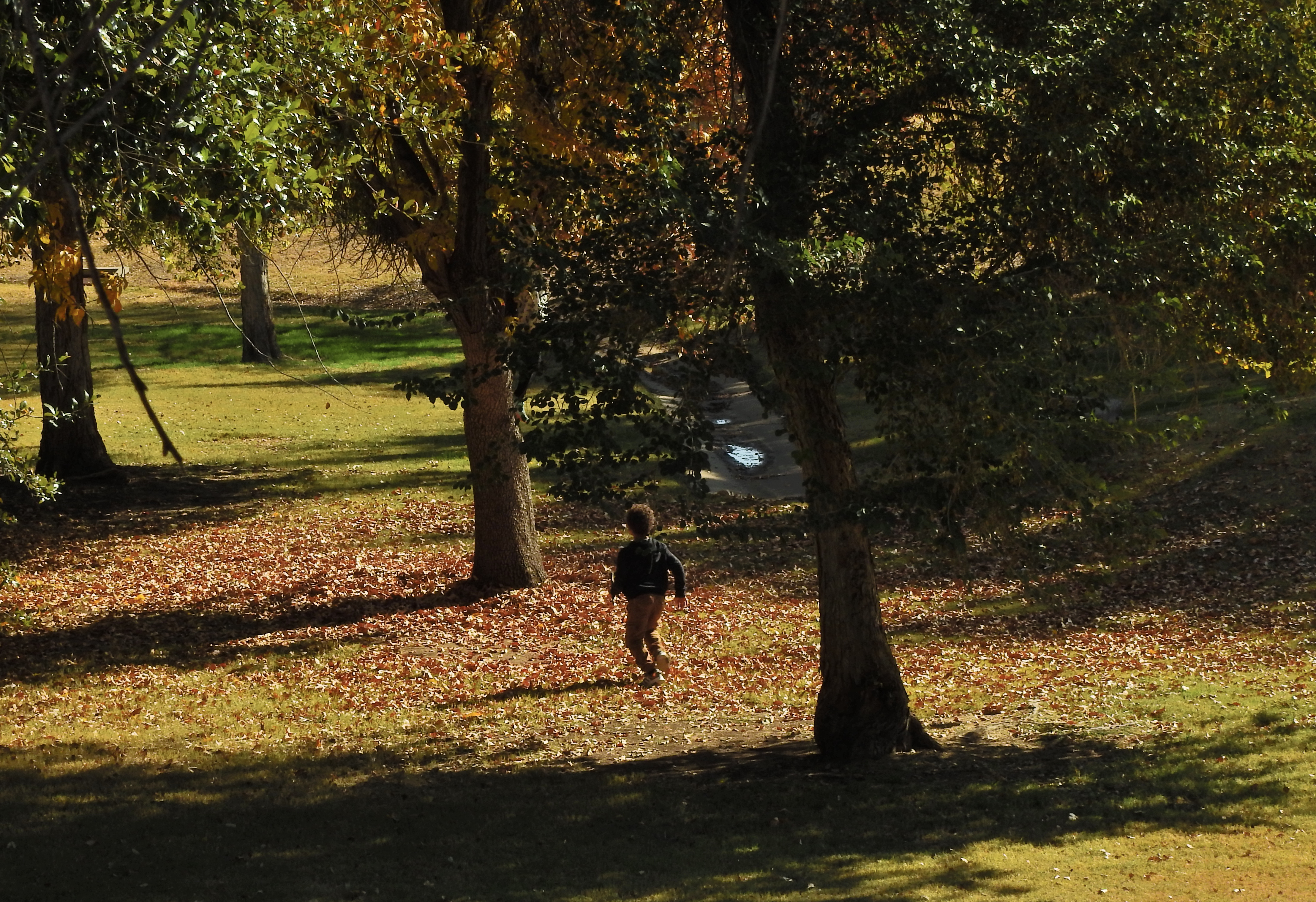
Huck Took The Shortcut, 2021
By MICHAEL PERKINS
THE ABILITY OF A PHOTOGRAPH TO PRETTY MUCH ILLUSTRATE EVERYTHING IN LIFE can tempt shooters to try to do exactly that; to pack a universe of stuff into every frame. In the minds of some of us, the camera is an information-gathering machine, and so, the more information, the better. But if we call to mind the photographs that have affected us most profoundly, we may see that there’s a hierarchy in the way information is presented in many of those uber-keeper photos. Everything in the world is not a number one priority; events and experiences are always ranked higher in importance than some and lower than others. And the photograph that shows too much may actually not communicate anything particularly well. Things need to be chosen and unchosen in order for a picture to breathe.
As a consequence, rather than showing four hundred trees of equal size and detail in a frame, we deputize one or several trees to stand for the entire forest. In any routine edit, we decide to crop out things which are part of the scene but which either don’t, narratively speaking, carry their weight, or, worse, act as distractions. It’s not only all right not to show everything, it’s a really important part of the covenant between artist and audience.
When you leave out some kinds of information, you’re respecting your viewer’s intelligence, since you’re recognizing that you both share a vast store of common experience, some of it so obvious that it can merely be implied and yet understood. As a very simple example, in the image seen here of a young boy running through the woods, his body language conveys all that’s needed for a complete understanding of the scene. Every part of his physical energy advertises the freedom and excitement he is experiencing, even though the picture provides little more than his silhouette and nothing whatever of his features. Would he be any more clearly delineated as a happy young boy if you were to show his smiling face? And as to the surrounding trees; they are, in life, rich in texture, but the prevailing shadow doesn’t keep them from being identified as trees, and so, really, how much better could that work, even if they were all in complete sunlight?
I’m only occasionally an advocate of minimalism for its own sake, mainly because in many cases it’s not the right approach. But over-delivering on information, while creating a thorough “document” of a scene, also has the potential for short-circuiting an image’s impact. As is often the cases, the best rules are the ones that come equipped with tons of exceptions.
MERCY BOKEH
By MICHAEL PERKINS
PHOTOGRAPHS ARE NEGOTIATIONS between primary, secondary, and even tertiary levels of information, and how they will be arranged in a frame. You either feature or mute that information in order to direct attention to the primary story you’re trying to tell. The simplest example of this process is the selective focus engineered into many shots, with important details being rendered in sharpness while the rest of the competing data goes soft to help isolate the main message of the picture. In its simplest application this means a clearly focused foreground and a blurred background.
The blur used to be the eye’s clue that the information in that part of the picture was not a priority. Thinking in terms of portraits, for example, your subject is clearly defined, with the space behind it dulled or diminished. You make that choice by selecting your depth of field and shoot accordingly. However, recent trends in the making of a photograph have elevated the status of the blurs themselves to something that needs to be chosen, or shaped for artistic purposes. In other words, the part of an image that is inherently unimportant, by virtue of being out of focus, is now a source of attention as to what kind of blur is being created. This formerly fussy concept of bokeh is popping up in more and more advertising copy for the sale of lenses. A given piece of glass is now touted as having great bokeh, which somehow makes it more desirable than some other piece of glass.

I love the way this zoom focuses on foreground objects; its background textures, not so much.
Bokeh is really nothing more than the quality of the shapes that occur when a particular lens breaks up light in its non-focused areas. Some people use the terms “buttery” or “geometric” or “dreamy” to describe the work of a given optic, and some lenses are actually marketed based on how this texture is rendered. I can only speak to this fascination from my own viewpoint, and so you have to plug in your own approach to photography, and whether the non-essential part of a picture is now, strangely, important to you.…important enough to influence your purchase of one hunk of gear over another. I admit that some bokeh acts as a beautiful backdrop to a foreground subject, but I also contend that, as seen in the above image, some lenses can actually render it in a way that is distracting, even irritating. However, whether I admire the swirls and ellipses of some forms of bokeh, I don’t see it as anywhere near as important as what I’m trying to feature in front of it. If all things in a frame are of equal importance, why not just shoot everything at f/11 and make sure it’s all recorded at the same sharpness?
I think that, in photography, as in many other art forms, we can become fascinated with effects rather than substance, and that, if you don’t know what you’re trying to get a picture to say, you can become more interested in how cool something looks instead of what a picture’s narrative is supposed to be. Bokeh can be lovely, but giving it too much prominence is a little like sitting in a theatre and intensely watching what the third Roman to the left is doing with his toga while Marc Antony is at center stage delivering his big speech. Things in a good picture must be arranged in a hierarchy, some priority of intentions, in order to communicate effectively. And if I have my choice between a bird and a blur, I will unapologetically choose the bird every time.
QUIETING THE STORM
By MICHAEL PERKINS
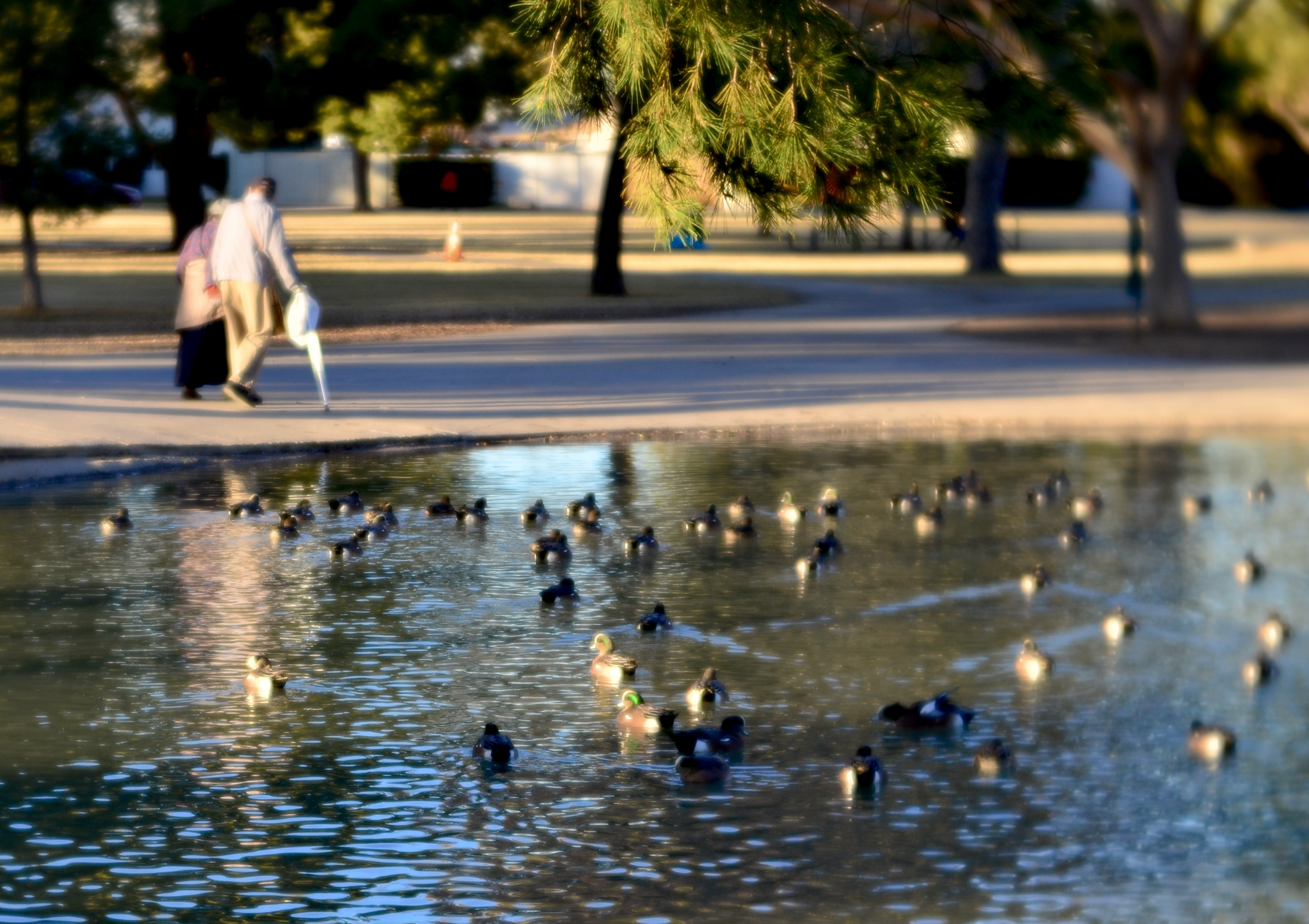
THEY HAVE KNOWN EACH OTHER FOR WHAT FEELS LIKE FOREVER, and yet the time that’s passed between them seems like mere minutes. They elicit envious sighs when they are seen, perpetually locked arm in arm. They are the proof that love can last, that some things can actually be eternal. That a promise matters.
They walk a little slower.
They measure out their days in tiny things. Small wins. A nice cup of tea. A shared confidence. A fond memory. Maybe even a joke they’ve told so many times that they’ve both memorized it.
And they seek the sunshine.
Carefully, deliberately, they move through yet another sunset. Is it one of their last? A world races past them with its myriads miracles and miseries. It’s all a blur to them, and not just because they’ve misplaced their glasses. Their focus on each other remains sharp and sure; it’s the rest of the world that’s fuzzy, that’s uncertain.
They hardly have separate heartbeats anymore. When one sniffs, the other sneezes. And the most amazing thing that starts each day is their first glimpse of the other.
The calendar tells them that a lifetime has gone bay since first they said yes to each other.
And yet, it seems a matter of a moment.
They make a pretty picture.
THE CONSPIRATOR
 (2021 marks the beginning of The Normal Eye’s tenth year. Endless thanks to our longstanding friends and newest arrivals. Please share what you find useful in our latest or archived pages and alert us to what we can do better. Peace to all.)
By MICHAEL PERKINS
PHOTOGRAPHER LUCAS GENTRY has been mentioned in many of those handy web searches that collate the most memorable quotes about camera work, little bon mots that help spice up term papers and make bloggers (ahem) sound erudite. His single sentence, “Photography has nothing to do with the camera” is guaranteed to provoke either agreement or argument, depending on whom you share it with. I tend to camp with the “agreement” team, although I would perhaps amend his statement to assert that photography can have everything…or nothing to do with the camera. Taking a picture without some kind of gear is impossible, and every camera, good or bad, can produce some kind of picture. But, beyond that, the possibilities are wide open, and nothing is guaranteed.
We have all been assisted by a piece of equipment that helped us generate the image we had in mind, but first we had to have the vision. A camera is, first and foremost, a recording instrument, like a microphone. It does, to use a hideously overused term, capture something, but like a microphone, it can preserve either cacophony and rhapsody. Another famous photographer made this issue even more poetic by stating that a picture is made either in front of or in back of the camera. Those of you who have traveled through these pages with us over the years know that this sentiment is one of my guiding principles. As I frequently say, masterpieces have been taken with five-dollar disposables, while unspeakable horrors have been committed with Leicas. And vice versa.
We live in a progressive consumer culture, an endless cycle of buy-and-buy-again. We are trained to desire the Next Big Thing. Something shinier, sexier, newer. As a matter of fact, newness alone is often enough to part many fools with their wallets because they are led to believe that the best camera is the one they don’t yet own. If you know someone like this, scribble a deed to the Brooklyn Bridge on a cocktail napkin and get them to sign it immediately. In the meantime, let me assert that working a little longer with a slightly “outdated” camera that you understand and can bend to your will is preferable to jumping to one that is so difficult to master that it actively conspires against your success. I’m not talking about taking the logical upward step to the next level of gear that you’ve naturally evolved to; I’m talking about feverishly convincing yourself that you will be a better photographer once you’ve bought X or Y camera. Remember Mr. Gentry’s truth: it has nothing to do with the camera. Equipment is not magic. You will not win the Grand Prix because you bought a Ferrari.
Establishing the best possible bond between yourself and your machine of choice makes a difference in your work, because you are directing that work, which means knowing what the machine can deliver. If you don’t have that relationship with your camera at present, work until you get it. If you can’t master the device you currently own, you’ll be even further behind the curve with a camera you have to catch up with. Don’t expect to create art that’s alive by relying on an inanimate object to do the heavy lifting. When we refer to the “normal eye” in the official name of this blog, we’re talking about developing a way to see, to get back in touch with your vision, to “normalize” it. That means taking responsibility for your work, not delegating it to the gear. Forget everything else about photography, but remember that your camera can either be an ally….or a conspirator.
 thenormaleye