I WANT TO BE A PART OF IT…..
One belongs to New York instantly. One belongs to it as much in five minutes as in five years.
-Tom Wolfe
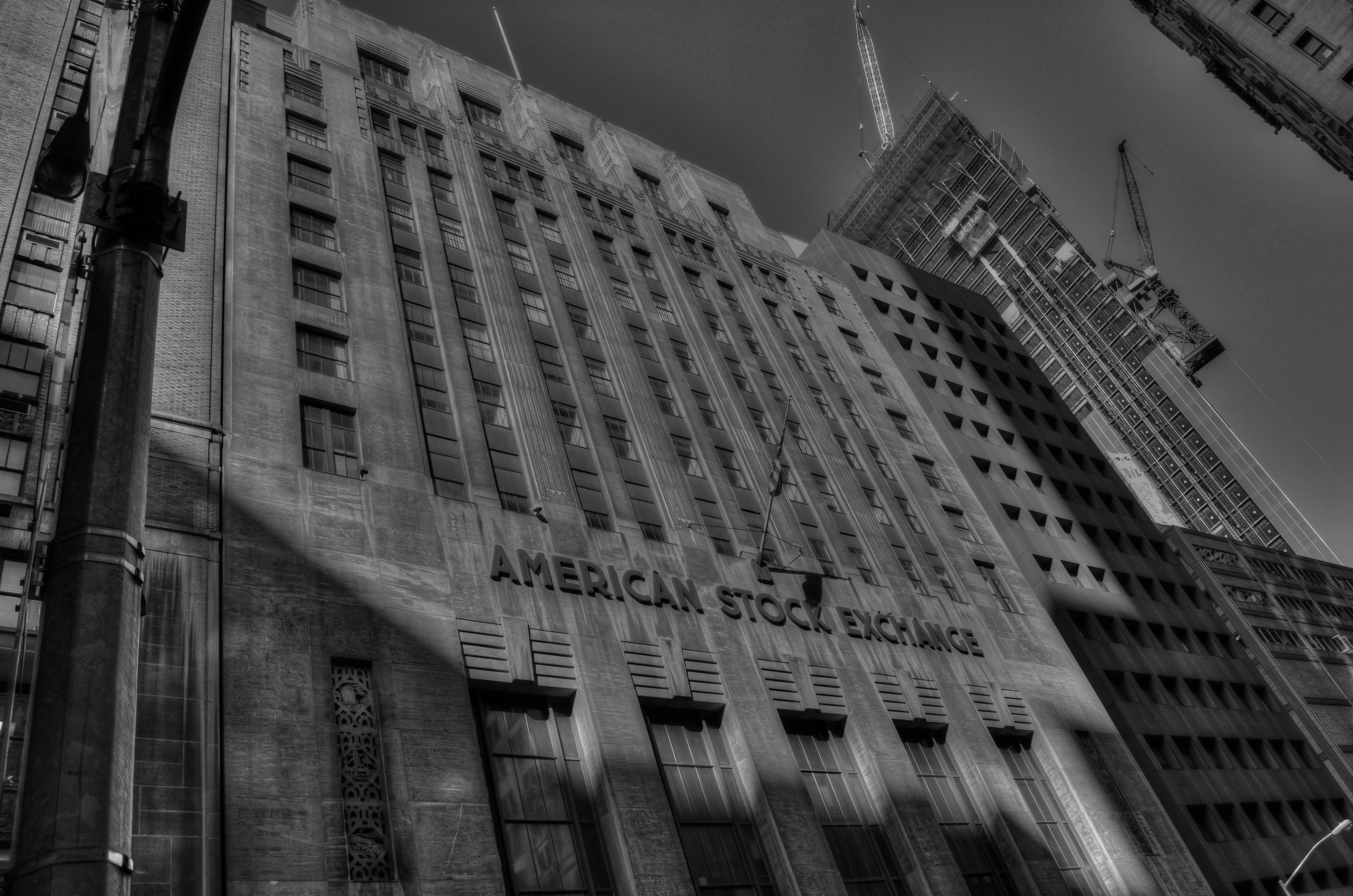
Old power, new power. The American Stock Exchange, a titan of the might of another era, stands in lower Manhattan alongside the ascending symbol of the city’s survival in another age, as the frame of WTC 1 climbs the New York sky. The tower, recently surpassing the height of the Empire State Building, will eventually top out, in 2013, at 1,776 feet. Single-image HDR designed to accentuate detail, then desaturated to black & white. 1/160 sec., f/8, ISO 100, 18mm.
THERE IS NO GREATER CANDY STORE FOR PHOTOGS than New York City. It is the complete range of human experience realized in steel and concrete. It is both a monument to our grandest dreams and a mausoleum for all our transgressions. It casts shadows that hide both joy and fear; it explodes in light that illuminates, in equal measure, the cracked face of the aged contender and the hopeful awe of the greenest newcomer. There is not another laboratory of human striving like it anywhere else on the planet. Period period period. Its collapses and soarings are always news to the observer. Bob Dylan once said that he who is not busy being born is busy dying. New York is, famously, always busy doing both.
I would give the greatest sunset in the world for one sight of New York’s skyline.
-Ayn Rand
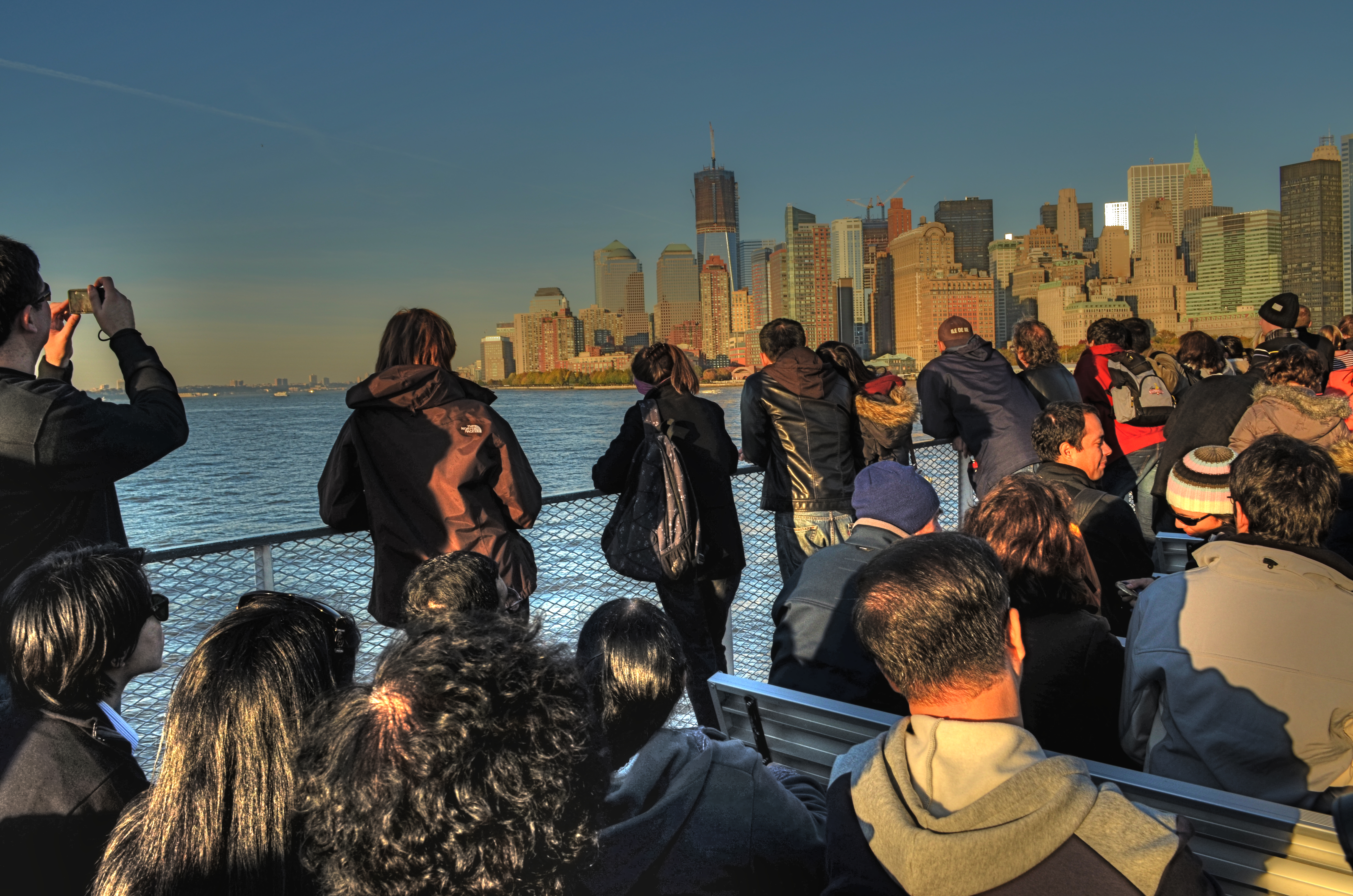
Returning from Liberty Island and Ellis Island in November 2011, a packed tour boat’s passengers crowd the rail for a view of WTC 1, rising as the new king of the New York skyline.
This month’s announcement that the new WTC 1 (built on the site of the old 6 World Trade Center building, itself a rather short edifice) has finally surged past the height of the Empire State Building (a repeat champ for height, given the strange twists of history) is a bittersweet bulletin at best. Cheers turned to tears turned back into cheers. In the long-view, the inevitable breathe-in-breathe-out rhythm of NYC’s centuries-old saga, the site’s entire loop from defeat to defiant rebirth is only a single pulse point. Still, on a purely emotional, even sentimental level, it’s thrilling to see spires spring from the ashes. The buildings themselves, along with their daily purposes and uses, hardly matter. In a city of symbols, they are affirmations in an age when we need to remain busy being born.
Thoughts?
“WHAT” IS THE QUESTION
ONE OF THE MOST FREQUENTLY ASKED QUESTIONS of shooters is, “what’s that supposed to be?”, usually asked of any image that is less obvious than a sunset shot of the Eiffel Tower or a souvenir snap of Mount Rushmore. You may have found, in fact, that the number of times that the question is asked is directly proportional to how intensely personal your vision is exercised on a given project. As much as the hidden aspects of life fascinate us, the obvious recording of familiar objects soothe the eye, like a kind of ocular comfort food. The farther you wander in your own direction as a photographer, the greater journey you also ask of your viewers. Sometimes the invitation is taken. Sometimes you must face “the question”.
What’s that supposed to be?
How, actually, in a world shaped by our own subjective experience, an image is “supposed” to be anything is a little baffling. It’s probably safe to say that what we present, as artists is probably supposed to be the view as one’s mind filters it through his or her accumulated life. When we use the camera as a mere recorder, it may make it easier, presenter-to-viewer, to agree on that image’s terms of engagement, but that may or may not reveal what we actually felt about when creating it. If I use the same three colors to render a picture of the American flag as everyone else uses, I may get into fewer arguments about how appropriate the resulting image is, but then, I don’t get to open up the discussion to any other conceptions of that flag. Back in the first days of the environmental movement, the simple use of green on the original, Old-Glory-derived ecology flag suggested an alternative way of being American, of living your life. As I recall, some viewed the design as sacrilegious, while others embraced it as liberating.
Over 150 years after the first photographs were regarded as a threat to the painter’s domain, we are still most at ease with pictures that ape the painting’s method for framing the world. Oddly, it is always outlaws and amateurs that break free of these pictorial chains first; the professionals must protect the turf they have so carefully mapped out for themselves in the mainstream. There remains, then, an ongoing battle over what should or should not be called a “picture”. Abstractions, arranged or perceived patterns, even selected details or drastic re-imaginings of small parts of the so-called “actual” world must always fight for their place at the table alongside the technically accurate mirroring of easily named subjects. We still regard that which is realistic as being the most real, and the most worthy of praise.
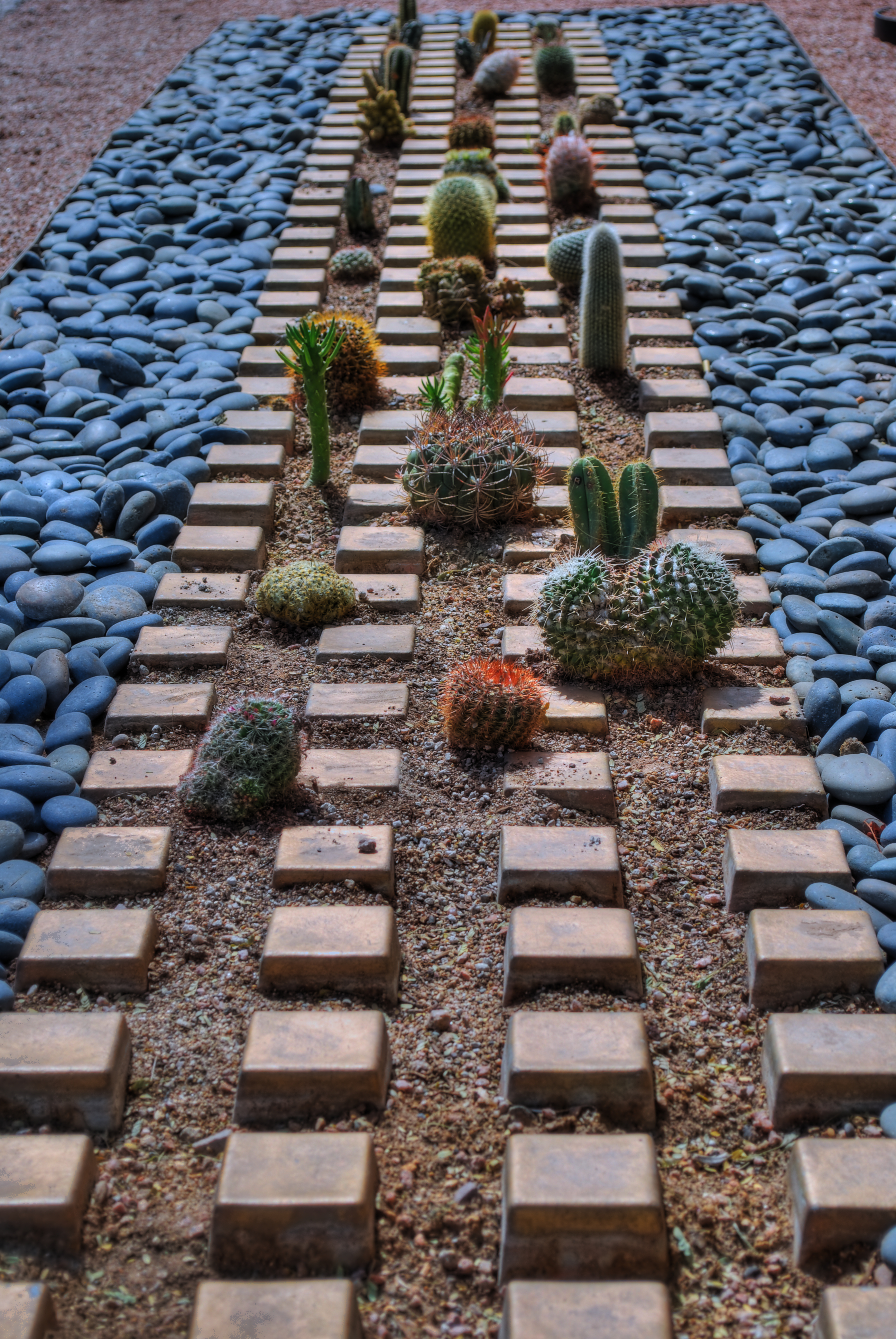
Cactropolis, 2011. Three bracketed shots about a half-stop apart combined into an HDR composite. CLICK TO ENLARGE.
To want to show something for its own sake on our own terms is to move into more personal territory, and hence onto shakier ground for critical evaluation, but occasionally we strike a balance between what people want to see and what we must show. In the above image, I only wanted to focus attention on an arrangement that was a very small and visually ignored accent along a heavily travelled public street. An unsung landscaper’s arrangement of tiles, gravel, paving rock, and succulent plants, was in plain view, and yet, at only a few inches in height, easily missed by the thousands of daily passersby speeding along the street. To me, when framed close to ground level, it resembled a kind of desert cityscape, blocks of abstract skyscrapers, a cactus metropolis, and that’s how I tried to frame and process it. Of course, it us, after all, just a pattern, and anyone who looks at the image can fill in their own blanks with impressions that are just as valid as my kind of toy idea.
The vital point is that no one else’s take on your dream can be wrong, just because it differs with yours. Art is not a science, which is why we don’t become photographers, or as the word implies, “light writers” just by pushing a button.
We become photographers by pushing everyone’s buttons.
What is it “supposed to be”? You tell me, and I’ll tell you.
Thoughts?
BAM!
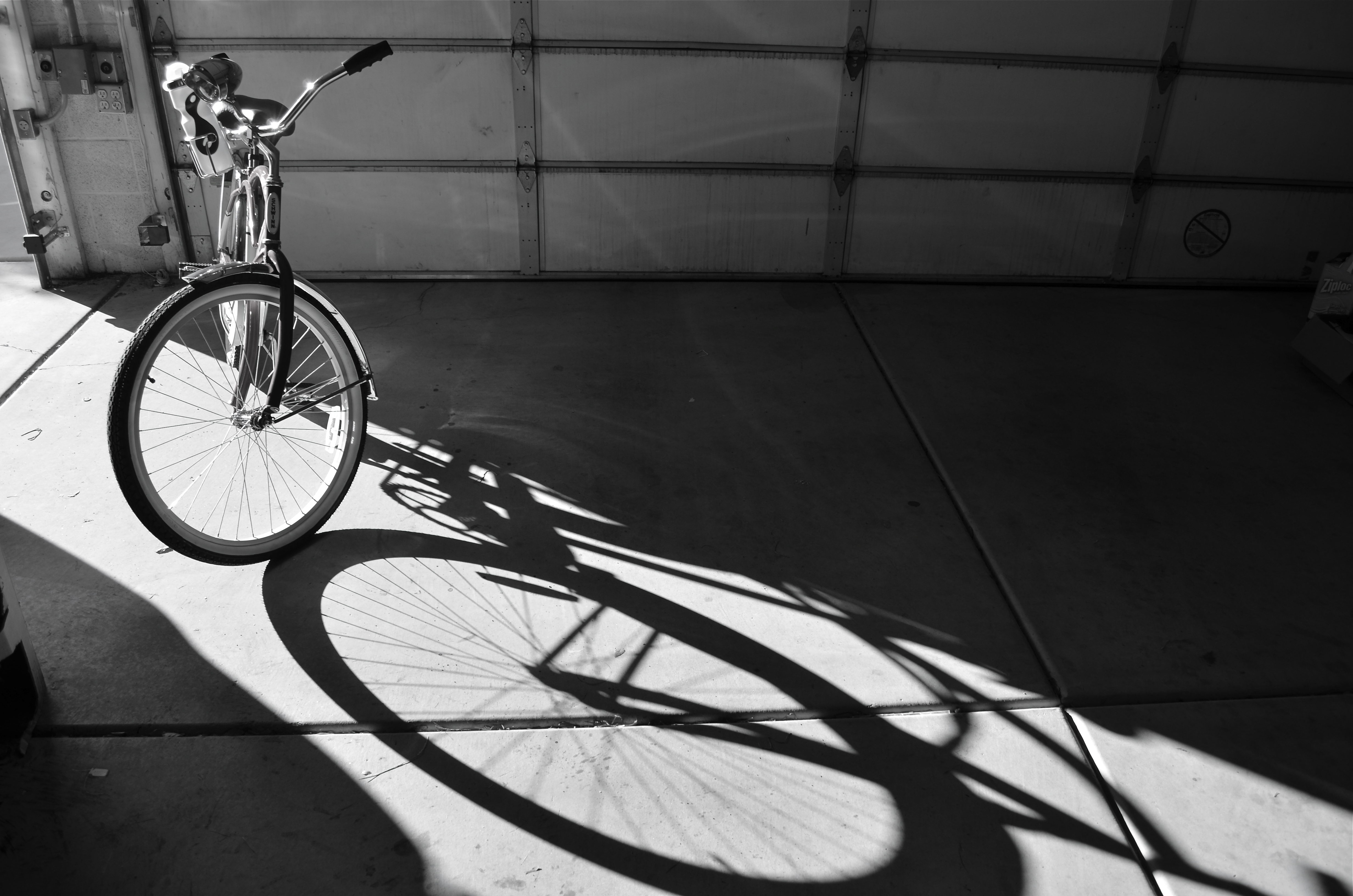
My early morning “garage studio”, an impromptu place to stage objects large and small, lit by an early morning blast of Arizona sun. 1/160 sec., f/6, ISO 100, 18mm.
THERE IS A DELIGHTFUL SEQUENCE toward the end of Martin Scorsese’s Hugo which shows the silent movie pioneer George Melies creating films in his own primitive studio in France. Like Thomas Edison, who built the Black Maria, a tarpaper shack that rotated on a turntable so its roof and front wall could be turned toward the sun for all-day shooting, Melies improvised his own turn-of-the-century solution for how to get adequate light to slow film. Like Edison, he built his studio to stand out in the open sun, but fashioned its walls completely of glass, huge panes mounted inside a simple metal frame cage. The frame held fixtures and scenery in place, and its spartan design gave Melies a pure, huge, natural light box inside which he directed the first minor masterpieces of world cinema. It’s a reminder of how truly elementary some of our light problems are. Just put yourself at the service of the available light and be ready to make magic….in seconds.
The point is, most of us probably have daily access to at least one “sweet” spot, either in our houses, or the yards and grounds that surround them, or somewhere near us, where there is abundant, reliable light, on a daily basis, sufficient to shoot almost anything..without muss, fuss, or flash. For me, it’s the southeast corner of the house, where the blazingly, brilliant Arizona morning light comes slamming in by way of the opened garage door, the front entrance sidelights, or the west window near where I am posting this. And when I say light, I mean BAM! light, with long, solid shadows and, just after dawn, a super-saturation of color that will vanish by midday, when the western sky is one big blinding, squinting, over-exposed whiteout.
In recent months, I have actually created crude mini-studio areas at these various BAM! points, staging objects on everything from snack tables to packing cartons, baffling or channeling the light in some cases with strips of cardboard or towels, but mostly just placing still-life objects right in the path of these killer rays. On occasion, I am rewarded with a great image before breakfast, which is a psychologically great way to put the right early spin on the day.
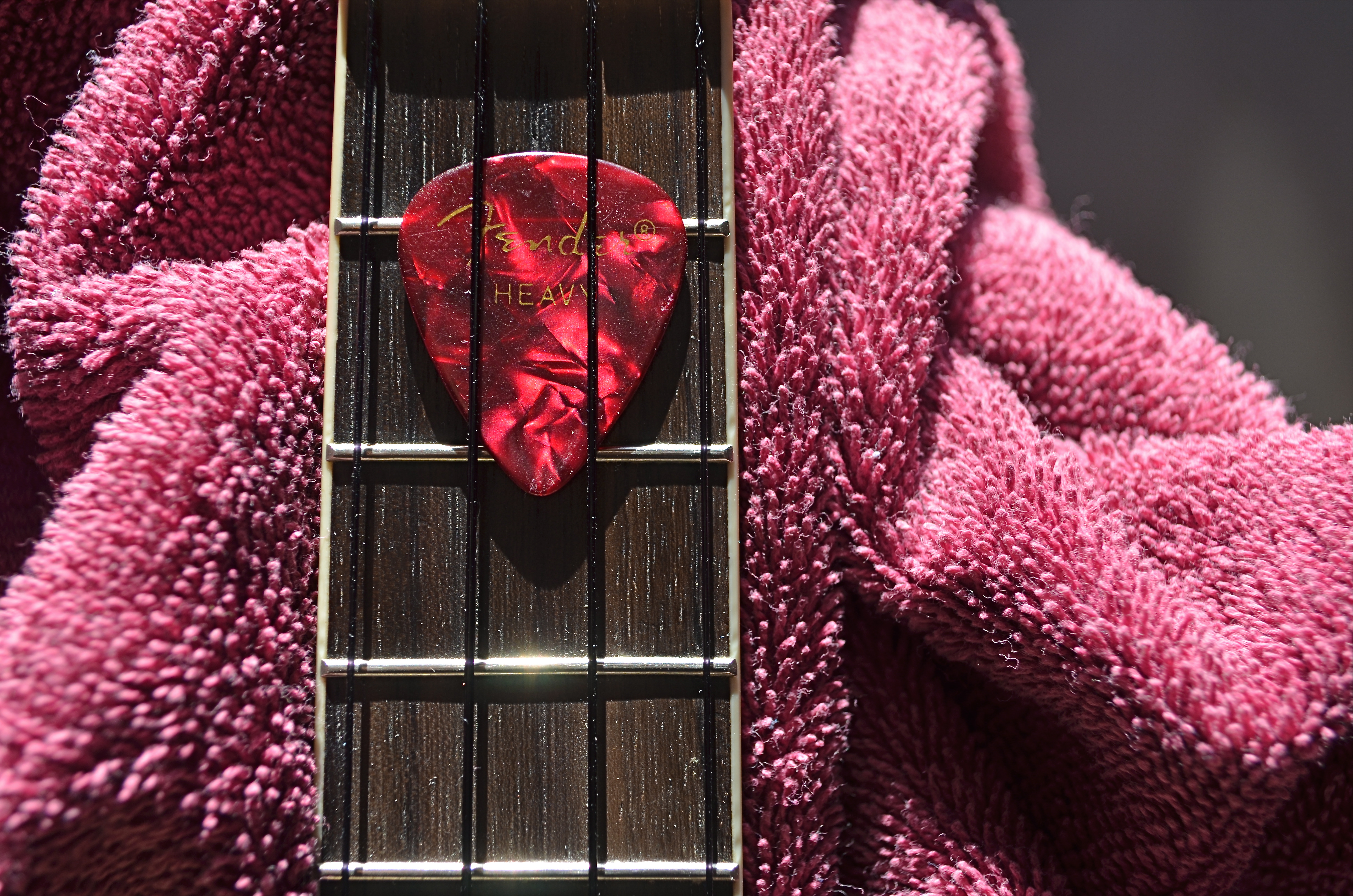
Same staging area, different day. This tight shot on one of my ukes was set up lying on its back, held aloft on a tall packing carton. 1/160 sec., f/5.6, ISO 100, 30mm.
It also harks back to my childhood and the five dollar Imperial box camera that started it all. With one focal length and one shutter speed, you had to be cagey, to, in fact, get any image in other than ideal light. There was, to say the least, a high fail rate. Next time you stop by the house I can show you the shoebox of shame, wherein lie interred all the keepers that might have been. Rest in Peace.
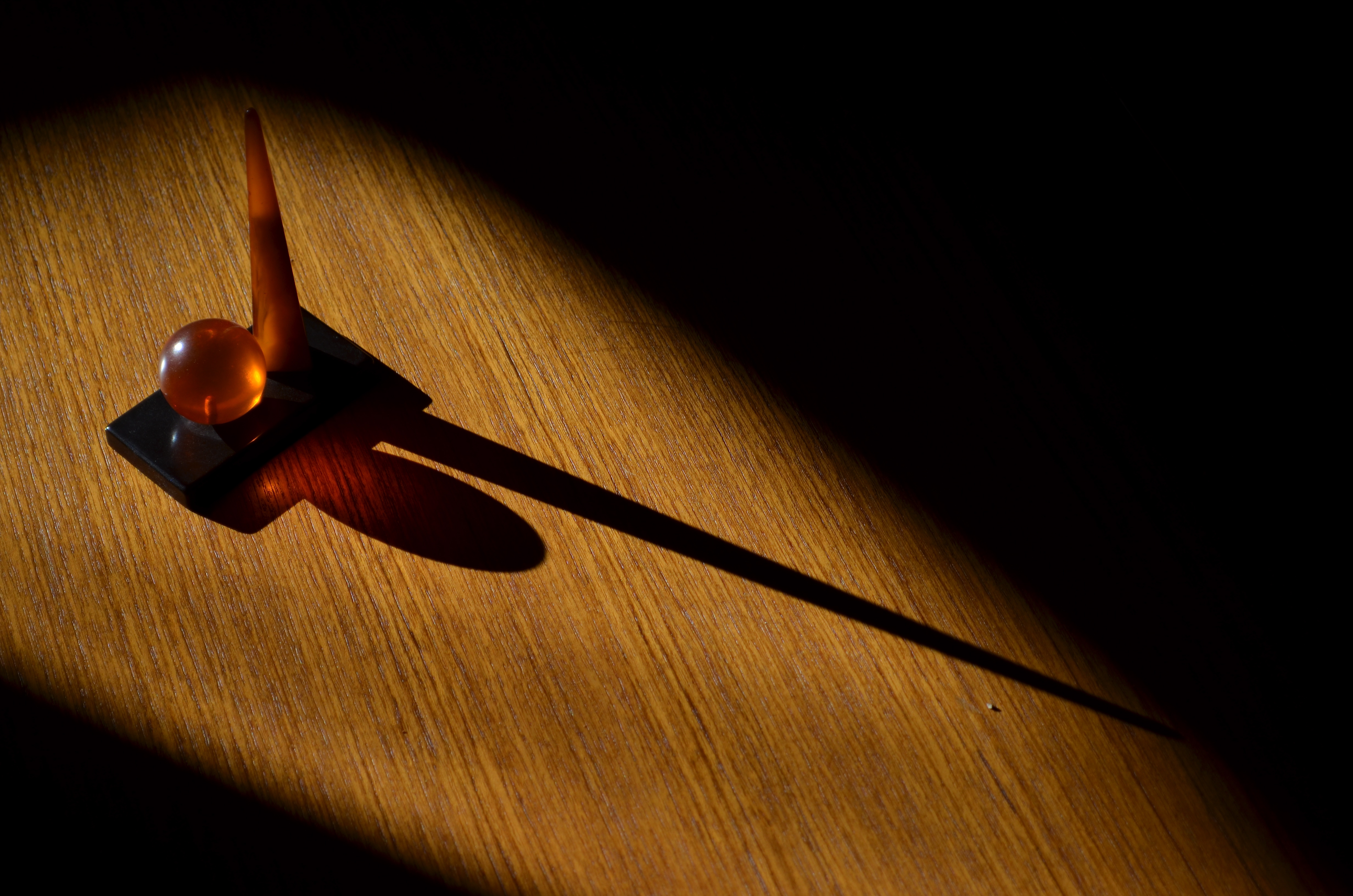
A translucent souvenir paperweight from the 1939 New York World’s Fair, made into a kind of glow torch courtesy of morning light shining on my dining room table. 1/500 sec., f/5.6, ISO 100, 55mm.
Part of my mad pursuit of available light has been fed, in recent years, by the adventure I undertook of shooting exclusively with a 50mm f/1.8 prime lens for an entire year. Freed by this wonderful glass to attempt an ever wider scope of do-able shots, I did everything I could to push the envelope in whatever situation I could devise. Eventually I compiled a book of the luckiest results entitled The Normal Eye, and was left with a renewed passion for low-and- no-light opportunities.
Find the BAM! spot around your crib and have your own Melies moment. Turns out, the tools we need are never far off.
Make light of the situation.
Thoughts?
(The Normal Eye is available through Blurb Books at www.blurb.com/bookstore
ALWAYS BE SHOOTING
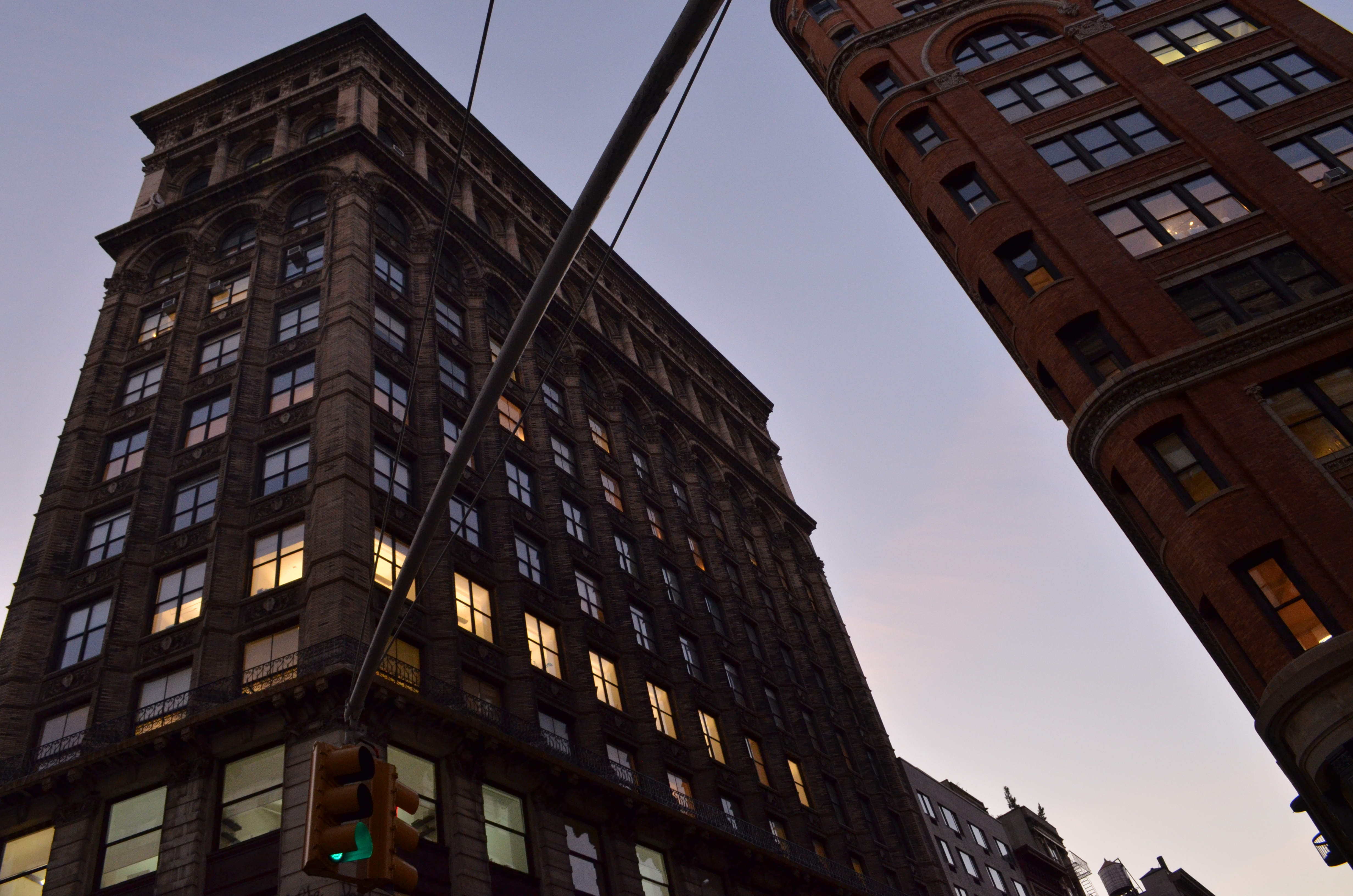
Urban survivors or disposable legacy? Part of the world is always vanishing from view. What portions to visually preserve? And how best to tell these stories? 1/40 sec., f/3.5, ISO 1000, 18mm.
PAUL DESMOND, LEGENDARY SAXOPHONIST for the Dave Brubeck Quartet, was famous for his wry replies to mundane questions from the press. Asked once “so, how are things going?”, he quipped, “Great. We’re playing music like it’s going out of style…..which, of course, it is.”
Beyond the cleverness of the statement, Desmond actually provided a corrolary to the ongoing state of photography. It is an art which is never “settled” into any final form, either in its mechanics or its aesthetic. Glass plates give way to roll film, which give way to digital storage, which will give way to..what? Recent trends in the forward edge of shooting hint at, among other things, bold new experiments in the direct exposure of chemically treated paper, minus lenses or shutters, resulting, in effect, in a camera-less camera. So now, what? A method so old that it’s new? So complicated that it’s totally simple? And where in these new crafts lie the art they might enable?
As image makers, we are really running down two parallel rails en route to obsolescence, since the world, as it can presently be seen, is passing away at the same lighting rate as our current means of documenting it. This is a constant for our art. When Eugene Atget recorded the last days of the Paris of the late 19th century, his methods for making the shots was fading out of fashion almost as quickly the dark, twisting streets he recorded. And when his protege, Berenice Abbott, undertook the same “mapping” of New York’s boroughs in the 1930’s (on assignment from various New Deal agencies), she, too was laboring against constantly improving methods for completing the book Changing New York, starting her massive project with a 60-pound view camera, and ending it with a new, lighter Rolleiflex miniature. She was also, understandably, racing against the wrecking ball of progress.
Worse, many places, such as the American southwest (where I live), hold the view that “old” is not “venerable”, but “in the way”….creating, for the shooter, a constant conundrum; what to visually archive, and in what way, and in what order?
The quiet death of Kodachrome, several years ago, proved a challenge for imagists the world over. If you were burning your last roll of this fabulous film forever, what shots would make your photographic bucket list? And how about expanding this scenario to include not just diehard “filmies”, but everyone? If there were an absolute deadline for imaging, a date beyond which no more pictures could be taken, ever, ever, what new urgency would inform your choices?
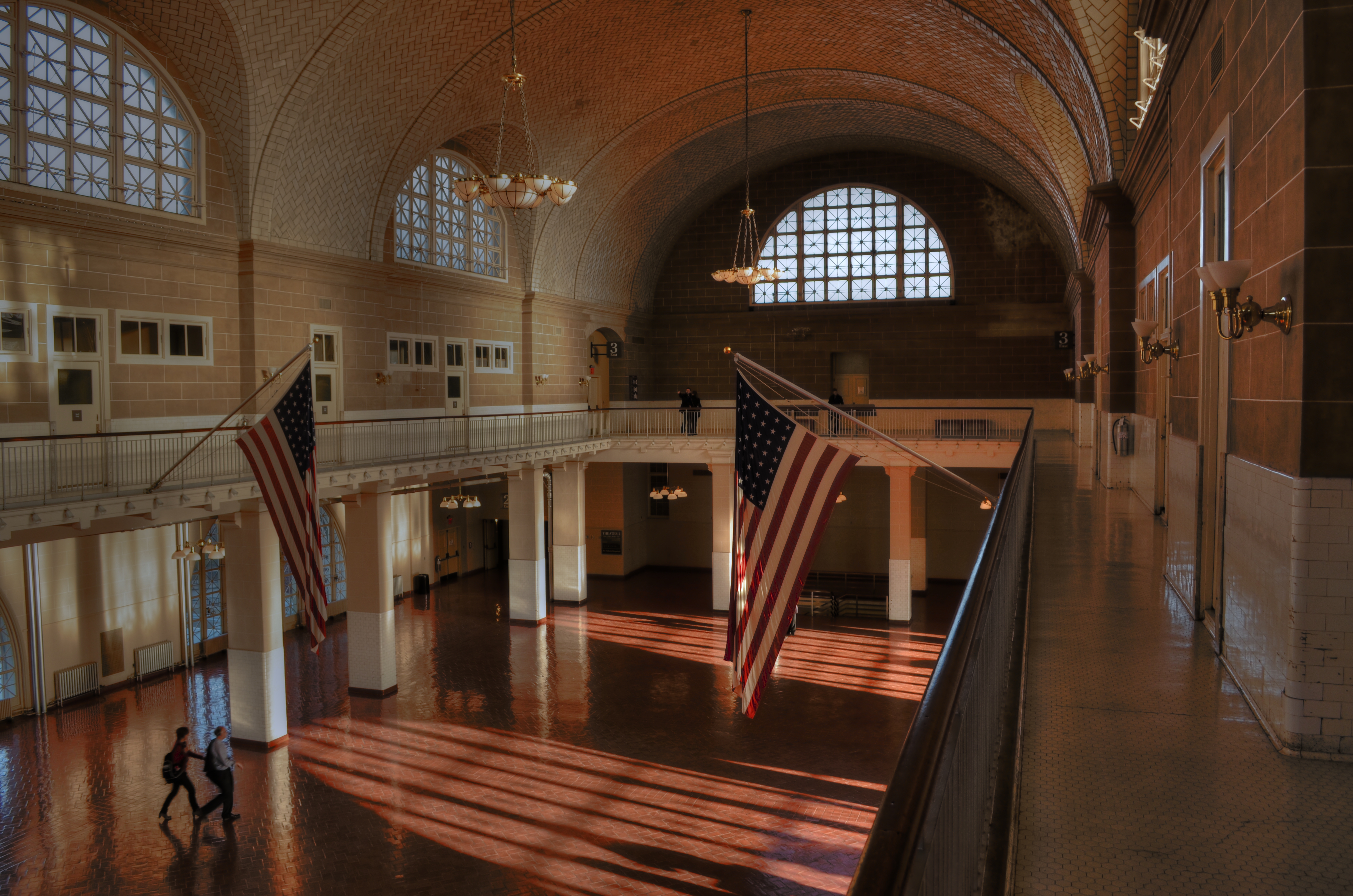
Sites like Ellis Island’s Great Hall have more than their share of caretakers. But how many other visual dramas will escape our viewfinders before they pass from the earth? 1/25 sec., f/6.3, ISO 100, 18mm.
It’s almost that dire already. Time hurtles forward and lays waste to everything in its path, including ourselves. Today, now, we are watching it erase neighborhoods, cities, forests, the shapes of nations, even the names of places. Even if we use our skills largely for cataloguing the general effect of these changes, we are nonetheless under the gun to fill our days with the grabbing of these fleeting glances. Even while we perpetually change how we capture, we must capture as much as we can, by any means available.
There is no mission statement stronger than the three words always be shooting. Because we are doing more than saving memories; we are, in fact, bearing witness. Whatever the subject, wherever we want to start chronicling the word around us, we need to be taking pictures.
Like they’re going out of style.
Thoughts?
WHEN ART SELF-CENSORS
IN ITS FIRST DAYS, photography took on the inward, personal aspect of painting, both in its selection of pictorial subjects and in its method of presentation, which was designed to legitimize the new science by aping the look of the canvas. Only by actively engaging the world and invading every corner of it in an outward search for truth or beauty did picture-making break free of the painter’s constraints. Once Matthew Brady’s stark images of the Civil War froze that conflict’s horror on glass, at least one leg of the photographer’s stool rested on a confrontation of reality.
In the 20th century, as shooters toggled between deliberate, arranged images and pure documentation, the “face” of the public became an unwitting tool in the artist’s toolbox. Human manifestations of delight, horror, revelation and ruin told the story of the new era even more graphically than the correspondent’s pen, creating some of the most indelible images of modern times. Indeed, there seemed to be an unspoken pact between the artist and his “prey” to the effect that their lives, like ours, could be endlessly recorded, interpreted, interrupted and enshrined for the sake of our “art”.
But is that era coming to an end? And, for photography, what lies beyond?
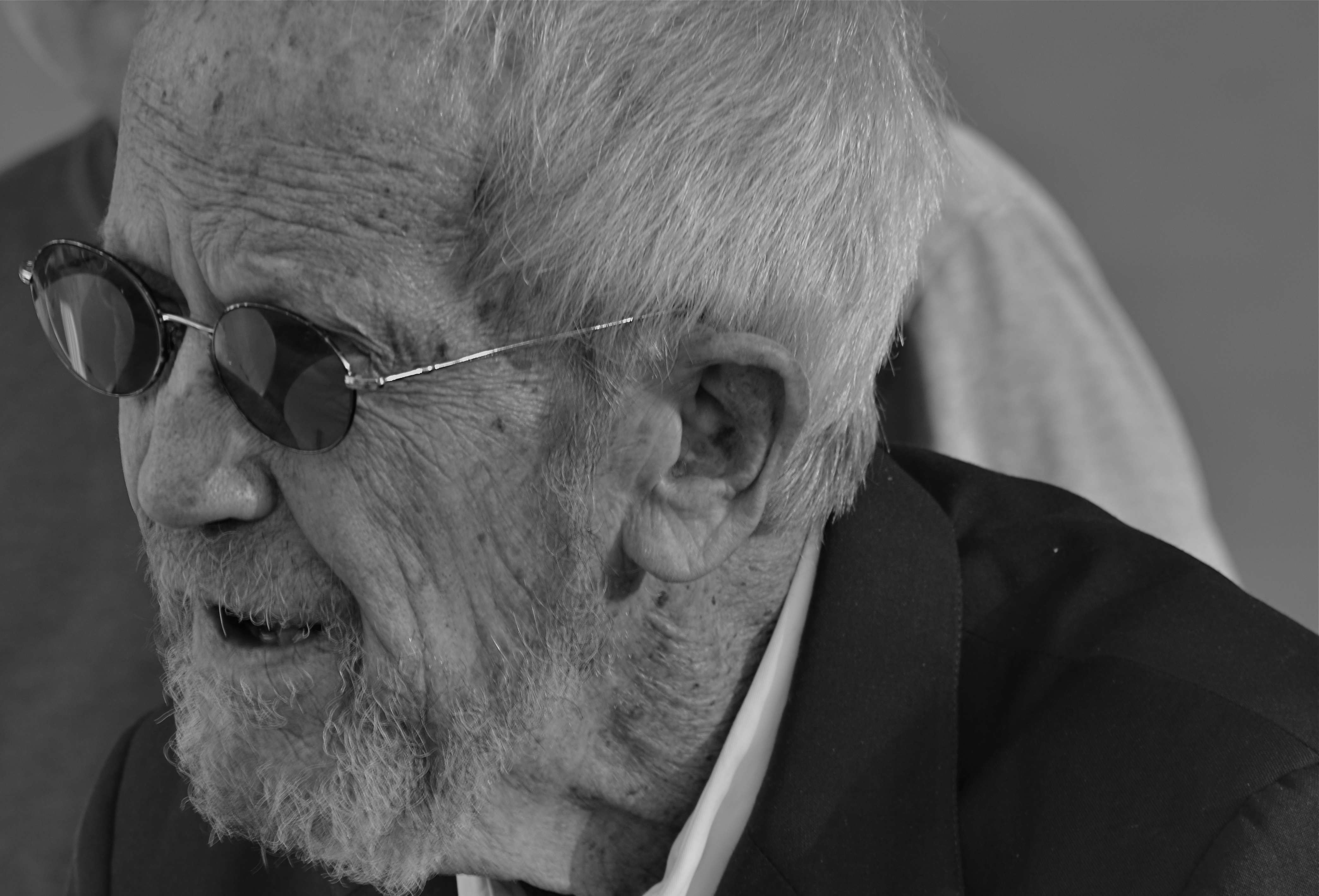
By agreeing to appear at a book fair and signing, public figures like Elmore James (author of Get Shorty and, 3:10 to Yuma, and consultant on the TV series Justified) more or less agree to allow their images to be recorded as part of the celebrity they have willfully undertaken. But what of everyone else? 1/40 sec., F/11, ISO 160, 300mm.
In recent years, both public and private institutions have begun to disallow photography in some venues that had historically been open to it, including retail stores, parks, malls and other previously “free” spaces. Some of this is the inevitable aftermath of our recent obsession with security, a kind of whoa-slow-down against the pervasive replication of all aspects of one’s identity. Perhaps, several gazillion camera phone snaps and gotcha YouTubes later, we have reached a tipping point of sorts, a world in which people desperately seek a firewall around their secret selves.
Even as certain nondescript individuals shamelessly seek the spotlight of reality shows and paparazzi-fed ego gratification, many more are feeling an unfamiliar new yen for shelter from the ubiquitous flash of fame. In such a time, the concept of commentary or “street” photography faces one of its most daunting challenges. What is permissible in an image, now? Are what were once the eloquently revealing truths of spontaneous snaps now a kind of voyeurism, a “reality porn” peek into peoples’ lives to which we have no right?
Without the harrowing chronicle of Dorothea Lange’s dust-bowl refugees, would we understand less of the horrific impact of the Great Depression? Was she underscoring an important message or exploiting her subjects’ suffering? Absent Larry Burrows’ grunt’s-eye-view of Vietnam for Life magazine, would we have missed a valuable insight into a war our government might just have gladly kept under wraps? We may have already reached the point where some of us, embarrassed for the intrusive nature of our craft, have begun to self-censor, to mentally de-select some images before we even shoot them. Such prior restraint may be the height of sensitivity, but it spells paralysis for art.
GIFTS
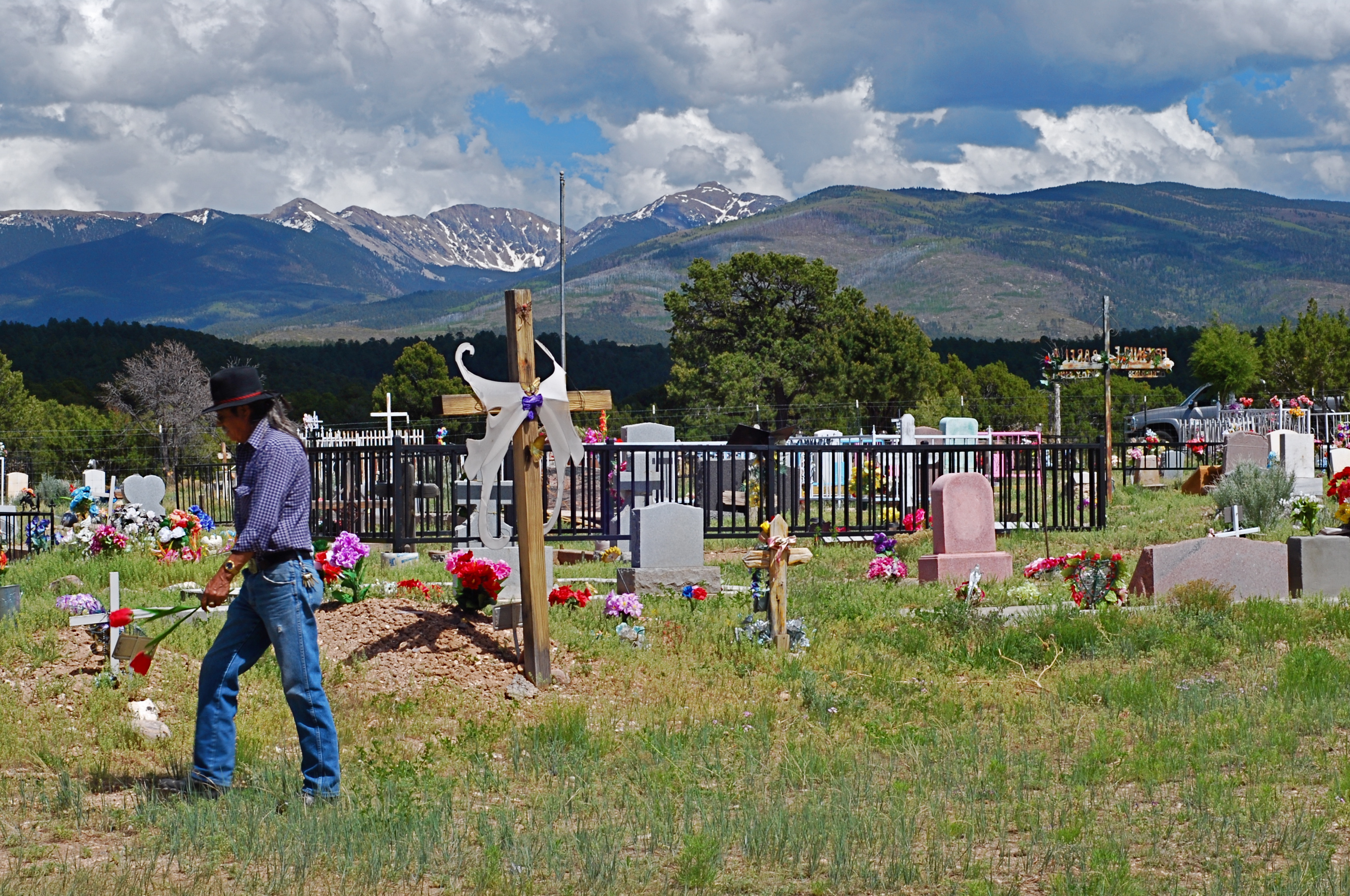
Some things you work hard for. Some things fall right into your lap. Learn to be gracious and grateful for the happy accident. 1/125 sec., F/14, ISO 200, 50mm.
SOMETIMES YOU CAN BECOME SO FIXATED on the shot you think you want that the shot you could have can’t squeeze through the mental haze. You might even regard an element that has the potential to actually save your image as an annoyance, as if it’s blocking the view of your sacred “plan”. The alternate idea buzzes around your skull like some stubborn house fly, and you’re eager to bat it away and get back to your grand vision.
A while back, such an element was fighting to get my attention. It was the very thing my picture needed…and the very last thing I wanted. I wish I could say I came to my senses, but it was actually only after I viewed a burst of shots, after the fact, that I fully realized I had been given a gift.
The above scene, a small rustic graveyard, can be found in a mountainous village near the greater Santa Fe area in New Mexico. The location pulled me off the road with its breathtaking setting, as well as the many hand-crafted monuments scattered among the more traditional headstones. I was thinking: nice, self-contained scenic shot, lots of local flavor, warmer-than-normal desert light, just point and click, right? Simple.
Simple, that is, until our friend here showed up. Immediately I regarded him as noise, as an interruption of my “ideal” shot. Never mind the folly of thinking that there is only one way to approach a subject: I was muttering a few silent oaths even as I continued to click and track him as he crossed the graveyard. When was he going to get out of the way, so I could back to my master plan?
Idiot.
I kept everything I shot, figuring that I might have accidentally gotten my wonderful empty scenic before my visitor came along. Instead, at full-size review later, I came back again and again to look at him. His slim solitary form, his simple dress, his two plain flowers, and his downcast gaze all lent a story to what had been a simple, if nice, still life. In giving that sad little field some badly needed human context, his presence proved that it was he who belonged there. If there was an intruder in this drama, it was me. I was just there to take pictures of his life.
He was busy living it.
I frequently find that if I just turn my mind off and stop obsessing about my “vision”, many settings yield something stronger and more elequent than my original design. Think of it as being a sketch artist who keeps his options open by laying in as many pencil lines as you can before inking the final choice. Most importantly, you must trust and be thankful for the occasional gift.
Thoughts?
THE GLORY OF THE INVISIBLE
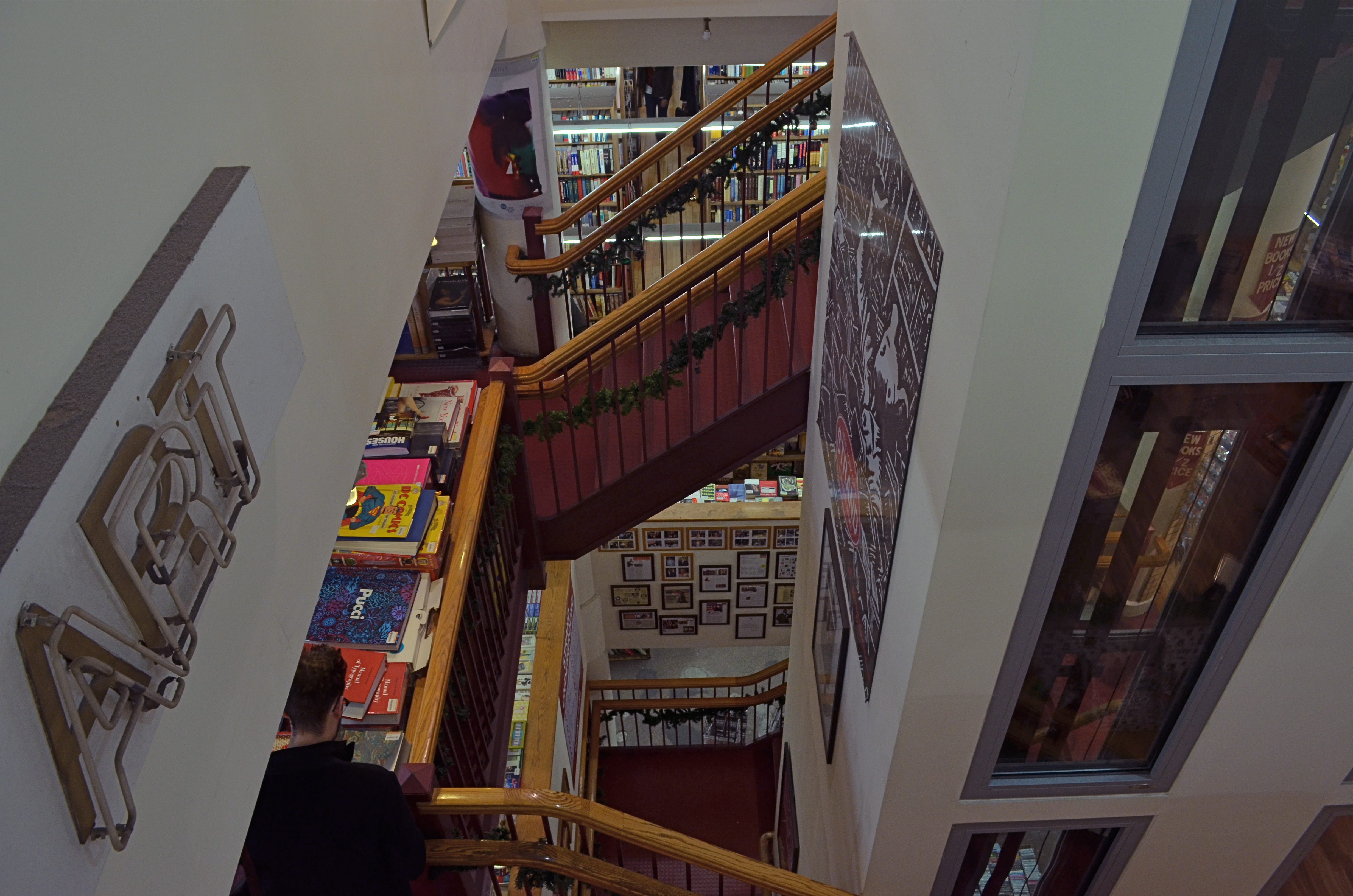
I thought of trying to capture the vastness of Manhattan’s Strand Bookstore in a single wide shot, but finally preferred this view, which suggests the complexity and size of the store’s labyrinthine layout. 1/40 sec., F/7.1, ISO 500 at 18mm.
THE FRAME OF AN IMAGE is the greatest instrument of control in the photographer’s kit bag, more critical than any lens, light or sensor. In deciding what will or won’t be populated inside that space, a shooter decides what a personal, finite universe will consist of. He is creating an “other” world by defining what is worthwhile to view, and he also creates interest and tension by letting the view contemplate what he chose to exclude. What finally lies beyond the frame is always implied by what lies inside it, and it is the glory of the invisible that invites his audiences inside his vision, ironically by asking them to consider what is unseen….in a visual medium.
Each choice of what to “look at” has, inherent in it, a decision on what to pare away. It is thus within the power of the photographer to make a small detail speak for a larger reality, rendering the bigger scene either vitally important or completely irrelevant based on his whim. Often the best rendition of the frame is arrived at only after several alternate realities have been explored or rejected.
Over a lifetime, I have often been reluctant to show less, or to choose tiny stories within larger tapestries. In much pictorial photography, “big” seems to serve as its own end. “More” looks like it should be speaking in a louder voice. However, by opting to keep some items out of the discussion, to, in fact, select a picture rather than merely record it, what is left in the frame may speak more distinctly without the additional noise of visual chatter.
“If I’d had more time”, goes the old joke, “I’d have written you a shorter letter”. Indeed, as I get older, I find it easier to try and define the frame with an editor’s eye, not to limit what is shown, but to enhance it. Sometimes, the entire beach is stunning.But, in other instances,a few grains of sand may more eloquently imply the beach, and so enable us to remember what amazing details combine in our apprehension of the world.
Thoughts?
 thenormaleye