RE-SETTING THE CONVERSATION
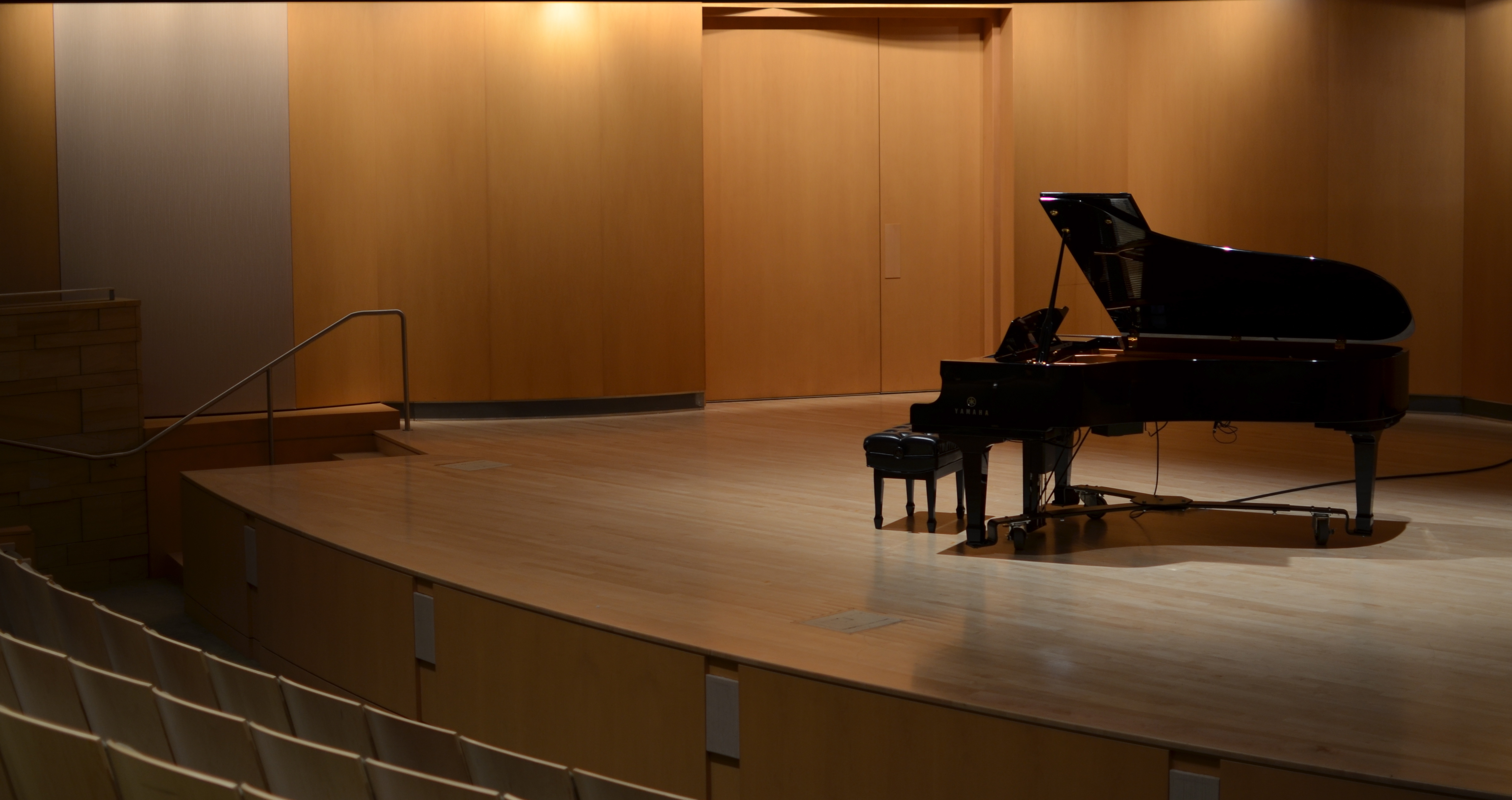
Performance theatre at Phoenix’ Musical Instrument Theatre. See below for another way to go with color and texture in this composition. 1/40 sec., f/1.8, ISO 100, 35mm
By MICHAEL PERKINS
THERE WILL ALWAYS BE THE TEMPTATION TO USE PROCESSING TO AMPLIFY THE POWER OF MEDIOCRE IMAGES. Let’s just acknowledge that. In the digital age, when you produce something that is merely okay, there are lots of places, from apps to processing hardware, where you can take that measly morsel of an image, and hang a Christmas ball on it, drown it in gravy, or slap on a decal of fake hipster irony. Somehow, though, you always know if you were dressing up a monkey in a silk suit and trying to pass it off as Colin Firth. As Old Lodge Skins says in Little Big Man, “sometimes the magic works and sometimes it doesn’t.”
A few weeks back I was shooting in the larger open spaces at Phoenix’ magnificent Musical Instrument Museum, trying to take the simplest images possible in terms of tone and texture. This is the only way, in my opinion, to match the streamlined, quiet way that the “MIM” cradles its exhibits. The gently curving lines and wall-height windows of this desert flower stand in stark contrast to older museums back east, which, with their stony gravitas and grandiloquent design, can threaten, at times, to shout down the treasures that they are supposed to be showcasing.
So, again, the mission was, keep this simple.
The MIM’s performance theatre is, like the rest of the museum, trim and clean to the eye, almost like a private recital hall. No garish private boxes, no Graeco-Roman splendor, just simple space arranged modestly. I loved having a private shot at the bare stage adorned only by the house piano, but my first shots were giving me too much for the eye to do. Wood grain, the physical details of the piano and seats, different shades of light from orange to gold to beige to off-white…I felt the whole thing needed to be turned down somehow. However, by the time I came to this decision, I was back home.

Same specs as the above image, but tweaked with tint and temperature, then softened with noise reduction. Once again, 1/40 sec., f/1.8, ISO 100, 35mm.
Took the fastest way out. First, manipulate temperature and tint to convert all the competing tones in the house lighting to a uniform, deep crimson. Then, although the image was shot at f/1.8, and ISO 100, and thus fairly free of noise, I elected to add more noise reduction to soften everything and kill off some detail that the image simply didn’t need. Minus the harder edges, I got a simple two-tone composition. The piano’s shape was enough to sell the whole thing, and, although the shot will never be my magnum opus, it’s graduated to slightly better than okay as a mood piece.
Was this cheating, or merely finishing what I started in the original frame. And what is “cheating” in this context anyway?
And you thought there would be no philosophy on the test……
(Follow Michael Perkins on Twitter @mpnormaleye)
LESS SHOWS MORE
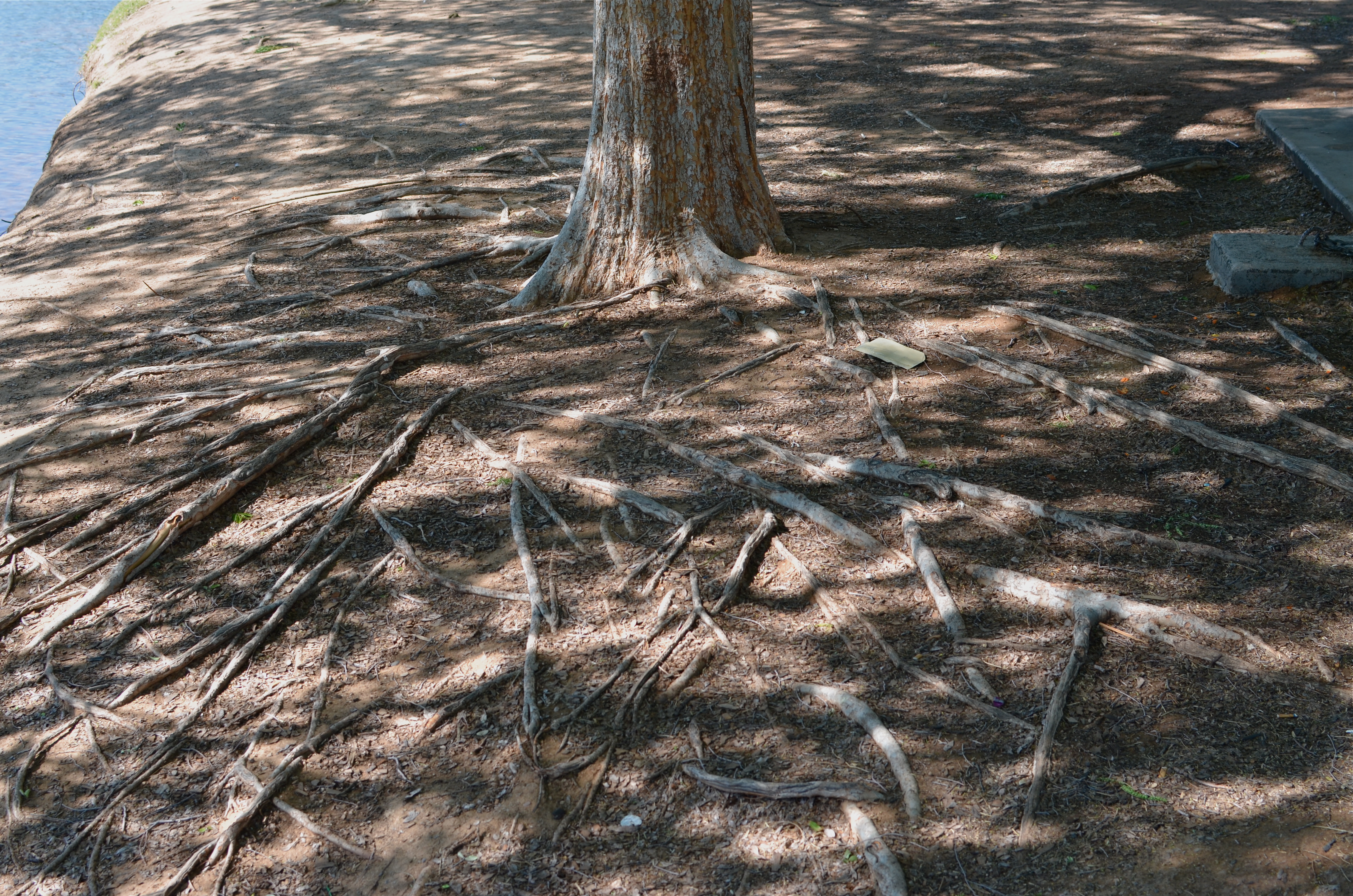
You don’t have to reveal every stray pebble or every dark area in perfect definition to get a sense of texture in this shot. 1/160 sec., f/5.6, ISO 100, 35mm.
by MICHAEL PERKINS
THERE IS A WRONG-HEADED IDEA OUT THERE THAT ALL VISUAL OUTCOMES IN PHOTOGRAPHY SHOULD BE EQUAL. That’s a gob of words, so here’s what I’m getting at: higher ISO sensitivity, post-processing and faster lenses have all conspired, of late, to convince some of us that we can, and should, rescue all detail in even the most constrasty images. No blow-outs in the sky, no mushiness in the midrange, no lost information in the darkest darks. Everything in balance, every iota of grain and pattern revealed.
Of course, that is very seductive. Look at a well-processed HDR composite made from multiple bracketed images, in which the view out the window is deep and colorful, and the shadowy interiors are rich with texture. We’ve seen people achieve real beauty in creating what is a compelling illusion. But, like every other technique, it can come to define your entire output.
It’s not hard to see shooters whose “style” is actually the same effect applied to damn near all they shoot, like a guy who dumps ketchup on everything his wife brings to the table. When you start to bend everything you’re depicting to the same “look”, then you are denying yourself a complete range of solutions. No one could tell you that you always have to shoot in flourescent light, or that deep red is the only color that conveys passion, so why let yourself feel trapped in the habit of using HDR or other processes to always “average out” the tonal ranges in your pictures? Aren’t there times when it makes sense to leave what I will call “mystery” in the undiscovered patches of shadow or the occasional areas of over-exposure?
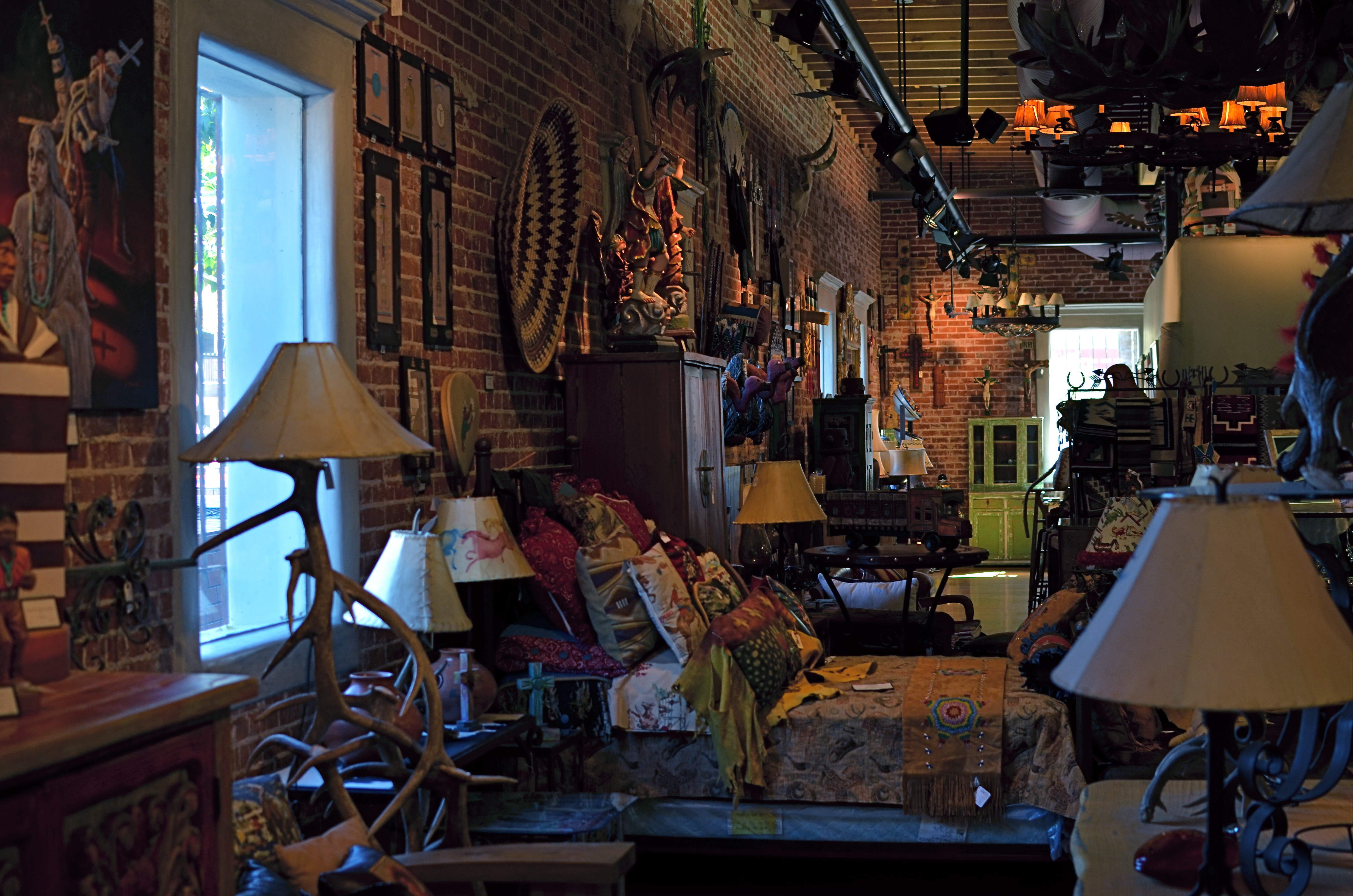
Letting some areas of a frame remain in shadow actually tamps down the clutter in a busy image like this. 1/60 sec., f/3.2, ISO 100, 35mm.
I am having fun lately leaving the “unknowns” in mostly darker images, letting the eye explore images in which it can NOT clearly make out ultimate detail in every part of the frame. In the mind’s eye, less can actually “show” more, since the imagination is a more eloquent illustrator than any of our wonderful machines. Photography began, way back when, rendering its subjects as painters did, letting light fall where it naturally landed and leaving the surrounding blacks as deep pools of under-defined space. Far from being “bad” images, many of these subtle captures became the most hypnotic images of their era. It all comes down to breaking rules, then knowing when to break even the broken rule as well.
Within this post are two of the latest cases where I decided not to “show it all”. Call it the photo equivalent of a strip-tease. Once you reveal everything, some people think the allure is over. The point I’m making is that the subject should dictate the effect, never the other way around. Someone else can do their own takes on both of these posted pictures, take the opposite approach to everything that I tried, and get amazing results.
There never should be a single way to approach a creative problem. How can there be?
Follow Michael Perkins on Twitter @thenormaleye.
Related articles
- HDR Under Control is a Thing of Beauty (thewayeyeseesit.com)
LET THE LIGHT BE THE STORY
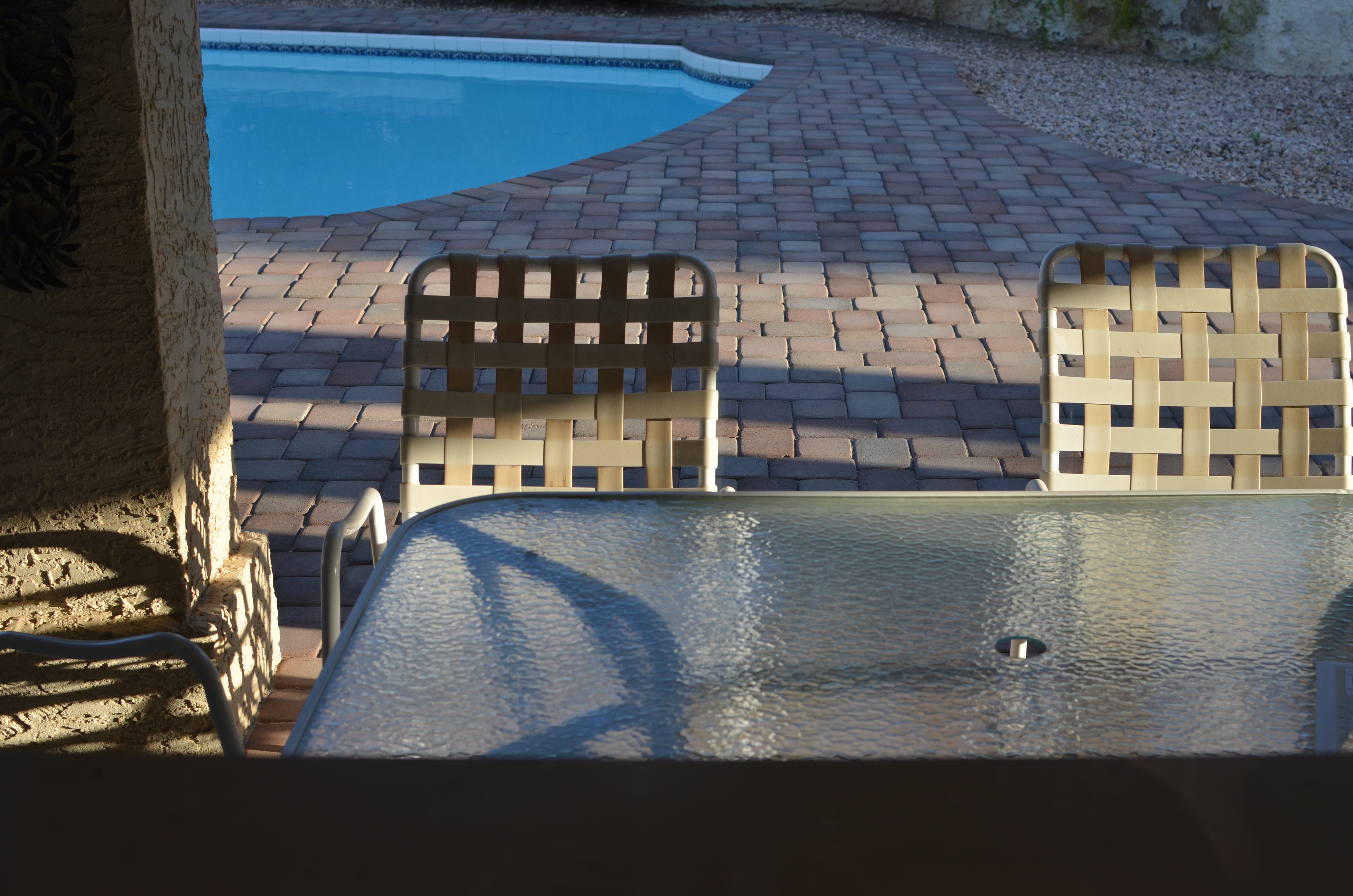
Ordinary, familiar objects, yes, but, for a few moments. their display of light was all the “subject” I needed. 1/200 sec., f/5.6, ISO 100, 35mm.
By MICHAEL PERKINS
ONE OF THE THINGS I OCCASIONALLY MISS ABOUT WORKING WITH PRIMITIVE CAMERAS is that the terms of success and failure are so stark. As Yoda says, you either do or do not…there is no “try”. If you have a limited piece of gear, it will always be capable (or incapable) of exactly the same things. That argument is settled, and so you have to find good pictures where they naturally occur….truly thinking outside (or without) the box.
The fact that you will get little or no extra help from the camera is initially limiting, but also, in a strange way, freeing.
On the other hand, the better your equipment, the more opportunities you have to counter iffy lighting conditions in your subjects. Photography today is about almost never having to say, “I couldn’t get the shot”…..at least not because of a lack of sufficient light. It’s just one more imperfect thing that shooting on full auto “protects” you from. But the argument could be made that ultra-smart cameras give you an output that, over time, can be stunningly average. The camera is making so many decisions of its own, in comparison to your measly little button flick, that every shot you “take” is pushing you further and further away from assuming active control of what happens.
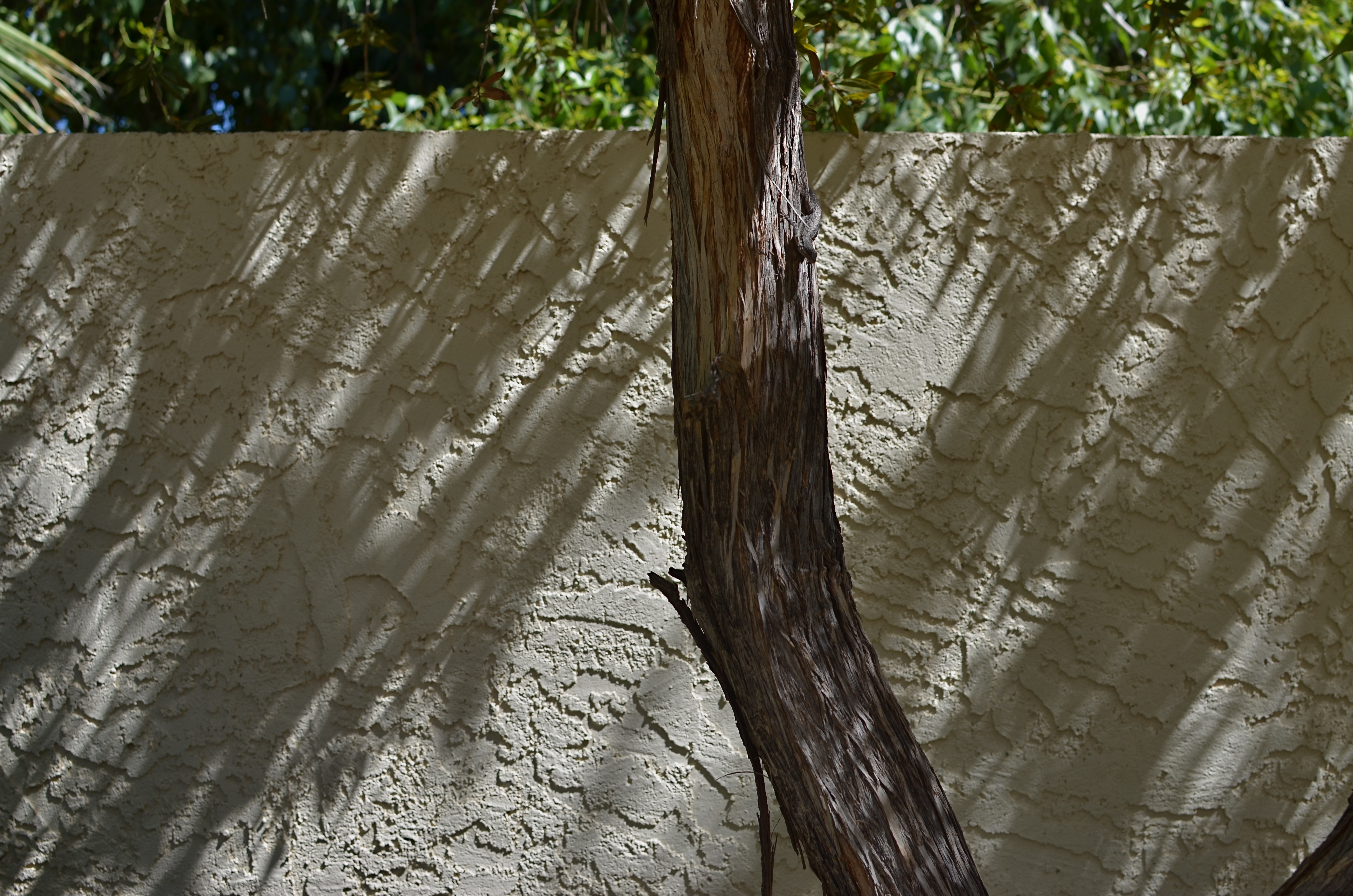
Early morning shadows shift suddenly, presenting many different ways to see the same subject. 1/400 sec., f/5.6, ISO 100, 35mm.
Hunting for images that you could capture with virtually no “help” from your camera is a more active process, since it involves planning. It means looking for pictures that your camera may not be able to grab without your specific input. And one great way is to shoot images that don’t matter in themselves, so that you are letting the light, and not the subject, be the entire story. That, and shooting on manual.
Back yards are great because they are convenient stages for light tracking. You can see the light conditions shift over the course of an entire day. Better still, it’s familiar territory that can only become more familiar, since it’s so close at hand, and available anytime. Since you will have more “what am I gonna shoot?” days than “amazing” days over a lifetime, fill them up by giving yourself a seminar in “this is what the light does”. Believe me, something worth keeping will happen.
Early morning, just after dawn, is the best time to work, because the minute-to-minute changes are so markedly unique. Wait too long and you lose your window. Or maybe you’re there in just another few minutes, when something just as good may present itself. I also like to work early because, living in the desert, I will have hours and hours of harsh, untamed light every day unless I plan ahead. It’s just too retina-roastingly bright, too much of the time.
Edward Steichen taught himself light dynamics by spending months shooting the same object in the same setting. Hundreds, sometimes thousands of frames where nothing changed but the light. He put in the time taking scads of images he knew he would never use, just to give him a fuller understanding of how many ways there were to render an object. He benefited, zillions of frames later, when he applied that knowledge to subjects that did matter.
The greatest photographer of the 20th century became “that guy” because he was willing to take more misses than anyone else in the game, in order to get a higher yield of hits down the road.
Shooting just for a better understanding of light is the best photo school there is, and it’s cheap and easy in the digital age. No chemicals, no glass plates, nothing in the way but yourself and what you are willing to try.
I like the odds.
(follow Michael Perkins on Twitter @mpnormaleye)
Related articles
- Street Photography Tips, Techniques and Inspirations (itscitrarizqinow.wordpress.com)
- How to break through the bottleneck of photography skills (ghjg85.wordpress.com)
BLUE ON THIRD AVENUE
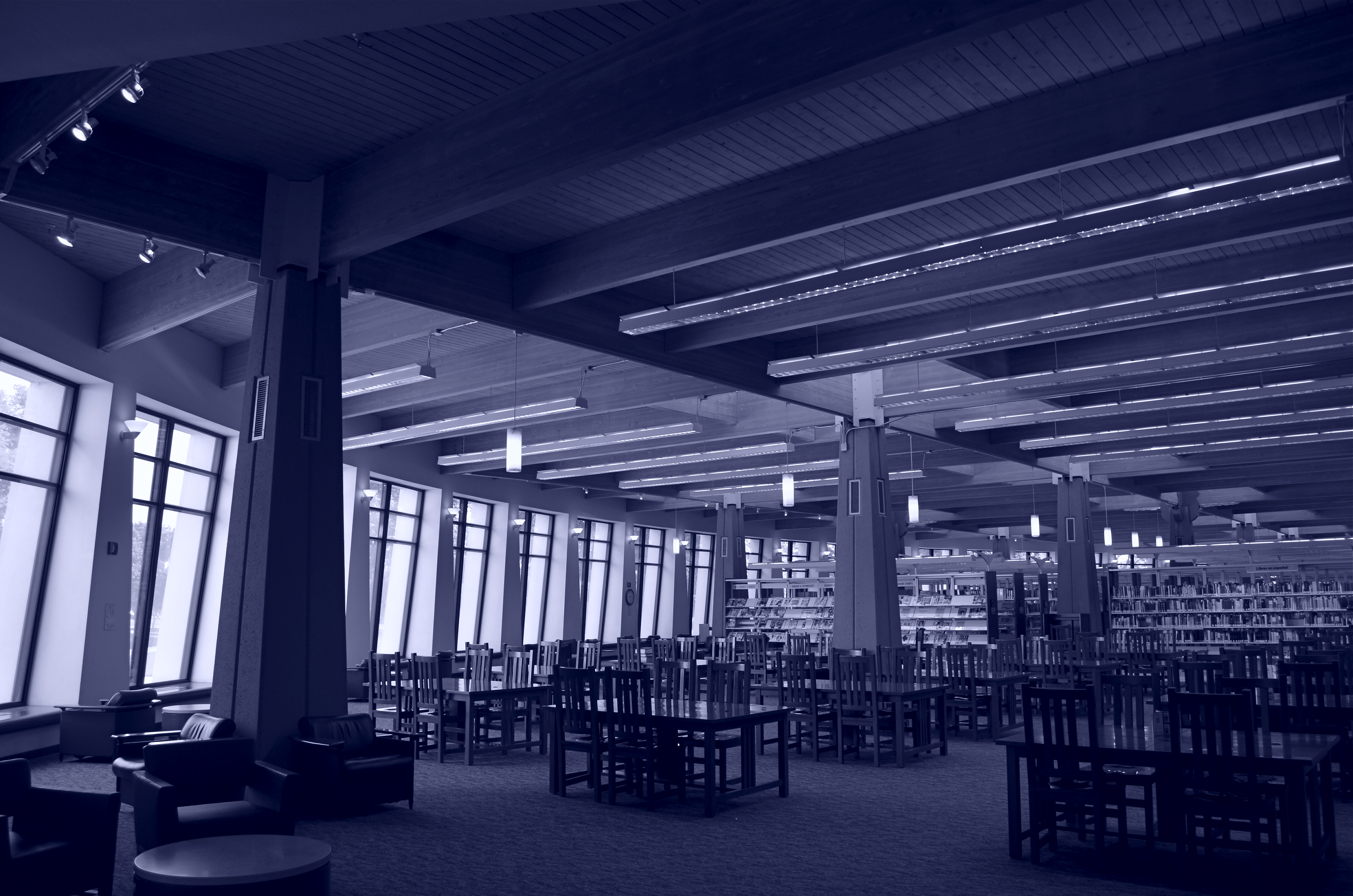
The cyanotype option in Nikon’s monochrome posting menu makes this in-camera conversion from color easy. 1/80 sec., f/5.6, ISO 160, 18mm.
By MICHAEL PERKINS
COLOR IS LIKE ANY OTHER COMPONENT IN LIGHT COLLECTION AND ARRANGEMENT, which is, really, what we are doing. Seen as a tool instead of an absolute, it’s easy to see that it’s only appropriate for some photographs. Since the explosion of color imaging for the masses seen in the coming of Kodachrome and other early consumer films in the 1930’s, the average snapper has hardly looked back. Family shots, landscapes, still life arrangements….full color or go home, right?
Well….
Oddly, professional shooters of the early 20th century were reluctant to commit to the new multi-hued media, fearing that, for some novelty-oriented photographers, the message would be the color, instead of the color aiding in the conveying of the message. Even old Ansel Adams once said of magazine editors, that, when in doubt, they “just make it red”, indicating that he thought color could become a gimmick, the same way we often regard 3-d.
In the digital age, by comparison, the color/no color decision is almost always an afterthought. There are no special chemicals, films or paper to invest in before the shutter clicks, and plenty of ways to render a color shot colorless after the fact. And now, even the post-processing steps involved in creating a monochrome image need not include an investment in Photoshop or other software. For the average shooter, monochrome post-processing is in-camera, at the touch of a button. Straight B/W and sepia and even what I call the “third avenue”, the blue duotone or cyanotype, as I’ve used above.Do such quickie options worsen the risk of gimmick-for-gimmick’s sake more than ever? As Governor Palin would say, “you betcha”. Google “over-indulgence”, or just about half of every Instagram ever taken, as evidence.
Hundreds of technical breakthroughs later, it still comes down to the original image itself. If it was conceived properly, color won’t lessen it. If it was a bad idea to start with, monochrome won’t deliver the mood or the tone changes needed to redeem it. Imagine the right image, then select the best way to deliver the message. Having quick fixes in-camera aren’t, initially, a guarantee of anything but the convenient ability to view alternatives. In the photo above, my subject was just too warm, too pretty in natural color. I thought the building itself evoked a certain starkness, a cold, sterile kind of architecture, that cyanotype could deliver far better. The shadows are also a bit more mysteriously rendered.
At bottom, the shot is just a study, since I will be using it to take far more crucial pictures of far more intriguing subjects. But the in-camera fix allows you to analyze on the fly. And, since I got into this racket to shoot pictures, and not to be a chemist, I occasionally like a fast thumbs-up, thumbs-down verdict on something I’ve decided to try in the moment.
Giving yourself the blues can be a good thing.
(follow Michael Perkins on Twitter @ mpnormaleye)
Related articles
- Toning my Cyanotype with Haritaki (altlab2011.wordpress.com)
- Beyond Color (piaffephotos.wordpress.com)
IT’S NOT EASY BEIN’ GREEN
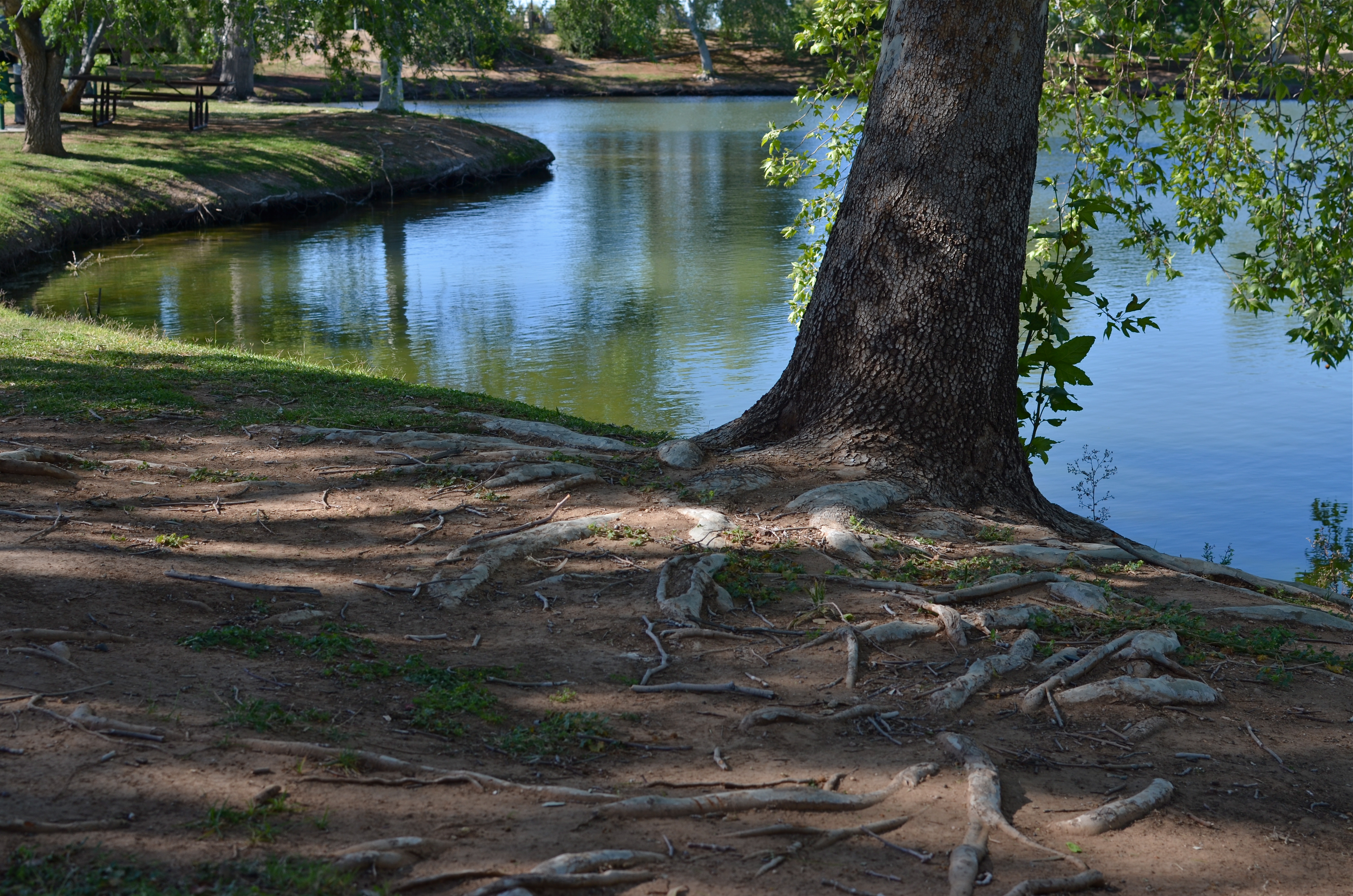
This is the desert? A Phoenix area public park at midday. There is a way around the intense glare. 1/500 sec., f/5.6, ISO 100, 35mm, straight out of the camera.
By MICHAEL PERKINS
FOR YEARS I HAVE BEEN SHOOTING SUBJECTS IN THE URBAN AREAS OF PHOENIX, ARIZONA, trying to convey the twin truths that, yes, there are greenspaces here, and yes, it is possible for a full range of color to be captured, despite the paint-peeling, hard white light that overfills most of our days. Geez, wish I had been shooting here in the days of Kodachrome 25. Slow as that film was, the desert would have provided more than enough illumination to blow it out, given the wrong settings. Now if you folks is new around here, lemme tell you about the brilliant hues of the Valley of the Sun. Yessir, if’n you like beige, dun, brown, sepia or bone, we’ve got it in spades. Green is a little harder to come by, since the light registers it in a kind of sickly, sagebrush flavor….kind of like Crayola’s “green-yellow” (or is it “yellow-green”?) rather than a deep, verdant, top-o-the-mornin’ Galway green.
But you can do workar0unds.
In nearby Scottsdale, hardly renowned for its dazzling urban parks (as opposed to the resort properties, which are jewels), Indian School Park at Hayden and Indian School Roads is a very inviting oasis, built around a curvy, quiet little pond, dozens of mature shade trees that lean out over the water in a lazy fashion, and, on occasion, some decorator white herons. Thing is, it’s also as bright as a steel skillet by about 9am, and surrounded by two of the busiest traffic arteries in town. That means lots of cars in your line of sight for any standard framing. You can defeat that by turning 180 degrees and aiming your shots out over the middle of the pond, but then there is nothing really to look at, so you’re better off shooting along the water’s edge. Luckily, the park is below street level a bit, so if you frame slightly under the horizon line you can crop out the cars, but, with them, the upper third of the trees. Give and take.
There is still a ton of light coming down between the shade trees, however, so if you want any detail in the water or trees at all, you must shoot into shade where you can, and go for a much faster shutter speed….1/500 up to 1/1000 or faster. It’s either that or shoot the whole thing at a small f-stop like f/11 or more. In desert settings you’ve got so much light that you can truly dance near the edge of what would normally be underexposure, and all it will do is boost and deepen the colors that are there. There will still be a few hot spots on projecting roots and such where the light hits, but the beauty of digital is that you can click away and adjust as you go.
It’s not quite like creating greenspace out of nothing, but there are ways to make things plausibly seem to be a representation of real life, and, since this is an interpretive medium, there’s no right or wrong. And the darker-than-normal shadows in this kind of approach add a little warmth and mystery, so there’s that.
It was “yellow-green”, wasn’t it?
Hope that’s not on the final.
(follow Michael Perkins on Twitter @mpnormaleye)
CONTAIN YOURSELF
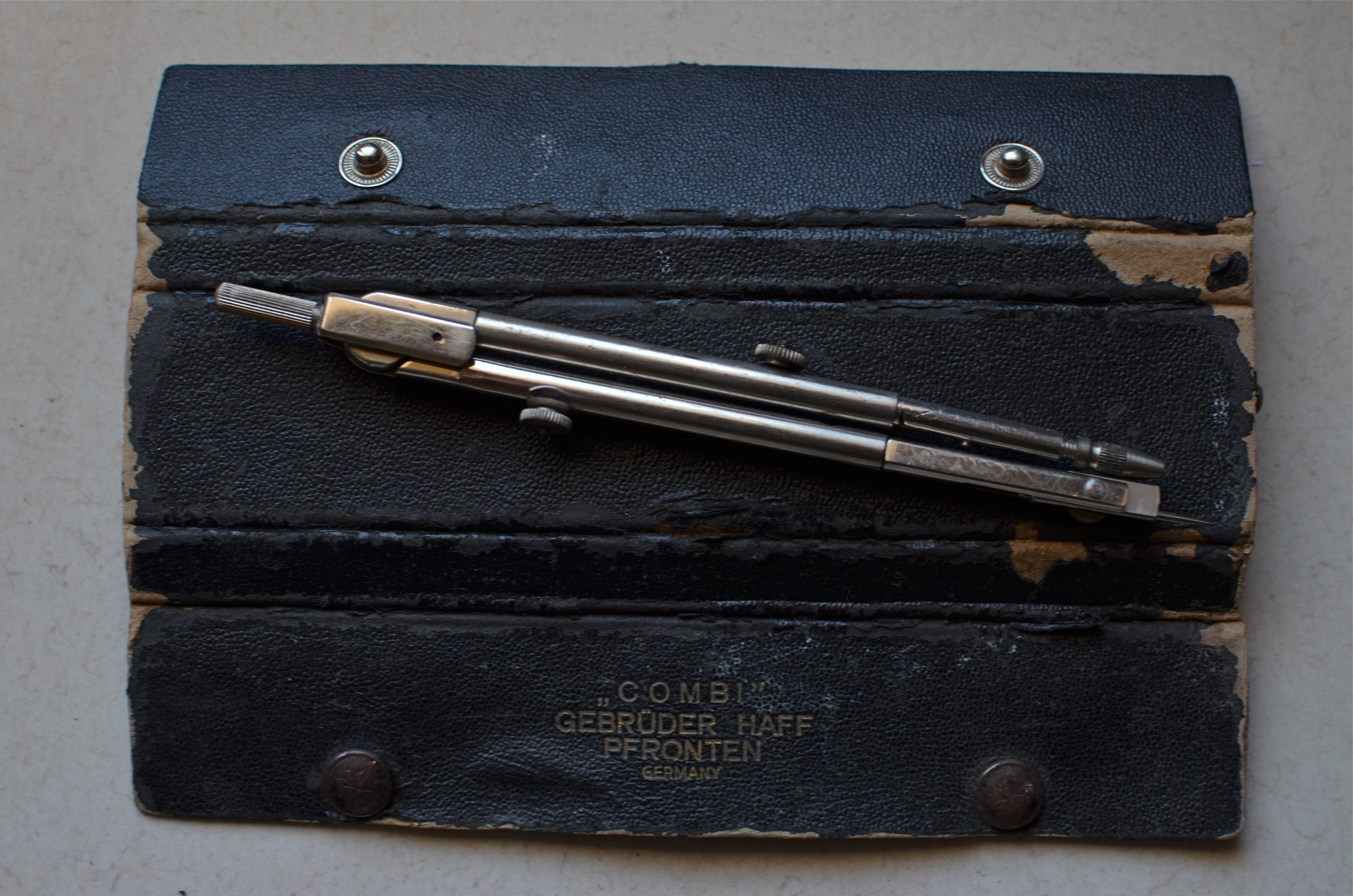
The Things They Carried: my wife’s father’s leather instrument case and compass. 1/60 sec., f/5.6, ISO 250, 35mm.
By MICHAEL PERKINS
WE LIVE IN AN AGE IN WHICH MOST OF OUR LIVES ARE EXHAUSTIVELY OVER-DOCUMENTED. We are, compared to our recent ancestors, photographically bitmapped from cradle to grave with a constellation of snaps that practically draw an outline around us and everything we do.
Globally, we will take more photographs in two minutes today than the entire world took over the entire 19th century.
That said, it’s amazing how few photos taken of, or by, us really look deeply into our souls, or whatever it is that animates us, makes us truly alive. It’s not that there aren’t enough pictures of us being taken: it’s how inarticulate so many of them are.
But go back just a generation or two, and observe the contrast. Far fewer images of most lives. And, with their increasing rarity or loss, more and more value attached to each and every one of those images that survives. Grandfather is gone, leaving only a handful of curled, cracked, and browning snapshots to mark his passing. But how rich the impact of those remaining pictures. The thirst for more, for a greatest number of clues to who this person was!
How to increase or deepen his spirit without having him here?
Explore the things he left behind. The tools he touched. The places where he invested his spirit, his aura. The parts of the world that he deemed important.
And I say: if you love someone, and have to let them go, use your camera to sniff around the found objects of their lives. It may not conjure them up like a holograph of Obi-Wan, but it will focus your thoughts about them in away which is nearly, well, visual.
I fell in love with the worn little instrument case you see at the top of this page. It belonged to my wife’s father, a man whose life was cut short by illness, a life under-represented in photographs. He made his living with his wits and with his hands. The compass which was carried in this case was a tool of survival, something he used to make his living, to measure out his skill and art. It’s a treasure to have it around to look at, and it’s a privilege to be able to photograph its worn corners, its tattered grain, its rusted buttons. Time has allowed it to speak, louder than its owner ever can, and to act as his visual proxy.
I’ve explored this theme in past posts, because I feel so strongly about the expressive power of things as emblems of lives. Long before our every action could be captured in an endless Facebook page of banal smartphone snaps, images had to work a lot harder, and say more. I’m not saying you should spend the next six months of your life raiding your closets for Ultimate Truth. I am saying you might be walking past a chunk of that Truth every day, and that it might just be worth framing up.
And thinking about.
(let’s help each other find amazing images! Follow Michael Perkins on Twitter @mpnormaleye.)
Related articles
- Behind the lens (theoriginalblogofthecentury.wordpress.com)
- Old Photographs Given New Life (modcloth.com)
IT TAKES A THIEF
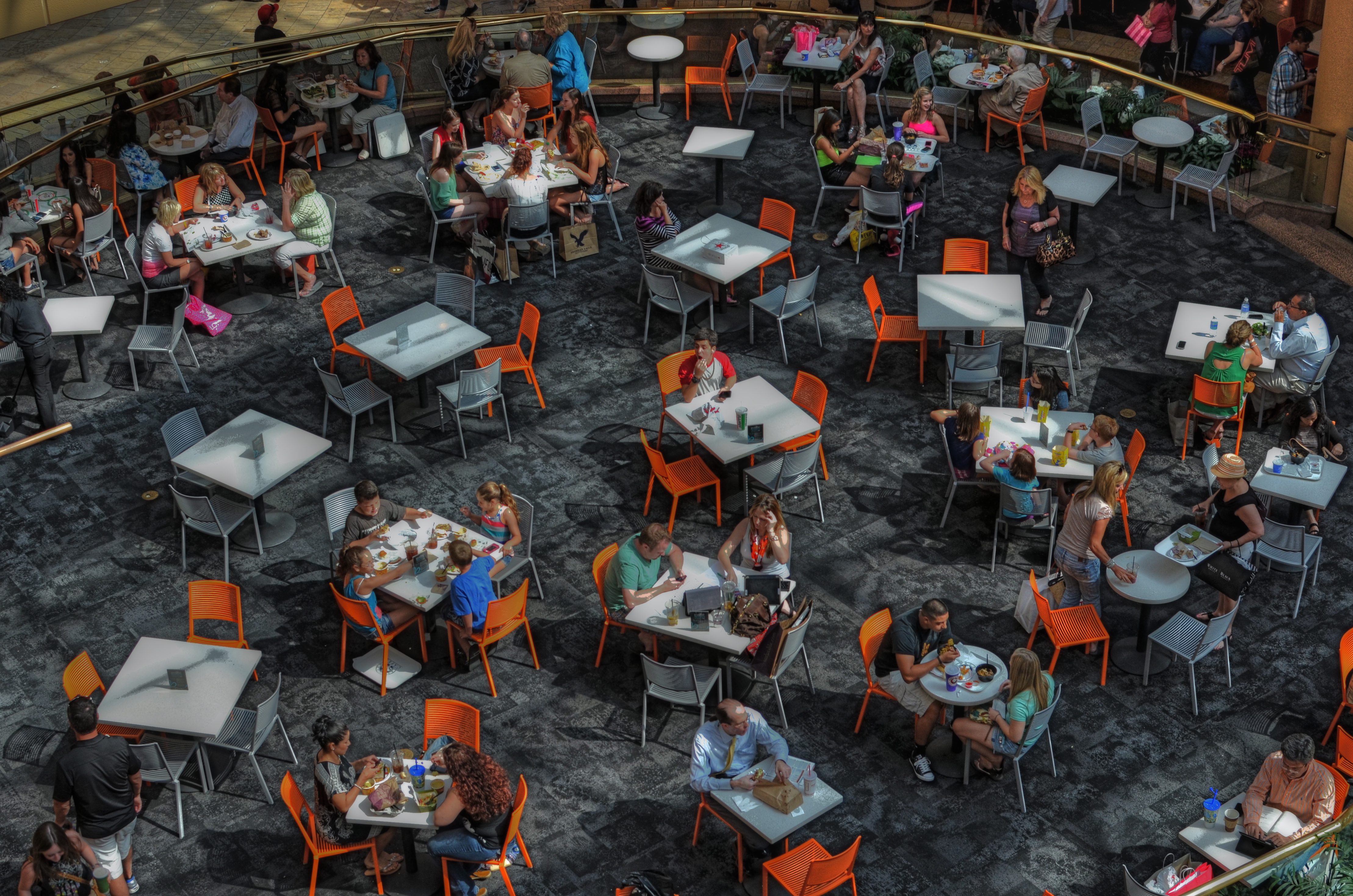
In this composition, people become mere design elements, or props. To get this look, a single exposure was duped, the two images were re-contrasted, and then blended in the HDR program Photomatix for a wider tonal range than in “nature”.
By MICHAEL PERKINS
THE GREAT STREET PHOTOGRAPHERS OF OLD WERE ALL WILY, SLY THIEVES, capturing their prey in emulsion. Yes, I know that the old superstition isn’t literally true. You can’t, in fact, imprison someone’s soul inside that little black box. And yet, in a sense that is very personally felt by many of our subjects today, we are committing an “invasion” of sorts, a kind of artsy assault on the self. Oddly, the same technique that gets you admired when you successfully capture a precious quality of someone else’s face makes you despised when you’re sneaking around to get my picture. Whether street shoots are inspired or reviled is largely a matter of who is being “violated”.
We’ve all heard about Henri Cartier-Bresson, covering the bright chrome trim of his Leica with black electrical tape, the better to keep his camera “invisible” to more of his subjects, as well as the through-the-overcoat candids shot on the New York subway by Walker Evans. And then there is the real risk to personal safety, (including being arrested, jailed, and physically threatened) undertaken by Robert Frank when taking the small-town shots for his legendary street collection, The Americans in the 1950’s. And while most of us aren’t risking incarceration or a punch in the snoot when framing up a stranger, sensitivity has accelerated, as cameras have proliferated into the millions, and personal privacy has, in the digital era, been rendered moot.
Every street shooter must therefore constantly re-negotiate the rules of engagement between himself and the world at large. Is the whole of society his canvas, or is he some kind of media criminal, seeking to advance his own vision at the expense of others’ personhood? I must admit that, at times, I tire of the endless calculation, of the games involved in playing “I’m-here-I’m-not-really-here” with individuals. When my fatigue reaches critical mass, I pull back…..way back, in fact, no longer seeking the stories in individual faces, but framing compositions of largely faceless crowds, basically reducing them to design elements within a larger whole. Malls, streets, festivals…the original context of the crowds’ activities becomes irrelevant, just as the relationship of glass bits in a kaleidoscope is meaningless. In such compositions, the people are rendered into bits, puzzle pieces…things.
And while it’s true that one’s eye can roam around within the frame of such images to “witness” individual stories and dramas, the overall photo can just be light and shapes, arranged agreeably. Using color and tonal modification from processing programs like Photomatix (normally used for HDR tonemapping) renders the people in the shot even more “object-like”, less “subject-like”(see the link below on the “Exposure Fusion” function of Photomatix as well). The resulting look is not unlike studying an ant farm under a magnifying glass, thus a trifle inhuman, but it allows me to distance myself from the process of photostalking individuals, getting some much-needed detachment.
Or maybe I’m kidding myself.
Maybe I just lose my nerve sometimes, needing to avoid one more frosty stare, another challenge from a mall cop, another instance of feeling like a predator rather than an artist. I don’t relish confrontations, and I hate being the source of people’s discomfiture. And, with no eager editors awaiting my next ambush pic of Lindsey Lohan, there isn’t even a profit motive to excuse my intrusions. So what is driving me?
As Yul Brynner says in The King & I, “is a puzzlement.”
(follow Michael Perkins on Twitter @mpnormaleye and on Flickr at http://www.flickr.com/photos/mpnormaleye)
Related articles
PICTURES FULL OF PICTURES
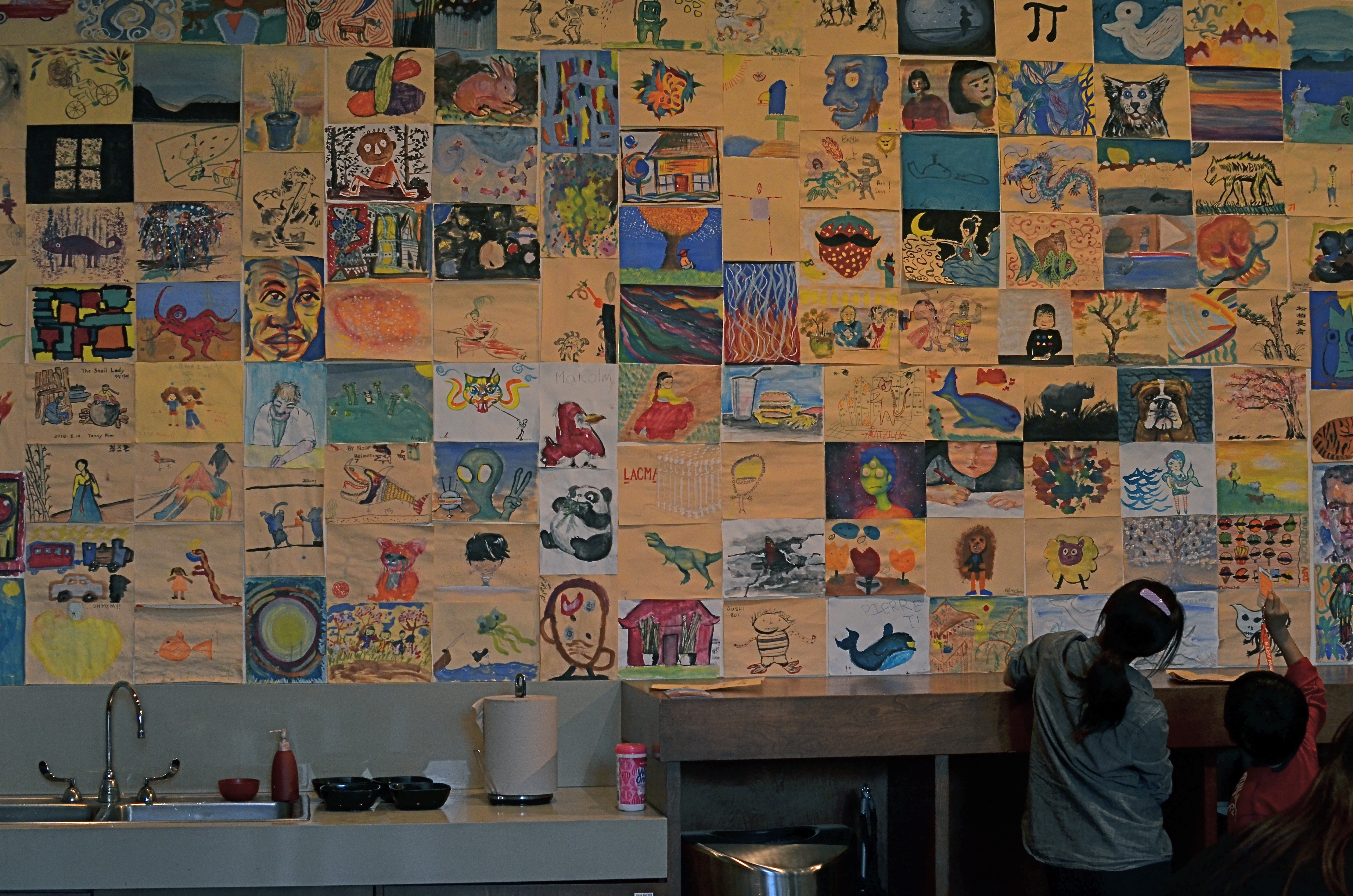
That’s my picture, right up there. 1/60 sec., f/5.6, ISO 400, 35mm.
By MICHAEL PERKINS
THE FRAME, AS IT HAS BEEN EMPLOYED IN PHOTOGRAPHY, is the visual element that truly sets the terms on which we will engage a picture. The decision of what to include or exclude in the shooter’s specifically defined little universes is the closest one can come to absolute godlike power. Frames enter us into an informal agreement with the photographer, a handshake deal that, yes, we will accept that you are presenting a world bordered by your own vision…whatever its strengths and limits. We enter an image by plunging past the edge of the frame, like the holiday party in Mary Poppins leaping into a sidewalk chalk sketch.
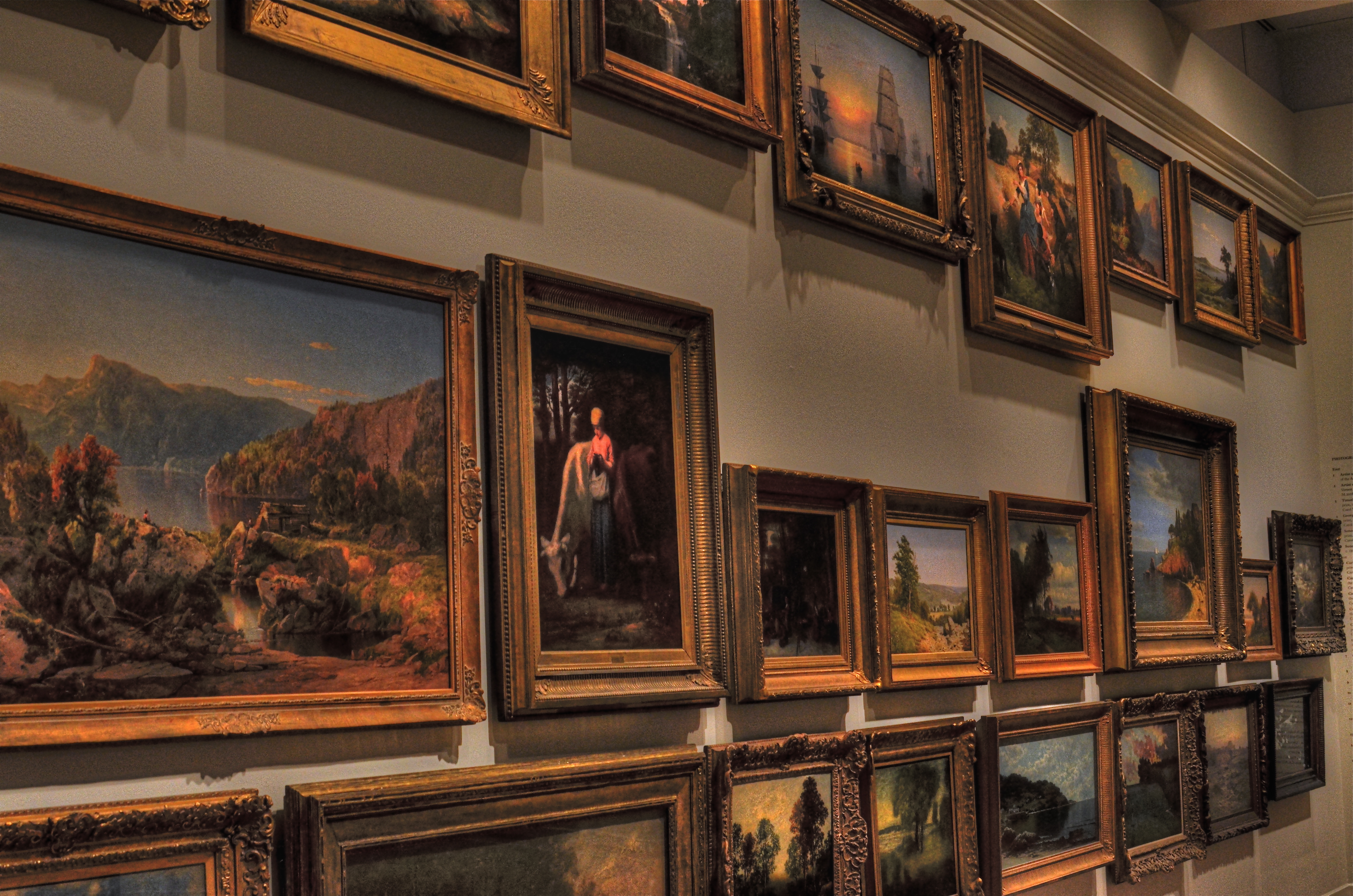
Pictures of pictures.
The fun variant in this happens when arrangements of smaller frames arranged within the master frame suggest themselves as a composition that can tell a story all by itself. Odd as it sometimes seems to take “pictures of pictures”, the results can be wonderful, or at least something beyond the mere act of recording. An image showing a wild mass of pinned-up photos of missing persons which is oddly more powerful than a portrait of any one person within it. A wall of randomly sized works within a gallery. A totality of small pictures achieved by merely stepping back, and providing the group with a defining perimeter.
I recently had the good luck to wander into a room within the Los Angeles County Museum of Art (LACMA) that took me beyond the formal exhibits to a place where a completely new kind of art is constantly being generated. In this room, a children’s art studio, there are no “schools” of painting or “periods” of drawing, just the energetic surge of young minds bursting into productivity on a daily basis. And there, along an entire wall of the workshop, stretched an enormous montage of works of every kind. No themes, no commonalty of conception, just raw, unafraid imagination. The wall, and the two people scanning it (one adult, one child) provided all the story anyone could ever need. The picture took itself.
The frame can frame other frames, and, in doing so, tell very specific truths. It’s a gift when it happens. And there isn’t a photographer alive who doesn’t love a freebie.
(follow Michael Perkins and share your own images on Twitter @mpnormaleye)
FIND THE OUTLIERS
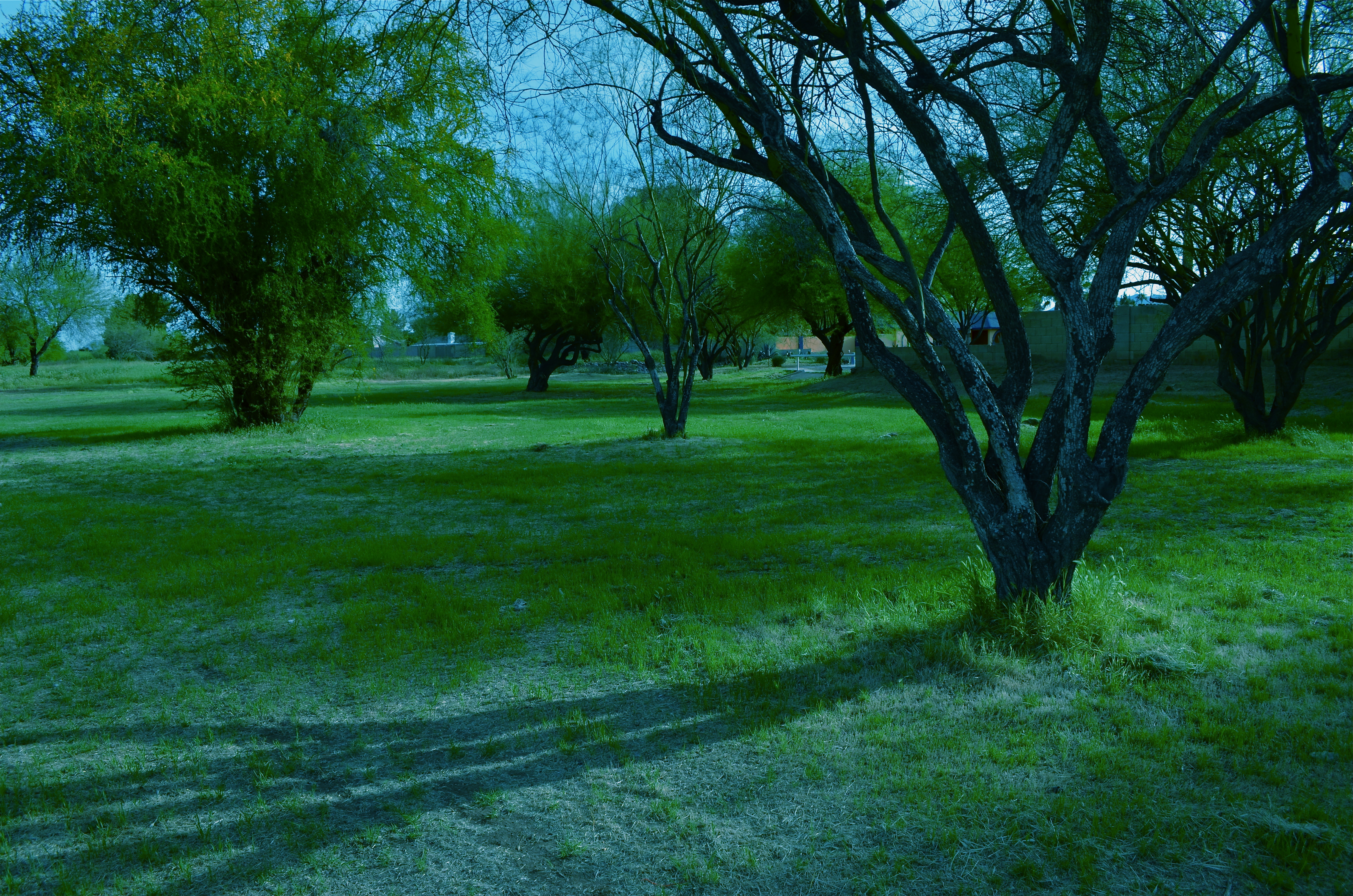
Not the kind of space you’d expect to see in a visually crowded suburban environment. And that’s the point. 1/320 sec., f/8, ISO 100, 18mm.
By MICHAEL PERKINS
EVERY TIME MY WIFE AND I TRAVEL, A STRANGE PHENOMENON OCCURS. We will be standing on the exact same geographic coordinates, pointing separate cameras in generally the same general area. And, invariably when she gets her first look at the pictures I took on that day, I will hear the following:
Where was THAT? I don’t remember seeing that!? Where was I?
Of course, we see differently, as do any two shooters. Some things that are blaring red fire alarms to one of us are invisible, below the radar, to the other. And of course we are both right. And valid. Admittedly, I do seem to come back with more strange, off-to-the-side-of-the road oddities than Marian does, but that may be due more to my wildly spasmodic attention span than any real or rare “vision”. Lots of it comes because I consciously trying to overcome the numbing experience of driving in a car. I have to work harder to take notice of the unconventional when repeatedly tracking back and forth,day after day, down routine driving routes. Familiarity not only breeds contempt, it also fosters artificial blindness. The “outliers” within five miles of your own house should glow like fluorescent paint….but often they seem cloaked by a kind of habit-dulled camo.
Once detected, outliers don’t quite fit within their neighboring context. The last Victorian gingerbread home in a clutch of tract houses. The old local movie theatre reborn as a Baptist church. Or, in a place like Phoenix, Arizona, where urban development is not only unbridled but seemingly random, the rare “undeveloped” lot, crammed between more familiar symbols of sprawl.
The above image is such an outlier. It’s about an acre-and-a-half of wild trees bookended by a firehouse,
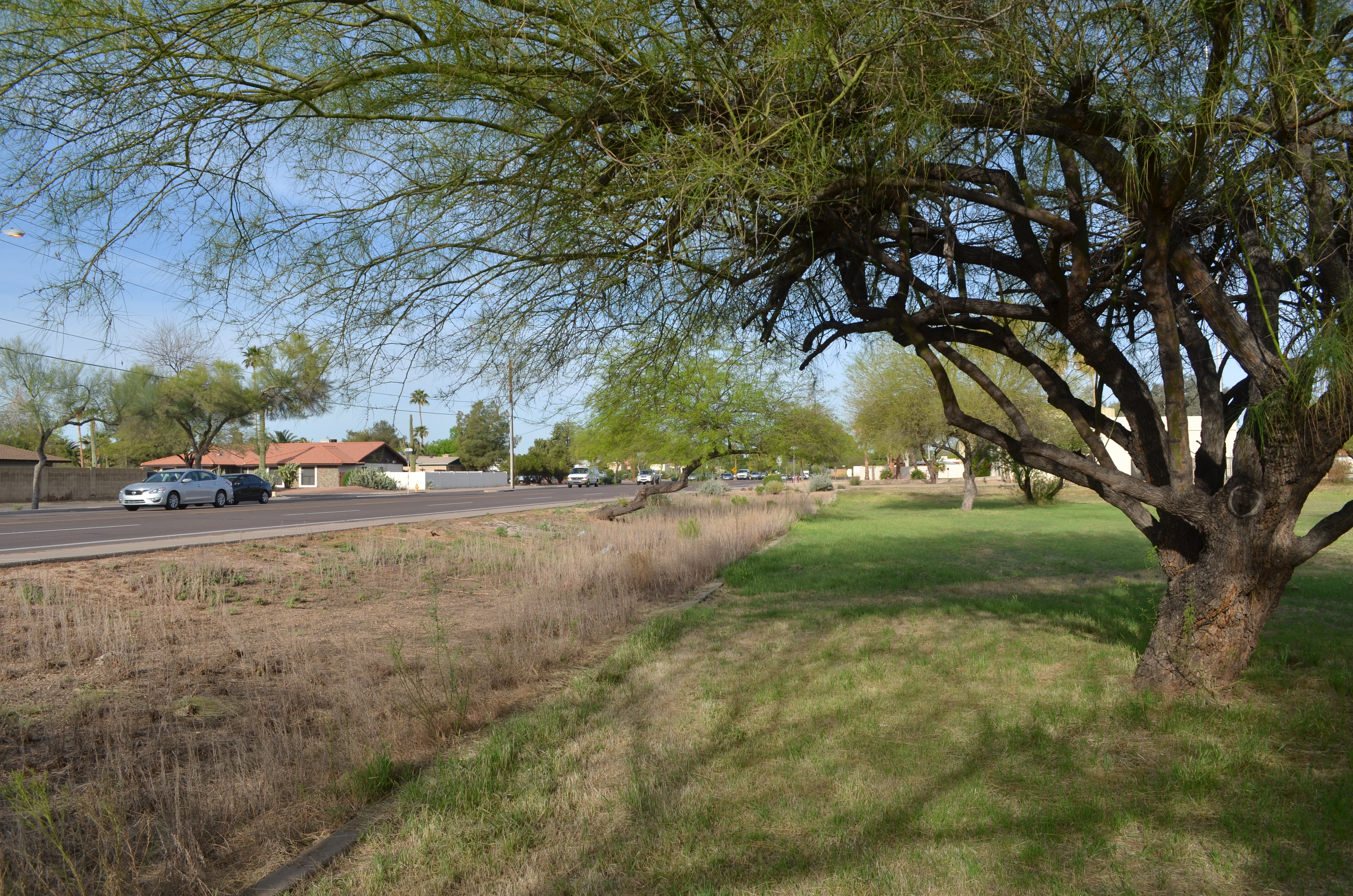
The sprawl-laden neighborhood that surrounds my “enchanted forest” Hey. it”s all about the context.
a row of ranch houses, and a busy four-lane street. Everything else on the block screams “settled turf”, while this strange stretch of twisted trunks looks like it was dropped in from some fairy realm. At least that’s what it says to me.
My first instinct in cases like this is to get out and shoot, attempting, as I go, to place the outlier in its own uncluttered context. Everything else around my “find” must be rendered visually irrelevant, since it adds nothing to the image, and, in fact, can diminish what I’m after. Sometimes I also tweak my own color mix, since natural hues also may not get my idea across.
Even after all this, I often find that there is no real revelation to be had, and I must chalk the entire thing up to practice. Occasionally, I come back with something to show my wife. And I know I have struck gold if the first thing out of her mouth is, “Where is THAT?”
To paraphrase the old proverb, behind every great man is a woman who rightfully asks, “Do you know what you’re doing?”
Sometimes I have an answer….
JUDGING BOOKS BY THEIR “COVERS”
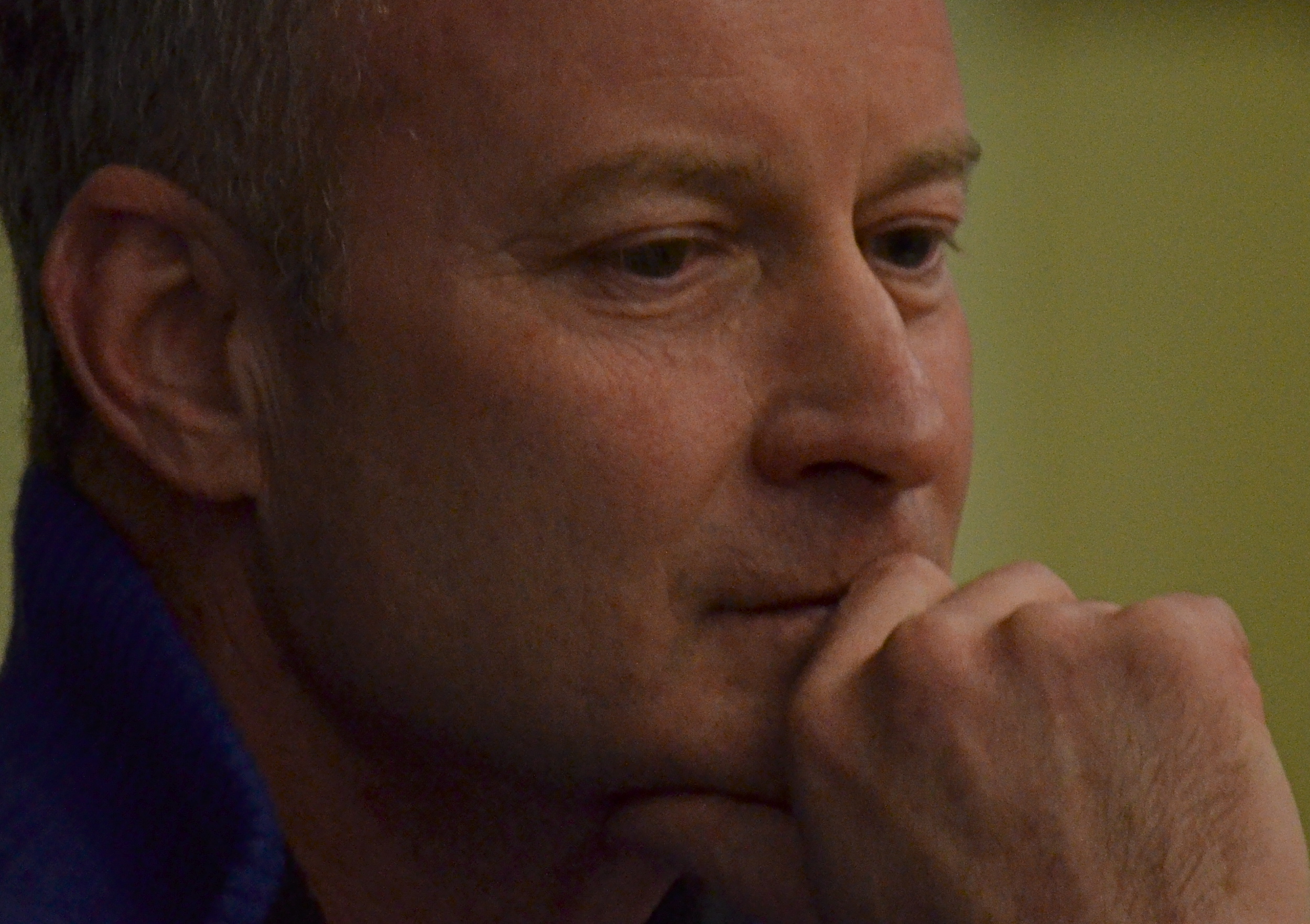
A pensive moment with Timothy Egan, “Opinionator”columnist for the New York Times and Pulitzer prize-winning author of “The Worst Hard Time”. 1/80 sec., f/6.3, ISO 1600, 300mm.
By MICHAEL PERKINS
THE TUCSON FESTIVAL OF THE BOOK, not yet five years old, has quickly evolved into one of the premier annual events in the publishing world. Hosted over an entire weekend in March during spring break on the University of Arizona campus, it showcases hundreds of authors and thousands of titles that range in content over the entire spectrum of the printed word. It is also one of the most hassle-free environments for candid photography of many world-famous authors, with an atmosphere which is intimate, informal, and bristling with energy.
In the simple discussion forums and panels of the TFOB, authors occupy the immediate space of their readers in a way that fires their features with zeal, a quality that lends itself powerfully to seeing the very faces of books. It’s a shooter’s smorgasbord, and the meeting spaces are compact enough (usually University classrooms) that a good medium zoom boosted to about 1600 ISO will give you captures fairly free of noise and a real feeling of being there. In these smaller settings, a relaxed feeling pervades, with authors evolving into stage performers rather than lecturers. The result is no bloodless reading, but a kind of theatrical sales pitch on behalf of the author’s ideas, one part poet and one part Professor Harold Hill from The Music Man.
I started shooting at TFOB four years ago and have learned more each year about circumventing the less-than-ideal lighting scheme (there really isn’t any) and clicking off hundreds of “drat!” images that fell short of what I was seeing. Shooting inside by flourescent light always means taking sample images with various white balances and making changes on the fly, as well as compensating for the light fall-off and additional vibration risk that occurs when you’re fully zoomed in.
Best thing is, though, there are almost no visual distractions to lead the eye away from the authors, since
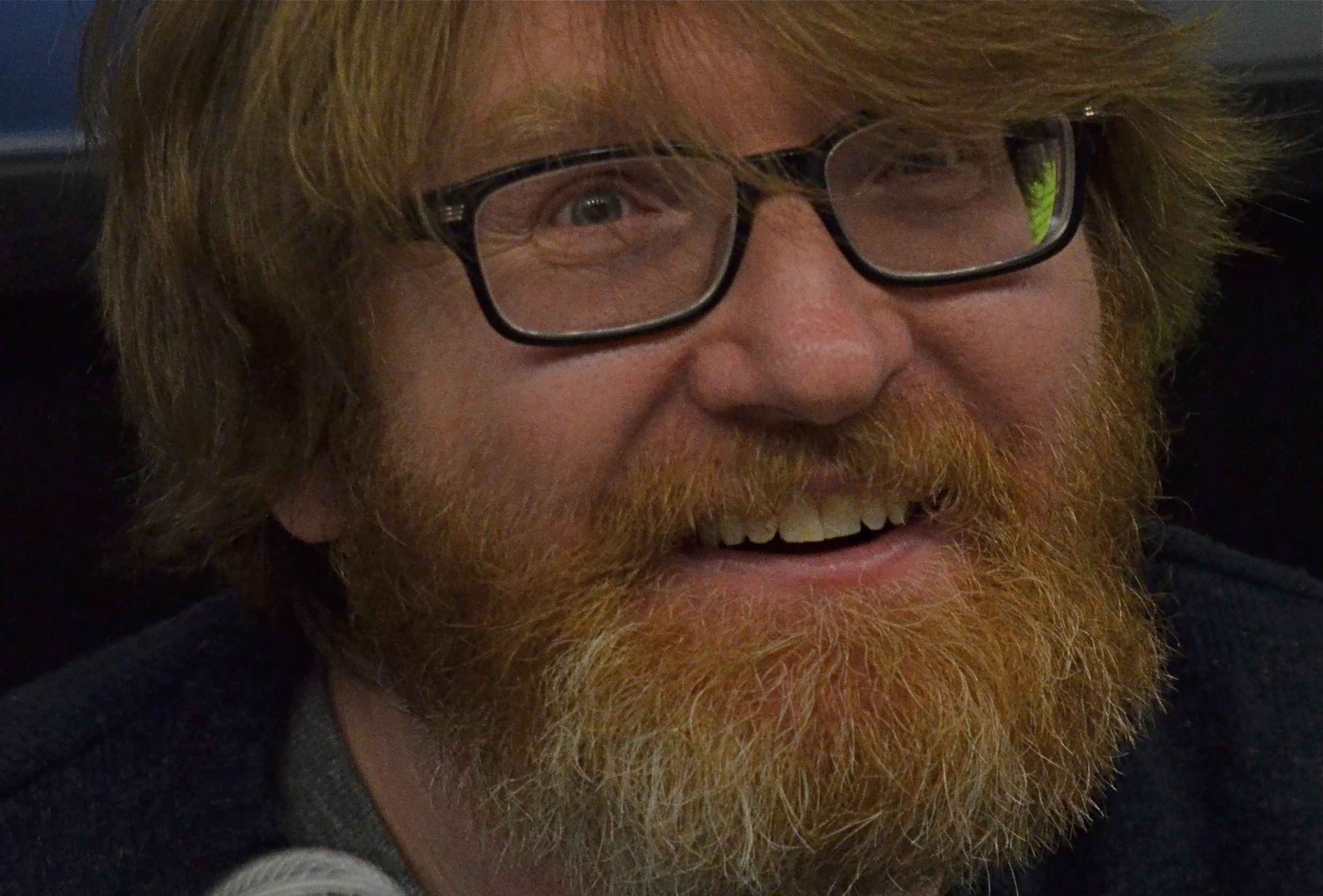
Culture hero Chuck Klosterman, author of “Sex, Drugs, and Cocoa Puffs”. 1/100 sec., f/6.3, ISO 1600, 116mm.
for the most part they stand before blackboards or blank walls. The shots don’t have to be simplified….they are already pretty stark. In addition, you can just frame head shots for the middle third of the subject’s faces, since you aren’t really there to capture their haircut or the water bottles and mics nearby.
Do yourself a favor and investigate a trip to the southwest each March for this amazing event.
If you love books, it’s essential. If you study faces, it’s the icing on the cake.
(NOTE: follow Michael Perkins on Twitter for the “Normal Eye Clicks Of The Day” and “Today in Photo History” at http://www.twitter.com/mpnormaleye. Share your own images with me, especially Instagram and phone snaps. You are always a vital part of this conversation.)
Related articles
- 5 ways to find favorite authors at book festival (azstarnet.com)
- Tucson book festival author inspired by grandkids (azstarnet.com)
PULL DOWN THE NOISE
by MICHAEL PERKINS
PHOTOGRAPHY OFTEN SPEAKS LOUDER IN A SOFTER VOICE. Think about it. If you accept the idea of visual information as a sort of “sound”, then it’s easy to see why some images don’t make a direct connection with viewers. They are busy, overloaded with information, or, in this metaphor, noisy, loud. Cachophonous. Chaotic. Too many “sounds” competing for attention. In a visual image, “noise” can be anything that keeps anyone from hearing the “voice” of your image. To be seen more clearly, pictures need to go soft, in order to be heard louder.
That usually means simplifying the image. Shaping its tone, its framing, its central message. In photography, we all make the mistake of trying to show everything, and, in the process, creating an overdose of data that sends the viewer’s eye wandering all around the picture, trying to find something, anything, to focus on. We present a three-ring circus where just one would be more than adequate.
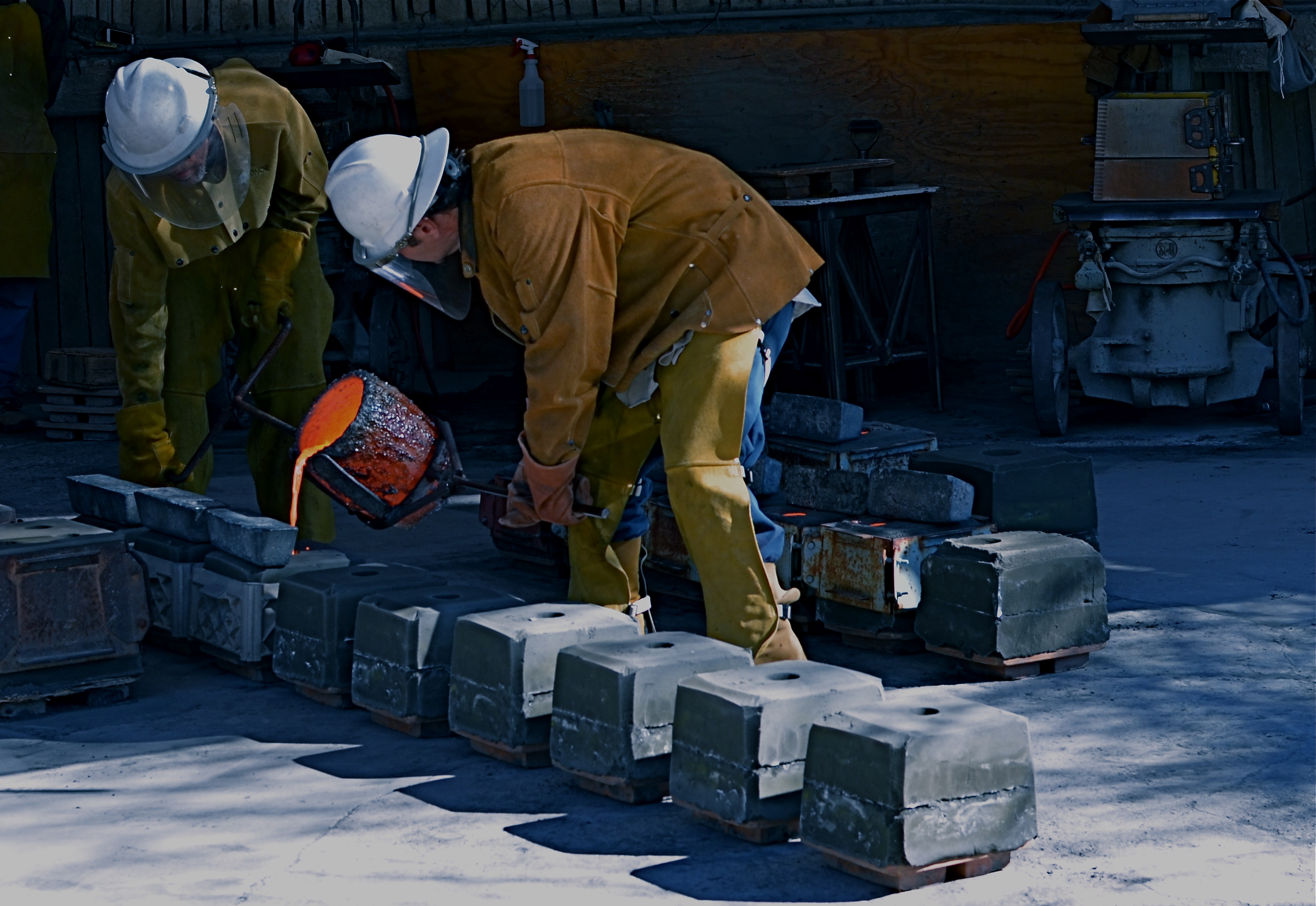
A “perfect” exposure would have inhibited the drama inherent in this situation. So we made it more imperfect.
On a recent trip to an art studio in Paradise Valley, Arizona, I was lucky enough to be present when artisans were pouring molten bronze into decorative molds for all us green “touristas”. Capturing the scene “as is” was easy, as I had plenty of time to calculate exposure and lighting. As a result, I got a lot of “acceptable” pictures good enough for the average postcard, but their storytelling quality was only so-so, since they were almost too full of color, detail and people/props. In the moment, I merely recorded a group of people in a crowded shop doing a job. The tonal balance was “perfect” according to the how-to books, as if I had shot the images on full auto. In fact, though, I had shot on manual, as I always do, so where was my imprint or influence on the subject? The pictures weren’t done.
Back home, when my brain had time to go into editor mode, I realized that the glowing cup of metal was the only essential element in the pictures, and that muting the colors, darkening the detail and removing extra visual clutter was the only way that the center of the shot could really shine.
With that in mind, I deepened the shadowy areas, removed several extraneous onlookers and amped up the orange in the cup. Seems absurdly simple, but as a result, the image was now a unique event instead of a generic “men at work” photo. The picture had to use a softer voice to speak louder.
Great picture? Not yet.
But, hey, I’m still young.
Best thing about the creative process, unlike banking, building or brain surgery, is the luxury of do-overs. And doing over the do-overs, over.
Related articles
- On the Nature + Purpose of Photography (statenislandstories.wordpress.com)
FROM TOY TO TOOL
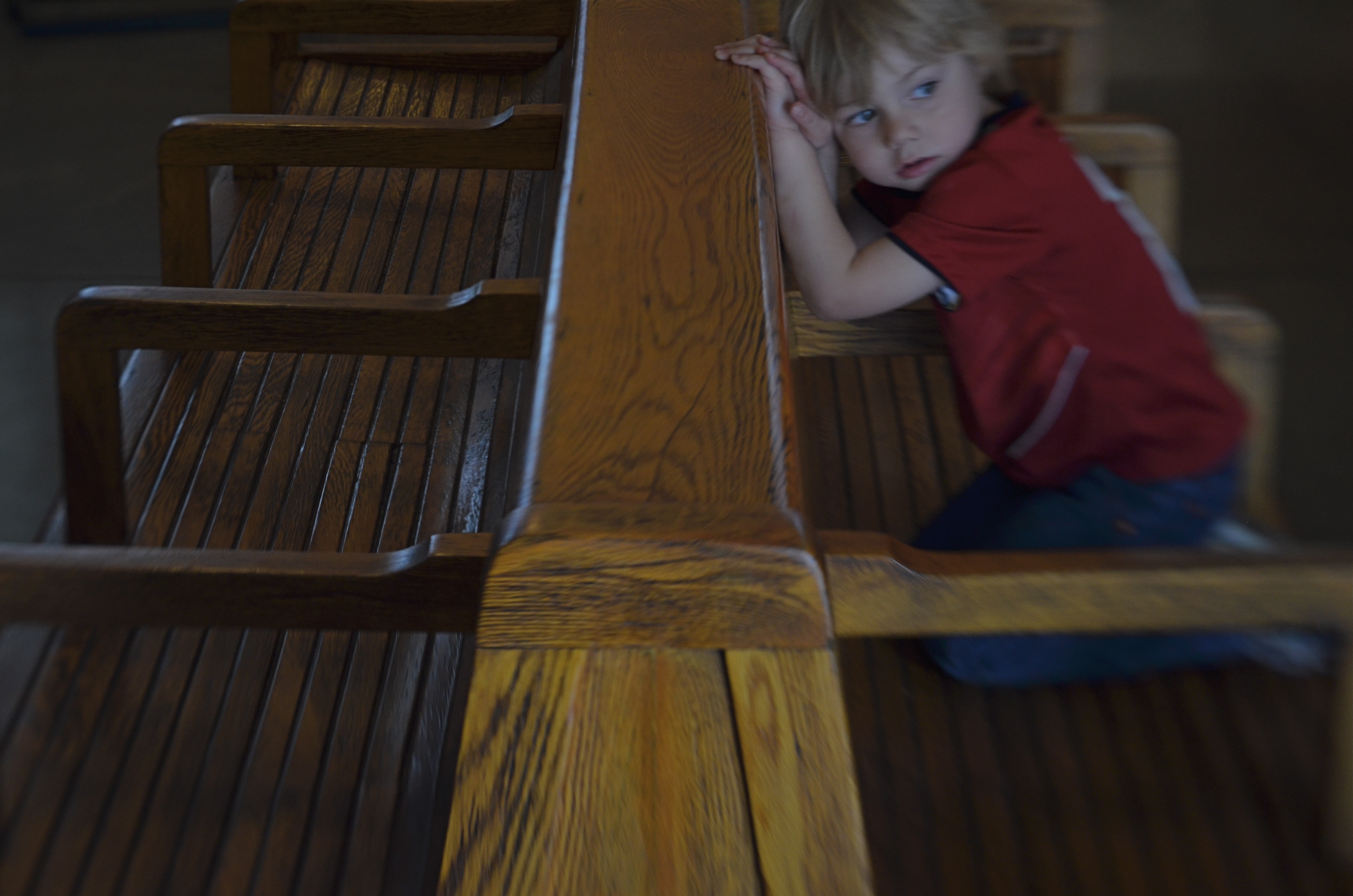
Selective focus can help direct your viewer’s eye. Taken with a Lensbaby Spark lens at 1/80 sec., f/5.6, ISO 320, 50mm.
By MICHAEL PERKINS
A LONG STANDING BIT ON THE DAVID LETTERMAN SHOW, rather than claiming to be entertaining, actually poses the question of what entertainment actually is. Entitled “Is This Anything?”, the feature consists of about thirty seconds of acts or feats that might be amazing (like juggling), might be banal (like, um, juggling) or might qualify as merely strange. After the curtain is drawn, Dave and Paul briefly discuss the merits of what ever strangeness just transpired, and ask each other if “that was anything”. Sometimes there is no clear-cut decision. The show has disclaimed responsibility, and entertainment remains in the eye of the beholder.
That’s how you can feel the first time you use a Lensbaby.
Released several years ago to inventor Craig Strong’s great monetary benefit, the Lensbaby comes in a variety of
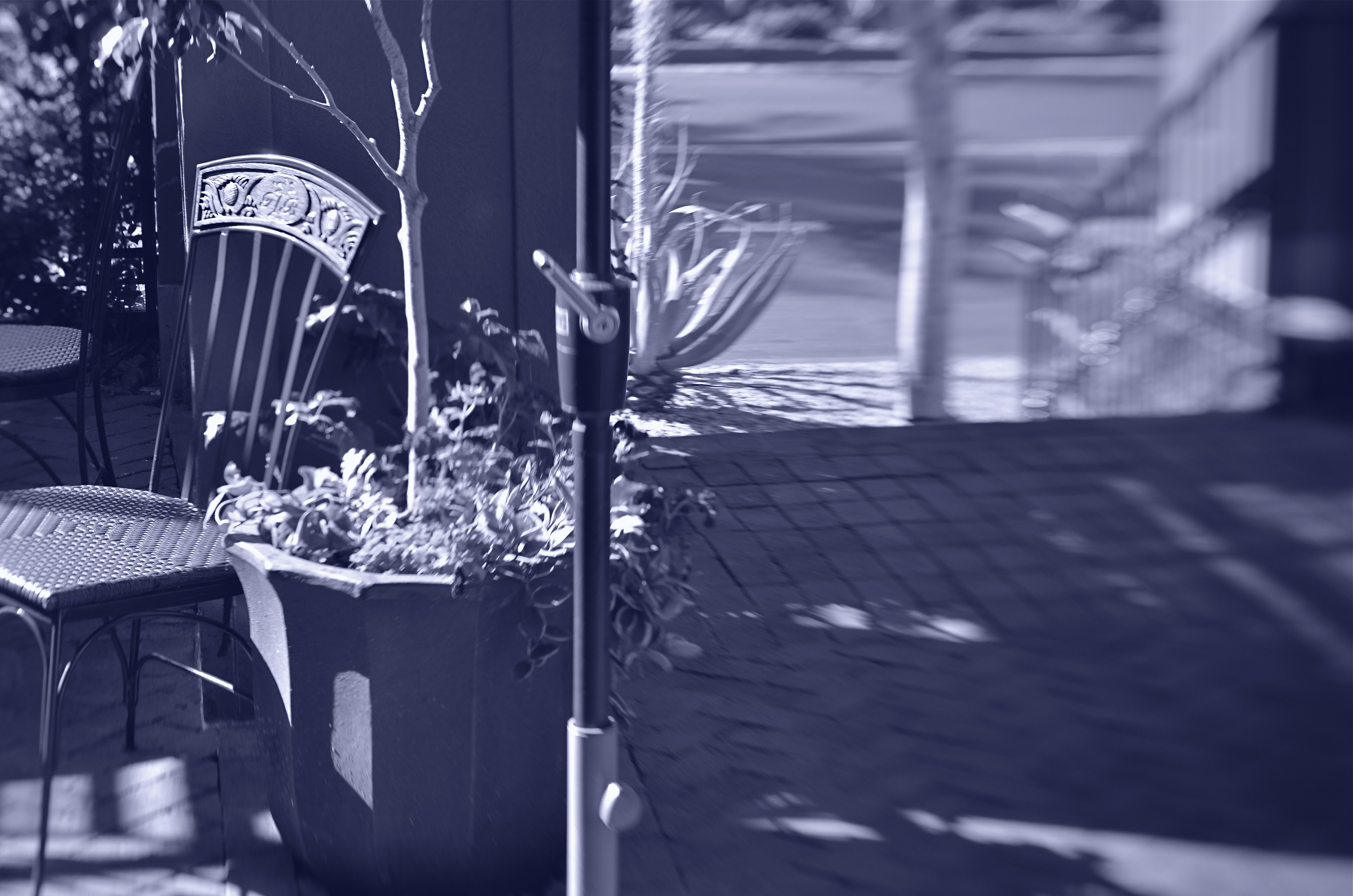
levels but is essentially an affordable tilt-shift attachment, a way to soften focus over selective areas of the frame while rotating the “sweet spot” of sharper focus wherever the shooter feels it should go. Now, essentially, selective focus is really part of every photo ever taken, since a choice of depth-of-field is made every time the shutter snaps. Lensbaby, however, offers the chance to pre-design the precise level of left-right, high-low focus, in the camera, and before the shot is taken. No post-processing is needed, and each use of the effect is completely under the shooter’s control, and at a fraction of what dedicated DSLR lenses cost.The Lensbaby effect is understandably an attractive gimcrack for the instinctive subculture of lo-fi photography, they of the hipster nonchalance and light-leaking, fixed-focus plastic cameras. Hey, it looks freaky, random, edgy. But, like everything else in your kit bag, it’s either toy or tool. The verdict as to which it is comes out one picture at a time.
So far I am whelmed….not overwhelmed, not underwhelmed. For one thing, Lensbabies are a lot of extra work. The entry-level model, the Spark, is actually a lens within a springy plastic bellows. You have to hold your camera body, delegate fingers from both hands to rotate the axis of the front of the lens, squeeze the bellows to bring part of the frame into focus (the Spark’s “sweet spot” is fixed at f/5.6), allocate another finger for the shutter, and click. At least you can’t carp about not having enough creative control. There’s more than enough of that, especially at first, to O.D. on. Your chosen area of focus can be held in place more easily with upgrade models (which also include additional optics and add-ons), but the Lensbaby is truly best for shoots where you have a lot of time to think, plan, and create….the very opposite of the “shoot from the hip” attitude embraced by the lomography crowd. You will take a lot of pictures that miss by inches, or fractions of inches.
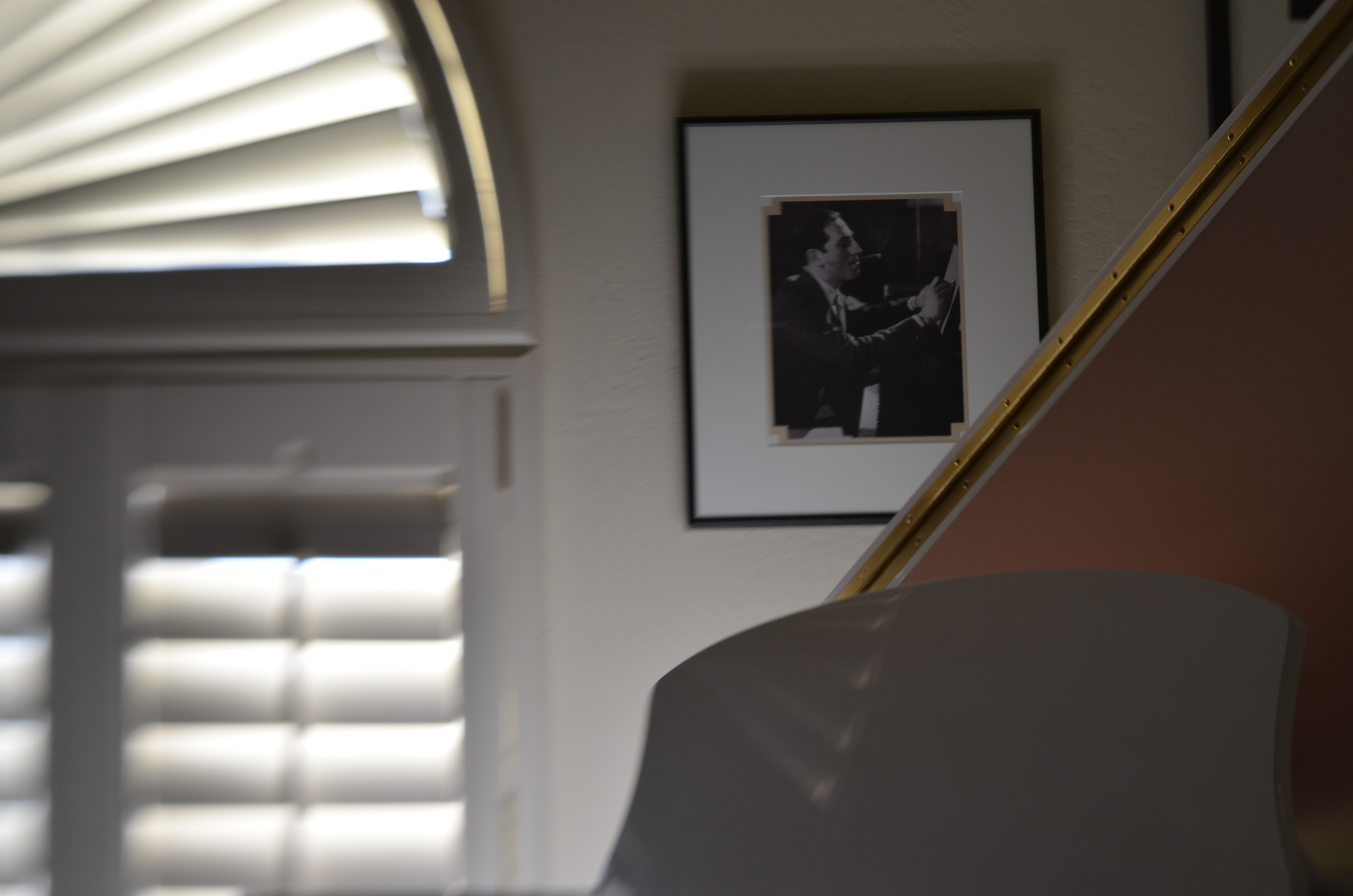
Lensbaby Spark gives you some of the control of a custom lens for under $80.
What will move me from whelmed to overwhelmed will be finding those images where the Lensbaby effect actually aids my storytelling, yet does not define it, as in the lucky shot at the top of this post. The camera gadgets I eventually consign to the “toy” pile go there because they call too much attention to what they can do, not to what I can do using them. The”tools” pile contains the gear that is essential to my saying something in a distinctly different voice. Finally, the two piles are divvied up only after taking lots of pictures and asking a ton of questions (a few gimmicks, like fisheye, have spent time in both piles; hey, I’m not above just playing around).
I sympathize with Letterman’s dilemma when he ironically asks, “Is this anything?” Selective focus is a way to install big neon pointers into your pictures, a more emphatic command to look over here. It’s also a way to amplify the drama of certain data or simplify cluttered compositions. I get it.
But it needs to be about much more than that. Or, more correctly, I have to help it.
Related articles
- My Lensbaby SCOUT, baby! (greyiscolour.wordpress.com)
A LOT OF LITTLE, FOR NOT A LOT
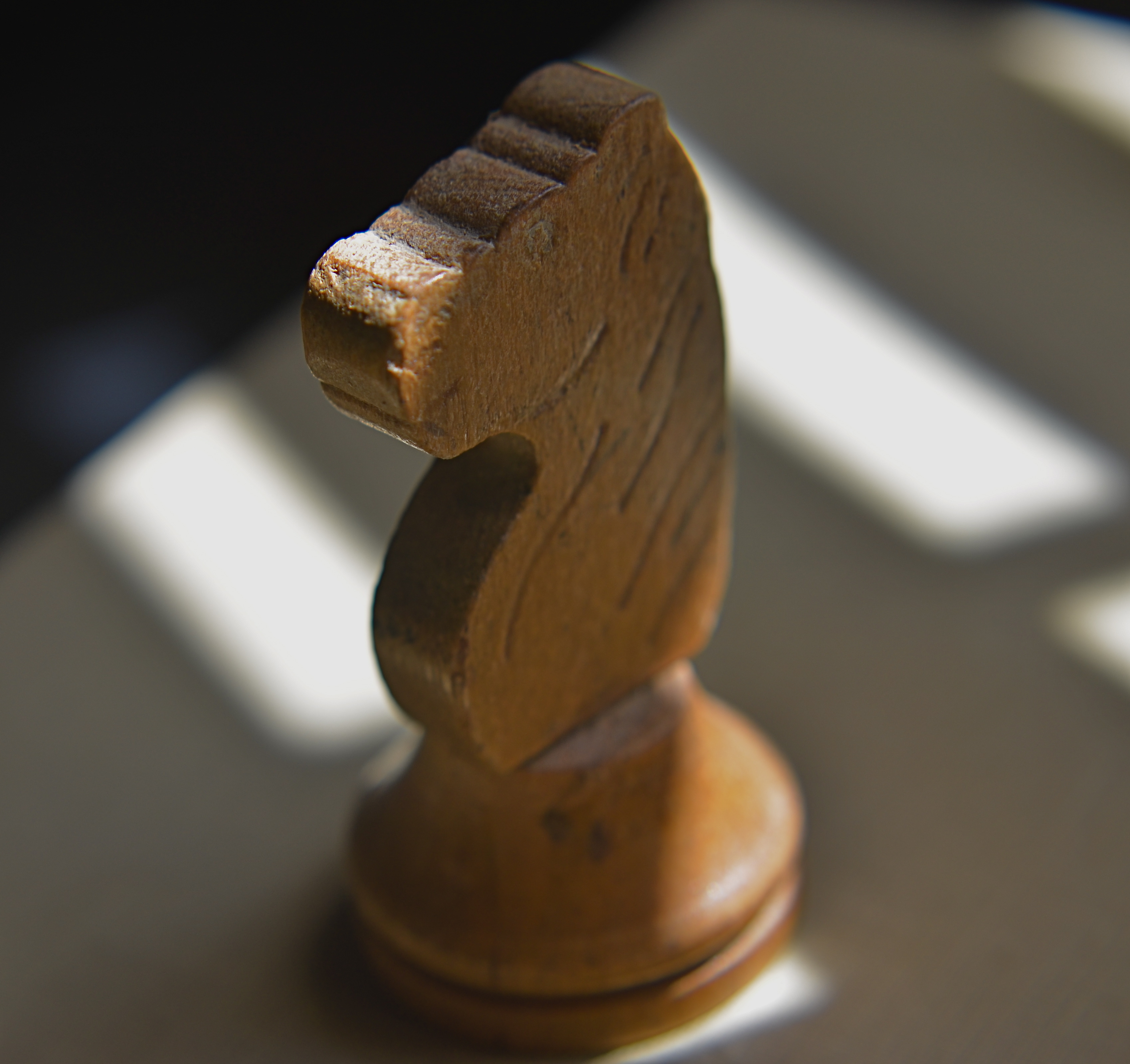
About three inches away with stacked diopters equivalent to 7x magnification. Manual focus, 1/200 sec., f/4.5, ISO 100, 35mm.
By MICHAEL PERKINS
EVER SINCE I FIRST READ STORIES ABOUT THE ARCH-VILLAIN BRAINIAC shrinking and stealing cities from the across the galaxy (studying them like miniature trophies) in Superman comics, I knew that I would someday embrace macro photography.
Well, given the insane costs of dedicated macro lenses, maybe embrace isn’t the right word. Maybe one arm around its shoulder. Or a friendly handshake. Or a gentle chat in which I say I really like you, macro, but I think we should see other people.
Let’s face it. You shouldn’t have to mortgage your..mortgage to determine how often you’re going to want to use your camera to, say, count the crumbs on an Oreo. Yes, once you can crank in close enough to see the flea on the back of the buffalo on the nickel, you may become hopelessly infatuated with the world of tiny. But to make that decision, you needn’t assume the financial humility of a monk. Dedicated macro lenses are a monster investment (a minimum of $300, all the way to over $1,000), to be weighed against how many other shooting situations you’re likely to find yourself in, and the economics of whatever special hunks of glass you’ll need to accomplish all those other tasks. If macro is truly “all” for you, then that sort of justifies the complex construction and sharp autofocusing of a separate lens. Brutal honesty disclaimer: there is no substitute for the performance of a high-end piece of precision optics.
BUT, not all of us make a lifelong study of the number of dimples on a bee’s knees, and that can make a huge investment in macro an iffy indulgence. I’m a big one for not buying major toys until they justify their use in my work. Thus, the only photographic commandment I unflinchingly live by is: don’t buy even one more extra feature than you will actually use.
Two main alternative options have emerged to serve the needs of “occasional” macro shooters. One of these are extension tubes, the hollow cylinders that attach between your lens and your camera body, creating an artificially enhanced range of maximum magnification. Being the same size as actual lenses (albeit with no glass inside), they do add additional bulk and weight to your setup, and may result in a loss of light, as well as a shallower depth of field. Investment-wise, you are still in for over $100 for a decent pair of these, as the cheap ones aren’t worth winding toilet paper around. Given the tubes’ limitations, you may be looking at sticking the camera on a tripod to lengthen your exposures, or jacking up the ISO. Different strokes.
The other, far cheaper option, and one which gives you a taste of macro without surgically removing your wallet, involves magnifying diopters. They screw on like filters, come in sets of three for well under forty bucks, and can get you in on the ground floor of macro (or the little tiny things crawling on said floor).
Diopters come in magnifying strengths of +1, +3 , +4, and above, so you can use a single diopter, attach several in series, or assemble a bunch into a custom mix and affix that to the front of your lens. Even with a cluster of them attached, you’re adding little more than an inch of extra depth to your lens body, and they’re easy to detach and stash in a spare pocket, something that cannot be done as easily with extension tubes. If you’re an on-the-go, travel-light kind of guy/gal, this is worth a mention.
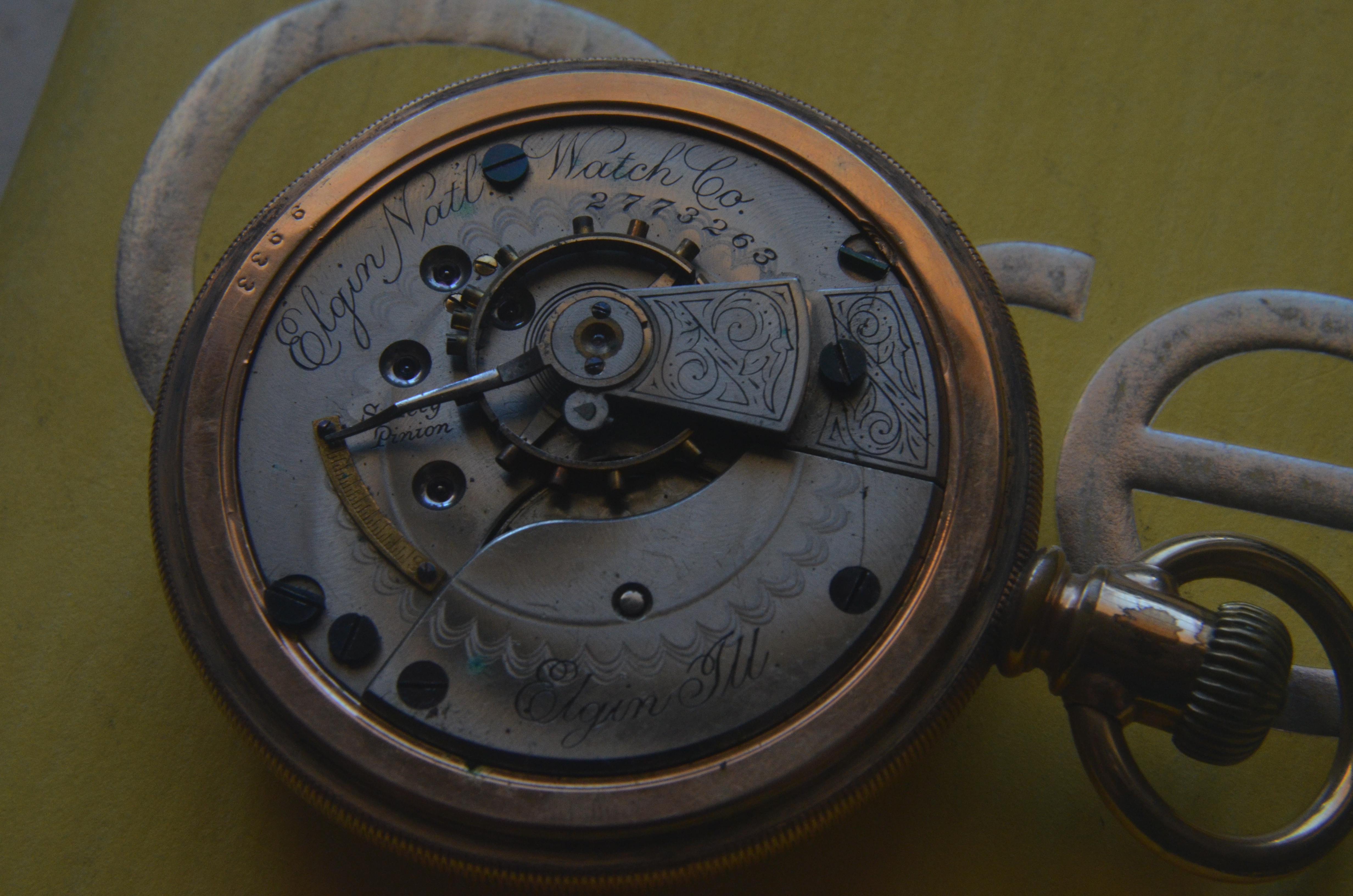
Now, let’s not delude ourselves. You can’t use your lens’ autofocus with diopters, which means you’re on manual. This is a serious consideration if you prefer to shoot hand-held, since you will louse up more frames, what with your every quiver being magnified and playing hell with sharpness. As with extension tubes, you may want to whip out the tripod.
If you are a techie as well as an artiste, do a Sherlock Holmes on the interwebs for the exact science of which option will give you the most control and best results. I am far from the best source for this kind of exact wisdom, since, as stated above, I acquired a good deal of my scientific knowledge from Superman comics. That said, if you need a peer review on the properties of Kryptonite, I’m your boy.
My point here is that I can only vouch for what has worked for me……and that’s the entry-level diopters option. Why jump immediately to the big-boy toys when you can master the baby steps with a smaller outlay of green, then move up as your needs dictate? Seems logical that training wheels should precede entry in the Tour de France.
Doesn’t take a Brainiac.
(reach Michael Perkins on Twitter @mpnormaleye)
Related articles
- Macro Flower Photography (ajburuca.com)
- Getting Close Enough (rakmilphotography.wordpress.com)
GET LOST
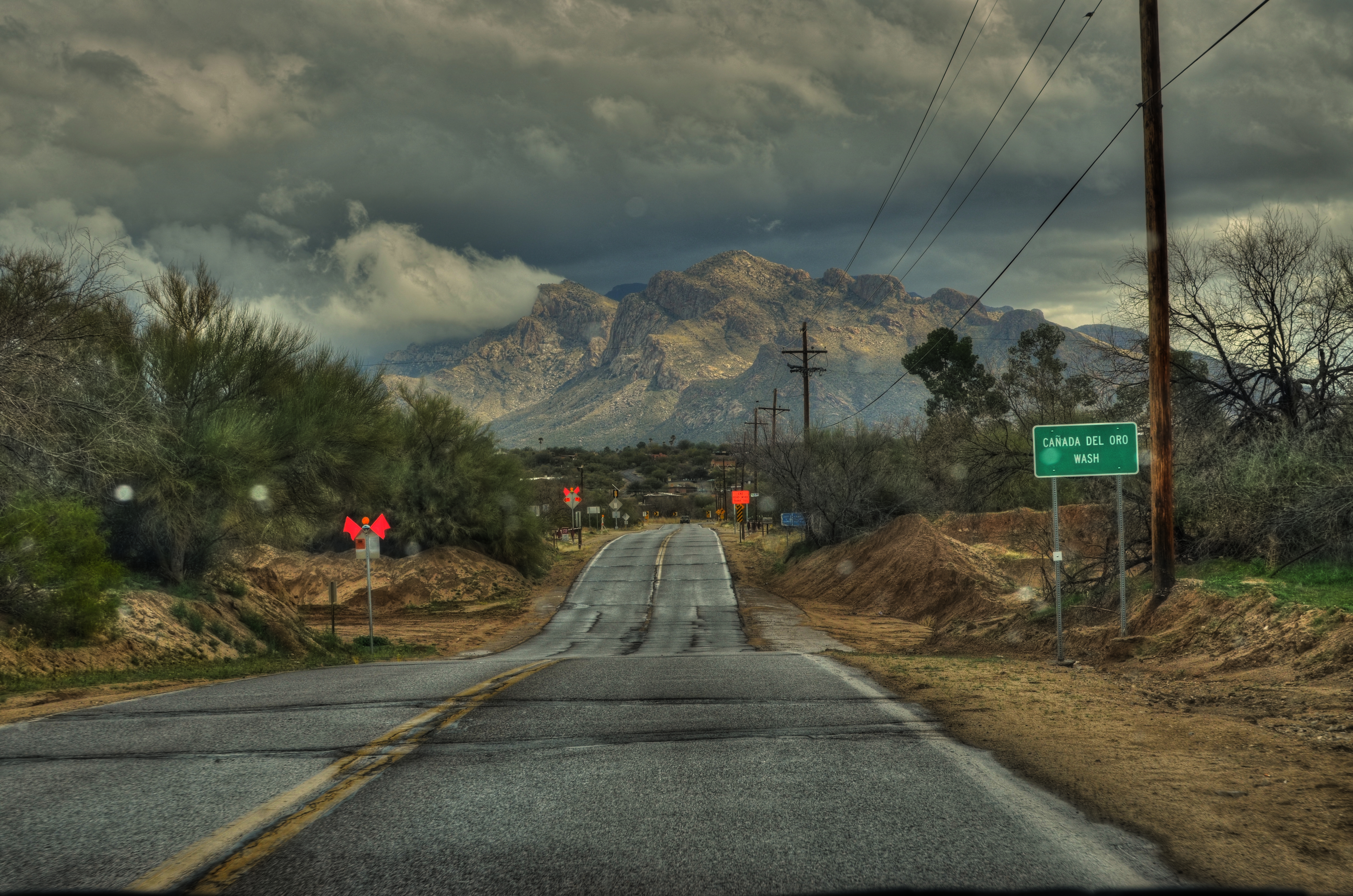
Straight through the windshield, using a technique I like to call “dumb luck”. Original shot specs: 1/320 sec., f/8, ISO 100, 35mm.
By MICHAEL PERKINS
PHOTOGRAPHY IS 10% PLANNING, 90% SERENDIPITY. Yes, I know. we would all rather believe that most of our images spring from brilliant conceptions, master plans, and, ahem, stunning visions. But a lot of what we do amounts to making the most of what fate provides.
There is no shame in this game. In fact, the ability to pivot, to improvise, to make the random look like the intentional…all of these things reveal the best in us. It exercises the eye. It flexes the soul. And, in terms of images, it delivers the goods.
Getting lost (geographically, not emotionally) is less an emergency than in ages past. Armed with smartphones, GPS, and other hedges against our own ignorance, we can get rescued almost as soon as we wander off the ranch. It is easier than ever to follow the electronic trail of crumbs back to where we belong, so drifting from the path of righteousness is no longer cause for panic. Indeed, for shooters, it’s pure opportunity.
Okay, so you’re not where you’re supposed to be. Fine. Re-group and start shooting. There is something in all these “unfamiliar” things that is worth your gaze.
Last week , my wife and I decided to trust her car’s onboard guidance system. The results were wrong but interesting. No danger, just the necessary admission that we’d strayed really far afield of our destination. We’re talking about twenty minutes of back-tracking to set things right.
But first….
One of the rural roads we drifted down, before realizing our error, led us to a stunning view of the back end of Tucson’s Catalina mountains, framed by small town activity, remnants of rainfall, and a portentous sky. I squeezed off a few shots straight out of the windshield and got what I call the “essence” exposure I needed. That single image was relatively well-balanced, but it wouldn’t show the full range of textures from the stormy sky and the mountains. Later, in post, I duplicated the one keeper frame that I got, modifying it in Photomatix, my HDR processing program. Adding underexposure, deeper contrast, and a slight rolloff of highlights on the dupe, I processed it with the original shot to get a composite that accentuated the texture of the clouds, the stone,, even the local foliage. A sheer “wild” shot had given me something that I would have totally missed if the car’s GPS had actually taken us to our “correct” destination.
What was ironic was that, once we got where we were going, most of the “intentional” images that I sweat bullets working on were lackluster, compared to the one I shot by the seat of my pants. Hey, we’ve all been there.
Maybe I should get lost more often.
Actually, people have been suggesting that to me for years.
Especially when I whip out a camera.
Related articles
NO TEACHER, NO GURU, NO METHOD
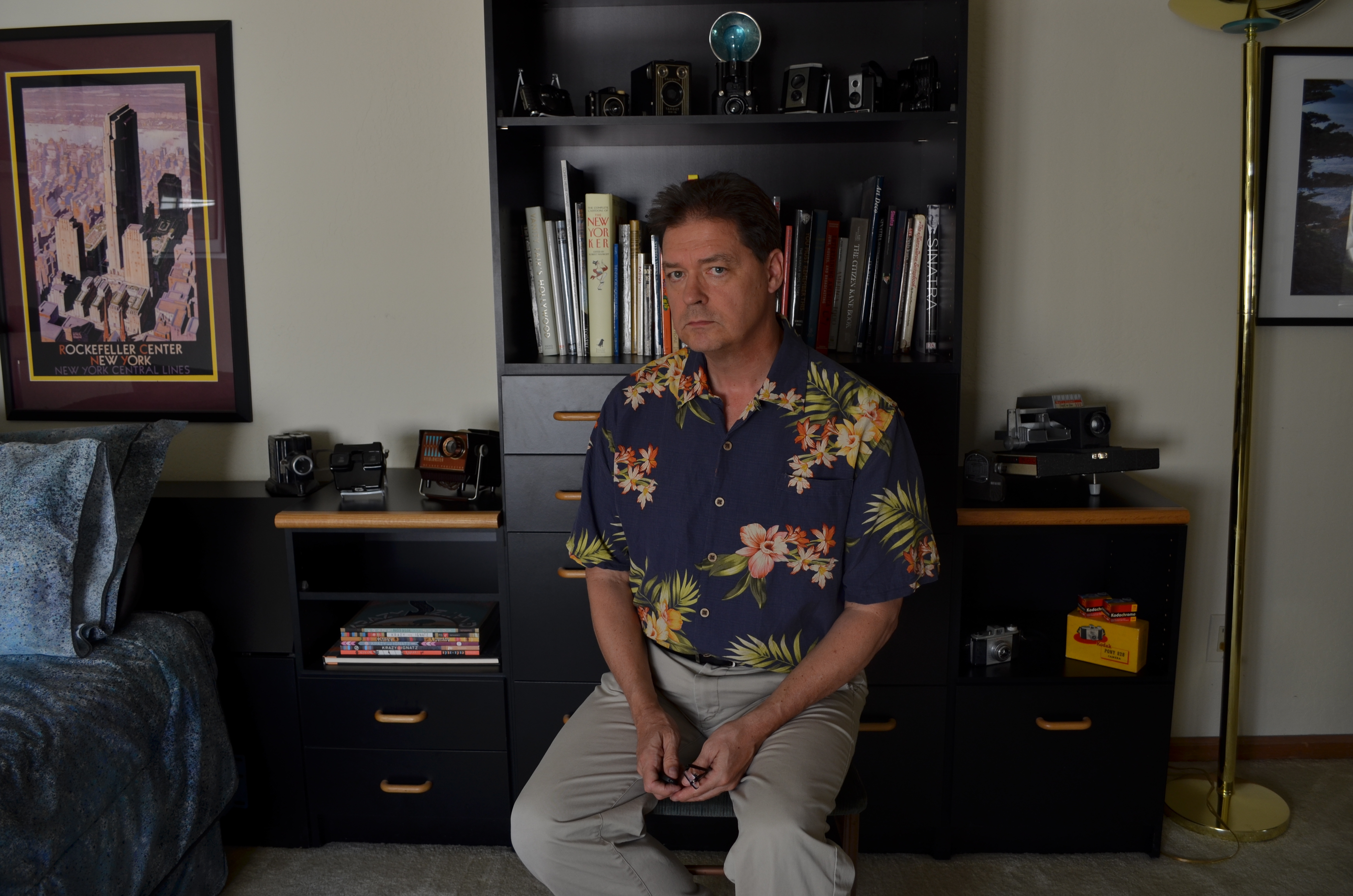
Waiting for inspiration. Yeah, how’s that workin’ out for ya?
By MICHAEL PERKINS
THERE MAY NOT BE SUCH A THING IN PHOTOGRAPHY AS “STYLE”.
Hmm? Come again? No way for the artist to brand his persona on his output, to accumulate a body of work stamped with his own exclusive, and wonderful, identity?
Well, given the special nature of photography, maybe not. Think about it. We all emerged as the quasi-legitimate spawn of painting. Yes, you can struggle and wriggle, but The Brush is essentially our aesthetic daddy, the most important shaper of our inherited rules on what to look at, how to see. Of course, we were no sooner whelped than we began dissing the old man, saying we were not at all like painting, that our means of measuring the world was distinct, different, revolutionary. The upshot is that the typical artists’ claim to a personal style, an identifiable visual signature, may not be, in image-making, how we do business at all.
Van Morrison (God’s gift to moody poets) summed it all up in the title of one of his classic albums, No Teacher, No Guru, No Method. And that means that, unlike the painters of antiquity, none of us shoots enough of any one approach to the world to claim that any of us has a “style”. Think about your own images. Is every one of them representative of one kind of thought? Or do you, like most of us, flit from one dynamic to another? Are any of you 100% committed to landscapes? Sacred subjects? Abstractions? Street? Cute kitties? No, and none of us ever were.
One of the most frustrating things about reviewing the careers of the greatest poets (there’s that word again) of photography is that there is no central thread, no typical image for many of the masters. What is the iconic signature of a Steichen, an Avedon, a Weston? Review forty years of photographs from Alfred Eisenstadt during his tenure at Life magazine and pick out one picture which defines him. You can’t. There is no Mona Lisa moment. And perhaps there shouldn’t be.
I’ve been shooting for over forty years, and if someone were to ask me to select one image that absolutely represented the essential me, I’d be dumbstruck. And maybe that’s to be expected. The world’s most democratic medium is also democratic toward its subject matter as well. In photography, unlike painting, everything can be a picture. Anything can be plucked out of the continuity of time and frozen for us to ponder, worship, objectify, or loathe.
We are all self-taught, self-created, without antecedent or influence. No Teacher, No Guru, No Method. It should make us feel free, and can, of course, make us terrified as well.
Here’s the central nugget of that freedom feeling: photography isn’t here “because of”, or “in order to”, or “so that”…..it’s just here.
And that is enough.
(follow Michael Perkins on Twitter @mpnormaleye.)
Related articles
- Edward Steichen’s great American Dream (japantimes.co.jp)
- Not your average photography book (audreysnaturequestphotography.wordpress.com)
LOOK THIRTY FEET FURTHER
By MICHAEL PERKINS
ONE SURE THING ABOUT TAKING IN “THE SIGHTS” AT THE AVERAGE TOURIST ATTRACTION. You will be channeled, herded, if you will, toward exactly what the proprietors want you to see. This insures most people their coveted “Kodak Moment”, with Mom and the kids standing at the precisely picturesque sweet spot at the cathedral, the ruins, the monument, the mountain, etc. In fact, Kodak worked with parks for years to actually post signs near such perfect vistas, a polite way of yelling OVER HERE, STUPID at passersby. Thanks for the flash cards, guys.
Obviously this attempt to guide visitors to the “good stuff” can result in the occasional great image. But you and I know that, for the most part, it amounts to the completion of a homework assignment. You know, like the opposite of fun, spontaneity, um, photography.
Tomorrow, class, bring a picture of yourself standing in front of a famous landmark. And remember to smile.
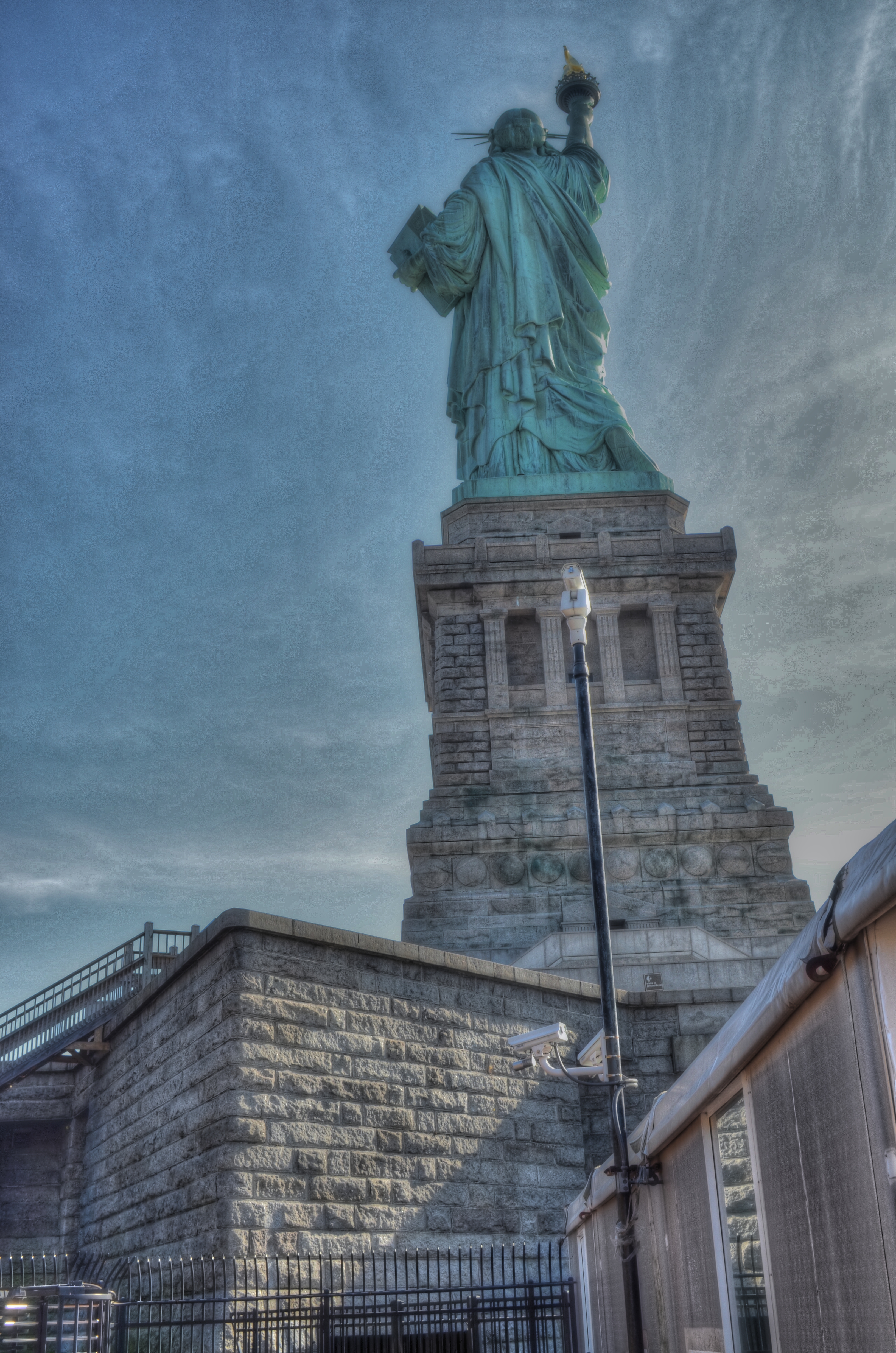
So go ahead and shoot the obvious thing. Just try to find another way to see it.
I’m a big one for wandering away from the tour group….not so far as to wander aimlessly into a scary forest full of monsters, just far enough to take in the entire area while the guide drones on.
I’m not so much interested in what’s available to photograph as I am in what else is available to photograph.
Sometimes, of course, you are better off just taking your approved thirty seconds in front of the waterfall and moving on. Other times you hit something, sometimes by just looking thirty feet further.
Do I have an example? Thought you’d never ask…
There is an over-hyped old house-turned-souvie shop in La Jolla, California (one of the most gorgeous coastal towns in the west) that sits atop a subterranean cave which looks out onto the ocean. Once inside the shop, the able-boded (and those who do not suffer claustrophobia) pay to enter an extremely dark, steep, damp and cramped staircase that takes them down below the house to the cave.
Now, for a guy with a camera constantly hanging from his neck, taking anything like a usable shot in this crimped cavern is largely a crap shoot, since light is, let us say, at a premium. So the “officially” cool thing, was, for me, frustrating to say the least, and I trudged up The Staircase From Hell (my knees aren’t what they used to be) to re-enter the shop at the earth’s surface. So far, so pointless.
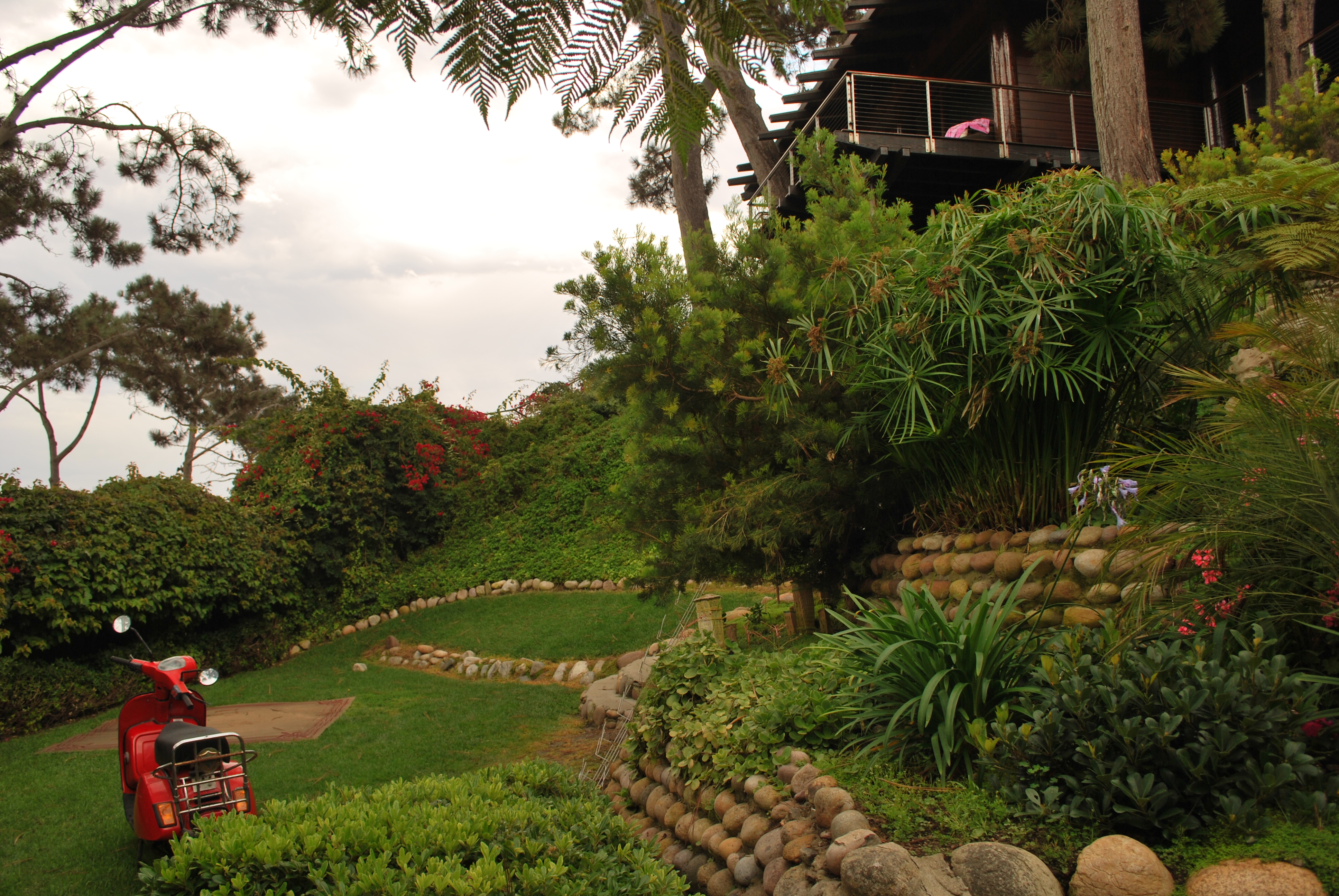
Pictures are where you find them, often tucked away behind so-called “attractions”. 1/100 sec., f/6.3, ISO 100, 18mm.
While my wife performed her mandatory inspection of the store’s copious supply of trinkets, I walked outside, then, instead of going back to the street, wandered around to the back of the building. Lucky choice. Suddenly I was in someone’s backyard, a hilly, curvy, strange little lot that could prove to be a nightmare for whatever neighborhood kid was doomed to cut the owner’s grass. It was only a matter of being curious enough to go about thirty feet off the official path….and yet here was the relief I wanted from chronic tour disease. An actual human habitation, complete with Hobbit-like stone landscaping and an extremely cool red scooter to counter-balance the rain-rich greens. Here was a picture I wanted. The “famous” view had shown me nothing. The “unimportant” view had given me everything.
Hey, I regularly get lost anyway. Why not have some fun doing it?
Now, where did my mommy go?
AFTER-IMAGE
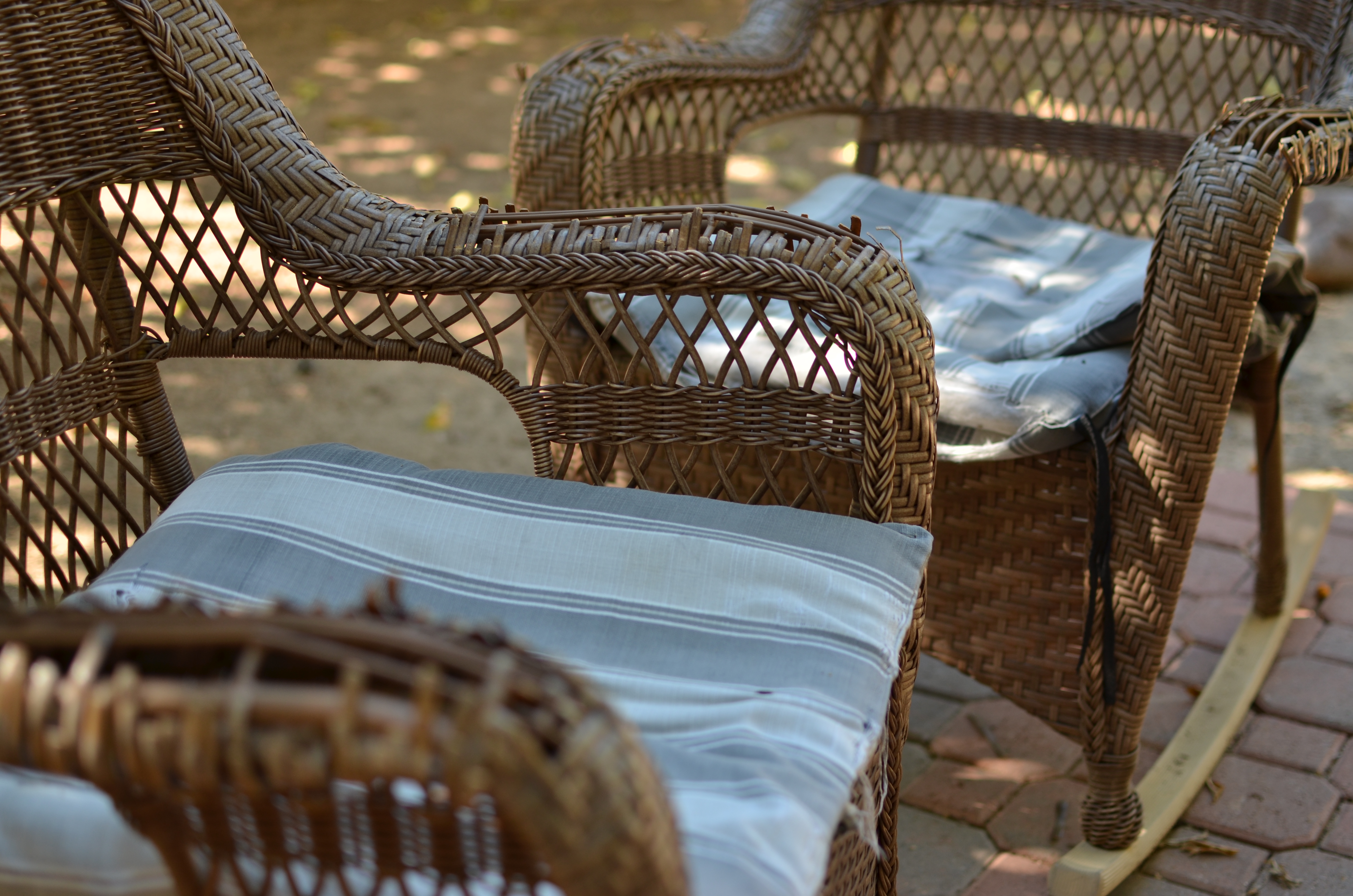
Old friends, or echoes of the old friends that once filled them. 1/320 sec., f/2.5, ISO 100, 35mm.
By MICHAEL PERKINS
WITHOUT GETTING TOO OVERLY OOKY-SPOOKY, I believe that photographers are witnesses to, well, ghosts. Specializing in the visualization of what might be (as near as our next frame), we are also retro-witnesses, or mediums, if you will, using found objects to call back the spirit of things that are no longer here. “If these walls could talk”, we instinctively remark as we walk into Notre Dame, Independence Hall, or Ellis Island, and yet, we think we are merely being poetic when we utter that phrase.
Are we?
Objects give up their secrets slowly, and in these posts I have often gone back to my fond desire to resurrect at least the essence of the owners of those objects, re-capturing people in the things they held, kept, cherished, wore to pieces, loved to death. We use every atom of our imagination trying to inch forward toward some revelation yet-to-be….a way to will a picture into being. But we are surprised to find ourself also trying to conjure forth echoes. And yet some of the most moving portraits we can produce show no people at all. I’m sure you have found this to be true.
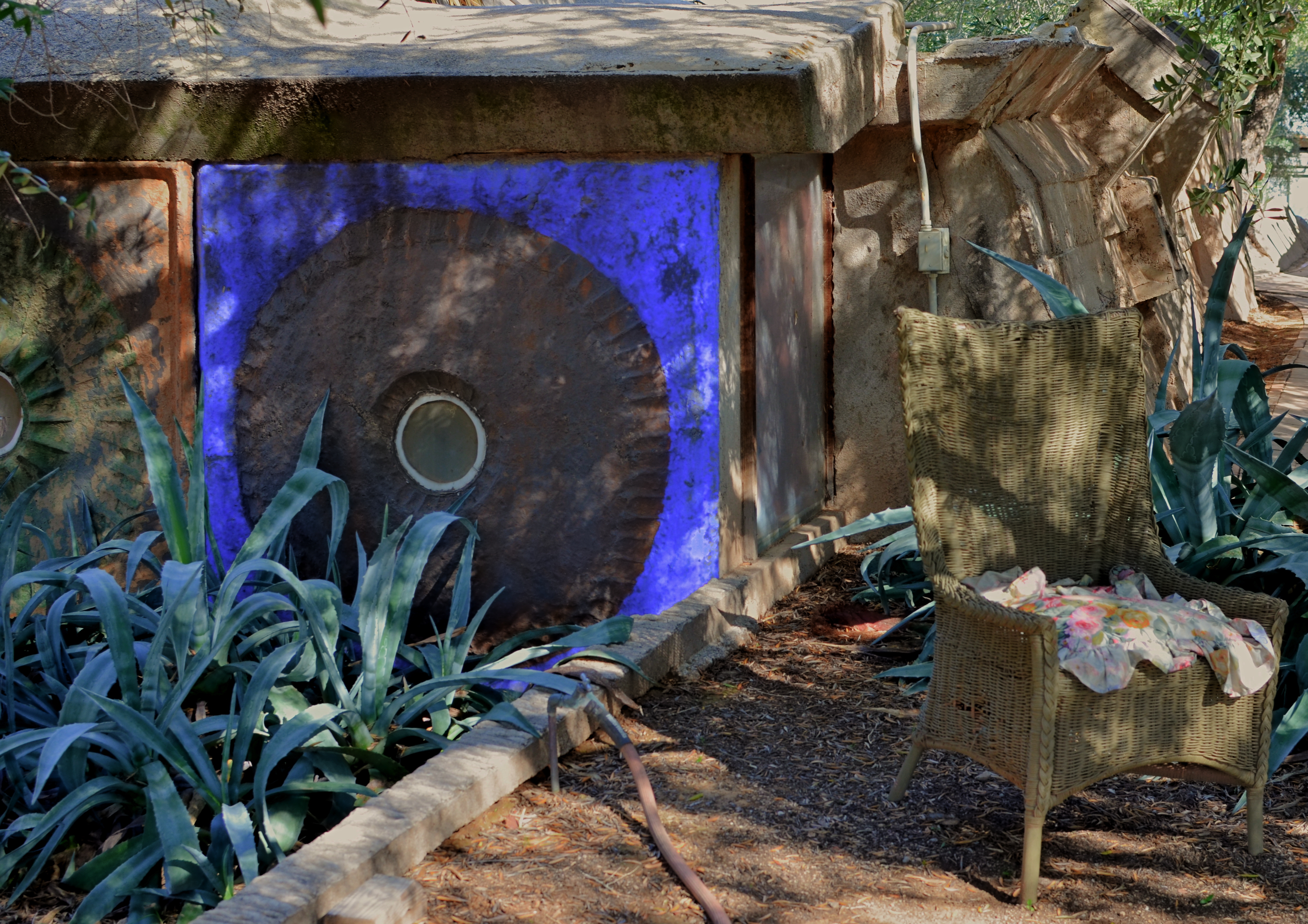
Somebody’s rest spot..but whose? And how long ago?
For reasons I don’t quite understand, chairs resonate especially for me. They’re personal. They’re social. Deals are struck in them; stories are told, babies are soothed, pauses are taken, contemplation occurs. Lives pass.
For you, it might be other things that are left behind, but still ringing with the echoes of people. Books. Clothing. Cars. They can be anything, but whatever their strange stories, you can often hear them, and that makes them far from “empty”. Cameras record everything that can be seen and lots of things that can only be sensed. They may be only machines, but in the hands of dreamers they are divining rods.
Your houses are haunted, and in a good way.
Call the spirits forth.
Related articles
- Between objects and life (thehindu.com)
ESCAPE FROM PLANET PORTRAIT
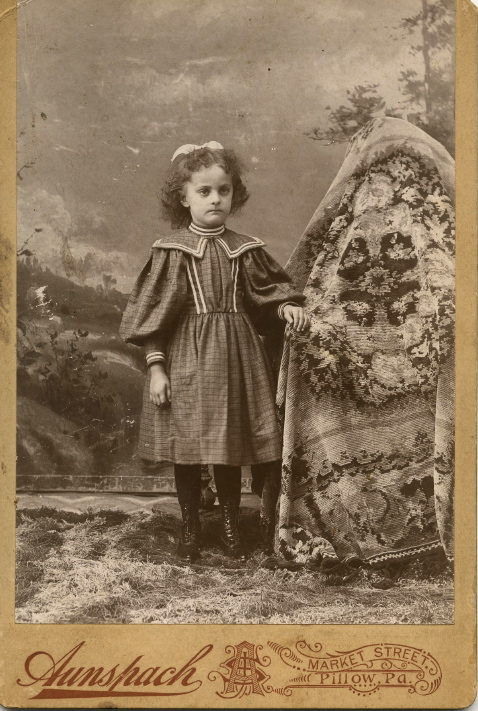
Does this child look happy to you? Does she look like she even has a pulse? Surely we do better kid portraits today, er, don’t we?
By MICHAEL PERKINS
TO HEAR US TELL IT, WE ALL REALLY LOVE OUR KIDS. Assuming that to be true, why do we still subject them to the greatest act of photographic cruelty since Tod Browning’s Freaks? I speak of course, of the creatively bankrupt ritual of studio portraits, many of them cranked out at department stores or discount mills, too many of them making our beloved progeny look like waxworks escaped from a casting call for Beetlejuice.
We can surely do better.
I’m on record as believing that children are the noblest work of nature, coming into the world bearing only joy and untainted by the cynical clown olympics that comprise our “adult” way of thinking. And since we all probably feel the same way, why do so many of us park the little dears in front of hideous backdrops, surround them with absurd props, and gussy them up as everything from fairy princesses to ersatz puppies to fake cherubs?
Part of this ridiculous tradition owes its origins to the early days of photography, when a portrait sitting was the one means by which people who might never leave behind any other visual record of their lives were placed in formalized settings for an “official” rendering of their features. Slow film speeds and primitive lighting dictated that parents “leave it to the pros”, giving these modestly gifted artists decades of practice in weaving imaginary dream framings for our precious kids. (Full disclosure: Yes, I know that the image at left is a leftover from the Victorian age. I didn’t post any contemporary images because (a) many of them are almost this bad and you already get the idea, and (b) I wasn’t eager to be beaten to a pulp by any proud parents.)
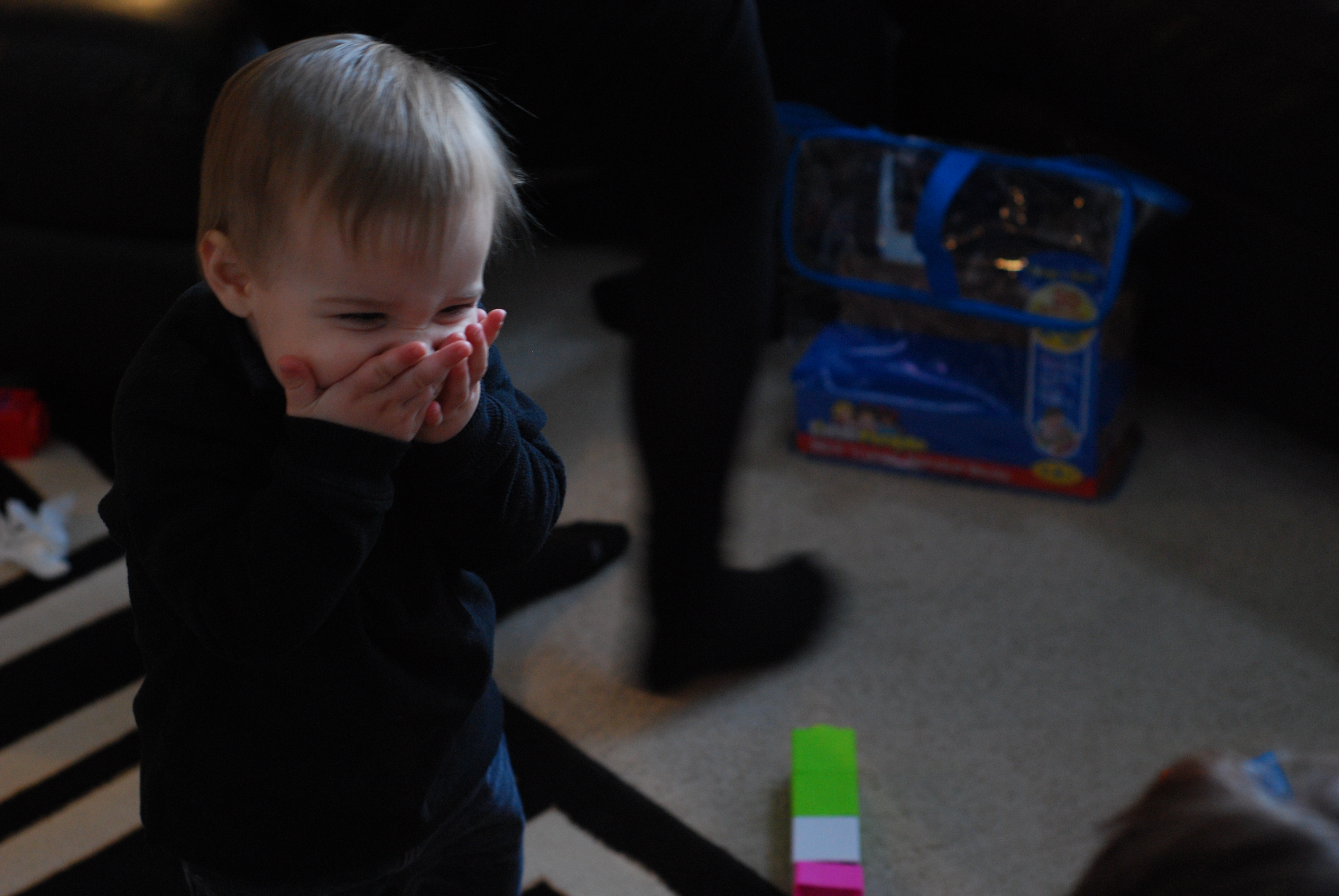
Get out of your comfort zone and into your child’s.
Could it be more obvious, billions of Instamatics and Instagrams later, that this sad ritual hasn’t had any fresh air pumped into it since the golden age of Olan Mills class pictures? Even the most elementary “how-to” books on candid photography have been telling us the same thing for nearly a century: don’t formalize the setting, formalize your thinking. Let your child show you what he is, in his own environment. That means that you need to shoot constantly and invisibly, getting out of the kid’s way. No 3-2-1 “Cheese!” commands, no “sit up straight and don’t slouch” advice, no arbitrary situation.
Sure, you can basically plan how you will shoot your child, but allow him to unfold before your ready camera and gain the confidence to react in the moment. Stop trying to herd him into a structure or a setting. If at all possible, allow him to forget that you’re even in the room. Witness something wonderful instead of trying to construct it. Be a fly on the wall. The child is pitching great stuff every time he’s on the mound. Just make sure you’re behind the plate to to catch it.
Dirty little secret: there is nothing “magical” about most studio portraits. In fact, many of the results from the photo mills are just about the most un-magical pictures ever taken, although there are signs that things are changing. It simply isn’t enough to ensure a perfectly diffused background and an electronically exact flash. Even today’s most humble personal cameras have amazing flexibility to capture flattering light and isolate your subject from distracting backgrounds. And going from standard “kit” lenses (say, an 18-55mm) to an affordable prime lens (35mm, 50mm) gives us insane additional gobs of light to work with, all without using the dreaded pop-up flash, the photographic equivalent of child abuse.
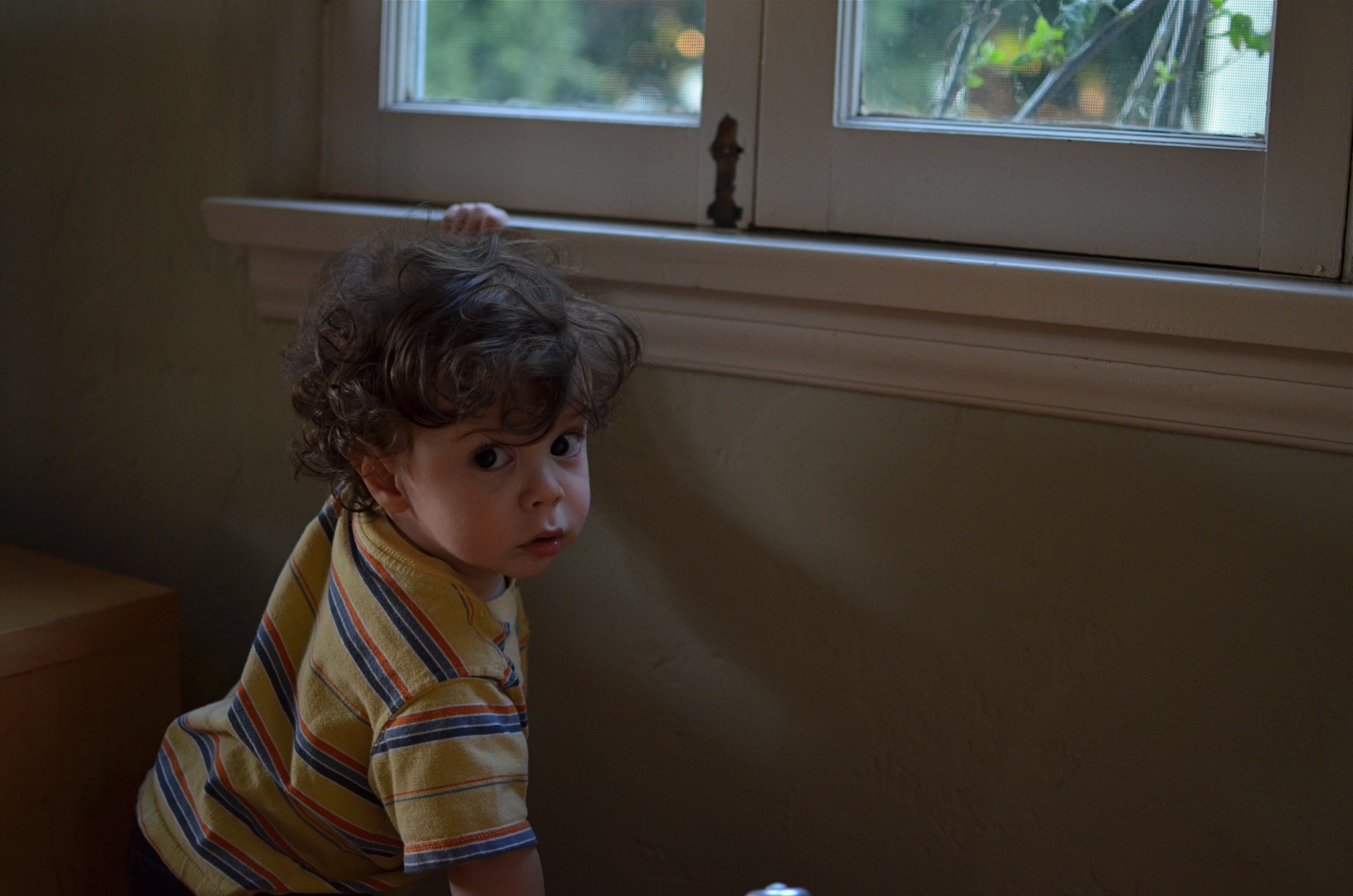
It don’t gotta be perfect. It does gotta be honest.
Doing it yourself with kid portraits is work, make no mistake. You have to be flexible. You have to be fearless. And you have to know when something magical’s about to happen. But it’s your child, and there is no outside contractor who has a better sense of what delight he has inside him.
Besides, isn’t it likelier that he will show you the magic in his own back yard than in a back room at K-Mart? Give him something that he loves to do, the better to forget you’re there, and crank away. I mean shoot a lot. And don’t stop.
You’re the expert here.
Don’t outsource your joy.
PRETTY/UGLY
By MICHAEL PERKINS
LEGEND HAS IT THAT ORSON WELLES, STAYING FOR A WHILE AS A GUEST AT PETER BOGDANOVICH’S HOME AROUND 1970, convinced him that the small Texas town he wanted to portray in the bleak drama The Last Picture Show would be “too charming” if shot in color. Bogdanovich went with the starkly toned palette of black and white, and you know the rest. Eight Oscar nominations, two wins, and an honored slot in cinema history.
Bogdanovich made an artistic decision to make something “uglier” in order to make it “real”.
For me, this idea has always been like swimming against the current, since, as a kid, I was influenced initially by scenic photographers, then, somewhat later, photojournalists, who seek a completely different end product. I tend to default to the idea of making things look pretty. Even today, me knowing the impact of recording things as they are, warts and all, is one thing, while me, deliberately manipulating an image in order to change or amplify its darker elements is a stretch. It’s not something I instinctively bend toward.
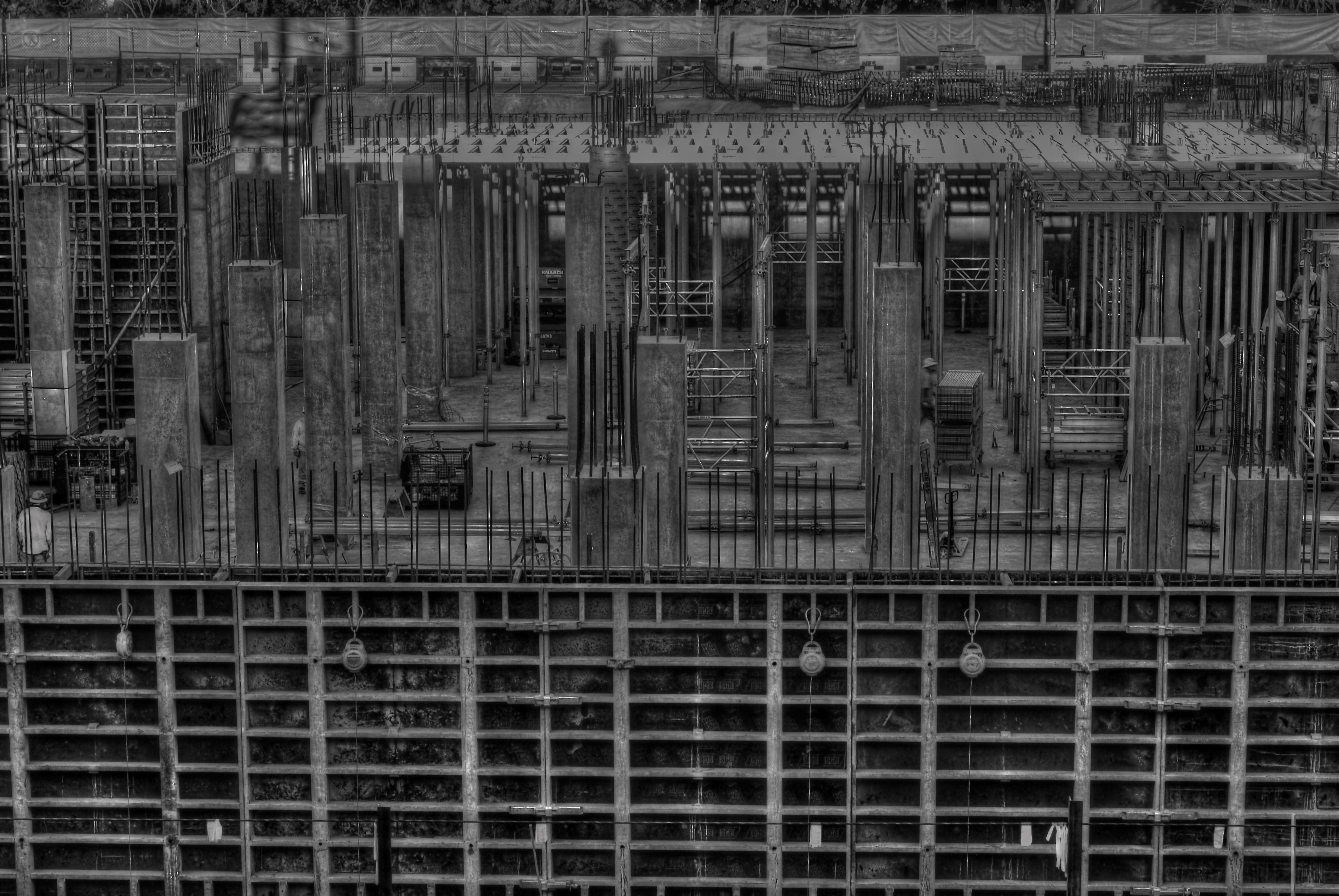
Hideous or wondrous, depending on how you see it. A deliberately “over-cooked” HDR from three exposures, all taken at f/11 for maximum detail, and ISO 100 with a 50mm prime lens.
Still, some stories are told in capture and others are revealed in processing, and while photography is interpretation as well as mere recording, I like to take a crack at changing the context of a picture, to make its parts add up to something drastically different. A few years ago, the parking garage near my job looked out at a massive construction project. My parking slot was situated such that I was about three floors up in the air, peering through the open wall of the garage to easily take in a panoramic view of the entire length of the new building’s emerging structure. I soon got into the habit of getting to work about fifteen minutes early so I could hop out and snap whatever activity I could catch.
The finished building eventually smoothed into something acceptably serviceable, if bland, but, with its raw skeleton mounting day by day, an immense feeling of grim, awful power was climbing out of that place. It couldn’t be seen in color, especially not in the benign, golden light of early morning. This thing was appearing to my eye as a sinewy, dark life force, inevitable, dreadful……an impression I would have to achieve through a complete reworking of tone and texture. I decided to use High Dynamic Range processing, not to merely rescue detail lost in highly contrasted nooks, but to intensify every grain, granule and hobnail of the building, to render it in a surreal, slightly hellish aspect. To make it “ugly” on purpose…..or, more exactly, to my purpose.
Playing at changing the emotional feel of a picture isn’t native to me, so I am always grateful when this part of my brain rouses from sleep and demands to be exercised. The persistent (and false) notion of photography since its inception is that it shows the world as it is, a lie which is debunked with every willful act of picture-taking. No less than painting, the photo image is both document and statement, truth and distortion.
It never has to settle for being mere reality, nor could it claim to be.
And that is its seductive pull.
STRING THEORY
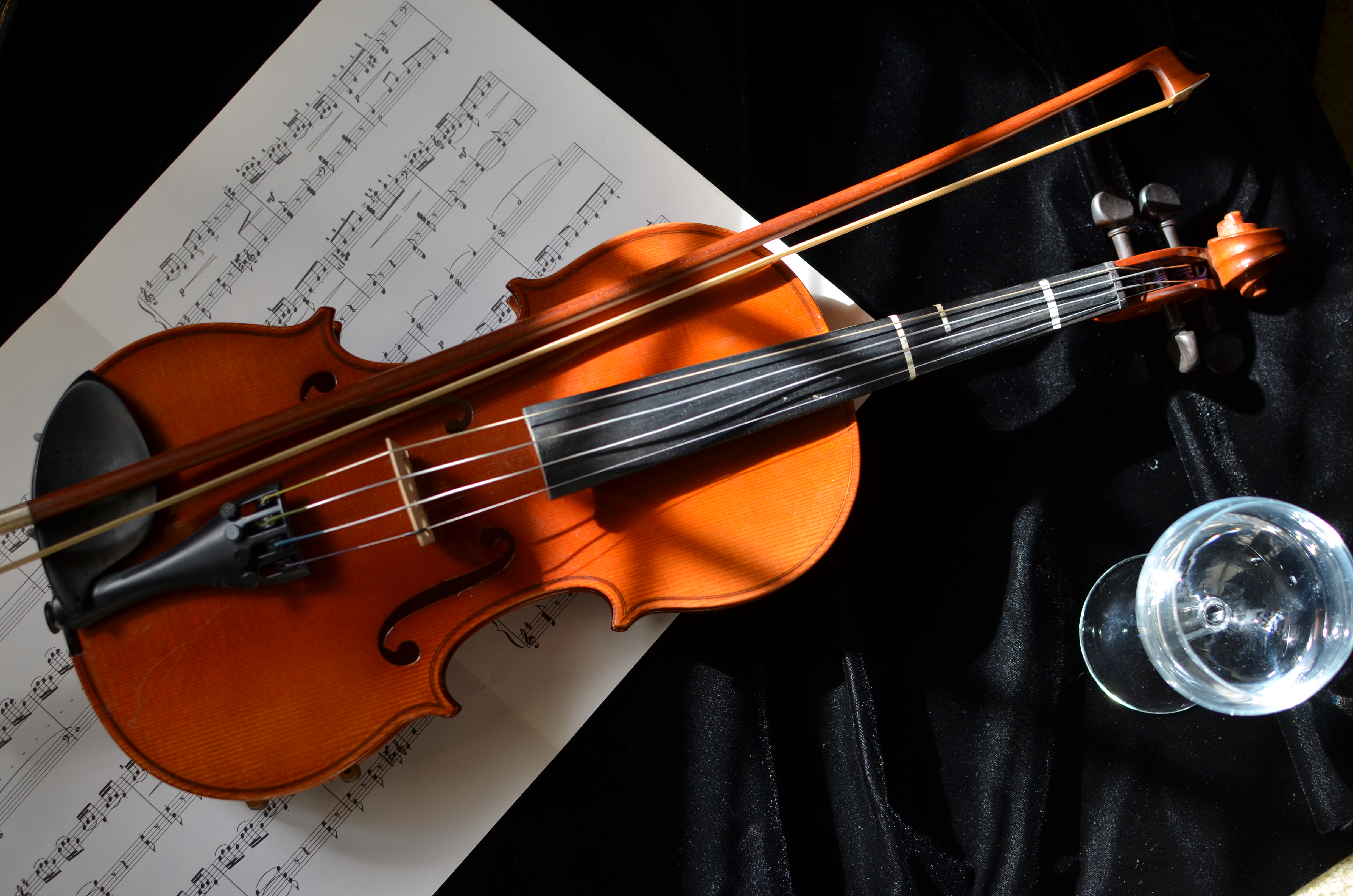
Repose. 1/250 sec., f/3.5, ISO 125, 35mm prime lens.
By MICHAEL PERKINS
CERTAIN INANIMATE OBJECTS INTERACT WITH THE LIVING TO SUCH A LARGE DEGREE, that, to me, they retain a certain store of energy
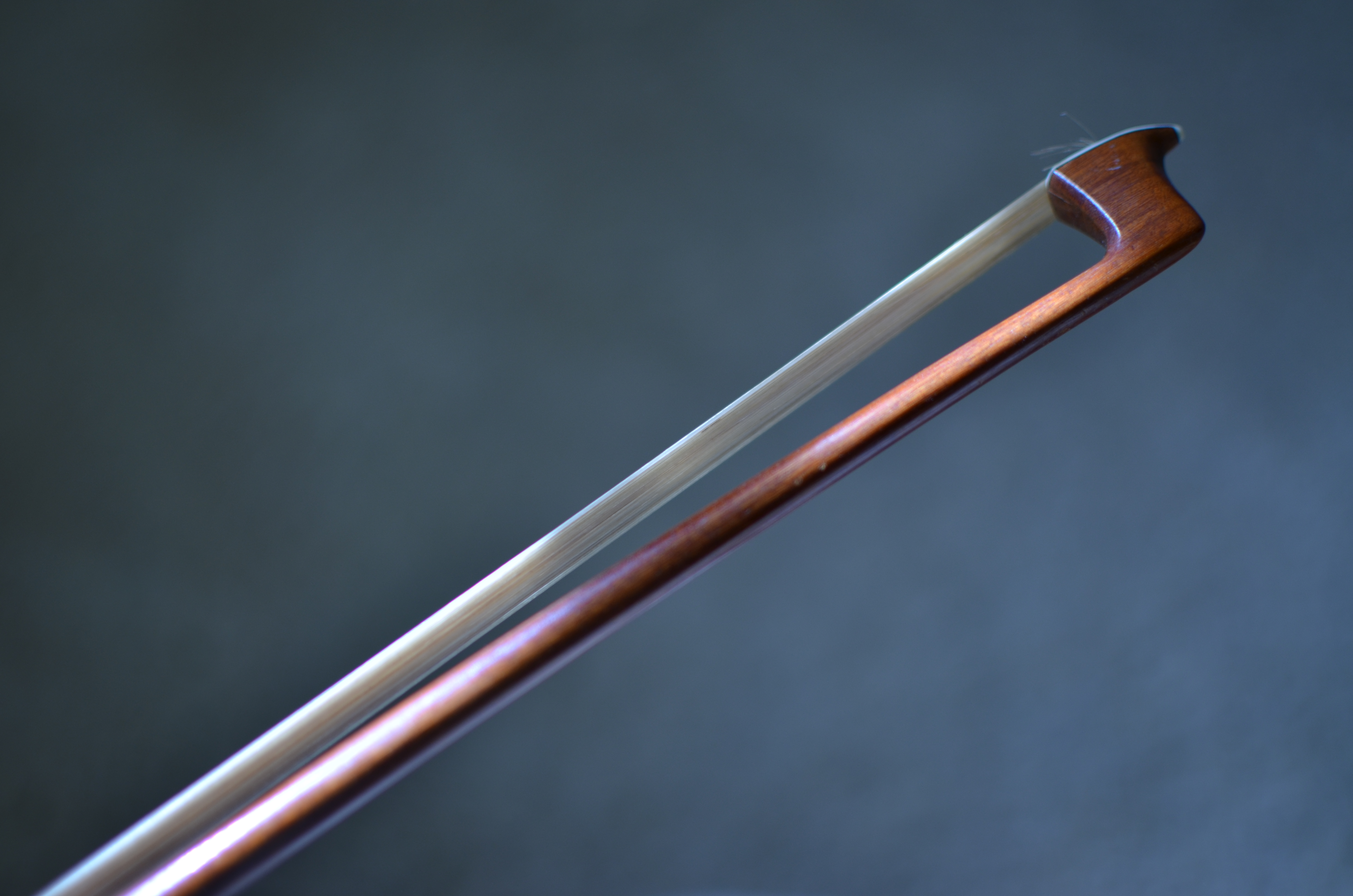
Just horsehair and wood, but it has an elegance all its own.
even when standing alone. Things that act in the “co-creation” of events or art somehow radiate the echo of the persons who touched them.
Musical instruments, for my mind’s eye, fairly glow with this force, and, as such, are irresistable as still life subjects, since, literally, there is still life emanating from them.
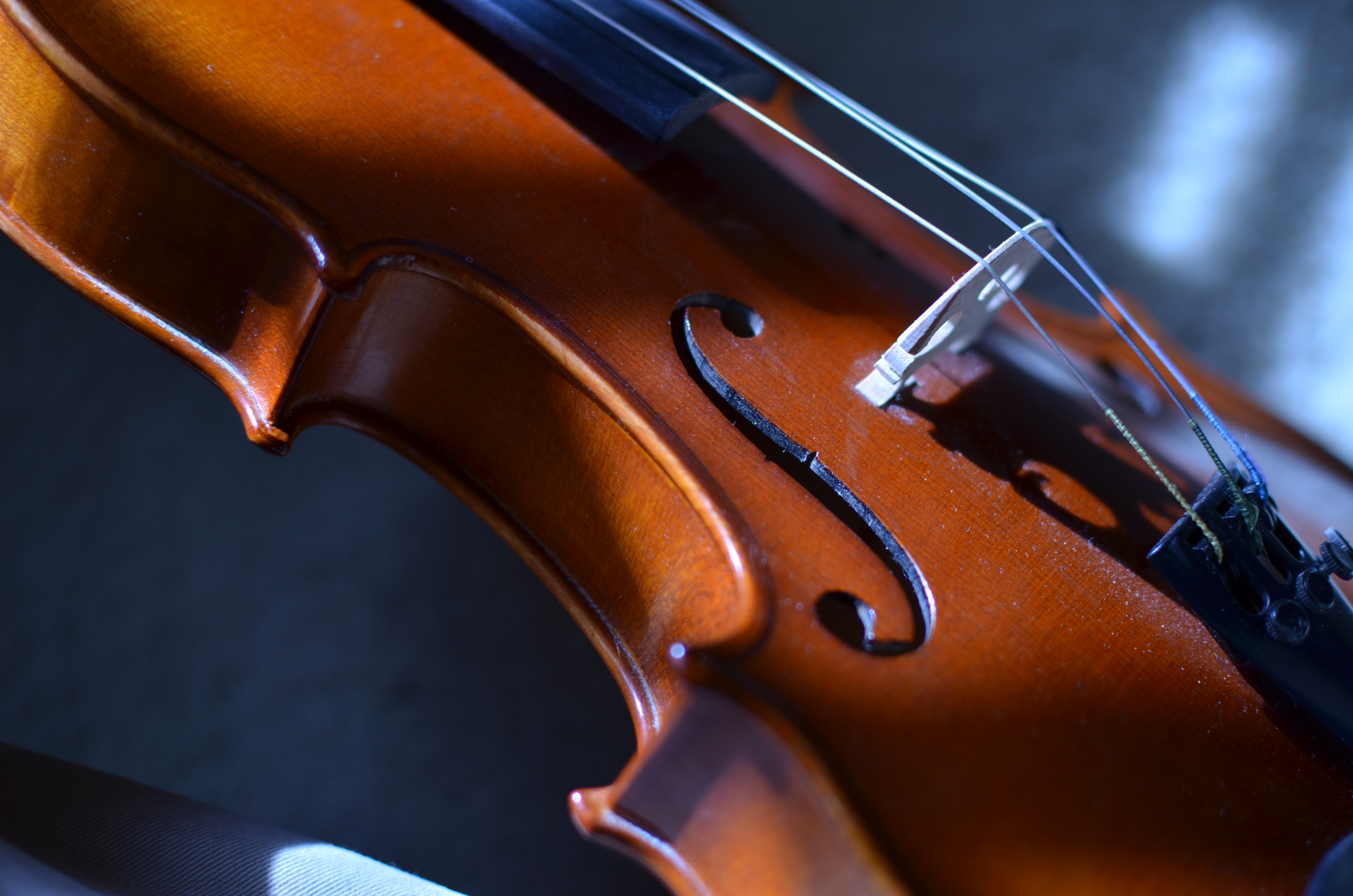
Staging the object just outside the reach of full light helped the violin sort of sculpt itself. 1/800 sec., f/2.5, ISO 100, 35mm prime lens.
A while back I learned that my wife had, for years, held onto a violin once used for the instruction of one of her children. I was eager to examine and photograph it, not because it represented any kind of technical challenge, but because there were so many choices of things to look at in its contours and details. There are many “sites” along various parts of a violin where creation surges forth, and I was eager to see what my choices would look like. Also, given the golden color of the wood, I knew that one of our house’s “super windows”, which admit midday light that is soft and diffused, would lend a warmth to the violin that flash or constant lighting could never do.
Everything in the shoot was done with an f/1.8 35mm prime lens, which is fast enough to illuminate details in mixed light and allows for selectively shallow depth of field where I felt it was useful. Therefore I could shoot in full window light, or, as in the image on the left, pull the violin partly into shadow to force attention on select details.
Although in the topmost image I indulged the regular urge to “tell a story” with a few arbitrary
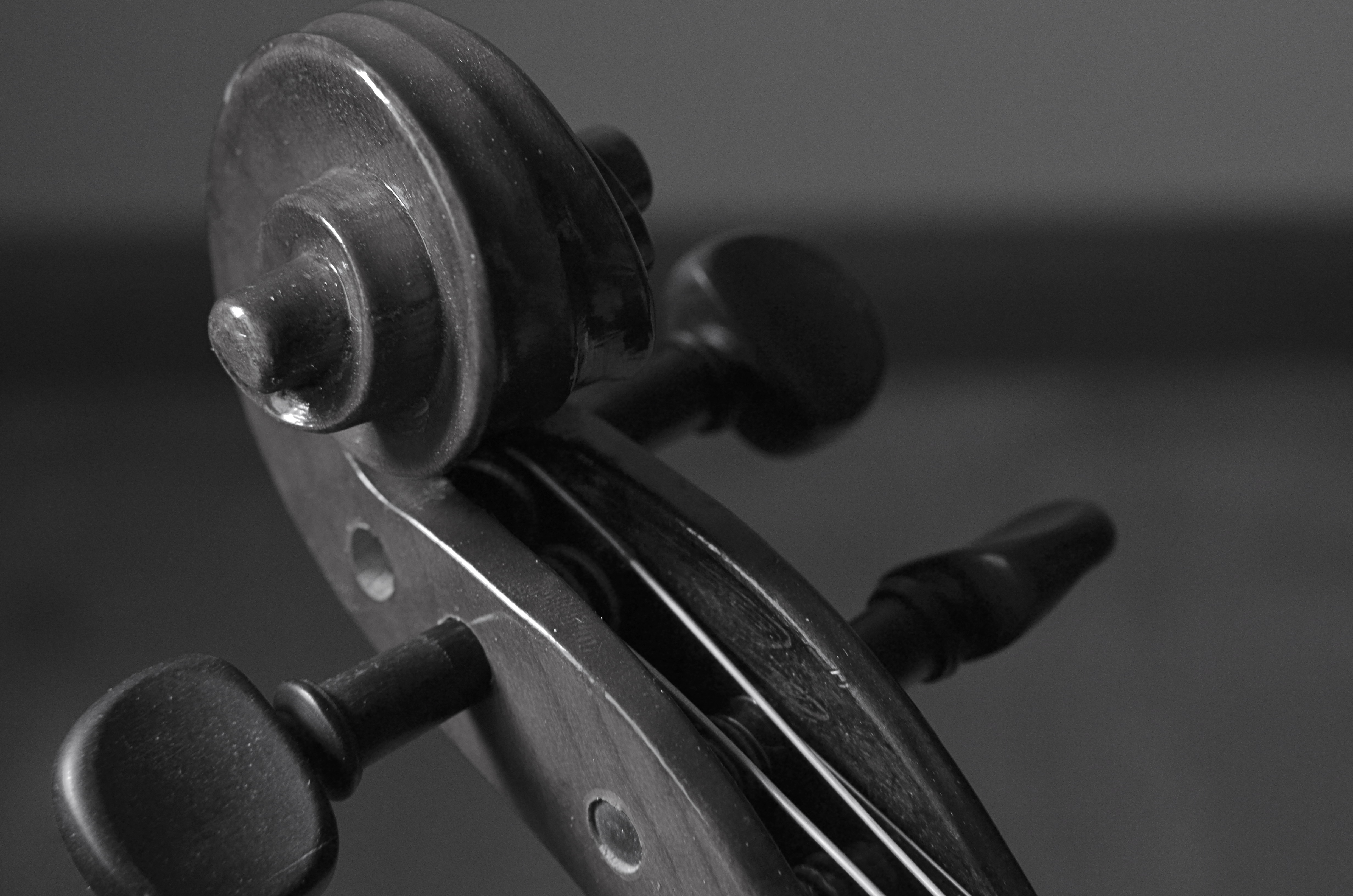
The delight is in the details.
props, I was eventually more satisfied with close-ups around the body of the violin itself, and, in one case, on the bow. Sometimes you get more by going for less.
One thing is certain: some objects can be captured in a single frame, while others kind of tumble over in your mind, inviting you to revisit, re-imagine, or more widely apprehend everything they have to give the camera. In the case of musical instruments, I find myself returning to the scene of the crime again and again.
They are singing their songs to me, and perhaps over time, I quiet my mind enough to hear them.
And perhaps learn them.

