By MICHAEL PERKINS
I WOULD LOVE TO BE ONE THE FEW MIRACULOUSLY GIFTED PHOTOGRAPHERS who can perfectly and consistently frame and expose an image S.O.O.C. (straight out of the camera). But I am not one of those people. I do my best to come as close to that ideal as possible, pre-planning shots and executing them as near to that vision as I can. I produce a great many usable pictures, first drafts if you will, to which I then apply the absolute minimum of monkeying after the fact. But, nearly always, my best pictures are collabs between what I shot and what I later discovered would best augment those shots. Thus the Holy Grail of S.O.O.C., a near religion for many, raises a lot of issues for me.
It doesn’t take long before the hope that one can shoot a picture that is so complete, so fully realized in its original conception, becomes the primary reason for making or judging a picture. This, to me, equates to a kid coloring perfectly within the lines, obeying all the rules about how to apply the right amount of crayon here or there. A certain sterility can set in, where the main object is merely to be able to boast that what you see is virginal, untouched by even well-intentioned human hands. That, in turn, can lead to mediocrity, or worse for a photographer, inflexibility.
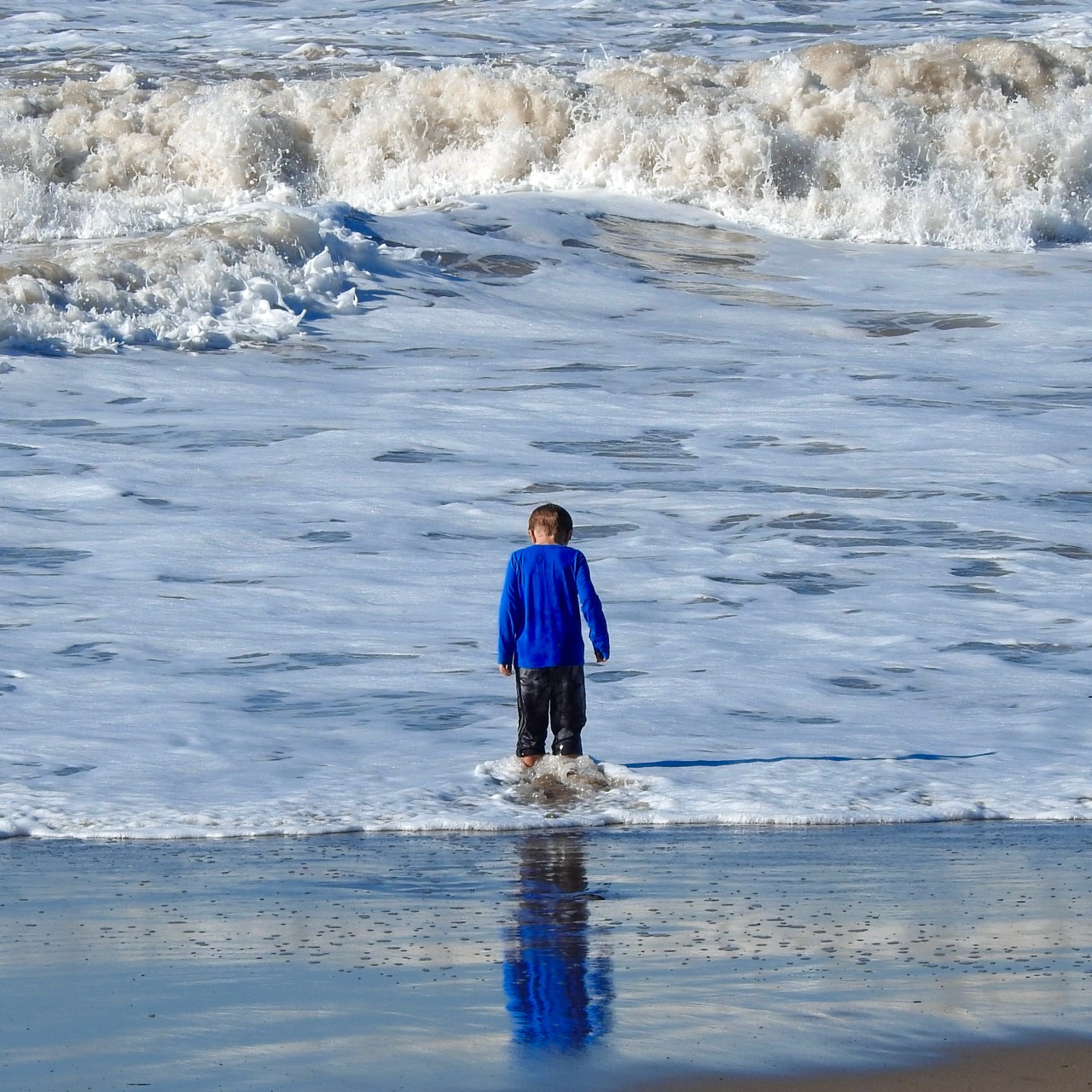
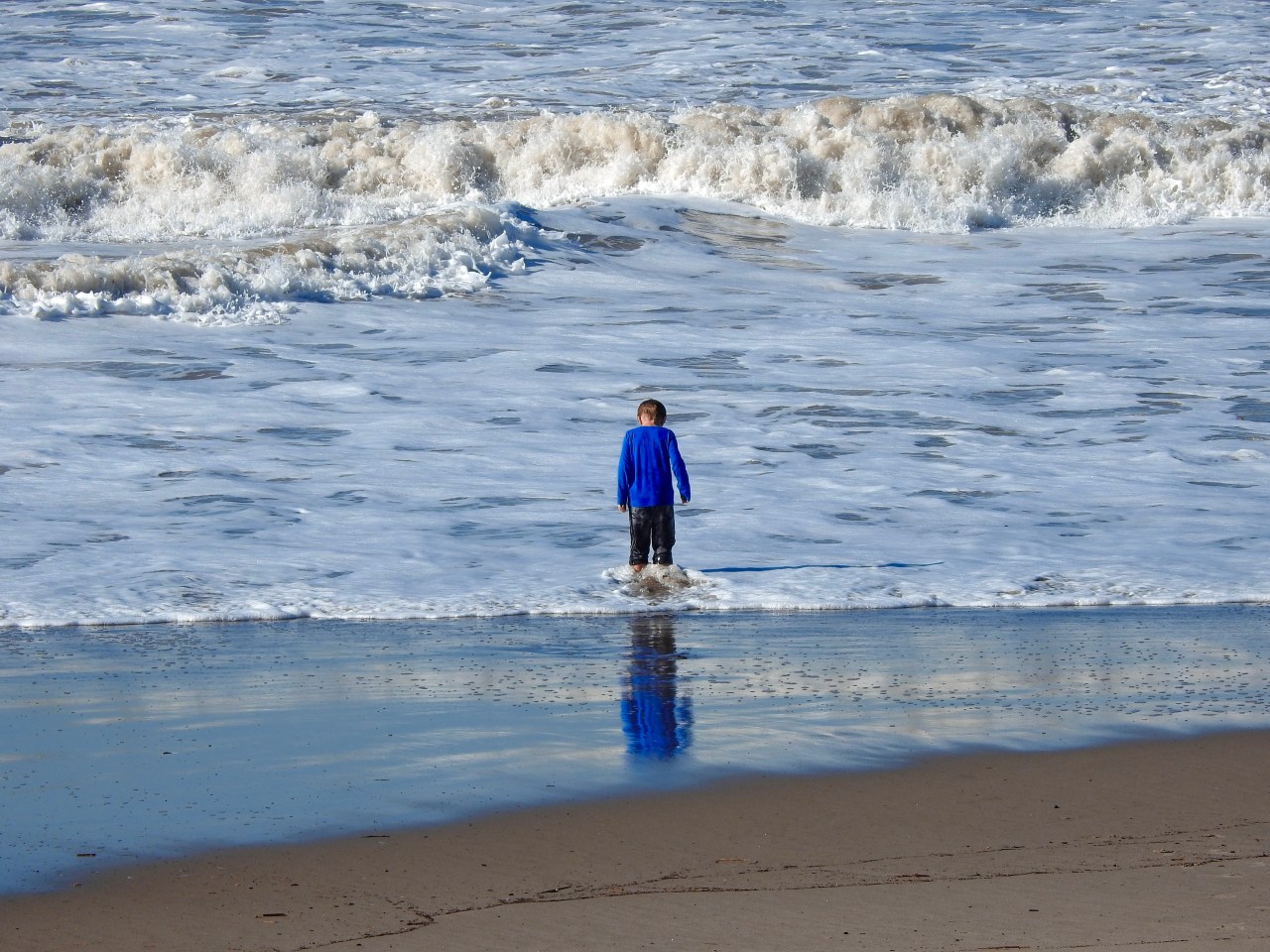
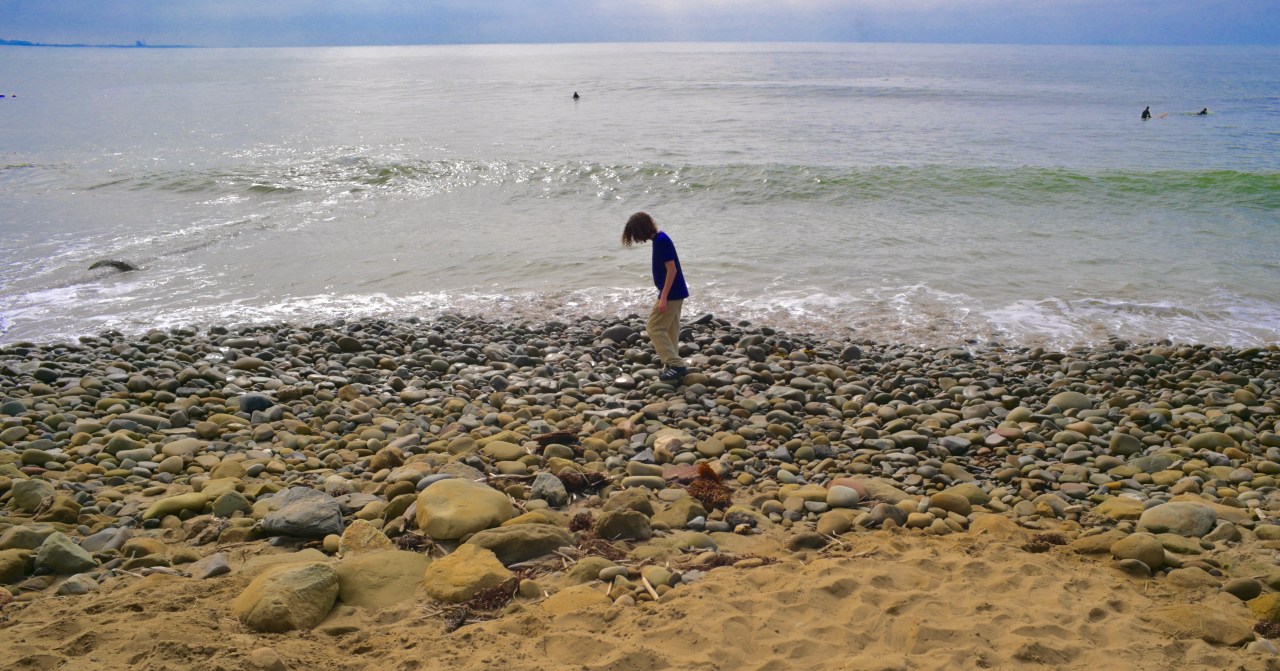
What one person might call a manipulation, i.e., an offense against purity, is, to others, merely the second or third phase of taking a generally usable photo and helping it become great…..in perfecting the composition, in boosting the dramatic power of something that was essentially delivered, but understated, in the original. The S.O.O.C. shot you see up top here is, for a quick snap, very close to what I saw in my mind’s eye. However, the simple crop shown above gives the surging surf above the boy more immediacy, tweaking up the tension between him and the sea. I also committed the additional desecration of amping the ocean’s blueness and the contrast in the boy’s reflection. Did I rescue the picture, or ruin it? And, bear in mind that I’ve described very fundamental interventions, even though all of them are enough to scandalize the S.O.O.C. crowd. Well, tough…..
Photography is a living thing, and hopefully our best results will also seem alive. But just as painters re-do entire sections of a canvas from a sunset to a profile on their way to a final masterpiece, shooters must be free to use a second (or third) pass on an image, rather than relying on the snap of the shutter to reliably deliver miracles on demand. A two-putt is not as spectacular as a hole-in-one, but it still looks pretty damned good on a scorecard.



 thenormaleye