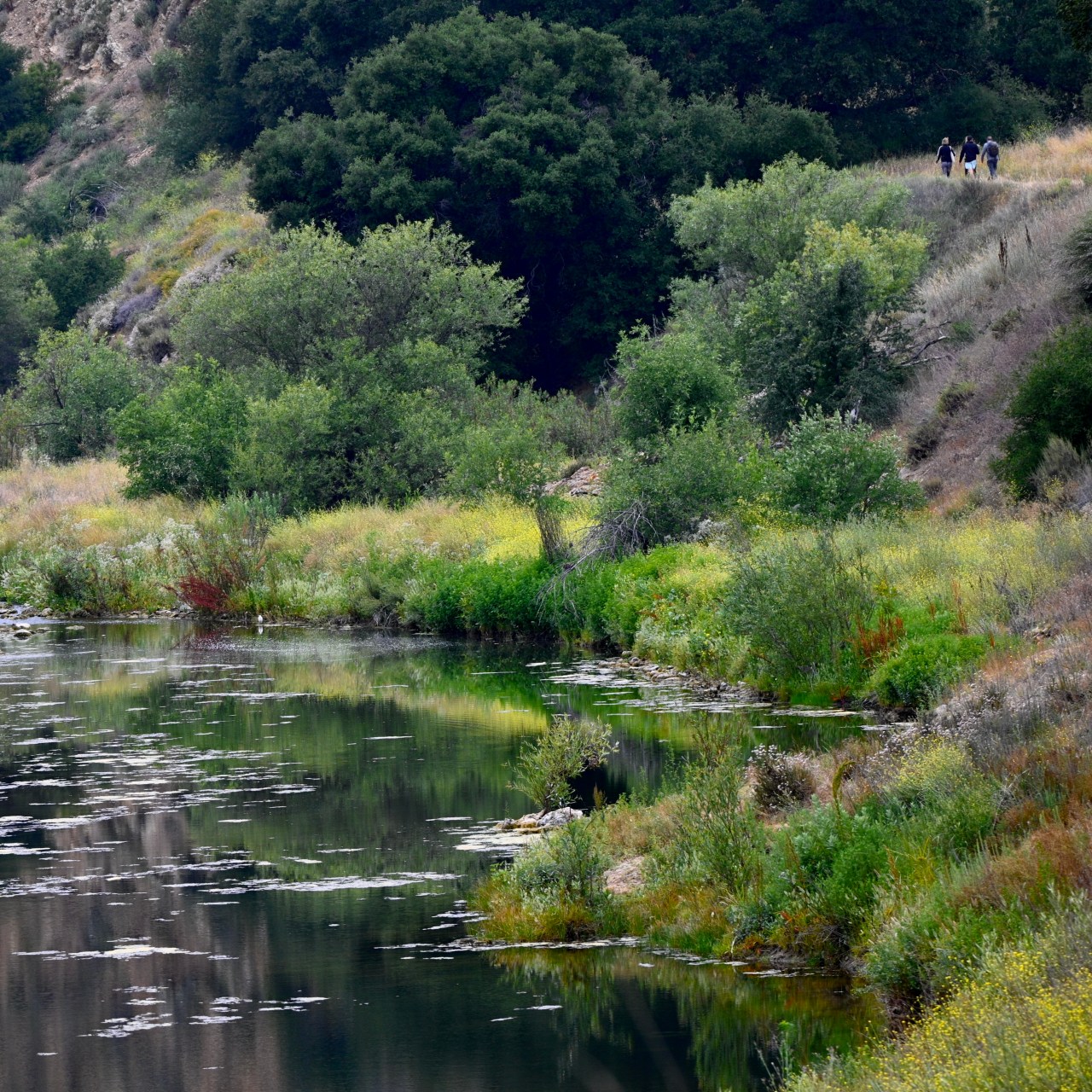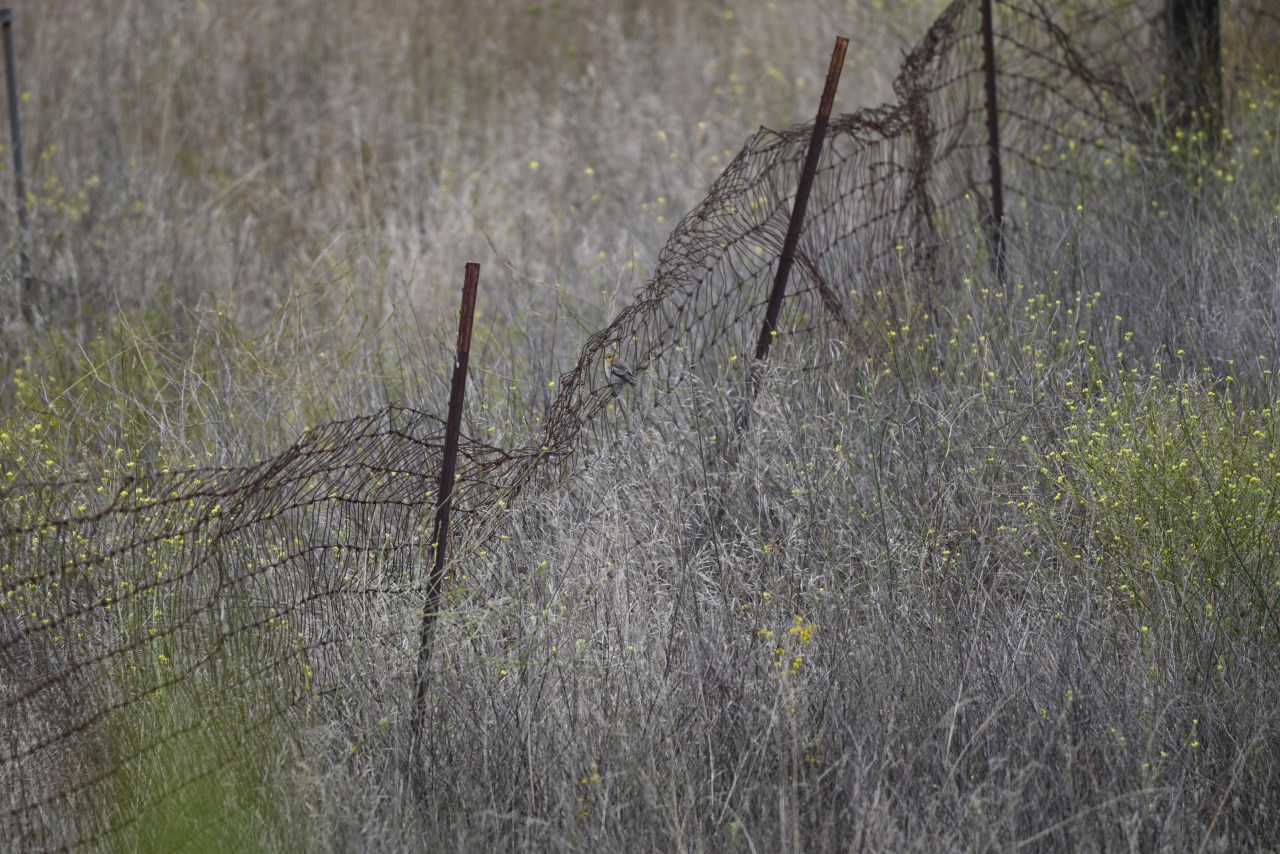
A sort of “Where’s Waldo?” zoom shot in which “Waldo” is played by a well-concealed baby Bullock’s oriole.
By MICHAEL PERKINS
PHOTOGRAPHERS, AT LEAST ON THE LOGICAL HALF OF THEIR BRAIN, know that purchasing X kind of gear will not necessarily solve all of their picture-making problems. Screwing on a fresh lens or body is, by itself, no guarantee that you will “get” any more satisfying images than you do at present. I mean, put one of us on a polygraph and ask, “do you believe that this new whatsis that you bought will transform you into a master shooter, and we’ll answer “no” without hesitation.
That’s the logical answer, after all.
Of course, creatives are not wholly logical, and so, when breaking in a new bit of kit, there is a decidedly emotional honeymoon period during which you do, briefly, dream that, now, all your problems will be magically solved. And so, getting past that phase, and realizing that, yes, despite the new toy, you still will come home empty some days, and, yes, you still will make mistakes and blow a percentage of your pictures.
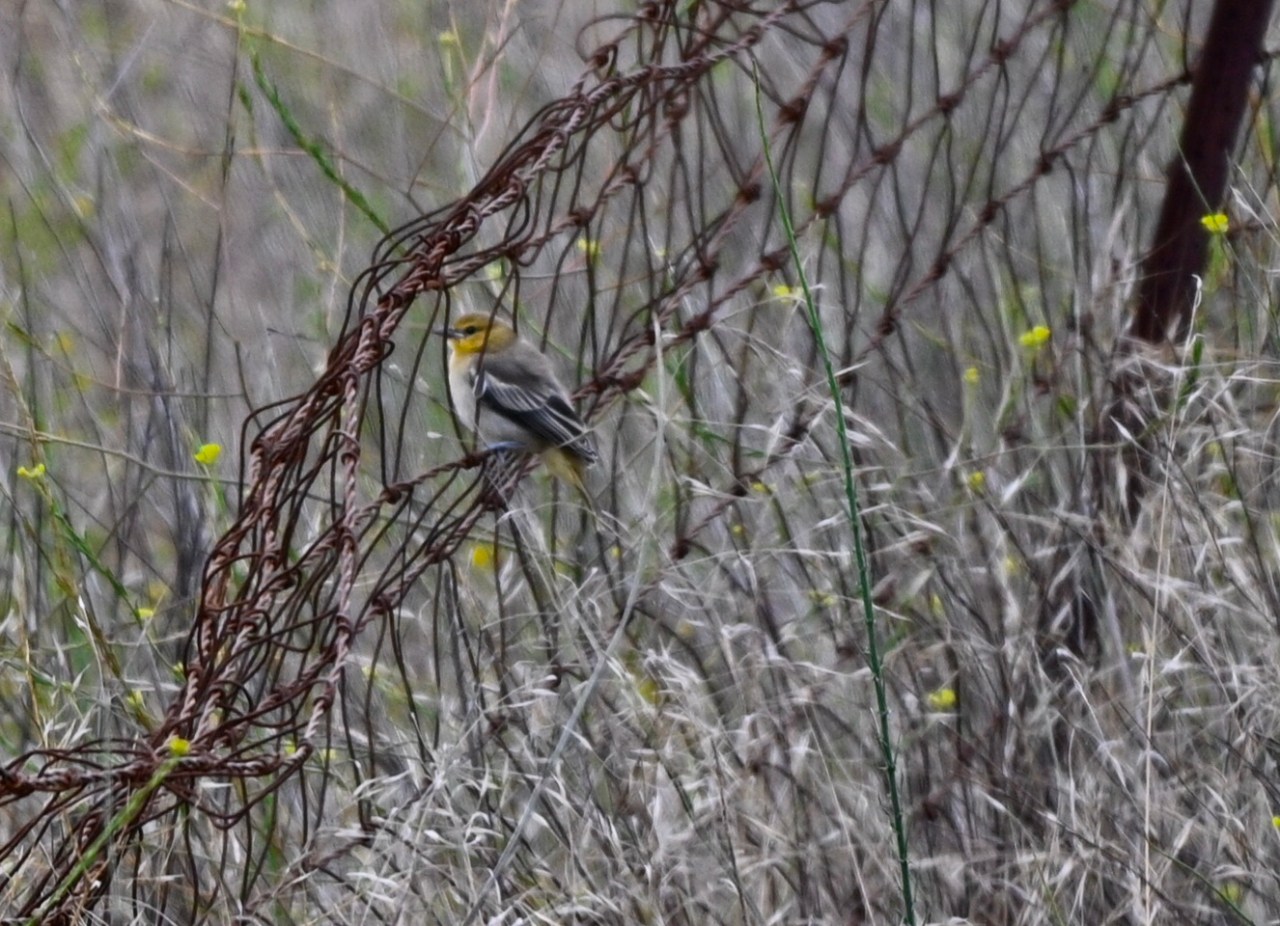
THERE you are, you little bugger…
My recent move up to a 600mm lens for nature work was, for a short while, one such honeymoon. I would now bag bundles of elusive birds in a fashion never dreamt of before! Slinging a five-pound optic on my aging shoulders for hours at a stretch would be transformative! I would wonder how I ever managed before this day, etc., etc., etc.
Somehow, I still find that the gear, as well as myself, has limits. Check the initial frame, at the top of the page, that resulted from me trying to find a baby oriole in a twisted mass of rusted fencing from about 100 yards away, zoomed all the way out to 600mm. The bird is actually in the image, but it took “the zoom after the zoom”, i.e., a severe crop of over 50%, to reveal the little guy, a move which also resulted in the final image having barely enough resolution to make it fit for viewing on a monitor. The lens did everything it could, but it’s not a mystical portal: it’s a physical optic with limits, those limits being largely defined by, gulp, its user. Of course, I can talk myself down by noting that most of nature photography invokes the Maxwell Smart phrase, “missed it by that much!” and that using my equipment better will eventually up my average. But all such thoughts involve logic. Truth is, this little bird brat has hurt my feelings, and I want to marinate in that for a moment. I need a cuppa tea.