By MICHAEL PERKINS
ONE OF THE BEST WAYS TO IMPROVE YOUR PHOTOGRAPHS is, quite simply, to stop working against yourself. The single most frustrating thing about reviewing images that didn’t quite work is that you can so clearly identify when you, yourself, were the main obstacle to getting what you wanted. A misguided vision, an incomplete idea, the wrong technical method, or simply inflexibility or ignorance can cost you the shot, and it’s always, always horribly plain that it was you, not the light or the camera or anything external, that stamped “fail” all over certain photos.
I really had a clear, if painful, demonstration of this phenomenon last week, during a birding trip to Flagstaff, Arizona. Summers in “Flag” may bring unpredictable and sudden rainstorms and flash floods, but offer the consolation prize of one of the most amazing color explosions in the west, in its annual blankets of smaller sunflowers. Even when every bird in creation decides to sleep in late or simply play it coy, there are those sunflowers, filling every field, pasture, roadside ditch and creekbed. They are an insanely joyous gift, and it’s not so much a question of whether you’ll shoot them…it’s how well.
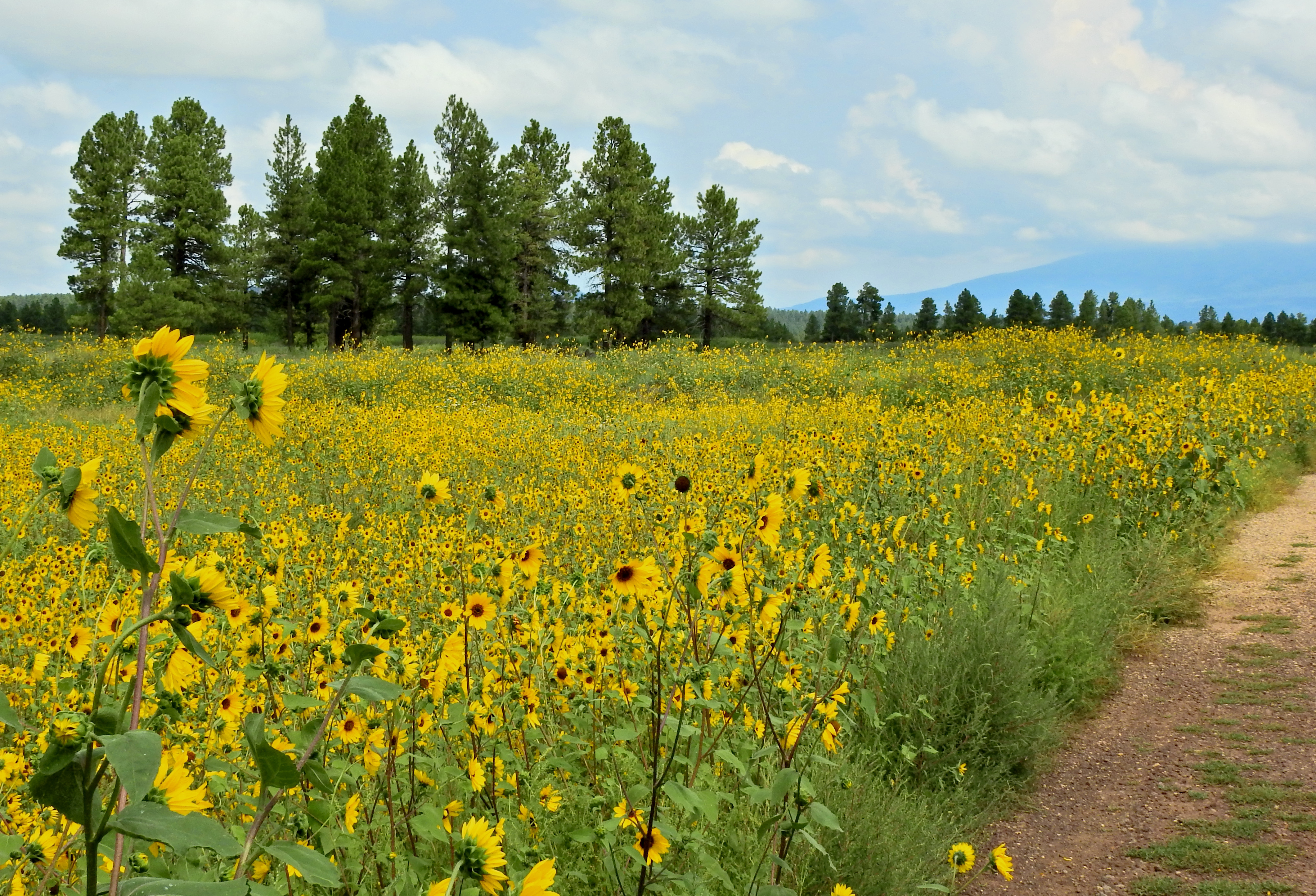
Perk’s Law: Don’t use a “superzoom” bridge camera for your serious landscape work.
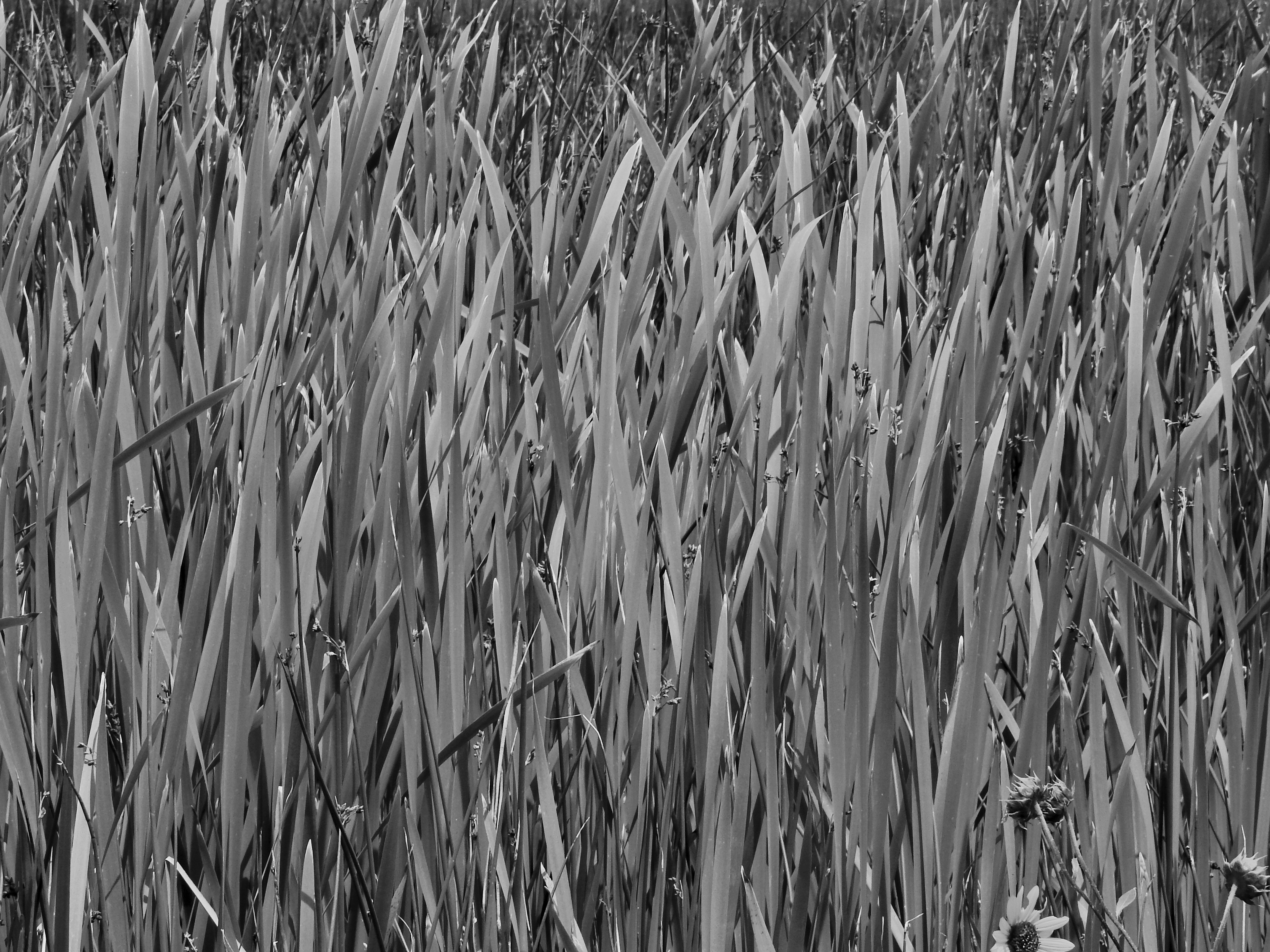
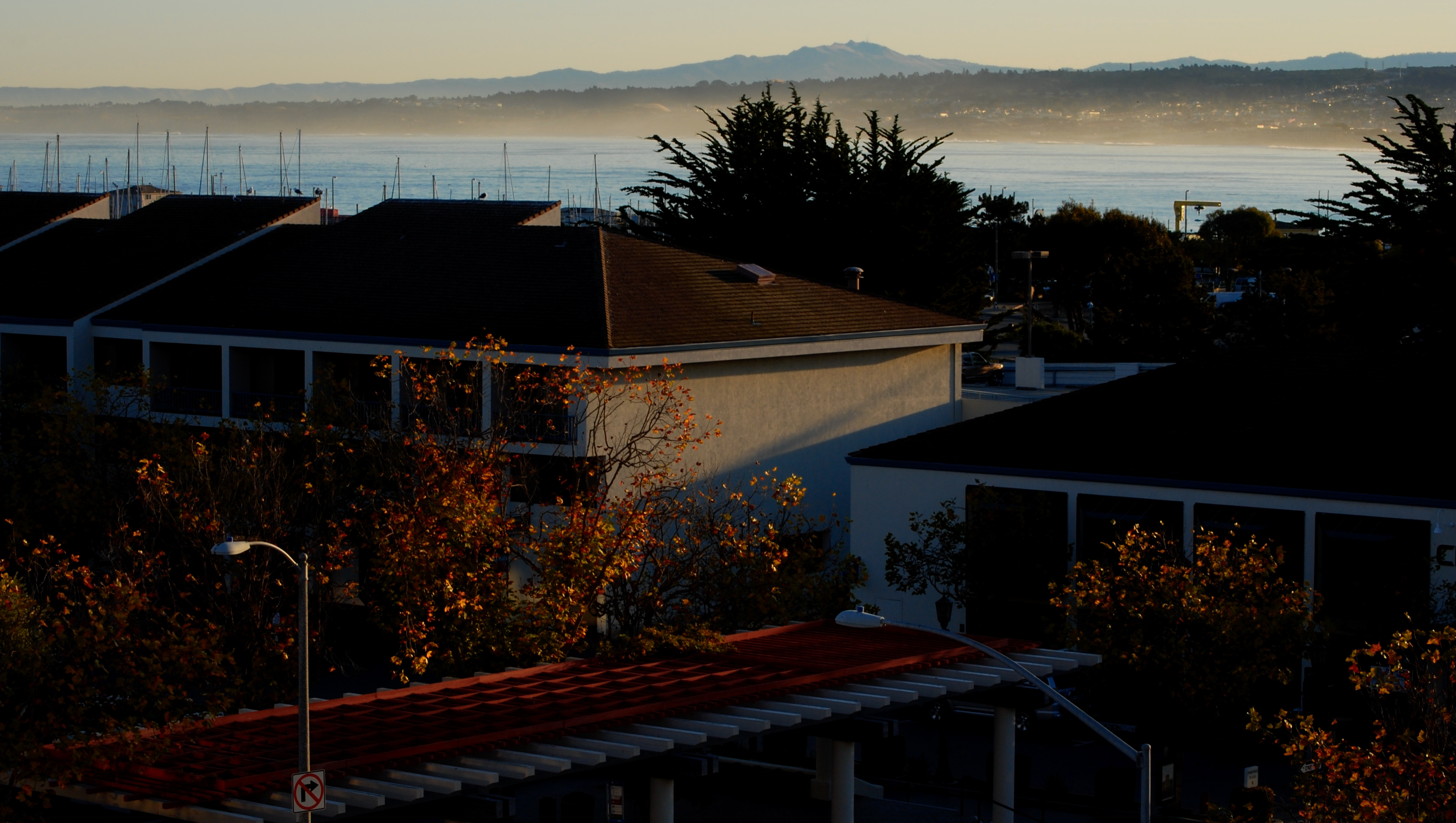
The image you see here is a classic example of the right intention meeting the wrong gear. The bridge camera I use to attain insane zoom access to tiny tweeters is also one of the worst lenses for landscapes of faraway scenes. The more you crank up the magnification on a superzoom, the lousier the quality becomes, as their sensors, made tiny to accommodate the space-sucking bulk of a lens that goes from 24 to 2000mm, lose a ton of light, illumination that they try to compensate for by jacking up ISO. The lenses are great in their midrange, in broad daylight, but they reek in shade and, as you can see here, are mushy when it comes to textures and finer details of faraway scenes.
The aggravating thing is that I had a regular wide-angle prime (so, no zoom capability) that is sharper than an executioner’s blade sitting in my car, not 300 yards from this field of flowers. This was somehow too “inconvenient” for me, however, and so I allowed myself to imagine that, as the adverts claim, my superzoom “could do it all”. But what did I need a zoom for in this case, anyway? Consider: I was unrestricted in my access to the area, and could easily have walked to the composition I needed, which, if I had gone out with only the wide-angle prime, I would have had no choice but to do anyway.
So, let’s call a spade a spade: I zoomed because I could, because it was handy. The quality on the wider lens, which can close down to f/16 (the superzoom tops out at only f/8, because, well, starving for light, etc.) would have rendered the flowers sharp to the horizon instead of the melted crayon look delivered by the bridge camera. As for a tighter composition, I could have achieved that later with some intelligent cropping, cutting from an inherently larger, more detailed and sharper image file. The ultimate take-home is that I knew better than to send a boy lens to do a man len’s job, and my bad choice cost me a picture.
Biting-yourself-in-the-butt dept: I’m a huge advocate of taking along as small a haul of kit as possible, always searching for ways to do more with fewer lenses, cameras and gizmos. I’m a big believer in finding a camera that will deliver 90% of what you want 90% of the time, and in leaving all the other gear back in the hotel room. But when convenience actually means a bad return on your vision for an image, you’re not shrewd or concise. You’re just lazy.


 thenormaleye
SLO-MO EARTHQUAKES
Now you see it, now you don’t: the death of Paradise Valley Mall, Phoenix, Arizona, July 2021
By MICHAEL PERKINS
THE SO-CALLED “CREATIVE” ARTS ARE CONSPICUOUSLY OBSESSED WITH RUIN. Whether our platform is the printed page, the canvas, or the camera, we who are supposedly committed to the depiction of uplift and inspiration seem equally fascinated with devastation. Easily half of the photographic images that have copped the Pulitzer Prize chronicle death rather than life, destruction in lieu of generation. The old saw about not being able to resist craning our necks when slow-rolling past a gruesome accident is based in truth: when it comes to Things Gone Wrong, we just can’t look away.
Our gradual escape from The Great Hibernation has already produced images that act like an encyclopedia of the horrible, a grotesque gallery of sudden tragedies, unexpected nightmares. But not all things that come apart are torn asunder in an instant, and we will continue, for the next few years, to also be witness to a series of what might be called slo-mo earthquakes, shifts in the tectonic plates of our behaviors that unfold in quiet, gradual tableaux, still visceral in their power, but less seismic in their suddenness, parts of our daily lives that don’t so much explode as melt away.
Some of these things, like the dead mall you see here being reduced to dust, will be vanished without epitaph or tears. Others, like the cozy neighborhood bars or the single-screen bijous, may elicit a sigh on their way out the door. Is it important to make photographs of these things? Opinions will vary, as one man’s “tragic loss” is another man’s “good riddance”. But perhaps what’s most important is that the camera is the only time machine that yanks time out of joint on purpose, that extracts people and places out of their proper sequence of life, abstracting them as they imprison selected fragments of them in amber. Without the bustle of people and commerce, is a mall even really a mall? Are the frozen images of a place’s now-separate component parts of any interest, once they are no longer integrated into a whole? And who’s to say?
Well, of course, as always, you’s to say….that is, you and your camera. We not only comment on meaning with our images, we confer meaning on things as well. Photography is both reportorial and editorial; it’s just another tool in the arsenal of the poet. Use your art to suggest, even insist upon, what things mean to you. Because not all earthquakes unfold in slow-motion, and time is opportunity.
Share this:
Posted by Michael Perkins | July 21, 2021 | Categories: Uncategorized | Tags: Commentary, current events, urban decay | Leave a comment