PRETTY/UGLY
By MICHAEL PERKINS
LEGEND HAS IT THAT ORSON WELLES, STAYING FOR A WHILE AS A GUEST AT PETER BOGDANOVICH’S HOME AROUND 1970, convinced him that the small Texas town he wanted to portray in the bleak drama The Last Picture Show would be “too charming” if shot in color. Bogdanovich went with the starkly toned palette of black and white, and you know the rest. Eight Oscar nominations, two wins, and an honored slot in cinema history.
Bogdanovich made an artistic decision to make something “uglier” in order to make it “real”.
For me, this idea has always been like swimming against the current, since, as a kid, I was influenced initially by scenic photographers, then, somewhat later, photojournalists, who seek a completely different end product. I tend to default to the idea of making things look pretty. Even today, me knowing the impact of recording things as they are, warts and all, is one thing, while me, deliberately manipulating an image in order to change or amplify its darker elements is a stretch. It’s not something I instinctively bend toward.
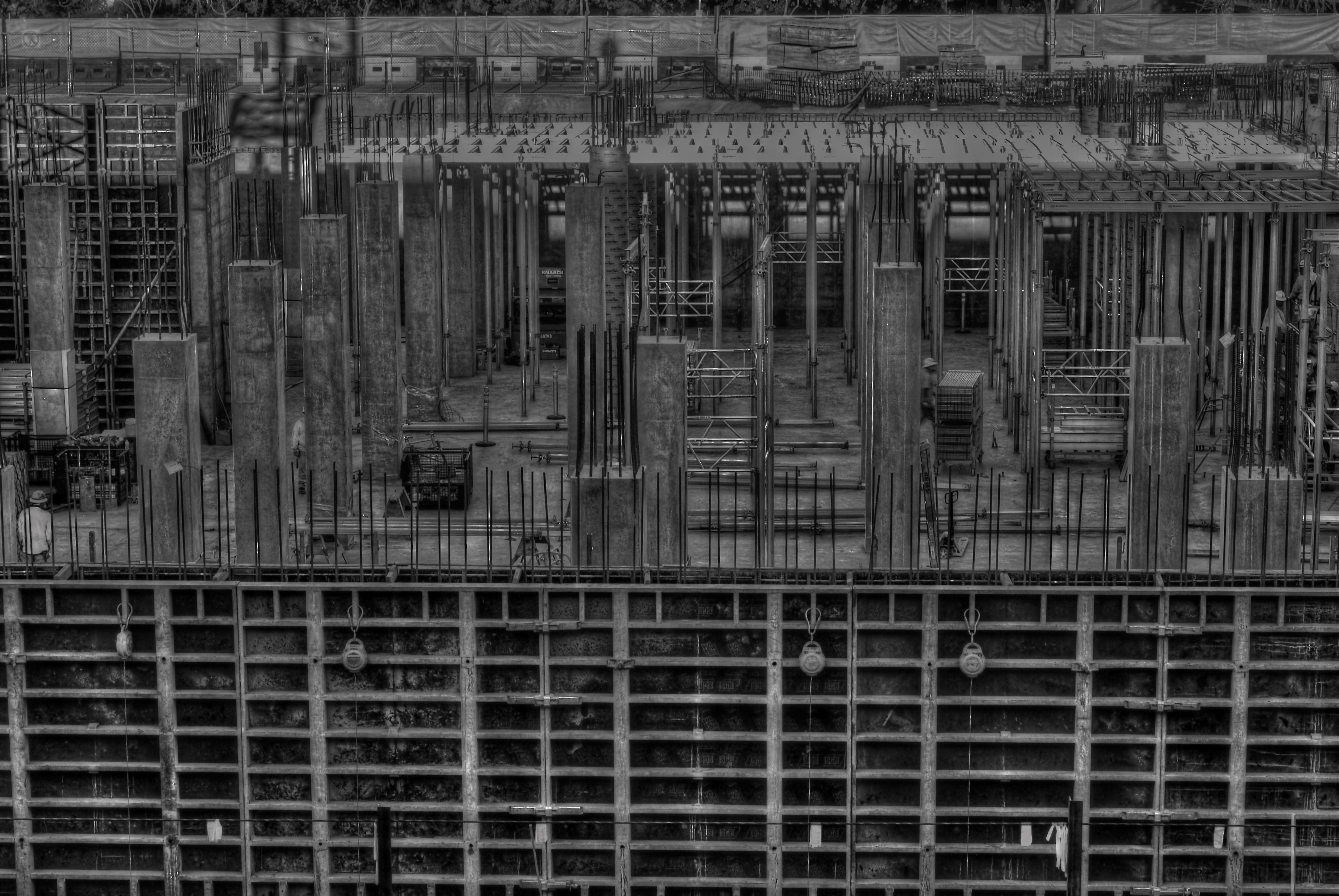
Hideous or wondrous, depending on how you see it. A deliberately “over-cooked” HDR from three exposures, all taken at f/11 for maximum detail, and ISO 100 with a 50mm prime lens.
Still, some stories are told in capture and others are revealed in processing, and while photography is interpretation as well as mere recording, I like to take a crack at changing the context of a picture, to make its parts add up to something drastically different. A few years ago, the parking garage near my job looked out at a massive construction project. My parking slot was situated such that I was about three floors up in the air, peering through the open wall of the garage to easily take in a panoramic view of the entire length of the new building’s emerging structure. I soon got into the habit of getting to work about fifteen minutes early so I could hop out and snap whatever activity I could catch.
The finished building eventually smoothed into something acceptably serviceable, if bland, but, with its raw skeleton mounting day by day, an immense feeling of grim, awful power was climbing out of that place. It couldn’t be seen in color, especially not in the benign, golden light of early morning. This thing was appearing to my eye as a sinewy, dark life force, inevitable, dreadful……an impression I would have to achieve through a complete reworking of tone and texture. I decided to use High Dynamic Range processing, not to merely rescue detail lost in highly contrasted nooks, but to intensify every grain, granule and hobnail of the building, to render it in a surreal, slightly hellish aspect. To make it “ugly” on purpose…..or, more exactly, to my purpose.
Playing at changing the emotional feel of a picture isn’t native to me, so I am always grateful when this part of my brain rouses from sleep and demands to be exercised. The persistent (and false) notion of photography since its inception is that it shows the world as it is, a lie which is debunked with every willful act of picture-taking. No less than painting, the photo image is both document and statement, truth and distortion.
It never has to settle for being mere reality, nor could it claim to be.
And that is its seductive pull.
REWORKING THE UNIVERSE
By MICHAEL PERKINS
CONTEXT, FOR A PHOTOGRAPHER, IS LIKE THE CONDUCTOR’S BATON IN MUSIC, that magic wand that dictates fast and slow, soft and loud, ordering a specific world within a confined space. Since it impossible to show the world entire, all shooters decide what part of it, what story within it, that they will frame. Sounds obvious, but without the mastery of this skill, we fail as storytellers, and the eye that we develop for what to include and exclude is, despite all the tools and toys, the only thing that really makes an artistic performance out of a photograph.
It can also be a helluva lot of fun. With some dumb luck thrown in for good measure.
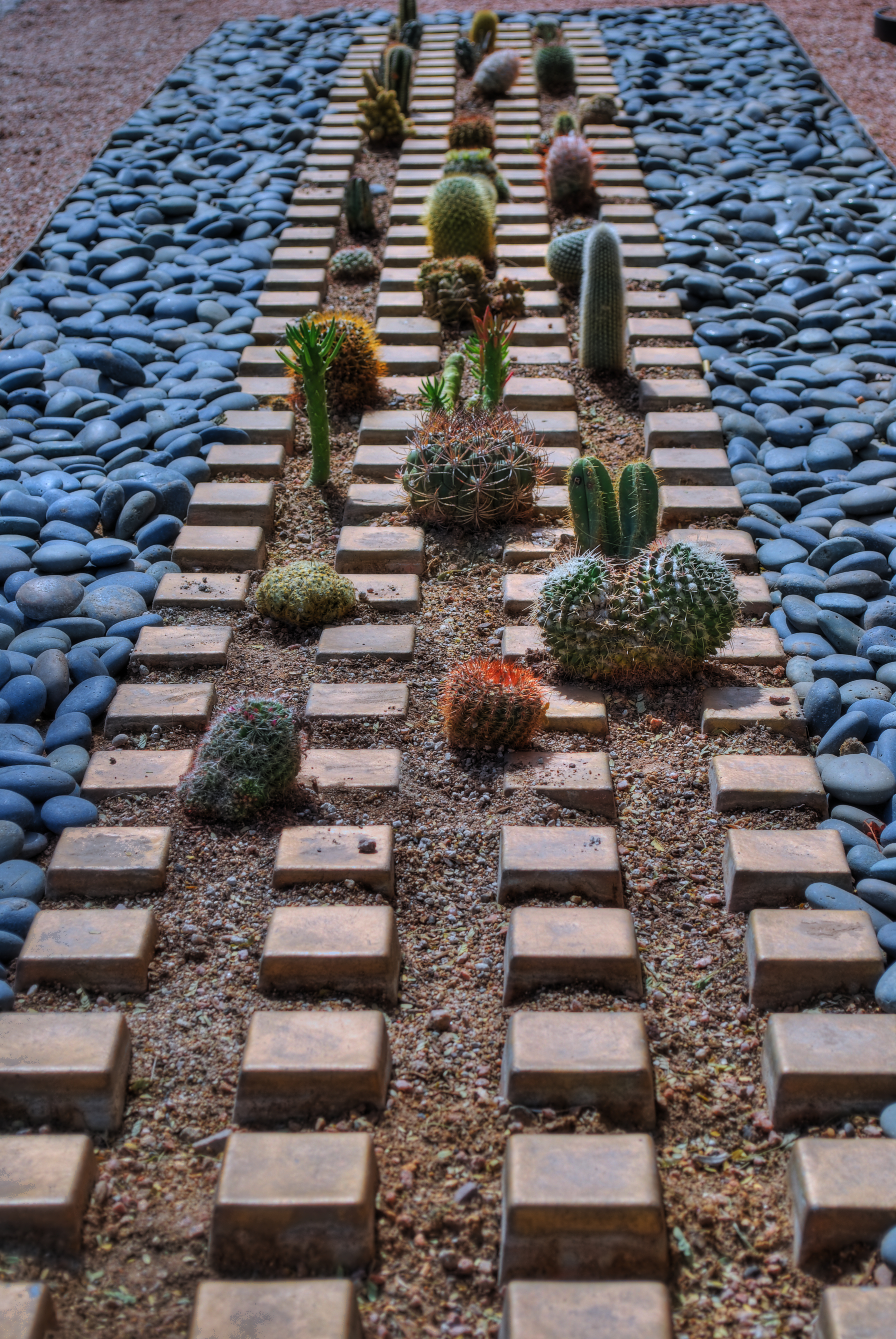
Cactropolis, 2011. A three-exposure HDR blend with a little color and contrast teaking. This whole layout, in reality, is about fifteen feet square, total. Various shutter speeds, f/8, ISO 100, 52mm.
I love opportunities that allow me to disrupt the original visual “place” of objects, to force them to be re-purposed for the viewer. A few years ago, my daily lunch routine involved a short walk across a bustling college campus to my habitual lunch hang, a stroll which took me past one of the school’s busiest crossroads, marked by the intersection of two superwide sidewalks flanked by small patches of landscaping. Since this is Arizona, such short plots of land frequently are not the stuff dreams are made of. We’re talking pink quartz gravel interrupted by the occasional scabby aloe plant or cholla. And that’s what made this one little rectangle, just several feet long on each side, vie for my attention.
An arrangement of several varieties of small cacti has been arranged in rows, regulated by square tiles, grounded in gravel, and bounded by smooth bluish stones. Simple stuff, really, but this was somebody’s deliberate design, a pattern that registered, to my eye, like some kind of fantasy urban streetscape, blocks of tiny, spiny skyscrapers vanishing off toward an unseen horizon….a miniature downtown from Weirdsville, a tabletop diorama from Beetlejuice.
I didn’t really have to compose anything. I was in the framing business. But getting that frame meant getting rid of the surrounding throngs of students, the sidewalks, the buildings, the sky…..anything that seemed outside of the closed world implied by that little rectangle. Changing the context. In fact, I was adding something for everything I was taking away.
So let’s crop this puppy and see what happens.
Now I saw what seemed to be a self-contained world, one in which I was free to imagine what lay “beyond”. I goosed up the hues and texture with HDR processing, but otherwise, what you see is what there was. Maybe it works as pure design. Maybe I conveyed something, but the fact is, we have to make choices as shooters. The only thing that marks us as individuals is what we decide to see, and show.
Like I said…fun….luck….some other somethings…..
(Many Thanks Dept.:The idea for this post was inspired, in part, by a suggestion from my good friend Michael Grivois.)
THE OTHER 50%
By MICHAEL PERKINS
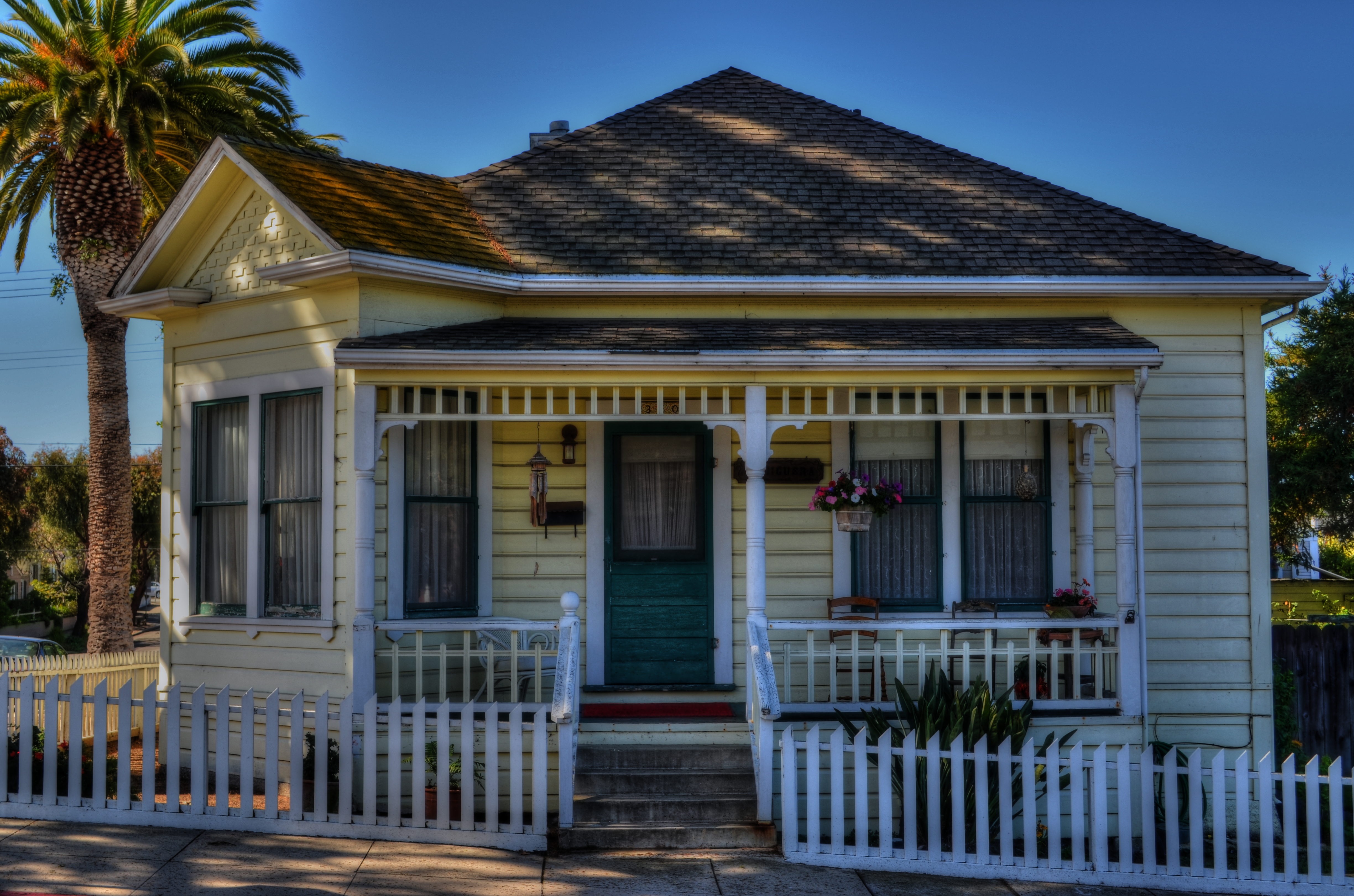
The American Dream, Pacific Grove, California, 2012. A three-exposure HDR with shutter speeds ranging from 1/100 to 1/160, all three shots at f/8, ISO 100, 32mm.
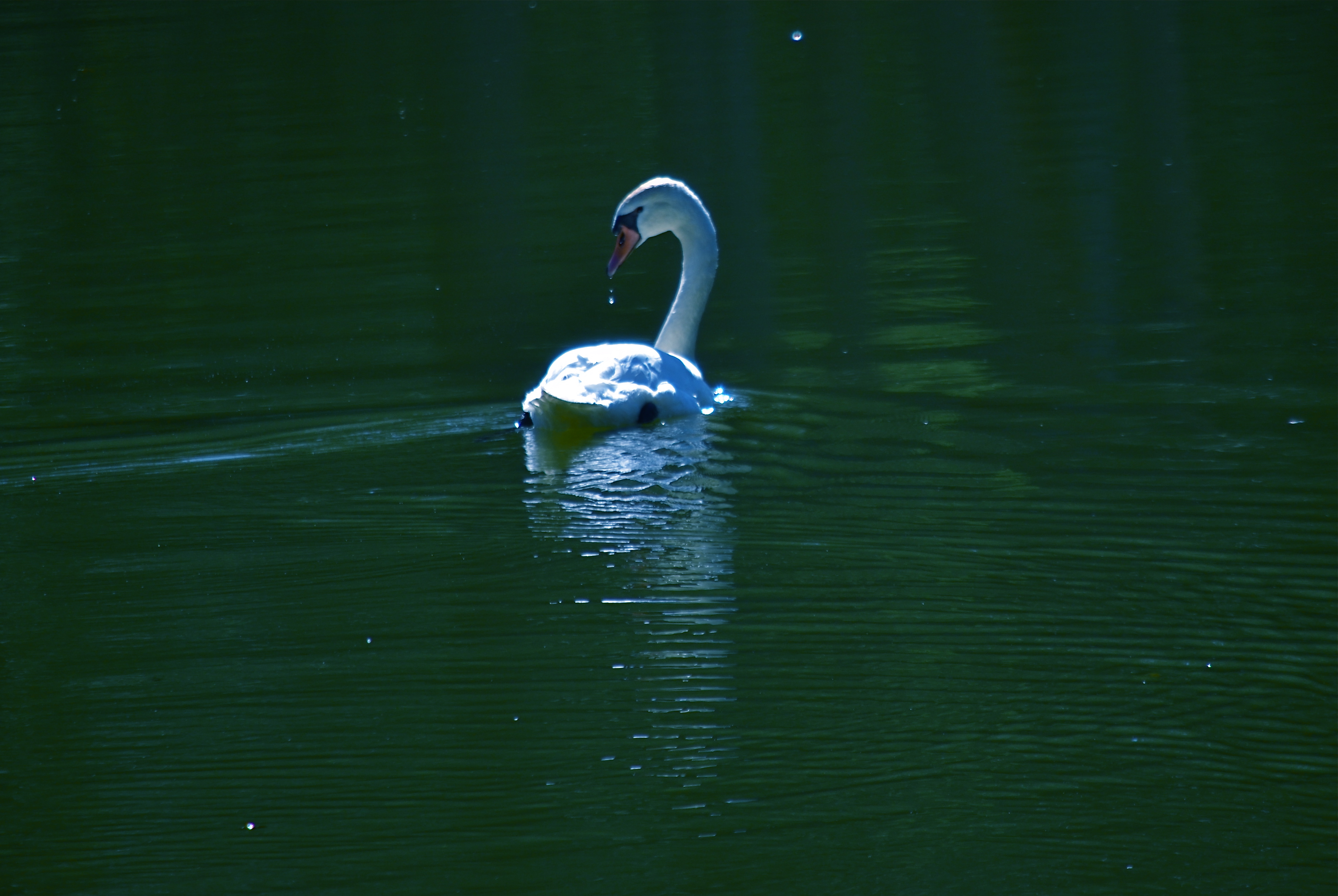
Serene On Green, near Yosemite National Park, 2012. 1/640 sec., f/5.6, ISO 100, 300mm.
THE LAST SUNDAY EDITION OF THE NEW YORK TIMES FOR 2012 features its annual review of the year’s most essential news images, a parade of glory, challenge, misery and deliverance that in some ways shows all the colors of the human struggle. Plenty of material to choose from, given the planet’s proud display of fury in Hurricane Sandy, the full scope of evil on display in Syria, and the mad marathon of American politics in an electoral year. But photography is only half about recording, or framing, history. The other half of the equation is always about creating worlds as well as commenting on them, on generating something true that doesn’t originate in a battlefield or legislative chamber. That deserves a year-end tribute of its own, and we all have images in our own files that fulfill the other 50% of photography’s promise.
This year, for example, we saw a certain soulfulness, even artistry, breathed into Instagram and, by extension, all mobile app imaging. Time ran a front cover image of Sandy’s ravages taken from a pool of Instagramers, in what was both a great reportorial photo and an interpretive shot whose impact goes far beyond the limits of a news event. Time and again this year, I saw still lifes, candids, whimsical dreams and general wonderments of the most personal type flooding the social media with shots that, suddenly, weren’t just snaps of the sandwich you had for lunch today saturated with fun filters. It was a very strong year for something personal, for the generation of complete other worlds within a frame.
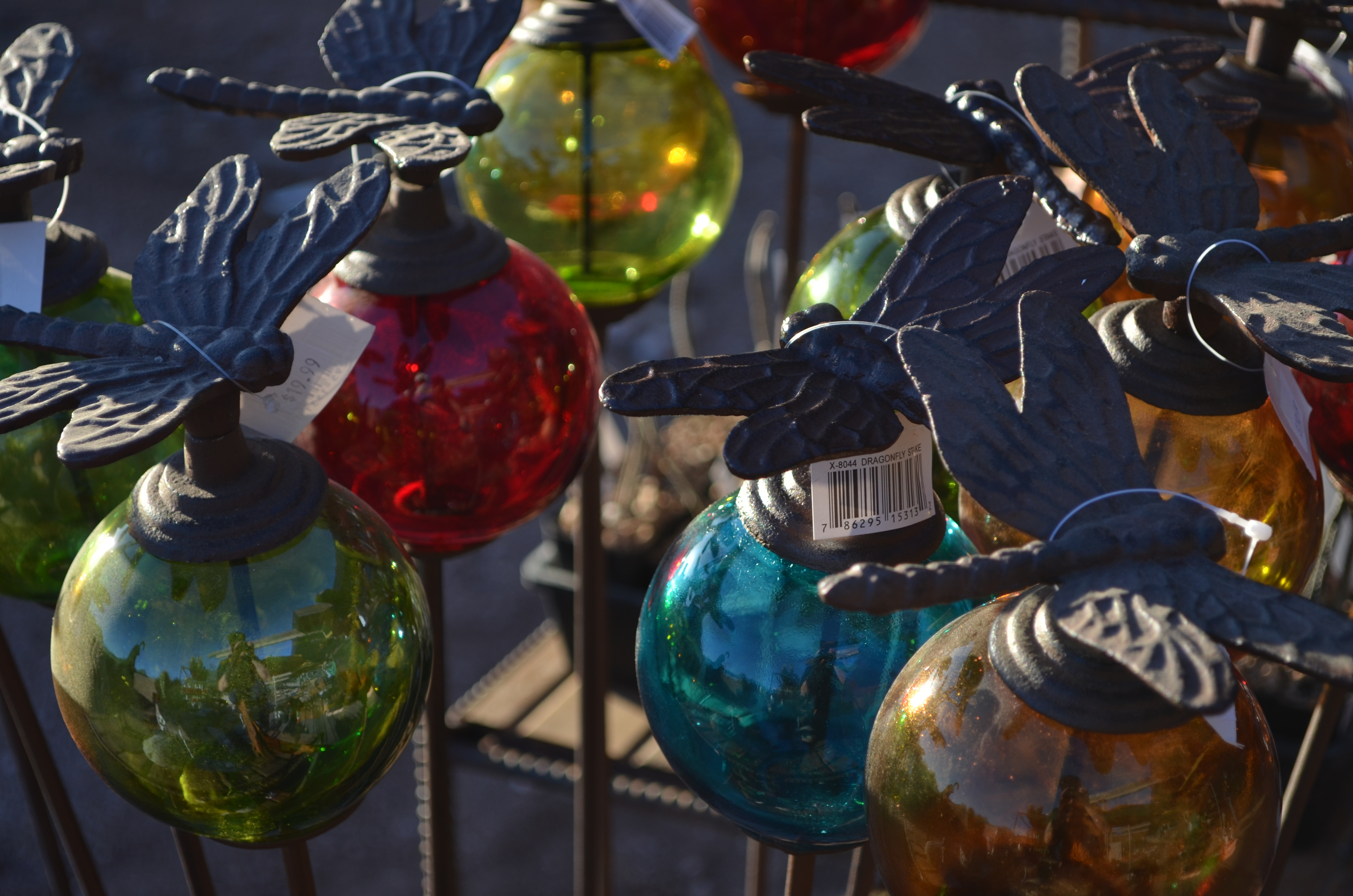
Dragonfly Globes, Tempe, Arizona, 2012. 1/200 sec., f/5.6, ISO 100, 55mm.
I love broad vistas and sweeping visual themes so much that I have to struggle constantly to re-anchor myself to smaller things, closer things, things that aren’t just scenic postcards on steroids, although that will always be a strong draw for me. Perhaps you have experienced the same pull on yourself…that feeling that, whatever you are shooting, you need to remember to also shoot…..something else. It is that reminder that, in addition to recording, we are also re-ordering our spaces, assembling a custom selection of visual elements within the frame. Our vision. Our version. Our “other 50%.”
My wife and I crammed an unusual amount of travel into 2012, providing me with no dearth of “big game” to capture…from bridges and skyscrapers to the breathlessly vast arrays of nature. But always I need to snap back to center….to learn to address the beauty of detail, the allure of little composed universes. Those are the images I agonize over the most at years’ end, as if I am poring over thumbnails to see a little piece of myself , not just in the mountains and broad vistas, but also in the grains of sand, the drops of dew, the minutes within the hours.
Year-end reviews are, truly, about the big stories. But in photography, we are uniquely able to tell the little ones as well. And how well we tell them is how well we mark that we were here, not just as observers, but as participants.
It’s not so much how well you play the game, but that you play.
Happy New Year, and many thanks for your attention, commentary, and courtesy in 2012.
Related articles
- 10 social mobile photography trends for 2013 (davidsmcnamara.typepad.com)
- Old-Timer Joins Instagram, Schools Everyone With Poignant Flood Photos (wired.com)
THE PROSCENIUM
By MICHAEL PERKINS
IT IS THE OLDEST FRAMING DEVICE IN HISTORY. If you’ve ever watched a play on any stage, anywhere in the world, you’ve accepted it as the classic method of visual presentation. The Romans coined the word proscenium, “in front of the scenery”. Between stage left and stage right exists a separate reality, defined and contained in the finite space of the theatre’s forward area. What is included in the frame is everything, the center of the universe of certain characters and events. What’s outside the frame is, indefinite, vague, less real.
Just like photography, right? Or to be accurate, photography is like the proscenium. We, too select a specific world to display. We leave out all the other worlds not pertinent to our message. And we follow information in linear fashion…left to right, right to left. The frame gives us the sensation of “looking in” to something that we are only visiting, just as we only “rent” our viewpoint from our theatre seats.
We learned our linear habit from the descendants of stage arrangement….murals, frescoes, paintings, all working, as our first literate selves would, from left to right. Painters were forced to arrange information inside the frame, to make choices of what that frame would include, and, as the quasi-legitimate children of painting, we inherited that deliberately chosen viewpoint, that decision to show a select world, by arranging visual elements within the frame.
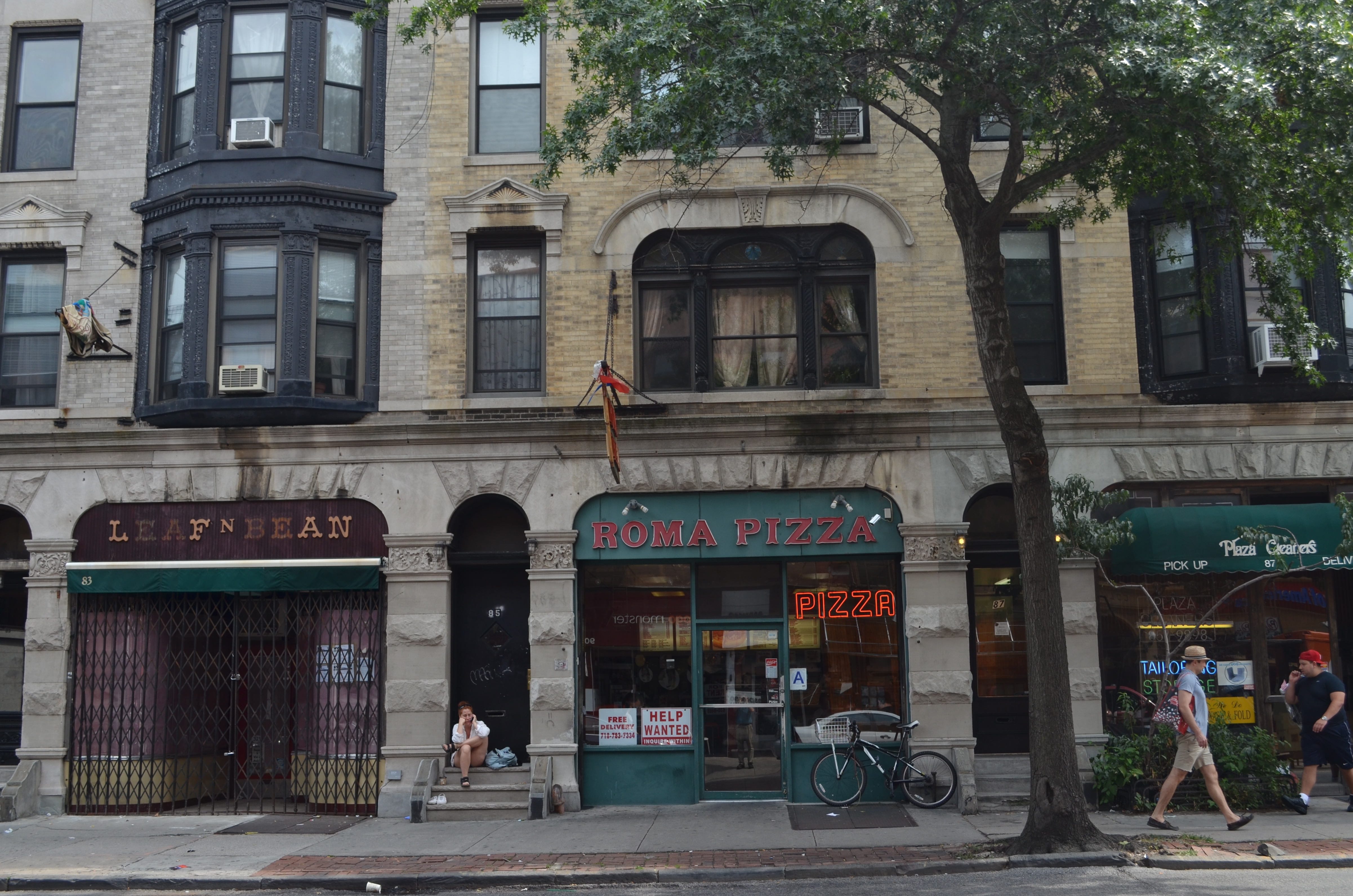
Park Slope, Brooklyn, 2012. Trying to catch as much activity as a street glance, at any given moment, can. 1/320 sec., F/7.1, ISO 100, 24mm.
For some reason, in recent months, I have been abandoning the non-traditional in shooting street scenes and harking back to the proscenium, trying to convey a contained world of simple, direct left-right information. Candid neighborhood shots seem to work well without extra adornment. Just pick your borders and make your capture. It’s a way of admitting that some worlds come complete just as they are. Just wrap the frame around them like a packing crate and serve ’em up.
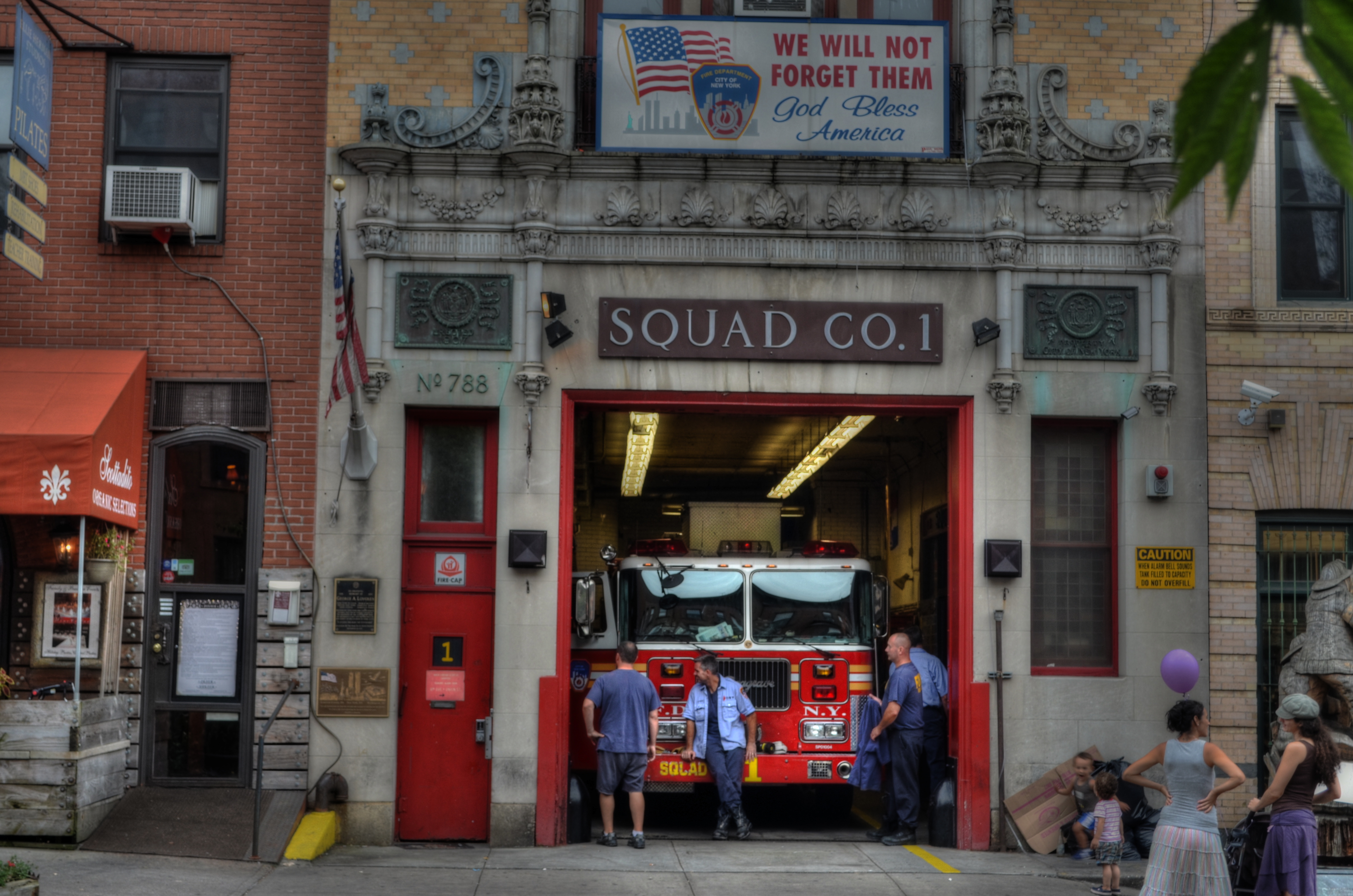
Like a theatre play, some images read best as self-contained, left-to-right “worlds”. A firehouse in Brooklyn, 2012. 1/60 sec., f/6.3, ISO 100, 38mm.
This is not to say that an angled or isometric view can’t portray drama or reality as well as a “stagy” one. Hey, sometimes you want a racing bike and sometimes you want a beach cruiser. Sometimes I don’t mind that the technique for getting a shot is, itself, a little more noticeable. And sometimes I like to pretend that there really isn’t a camera.
That’s theatre. You shouldn’t believe that the well-meaning director of the local production of Oklahoma really conjured a corn field inside a theatre. But you kind of do.
Hey what does Picasso say? “Art is the lie that tells the truth”?
Okay, now I’m making my own head hurt. I’m gonna go lie down.
 thenormaleye