BEFORE WE GO ANY FURTHER….
By MICHAEL PERKINS
I’M A FEW WEEKS LATE in observing what has become a nearly annual habit in the pages of The Normal Eye since its launch some nine years ago. Like all of us (and certainly most photographers), I get swept up in what I think is important in the moment, and I can, at times, forget my manners. I’ve slung a lot of words in your direction over the better part of a decade, but only two of them really matter.
Thank you.
Thanks for subscribing. For reading. For sticking around. For caring enough to take issue with ideas, and to occasionally add your support for them. Thanks for helping me remember that, although technical knowledge is always a key part of photography, the real things that animate it as an art are motivations. Dreams. Attempts to make a visual record of our desires and dreads. To say that photography is about a certain camera or lens or setting is to say that painting is about the brushes, and we have always tried to keep our main mission in focus: to share, yes, what tools can help us, but, most importantly, what it feels like to face creative decisions and do your best to realize those decisions in a remarkably flexible medium, possibly the greatest storytelling vehicle man has ever known.
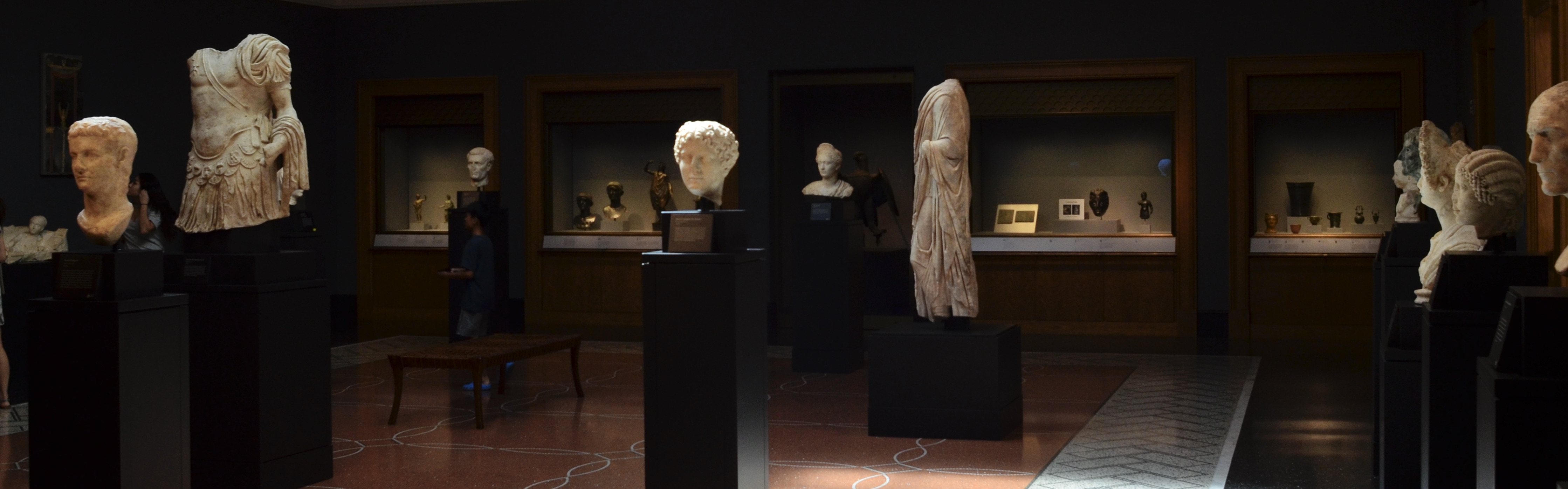
We are all visitors who, like the dimly lit young man in the museum. enter in shadow and emerge into light.
These pages pose plenty of questions, but I have tried not to insist that my personal answers to those questions are recommendations for all. I’m not Dear Abby. I have no set solutions to challenges that register differently with every eye and every camera. At most, what I write here is in the way of a field diary: I was presented with this and I decided to try….that. What you read here is an active, developing story of what I encounter and learn on my journey. You may find some common notes between my melody and yours, and you just as easily might dismiss that melody as noise. And that’s just fine.
While rummaging through a lot of old files in recent days (we all have extra time on our hands these days) I’m struck with how many images I’ve made of the insides of museums. Not to document the specific exhibitions of any particular place, but to show the feeling that I get inside such spaces. The potential for amazement. The fact that, any second now, something transformative could swing out of the darkness into clear view..challenging me to see differently. In that way, all of life serves as a museum, a collection of artifacts that can appear, depending on our perception, either as elegant clutter or inspiration. I know what choice I’ve made, and it’s the same choice made by all of you, every time you seek other sources of joy, other teachers, other talents. Thanks for making The Normal Eye one of the stops on your journey, and thanks for the energy you have invested in helping me make it better.
BIRDS, DOGS AND A HEALTHY CRUNCH
By MICHAEL PERKINS
ALMOST SINCE THE DAWN OF PHOTOGRAPHY, there has been one format or another for the creation of three-dimensional views. The first, and by far the most successful of the “armchair traveler” systems was the elegant stereopticon, the gadget through which paired, cardboard-mounted images transported the Victorian explorer to the wonders of the world, at precisely the same moment that many of those sites/sights were being photographically documented for the very first time. The Keystone View Company and its several imitators littered the planet with travelogues and celebrity portraits for nearly seventy years, and even served as many a hobbyist’s first introduction to color pictures (albeit hand-tinted ones) created years ahead of any practical chromatic film.
Keystone’s expansive packets on various subjects included lavish text on the card’s backs, and were marketed to adults with an emphasis on erudition. Over the next hundred years, dozens of 3-d formats would be launched, many of them supplying at least a smidge of context on their subjects, lots of them riding the line between serious devices and toys. The world’s most successful stereo product by far, View-Master, began with scenic titles in 1939, and has survived to the present day by licensing the use of Disney characters, TV and movie scenes, and in the 21st century, even an attempt at a virtual reality re-boot.
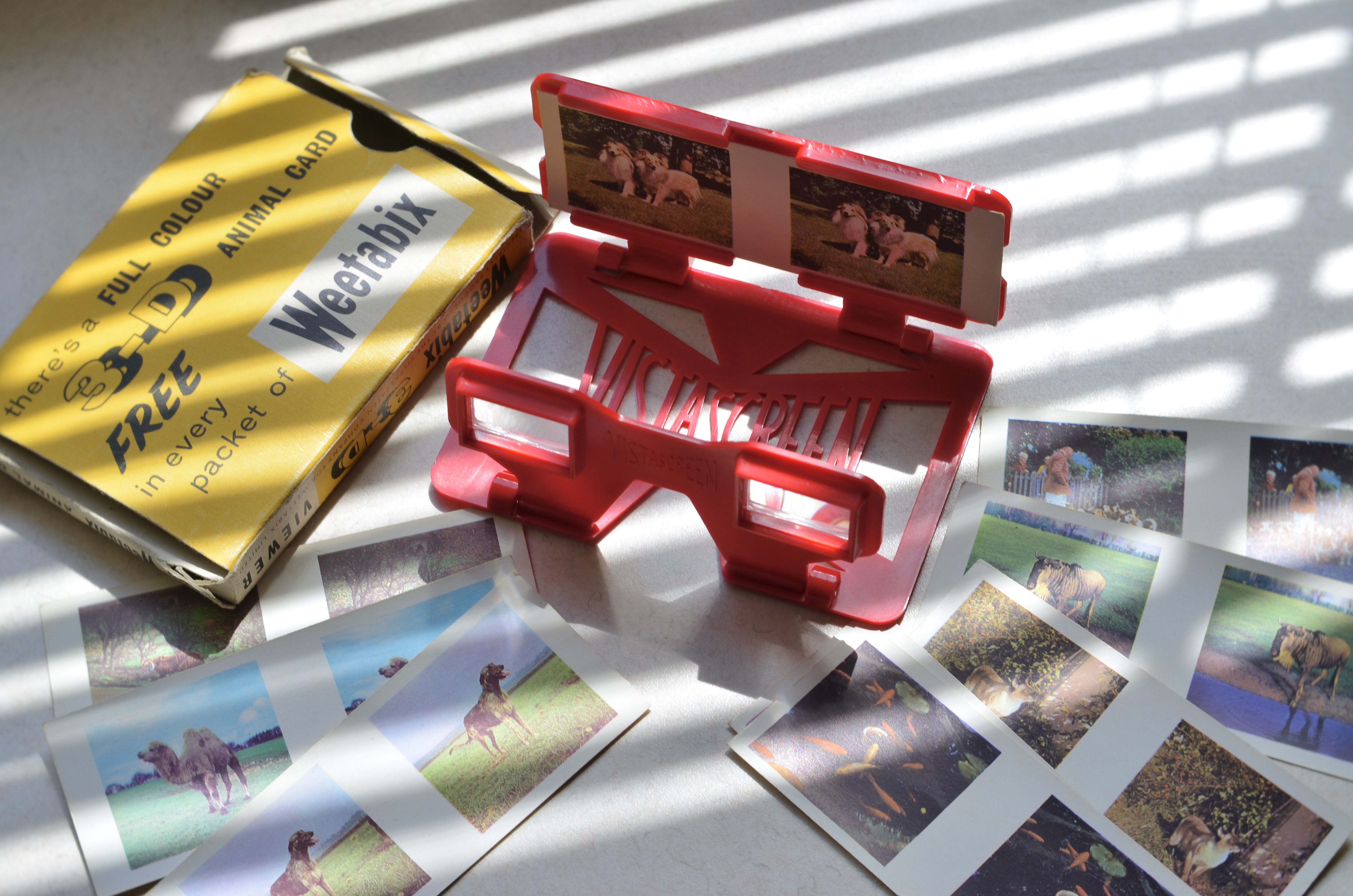
A late-1950s’ VistaScreen 3-d card viewer, shown here with stereo cards given away inside Weetabix cereal boxes in the U.K.
Leaning heavily on the kid’s plaything side of the ledger, a folding plastic card viewer from the late ’50’s called VistaScreen issued series on birds, animals and other subjects accompanied by neat little explanatory paragraphs. View sets were sold at the tourist attractions that they depicted as well as by mail order. The company’s brief tenure was boosted a bit in the early ’60’s when it entered into a promotion with the United Kingdom’s most successful cold breakfast cereal, Weetabix (think shredded wheat without the thrills). Kids in Australia, England, and New Zealand mailed away for the viewer (emblazoned with the product’s name on the back) and then collected one new stereo card per “packet” of cereal. There were 6 different sets of 25 cards with series names like Working Dogs, Thrills, British Cars, British Birds, Animals, and Our Pets. The cereal cards were disdained by stereo purists for being substantially inferior in quality to VistaScreen’s mail order sets, but the promotion actually kept the company alive for most of its five-year span, while also making a childhood 3-d fan of many a youngster, including Brian May, destined to become a stereoscopic collector, astrophysicist, and, not incidentally, the co-founder of Queen.
As a childhood View-Master geek, I was delighted to discover the VistaScreen system a few years back, since it was actually the stereo formats, and not standard “flat” photography, that first taught me composition and the importance of telling a clear visual story within a strict format. It’s ironic that I don’t typically shoot a lot of scenic titles these days, and yet have a lifelong affection for the travel images of my first photographic “toys”, the bait that got me to first pick up a camera and ask myself, “will this be a picture?”
And I didn’t have to eat Weetabix.
LOOK, UP IN THE SKY!
By MICHAEL PERKINS
IN ONE SENSE, THE GLOBAL LOCKDOWN OF 2020 has created the biggest simultaneously experienced event outside of a world war. The advertising slogans are right: we really are in this altogether. On the other hand (thinking purely like a photographer), the way we all go through this is often solitary, hidden from mass view. Many of our struggles are not waged in the public eye, which is where so many amazing images are born. Instead, we are living with a mass event without the mass reactions.
And so, yes, I miss crowds. Audiences. Throngs. Multitudes cheering, crying, yearning, celebrating. Because photographs of those instantaneous, shared emotions are, in themselves, deeply affecting, sometimes more so than whatever the crowd is actually reacting to. A static picture of a guy cranking a bat around to send a homer over the back fence is one thing, while the backdrop of amazed thousands seeing him do so takes the photo to a completely different level. Certainly, we all crave solitude, as a measure of what is most personally affecting or shaping us, and photographs borne of those feelings are undeniably poignant. But in this time of general-suffering-individually-contained, we are robbed of the pictures that actually show us all being in it together. Consider the opening to the old 1950’s Superman series. It’s not that a guy is flying right over your head: it’s that you’re in a crowded street full of people all having your minds blown simultaneously. Look! Up in the sky……
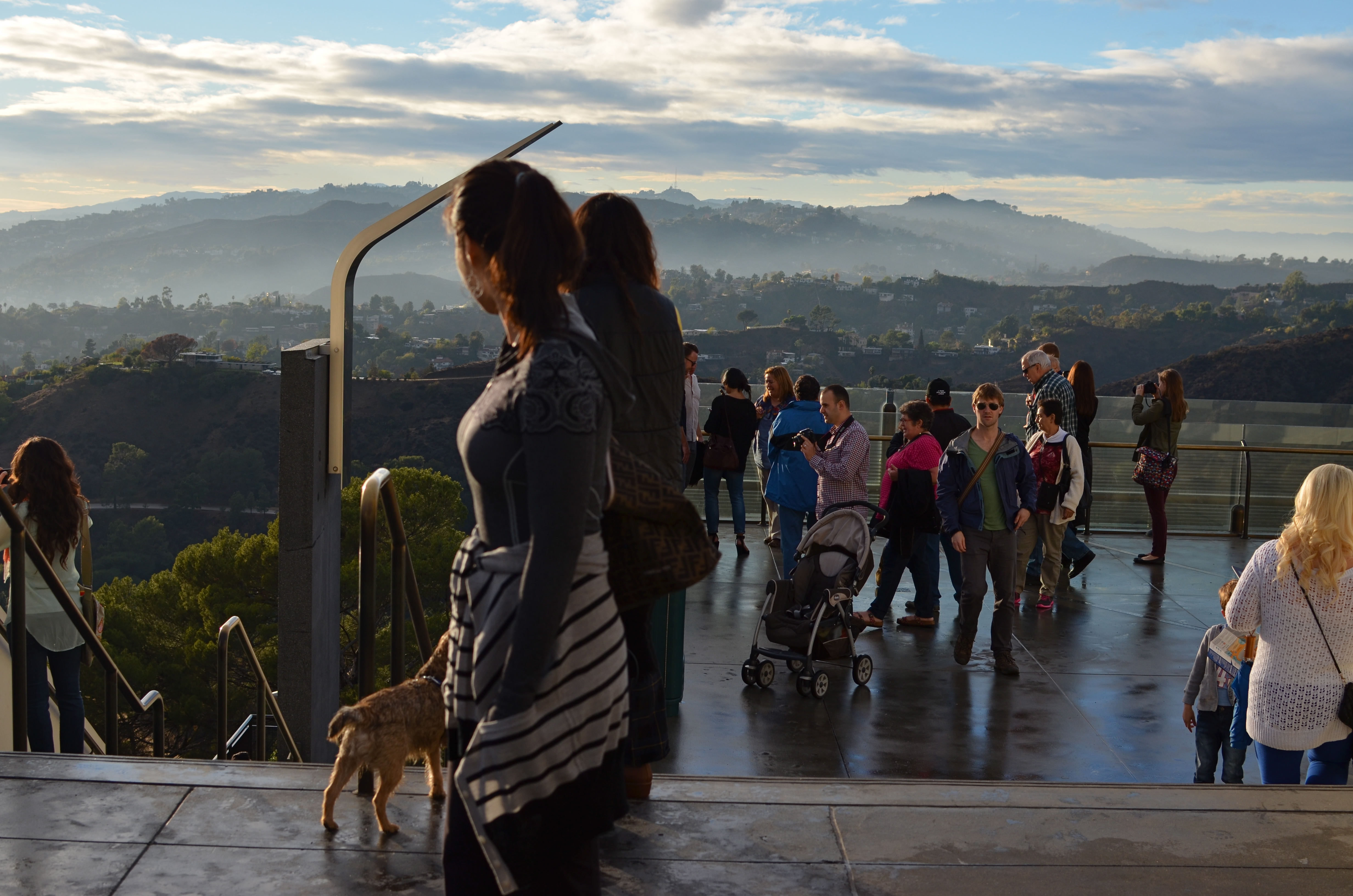
Stormbreak, Hollywood, 2014
The aftermath of a rainstorm over the Hollywood Hill, seen here, would have been gorgeous all by itself. But what makes me love this picture most is the fact that everyone gathered here (actually visitors to Griffith Observatory, which points the opposite direction, and packs its own killer view, of downtown L.A.) has been struck by the same wonder at the same time. We are all, for a few moments, one person. For just a few seconds, nothing is as important as what we’re seeing and feeling, together.
There will be a time, again, when images will be made of us all emerging from this shadow, all blinking our collective eyes at the strange sensation of walking back into the sunlight. And yes, there will, in the anxious interim, be news footage of us cramming like crazed ants into beach bars or partying heedlessly in crowded streets. But that brief surge of manic novelty won’t be the real picture. The real picture will occur when honest cameras register the genuine joy of not just getting back out but getting back to each other, and pointing skyward to ask, “is that a bird? A plane…?”
A MILITIA OF MILLIONS
By MICHAEL PERKINS
THERE WERE NO CAMERAS IN THE WORLD when America fought the first war on its soil, leaving mostly paintings of generals on horseback as a visual chronicle of the struggle. Now, in our latest war, also on our soil, there are millions of images created each day that strive to comprise a pictorial narrative of the unfolding tragedy. But more is not necessarily more: when the final battle has been fought, there will still be oceans of pictures missing from the saga, stories still left untold.
Perhaps it’s the nature of this very strange conflict, fought not against combatants with rifles but against Nature itself, which makes the pictures come so hard. Now, there is no visible demarcation between soldier and civilian: there is no designated field of combat, but thousands of little ones, many of the clashes and outcomes unseen, the casualties themselves vaporized in a fog of grief. And yet we struggle for any kind of visual measurement, some yardstick by which to measure our pain. The task may be beyond the power of any camera, at least any of which we’re aware.
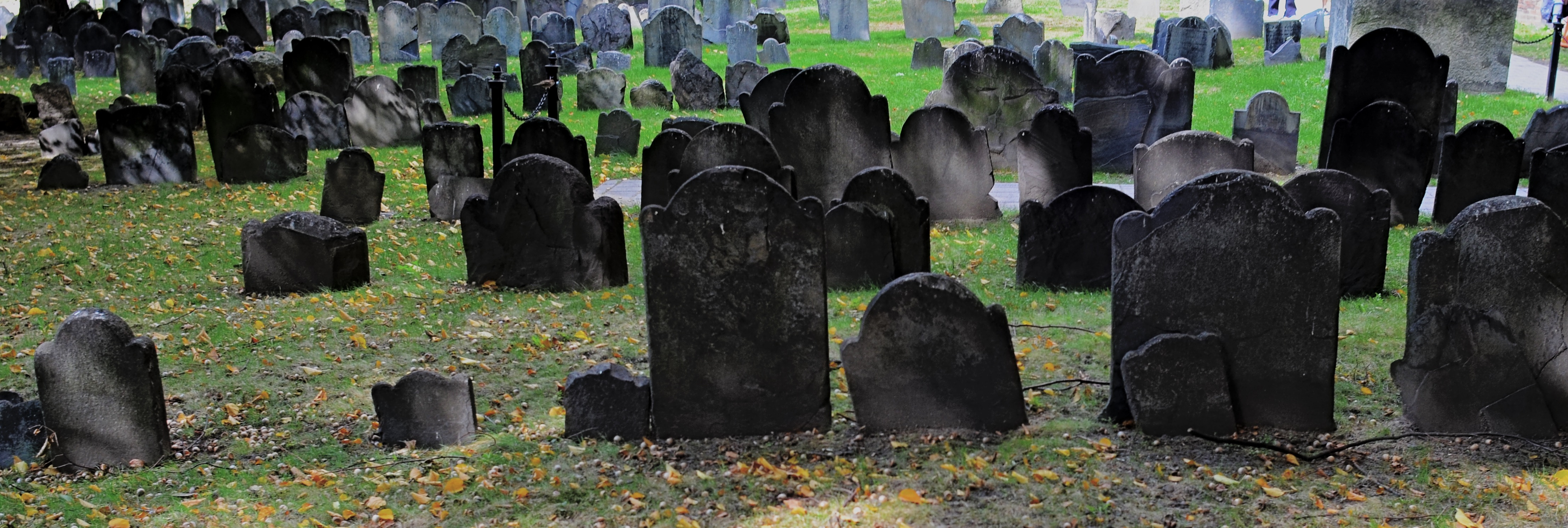
Boston, 2016
I’ve been searching over the past few days through my own stacks for the above image, because, being of a revolutionary-era churchyard in Boston, the markers shown are literally those among the first to fall in that earliest of American wars. Given that the inscriptions on the tablets have been almost totally effaced by time and the elements, I consider these monuments symbolic of the strangely imposed information blackout we are all under regarding today’s citizen soldiers, many of whom vanish from our mist without formal lists, monuments, or in all too many cases, even a human goodbye. Like the data once stored on these blank slates, our true talIy of sorrow has been edited, censored by fate.
I feel that, in the year 2020, the meaning of Memorial Day has been unalterably changed for me, and for everyone in our dread new militia of millions. Many of the fallen were not drafted, nor did they volunteer, and yet they have been conscripted by destiny in a way that is fully consistent with those whom we normally honor on this day. Many may never be inscribed on a monument that our children may visit on a school field trip: their faces will, in many cases, escape our cameras. Many more will never be interred with a flourish of folded flags or the reassuring regimen of military pomp. Still, over the coming years, watching ourselves and other survivors remember the fallen may inspire us to create new kinds of images, scenes that we can scarecely dream of at present. As with those headstones from our first days of passage, we need to retain what symbols we can of what we have lost, seeking in time to fill in the rest, to develop the remainder of the picture.
180 DEGREES OF SEPARATION
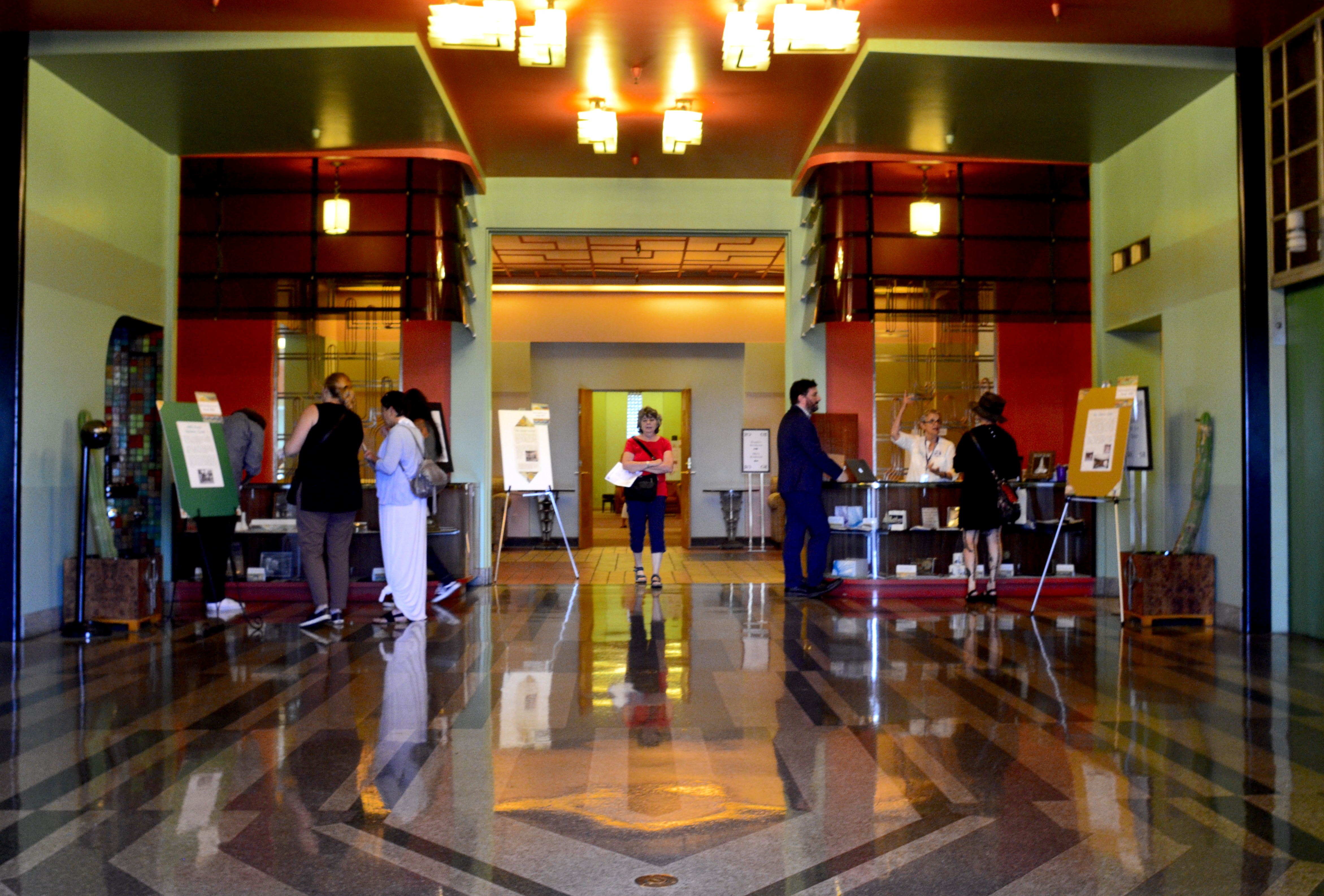
Contrast, clutter and exposure woes galore in this original shot of an Art Deco lobby.
By MICHAEL PERKINS
REFLECTIONS, OF ANYTHING, ON ANYTHING, ARE DECEPTIVE in the way they seem to store information in a photograph. We tend to think of them as perfect mirror images of something, a complete yin to something else’s yang. But if reflections are twins of a sort, they are seldom identical twins, as the duplicate is almost certain to be an imperfect copy of the original.
Consider the “mirror” idea. Anything reflected in one is, at the very least, reversed. And then we go further: are there any spots or streaks on the mirror? Did a strange bounce of light create a flare or a prismatic break of color that doesn’t occur in what’s reflected? The truth is that even a mirror reflection is not perfect but a reasonable replica. Next, let’s consider using another reflecting surface, from water to marble to other types of glass. Now the reflections are even more adulterated. We see them through floating junk, through dirt, through bounced reflections of other things, and so on.
As photographers, we often don’t regard a reflection as anything but a handy design element, a decorative, if flawed, supplement to the thing we primarily want to show. But on occasion, the thing we have set our sights on is compromised or less than effective, while the reflection, although more abstract, even backwards from our original intent, can become the part of the picture we re-set ourselves to showcase. It’s an element of how we see (or don’t see). We automatically make the adjustment in the viewpoint between portrait and landscape orientations, and yet overlook something as simple as inverting an image, to make its passive “bottom” an active “top”, as seen here.
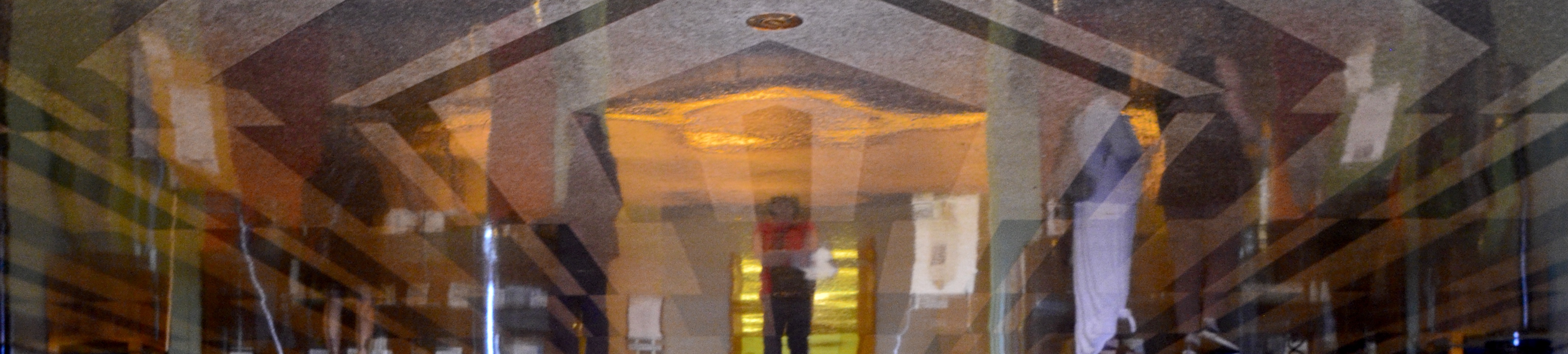
Cropped by half and turned on its head, the shot takes on a different flavor.
In the thumbnail of my original shot of a 1920’s-era lobby (above at left), the people above the floor clutter the scene to such as extent that the lobby loses its power as an image. There are also some pronounced exposure and contrast issues.However, with the photo flipped on its head, the luxuriously patterned Art Deco floor blends its own design patterns with an ethereal rendering of the people that changes not only the frame of reference but the very intention of the picture, especially with the distracting top half of the original cropped away. It’s a mix of the imperfect reflection material (the floor) and its ability to re-interpret all of the more literal stuff from the first version. All this to say that, instead of regarding reflections as mere duplicates of worlds, we should and can regard them as separate worlds of their own, with distinctly different stories to present to our cameras.
DOING WHATEVER I F/2
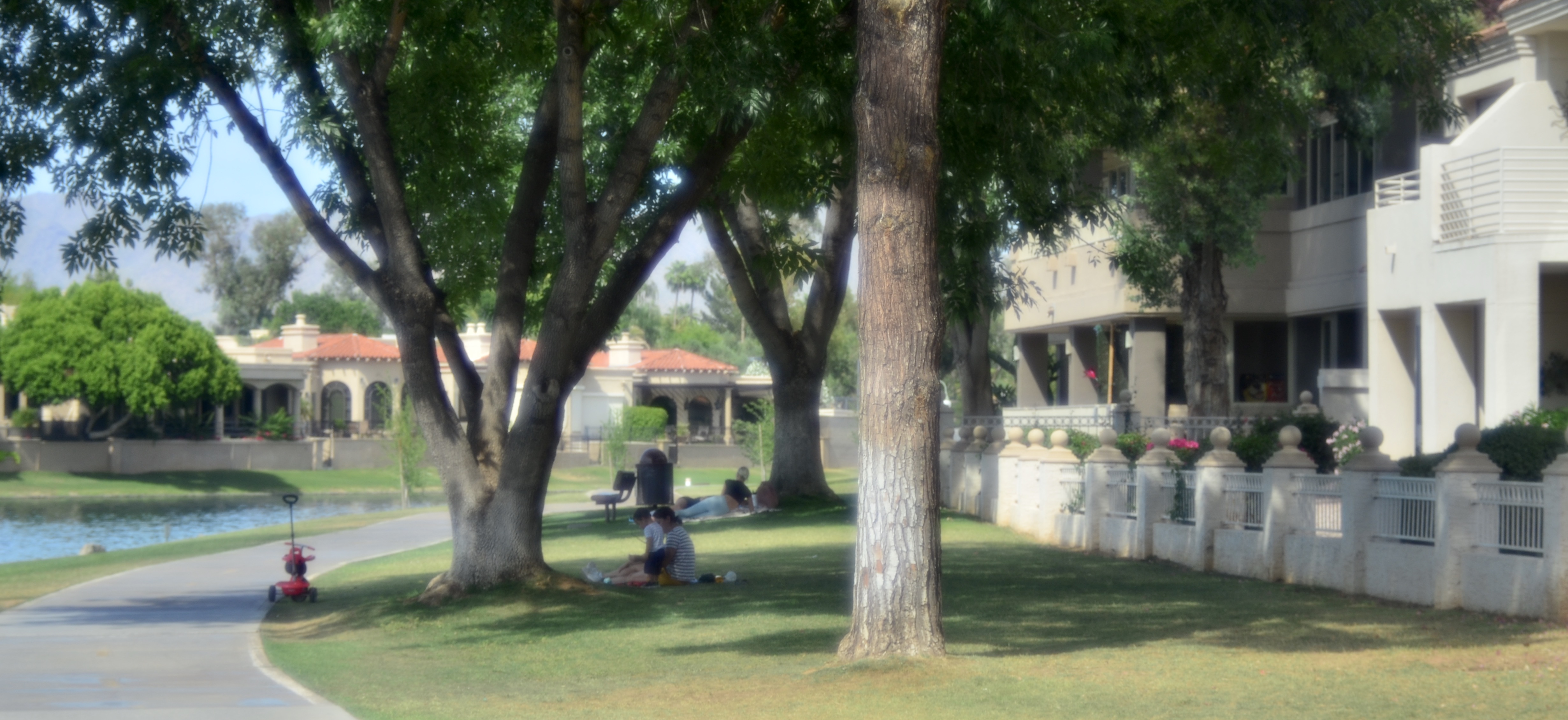
Shot with a Soviet-era Helios-44 58mm manual lens at 1/2000 sec., open to f/2.
By MICHAEL PERKINS
THOSE WHO HAVE SIGNED ONTO THIS SHIP OVER THE LONG HAUL may recall that the germ idea for The Normal Eye was a year that I once spent shooting with nothing but a manual 50mm f/1.8 prime lens, forcing myself to explore all the benefits and limits of a single piece of glass in every conceivable shooting situation. I didn’t intend the year as any kind of stunt, but as a test of my own ability to re-sensitize or “normalize” my vision (primes are often called “normal” lenses for their similar field of view to the human eye) and a disciplinary experiment in which I alone was responsible for any and all results….kind of a mind-over-matter challenge. The year showed me that nearly any lens has properties which might not be readily apparent until you spend some extended play time with them.
Wait, did he just say play? But we’re photographers. This is serious business.
Well, as to that, all I can offer is Fred Rogers’ old line about children and how their play is their “work”, not a break from it. And I’ll pretty much stand by Mr. Rogers’ results. Thing is, learning absolutely every intimate detail about a lens’ performance is time-consuming, which makes it a perfect exercise for these thumb-twiddling times. Hey, during this time-out, we’ve done all the sensitive photo essays on our feelings of isolation, community, dread, etc., etc. Well and good. But this protracted behind-walls penance is also a great opportunity to bring out the equipment that we’ve either under-loved or flat-out given up on over the years. The non-favorites that we shot a little with, weren’t really thrilled with, or consigned to some dusty regret bin. Yeah, those lenses. We bought them to achieve this, but all we got was that. Yeah, those.
Forcing a brief romance with a forgotten lens is easier when there is so much time to futz away that we can afford the luxury of mistakes. After all, you’ve already taken 300 pictures of your study and your back room with the gear that you’re most comfortable with. So call those your “keepers”. Now, you can grant yourself the freedom to shoot the “losers”, the pictures that don’t matter, except for what they can teach you. Snap on a forgotten optic and enjoy the latitude of just being… bad. Hey, delete all the defects, if it bugs you that much. But shoot, and shoot, and shoot, and get past whatever barriers exist between you and those lenses, because they can be overcome, and you may be surprised to find that they really had more potential than you ever imagined.
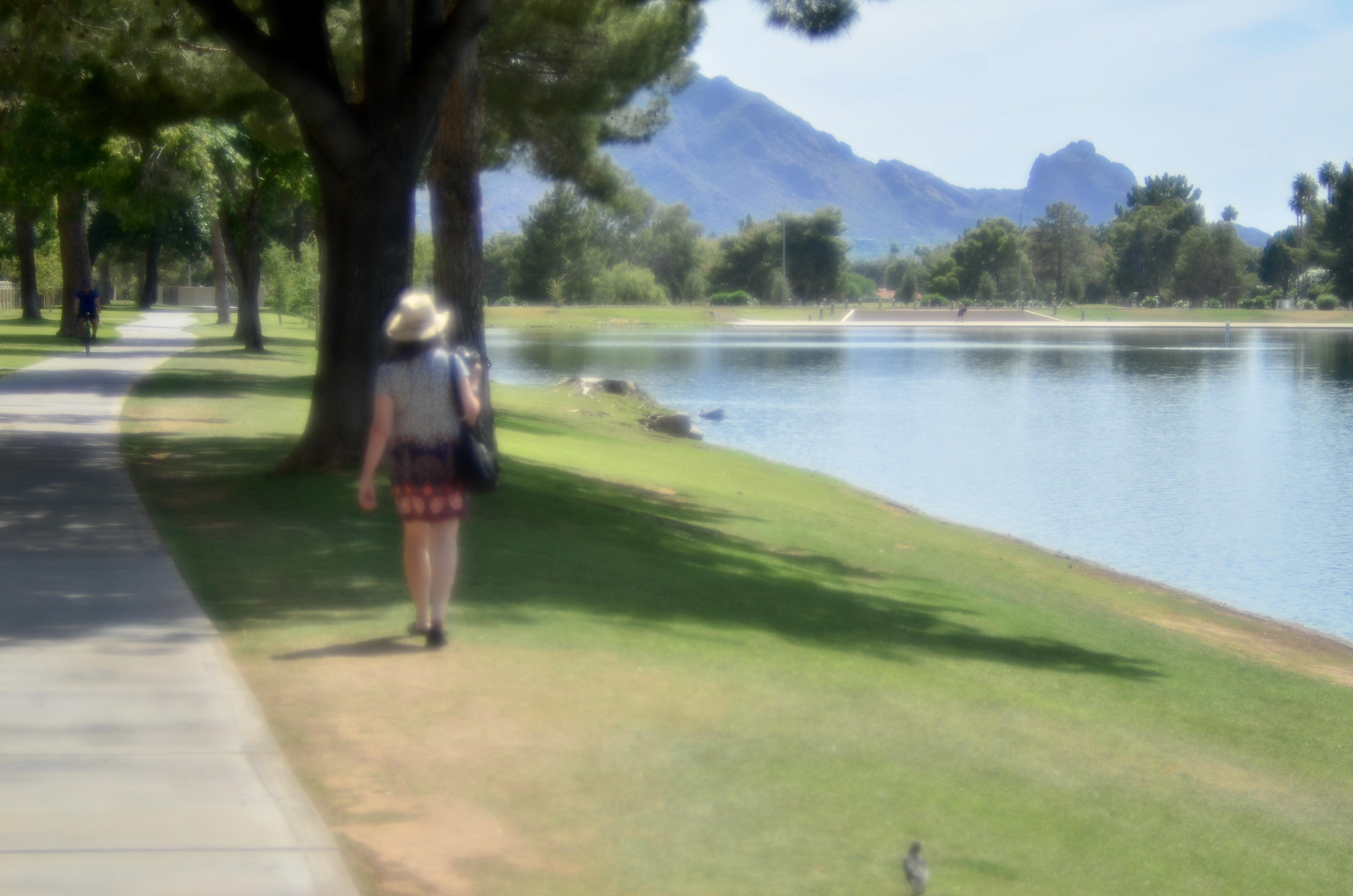
This had to be shot a little faster, around 1/2500 sec.
The images seen here are the result of a solid week spent with a real oddball of a lens, my Helios-44 58mm f/2. These Soviet-era lenses were originally attached to Zenit cameras, some of the best knock-offs of legit European cameras that rubles could buy. The camera bodies were actually inferior to the lenses, but there were millions of each produced during the Cold War, so they are cheaper than Nancy Sinatra lip gloss. I bought mine for under $40 just to get the swirly bokeh it produces on floral work, but I discovered that, in shooting landscapes at the same f/2, I got defined focus layered with a film of dreamy glow, the kind of effect modern-day art lenses are charging hundreds to deliver. Thus most of this work week was spent trying to nail manual focus on the thing at great distances, which is a little easier to suss out with the help of one of the zillions of free depth-of-focus phone apps available. So now, in one optic, I have a bokeh beast, a decent portrait lens (at smaller apertures) and a special-effect landscape lens. The Helios won’t fetch me beer or grill me a burger, but as the Brits say, it’s Early Days. Gimme another week and it might actually feel, you know, normal.
INVISIBILITIES
By MICHAEL PERKINS
ONE THING THAT GUARANTEES VIRTUALLY INFINITE VARIETY AMONG PHOTOGRAPHERS is that, not only do we all see most things completely differently, we also vary wildly on what it is important to see. Turn ten photographers loose on the same subject and the results might just as well have been shot on different planets. Our individual brains seems to rank things in the world by how “view-essential” they are, or how worthy they are of our notice. This renders somethings that are vital to me nearly invisible to you.
We’ve all experienced the strange feeling of looking at images taken by someone else of a place that we have both visited at the same time, and seeing things that we could swear were never there. Who put that fountain near the plaza? Wasn’t the mountain to the left? Our mind is selectively failing to see some of the very same information that is obviously available to it, making our own work with cameras subject to selective invisibilities.
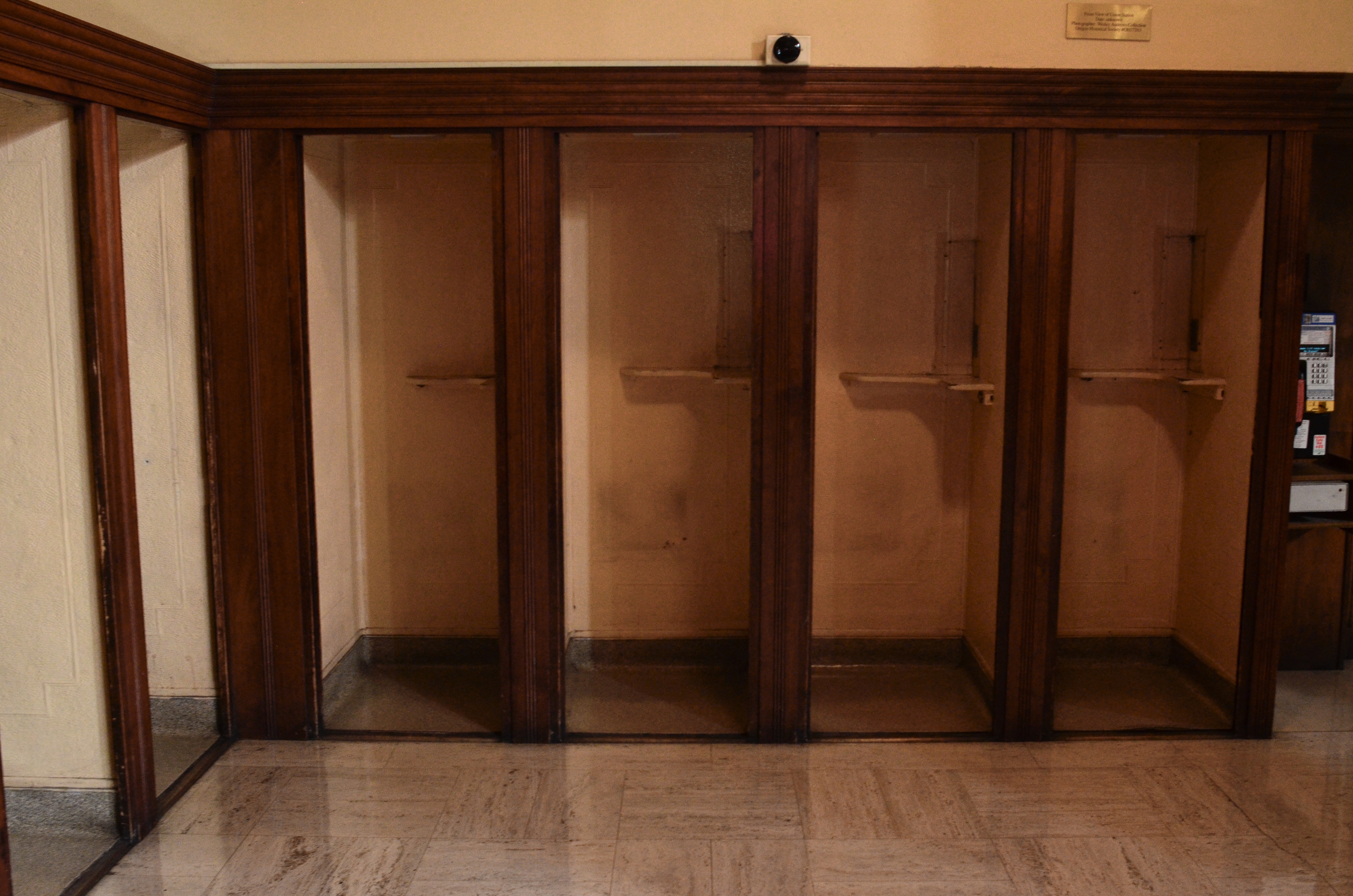
Lost Connections, Portland, Oregon, 2018.
What renders something important enough for us to actively acknowledge it? Can some things become so common, so ubiquitous in our lives that we no longer see them? In the case of the vintage cabinets shown here: what, in our daily lives, could have been more commonplace, more taken for granted, than a bank of public telephone booths? How could these structures have been more widespread than they once were, in railway stations, courthouses, department stores, bus terminals, and a million other gathering places? And would that commonality have placed them somewhat below our radar, visually speaking? Now turn that on its head: what could be more noticeable than when this everyday object is rendered obsolete, its purpose vanished in a blink of technology? Will that thing now be more visible, or completely vanished, and for whom?
I bring this up to unstick us from the tired idea that “everything’s already been photographed”, that, for the camera, there is nothing new under the sun. In reality, were we to start shooting images of all the things we have, for one reason or another, failed to see all our lives, we would find poetry and plenty in what we think of as “nothing”. Many things that are “here” go unseen simply because we will not see them, and many things that are “gone” remain because we will.
EYEWITNESS, ONCE REMOVED
By MICHAEL PERKINS
PHOTOGRAPHS STRIVE TO GIVE DIRECT TESTIMONY to life’s key moments, to minimize the distance between event and reporter. The most arresting photographs benefit from this straight line-of-sight from what we witness to how we record it. Other times, however, we are forced to depict things indirectly, making pictures not of things, but of the impact of those things.
One example of this occurs in wartime. It’s impossible, in many cases, to directly make an image of all those who are lost in a battle, but many eloquent photographs have been made of the way those dead are remembered, by photographing lists of names inscribed on a memorial, or by capturing a ritual during which those names are recited. Since society records the damage of wars or disasters in a variety of clerical or statistical ways, such tabulations, for photographers, stand in visually for the actual event.
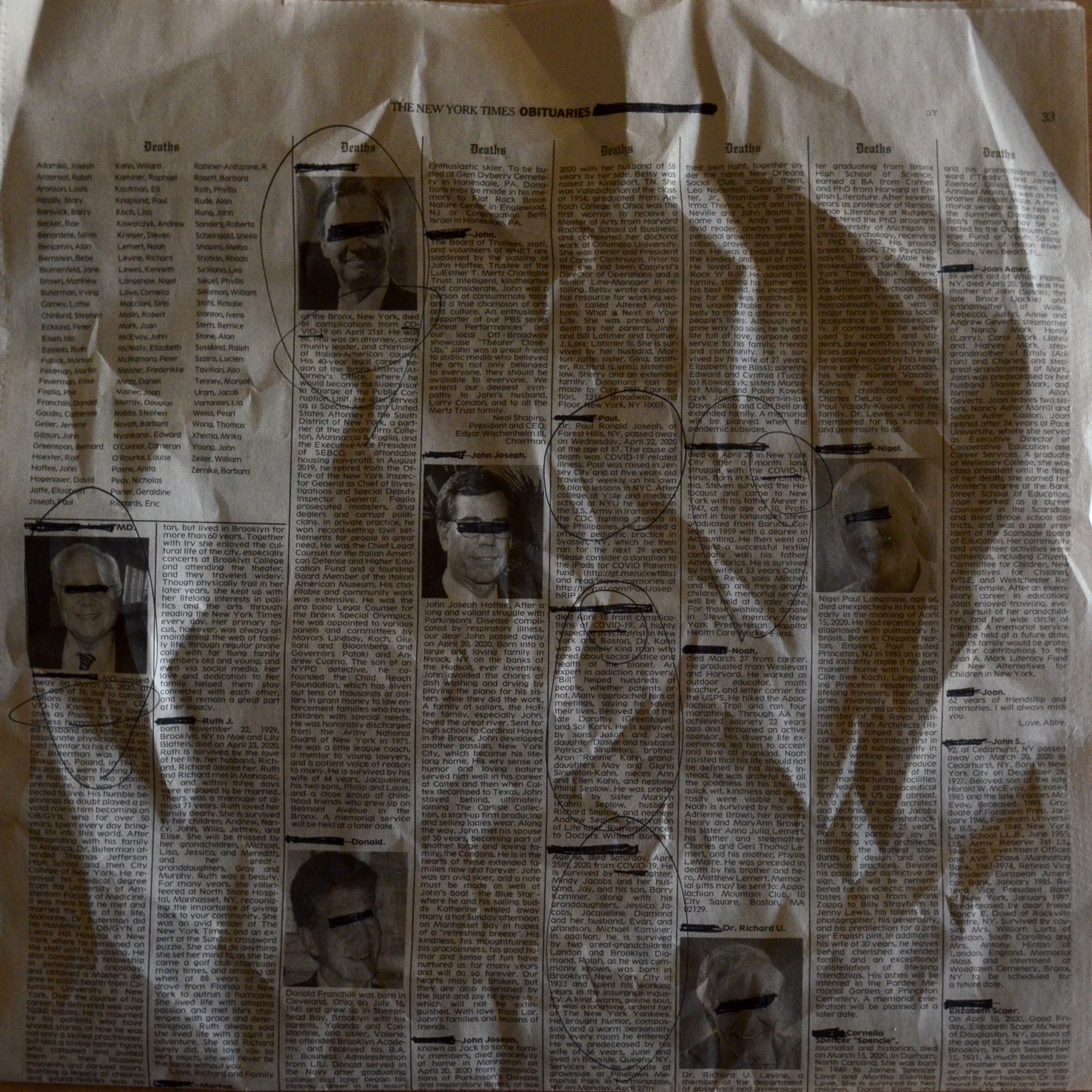
An Encyclopedia Of Vanishings, 2020
Our latest global “war”, in which even the immediate families of the dead are barred from witnessing their loved ones’ final moments, a time in which thousands of us seem to just vaporize into abstraction, has made a new, horrific addition to a very old instrument of death’s grammar: the newspaper obituary. In recent months, the virus has begun to be specifically listed as a cause of death in the stately columns of the New York Times, a revision which signals the importance of change in how slowly the Old Gray Lady adjusts to it. There now, on the page, along with the Parkinson’s diseases and the cancers and the sanitized descriptions of those who “passed peacefully” are the dread new words, now officially inducted into the vocabulary of grief.
And so, in the age of COVID-19, our cameras are stalled at arm’s length, unable to be true eyewitnesses, forced, by circumstances, to be eyewitnesses, once removed. We make pictures of pictures, images of lists, views of rosters.
It’s not enough. But for now, it will have to do.
THE “DELETEDS” CATALOG
By MICHAEL PERKINS
THE 1985 DISCOVERY OF THE WRECK OF THE TITANIC by Robert Ballard tested the talents of experts from as wide a range of specialities as the objects found in the doomed ship’s debris field. Some of the things found on the floor of the Atlantic were readily identifiable to the casual observer: chandeliers: cases of wine bottles: chairs. Cataloging others required the trained eyes of cultural historians, people versed in the daily world of 1912. The everyday becomes the exotic in very short order in the modern world. And one of the tasks for photographers is having these quotidian objects sit for their portraits before they pass, swept along in an ever-accelerating tide of change.
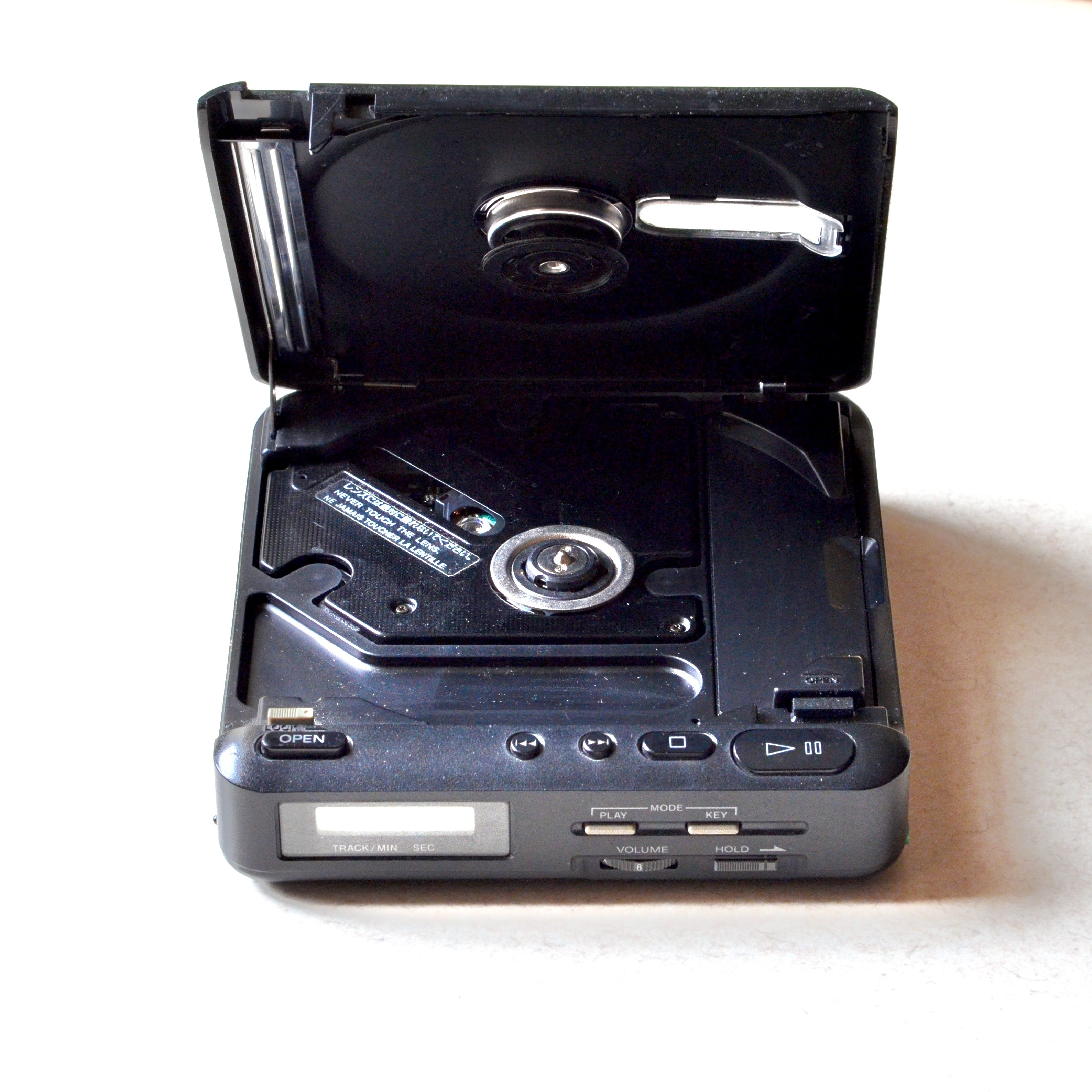
The Sony D-2 Discman, complete with surplus jacks for line-out and wireless remote. Things will be great in ’88.
You read about stunts in which common bits of household clutter from just a few decades ago are shown to millennials or teens, many of whom puzzle over what the object did, or was for. To be sure, going all the way back to, say, a rotary dial telephone could confound more than a few of us, but in these demonstrations, some young people have been stumped by iPods. Part of what brings a thing to the commercial market is the style it takes to catch the customer’s eye. If that typically fleeting style proves consistent with the object’s function, the thing may survive long enough to be a classic. Other such gizmos are transitional, the things given to us “on the way” to something more essential.
The recent Grand Hibernation we’re all under has made photographers reassess lots of things. What’s a fitting thing to make a picture of? What among our tools is still vital to our art, versus mere collected clutter? And, in the inevitable house-cleaning sparked by all this surplus time, what’s to be done with all the things we no longer use but for which we might harbor some residual affection? Should we mark their passing with a photograph? Should we create a “deleted” catalog of some kind? Is there anything to be gained or taught by doing so?
My favorite photographs often turn out to be the very ones I wondered the most about…that is, arguing with myself about whether they should be made at all. In the case of the Sony D-2 “Discman” you see here (circa 1988), I can’t say it was the first such device ever made for the purpose of making compact discs a portable and private habit, but it certainly influenced my own decision to turn away from vinyl (“heresy” I hear you hipsters hissing), and that, in turn, changed utterly the kind of music consumer I would become going forward. For some, the earlier, cassette-based “Walkman” was that moment. I just never embraced taped formats for a variety of reasons.
So this image represents a point at which I went from a rotary phone to a push-button? Craft your own analogy, and find the objects that, before they vanished, served as pivot points in your own life. Throw them out or tenderly tuck them back into storage for another day. But look at a few of them with a photographer’s eye. You may be far enough removed from them to see something new.
FROM ONE CHAMP TO ANOTHER
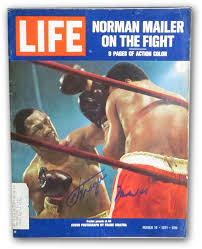
Frank Sinatra’s “amateur” image from the 1971 Frazier-Ali fight.
By MICHAEL PERKINS
THERE IS NO GREATER THRILL IN PHOTOGRAPHY than when one scores what is often disparagingly called “a lucky shot”, a term that’s usually applied by other teeth-gnashers whose luck wasn’t running on that particular day. To be sure, there are times when fortune seems to play the decisive role in the success of a picture, but, in truth, just as there are no coincidences, there are also no pure accidents….that is, shots that were totally a matter of good luck. I don’t believe that skill, strategy or vision are ever completely absent from a good photograph. We always stamp something of our experience and technique onto the process to some degree.
Which brings us to a classic example of a great photograph that has long been saddled with the tired “lucky shot” label. The story carries a little extra cachet because of the players involved, to wit:
When Frank Sinatra managed to wangle ringside tickets for the hottest event on earth, the 1971 Frazier-Ali fight at Madison Square Garden, he was already calling in every chit he had for the privilege of merely being in the house. What’s more, he wasn’t seated with the “regular” high-rollers, the Diana Rosses and the Streisands, who had, let’s admit, pretty premium seats to “the fight of the century”. He was right at the canvas’ edge…..a sub-set of celeb juice beyond the reach of standard juice, prime real estate that was typically comprised of the press pool photographers. And Frankie had figured out how to crash that little party, baby.
There seems to be some disagreement, all these years later, as to exactly how Sinatra approached Ralph Graves, the managing ediitor of Life Magazine, about the possibility of sitting with the other shooters and cranking off shots with his own camera. After all, Graves had plenty of talent assigned to the fight, so why would he need more shots by an amateur? Amazingly, Graves actually seems to have taken a “what do we have to lose” attitude toward Sinatra’s snaps, saying later that, although he was ankle deep in Life images, “it’s nice to have a horseshoe inside your glove.” Whatever the precise terms, Frank was in.
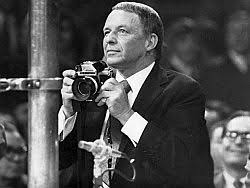
The Chairman waits for his moment.
Whether for publicity or artistic reasons, Life decided to use five Sinatra images instead of their own, featuring four in an inside article written by Norman Mailer and the coveted cover shot, with byline. A few carpers complained that if the same pictures were taken by Joe Schmoe no one would have given them a second look, which is where the dreaded “lucky shot” dig was first applied, as if a goat with the right camera could have taken as good a picture. No matter. History is written by the winners, and, while Frank Sinatra never saw a gallery exhibition dedicated to his photographic “body of work”, the pictures still stand on their own. And we all go on pretending that luck has no part in our own wondrous art, that there is some mystical power we possess that the unanointed do not.
Meanwhile, I wonder what kind of pictures Streisand might have captured?
HOME SWEET STUDIO
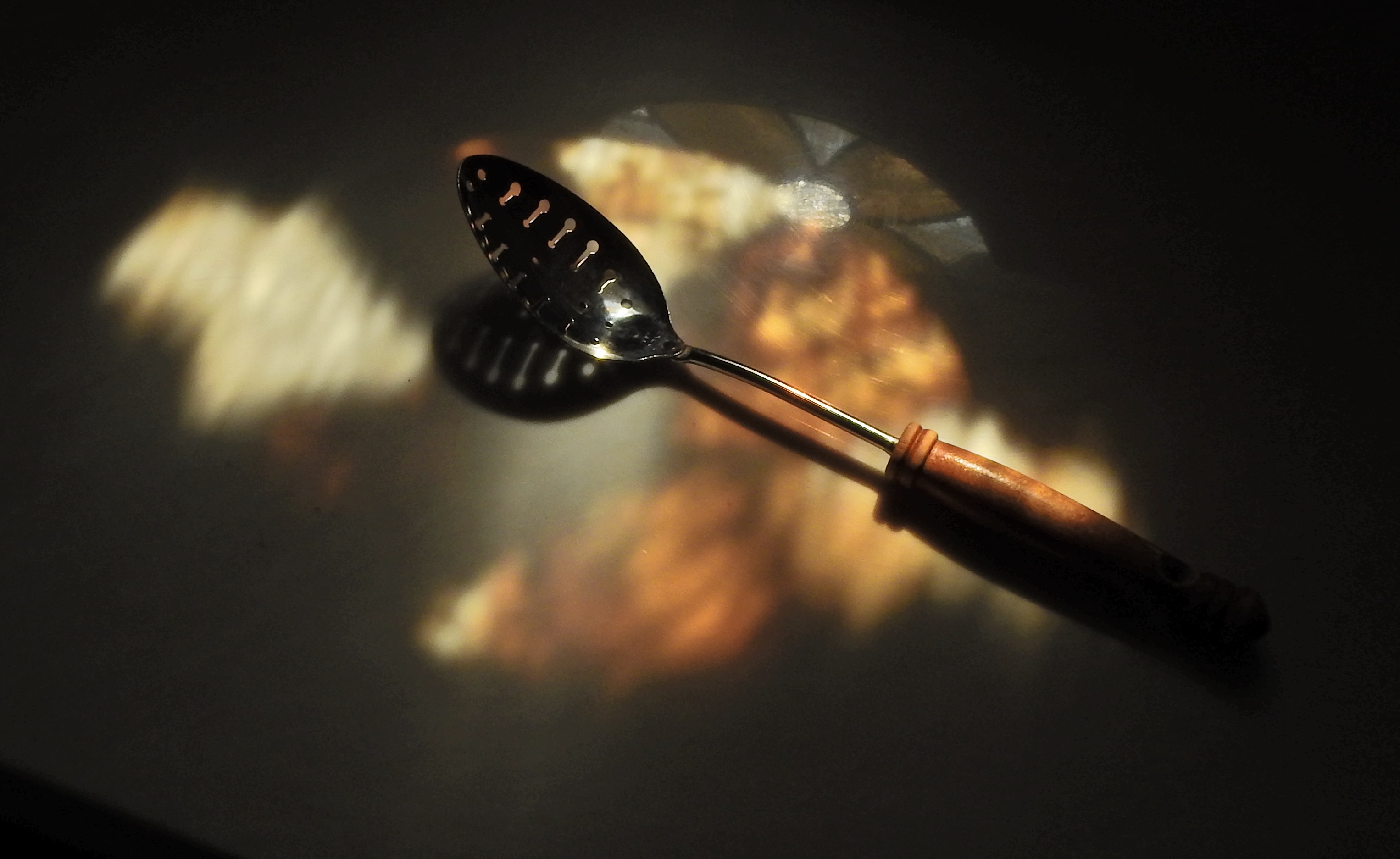
Stained Glass Study One, 3 p.m., April 21, 2020. 1/320 sec., f/8, 24mm, ISO 100.
By MICHAEL PERKINS
FOR PEOPLE WHO OPERATE ON INSTINCT SO MUCH OF THE TIME, photographers certainly can make things unnecessarily complicated. We buy gear we don’t need, thinking that machinery alone will unstick our stuck imaginations. We overthink set-ups. We overthink post-processing. We put a lot of junk in our own path, thinking that more of everything will make better pictures. Maybe it’s a native human need to exercise control. But sometimes, as now, we are all reminded that control can be elusive, or worse yet, a mirage.
Making photographs isn’t about having all the conditions we’d prefer. It’s more about managing the conditions we’ve got. That’s always been the case, although our present Great Hibernation has made it a lot more obvious. Take the idea of a “studio”. The term can conjure visions of vast banks of backdrops, lights, high-end gear…a professional space, if you will. But at bottom, it’s really just a place to work, and, ideally, to exercise choice over technique and intentions. There are really no official tools, no approved physical location for a studio. Like many others, I’ve been recently reminded that we only need a few things to create one: a knowledge, inside our homes, of where light goes and what it does during the day: the ability to tell time: and a fair bit of awareness of what our camera can and cannot do. If you have these things, you’ve got a studio.
Think through the process: if you have windows, and if you know which way the sun tracks across the sky hour by hour, you already have multiple sites to get different kinds of light depending on your need. One window for harsh midday high-contrast illumination, a dirty one for diffused, etc. As to tools, absent formal studio gear, everything in your house is a potential prop. And then there’s the advantage afforded by all the extra time we find ourselves awash in: that is, the leisure to plan a shot, whether over hours or days. In essence, you’ve got time to tweak like you’ve never tweaked before.
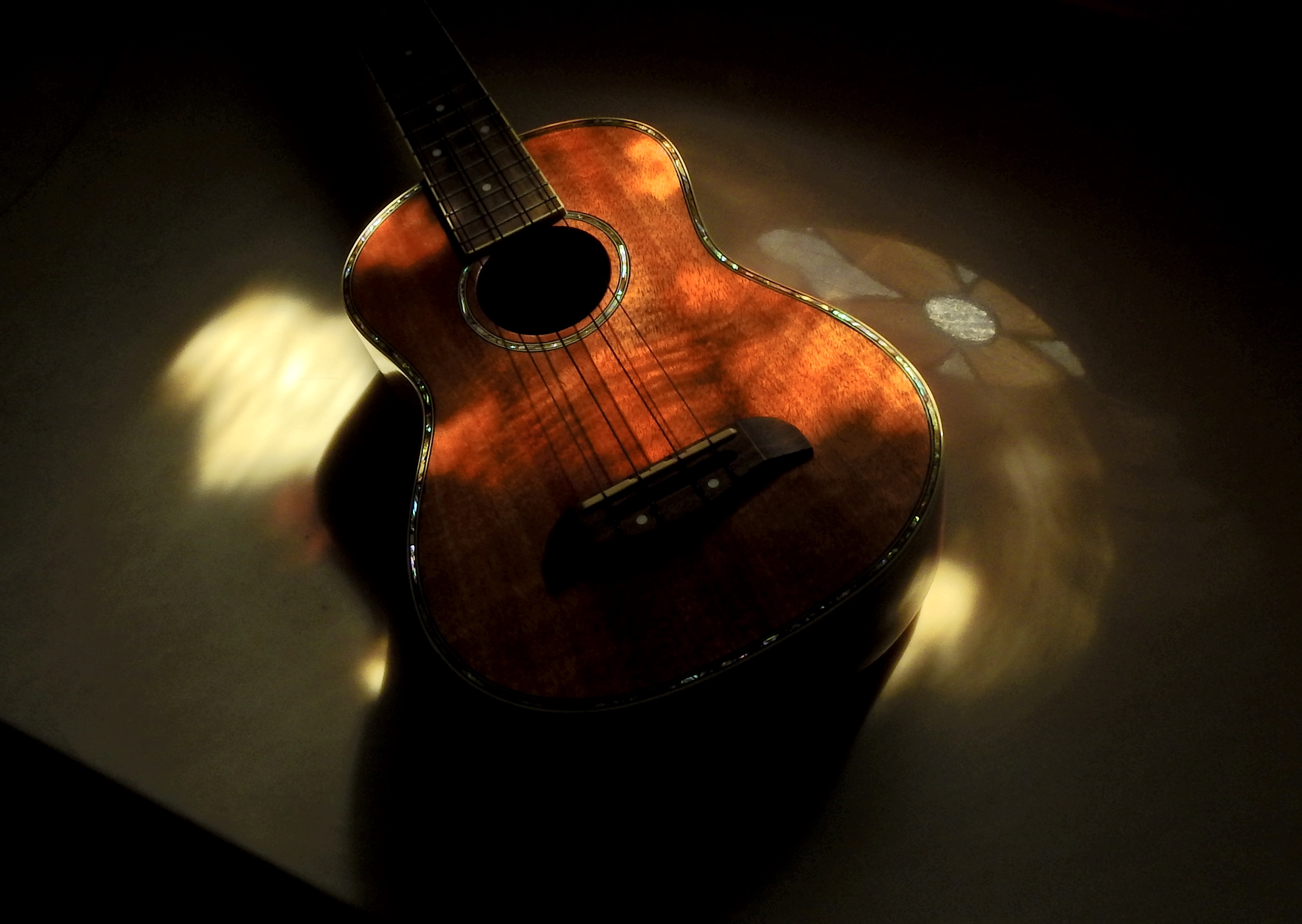
Stained Glass Study Two, 3 p.m., April 25, 2020. 1/200 sec., f/7.1, 24mm, ISO 100
Working within a finite interior space over an extended period, you can really learn its every feature and behavior. For example, I discovered, earlier this week, that a small stained glass window in my guest bathroom casts an intense kaleidoscopic pattern on a reflective counter-top for only fifteen minutes every afternoon. Stumbling on this, I threw a random object into the warm orange glow just to see what kind of permanent image I might eventually want to make with it. I didn’t get back to the room for another three days, by which time I had a rough concept for what I wanted to model the light on. Using the original shot’s shooting data, replicating the exact time of day and exposure settings (and then varying from them) posed no problem, and so I had, in very rudimentary terms, the control normally associated with a “studio”, whatever that word means.
All workspaces are equal once they are maximized and personalized. You don’t need a special locale to make pictures…..or, more to the point, you can make any locale special once you’ve bent it to your will. Right now, we’re trying to bar entry to all invaders from outside, but light will always get a pass. Harness that, and the rest will fall into line.
BARRIERS
By MICHAEL PERKINS
OBVIOUSLY, OUR CURRENT DILEMMA ISN’T THE FIRST TIME PHOTOGRAPHERS ACROSS THE WORLD have been fixated on walls. Wars, natural disasters, imprisonment, confinement of any kind present unique challenges of access and opportunity for shooters. Isolation is often the barrier between story and storyteller. If only we could see around, past, under, we could complete our narrative. But the Great Hibernation we are all undergoing at present is a little different. Separating inside from outside is one thing. Separating each of us from all of the rest of us is another kind of isolation altogether.
Our imaginations can fire fantasies about things we can, for the moment, not depict directly. When memory and speculation fail, those of us who are physically hemmed in head for the windows, those finite little tele-screens that open onto at least a portion of the greater world. What are the neighbors up to? Are the blossoms out? Is the mailman coming today? Does the world look, in any way, normal?
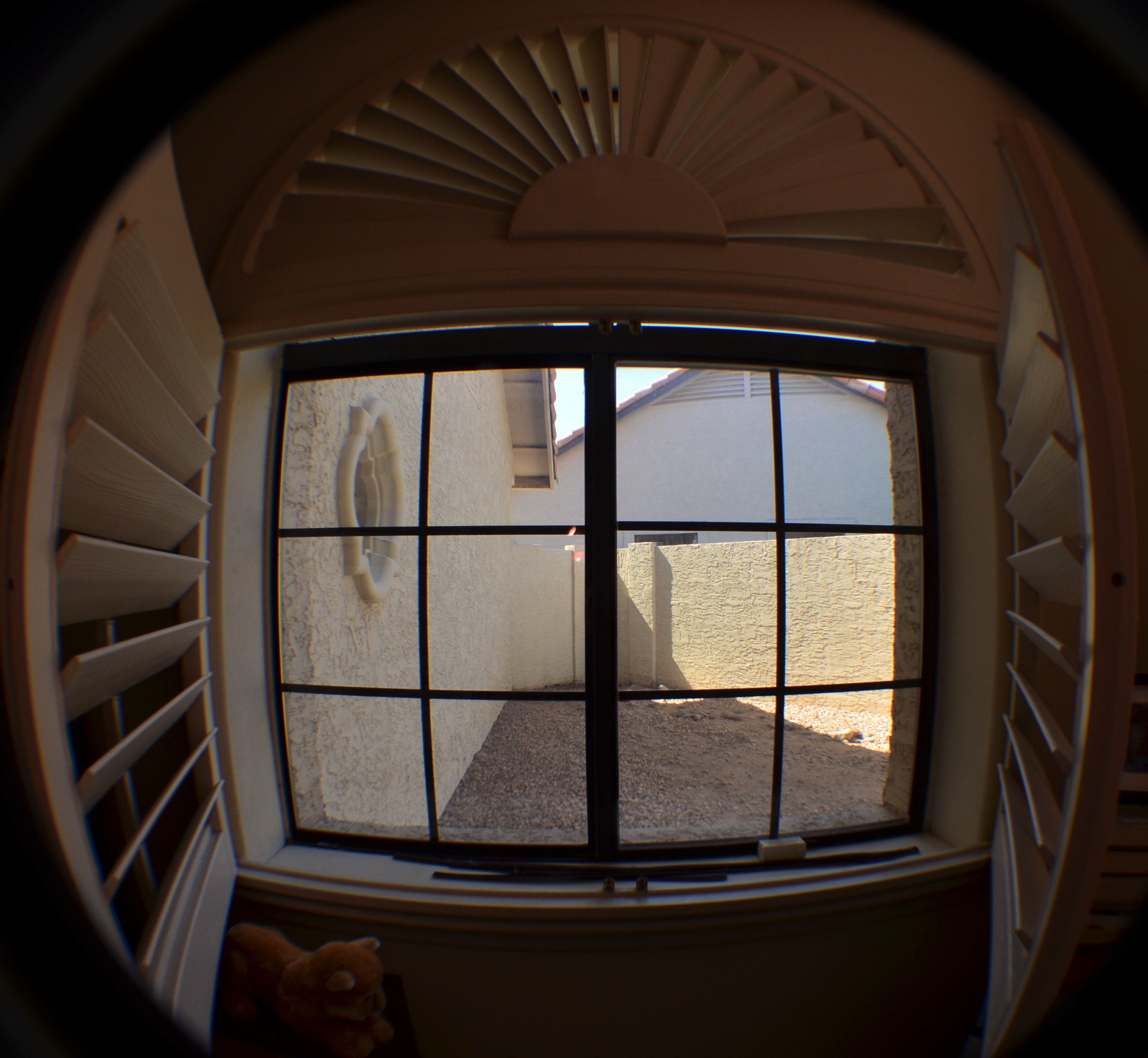
No Escape, April 2020
And then there are those windows that open to an airshaft, a blank wall, or alleys ( which are, themselves, windows of another kind). In my house, I have one such “dead” window, which, normally, is only used as a light filter, as it’s framed in thick louvers designed to let in illumination even as it keeps the midday Arizona heat out. The louvers only come wide open when additional light is needed for a room that acts as a default natural-light studio of sorts. Thus, most of the time, the fact that it delivers a particularly worthless view is simply forgotten.
But a few days ago, I wanted to see that view, to feel it as a metaphor or a link to everyone else for whom being able to see out their windows is, in some ways, worse than confinement. A tease. Information without value. Here in the southwest, many residential homes deliberately hide their side and back yards from view with masonry barriers. We are so wall-oriented that the things really become invisible. We learn not only not to care about what they conceal but about them as concealers. But that’s the way our world typically works.
Somehow, then, maybe out of an attempt at solidarity with all the other stranded wall-gazers in this Weird New World, I wanted to make a picture of what it feels like to look out upon nothing, to have the world walled in, and then walled in beyond that. The fisheye lens allowed me to frame the louvers and the sill in the same image in a way that made the opening narrow even as it was strangely wide. Barriers and photographers make lousy companions. We always want them all down, even they conspire to keep us ever within. Maybe that’s a kind of definition of art.
And maybe I’ve just been in the house too flaming long.
REALITY 2.0
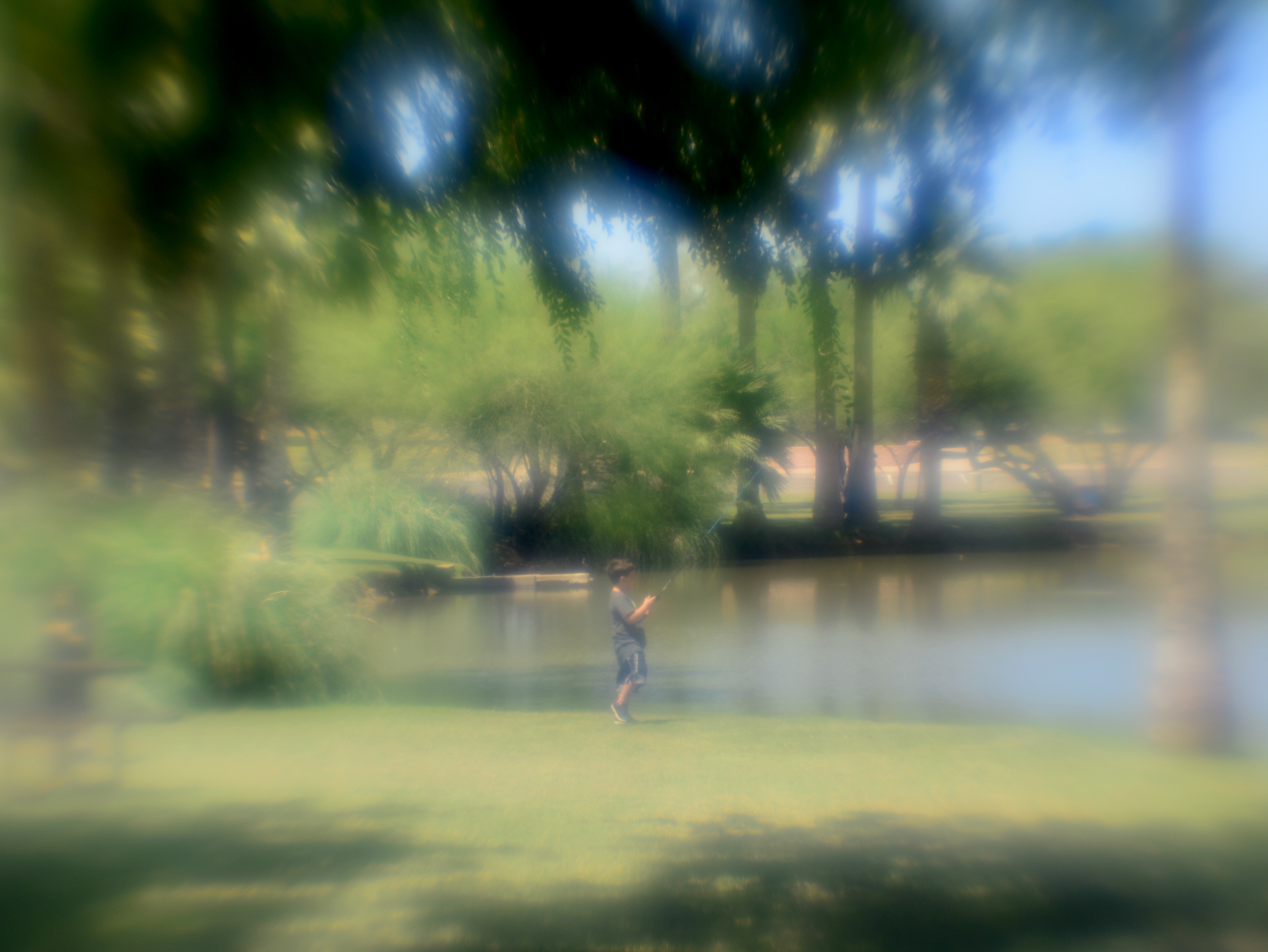
The Angler, April 2020.
By MICHAEL PERKINS
EVEN THOSE OF US WHO HAVE BEEN UNDER QUARANTINE FOR A VERY BRIEF TIME have learned how quickly our concept of “reality” becomes almost abstract. The immediate and local evidence of our senses, our measure of the smaller environments we currently inhabit, become the measure of all actuality, with everything else in the outside world growing less and less concrete. We imagine what the battlefields of the disease look like: we speculate about how much of the greater world has been warped or scarred beyond recognition. But our view of what lies beyond our own four walls can quickly become like a dream. Or a nightmare.
That’s why, even with a fairly regular resurfacing for errants or exercise, the photographer in me can look at things that were formerly almost invisible with new eyes. The formerly commonplace becomes the extraordinary. And because nothing is quite as it was, we are drawn to drastically update our approach to the everyday. In the case of this week’s trip to a local park, I was immediately struck by how normal everything, and everybody, looked. I almost expect the landscape beyond the house to resemble the bombed-out streets of London, during the blitz, and when it looks like, for example, just a park full of people walking, biking, or playing, it’s even more jarring than if the whole thing looked destroyed. I wanted to try to photographically render that feeling of unreality, of being in a dream state.
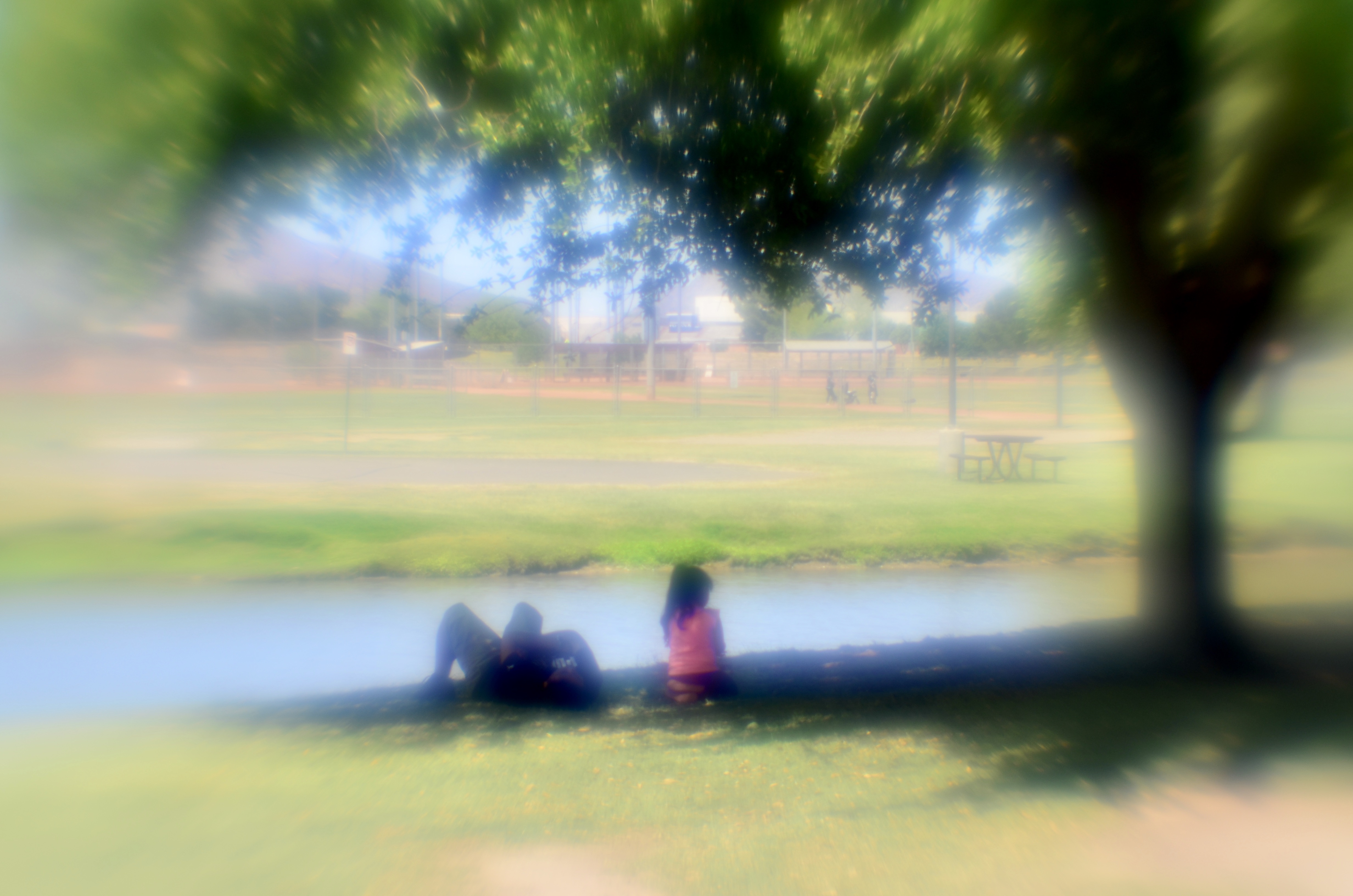
Papa And Me, April 2020.
I decided to try to shoot these, for lack of a better word, “real” scenes in an unreal fashion, using a Lensbaby Single Glass Optic shot wide open at f/2. Now, with any lens, this huge aperture means a very shallow depth of field, but this particular piece of glass adds its own artifacts. It’s a bit of a time machine, a throwback to the way lenses used to operate for everyone. It’s uncoated, for one thing, meaning that the usual factory treatment that now helps lenses avoid color fringes and flaring are deliberately left off, allowing these “mistakes” to be captured rather than prevented. The lens’ incredible softness is actually a fairly focused image beneath a thick overlay of glow, or what we used to call the “Vaseline” effect. This gauzy look is most pronounced at the edges but adds a very warm look to the entire frame. The pictures made with such a lens are also very high in contrast, with everything registering as either a high or deep, deep color. Details are sacrificed in favor of a hallucinatory, painterly result. And then there’s exposure. Here in sun-abundant Arizona, I had to shoot very fast, almost 1/4000 sec.
Finally, there was a distinctly personal reason for making these pictures in this way, as there always is for any photographer. We try to craft the re-creation of a world we “see”, whether that world is a hopeful or horrible one. And so these pictures represent an article of faith. In the face of the millions of images we are currently seeing of loss, horror, and fear from all around the world, we must remind each other that sacrifice, honor, and, yes, an occasional moment of fun are also “part of the world.” Call it Reality 2.0.
The beta version.
The 35MM SHRINE
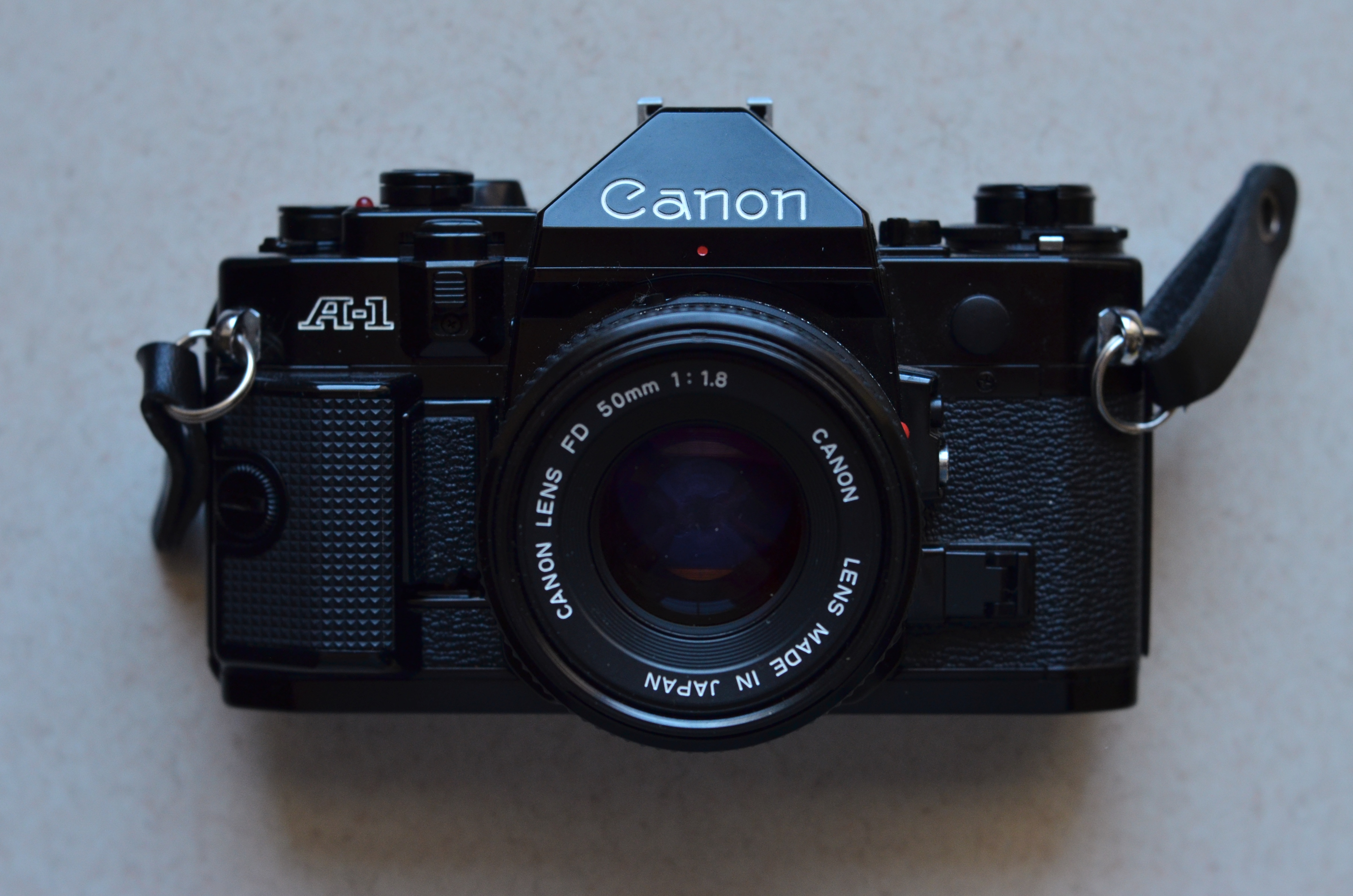
The legendary Canon A-1 35mm SLR.
By MICHAEL PERKINS
MY FRIEND PAUL IS GONE, but I am holding a small part of him in my hand.
He passed late last year, adroitly avoiding the current Great Hibernation and all its horrors. By that time, he had survived a hardscrabble farmer’s childhood, the armed forces, half a dozen skin cancer scares (the farm years’ legacy), several strokes, a fused spine, and nearly eighty years of other scrapes which he largely dismissed with a wide smile and a cackle of a laugh. Before the turn of this year, however, he finally met an enemy that was too big to side-step, and now he is gone.
I hold a part of him in my hand because his wife and friends recalled, in the grief-driven process of finding homes for his various possessions, that I liked to make pictures. And so Paul’s camera gear….including lenses, brackets, cases, bigger cases to hold the smaller cases, cleaners, filters and flash units…became mine. I wasn’t chosen for the higher purpose of carrying on his legacy, or even understanding what he did with all this stuff. But it’s mine now. Much of it, I can’t practically use, but absent even one photograph of us together after a seven-year friendship, these gizmos are, now, rather sacred to me.
Annie Liebovitz and other shooters have made entire sub-careers photographing the personal belongings of people, from Emerson to Eleanor Roosevelt, that are themselves beyond the reach of portraits in the classic sense,. The gloves Lincoln wore to Ford’s Theatre. Annie Oakley’s performance costume. Paul’s cameras are like that to me. They can’t resurrect him the way a picture would, but they are talismans that summon a part of his spirit nonetheless.
Paul was an exhaustive student of rock ‘n’ roll, taking his youthful love for that music to a scholarly extreme. He didn’t just worship Buddy Holly:he traveled to Texas and became personal friends with Buddy’s widow, Maria Elena, a relationship that moved her to give him several ultra-rare studio recordings that you’ll never find in any textbook or collection anywhere. He could rattle off the personal histories of every one-hit-wonder in Top 40 history, and, coming from my own background in pop radio, I knew he was dead-bang perfect on every detail. He was also a natural gift for any kind of technical analysis, having worked as a TV repairman in the 1950’s and for IBM back in the punch-card era, and so I can easily imagine him applying that same degree of precision to the making of pictures. The quality and condition of the gear also argues for his orderly mind, as in the case of this pristine Canon A-1, the company’s first-ever SLR with fully automatic exposure, a camera from the 1970’s that is still influencing every element of camera design in the twenty-first century. I may never be able to make pictures with it. But it makes memories for me, even as a 35mm shrine sitting on a shelf.
I often read the user’s manual, and wonder if Paul needed to. After all, he seemed to live his life as if he had already figured out the instructions all by himself. In the end, his brain did all the best kind of work that people usually credit a camera with. That means that even if I never snap a frame with Paul’s camera, he’s already taught me, through his friendship, a vision that transcends gear.
Thanks, pal.
FROM THE GENERAL TO THE SPECIFIC
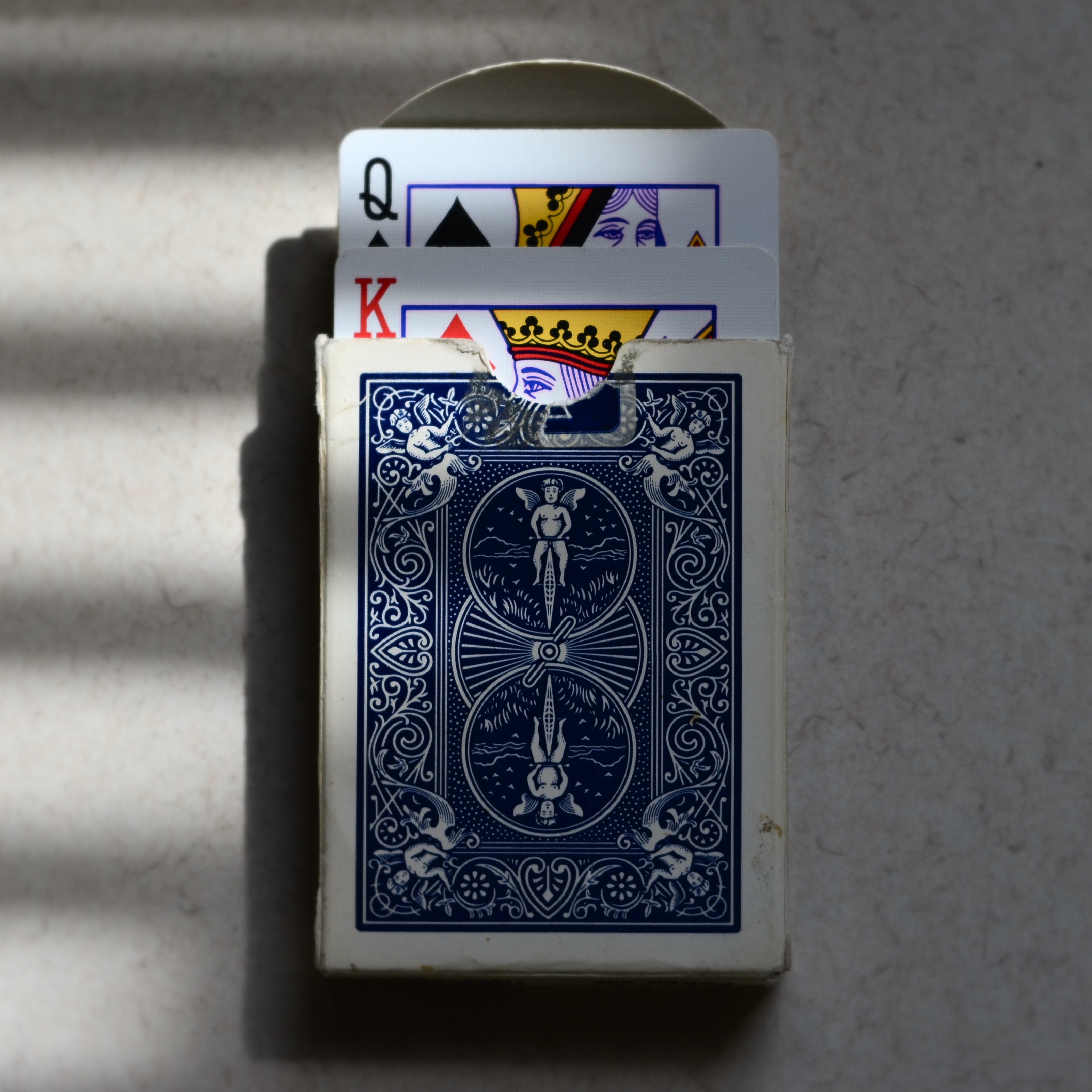
Better We Shouldn’t Go Out, 2020
By MICHAEL PERKINS
THE GREAT HIBERNATION OF 2020 has done, in the ages of fragmented audiences and unlimited media choices, what prehistoric TV networks used to do all the time…that is, knit the country together with universally shared experiences. Back in the days of three or four channels, we all went through the same big events generally at the same time. Bereft of the time-shifting and endless repeat patterns of our present video age, the narrow range of viewing choices in those days gave people of a certain age a common cultural baseline. We tended to experience one official version of large things, from coronations to assassinations to the first earth orbit to the last episode of The Fugitive (which was watched by 78,000,000 viewers). Now the events that we all experience in real time, together is limited to the Super Bowl and a few nervous election nights. Everything else we view, well, when we choose to view it, if it’s not on a platform that we ignore altogether.
The global virus tragedy has come closer to give us a shared, real-time experience than almost anything else in the lifetime of people under fifty. And yet, through the medium of art and the journeys of our own personal struggles, we are filtering it into our memory in very distinctive ways, taking this titanic problem from the general to the specific. We all begin at the same starting point as the emergency first breaks, and then, we customize the ways we internalize it, with every conceivable form of expression: diaries: drawings: essays: cartoons: memes: movies….
And photographs.
Alone at home, I must comment on the crisis in ways that sustain my own sense of hope. Also in ways that use distance to help me hold onto my reason. Some of that is just my circumstantial lot: I will never be, for example, a photojournalist on the front lines of this battle. I may never even walk the deserted streets that have become the haunting visual signature of the story. Within the confines of my reduced living space, I have little in the way of photographic tools besides my imagination or whatever humor I can muster in the moment. Sometimes, as you see above, I come down on the side of whimsy. Other times things get so heavy I don’t know if I’m capable of making an image that faithfully records that. I guess I’ll find out.
The Great Hibernation has snapped many people of my age back to the memory of other globally shared events from years ago…some tragic and some magic. We are certainly fragmented as compared to those days, but the amazing outpouring of heroism and sacrifice that have marked our reaction to this horror….well, that feels like a bond, anyway. And perhaps the art that we use to chronicle our feelings, even if they are very individual emotions, can occasionally strike a universal chord. It’s worth a try.
THE DEAR (RECENTLY) DEPARTED
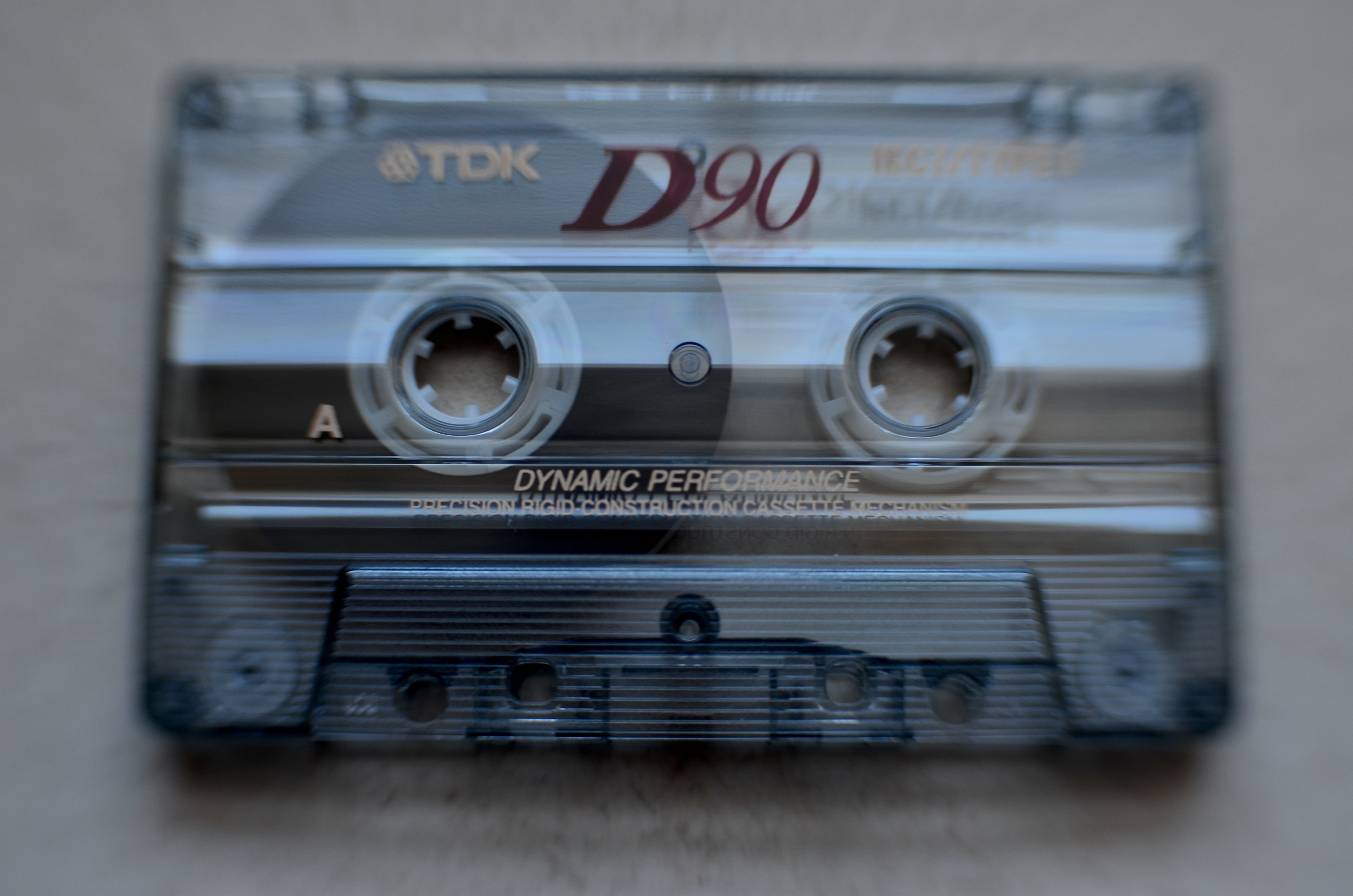
Anna Logg’s Greatest Hits, 2020
By MICHAEL PERKINS
REFLECTION TAKES A KIND OF MENTAL TALENT. Others would say that it takes humility. Or wisdom.
But mostly, it takes time.
Looking back is not a speedy process. First, it helps for us to personally advance to the point where certain things are in the past, since the distancing of ourselves from the immediacy of events invites and facilitates our thoughtful analysis of them. Perspective requires distance, a way to separate ourselves from the blindness of our immediate environment. The questions then become obvious: what did all that stuff mean? Which parts of it can I learn from? Does it all deserve to go away?
The process of reflection in photography also waits, if you will, for enough time to pass, allowing the artist to re-evaluate things, to take a second crack at trying to understand them. Once an experience floats far enough away from us, we are free to either appreciate it anew or merely release it as less than essential. The dear departed, once we get far enough away from them, become open to interpretation by many means, the camera among them. Everyday objects can tend to be invisible, because we mainly see only their use. With time, we can often re-visit them, seeing new elements in their design, the context of why they were important in the first place, or other considerations.
Think Andy Warhol’s Campbell’s soup can.
By forcing a conversation about a seemingly banal object, forcing it into “serious” art galleries as an important thing, Warhol made us look at why we consume things, as well as what we would, going forward, consider “art”. Lately, in the age of the Great Hibernation, many photographers are picking through the accumulated stuff of their immediate environment, looking for something from which to craft images. In so doing, we’ll inevitably stumble across things we have forgotten, or simply don’t consider anymore on an everyday basis. Some of these objects have only recently drifted out of the flood of impressions that make up our daily world, like the cassette seen here. How could anything have been more ubiquitous at the height of its popularity? What could be anymore superfluous than it is now? And yet…
Using the camera and our increasing distance from familiar things can free those things from their popular associations. They can become our soup can, sparking some interesting questions. Why did we use this thing? Why did it not last? And now that it is, truly, just a thing, what can we learn about ourselves by looking at it from a new direction? This is not as ridiculous a rainy-day project as it seems. We still visit places whose famous sites are so over-photographed that we have to labor to say anything new about them, to, in effect, make the Eiffel tower our Eiffel tower. The whole idea of re-visualizing dear, recently departed is really part of the same exercise, done one cassette at a time.
WE ARE ALL WAR CORRESPONDENTS NOW
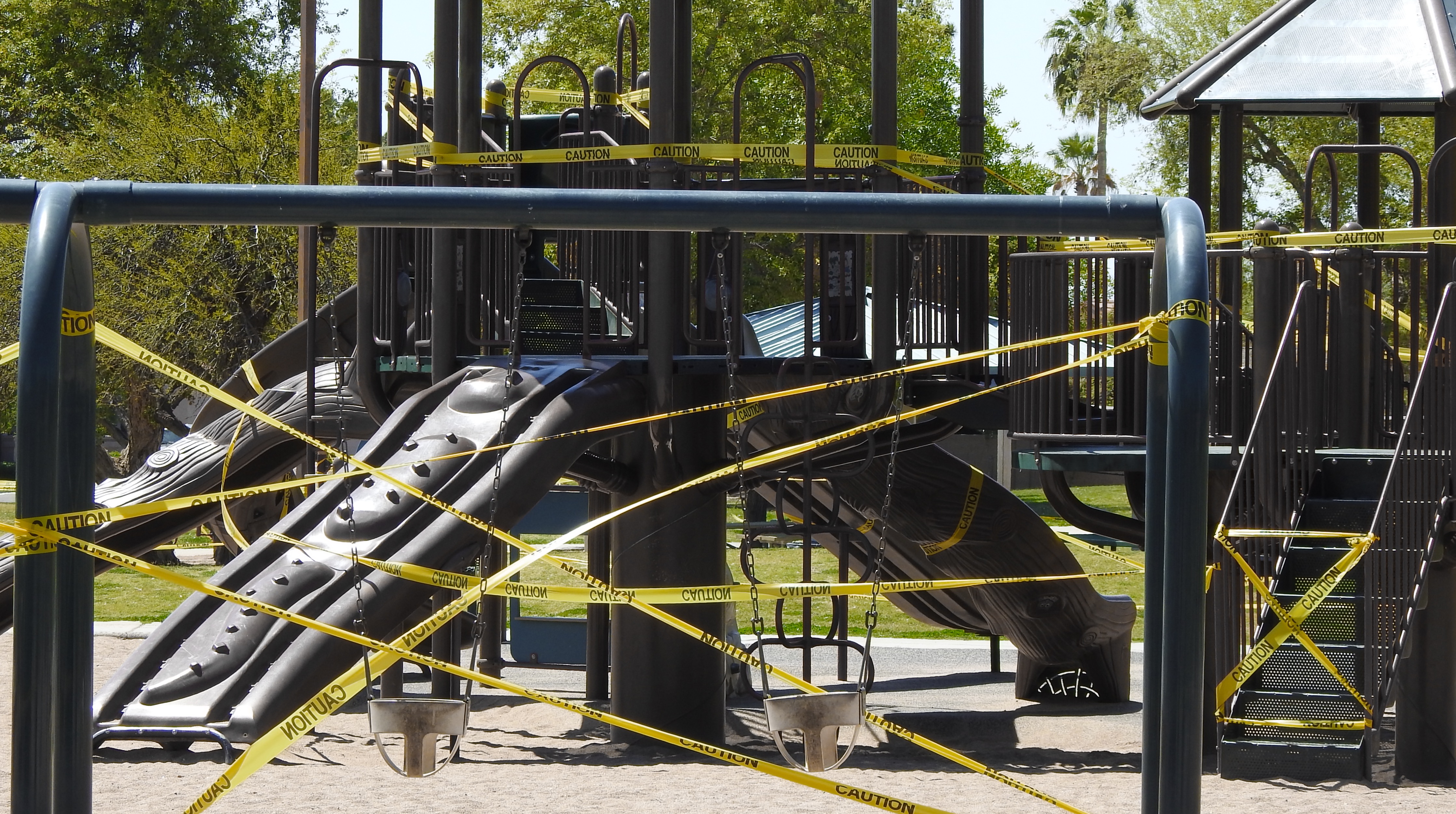
We’re Not Playing Around Here, Phoenix, Arizona, 2020
By MICHAEL PERKINS
I HAVE ALWAYS ARGUED THAT THE PRINCIPLE AIM OF PHOTOGRAPHY is twofold: firstly, to capture what is splendid in the world, celebrating the order of beauty, the majesty of nature, the grand talents of the enterprising soul: and, secondly, to point unflinchingly to what needs correction, to what challenges and threatens us. You can’t have life without both these drives, and you certainly can’t call photography an art if it doesn’t address them equally.
The world is at war at the moment. Our tragedies and losses in this conflict are not incurred by shells and bombs, but by the most primal forces in the natural world. For those who fall before this horror, the results are as final as if they had occurred during a bombardment or battle. The visual ways in which we measure our fear and dislocation are in some ways similar to those seen in regular wars. They are not symbolized by a single, terrible image, but by a million little pictures of very ordinary things, some of which we must put away for awhile as we arm our hearts for what is to come. In this very real way, every one of us that is armed with a camera becomes, in some sense, a war correspondent.
The image seen here is certainly not sinister in the true sense. It’s hard to summon a negative association with playground equipment. But that’s in peacetime.
During times of turmoil, the normal rhythms of life are not yanked away in one clean rip-of-the-bandaid jerk. Rather, they are eroded. Narrowed. You can only do your favorite thing on certain days, at certain hours, and under certain conditions, for the time being. Updates will be posted…
I sat before this scene for several moments before I could unpack why it upset me so. In personal terms, I had walked through the very same park several days prior. Nothing was different now, except…the tape. The word on the tape. And the implied message: this thing that typically gives you joy is now to be avoided. Normal is suspended.
In the short term, there will be many pictures that will break our hearts far more fundamentally than this one ever can. Images that will test our resolve. Touch off volatile emotions. This photo is nothing by comparison to what’s to come. And yet, it is part of the mosaic we are creating during this Great Hibernation (my gentle name for a horrific reality). Each tile in the mosaic is a story of some way that some part of the larger tragedy effected someone among us. I know that I, myself, will create other pictures that are far more jarring than this one. But, as always, it’s the little things that can have the biggest impact. Because when reality shifts, it happens one routine, or one playground, at a time.
A PRIVATE KIND OF TESTIMONY
By MICHAEL PERKINS
What moves me about what’s called “technique”…is that it comes from some mysterious deep place. I mean it can have something to do with the paper and the developer and all that stuff, but it comes mostly from some very deep choices somebody has made that take a long time and keep haunting them.” – Diane Arbus
ONE EVERLASTING ARGUMENT ABOUT PHOTOGRAPHY centers on whether there is any such thing as a “pure” picture…..that is, an image which is merely the recording of reality without the slightest hint of intervention by the photographer. I believe that, in making pictures, we convince ourselves that we have only made a “document” of life, that our own thumbs don’t touch the scale in favor of any kind of bias. But I also believe that, no matter what we tell ourselves about the process, it is impossible for us to retreat to the mere act of punching the shutter button, since even that simple motion has some level of choice inherent in it. The objectivity we believe that we practice is largely an illusion: the impact of our photographs is in direct proportion to just how much we do interfere.
So if just punching the button is at one end of the interference spectrum, then self-portraiture, the age’s dominant obsession, is clear over at the other extreme. In trying to take our own picture, we do nothing but interfere. And stage. And shape. And edit. And perform. Most of this very hands-on approach to immortalizing ourselves is a matter of mere human vanity. We want to come off well. Is my hair all right? Do I look pleasant? Does this make me look too fat/serious/lonely/decisive? In the largely theatrical sphere of selfies, the massage is really the medium.
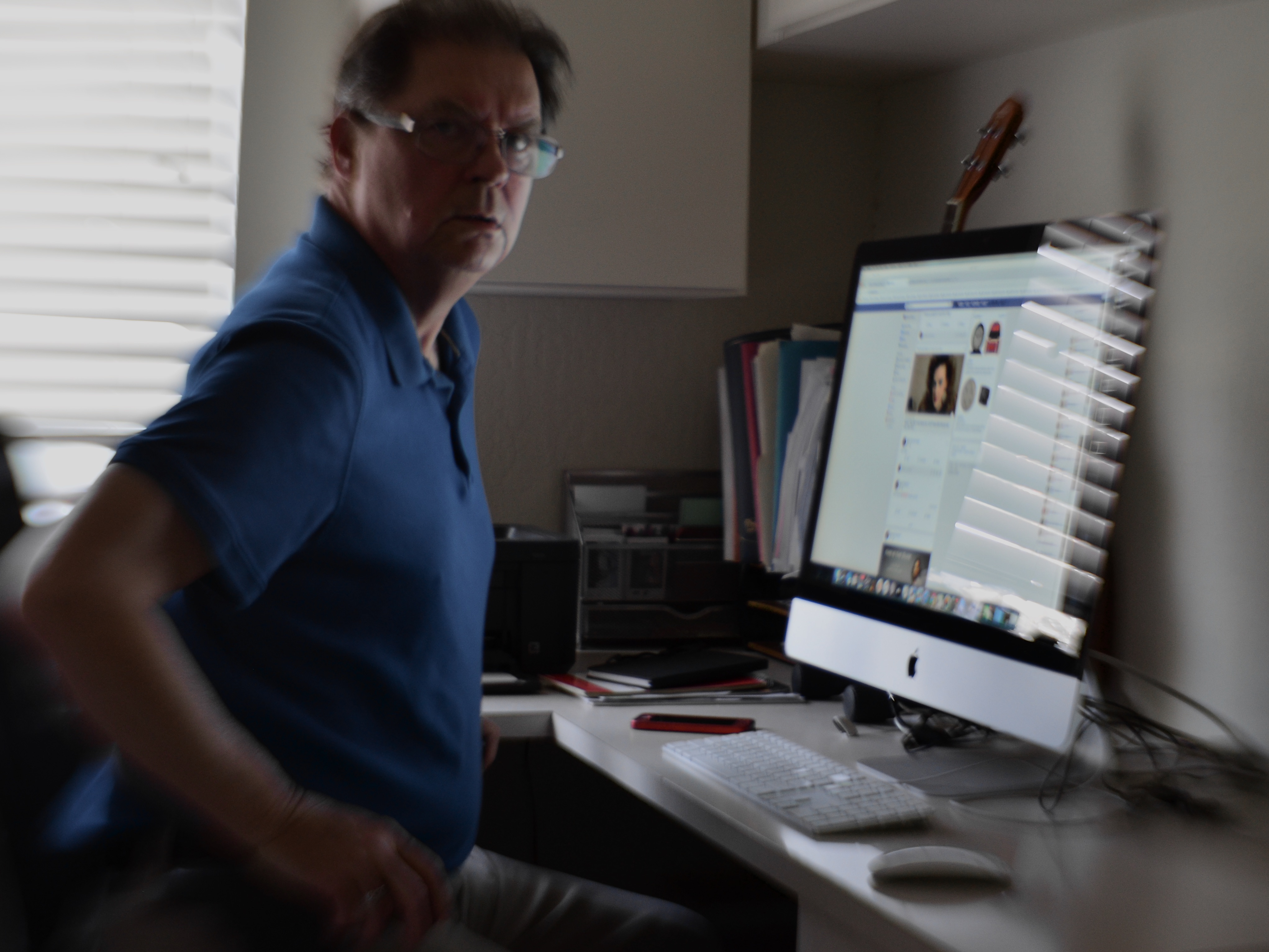
Have You Seen This?, 2020
But, just because we’ve tried to frame our truth in the most sympathetic light doesn’t mean our self-portraits are automatically untrustworthy. In some very real way, we are trying to reveal something about ourselves that no one else has seen, or in Arbus’ words, to show “very deep choices” we have made “that take a long time” and keep “haunting” us. One of the most personal things about what I call our current Great Hibernation is the care or worry that’s etched on our faces in our unguarded moments, those minutes when we’re not sending along recipes and cheery memes on Facebook, or taking online classes, or catching up on our reading. There are real photographs to be made of the anguish and uncertainty we’re all experiencing, even if they can’t be taken in real time. The self-portrait you see here admittedly involves some acting, as it’s a purposeful re-creation of emotions once truly experienced in full, albeit in isolation. As a consequence, I stipulate that the result is imperfect, even though it may still be “true”. My thought process actually proceeds from an experiment in which, after making this picture, I’d show it to others and ask, “does this look like what you’re feeling right now?” In turn, the responses I got made me wonder if I should ever confess that I was the photographer as well as the subject, since I was afraid that such as admission would, for some, render the picture void, since, after all, aren’t we the worst judge of how we look, or should look, in an image?
But what if we’re not? What if our own knowledge of ourselves is so unique that we are, indeed, qualified to say to the world, I know this isn’t a true “candid”, but so what? Yes, it’s true that, in this photo, I wasn’t “caught unawares”. What you see here is a re-creation of how I felt, and will again feel. Still, who is around in my otherwise quiet house to tell this tale more effectively? Am I disqualified because I am trying to make art out of my own life? Diane Arbus also said that a photograph is a secret about a secret. Perhaps the most important pictures we can make, to plumb our own secrets, is to try to map our anxieties…in the moment, if we can, but as faithfully as we can after the fact, even when they’re re-constructed from memory.
ECHOES OF HOPE
By MICHAEL PERKINS
WHEN DARKNESS LOOMS IN THE HEART OF MAN, THE SIZE OF ANY LIGHT IN THE ROOM IS LARGELY IRRELEVANT. What matters is that someone, anyone, struck a match. The light puts physical limits on the dark. The light points toward escape. The light is the promise of continuation, of survival.
During the present forced hibernation among nations, it’s easy to compare today’s responses to The Latest Troubles with the responses seen in other crises. Everyone is free to make those comparisons, to crowd the air with arguments about who did what, and, once all the discussion abates, having a record of what we’ve tried and learned over the years is the work of art. Art records the dimension of our dislocations, measures the distance between Old and New Normals. Memorials, built by survivors, exist to delineate what happened to us, and, more importantly, what happened next.
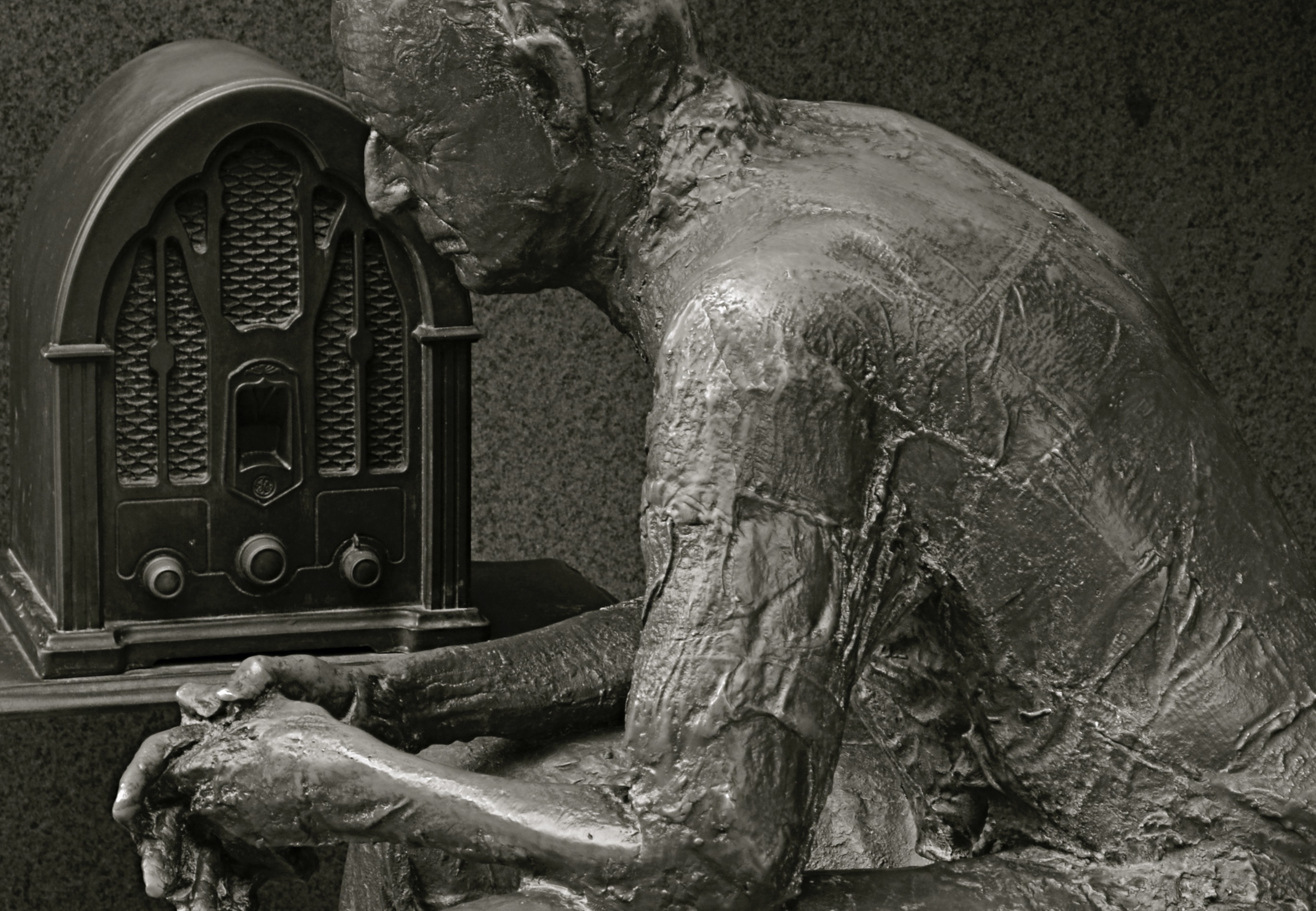
Fireside Chat by sculptor George Segal
There are four open-air “rooms” in the FDR Memorial in Washington, D.C., each designed to symbolize one of the separate presidential terms of Franklin Roosevelt, along with references to the specific challenges of those four eras-within-an-era. One such room houses sculptural reminders of how the average person interacted with the White House as it faced the singular challenges of the Great Depression. The figures, by George Segal (1924-2000), are spare, gaunt, haunting. One tableau shows an emaciated farming couple standing with grim determination amidst reminders of the Dust Bowl. Another shows a string of ragged men waiting in line for bread. My favorite figure shows a seated man leaning forward on his knees, his eyes fixed on the small “cathedral” radio set located just inches away. The sculpture is more than a mere tribute to Roosevelt’s encouraging series of “fireside chat” broadcasts, which acted to bolster the frightened nation as banks failed and privation swept across America like a plague of locusts. It is a snapshot of the relationship between leaders and the led. A bond. A lifeline of trust.
For Segal, who himself spent some of his college years scratching out a living on a chicken farm, and whose personal loss was measured in the Holocaust-related deaths of much of his family, the figures were emotional measures of the space taken up by mere mortals in alternating renderings of both pain and potential, expressed in a bold blend of materials. Covering models’ bodies completely in orthopedic bandages, he removed the hardened shells of plaster and gauze from their human “bearers” to create life-sized hollow spaces in three dimensions, leaving the details of the bandages in full view. In addition to his impactful pieces at the FDR Memorial, his surviving work in this format includes memorials to the gay liberation movement and the victims of Kent State.
Where do we regular shooters come into it? Making photographs of other people’s art from other types of media can range from mere snapshots to a kind of re-interpretation. The eye of the beholder shapes the eye of the camera. In Segal’s work for the FDR, a time so far removed from our own is transported back to anguished relevance. Generations later, we are all still seeking that bond, that link between leader and led. If we achieve it, the souvenirs of earlier days are merely quaint. If we can’t find that connection, however, these Echoes Of Hopes Past become more harrowing in their haunting power.
Because we need to walk toward the light.
Anyone have a match?


AGING IN THE BARREL
What’s That Moving?, April 2020
By MICHAEL PERKINS
SOON WE WILL STOP REFERRING TO THE DAILY GLOBAL TOTAL OF SELF-PORTRAITS by any specific number, since the actual figure will be (a) impossible to ascertain and (b) so astronomical as to be meaningless. A quick shuffle through just our own collection of selfies for a given period gives us an idea what happens when technical ease meets runaway narcissism. Or to put it simpler, we take a $%#@-ton of pictures of us. We love us.
The current Great Hibernation (or Uber-Lockdown, or Mass-Incarceration or Panic-Room Marathon) is forcing us to spend even more time with our favorite person, and it stands to reason that the circumstances will change the way we decide to document what we are personally enduring. Here I am in the sixth week of my bad haircut. This is me in my formal sweatpants. I don’t know where I took this…or what time…or what day/week/month. Change the nature of a photographic subject and you’re bound to change how you’ll document that subject.
The whole social context has been warped out of shape, and so must our image of ourselves, which, after all, is shaped by how we interact, where we go, what constitutes a good or bad day. And so self-portraits are being forcibly filtered through a completely different set of criteria than they were just a heartbeat ago, when all we had to do to be somewhere else was, you know, go there. The way emotions play across our faces will be pretzeled into interesting new shapes as a consequence. As we age in this particular barrel, we will be changed. Some of us will emerge from it as palpably different from the animals that went in.
That creates challenge for photographers, especially when it’s us shooting us. How trustworthy are we as narrators? How aware of we of the subtle changes we undergo when the toilet paper runs low? The pictures will eventually provide the chronicle. But in the interim, we need to ask different questions, seek different angles, spot variances. Hey, we might as well be honest. The camera never lies, right?
Share this:
May 13, 2020 | Categories: Commentary, Portraits | Tags: Interpretation, Self-portraits | Leave a comment