PLAYING IN THE RIGHT KEYS
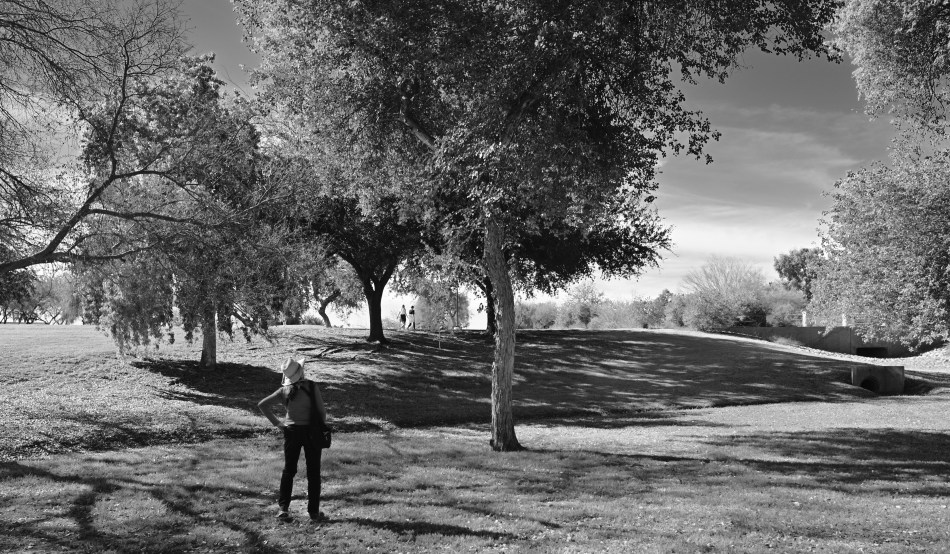
Listening For The Lark, 2022. A monochrome conversion from a color master shot.
By MICHAEL PERKINS
SOME OF OUR PHOTOGRAPHS CERTIFY THEMSELVES TO US AS “RIGHT” OR “WRONG” over time, not registering instantly as either keepers or pitchers, but slowly making the case for their final disposition. These are the truly tricky shots, the ones whose success or failure is not readily apparent upon first, or second, or even fifth glance. Such images go in and out of the workflow bin again and again, sometimes over years, while we decide whether we recognize them as our own offspring.
Sometimes it means we partially embrace a shot, loving it in spite of a slight technical miscalculation or a composition that’s slightly off. Other times, we trust/mistrust our original intention, which is French for “what was I thinking?”. In recent years, as I’ve returned to the tonal range of my first days as a shooter, I often stick pictures in the “still under consideration” pile over the choice of whether to re-render them in monochrome. I often think of color and b/w as two different arrangements of the same theme, or maybe a song played in one of two very distinct keys.
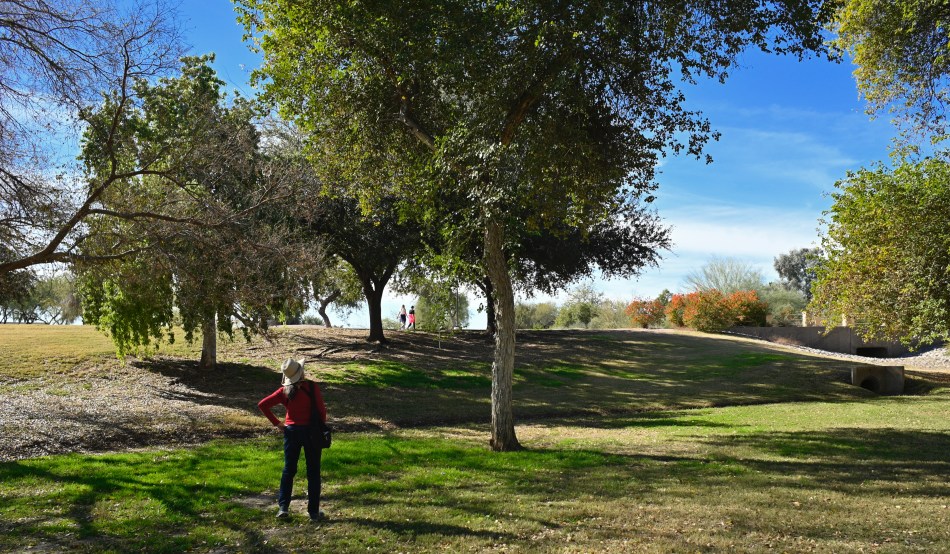
The color original.
Since mono was the default of my earliest days, I naturally learned to shoot in it first. Once color became the go-to for most photography, I deferred to that. I don’t intentionally shoot my master shots in mono because it means pre-empting a choice that I might want to exercise later. You can easily go from color to no color, but,…. well you know the argument, and so that seems to mark me as a conversion person. Black and white is a choice, but not if you had no other choice in the first place, right? Mono has its own tonal vocabulary and creates a separate mood or priority of light than color. And for that reason, as well as the need to weigh and re-weigh my options pretty much forever, many of the pictures I can’t decide to love or hate hinge on the strengths and weaknesses or the two tonal “keys”.
Is color more bold, or can a more dramatic statement be made in its absence? Does monochrome tantalize, tease the appetite for more information, stimulate the imagination, and does it do so more effectively than a garish explosion of hue? Which of the two modes is, for me, in this particular instance, more “authentic”? And is that what I even want in the first place?
There are lots of images which cry out to be completed, to have their case file marked “closed” with a final determination of their value. But if art is about forcing flexibility where some would favor rigidity, then it’s probably a desirable thing for us not to rush to judgement on some of our pictures. Maybe they came into the world fully formed, and maybe not. But maybe, after all, it’s us who need to become more complete, in a variety of ways.
TRUST ME, I’M A PHOTOGRAPH
By MICHAEL PERKINS
OVER THE YEARS, YOU AND I HAVE SHARED MANY DISCUSSIONS on the meaning of the old saw “the camera doesn’t lie”, which just may be the most ridiculous utterance in the history of photography. So let me warm myself on a chill winter Sunday by heaping more fuel on the fire.
Whatever your concept of objective truth, it must be evident to anyone who’s ever taken pictures that there is an unbridgeable gap between what the looking-machine sees and what it is able to convey. Some of this gap is purely technical, due to the limits of the science of abstracting and stopping time and trapping it inside a box. And some of it happens because the initial narrator in a photographic tale is the photographer himself, and God knows our veracity varies wildly person-to-person.
That is, we are, to one degree or another, liars.
In the 19th-century, the “doesn’t lie” maxim was likely borne of people trying to initially champion the camera, not as a cruel assassin to painting, but as yet another proof that the industrial age, with all its new tools for measurement and calibration of all human activities, had produced yet another marvel, a miraculous device that could faithfully record any event with the precision of a seismograph or a microscope. It was an argument for welcoming the camera into the pantheon of scientific instruments. But such a boast turned a blind eye to the fact that, from day one, photographers were using images to distort and deceive, as well as to inspire or create.
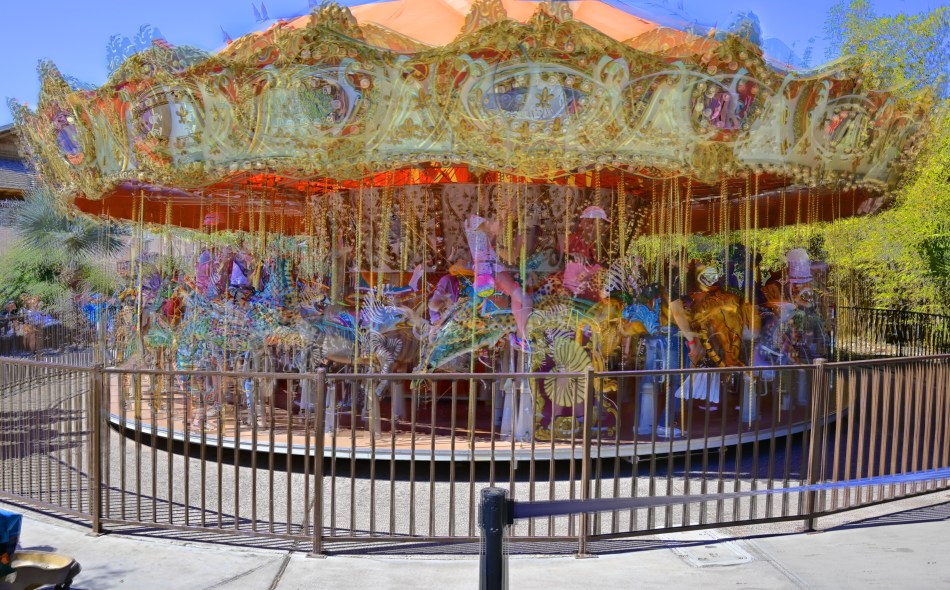
Part of the photograph’s power to lie is fed by our refusal to believe that it can lie in the first place. How can this be? We logically know, centuries on, that it is, at best, a flawed arbiter of fact. We have seen how easy it can be pressed into the service of tyrants and dictators, how truth itself can become contorted into whatever contour we want to serve our needs, aided in part by the “evidence” of the camera. And yet, we emotionally invest belief in photographs, instead of seeing them as merely interpretative, like painting or music. Ironically, we even take obviously manipulated images, such as the carousel seen here (a montage of nearly a dozen separate frames, with plenty of color and texture tampering added) and grant that, by virtue of not being “real”, actually reveal something that a mere documentary picture might not. Try to figure that one out.
In an era in which truth is, as Lewis Carroll’s Humpty Dumpty said, whatever we say it is, it’s good to recall that a picture is only a picture, made by people, whose motives and agendas are inevitably part of the creative process. They can testify to both truth and lies, and we should never be passive in how we take in their information.
PRELUDES AND POSTLUDES
By MICHAEL PERKINS
PROFESSIONAL PHOTOJOURNALISTS KNOW THAT ARRIVAL TIME IS CRUCIAL. Show up before the story gets underway and you shoot empty podiums and uncut ribbons. Show up after the event, and you’re watching the janitor sweep away its debris. Making a picture of a set thing in its best moment is largely luck, however, and just because you are either too early or too late for the action doesn’t mean that you’re robbed of a story.
Anticipation, at least the right kind, can be as dramatic as the promised happening. In some cases, even more so, since many “big moments” can fail to live up to the hype. Just ask the International Olympic Committee. Likewise the aftermath of a key event can produce its own letdown or cool-off energy that may also be grist for the camera. What I’m suggesting is that before’s and after’s are not necessarily the “wrong” times to comment on something. Both the prelude and the postlude have their own visual grammar, if you develop an eye for reading what they have to say.
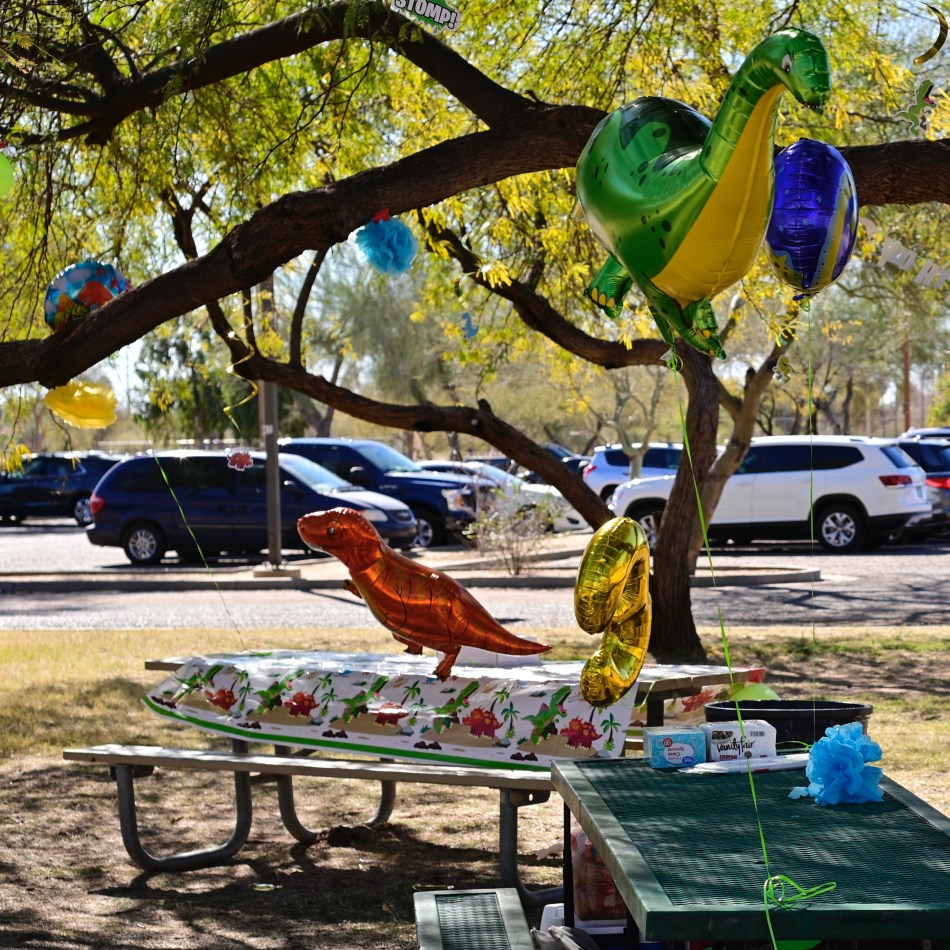
Party Of Three, 2022
On the morning that I caught this scene, I had to leave the park I was in well ahead of the guest of honor’s arrival. Thus the only picture I could make of his birthday party was the way it might look when he first clapped eyes on it. Everything about this scene appealed to me, although I had to look back at the picture to appreciate just what I was appreciating (stay with me for a moment). For starters, I just loved the simple, low-tech homemadeness of the thing. The way the various tree-anchored balloons bounced and bobbled in the light breeze. The way the midday sun caught and amplified all the colors and helped them pop. The thrill of imagining a three-year-old boy taking in the scene of all those flying and floating dinosaurs, as well as the raptors on the tablecloth. It looked like a blueprint for success. I had to wait on the wind to balance the composition by flying the balloons into the best position, but other than that, it was a point-and-shoot without a lot of over-thinking.
The only thing missing for me, later, lie in wishing that I could have sneaked back for a look at the crumbled cake, the popped balloons, the discarded gift wrap. A kind of bookend to the day. But even though I hadn’t witnessed either the actual party or its denouement, I didn’t really need to: I had already witnessed pure joy.
FROZEN FLIGHTS
By MICHAEL PERKINS
SHORTLY AFTER THE TURN OF THE 21st CENTURY, SCULPTOR TODD McGRAIN completed a series of wondrous statues dedicated to the memory of five different birds rendered extinct not in antiquity, like the prehistoric dodo, but by the encroachment of human excesses of the fairly recent world. In all five cases, the subjects of what would become known as The Lost Bird Project were hounded into oblivion by over-hunting, loss of habitat, and other charming habits of the planet’s dominant and negligent stewards. This quintet of quietly minimal monuments, as magnificent as they are as art, were fated to become even more important as carefully placed reminders of what we have done, and what we must not fail, going forward, to do.
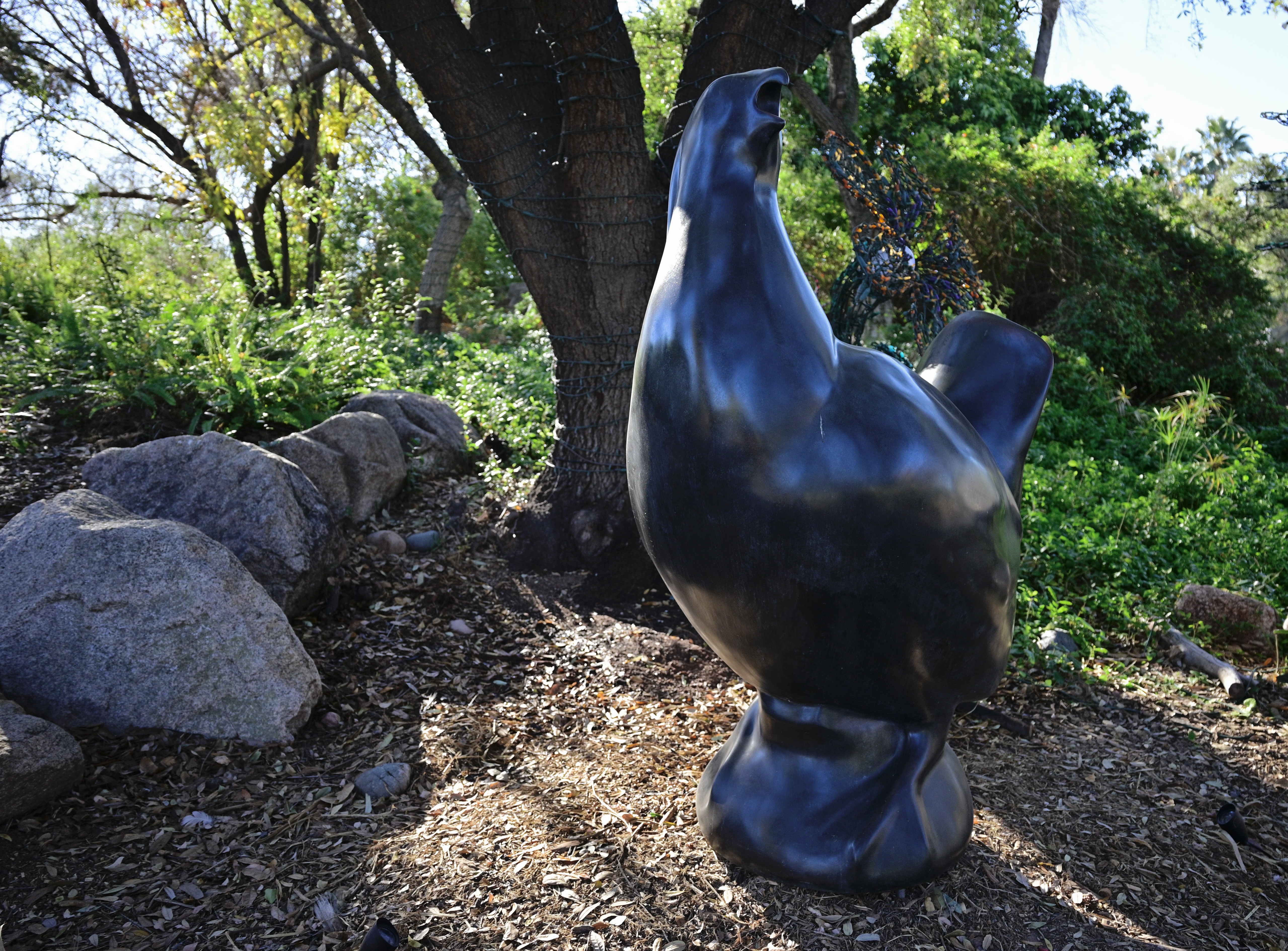
The Heath Hen, one of five Todd McGrain sculptures memorializing recently extinct species of birds.
Not content to merely let the statues remain in some permanent gallery setting, McGrain set about on a nationwide odyssey to identify the locales where the birds* were last seen before vanishing, and to convince the current controllers of those lands to accept the statues as living history lessons, by permitting their permanent installation at, if you like, the scene of the environmental crime. He soon learned how hard it is to give someone a gift they never thought to ask for, navigating the ebb and swell of the tides of diplomacy, federal red tape and even active opposition to the bequests. Finally, he was able to find homes for all five statues, visually recording the quest and eventually becoming a documentary film maker in his own right.
The Lost Bird Project is still an active endeavor, continuing to fund conservation education through sale of that resulting film. Even at that, McGrain had to admit that the statues’ impact was limited to whomever might visit the installations in person, and so, to keep the works from being caged off, away from the general public, he also cast a duplicate set of the figures, and has sent them continually around the country on loan to a variety of venues, such as the Phoenix Zoo, which is where I made the above image.
I feel that photography can serve as the third leg of the visual testimony that McGrain has now carried on for nearly a quarter of a century. The reasoning goes that, if the copies are less limited in their ability to teach and influence than the originals, then it is through photographs by thousands of us, in dozens of locales, that the word can be spread exponentially. The camera helps us bear witness, teaching history by lighting, annihilating both time and distance to extend the wingspan of these essential messengers, canaries in a the coal mine of our collective neglect.
*the birds and their last known whereabouts: the Great Auk (Fogo Island, Newfoundland), the Labrador Duck (Elmira, New York), the Passenger Pigeon (Columbus, Ohio), the Carolina Parakeet (Okeechobee, Florida), and the Heath Hen (Martha’s Vineyard, Massachusetts).
TECH’d IN THE HEAD
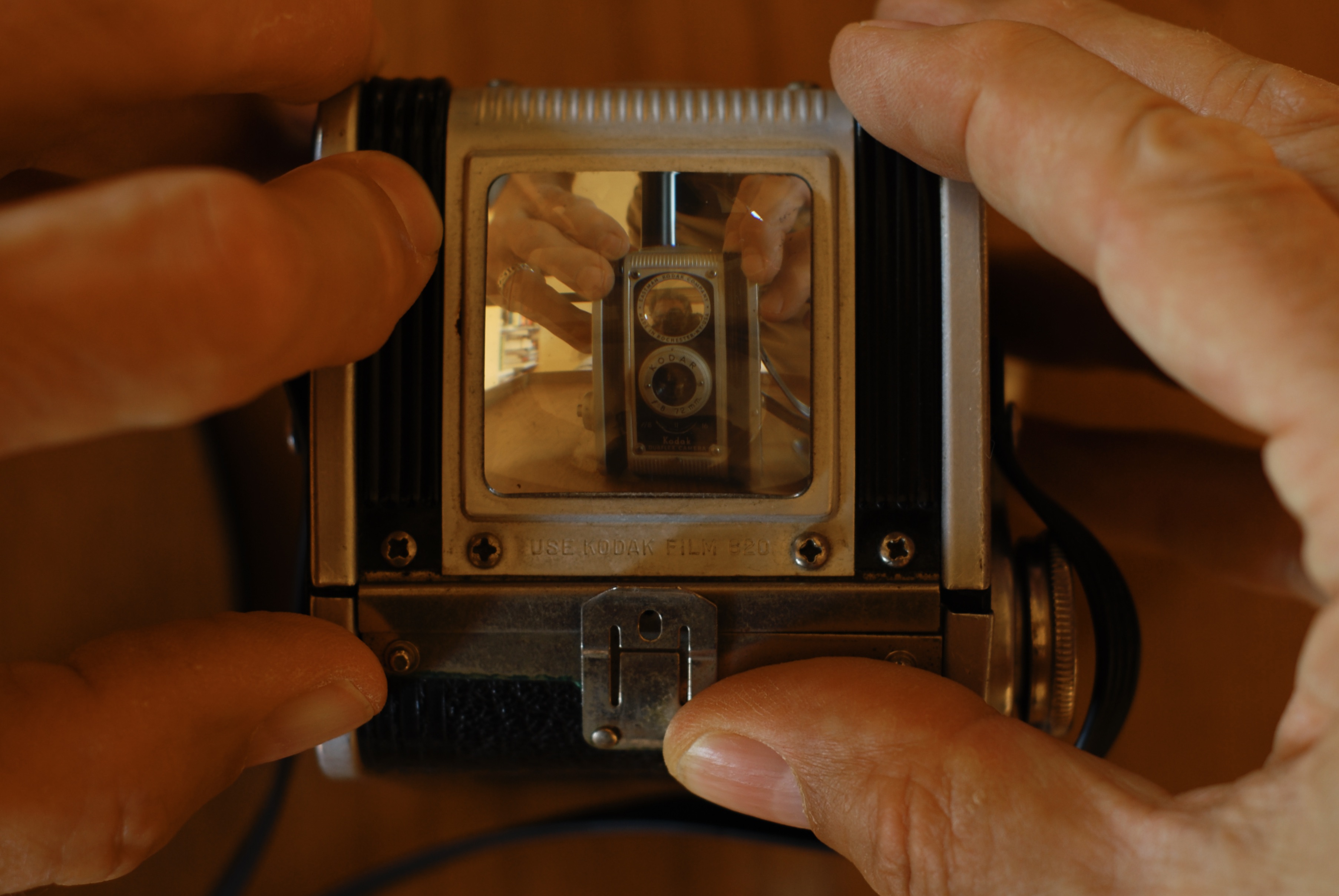
Curiouser and curiouser: welcome to the camera format wars, final rendition.
By MICHAEL PERKINS
IF YOU WANT TO SIMULATE THE EXPERIENCE OF LEAPING OUT OF A PLANE WITHOUT A CHUTE, then get into the business of predicting trends in photography. The boneyard of critical writing is crammed with the carcasses of wizard wannabes who boldly pronounced what the Next Big Thing in camera tech was going to be. Still, even given that caveat, there are some big tectonic shifts in Camera Land that even a dullard like me can see coming.
Smart people call these shifts “inflection points”. These are the folks who get great grades on term papers. Me, I just say, “hey, is this anything?” Whatever your wording, we seem to be at such a place as of this writing , which is early 2022.
Little more than a decade after the introduction of the first mirrorless cameras, prognosticators great and small now seem uniformly confident in predicting that this is the year that DSLRs go on life support and the family calls in the priest. Recently, no less a cadre than the venerable PetaPixel predicted that both Canon and Nikon would end their commitment to DSLR development and model introduction in 2022. And, suddenly, they are far from alone. The argument goes that, just as SLRs were a forward leap in convenience and performance over rangefinder cameras, so mirrorless does what DSLRs do more accurately and far easier. Normally such forecasts would be largely a matter of opinion, but something new has been added.
That “something” is the fact that more manufacturers than ever are closing the DSLR product line on both ends, both discontinuing older models with no comparable successor and in bringing fewer new models, especially entry-level-priced models, to the market for the first time. And then there is the raw science, which says that, minus the bulky box-and-mirror part of DSLR’s viewing apparatus, lenses in mirrorless cameras can be placed extremely close to the focal plane, affecting sharpness, low-light performance, chromatic aberrations, and, yes, the total curb weight of the unit. This also means that your older DSLR lenses, with adaptation, might well work better on a mirrorless body. Other factors in this sea change include people like myself who are going to mirrorless in order to upgrade to full-frame for the first time, and figure they might as well go with a format that manufacturers are now throwing their full weight behind.
You and I both know several “I’ll never” people who will stick with their chosen format until the last dog is hung, and mazel tov to them. Shoot what you want, love what you shoot, etc. However, when the makers of a particular tech are cutting back on new models of it, even going so far as to reduce choices and support with the existing models in that format, including their best sellers, it might be time, as they say in Hollywood, to strike the set.
WHEN MORE IS, WELL, MORE
By MICHAEL PERKINS
I AM CERTAINLY GUILTY, in these pages, of frequently harping on the need for economy in the composition of a photograph, of working purposely to say the most with the least. I’ve rhapsodized about how clutter and crowding can ruin a picture’s ability to communicate cleanly, and how best to streamline one’s vision with repeated layers of editing and cropping, in an attempt to pare away any extraneous junk that gets between a photo and its audience’s eye.
And in many cases, I still feel I am right.
Except when I am completely wrong.
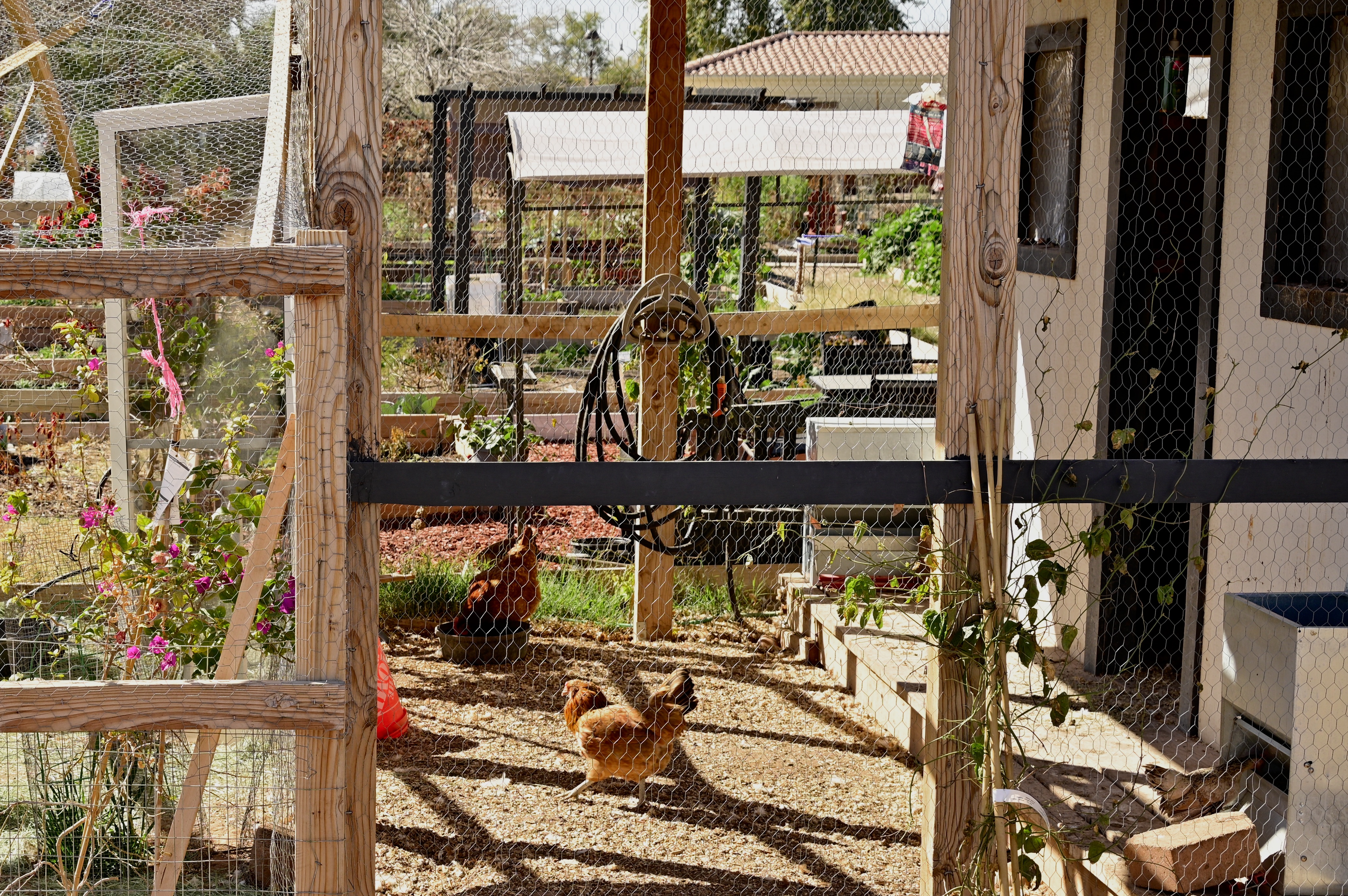
Clutter & Buck, 2022
Occasionally, we’re faced with trying to capture a subject whose very complexity or density is not in the way of the point, but is the point. Intricate gears in a machine. A teeming crowd filling the frame with conflicting destinations and motivations. Or here, a rustic chicken coop that is all about noise, crowding, clutter, randomness. Certainly it would be possible to frame a picture of this subject with minimal elements, limited textures, going “clean” in a ruthless way. But that would result in a completely different image than what I wanted from this photo.
And so this is a kind of mess, this picture, and yet I am so sure that it’s the only true thing I could have made under the circumstances. In musical terms, composition is a deliberate arrangement of elements, and can be either richly layered or spare. The composer, wielding either a pen or a camera, must decide how best to get the music out. Photography proceeds from a given set of rules, but in breaking those rules, we decide whether they should have been written in the first place. I still love spare subject matter for many of my pictures, but sometimes, just sometimes, a song is best played fortissimo, with all the instruments blaring at once.
FAN FICTION
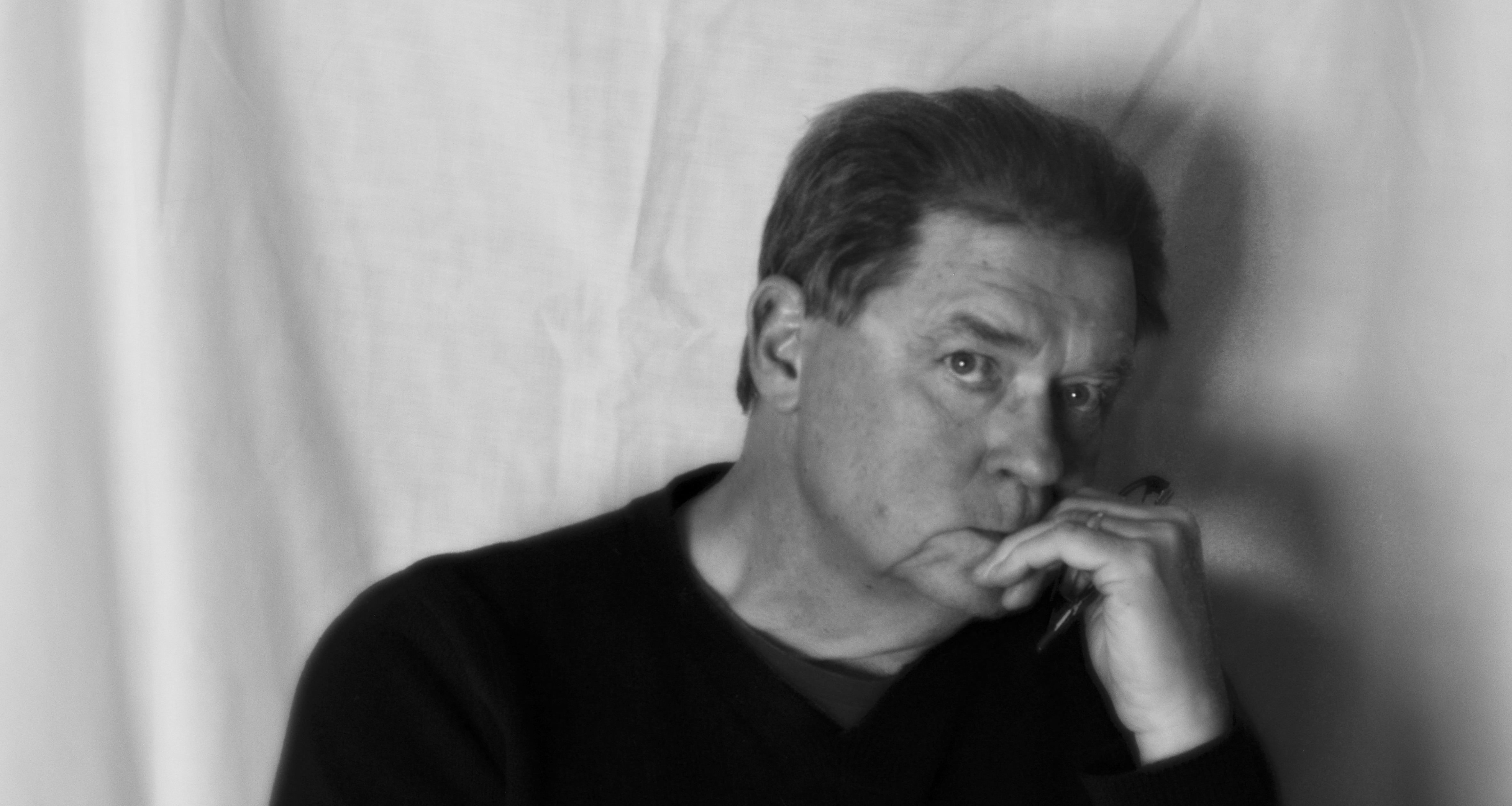
Birthday portrait, 2/8/22
By MICHAEL PERKINS
LIKE MANY, I use myself as an experimental photographic subject. It’s not that I’m particularly keen on selfies: in fact, even tiptoeing into that mental mode is a little bewildering to me. However, unlike the rest of the world, I am always “on hand” and so, when I get a notion about composition, lighting, etc., as regards the human face, I become my own lab rat. However, in most cases, the results are merely instructive: that is, I am not seeing any new truths revealed in my face. I mean, I know myself, but I don’t know myself.
It gives me a headache.
I go a little further with all this foolery once a year, on my birthday, almost as a kind of guilt-ridden homework assignment. I try to set things up on purpose, to come as close to studio-level standards of control and strategy as possible. For some reason, I feel like I should make the attempt to take the measure of time’s ravages, or at least re-visit how I feel while living inside my face versus how that face advertises me to the world. I don’t know what will work or not work year-to-year, or even frame-to-frame. What they say about a lawyer representing himself having a fool for a client certainly applies to self-portraiture as well. Is this the real me, or a “me” that I’m sculpting for public consumption, a me that I approve of as a marketable mask?
There are other questions. If I am regularly in the business of making pictures, then I obviously do not accept the world on its own terms. That is, I massage what I find until I like it. Won’t that kind of creatively built-in fakery necessarily color the results of any depiction I create of myself? Do I even want a completely honest, unfiltered version of me? Does anyone else?
It’s often said that we are all the heroes of our own story, and so I suspect that my self-portraits are at least as untrustworthy as any other tale I choose to tell with a camera, a kind of inward fan fiction. Here’s me at my best, or my most protected, or my most skillfully manipulated. Anyone buying?
It gives me a headache.
QUALIFIED
By MICHAEL PERKINS
THIS FORUM IS NOT, AS FREQUENT VISITORS HAVE LIKELY SURMISED, a platform for discussion about the technical merits of one kind of equipment versus those of others. It is neither a critique of, nor recommendation for, any particular piece of gear. At least that’s not the intent. The reason The Normal Eye “focuses” on aims and intentions, rather than devices is very simple. Devices are not the key determinant of what makes a good picture.
Since photographs are a transmission of the inner eye through the hand and into the camera, aims and intentions are the deciding factor in a photograph’s eventual worth. And the raw fact of present-day technology is that virtually any instrument bearing the name “camera” can produce an image that at least approximates what a thinking, feeling person has imagined. However, no degree of expense, toys, or trickery can compensate for the absence of that thinking and feeling. None.
The marketing of equipment is based on the simple aim of making people spend progressively more for kit, and, at regular intervals, looking upon what they presently own with a mixture of disgust and anxiety. It’s the same way that cars, furniture and personal fashion are sold. Moreover, a significant part of the camera market is based on envy (he takes such better pictures than me: it must be his camera!), which is one of the most reliable ways to get people to part with their money. The fact is, over time, we probably need fewer and far simpler cameras than we spend time lusting after. You won’t be more qualified to make pictures because you “earned” it by buying the moment’s hot happening machine. You are already qualified by your desire and your vision. Now.
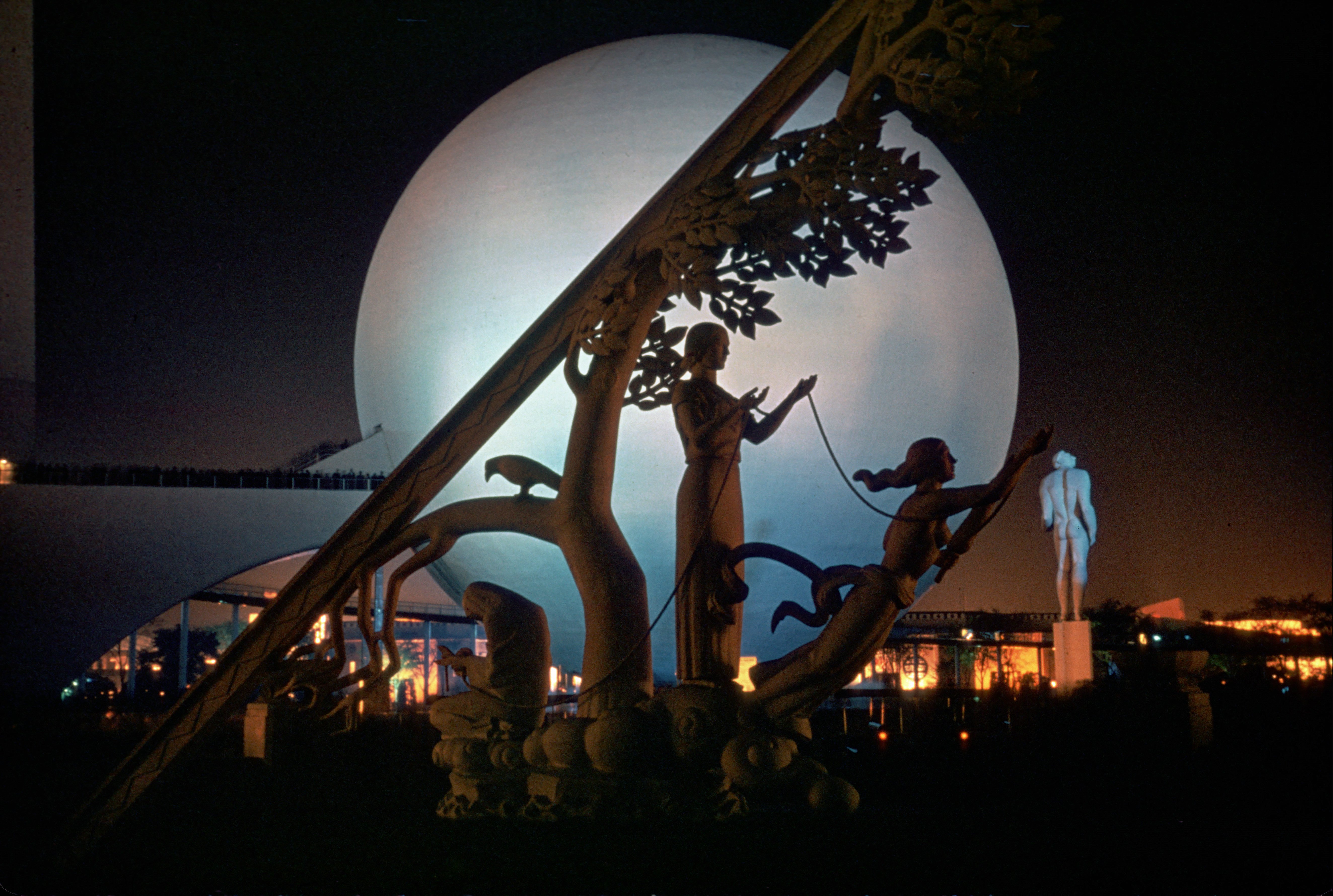
Years after you’ve learned to love some of your best shots, are you seriously giving the main credit for those images’ communicative power to the devices on which you produced them? Was the image seen here, a night-time shot at the 1939 New York World’s Fair, shot on a Leica, or a snapshot camera? Was its creator a trained journalist, or a talented amateur? Who cares? It is a masterful picture. And, today, even the most modest mobile cam can make it. All that need be supplied to close the deal is vision and desire.
We’ve often joked about G.A.S. (Gear Acquisition Syndrome) leading us merrily down the path to bankruptcy, promoting the idea that it’s always our next camera that will finally make us a photographer, but that humorous concept is based on a very unfunny reality: that we too often think that there’s some kind of magic in that box. Well….in fact, there is.
But only if we put it there ourselves.
BOOKENDING THE WONDER
By MICHAEL PERKINS
WHEN ASKED BY FANS, OVER HIS LONG CAREER, “HOW THINGS WERE GOING“, Paul Desmond, the wry saxophonist for the Dave Brubeck Quartet, would often reply, “we’re playing music like it’s going out of style….which, of course, it is…” Glib, sure, but, in a way, the most accurate thing that can be said of art in general, and photography in particular. We are always trying to arrest the flight of things that are going away. We make our feeble attempts to capture time inside a box, a task made perpetually urgent by the fact that everything in the world is eventually heading for the wastebasket.
In recently snapping some images of the demolition of a local mall that had finally passed its historical sell-by date, I recalled that, just a few years prior, it had, out of the need for rental revenue, gotten into the annual habit of hosting a small carnival in a section of its parking lot. I wondered if the carnival itself was gone now as well, or if it merely has continued to rotate through a vast gypsy circuit of bookings by other businesses that, for one reason or another, have a rendezvous with the executioner.
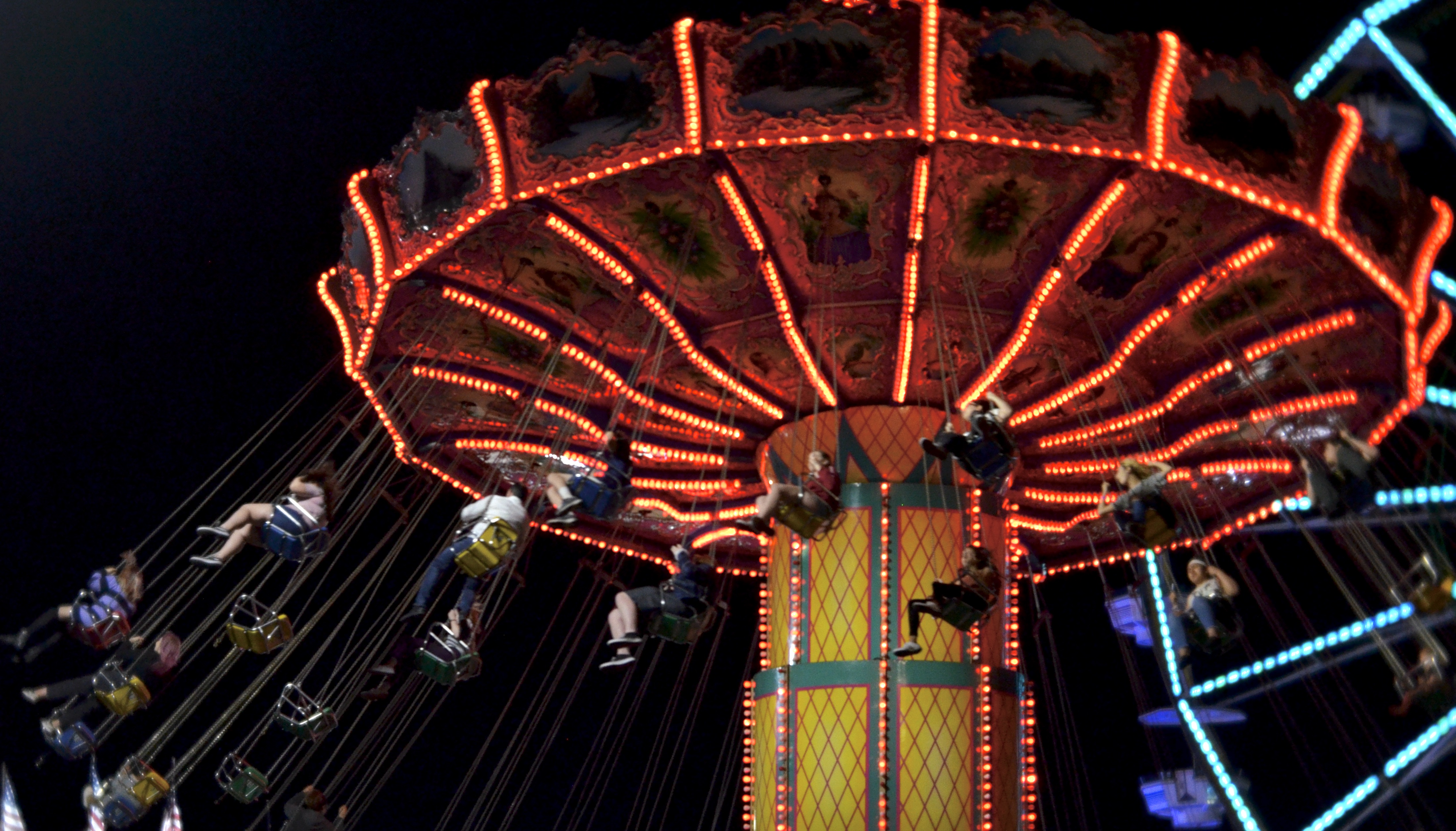
I love the bizarre, crowded texture and loud color, the visual vulgarity of carnivals, fairs, and circuses, and I seem to be more aware than I should be that all three institutions are going the way of the T-Rex in a world that no longer defines entertainment in terms of gaudy neon, strange aromas, and the din of barkers. And not only are these amusements in their own cultural niche, they occupy a strangely unique place in photography.
By that I mean that many of the normal canons of good picture-making are freely abandoned once the canvas and cotton candy come to town. Compositions cannot be too cluttered. Color cannot be too garish. Normal parameters for contrast and luminescence go out the window. Even focus itself can be sacrificed at the service of sensations of immediacy or speed. Shooting rides, food booths, banners and signs means the gloves come off on all restraint. Suddenly it’s all about sensation.
But these little worlds of wonder are being bookended by a world that’s changed its idea of a “good time”, along with its definition of the forbidden or the unsavory. Pointed at such strange subjects, the camera now acts as a time machine, with more of these experiences becoming extinct. So take pictures like it’s going out of style.
Because, believe me, it is.
INHERITANCES
By MICHAEL PERKINS
HUMILITY IN AN ARTIST IS NOT ONLY ADMIRABLE, but, for purposes of growth, absolutely essential.
We’re not talking here about a kind of polite, “aw shucks” modesty, which is usually staged for the benefit of others anyway. No, being humble does not mean disowning honest achievement, in photography or any other field. It consists of putting a dot on a line to show your position, where you stand versus where you stood and where you need to eventually stand. And in the making of images, as with many other endeavors, it’s about acknowledging that some of your worst failures and your best successes alike are totally accidental.
When shooting in the moment, conditions converge in milliseconds to either push us forward to completion or block us utterly from it. The losses are easy to see as “rotten luck” that we somehow didn’t deserve but can learn from. However, it’s the unearned wins, the pictures that fall into our lap despite everything, that truly aid the ripening of humility. We get great shots that we didn’t, in some way, “deserve”, although that’s an odd way to phrase it. And, in our gratitude for our occasional (and inexplicable) fortune, we can really learn something about not taking ourselves too bloody seriously.
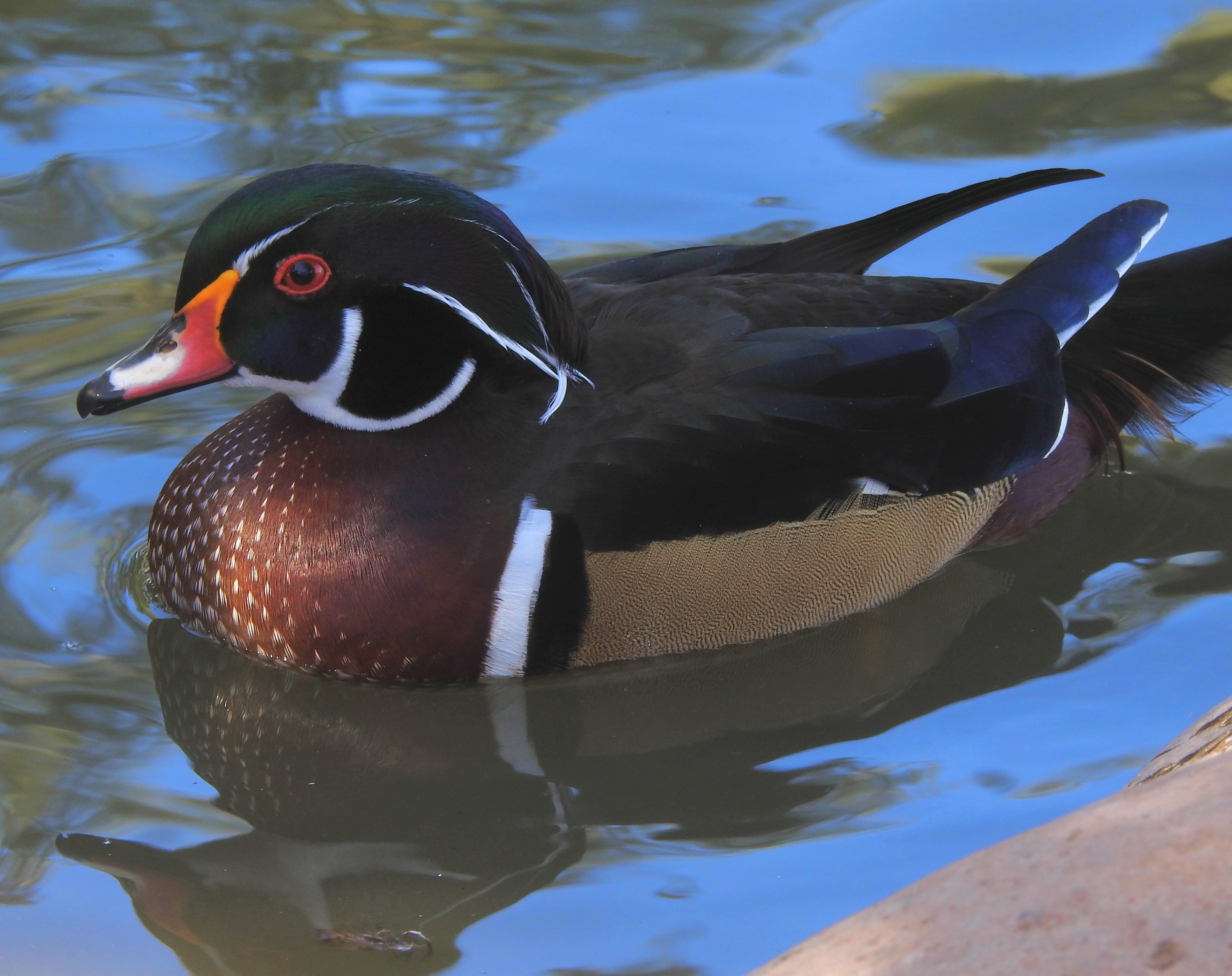 this male wood duck was the gods’ gift to your humble author, on a day on which I could certainly use one.
This duck is luck, and nothing more. It’s more clearly described as a sort of inheritance.
There is no other way to describe the success of this picture. I did, certainly, travel to his regular habitat with the intention of shooting him, but any vain thought I had of proceeding from a deliberate plan or program evaporated when I finally caught a glimpse of him. Within seconds of his calmly sailing out of his secluded lair under a large shrub, he became part of a blurry mob of hunger-crazed mallards who thronged around him in a desperate bid for food that had been tossed into the pond by a kind visitor. The frame you see here was a desperate and quick click just insta-seconds before the starting pistol, and there was only time for this one frame.
Certainly, other attempts were made, once the melee ensued, but, trust me, they were as appallingly fruitless as this one shot was miraculous. This was not a case of my lifetime of experience and instinct coming to the fore in a grand blend of skill and judgement. This was click-like-your-life-depends-on-it- and-hope-like-hell. The important thing is to accept the fact that all the stars and planets lined up correctly and gave you a goodie, and that all your preparation and focus could be surpassed in a second by something this random. If that doesn’t inspire humility, then you’re probably beyond hope.
Part of artistry is embracing the ineffable quality of not being in total control, of being worked by the process as well as working it. Because once you know how little you are actually in charge, then you actually stand a chance of being used in a meaningful way. Whether it’s the flautists’s breath or the flute itself that makes the music, the melody is just as sweet, and keeping score of who’s the boss in an artistic endeavor is beyond useless.
IT’S COMPLICATED
By MICHAEL PERKINS
THROUGHOUT HISTORY, MEMORIALS TENDED TO BE FAIRLY STATIC THINGS. A tomb or monument depicting a battle, celebrating a leader, or enshrining a belief was built, and it stood, for as long as time and fortune might allow. After the invention of photography, however, things tended to be not fully finished, especially tributes and honors. We track their context with pictures in real time: over consecutive eras, we document their rise and fall, and that of the societies that produced them.
The equestrian statue of Theodore Roosevelt, parked for 80 years at the entrance to New York’s American Museum of Natural History (which T.R.’s family riches helped establish) has, as of this writing, been removed, transferred to what historians hope will be a better teaching context. His mounted figure, flanked by depictions of both Native and African-American men on foot, had been problematic for the museum, passersby, and, indeed the Roosevelt family itself in recent years, given the 26th President’s troubling mix of views on race, eugenics, and colonialism, and so the removal came as little surprise. Now, however, as a consequence of the move, anyone taking a photograph of the work henceforth will be interpreting it through the “lens” of a completely different societal context.
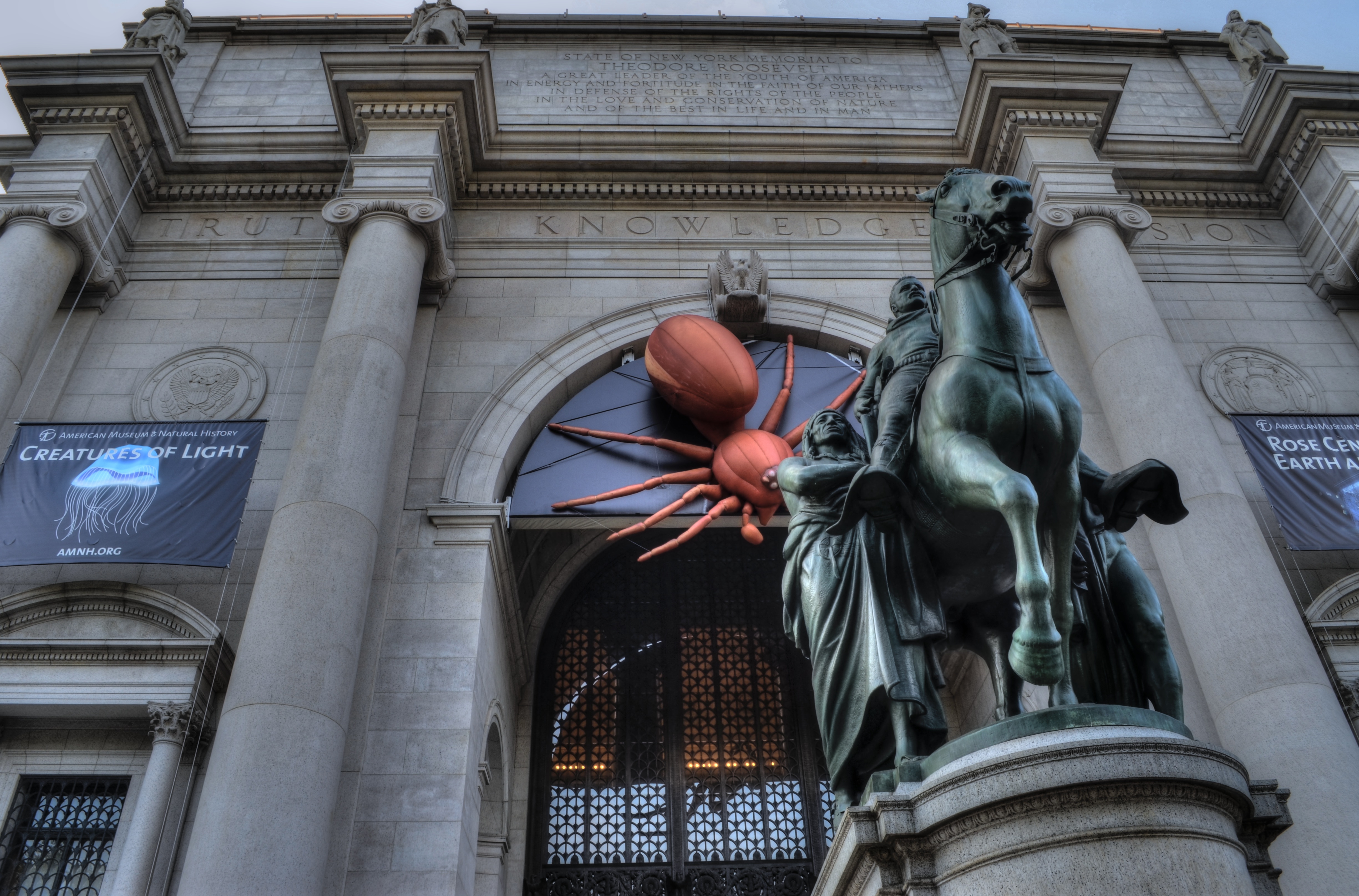
Now you see it, now you won’t: the recently removed Teddy Roosevelt statue, an 80-year fixture at the entrance to the American Museum of Natural History, as seen by the author in 2012.
When people change, the symbols they value, as well as the images they create of those symbols, change as well. Just as it’s odd now to see the Statue of Liberty’s disembodied torch hand in old photographs, the images makes sense once one realizes that the landmark originally came to American in stages, with the arm on display in Manhattan for a time in a push for funding to complete the memorial. Thus that picture, in its original time frame, makes perfect sense. It’s only that more familiar pictures have replaced that view, rendering its original reality strange.
It’s not for this author to try to climb into the mind of the original creators of the T.R. statue in question: it was a product of its time. Similarly, this image I made of it, from its chosen angle to its processing to the unsettling presence of an enormous red spider(!), is now locked away from all other moments on a single day in 2012. “The moving hand writes, and having writ, moves on”. Heroes, from generals to philosophers, are nuanced, complicated. Making pictures of our struggle with that complexity is part of our quest to tell our complete story.
STUBBORNS
By MICHAEL PERKINS
THE BEST OF YOUR PHOTOGRAPHS HAVE A KIND OF INEVITABILITY TO THEM, as if they were always destined to be made. Once they are finally captured, they also seem always to have existed, somehow. This is due, in part, to the fact that many of them had to fight hard to be born. That is, something about their conception or execution kept getting stuck in the pipe, try after try, until a tremendous amount of patience and work made them seem almost accidental or effortless.
I call these shots stubborns because I can almost feel them refusing to be taken, haunting me for months or even years until I can get a final take that does what I see in my head. The stubborns list contains a few that actually were tamed and brought to heel, but it’s mostly an agonizing roster of images that I have yet to nail down. Maybe the idea’s not fully formed. Maybe there’s something geographically blocking me, like a location I can’t readily get back to for a re-take. Sometimes I just haven’t brought the idea to its final, best form, unable to generate anything but near misses.
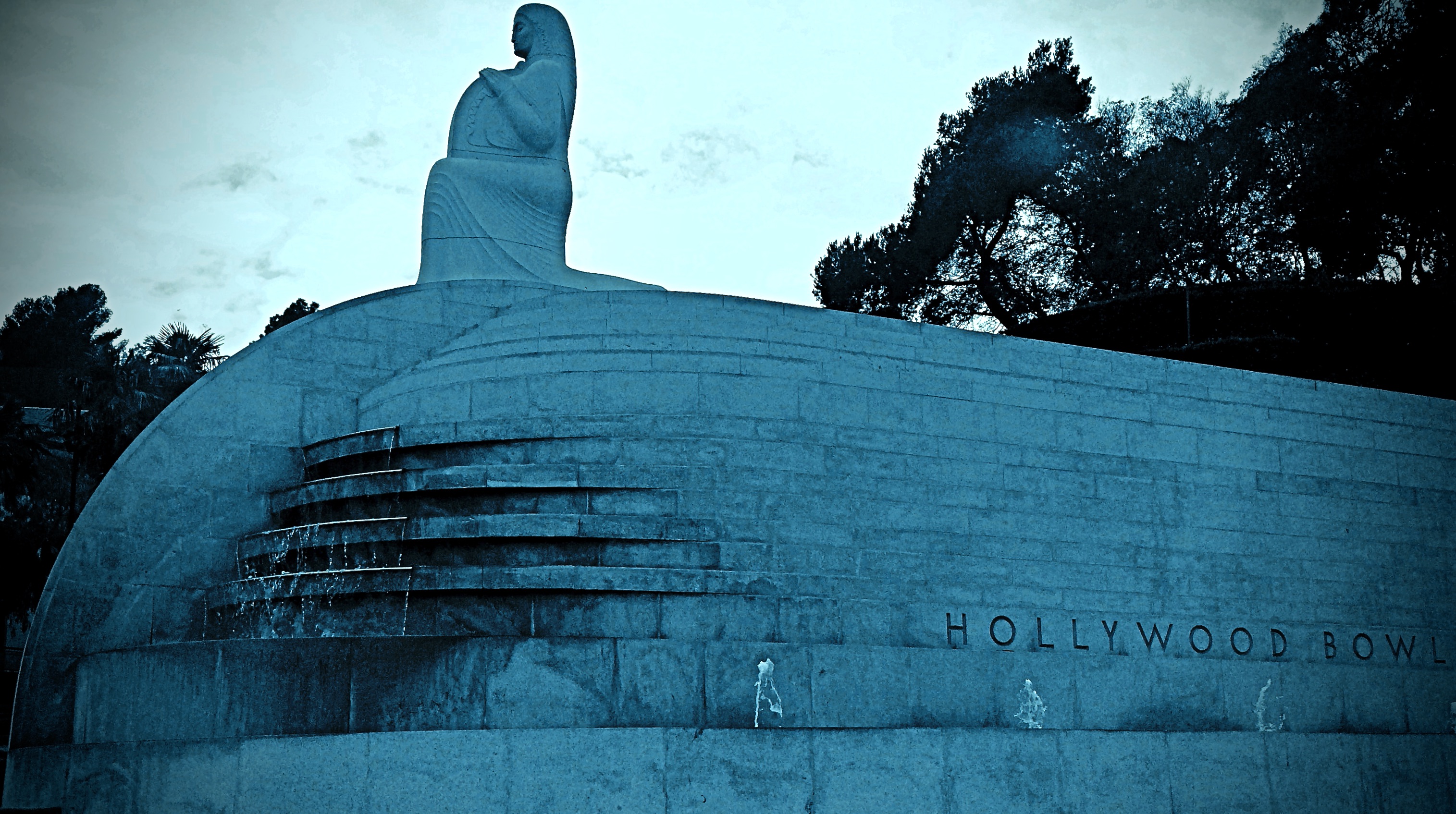
Ever since I first saw this wondrous entrance to the Hollywood Bowl, George Stanley’s Muses of Music, Dance, & Drama, I have dreamed of making “the” image of it. The enormous slab of concrete, which is faced by over two-hundred and forty-five tons of granite, depicts one sitting figure and two smaller standing figures (not visible in this shot) at its left and right flank. It is the biggest WPA-New Deal-era sculpture project in all of California, completed in 1940. Beyond the sheer beauty and enormity of the thing is that fact that, to do a proper job of interpreting it, you’d have to have time to roam around the site and shoot dozens of variously wrong versions over a number of hours, then decide whether it’s more stunning by daylight or lit on concert nights.
As fate and circumstance would have it, my access to it over the space of seven years and at least fifteen visits to the Los Angeles area has been limited to this passenger-seat drive-by (okay, we were paused at a light for ten whole seconds) from 2015, shot through a smudgy window on an iPhone 5S. Ideal conditions this ain’t, and as of 2022 I am still unsure when I will manage to get onto the Bowl property to do the ladies justice. Stubborn, indeed.
My point is that the best photographs are generated in stages, or drafts, if you like. True, some masterpieces come into the world on the first click, but even those lucky winners might be improved if time and care drill down to a second, more foundational truth.
EDGE OF NIGHT/CUSP OF DAY
By MICHAEL PERKINS
OF THE VARIOUS DEFINITIONS OF THE WORD “TWILIGHT” found in most references, one is generally factual in a kind of scientific sense, i.e.,
the soft glowing light from the sky when the sun is below the horizon, caused by the refraction and scattering of the sun’s rays from the atmosphere.
….which is nice if you’re a meteorologist, I guess. But a second interpretation of the word is more poetic, and, for my money, a little more on the philosophic side, as in
a period or state of obscurity, ambiguity, or gradual decline.
…or, to break it down more personally, I am sad to behold the first kind of twilight because I tend to typify the second type.
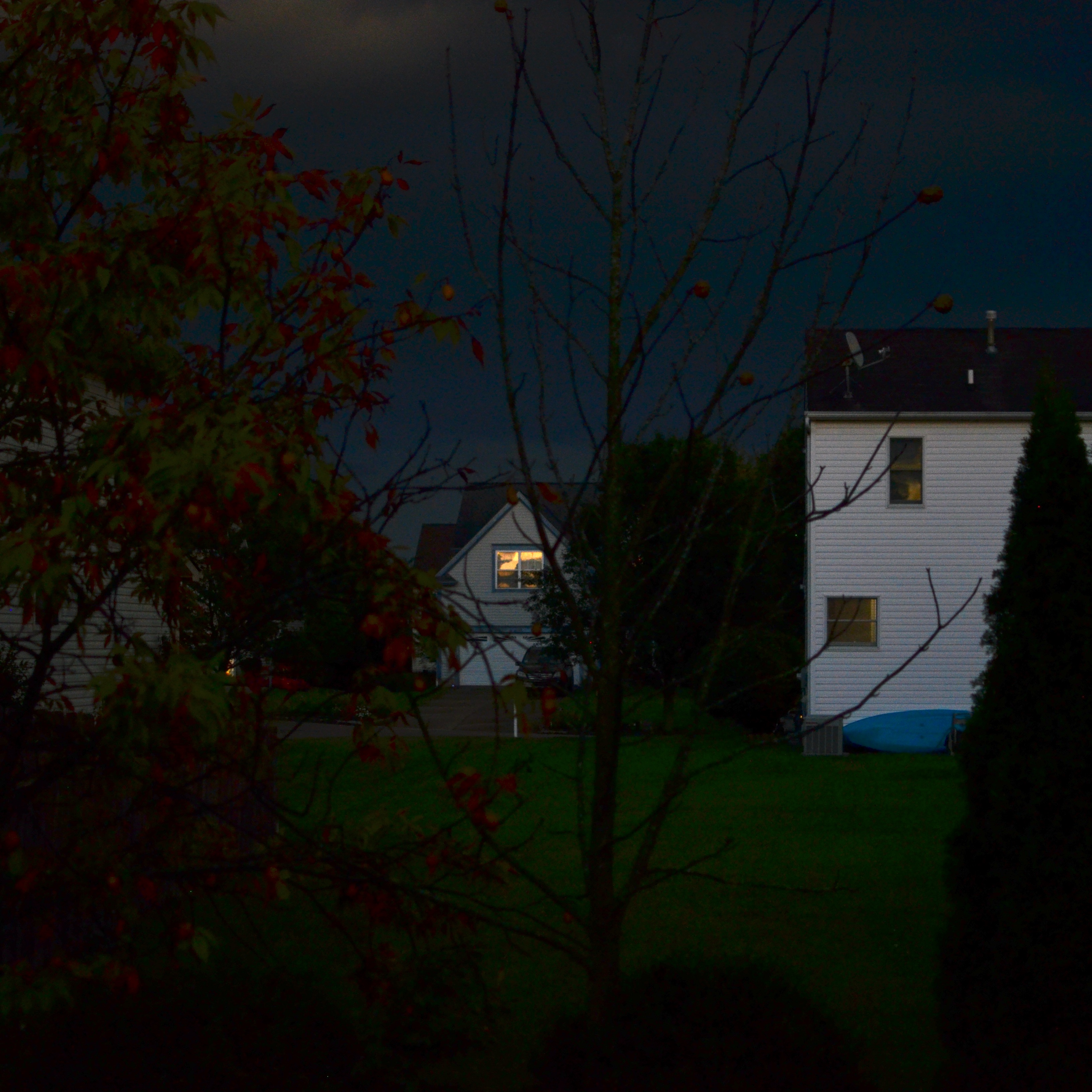
Photographically, I am always drawn to the strange inter-stages of life, in which things exist in more than one plane of existence at once.
For example, in the frame shown here, which I took just as a normal summer dusk was about to be swallowed up in a sudden surge of storm clouds, things are rather stuck in neutral. There is some bright light to be had, but it’s suggested more than stated. In like “midphase” fashion, the thunderheads that rolling in are not absolute black, just an overripe version of daylight colors. Everything is coming, and going, about to happen, and absolutely over with, all in the same moment. As this all came together, I wasn’t sure I could snag any usable image at all, but in instances like these, with everything mutating every second, you have to try, if for no other reason than to immortalize the weird convergence of forces.
Or, to use this collision of edge of night/cusp of day to refer back to the contrasting definitions of twilight we started with: I saw something ending in the day, and likewise felt something ebbing away in myself, and that’s why I took the picture.
GENUINE FAKE REVEAL
By MICHAEL PERKINS
THUMBING THROUGH THE PORTFOLIOS OF THE CLASSIC HOLLYWOOD PORTRAITISTS, we marvel at the combination of art and science that created not just images of the famous but delicate, artificial constructs, visual myths of lower-case gods and goddesses that held far more allure than mere snapshots. We look at these pictures now and see them for the sly marketing they were, as we were taught to value the idea of a face more than the face itself.
Today, the average photographer has tools at his command that rival those of the old masters of airbrush and studio lighting, allowing us to mold our own smiles as deftly as George Hurrell sculpted the cheekbones of Joan Crawford or placed a twinkle in a corner of Myrna Loy’s eyes. The enormous surge in self-portraiture in the digital age has grown up side-by-side with these instant-fix tools, to the point that we are seldom presenting ourselves to the world “in the raw”, but, instead are troweling layers of post-shuttersnap glop onto ourselves in a desperate attempt to, if you will, create a legend. The legend of us as we’d like to be.
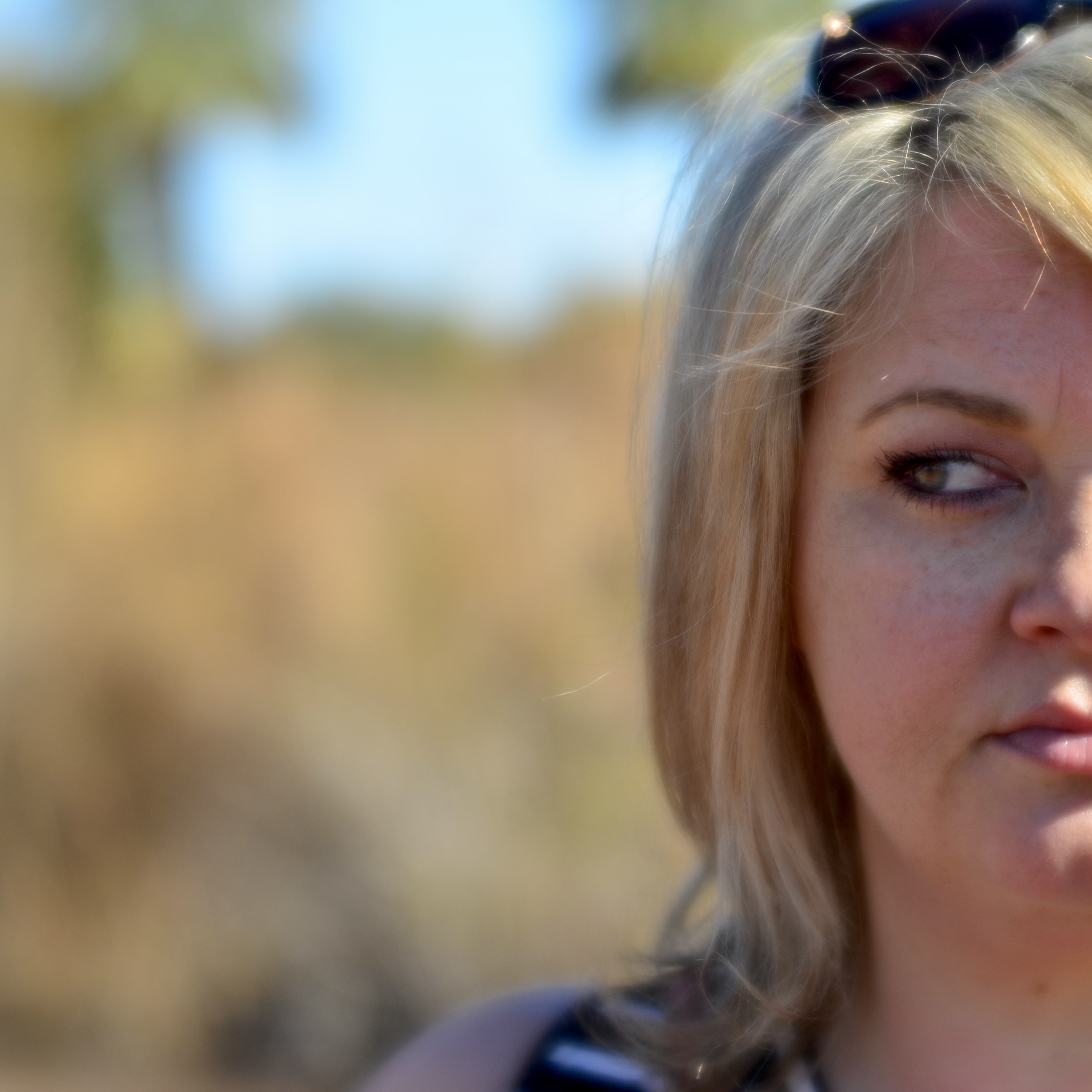
Getting the children of the iPhone age to agree to having their picture made without their direct participation in the endless preening and retouching process that comes after is a major effort. We all trust our own “vision” of what we look like and reject the original idea of portraiture, which is for the artists to make an outside observation and share out that interpretation with others. The photographer is not supposed to be a mere assistant to our own vanities, however well-justified, but an objective second opinion. He or she may produce something with which we disagree, but the beauty of art is that, as a personal statement, it can’t be invalidated as being false merely because we don’t see things the same way: art merely is.
It’s understandably impossible to create a completely honest self-portrait. We simply can’t bear the unvarnished, brutal truth of it. But that doesn’t mean someone else’s vision of our face is inaccurate or wrong in some way. Like the Hollywood giants of old, we naturally would like some publicity department to shape us until we’re perfect . But maybe, in being honest, we become more so than we ever dreamed.
A HARVEST OF WONDERS
By MICHAEL PERKINS
ONE THING THAT MANY OF MY FAVORITE PICTURES HOLD IN COMMON is that they somewhat sneak up on me, beginning as the most instantaneous blips of whim and ending up as the kinds of images that make me grateful for the day I first picked up a camera. Many of these pictures barge into my brain while I think I am looking for something almost totally unrelated. They demand my attention: they insist on my participation.
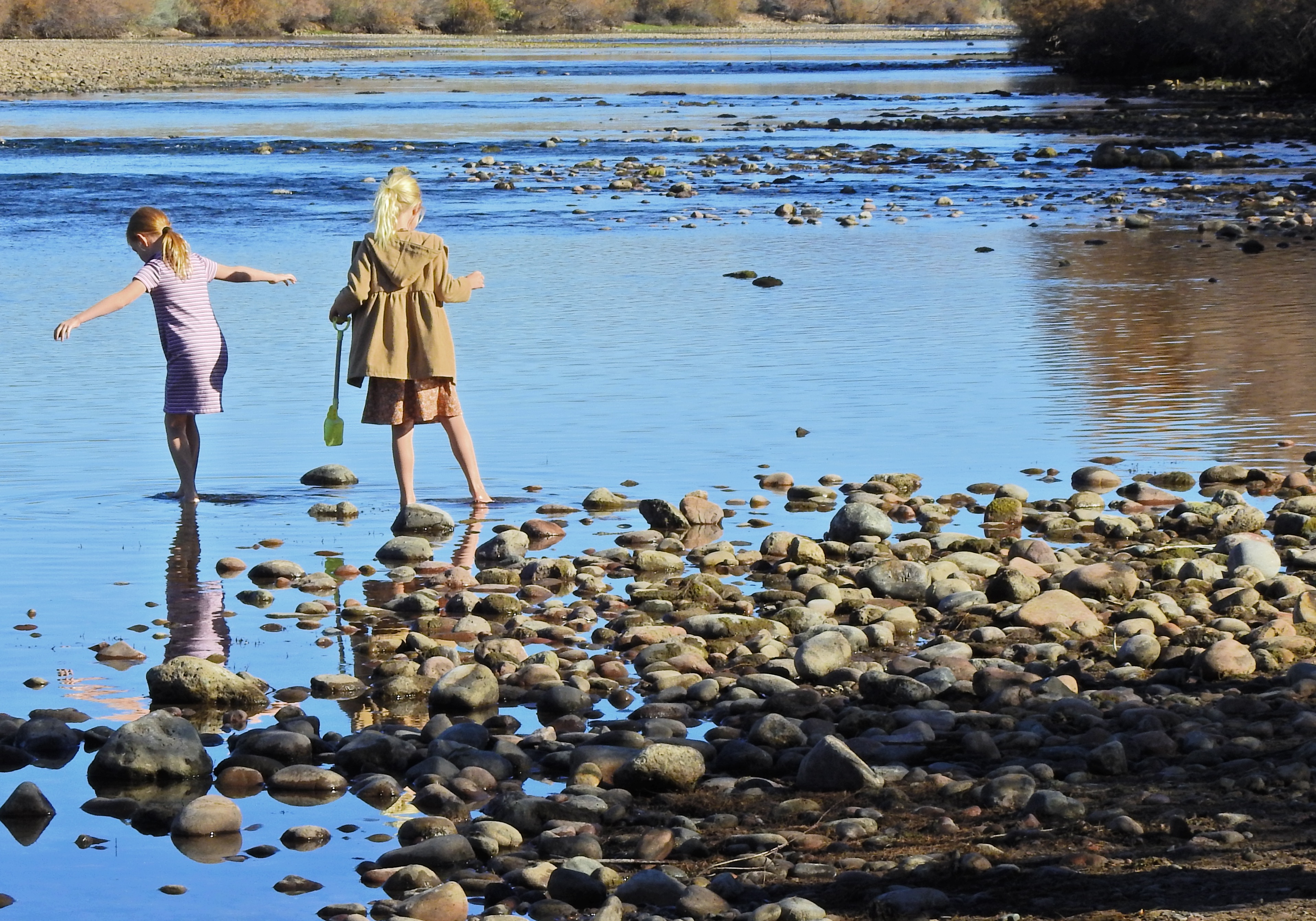
That’s what we’ve got here. The young girls you see, happily sharing the thrill of tripping barefoot in the shallows of a river, appeared, seemingly out of nowhere, during my “official” picture-taking, a birdwatching hike that’s become a regular event between Marian and me and several close friends. The day’s snaps predictably consist of a few lucky sightings and a lot of landscape shots, with a smattering of candids of the crew. During one such group shot, framed down near the edge of the Snake River (a major player in Arizona’s Tonto National Forest), I heard girlish giggles over my shoulder, and, seconds later, a flash of blurred color as several friends began to wade in, surprised that, even in January, the water wasn’t yet too cold for the thrill of discovery.
There was simply nothing else that made any sense at this point other than to spend the next few minutes trying to capture the essence of their fun, about a dozen frames of them running, exploring, and, mostly, laughing, all shot on some kind of mental autopilot. In eavesdropping on their fun, I was reminded of the quote from the author Walter Streightiff, who wrote, “There are no ‘seven wonders of the world’ in the eyes of children. There are seven million..” A child’s eye takes in a cascade of newness that allows it to process every experience through a filter of amazement. It’s an openness that we all initially possess but forget we have as the years advance.
Teaching ourselves to see photographically pries us back open again, lets us re-enter that harvest of wonders with as much delight as was once our primary instinct to do. That’s when the Plan “A” of what we started out to shoot becomes wonderfully hijacked and Plan “B” kicks in. You were making one kind of picture, and now, gloriously, you’re making another.
And you are grateful.
WIDE OPEN SPACES
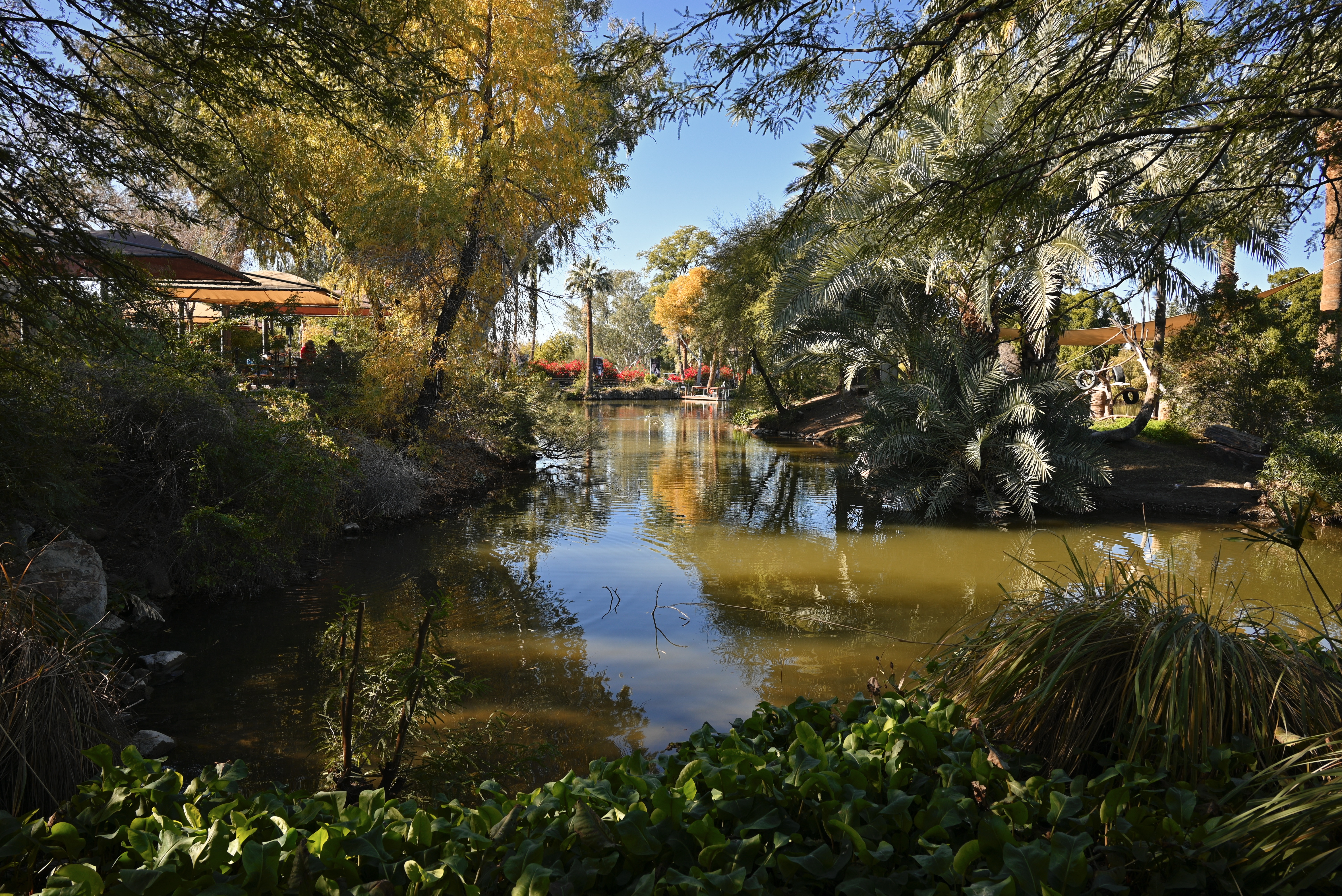
Fronted by a 70’s-era Nikon 24mm lens, a digital crop-sensor DSLR makes this frame look closer to 35mm.
By MICHAEL PERKINS
ANY TIME YOU MOVE FROM ONE PHOTOGRAPHIC PLATFORM TO ANOTHER, there are tradeoffs in either approach or technique. Things you used to do that you can’t do anymore. Others that were formerly impossible and are now achievable. And so forth. In my recent move from crop-sensor DSLRs to full-frame mirrorless cameras (a long and torturous journey, I assure you) there was one main objective that kept me eagerly engaged: a desire to unleash the full power of my existing wide-angle lenses.
Some of us have come of age completely in the digital era, and so there must be a significant number of people who have never used their wide-angles to their complete potential. Given that a lot of glass, especially old glass, was manufactured well before the introduction of smaller, or “cropped” sensors in digital SLRS and compacts, it’s possible that you, yourself, may have shot thousands of images with lenses that could not capture the dimensions that the same optics would capture on a full-frame camera. On my Nikon DSLRs, I came to understand that, for example, a 24mm lens shot at a 1.5x crop factor, meaning it was really shooting at around 35mm. A 35 shot closer to a full-frame 50, and so on. And for years, I merely adjusted my thinking as to what defined a wide shot.
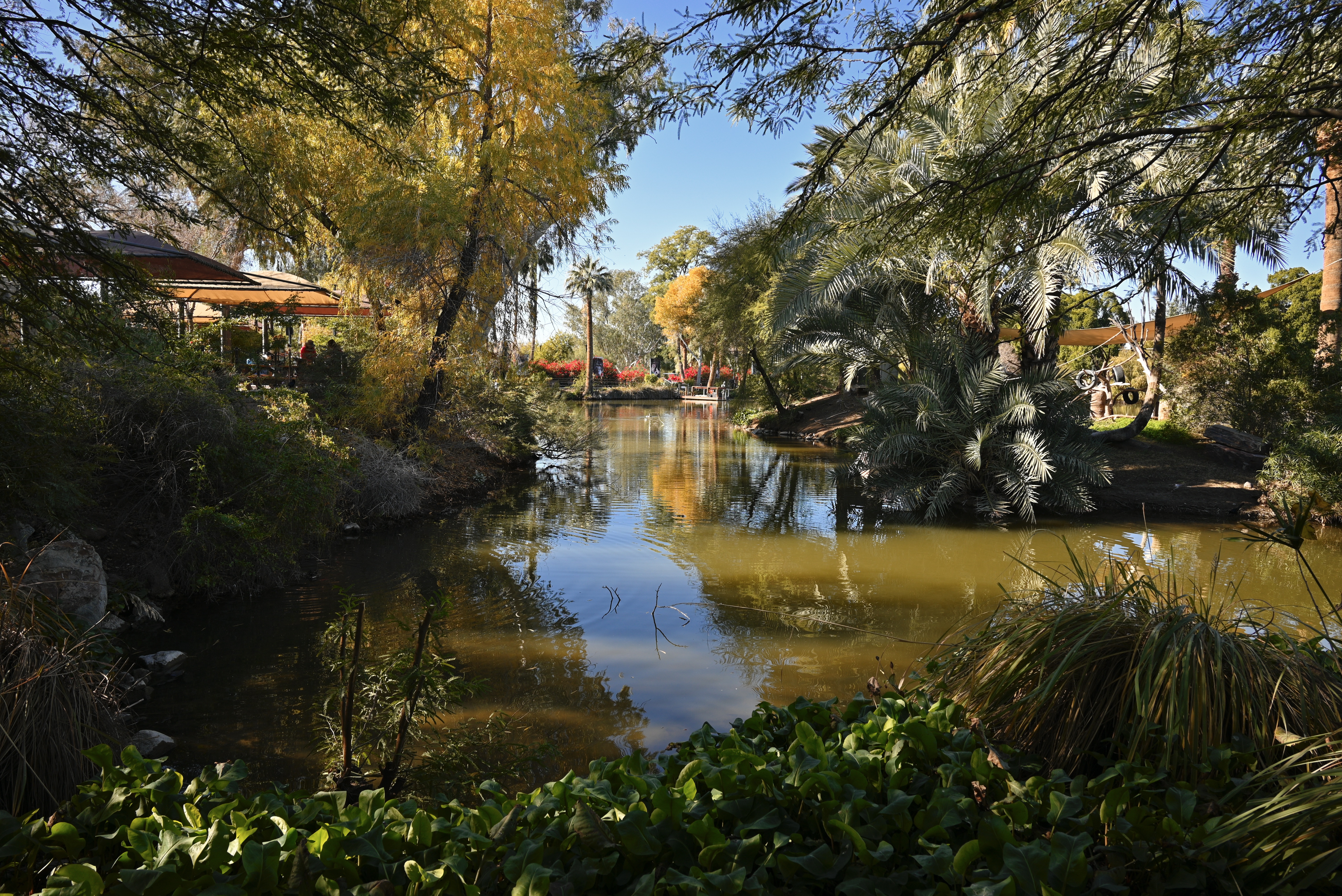
Same scene with the exact same ancient lens, but mounted on a new full-frame mirrorless body, so that 24mm is really 24mm.
Now, with full-frame, I have to re-learn what do to with all that…. space. I am looking at compositions I used to shoot with built-in cropping (see the top shot, done with a 24mm lens on a cropped DSLR) and find that the same shot in full-frame (the second image seen here, also with a 24mm lens, but at its intended width) drags in a hellacious amount of extra clutter on the left and right sides. Some of it is welcome, in that I used to want to include that extra info in the smaller frame, but a lot of it is like too much extra birthday cake: thanks, but no thanks.
Tech reviewer Ken Rockwell (www.kenrockwell.com) is famous for saying that a wide lens is not just for getting more stuff corralled into the frame from left to right, but for putting yourself, and in turn your viewer, further inside the shot…..kind of the difference between placing your stereo speakers directly across from you, twenty feet apart, and grouping them around you in a sonic surround. It’ll take me a while to make the mental trip back in time to when a lens shot exactly as it was purported to shoot, but I think I’ll net a needed refresher in Composition 101.
OWNING YOUR ORPHANS
By MICHAEL PERKINS
ONE THING THAT HAS GOTTEN HARDER, RATHER THAN EASIER, in the making of photographs in the present day, is dodging the answer to the question, “what’s wrong with this picture?” Yes, this picture. The one right here. The one you took. At its inception, the art of capturing an image was heavily weighted with obstacles to merely getting things done from a mechanical point of view. Now, several centuries on, the technical guarantees (what some might call idiot-proofing) of the process has taken more and more of those traditional alibis for making lousy photos off the table. What remains on the table: we either did or did not make the picture happen. We. Us. Me.
Over a lifetime, I have seen a slew of excuses for lousy images dissolve like sugar, from I had the wrong speed film and the flash bulb didn’t go off to I left the lens cap on, many of them obviated by succeeding improvements in gear and the ability of manufacturers to anticipate both our needs and, let’s face it, our incompetence. By now, however, with cameras nearly possessing their own artificial judgement-making ability, the list of reasons why a photo bombed has been reduced to things like I brought the wrong camera, this isn’t the right light/hour/day to try for a picture, and the sun got in my eye. More and more, there is one stubbornly persistent cause I find behind most of my muffed shots:
I don’t know how to make the picture.
Think about it: how many of your photos that you currently feel came up short are due to technical failure, equipment malfuction, or not having enough options to get the job done? A failure to realize one’s vision was once something where, between you and your gear, there was plenty of blame to go around. Now, there is still blame, but all arrows lead back into our own faces.
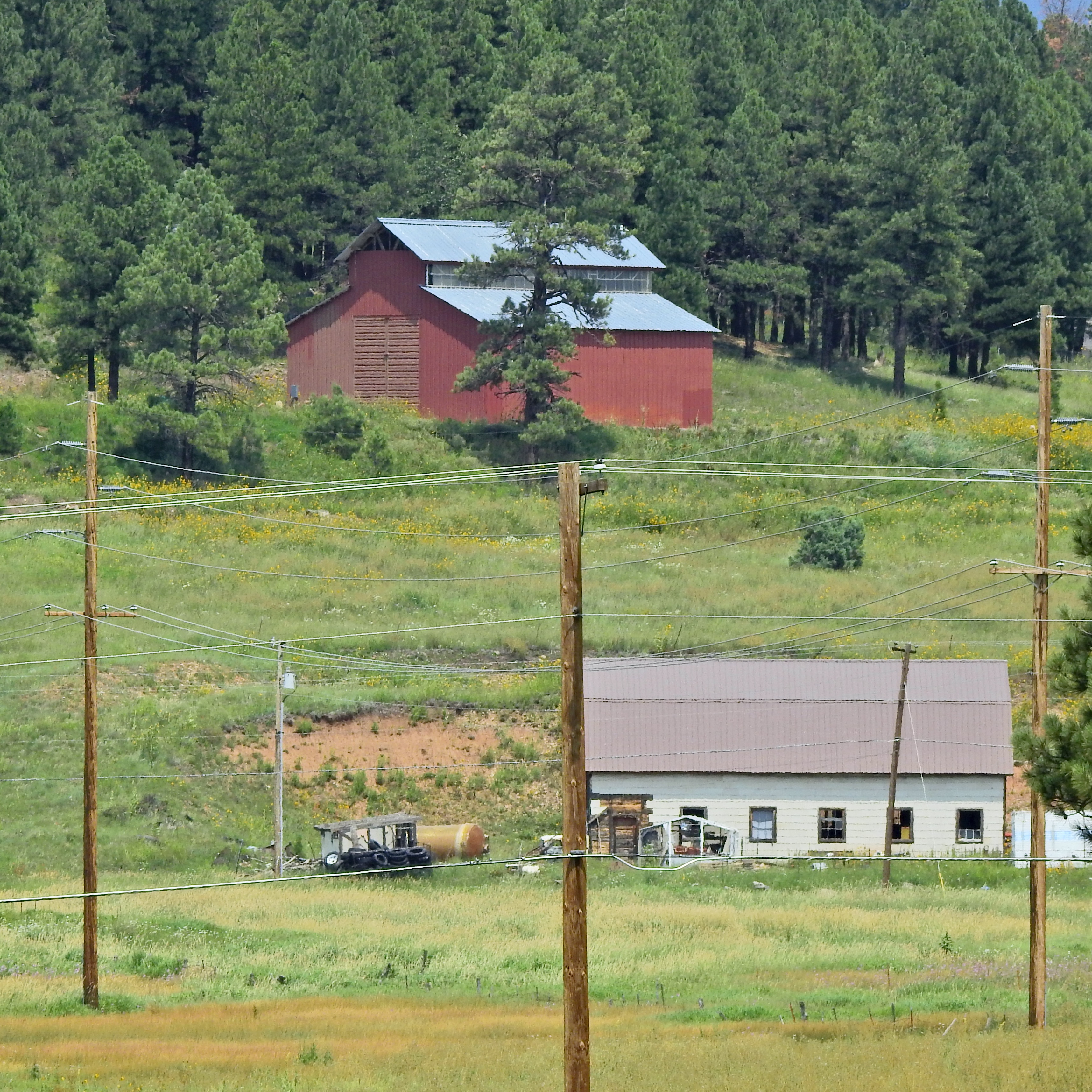
I don’t like this picture. And it really doesn’t matter that I can’t yet analyze just why it failed. The only thing that will allow me to eventually address its flaws is to admit that the fault lies with me. My vision. My poor choices. There is nothing technically wrong with this image. It was exposed properly by any general rule of thumb. And yet… it just lies there, like a lox. And the fault in such pix is even worse if the image was taken with fully manual settings, because I opted to make all the choices in the making of it, delegating nothing, certainly not responsibility, to the camera. And yet these are the only pictures that will ever teach me anything.
If my answer to a failed shot is, “jeez I don’t know what happened” (and assuming I’m not lying through my teeth), then that picture is worse than worthless, since I’ve consigned it to chance or lousy luck. In fact, my worst pictures are educational chiefly because the more I understand myself..my motives, my conceptions, and so forth…the more I can deliberately make something better. And this is certainly true for anyone. But first, you have to honestly, totally and lovingly own your orphans.
Liberty Liberated
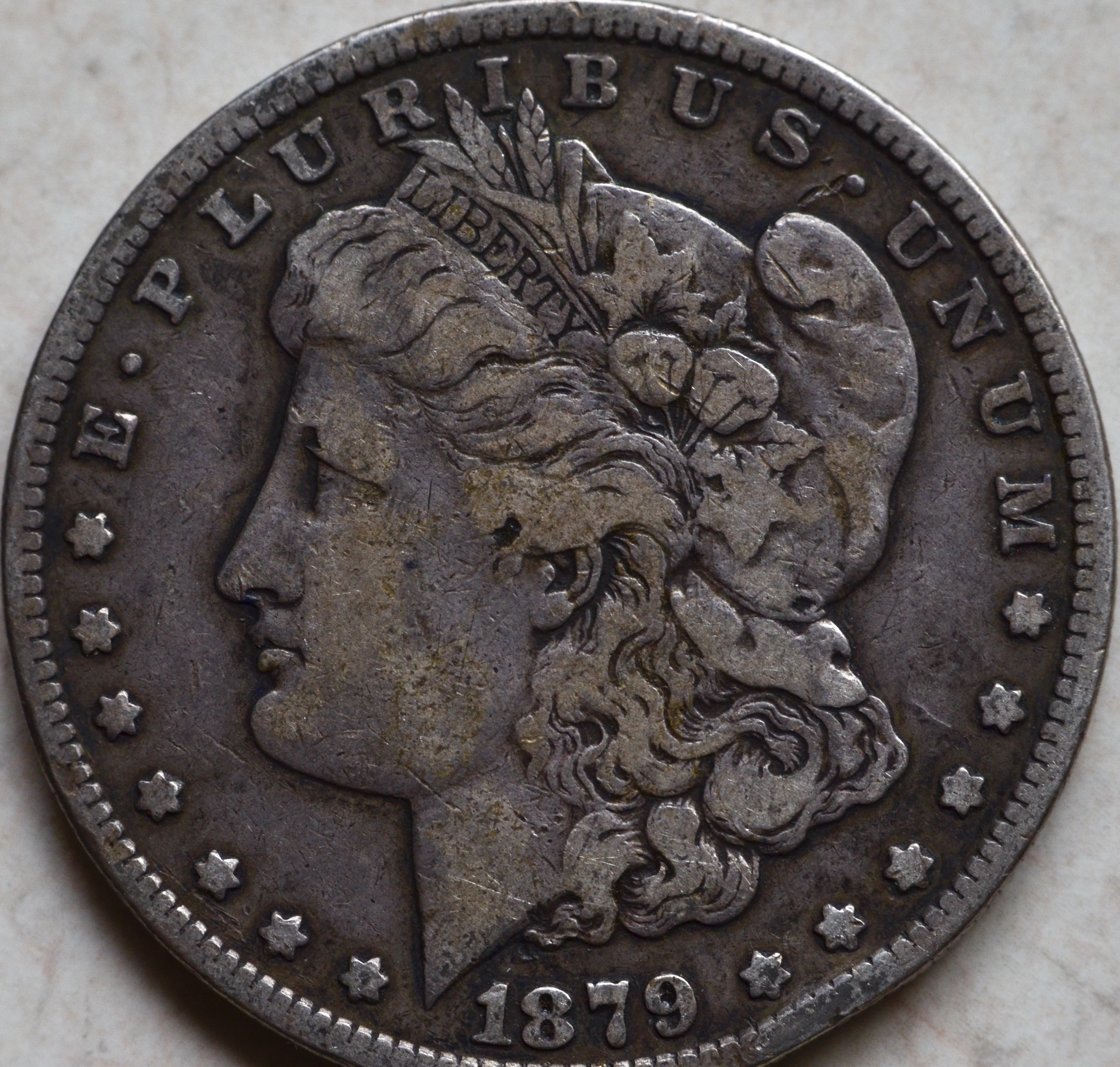
A rather cold, imperious rendition of “Liberty” as seen on this 1879 U.S. silver dollar.
By MICHAEL PERKINS
THE BEST WAY TO APPROACH A PHOTOGRAPHIC SUBJECT PURELY ON YOUR OWN TERMS is for the thing to be severed from its original context, torn free of any associations it once had with the world at large. Once these so-called “found objects” come into our hands, we can make pictures of them as only we see them, not as they were anchored to everyday use. They become, in this way, blank canvasses of sorts.
In recently looking over some old coins ranging from the 1880’s to the 1920’s, I became struck with how self-obliterating their history was. That is, they were all something so commonly used by the public as to be virtually invisible…and then became literally invisible as newer designs vanished them, yanking them from circulation to be replaced by versions more consistent with the fashions and priorities of new eras. One thing that seemed particularly fluid was the depiction of Liberty, each generation’s edition created to conform to our conceptions of the concept they personified.
On the 1887 silver dollar, seen at top, the lady is a rather classic goddess figure, austere, inscrutable, even muscular. She’s shown in a classic two-dimensional profile, very much in the tradition of Greek and Roman antiquity. She’s remote, above it all. In contrast, the rendition that replaced her on the 1921 “peace” design, seen below, is more contoured, and decidedly a woman of the troubled twentieth century. Her neck is slender. Her expression is expectant, even anxious, coming at the end of a decade of horrendous global slaughter. Her “peace” is more of an aspiration than a fact, her femininity borne of a personal, more mortal idea of hope. I wanted to make a picture that captured those qualities.
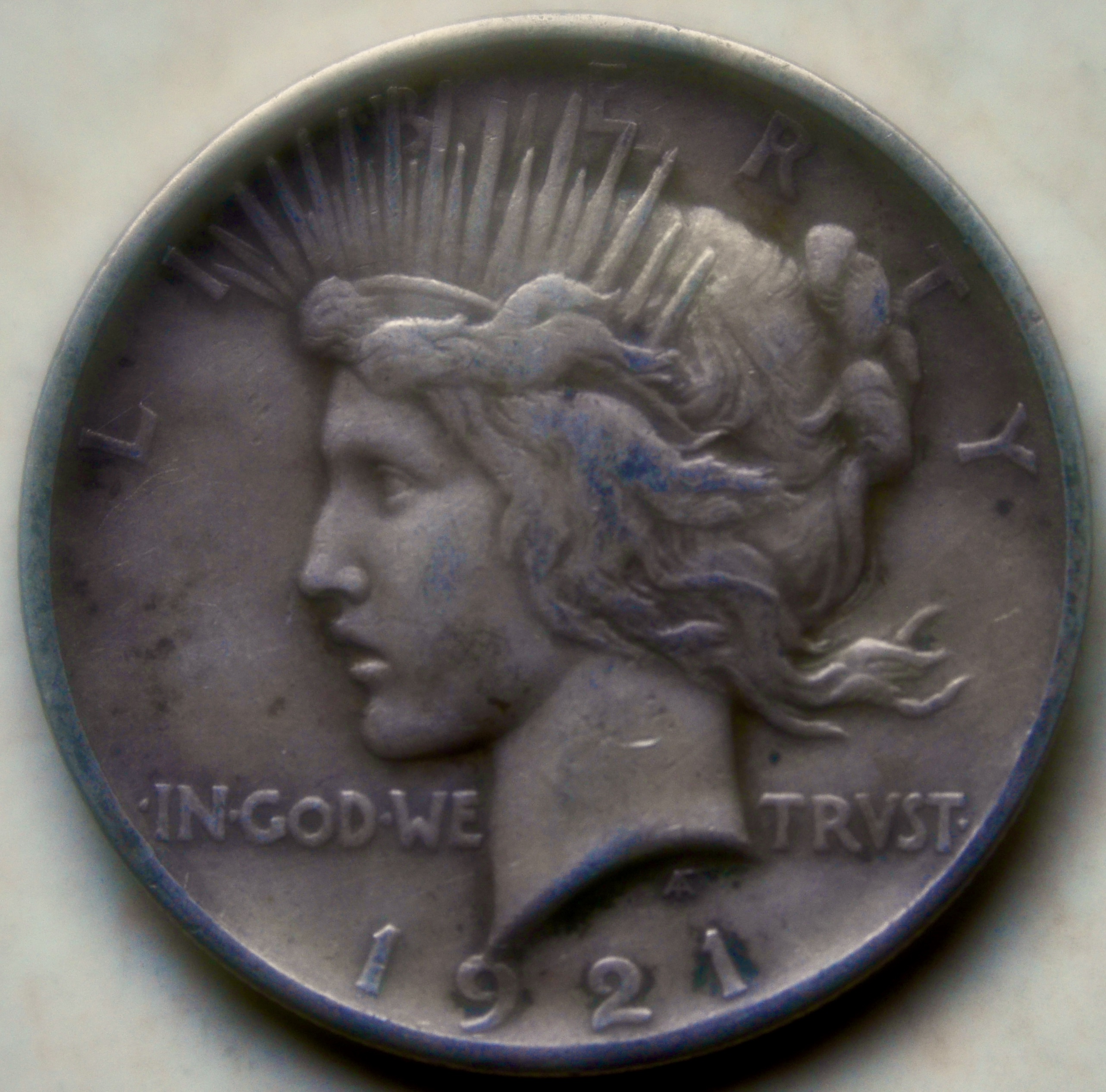
Liberty for a new age: the same ideal as envisioned on the U.S. “peace” dollar coin.
For “my” Liberty, then, the clinically stern crispness of a standard macro shot, i.e., hard evidence of the tough life of a widely circulated coin (scratches, dents, etc., in bold relief) had to, in photographs, gave way to an idealized, softened kind of aspect, or as close as I could come to a kind of dream state. I used a Lensbaby Velvet 56 lens, which is deliberately designed to create the spherical and chromatic aberrations that used to produce glowy, softer focus as an accidental artifact of older, more flawed lenses. In recent years, Canon, Pentax and Mamiya have also made glass that mimic that flaw, especially at wider apertures (this was shot at f/3).
Working to liberate “my Liberty” was creatively easier because the coin she graces has vanished from daily use, and, with it, all the associative ties to the world that it was created for. That allowed me to imagine her for myself, and every photograph I have ever truly cared about began under just such terms.
THROUGH A GLASS, DARKLY
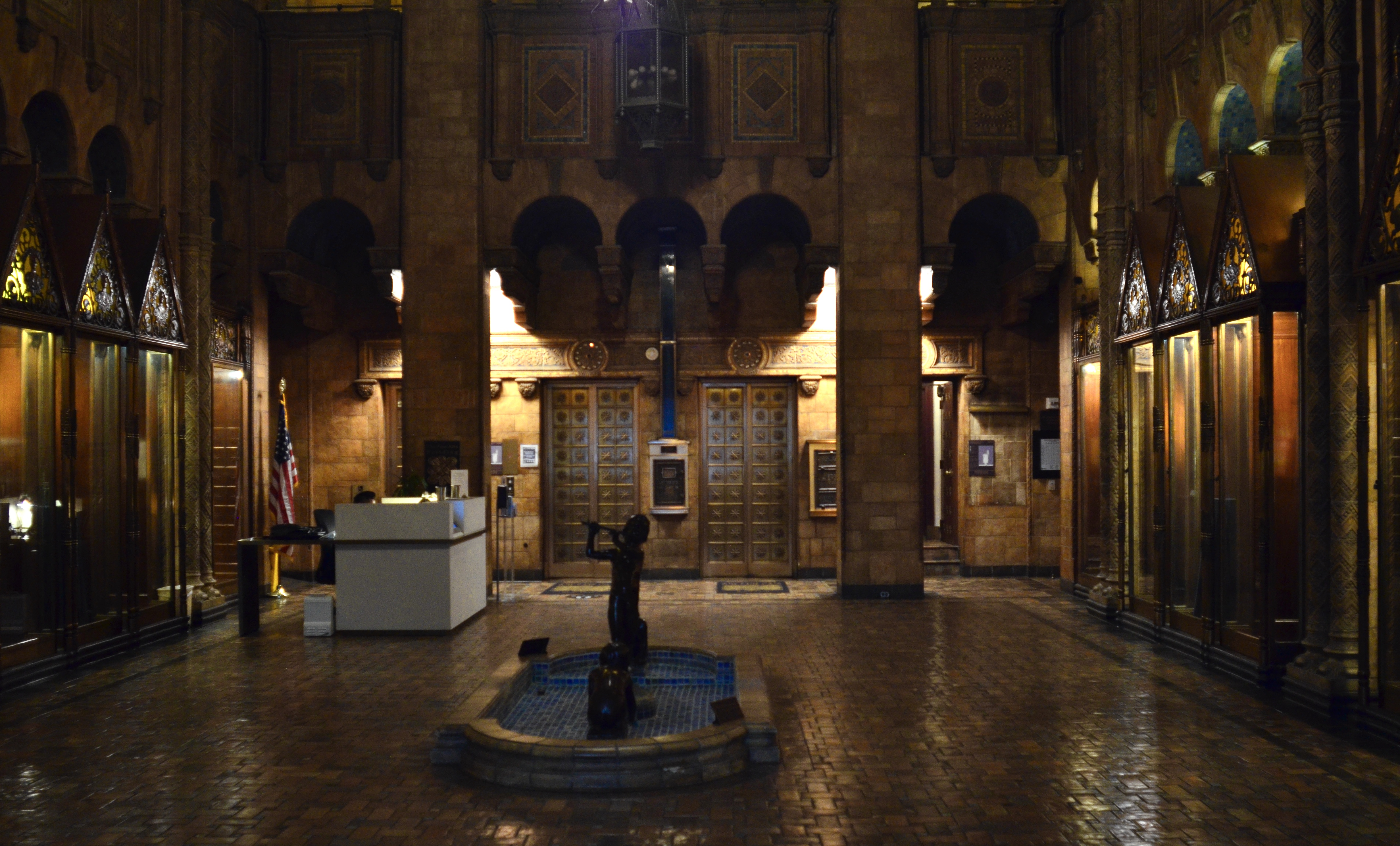
Handheld, manual through-the-front-window exposure of the interior of Los Angeles’ Fine Arts Building.
By MICHAEL PERKINS
SHOW ME A SOLID LOCKED DOOR and I’ll tell you what I’m imagining as to what lies beyond it.
Show me a locked door with a pane of glass in it, and I’ll tell you what my next photograph will be.
We’ve all been on our share of historic urban tours in which really great buildings are viewable only as exteriors. Many sites that used to be everyday places of business are now at least partially protected from the prying peepers of passersby (alliteration fans rejoice!), usually by barring access to their interiors. And it seems to also be true that the juiciest lobbies and entries are described by the tour guides with the phrase, “unfortunately, we can’t go inside..but you can peep through the glass..”
Well, peeping is great, as far as it goes, but, since I’m packing a camera anyway, I always decide to add to my ever-growing go-for-broke file of near misses and happy accidents and snap something, anything. The potential in the gamble is often a bigger thrill than the actual results, but, oh, well.
Here we see the interior of the venerable Fine Arts Building, which opened in downtown Los Angeles in 1927. The outside of the place is a grandiose beaux-arts birthday cake of excess, and the builders were no more restrained when it came to the lobby, some of which, being multi-storied, is cut off from view here. But what delights within immediate eye-shot! I was jammed flat up against the glass to fend off reflections and glare and set my trusty old Nikkor 24mm manual prime for ISO 800 at 1/50th of a second. Since I was some distance from the rear lobby wall, I could shoot wide open at f/2.8 and focus on infinity. Some lights were on, but luckily they were indirect, and so, were not rendered too glow-y or globb-y by the extreme aperture. The whole thing was a matter of some fifteen seconds, and luckily the tour group had only moved on a few yards by the time I was done.
I am a firm believer that you louse up 100% of the shots you don’t try, so I always have a whatthehell attitude toward any flops or flukes. Because a barrier can be the end of an experience, or just the gateway to the rest of it.
 thenormaleye
HOORAY. DAMN.
By MICHAEL PERKINS
I DON’T UNDERSTAND THE CONCEPT OF AN IMPULSE PURCHASE. Everyone who buys things (so…everyone) has some code in their DNA that dictates how they go about the process, and I know that, for some, there is a virtually unbroken space of time between I Want It and I’ll Take It.
I don’t know what that’s like.
Every purchase I make, great or small, is, for me, a matter of exhaustive research, self-reproach, deliberation, and/or paralysis. And right now I’m experiencing all of those things to an excruciating degree, because right now, like, this week, I’m about to purchase a camera.
I buy cameras not when I want them (which is all the time), nor when I first need them (which is when most sensible people might do so), but only after my current camera is literally disintegrating in my hands, or about the time I am desperate for a replacement. The result of this desperation is an intense program of investigation of all products and their respective claims. I search endlessly for the best functions, price, performance and reliability, but not just for reasons connected to the making of photographs. I mostly do all this homework so I will ensure that it will be a long, long time before I have to go through all this agony again anytime soon.
Wait, does this come in full-frame, too?
This approach, of course, drains any potential enjoyment out of the project, with dread replacing anticipation and fear of failure subbed for excitement..or what I call the hooray-damn syndrome. It’s sick…that is, it makes me literally ill, with many a temptation to chuck the entire task and maybe attempt surgery on my old camera, or perhaps sacrifice a goat over the gravesite of George Eastman.
This is typically the portion of the program where someone in the audience raises a hand and remarks, diplomatically, “wait…that’s not normal, is it?”
Well, I can only speak for myself, of course, but I suspect that all my agita and itchy rashes are not, strictly speaking, what I’m supposed to be feeling. And yet, wading through the goopy internet soup of conflicting reviews, opinion-makers, influencers and, let’s face it, plain old cranks is enough to make me regard organ donation as a seaside romp versus selecting a damn camera that works.
Part of this dilemma lies with the manufacturers, of course, who market features and options with as much aggression as they do the basics of their devices. It’s a little like saying that a car manufacturer gives as much weight to the floor mats and cupholders as they do to the engine or transmission. Cameras are so loaded with toys that add to the flash of their newest models that it’s easy to drown in effects that one may seldom, if ever, use, when the main idea of the purchase is making pictures, which, when all is said and done, is not that bloody complicated. We say we came for the steak, but we often reach for our wallets at the first sound of the sizzle.
Maybe my buying anxiety is just another version of my wanting, throughout my life, to reduce the chance that I’ll make the wrong decision…in anything…where I’ll live, what I’ll work at, which toothpaste to use, or whatever. I’d love to know what an impulse purchase feels like. If I did, I’d have someone take a picture of me making one.
If I could only decide which camera to use…
Share this:
December 26, 2021 | Categories: Uncategorized | Tags: Commentary, Equipment, Humor | Leave a comment