JUST ENOUGH
By MICHAEL PERKINS
PHOTOGRAPHERS SPEND HALF THEIR LIVES TRYING TO PUT AS MUCH INFORMATION INTO THEIR IMAGES AS POSSIBLE, and the other half trying to remove as much as practicable. Both efforts are in service of the telling of stories, and both approaches are dictated by what a particular photograph is trying to convey.
Sometimes you need the cast of The Ten Commandments to say “humanity”. Other times, just a whisper, an essence of two people talking carries the entire message. That’s where I wound up the other day…with one woman and one very young boy.
Their shared mission was a simple one: hooking up an iPhone Facetime visit with an aunt half a country away. Nothing dramatic, and yet plenty of story to fill a frame with. Story enough, it turned out, for me to get away with weeding out nearly all visual information in the picture, and yet have enough to work with. Time, of course, was also a factor in my choice, since I would be losing a special moment if I stepped into a dark hall and spent precious moments trying to mine it for extra light.
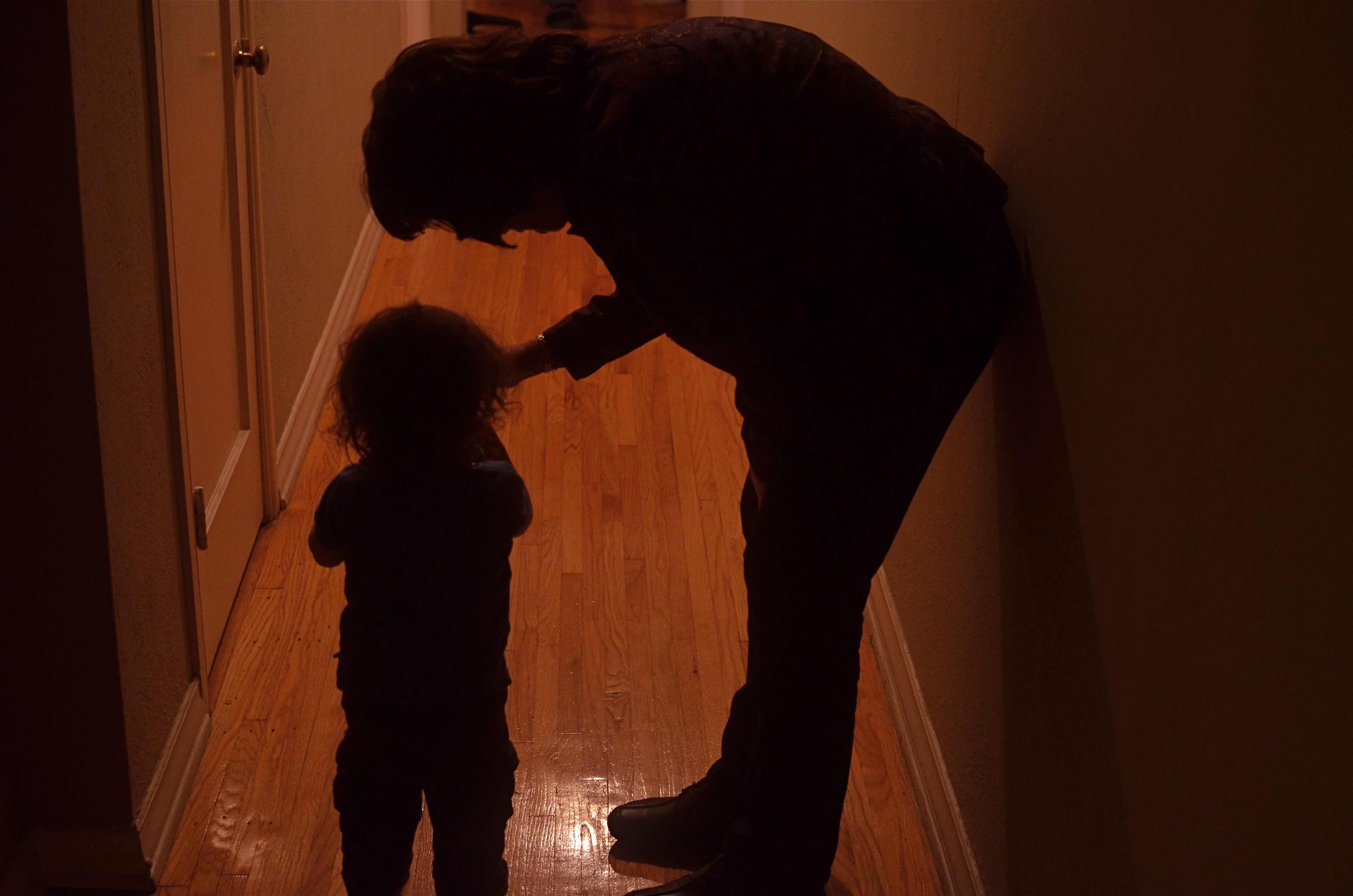
Conference call: 1/50 sec., f/3.5, ISO 800, 35mm.
In a second, I realized that silhouettes would carry the magic of the moment without any help from me. What would it matter if I could see the color of my subjects’ clothing, the detail in their hair, even the look on their faces? In short, what would I gain trying to massage an image that was already perfectly eloquent in shadow?
I exposed for the floor in the hall and let everything else go. There was plenty of story there already.
I just had to get out of its way.
JUST SAY THANK YOU
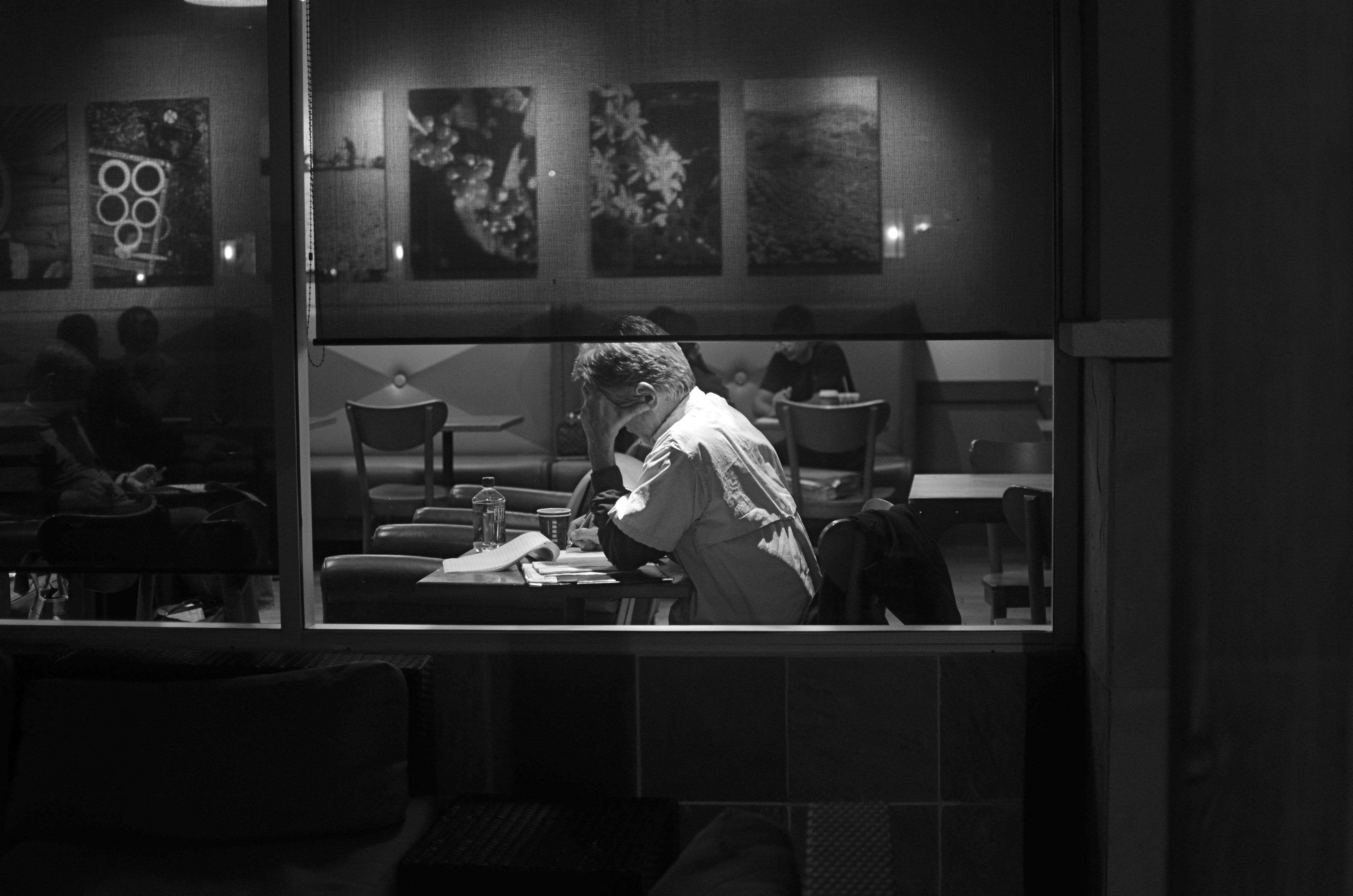
The All-Nighter: 1/60 sec., f/1.8, ISO 800, 35mm.
By MICHAEL PERKINS
PICTURES HAPPEN WHEN YOU’RE OUT TRYING TO TAKE “OTHER” PICTURES. Pictures happen when you didn’t feel like taking any pictures at all. And, occasionally, the planets align perfectly and you hold something in your hand, that, if you are honest, you know you had nothing to with.
Those are the pictures that delight and haunt. They happen on off-days, against the grain of whatever you’d planned. They crop up when it’s not convenient to take them, demanding your attention like a small insistent child tugging at your pants leg with an urgent or annoying issue. And when they call, however obtrusively, however bothersome, you’d better listen.
Don’t over-think the gift. Just say thank you….and stay open.
This is an overly mystical way of saying that pictures are sometimes taken because it’s their time to be taken. You are not the person who made them ready. You were the person who wandered by, with a camera if you’re lucky.
I got lucky this week, but not with any shot I had set out on a walkabout to capture. By the time I spotted the scene you see at the top of this post, I was beyond empty, having harvested exactly zip out of a series of locations I thought would give up some gold. I couldn’t get the exposures right: the framing was off: the subjects, which I hoped would reveal great human drama, were as exciting as a bus schedule.
I had just switched from color to monochrome when I saw him: a young nighthawk nursing some eleventh-hour coffee while poring over an intense project. Homework? A heartfelt journal? A grocery list? Who could tell? All I could see, in a moment, was that the selective opening and closing of shades all around him had given me a perfect frame, with every other element in the room diffused to soft focus. It was as if the picture was hanging in the air with a big neon rectangle around it, flashing shoot here, dummy.
My subject’s face was hidden. His true emotion or state of mind would never be known. The picture would always hide as much as it revealed.
Works for me. Click.
Just like the flicker of a firefly, the picture immediately went away. My target shifted in his chair, people began to walk across the room, the universe changed. I had a lucky souvenir of something that truly was no longer.
I said thank you to someone, packed up my gear, and drove home.
I hadn’t gotten what I originally came for.
Lucky me.
related articles:
- Crop and turn a bad picture into a good one (weliveinaflat.wordpress.com)
THE LIVING LAB
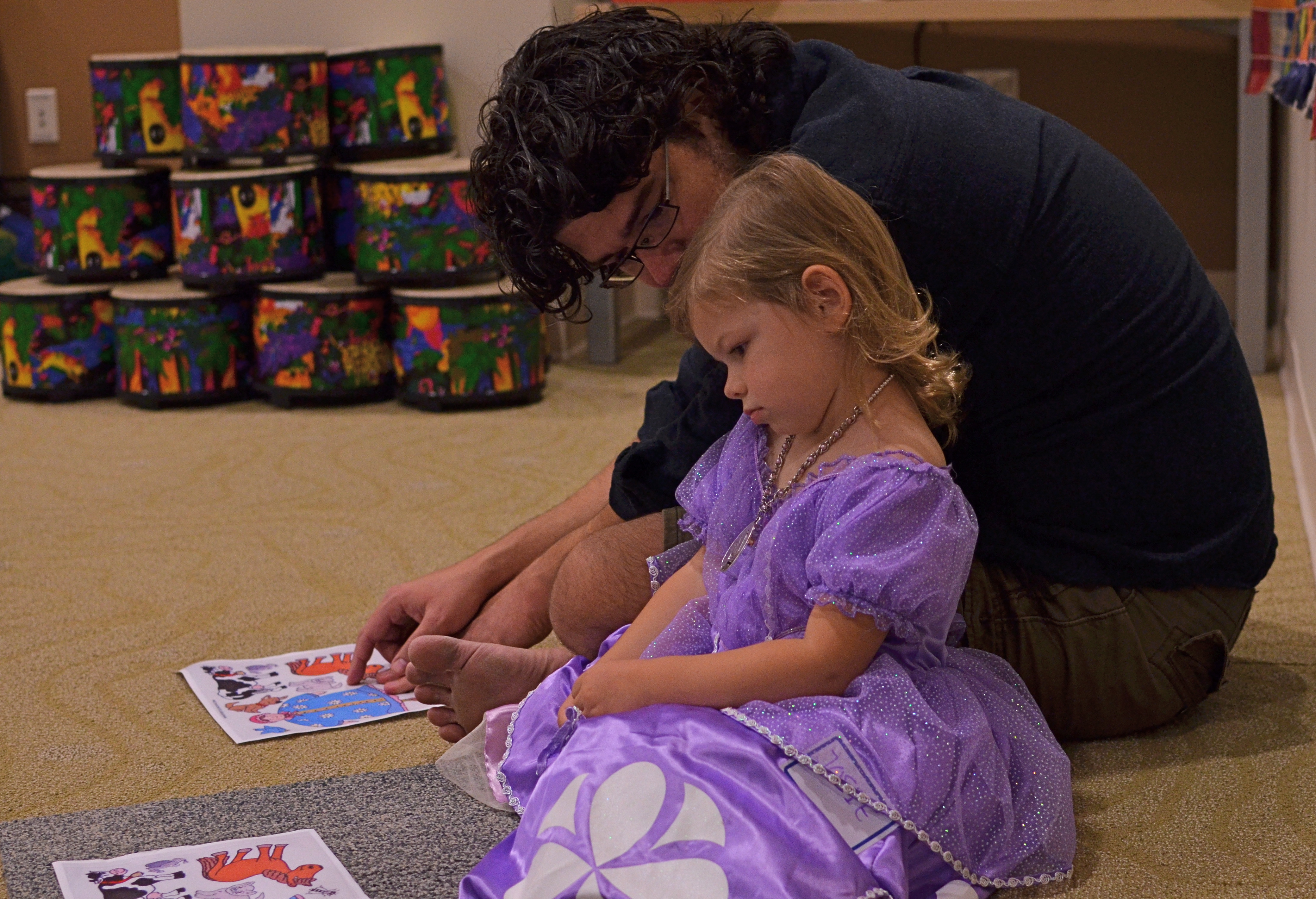
A quick father-daughter conference. 1/60 sec., f/3.5, ISO 640, 35mm.
By MICHAEL PERKINS
THE GREATEST GIFT A SMALL CHILD HAS TO GIVE THE WORLD IS THE VAST, UNMINED ORE OF POSSIBILITY residing inside him. Wow, that really sounded pretentious. But think about it. He or she, as yet, has no wealth to offer, no fully developed talent, no seasoned insight, no marketable skills. It is what he or she has the potential to be that tantalizes us, and our cameras. It is what is just about to be available from these fresh, just-out-of-the-oven souls that amazes us, the degree to which they are not yet….us.
As a photographer, I find there is no better education than to be plunged into the living laboratory of cascading emotion that is a cluster of kids, and the more chaotic and unrehearsed the setting, the richer the results. It’s like shooting the wildest of competitive sports, where everything unfolds in an instant, for an instant. You ride a series of waves, all breaking into their final contours with completely different arcs and surges. There is no map, few guarantees, and just one rule: remain an outsider. The closer to invisibility you can get, the truer the final product.
I volunteer with an educational facility which designs many entry-level discovery workshops and playdates involving young families, requiring a lot of documentary photographs. What would be a chore or an extra duty for overworked administrative staff becomes an excuse, for me, to attend living labs of human experience, and I jump at the chance to walk silently around the edges of whatever adventure these kids are embarked on, whether a simple sing-a-long or a class in amateur dance.
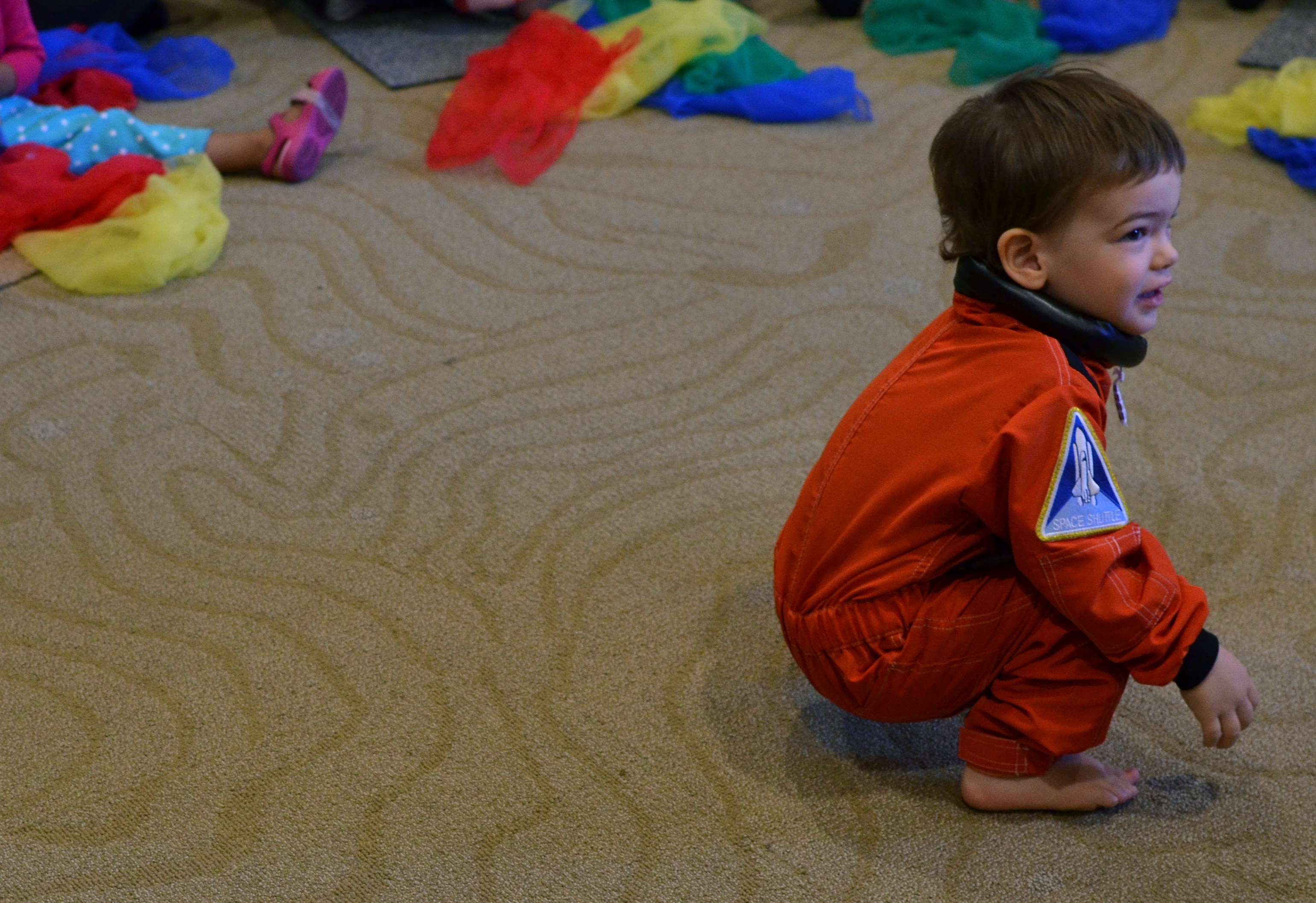
We have lift-off. 1/60 sec., f/3.5, ISO 640, 35mm.
Everything feeds me. It’s a learn-on-the-fly crash course in exposure, composition, often jarring variations in light, and the instantaneous nature of children. To be as non-disruptive as possible, I avoid flash and use a fast 35mm prime, which is a good solid portrait lens. It can’t zoom, however, so there is the extra challenge of getting close enough to the action without becoming a part of it, and in rooms where the lighting is iffy I may have to jack up ISO sensitivity pretty close to the edge of noise. Ideally, I don’t want the kids to be attending to me at all. They are there to react honestly to their friends, parents, and teachers, so there can be no posing, no “look over here, sweetie”, no “cheese”. What you lose in the total control of a formal studio you gain in rare glimpses into real, working minds.
The yields are low: while just anything I shoot can serve as a “document” for the facility’s purposes, for my own needs I am lucky to get one frame in a hundred that gives me something that works technically and emotionally. But for faces like these, I will gladly take those odds.
Who wouldn’t?
Follow Michael Perkins on Twitter @MPnormaleye.
THE INVISIBLE ARMIES
By MICHAEL PERKINS
WE LEARN, OVER A LIFETIME, NOT TO SEE THEM. The sweepers, the washers, those who clean up, clear away and reassemble our daily environment. They are hidden in plain sight, these silent crews of keepers and caretakers. They are the reason there are towels in the restrooms, liners in the trash bins, forks on the table. A silent machine of constantly moving gears readies our way in so many unseen ways each days, tended by the invisible armies of our cities.
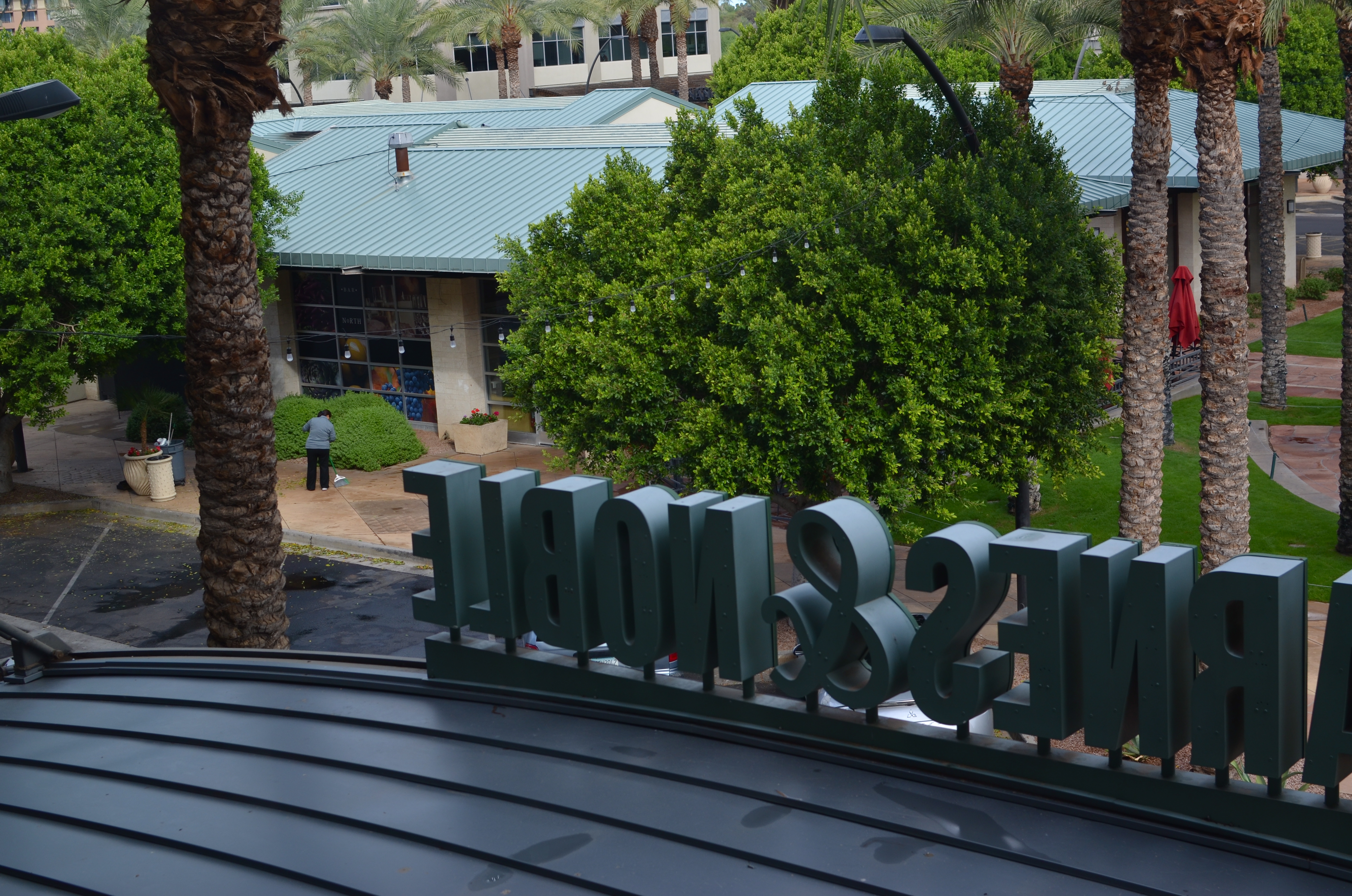
Morning Rounds. 1/125 sec., f/5.6, ISO 100, 35mm.
They start early, finish late, glide by silently, and move on to the next task. Busy as we are, once we first hold a camera, they are stories dying to be revealed, wondered at, worried over.
The unnamed lady at the broom in the above image came into my view just because I had chosen, at a particular moment, to cross the window side of the second floor of a bookstore. Framed naturally between a giant rooftop sign and a tree, she was served up as a ready-made subject for me, and would have been completely unseen had I not visited the store at the very moment it opened.
The invisible armies roll in and out, like some silent tide, and their work is usually done before we crank up our day. Their world and ours can dovetail briefly, but in large part we occupy difference spaces in time. I love catching people in the act of prepping the morning.
The best images are the ones you dig for a bit.
Follow Michael Perkins on Twitter @MPnormaleye.
CAUGHT IN THE CROSSFIRE
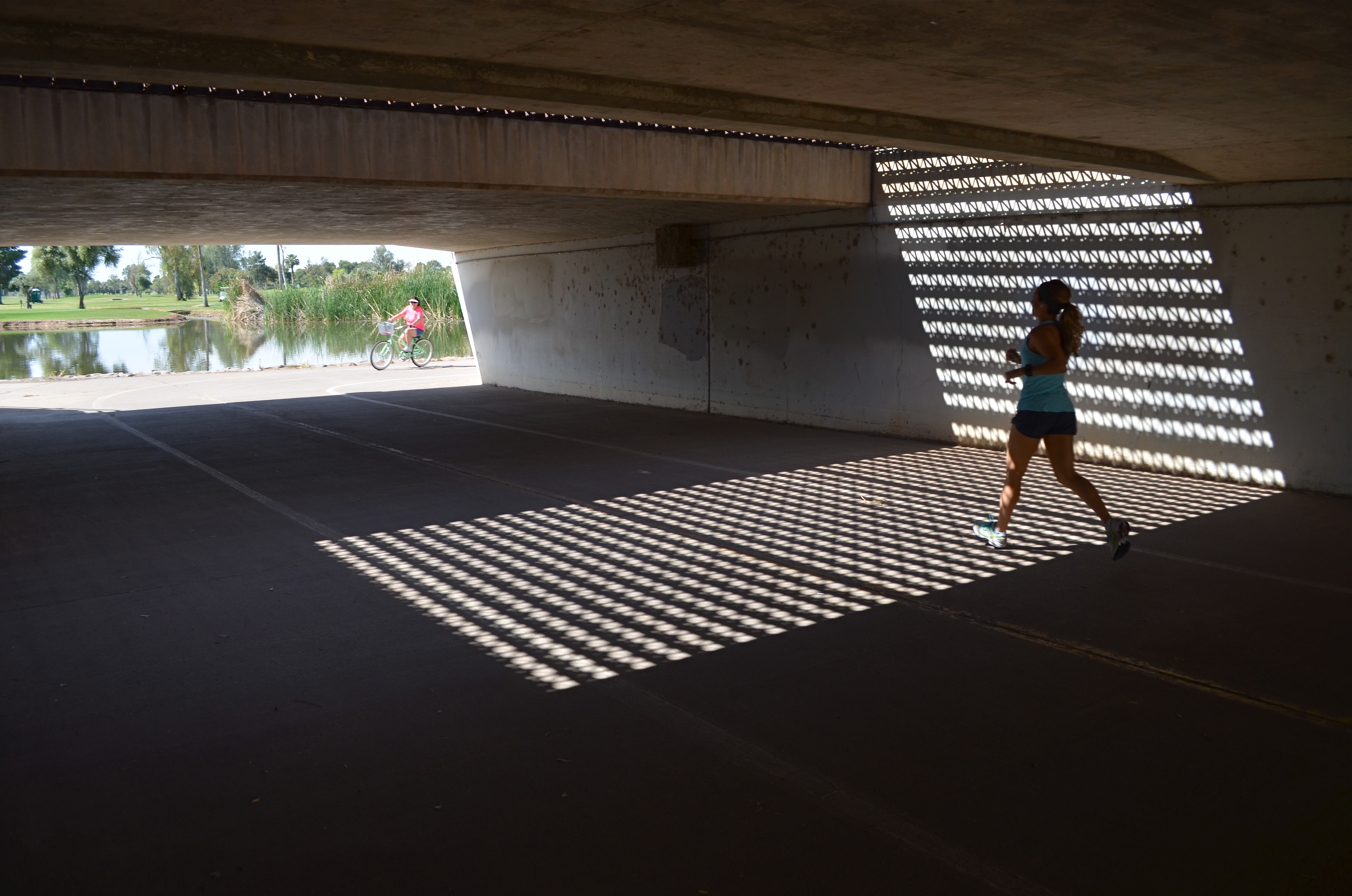
The jogger that saved my shot, albeit unwittingly. 1/250 sec., f/5.6, ISO 100, 18mm.
By MICHAEL PERKINS
THERE HAS BEEN A LOT OF MENTION, OF LATE, OF THE PHENOMENON KNOWN AS “PHOTOBOMBING“, the accidental or intentioned spoiling of our perfect Kodak moments by persons inserted into the frame at a crucial instant. Whether they block the bride’s face, eclipse Grandma’s beloved puppy, or merely pop up annoyingly behind the cute couple, they, and the images they ruin, are one of the hottest posting sources along the photo-internet galaxy right about now.
But fate photobombs us every day, and often drops a gift out of the sky, and into our pictures. The two-fold trick is to (a) be ready to improvise and (b) be grateful for the chance for something altogether different from what we originally conceived.
Happened to me several weeks ago. Total accident, since the thing I shot in the moment was not what I had started out for at all. Real simple situation:an underground walkway from one low-lying section of a city park to another, the sidewalk taking a short cut under a bridge. Overhead, six lanes of unheeding street-level traffic. Below, a concrete tunnel of sorts, with sunlight from the park illuminating either open end.
Oh, and the grate. Should mention that a section of the street overhead was, instead of solid roadbed, an open-pattern, structural steel grid, with dappled geometrics of light throwing a three-sided pattern of latticed shadows onto the side walls and floor of the tunnel below. Nice geometry. Now, I wasn’t looking to shoot anything down here at all. Like the chicken, I just wanted to get to the other side. But I had my wide-angle on, and a free light pattern is a free light pattern. One frame. A second, and then the bomb: a jogger, much more acquainted with this under-the-road shortcut than me, crossing from over my right shoulder and into my shot. Almost instinctively, I got her in frame, and relatively sharp as well.
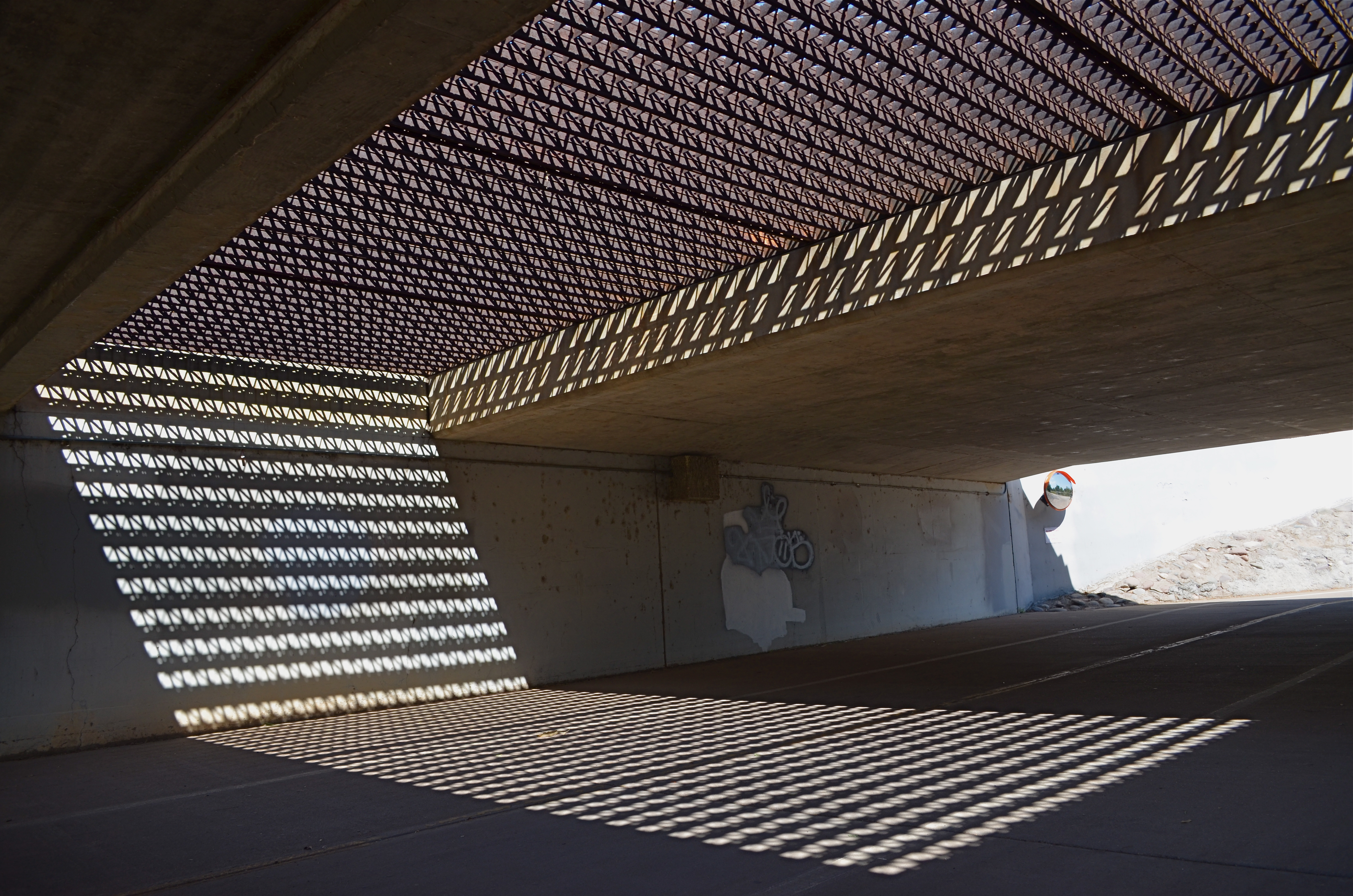
Same settings as in the “jogger” frame, but a little colder minus the human element. A matter of taste.
Not content to have caught the big fish of the day, I took the opposite angle and tried again to recoup my “ideal shot”, minus the human element. But something had changed. Even so, I still needed a gentle nudge from Fate to accept that I had already done as well as I was going to do.
My battery died.
I limped home, then, during my upload, found that what I had been willing to reject had become essential. I wish it was the first time I’ve had to be taught this lesson.
But I’d be lying.
Photobombed by circumstance.
And grateful for it.
follow Michael Perkins on Twitter @MPnormaleye.
GETTING BEYOND “SMILE”
By MICHAEL PERKINS
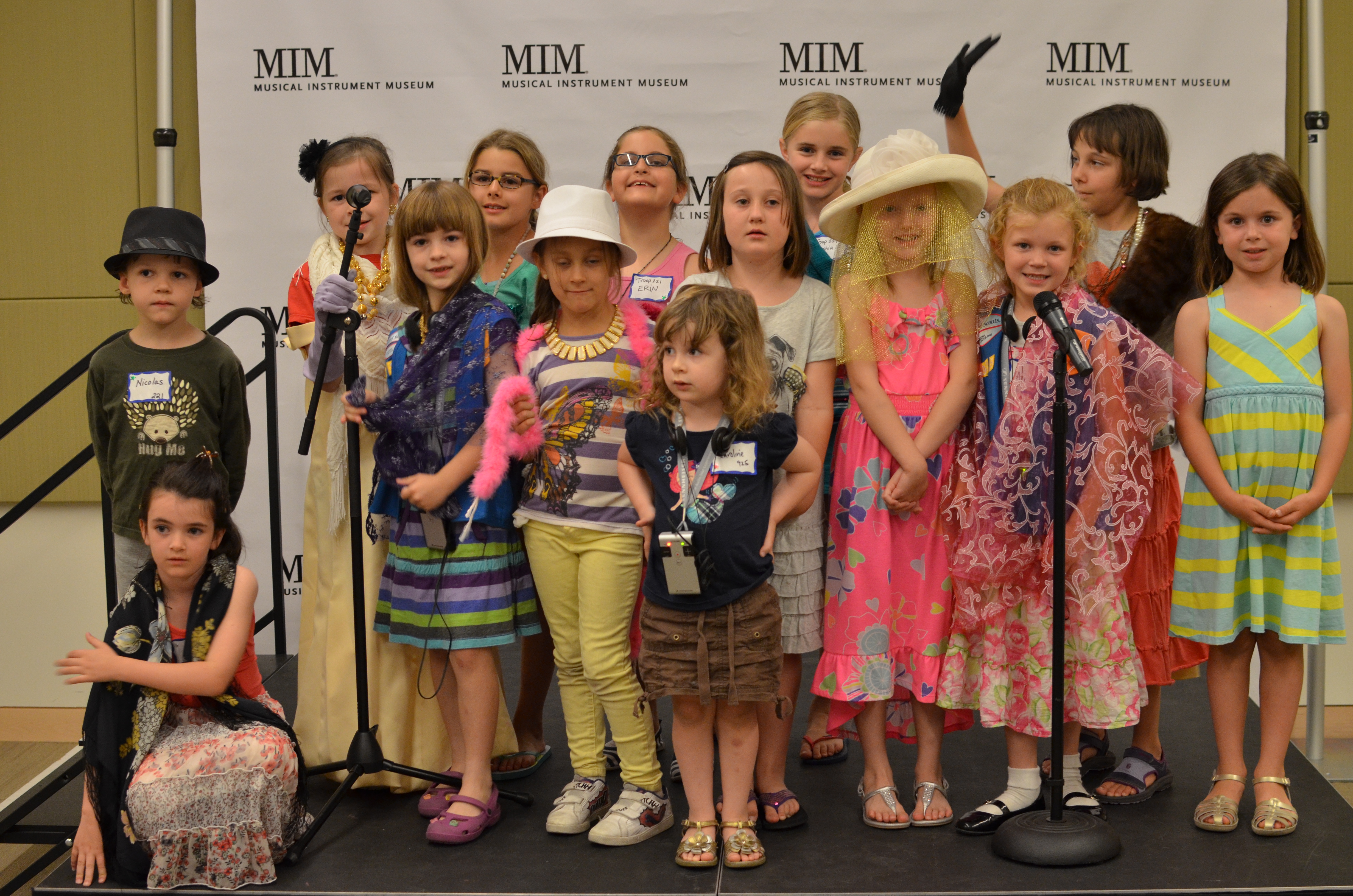
Girl Scouts posing for a troop picture. Pretty but a bit prim. See below to watch them come alive.
THE HUMAN RACE TAKES MORE PHOTOGRAPHS EVERY TWO MINUTES, TODAY, THAN WERE CAPTURED DURING THE ENTIRE 19th CENTURY. As staggering as that statistic is, it’s even more amazing on a personal level, when we contemplate how many of those gazillions of images involve our children, as we chase the ever-elusive goal of pictorially documenting (or so it seems) every second of their existence. Not only are we constantly on the job as shooters, our young ones must also be forever “on”, delivering camera-ready smiles and cherubic cuteness on cue.
With this in mind, it’s no wonder that kids actually evolve an alter ego to use for these “candid” moments after a while. Patented smiles, standby poses, a whole little system of default settings for quick use when Mom and Dad are in click mode. So, paradoxically, we are taking more and more pictures that reveal less and less about our children…..actually pushing their personalities further and further from discovery.
It’s tricky. And the results of our efforts actually count for more as time goes on, as traditional children’s portrait studios at department stores, malls, etc., are closing their doors. Increasingly, the pictures that we take of our kids are the ones which provide the most definitive chronicle of their most important years.
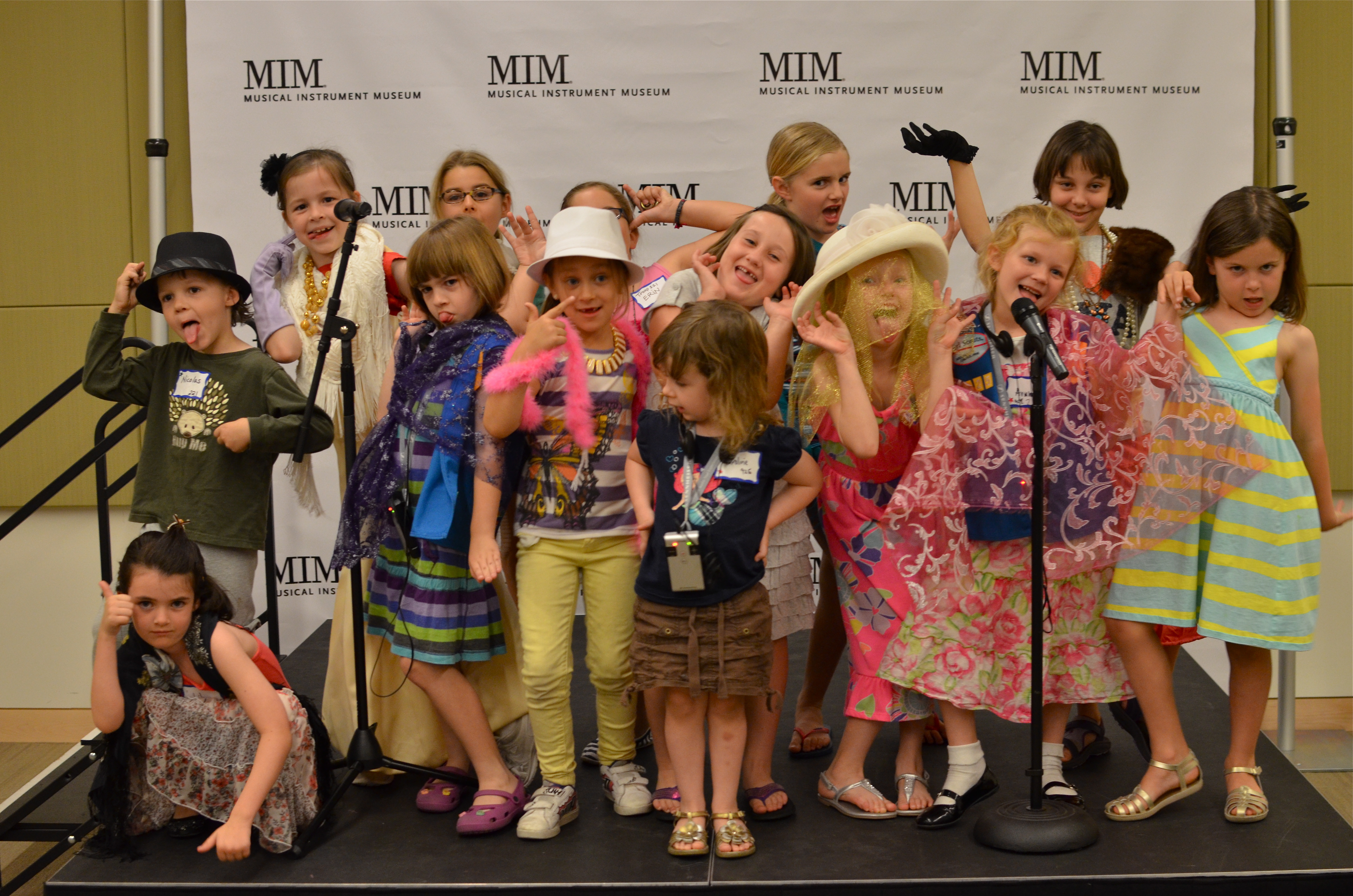
Take two, with just three extra words spoken: now go crazy. 1/40 sec., f/4, ISO 800, 35mm.
Point a camera at a child and he will try to give you what you want. But let him know it’s all right to inject himself into the process, and you will be amazed at the difference in the end product.
I recently took a series of informal portraits of several packs of Girl Scouts at a museum. They were told that they could use any of a variety of costume accents and musical instruments to create their own concept of the artists they saw on exhibit on their tour. Some of the girls organically assumed another identity completely, rock goddess, cowgirl, bluesy diva, and so on. Others stood frozen, as if waiting for me or someone “official” to tell them “what to do”. The hardest shots were the group portraits of the individual troops. The first frame was always stiff, awkward, like bankers at First National posing for a company picture in 1910.
However, simply by my saying just a few words like, “now act like you want to”, or, “now, act crazy”, the formal camera faces were stripped away, with truly great results. Arms on hips: attitude: dance poses: defiance.
Real kids.
I didn’t tell them what kind of pose to give me. I didn’t have to. They knew.
A camera can be a momentary intruder in a child’s busy day, but it doesn’t have to be. And photos of our children can actually show the magic behind the mechanical smile. However, the request that a kid show you something real must be a sincere one. And you have to be ready when the moment comes.
Getting beyond “smile” is the beginning of something wonderful.
(Follow Michael Perkins on Twitter @mpnormaleye)
Related articles
JUDGING BOOKS BY THEIR “COVERS”
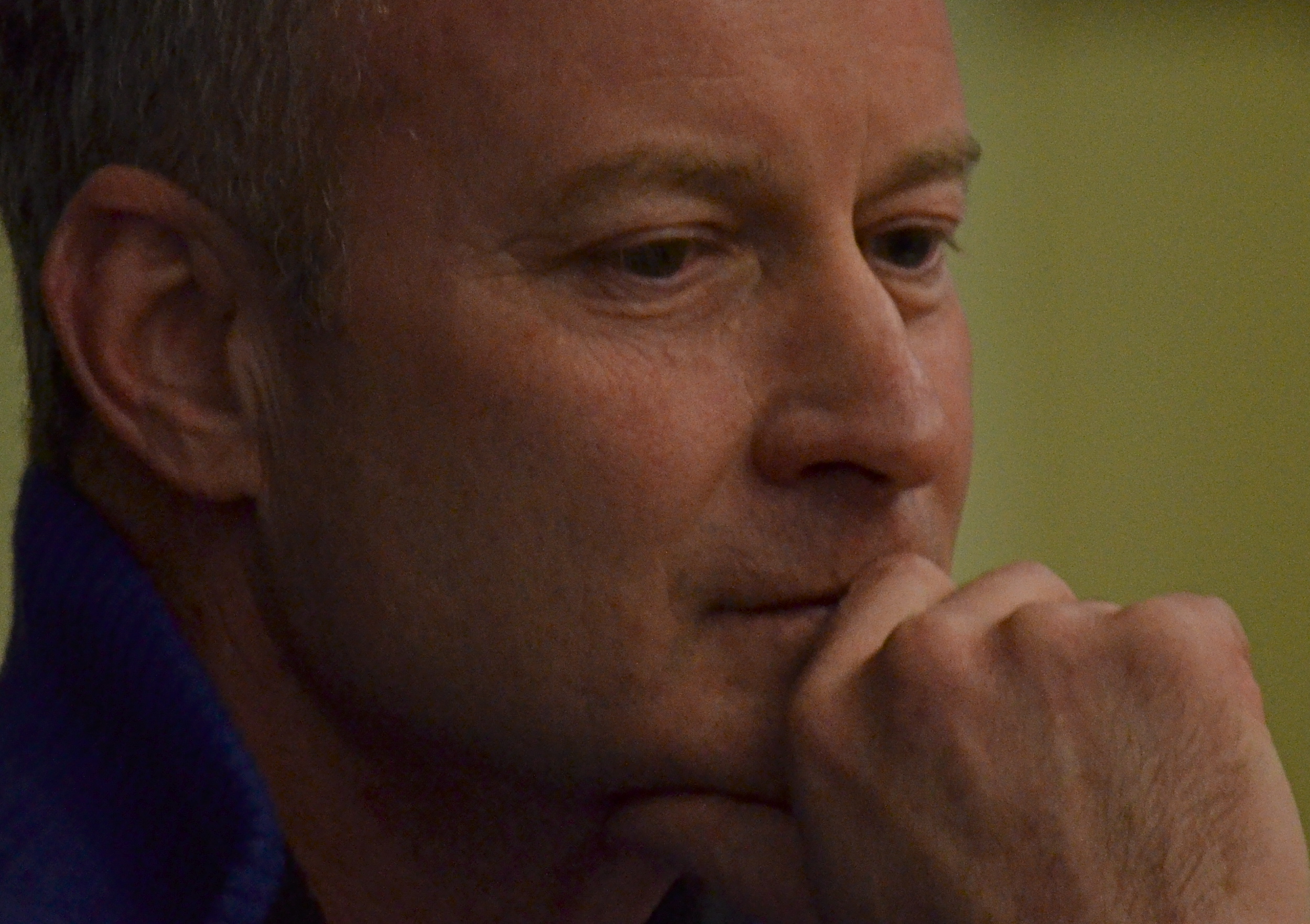
A pensive moment with Timothy Egan, “Opinionator”columnist for the New York Times and Pulitzer prize-winning author of “The Worst Hard Time”. 1/80 sec., f/6.3, ISO 1600, 300mm.
By MICHAEL PERKINS
THE TUCSON FESTIVAL OF THE BOOK, not yet five years old, has quickly evolved into one of the premier annual events in the publishing world. Hosted over an entire weekend in March during spring break on the University of Arizona campus, it showcases hundreds of authors and thousands of titles that range in content over the entire spectrum of the printed word. It is also one of the most hassle-free environments for candid photography of many world-famous authors, with an atmosphere which is intimate, informal, and bristling with energy.
In the simple discussion forums and panels of the TFOB, authors occupy the immediate space of their readers in a way that fires their features with zeal, a quality that lends itself powerfully to seeing the very faces of books. It’s a shooter’s smorgasbord, and the meeting spaces are compact enough (usually University classrooms) that a good medium zoom boosted to about 1600 ISO will give you captures fairly free of noise and a real feeling of being there. In these smaller settings, a relaxed feeling pervades, with authors evolving into stage performers rather than lecturers. The result is no bloodless reading, but a kind of theatrical sales pitch on behalf of the author’s ideas, one part poet and one part Professor Harold Hill from The Music Man.
I started shooting at TFOB four years ago and have learned more each year about circumventing the less-than-ideal lighting scheme (there really isn’t any) and clicking off hundreds of “drat!” images that fell short of what I was seeing. Shooting inside by flourescent light always means taking sample images with various white balances and making changes on the fly, as well as compensating for the light fall-off and additional vibration risk that occurs when you’re fully zoomed in.
Best thing is, though, there are almost no visual distractions to lead the eye away from the authors, since
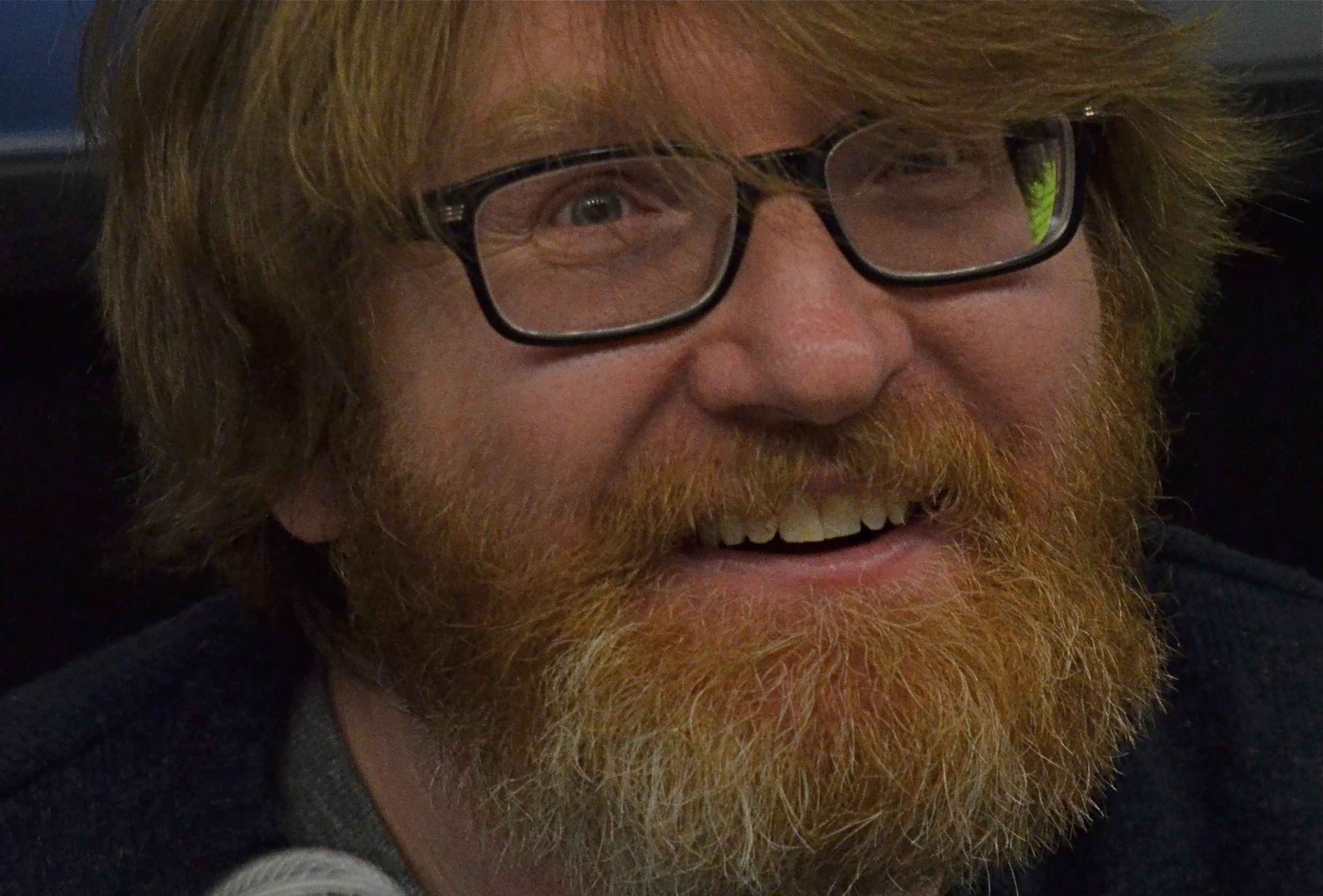
Culture hero Chuck Klosterman, author of “Sex, Drugs, and Cocoa Puffs”. 1/100 sec., f/6.3, ISO 1600, 116mm.
for the most part they stand before blackboards or blank walls. The shots don’t have to be simplified….they are already pretty stark. In addition, you can just frame head shots for the middle third of the subject’s faces, since you aren’t really there to capture their haircut or the water bottles and mics nearby.
Do yourself a favor and investigate a trip to the southwest each March for this amazing event.
If you love books, it’s essential. If you study faces, it’s the icing on the cake.
(NOTE: follow Michael Perkins on Twitter for the “Normal Eye Clicks Of The Day” and “Today in Photo History” at http://www.twitter.com/mpnormaleye. Share your own images with me, especially Instagram and phone snaps. You are always a vital part of this conversation.)
Related articles
- 5 ways to find favorite authors at book festival (azstarnet.com)
- Tucson book festival author inspired by grandkids (azstarnet.com)
ESCAPE FROM PLANET PORTRAIT
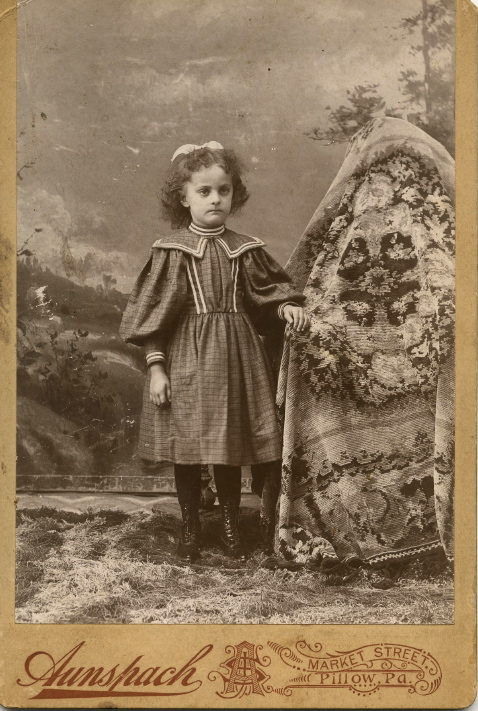
Does this child look happy to you? Does she look like she even has a pulse? Surely we do better kid portraits today, er, don’t we?
By MICHAEL PERKINS
TO HEAR US TELL IT, WE ALL REALLY LOVE OUR KIDS. Assuming that to be true, why do we still subject them to the greatest act of photographic cruelty since Tod Browning’s Freaks? I speak of course, of the creatively bankrupt ritual of studio portraits, many of them cranked out at department stores or discount mills, too many of them making our beloved progeny look like waxworks escaped from a casting call for Beetlejuice.
We can surely do better.
I’m on record as believing that children are the noblest work of nature, coming into the world bearing only joy and untainted by the cynical clown olympics that comprise our “adult” way of thinking. And since we all probably feel the same way, why do so many of us park the little dears in front of hideous backdrops, surround them with absurd props, and gussy them up as everything from fairy princesses to ersatz puppies to fake cherubs?
Part of this ridiculous tradition owes its origins to the early days of photography, when a portrait sitting was the one means by which people who might never leave behind any other visual record of their lives were placed in formalized settings for an “official” rendering of their features. Slow film speeds and primitive lighting dictated that parents “leave it to the pros”, giving these modestly gifted artists decades of practice in weaving imaginary dream framings for our precious kids. (Full disclosure: Yes, I know that the image at left is a leftover from the Victorian age. I didn’t post any contemporary images because (a) many of them are almost this bad and you already get the idea, and (b) I wasn’t eager to be beaten to a pulp by any proud parents.)
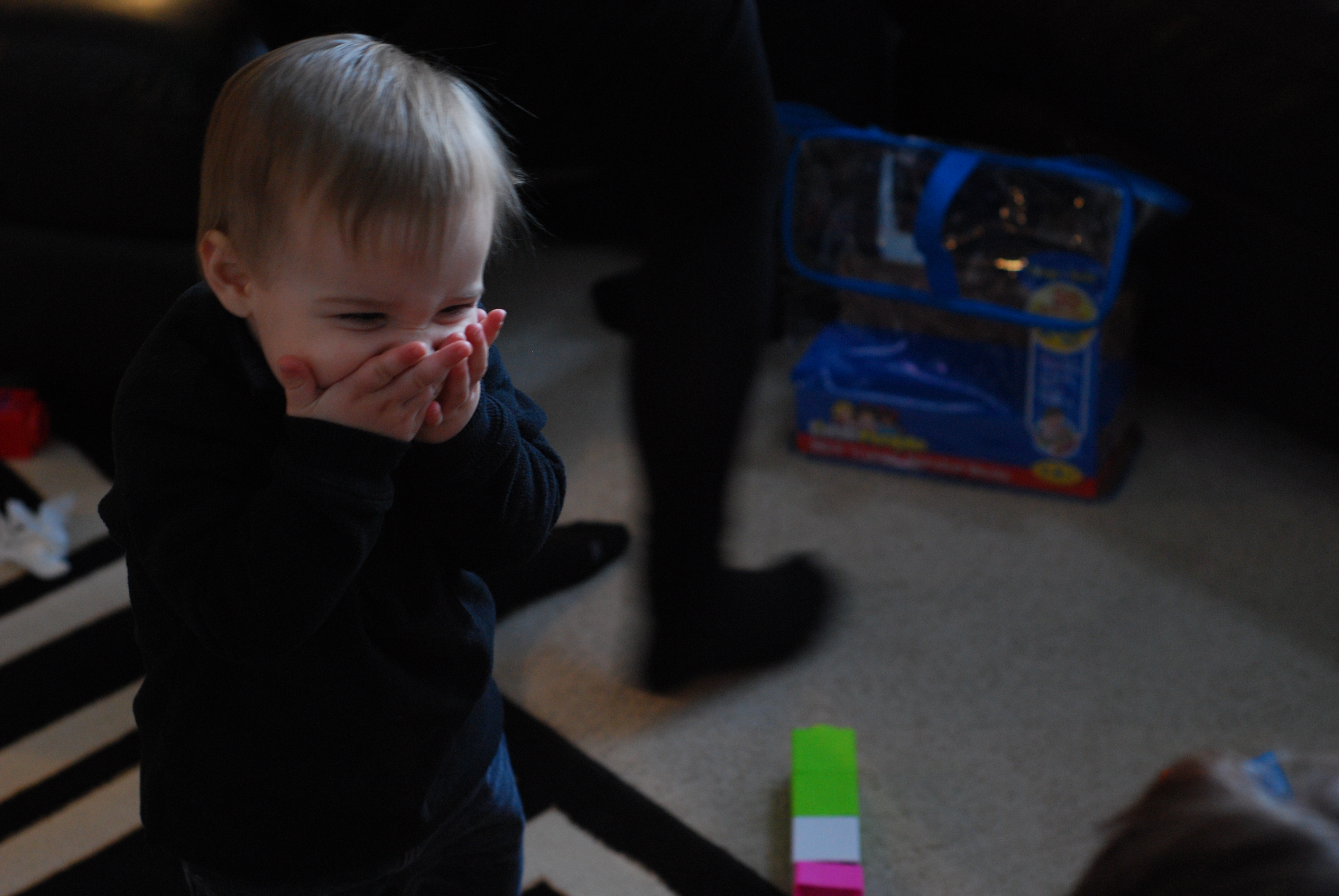
Get out of your comfort zone and into your child’s.
Could it be more obvious, billions of Instamatics and Instagrams later, that this sad ritual hasn’t had any fresh air pumped into it since the golden age of Olan Mills class pictures? Even the most elementary “how-to” books on candid photography have been telling us the same thing for nearly a century: don’t formalize the setting, formalize your thinking. Let your child show you what he is, in his own environment. That means that you need to shoot constantly and invisibly, getting out of the kid’s way. No 3-2-1 “Cheese!” commands, no “sit up straight and don’t slouch” advice, no arbitrary situation.
Sure, you can basically plan how you will shoot your child, but allow him to unfold before your ready camera and gain the confidence to react in the moment. Stop trying to herd him into a structure or a setting. If at all possible, allow him to forget that you’re even in the room. Witness something wonderful instead of trying to construct it. Be a fly on the wall. The child is pitching great stuff every time he’s on the mound. Just make sure you’re behind the plate to to catch it.
Dirty little secret: there is nothing “magical” about most studio portraits. In fact, many of the results from the photo mills are just about the most un-magical pictures ever taken, although there are signs that things are changing. It simply isn’t enough to ensure a perfectly diffused background and an electronically exact flash. Even today’s most humble personal cameras have amazing flexibility to capture flattering light and isolate your subject from distracting backgrounds. And going from standard “kit” lenses (say, an 18-55mm) to an affordable prime lens (35mm, 50mm) gives us insane additional gobs of light to work with, all without using the dreaded pop-up flash, the photographic equivalent of child abuse.
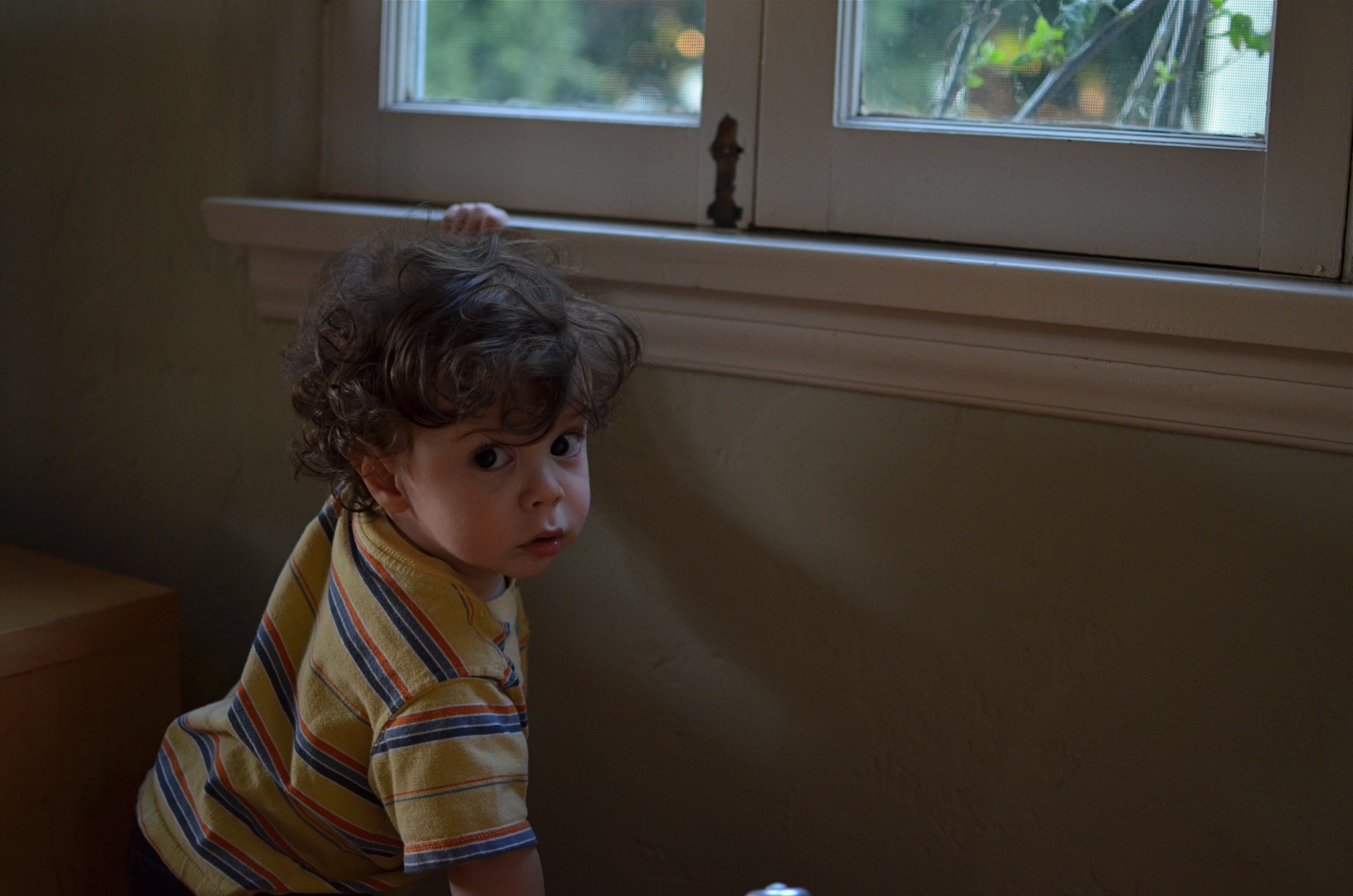
It don’t gotta be perfect. It does gotta be honest.
Doing it yourself with kid portraits is work, make no mistake. You have to be flexible. You have to be fearless. And you have to know when something magical’s about to happen. But it’s your child, and there is no outside contractor who has a better sense of what delight he has inside him.
Besides, isn’t it likelier that he will show you the magic in his own back yard than in a back room at K-Mart? Give him something that he loves to do, the better to forget you’re there, and crank away. I mean shoot a lot. And don’t stop.
You’re the expert here.
Don’t outsource your joy.
FLATTERY WILL GET YOU NOWHERE
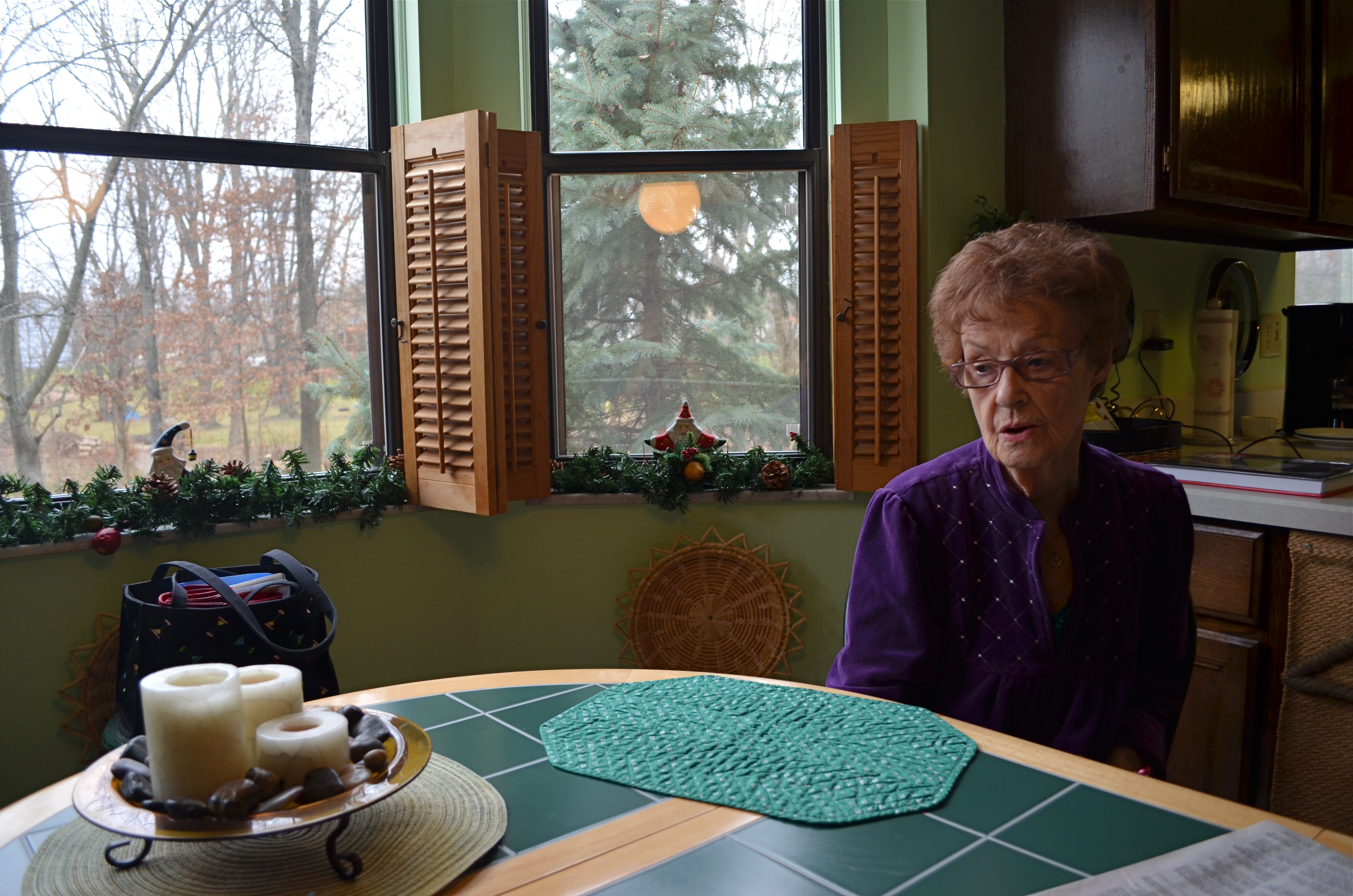
My beautiful mother, well past 21 but curator of a remarkable face. Window light softens, but does not erase, the textures of her features. 1/60 sec., f/4.5, ISO 200. 18mm.
By MICHAEL PERKINS
THE DEPICTION OF THE FACES OF THOSE WE LOVE IS AMONG THE MOST DIVISIVE QUESTIONS IN PHOTOGRAPHY. Since the beginning of the medium, thoughts on how to capture them “best” clearly fall into two opposing camps. In one corner, the feeling that we must idealize, glamorize, venerate the features of those most special in our lives. In the other corner, the belief that we should capture faces as effects of time and space, that is, record them, without seeking to impose standards of grace or beauty on what is in front of the lens. This leads us to see faces as objects among other objects.
The first, more cosmetic view of faces, which calls for ideal lighting, a flattering composition, a little “sweetening” in the taking, will always be the more popular view, and its resultant images will always be cherished for emotionally legitimate reasons. The second view is, let’s “face” it, a hard sell. You have to be ready for a set series of responses from your subjects, usually including:
Don’t take me. I just got up.
God, I look so old. Delete that.
I hate having my picture taken.
That doesn’t even look like me.
Of course, since no one is truly aware of what they “look like”, there is always an element of terror in having a “no frills” portrait taken. God help me, maybe I really do look like that. And most of us don’t want to push to get through people’s defenses. It’s uncomfortable. It’s awkward. And, in this photo-saturated world, it’s a major trick to get people to drop their instinctive masks, even if they want to.
Still.
As I visually measure the advance of age on my living parents (both 80+ ) and have enough etchings on my own features to mirror theirs, I am keener than ever to avoid limiting my images of us all to mere prettiness. I am particularly inspired by photographers who actually entered into a kind of understanding with their closest life partners to make a sort of document out of time’s effects. Two extreme examples: Richard Avedon’s father and Annie Leibovitz’ partner Susan Sontag were both documented in their losing battles with age and disease as willing participants in a very special relationship with very special photographers….arrangements which certainly are out of the question for many of us. And yet, there is so much to be gained by making a testament of sorts out of even simple snaps. This was an important face in my life, the image can say, and here is how it looked, having survived more than 3/4 of a century. Such portraits are not to be considered “right” or “wrong” against more conventional pictures, but they should be at least a part of the way we mark human lives.
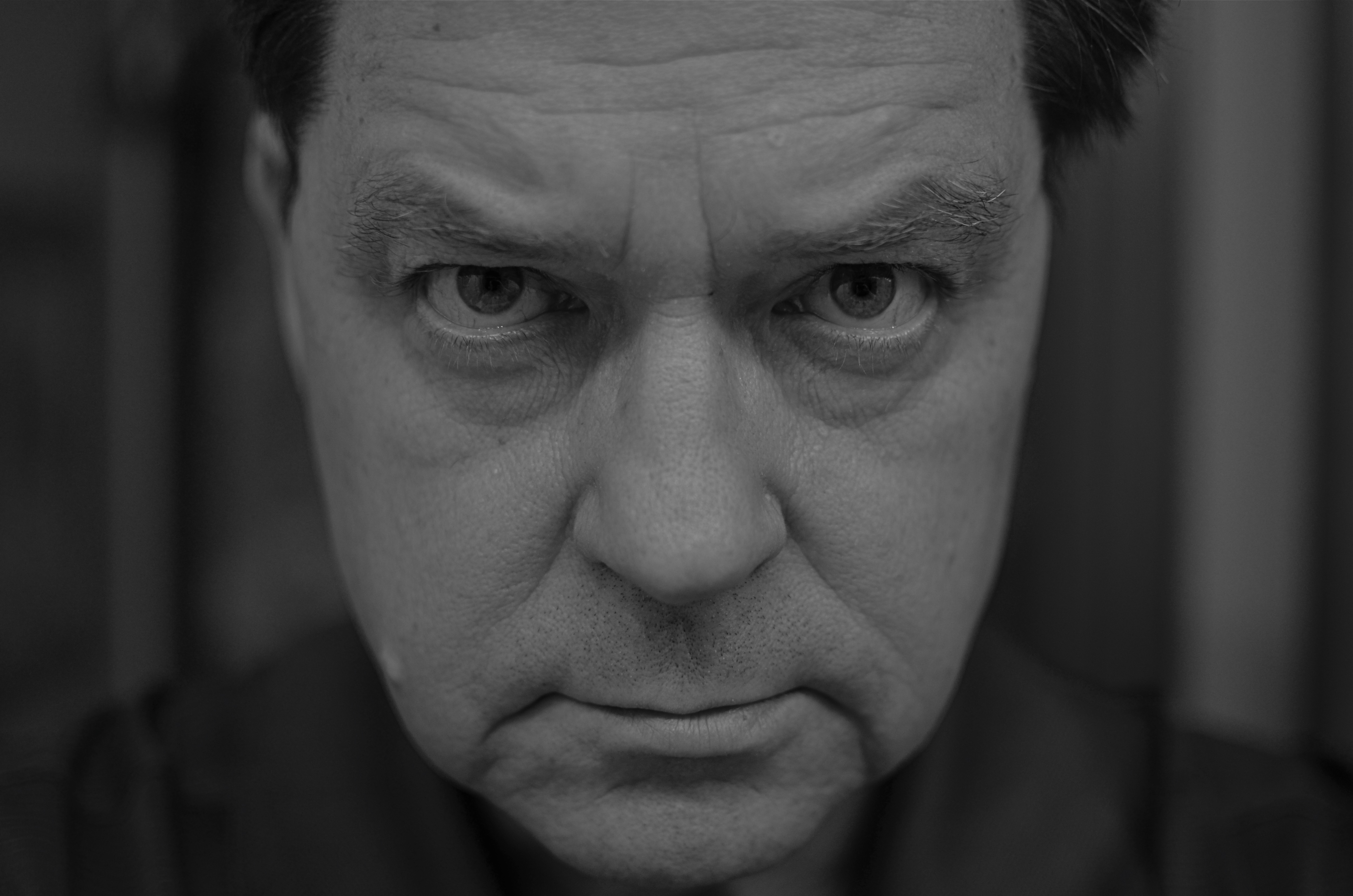
Don’t forget to document the effects of time on your own face. 1/160 sec., f/1.8, ISO 200, 35mm.
Everyone has to decide their own comfort zone, and how far it can be extended. But I think we have to stretch a bit. Pictures of essentially beautiful people who, at the moment the shutter snaps, haven’t done up their hair, put on their makeup, or conveniently lost forty pounds. People in less than perfect light, but with features which have eloquent statements and truths writ large in their every line and crevice. We should also practice on ourselves, since our faces are important to other people, and ours, like theirs, are going to go away someday.
In trying to record these statements and truths, mere flattery will get us nowhere. The camera has an eye to see; let’s take off the rose-colored filter, at least for a few frames.
Related articles
- The Great Richard Avedon (sandroesposito.wordpress.com)
THE PROSCENIUM
By MICHAEL PERKINS
IT IS THE OLDEST FRAMING DEVICE IN HISTORY. If you’ve ever watched a play on any stage, anywhere in the world, you’ve accepted it as the classic method of visual presentation. The Romans coined the word proscenium, “in front of the scenery”. Between stage left and stage right exists a separate reality, defined and contained in the finite space of the theatre’s forward area. What is included in the frame is everything, the center of the universe of certain characters and events. What’s outside the frame is, indefinite, vague, less real.
Just like photography, right? Or to be accurate, photography is like the proscenium. We, too select a specific world to display. We leave out all the other worlds not pertinent to our message. And we follow information in linear fashion…left to right, right to left. The frame gives us the sensation of “looking in” to something that we are only visiting, just as we only “rent” our viewpoint from our theatre seats.
We learned our linear habit from the descendants of stage arrangement….murals, frescoes, paintings, all working, as our first literate selves would, from left to right. Painters were forced to arrange information inside the frame, to make choices of what that frame would include, and, as the quasi-legitimate children of painting, we inherited that deliberately chosen viewpoint, that decision to show a select world, by arranging visual elements within the frame.
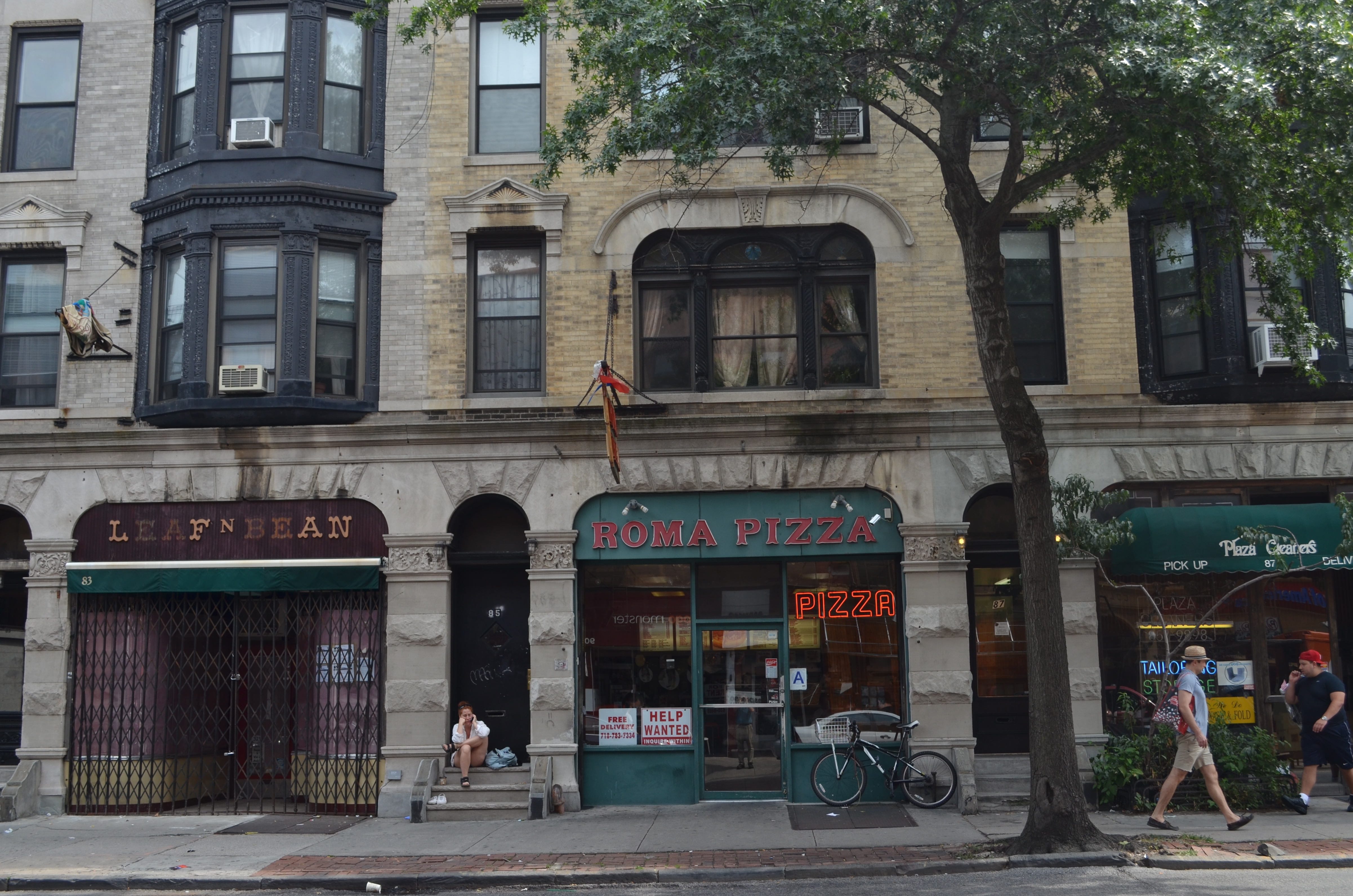
Park Slope, Brooklyn, 2012. Trying to catch as much activity as a street glance, at any given moment, can. 1/320 sec., F/7.1, ISO 100, 24mm.
For some reason, in recent months, I have been abandoning the non-traditional in shooting street scenes and harking back to the proscenium, trying to convey a contained world of simple, direct left-right information. Candid neighborhood shots seem to work well without extra adornment. Just pick your borders and make your capture. It’s a way of admitting that some worlds come complete just as they are. Just wrap the frame around them like a packing crate and serve ’em up.
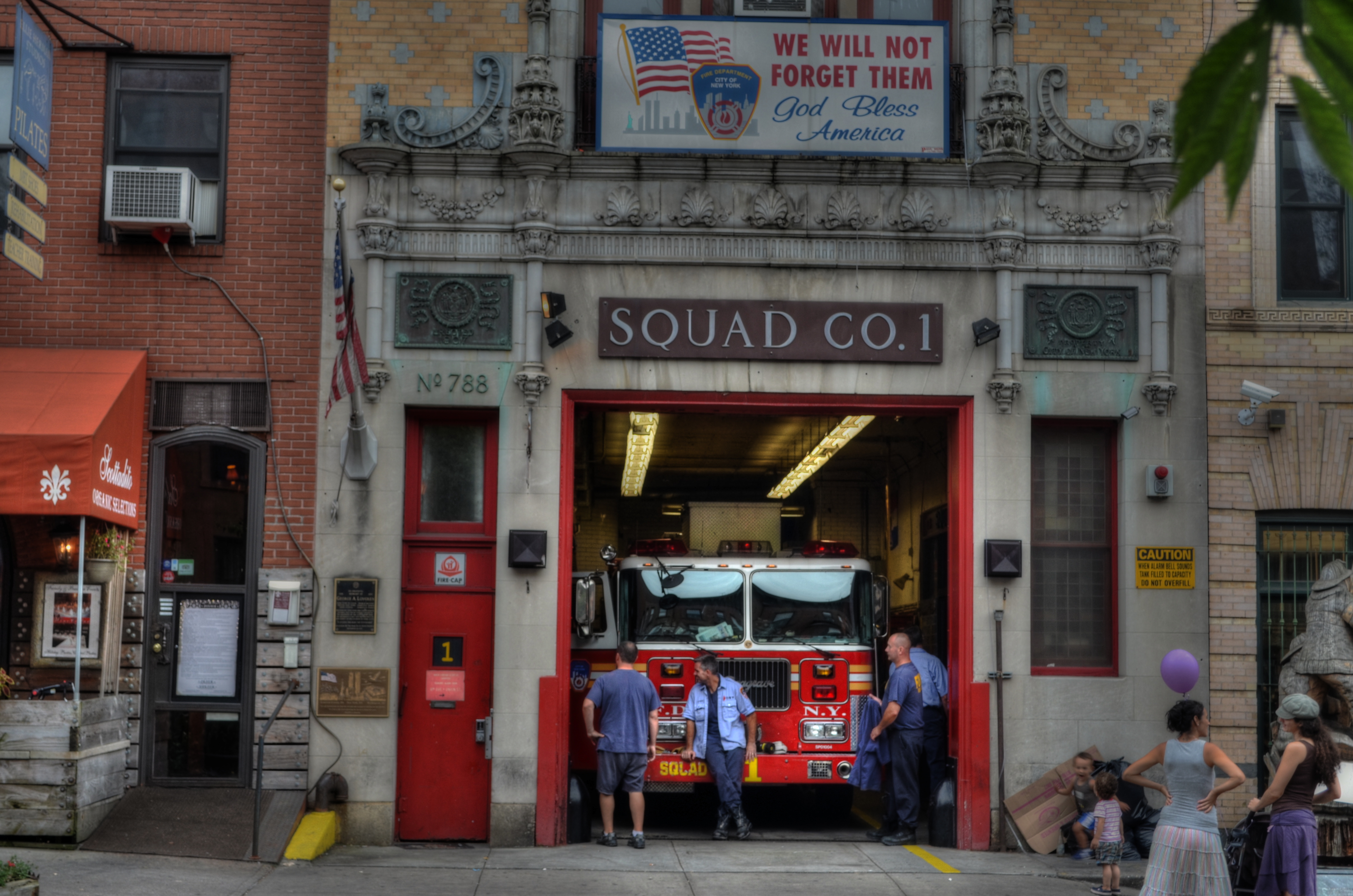
Like a theatre play, some images read best as self-contained, left-to-right “worlds”. A firehouse in Brooklyn, 2012. 1/60 sec., f/6.3, ISO 100, 38mm.
This is not to say that an angled or isometric view can’t portray drama or reality as well as a “stagy” one. Hey, sometimes you want a racing bike and sometimes you want a beach cruiser. Sometimes I don’t mind that the technique for getting a shot is, itself, a little more noticeable. And sometimes I like to pretend that there really isn’t a camera.
That’s theatre. You shouldn’t believe that the well-meaning director of the local production of Oklahoma really conjured a corn field inside a theatre. But you kind of do.
Hey what does Picasso say? “Art is the lie that tells the truth”?
Okay, now I’m making my own head hurt. I’m gonna go lie down.
 thenormaleye