ABSOLUTES
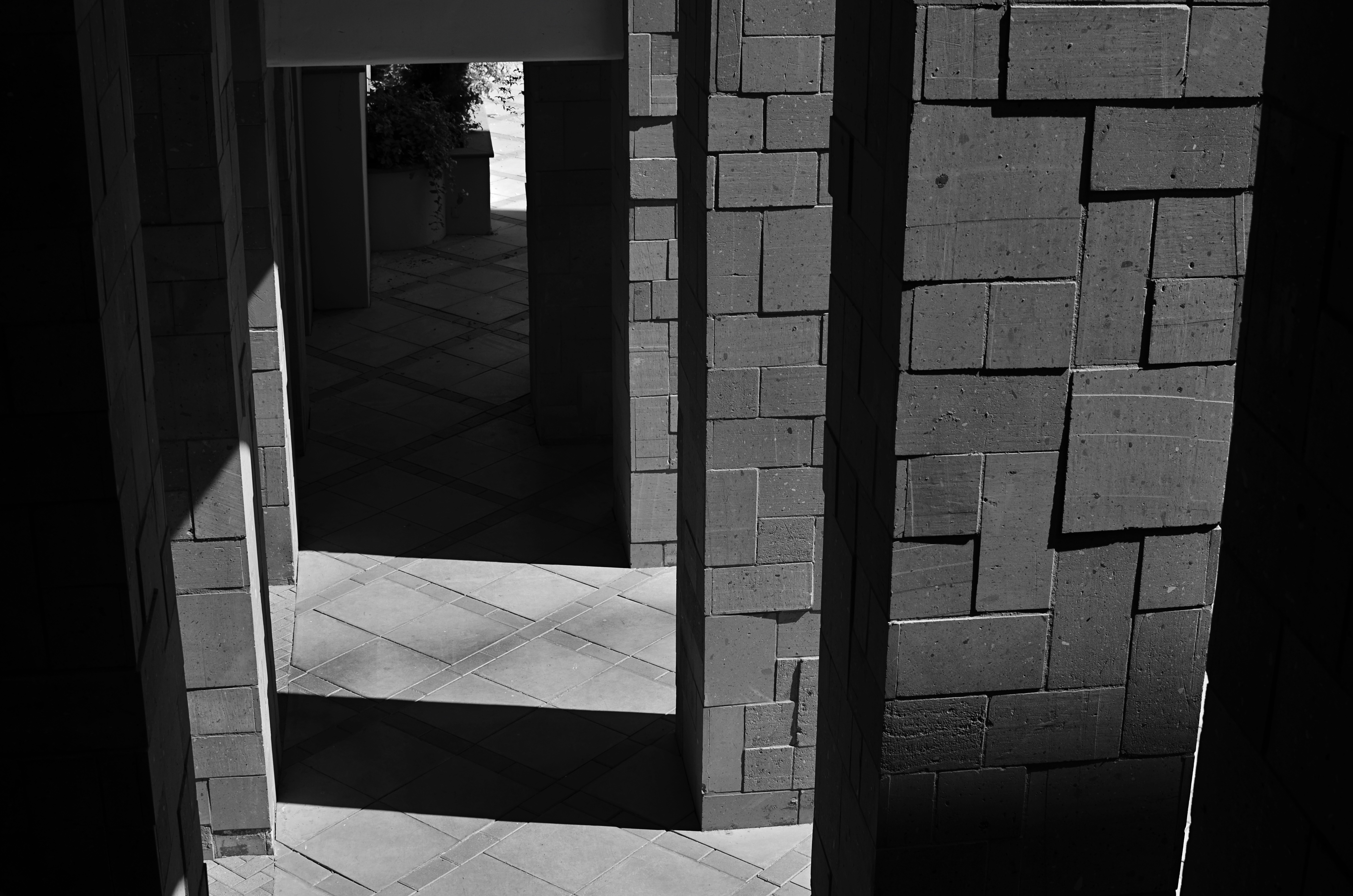
This image isn’t “about” anything except what it suggests as pure light and shape. But that’s enough. 1/250 sec., f/5.6, ISO 100, 35mm.
By MICHAEL PERKINS
THE POPULARLY-HELD VIEW OF THE HISTORY OF PHOTOGRAPHY makes the claim that, just as video killed the radio star, camera killed the canvas. This creaky old story generally floats the idea that painters, unable to compete with the impeccable recording machinery of the shutter, collectively abandoned realistic treatment of subjects and plunged the world into abstraction. It’s a great fairy tale, but a fairy tale nonetheless.
There just is no way that artists can be regimented into uniformly making the same sharp left turn at the same tick of the clock, and the idea of every dauber on the planet getting the same memo that read, alright guys, time to cede all realism to those camera jerks, after which they all started painting women with both eyes on the same side of their nose. As Theo Kojak used to say, “nevva happennnned…”
History is a little more, er, complex. Photography did indeed diddle about for decades trying to get its literal basics right, from better lenses to faster film to various schemes for lighting and effects. But it wasn’t really that long before shooters realized that their medium could both record and interpret reality, that there was, in fact, no such simple thing as “real” in the first place. Once we got hip to the fact that the camera was both truth teller and fantasy machine, photographers entered just as many quirky doors as did our painterly brothers, from dadaism to abstraction, surrealism to minimalism. And we evolved from amateurs gathering the family on the front lawn to dreamers without limit.
I love literal storytelling when a situation dictates that approach, but I also love pure, absolute arrangements of shape and light that have no story whatever to tell. As wonderful as a literal capture of subjects can be, I never shy away from making an image just because I can’t readily verbalize what it’s “about”. All of us have photos that say something to us, and, sometimes, that has to be enough. We aren’t always one thing or the other. Art can show absolutes, but it can’t be one.
There is always one more question to ask, one more stone to turn.
CHANGE YOUR ATTITUDE
By MICHAEL PERKINS
PHOTOGRAPHY IS OFTEN A GAME OF INCHES, a struggle in which outcomes vary wildly based on small, rather than large issues. Early photographers learned this the hard way, since their limited gear forced them to innovate composition and exposure with tiny tweaks that slowly but gradually added more refined skill to their work and better performance from their equipment. Ernest Haas’ great quote that a wide-angle lens is just as close as taking three steps backward still holds true. What has changed is that we have a greater tendency to think that we need more tech to make better pictures. That concept, simply, is poppycock.
For years, the option of a zoom lens was out of the question for the average photographer. The consumer-level zooms that existed were often optically inferior to standard or wide-angle glass (as testified to by Annie Leibowitz and other heavyweights), and so composition was acquired by physically closing or widening the actual distance between yourself and your subject. This is not to say that zooms didn’t eventually prove amazing tools, because they have. However, they demonstrate and instance in which tech has automated, and thus eliminated, an extra step of mindful concentration that used to reside solely in the photographer’s brain. This can lead, over time to an over-reliance on the gear to bring everything home, something it cannot ever do.
Learning to simply maximize the effect of whatever you have up front of the shutter is the easiest, and yet most overlooked aspect of many people’s work. We’d spend a lot less time lugging and swapping lenses if we knew how far we could push whatever we’ve got attached at the moment, and, indeed, masters like Scott Kelby, author of the best-selling Digital Photography Book series, has several “why change lenses? hunks of glass like the 18-200mm that can get him through an entire day without a swap. This works because he works a little harder at exploiting everything his gear can do.
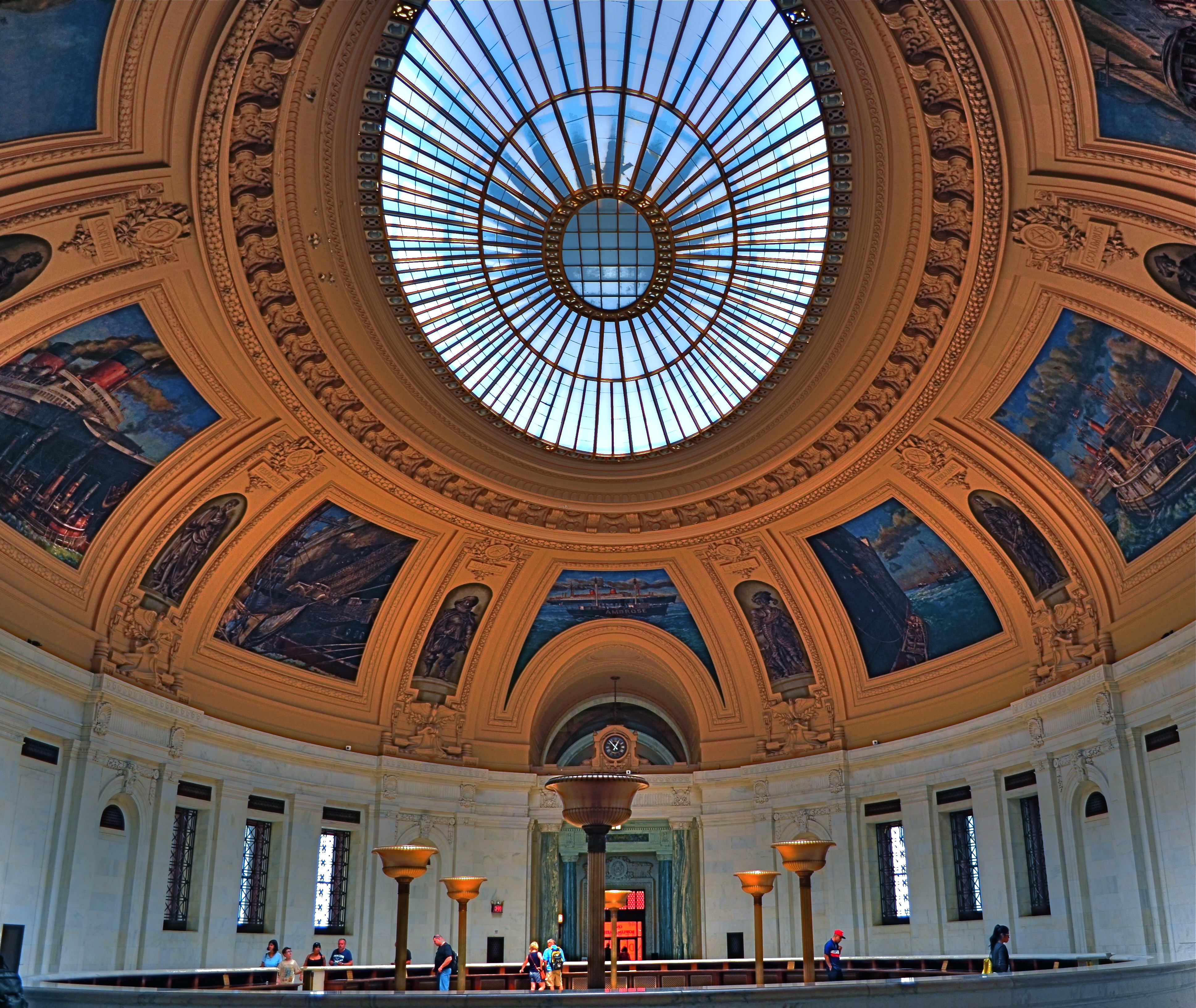
Wide-angle lenses deliver a variety of effects beyond just width.
Consider the above image. It’s taken at 18mm, but, because I arched the shot upwards, instead of maintaining a level horizon line, I forced the lens to do a little more of what it was originally designed to do….exaggerate dimensions and distances. The development of wide-angle lenses was, after all, pursued by shooters who wanted an enhancement, an interpretation, and not a recording, of reality. As such, the wide-angle in this shot over-accentuates the most prominent feature of this room within the old U.S. Customs building in Manhattan…its amazing murals. It also creates an illusion of vastness, front-to-back, in a room that is already pretty huge. And this is all done by pivoting my head upward about 30 degrees.
The game of inches is the great equalizer in photography between pro and amateur, because it gives the advantage to those who plan the best, see the most, and think the widest. And you don’t need a closet full of geegaws to do that.
SHOW, DON’T TALK
Got a feeling inside (can’t explain)
It’s a certain kind (can’t explain)
I feel hot and cold (can’t explain)
Yeah, down in my soul, yeah (can’t explain)—–Pete Townshend
By MICHAEL PERKINS
PHOTOGRAPHY NEEDS MORE ARTISTS AND FEWER ART CRITICS. Period, full stop.
When it comes to imaging, those who can, do, and those who can’t, curate shows. Or pontificate on things they had no hand in creating. It’s just human nature. Some of us build skyscrapers and some of us are “sidewalk superintendents”, peering through the security fencing to cluck our tongues in scorn, because, you know, those guys aren’t doing it right.
Even wonderful pioneers in “appreciation” like the late John Szarkowski, one of the first curators of photography at the New York Museum of Modern Art , and a tireless fighter for the elevation of photography to a fine art, often tossed up bilious bowlfuls of word salad when remarking on the work of a given shooter. As essays his remarks were entertaining. As explanations of the art, they were redundant.
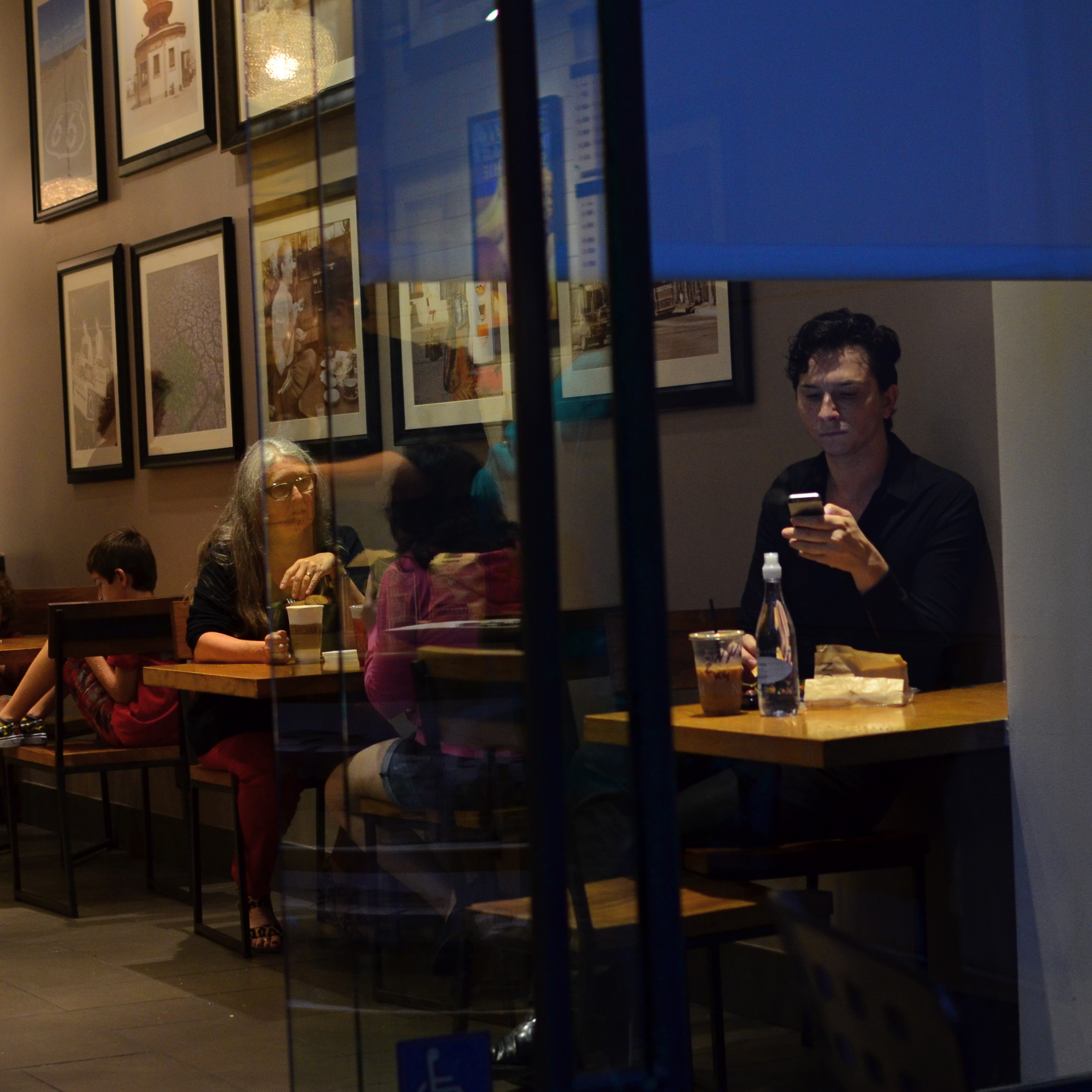
What is this photograph “saying”? Well, that’s for you to decide, isn’t it?
This human need to explain things is vital if you’re trying to untie the knotted language of a peace treaty or complete a chemical equation, but it just adds lead boots to the appreciation of photography, which is to be seen, not read about (sassy talk for a blogger, no? Oh, well). No amount of captioning (even by the artist) can redeem a badly conceived photograph or make it speak more clearly. It all begins to sound like so many alibis, so many “here’s what I was going for” footnotes. Photography is visual and visceral. If you reached somebody, the title of the image could be “Study #245” and it still works. If not, you can append the biggest explanatory screed since the Warren Report and it’s still a lousy photo.
I’m not saying that all context is wrong in regard to a photo. Certainly, in these pages, we talk about motivation and intention all the time. However, such tracts can never be used to do the actual job of communicating that the picture is supposed to be doing. Asked once about the mechanics of his humor, Lenny Bruce spoke volumes by replying,” I just do it, that’s all.” I often worry that we use captioning to push a viewer one way or another, to suggest that he/she react a certain way, or interpret what we’ve done along a preferred track. That is the picture’s task, and if we fail at that, then the rest is noise.
FRONT TO BACK
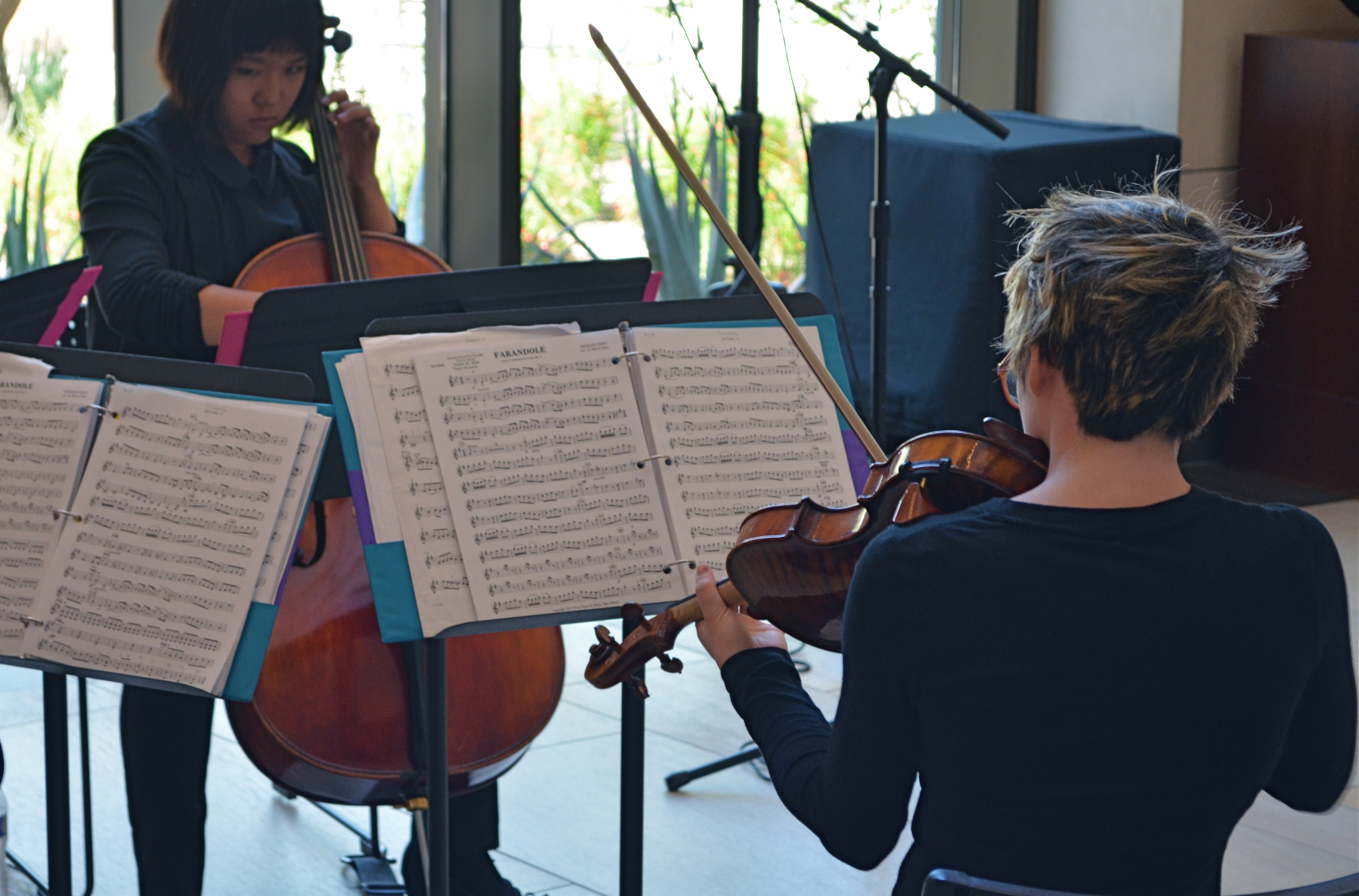
Then Play On: 1/60 sec., f/5.6, ISO 500, 55mm.
By MICHAEL PERKINS
NOT ALL PORTRAITS INVOLVE FACES.
I’ll let that little bit of blasphemy sink in for a moment. After all, the face is supposed to be the key to a persona’s entire identity, and God knows that many a mediocre shot has been saved by a fascinating expression, right? The eyes are the window to the soul, and so on, and so forth, etc., etc.
But is this “face-centric” bias worthy of photographers, who are always re-writing the terms of visual engagement on every conceivable subject? Is there one single way to make a person register in an image? Obviously I don’t believe that, or else I wouldn’t have started this argument, but, beyond my native contrariness, I just am not content with there being a single, approved way of visualizing anything. I’ve seen too much amazing work done from every conceivable standpoint to admit of any limitation, or need for a “rule”, even when it comes to portraiture.
The face is many things, but it’s not the entire body, and even if you capture a shot in which the subject’s face is absent, he or she can be so very present in the feel of the picture. Arms, shoulders, the sinews, the stance, the way a body stands in a frame…all can bear testimony.
I recently stumbled onto an impromptu performance by a young string quartet, and faced the usual problem of not being able to simultaneously do justice to all four members’ faces, to balance the tension and concentration written on all their features in performance. In such situations, you have to make some kind of call: the picture becomes a dynamic tension between the shown and the hidden, just as the music is a push-and-pull between dominant and passive forces. You must decide what will remain unseen, and, sometimes, that’s a face.
As the music evolved, the two ladies seen above were, in different instants, either in charge of, or at the service of, the energy of the moment. For this picture, I saw more strength, more power in the back of the violinist than in the front of the cellist. It was body language, a kind of structural tug between the pair, and I voted for what I could not show fully. As it turned out, the violinist actually has a lovely face, one possessing a stern, disciplined intensity. On another day, her story would have been told very differently.
On this day, however, I was happy to have her turn her back on me.
And turn my own head around a bit.
 thenormaleye