AS THE WORLD TURNS
By MICHAEL PERKINS
THE GREATEST TEACHING MUSEUMS are not “museums” at all, but those sites where a present, living enterprise is ongoing, activities that also preserve and demonstrate the original purpose of the spaces. Walking through a building whose continuing existence illustrates what made it great in the first place outranks any mere remembrance staged in some sterile exhibit space. It also allows photographers to re-invent the visual records of such sites for their generation.
In the case of one venerable building in New York City, I have lately felt a poignancy in how photography itself has figured in the creation of the American Century.
As this little scribble goes to press, the latest owner for the long-embattled New York Daily News has decided to lay off nearly fifty per cent of that scrappy newspaper’s editorial staff, including virtually all its photographers. Born in 1919, the News was, from the beginning, an upstart, a locally focused, close-to-the-ground, bare-knuckled chronicle of Gotham’s daily doings, delivered with a huge dollop of attitude. Promoting itself as “New York’s Picture Newspaper”, the NYDN brought photography to the fore as a dominant storytelling component, in a way no other American newspaper ever had. While the New York Times‘ polite and prim broadsheet spoke in its inside voice, the News, its smaller tabloid format an easier fit for one-handed commuters, screamed “EXTRA!!”. You might not like the message, but by God, you couldn’t look away.
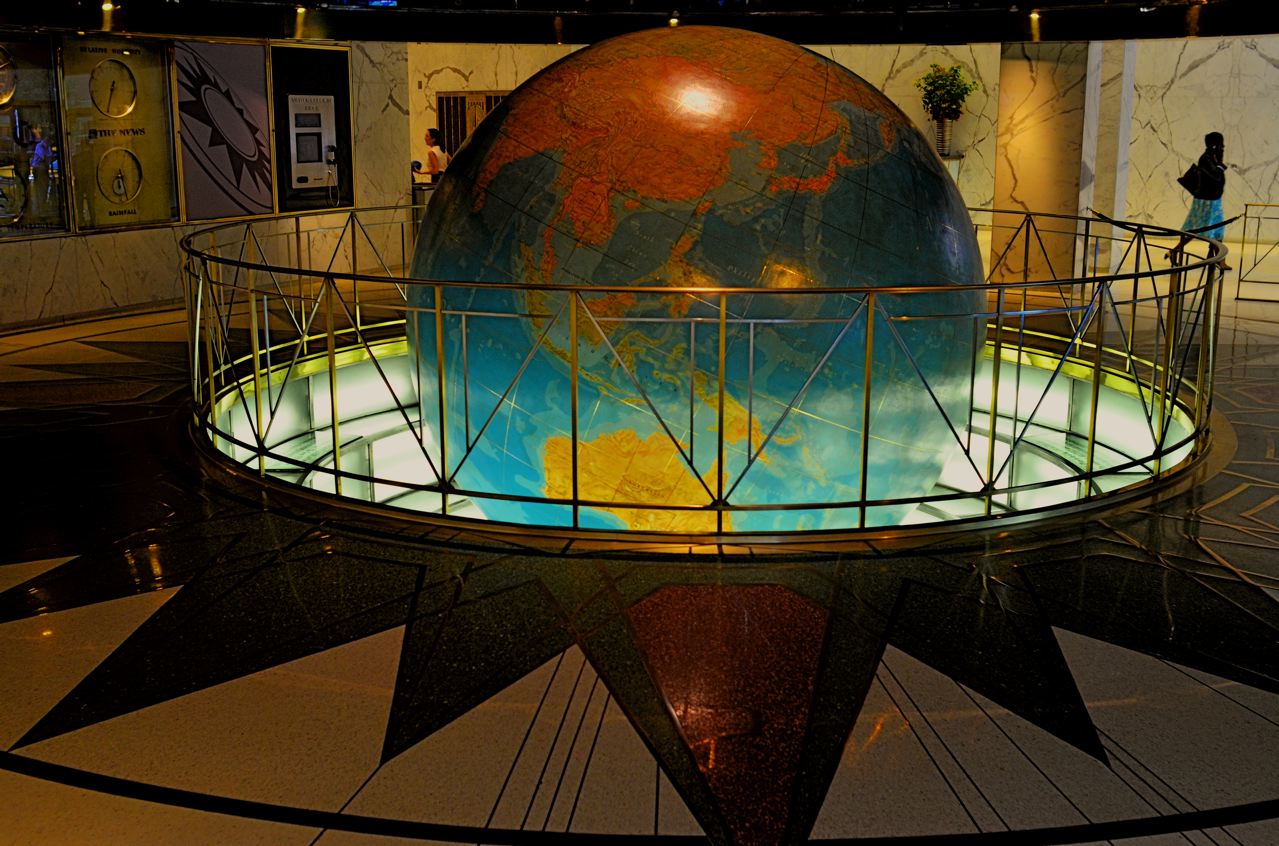
Inside the lobby of the News‘ building at 220 East 42nd Street, the message was a little more mellow, with its enormous illuminated world globe emitting a vibe of stability, science, order, reliability. Today, with the paper long since having emigrated to 4 New York Plaza, the globe, now protected (as is its host building) by city landmark status, still revolves, quietly glowing like the ember of a world that once burned as bright as a comet.
And that world moves on, of course. Markets decide what kinds of newspapers they want, and careers will always wax and wane. But, for photographers, places like the News building, places that defined the American Century, still speak more eloquently than any tepid re-creations in formal museums, and chronicling them with cameras qualifies as vital work.
Finally, there is no substitute for the real thing, something director Richard Donner affirmed in 1978. Building sets for Superman: The Movie, Donner decided that he could save a tidy sum in the creation of the atmosphere for Clark Kent’s day job at the Daily Planet. The solution? Just send the camera crew and cast down to the News building……
OSCAR’S CRADLE
By MICHAEL PERKINS
HOLLYWOOD IS ONE OF THE SELECT LOCALITIES in the world’s largest democracy where royalty is not only tolerated but slavishly sought after. The crown (or crowns, plural) transfer from the recently fallen to the newly anointed with predictable regularity, but the ritual is always the same: we love the common people (they’re just like us!) until they are lucky enough to escape our ranks, after which we, in turn, adore them, despise them (who do they think they are?), forgive them, and adore them anew.
In terms of photography, the camera seeks out ever new lovers, nearly all of them human, and therefore fleeting. A careful study of Tinseltown, however reveals that the true royalty, the royalty that endures, is the real estate. And even in a town where “reality” is defined by whether you shoot on location or on the back lot, Hollywood harbors plenty of actual places where actual events actually occurred. Some are on the bus tours (Marilyn Monroe slept here), while others require a bit more digging. One of the industry’s most prestigious addresses is smack dab in a section so spectacularly tacky that, by virtue of merely being merely ostentatious, it seems positively muted.
The Hollywood Roosevelt Hotel (named in memory of Teddy, not Franklin) survives in legend not because it served as a studio or corporate cradle for the film industry, but because it was the first time the town turned out to honor….itself. Then make an annual habit of it. Hey, if you want modesty, live in Des Moine, okay?
The Roosevelt earned its filmic pedigree from the get-go, financed in 1926 by a group that included MGM chief Louis B.Mayer and screen idols Mary Pickford and Douglas Fairbanks (two-fourths of the founding quartet behind United Artists Pictures, along with Charlie Chaplin and director D.W. Griffith). Two years later, the hotel hosted a modest little dinner for 270 guests to fete honorees of the newly organized Academy of Motion Picture Arts & Sciences, some three months after the actual awards had been handed out, and minus the nickname “Oscars”, which would come about four years later.
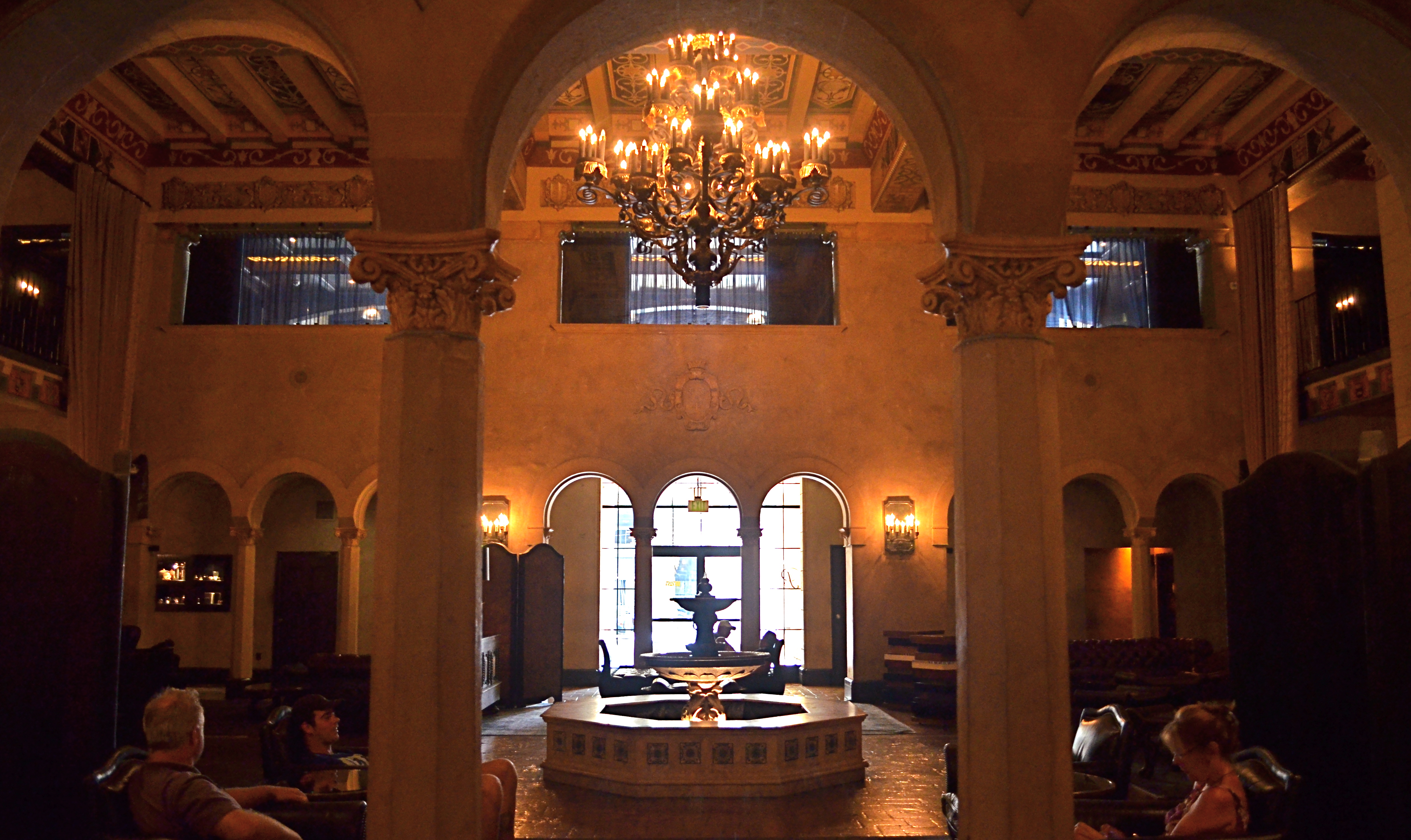
Over the decades the Roosevelt and its across-the-street neighbor the Chinese Theatre (which opened within months of the “R”‘s premiere) saw a fairly staid business district transformed into “Hollywood & Highland” (trade mark)…. Sucker Bait Central, a day-glo drag whose countless souvenir stops, IMAX pleasure palaces, low-rent novelties and neon knock-offs raised tackiness to the status of a religious movement. Meanwhile, the hotel’s crazy-quilt architectural style (‘Spanish Colonial Revival’…and, yes, there will be a test later), with its coffered ceilings, mid-century pool cabanas and wrought-iron chandeliers, was just fake-elegant enough to pass for average in a town renowned for its, er, flexible relationship with “class”. Rolling through the years with an occasional ownership transfer and the odd walk-on in movies like Beverly Hills Cop II and Catch Me If You Can, the Roosevelt has recently offered lodging as a contest prize on ABC’s Jimmy Kimmel Live!, and landed landmark status as Los Angeles Historic-Cultural Monument #545.
The Roosevelt’s photographic riches lie chiefly in its extremely dark main and elevator lobbies, its still-regal pool area and the legendary Cinegrill Lounge. The lobbies, at least for handheld shots, require high ISOs, slow shutter speeds and wide apertures. Flash may not be verboten but you won’t like the result, trust me. Indeed, the soft gold afforded by natural light washing into the murk from outside brings out the warmth of the Spanish textures, and adds a little tonal nostalgia to the scene. All things together, the Roosevelt stands as a monument to real occurrences, some of them fairly historically significant, in The Town That Invented Phony. And that’s the main challenge in Hollywood: if you can fake sincerity, the rest is easy.
BECAUSE WEIRD ISN’T FOREVER
By MICHAEL PERKINS
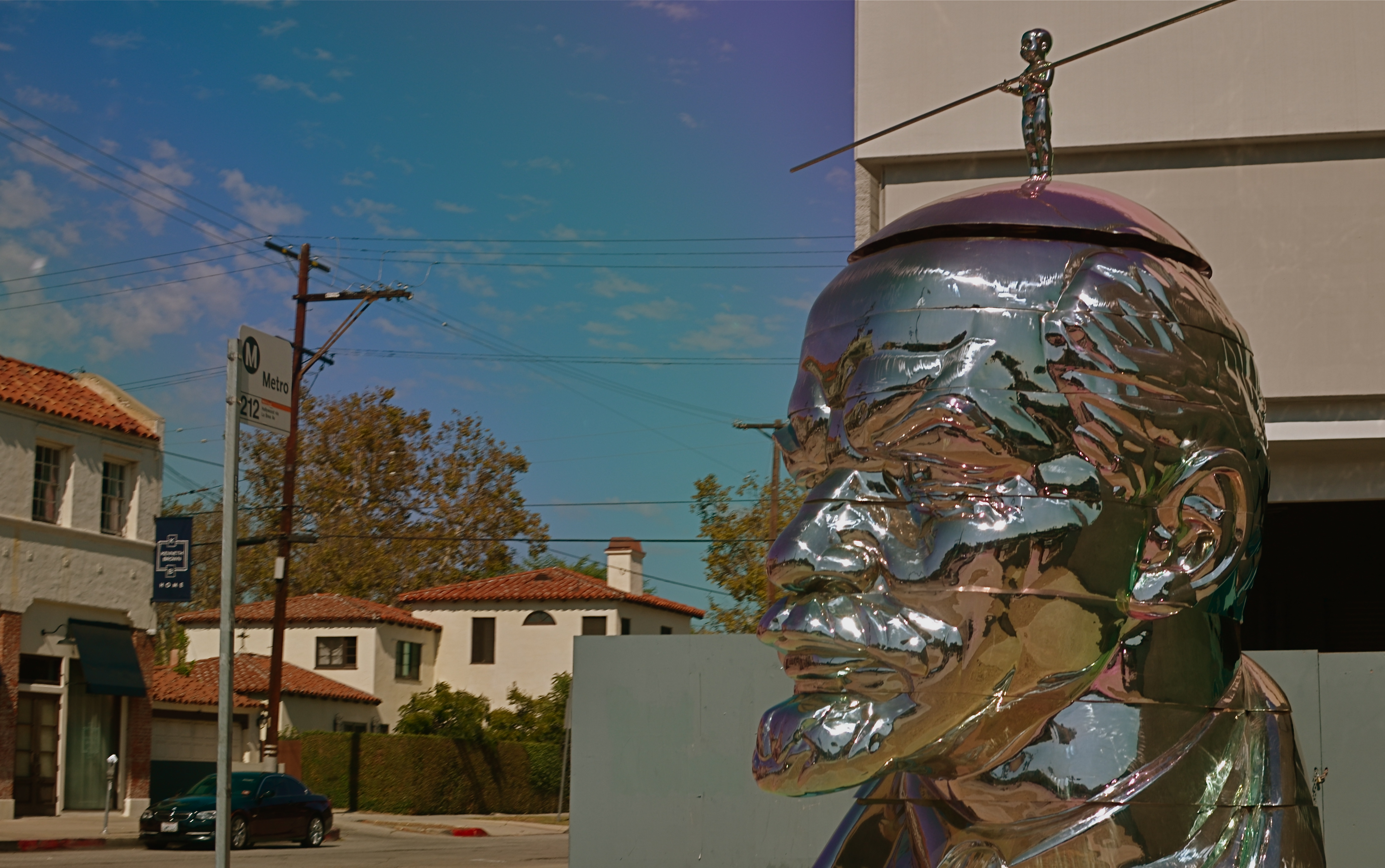
WHAT DO YOU DO when you’re a quirky bit of modern art and the museum that hosts you has been shuttered for missing the rent? Futher, let’s assume your creator’s homeland regards your “art” as political blasphemy and let’s also stipulate that you are, say, a fifteen-foot-high chromed head of Vladimir Lenin with a tiny baby balanced on its top.
In the words of Randy Newman, “I Love L.A.”
Beginning in 2011, expatriot Chinese artist brothers Gao Zhen and Gao Qiang found a home for their satirical sculpture, Miss Mao Trying To Poise Herself At The Top Of Lenin’s Head, in front of Los Angeles’ ACE Museum at 4th Street and La Brea Avenue. Locals and tourists alike soon embraced the weird, much as motorists might grow fond of sites like The Giant Ball Of String or The World’s Crookedest House, worshiping the sheer asinine novelty of the thing over any aesthetic merit. The result? Art meant as provocation landed, instead, with the soft cushiony comfort of fun, an ironic landmark, as in, “to get to my house, take the first left after the Lenin head..”
I Caught Lenin when he did L.A.
But here’s the take-away for photographers. Part of our job is to freeze the human drama as it shifts and morphs. That means being particularly sensitive to the things in society that change the quickest, including the fashion waves of the art world. And if serious art falls out of favor quickly, art that is loaded with satire or irony really races to the front of the obsolescence checkout. Weird ain’t forever.
Lenin and Miss Mao found by 2017 that it’s hard to stay a head (sorry) when the ACE Museum was evicted, leaving the work essentially homeless. Zhen and Qiang tried in vain to land the Commie Chromedome a new roost in China, but the Big Red One basically told them to pound sushi (humorless bunch, those socialists). What’s a murderous goateed revolutionary to do?
Well.
At this writing (June 2018), the most recent citing of Vlad’s Big Head was at the site of a trucking company near Newberry Springs, California, in the Mojave Desert, property owned by artist Weiming Chen, a friend of the Gao brothers who operates the area as a kind of statuary boneyard for his own works and those of others. A snapshot taken of the head showed Lenin looking characteristically defiant, although absent the lovely Miss Mao. I like to think she’s found peace as the hood ornament for a 1966 Diamond Reo rig highballing down CA-10. Hey, I can dream.
So, I treasure my 2014 snap of the head in situ in L.A. (seen above), back when life was good and fate was kind. Photography is commentary, but often, the top comment that comes to mind is something like “okaaaaay, so that happened..” No matter: it’s always worth a grin, and usually worth a picture.
As with Miss Mao, it’s a balancing act.
WE NEVER CLOSE
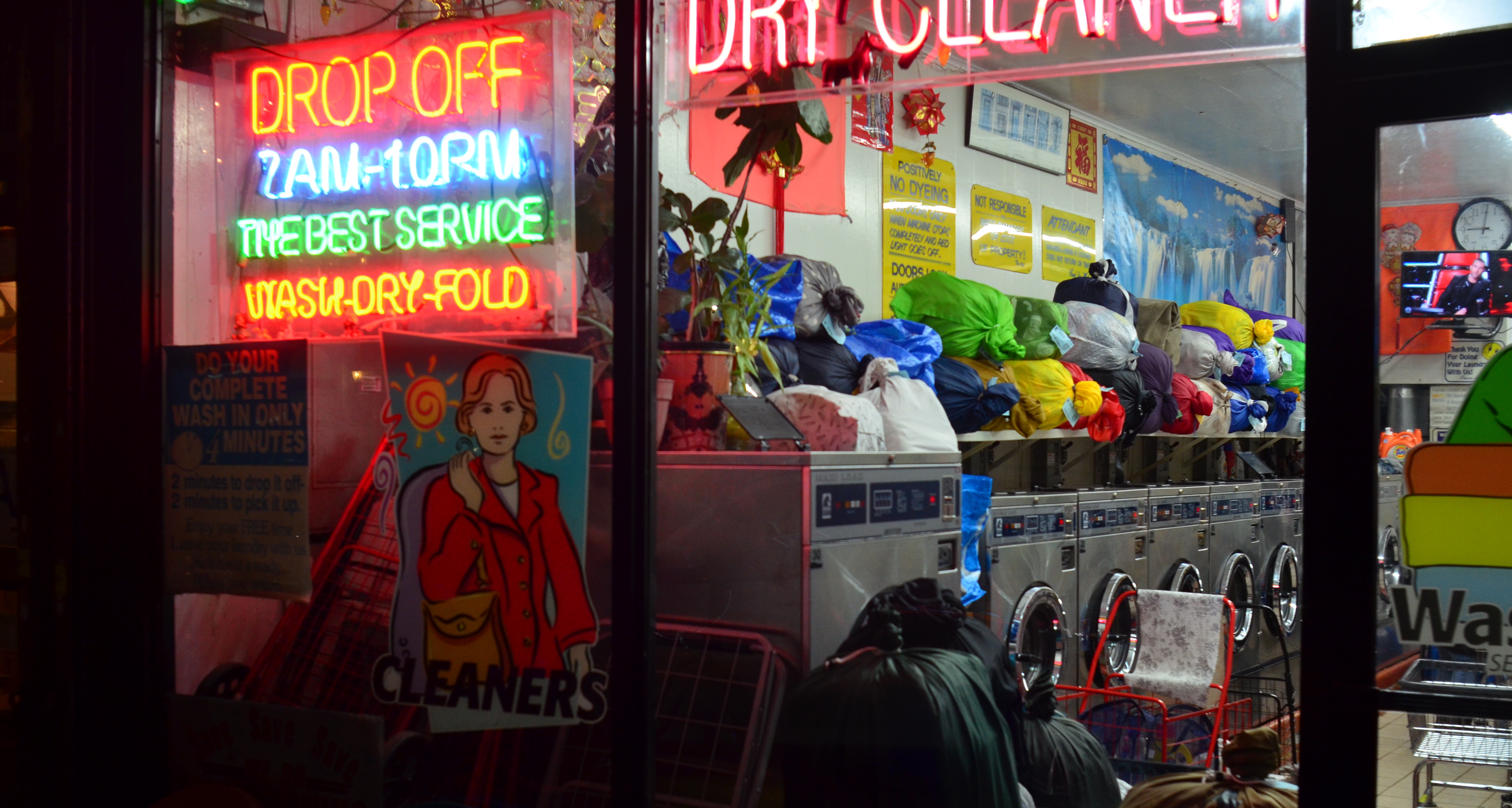
11:30pm, Queens, New York.
By MICHAEL PERKINS
THE DEMIMONDE. The night shift. The third trick. Up with the dawn. Done for the night.
At any given time, some of us are starting our days and heading to work while others are wrapping up their labors and stumbling into bed. Our nights are others’ days, our bustle others’ quiet time. We come at life on the planet from different directions, our suns and moons meeting at the time clock. Wait till coffee break, say some. That’s when things really get going. Hang around till after midnight, say the rest. That’s when this place really start to happen.
Time really comes unmoored in the cities, where our deliveries, destinies and dreams are on all kinds of stop/start cycles. The big town is as photographically alive for the night owls as for the morning glories. People whose days are other people’s nights are forever exotic and strange to each other, the images of their routines as mutually mysterious as the extremes of heat and cold. And always, the same underlying drum beat: got things to do. No day or night, pal: things get done when they get done.
The camera never sleeps because we never close. Open seven days a week, open all night. Last train at midnight, early bird special, full price after six, in by 9, out by 5. Rules of engagement for the breakfast surge, the lunch rush, the dinner crowd. Lives in motion. Pistons rising and falling. Disharmony and sweet accord.
The shutters keep blinking. The moments keep rolling.
24/7.
BEARING WITNESS
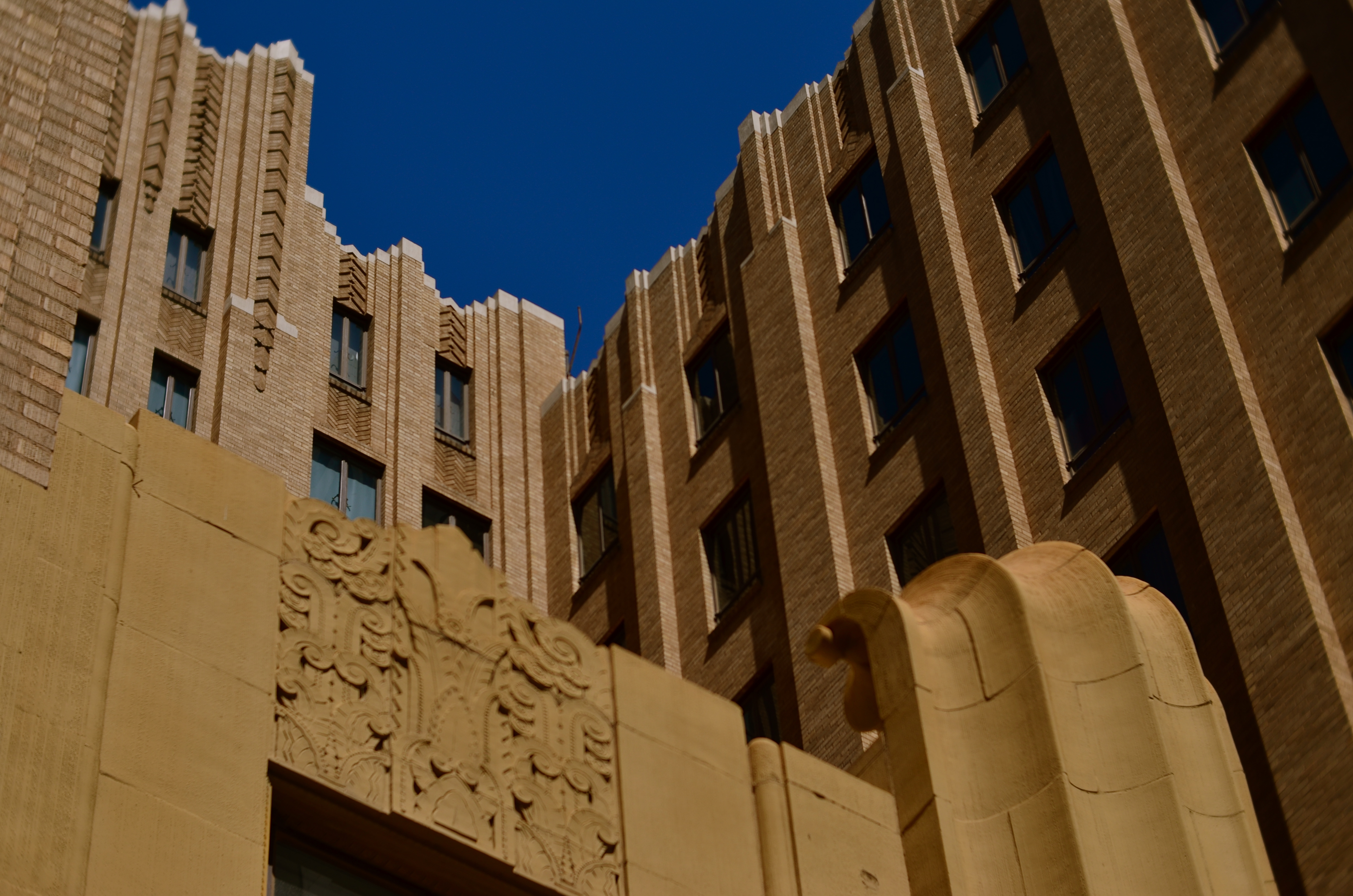
Orpheum Lofts, Phoenix, Arizona.
By MICHAEL PERKINS
AT THIS WRITING (June 2018), reviews are rolling in for Julia Van Haaften’s new biography, Berenice Abbott: A Life In Photography, a celebration of the greatest visual chronicler of New York City’s perpetually parade of architectural extinctions. Abbott’s essential album of vanishing neighborhoods in the five boroughs, Changing New York, shot in stunning crispness with an 8×10 Century Universal view camera, has stood, since the 1930’s, as more than a stunning technical achievement: it has also been hailed, rightfully, as a priceless sociological record.
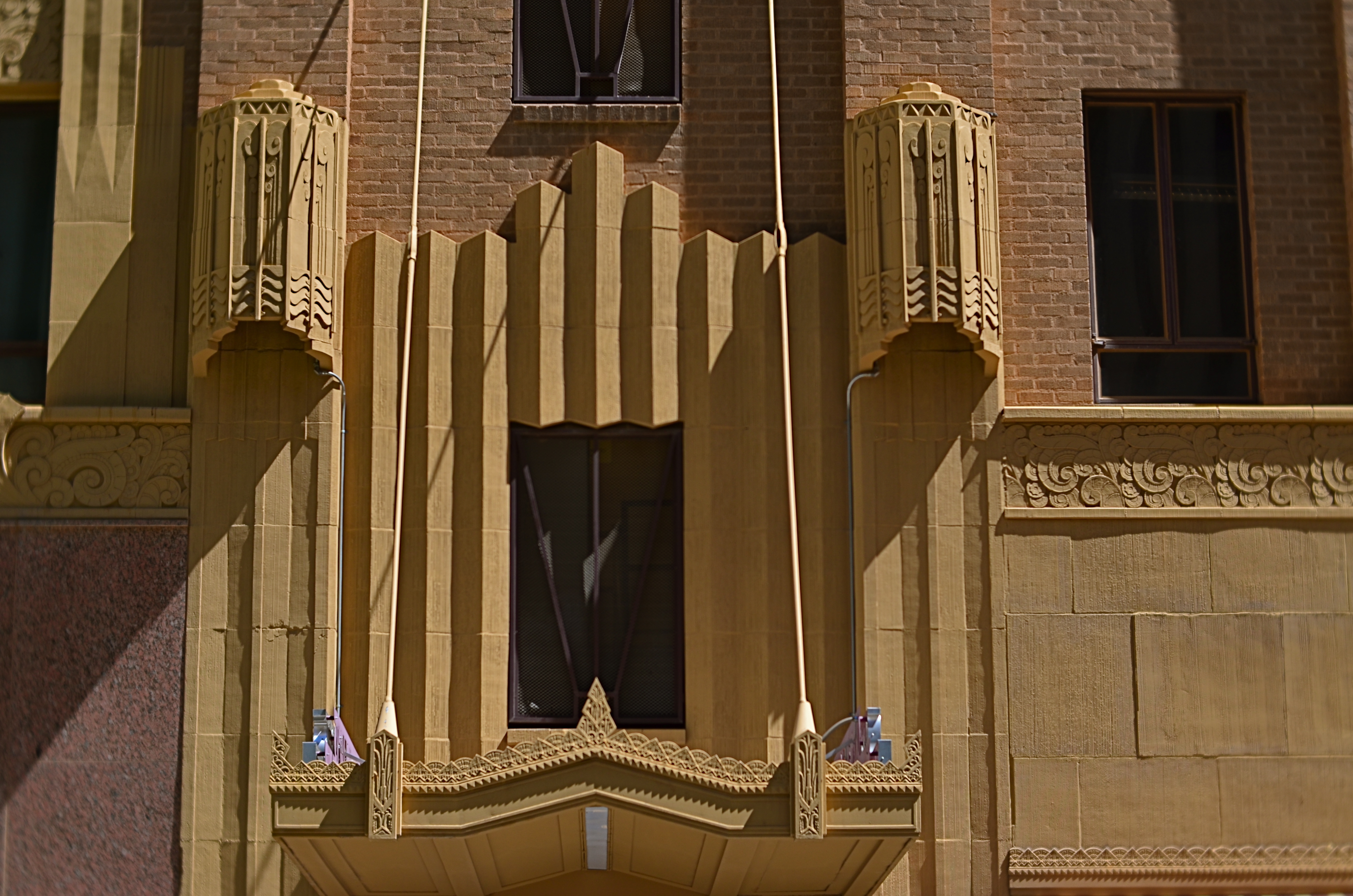
The Lofts‘ tenant entrance.
Abbott was an objectivist, the Joe Friday of photographers, believing that images could only be honest by providing just the facts, ma’am. As 20th century shooters sought to insert more of themselves….their feelings, their beliefs, their biases.. into increasingly personal work, Berenice and her camera became two halves of a single, emotionless machine, disdaining the sentiment or “viewpoints” of her contemporaries. In the final analysis, her conservative stance didn’t alter the fact that Changing New York is an invaluable document, a peerless record of a bygone era.
Photographers across the world would do well to carry on Abbott’s work, as the fragile infrastructures of the 20th century disintegrate before our eyes and entire cities fold over on their own histories for little more than the novelty of change. New York was one of the first towns to learn that progress amounts to more than a mere destroy-and-replace cycle, but many other urban centers lose their history out of a tragic brew of neglect and ignorance, much of that loss unchronicled or unmourned by today’s photographers. Ideally, every town should have its own Berenice Abbott.
Cities like my present home of Phoenix, Arizona are all about growth and not much for legacy. Old doesn’t mean venerable in the southwest: it means old and in the way. Structures like the 1930 Art Deco Phoenix Titles and Trust building, reborn in the 2000’s as Orpheum Loft Apartments and pictured here, are notable for their very survival as well as for their distinct architectural styles. Photographers can seldom prevent the coming of the bulldozers once people decide the past should be ground into dust. But they can bear witness, making images that serve alternatively as living history or cautionary tales.
As Berenice Abbott would say more than once, “photography should be a significant document, a penetrating statement.” Changes in New York, Phoenix, or Alabama are all similar in that they are waves in history. If there’s a more important assignment for the camera than tracking those waves, I’m damned if I know what it is.
“LIKE”-MINDEDNESS
By MICHAEL PERKINS
ONE OF THE MOST INTERESTING THINGS about reading photographer’s discussions of their most celebrated work is that, frequently, they can only guess at what accounts for the success of one of their images over another. Even more fascinating is when they express their dismay that some of their personal favorites actually fail to connect with the public. I take heart at such accounts, because I, like many of you, have no idea what makes a photograph “work” for anyone else…not, at least, beyond what I hope for.
This, to me, rates a “hilarious” on the irony meter, since the present age values “likes”, “faves”, and “LOVEs” above all other laurels in photography in a way that has made us slaves to popular approval even as we remain completely clueless as to how it’s earned. No cute tricks succeed. We can’t just replicate what people liked about our past stuff. We can’t cynically analyze what vaulted others’ images into the like-o-sphere. We can’t even play to what we believe others’ biases to be. And, for the sake of our photographs, we’re foolish to even try.
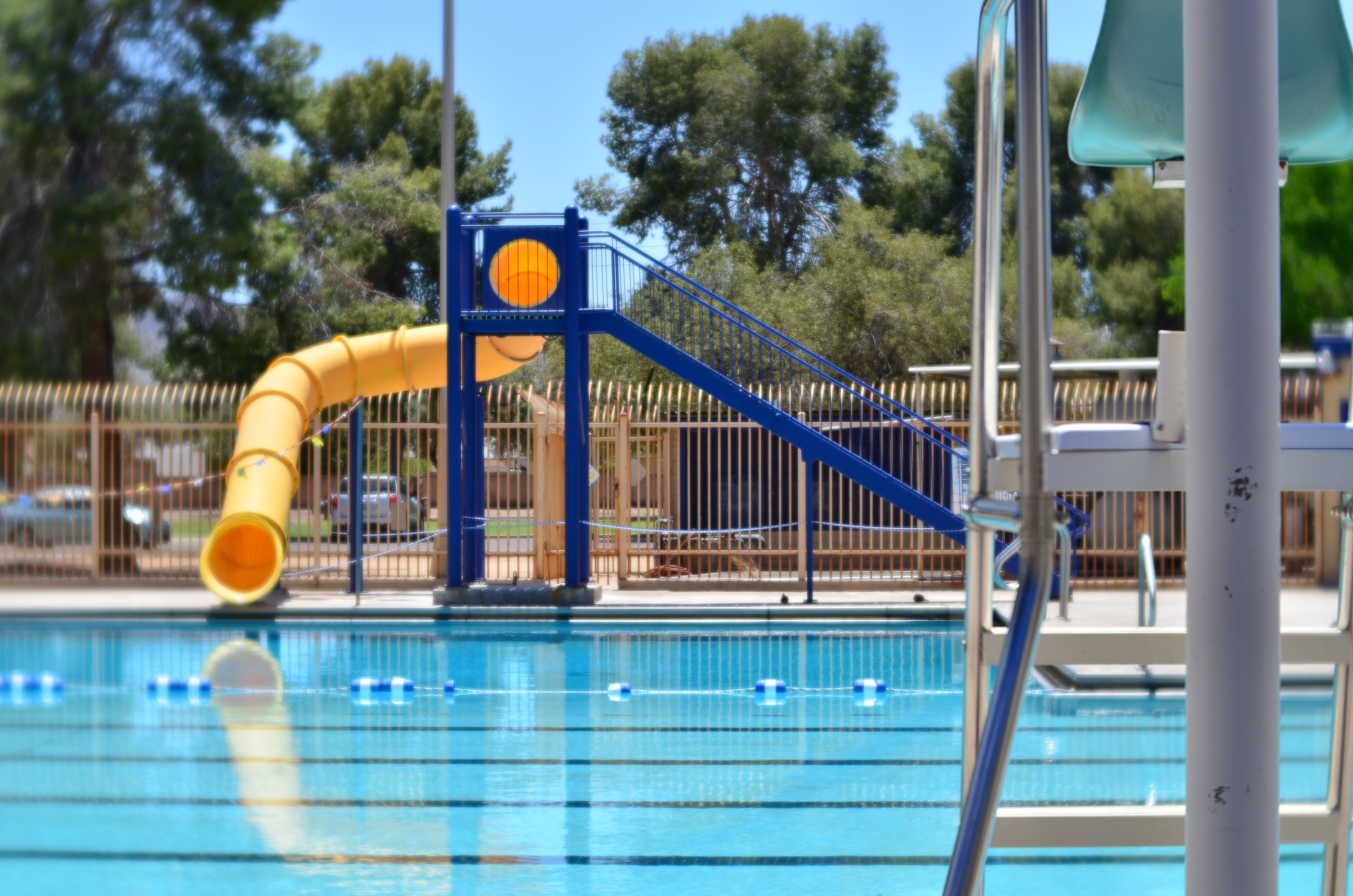
As a personal illustration of my point, I have absolutely no idea why this image has, at this writing, racked up over 4,000 views in the space of three days. This is not me boasting. To boast, I’d have to be taking credit for something I understood or had something to do with. No, this is me being dumbfounded. The picture represents, for me, the most transitory of whims, a final frame clicked off in impulse on the way back to my car after I thought I’d done the “important” work of the day. I thought there was something mildly (underlined) interesting about seeing this public pool “at rest”, if you will, just a week ahead of the end of the school year. No kids. No noise. Not a ripple or a wave to be had. A picture of something that hasn’t happened yet. That’s it. It was truly a case of “let’s shoot this and see what (excuse me) develops”.
And so the views and likes pile up for this one, and knowing that fact is no help at all. I want to take the brief flashlight being shown on my least favorite child and shine it on my pet instead, but it don’t work that way. Humans are perverse. We desperately seek to make a connection, then kvetch about whether it was done with AC or DC current. We want you to like us, but we want you to like the same thing about us that we like about us.
This gap between what photographers hope is important and what strikes everyone else as noteworthy reminds me of the actress Nastassia Kinski, who once came onto the Letterman show with her hair pasted into a straight vertical spike two feet high. Dave decided to act as if this were as normal as having a nose between your eyes and proceeded through the the interview without a remark. As the segment drew to a close, a slightly desperate Kinski purred, ” you haven’t asked me about my hair..”, to which Letterman replied, “Oh, you want it to look like that…”
EVERYTHING OLD IS….OLD AGAIN
By MICHAEL PERKINS
ONE OF THE LOW–HANGING–FRUIT–EASY–LAY–UP STORIES in 2017 pop culture circles was the report that, after years of manufacturing its own version of the defunct Polaroid Corporation’s instant camera film, an appropriately named company known as the Impossible Project had acquired all of Polaroid’s remaining intellectual property. As a result, the IP, now re-born as Polaroid Originals, could now begin making it own brand-new Polaroid cameras.
The story had great appeal for the analog-was-better crowd, the LP-hugging CD haters who pegged the decline of civilization to the day mankind first embraced zeroes and ones. Writer after writer wiped aside a misty tear to rhapsodize about the OneStep2, the first new “Polaroid” camera in more than a decade, and to recount their own fond memories of the “unique” quality of each unreproducable shot, as well as the wonderfully unpredictable randomness of wondering if your next shot, or indeed the entire rest of the film pack, would yield anything in the way of an image that was worth wiping your nose on.
Which brings us to the Brutal Main Truth of the matter: Polaroids were never really good cameras. They were engineered to fulfill a need for uncomplicated and quick gratification, marketed to an audience of snapshooters and selfiemongers. Inventor Edward Land placed all of his emphasis on perfecting the spontaneous function of his film, and to simplifying the taking of pictures to the point that your goldfish could pretty much operate the cameras. That said, Polaroid film was unstable, balky, moody, mushy, and generally useless as an archival medium. Of course, the company tried to shape an alternate narrative: certain high-end, professional grade iterations of the camera appeared at the margins of the photo market, with Polaroid hiring Ansel Adams as a “consultant” on color (which is a little like hiring a childless person to head up a daycare), and the brand got a pass from culture vultures like Andy Warhol, who tried to legitimize the cool, what-the-hell factor of the cameras for a generation hooked on immediacy. But in the end, Polaroid photography delivered mere convenience and fun, seldom art.
In terms of its legacy, there are no classic Polaroid lenses, nor any other evidence that the company ever trusted its customers with taking pictures like grown-ups. Model after model refused to allow users to take even basic manual control of the process of photography, offering instead frozen focal lengths, a stingy array of shutter speeds, and cave-man-level focusing options. Finally, by the dawn of the digital age, Polaroid whimpered out as it had roared in, making the process ever easier, the gear ever cheaper, and the results ever worse.
Polaroid Originals is now poised to do something its namesake never did: make a real good camera for people who also like the tactile, hold-it-in-your-hand sensation of instant photography. But they’re off to a lame start, if the brainless, artless OneStep2 is any indication. Not only is this gob of plastic optically stunted, the film made by Polaroid Originals, who had to figure out the process without any blueprint or guidance from Polaroid, looks even worse than actual Polaroid film, which is a little like finding out that your mud pies don’t look as elegant as everyone else’s. And did we mention the cost, which works out to nearly two dollars per print?
And so, for analog hogs, everything old is really just old again. As we speak, Kodak is preparing to produce an all new Super-8 movie camera… for around $2,400. Surely we can’t be two far from a loving re-launch of the Ford Edsel. I hear they gots a cigarette lighter right in the dashboard…….
STEP RIGHT UP
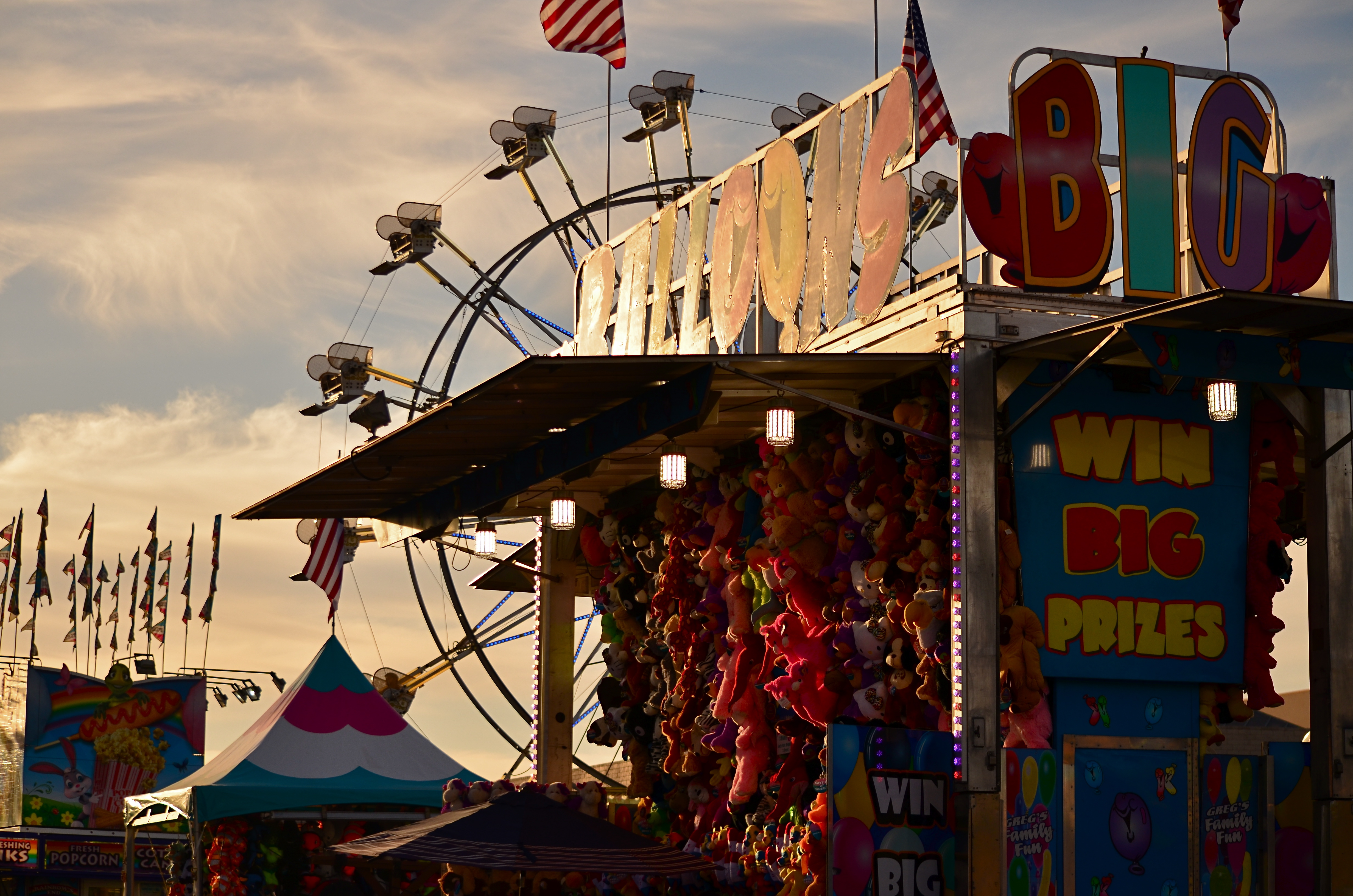
1/1250 sec., f/5, ISO 100, 55mm.
By MICHAEL PERKINS
PHOTOGRAPHY SHOULD ALWAYS OPERATE, at least to some extent, as a cultural mile marker, a chronicle of what time has taken away, a scrapbook of vanishings and extinctions. We make records. We bear witness. We take pictures of the comings and the goings.
One of the things that has been going, since the coming of the permanent, Disneyeque theme parks, those sanitized domains of well-regulated recreation, is the great American carnival, in all its gaudy and ever so slightly dodgy glory. Loud, crude and exotically disreputable, these neon and canvas gypsy camps of guilty pleasure once sprang up in fields and vacant lots across the nation, laden with the delicious allure of original sin, that is, if the first apple of Eden had been dipped in shiny red candy. We came, we saw, whe rode, we ate, we clicked off millions of snapshots on our Kodak Brownies.
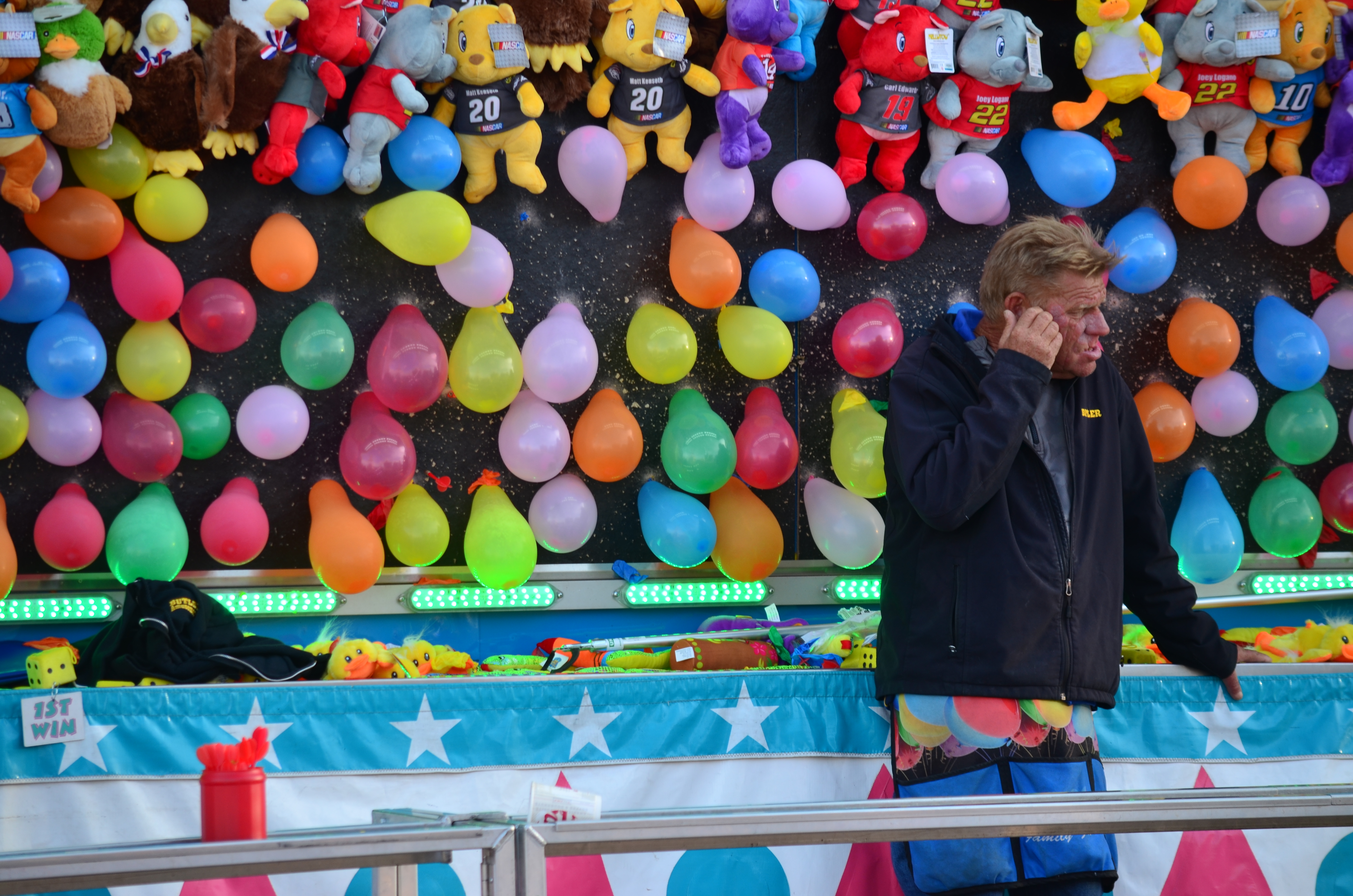
1/125 sec., f/5, ISO 100, 165mm.
The thing that made it all so magical was geography. Unlike Seven Flags or Cedar Point, the carnival came to us. Like the circus, the carnival was coming to your town, just down your block. That meant that your drab streets were transformed into wonderlands in the few hours it took for the roustabouts to assemble their gigantic erector sets into rickety Ferris wheels and Tilt-a-Whirls. And then there was the faint whiff of danger, with rides that made dads ask “is this thing safe?” and crews that made moms repeat horrific tales of what happens to Little Children Who Talk To Strangers.
It was heaven.
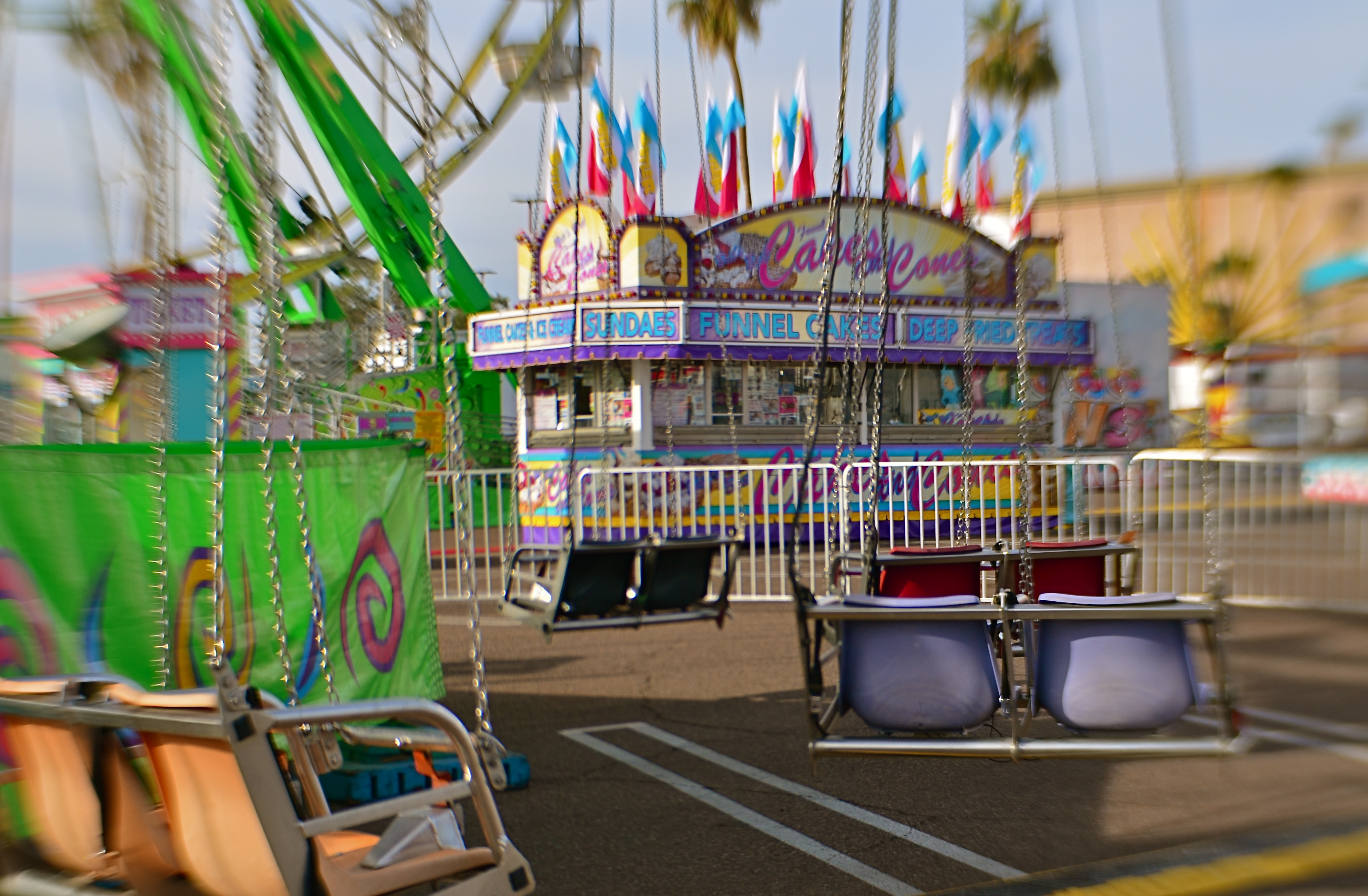
1/250 sec., f/5.6, ISO 100, 35mm.
The images seen here are a partial return to that sketchy paradise, with the arrival in my neighborhood, this week of a carnival in an area that hasn’t hosted one in well over a decade. It’s almost as if Professor Marvel just ballooned in from Oz, or Doc and Marty had suddenly materialized in the DeLorean. It’s that weird. Four days in, and I’m there with a different lens each time, sopping up as much trashy delight as I can before the entire mirage folds and all our lives return to, God help us, normal. Photographs are never a substitute for reality, any more than a hoof print is a horse. But when dreams re-appear, however fleetingly, well past their historical sell-by date, well, I’ll settle for a few swiftly stolen souvenirs.
PORTRAIT OF A PAINTED LADY
By MICHAEL PERKINS
THE BEST THEATRES ARE LIKE THE GREATEST PHOTOGRAPHIC STUDIOS, in that they are, occasionally, both the physical place where great things are staged and great things in and of themselves. They are distinctive in that, years after they house miracles, some of the magic seems to linger in the air, as if it’s imbedded in the very bricks. To see the room where Richard Avedon created key touchstones of twentieth-century culture is, for some, to see more than the room itself. And to see a grand painted lady of the theatrical world is, likewise, to breathe in a rich perfume of opening nights and ovations. And to be allowed to use one medium’s eye to capture another medium’s mystery is a gift, a privilege.
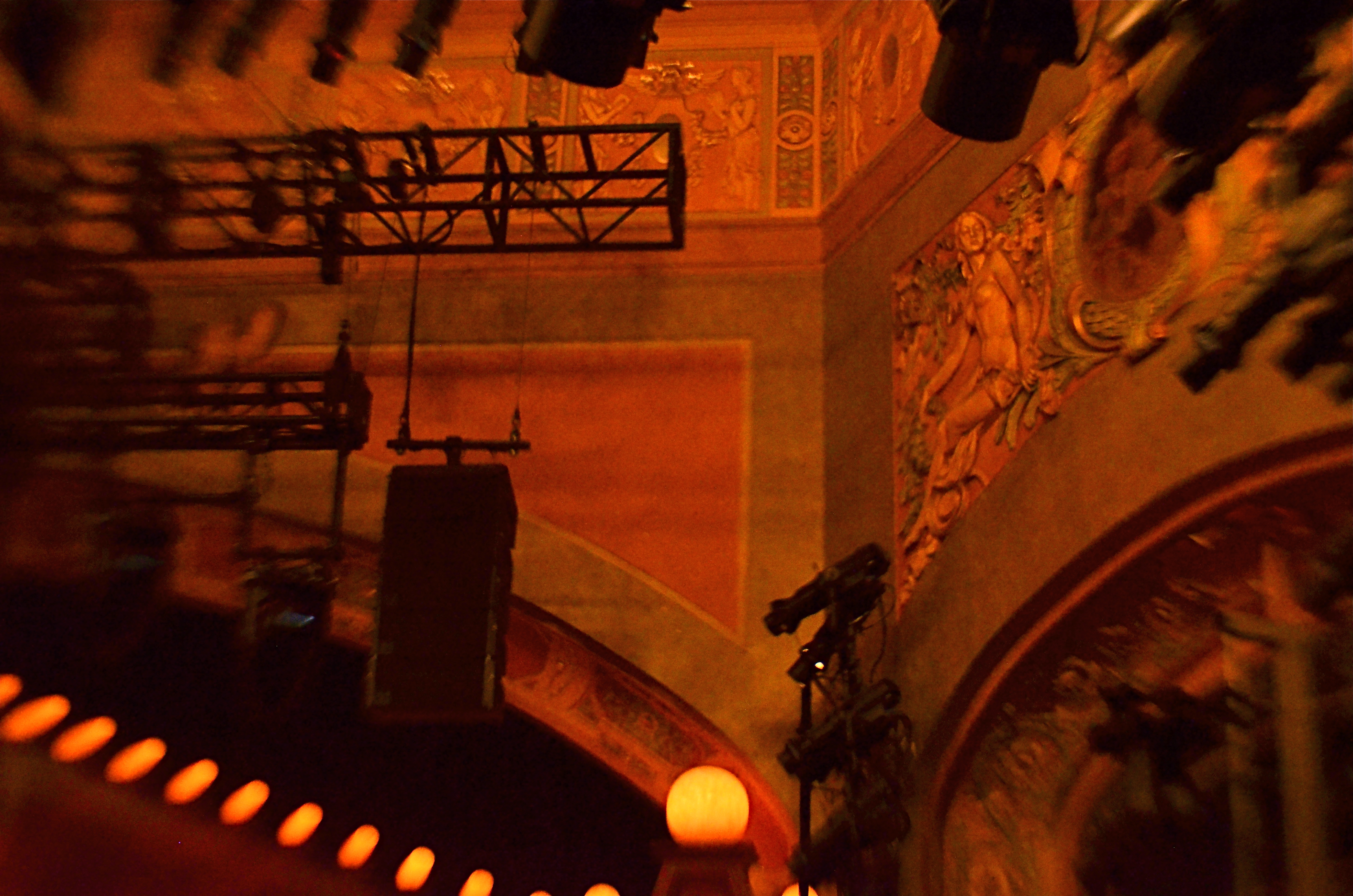
The Schubert Theatre, its arches and catwalks peopled by the ghosts of glories past.
New York’s Schubert Theatre qualifies, to my eye, as sacred space, the imperial nexus between ambition and triumph that has witnessed plenty of both since opening its doors with a production of Hamlet on October 2, 1913. The Schubert, like many of the theatre district’s most venerable venues, is rich in architectural grandeur but modest of scale, seating only 1,460. However, within that compact space, a century’s worth of peerless talent has rolled up the grandest roster of winners in all of Broadway history, still boasting the all-time record run with 6,137 performances of A Chorus Line, which graced the Schubert’s stage for an astonishing fifteen years. Hits not only come first to the Schubert: they come to stay, with multiple-year champs like Crazy For You, Chicago, and Spamalot carrying on the tradition of The Philadelphia Story, Pal Joey, Kiss Me, Kate, Bye–Bye, Birdie, Oliver!, and the 2017 revival of Hello, Dolly!, which set the all-time box office record for the place.
So, how to photograph the theatre of theatres? For my first attempt, a dark exposure to deepen the classic red of the main curtain, paired with a soft-focus foray into the molded plaster figures and light fixtures flanking the side boxes….a dreamy look designed to summon forth blythe spirits. Because, while you can put up four pieces of sheet rock and call the results a theatre, some studios, some stages ring with their own life, long after the last hurrah has faded, and trying to capture that echo in a box can be the greatest show in town.
O SILVER TREE, O SILVER TREE……
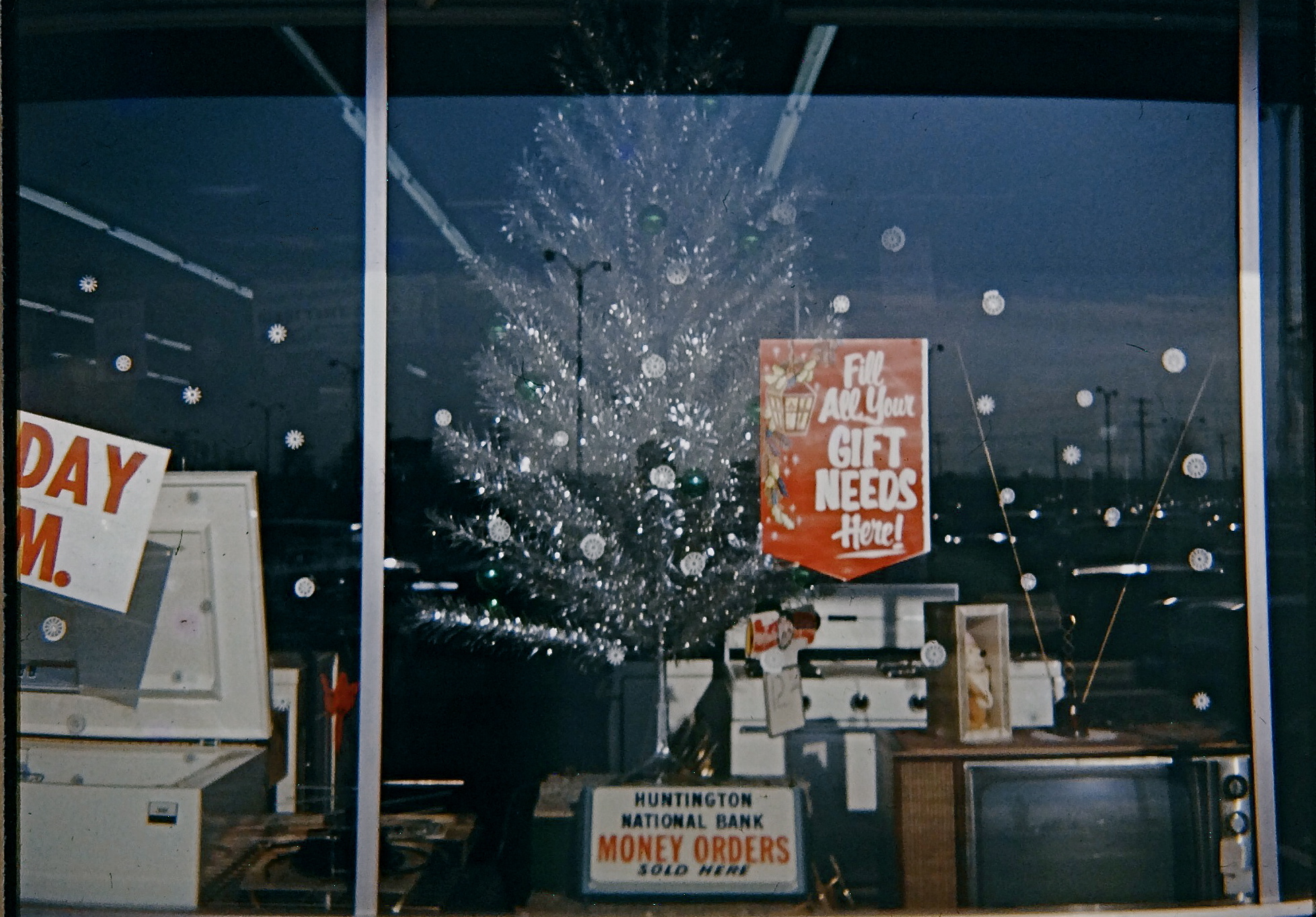
Cussins & Fern Hardware, Columbus, Ohio, Christmas 1965
By MICHAEL PERKINS
CBS TELEVISION FIRST AIRED A Charlie Brown Christmas on December 9, 1965, creating an instant seasonal classic. It got its first tenuous viewing despite the network suits’ fears that the modest little story, voiced by children(!), sporting a jazz soundtrack(!) and gently suggesting that the holiday may be about more than greed and glitz, would lay a giant Yuletide egg. They needn’t have worried, as it turned out. The show nobody wanted became the tradition without which no Christmas could be thought to be complete.
One of the show’s main plot points involves Charlie Brown’s fear that the holiday has been hijacked by hucksters, so much so that the hottest selling Christmas trees in his neighborhood are not verdant firs but pastel-painted, neon monstrosities. There was a lot of that nonsense going on in those days.
The photograph you see here was taken just days after that first airing of ACBC, but I can’t really claim to be channeling its energy or trying to echo its sentiments. The picture isn’t so much a comment on commercialism (nothing that formal) so much as it is a question.
I was a very young thirteen in December 1965, and had only wielded my Imperial Mark XII box camera on a few occasions prior to the day I found myself wandering around Northern Lights shopping center in Columbus, Ohio, specifically past the display window of the Cussins & Fern Hardware Company. Like Charlie Brown, I thought that some holiday novelties, like the recently introduced aluminum Xmas trees were odd, even though I liked the included rotating wheels that projected ever-changing colors onto the silvery sticks in a kind of robotically cold imitation of gaiety. However, unlike Charlie Brown, I don’t think I regarded these abstract Future Trees as an affront to decency. I just thought they were weird.
I do remember thinking that the window showed a Christmas that was just kind of……off, a Christmas in which you got a whole television set or a food freezer as a present, a Christmas filled with Strange Trees From The Future, a Christmas where you could always buy….money orders? I knew, in that era, next to nothing about how to formally frame a shot or a visual commentary. I didn’t have the pictorial vocabulary to make an argument. I couldn’t interpret. I just pointed at things that interested me and trusted those things to carry their own narrative weight. I was point-and-shoot before point-and-shoot wuz cool.
This Christmas, both the holiday and I are still in flux. I continue to point my camera at shop windows, and continue to wonder what the whole mad mix of beauty and banality means. I still don’t have the answer. Alas, as a photographer, you often have to be content with merely learning better ways to ask the question.
Now, if I can just find someplace to buy Uncle Ed that money order he asked for…..
NO SECOND ACT
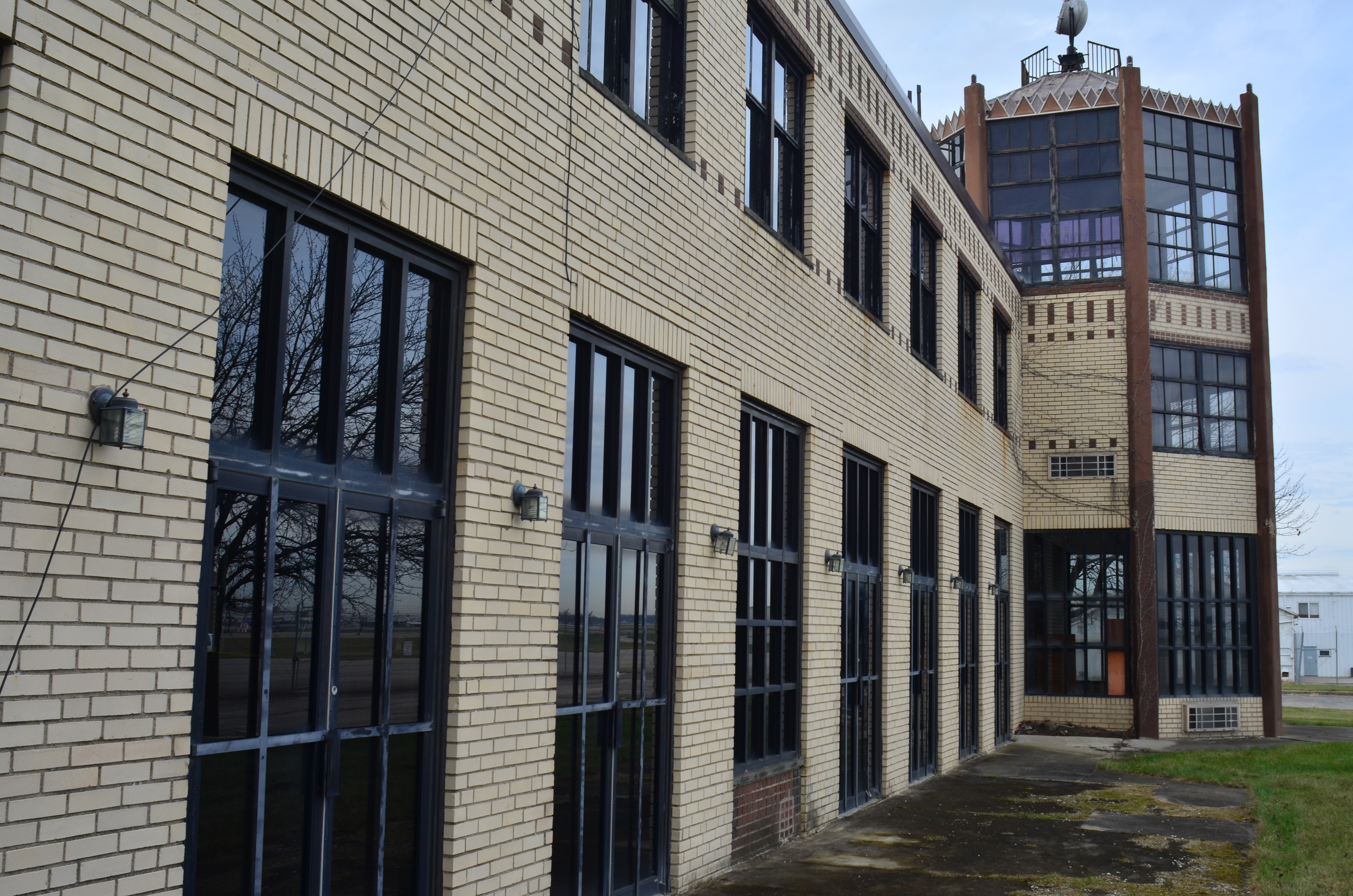
The first Port Columbus air terminal, opened in 1929.
By MICHAEL PERKINS
THERE IS SOMETHING TRAGIC, AND CONFOUNDING, in America’s longstanding reluctance to re-use and re-purpose its historic infrastructure. This ever-young nation seems to have an allergic reaction to preservation, as if the physical artifacts of its heritage contained some kind of dread plague. As a consequence, buildings that have figured most prominently in the story of our nation’s amazing evolution fall…. first to neglect, then to the wrecking ball.
Photography is a way to bear witness to what Gore Vidal called “the United States Of Amnesia”, a way to document lost opportunities and wasted potential across the fifty states. Miles of once-vital roads that no longer lead anywhere: blocks of neighborhoods that now howl and whistle in a dead wind: acres of buildings that once housed history instead of cockroaches and cobwebs. All is ripe for either revelation or regret at the point of a camera.
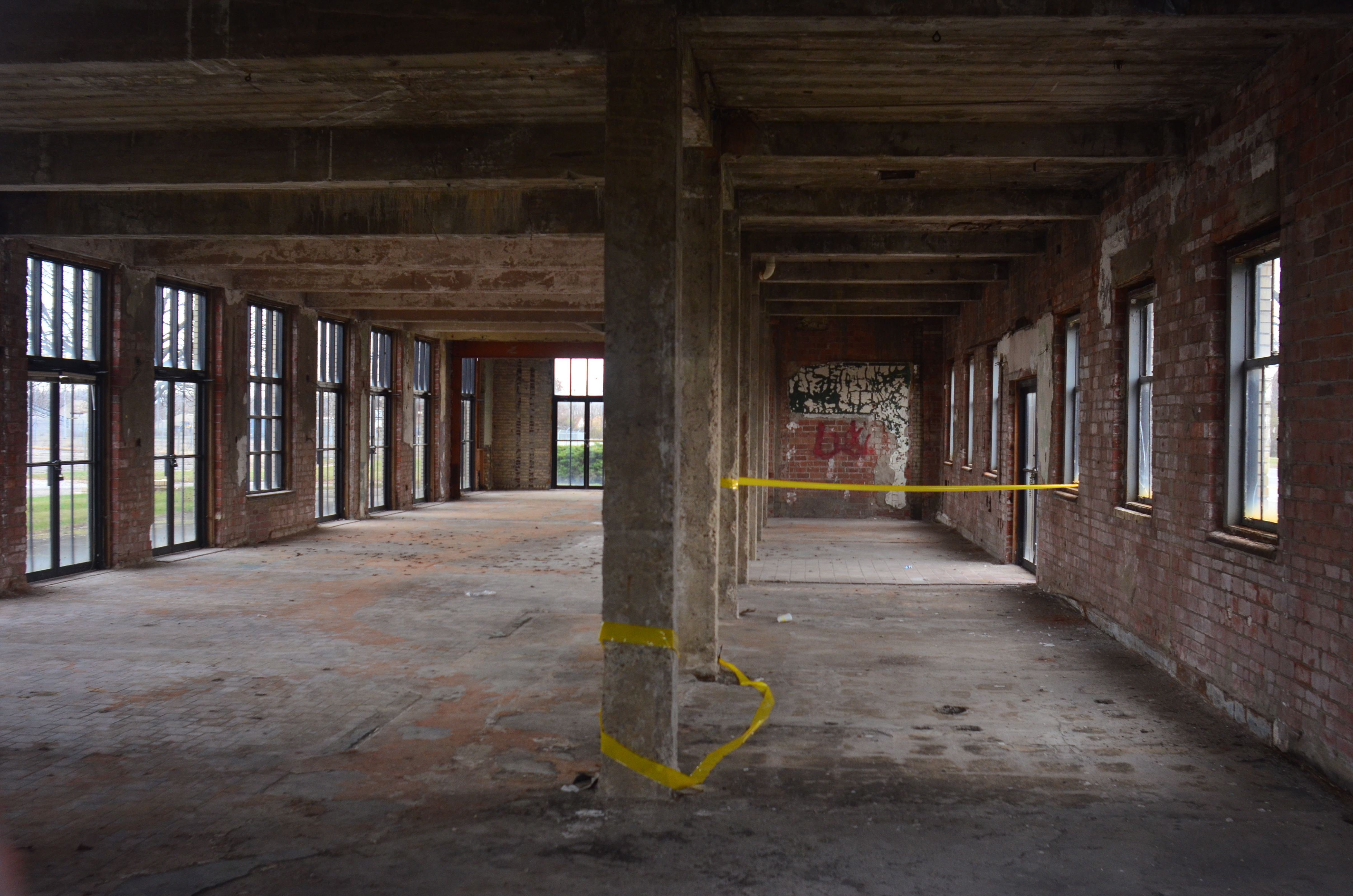
The deserted interior of the terminal in 2017.
Columbus, Ohio’s original air terminal building, opened in 1929 with hoopla and help from both Amelia Earhart and co-founder Charles Lindbergh, is one such location. Created as part of the country’s first fledgling attempt at a transcontinental air service (and this, only two years after Lindbergh’s astonishing solo flight to Paris) “Port Columbus” was solid proof that the air age was real.
Real enough, in fact, that a mere nineteen years later, the city’s air traffic had grown so rapidly that construction began on a shiny new international hub, big enough to accommodate a mid-century tourist boom, the jet era, and an explosion of international travel. The 1929 terminal was shuttered, living a few latter-day half-lives as offices for one short-term tenant or another, finally coming its silent rest on the Port’s back property, its legacy given half-hearted lip service with the obligatory plaque on the door.
Full disclosure: Columbus, Ohio was, for most of my life, my hometown. It is, among other things, a city of many firsts, a vital test market of ideas for everything from ATMs to hula hoops. And while I know that new uses won’t be in the cards for all historically important buildings there (or, indeed, anywhere), I am glad, at least, that, as photographers, we are privileged to say of such places: look here. This happened. This was important.
It’s often said that there are no second acts in American lives.
That’s tragic. And confounding.
INSIDE THE OUTSIDE
By MICHAEL PERKINS
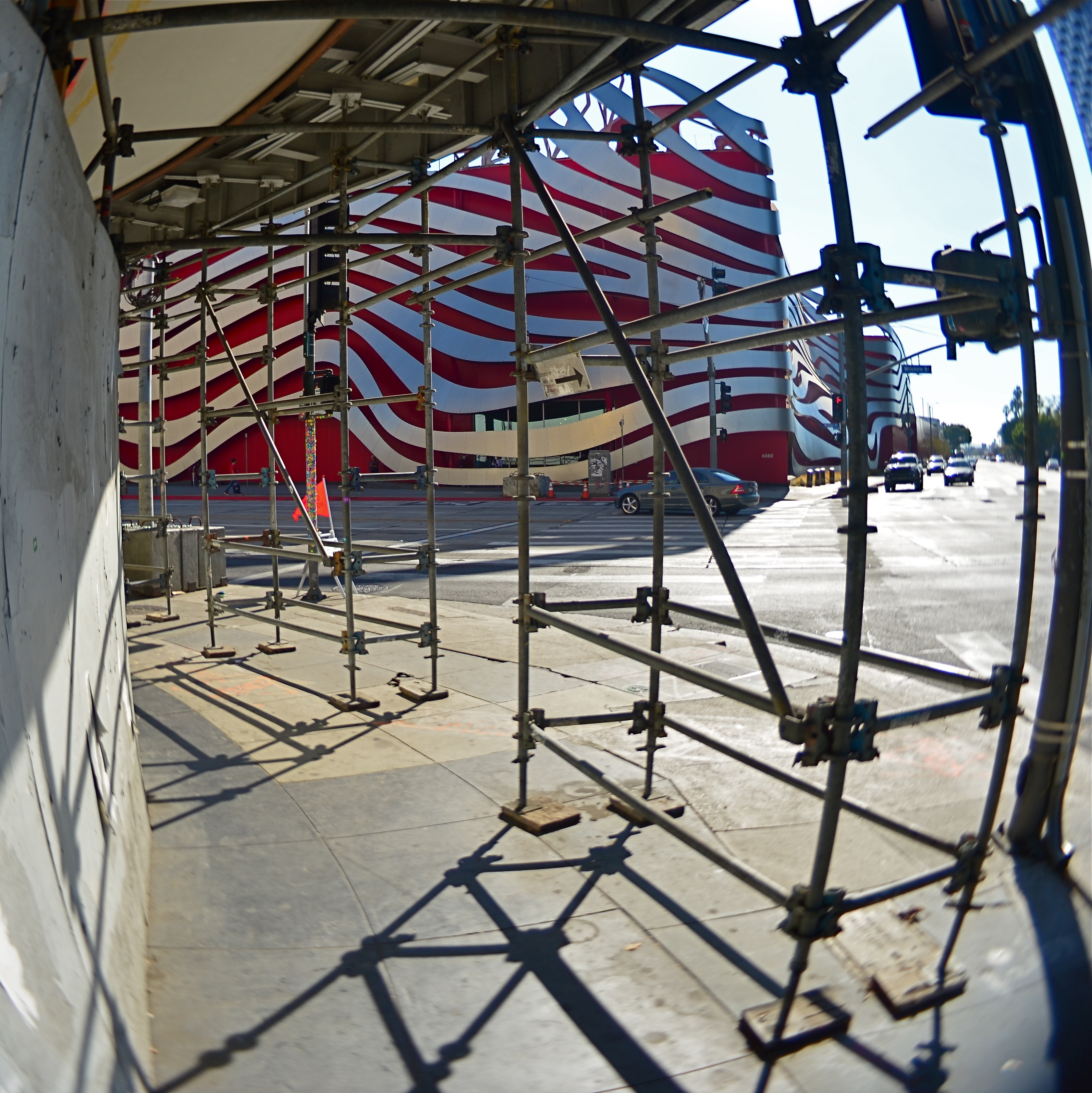
Los Angeles’ Petersen Automotive Museum, as seen from Fairfax Boulevard.
IT’S HARD TO ATTRACT ATTENTION IN HOLLYWOOD, a town that shouts in five dimensions, a million colors, and four thousand decibels about almost everything. Here, in the town that hype calls home, design always swings for the fences, and Subtle Is For Sissies. Small wonder, then, that photographers, who typically love to play top this with their peers, find that Tinseltown and greater L.A. are already at gold medal status in playing the very same game. I’ll see your weird, and raise you two weirders.
As a street shooter in Hollywood/L.A., you routinely witness the bizarre being passed off as the normal. As a consequence, the very act of visually commenting on this mad sensual overdose can make even your most prosaic shots seem like a trip through the looking glass. Words like stately, venerable, or traditional seem oddly out of place in the town that invented fourteen-story billboards and the Walk of Fame. Using a camera to say something new about it all can be a fool’s errand, or at least, a mental obstacle course.
Whenever I visit Los Angeles, I am constantly looking for some kind of reversal pattern, a way to treat the most outrageous visual artifacts on their heads. I don’t always succeed. I did, however, have fun trying, recently, to come up with a new way of seeing a very strange building, the Peterson Automotive Museum, located at the intersection of Wilshire Boulevard and Fairfax Avenue, the outside of which has undergone a very radical facelift in recent years. From afar, the building seems to be a wild, untethered series of curves and swoops, a mobius strip of red and steel spaghetti floating in space in an abstract suggestion of motion. It’s a stunning bit of sculpture that actually is a wrap-around of the original, far more conventionally-shaped museum building beneath it.
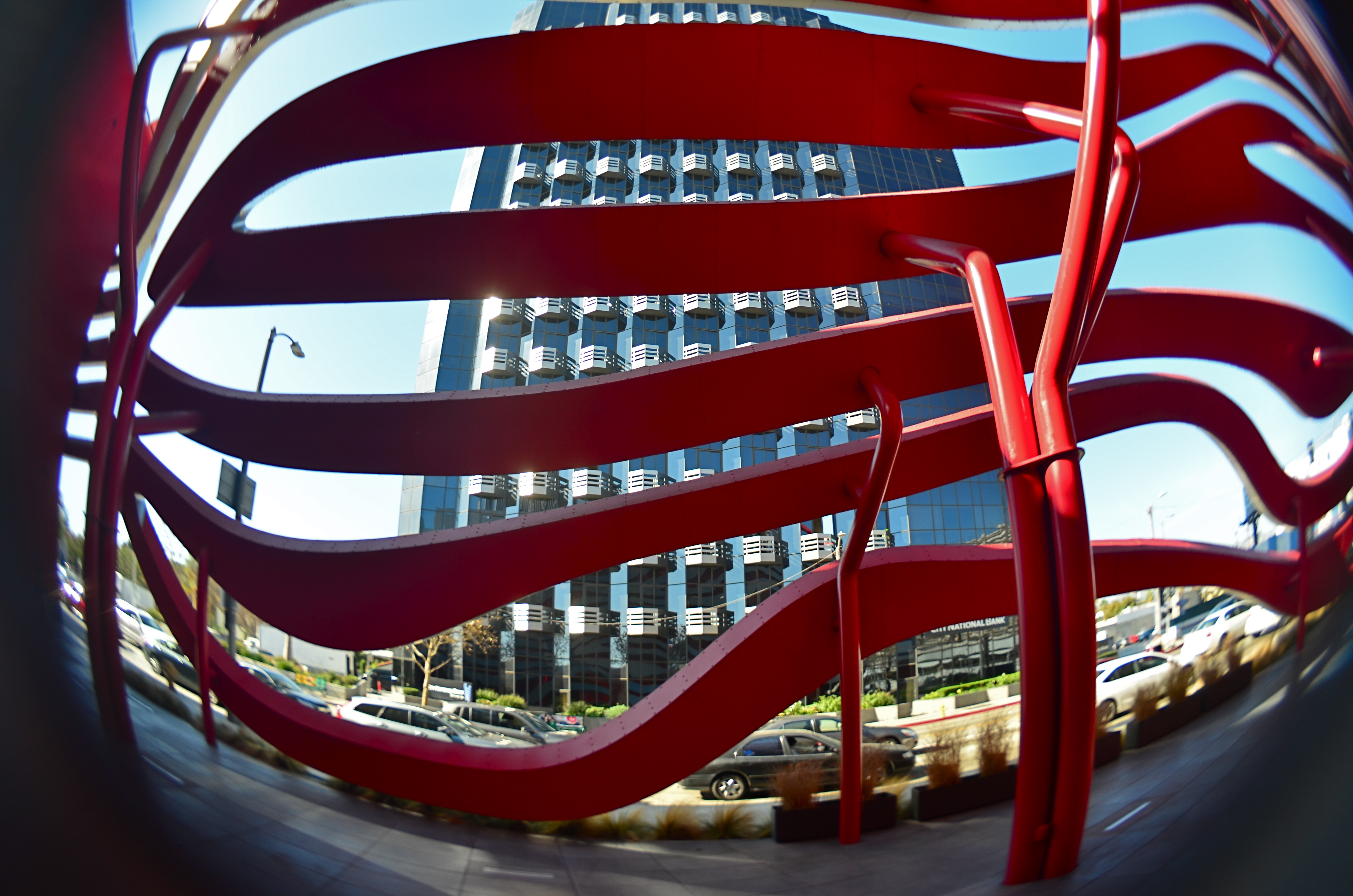
Inside the Petersen’s exterior facade, looking out.
And, as it turns out, that’s the way to reverse-engineer a photo of the museum, since it’s possible to walk behind the swirly facade and into a shadow-and-color-saturated buffer space that exists between it and the underlying structure. From inside said space you can view the outer bands as a peekaboo grid through which you can view neighboring buildings and local traffic, rather like looking between the slats of some big psychedelic set of venetian blinds. And that’s where I stood when taking the above shot with a Lensbaby Composer Pro lens with a fisheye optic, the aperture set at about f/5.6 to render the whole thing somewhat soft and dreamy. I’ll see your two weirders and raise you one bizarre.
IT HAPPENED RIGHT HERE. DIDN’T IT?
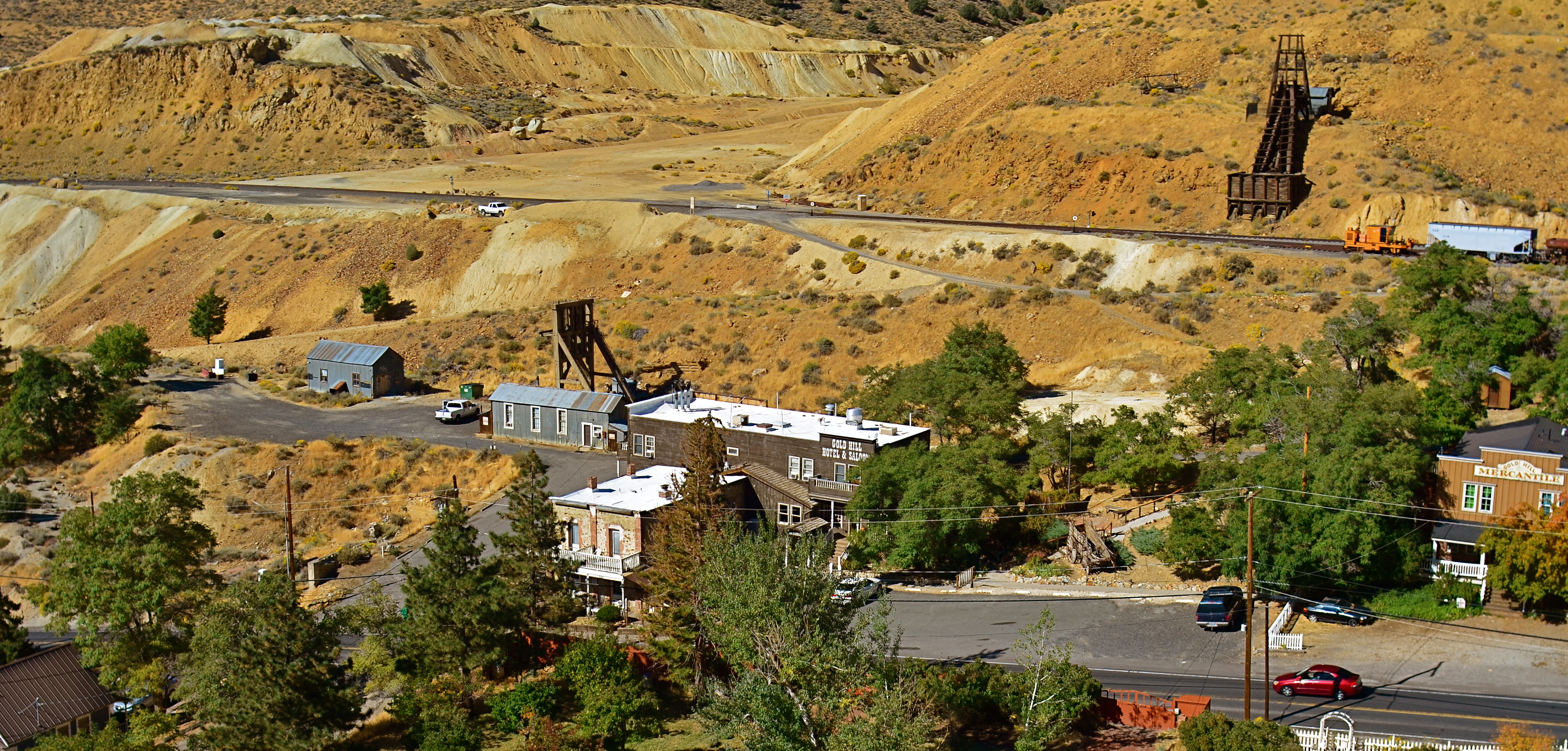
After The End, Before The Finish (2017). The back porch to Virginia City, Nevada, once one of the richest towns on the face of the earth.
By MICHAEL PERKINS
AMERICA HAS NO LOVE OF INTERMEDIATE CHAPTERS. We’re big fans on huge, new beginnings of things. We are likewise fascinated by catastrophic finales. By contrast, the stories that take place between the first and last episodes of things are like flyover cities between the coasts.
Consequently, we tend to generate photographic tonnage when the Bright Shiny New Mall cuts its opening day ribbon, and crank lots of frames on the day the Sad Old Mall is razed to the ground, but not much quotidian stuff. There may indeed be less drama in the day-to-day goings-on in towns, public works, and other human endeavors. or maybe we just bore easily. Or maybe we haven’t learned to detect the tiny stories that rise and fall between the more obvious bookends of history.
Boom and Bust are big news to photographers. Humming Along Normally, not so much.
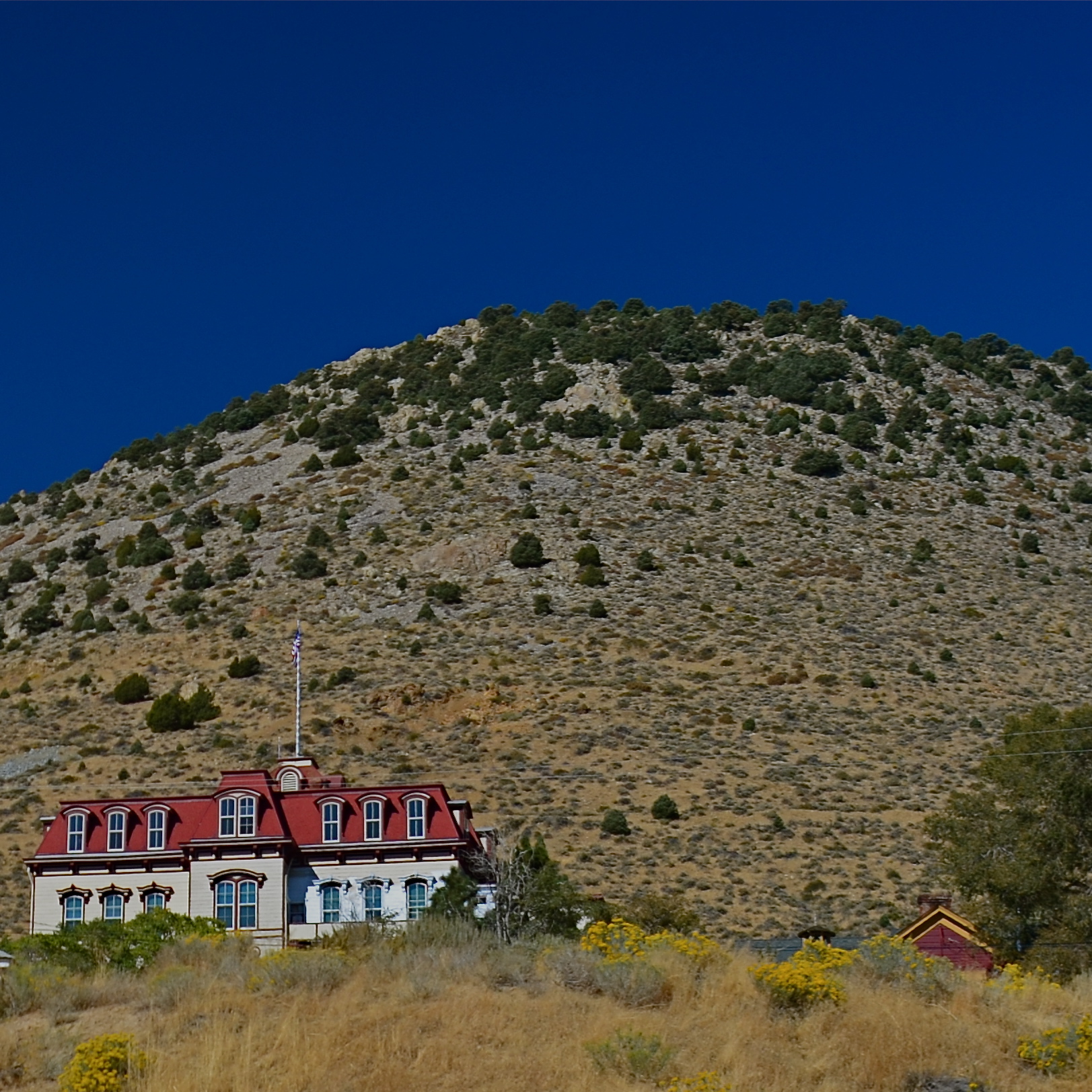
Virginia City’s Fourth Ward Schoolhouse, now a museum.
Virginia City, Nevada typifies what Americans call Ghost Towns, places which ran their life cycle from explosion to collapse but still physically exist in some way. Some are mere hollowed-out ruins crumbling in the dust, while others, like Virginia City, have survived as commercial entities (spelled: tourist traps) selling nostalgia. They make money recalling how they used to make money, which, in the case of V.C., was mining silver. This little bus stop of a town was once one of the wealthiest places on the planet, ripping ore out of the ground and sending it all over the world at a rate that minted a new millionaire every few minutes. Virginia City had its own short line railroad making freight runs hundreds of times each day. Its well-heeled lords imported materials from every continent to appoint opera houses, churches, hotels and saloons with glitter and grandeur. And the city created one of the most progressive elementary schools in the nation, equipped with central heating, flush toilets, water fountains, and individual student desks….in 1876.
Ghost towns are the walk-through museums, the pickled cadavers of American life. They’re finished but they aren’t through. There is a bright coat of paint replicating the gaiety of better times, but, beyond the fro-yo stands, ersatz whiskey joints and souvenir shoppes, the skeleton of a very different daily life is still visible. And a well-aimed camera can still summon a degree of Boom within the Bust.
THE MIDDLE OF WHATWHERE
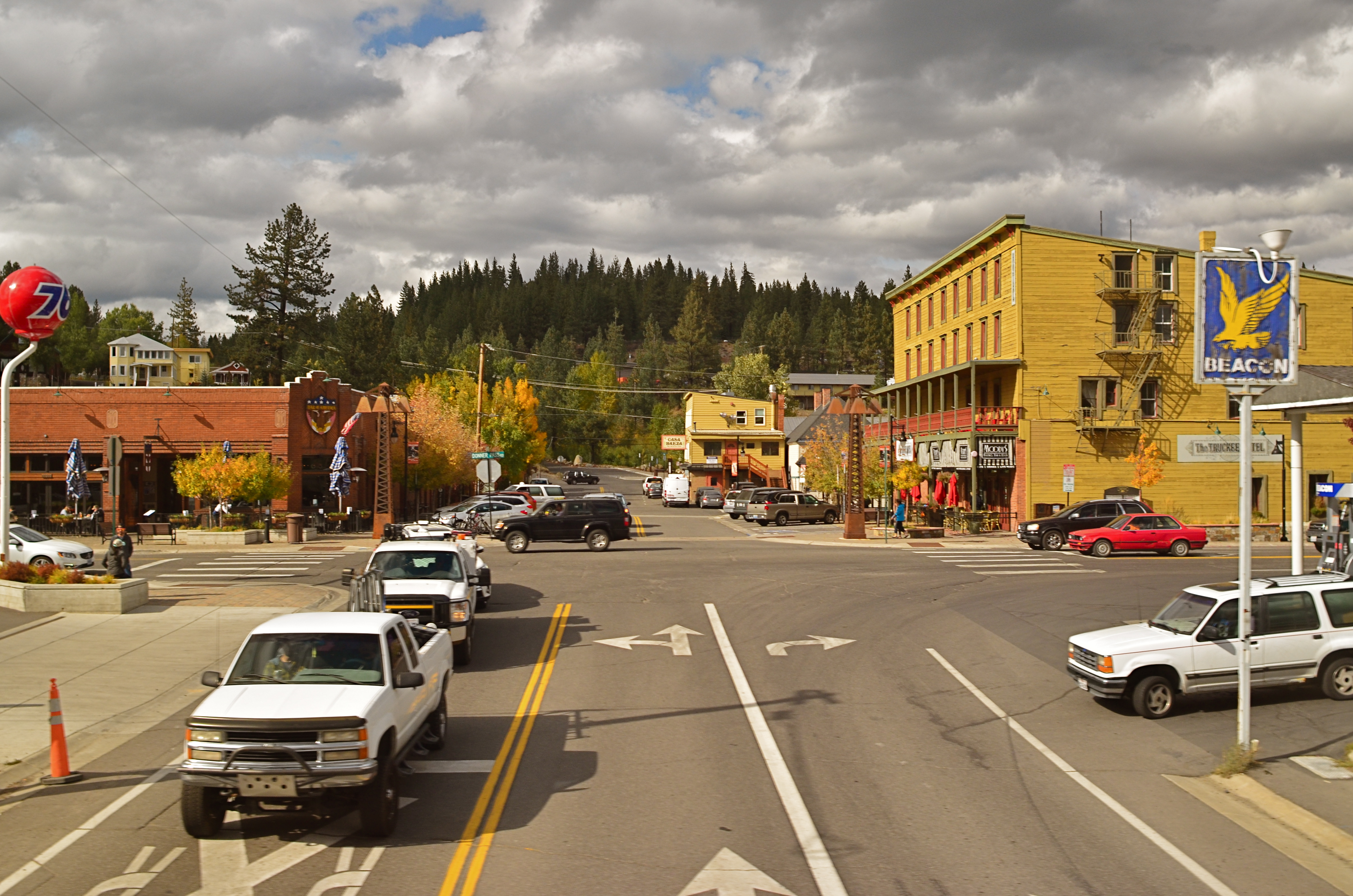
Rush Hour (2017). I don’t need to tell you what town this is. You already kind of know.
By MICHAEL PERKINS
EVEN THOSE AREAS OF THE WORLD WE ‘VE NEVER SET FOOT IN have, at least in our mind’s eye, a sense of place. Hearing about far-flung cities and towns in remembrances, histories, or novels, we tend to assign some kind of visual structure to their streets and sites. Our brains choreograph where the town hall is, what the schoolhouse looks like, maybe even the look of the setting sun on the sides of buildings. We see the unseen with very clear eyes.
For that reason, I love making images of towns that offer no clear clue as to their location or even era. I feel that the images made by a camera pair up, somehow, with the millions of mentally constructed towns we’ve held inside our minds, those many places to which we never journey but yet know by heart.
Train travel offers a great chance to deal with these places that have no context, sometimes no name. The view from a train window is ever-shifting, strangely framed. You have visual information it gives you and nothing else. Things swing into and out of view in an instant. You are always going somewhere and always leaving somewhere behind. Focusing and composing with a camera is largely a nightmare, and sharp results are rare. It’s a great way to view reality, and also a terrible arena for photographing it.
Occasionally, a slow crawl through a town or a scheduled stop offers enough stability to make a usable photo, and, when that happens, the sensation is still one of dislocation, since you often are seeing only pieces of cities, the outskirts of districts, or the all-too-real “wrong side of the tracks”. Recently traveling from Sacramento, California to Reno, Nevada through the Sierras, my train slowed almost to stopping as it made its way past a small town’s crossing gate. The city was both everywhere and nowhere. The activity in the intersection could be taking place in a thousand places, each of them interchangeable with the others. I left my seat and walked from the second level of the car halfway down to the lower, where a larger window was mounted, placing me as close to the street as if I were crossing it on foot. The train slowed long enough for me to snap off three stable frames, one of which you see here. For a moment, I’m in the town, nearly of it. I don’t know where I am. Still, I feel right at home.
Years from now, as I turn the pages of a magazine or listen to someone’s dreamy tales, this place might act as a visual stand-in for the dimensions and details of things I can’t directly view. I don’t know why or how the mind makes that work. Maybe, in a way, we’re always making pictures, with or without a camera.
THE MAN IN THE ROUND CUBE
 By MICHAEL PERKINS
NOTHING IS SO TIMELESS as something whose time has come and gone.
Once a thing… a style, a design element, a fashion, an idea…has outlasted its original context, becoming truly out of sync with the world, it can become visually fascinating to the photographer. Instead of forward-looking, it’s dubbed “retro”. Rather than radical, it becomes something no one can ever remember having been excited about, like looking at Carol Brady’s shag haircut 25 years on.m
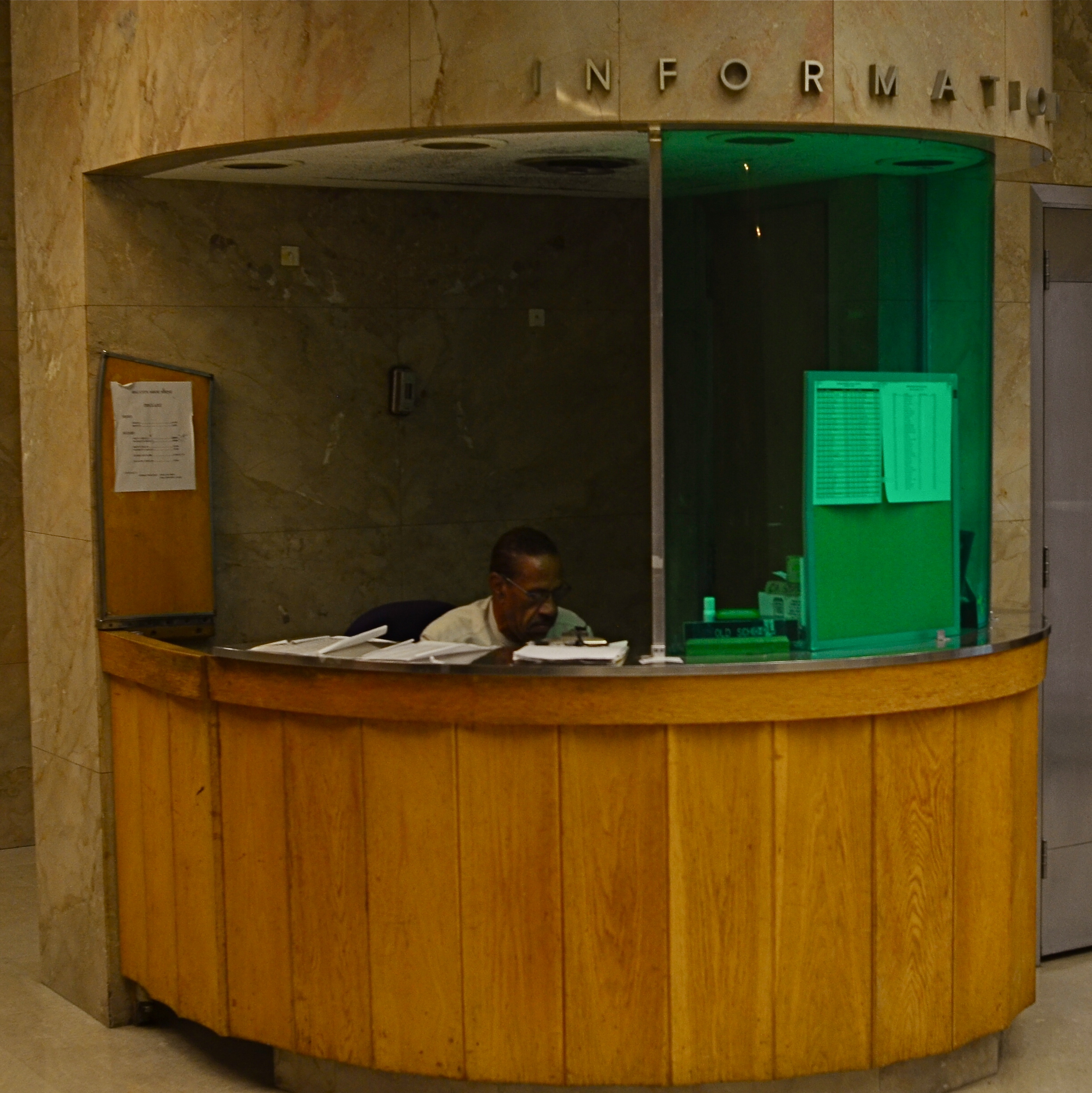
The information booth in the frame shown here is one such anomaly, so odd a fit in the building that it’s part of (the California state capitol annex) that it wrenched my attention away from a pretty good tour. The wing the booth is part of, built from 1949 to 1952, is, generously speaking, as dull as dishwater, indistinguishable from most generic government buildings, a box of sugar cubes.
But the booths are something else again.
Far from the typical marble-block, cage-and-window, bank teller enclosure many public servants call home, the booth is curved wood and glass, sounding a faint echo of Art Deco which extends even to the aluminum letters that spell out INFORMATION. And yet, at present, the modernity of the original design is now itself antique, its lonely occupant looking as if he were banished to his post rather than assigned.
The lighting within the booth is so minimal that the poor man’s features are nearly swallowed in deepening shadow: he looks like a recreation in some museum diorama about What Offices Will Look Like In The Future!!!, as strange to view as “modern” renderings of someday space rockets as seen from 1950. And then there’s the insect-repellant visor green on half of the glass, which is there, I assume, to protect Mr. Info from harsh gamma rays(??). The entire effect is one of loneliness, of, again, the evidence of a time (or a man) whose time has come and gone. And that calls, in my world, for a picture.
ON THE JOB
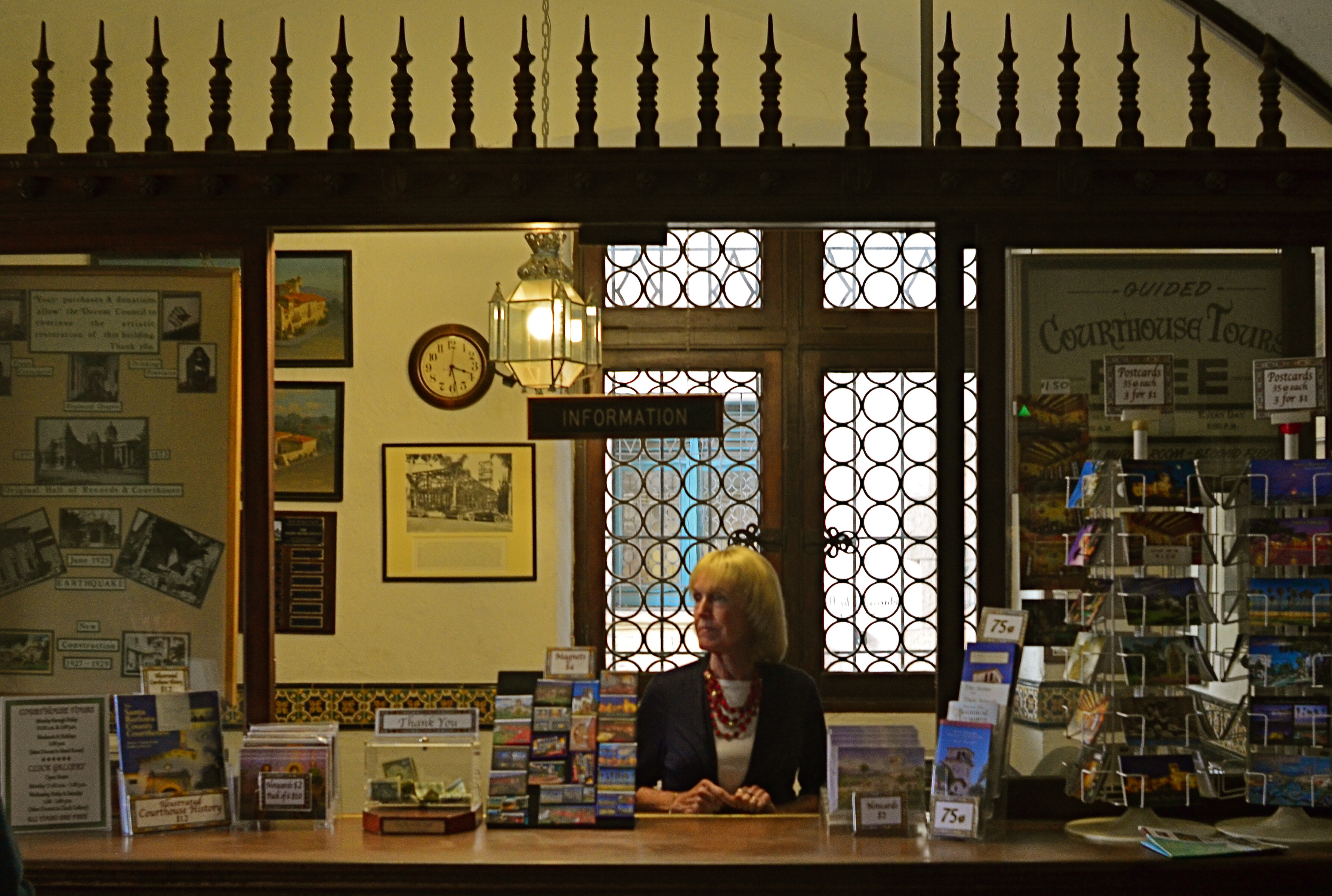
Information, Please (2017)
By MICHAEL PERKINS
ONE OF THE MOST EXHAUSTIVE portrait projects in the history of photography was August Sander’s Face Of Our Time, a collection from the 1920’s of sixty formal portraits of German tradesmen of every class and social station, each shown with the tools or uniforms unique to his chosen profession. Sanders photographed his subjects as documents, without any hint of commentary or irony. The story in their pictures was, simply, the visual record of their place in society and, eventually, as cultural bookmarks.
Since Sander’s eloquent, if clinical work, similar photo essays have taken on the same subject with a little more warmth, notably Irving Penn’s Small Trades portrait series from the early 1950’s. Like Sander, however, Penn also shot his images in the controlled environment of the studio. In my own work, I truly feel that it’s important to capture ordinary workers in their native working environment, framed by everything that defines a typical day for them, not merely a few symbolic tools, such as a bricklayer’s trowel or a butcher’s cleaver. I also think such portraits should be unposed candids, with the photographer posing as little distraction as possible.
I really like the formal look of a studio portrait, but it doesn’t lend itself to reportage, as it’s really an artificial construct….a version of reality. So called “worker” portraits need room to breathe, to be un-self-conscious. And, at least for me, that means getting them back on the street.
SPHERE ITSELF
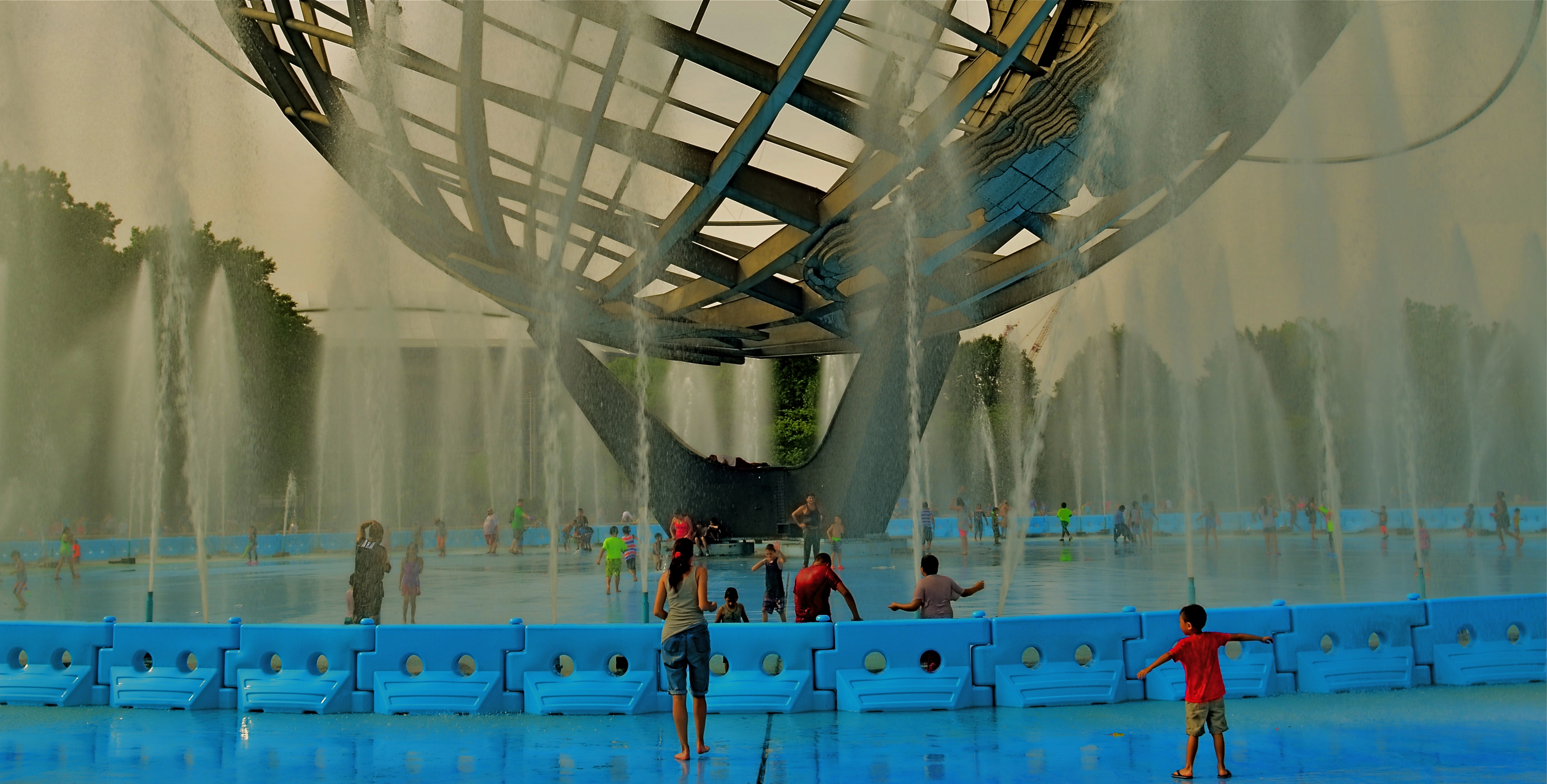
Wet Democracy (2017): The 1964 World’s Fair’s central icon as play space.
By MICHAEL PERKINS
CULTURAL ICONS, which burn very distinct patterns into our memory, can become the single most challenging subjects for photography. As templates for our key experiences, icons seem to insist upon being visualized in very narrow ways–the “official” or post card view, the version every shooter tries to emulate or mimic. By contrast, photography is all about rejecting the standard or the static. There must be, we insist, another way to try and see this thing beyond the obvious.
Upon its debut as the central symbol for the 1964 New York World’s Fair, the stainless steel structure known as the Unisphere was presented as the emblem of the peaceful ideals put forth by the Exhibition’s creators. Under the theme “Peace Through Understanding”, the Uni, 120 feet across and 140 feet in height, was cordoned off from foot traffic and encircled by jetting fountains,which were designed to camouflage the globe’s immense pedestal, creating the illusion that this ideal planet was, in effect, floating in space. Anchoring the Fair site at its center, the Unisphere became the big show’s default souvenir trademark, immortalized in hundreds of licensed products, dozens of press releases and gazillions of candid photographs. The message was clear: To visually “do” the fair, you had to snap the sphere.
After the curtain was rung down on the event and Flushing Meadows-Corona Park began a slow, sad slide toward decay, the Unisphere, coated with grime and buckling under the twin tyrannies of weather and time, nearly became the world’s most famous chunk of scrap metal. By 1995, however, the tide had turned; the globe was protected by the New York City Landmarks Preservation Commission, and its rehabilitation was accompanied by a restoration of its encircling fountains, which were put back in service in 2010. The fair park, itself staging a comeback, welcomed back its space-age jewel.
As for photography: over the decades, 99% of the amateur images of the Unisphere have conformed to the photographic norm for icons: a certain aloof distance, a careful respect. Many pictures show the sphere alone, not even framed by the park trees that flank it on all sides, while many others are composed so that not one of the many daily visitors to the park can be seen, robbing this giant of the impact imparted by a true sense of scale.
In shooting Uni myself for the first time, I found it impossible not only to include the people around it, but to marvel at how completely they now possess it. The decorum of the ’64 fair as Prestigious Event now long gone, the sphere has been claimed for the very masses for whom it was built: as recreation site, as family gathering place..and, yes, as the biggest wading pool in New York.
This repurposing, for me, freed the Unisphere from the gilded cage of iconography and allowed me to see it as something completely new, no longer an abstraction of the people’s hopes, but as a real measure of their daily lives. Photographs are about where you go and also where you hope to go. And sometimes the only thing your eye has to phere is sphere itself.
THAT WHICH IS EARNED
By MICHAEL PERKINS
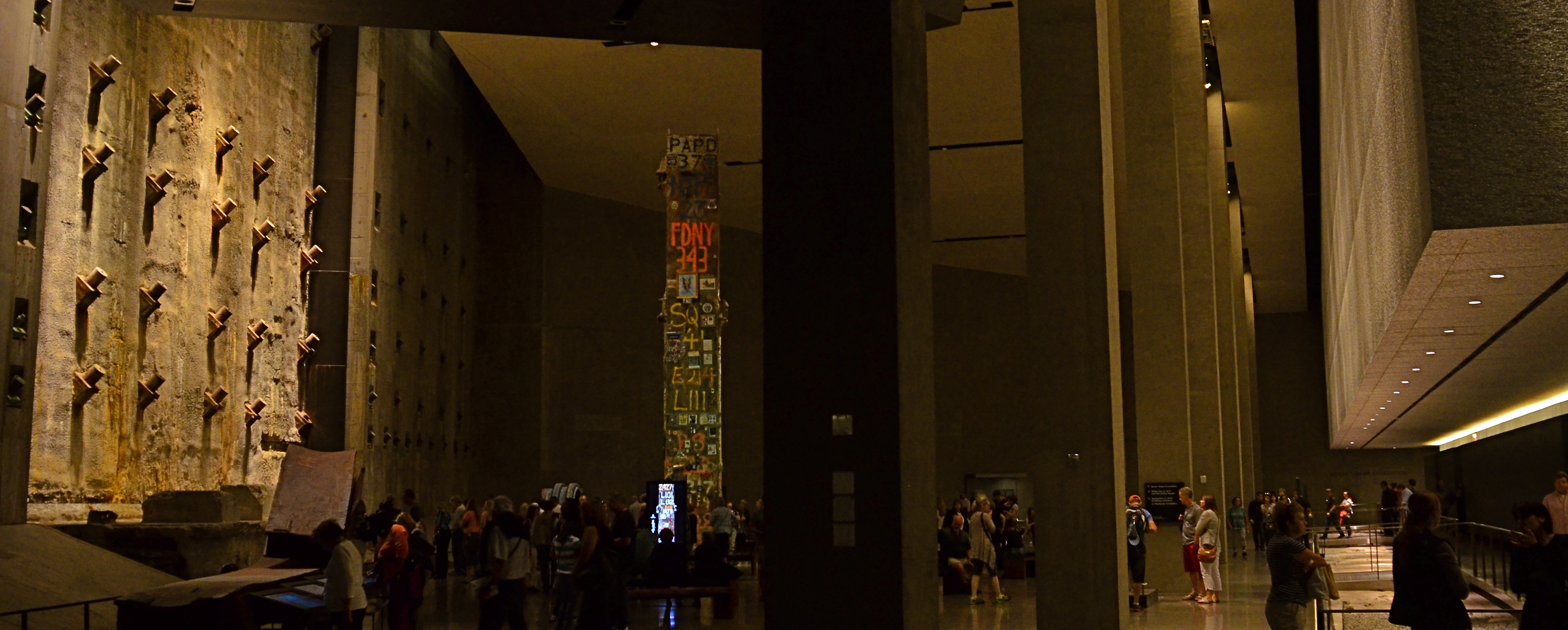
THE MORE INDEPENDENCE DAYS that I mark as an American, the more the holiday is fine-tuned, for me, from one of pure celebration to one of sober reflection. As a child, I waved my little flag, oohed and ahhed at fireworks, and ran up the scores of all our national wins and points of pride. As a middle-aged man, I think of the USA as a wonderful, but incomplete “to-do” list. I cherish what we’ve been but also try to be mindful of what we need to be. And that, in turn, widens my concept of what an Independence Day photograph can look like.
The above image, taken within the solemn sanctum of the 9/11 memorial, may not be many people’s choice for a “Happy 4th” -type picture, for a whole bunch of reasons. And I get that. There’s nothing celebratory about it. No wins, no rousing anthems. No amber waves of grain. That doesn’t mean, however, that it’s inappropriate. It may not rhapsodize about victory, but it does affirm survival. It doesn’t brag about what we have, but it does remind us of how much we stand to lose, if we take it easy, or take our eye off the ball.
The 9/11 site is unique in all the world in that it is battlefield, burial ground, transportation hub, commercial center, and museum all in one, a nexus of conflicting agendas, motives and memories. And while it’s a lot more enjoyable smiling at a snapshot of a kid with a sparkler than making pictures of the most severe tests of our national resilience, photography taken at the locations of our greatest trials are a celebration of sorts. Such pictures demonstrate that it’s the freedom we earn, as well as the freedom we inherit, that’s worth raising a cheer about.
And worth capturing inside a camera.
MR. KITE HAS LEFT THE BUILDING
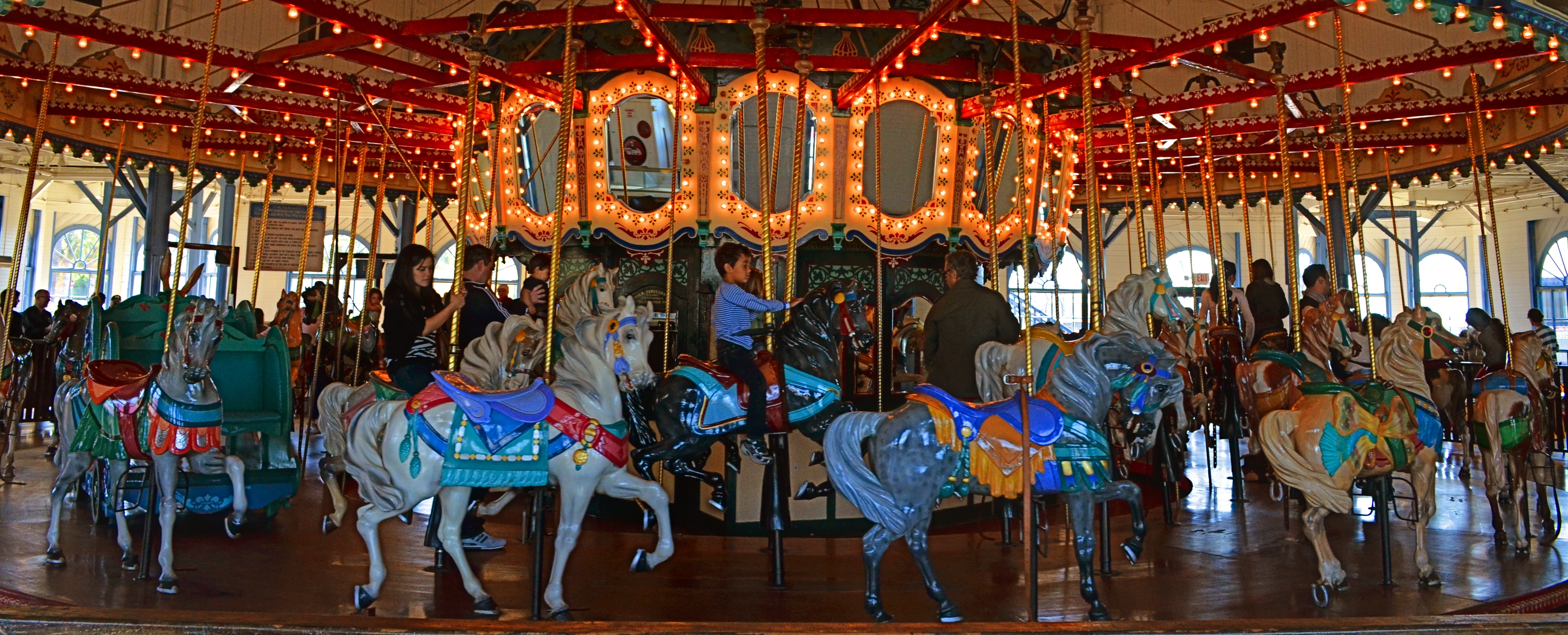
They’re Off And Running (2012) Ponies performing in the round at the Santa Monica Pier.
By MICHAEL PERKINS
PHOTOGRAPHY’S PRINCIPLE BENEFIT IS THE STEALING AND PRESERVATION OF THE FLEETING. That was the miracle that originally astonished the world, the ability to arrest time, to selectively snatch away droplets of the infinitely flowing river of moments and keep them in a jar. And as the young art flourished and began to flex, it proved capable of not only grabbing individual instants, but chronicling the passing of entire modes of life.
As the prairie was settled, as the great distances of the planet were traversed and tamed, as the horse gave way to the car, and as the country mouse became the city mouse, photography laid down mile markers, clearly labeled “this is”, “this is going away” and “this was”. As a consequence, we now have a visual record of worlds and ways of living that have already long since gone extinct. We rifle through shared and inherited images that mark the passing of empires, fashions, movements.
This is all, of course, beyond obvious, but there are times when photographers are more keenly mindful that something big is in the process of winking out. I experienced such a moment a few days ago with the news that Ringling Brothers’ circus was shuttering its operations after more than 150 years, ringing down the curtain on a mixed record of extravaganza and exploitation, depending on where you stand on the issue. Whether circuses were a wonder or an abomination or both, they represented a distinctly analog kind of entertainment, a direct tie between sensations and senses that is one of the last traces of 19th-century culture.
Along with world’s fairs, carnivals, vaudeville, even rodeo, the circus serves as a strange relic of a time when the arrival of the Wells Fargo wagon or the pitching of the Chautauqua tent could be the height of the social season in many a town. The visually rich pageant of having dozens of clowns, acrobats, and performing beasts parade right down your main street was, in the days before mass media, pretty heady stuff, and, even at its twilight, it still has a powerful, if quaint, pull on the imagination. All of this is fertile ground for the photographer/chronicler.
It’s now fifty years since John Lennon transcribed the text from an old circus poster to evoke a vanished era with the song Being For The Benefit Of Mr. Kite, overdubbing the music track with a montage of calliopes and hurdy-gurdys to paint a very visual piece of audio. To this day, I can’t hear the tune without concocting my own mental photo of prancing ponies and carnival barkers. Mr. Kite may already be retiring to his dressing room, as are so many analog forms of entertainment. But we have the pictures. Or we need to start making them.
 thenormaleye
DOUBLE REVERSE CHAOS
By MICHAEL PERKINS
SOME THINGS CANNOT BE MADE VISUALLY COHERENT merely by pointing a camera at them. That is, all subjects won’t give up their secrets to the mere act of photographic recording. And that’s when mere documentation must give way to interpretation.
A case study……
There is probably no denser concentration of immersive marketing on earth than in the yawning canyons of New York City’s Times Square, a cacophonous minefield of flashing, spinning, exploding LED overload. Messages aren’t simply or singly sent or received here: rather, they elbow past each other by the hundreds, desperately contending for the viewer’s attention in microbursts of insane color and absurd scale, in what actually amounts to the dead opposite of communication. Billboards, marquees and crass chunks of street theatre, from ersatz Miss Liberties to pose-with-me Batmen, all scream and stream at once, sending the senses careening from sensation to sensation like pinballs on ampthetamines. The irony: nobody wins the race: messages all eventually fail to register, cascading in a blur like a flipped deck of cards.
Street Rebus (2018)
This is why, for a Times Square-type subject , “straight” photography is doomed to disappoint. It’s just not enough to convey the feeling of fragmentation created by the site’s sensory bombardment. Merely freezing the action with one’s camera is an attempt to “make sense” of a reality that is, by definition, non-sensical. We don’t need to slow things down so they’re recognizable…..quite the opposite. We need instead to capture and comment on the confusion in a visual language we ourselves improvise.
In my own case, I try to further amp up the broken, shattered quality of the information that meets the eye by breaking pieces of data into even smaller pieces….a kind of double-reverse chaos. In the image seen here, I’ve turned away from a bright cluster of signs on one side of the street to shoot their reflections in a split-panel office window, forcing all the messaging from the signs into splintered abstractions, some of which come from shadows within the office itself.
This is, of course, just an example and not in any way a universal template. The precise method for creating a distortion of an already distorted reality isn’t paramount, but what I don’t want is a literal representation of these streets. Reality is in short supply in the Times Squares and Tokyos of the world. Photographers intent on commenting on that condition have to stay one step ahead, to find the double reverse chaos lurking within.
Share this:
July 15, 2018 | Categories: Americana, Composition, Conception, New York | Tags: Abstraction, Commentary, Surrealism | Leave a comment