SEA CHANGE
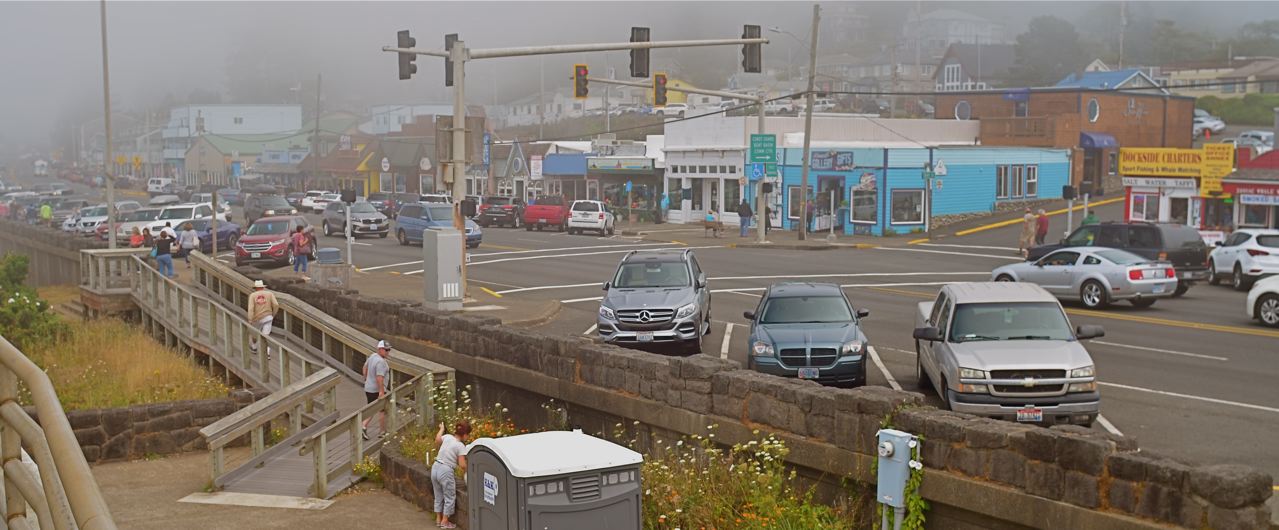
Downtown Depoe Bay, Oregon
By MICHAEL PERKINS
THE COASTAL OREGON TOWN OF DEPOE BAY (pop. 1,398) advertises itself as “the world’s smallest harbor”. They might have saved themselves the cost of a sign. Everything about this little strip of gristle along U.S.101 suggests small, conveying the unmistakable feeling that you are Miles From This, A Further Piece Up The Road From That, or On The Way To Elsewhere. This place right here, though, is not much more than craggy connection tissue between other places, places that have substantially more going on.
But then there is that coastline, most of it seen in five minute out-of-the-car stretches by passersby who follow the signs for the Whale Watching Center. The decidedly no-nonsense concrete slab that houses said center sits atop a pile of blackened, stony scab that boasts but one break in its protective sea wall, a narrow channel that admits just one boat at a time (tourist charter local fishing skiff, or Coast Guard cutter) from the “harbor” across the street, a small collection of crafts most towns would label a “marina”. This traffic flow is regulated by the outcome of the daily conundrum, will there be whales, or, more accurately, will whales, or anything else, be visible beyond a hundred yards?
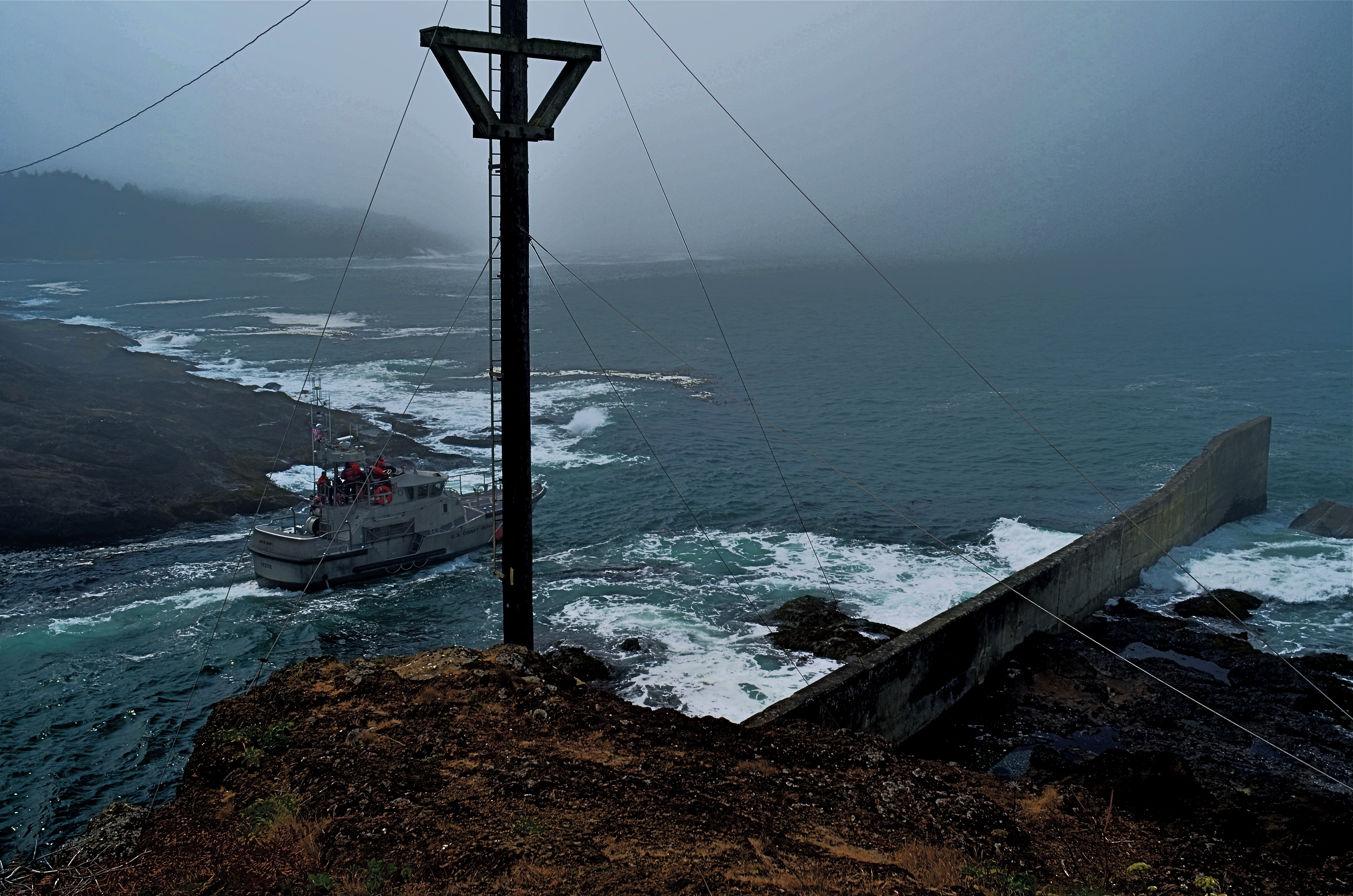
And yet, even swallowed up in soupy fog, the snaky fingers of which close upon the coast like grasping, ghostly fingers balling into a fist, Depoe Bay could make Melville’s Ishmael himself pine for the open sea. Paradoxically, it reveals all and conceals all at the same moment. It’s a portal to departures, an end point to journeys, a portent, a welcome, a warning…..and an irresistible itch that only a camera seems able to scratch.
Coastal towns like Depoe can subsist on their four blocks of bar-laden business district, their single low-power oldies radio station, their preciously tacky gift shoppes, the gallons of chowder dispensed each day. But the real show is the one that won’t stay still, the one that is equal parts miracle and menace, doldrum and dream. With it, the Depoe Bays of the world maintain their tenuous spots on the map. Without it, all poetry vanishes in a bank of mist.
COMFORT FOOD (AND LIGHT)
By MICHAEL PERKINS
SINGLE–SOURCE LIGHT IS ALMOST ALWAYS USED, IN PHOTOGRAPHY, with the aim of calling attention to something other than itself. Typically the light’s origination point is hidden or removed from the final composition, entering from outside the frame via a side window or a top-down studio lamp, modeling or dimensionalizing an object, creating the illusion that all the light in the room just happened organically.
And that’s pretty much as it should be. You usually don’t use the tools of a craft to say, in effect, look at the way these cool tools helped me play a trick on you. As photographers we don’t like to be caught in the act of fooling, and so there are many images where the single source light is seen just in its effect, not as a cause.
Many, but not all. Sometimes the light actually needs to be part of the story, as shown here.
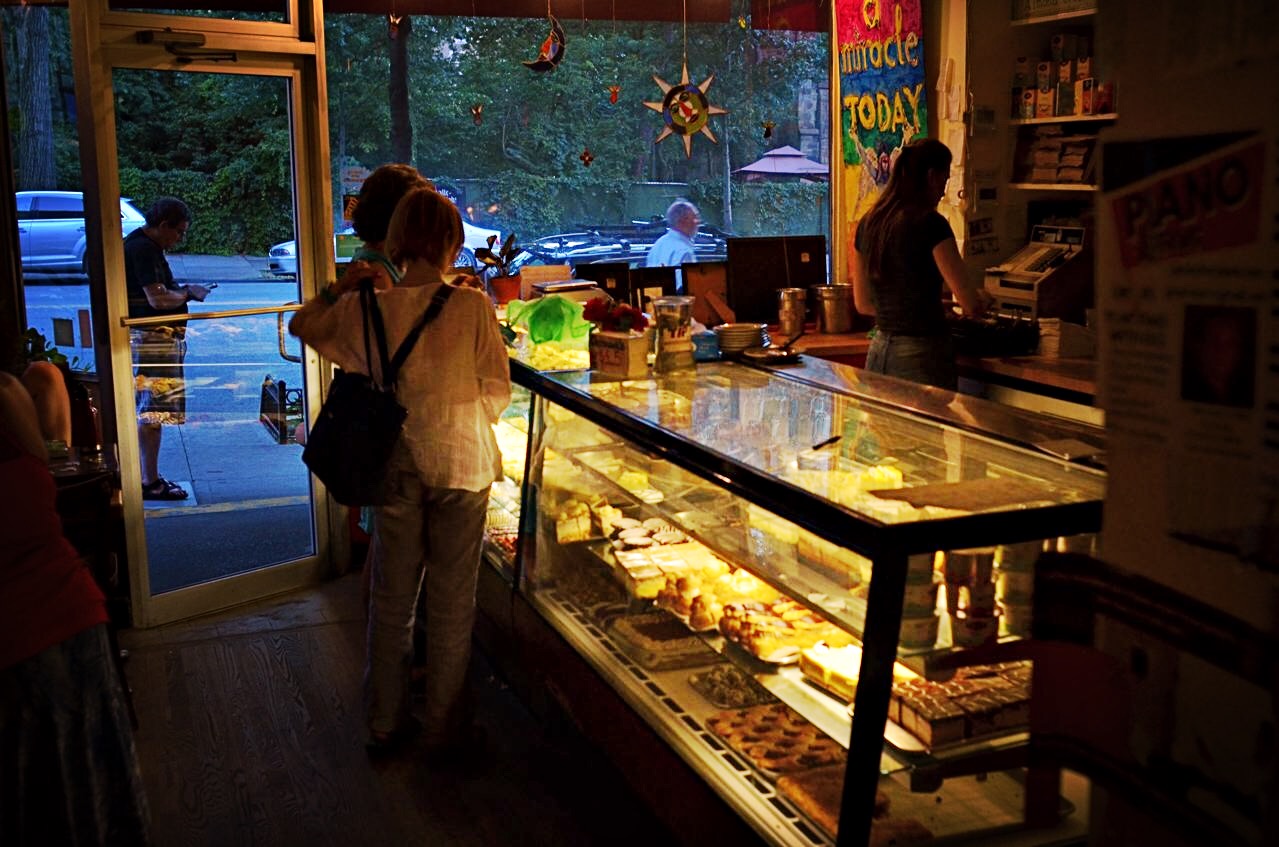
Most places of business naturally react to the daily dying of exterior light by turning on their interior lamps. Sun goes down, lights go up. But occasionally, as in this wondrous and quirky little bakery cafe in Morningside Heights in Manhattan, the comfort food was accompanied by what could easily be termed comfort light. The lights inside the pastry case, at least during this particular evening, were allowed to serve as the only illumination for the entire inside of the store, lending the customers around the counter the warm intimacy of a shared fireplace.
The moment filled me with longing for a world whose labors and leisure were once defined solely by the parameters of day or night, mitigated only by the occasional torch or oil lamp. And so, in this special case (and in many more you can no doubt name from your own experiences), the source of the image’s light really is part of the narrative, and thus deserves its place at center stage.
PLAN “D”
By MICHAEL PERKINS
ANYONE THAT IS NOT BORN AN OCTOPUS figures out early that photography is often about living with the consequences of unforseen choices. Perhaps creatures born with eight arms might actually be able to produce the best images, since they’d be equipped with the means to carry every piece of equipment they possessed into the field for a shoot. As for the rest of us, results rise or fall on the strength of our planning…..and resiliency.
To be clear, the word planning is meant to denote all of your process, not merely the first preference you imagined when anticipating a shoot. That “version” we label “Plan “A”, which might also be entitled “do everything the way you first envisioned it with precisely the gear you originally selected”, an outcome roughly equivalent to Marrying The Prom Queen And Retiring To Tahiti. Let’s face it: shoot enough pictures and you’ll be struck by how seldom you were able to simply step up, click, and go hang a golden trophy on your mantel. In most cases, Plan “A” is usually just a point of departure, a preliminary sketch.
So let’s assume your photo shoot has proceeded to Plan “B”, which might be named “rejecting your original conception”. At this stage, you’ve begun to question everything from composition to gear to even the strength of your initial subject. Based on how many alternate equipment choices may be available, several tough decisions can be made at this juncture, including my favorite, Doing The Best You Can (the path of least resistance), otherwise known as Shoot It Anyway. Assuming this doesn’t work out, you move briskly on to:
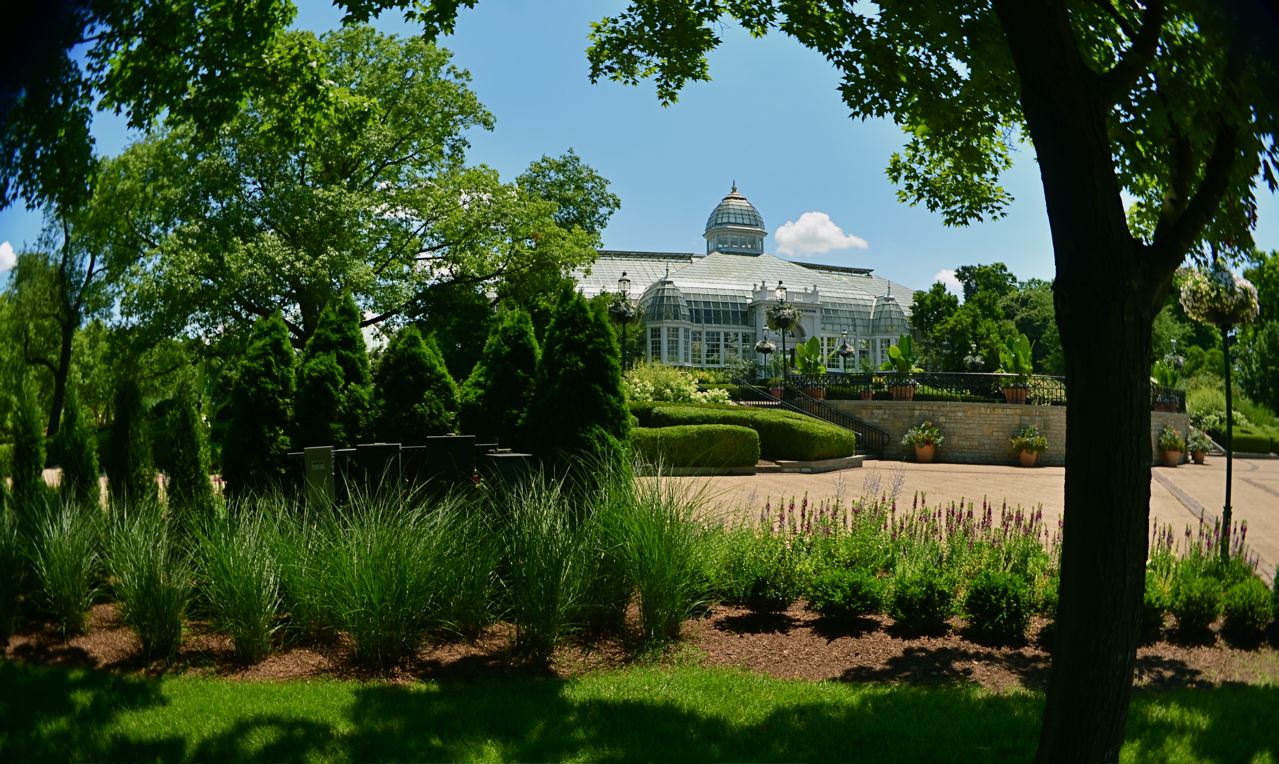
Plan “C”, in which you have new strategies forced on you by either the technical limits of your gear, or the boundaries of your skill level with it. This assumes that, not only did you bring the wrong lens for the job, but also that the right lens is four acres away in the parking lot. Let’s also stipulate, for purposes of this exercise, that everyone around you is getting (a) impatient, (b) tired, or (c) hungry, just to add to the pressure. Hey, pal, no rush, but take the picture already, willya? But have no fear… there’s always:
Plan “D”, in which a change in your entire approach to the image is unavoidable, but suddenly and strangely…..alluring. Being stuck with gear that won’t absolutely deliver your original vision no matter what you do, you begin to embrace the idea of experimenting, otherwise known as the What The Hell or Weary Resignation option. Hey, you grabbed a fisheye lens for the inside of the conservatory building…..but maybe you can also make it work as a standard ultra-wide (see above result). Cue up Kiss’ Nothing To Lose…
All of which is to say, in a very roundabout fashion, that it pays to be as flexible as, say, an octopus.
With one-fourth the arms.
BIG STORIES, LITTLE STORIES
By MICHAEL PERKINS
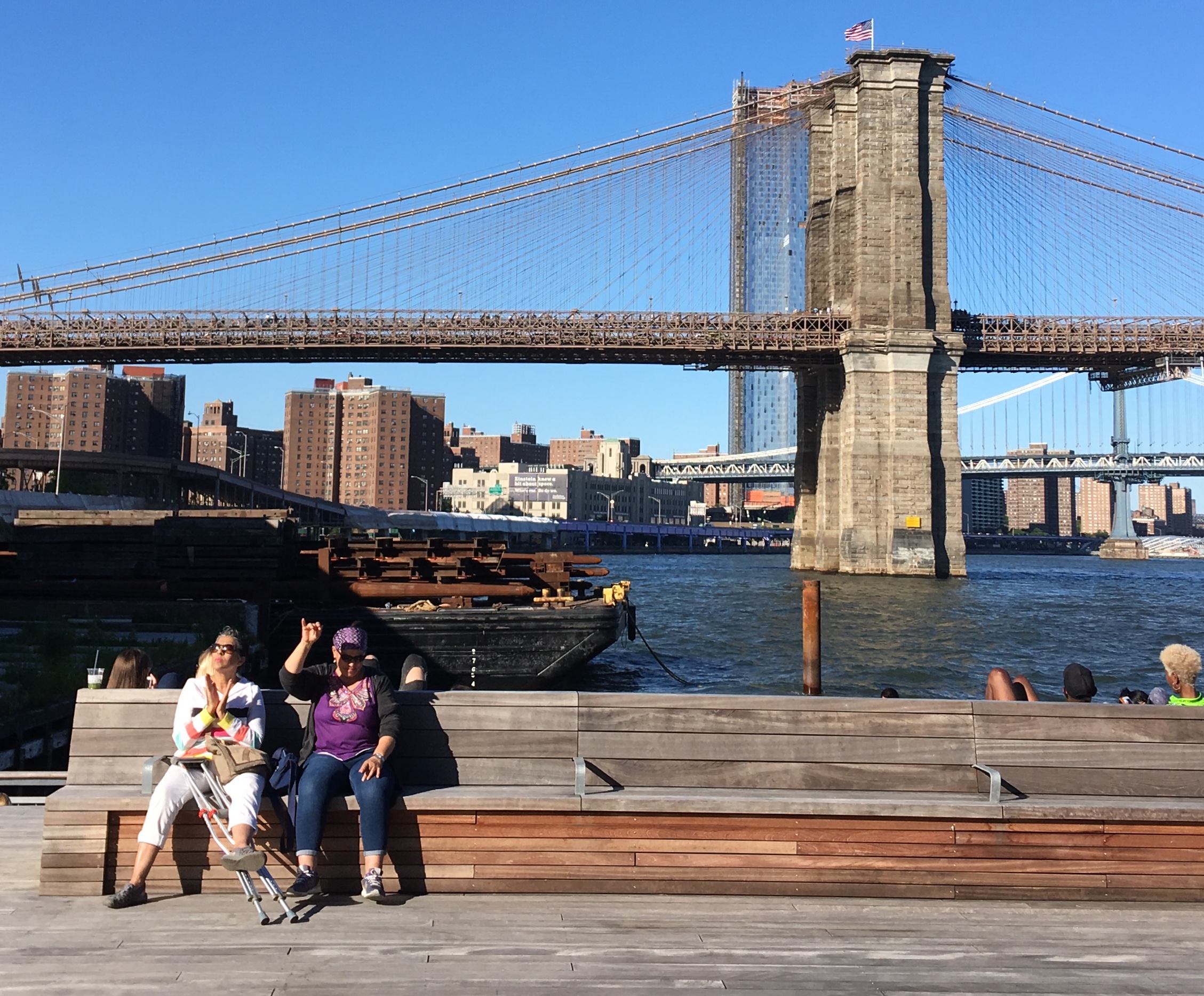
IT ISN’T THE EASIEST THING, upstaging one of the world’s key postcard views. And yet, in final analysis, people should rank higher, in the photographer’s eye, than the things people build for their use. So it should come as no surprise that, to the patient eye, human-sized scene stealers abound everywhere, big setting or small.
This view of the southern side of the Brooklyn Bridge certainly needs no additional context, and yet, the nearby Pier 17 promenade, repaired and re-imagined as all-new public space near the Fulton Street market region in the aftermath of Hurricane Sandy (and shown here), provides a daily flood of people-watching opportunity. Indeed, almost any other framing along the deck at the moment this shot was taken would show just how much company the ladies seen here actually had on this particular Saturday evening. The word throng definitely applied, with just about any other composition revealing hundreds of singles, couples, and families crowding the Pier’s restaurants, bars, kiosks, tour boats and viewing rails……however, we have decided, for the moment, to concentrate on these two ladies, and the bond of friendship that is more than enough story to power a photograph.
What you can’t hear, and they clearly could, is the incredible music beat being pumped throughout the pier. What you can certainly see is that you don’t have to be standing, or even using your entire body, to dance…to feel….to be one with that beat. In truth, given that the woman at left is sporting a pair of crutches, “dancing” becomes the living embodiment of the motto work what you got, with mere hand claps getting the job done. As for the lady in purple, a single, upraised hand and a bowed head testify, yes, I’m feelin‘ it. They are both sitting, but they are in no way sedentary. It’s on.
And while all this is going on, just like that, the Great Bridge has dropped to second billing. A backdrop. Atmosphere. Which is something that can happen anywhere, but especially here. For as they know all too well on Broadway, on any given night, the understudy can take stage instead of the star.
And steal the show.
THE TEMPORARY COLLECTION
By MICHAEL PERKINS
FOR PHOTOGRAPHERS, MUSEUMS SHOULD NEVER BE A ONE–WAY STREET. The popular conception of the role of our various Hallowed Halls of Important Stuff is that the artifacts do all the sensory sending and we, the visiting public, do all the receiving. The idea prevails that paintings and sculptures and installations impart their wisdom and we passively soak it up, like ambulatory blotters. Thus, this logic must follow, a photographic record of the museum experience should only pointed in one direction.
But of course this is nonsense.
Anywhere you have hundreds of humans assembling in a common area, you have created an active anthropological laboratory, and thus a rich harvesting ground for the camera. A myriad of motives and paths, from “something to do” to a personal thirst for experience to a place to duck in out of the rain, converge as a “temporary collection” mixing with the museum’s’ more permanent ones. All these arrivals, each with their own energy, curiosity, hostility, apathy, fatigue, and joy to deal with, create a kaleidoscopic pattern of intrapersonal intersections and collisions. The eager attendee and the unwilling hostage exist side by side. That creates the unpredictable, and that unpredictability, for the photographer, creates opportunity.
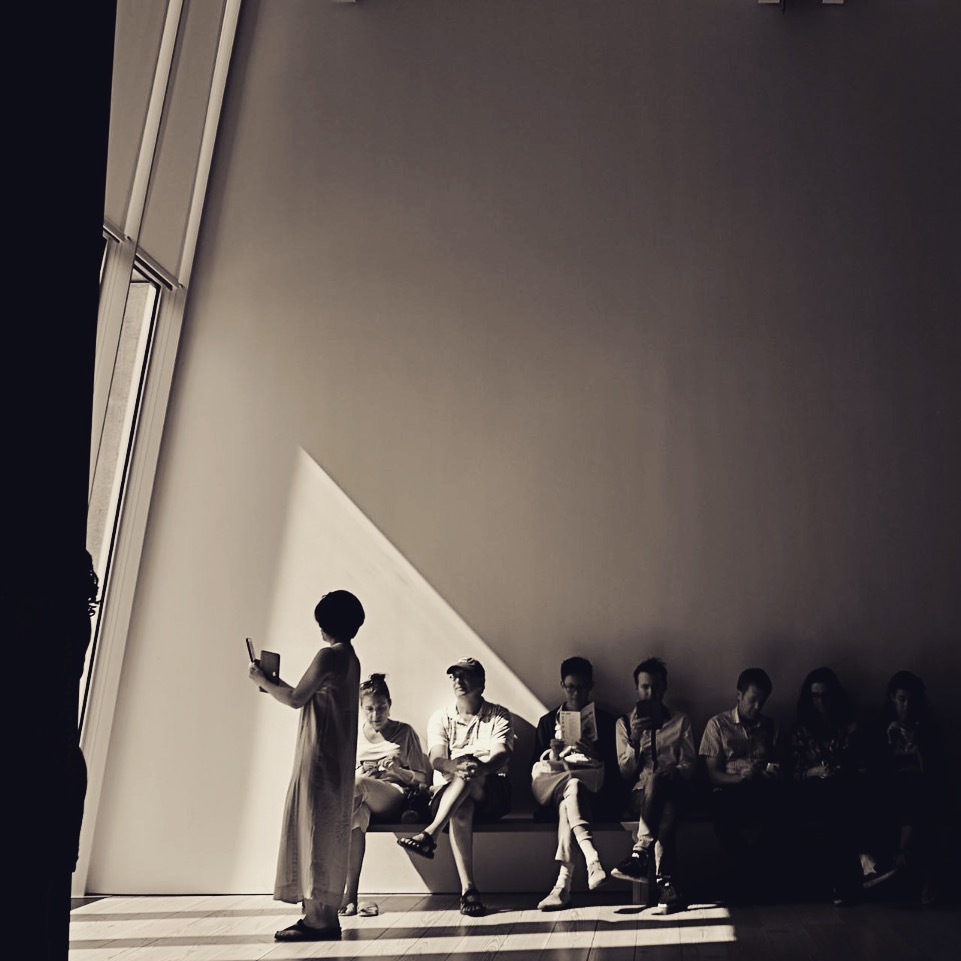
In the image shown here, the “official” delights of the museum in question have failed to amaze, at least for the group occupying the bench. As for the woman peering out the window, she has simply found something with bigger “wow” value than anything hanging on the walls. The sheer dimensions of the space threaten to dwarf the group, to make it seem small or insignificant, and yet their faces and bodies contain a strange mix between tension and ennui that is so wonderfully human that it invites the investigative eye of the shooter.
This shot came to me virtually ready-made, although a later conversion to monochrome eliminated the minor color distractions of various articles of clothing. When a picture is this simple, everything that tends to complicate it becomes expendable. The phrase keep it simple, stupid, may not have originated with photographers, but we ought really to have it tattooed on our foreheads.
I spent nearly two hours in the museum in question (name withheld) and, I assure you, this was one of the most interesting tableaux I observed in the entire joint. It’s not that I find no interest in the arts: quite the opposite. It’s just that, visually, people reacting to the world is more vital to me than just pictures of the world alone. The whole gig is a museum, really, and frequently, the permanent collection of life is thus upstaged by the temporary one. Go figure.
OF TREASURES AND TORTURES
By MICHAEL PERKINS
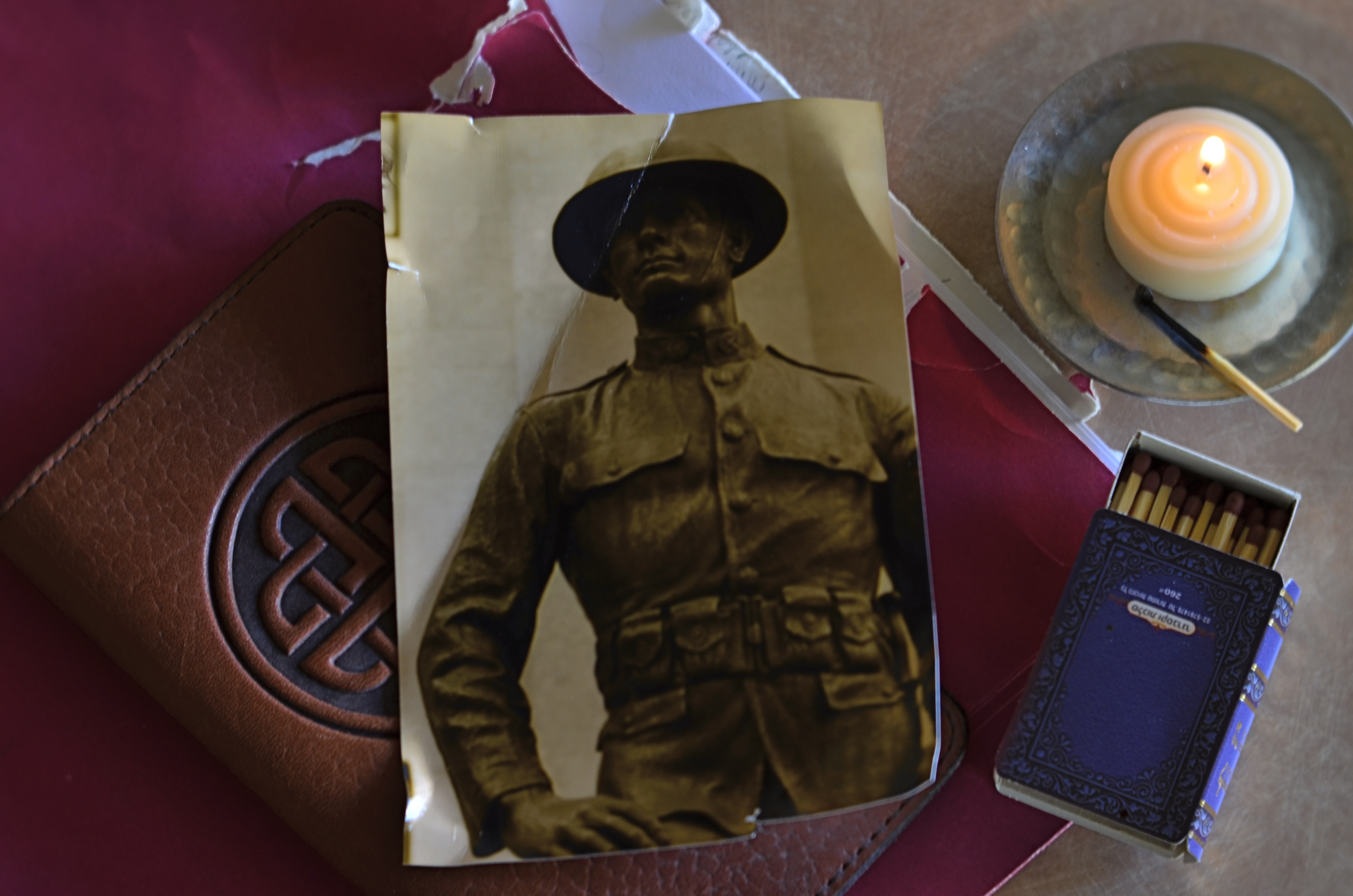
EDWIN M. STANTON, Abraham Lincoln’s Secretary of War, is, regarding photography, in the unique position of having acted both wisely and foolishly following the death of his Commander-in-Chief. Foolishly, because, at the request of the president’s bereaved widow, he reportedly ordered the destruction of the only glass plate negative showing the fallen president lying in state…..and wisely, because he apparently kept a personal print of the image amongst his personal papers, lost to history until a teenage Lincoln afficionado accidentally stumbled upon it in 1952. Stanton’s actions, along with those of the First Lady, betray a very human ambivalence to the camera’s ability to either annihilate or preserve memory, based on one’s viewpoint.
With its power to extract discrete slices of time, the photograph does provide a permanent record for the mournful….but is that comforting, or rather a clinical way of obviating the more personal, if less precise preservation afforded by memory? Did the camera enable us to re-conjure our loved ones at will, or did it deny us the right to keep them in the very private part of our hearts that exists beyond vision?
Essayist and librarian Jean-Noel Jeanneney, writing of the first days of photography, remarked that “the people who lived in the second half of the nineteenth century and the first part of the twentieth are the first in the long history of humanity to be able to see accurate and faithful portraits of their predecessors…..their ancestors are no longer the imagines carried at funeral ceremonies, no longer the painted mementoes devised as aides–memories. Instead, they appear to us as all too horribly true to life: perhaps that is why, today, a greater pathos is attached to our relationship to the departed…..”
The photographer is never merely a chronicler, and so images of the most important people of our experience can never really be mere snapshots. We frame faces in the shadow of our own influence, and time itself re-touches the images years after they are captured. Hence portraiture is never a purely casual act. Mr. Stanton and Mrs. Lincoln were both right, in their own ways. One could not bear the lingering memory of her husband. The other could not endure the idea of a world without his President.
Our last memory of a person may not literally be a shot of them in the coffin, but the impact, many ages on, of even their smallest interactions with this life makes images of them among the most remarkable of human documents. That confers a unique honor, as well as a profound responsibility, upon the photographer.
GOING HALFIES
By MICHAEL PERKINS
IN A PERFECT WORLD, all our photographs would have their permanent address at the intersection of Flawless Technique Street and Great Message Boulevard. And while some do, magically, make it to this mystical crossroads, many others lose the paper the directions were scribbled on and wind up down some back alley.
Powerful narratives can arrive in perfect packages, sure. But not often and not with any predictability. Often we settle for one half of the ideal or the other. That “going halfies” choice determines what we regard as most important in our favorite images.
I would love to be able to achieve technical perfection every time I’m up to bat, but I’m not religious about raw precision….at least not the way I am about emotional resonance. Every one of you has a pile of pictures which are optically flawless and another pile of pictures that speak to your best intentions. Given an either/or judgement on which of these are your “keepers”, why wouldn’t you always, always choose the images that, regardless of various “flaws”, conveyed your mind and heart?
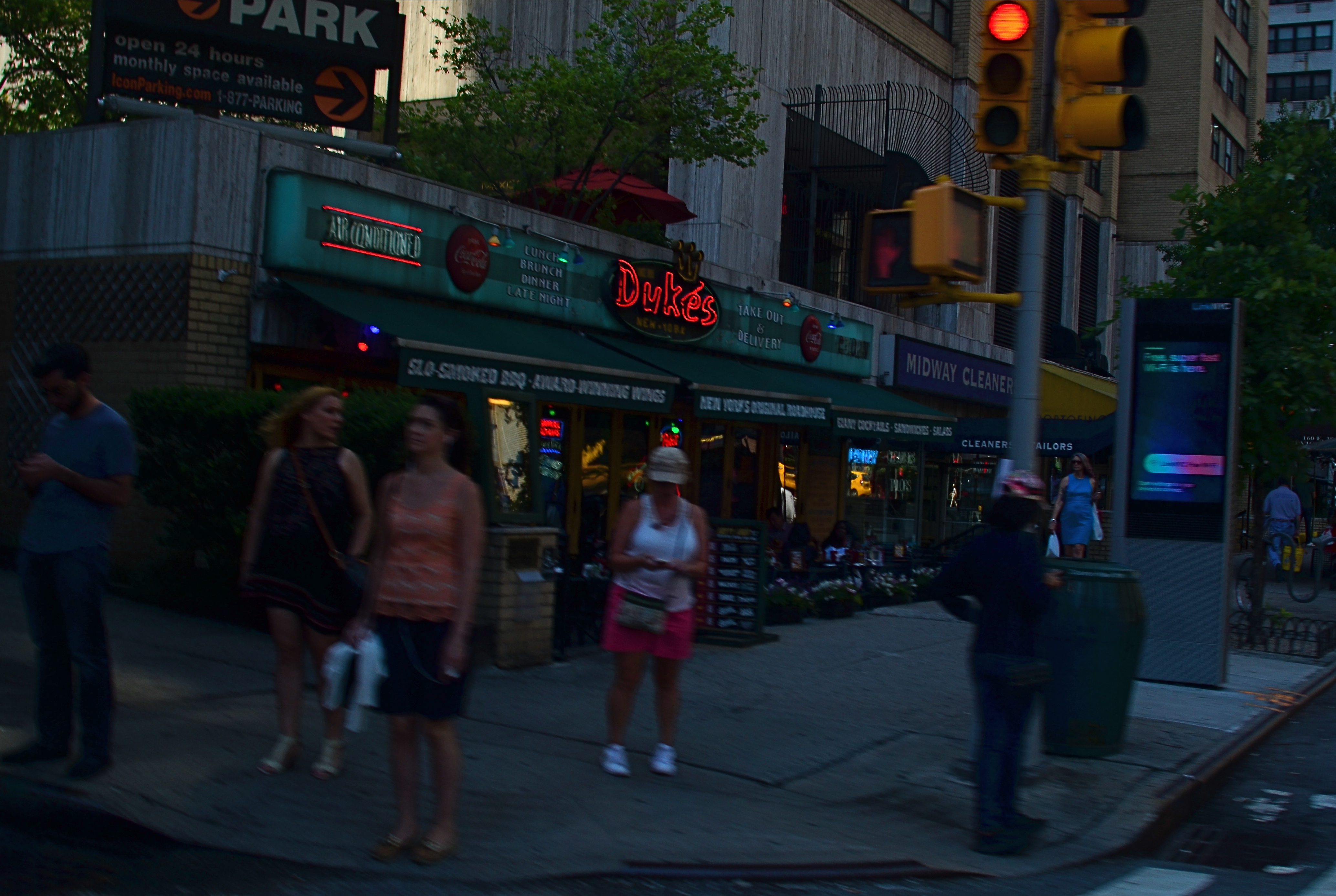
Down At Duke’s, 2018
Light, focus, aperture, even composition are tools, not ends unto themselves, and even the best photographers drop one or another of these techno-balls in some of their best work. But should we seriously disqualify an image merely on technical points? If the answer is yes, then half of the works that we collectively value as great must be stricken from the public record, and photography is merely a recording process, like the operation of a seismograph or any other instrument where precision trumps every other consideration. But if the answer is no, then a picture that fails one or more technical tests can stil be considered valid, so long as it is emotionally true.
I struggle with these choices whenever I produce a shot that has things “wrong” with it, but which is also an authentic register of where my mind was at the time it was snapped. Photos like the one seen here would fail many a judge’s test, depending on who’s doing the judging. It’s too dark. The shutter speed is way too slow, inviting blur. Some of the shadows swallow detail that might just be important. And yet I love this building, these people, this moment. In my defense, I had to decide in an instant whether to even attempt the picture, taken, as it was, from the back seat of an Uber lurching unevenly through the streets of Manhattan. Shooting on full manual, I had to anticipate fast changes in available light, the length of traffic signals, the process of shooting through glass with a filtered lens, and the occasional offensive/defensive maneuvers of the driver. In raw scoring, I just didn’t manage to master all of these variables in a technically perfect manner. And yet..
There has been a lot of talk lately about not letting the Perfect be the enemy of the Good, a phrase which says more about photography in ten words than I’ve said in this entire page. Rule one for shooters: don’t let the flawless be master over the real.
DOUBLE REVERSE CHAOS
By MICHAEL PERKINS
SOME THINGS CANNOT BE MADE VISUALLY COHERENT merely by pointing a camera at them. That is, all subjects won’t give up their secrets to the mere act of photographic recording. And that’s when mere documentation must give way to interpretation.
A case study……
There is probably no denser concentration of immersive marketing on earth than in the yawning canyons of New York City’s Times Square, a cacophonous minefield of flashing, spinning, exploding LED overload. Messages aren’t simply or singly sent or received here: rather, they elbow past each other by the hundreds, desperately contending for the viewer’s attention in microbursts of insane color and absurd scale, in what actually amounts to the dead opposite of communication. Billboards, marquees and crass chunks of street theatre, from ersatz Miss Liberties to pose-with-me Batmen, all scream and stream at once, sending the senses careening from sensation to sensation like pinballs on ampthetamines. The irony: nobody wins the race: messages all eventually fail to register, cascading in a blur like a flipped deck of cards.
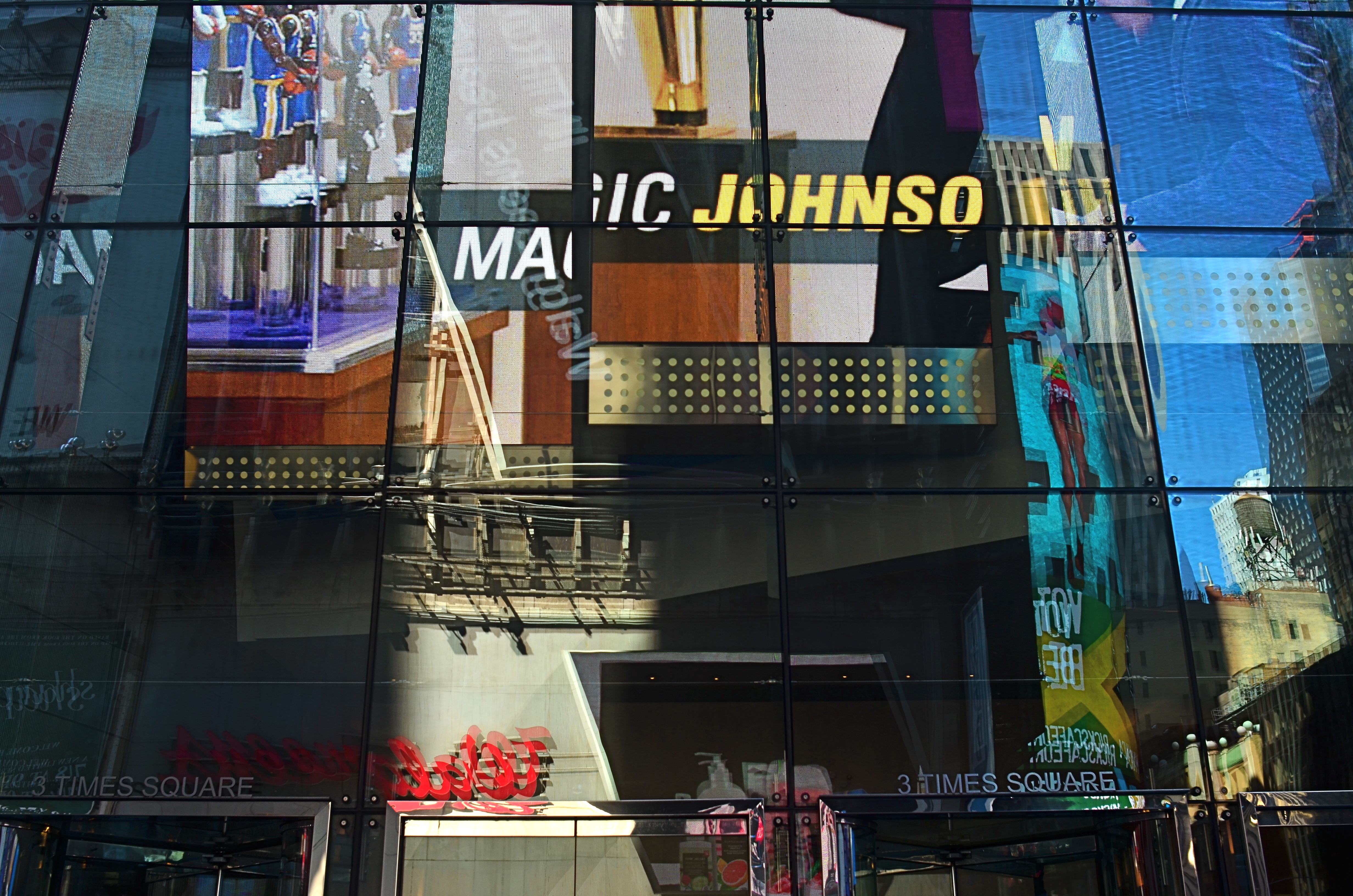
Street Rebus (2018)
This is why, for a Times Square-type subject , “straight” photography is doomed to disappoint. It’s just not enough to convey the feeling of fragmentation created by the site’s sensory bombardment. Merely freezing the action with one’s camera is an attempt to “make sense” of a reality that is, by definition, non-sensical. We don’t need to slow things down so they’re recognizable…..quite the opposite. We need instead to capture and comment on the confusion in a visual language we ourselves improvise.
In my own case, I try to further amp up the broken, shattered quality of the information that meets the eye by breaking pieces of data into even smaller pieces….a kind of double-reverse chaos. In the image seen here, I’ve turned away from a bright cluster of signs on one side of the street to shoot their reflections in a split-panel office window, forcing all the messaging from the signs into splintered abstractions, some of which come from shadows within the office itself.
This is, of course, just an example and not in any way a universal template. The precise method for creating a distortion of an already distorted reality isn’t paramount, but what I don’t want is a literal representation of these streets. Reality is in short supply in the Times Squares and Tokyos of the world. Photographers intent on commenting on that condition have to stay one step ahead, to find the double reverse chaos lurking within.
HOW TERRIBLY STRANGE…..
By MICHAEL PERKINS
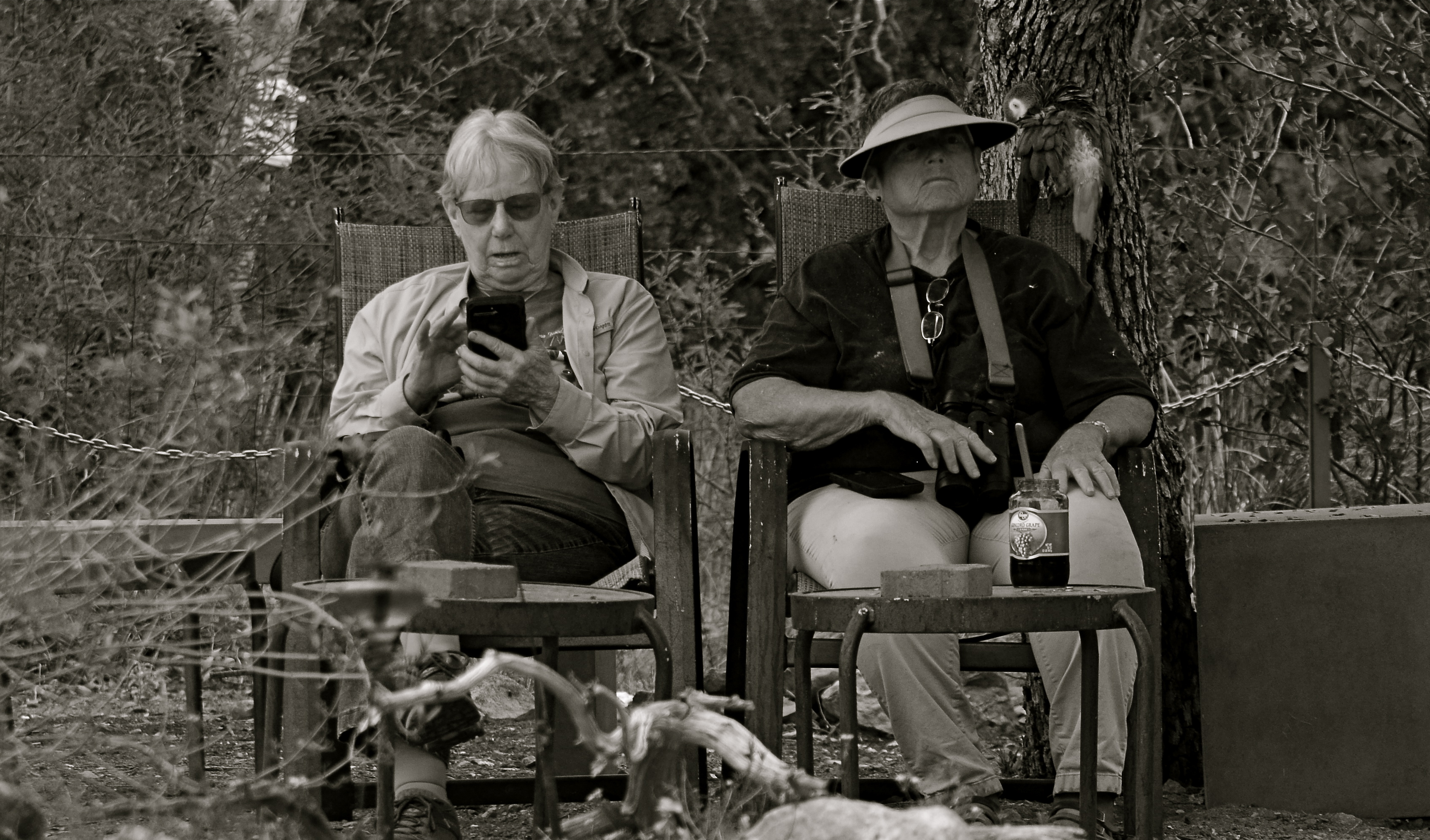
SOME IMAGES REQUIRE NO WORDS. At least that’s the standard we aim for.
Many others may or may not benefit from what I call accompaniment. Sometimes a few words act as a sort of period at the end of a photographic “sentence”. Other times, a pre-existing sentiment….literary, musical, poetic…. seems somehow to have been just waiting for a picture with which to pair up.
I shot this picture of two longtime pals in just a second, but for two weeks after that, my mind kept looping back to 1968, and the words of a then-young songsmith who found it a real mind stretch to picture himself at the opposite end of his life. And, most likely, many other baby-boomers who read those lyrics, from the Simon & Garfunkel Bookends album of fifty years ago, tried to make the same mental leap. In 2018, those of us lucky enough to have made that journey to “the other side”, living out those dreams of dotage, may be, even now, able to recall that young writer’s words at will:
*****************
Old Friends / old friends / sat on their park bench like bookends
A newspaper blown through the grass falls on the round toes/ of the high shoes
Of the old friends
Old friends / winter companions, the old men
Lost in their overcoats / waiting for the sunset
The sounds of the city sifting through trees settle like dust on the shoulders
Of the old friends
Can you imagine us, years from today, sharing a park bench quietly?
How terribly strange to be seventy……
************
(c) 1968 Paul Simon
Here’s to songs that are worth a thousand pictures, and to pictures that try to return the favor….
GO SMALL, GO SLOW
By MICHAEL PERKINS
WHATEVER THE PERCEIVED DOWNSIDES of the switch from analog to digital photography, perhaps the only real net negative has been how speedy the process of picture-making has become. Yes, I said negative.
Admittedly most of that vaunted speed connotes as a positive to many, a miraculous convenience. And, indeed, progressively more responsive, even “intuitive” cameras produce usable images only slightly slower than their creators can hatch a whim. Want it, take it, got it. Fast.
But “usable” doesn’t necessarily mean “great”. And it can be argued that the sheer velocity at which we crank out photographs promotes, even guarantees a stunning yield of photographic mediocrity. Because art takes forethought, a pre-imagining discipline. And there is no way to achieve that if every picture, every time, is taken in an instant.
Eventually, photographers have to proactively take back control over their final product, by the simple expedient of slowing everything down. And there are any number of simple ways to practice this. Shoot on manual. Set aside the zooms and shoot with primes. Engineer more natural light shots in lieu of flash snaps. Keep one particular lens on your camera for a month and force yourself to shoot everything with it. In short, make the process harder, not easier. Make yourself uncomfortable.
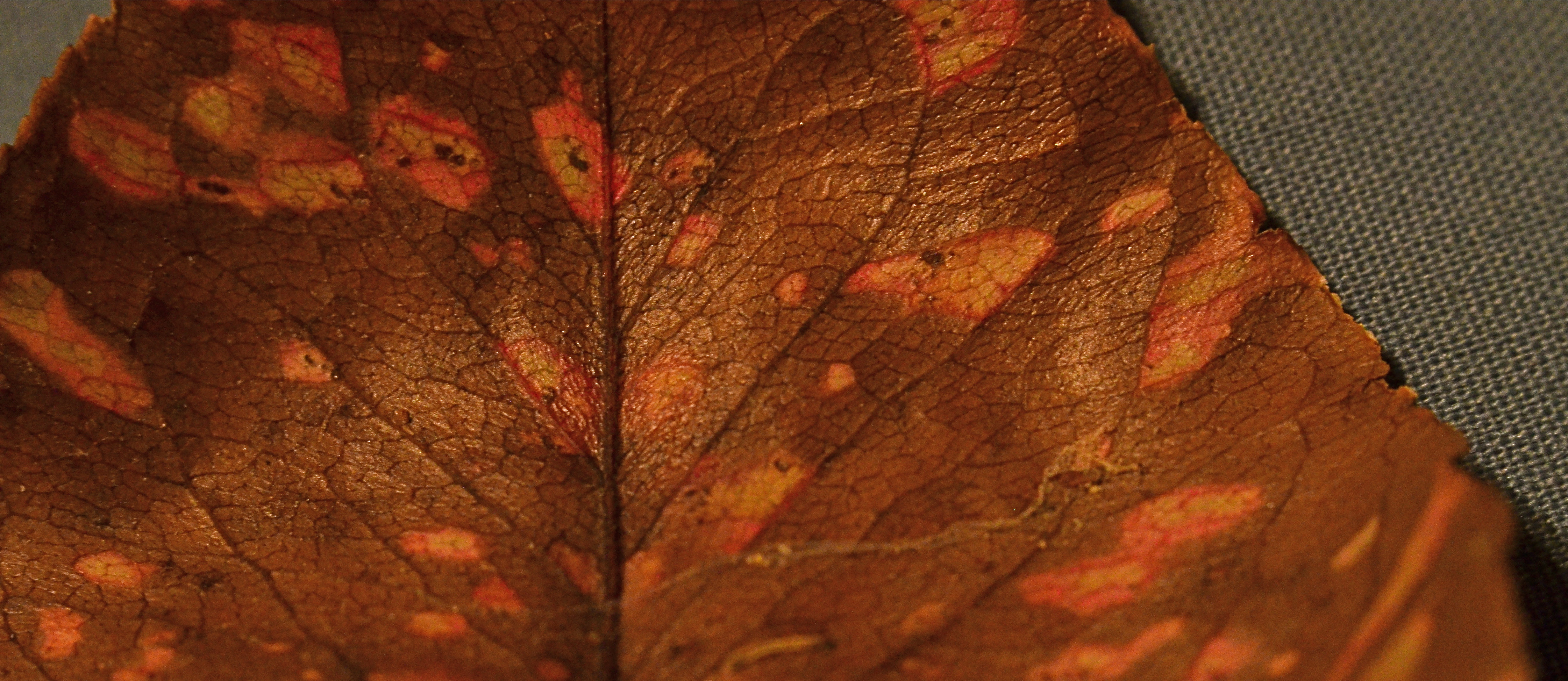
One of my favorite mindfulness exercises come from shooting macro. It’s harder in every way from any other kind of work. Focus, composition, lighting and exposure are all exponentially more difficult at short distances, and that means a higher harvest of bad pictures(the photo shown here was the lone survivor among twenty frames). And that’s good, because that, in turn, makes it impossible to settle for your first frame. Or your twenty-first. And that means you have to try, adjust, compare, re-try. It takes time, all of it educational. But first you need to escape the realm of Snapshot Mind, a fun and carefree play land that digital makes especially seductive, but which can become a trap.
Of course, there is the phenomenon called “first thought, best thought”, in which amazing, fully realized images come right out of the chute, and very quickly. And there is no guarantee that, by simply taking your time, you will always use it wisely. But creating situations in which you must be more present, more deliberate, will, more often than not, show you how to shape and then re-shape your vision.
Turns out Rome really wasn’t built (or photographed) in a day.
THE GIFT
By MICHAEL PERKINS
IT NEVER FAILS. You go to the grocery store for a carton of milk and come back with salsa, canned pineapple and half a pound of bologna. You may not have even known you “needed” the additional items, but, son of a gun, that extra large salsa is on sale. And, just like that, a quick stop becomes a shopping trip.
Photography is sort of like that.
You head out with specific objectives in mind, not thinking that fate has other plans, and will gently incline you in their direction. “Gentle”…like a freight train. In the case of a recent bird walk, my photographic plan “A” may seem odd to the average observer, in that it was to walk around with birders and not take any bird photos.
In my defense, I was already halfway through an extended birding weekend, accompanied by my wife and other serious spotters in a variety of southern Arizona locales. Moreover, even though I possess zero talent and little inclination in the study of all things airborne, I had nonetheless nailed a few easy exposures of very tame birds in the habit of eating very slowly on feeders near very large throngs of people…..basically zoo shooting with better singing. But the morning in question was different. Spotting birds in the wild is for grown-ups, and my infantile attention span is often drawn off center by the woods or canyon or, in this case, woodsy canyon that houses the various winged wonders. The spotters can spend hours arguing over the nomenclature of whatever they’ve flushed out of the foliage. For me, the foliage is why I came.
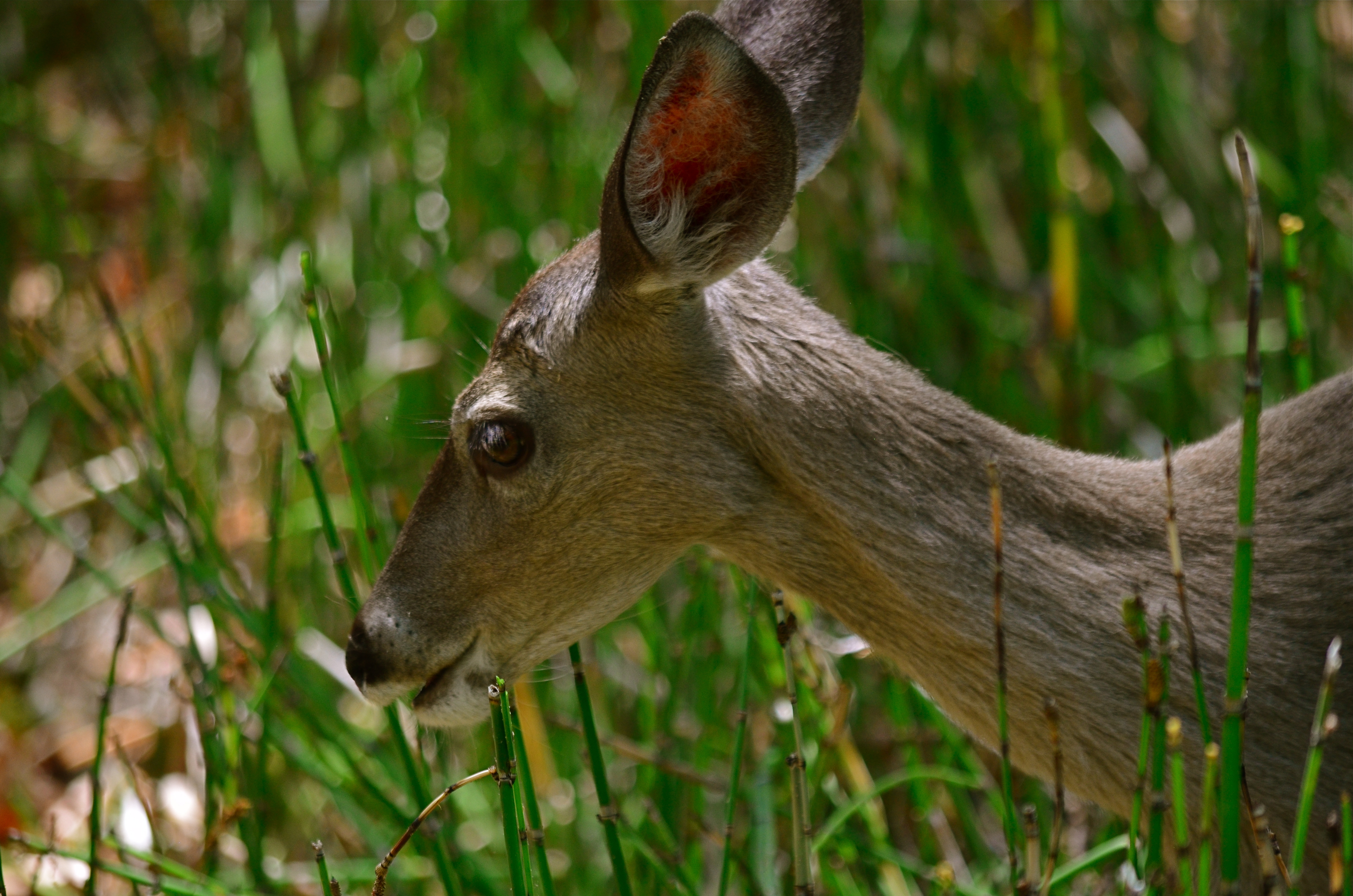
1/400 sec., f/5.63, ISO 400, 195mm.
Thus, on this morning, I was sporting a 24mm wide angle to highlight the contours and curves of Ramsey Canyon, although I also had shoved my 300mm zoom inside a fanny pack as an act of pure superstition. Thus, the appropriate division of labor for the outing was established: Bird People watch birds. Tree Hugger tags along and shoots trees. Then we came upon a small footbridge surrounded by a small pack of mule deer, feeding at a level of relaxation that can only occur when you become accustomed to bipeds in goofy hats routinely traipsing through your backyard. One of the Bird People, knowing a camera nut was in their midst, gave me a heads-up. A desperate minute of crouching, zipping, fumbling and mild cursing later, I had managed to attach the 300, worrying all the time that something or someone would spook the group.
After that fear was allayed by the deer’s total state of chill, however, I was overcome by a new emotion, something I can only characterize as gratitude. I have had many encounters with deer in the wild over the years, but in each case I had only had scant seconds to try to capture anything. Here, suddenly, I was presented with a group so docile that I could walk to within twenty feet of them and have the most precious gift, the gift of time, with which to plan shots. The female seen here was intent on staying in clear sunlight next to a tree, while her male companions were gamboling inand out of the dappled shade at too great a speed for accurate metering, so, yeah, I went the easier route.
The point is that the situation allowed me to shoot twenty or more frames and have time in between to make an assessment as to what might succeed. It was an astounding luxury, a rarity among rarities, and my photos became my prayer of thanks.
Come for the forest, stay for the deer.
Or: come for the milk, stay for the salsa, pineapple, and bologna.
JOTTINGS
By MICHAEL PERKINS
 SINCE I FIRST WROTE, several months back, about using my cellphone as a “sketch pad” for the first versions of images I would later finalize on a more adjustable camera (SLR, mirrorless, etc.), I’ve seen quite a few photographers confess to the same practice. As I said before, it’s not as if the cell isn’t a “real” camera, but that working with it is less mentally formal, less hemmed in by strict rules, than the cameras many of us cut our teeth on. At present, cells promote a more spontaneous, improvisatory approach to picture-taking: we produce work very quickly, and even our bombs have a short learning curve. We then make a second pass at the most promising “sketches” with cameras that both promote and reward deliberation.
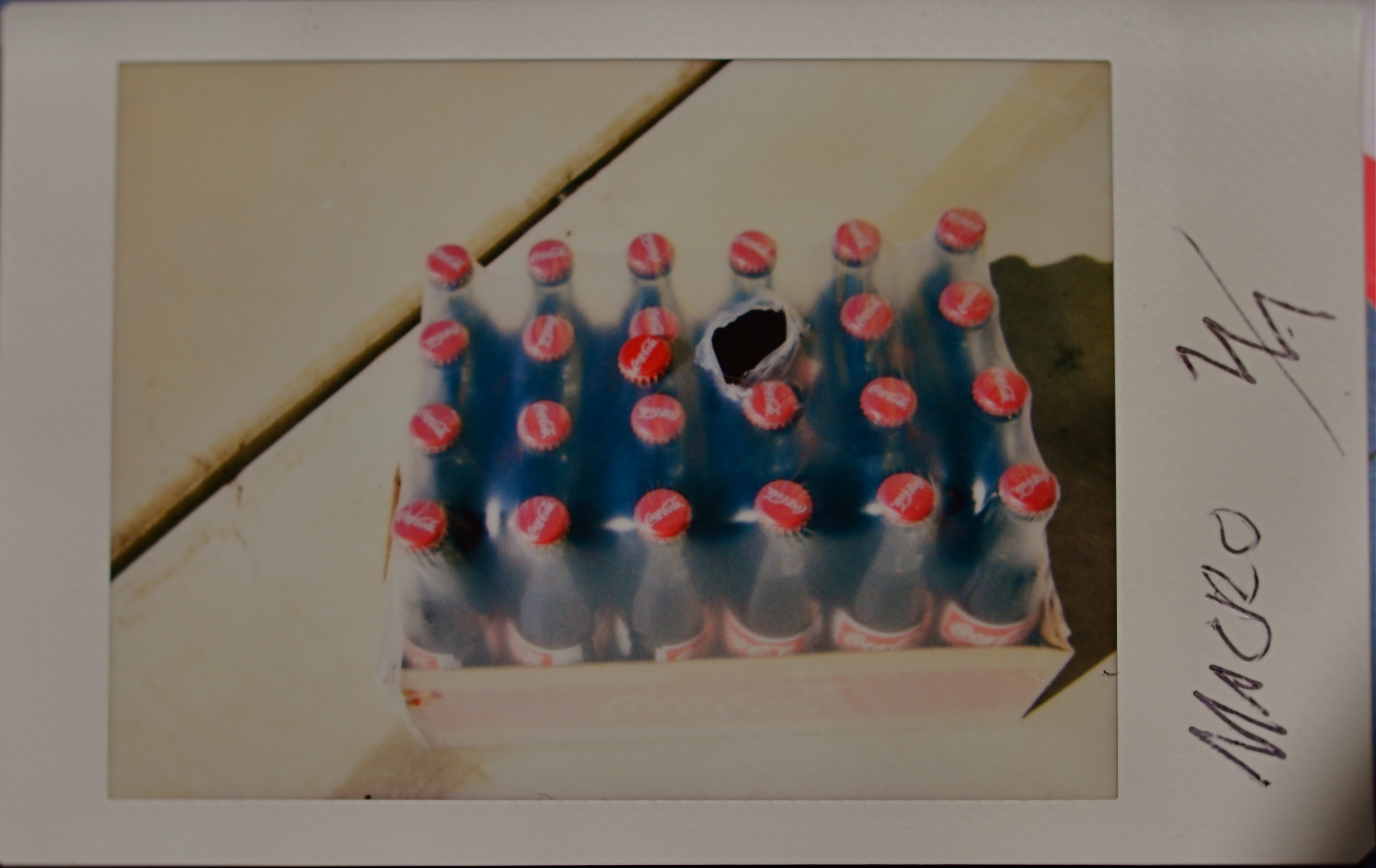
 Now I’m enjoying yet another variation on this formula as I play with the first instant film camera I’ve owned in nearly forty years. Optically, my Fujifilm Instax 90 is less precise than my mobile phone, and miles behind a full-function SLR. However, the “feedback loop” from snap to physical print rivals the turnaround time of a cell, and I have used some of these medium-fi images as dress rehearsals for shots that only my more advanced cameras can properly finesse. The main difference here is working with film, which translates to how fast and how freely I shoot.
Cels are technically limited, but you can shoot endlessly for free, so it’s tempting to experiment without regard to anything except the moment: very intuitive. By comparison, film is finite. More importantly, your shots, both home runs and strikeouts alike, all cost money. If you’ve never shot film (ya young whippersnappers!) it’s really a trip learning to “budget” your shots, weighing all the stuff you want against the physical limit of shots you actually have to work with. Old guys like me had lots of reasons to desert film for digital, but being freed from the tyranny of the wallet was my personal Numero Uno.
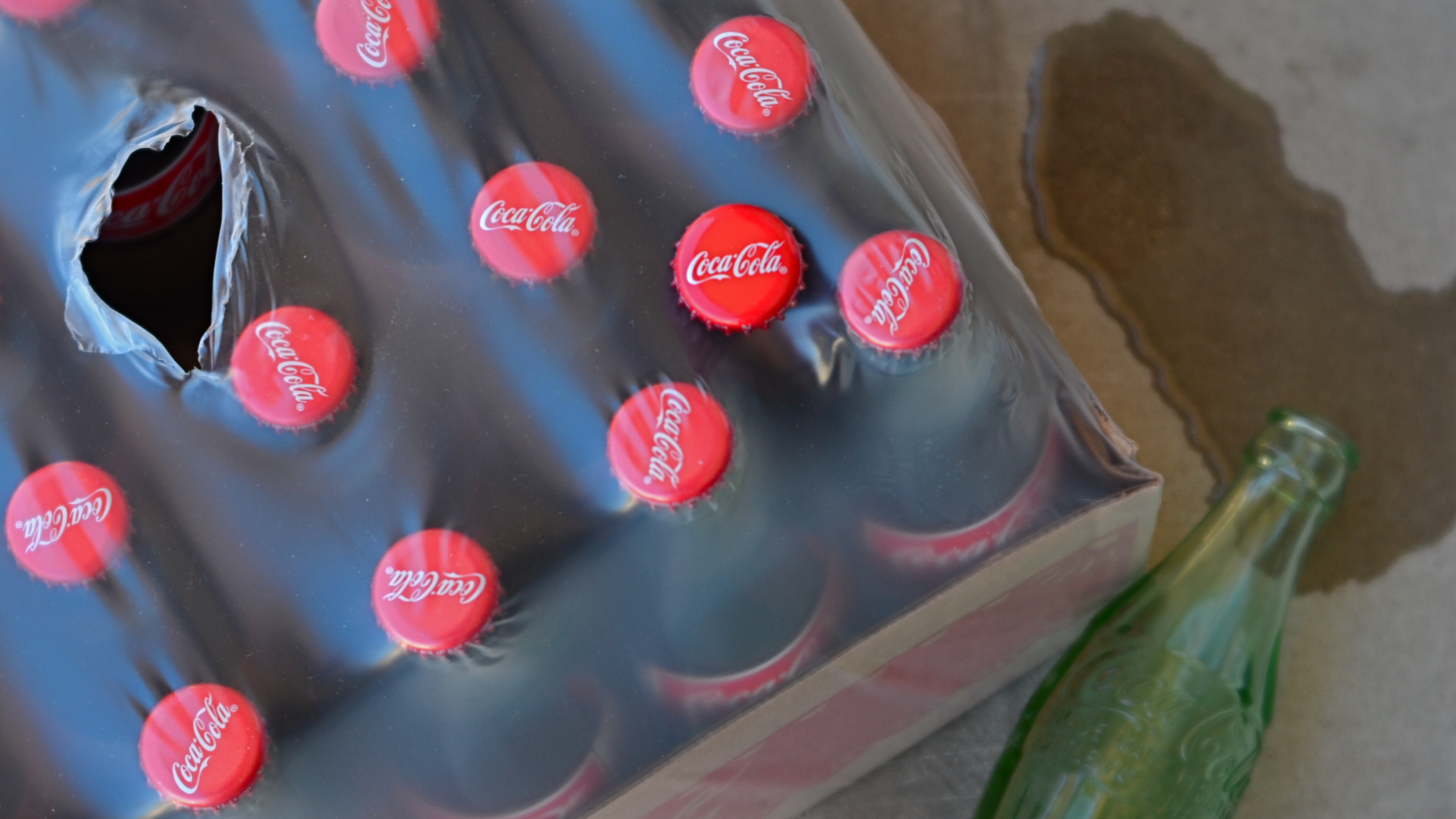
So, if you follow this strange line of reasoning, here’s where we stand: an instant film camera gives you a fast result, but the low volume of output (just ten shots per pack of Fuji Instax Mini film) and the cost (nearly a dollar per shot) means that you will be shooting slower and more deliberately than with a cel. You’ll be actively planning your shots, editing your projects on the fly, and producing a smaller yield of “possibles” to refine with a higher-end camera. Or you might do such a bang-up job with your film sketch pad that you produce your ” keeper” right then and there. In the two cases shown here, the Instax shot shows me that the central idea (the punctured shrink wrap atop the carton of Coke) can be improved by including a spent bottle on the side and tightening up the frame, allowing my Lensbaby Velvet 56 to show the textural variances in surface tension, something the Instax isn’t precise enough to do. The Lensbaby can also deliver a wider range of tones and deliver sharper focus, albeit within a soft glow.
Will this tortured method ever become your own? Really doesn’t matter. Your results may vary, as the man says, because they are yours. There are many routes to the promised land. Take the expressway or slog along the old dirt road. Just get the shot.
WORDS FAIL ME (AND MAYBE THAT’S GOOD)
By MICHAEL PERKINS
GIVEN THAT THERE’S AN ELEMENT OF CHANCE in even the most carefully planned photographs, it’s tempting for me to think of some pictures as pre-existing, like a piece of fruit that might well hang on a tree forever unless you happen to walk by and pick it. People sometimes refer to such images as being “captured”, but maybe “harvested” is a better word.
That would explain the photographs that you don’t, or can’t plan, the ones that are unbidden but also undeniable. Of course you don’t ever have to take a picture, but under the right circumstances it can sure feel that way.
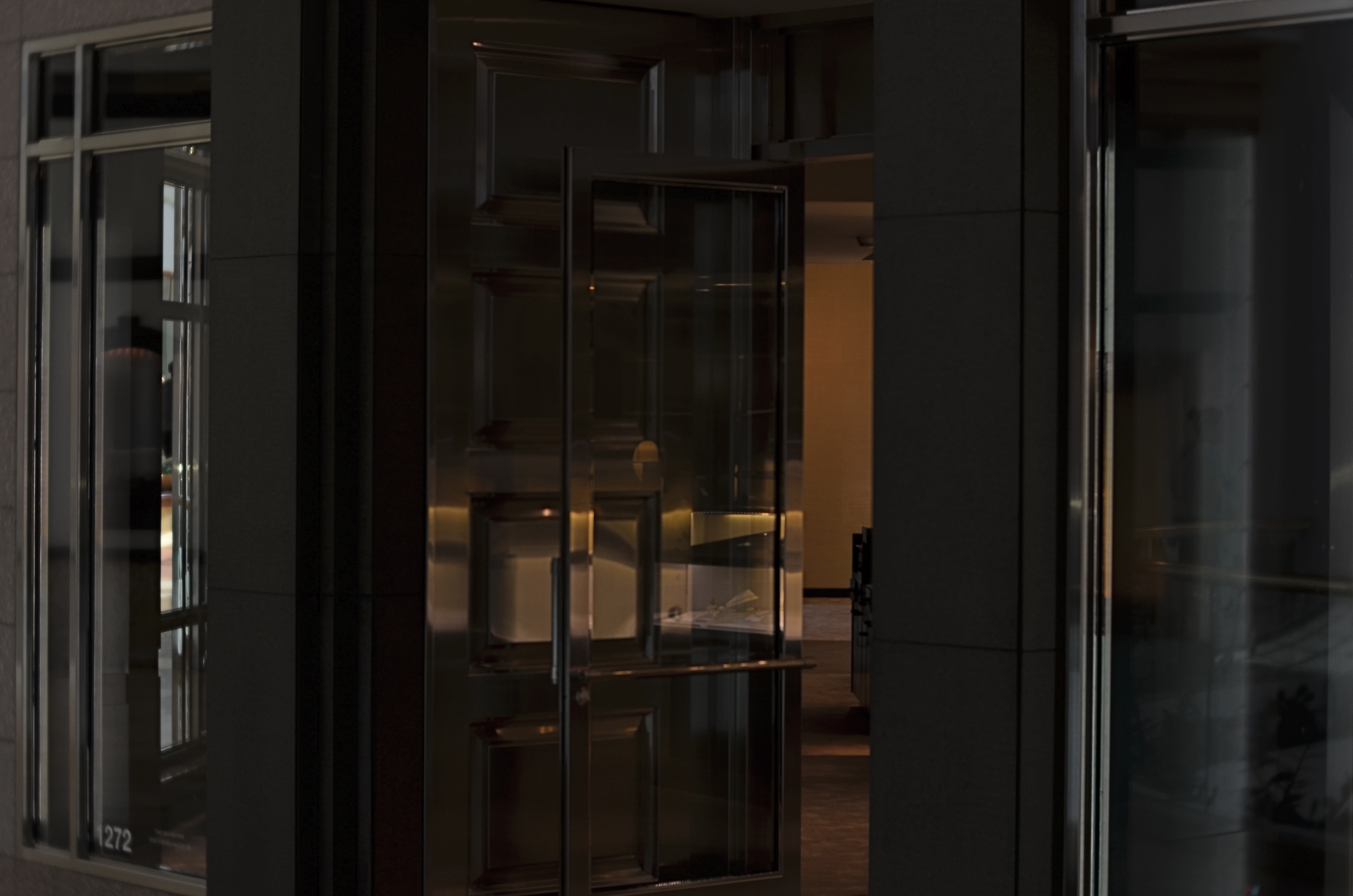
Which leads me to this image. I don’t understand a thing about it except that I had to take it. I can’t offer a thrilling backstory about its creation because I wasn’t its “creator”. I likewise can’t offer a thoughtful analysis or provide the illuminating context that makes its message shine forth. Honestly, this picture isn’t “about” anything, despite the fact that I’d love to spin you a thrilling tale, some revelatory saga that reflects my sheer genius. But eventually, the picture isn’t anything but, well, this picture.
In an instant, as happens to everyone, I had a second to decide to buy or not buy, and I bought. God knows why. We all love to think that everything in art happens for a reason, as part of a plan. We can often shy away from “pure” or “absolute” photography, but, if we’re honest, we can’t explain all of the images we harvest/capture/ stumble onto. We love to think we’re always in charge of our process.
But guess what……
“LIKE”-MINDEDNESS
By MICHAEL PERKINS
ONE OF THE MOST INTERESTING THINGS about reading photographer’s discussions of their most celebrated work is that, frequently, they can only guess at what accounts for the success of one of their images over another. Even more fascinating is when they express their dismay that some of their personal favorites actually fail to connect with the public. I take heart at such accounts, because I, like many of you, have no idea what makes a photograph “work” for anyone else…not, at least, beyond what I hope for.
This, to me, rates a “hilarious” on the irony meter, since the present age values “likes”, “faves”, and “LOVEs” above all other laurels in photography in a way that has made us slaves to popular approval even as we remain completely clueless as to how it’s earned. No cute tricks succeed. We can’t just replicate what people liked about our past stuff. We can’t cynically analyze what vaulted others’ images into the like-o-sphere. We can’t even play to what we believe others’ biases to be. And, for the sake of our photographs, we’re foolish to even try.
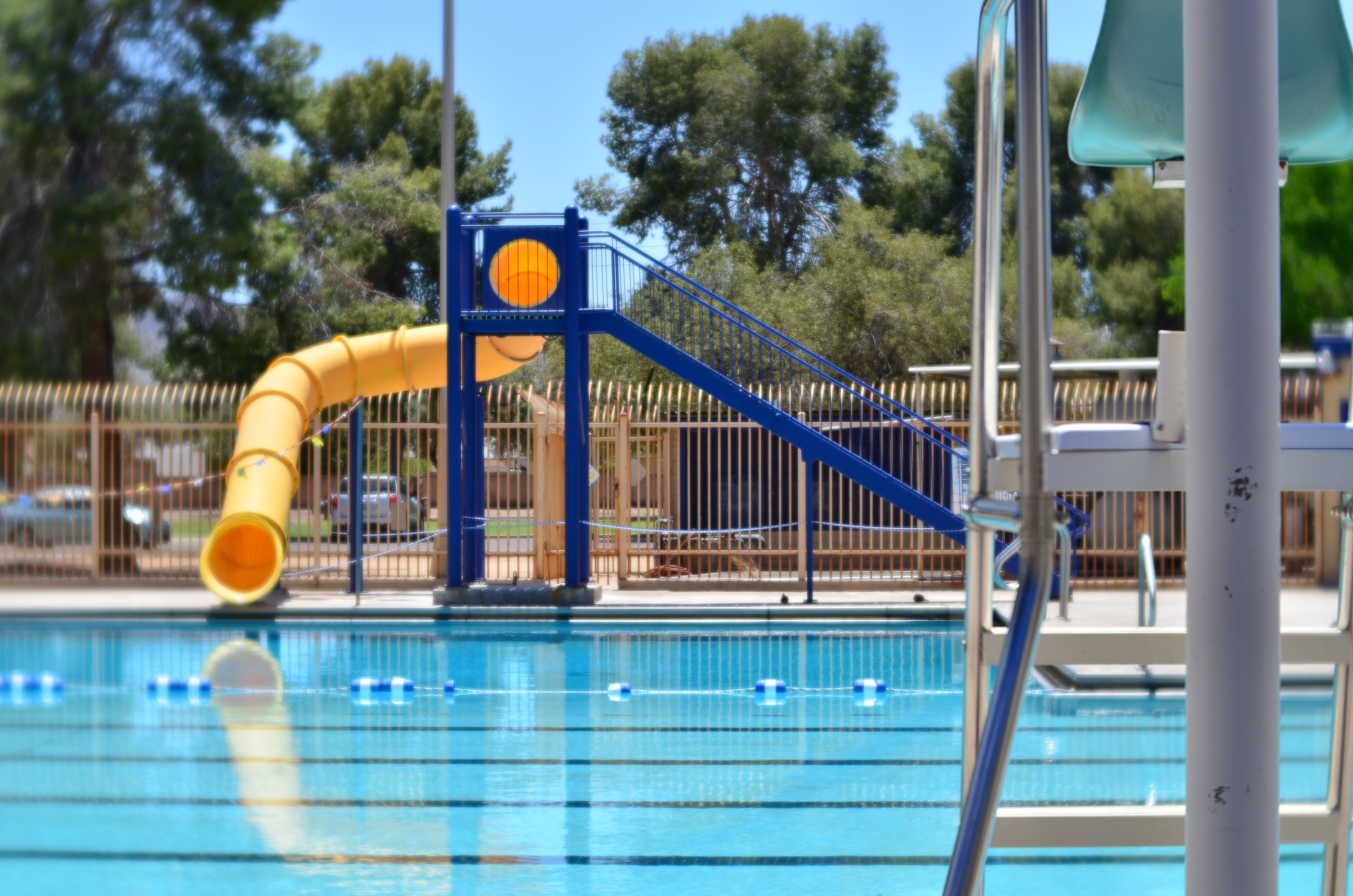
As a personal illustration of my point, I have absolutely no idea why this image has, at this writing, racked up over 4,000 views in the space of three days. This is not me boasting. To boast, I’d have to be taking credit for something I understood or had something to do with. No, this is me being dumbfounded. The picture represents, for me, the most transitory of whims, a final frame clicked off in impulse on the way back to my car after I thought I’d done the “important” work of the day. I thought there was something mildly (underlined) interesting about seeing this public pool “at rest”, if you will, just a week ahead of the end of the school year. No kids. No noise. Not a ripple or a wave to be had. A picture of something that hasn’t happened yet. That’s it. It was truly a case of “let’s shoot this and see what (excuse me) develops”.
And so the views and likes pile up for this one, and knowing that fact is no help at all. I want to take the brief flashlight being shown on my least favorite child and shine it on my pet instead, but it don’t work that way. Humans are perverse. We desperately seek to make a connection, then kvetch about whether it was done with AC or DC current. We want you to like us, but we want you to like the same thing about us that we like about us.
This gap between what photographers hope is important and what strikes everyone else as noteworthy reminds me of the actress Nastassia Kinski, who once came onto the Letterman show with her hair pasted into a straight vertical spike two feet high. Dave decided to act as if this were as normal as having a nose between your eyes and proceeded through the the interview without a remark. As the segment drew to a close, a slightly desperate Kinski purred, ” you haven’t asked me about my hair..”, to which Letterman replied, “Oh, you want it to look like that…”
PARING AND SPARING
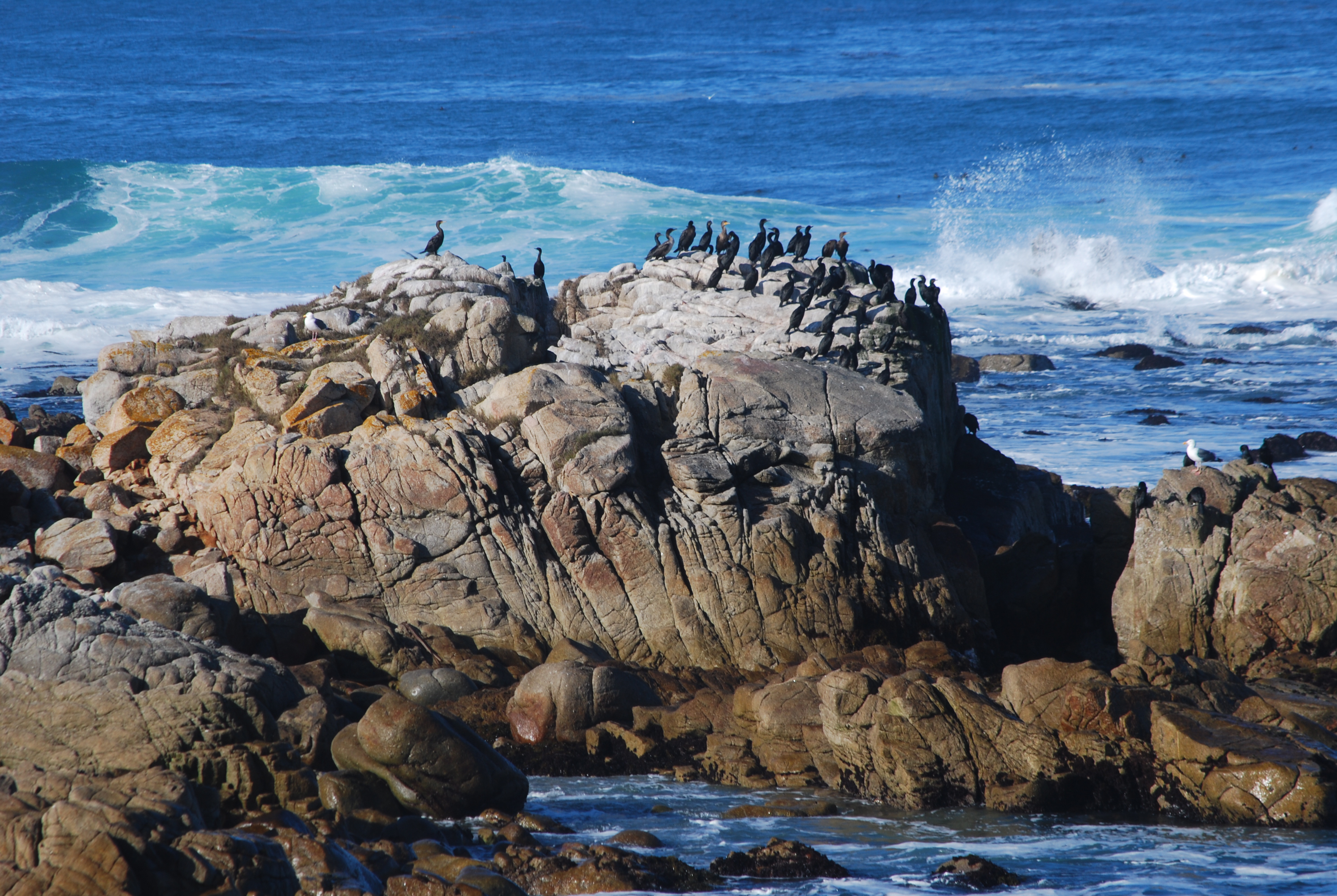
Standard landscape composition. Lots of….well, everything.
By MICHAEL PERKINS
ALL REAL ESTATE IN A PHOTOGRAPH IS PRIME REAL ESTATE.
Space within a composed frame must be earned. Every element that doesn’t strengthen or streamline a picture’s narrative power is detracting from it. Remembering this simple rule makes editing as easy as it is essential.
It’s usually true that you add something to an image by taking something away from it. This can seem counter-intuitive when shooting landscapes, epic-sized collections of scenic…stuff, where wide-angle lenses rule the roost and it seems to just make sense to crowbar as many trees, mountains, and waves as possible into the scene, as if more will automatically be better. However, the same thing is true of vast vistas that is true of smaller ones: there are few photographs which are uniformly strong from top to bottom, end to end. You have to find the strongest core within the larger picture and pare the rest away.
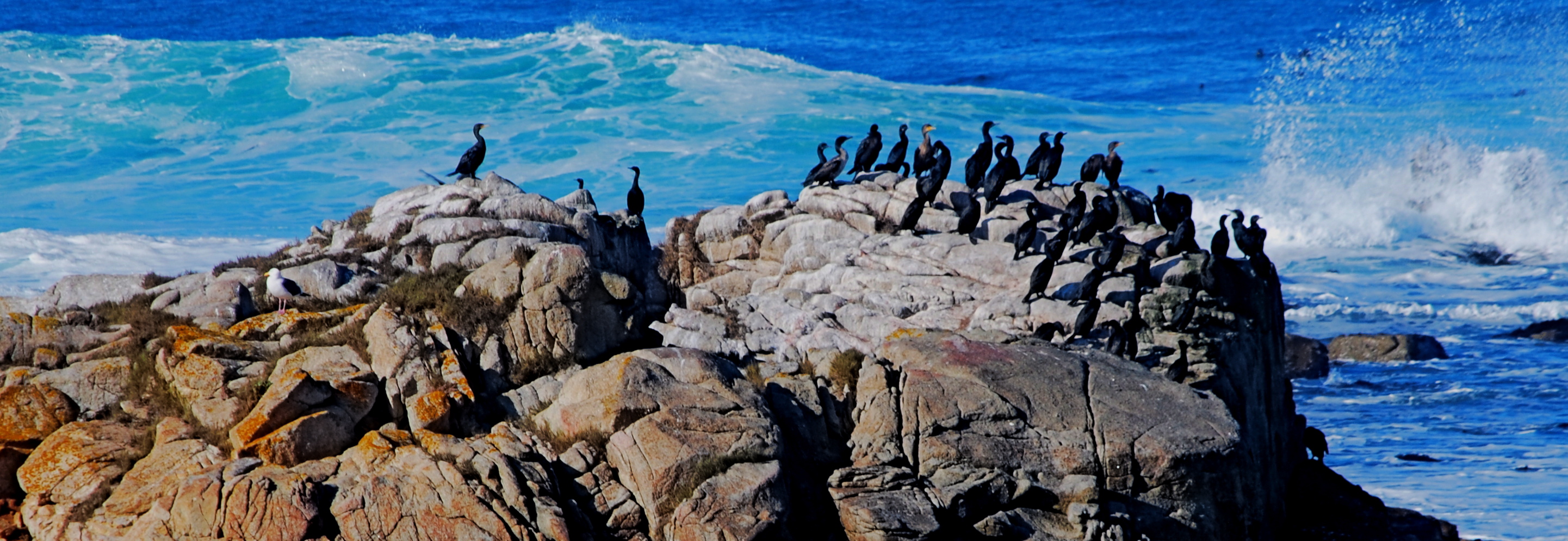
The tighter shot lurking within.
I call attention to this because, slow learner that I am, I can often spend years coming to the conclusion that one of my pictures has been weakened or held back by a hyper-abundance of information. The topmost shot, an original from a 2008 trip to Carmel, California, is a case in point. None of the visual elements are particularly wrong: it’s more like they are simply too plentiful. There’s just too much sky, sea, and stone…..that is, far more than is needed to sell the story.
Worse, the grouping of birds at the center of the frame, which is potentially strong enough to economically make smarter use of all those other elements, is being buried under all the surrounding… padding. The eye is being asked what to prioritize as it wanders its way through too much picture. By comparison, in the second shot, reframed as a mostly horizontal composition with the birds bumped up to prominence, the picture is now telling the eye what to see.
Which only serves to illustrate that what is left out of an image is just as important as what is left in it. Just like you can muck up a story with too many plot lines, you can get in a picture’s way by making its narrative take too many detours. Say what you have to say in the cleanest way possible, and then drop the mic.
THE PAIRING
By MICHAEL PERKINS
NEW PHOTOGRAPHERS TYPICALLY EXPERIENCE A MAJOR DISCONNECT between what they visualize and what their camera can realize. The gap between what you want and what your gear can deliver is initially very wide, mainly because you haven’t yet learned how to tell your camera what you want.
This gap is usually narrowed as you simply spend enough time with your equipment. But a true pairing, a real Harry-Potter-sorting-hat bond between yourself and a camera calls for a much deeper knowledge….of your needs, certainly, but more importantly, of what your camera is capable of doing for you. Sure, the more you shoot, the better you generally get at asking it to perform specific tasks, but to cross over into excellence you also will know more precisely what that device’s strengths and limits are.
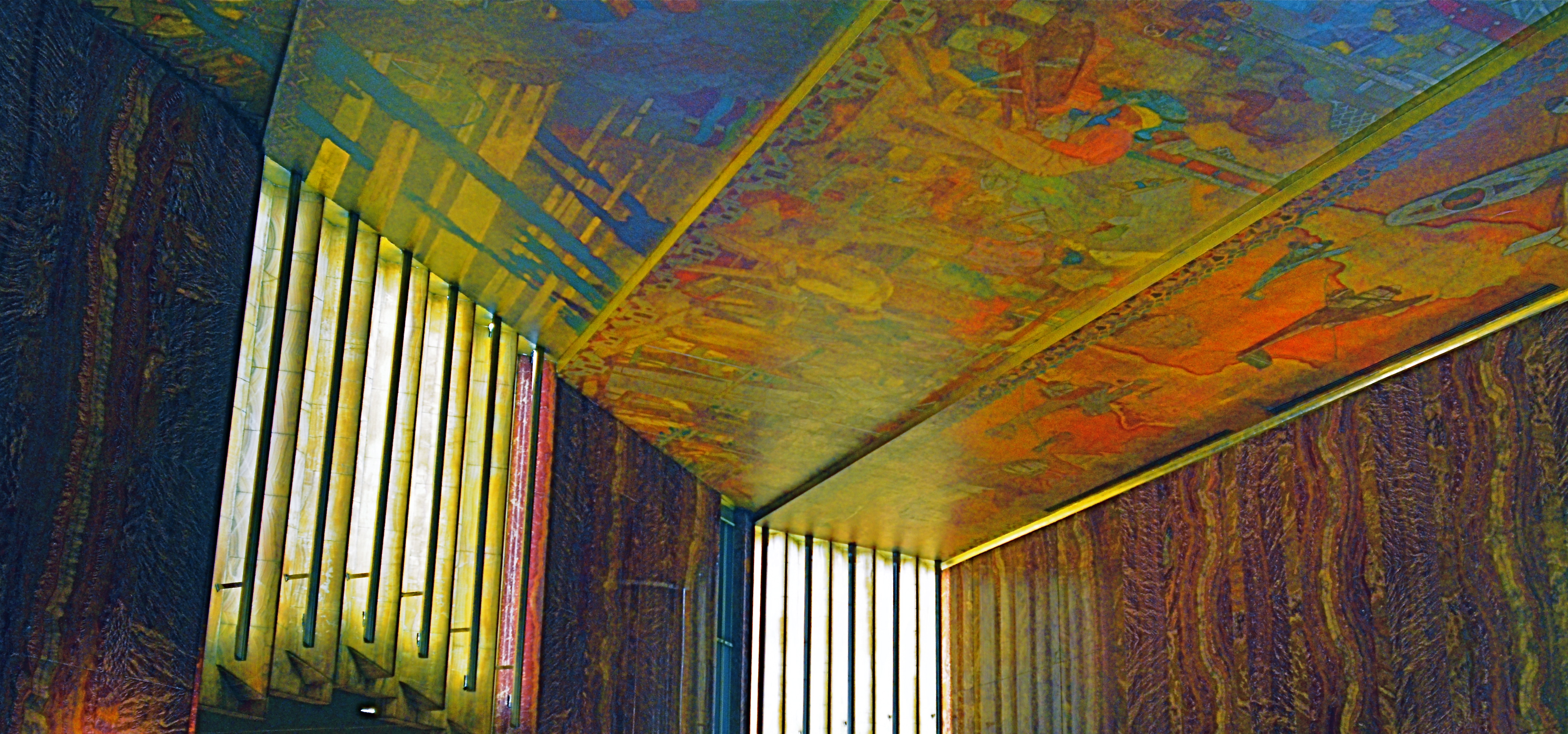
Hundreds of factors determine what makes a camera right for you. Is the camera too basic to deliver, or too advanced for you to handle? Is its lens unsharp at the corners? Does your shutter lag? Do you want the camera to technically underperform to achieve an artistic effect? Can it reliably be counted on to shoot 95% of what you need, especially if it’s the only camera you can pack? How is its color rendition, its speed, it flash output, etc., etc.?
The image seen here is not really an example of anything except that, on the day I took the subway into Manhattan to attempt it, I knew I would not want to walk the city sidewalks laden with equipment. Certainly I did not achieve everything I was after with this shot, taken inside the lobby of the Chrysler building. However, I now know that I brought the one lens that gave me half a shot at getting something. What I’m saying is that, if I hadn’t known my equipment, I would not have been able to to even try to make that choice.
You will eventually have spent enough time with your cameras that you will know within an instant which one to grab for any given job. You’ll prepare better, waste less time, and ask “what happened?” far less often. And from that toolbox, one camera, one nearly perfect link to your skills and vision, will eventually emerge over all the others as the predominant “go-to” in your arsenal. And once that pairing is complete, you’ll be able to shoot anything, anywhere, under any conditions.
FOR THOSE JUST JOINING US…
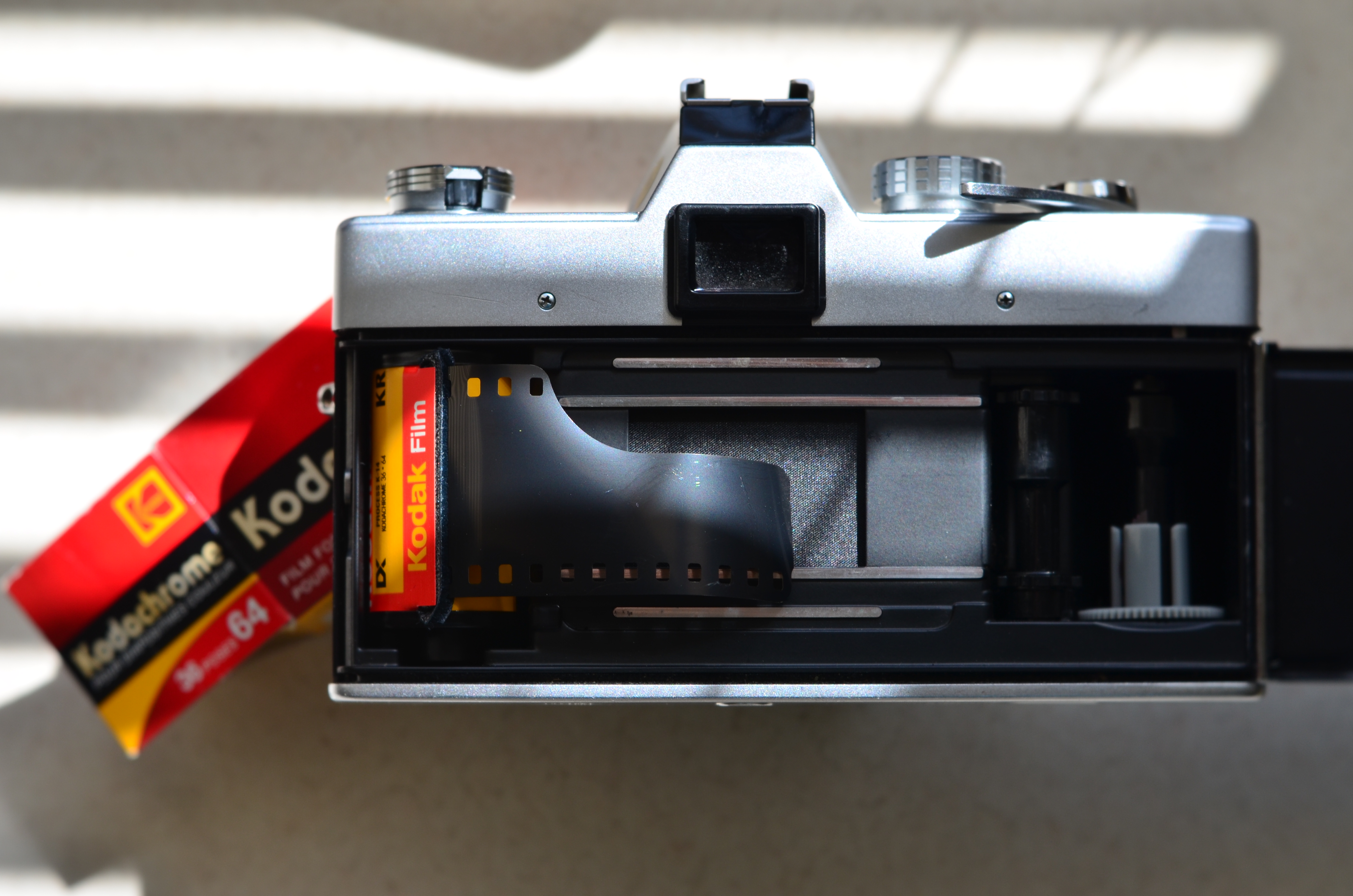
By MICHAEL PERKINS
IT’S NOW OFFICIALLY BEEN “A WHILE” since I last did a group thanks/welcome to the many of you who’ve joined The Normal Eye in recent months. I apologize for the lapse in manners, and assure you that, while I usually use the right spoon for soup and cross only at the light, I still haven’t gotten around to getting my 1987 Christmas cards sent out. It’s a process.
So, assuming that a particular post has recently motivated you to subscribe to this here small-town newspaper, thank you. And, as a way of demonstrating what to expect from us on a day-to-day basis, here’s a little backstory on TNE:
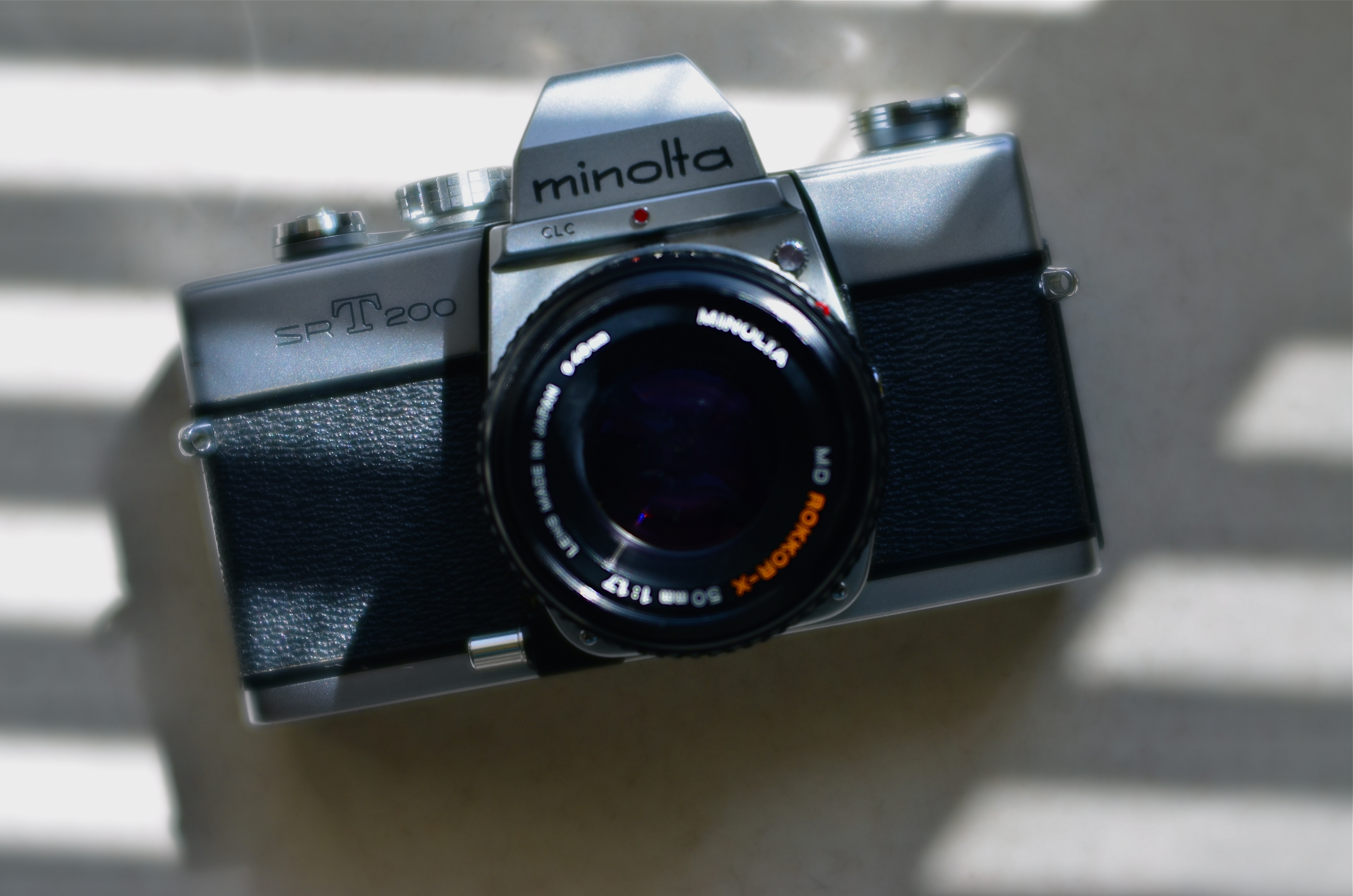 I wanted to create this forum because I feared, at the beginning of the digital age, that photography was becoming a reflexive act, a kind of knee-jerk spasm made ever more convenient but also more robotic due to amazing technical advancements that were almost literally taking the pictures for us. For sure, much of the muss and fuss of film was going away (a net gain), but the incredible foolproof–ness of even the most basic digital cameras was making speed and ease bigger considerations than the skills of seeing and planning, the most valuable traits of the slower, analog world…. a net loss, it seemed to me, for photography as an art.
Now to be clear, this platform is not, and has never claimed to be, a technical tutorial, and indeed the percentage of how-to advice we feature has always lagged way behind the why do it stuff. The Normal Eye is an examination of motivations, a way of restoring the human eye to its primary role in how pictures are made…..of normalizing it (hence the name). The eye outranks equipment, formats, subject matter, even formal training. With the eye, you can master your message with a cardboard box and a pinhole: without it, you won’t get your image made with an army of Leicas.
Happily, in the intervening years, the tide in all phases of photography has begun to turn back toward the instinctual, with amazing work by the world’s shooters that is once again placing technology in the service of the imagination. From the Lomography and Lensbaby revolutions to the resurgence of all-manual “art lenses” to a re-evaluation of (and partial return to) film, the art in photography is reasserting itself. Certainly no one answer works for everyone, but the questions are getting better.
So that’s what you signed up for: a conversation, a confrontation, a refusal to think of any single method or approach as “final” or “definitive”…..a promise to yourself to make pictures on purpose, with eyes wide open.
Optimized.
Normalized.
Thanks for joining the party.
TINY DANCER
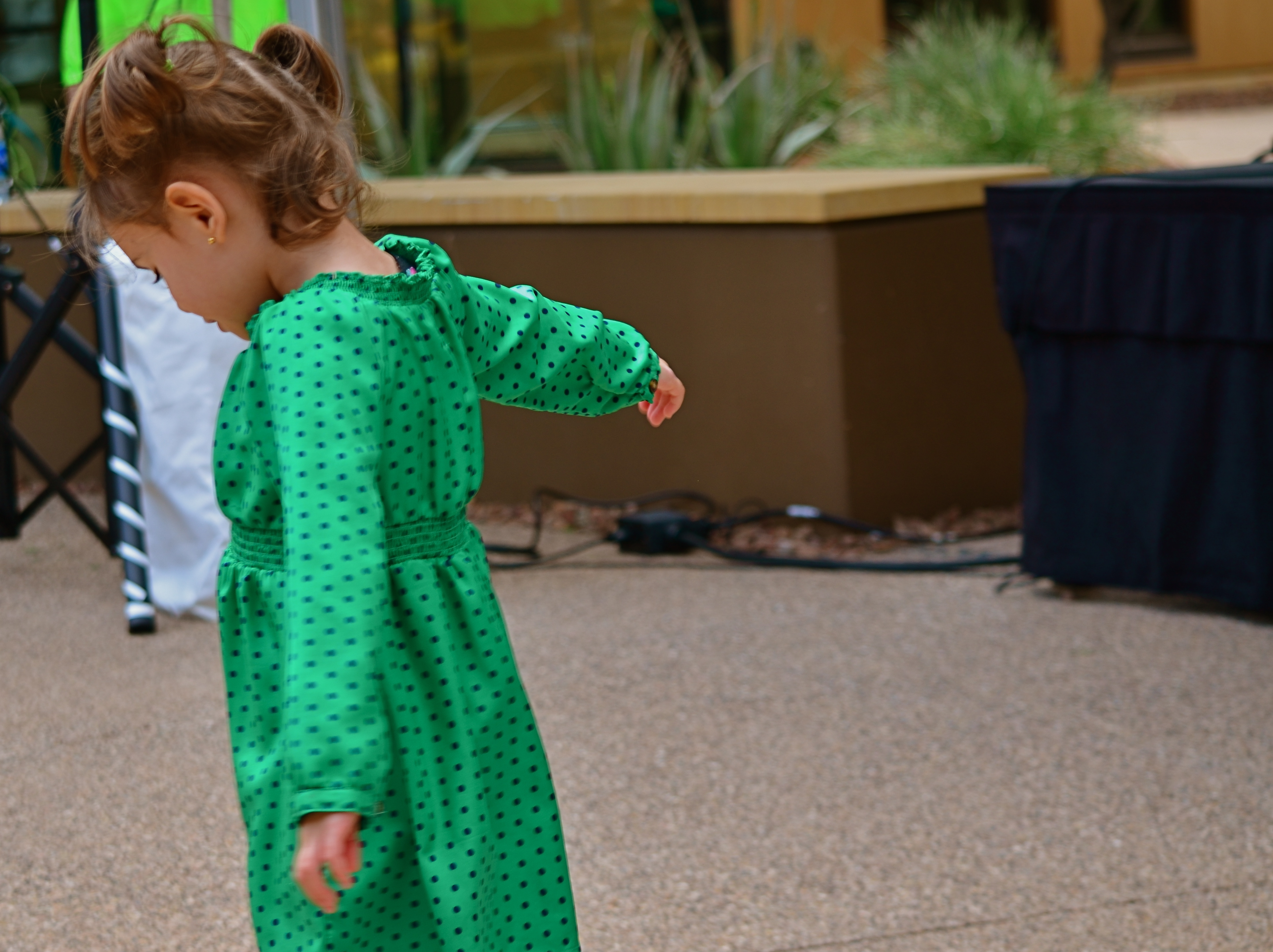
i am my own dawn and dusk, my own tides and torrents.
my rhythms are also mine, even as they are also all rhythms, my limbs animated by wills and intentions not my own and yet to become my own before i, in turn, transmit them on.
my limbs reshape the dreams of age coursing through them, adding their own undulations and echoes as I convey them to their next hosts:
all is received by me, both the ancient and the unborn:
all energy takes on my own contours, as first I contain it, then, in an instant, make it uncontainable
conducting it, amplifying it, releasing it onward.
the eternal dance comes to me complete from all ages
and yet i complete it again
seeking its next dancer
the one who will always, miraculously, complete it anew.
——-michael perkins
THE TRUTH ACCORDING TO WHOM?
By MICHAEL PERKINS
THE FIRST DECADES OF PHOTOGRAPHY, like the earliest years of any emerging art, operated under a different set of rules than those we set for ourselves today. More accurately, we may now operate in a world in which there are no immutable rules at all. It’s hard to imagine a book with the title Why It Does Not Have To Be In Focus being published in, say, 1865.
When a different way of viewing the world comes mostly through a technical breakthrough (i.e., the invention of the camera), it can understandably be regarded, at least at first, as a measuring or recording device, a way of creating a merely physical chronicle of the world. Thus a camera can initially be regarded like a microscope or a seismograph….as a way of quantifying data…. which is precisely how early cameras were seen. Catalogue the great statesmen and authors for the ages! Assemble a library of images of the ancient world! Map the continent!
And so the first rules of photography bent toward the scientific. Make an accurate record. Not surprisingly, it took decades for picture-taking to be freed from the constraints of mere reality (as painting already was) and move toward the making of pictures, as photography eventually became an interpretive art. I often wonder if this explains why, of all the various subjects available to me, I am less comfortable in landscape work than in any other area.
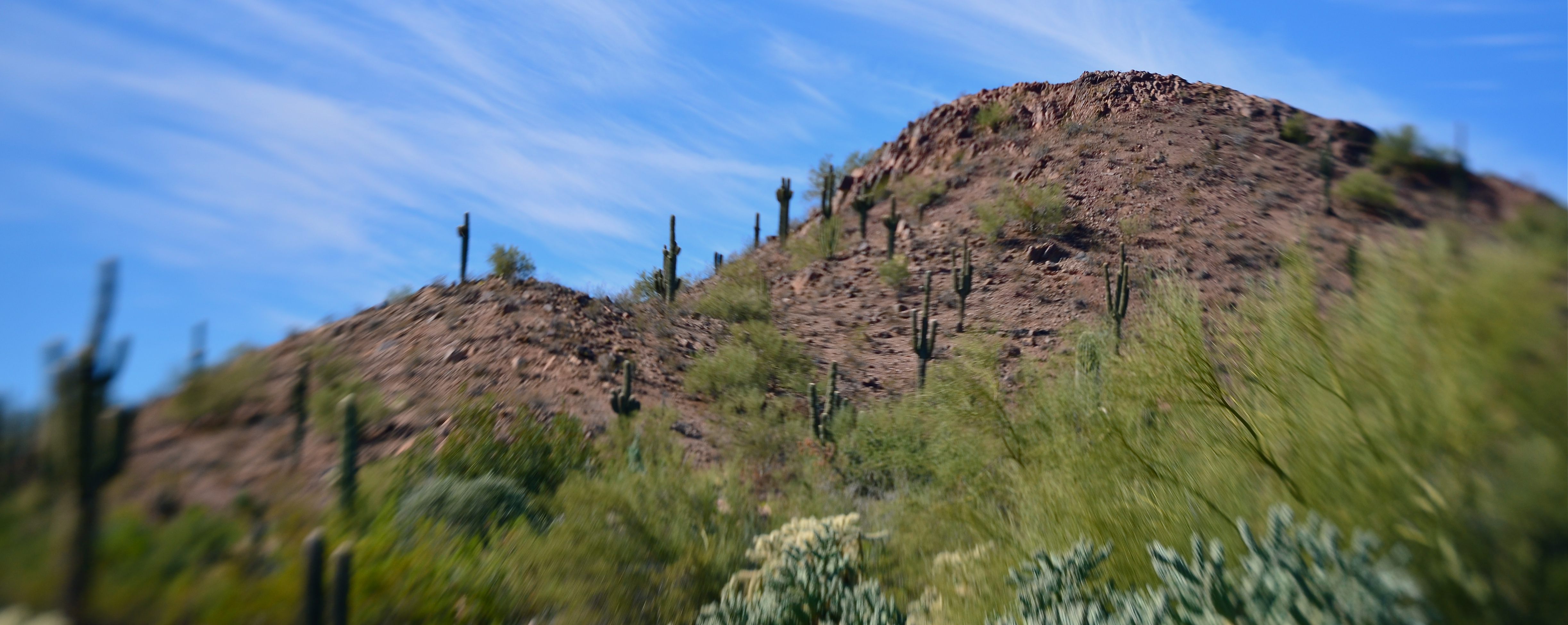
There seems to be no way of escaping the pure recording function of it. I feel constrained to make it accurate, as if it’s for an official government survey, or as though I were being graded on the results by some imperious professor. I know the problem lies with me. I seem anchored to the idea of rendering scenery “real” (I hate that word), when, in fact, I could exercise just as much interpretative control over it that I do over everything else I shoot.
Is the shot shown here less real for having been partially defocused, or is it more personal because I have gently asked you to look at the subject in my own way? Do I really even have to ask these questions? Quite obviously, the rules of photography as we understand them are no longer based on pure science. Yes, it is “about” the lenses, to a degree, but it’s more completely about the human eye. We are not machines, nor should our art be purely the product of machines.
 thenormaleye
ALL AROUND THE TOWN
By MICHAEL PERKINS
THE MAIN OBJECTIVE OF THE NORMAL EYE has always been to promote mindfulness in the making of photographs, to be engaged in the why of images more than the mere how of mechanical technique. This is, I continue to believe, the correct emphasis. Learning how to operate a camera is a fairly short-term thing: figuring out what to do with the thing can take a lifetime.
As a sidebar to all that, TNE also was designed to suggest how photographic ideas might be developed, illustrated by the use of links to image galleries organized around selected themes. The idea here wasn’t so much to show off my own “greatest hits” as it was an attempt to demonstrate potential approaches. The image galleries are not a portfolio, nor are they auditions: they’re just examples. Like everything else used as an illustration in the pages of TNE, they’re supposed to act as a point of departure or discussion fodder.
I usually accompany the publication of new gallery pages with a preamble like this to reinforce the idea that this forum is about batting ideas back and forth, not earning my pictures blue ribbons. That said, I had a great deal of fun this week looking back at the last three years of photos from various trips to New York, my favorite playground, corralling a handful of them under the new tab Small Slices From A Big Apple, which, beginning today, you’ll find in the menu at the top of this page. Obviously, with such a vast subject, no photographer can ever consider himself “done”. However, that’s no reason not to make a start.
As usual, The Normal Eye is less about what I have done and more about what you will do. All we do around here is tee up ideas. The follow-up strokes are up to you.
Share this:
August 21, 2018 | Categories: Conception, Experimentation, Illustration | Tags: Commentary | Leave a comment