STRONG AT THE CENTER
By MICHAEL PERKINS
EDWARD STEICHEN’S MAJESTIC PHOTO ESSAY The Family Of Man, which was first mounted in 1955 at MOMA as a curated exhibit and was then captured within one of the most essential reference books in all of photography, remains a essential document on the sameness and uniformity of human behavior across all social, ethnic and financial demarcations. It actually gives reality to the old saw that “we are all the same”, showing mankind in peace, love, war, ritual, youth, old age, birth, death and hope. It is a miracle project which I urge you to add to your collection.
One of the key elements of FOM for me is its depiction of the universal essence of motherhood. All the anxiety, risk, and courage displayed by all women in all corners of the world, all of them wanting to endure, to protect their children, to hand something on to the next generation of mothers. In my own halting way, I am always looking to capture some small something of the unique energy of mothers. It informs my street work in a way no other subject does. And, is often the case with candid work, you find more little miracles the harder you look for them.
And, sometimes, you get a gift.
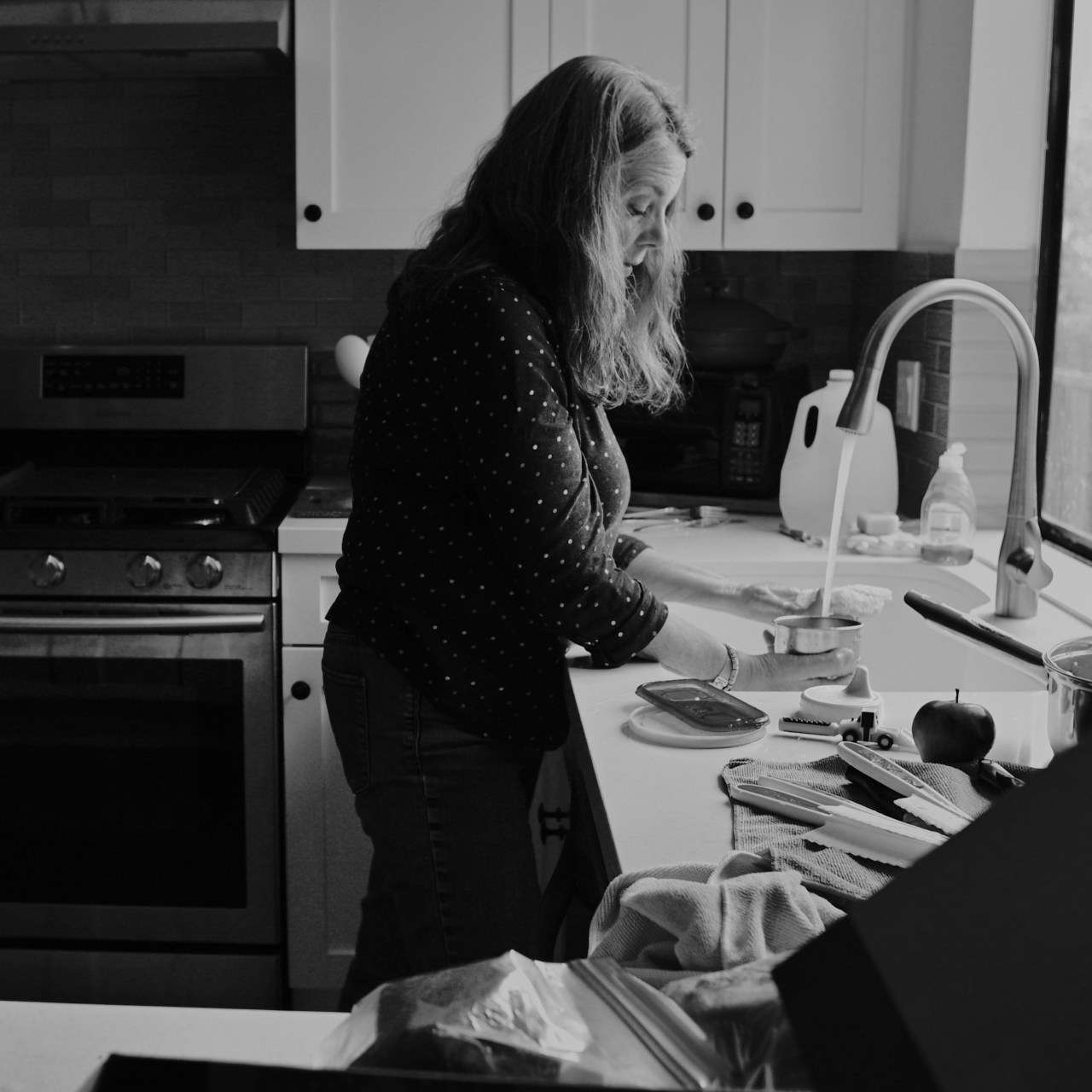
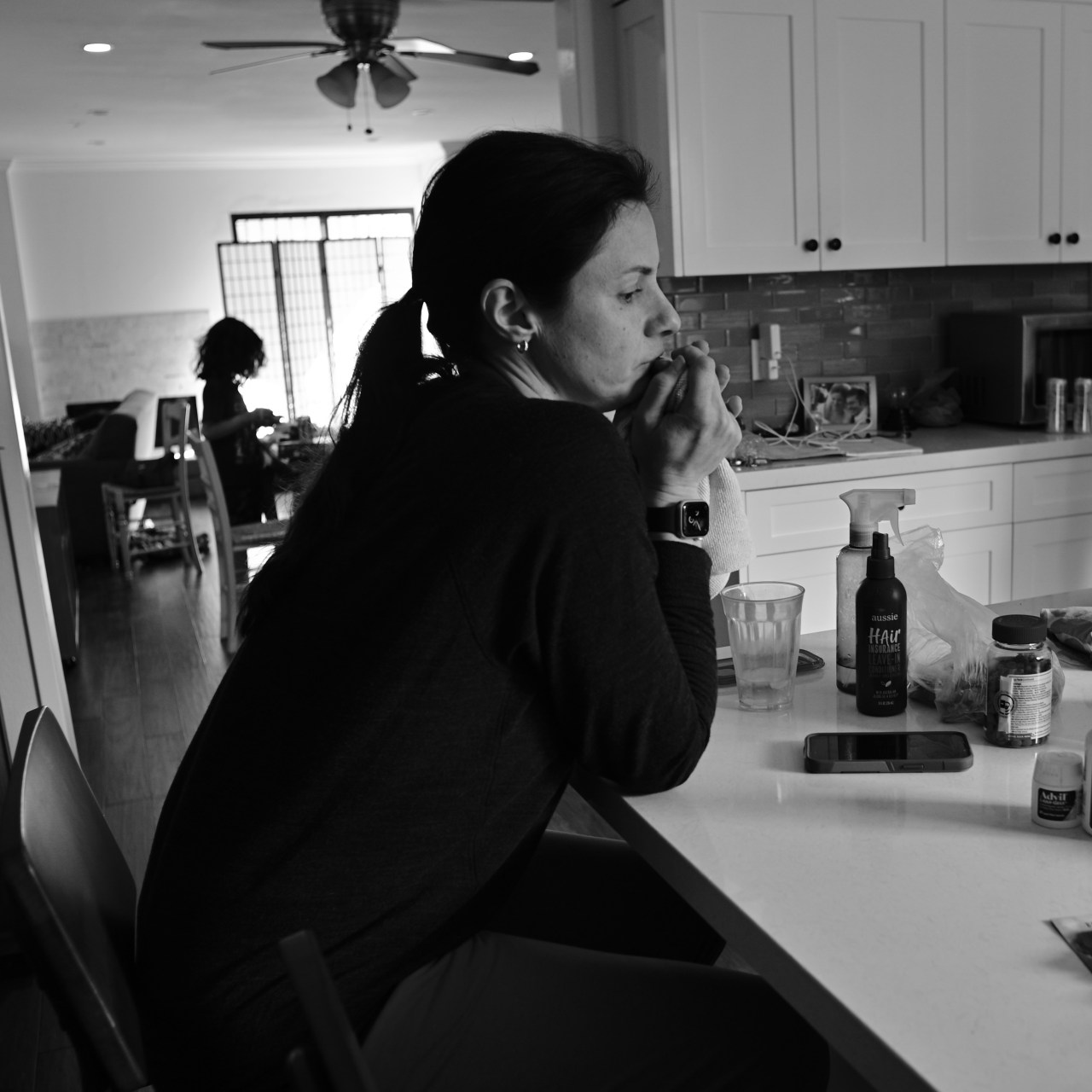
Three years ago, during an ordinary visit to my wife’s son and his family, I had the occasion to observe both her and her daughter-in-law, gathered within a few feet of each other, each submerged within quiet worlds of their own making, Marian musing over a sinkful of dishes, Erin taking a breath between Momtasks. Both women possess faces which both reveal and conceal, making them irresistible for frequent visits from my camera. I know them both well and yet could never really, fully know them at all, making the next images of them magical with potential.
Perhaps that next shot, goes the delusion, will be the one that explains everything. Of course, this can never be the case, and yet I continue to click away into infinity in vain pursuit of the day when, as Frank Zappa used to say, The Great Oracle Has It All Psyched Out. Steichen’s Family Of Man is an exploration into what all of us share across our collective humanity. But you don’t have to wander the globe to see those commonalities. Sometimes, all you have to do is look across a kitchen.
THE FEEL OF REAL
By MICHAEL PERKINS
MUCH OF OUR INHERITED SENSE OF TEXTURE IN PHOTOGRAPHY was shaped early on by what the earliest camera images could practically deliver. We experience historic images of Lincoln, Twain, and the great generals of the Civil War through the very rough “tooth” of the processes that almost exclusively recorded them, chemical and technical methods that rendered features, clothing and skin in a certain limited fashion. And over time, those methods dictate our concept of how the skin and features of those people should look, forever, even as they define for us what words like tough, stern, brave, frightening or serious ought to mean in terms of how smooth or how coarse a mood we’d pursuing.
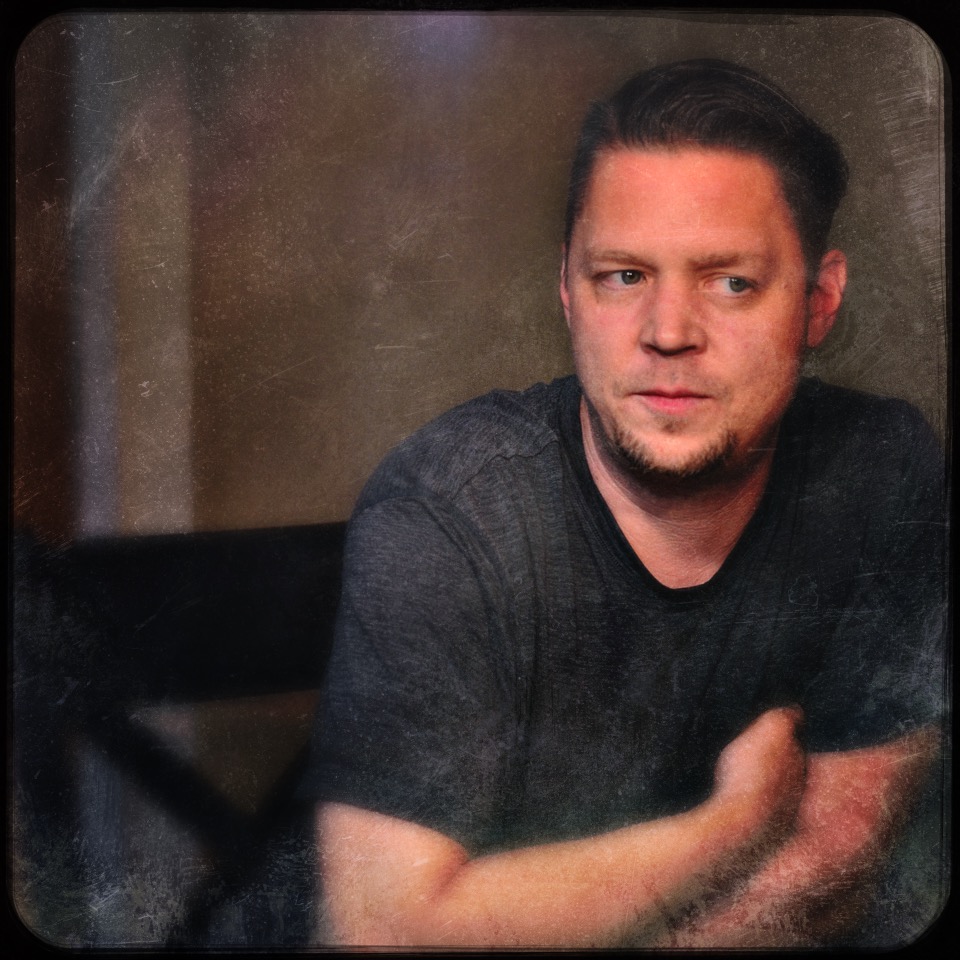
Ryan Michael Perkins, Columbus, Ohio, 2017
And it’s not merely historic; a big part of the recent retro movement toward analog imaging even a rec-creation of it on digital platforms, lies in in aping or recreating the textures we saw of people as they were depicted in previous eras. What we collectively call a “film look” is, in fact, many different looks, depending on whether you’re recalling an 1850 daguerreotype or a 1975 Kodachrome slide, with special emphasis on the degree of grit or silkiness appropriate for different time frames. In some circles, this emphasis on texture has risen to the same level of importance as such fundamental pillars as color and exposure.
I myself will often assign an older texture to selected portrait subjects, based on what elements of their personalities I wish to suggest, as in this image of my oldest son Ryan. It’s safe to say that, over his nearly fifty years of life, he has veered far closer to rough times than serene ones. A perfectly-lit or balanced image of him seems as ill-fitting as a pair of jeans that’s two sizes too small. He doesn’t do “easy”, and so my favorite pictures of him attempt to capture that fact, calling, in this case for example, a kind of sandy, friction-rubbed aging to the final frame. I don’t embrace all of the “just like film” movement, but there are moments when even the freshest faces should have a little acid-washed quality to them, as if to suggest all that time has etched into their features. “Real” and “feel” are subjective words, and they are likely, for photographers, to remain ever thus.
AN AUDIENCE OF ONE
By MICHAEL PERKINS
YEARS BACK, MY FATHER, TAKING NOTE OF MY OBSESSIVELY FASTIDIOUS MANNER OF WATCHING MOVIES, i.e., free of interaction with my fellow audience members, remarked that, in a perfect world, I would have my own private projection room, watching films in perfectly controlled environments as a fussy, controlling audience of one. Unfortunately, that dream film-critic scenario never presented itself.
Until this year.
Turns out, if you want to share a movie with a minimal number of people, go see a sixty-year-old French art film in the middle of a weekday afternoon. We’re talking guaranteed crowd control here. Marian and I had driven from Ventura, California to a quaint cinema high in the hills above Santa Barbara, hardly the venue to catch Godzilla XXXIV: The Final Reckoning or any other cinematic Hoover designed to suck in the public by the millions. Upon taking our seats, it soon became obvious that we would have the entire house to ourselves, a true rarity. Additionally, ahead of the curtain time, the theatre was not pumping a firehose of advertisements and idiotic on-screen trivia quizzes into the room, but, instead, bathing us in pure, wonderful silence.
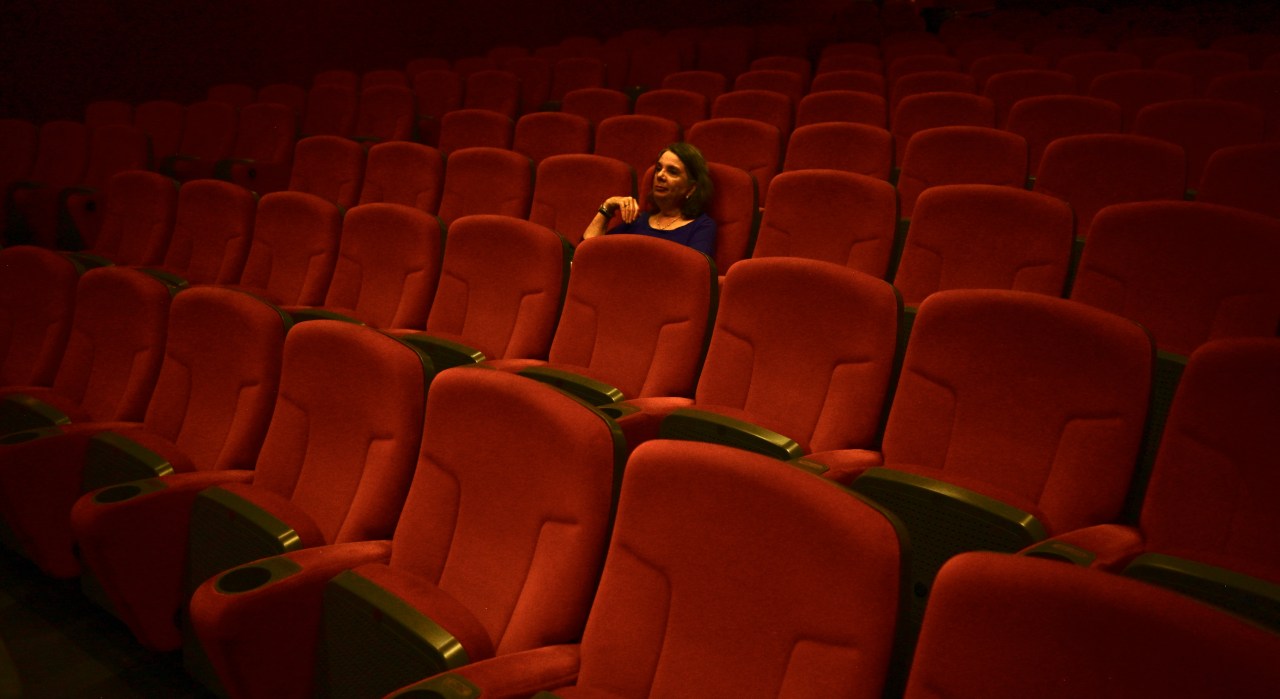
It didn’t take long for me to realize that, there, at that moment, I could take a picture of Marian that would be impossible in 99% such cases. There was that face in the middle of a sea of muted red. The image would compose itself! Three frames and I was happy enough with the Edward Hopper-ish result to sit back down and dig the quiet. I knew I’d stolen something precious out of the darkness.
Fifteen minutes later, a few other people drifted in (the film had a French plot, meaning no plot, so it really didn’t matter when they arrived) and the moment was gone. But I had at least obeyed my instinct and had the great fortune to make a record of it. That is the heart and soul of making a good picture, and I’ll sit through someone else’s lousy one, anyday, to make that happen.
SUM OF ITS PARTS
I’ve just seen a face / I can’t forget the time or place where we just met / she’s just the girl for me / and I want all the world to see we’ve met……. John Lennon/ Paul McCartney
By MICHAEL PERKINS
WHEN IT COMES TO STREET PHOTOGRAPHY, there is a reason that we use the phrase “a face in the crowd” rather than “the face in the crowd”, because, just as there is no single solution to the challenge, “go shoot a sunset” there can be no one face that satisfies the desires of every photographer. The combination of features, textures and expressions that compose the human visage come together in billions of combinations, some of which will entice and enthrall us, others that will repel us, and yet others that may not register at all. The human face is one of the grand, miraculous intangibles of visual art, which is why, centuries after old man Da Vinci laid down his brushes, we still can’t agree if the Mona Lisa is coquettish, innocent, wise, or a dozen other states of mind. And that’s great news for picture-making.
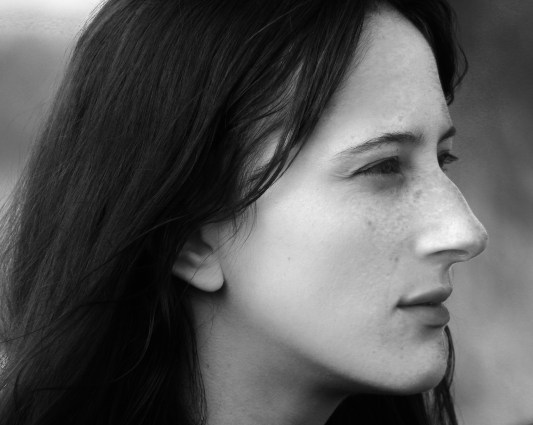
If I were to be assigned an essay to try to explain why the face of this young woman spoke to me on a certain day and a certain place, I would get an “F” or at least an “incomplete”. How can you quantify any of this? The face’s appeal can’t be reduced to mere physical beauty, since that phrase, in itself, produces no general consensus. Terms like plain, homely, comely, intriguing are likewise useless in describing what makes a photographer, or a novelist or a painter or a songwriter, for that matter, want to glorify a particular person. And then, beyond that, as Lennon & McCartney put it so well, there’s the random circumstances behind the discovery of the face:
Had it been another day / I might have looked the other way
And I’d have never been aware / But as it is I’ll dream of her tonight…
There are many, many things captured in an image that have no objective reason to be there, but the human face might just be the one thing that absolutely confounds any attempt to answer the question, “but why that one?” Some mysteries are impenetrable, and, wondrously, should be allowed to remain so. The truth is simple: I’ve just seen a face.
REQUIEM
By MICHAEL PERKINS
ALL CLOWNS ARE COMMENTATORS. Their leering grins and forced chortles are a mock of the all-too-mortal constraints of life, reminders of the gloom that lurks just behind the performance curtain. They concoct artificial joy at a harsh cost to themselves. In this way, they suffer somewhat for all of our sins.
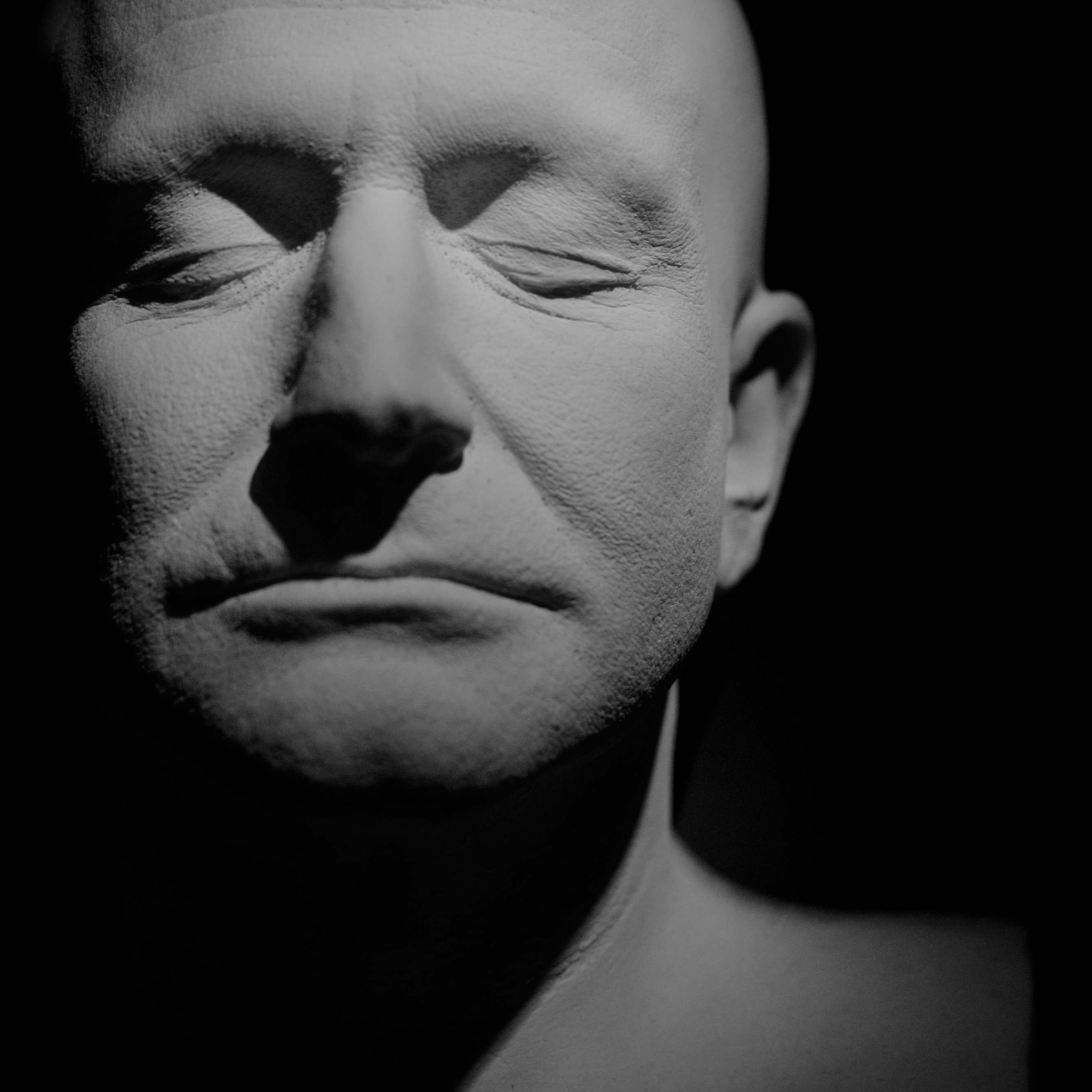
Upon discovering, a few years ago, this life mask of the late Robin Williams, which is on display at the Museum Of The Moving Image in Astoria, Queens, I was still in a mixture of mourning and denial at the Great One’s passing, all the sadder because the laughter he gave us exacted such a price from him. The mask itself was made to act as a framework for make-up artists who would then construct prosthetics on his features for a role. In turn, those features themselves became the role, the face reduced to its essence, strangely at rest after a life of inner turmoil. Seeing this image after several years of, frankly, not being able to bear to look upon it, I hear Lord Hamlet, who, upon discovering the skull of his father’s court jester at a burial site, muses:
Alas, poor Yorick! I knew him, Horatio:
A fellow of infinite jest, of most excellent fancy:
He hath borne me on his back a thousand times;
And now, how abhorred in my imagination it is!
My gorge rims at it.
Here hung those lips that I have kissed I know not how oft.
Where be your gibes now? Your gambols? Your songs?
Your flashes of merriment, that were wont to set the table on a roar?
Not one now, to mock your own grinning? Quite chap-fallen?
Now get you to my lady’s chamber,
And tell her, let her paint an inch thick, to this favour she must come;
Make her laugh at that.
SUNSET SITTINGS
By MICHAEL PERKINS
I DON’T POSSESS THE TALENT FOR COMPARTMENTALIZATION that pros like Annie Leibovitz or Richard Avedon have shown in making extremely intimate “final” images of the most important people in their lives. Annie’s sad, understated portraits of the last days of her partner Susan Sontag are oddly comforting, in contrast to the harrowing loneliness of Avedon’s images of his dying father, but, in both cases, they managed to force themselves to tell those stories in a way that I could never do. And, given that I believe that the camera can, and should, have universal access to any kind of story, I know that this makes me a bit of a hypocrite.
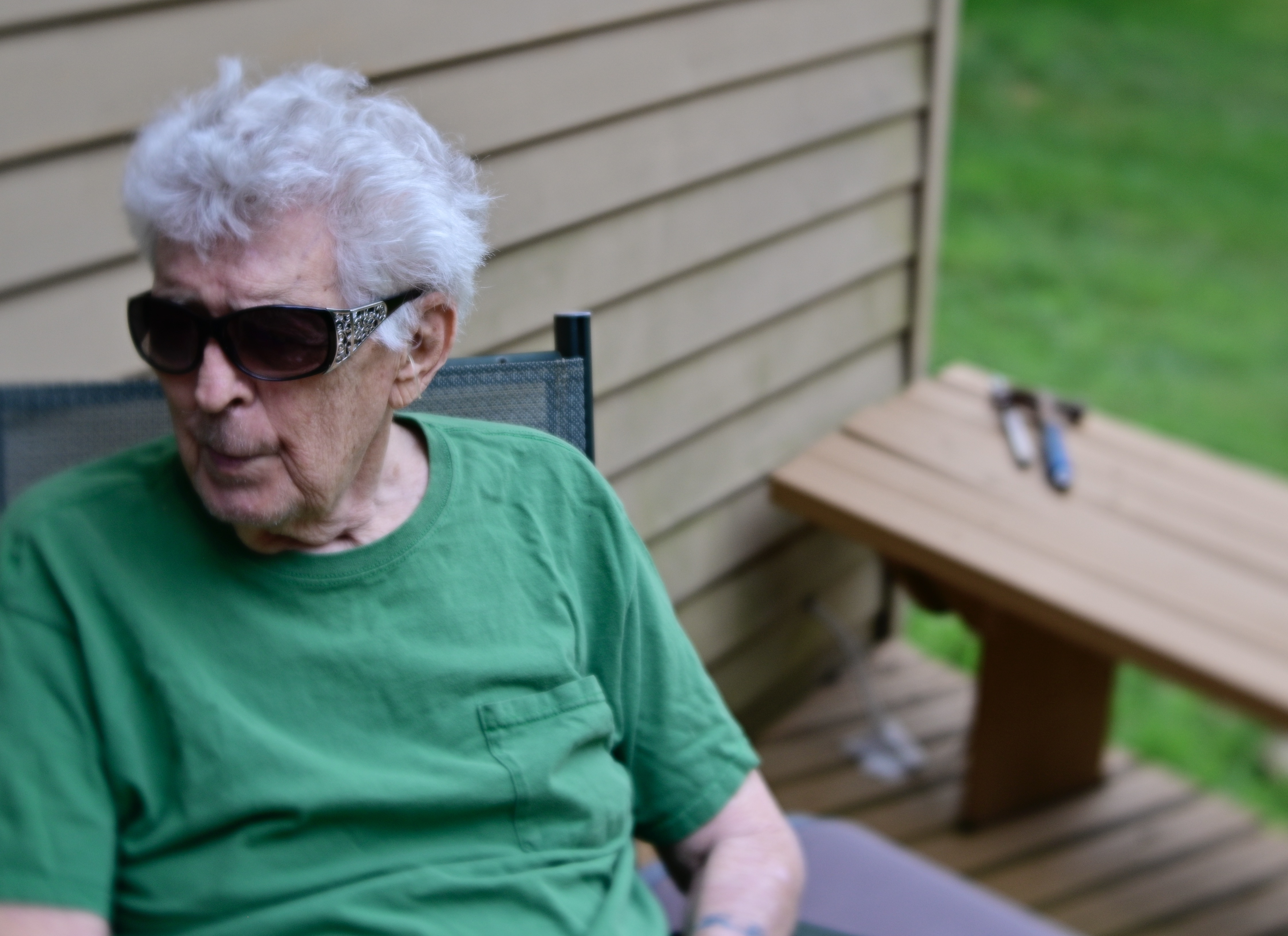
The reigning champion, my father.
My father, at this writing, is ninety-three years of age, and as fragile as a Japanese paper lantern. He may not be at the volcano’s edge just yet, but, damn, he is certainly in the neighborhood. I recognize the value in photographing the tough as well as the triumphant. And I get that, when I am feeling “reportorial”, that may strike someone else as being predatory, invasive. And my indecisiveness about taking, well, any pictures of him, at this point, has been exacerbated by the nagging realization that, living far from him, as I do, the next snap might well be the last one I will ever take.
During my most recent visit with him, the importance of the individual moments…our every ritual, each major or minor exchange, hung so heavy in the air that picking up my camera just seemed…vulgar, perhaps even disrespectful. How Leibovitz and Avedon could look upon that inexorable ebbing of life, day after day, and still be able to tuck their feelings into a pocket long enough to make an objective subject out of their dear ones….Jesus, the whole thing strikes me as supernatural, like being able to levitate, or render oneself invisible.
I took one picture of Pop the entire week I was around him, and it was just before I was due to fly “home” (what does that word even mean?), during an evening that was actually a little miracle, a night in which Mother and he were both awake, strong, playful even, and most importantly, really there…..present in a way that reminded me of the real, amazing people entombed inside these decaying carapaces. On such a night, through all the pain, despite all the storms on the horizon, there, for a minute, was my Father. Strong. Decisive. Reflective. Dignified.
Snap.
And, hopefully, not for the last time…
COSTUMED REVEALS
By MICHAEL PERKINS
THE SEE-SAW ACT THAT PHOTOGRAPHY PERFORMS between camouflage and revelation is one of the more tantalizing dynamics of the art. That we can both expose and conceal within a single image is what, in my opinion, actually makes a photograph an artistic expression. Originally conceived merely as a device for recording information, mirroring reality if you will, the camera is actually as coy as a strip-tease artist. You must read pictures for both positive and negative information.
Portraits are ways of expressing how we individually see a person, as well as an invitation to others to either identify or distance themselves from that very individual impression. It is not, by its very nature, an historic document. I was reminded of this recently when doing some background research on my favorite painting, Madame X, John Singer Sargent’s portrait of an American ex-patriot who had burst upon the social scene in nineteenth-century Paris. Not only are his preliminary studies of the woman remarkably distinct from each other, but further study shows that portraits of the same woman done by other artists of the period may as well be of five different people. All are accurate. All are true.
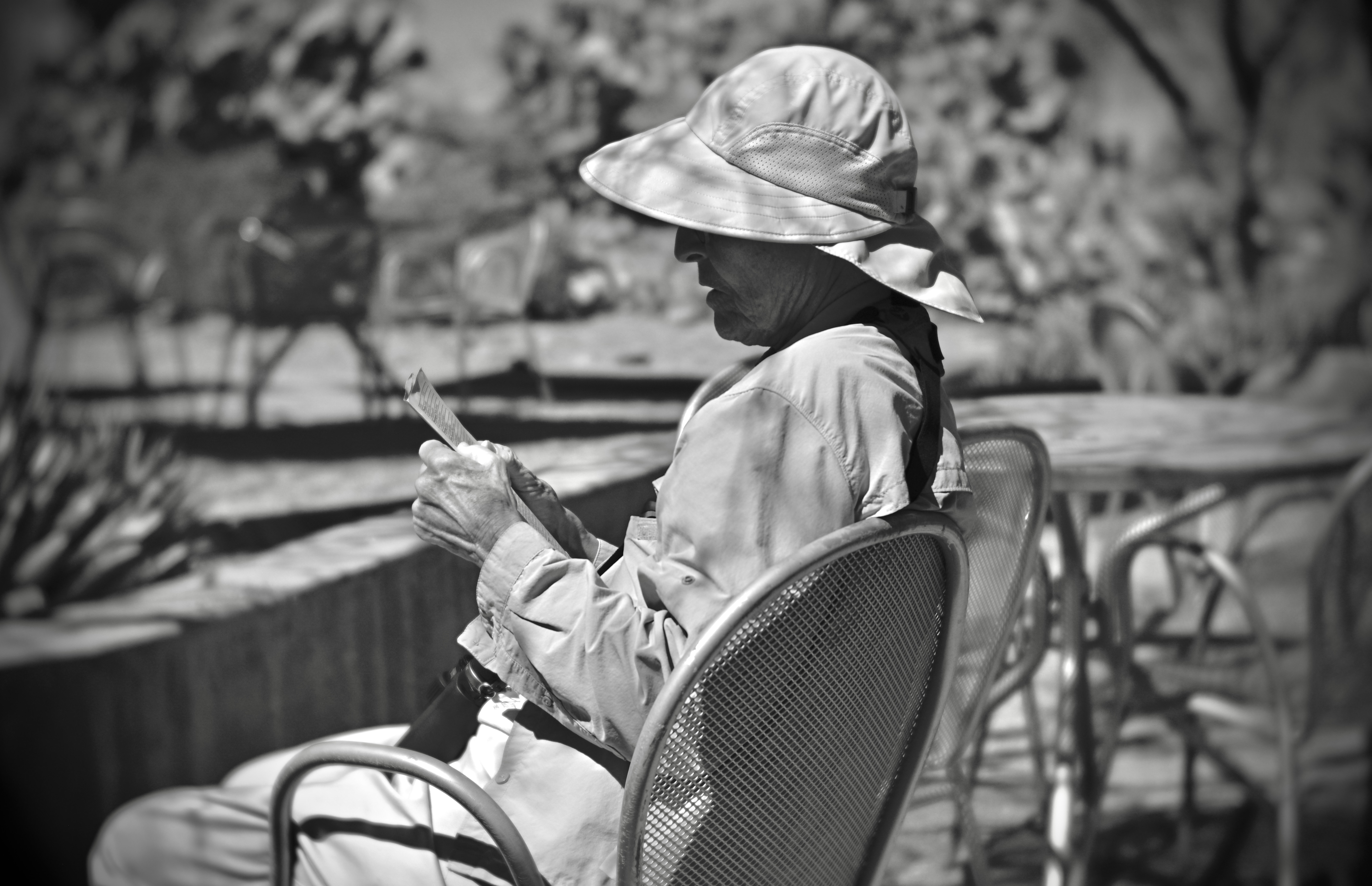
And so with photos. Gone is the pressure of making one official image of a person to mark their time on the planet, a feature of many early portraits where subjects might be photographed but a single time during their entire life. Now we have several hundred cracks at our favorite people over decades, none of them truly definitive or even typical. In my own case, I have photographed the woman shown here, a master teacher on my weekly birdwatching walks, literally dozens of times over the past decade, and each of the images revealing something vastly different about her character, making her now gentle, now stern, now aged, and now utterly ageless. I keep coming back to her because her eighty-plus years serve her like a kaleidoscope, serving up infinite refractions of her upon each new sitting. What I reveal in one frame I will conceal in the next. In one shot I am celebrating her longevity, while in yet another I am lamenting her fragility.
Even without much trying, you are going to take lots of pictures of the people you love over time. Make those multiple “takes” work for you, talk to you, keep you curious. You will learn that the camera costumes even as it reveals, and that those subtle variations, like variations in autumnal shades, will all be alien from each other, and will all, to one degree or another, ring true.
THE STREET GIVETH…
By MICHAEL PERKINS
IT’S BEEN CALLED SPYING, PRYING, PREDATION, and, occasionally “art”….the strange cross between eavesdropping and journalism that is collectively known as “street” photography. The elements of it that reveal something universal or profound about the human condition are hailed with exhibitions and awards, while the worst of it is considered rude, intrusive, even cruel. For those of us who only want our picture taken when we give specific permission, or when we are “ready”, street work can feel like theft, that is, something that is stolen from us. Then again, it also, sometimes, nails the truth about someone else’s vulnerabilities or foibles, and that, miraculously, we seem to be able to live with.
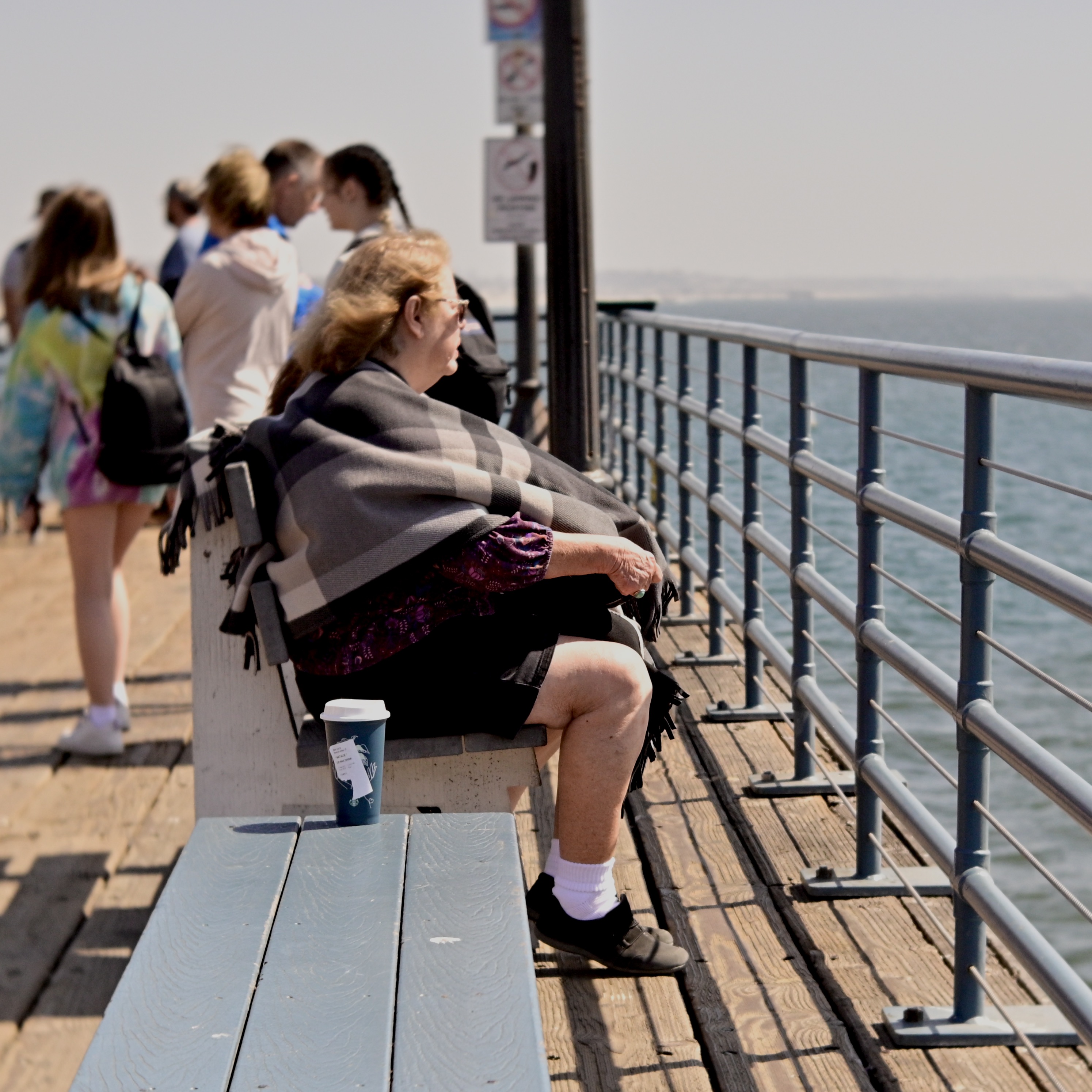
In a world in which billions of images are snapped globally each day, and in which most shutters are absolutely silent, and flash is on the endangered species list, it seems as if we have long since passed the point of no return in terms of privacy. We emotionally demand it even though we have no logical right to expect it. Every day there are more and more places where cameras can not only intrude, but intrude with laser precision, and we must reluctantly admit that, effectively, we are all under surveillance, always.
We have almost unlimited access to everyone’s quiet inner moments, at least the ones they play out in public. Does everyone deserve to have every part of their life laid bare, and who is to decide? If you come upon a private moment, such as the one seen above, does slicing off a sample of it for public use cheapen that moment? Or does it in some way celebrate it as emblematic of something essential about being human, something we all recognize, even share?
I shake up all these arguments on a day-by-day and frame-by-frame basis, and I don’t always come up with a coherent answer. The street giveth and the street taketh away, and photographers pluck their harvest from it like an army of insatiable fruit pickers. Are we bad? Are we wrong? Can anyone say for sure?
ON THE FACE OF IT
By MICHAEL PERKINS
I HAVE ALWAYS HAD A VIOLENT ALLERGIC REACTION TO PHOTOGRAPHERS WHO SPEAK IN ABSOLUTES, rigidly regulated by rules and procedures, especially as regards gear. Any opinion piece or analysis that contains the phrases “alway do” or “never do” have a perverse effect on me. It’s like telling Adam and Eve that they can eat from any tree in the garden except, you, know that one. It makes the apples on said tree start to seem like they might be the most delicious in the world.
Same with telling people that a set piece of kit or a certain approach will “always” result in a miraculous image. One thing that the digital era has achieved is the increasing rarity of this kind of guidance. In the film era, we were told in no uncertain terms what good and bad focus was, what constituted a “correct” composition. Today, we’re in more of an “anything goes” arena, with people finding freedom in a more experimental frame of mind. And one of the areas where this is most in evidence, since we are more fascinated by faces than ever before here in Selfie World, is in all types of portraiture.
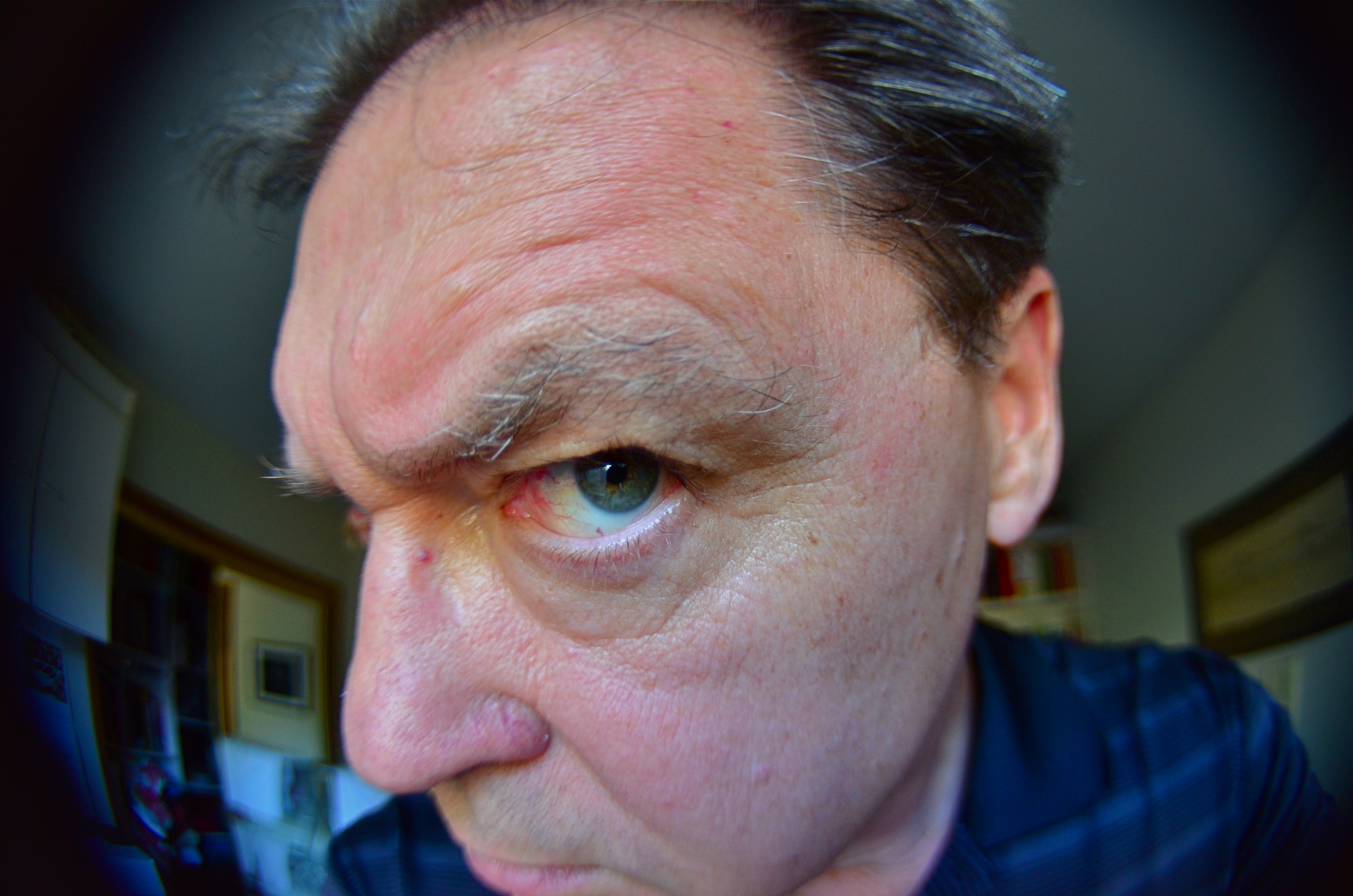
Does this lens make by eye look too fat?
Formal studios used to dominate portrait work to such a degree (hey, we get out of class for an hour…it’s PICTURE DAY!) that a kind of holy writ of thought held sway on the “best” lenses to use to capture someone’s personality. Now, with an insane variety of apps packed in our pockets, the concept of portraiture has been freed from the photo mills of the past, as is the idea of how best to present human features. Whereas amateur photographers used to use a certain hunk of glass consistently for every kind of face, say something in the 85 to 105mm range, extreme wide-angles from 8 to 18mm are now just as much in use.
One of the reason for this shift is that cellphone cameras, at least basic ones, tend to shoot in the wider focal lengths that were once considered “wrong” or unflattering, since they can create distortion in the middle of the subject’s face depending on the distance. However, some people have used just this look to purposefully sculpt their facial contours, to play stretch-and-shrink with their given proportions in order to make their faces look longer or slimmer or to accentuate other elements. On the other end of the spectrum, zooms used to looked down upon by some for portraits because it could be harder to blur out backgrounds at smaller apertures, but now, since most digital images are really only a starting point ahead of post-snap tweaks anyway, even that problem can be solved more easily than in days past.
For years I heard primes in the 35-50mm range touted as the so-called “normal” lenses, since they were supposed to “see” the face at the same proportions as the human eye, or “normally”. But do I use them exclusively? Heck, I don’t use anything exclusively anymore. And neither does anyone else. The days of the didactic “never do” and “always do” tutorials are long gone, with a great portrait defined by nothing more than your own satisfaction. Finally.
ADDITION BY SUBTRACTION
BY MICHAEL PERKINS
“THE EYES HAVE IT” went the old maxim, a phrase which was a kind of bookend to another chestnut about the eyes being the “window to the soul”. Both sayings relate to most of our earliest photographic training, with scads of manuals and tutorials dictating that all portraits must focus (literally) primarily on the eyes, even at the expense of sharpness in the remainder of the picture. This rule has also been enshrined in the eye detection focal systems of even the most rudimentary cameras.
All of which has served us well, apparently, during these days of the Great Hibernation, when masks have concealed many clues to our personality, even as they have protected us against contagion. Indeed, in many social situations, the eyes have become almost the sole messenger for people’s inner thoughts, intentions, moods. And depending on how you view the situation as a photographer, that’s either maddeningly frustrating or grandly intriguing. Still, the idea of making a formal portrait of a person while they are masked hasn’t really occurred to me as a legitimate means of measuring the self of said person. I am always waiting for the gauze to come off, for the “complete” person to be revealed.
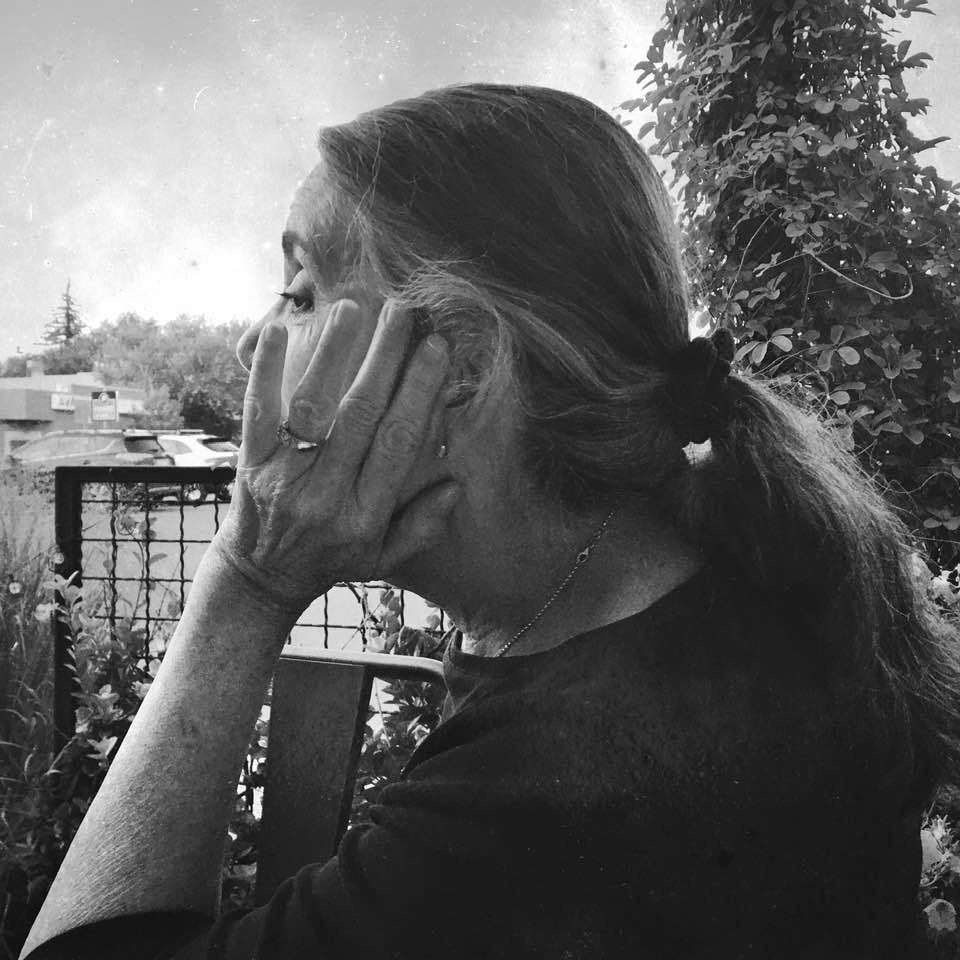
That’s why, recently, I was truly surprised when, out of about a half dozen snaps of my wife Marian as she visited with a friend, I chose the one with the least amount of her face in view as my favorite. There’s was something…call it mystery, call it minimalism…about the way her hand momentarily fanned across her features in much the same area that a mask might cover. Why was this interesting? Why is anything interesting? The point was that her eyes were, indeed, a perfectly reliable barometer of her mood, prompting me to ask, how much face is enough face for a portrait? Are we more fascinated by what is left out of a picture? And, if so, are there many more remarkably veiled faces to be explored before the Age Of The Mask fades away?
MYSTERIES SOLVED AND UNSOLVED
By MICHAEL PERKINS
STREET PHOTOGRAPHY IS OCCASIONALLY DISPARAGED as some kind of intrusion, the visual equivalent of picking someone’s pocket or peeping through their bedroom window. And while some shooters certainly invade, even steal, privacy from people, there are many more gentler practitioners, artists compelled by curiosity rather than predation. I think the difference between these two approaches shows in the work. At least I hope it does.
The photographic street scene is greatly altered in this Year Of The Great Hibernation. Making pictures of people is severely hampered when there are, literally, fewer full faces in view. Our choice to purposely avoid personal contact cuts that crop down yet again. And without faces, the street is only, well, the street. Faces provide photographers with that divine mix of solved and unsolved mystery. It is, after all, our inability to absolutely plumb the inner thoughts of others with our puny cameras that make our little acts of emotional eavesdropping so addictive.
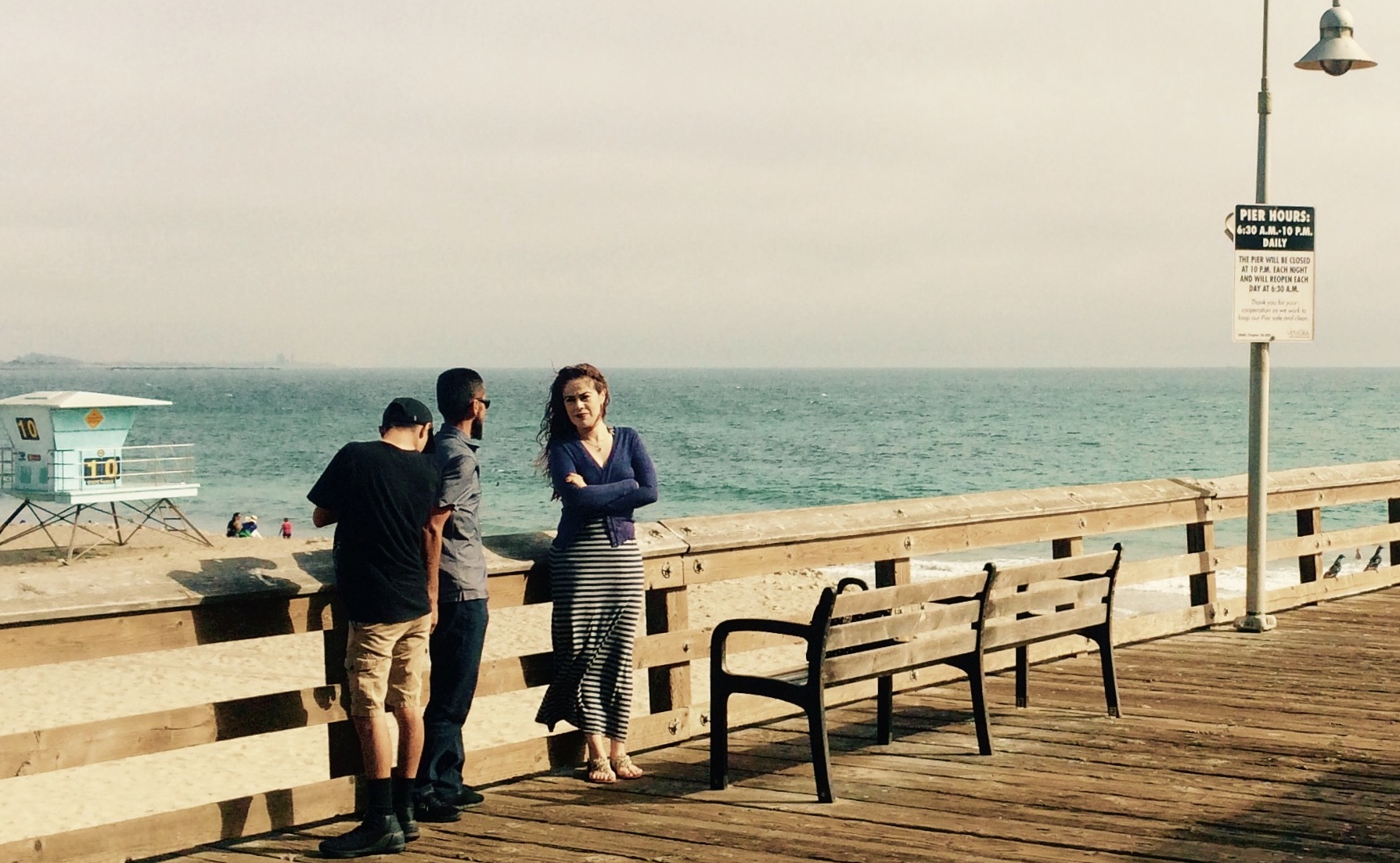
The Conference, 2017
In recent months, I have been giving myself a refresher course on what it is about street work that “works” for me. I keep coming back to images very similar to the one you see here, the instinctual capture of a moment on a pier in Ventura, California some three years ago. Something about the exchange between the woman and the two males continues to fascinate me. Maybe it’s because the woman, whose face is the only one of the three in clear view, is in such a position of dominance. She clearly seems to be in charge of whether the conversation continues, and on whose terms. She looks, at once, impatient, engaged, weary, cold, contemptuous, even maternal. I can’t nail her down, and that’s intriguing. The males are almost certainly boys, or are at least servile in the way that only boys can be in the presence of an adult woman. Either way, their energy is greatly diminished in comparison to hers. The picture does, then, what street work does best…at least for me, in that it starts conversation, but cannot end it.
Of course, some street photography is not “about” anything but itself, that is, a random momentary arrangement of props and shapes. And it would be a mistake to label such images as any less or more “meaningful” just because no clear intent is implied in them. A sunset is, for some, symbolic of many things, but for others, it’s just a picture of a sunset. As to whether it’s somehow wrong to spy on the feelings or interactions of passersby with the intent of trapping them inside a box, I’ll leave that to the philosophers. Me, I’m thinking about the grand parade of lives passing before me, which I regard as the grandest feast since the invention of Hot Pockets…
OTHER EYES, OTHER WINDOWS
By MICHAEL PERKINS
MOST OF THE FORMAL TRAINING IN PHOTOGRAPHIC PORTRAITURE rightly emphasizes the eyes, those so-called “windows of the soul”, and it’s hard to argue with their weight as indicators of the inner mind. But, in reality, every facial feature can be eloquent in conveying that which comprises the individual: love, fear, hate, happiness…whatever mix of outward cues that connote personality in a photograph. And it’s also true that, generally speaking, one’s face is a more reliable identifier of traits than, say, an arm or an ankle. However, portraits are loaded with information that occurs from the neck down as well, and a good deal of it can be mined for solid indicators of just who it is we’re looking at. And while we concede that most of us would never deliberately cut the top off a subject in everyday practice, (as seen here) doing so, at least for this exercise, illustrates just how much data can be left to work with when we, in a sense, lose our head.
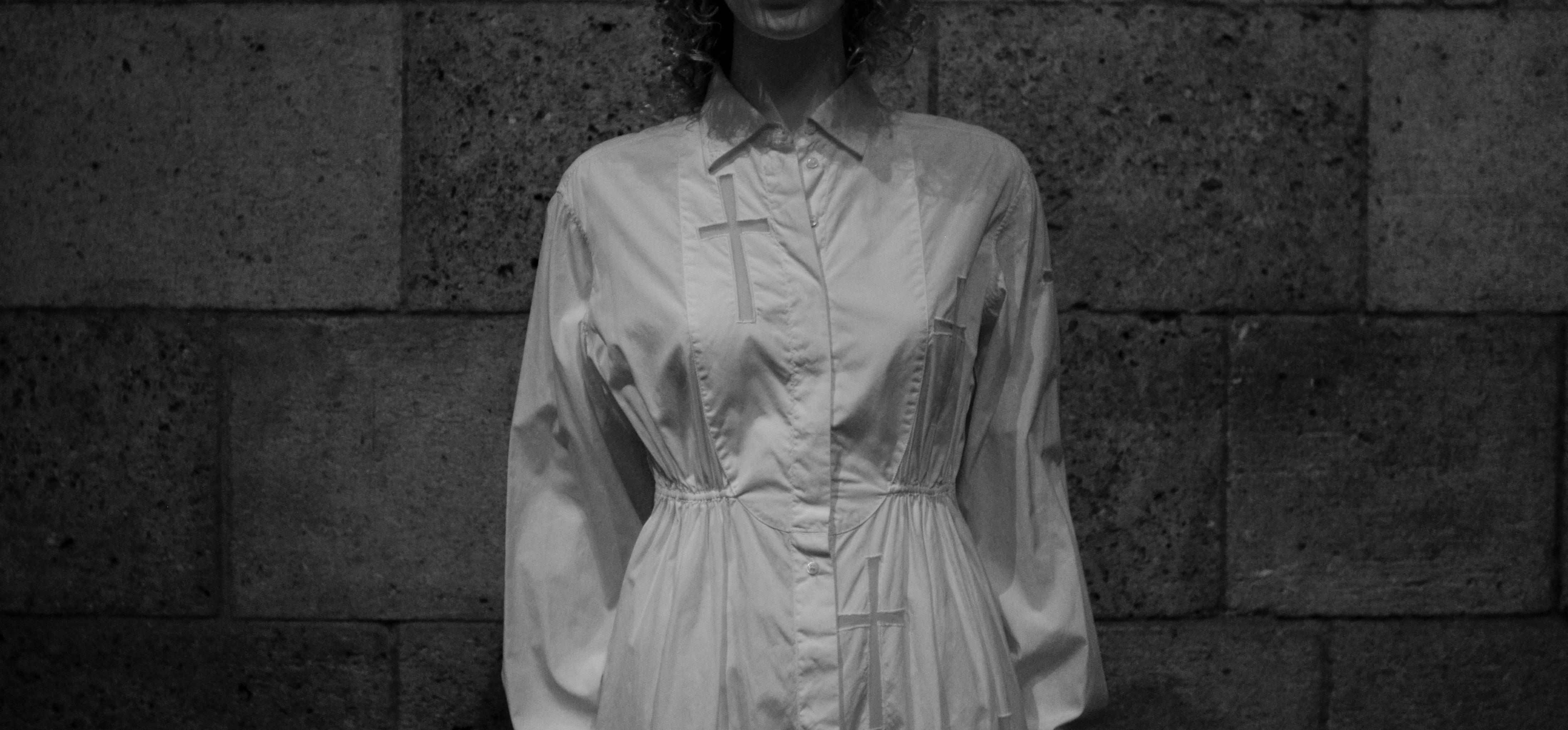
Habit, 2019
Clothing, regalia, body language, even something as basic as color…all these come ripe with codes about the life of the individual under consideration, and can be as valuable in portraiture as the face itself. Now, the idea of recommending that you re-examine your favorite portraits without considering their facial information is not to convince you to choose someone’s suit or hand over their face, but to increase our consciousness of what besides the face can amplify and deepen our sense of the people we photograph. I have seen many images where the depth of field was so narrow that, from the eyes outward, most of the face is largely softened, with everything else outside that narrow radius so blurred as to yield virtually no information. And, yes, that approach works wonderfully in many instances. Still, I am the very last person to propose any ironclad rule that always works or never works, since I believe that absolutes have no place in art. Every case must be considered separately.
So long as people are much more than merely their faces, I believe that everyone who works in portraiture should cultivate the habit of looking at every subject as a unique mix of elements, resulting in a range of pictures where sometimes the face is everything, or is sometimes just a thing among others, and occasionally is of no importance at all. The eyes may be a vary reliable window to the soul, but there are always other kinds of eyes, other kinds of windows.
NASTY AND NICE THINGS
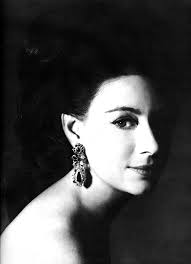
Lord Snowdon portrait of his wife from 1960-1978, Princess Margaret of Great Britain.
By MICHAEL PERKINS
“I’M NOT A GREAT ONE FOR CHATTING PEOPLE UP, because it’s phony”, legendary photographer Anthony Armstrong-Jones told an interviewer toward the end of his life. Answering standard questions about his approach to creating some of the most memorable portraits of both the haves and have-nots during the second half of the twentieth century, he added, “I don’t want people to feel at ease. You want a bit of edge. There are quite long, agonized silences. I love it. Something strange might happen. I mean, taking photographs is a very nasty thing to do. It’s very cruel….”
Such a remark was de rigeur for Armstrong-Jones, who worked hard over a lifetime to create the impression that he didn’t really work that hard at all, that his photographs were, in his words, “run of the mill”, although anyone looking over the body of work published under his British title, Lord Snowdon, would roundly disagree. His clients ranged from the royal family, including his first wife, Princess Margaret (sister of Queen Elizabeth), as well as the family’s next generation of nobles, highlighted by his celebrated portrayals of Diana, Princess of Wales. There were also scores of portraits of a vast range of other subjects from ditch-diggers to dowagers, a list that boasted Princess Grace of Monaco, David Bowie, Laurence Olivier, Elizabeth Taylor, Maggie Smith and J.R.R. Tolkien. Other times his lens would be trained on documentary subjects like natural disasters or the plight of mental patients. In Snowdon’s personally curated origin story, he seems to have backed into photography after flunking out of Cambridge, where he had originally studied to be an architect. Even the acquisition of his first camera, a gift from his sister to help pass the time during his recovery from a bout of polio, seems to have been an afterthought. Beginning as an assistant for the reigning British court photographer, he first distinguished himself with images of the brighter lights of the British stage, truly launching his career with an official 1957 tour portrait of Elizabeth and her husband, the Duke of Edinburgh. Three years later, he married Margaret in Westminster Abbey in a ceremony that made history on two fronts, being the first such ritual to be televised as well as the first union between a royal and a commoner (from which union came Armstrong-Jones’ induction into the House of Lords). The marriage was most graciously described as “tempestuous”, and ground to a halt eighteen years later, hobbled by Margaret’s legendary partying and Snowdon’s equally celebrated eye for the ladies.
Perversely, Snowdon often disdained the very photographs that earned him his living, saying they were “all right for pinning up” but not worthy of being framed or treasured. Once, when asked if he had a favorite image, he quipped “yes….I haven’t taken it yet.”
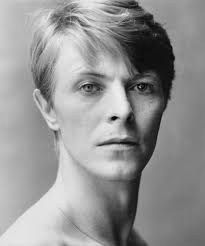
Snowdon’s work catalogued the rich and famous, including this portrait of David Bowie.
That, of course, doesn’t mean that Snowdon ever gave any public clues as to how such a masterpiece might evolve, since he was remarkably closed-mouthed about technique, whenever he wasn’t actively denying that he had any. Proud of the fact that he didn’t prep or engage his subjects in conversation to relax them, he claimed he never even asked them to smile, since that was “a false facial expression”.
His professional credits ran the gamut from the London Sunday Times magazine (where he worked as photo editor) to commissions for Vanity Fair, The Daily Telegraph, and over thirty years with Vogue, with a notable retrospective of his work being mounted at Washington’s National Portrait Gallery in 2000. Interestingly, his favorite projects were not photographs at all, but the architectural designs he created for the London Zoo and various mechanical inventions, including a type of electric wheelchair which he patented. He consistently deflected probing questions about the style and philosophy behind his pictures, cutting off interviews with glib gibes that made it seem as if the images just jumped out of the camera by their own power. Perhaps, he seemed to be proposing, it had all been a happy accident.
Perhaps it’s just as well. Perhaps the pictures are best suited to speak for themselves. Perhaps trying to explain how the magic works makes the magic sort of…not work. “I’m very much against photographs being treated with reverence and signed and sold as works of art”, he once told a writer. “They should be seen in a magazine or book and then be used to wrap up fish and chucked away.”
ON THE JOB
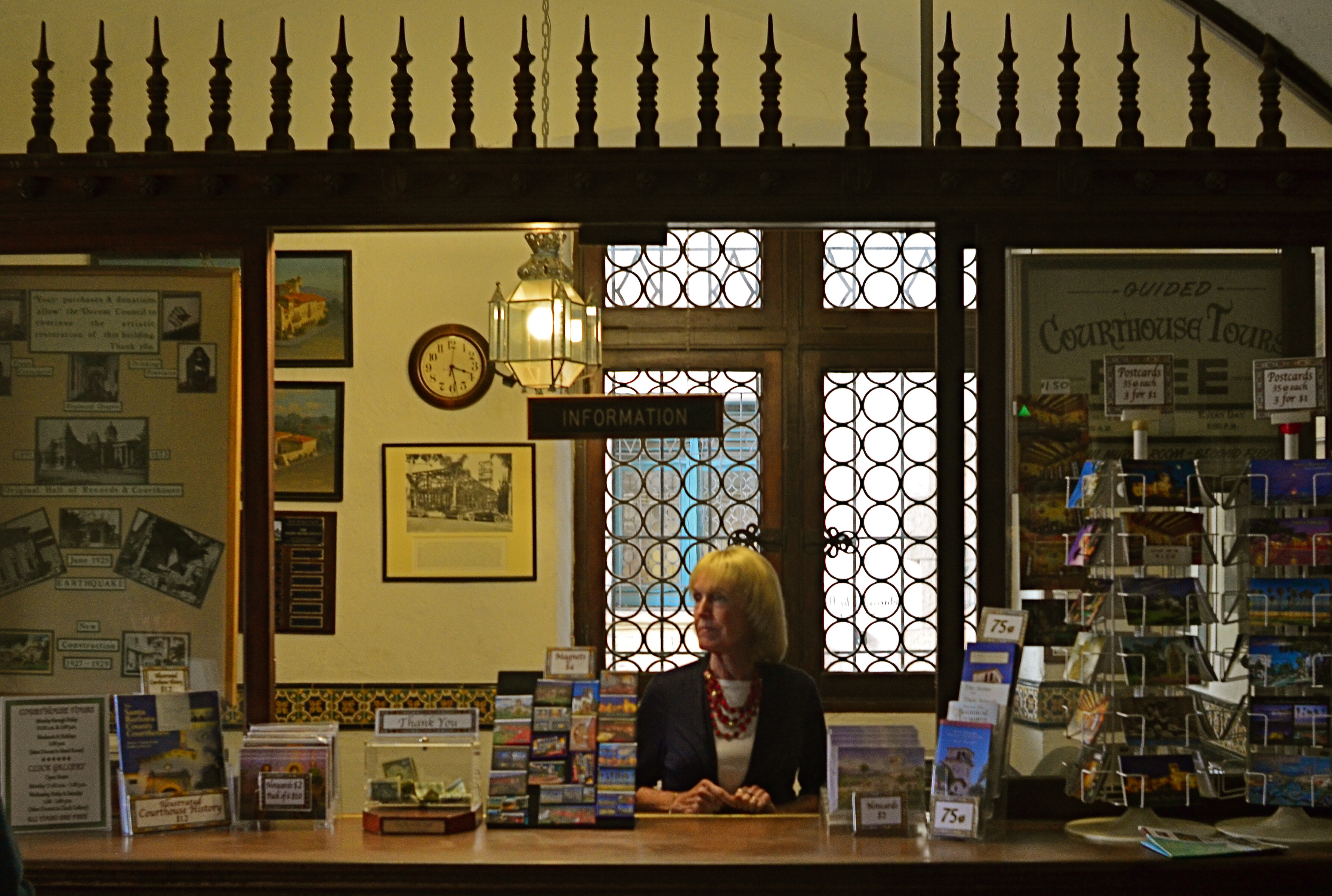
Information, Please (2017)
By MICHAEL PERKINS
ONE OF THE MOST EXHAUSTIVE portrait projects in the history of photography was August Sander’s Face Of Our Time, a collection from the 1920’s of sixty formal portraits of German tradesmen of every class and social station, each shown with the tools or uniforms unique to his chosen profession. Sanders photographed his subjects as documents, without any hint of commentary or irony. The story in their pictures was, simply, the visual record of their place in society and, eventually, as cultural bookmarks.
Since Sander’s eloquent, if clinical work, similar photo essays have taken on the same subject with a little more warmth, notably Irving Penn’s Small Trades portrait series from the early 1950’s. Like Sander, however, Penn also shot his images in the controlled environment of the studio. In my own work, I truly feel that it’s important to capture ordinary workers in their native working environment, framed by everything that defines a typical day for them, not merely a few symbolic tools, such as a bricklayer’s trowel or a butcher’s cleaver. I also think such portraits should be unposed candids, with the photographer posing as little distraction as possible.
I really like the formal look of a studio portrait, but it doesn’t lend itself to reportage, as it’s really an artificial construct….a version of reality. So called “worker” portraits need room to breathe, to be un-self-conscious. And, at least for me, that means getting them back on the street.
ONE GLIMPSE OF WAS
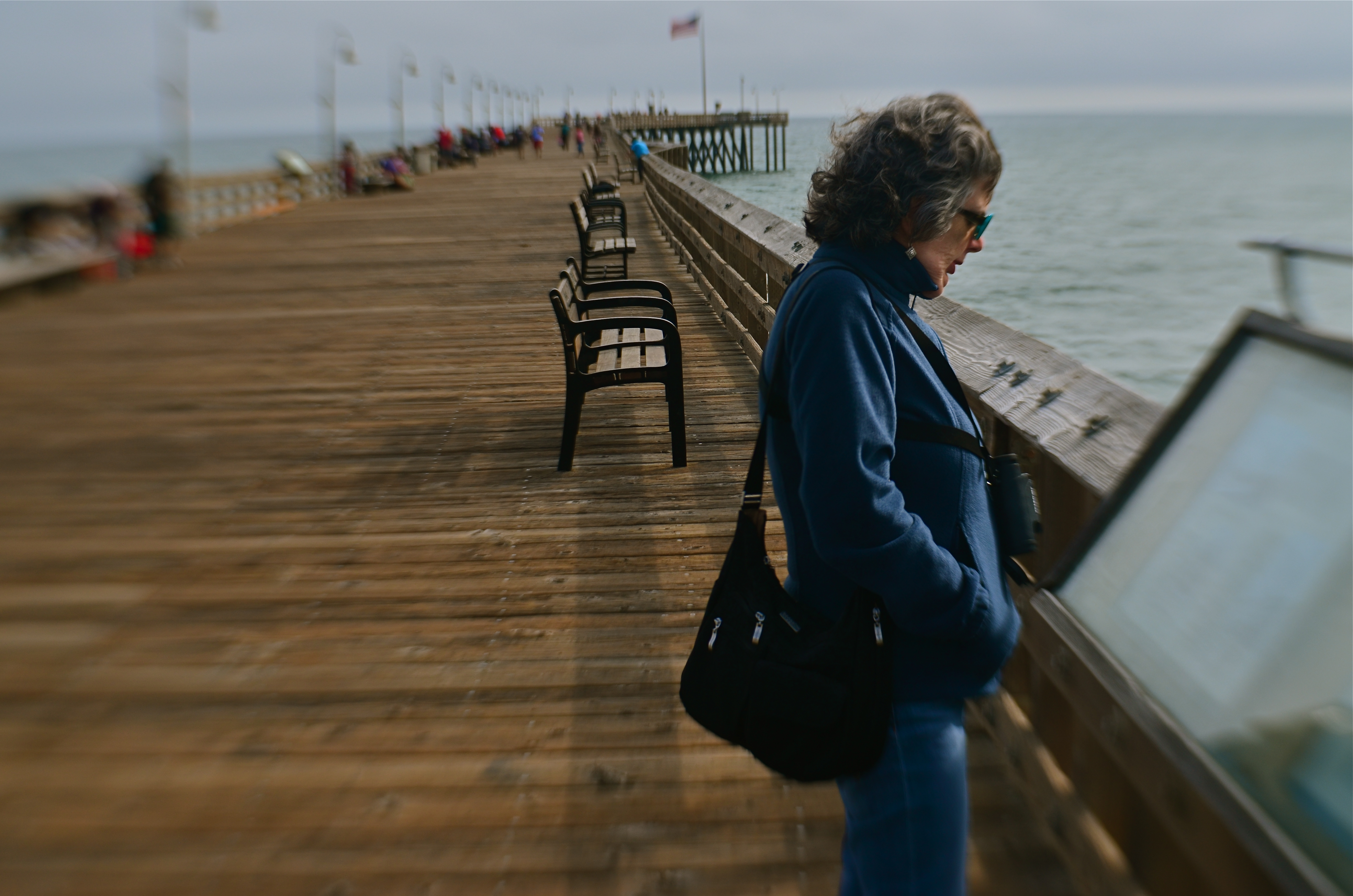
1/320 sec., f/5.6, ISO 100, 35mm.
By MICHAEL PERKINS
ONE OF THE EXQUISITE PLEASURES usually denied to even the best portrait photographers is the ability to turn back the clock, to use the camera to x-ray one’s way past a subject’s accumulated life layers, peering into the “them” that was. It’s not really that it’s impossible to retrieve part of a person’s yester-faces. It’s that it’s maddingly elusive, like getting a brief glimpse of a lighthouse beacon amidst billows of pea-soup fog. We have to take faces, for the most part, at, well, face value.
Case in point: meeting my wife, as I did, long after we both had lived fairly complete first lives, I can only know the early visual version of her through other people’s pictures. It allows me to look for parts of those earlier faces whenever I make new images of her, but I can never know when any of them will flash up to the surface. It does happen, but there’s no way to summon it at will.
Marian grew up in a beach town, with the seasons and rhythms of shore life defining her own to a degree. As a consequence, I always welcome the chance to shoot her near the sea….along beaches, atop windswept piers, weaving her way through the sights and sounds of boardwalks and harbors.
Of course, restoring Marian to her original context, by itself, is no guarantee that I’ll harvest any greater photographic truth about her face’s formative years than I do on any other day. Still, I find the idea romantic and brimming with tantalizing potential. Will I be given an audience with the ghosts of Marian past today? Will they even show up? The mystery of faces leads photographers on a blind chase, with only the occasional find to convince us to continue the hunt.
IRVING’S CURTAIN
By MICHAEL PERKINS
BY THE TIME IRVING PENN (1917–2008) WAS ESTABLISHED as a portraitist without equal for Vogue magazine, he had chalked off clear parameters for his style. Natural over artificial light: large format, high-resolution monochromes: a patient talent for extracting the essence of even the most reluctant subject: and an almost lucky-charm devotion to the worn and stained curtain he would use, almost exclusively, as his backdrop for the length and breadth of his legendary career.
Salvaging the curtain from a Paris theatre in 1950, Penn used it as the great equalizer in all his portrait work, staging everything from Picasso’s puckish gaze to Audrey Hepburn’s gamine charm in front of its collection of stains, spills and discolorations. The curtain was as essential to a Penn shoot as the great man’s lenses, and where he went, from remote African villages to literary salons, it went also. And finally, eight years after his death, it traveled one more time to New York, for a supporting role in an Instagram near you.
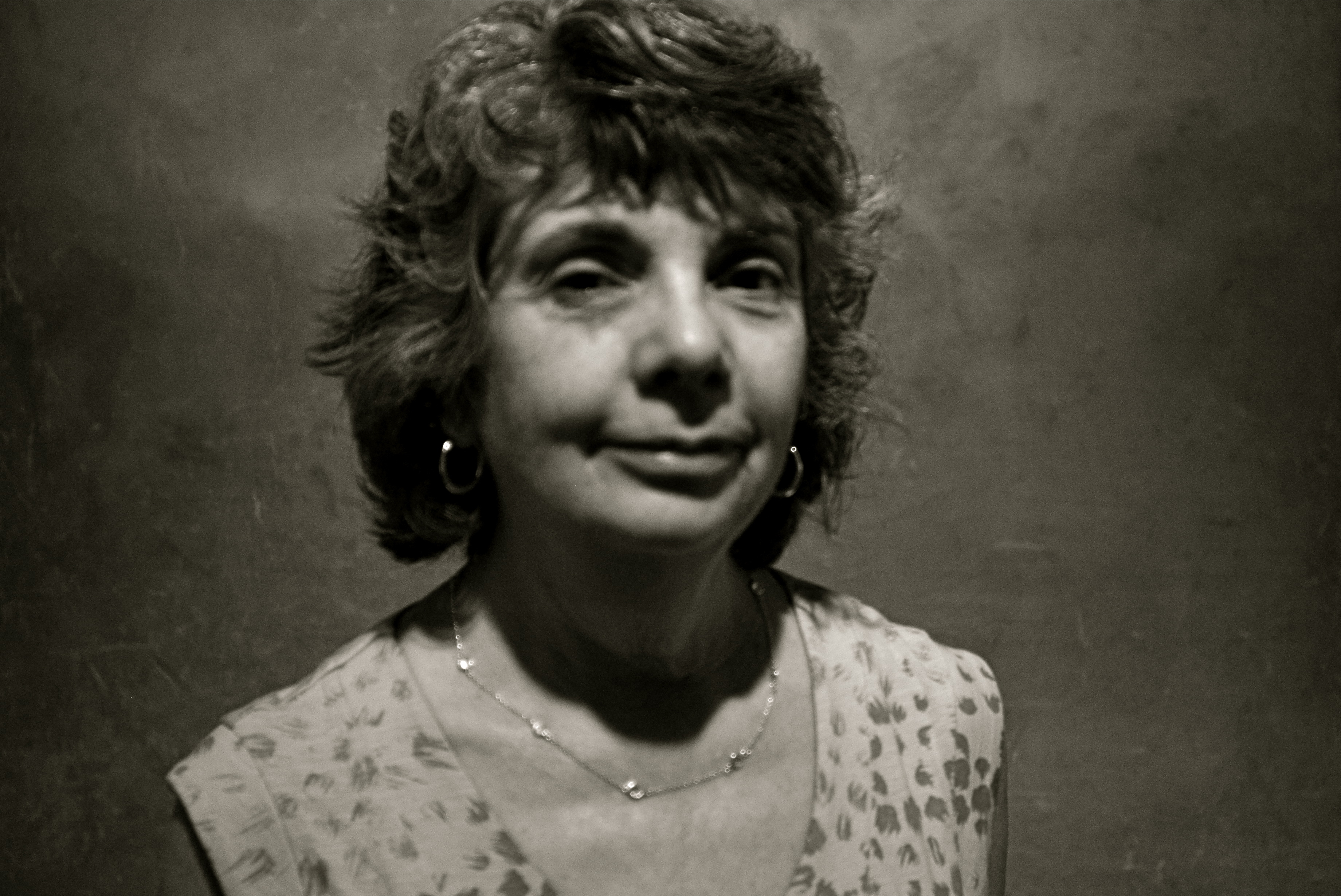
As part of the Metropolitan Museum Of Art’s centennial celebration of Penn’s work for 2017, the curtain was installed in a room chocked with shots of the famous people with which it had co-starred. Studio-style, it was mounted on a curved panel to avoid hot spots from glare, and visitors were invited to pose themselves in front of it, fore-lit by a well-placed fashion light. The message was seductively mis-leading. If the cloth is magic, maybe it’s transferable! Maybe it is that black crow’s feather that makes Dumbo fly…..
The Met’s true genius in installing this Penn-it-yourself feature in its exhibit became obvious once you took the bait. That is, there’s nothing better to teach you that his work was great than allowing you to take very bad pictures under some of the same circumstances. I certainly got the point after clicking off a seriously flawed candid of my wife, seen here. I mean, other than blowing the focus, the metering, and the placement of light and shadow, the shot’s perfect, right?
Of course, the Penn curtain challenge had a kind of theme-park appeal, sort of like when you stick your face through a hole in the back of a cartoon cutout at Coney Island to have your picture taken as a “strongman”…and just about as convincing. Because art isn’t gear: genius isn’t mere tools. And you can’t be Rembrandt just by picking up Rembrandt’s brush.
SAVING FACE
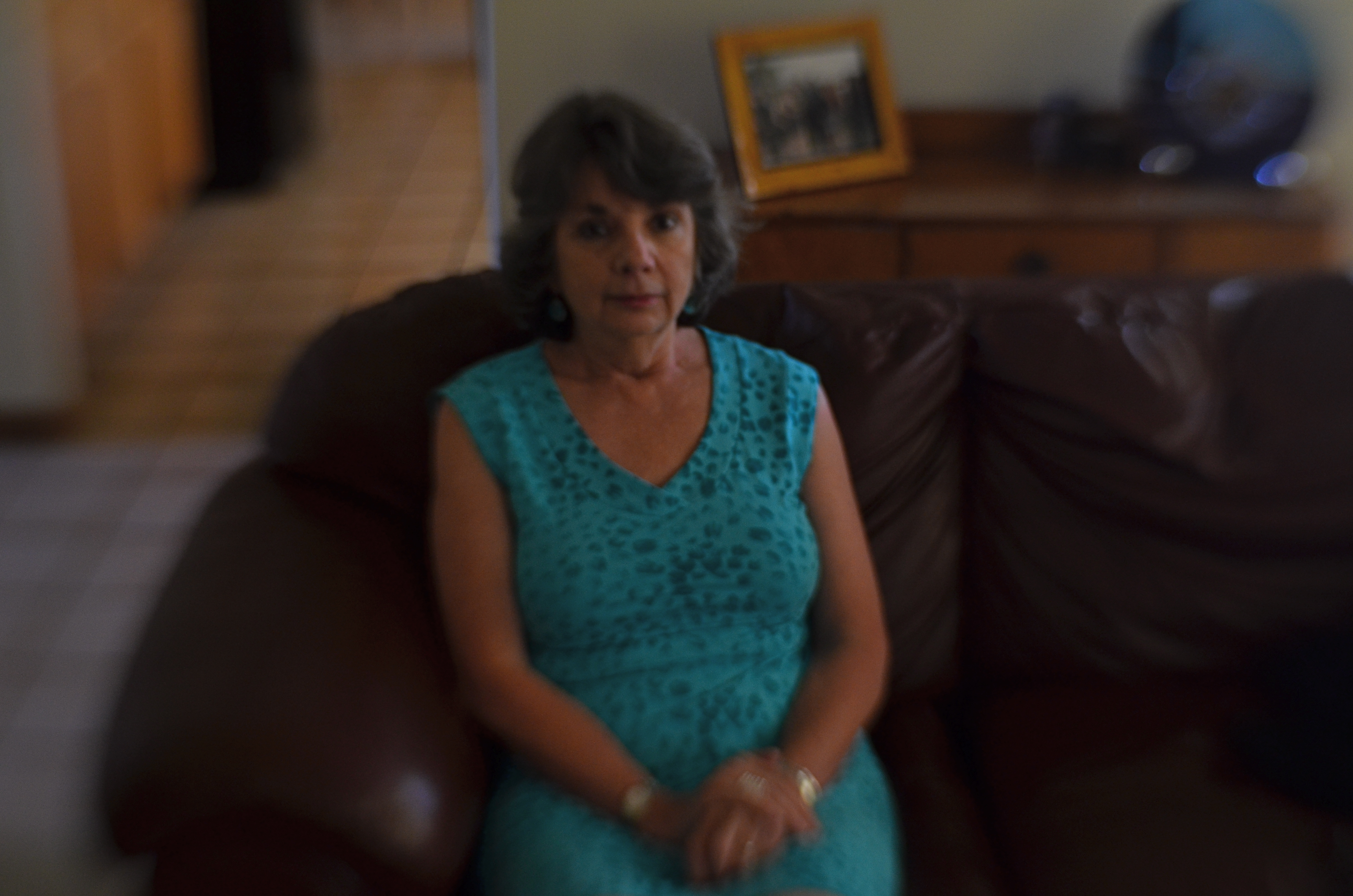
Faces are selves served up in slices.
By MICHAEL PERKINS
YOU WOULD SUPPOSE that sustained, intimate contact with a photographic subject would inevitably lead to a superior, if not perfect rendering of that subject in an image. And supposing further that said subject is a person, you’d assume that one’s close bond with the subject couldn’t fail to produce the ultimate visual depiction of that person….a glimpse into their very essence.
Or so you’d suppose.
There is a reason why so many shooters pursue the same faces, many belonging to dear friends or loved ones, over a lifetime of picture-making….never quite able to reduce a face to its essence or its definitive “version”. It’s not that they don’t yet know enough about that particular arrangement of shapes and features. It’s that they know too much to settle for any single interpretation of them.
No sooner does the face of the Dear One display a given mood or aspect than it shifts like an active weather front to a completely different mix of elements. Faces are selves arrested in mid-flight, and, being in constant motion, rob us of the picture we originally set out to capture, only to bestow a fresh one on us. The “new” person we now see is, certainly, the same individual, but changed enough that we are off on a completely different mission, visually speaking. That is both frustrating and fulfilling.
The slices of persona that we freeze in the camera are just that: shifting glimpses. That means that, unlike pictures of monuments or mountains, they can’t be “done” in any permanent way. Add to this the change in how we all relate to each other over time, and it makes perfect sense to refresh our view of the most familiar faces an infinite number of times.
THE EYES HAVE IT
How soft is too soft? Shot with a Lensbaby Sweet 35 optic at 1/30 sec., F/4, ISO 400, 35mm.
By MICHAEL PERKINS
WINDOW TO THE SOUL: that’s the romantic concept of the human eye, both in establishing our emotional bonds with each other and, in photography, revealing something profound in portraiture. The concept is so strong that it is one of the only direct links between painting (the way the world used to record emotional phenomena) and photography, which has either imitated or augmented that art for two full centuries. Lock onto the eyes, we say, and you’ve nailed the essence of the person.
So let’s do a simple comparison experiment. In recent years, I’ve begun to experiment more and more with selective-focus optics such as the Lensbaby family of art lenses. Lensbabies are unabashedly “flawed” in that they are not designed to deliver uniform focus, but, in fact, use the same aberrations that we used to design out of lenses to isolate some subjects in intensely sharp areas ( so-called “sweet spots”) surrounded by gradually increasing softness.
As a great additional feature, this softness can even occur in the same focal plane as a sharply rendered object. That means that object “A”, five feet away from the camera, can be quite blurry, while object “B”, located just inches to the side of “A”, and also five feet from the camera, can register with near-perfect focus. Thus, Lensbaby lenses don’t record “reality”: they interpret mood, creating supremely subjective and personal “reads” on what kind of reality you prefer.
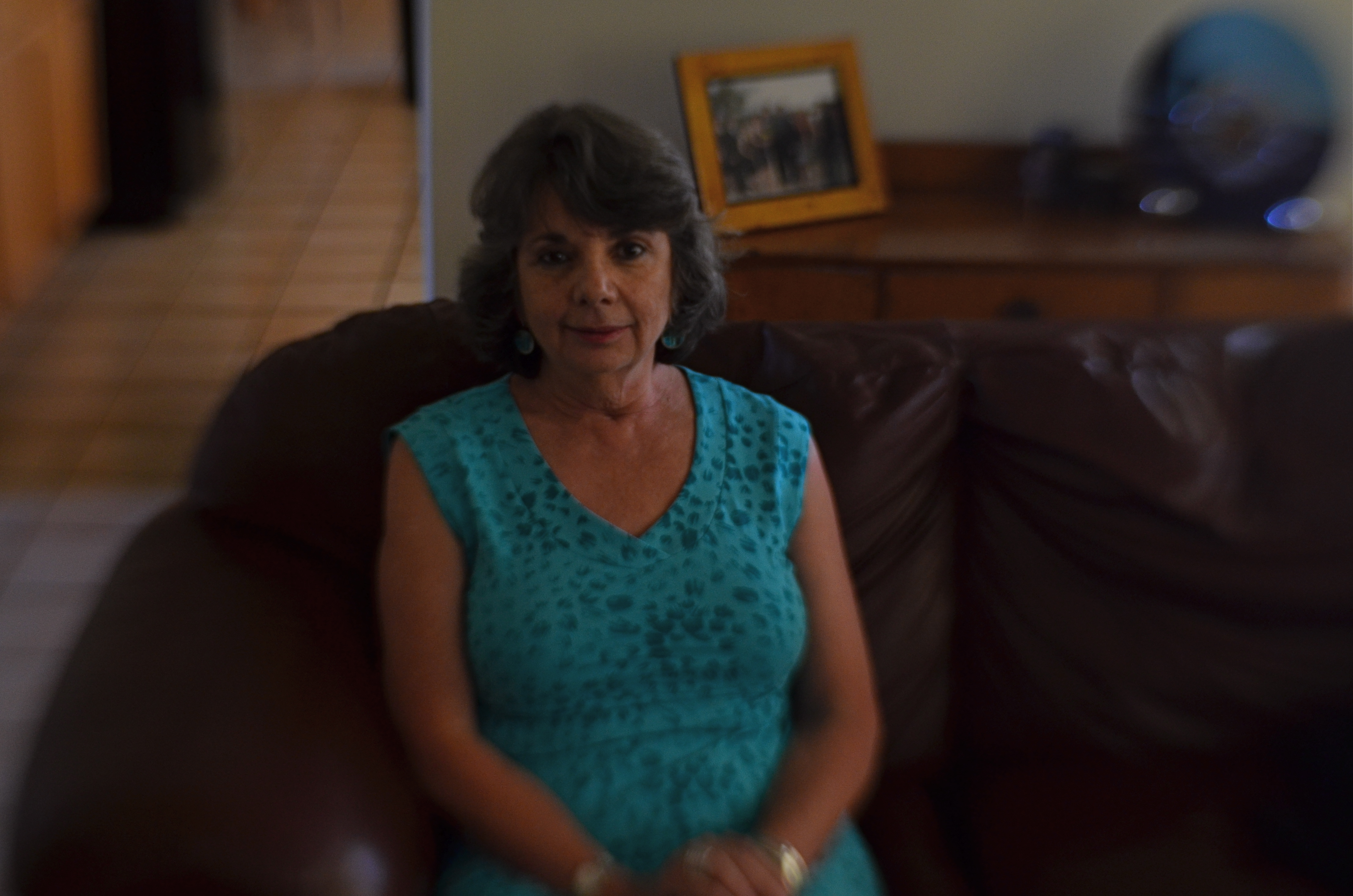
Exact same settings as the prior example, but with a slightly tighter focus of the Lensbaby’s central “sweep spot”.
Art lenses can accentuate what we already know about faces, and specifically, eyes…that is, that they remain vital to the conveyance of the personality in a portrait. In the first sample, Marian’s entire face takes on the general softness of the entire frame, which is taken with a Lensbaby Sweet 35 lens at f/4 but is not sharply focused in the central sweet spot. In the second sample, under the same exposure conditions, there is a conscious effort to sharpen the center of her face, then feather toward softness as you radiate out from there.
The first exposure is big on mood, with Marian serving as just another “still life” object, but it may not succeed as a portrait. The second shot uses ambient softness to keep the overall intimacy of the image, but her face still acts as a very definite anchor. You “experience” the picture first in her features, and then move to the data that is of, let’s say, a lower priority.
Focus is negotiated in many different ways within a photograph, and there is no empirically correct approach to it. However, in portrait work, it’s hard to deny that the eyes have it, whatever “it” may be.
Windows to the soul?
More like main clue to the mystery.
WITNESS IT, DON’T WORK IT
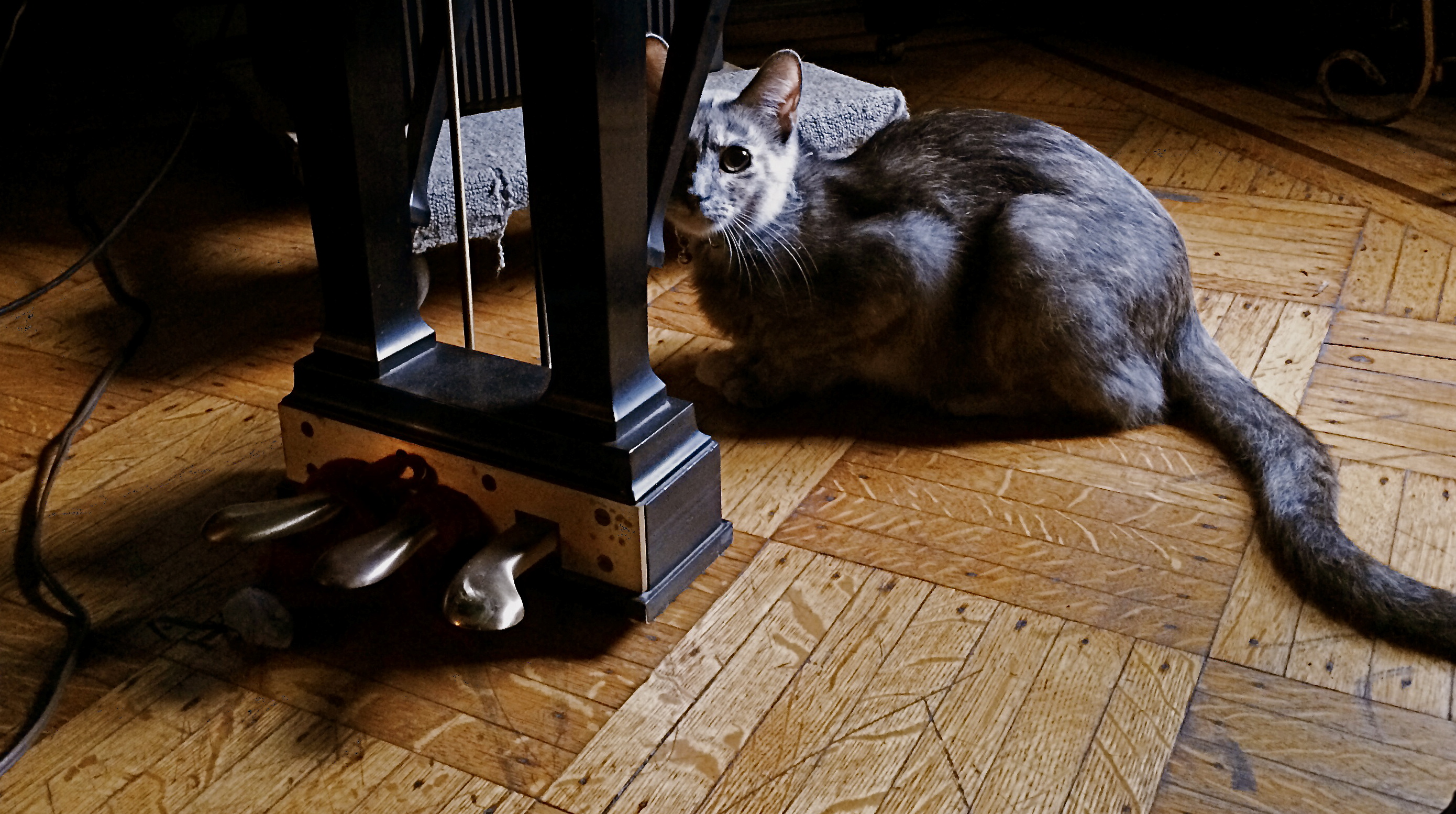
Don’t draw portrait subjects into your energy. Eavesdrop on theirs.
By MICHAEL PERKINS
CHILDREN AND ANIMALS OPERATE IN WORLDS DIFFERENT ENOUGH FROM OUR OWN that they merit a special viewpoint when being photographed. Composing an image designed to enter into their special realities should facilitate that process, giving the viewer the idea that he has gained entry to their realms. The camera’s eye needs to seem to inhabit their actual living space.
I’ve felt for a long time that the formal K-Mart studio method of making a child’s portrait is stiflingly inadequate for plumbing that young person’s real animating spirit. And as for pets, the sheer daily deluge of animal snaps posted globally are served just as badly from over-formalizing or staging. Intimate insight into the self can’t be achieved by generic backdrops, tired props or balanced flash alone. If anything, such systems push the real child further away from view, leaving only a neutral facade in place of the true human. Personality locks eyes with the lens in unguarded, not choreographed, moments.
I’m not saying that no preparation should go into animal or child pictures. I am suggesting that a “snapshot mentality”, backed by lots of shooting experience, can yield results that are more organic, natural and spontaneous. Shoot in a moment but apply what you have learned over a lifetime.
Even the simple practice of shooting on your subject’s level, rather than shooting like a grownup, i.e., downhill toward your subject, can create a connection between your line of sight and theirs. If your kids and kitties are on the floor, go there. Another simple way to create an intimate feel is to have the child or pet dominate the frame. If there is some other feature of the room, from furniture to other people, that does not rivet your audience’s attention to the main subject, cut it out. Many, many portraits fail by simply being too busy.
And, finally, catch your dog, cat, boy or girl doing something he’s chosen to do. Don’t assign him to play with a toy, or ask him to stand here, here, or here. Wait like a professional, then shoot fast like a snapshotter. The more invisible you become, the less distraction you provide. Looking at a child or pet enthralled by something is a lot more interesting than watching him watch you. If you do happen to lock eyes during the process, as in the case of the rather suspicious house cat seen above, steal that moment gladly, but don’t try to direct it.
Don’t draw your portrait subjects into your energy. Eavesdrop on theirs. The pictures will flow a lot more naturally, and you won’t have to work half as hard.
 thenormaleye
INTIMATE STRANGERS
Colin Patrick Perkins, December, 2017
By MICHAEL PERKINS
AT THIS STAGE OF MY LIFE, I find myself playing two conflicting games of “who’s there” as regards my identity in the context of generations. On one hand, in front of the shaving mirror, I can clearly see my grandmother’s face pushing its way forward through my own. On the other, I now can see echoes of the “serious” younger man I thought I was being inscribed across the features of my adult children.
It is too late for me to explore my grandmother’s face for further clues, beyond studying the images others made of her. Sadly, as a photographic subject, she was amazingly opaque. I can’t think of a single image of her that reveals or explains an iota of what I know emotionally of her. Looking down into her soul through a photograph is as unlikely as trying to see through a lead-lined wall. As for myself and my three legatees, we seem not only to be facial re-interpretations of each other, but occasionally, a glimpse into what she was as well. Strange.
My children are all serious contenders, in that they believe that life is to be gotten on with, no dilly-dallying, if you please. They are, in that way, far better agents of change and action than I was. Time has begun to burn childhood’s last traces from their features, but the remaining faces are those of big, deep livers, of striver-survivors. Their own legends are now inscribed on them: they are, focused, intentional, resolute, courageous. I see the concern and apprehension I once wore on my own face: I read the uncertainty of their contending in this world. But I also see every laugh, every explosion of joy, every haywire vision and dream that I knew in myself: I see their first giggles, their earliest amazements.
And so, although my camera can only see a fraction of these things unaided, I am now able to provide that aid: I see now with ever-new eyes. These intimate strangers are my teachers, not my students. My grandmother, cipher of raw endurance that she was, might even have recognized herself in these new iterations of old star-stuff. She speaks to me in the mirror, as if to remind me, get it right, boy. Similarly, my children speak to me in pictures, enjoining me to do the same thing.
Share this:
April 15, 2018 | Categories: Commentary, Conception, Documentary, Uncategorized | Tags: Candids, portraits | Leave a comment