THE LIVING LAB
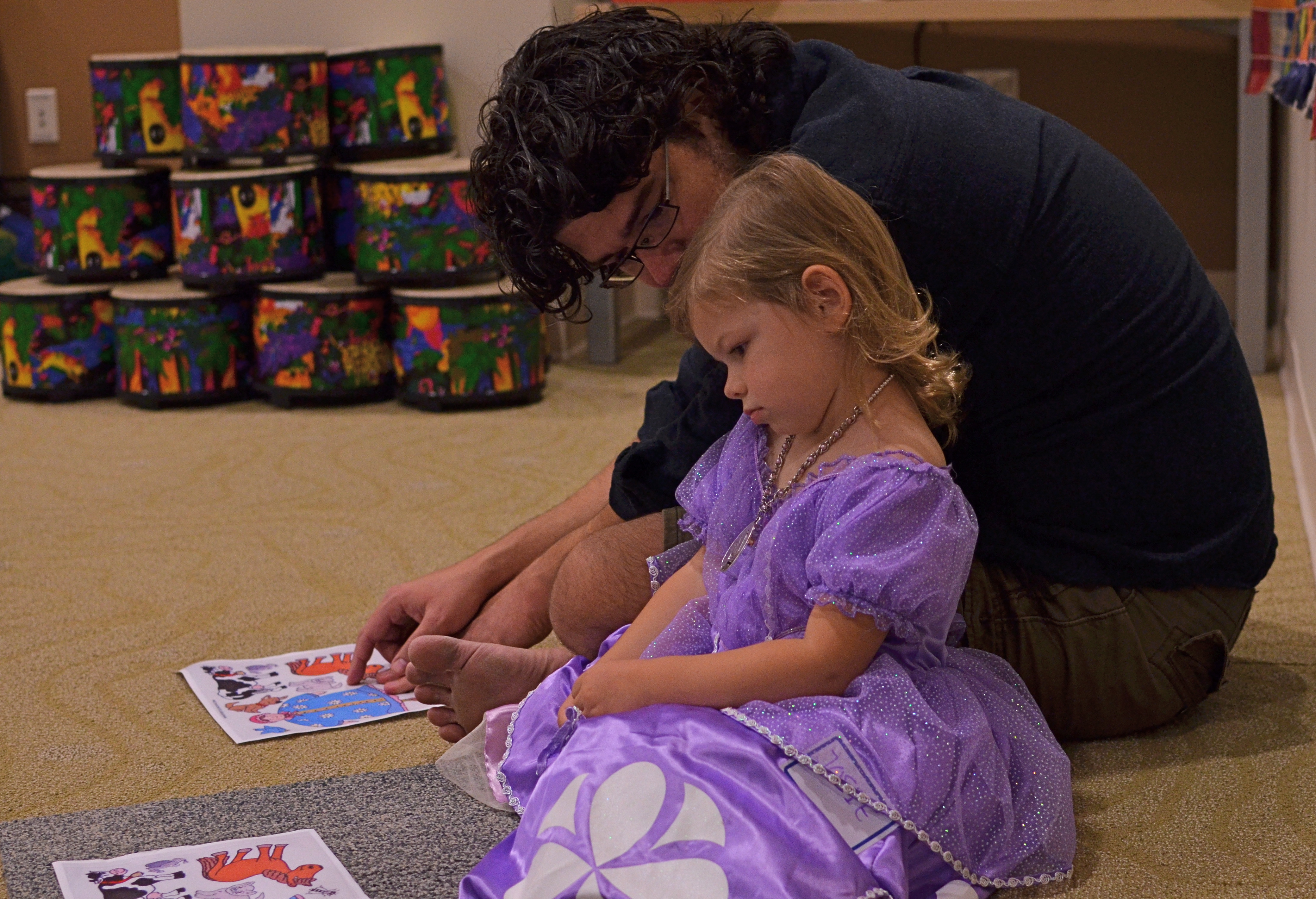
A quick father-daughter conference. 1/60 sec., f/3.5, ISO 640, 35mm.
By MICHAEL PERKINS
THE GREATEST GIFT A SMALL CHILD HAS TO GIVE THE WORLD IS THE VAST, UNMINED ORE OF POSSIBILITY residing inside him. Wow, that really sounded pretentious. But think about it. He or she, as yet, has no wealth to offer, no fully developed talent, no seasoned insight, no marketable skills. It is what he or she has the potential to be that tantalizes us, and our cameras. It is what is just about to be available from these fresh, just-out-of-the-oven souls that amazes us, the degree to which they are not yet….us.
As a photographer, I find there is no better education than to be plunged into the living laboratory of cascading emotion that is a cluster of kids, and the more chaotic and unrehearsed the setting, the richer the results. It’s like shooting the wildest of competitive sports, where everything unfolds in an instant, for an instant. You ride a series of waves, all breaking into their final contours with completely different arcs and surges. There is no map, few guarantees, and just one rule: remain an outsider. The closer to invisibility you can get, the truer the final product.
I volunteer with an educational facility which designs many entry-level discovery workshops and playdates involving young families, requiring a lot of documentary photographs. What would be a chore or an extra duty for overworked administrative staff becomes an excuse, for me, to attend living labs of human experience, and I jump at the chance to walk silently around the edges of whatever adventure these kids are embarked on, whether a simple sing-a-long or a class in amateur dance.
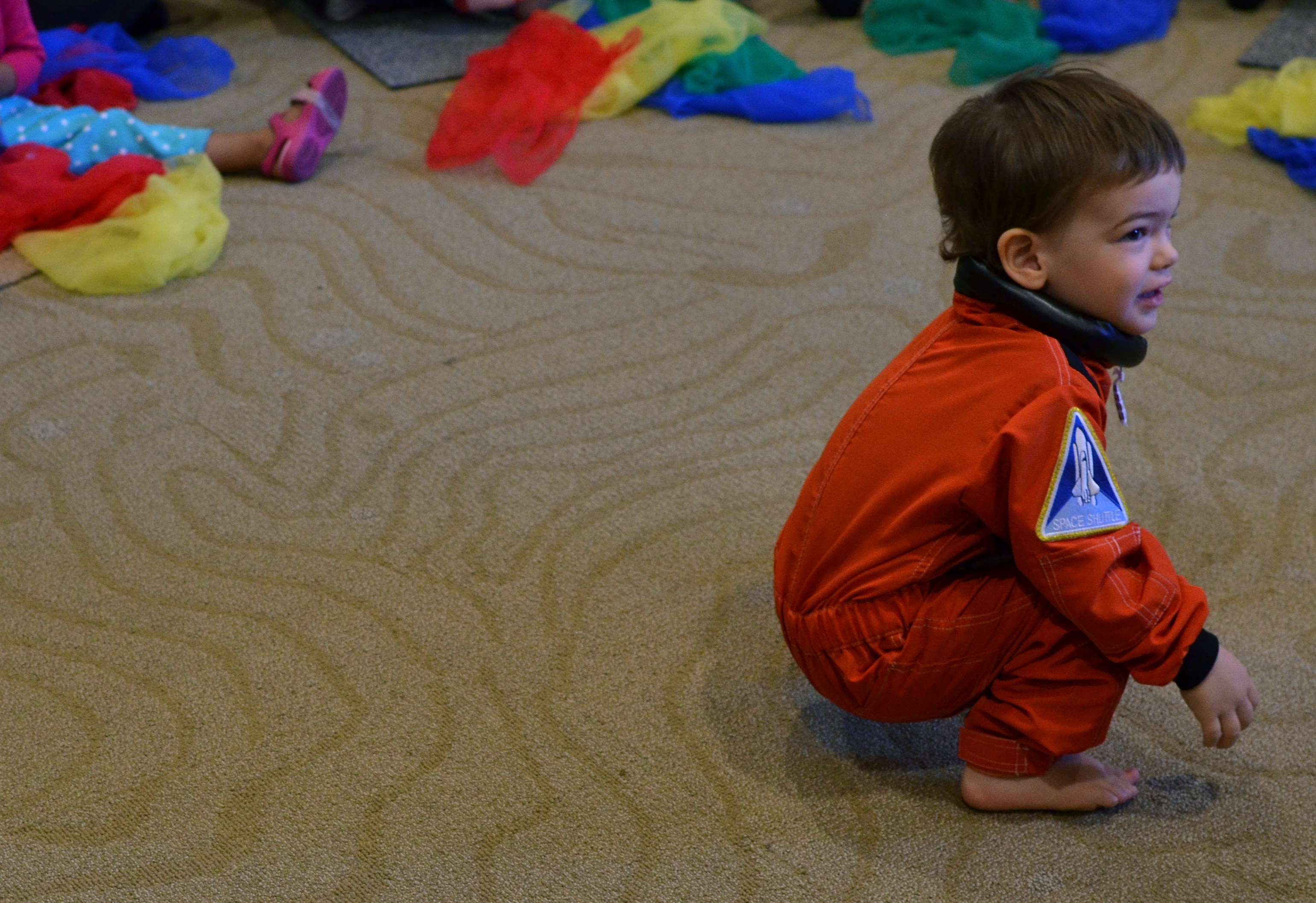
We have lift-off. 1/60 sec., f/3.5, ISO 640, 35mm.
Everything feeds me. It’s a learn-on-the-fly crash course in exposure, composition, often jarring variations in light, and the instantaneous nature of children. To be as non-disruptive as possible, I avoid flash and use a fast 35mm prime, which is a good solid portrait lens. It can’t zoom, however, so there is the extra challenge of getting close enough to the action without becoming a part of it, and in rooms where the lighting is iffy I may have to jack up ISO sensitivity pretty close to the edge of noise. Ideally, I don’t want the kids to be attending to me at all. They are there to react honestly to their friends, parents, and teachers, so there can be no posing, no “look over here, sweetie”, no “cheese”. What you lose in the total control of a formal studio you gain in rare glimpses into real, working minds.
The yields are low: while just anything I shoot can serve as a “document” for the facility’s purposes, for my own needs I am lucky to get one frame in a hundred that gives me something that works technically and emotionally. But for faces like these, I will gladly take those odds.
Who wouldn’t?
Follow Michael Perkins on Twitter @MPnormaleye.
DARK NIGHT, BRIGHT NIGHT
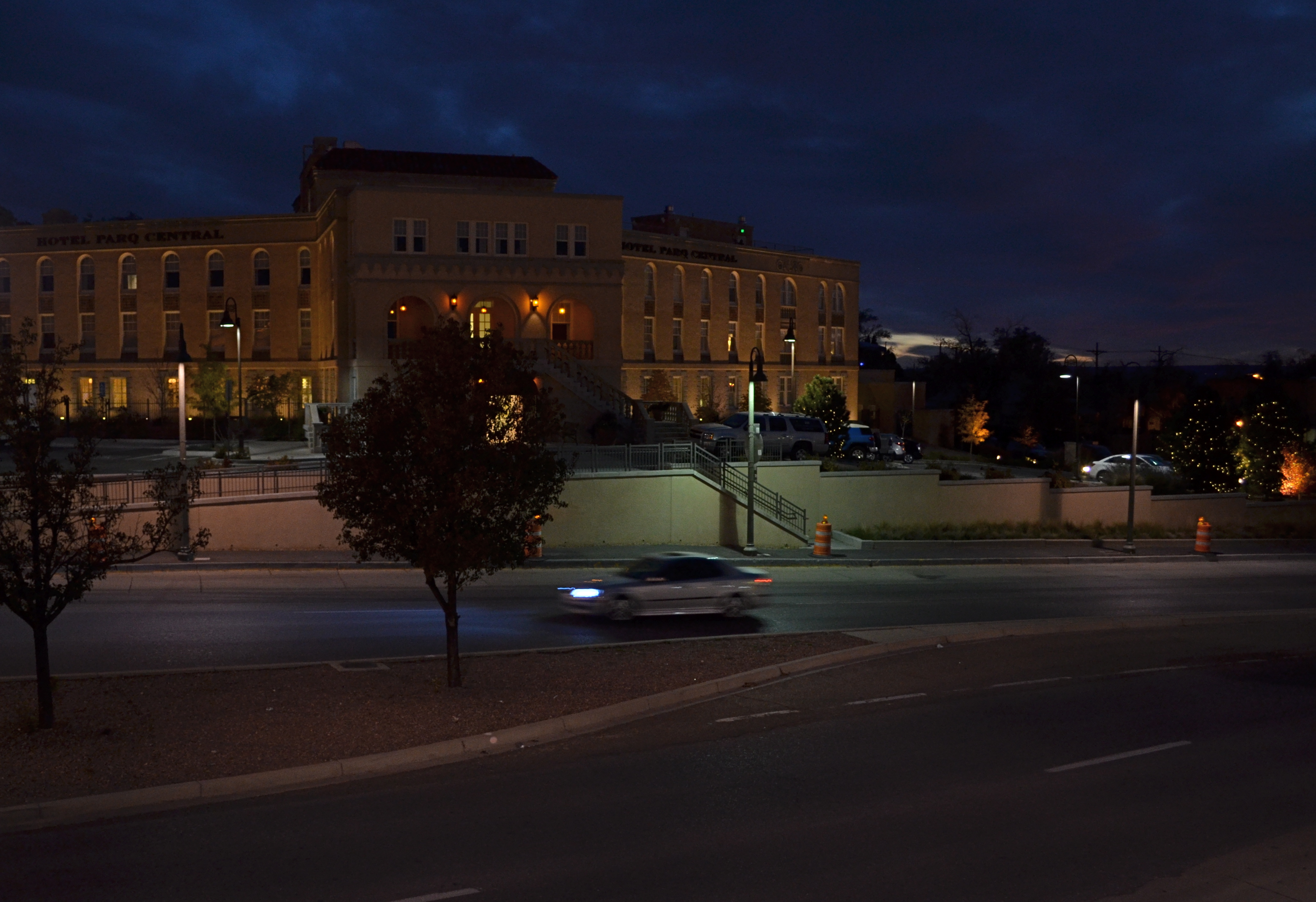
Handheld post-sunset image, shot at 1/30 sec., f/3.5, 18mm, ISO 500.
By MICHAEL PERKINS
OFTEN, THE SHOT YOU GET HAPPENS ON THE WAY TO THE SHOT YOU THOUGHT YOU WANTED. We all like to think we are operating under some kind of “master plan”, proceeding along a Spock-o-logical path of reason, toward a guaranteed ( and stunning) result, but, hey, this is photography, so, yeah, forget all that.
Night shots are nearly always a series of surprises/rude shocks for me, since sculpting or harvesting light after dark is a completely different skill from what’s used in the daytime. Even small tweaks in my approach to a given subject result in wild variances in the finished product, and so I often sacrifice “the shot” that I had my heart set on for the one which blossomed out of the moment.
This is all French for “lucky accident”. I’d love to attribute it to my own adventurous intellect and godlike talent, but, again, this is photography, so, yeah, forget all about that, too.
So, as to the image up top: in recent years, I have pulled away from the lifelong habit of making time exposures on a tripod, given the progressively better light-gathering range of newer digital sensors, not to mention the convenience of not having to haul around extra hardware. Spotting this building just after dusk outside my hotel the other night, however, I decided I had the time and vantage point to take a long enough exposure to illuminate the building fully and capture some light trails from the passing traffic.
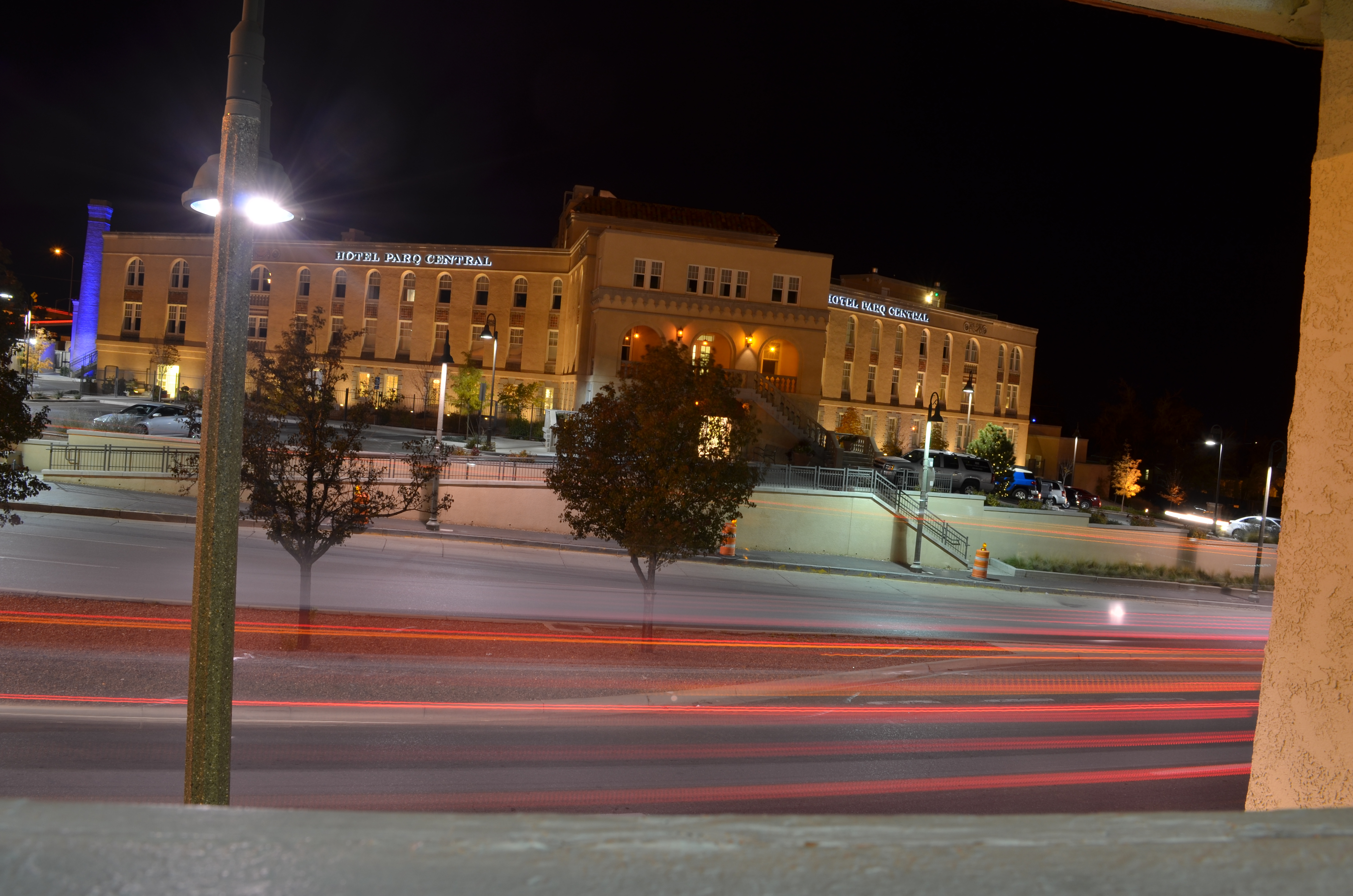
Same subject, almost same time of night, time-exposed on a tripod. 8 sec., f/13, 18mm, ISO 100.
Minutes before setting up my ‘pod, I had taken an earlier snap with nothing but available light, a relatively slow shutter speed and an ISO of 500 , but hadn’t seriously looked at it: traditional thinking told me I could do better with the time exposure. However, when comparing the two shots later, the longer, brighter exposure drained the building of its edgier, natural shadow-casting features, versus the edgier, somber, burnt-orange look of it in the snapshot. The handheld image also rendered the post-dusk sky as a rich blue, while the longer shot lost the entire sky in black. I wanted the building to project a slight air of mystery, which the longer shot completely bleached away. I knew that the snapshot was a bit noisy, but the better overall “feel” of the shot made the trade-off easier to live with. I could also survive without the light trails.
Time exposures render an idealized effect when rendering night-time objects, not an accurate recording of “what I saw”. Continual experimentation can sometimes modulate that effect, but in this case, the snatch-and-grab image won the day. Next time, everything will be different, from subject to result. After all, this is photography.
TAKE WHAT YOU NEED AND LEAVE THE REST
By MICHAEL PERKINS
LOOKING OVER MY LIFETIME “FAIL” PHOTOGRAPHS, FROM EARLIEST TO LATEST, it’s pretty easy to make a short list of the three main problems with nearly all of them, to wit:
Too Busy.
Too Much Stuff Going On.
I Don’t Know Where I’m Supposed To Be Looking.
Okay, you got me. It’s the same problem re-worded three ways. And that’s the point, not only with my snafus but with nearly other picture that fails to connect with anybody, anywhere. As salesmen do, photographers are always “asking for the order”, or, in this case, the attention of the viewer. Often we can’t be there when our most earnest work is seen by others. If the images don’t effectively say, this is the point of the picture, then we haven’t closed the deal.
It’s not simple, but, yeah, it is that simple.
If we don’t properly direct people to the main focus of our story, then we leave our audiences wandering in the woods, looking for a way out. Is it this path? Or this one?
In our present era, where it’s possible to properly expose nearly everything in the frame, we sometimes lose a connection to the darkness, as a way to cloak the unimportant, to minimize distraction, to force the view into a succinct part of the image. Nothing says don’t look here like a big patch of black, and if we spend too much time trying to show everything in full illumination, we could be throwing away our simplest and best prop.
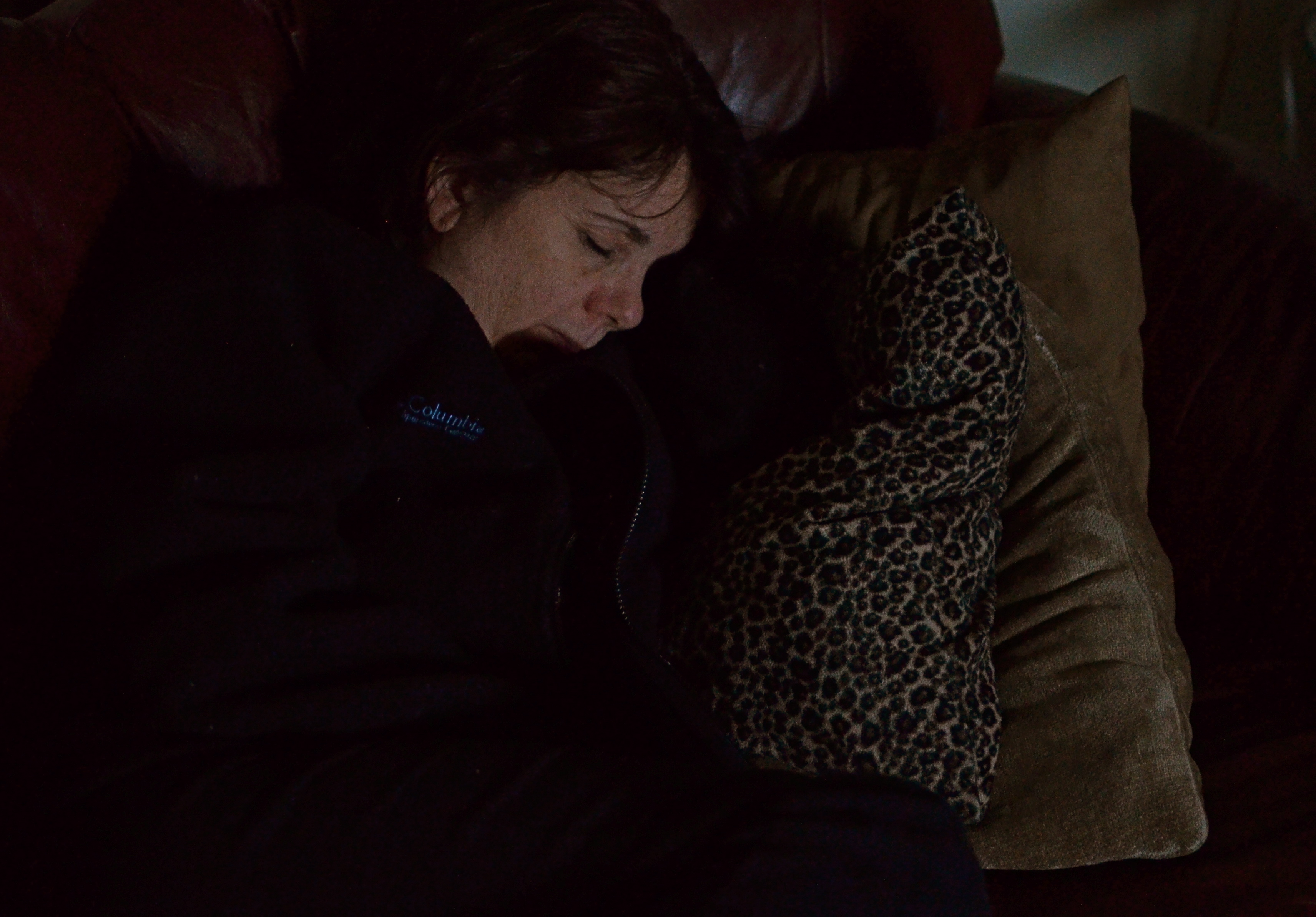
Let sleeping wives lie. Work the darkness like any other tool. 1/40 sec., f/1.8, ISO 1250 (the edge of pain), 35mm.
In the above picture of my beautiful Marian, I had one simple mission, really. Show that soft sleeping face. A little texture from the nearby pillows works all right, but I’m just going to waste time and spontaneity rigging up a tripod to expose long enough to show extra detail in the chair she’s on, her sweatshirt, or any other surrounding stuff, and for what? Main point to consider: she’s sleeping, and (trust me) sleeping lightly, so one extra click might be just enough to end her catnap (hint: reject this option). Other point: taking extra trial-and-error shots just to show other elements in the room will give nothing to the picture. Make it a snapshot, jack up the ISO enough to get her face, and live with the extra digital noise. Click and done.
For better or worse.
Composition-wise, that’s often the choice. If you can’t make it better, for #%$&!’s sake don’t make it worse.
Follow Michael Perkins on Twitter @MPnormaleye.
NOT A LEG TO STAND ON
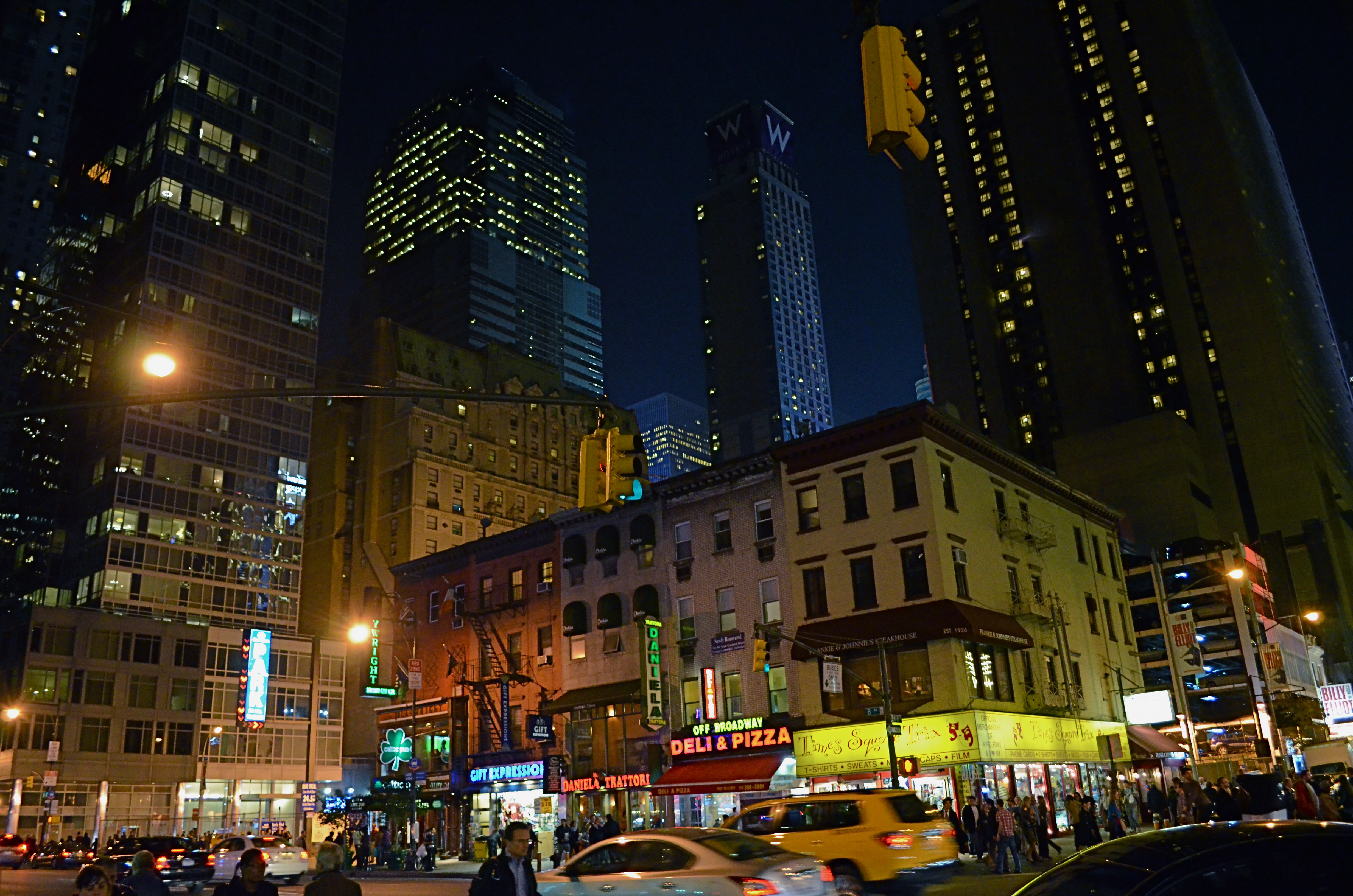
No tripod, no problem. Minimal noise even at 3200 ISO. Handheld in NYC’s theatre district at 1/50 sec., f/3.5, 18mm.
By MICHAEL PERKINS
ADVANCES IN PHOTOGRAPHY, WHETHER IN THE SCIENCES OF LENSES, FILMS, SENSORS OR TECHNIQUE, ALL HAVE, AS THEIR AIM, THE SAME RESULT: to make it easier to take more pictures…more often, and with fewer barriers between what you see and what you can catch in the box. Taking more pictures means increasing the yield of wonderful pictures, even if 95% of what you shoot is doody, and getting to the decisive moment of the “click” beats any other imperative. Any gimmicks or toys that don’t increase your readiness to shoot are wasteful detours.
This means that we are constantly weeding out dead growth, trimming away systems or ideas that have outgrown their usefulness. Rusty ways of doing things that cost us time, require extra steps, and eventually rob us of shots.
And that’s why it’s the age of the tripod is nearly over.
Getting past our artistic bias toward the ‘pod as a vital tool in the successful creation of images is tough; we still associate it with the “serious” photographer, even though today’s cameras solve nearly all of the problems tripods were once reliable in offsetting. What we’re left with, regarding the tripod’s real value, then, is old brain wiring and, let’s face it, sentiment.
More importantly, to my first point, the tripod is not about, “Okay, I’m ready!”. It’s about, “Hold on, I’ll be ready in a minute.” Worse yet, to the petty dictators who act as the camera police in churches, monuments, retail establishments and museums, they scream, “you can’t be here”. Call me crazy, but I still think of lack of access (spelled “getting kicked out”) as, well, sort of a hindrance to photography.
Just sayin’.
Tripods were, once upon a time, wonderful protection again several key problems, among them: slow film/sensor speed, vibration risk, and sharpness at wider apertures, all of which have long since been solved. Moreover, tripods may tempt people to shoot at smaller apertures, which could lead to softer overall images.
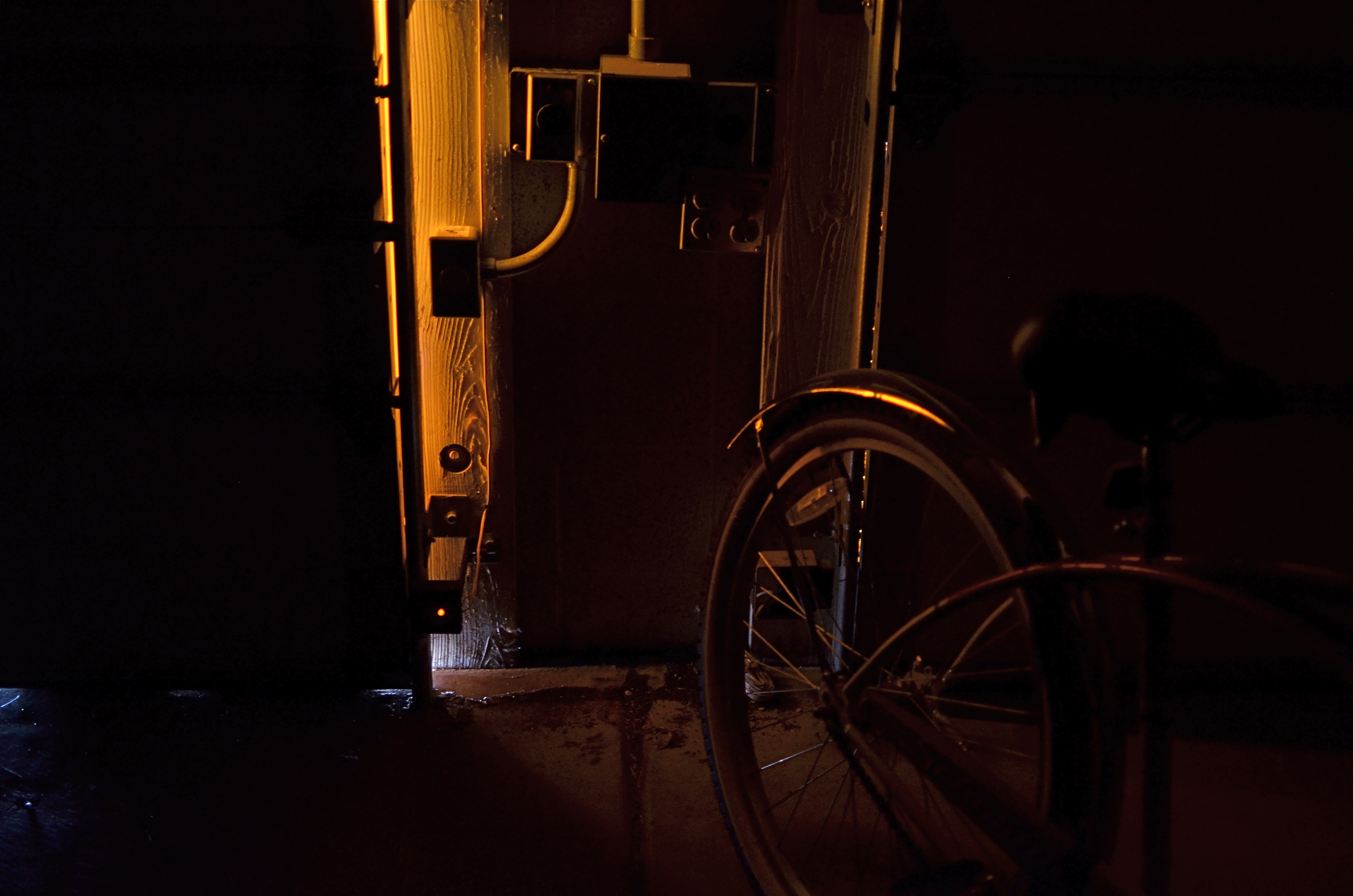
Had I stopped to set up a tripod here, my light, and my chance, would have melted away. 1/15 sec,. handheld, with a 35mm prime, wide-open, at f/1.8, ISO 640.
I readily concede that tripods are absolutely vital for extended night exposures, light painting, miniature work, and some other very selective professional settings. But for more than a century, ‘pods have mostly been used to compensate where our cameras were either flawed or limited. So, if those limits and flaws have faded sufficiently to allow you to take a nighttime snap, handheld at f/1.8, with a 1/15 shutter speed and the virtual guarantee of a well-lit shot, with negligible noise, why would you carry around twice the gear, pretty much ensuring that you would lose time, flexibility, and opportunities as a result?
The tripod has served us well, as was once true of flash powder, glass plates, even the torturous neck braces used to hold people’s heads in position during long exposures. But it no longer has a leg to stand on.
Follow Michael Perkins on Twitter @MPnormaleye.
A BRIEF AUDIENCE WITH THE QUEEN
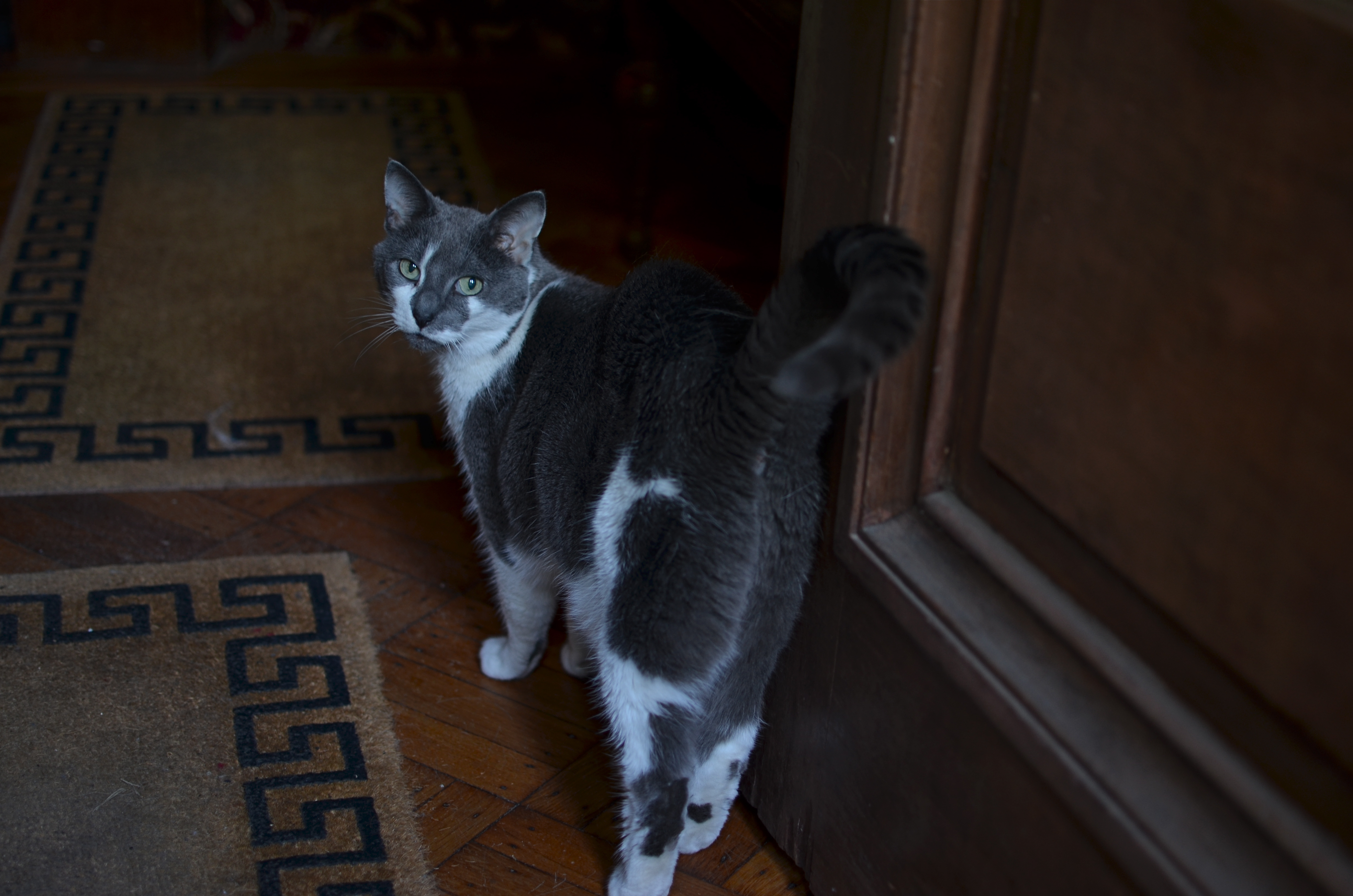
What, are YOU still here? 1/40 sec., f/1.8, ISO 100, 35mm.
By MICHAEL PERKINS
THERE IS ONLY ONE KIND OF PICTURE YOU WILL EVER TAKE OF A CAT, and that is the one she allows you to take. Try stealing an image from these spiritual creatures against their will, and you will reign over a bitter kingdom of blur, smear, and near misses.
It’s trickier to take photos of the ectoplasmic projections of departed relatives. But not by much.
I recently encountered this particular lady in a Brooklyn brownstone, a gorgeous building, but not one that is exactly flooded with light, even on a bright day. There are a million romantically wonderful places for darkness to hide inside such wonderful old residences, and any self-respecting feline will know how to take the concept of “stealth” down a whole other road. The cat in the above photo is, believe me, better at instant vaporization and re-manifestation than Batman at midnight in Gotham. She also has been the proud unofficial patrol animal for the place since Gawd knows when, so you can’t pull any cute little “chase-the-yarn-get-your-head-stuck-in-a-blanket” twaddle that litters far too much of YouTube.
You’re dealing with a pro here.
Her, not me.
Plus she’s from Brooklyn, so you should factor some extra ‘tude into the equation.
The only lens that gives me any luck inside this house is a f/1.8 35mm prime, since it’s ridiculously thirsty for light when wide open and lets you avoid the noticeable pixel noise that you’d get jacking up the ISO in a dark space. Thing is, at that aperture, the prime also has a razor-thin depth of field, so, as you follow the cat, you have to do a lot of trial framings of the autofocus on her face, since getting sharp detail on her entire body will be tricky to the point of nutso. And of course, if you move too far into shadow, the autofocus may not take a reading at all, and then there’s another separate complication to deal with.
The best (spelled “o-n-l-y”) solution on this particular day was to squat just inside the front foyer of the house, which receives more ambient light than any other single place in the house. For a second, I thought that her curiosity as to what I was doing would bring her into range and I could get what I needed. Yeah, well guess again. She did, in fact, approach, but got quickly bored with my activity and turned to walk away. It was only a desperate cluck of my tongue that tricked her into turning her head back around as she prepared to split. Take your stupid picture, she seemed to say, and then stop bothering me.
Hey, I ain’t proud.
My brief audience with the queen had been concluded.
I’ll just show myself out……
Follow Michael Perkins on Twitter @mpnormaleye.
LESS SHOWS MORE
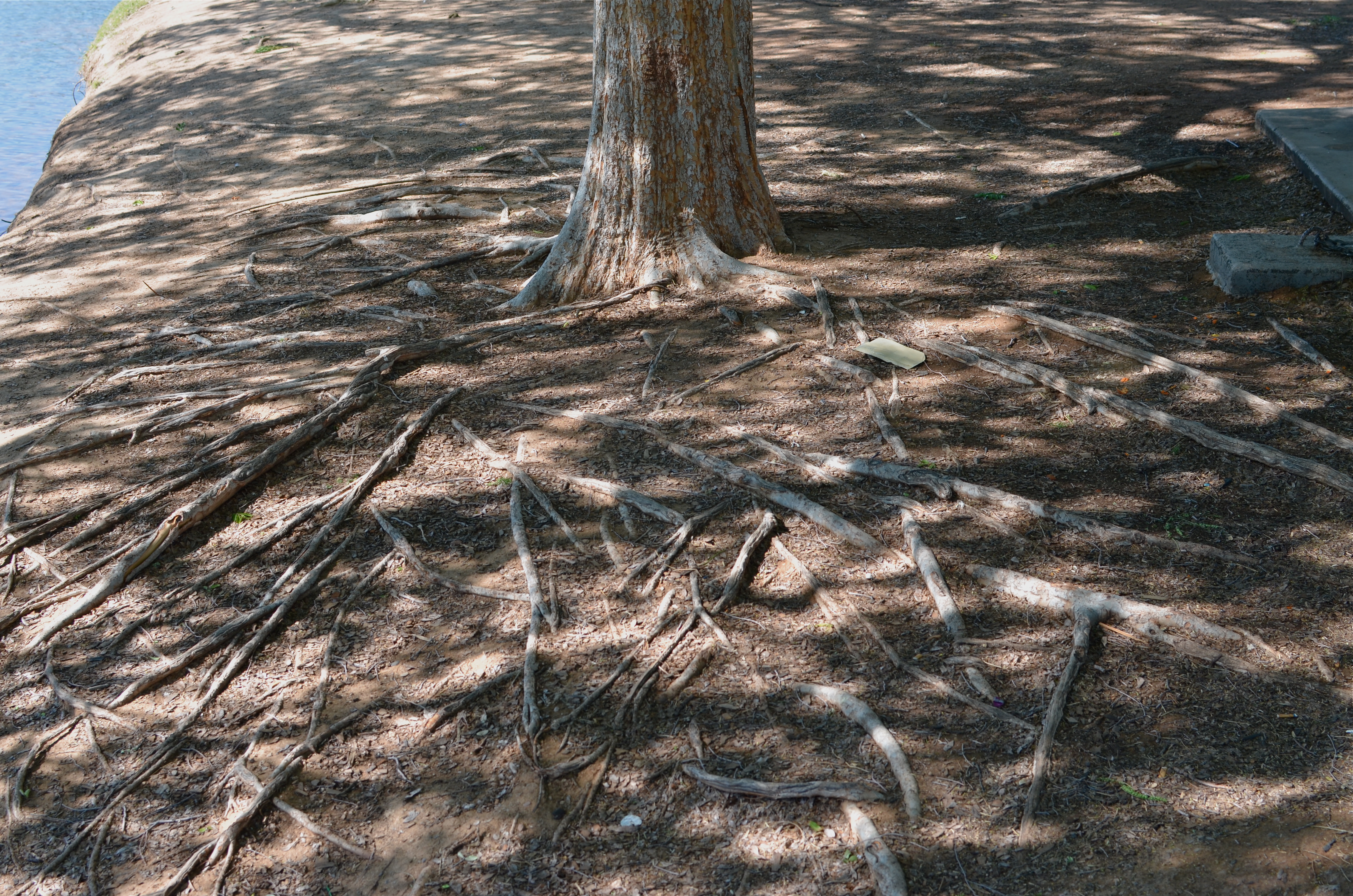
You don’t have to reveal every stray pebble or every dark area in perfect definition to get a sense of texture in this shot. 1/160 sec., f/5.6, ISO 100, 35mm.
by MICHAEL PERKINS
THERE IS A WRONG-HEADED IDEA OUT THERE THAT ALL VISUAL OUTCOMES IN PHOTOGRAPHY SHOULD BE EQUAL. That’s a gob of words, so here’s what I’m getting at: higher ISO sensitivity, post-processing and faster lenses have all conspired, of late, to convince some of us that we can, and should, rescue all detail in even the most constrasty images. No blow-outs in the sky, no mushiness in the midrange, no lost information in the darkest darks. Everything in balance, every iota of grain and pattern revealed.
Of course, that is very seductive. Look at a well-processed HDR composite made from multiple bracketed images, in which the view out the window is deep and colorful, and the shadowy interiors are rich with texture. We’ve seen people achieve real beauty in creating what is a compelling illusion. But, like every other technique, it can come to define your entire output.
It’s not hard to see shooters whose “style” is actually the same effect applied to damn near all they shoot, like a guy who dumps ketchup on everything his wife brings to the table. When you start to bend everything you’re depicting to the same “look”, then you are denying yourself a complete range of solutions. No one could tell you that you always have to shoot in flourescent light, or that deep red is the only color that conveys passion, so why let yourself feel trapped in the habit of using HDR or other processes to always “average out” the tonal ranges in your pictures? Aren’t there times when it makes sense to leave what I will call “mystery” in the undiscovered patches of shadow or the occasional areas of over-exposure?
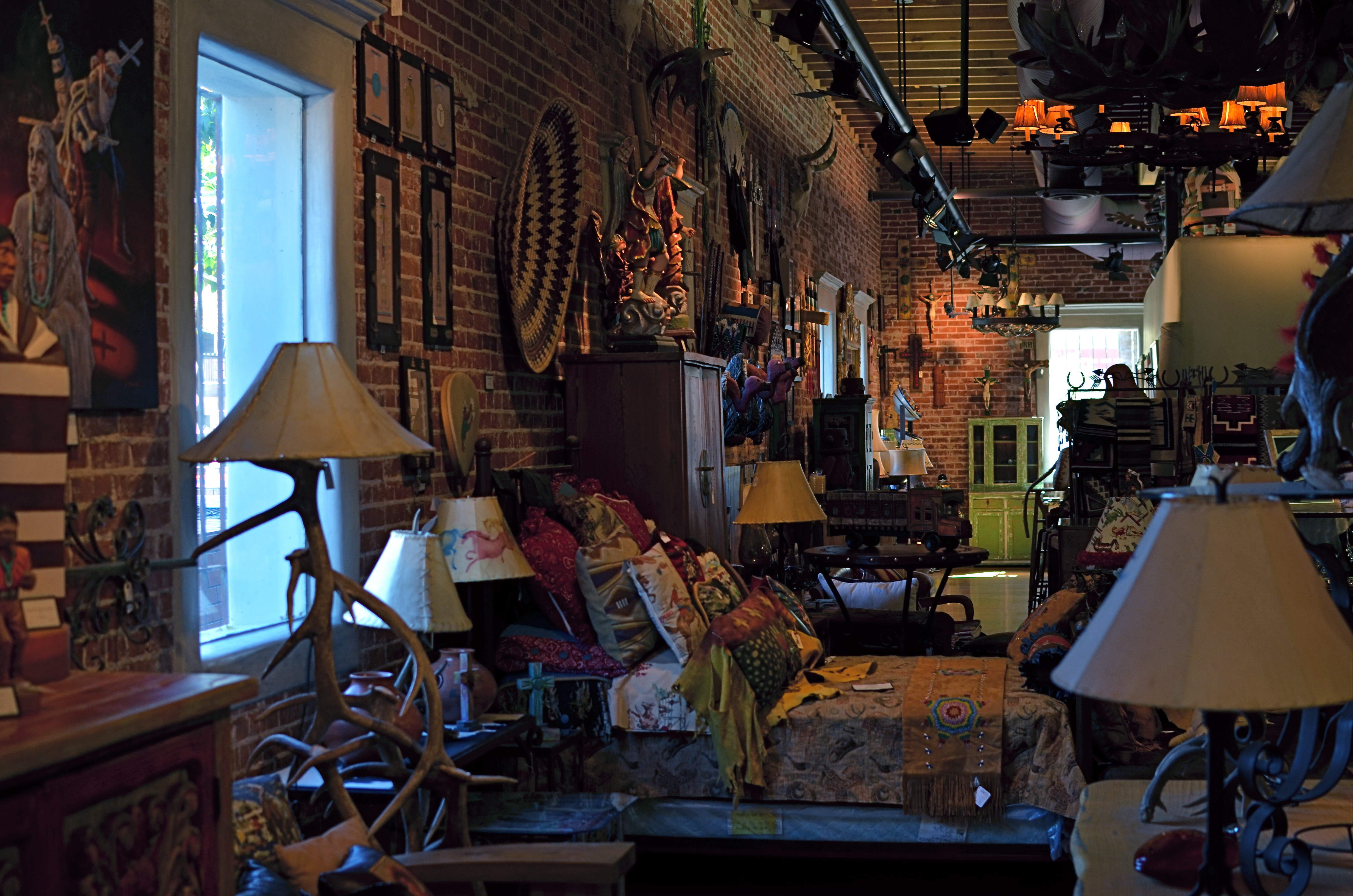
Letting some areas of a frame remain in shadow actually tamps down the clutter in a busy image like this. 1/60 sec., f/3.2, ISO 100, 35mm.
I am having fun lately leaving the “unknowns” in mostly darker images, letting the eye explore images in which it can NOT clearly make out ultimate detail in every part of the frame. In the mind’s eye, less can actually “show” more, since the imagination is a more eloquent illustrator than any of our wonderful machines. Photography began, way back when, rendering its subjects as painters did, letting light fall where it naturally landed and leaving the surrounding blacks as deep pools of under-defined space. Far from being “bad” images, many of these subtle captures became the most hypnotic images of their era. It all comes down to breaking rules, then knowing when to break even the broken rule as well.
Within this post are two of the latest cases where I decided not to “show it all”. Call it the photo equivalent of a strip-tease. Once you reveal everything, some people think the allure is over. The point I’m making is that the subject should dictate the effect, never the other way around. Someone else can do their own takes on both of these posted pictures, take the opposite approach to everything that I tried, and get amazing results.
There never should be a single way to approach a creative problem. How can there be?
Follow Michael Perkins on Twitter @thenormaleye.
Related articles
- HDR Under Control is a Thing of Beauty (thewayeyeseesit.com)
ONE LESS MESS TO SWEAT
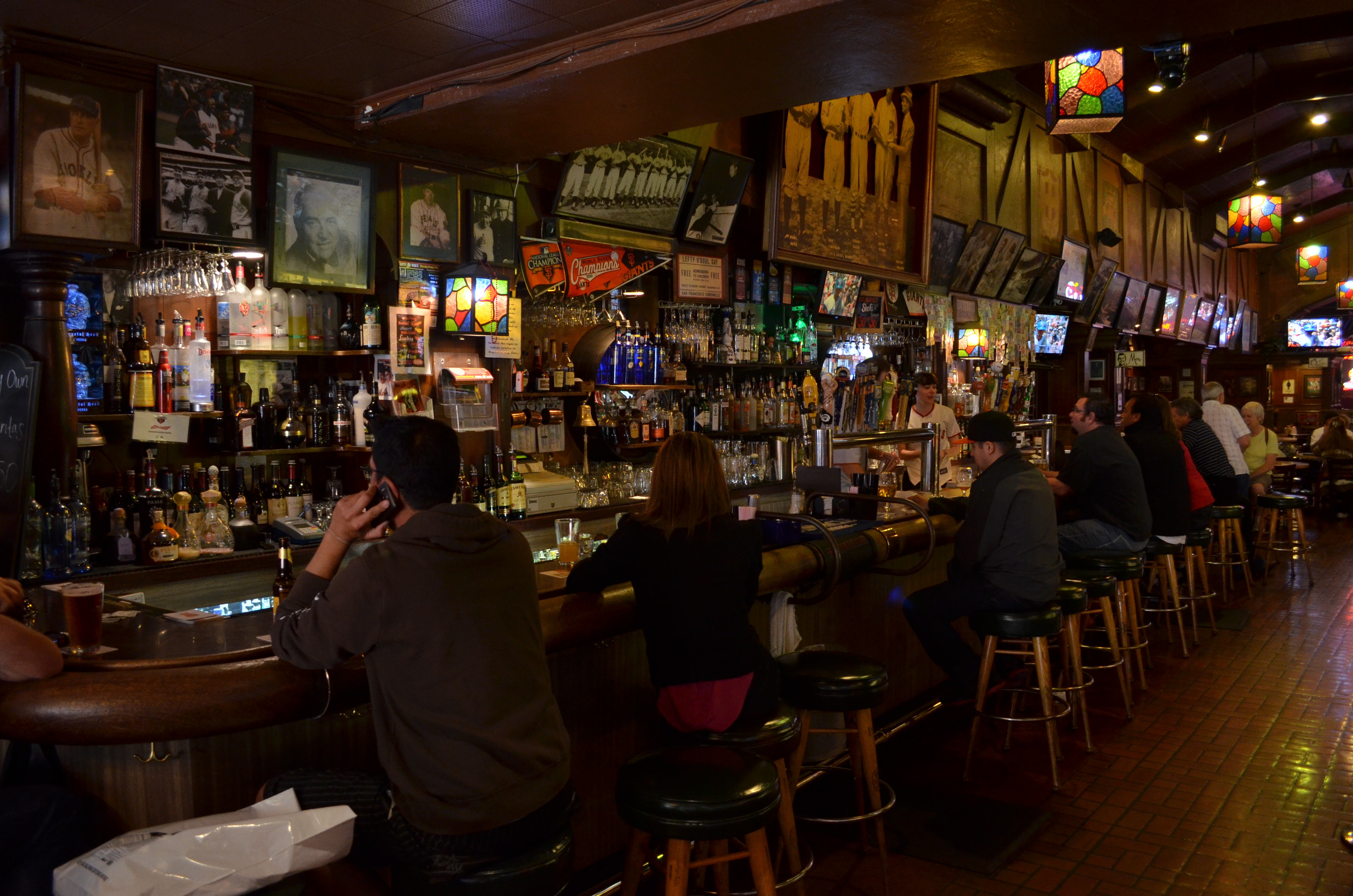
Lefty O’Doul’s bar, near Union Square in San Francisco. Lovely place, great grub, but a dark cavern where light goes to die. Modern DSLRs allow this to be a handheld shot with a minimum of noise: 1/20 sec., 5/5, ISO 640, 18mm.
by MICHAEL PERKINS
EVERY TIME I READ SINCERE ARGUMENTS FOR THE SUPERIORITY OF FILM OVER DIGITAL, the debate seems a little more lopsided on the side of sentiment than on the side of reason. The whole thing can make me a little….tired. As I write this, Arizona Highways has just released its annual collection of the fifty best images ever published in that august standard of print photography, and, yep, you guessed it, only about the last three images are digital. It’s an aesthetic bias which AH will only abandon once the entire rest of the world regards film as a quaint artifact of The Good Ole Days, but, God bless ’em, they are true believers. As for myself, I am in no huge hurry to see film go the way of the Hostess Twinkie. However, I do readily admit that it’s my heart casting that vote, and not my head.
Emulsions or pixels? Your preference still comes down to what you need to do and how you need to do it. That means that many of us will choose one medium or the other because it either enables or constricts our art…..in other words, a simply practical judgement, not one based on our fondness for what we are used to. Earlier this year, I applauded National Public Radio’s commemoration of the 150th anniversary of the battle of Antietam (one of the first Civil War skirmishes to be photographically documented), by commissioning their own photog to shoot some of the same battle sites as Alexander Gardner had done in 1862, using the same kind of coated glass plate process. Were the results fascinating? Certainly. Are they likely to create a run on camera stores for collodion? Don’t hold your breath.
Photography is a constant process of knocking down more obstacles between what you are shooting at and the imagination you are shooting with. You need to keep the camera from fighting you, due to its inability to react, think, discriminate or judge the way that only you can. To that end, you have to be in a constant flow of improvement, simply because your mind is always traveling on a faster track than even the best camera, and that instrument must be corralled into helping, and not hindering, the task of getting your vision into that box.
One of the most helpful such advances for me has been the accelerated performance of DSLRs in low-light situations and the improvement in picture quality at increasingly higher ISO settings. In the film world of “ago”, if you wanted to shoot at 800 speed ASA, you had to have a camera loaded with 800 speed film. If you then, five minutes later, wanted to shoot at 100 speed ASA you would need to reload your camera with that speed of film, or have a whole separate camera that was loaded with it. And so on.
Not the best for flexibility. Or spontaneity.
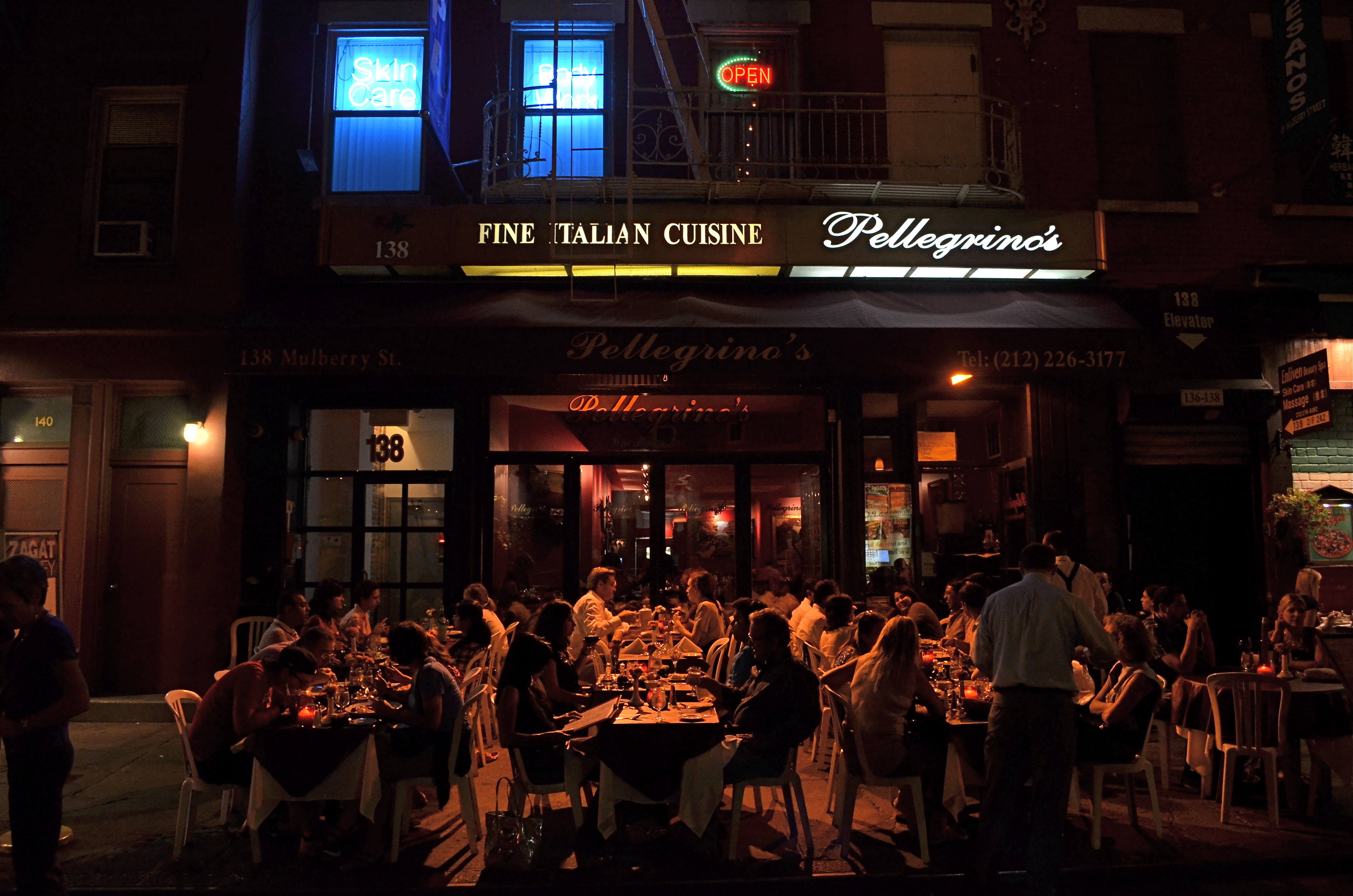
Pellegrino’s Restaurant, Little Italy, New York City. Handheld. Street photography gets an amazing boost from cameras that feed on low light. 1/50 sec., f/5.6, ISO 640, 18mm.
This rocketing forward of the technology that gives us sharp, nearly noise-free pictures, handheld and at fast exposure times, in all but the most hopeless lighting scenarios, is now filtering down to even the most rudimentary camera phones.It’s not alarmist or false to declare that the days of the compact point-and-shoot are officially numbered. With ISO now delivering better results in so many shooting situations, I can now go nearly anywhere and have a shot at getting a shot. That puts me at a distinct advantage over the most proficient shooters and the best cameras of barely a generation ago.
Does that guarantee I’ll bring back a winner? Nope. But the point is, more and more, if I don’t get the shot, it’s on me. I can’t blame my failure on balky technology, at least not in this particular case.
And it means I can spend more time shooting, dreaming, doing, instead of crossing my fingers and hoping.
Related articles
- Camera+ 3.6 is here: “It’s a camera, not a flight simulator!” (taptaptap.com)
- Is a DSLR right for you? (fatwallet.com)
HELLO DARKNESS MY OLD FRIEND
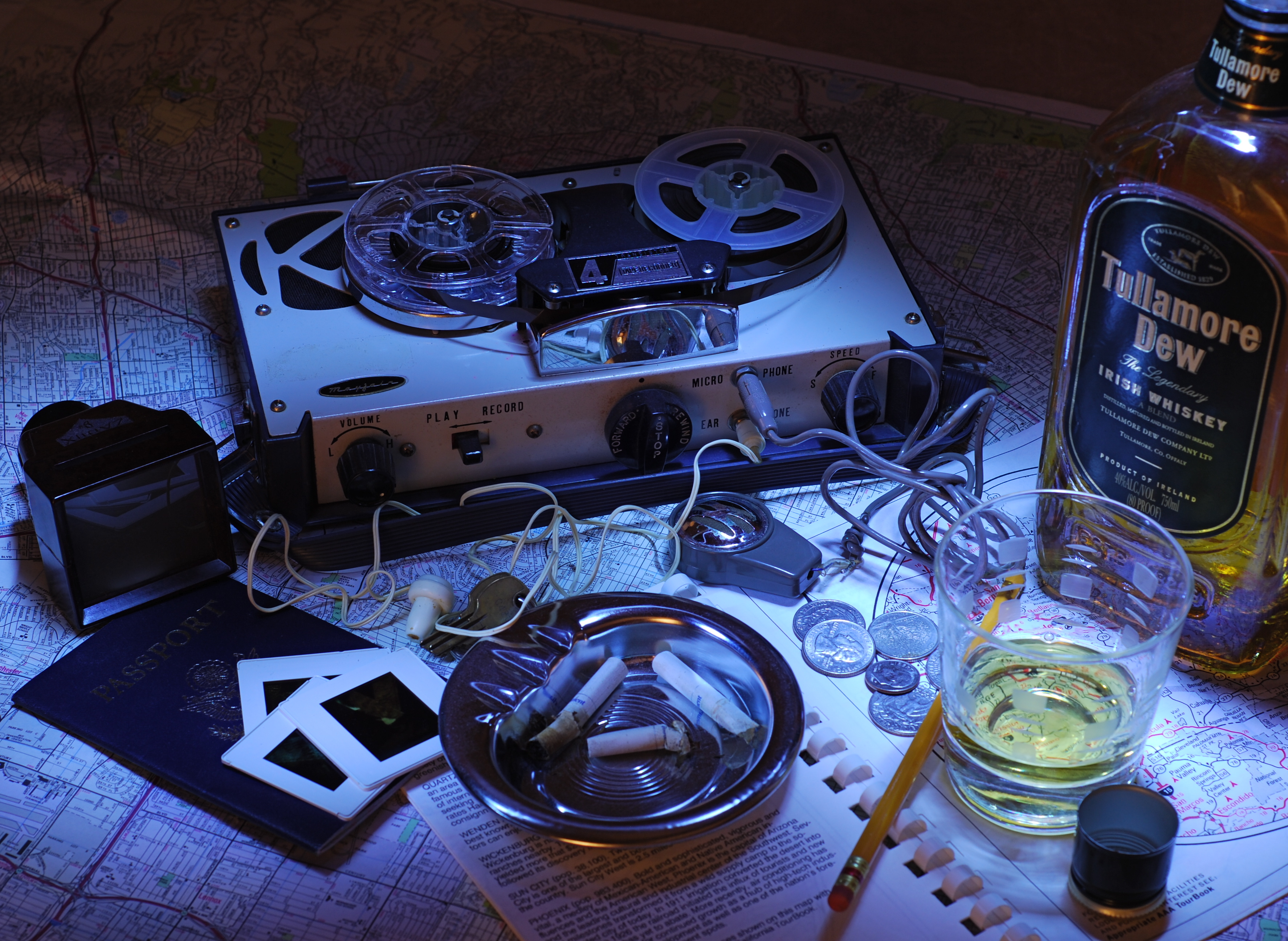
This still life, designed to recall the “cold war” feel of the tape recorder and other props, was shot in a completely darkened room, and lit with sweeps and stabs of light from a handheld LED, used to selectively create the patterns of bright spots and shadows. Taken at 19 seconds, f/6.3, ISO 100 at 50mm.
By MICHAEL PERKINS
MOST OF THE PICTURES WE TAKE involve shaping and selecting details from subjects that are already bathed, to some degree, in light. “Darkness” is in such images, but it resides peripherally in the nooks and crannies where the light didn’t naturally flow or was prevented from going. Dark is thus the fat that marbles the meat, the characterizing texture in a generally bright palette of colors. It is seasoning, not substance.
By contrast, shooting that begins in total darkness means entering a realm of mystery, since you start with nothing, a blank and black slate, onto which you selectively import some light, not enough to banish the dark, but light that suggests, implies, hints at definition. For the viewer, it is the difference between the bright window light of a chat at a mid-afternoon cafe and the intimacy of a shared huddle around a midnight campfire. What I call “absolute night” shots are often more personal work than just managing to snap a well-lit public night spot like an urban street or an illuminated monument after dusk. It’s teaching yourself to show the minimum, to employ just enough light to the tell the story, and no more. It is about deciding to leave out things. It is an editorial, rather than a reportorial process.
The only constants about “absolute dark” shooting are these:
You need a tripod-mounted camera. Your shutter will be open as long as it takes to create what you want, and far longer than you can hope to hold the camera steady. If you have a timer and/or a remote shutter release, break those out of the bag, too. The less you touch that camera, the better. Besides, you’ll be busy with other things.
Set the minimum ISO. If you’re quickly snapping a dark subject, you can compromise quality with a higher and thus slightly noisier ISO setting. When you have all the time you need to slowly expose your subject, however, you can keep ISO at 100 and banish most of that grain. Some cameras will develop wild or “hot” pixels once the shutter’s open for more than a minute, but for many hand-illuminated dark shots, you can get what you need in far less than that amount of time.
Use some kind of small hand-held illumination. Something about the size of a keychain-sized LED, with an extremely narrow focus of very white light. Pick them up at the dollar store and get a model that works well in your hand. This is your magic wand, with which, after beginning the exposure in complete darkness, you will be painting light onto various parts of your subject, depending on what kind of effect you want. Get a light with a handy and responsive power switch, since you may turn the light on and off many times during a single exposure.
You can use autofocus, even in manual mode, but compose and lock the focus when all the room lights are on. Set it, forget it, douse the power and get to work.
Which brings us to an important caveat. Even though you are avoiding the absolute blast-out of white that would result if you were using a conventional flash, lingering over a particular contour of your subject for more than a second or so will really burn a hot spot into its surface, perhaps blowing out an entire portion of the shot. Best way to curb this is to click on, paint, click off, re-position, click back on and repeat the sequence as needed. Another method could involve making slow but steady passes over the subject….back and forth, imagining in your mind what you want to see lit and what you want to remain dark. It’s your project and your mood, so you’ll want to shoot lots of frames and pause between each exposure to adjust what you’re doing, again based on what kind of look you’re going for.
Beyond that, there are no rules, and, over the course of a long shoot, you will probably change your mind as to what your destination is anyhow. No one is getting a grade on this, and the results aren’t going in your permanent file, so have fun with it.
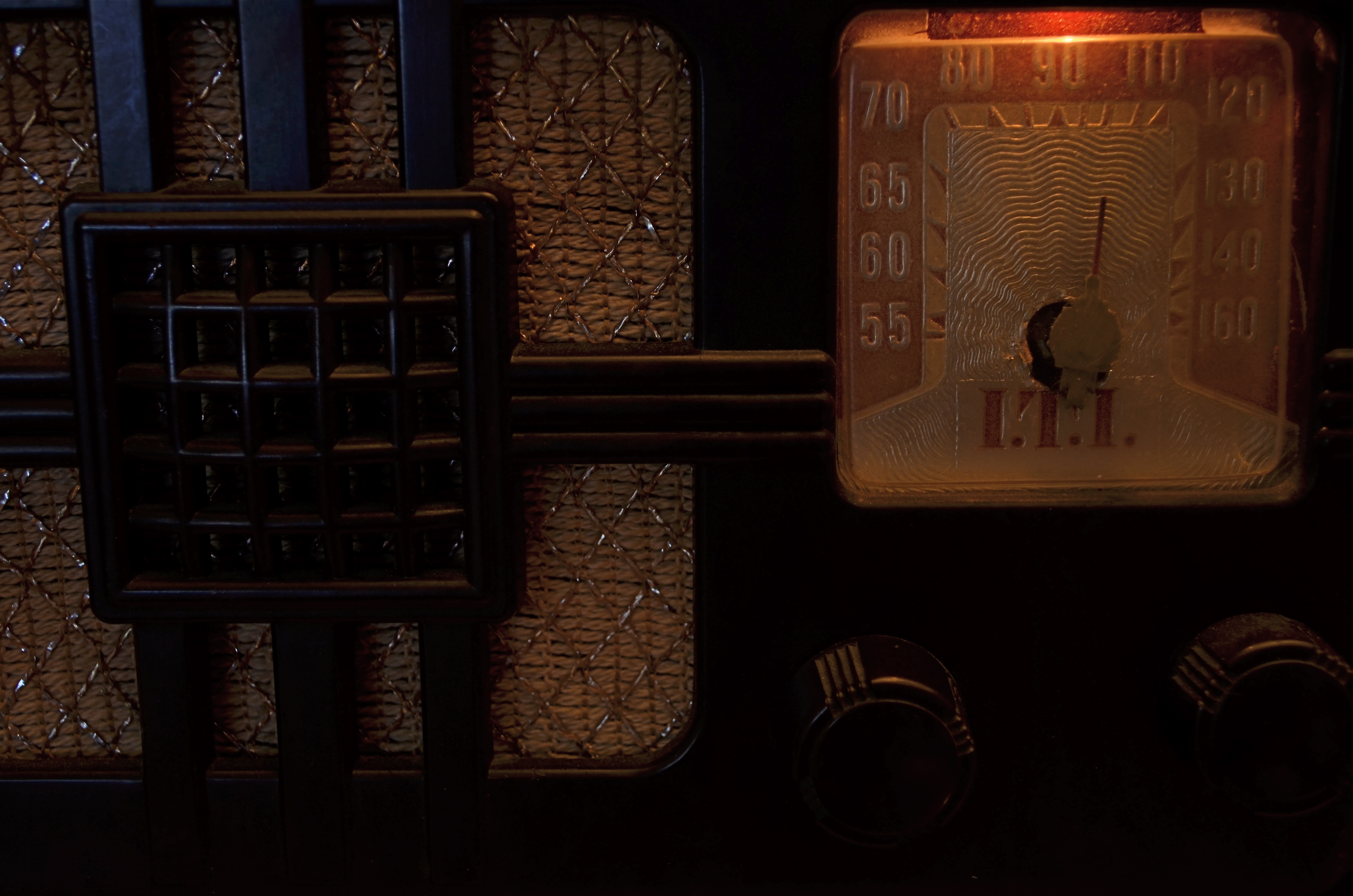
Also shot in a darkened room, but with simpler lighting plan and a shorter exposure time. The dial created its own glow and a handheld light gave some detail to the grillwork. 1/2 sec., 5/4.8, ISO 100, 32mm.
Some objects lend themselves to absolute night than others. For example, I am part of the last generation that often listened to radio in the dark. You just won’t get the same eerie thrill listening to The Shadow or Inner Sanctum in a gaily lit room, so, for the above image of my mid-1930’s I.T.I. radio, I wanted a somber mood. I decided to make the tuning dial’s “spook light” my primary source of interest, with a selective wash of hand-held light on the speaker grille, since the dial was too weak (even with a longer exposure) to throw a glow onto the rest of the radio’s face. Knobs are less cool so they are darker, and the overall chassis is far less cool, so it generally resides in shadow. Result: one ooky-spooky radio. Add murder mystery and stir well.
Flickr and other online photo-sharing sites can give you a lot of examples on what subjects really come alive in the dark. The most intoxicating part of point-and-paint lighting is the sheer control you have over the process, which, with practice, is virtually absolute. Control freaks of the world rejoice.
Head for the heart of darkness. You’ll be amazed what you can see, or, better yet, what you can enable others to see.
Thoughts?
NOTE: If you wish to see comments on this essay, click on the title at the top of the article and they should be viewable after the end of the post.
Related articles
- Lighting Techniques: Light Painting (nikonusa.com)
- Light Writing (cutoutandkeep.net)
SPLITTING THE DIFFERENCE
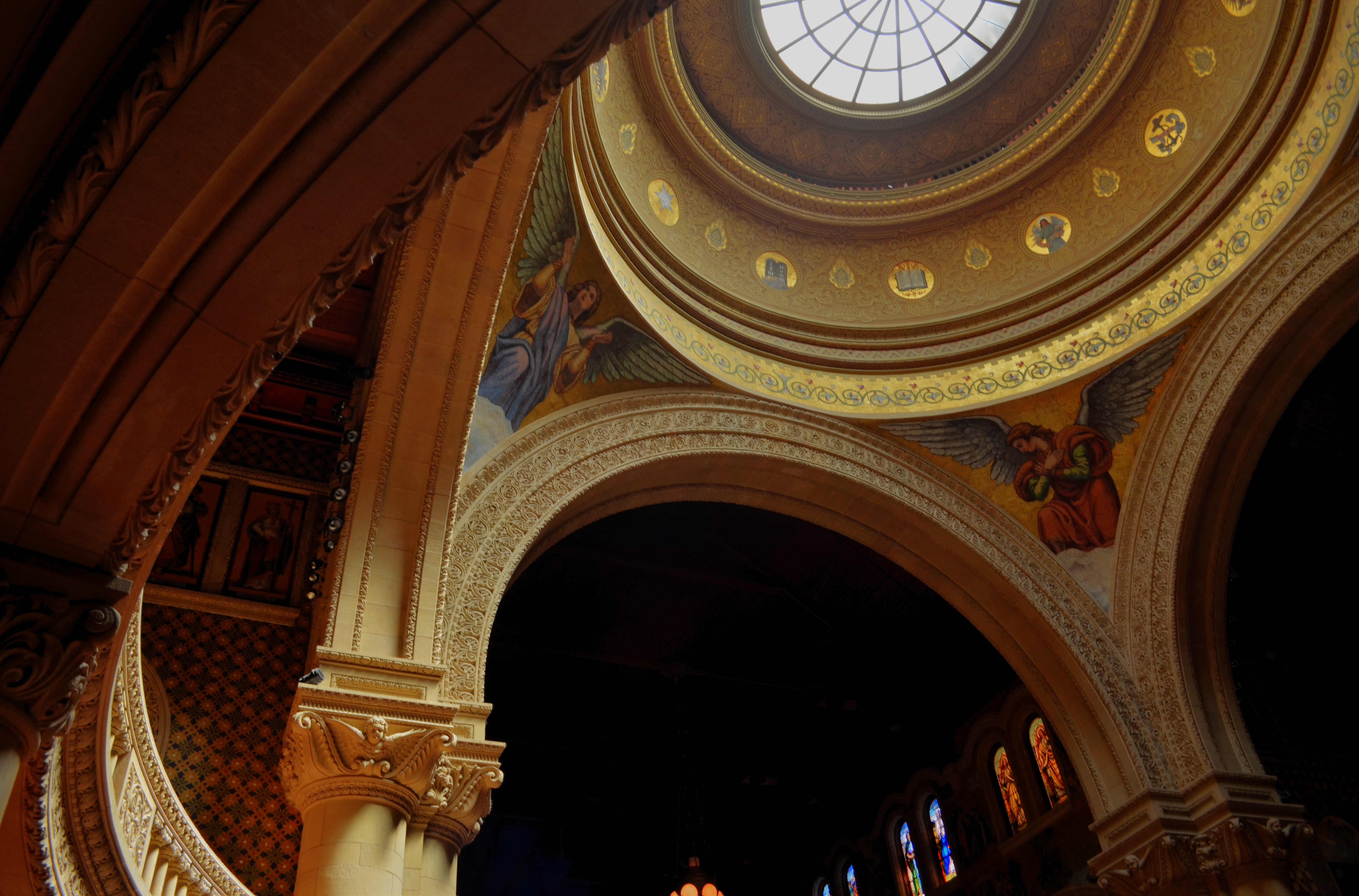
Really dark church, not much time. An HDR composite of just two exposures to refrain from trying to read the darkest areas and thus keep extra noise out of the final image. Shot at 1/15 and 1/30 sec., both exposures at f/5.6, a slight ISO bump to 200 at 18mm. Far from perfect but something less than a total disaster with an impatient tour group wondering where I wandered off to.
By MICHAEL PERKINS
THE MOST EXASPERATING WORDS HEARD ON VACATION: Everyone back on the tour bus.
Damn. Okay, just a second.
Now. We’re going NOW.
I’ve almost got it (maybe a different f-stop….? …..no, I’m just standing in my own light….here, let’s try THIS….
I mean it, we’re leaving without you.
YES, right there, seriously, I’m right behind you. Read a brochure will ya? Geez, NOTHING’S working…….
Sound remotely familiar? There seems to be an inverse proportion of need-to-result that happens when an entire group of tourists is cursing your name and the day you ever set eyes on a camera. The more they tap their collective toe wondering what’s taking so looooong, the farther you are away from anything that will, even for an instant, give you a way to get on that bus with a smile on your face. It’s like the boulder is already bearing down on Indiana Jones, and, even as he runs for his life, he still wonders if there’d be a way to go back for just one more necklace….
Dirty Little Secret: there is no such thing as a photo “stop” when you are part of a traveling group. At best it’s a photo “slow down” unless you literally want to shoot from the hip and hope for the best, which doesn’t work in skeet shooting, horseshoes, brain surgery, ….or photography. Dirty Little Secret Two: you are only marginally welcome at the tomb or cathedral or historically awesome whosis they’re dragging you past, so be grateful we’re letting you in here at all and don’t go all Avedon on us. We know how to handle people like you. We’re taking the next delay out of your bathroom break, wise guy.
A recent trip to the beautiful Memorial Church at Stanford University in Palo Alto, California was that latest of many “back on the bus” scenarios in my life, albeit one with a somewhat happy outcome. Dedicated in 1903 by the surviving widow of the school’s founder, Leland Stanford, the church loads the eye with borrowed styles and decorous detail from a half-dozen different architectural periods, and yet, is majestic rather than noisy, a tranquil oasis within a starkly contemporary and busy campus. And, within seconds of having entered its cavernous space as part of a walking campus tour, it becomes obvious that it will be impossible to do anything, image-wise, other than selecting a small part of the story and working against the clock to make a fast (prayerful) grab. No tripods, no careful contemplation; this will be meatball surgery. And the clock is ticking now.
So we ducked inside. With many of the church’s altars and alcoves shrouded in deep shadow, even at midday, choices were going to be limited. A straight-on flash was going to be an obscene waste of time, unless I wanted to see a blown-out glob of white, three feet in front of me, the effect of lighting a flare in a cave. Likewise, bumping my Nikon’s ISO high enough to read a greater amount of detail was going to be a no-score, since the inner darkness was so stark, away from the skylight of the central basilica dome, that I was inviting enough noise to make the whole thing look like a kid’s smudged watercolor. No, I had to find a way to split the difference; Show some of the light and let the darkness alone.
Instead of bracketing anywhere from 3 to 5 shots in hopes of creating a composite high dynamic range image in post production, I took a narrower bracket of two. I jacked the ISO for both of them just a bit, but not enough to get a lethal grunge gumbo once the two were merged. I shot for the bright highlights and tried to compose so that the light’s falloff would suggest the detail I wouldn’t be able to actually show. At least getting a good angle on the basilica’s arches would allow the mind to sketch out the space that couldn’t be adequately lit on the fly. For insurance, I tried the same trick with several other compositions, but by that time my wife was calling my cel from outside the church, wondering if I had fallen into the baptismal font and drowned.
Yes, right there, I’m coming. Oh, are you all waiting for me? Sorry…..
Perhaps its the worst kind of boorish tourism to forget that, when the doors to the world’s special places are opened to you, you are an invited guest, not some battle-hardened newsie on deadline for an editor. I do really want to be nice. However, I really want to go home with a picture,too, and so I remain a work in progress. Perhaps I can be rehabilitated, and, for the sake of my marriage, I should try.
And yet.
Related articles
- The Ultimate Guide to HDR Photography (pixiq.com)
GOING FOR BROKE
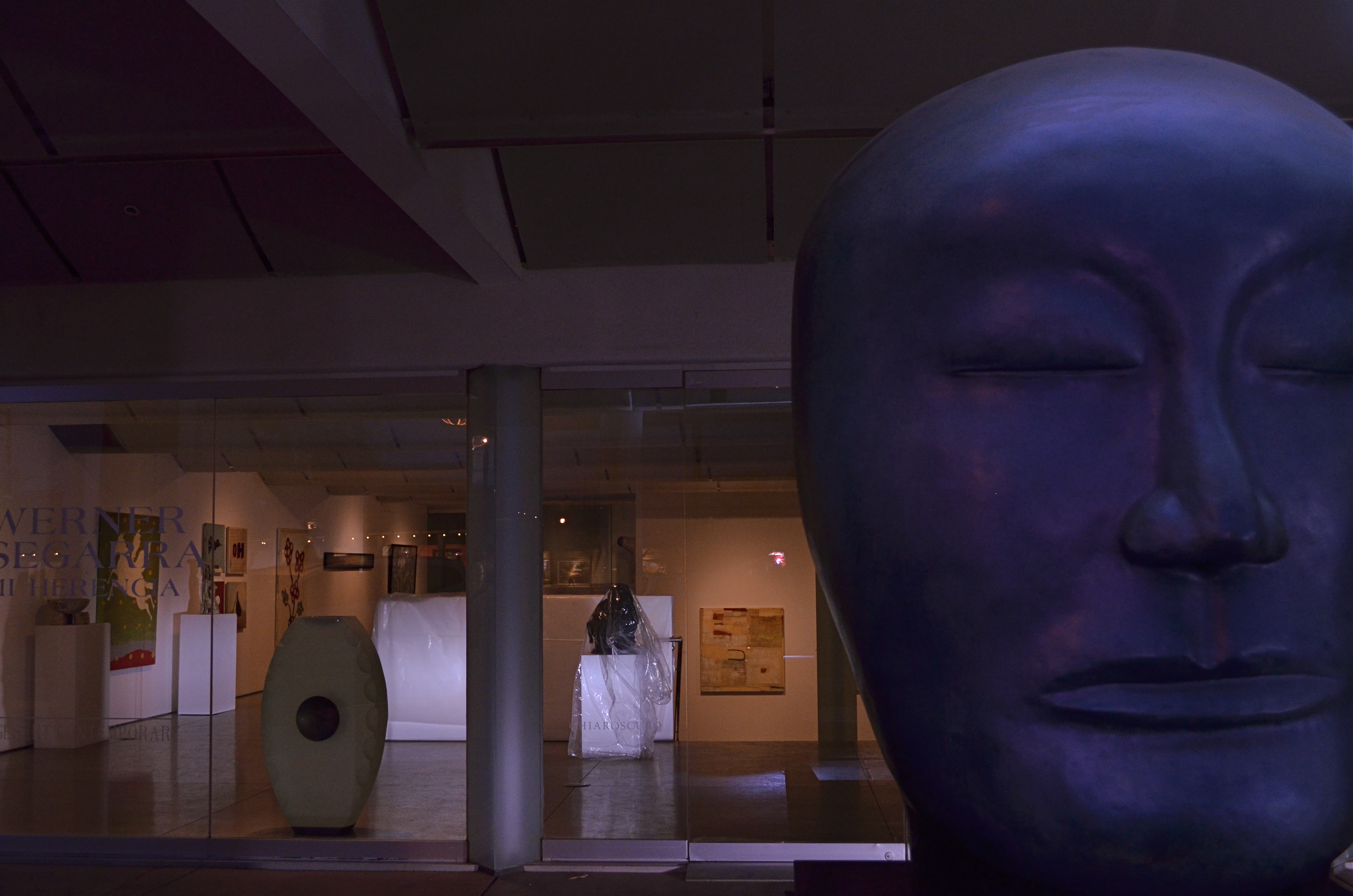
Some people are over the whole “art” thing. Certainly this cynical fellow has seen it all. I used a primitive flash bounce to illuminate his darkened features. 1/40 sec., f/5, ISO 500, 22mm.
By MICHAEL PERKINS
I HAVE READ MORE THAN A FEW ARTICLES OF LATE by professional photographers who confess that they occasionally get stuck in teaching mode, even to the detriment of their own love of shooting. One such author went to far as to recall a recent concert he had attended, camera-less, only to observe, with snotty amusement, the attempts of a young woman to capture action on the far-off stage area. His first reaction was to disdain not only her limited camera but to catalogue all her most heinous errors in composition, exposure, and use of flash, as he mentally predicted how poor her results would be and how she was, essentially, wasting her time.
Then something shifted in his thinking. Instead of being depressed at what hadn’t worked, the woman’s energy revealed that she was actually making the most of the moment; learning, through trial and error, what to do or not do in future. At the end of his essay, he came to realize that “she is a better photographer than me”, since she was taking risks, pushing the limits of her own skills, and developing her craft, one frame at a time, while he had left his own camera at home and was learning nothing. His point hit home with me, since it is a recurring theme of this blog and a key belief among those I respect most in the imaging world.
In brief:
Shoot. Shoot some more. Dare to fail. Be willing to take more “bad” pictures than the next guy. Get your head out of academic minutia and into the doing of it. Screw up, suck up, but above all, show up.
Ready to play.
Sometimes, just the sheer unwillingness to go home empty-handed provides you with real delight. Last week, I was making the rounds at an area gallery district, the type that does nightly “art walks” as a way of speed-dating potential customers. Many of the best shots I get in these surroundings are near or just after dark, and I always like peeping into the windows of shuttered businesses at night, since some key character of light and mood invariably occurs. For the shot shown above, I fell in love with one gallery that had a kind of sentry posted outside, in the form of an enormous sculpted head. Its aloof expression reminded me of a cross between Easter Island and Blue Man Group, and I really wanted him/her/it to be a part of the shot. However, I had not brought an external flash unit with me, and the sculpture was reading 100% dark in contrast to the interior of the gallery. I was desperate, but not desperate enough to use straight-on pop-up flash, which would have blown the face out completely and destroyed any chance at a moody feel.
Time to improvise.
Having left my bounce card at home as well (I was on foot and truly traveling light), I noticed that the head was underneath a low over-hanging porch roof, something you just must have on the front of an Arizona business in summer. Going totally into what-the-hell mode, I stuck my flat left hand just under the bottom of the pop-up flash and angled it upward about 15 degrees to create a crude bounce off the roof ceiling, allowing the light to soften as it came down upon the top of the head. It took a few tries to avoid creating an uber-white Aurora Borealis effect on the ceiling, and I had to move my feet around to figure out how to get some of the light to cascade down the head’s front and illuminate its features. I also had to bump the ISO up a bit to compensate for the fall-off in the flash at the distance I was standing, but, at the end, I at least got something. Moreover, like the woman at the concert, what I had picked up in technique more than compensated me for the fact that the shot wasn’t strictly an award winner.
I have been playing around with primitive flash bouncing for a while now, and the results run the gamut from god-awful to glad-I-did-that. But it’s all a win no matter how each individual shot plays out, because every image brings me closer to the cumulatively evolved instinct that, someday, will give me great pictures. The baby will eventually be born, but the midwife has to do the front-end work. Nothing I will ever shoot will be captured under perfect conditions, so why drop dead of old age waiting for that to happen? We’re almost to the end of Century Two in this game of writing with light, and all the easy pictures have already been shot, so what’s left will have to be hewed out by hand.
I suggest that we occasionally get our nose out of books (and, duh, blogs too) and start carving.
 thenormaleye