By MICHAEL PERKINS
THE WORD “PHOTOGRAPHY” OFTEN SUGGESTS THE IDEA OF MERELY RECORDING SOMETHING, of using a machine to arrest time in its flight and imprison it forever. That, to me suggests a very passive act, that of merely opening the shutter and harvesting whatever comes along, much in the way one might cast a fishing net. You might haul in a marlin, but you will also snag the occasional boot.
So, for me, the term photography is often misinterpreted, as if the shooter has little choice in the process, a concept I absolutely reject. The word itself basically translates as “writing with light”, and, in that interpretation, the act of making a picture is an active one, with light not merely being a component but the prime determinant, Shaper #1 in that process. George Eastman himself said it first, and best:
Light makes photography. Embrace light. Admire it. Love it. But above all, know light. Know it for all you are worth, and you will know the key to photography.
So now, we have an art form, because, in this mindset, one can begin with accidents and end up with mastery, merely by using light purposefully and with a kind of earnest literacy.
The first thing the study of light teaches is how fleeting its effects are. Many people who have shot the Grand Canyon have experienced the incredible minute-to-minute changes in the gorge as shadows shift, dance and crawl across the terrain. Many others, working in the transient light of shifting weather patterns, or the sudden remapping of illumination at sunrise or sunset, know the importance of getting the shot the very moment it presents itself, all delays changing your results measurably, even drastically.
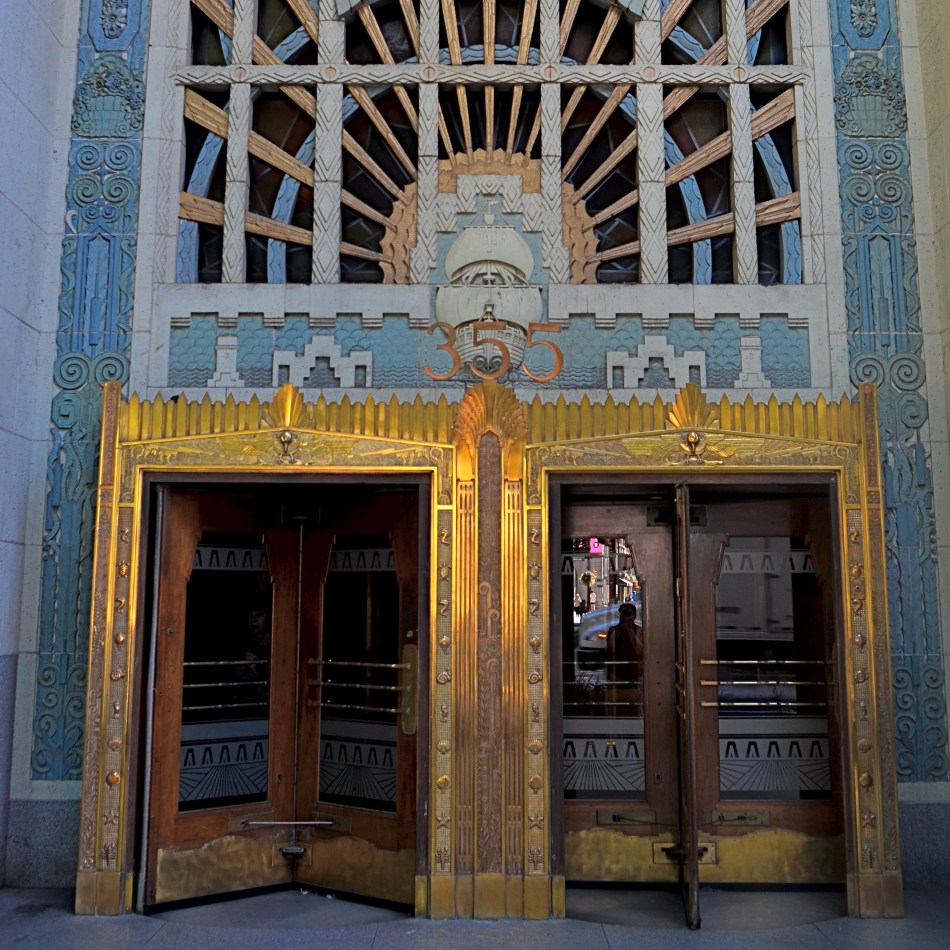
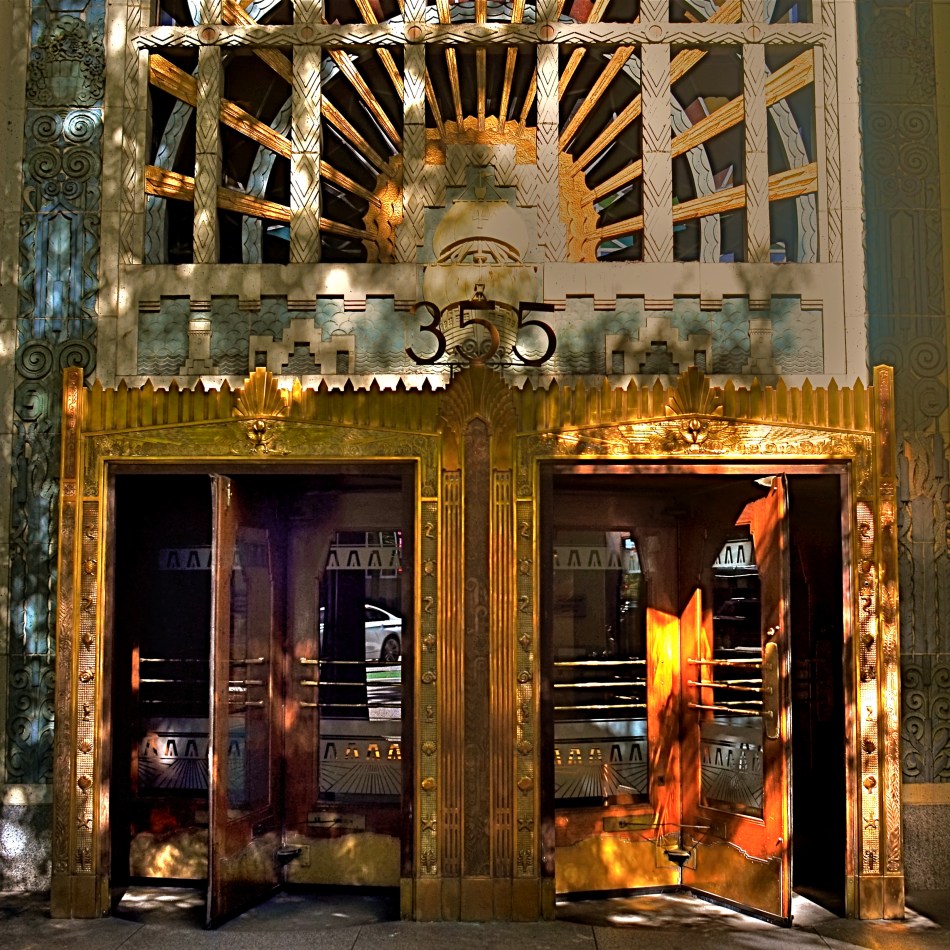
These two images of Vancouver’s glorious Marine building, one of the most amazing examples of Art Deco in North America, were taken just twenty-nine minutes apart from each other. The earlier shot, taken at about 10:45 in the morning, presents the elaborate entrance with a kind of even, flat value, while the second shot is a crazy quilt of a million tiny bounces and reflections, as well as a dramatic increase in contrast. I was merely lucky in being able to get two very different impressions of the same building, even though a clearer knowledge of the local light conditions in the area might have allowed me to create two greatly more nuanced pictures. As it is, I got an object lesson on how to do things better the next time, and clear illustration that Eastman was right. Know the light, Shaper #1 in a picture, for all you are worth, and you have the biggest riddle solved.



PATHS AND PURPOSES
The Rebel (2021)
By MICHAEL PERKINS
THE JOURNEY OF THE INDIVIDUAL IN SOCIETY courses along two diametrically opposed paths. Both roads can impel the spirit toward ends that are both cherished and loathed. One fork cruises through the innumerable ranks of the predictable, taking the individual along prescribed patterns of conformity; the other travels the more arduous road to individuality, a complete realization of the unique self. Both paths have their positive and negative aspects; both seem attractive or repellent at different times in our lives. And both have a visual signature for the photographer.
Conformity is perhaps the easier of the two paths to trace, evoking row after row of identical work cubicles or endless blocks of lookalike dwellings. It leaves its visible track in the way we close ranks or join organizations; the kinds of gatherings that offer us protection or anonymity. Our photographer’s eye readily tags the look of the collective, the joiner society.
The path toward individual expression is a little more abstract, as there are as many ways to stand out or apart as there are human hearts in the world. How do we choose to leave the rutted path? What means do we employ in improvising a personal life signature? How is our rebellion in the name of a more sculpted self visually measured?
It can be something simple, like being the only kid that wears bunny slippers to symphony rehearsals. A bumper sticker that’s guaranteed to provoke comment. Or, as seen above, a little public space that we convert to private space with a paper lantern, a wind chime, or a bird feeder. Making photographs of the way we go along to get along is measuring the patterns of our agreement (maybe even our surrender), and that creates one kind of picture. Framing up the stories that we tell out of our very own storybook gives us another result completely. Both kinds of images are educational. Both are commentary. And if we’re really lucky, both can be compelling.
Share this:
Posted by Michael Perkins | April 21, 2021 | Categories: Uncategorized | Tags: Commentary, Street Photography | Leave a comment