By MICHAEL PERKINS
IT’S NOT HYPERBOLE TO SAY THAT THE GREAT HIBERNATION, our global banishment from our regular lives, feels a bit like living through a war. As in a traditional conflict, there are separations, sudden deaths, deprivations, and a feeling of “where have I been?” that accompanies our every venture outside our safe zones. So many of us have simply backed out of the flow of time that, as in times of war, we are startled by what has been altered or even vanished since the last time we cautiously emerged to explore the sites of our old existence. And that shock, in turn, informs all of our art, including, of course, photography.
The first thing that we notice is that so many things that were solid and substantial before we ducked under cover have been either greatly altered or completely vaporized. And the sensation is not limited to things that were already crumbling, but also includes things that were just becoming part of our world in the moments immediately before the lockdown. Places that just cut their ribbons of newness a heartbeat ago, but which already find themselves neutralized, obsolete. Of course, society is always closing chapters and tearing down buildings, in a cycle of goodbyes that seem almost normal, pandemic or no. But the toll created by our withdrawal from the daily parade also lists things that were just getting started, the space between their grand opening days and dark closing nights shrunk by circumstance . And our photographs of those things, taken either before or after these brief appearances, are poignant images of what might have been, a measure of the gap between our hopes and the ruthless randomness of this strange new world.
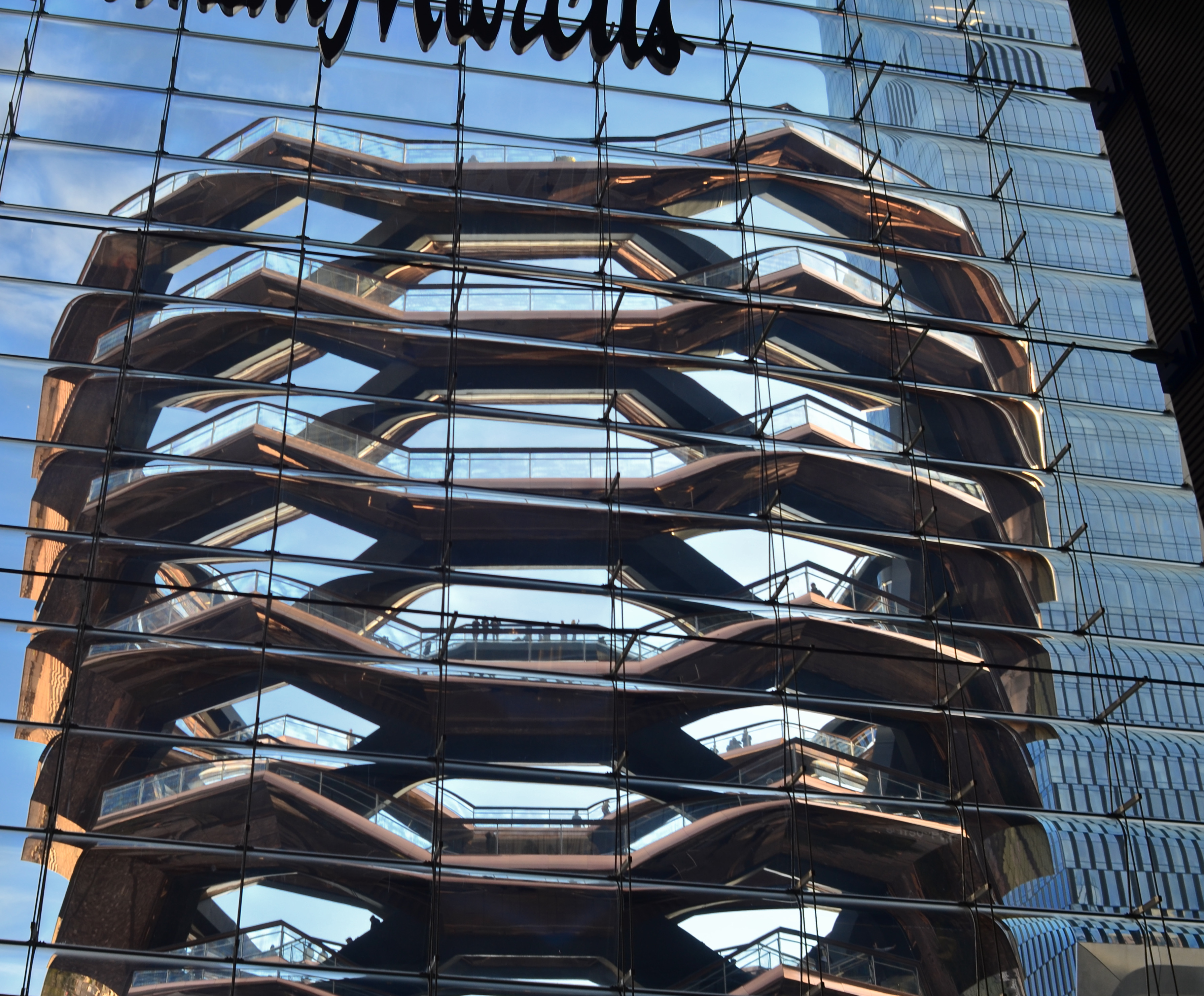
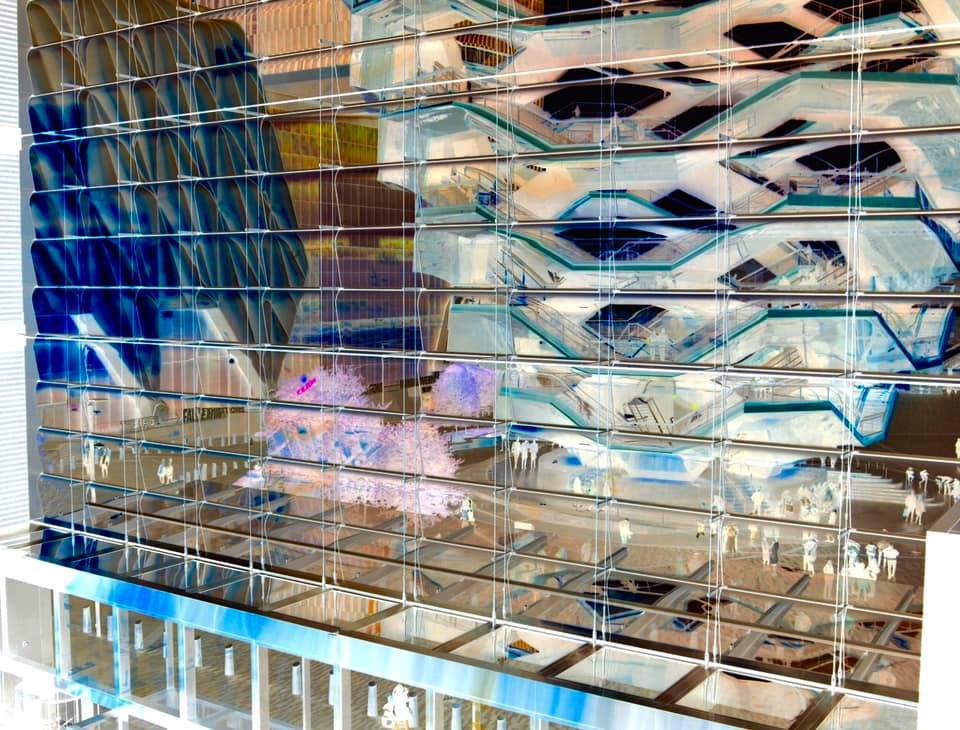
The now-vacant “Vessel” stands opposite Hudson Yards’ Public Square in the long-ago Manhattan of 2019.
As one example, consider this image of Vessel, a bold (and controversial) open-air attraction that acts as a kind of visual rendezvous at the head of the massive new Hudson Yards district in Manhattan. Part sculpture, part observation deck, part tourist trap, the structure sits opposite the main entry to the Yards’ Public Square mall. Built at a cost of 200 million dollars, it rose to sixteen floors, honeycombed 154 flights of stairs, and became an instant hit with visitors, who were admitted via free but timed tickets. Vessel’s very bigness rendered its actual value as art moot; like the Eiffel Tower (to which it was compared) or Niagara Falls, it just was, and, in so being, became part of what you do when you “do” New York. It opened to the public in March of 2019.
You can guess a lot of what followed. As NYC locked down, retail took a major hit and retail on the massively ostentatious scale seen at Hudson Yards took an even bigger one. Leases were renegotiated, then abandoned outright. The project (still unfinished) that was designed to reconfigure an entire economic sector of the Apple was down on one knee. And something weirdly symptomatic of the times occurred with Vessel; people started to jump off of it to their deaths. Last month (January 2021), the structure was closed “indefinitely”, its term as a pet chunk of Americana capped at just under two years’ time.
I was lucky enough to photograph Vessel in person, creating day and night images that now seem as bizarre as launch-party pix of the Hindenburg or snapshots from Titanic. Photographers often catch a flavor of a time by accident, and many of our personal archives are populated by things we never thought of as perishable or mortal at the moment we shot them. Vessel is just one very public barometer of Dreams Gone Wrong, visions that deserve to be preserved inside our magic light boxes, either as tributes to our dreams or tombstones to our folly.


WE ARE ALL BURT LANCASTER NOW
By MICHAEL PERKINS
I REMEMBER BEING FASCINATED as a child by the 1963 film The Birdman Of Alcatraz, based loosely on the life of murderer Robert Stroud, whose accumulated crimes drew him a life sentence, much of it spent in solitary confinement. The movie, starring Burt Lancaster, centered on Stroud’s almost accidental introduction to birds, an improvised pastime which blossomed into an extensive and self-taught study of ornithology. The story’s biggest impact on me was the idea that someone could center on the smallest scintilla of hope, something others around you might ignore or simply not see at all, and that such small things might lead beyond mere survival to a kind of separate peace, even wisdom. In retrospect, I probably should have chosen a better model than that of a total psychopath. Still, the idea of being able to successfully navigate isolation was one that occasionally fascinated me over a lifetime. It’s also come to mind a great deal over the past year.
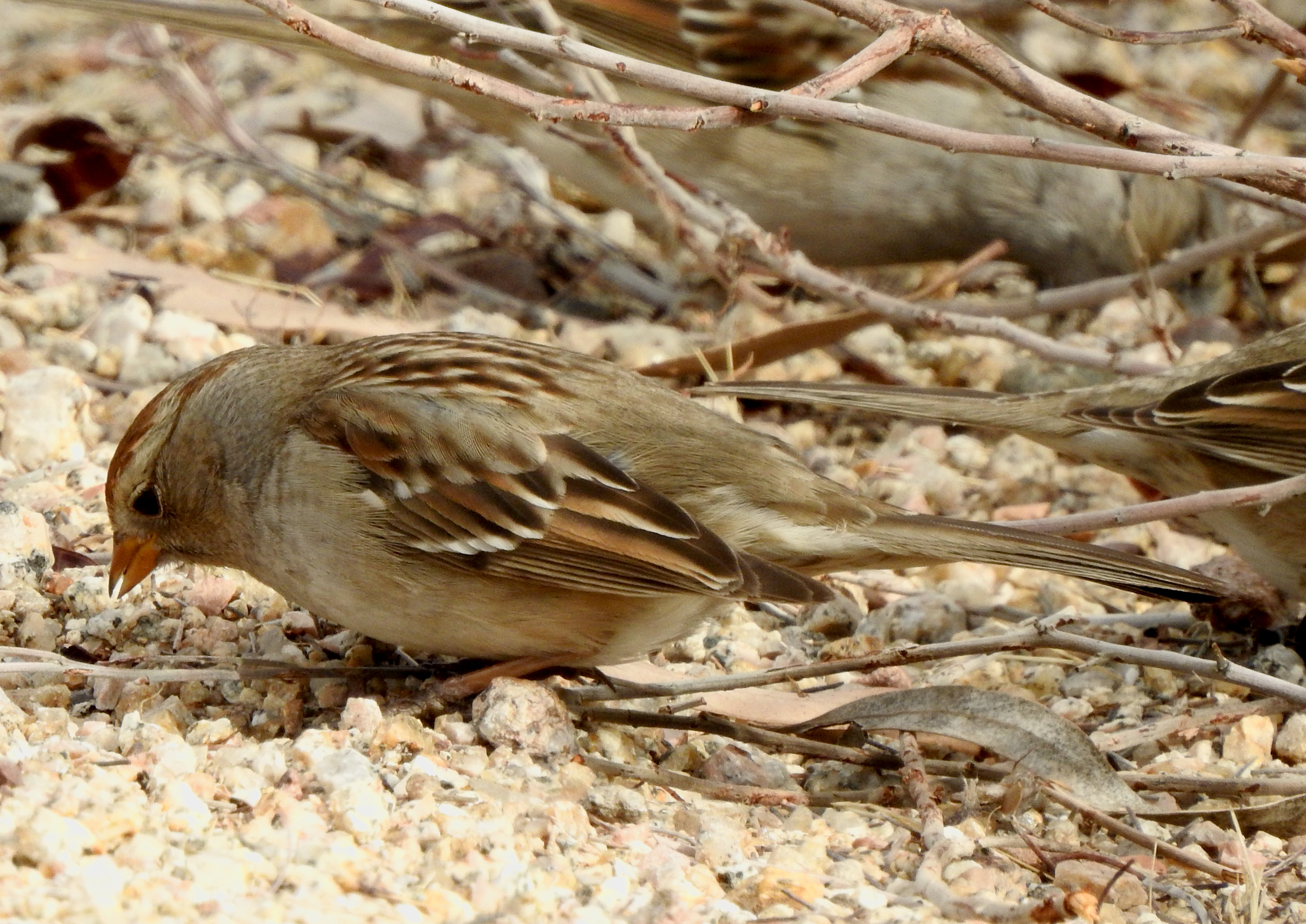
To paraphrase a cliched expression, we are all Burt Lancaster now; we have all learned to place greater focus on smaller worlds, and it is no accident that one of the biggest growth industries during our Global Great Hibernation has been the hobby of birdwatching. It’s cheap, it’s relatively easy to break into, and it’s as close as your window. More importantly, it’s a reassurance that life, or some semblance of it, has gone on, even if all we can do is watch as it wafts by. Like Stroud, we are all improvising to reduce the ache of greatly reduced circumstances. And like prisoners everywhere, confined behind either tangible or figurative bars, we are able, maybe for the first time, to see, in depth, something that was all but invisible to our previous system of seeing.
Nobody puts Baby in the corner, but you can occasionally put Starling in the circle.
For photographers, including this one, birds can be a metaphor for many things we already value about our art. Color, motion, texture, context, even a kind of portraiture…all are addressed in trying to assign traits or personalities to flying creatures. Working from the long, empty days, we slow down and deepen our observational powers. We view things in finer depths and degrees, in inches rather than miles now. I will freely admit that my own photographic coverage of birds had been, during The Before Times, confined to the easiest, most obvious captures; flocks caught accidentally in a vast beach vista; raptors in zoo cages; the occasional comic shot of a gull stealing a hot dog, etc. The quarantine has altered all that, stretching time like taffy, elongating our implementation of any undertaking from hours to days. But this is not an effort to overprescribe a general therapy for everyone; your “birds” may be furniture, the veins of a leaf, still lifes of your accumulated buffalo nickels. This is why we have congregations of varying denominations. While I am worshipping at the first temple of the ruby-throated sparrow, you may bow your head at the Community Church of the Holy Art Deco Ashtray or some such. The idea is that photography always benefits from patience and deliberation. Snap shots are marvelous manifestations of our impulses, but they are not the products of quiet contemplation.
My point is that there is room in your photography for both the spontaneous and the deliberative. In my case, tiny tweeters have become a kind of surrogate for human subjects, as I find myself searching their faces for traces of motive, emotion, even joy. Unlike the Birdman of Alcatraz, most of us will eventually be sprung, released back into the larger work yard, hopefully having learned a little more about playing well with others. And the pictures we made behind walls will be, in lasting ways, capable of taking grander flight.
Share this:
Posted by Michael Perkins | February 17, 2021 | Categories: Commentary, Hobbies, Nature | Tags: bird photography, Nature Photography | Leave a comment