“SNAPSHOT” MOMENT, “SESSION” MINDSET
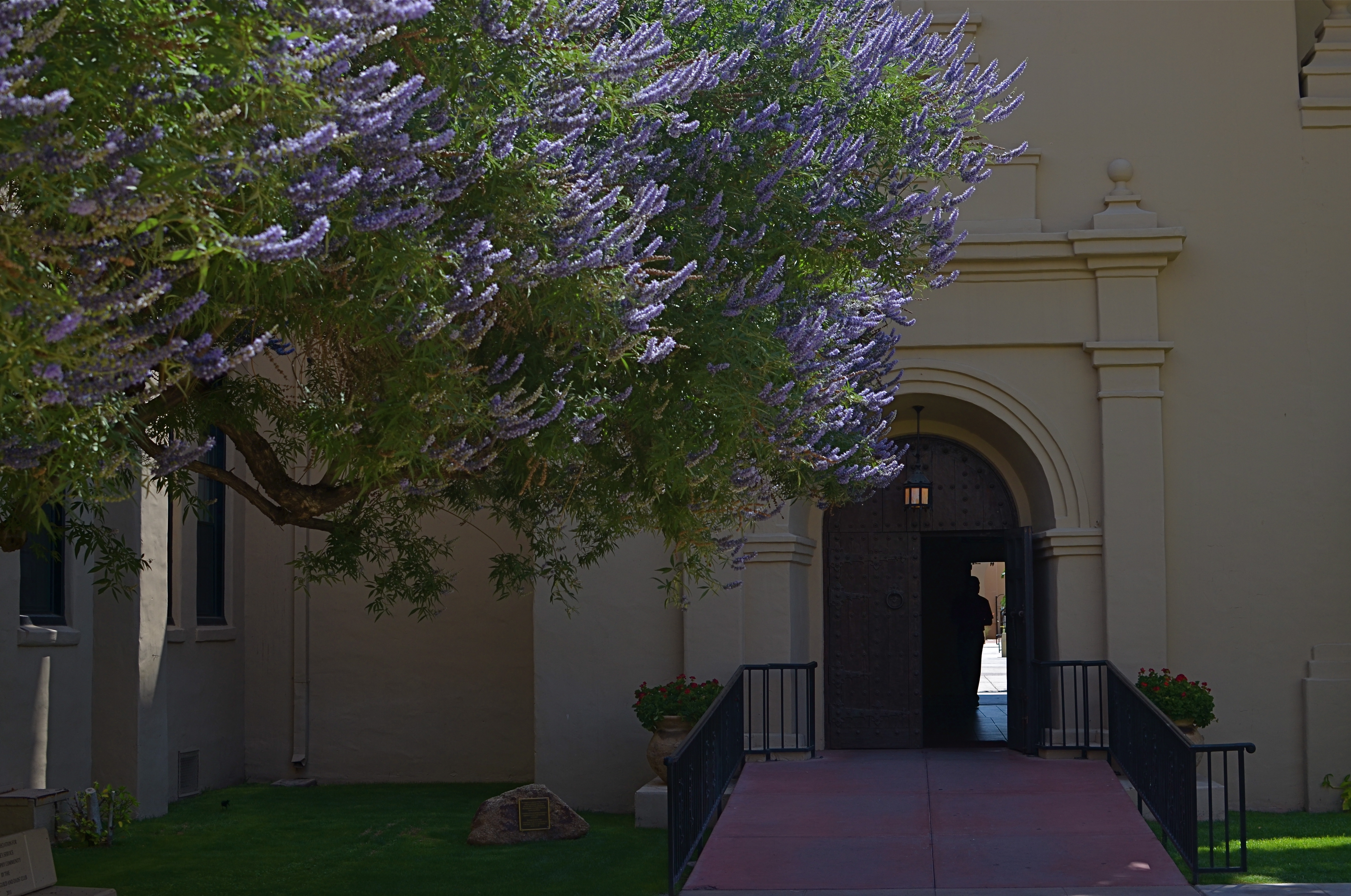
The light on the tree’s blossoms will be gone in three minutes. Best decision in the moment: slight underexposure to combat the mid-morning sun. 1/640 sec., f/5.6, ISO 100, 35mm.
By MICHAEL PERKINS
THE GREATEST ENEMY OF THE AMATEUR PHOTOGRAPHER IS TIME. Not the time spent perfecting our “eye”, nor the years invested in learning how to realize what we visualize. Sadly, the most tyrannical toll that time takes on us is in the meager number of moments in which we have to create most of our shots. Time…enough of it to work, to feel, and to act, is the only unbridgeable gap between ourselves and most of the pros.
I say “most” because some of the best photographers live absolutely in the moment, as in the case of imbedded journalists or sports shooters. No, what I’m talking about is the appointment that pros get to set for sessions, shoots that require set-up, tests, the issuance of permits, the re-routing of traffic. It’s not hard to see that a shooter for National Geo is at greater leisure planning his shot of a majestic waterfall than you are when your tour group is taking the tram from one Breathlessly Beautiful Natural Wonder to the next, all in time to rendezvous back at the terminal for a box lunch and precisely fifteen minutes in the gift shop. It’s not remarkable that millions of images are taken in Yellowstone each year. What’s amazing is that any of them work out.
Just saying.
Fact is, amateurs often can’t get the luxurious arrangements for creativity that are a given for the pros. And yet, since we don’t want our stuff to look like it was shot out the window at 55mph, we have to strive to combine the brief windows of our snapshot moments with the trained eye of a session mindset.
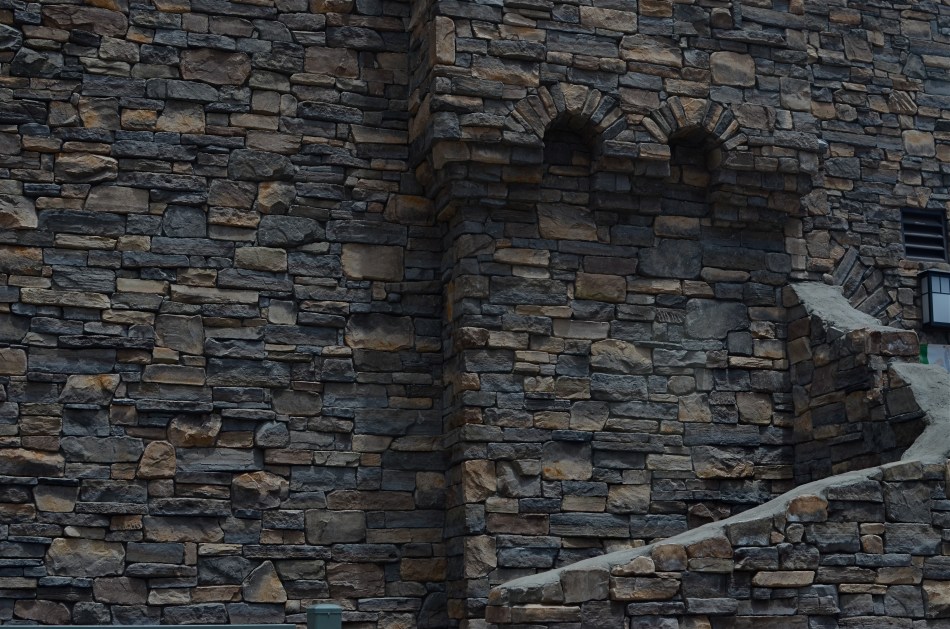
- Taken on pure impulse from a car as I was just about to drive off the property of this unique library. No planning except a fast exposure to give some depth to the stone textures. 1/640 sec., f/5.6, ISO 100, 35mm.
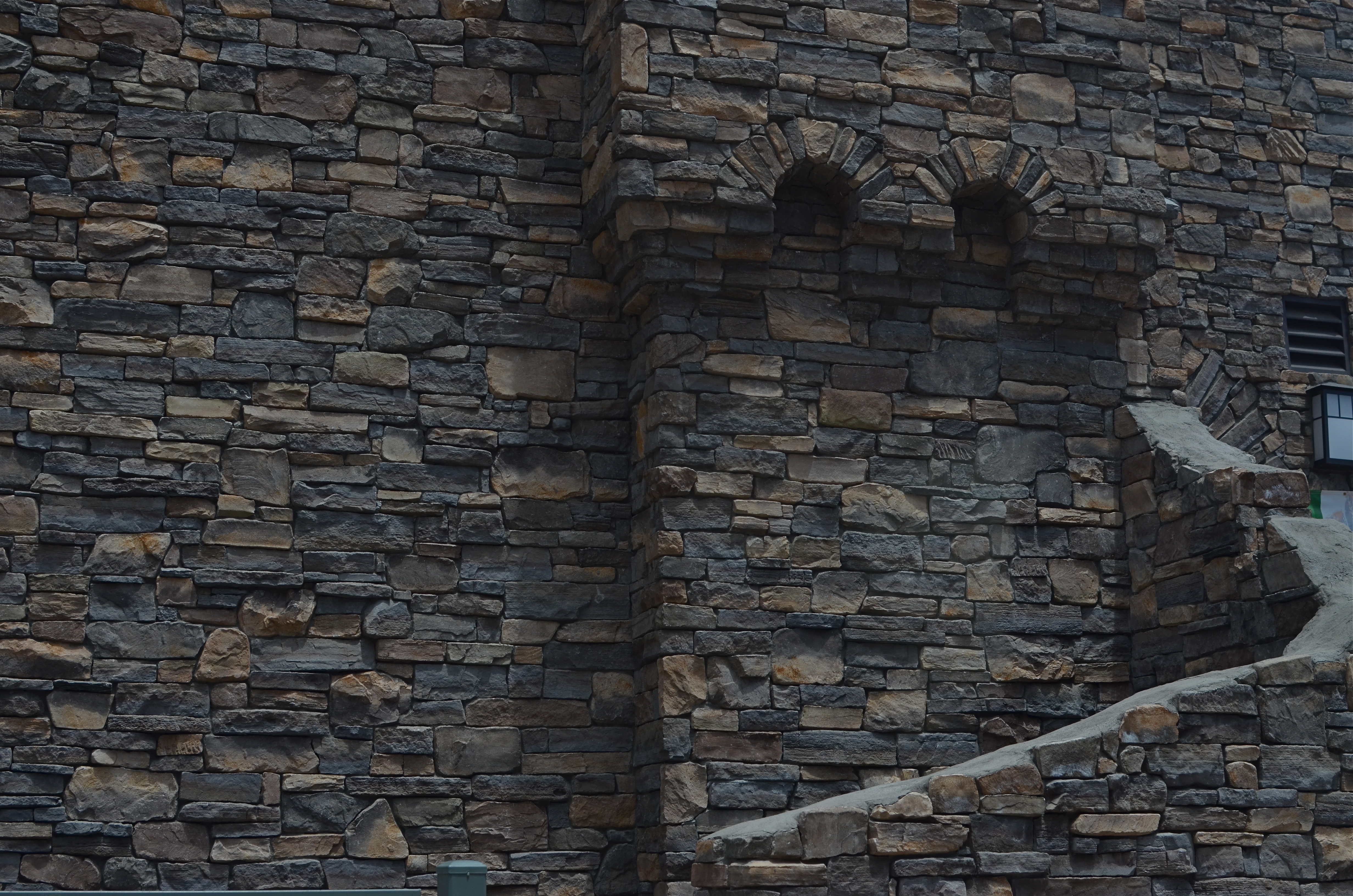
This is why it’s so important to always be shooting. Everyday. Good subject or bad. Great weather or lousy. Always. Because only the repetitive exercise of framing up and clicking off thousands of shots burns ways of seeing, ways of evaluating, into your brain, letting you make ever more complex calculations in increasingly shorter time. Shooting all the time speeds the arrival of the day when you can, in most cases, set and shoot and know that most of it will look intentional, done with some purpose in mind.
Repetition really is the best teacher, and the more direct control you take over your shooting, the more the universal laws emerge. At this focal length, certain things always happen. Under these lighting conditions, some things are always true. You’ll have your own truths, but, over time, they will be self-evident, because you will have faced these situations so many times that the essence of what you need for a shot will start to be as obvious as a glowing coal.
Time, or the lack of it, can rob us of the smart spontaneity we need in snapshot settings. However, the time we have invested learning how to shoot can give us a session mindset, and that affords us more control.
Are my snapshots better than anyone else’s? I doubt it. But over time, they are definitely better than my snapshots used to be.
Hey, I’ll take it.
follow Michael Perkins on Twitter @mpnormaleye
Related articles
- Snapshot (photography) (itscitrarizqinow.wordpress.com)
LESS SHOWS MORE
You don’t have to reveal every stray pebble or every dark area in perfect definition to get a sense of texture in this shot. 1/160 sec., f/5.6, ISO 100, 35mm.
by MICHAEL PERKINS
THERE IS A WRONG-HEADED IDEA OUT THERE THAT ALL VISUAL OUTCOMES IN PHOTOGRAPHY SHOULD BE EQUAL. That’s a gob of words, so here’s what I’m getting at: higher ISO sensitivity, post-processing and faster lenses have all conspired, of late, to convince some of us that we can, and should, rescue all detail in even the most constrasty images. No blow-outs in the sky, no mushiness in the midrange, no lost information in the darkest darks. Everything in balance, every iota of grain and pattern revealed.
Of course, that is very seductive. Look at a well-processed HDR composite made from multiple bracketed images, in which the view out the window is deep and colorful, and the shadowy interiors are rich with texture. We’ve seen people achieve real beauty in creating what is a compelling illusion. But, like every other technique, it can come to define your entire output.
It’s not hard to see shooters whose “style” is actually the same effect applied to damn near all they shoot, like a guy who dumps ketchup on everything his wife brings to the table. When you start to bend everything you’re depicting to the same “look”, then you are denying yourself a complete range of solutions. No one could tell you that you always have to shoot in flourescent light, or that deep red is the only color that conveys passion, so why let yourself feel trapped in the habit of using HDR or other processes to always “average out” the tonal ranges in your pictures? Aren’t there times when it makes sense to leave what I will call “mystery” in the undiscovered patches of shadow or the occasional areas of over-exposure?
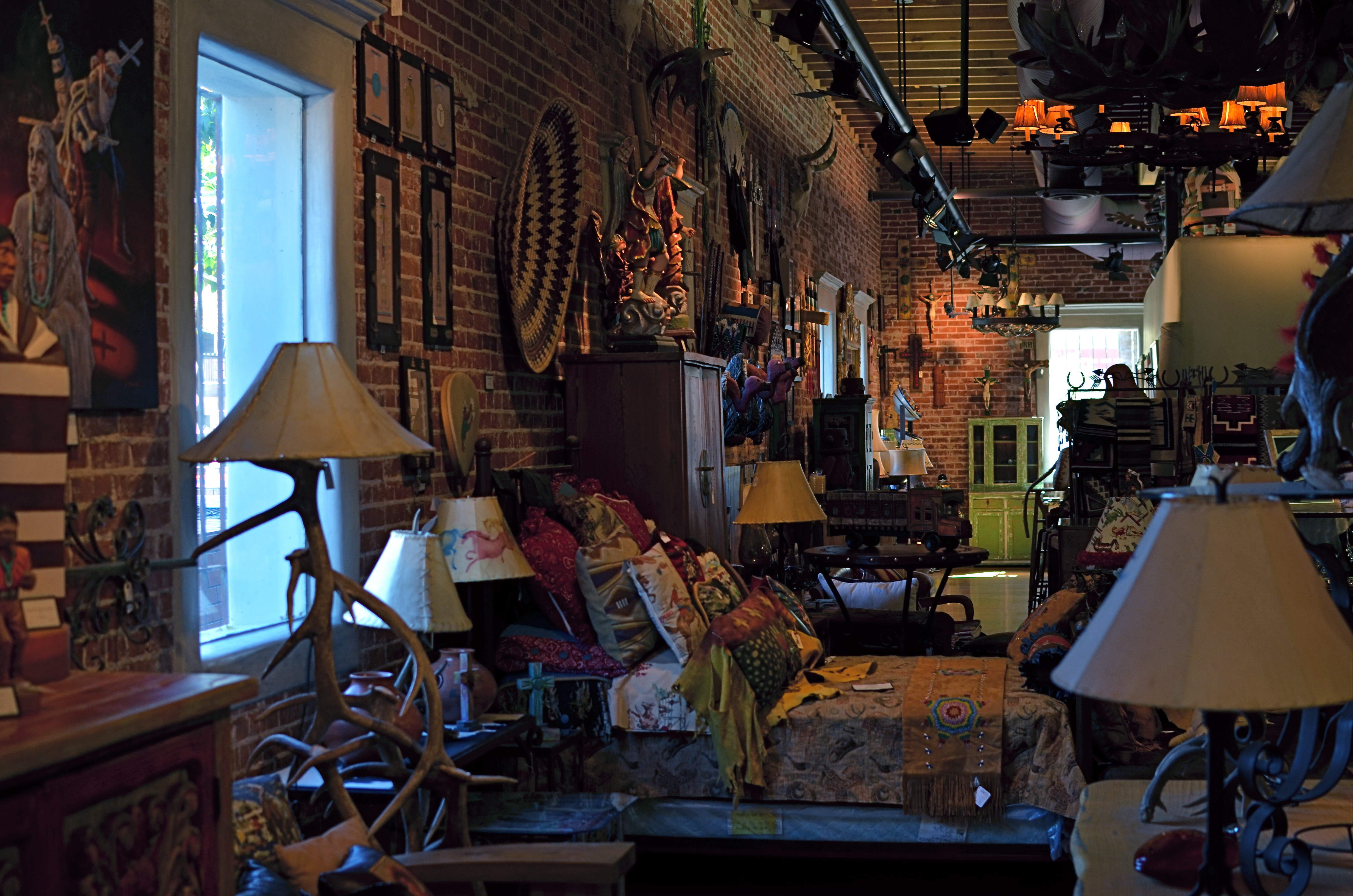
Letting some areas of a frame remain in shadow actually tamps down the clutter in a busy image like this. 1/60 sec., f/3.2, ISO 100, 35mm.
I am having fun lately leaving the “unknowns” in mostly darker images, letting the eye explore images in which it can NOT clearly make out ultimate detail in every part of the frame. In the mind’s eye, less can actually “show” more, since the imagination is a more eloquent illustrator than any of our wonderful machines. Photography began, way back when, rendering its subjects as painters did, letting light fall where it naturally landed and leaving the surrounding blacks as deep pools of under-defined space. Far from being “bad” images, many of these subtle captures became the most hypnotic images of their era. It all comes down to breaking rules, then knowing when to break even the broken rule as well.
Within this post are two of the latest cases where I decided not to “show it all”. Call it the photo equivalent of a strip-tease. Once you reveal everything, some people think the allure is over. The point I’m making is that the subject should dictate the effect, never the other way around. Someone else can do their own takes on both of these posted pictures, take the opposite approach to everything that I tried, and get amazing results.
There never should be a single way to approach a creative problem. How can there be?
Follow Michael Perkins on Twitter @thenormaleye.
Related articles
- HDR Under Control is a Thing of Beauty (thewayeyeseesit.com)
LET THE LIGHT BE THE STORY
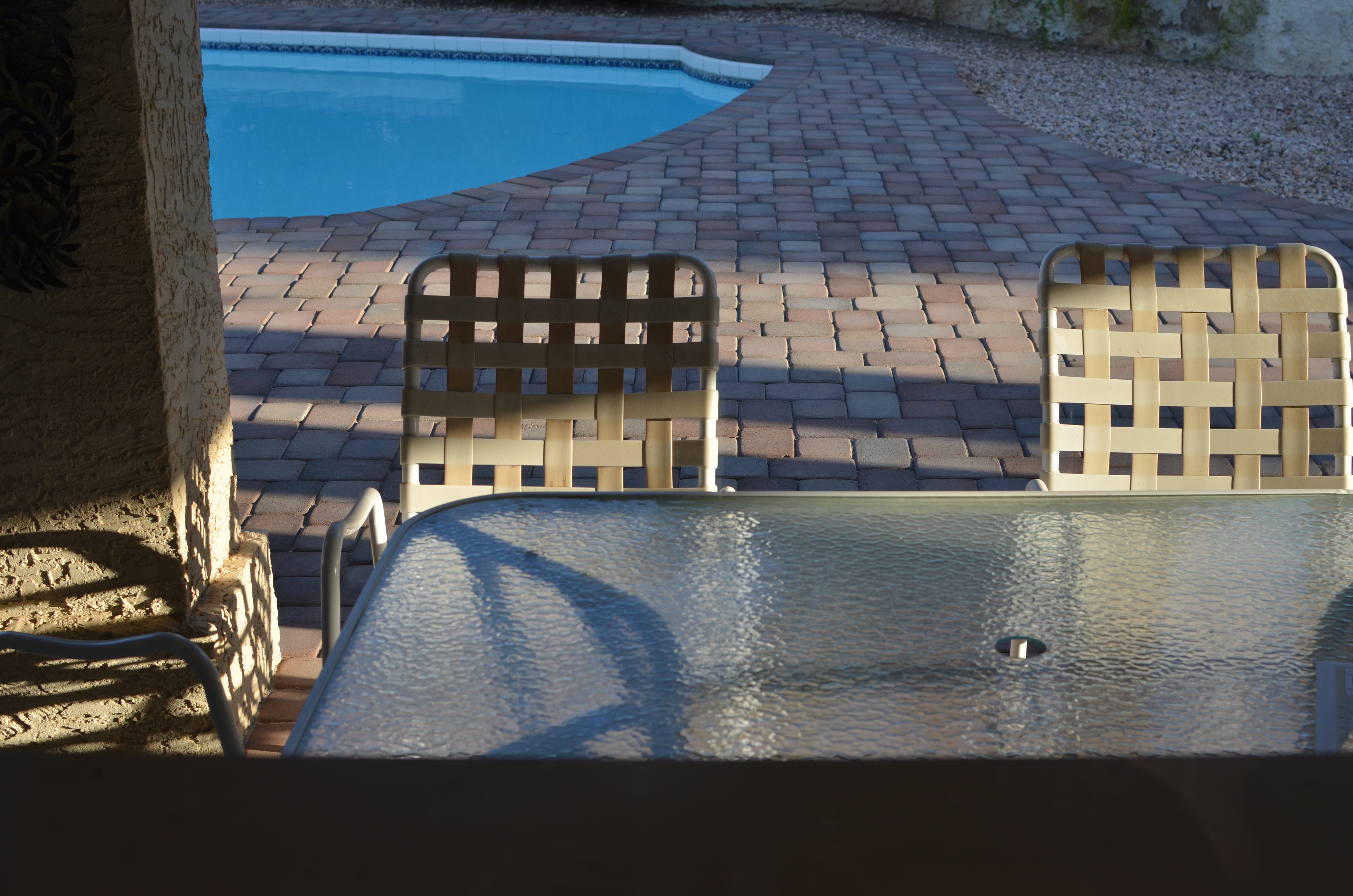
Ordinary, familiar objects, yes, but, for a few moments. their display of light was all the “subject” I needed. 1/200 sec., f/5.6, ISO 100, 35mm.
By MICHAEL PERKINS
ONE OF THE THINGS I OCCASIONALLY MISS ABOUT WORKING WITH PRIMITIVE CAMERAS is that the terms of success and failure are so stark. As Yoda says, you either do or do not…there is no “try”. If you have a limited piece of gear, it will always be capable (or incapable) of exactly the same things. That argument is settled, and so you have to find good pictures where they naturally occur….truly thinking outside (or without) the box.
The fact that you will get little or no extra help from the camera is initially limiting, but also, in a strange way, freeing.
On the other hand, the better your equipment, the more opportunities you have to counter iffy lighting conditions in your subjects. Photography today is about almost never having to say, “I couldn’t get the shot”…..at least not because of a lack of sufficient light. It’s just one more imperfect thing that shooting on full auto “protects” you from. But the argument could be made that ultra-smart cameras give you an output that, over time, can be stunningly average. The camera is making so many decisions of its own, in comparison to your measly little button flick, that every shot you “take” is pushing you further and further away from assuming active control of what happens.
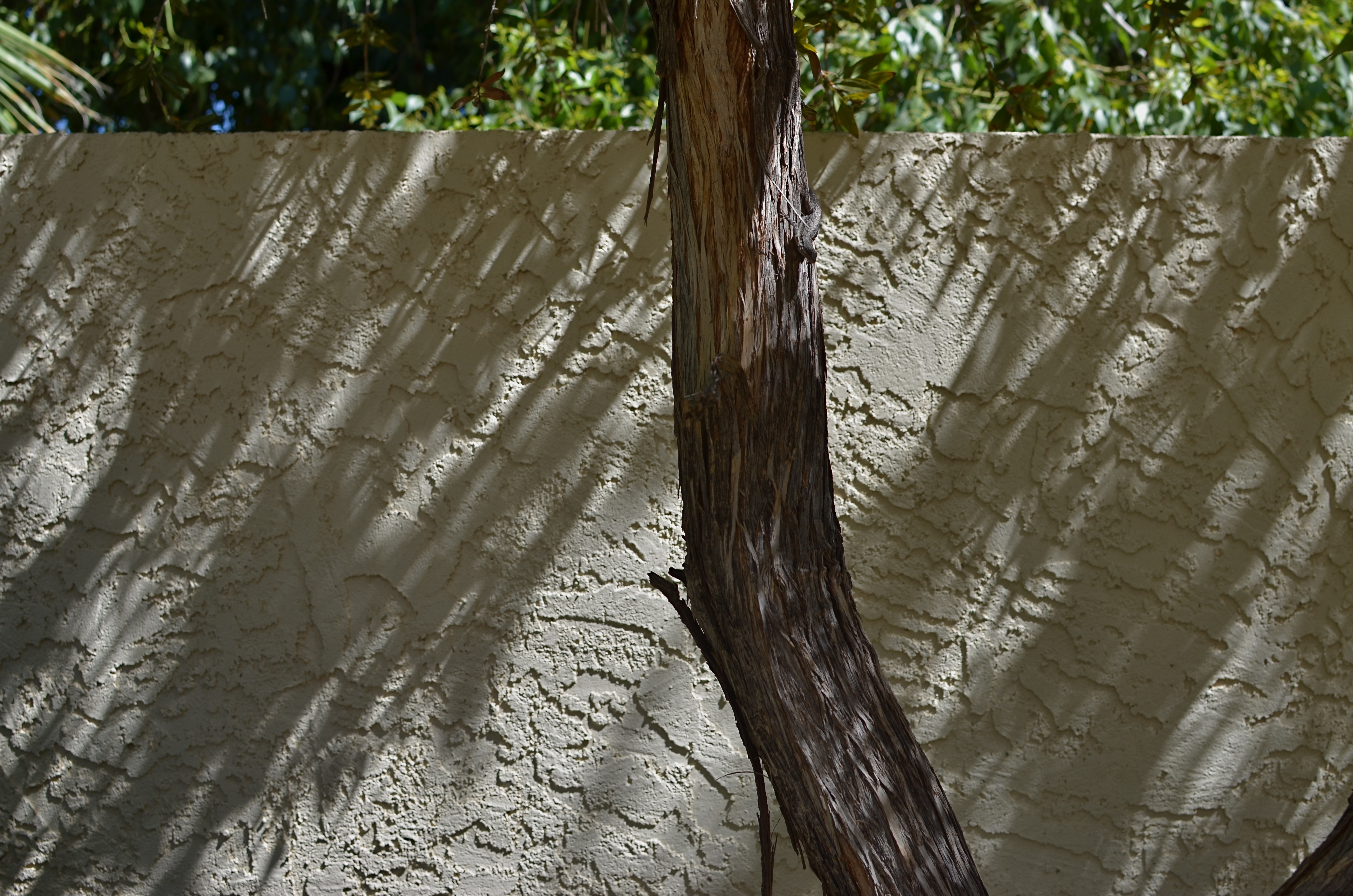
Early morning shadows shift suddenly, presenting many different ways to see the same subject. 1/400 sec., f/5.6, ISO 100, 35mm.
Hunting for images that you could capture with virtually no “help” from your camera is a more active process, since it involves planning. It means looking for pictures that your camera may not be able to grab without your specific input. And one great way is to shoot images that don’t matter in themselves, so that you are letting the light, and not the subject, be the entire story. That, and shooting on manual.
Back yards are great because they are convenient stages for light tracking. You can see the light conditions shift over the course of an entire day. Better still, it’s familiar territory that can only become more familiar, since it’s so close at hand, and available anytime. Since you will have more “what am I gonna shoot?” days than “amazing” days over a lifetime, fill them up by giving yourself a seminar in “this is what the light does”. Believe me, something worth keeping will happen.
Early morning, just after dawn, is the best time to work, because the minute-to-minute changes are so markedly unique. Wait too long and you lose your window. Or maybe you’re there in just another few minutes, when something just as good may present itself. I also like to work early because, living in the desert, I will have hours and hours of harsh, untamed light every day unless I plan ahead. It’s just too retina-roastingly bright, too much of the time.
Edward Steichen taught himself light dynamics by spending months shooting the same object in the same setting. Hundreds, sometimes thousands of frames where nothing changed but the light. He put in the time taking scads of images he knew he would never use, just to give him a fuller understanding of how many ways there were to render an object. He benefited, zillions of frames later, when he applied that knowledge to subjects that did matter.
The greatest photographer of the 20th century became “that guy” because he was willing to take more misses than anyone else in the game, in order to get a higher yield of hits down the road.
Shooting just for a better understanding of light is the best photo school there is, and it’s cheap and easy in the digital age. No chemicals, no glass plates, nothing in the way but yourself and what you are willing to try.
I like the odds.
(follow Michael Perkins on Twitter @mpnormaleye)
Related articles
- Street Photography Tips, Techniques and Inspirations (itscitrarizqinow.wordpress.com)
- How to break through the bottleneck of photography skills (ghjg85.wordpress.com)
BLUE ON THIRD AVENUE
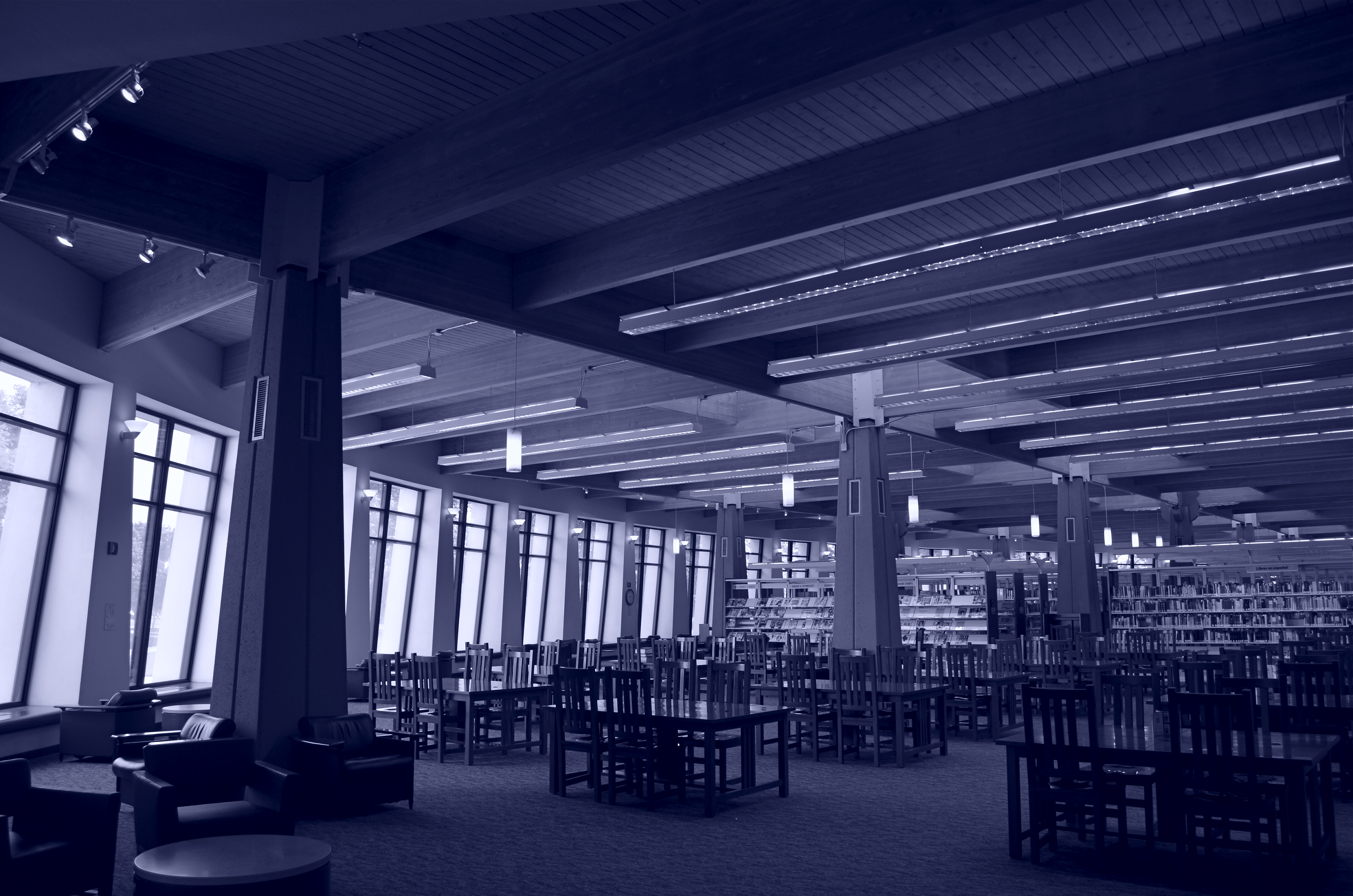
The cyanotype option in Nikon’s monochrome posting menu makes this in-camera conversion from color easy. 1/80 sec., f/5.6, ISO 160, 18mm.
By MICHAEL PERKINS
COLOR IS LIKE ANY OTHER COMPONENT IN LIGHT COLLECTION AND ARRANGEMENT, which is, really, what we are doing. Seen as a tool instead of an absolute, it’s easy to see that it’s only appropriate for some photographs. Since the explosion of color imaging for the masses seen in the coming of Kodachrome and other early consumer films in the 1930’s, the average snapper has hardly looked back. Family shots, landscapes, still life arrangements….full color or go home, right?
Well….
Oddly, professional shooters of the early 20th century were reluctant to commit to the new multi-hued media, fearing that, for some novelty-oriented photographers, the message would be the color, instead of the color aiding in the conveying of the message. Even old Ansel Adams once said of magazine editors, that, when in doubt, they “just make it red”, indicating that he thought color could become a gimmick, the same way we often regard 3-d.
In the digital age, by comparison, the color/no color decision is almost always an afterthought. There are no special chemicals, films or paper to invest in before the shutter clicks, and plenty of ways to render a color shot colorless after the fact. And now, even the post-processing steps involved in creating a monochrome image need not include an investment in Photoshop or other software. For the average shooter, monochrome post-processing is in-camera, at the touch of a button. Straight B/W and sepia and even what I call the “third avenue”, the blue duotone or cyanotype, as I’ve used above.Do such quickie options worsen the risk of gimmick-for-gimmick’s sake more than ever? As Governor Palin would say, “you betcha”. Google “over-indulgence”, or just about half of every Instagram ever taken, as evidence.
Hundreds of technical breakthroughs later, it still comes down to the original image itself. If it was conceived properly, color won’t lessen it. If it was a bad idea to start with, monochrome won’t deliver the mood or the tone changes needed to redeem it. Imagine the right image, then select the best way to deliver the message. Having quick fixes in-camera aren’t, initially, a guarantee of anything but the convenient ability to view alternatives. In the photo above, my subject was just too warm, too pretty in natural color. I thought the building itself evoked a certain starkness, a cold, sterile kind of architecture, that cyanotype could deliver far better. The shadows are also a bit more mysteriously rendered.
At bottom, the shot is just a study, since I will be using it to take far more crucial pictures of far more intriguing subjects. But the in-camera fix allows you to analyze on the fly. And, since I got into this racket to shoot pictures, and not to be a chemist, I occasionally like a fast thumbs-up, thumbs-down verdict on something I’ve decided to try in the moment.
Giving yourself the blues can be a good thing.
(follow Michael Perkins on Twitter @ mpnormaleye)
Related articles
- Toning my Cyanotype with Haritaki (altlab2011.wordpress.com)
- Beyond Color (piaffephotos.wordpress.com)
IT’S NOT EASY BEIN’ GREEN
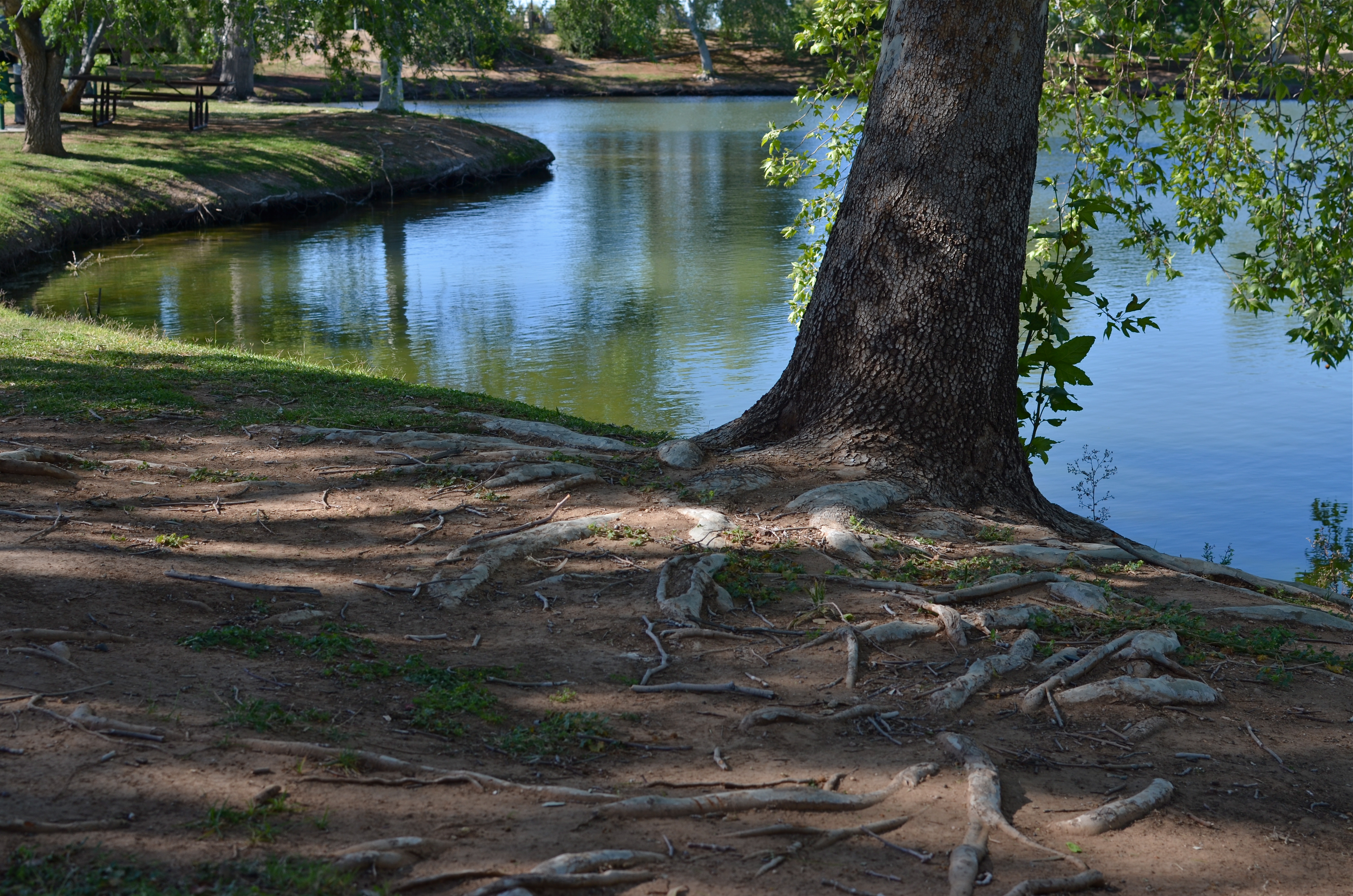
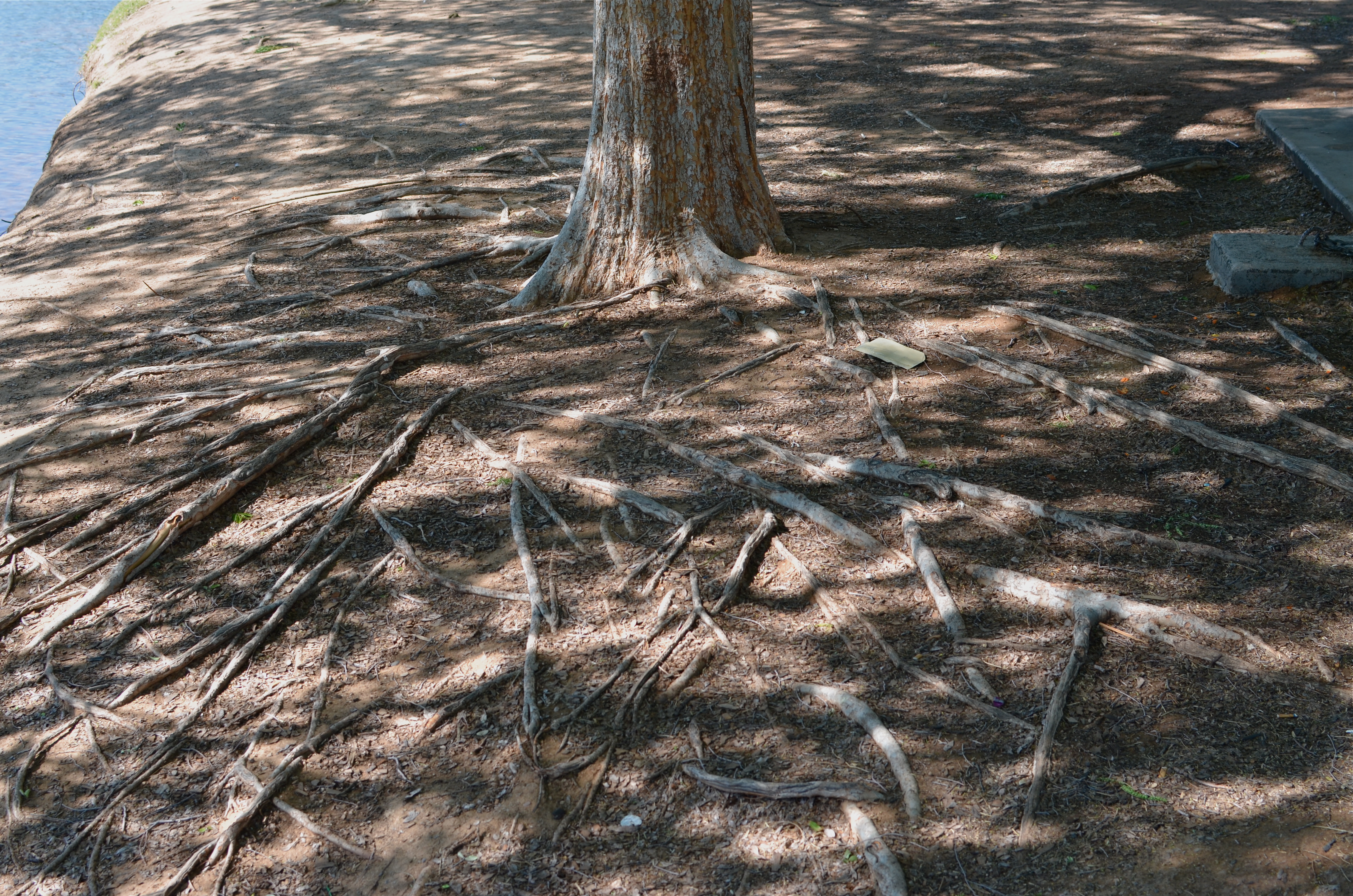
This is the desert? A Phoenix area public park at midday. There is a way around the intense glare. 1/500 sec., f/5.6, ISO 100, 35mm, straight out of the camera.
By MICHAEL PERKINS
FOR YEARS I HAVE BEEN SHOOTING SUBJECTS IN THE URBAN AREAS OF PHOENIX, ARIZONA, trying to convey the twin truths that, yes, there are greenspaces here, and yes, it is possible for a full range of color to be captured, despite the paint-peeling, hard white light that overfills most of our days. Geez, wish I had been shooting here in the days of Kodachrome 25. Slow as that film was, the desert would have provided more than enough illumination to blow it out, given the wrong settings. Now if you folks is new around here, lemme tell you about the brilliant hues of the Valley of the Sun. Yessir, if’n you like beige, dun, brown, sepia or bone, we’ve got it in spades. Green is a little harder to come by, since the light registers it in a kind of sickly, sagebrush flavor….kind of like Crayola’s “green-yellow” (or is it “yellow-green”?) rather than a deep, verdant, top-o-the-mornin’ Galway green.
But you can do workar0unds.
In nearby Scottsdale, hardly renowned for its dazzling urban parks (as opposed to the resort properties, which are jewels), Indian School Park at Hayden and Indian School Roads is a very inviting oasis, built around a curvy, quiet little pond, dozens of mature shade trees that lean out over the water in a lazy fashion, and, on occasion, some decorator white herons. Thing is, it’s also as bright as a steel skillet by about 9am, and surrounded by two of the busiest traffic arteries in town. That means lots of cars in your line of sight for any standard framing. You can defeat that by turning 180 degrees and aiming your shots out over the middle of the pond, but then there is nothing really to look at, so you’re better off shooting along the water’s edge. Luckily, the park is below street level a bit, so if you frame slightly under the horizon line you can crop out the cars, but, with them, the upper third of the trees. Give and take.
There is still a ton of light coming down between the shade trees, however, so if you want any detail in the water or trees at all, you must shoot into shade where you can, and go for a much faster shutter speed….1/500 up to 1/1000 or faster. It’s either that or shoot the whole thing at a small f-stop like f/11 or more. In desert settings you’ve got so much light that you can truly dance near the edge of what would normally be underexposure, and all it will do is boost and deepen the colors that are there. There will still be a few hot spots on projecting roots and such where the light hits, but the beauty of digital is that you can click away and adjust as you go.
It’s not quite like creating greenspace out of nothing, but there are ways to make things plausibly seem to be a representation of real life, and, since this is an interpretive medium, there’s no right or wrong. And the darker-than-normal shadows in this kind of approach add a little warmth and mystery, so there’s that.
It was “yellow-green”, wasn’t it?
Hope that’s not on the final.
(follow Michael Perkins on Twitter @mpnormaleye)
FROM TOY TO TOOL
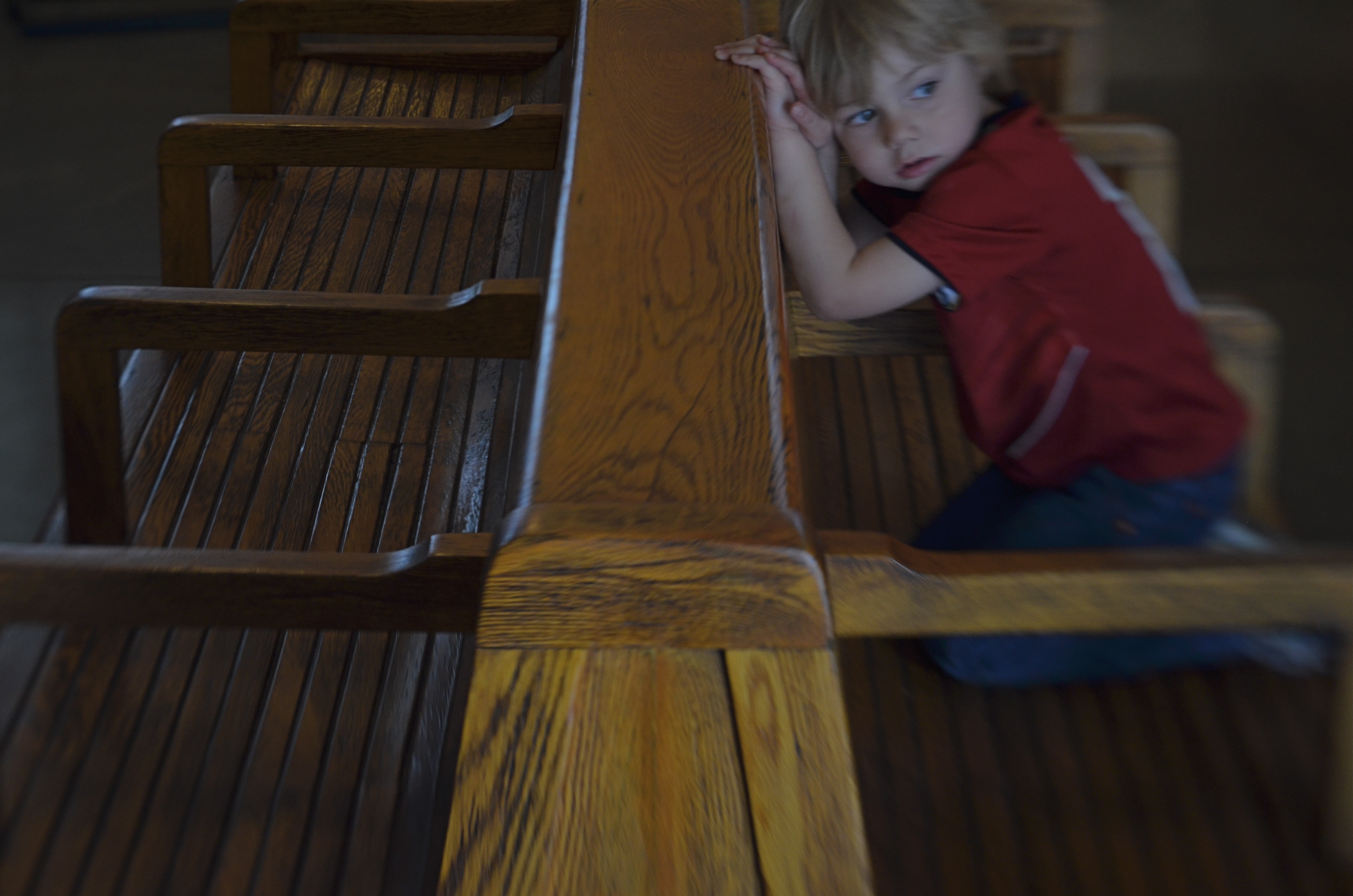
Selective focus can help direct your viewer’s eye. Taken with a Lensbaby Spark lens at 1/80 sec., f/5.6, ISO 320, 50mm.
By MICHAEL PERKINS
A LONG STANDING BIT ON THE DAVID LETTERMAN SHOW, rather than claiming to be entertaining, actually poses the question of what entertainment actually is. Entitled “Is This Anything?”, the feature consists of about thirty seconds of acts or feats that might be amazing (like juggling), might be banal (like, um, juggling) or might qualify as merely strange. After the curtain is drawn, Dave and Paul briefly discuss the merits of what ever strangeness just transpired, and ask each other if “that was anything”. Sometimes there is no clear-cut decision. The show has disclaimed responsibility, and entertainment remains in the eye of the beholder.
That’s how you can feel the first time you use a Lensbaby.
Released several years ago to inventor Craig Strong’s great monetary benefit, the Lensbaby comes in a variety of
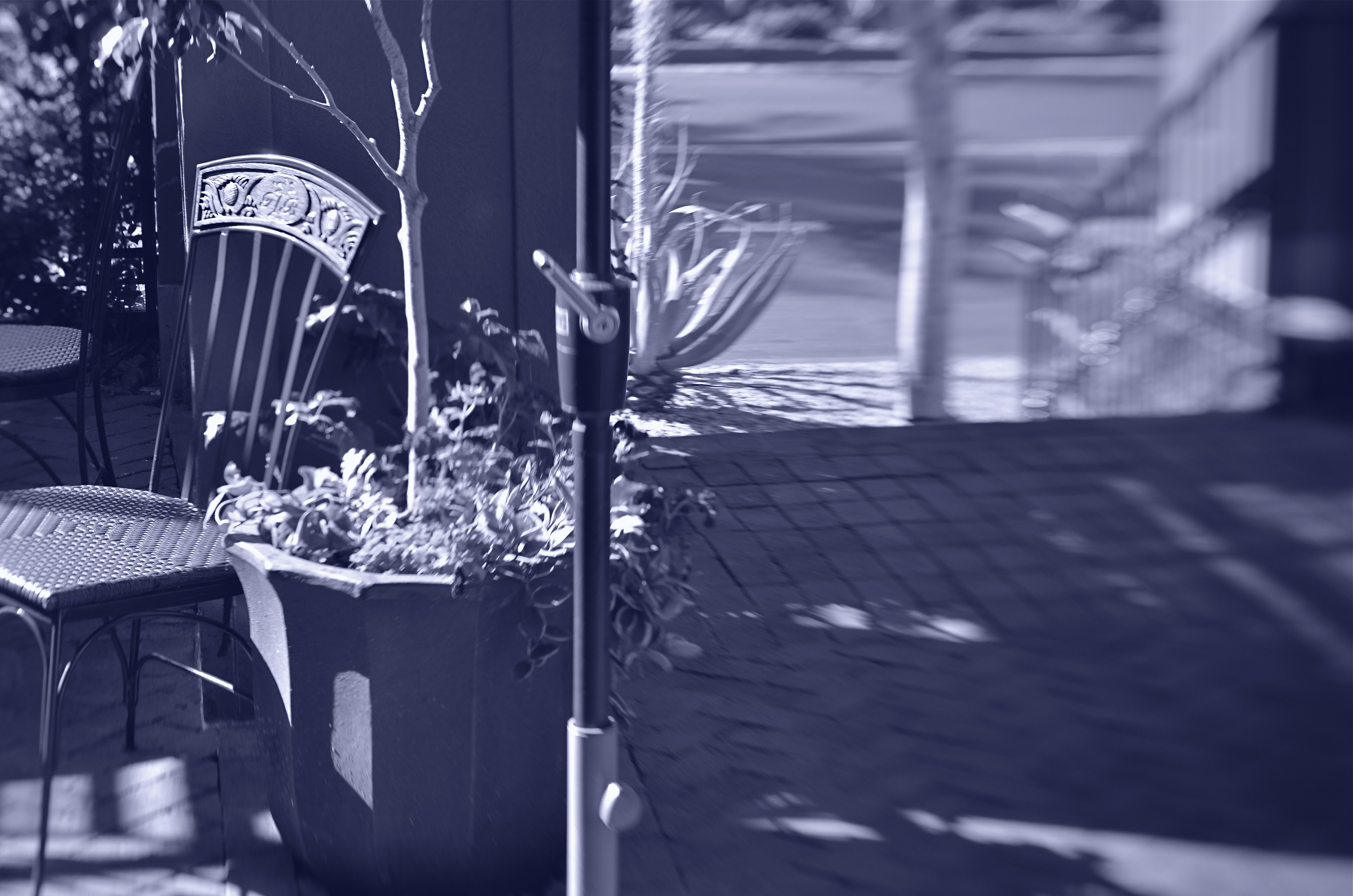
levels but is essentially an affordable tilt-shift attachment, a way to soften focus over selective areas of the frame while rotating the “sweet spot” of sharper focus wherever the shooter feels it should go. Now, essentially, selective focus is really part of every photo ever taken, since a choice of depth-of-field is made every time the shutter snaps. Lensbaby, however, offers the chance to pre-design the precise level of left-right, high-low focus, in the camera, and before the shot is taken. No post-processing is needed, and each use of the effect is completely under the shooter’s control, and at a fraction of what dedicated DSLR lenses cost.The Lensbaby effect is understandably an attractive gimcrack for the instinctive subculture of lo-fi photography, they of the hipster nonchalance and light-leaking, fixed-focus plastic cameras. Hey, it looks freaky, random, edgy. But, like everything else in your kit bag, it’s either toy or tool. The verdict as to which it is comes out one picture at a time.
So far I am whelmed….not overwhelmed, not underwhelmed. For one thing, Lensbabies are a lot of extra work. The entry-level model, the Spark, is actually a lens within a springy plastic bellows. You have to hold your camera body, delegate fingers from both hands to rotate the axis of the front of the lens, squeeze the bellows to bring part of the frame into focus (the Spark’s “sweet spot” is fixed at f/5.6), allocate another finger for the shutter, and click. At least you can’t carp about not having enough creative control. There’s more than enough of that, especially at first, to O.D. on. Your chosen area of focus can be held in place more easily with upgrade models (which also include additional optics and add-ons), but the Lensbaby is truly best for shoots where you have a lot of time to think, plan, and create….the very opposite of the “shoot from the hip” attitude embraced by the lomography crowd. You will take a lot of pictures that miss by inches, or fractions of inches.
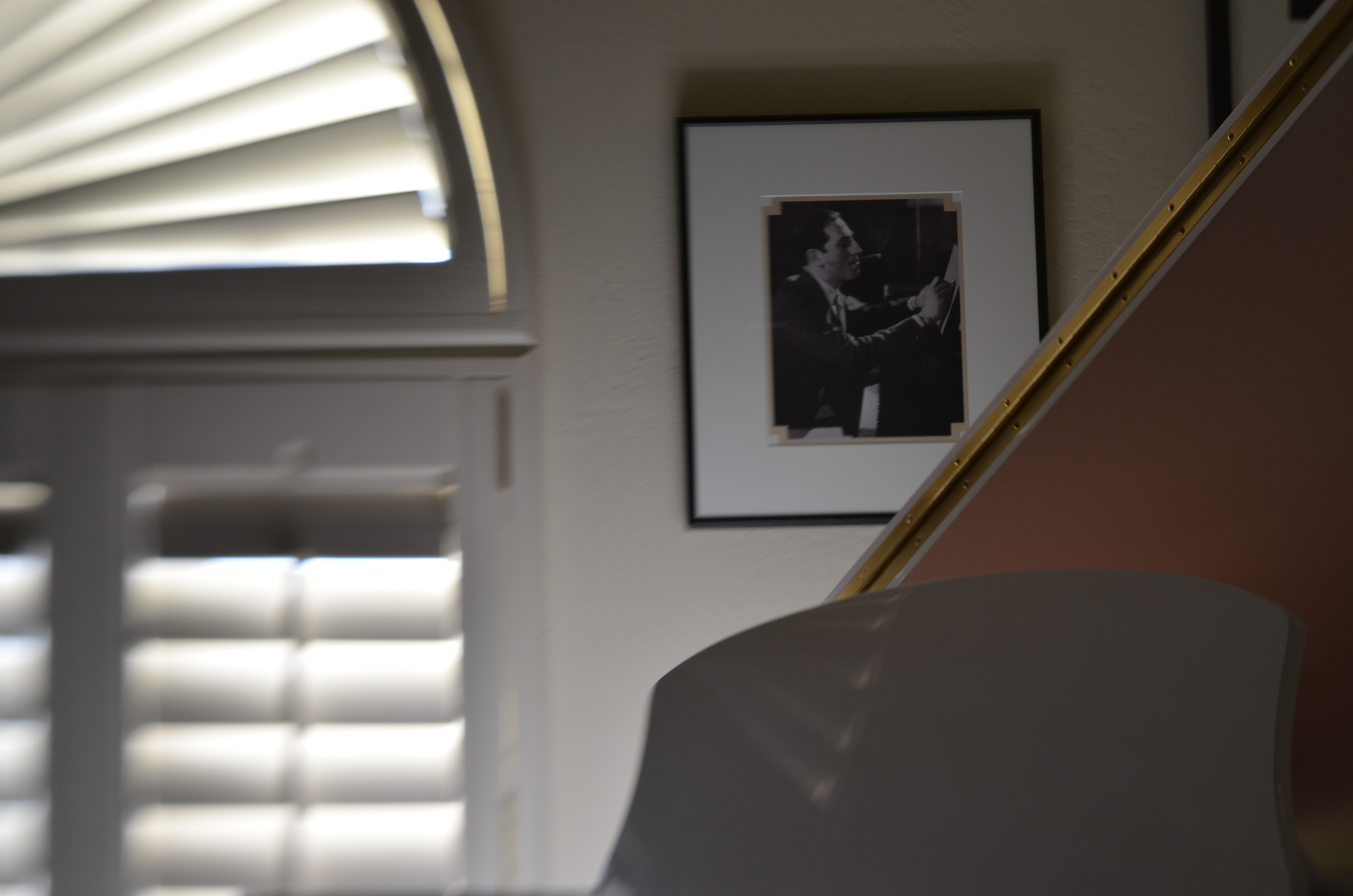
Lensbaby Spark gives you some of the control of a custom lens for under $80.
What will move me from whelmed to overwhelmed will be finding those images where the Lensbaby effect actually aids my storytelling, yet does not define it, as in the lucky shot at the top of this post. The camera gadgets I eventually consign to the “toy” pile go there because they call too much attention to what they can do, not to what I can do using them. The”tools” pile contains the gear that is essential to my saying something in a distinctly different voice. Finally, the two piles are divvied up only after taking lots of pictures and asking a ton of questions (a few gimmicks, like fisheye, have spent time in both piles; hey, I’m not above just playing around).
I sympathize with Letterman’s dilemma when he ironically asks, “Is this anything?” Selective focus is a way to install big neon pointers into your pictures, a more emphatic command to look over here. It’s also a way to amplify the drama of certain data or simplify cluttered compositions. I get it.
But it needs to be about much more than that. Or, more correctly, I have to help it.
Related articles
- My Lensbaby SCOUT, baby! (greyiscolour.wordpress.com)
GET LOST
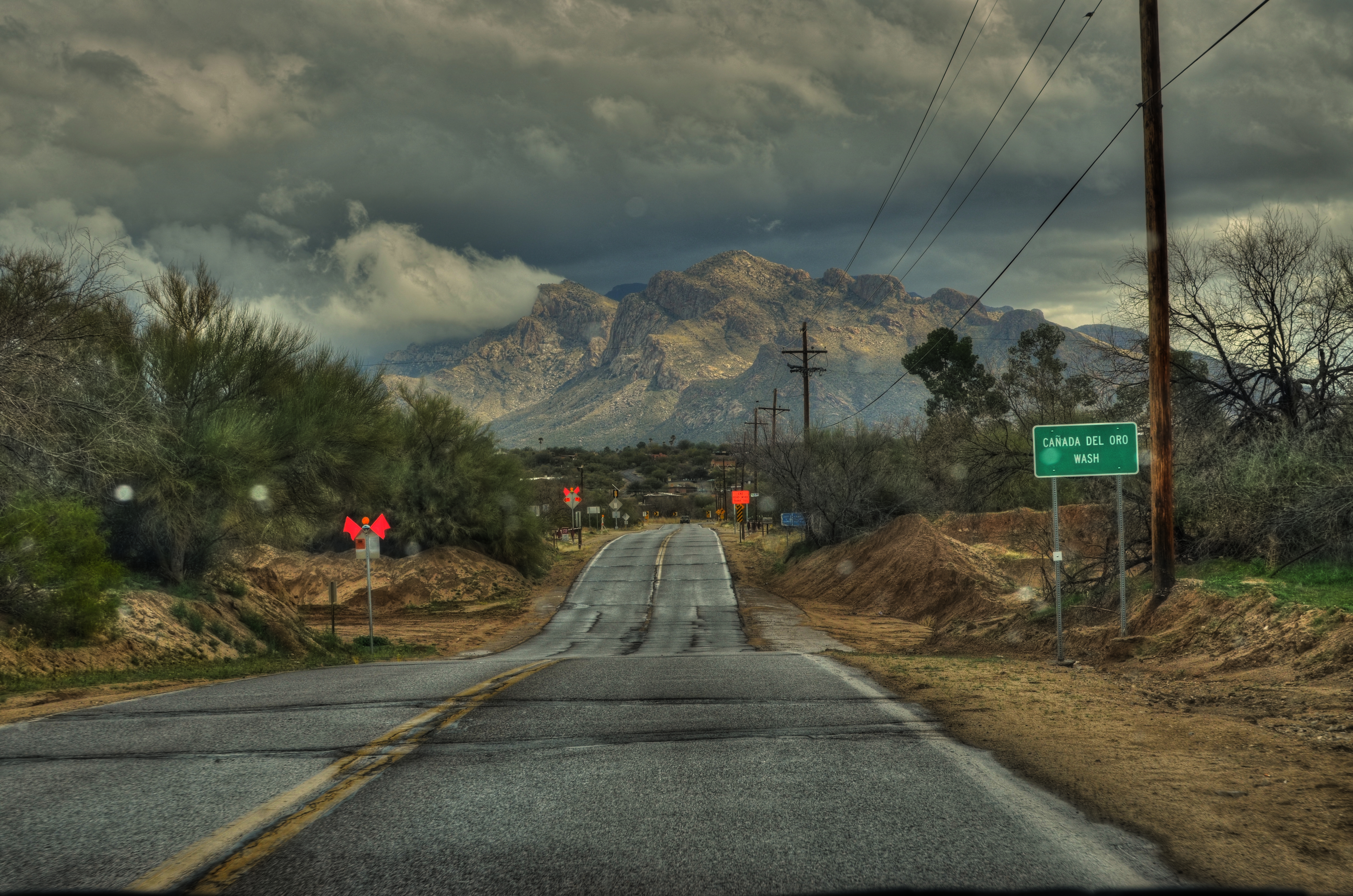
Straight through the windshield, using a technique I like to call “dumb luck”. Original shot specs: 1/320 sec., f/8, ISO 100, 35mm.
By MICHAEL PERKINS
PHOTOGRAPHY IS 10% PLANNING, 90% SERENDIPITY. Yes, I know. we would all rather believe that most of our images spring from brilliant conceptions, master plans, and, ahem, stunning visions. But a lot of what we do amounts to making the most of what fate provides.
There is no shame in this game. In fact, the ability to pivot, to improvise, to make the random look like the intentional…all of these things reveal the best in us. It exercises the eye. It flexes the soul. And, in terms of images, it delivers the goods.
Getting lost (geographically, not emotionally) is less an emergency than in ages past. Armed with smartphones, GPS, and other hedges against our own ignorance, we can get rescued almost as soon as we wander off the ranch. It is easier than ever to follow the electronic trail of crumbs back to where we belong, so drifting from the path of righteousness is no longer cause for panic. Indeed, for shooters, it’s pure opportunity.
Okay, so you’re not where you’re supposed to be. Fine. Re-group and start shooting. There is something in all these “unfamiliar” things that is worth your gaze.
Last week , my wife and I decided to trust her car’s onboard guidance system. The results were wrong but interesting. No danger, just the necessary admission that we’d strayed really far afield of our destination. We’re talking about twenty minutes of back-tracking to set things right.
But first….
One of the rural roads we drifted down, before realizing our error, led us to a stunning view of the back end of Tucson’s Catalina mountains, framed by small town activity, remnants of rainfall, and a portentous sky. I squeezed off a few shots straight out of the windshield and got what I call the “essence” exposure I needed. That single image was relatively well-balanced, but it wouldn’t show the full range of textures from the stormy sky and the mountains. Later, in post, I duplicated the one keeper frame that I got, modifying it in Photomatix, my HDR processing program. Adding underexposure, deeper contrast, and a slight rolloff of highlights on the dupe, I processed it with the original shot to get a composite that accentuated the texture of the clouds, the stone,, even the local foliage. A sheer “wild” shot had given me something that I would have totally missed if the car’s GPS had actually taken us to our “correct” destination.
What was ironic was that, once we got where we were going, most of the “intentional” images that I sweat bullets working on were lackluster, compared to the one I shot by the seat of my pants. Hey, we’ve all been there.
Maybe I should get lost more often.
Actually, people have been suggesting that to me for years.
Especially when I whip out a camera.
Related articles
ESCAPE FROM PLANET PORTRAIT
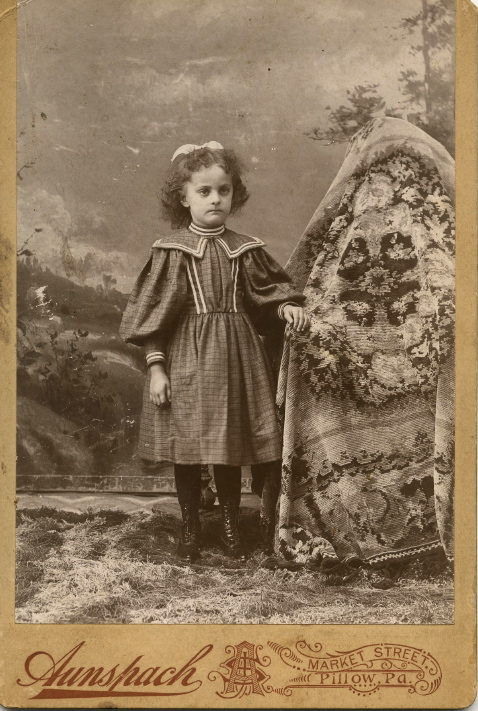
Does this child look happy to you? Does she look like she even has a pulse? Surely we do better kid portraits today, er, don’t we?
By MICHAEL PERKINS
TO HEAR US TELL IT, WE ALL REALLY LOVE OUR KIDS. Assuming that to be true, why do we still subject them to the greatest act of photographic cruelty since Tod Browning’s Freaks? I speak of course, of the creatively bankrupt ritual of studio portraits, many of them cranked out at department stores or discount mills, too many of them making our beloved progeny look like waxworks escaped from a casting call for Beetlejuice.
We can surely do better.
I’m on record as believing that children are the noblest work of nature, coming into the world bearing only joy and untainted by the cynical clown olympics that comprise our “adult” way of thinking. And since we all probably feel the same way, why do so many of us park the little dears in front of hideous backdrops, surround them with absurd props, and gussy them up as everything from fairy princesses to ersatz puppies to fake cherubs?
Part of this ridiculous tradition owes its origins to the early days of photography, when a portrait sitting was the one means by which people who might never leave behind any other visual record of their lives were placed in formalized settings for an “official” rendering of their features. Slow film speeds and primitive lighting dictated that parents “leave it to the pros”, giving these modestly gifted artists decades of practice in weaving imaginary dream framings for our precious kids. (Full disclosure: Yes, I know that the image at left is a leftover from the Victorian age. I didn’t post any contemporary images because (a) many of them are almost this bad and you already get the idea, and (b) I wasn’t eager to be beaten to a pulp by any proud parents.)
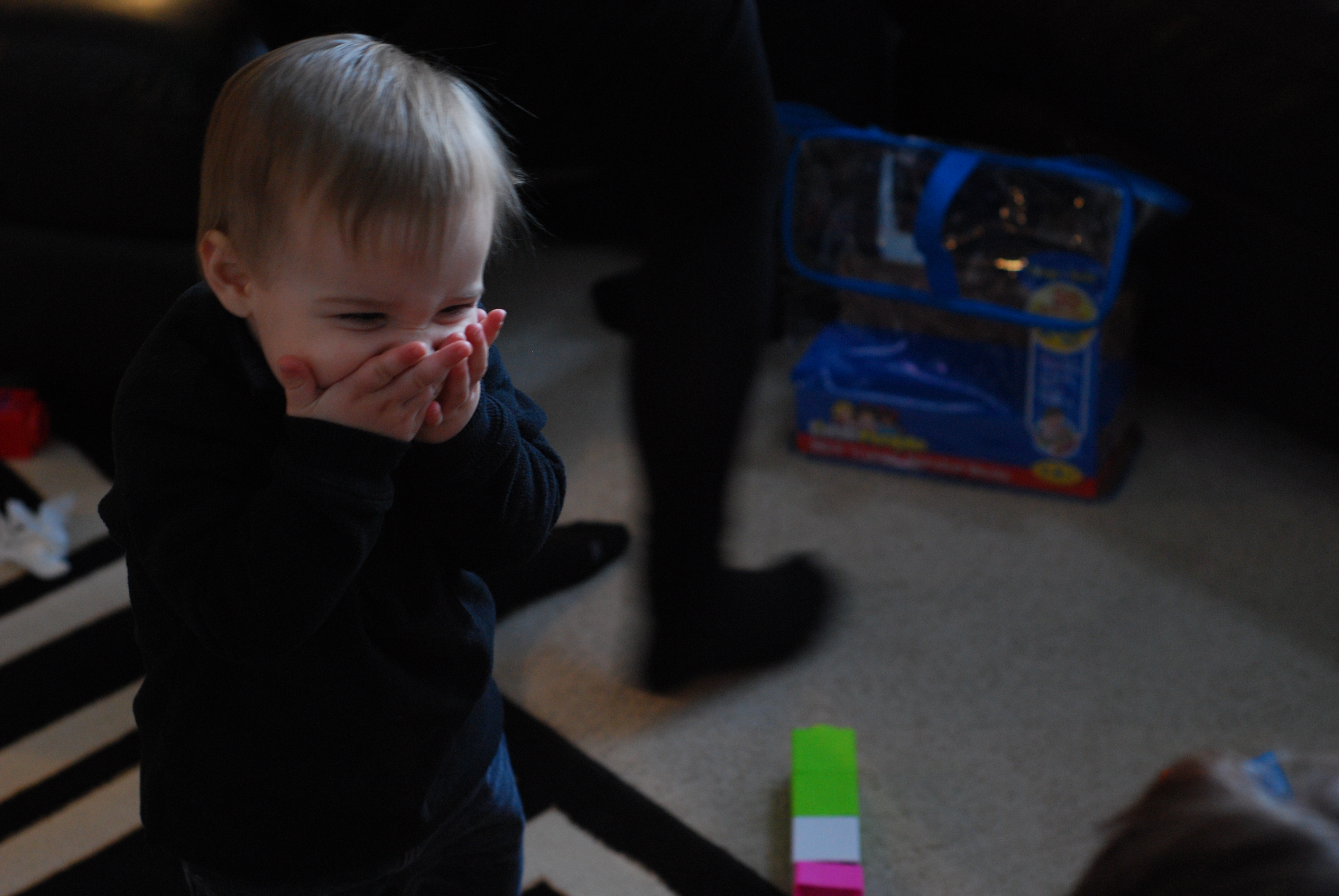
Get out of your comfort zone and into your child’s.
Could it be more obvious, billions of Instamatics and Instagrams later, that this sad ritual hasn’t had any fresh air pumped into it since the golden age of Olan Mills class pictures? Even the most elementary “how-to” books on candid photography have been telling us the same thing for nearly a century: don’t formalize the setting, formalize your thinking. Let your child show you what he is, in his own environment. That means that you need to shoot constantly and invisibly, getting out of the kid’s way. No 3-2-1 “Cheese!” commands, no “sit up straight and don’t slouch” advice, no arbitrary situation.
Sure, you can basically plan how you will shoot your child, but allow him to unfold before your ready camera and gain the confidence to react in the moment. Stop trying to herd him into a structure or a setting. If at all possible, allow him to forget that you’re even in the room. Witness something wonderful instead of trying to construct it. Be a fly on the wall. The child is pitching great stuff every time he’s on the mound. Just make sure you’re behind the plate to to catch it.
Dirty little secret: there is nothing “magical” about most studio portraits. In fact, many of the results from the photo mills are just about the most un-magical pictures ever taken, although there are signs that things are changing. It simply isn’t enough to ensure a perfectly diffused background and an electronically exact flash. Even today’s most humble personal cameras have amazing flexibility to capture flattering light and isolate your subject from distracting backgrounds. And going from standard “kit” lenses (say, an 18-55mm) to an affordable prime lens (35mm, 50mm) gives us insane additional gobs of light to work with, all without using the dreaded pop-up flash, the photographic equivalent of child abuse.
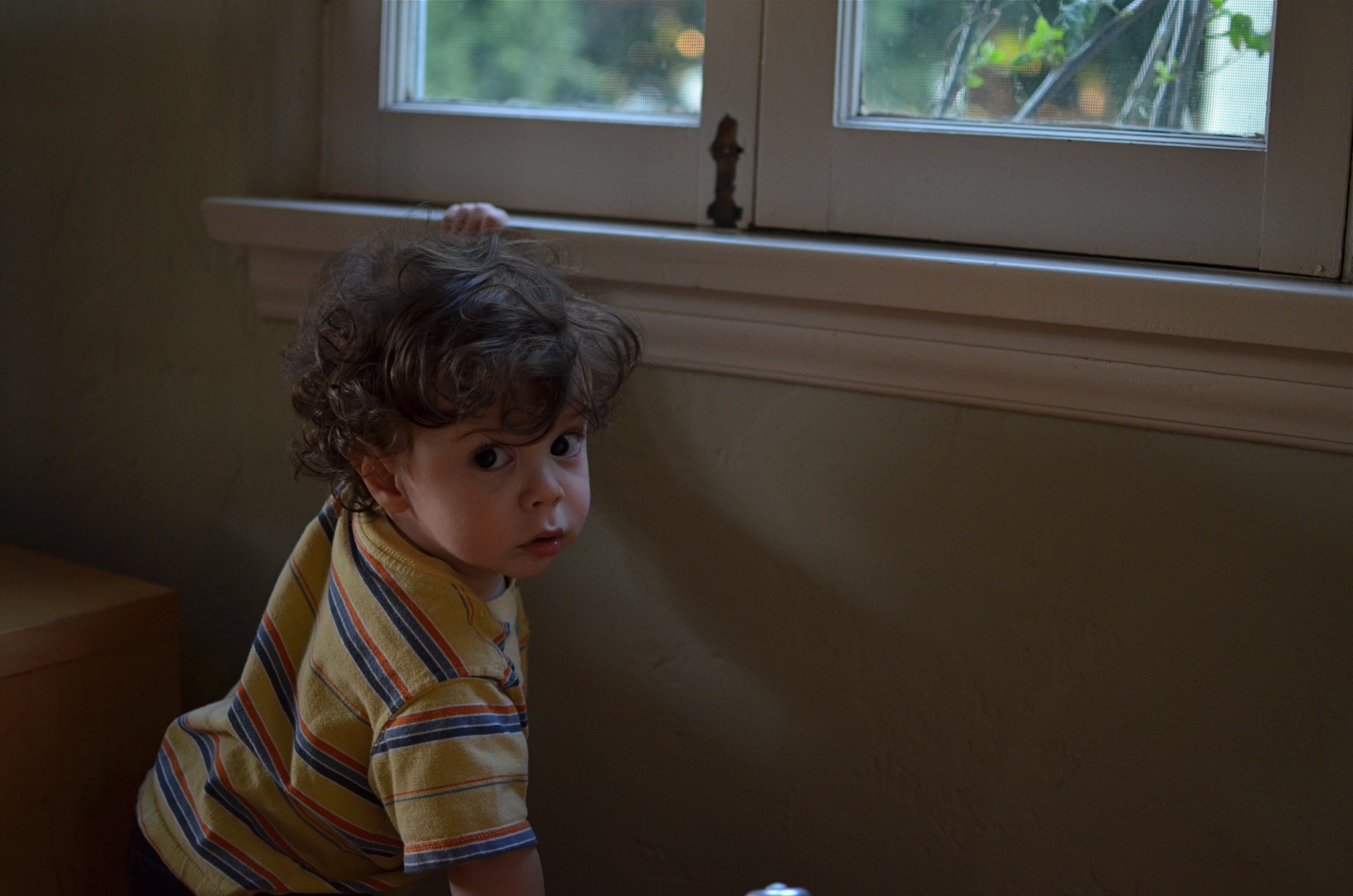
It don’t gotta be perfect. It does gotta be honest.
Doing it yourself with kid portraits is work, make no mistake. You have to be flexible. You have to be fearless. And you have to know when something magical’s about to happen. But it’s your child, and there is no outside contractor who has a better sense of what delight he has inside him.
Besides, isn’t it likelier that he will show you the magic in his own back yard than in a back room at K-Mart? Give him something that he loves to do, the better to forget you’re there, and crank away. I mean shoot a lot. And don’t stop.
You’re the expert here.
Don’t outsource your joy.
THE ROOMS DOWN THE HALL
By MICHAEL PERKINS
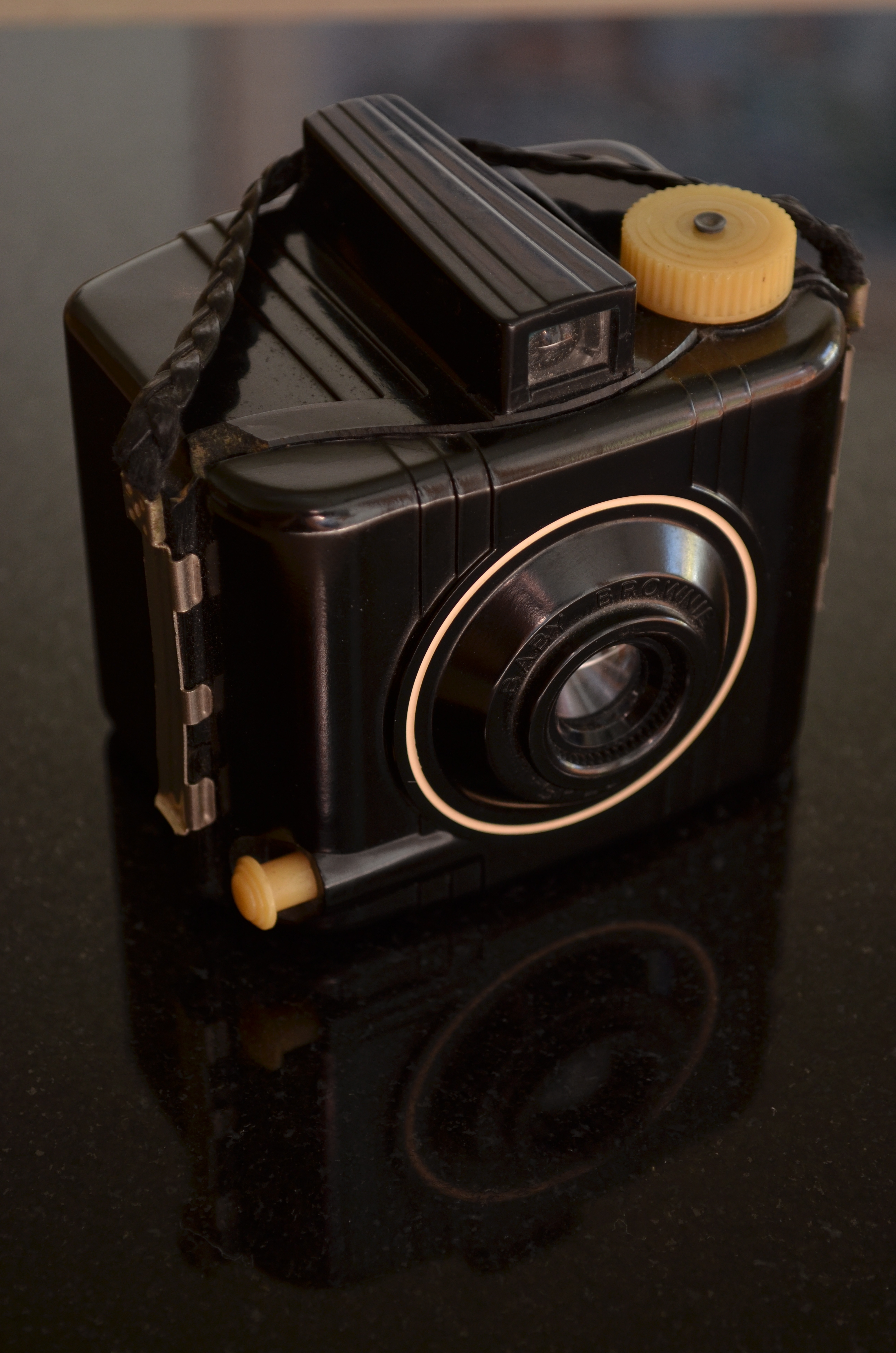 FOR THESE PAGES, IT WAS NEVER MY VISION TO MERELY POST PICTURES. Not, at least, without some kind of context. Just meeting a regular deadline with the “picture of the day” held as little interest for me as maintaining a diary, an oppressive regularity that I have resisted my entire life. For the most part, the images on THE NORMAL EYE are here to anchor my thoughts about what it feels like to be enticed, seduced, enthralled, and, yes, disappointed by photography, to caption the frames with some semblance of the creative process, at least as I had the poor power to see it at the time.Like all blogs, it is written on my own very personal terms. I am always thrilled to harvest reaction and comment, since, as Ike Turner once sang, “was my plan from the very began”. But the important thing is to get the thoughts right, or at least to use them as a guide to the shots. Thus, the mission is neither words nor pictures, but some kind of handshake symbiosis between the two.
However, since day one, I have reserved several gallery pages on which visual info is pretty much all there is, since I also believe that it is important to react to photographs on a purely visceral basis. If the blog is the main hall in the house, think of these as the rooms down the hall that you never thought to explore.
I have tried to give each gallery its own general feel, since there are different “themes” which motivate our taking of pictures, and I thought, for this post, it might be helpful to underscore those themes just enough to justify how they were organized. I have now also given them specific names instead of the A-B-C tags they had previously.
Here’s the new rundown:
Gallery A is now “HDR”, since I think that this process affords very specific benefits for reproducing the entire range of visible light in a way that, until recently, has been impracticable for many shooters. No tool is suitable for every kind of shooting situation, but HDR comes close to reproducing what the eye sees, and can enhance detail in fascinating ways. There is a lot controversy over its best use, so, like everywhere else on this blog, your opinions are invited.
The former B gallery is a collection of impulse shots. All of these images were taken in the moment, on a whim, with only instinct to guide me. No real formal prep went into the making of any of them, as they were the product of those instants when something just feels right, and you try to snag it before it vanishes. We’ll call these “SNAP JUDGEMENTS”.
And finally, the photos formerly known as Gallery “C” are now renamed “NATURAL STATE”, as these portraits are all shot using available light, captured without flash or the manipulation of light through reflectors, umbrellas, or other tools.
Let me state here that your participation in this forum was always the centerpiece of my doing it in the first place, and your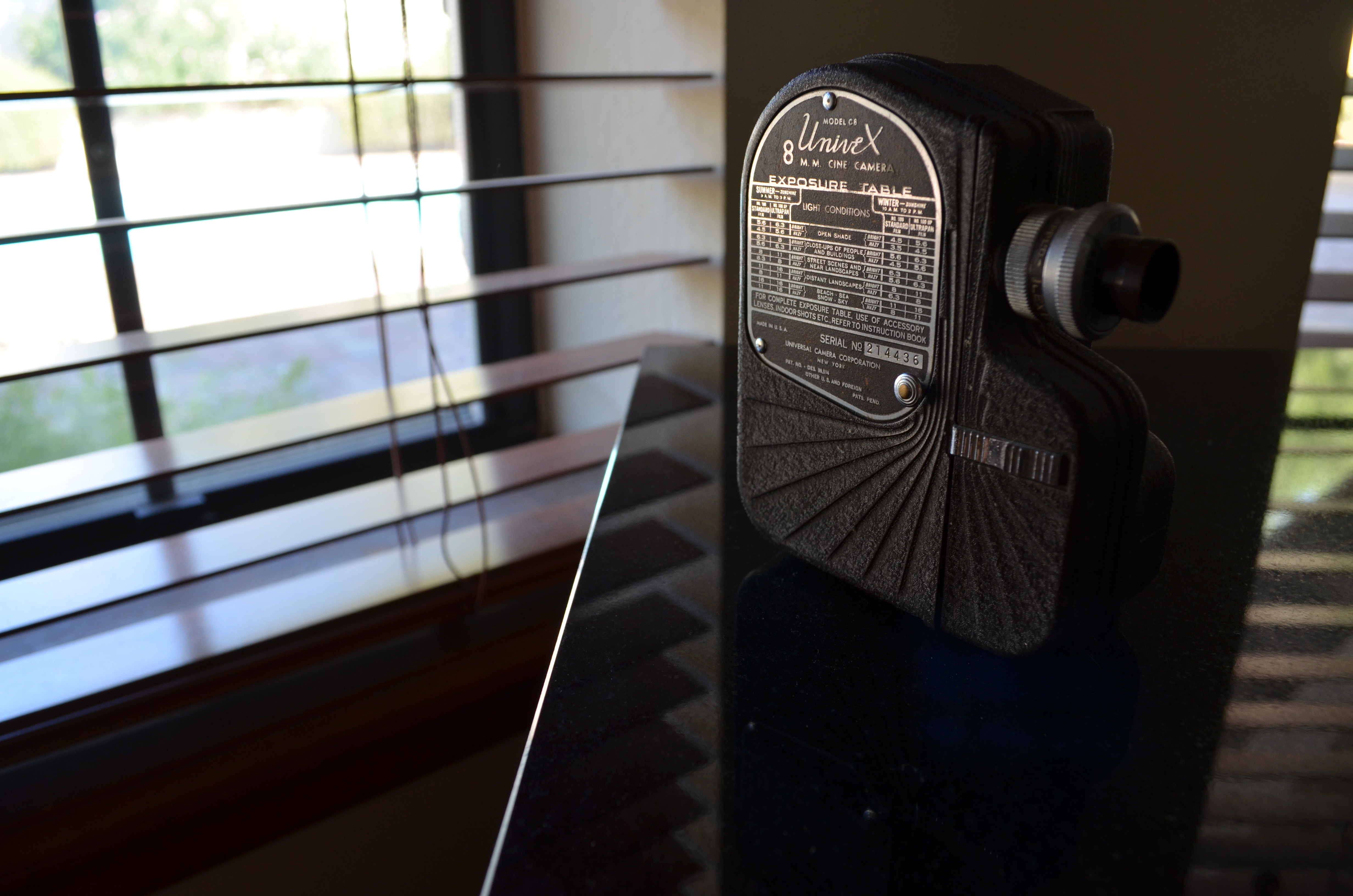 ideas and suggestions have always inspired me to try to be worthy of the space I’m taking up. I also have enjoyed linking back to your individual sites and visions. It’s a great way to learn.
So please know that, when you click the “like” button at the bottom of these posts, or take the time to type a comment, it does help me see what works, as well as what needs to be done better. I don’t believe that art can grow in a vacuum, and I thank everyone for giving these pages shape and form.
And thanks for exploring all the rooms in my house.
FLATTERY WILL GET YOU NOWHERE
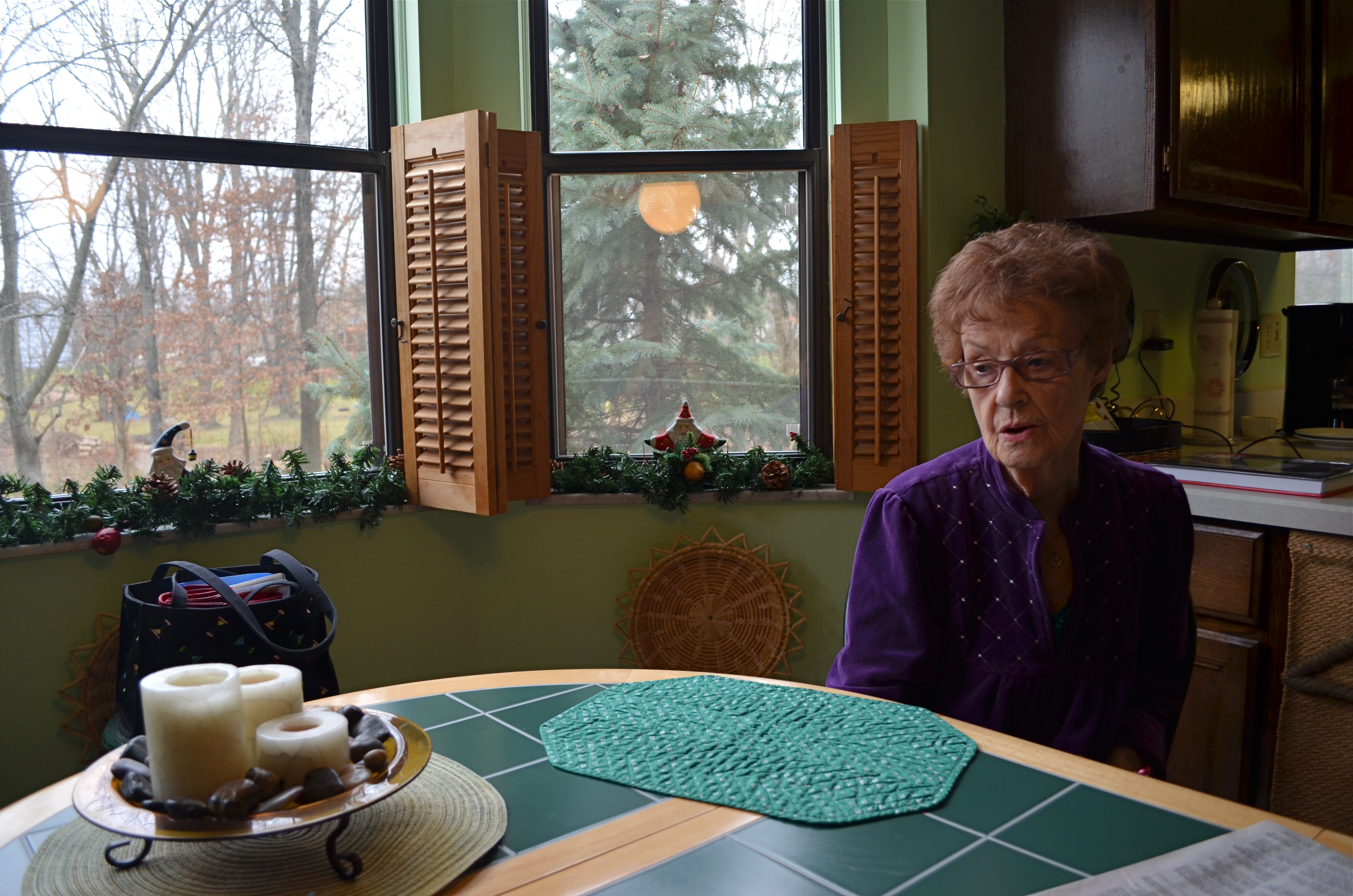
My beautiful mother, well past 21 but curator of a remarkable face. Window light softens, but does not erase, the textures of her features. 1/60 sec., f/4.5, ISO 200. 18mm.
By MICHAEL PERKINS
THE DEPICTION OF THE FACES OF THOSE WE LOVE IS AMONG THE MOST DIVISIVE QUESTIONS IN PHOTOGRAPHY. Since the beginning of the medium, thoughts on how to capture them “best” clearly fall into two opposing camps. In one corner, the feeling that we must idealize, glamorize, venerate the features of those most special in our lives. In the other corner, the belief that we should capture faces as effects of time and space, that is, record them, without seeking to impose standards of grace or beauty on what is in front of the lens. This leads us to see faces as objects among other objects.
The first, more cosmetic view of faces, which calls for ideal lighting, a flattering composition, a little “sweetening” in the taking, will always be the more popular view, and its resultant images will always be cherished for emotionally legitimate reasons. The second view is, let’s “face” it, a hard sell. You have to be ready for a set series of responses from your subjects, usually including:
Don’t take me. I just got up.
God, I look so old. Delete that.
I hate having my picture taken.
That doesn’t even look like me.
Of course, since no one is truly aware of what they “look like”, there is always an element of terror in having a “no frills” portrait taken. God help me, maybe I really do look like that. And most of us don’t want to push to get through people’s defenses. It’s uncomfortable. It’s awkward. And, in this photo-saturated world, it’s a major trick to get people to drop their instinctive masks, even if they want to.
Still.
As I visually measure the advance of age on my living parents (both 80+ ) and have enough etchings on my own features to mirror theirs, I am keener than ever to avoid limiting my images of us all to mere prettiness. I am particularly inspired by photographers who actually entered into a kind of understanding with their closest life partners to make a sort of document out of time’s effects. Two extreme examples: Richard Avedon’s father and Annie Leibovitz’ partner Susan Sontag were both documented in their losing battles with age and disease as willing participants in a very special relationship with very special photographers….arrangements which certainly are out of the question for many of us. And yet, there is so much to be gained by making a testament of sorts out of even simple snaps. This was an important face in my life, the image can say, and here is how it looked, having survived more than 3/4 of a century. Such portraits are not to be considered “right” or “wrong” against more conventional pictures, but they should be at least a part of the way we mark human lives.
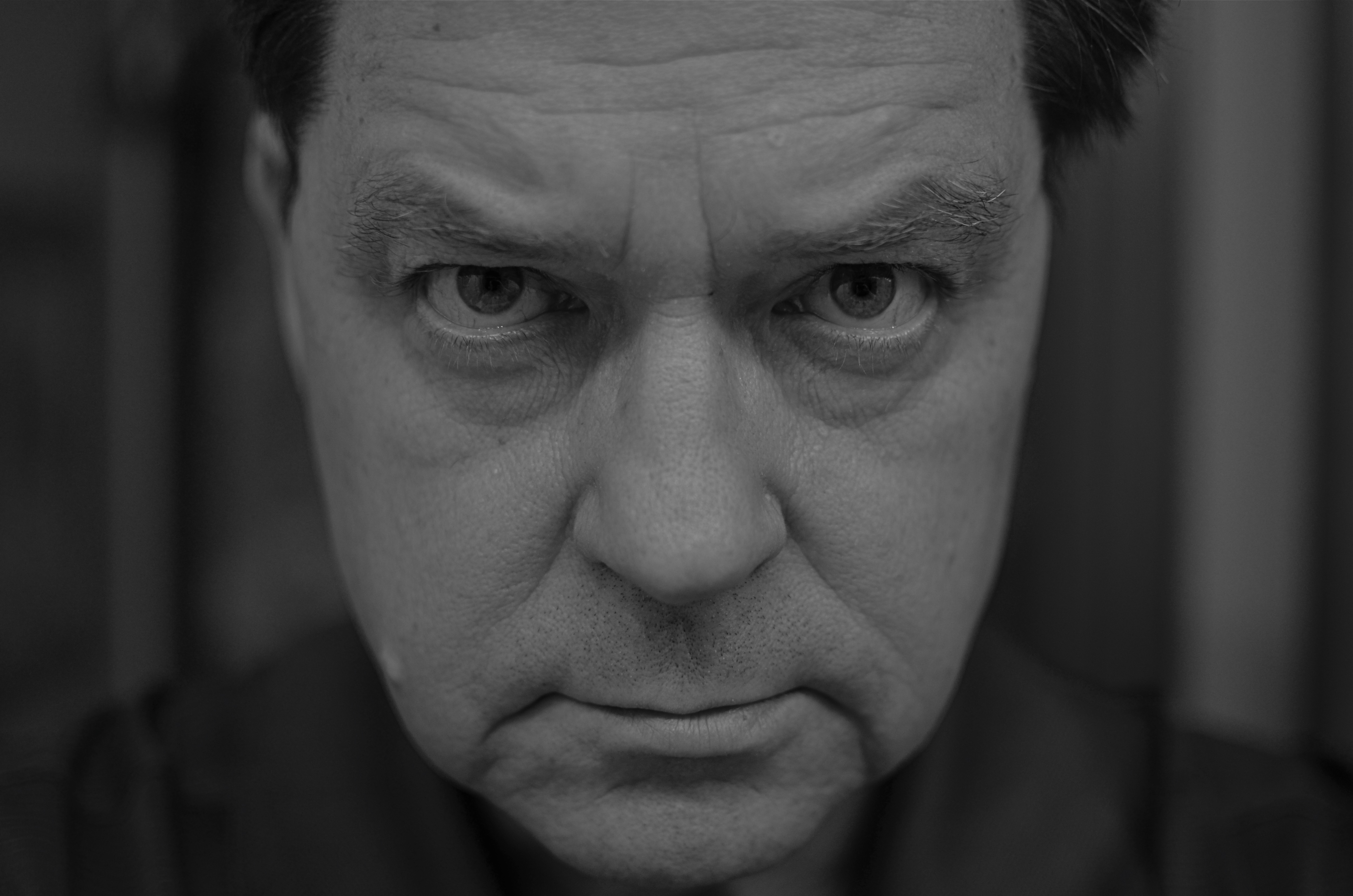
Don’t forget to document the effects of time on your own face. 1/160 sec., f/1.8, ISO 200, 35mm.
Everyone has to decide their own comfort zone, and how far it can be extended. But I think we have to stretch a bit. Pictures of essentially beautiful people who, at the moment the shutter snaps, haven’t done up their hair, put on their makeup, or conveniently lost forty pounds. People in less than perfect light, but with features which have eloquent statements and truths writ large in their every line and crevice. We should also practice on ourselves, since our faces are important to other people, and ours, like theirs, are going to go away someday.
In trying to record these statements and truths, mere flattery will get us nowhere. The camera has an eye to see; let’s take off the rose-colored filter, at least for a few frames.
Related articles
- The Great Richard Avedon (sandroesposito.wordpress.com)
LET THERE BE (MORE) LIGHT
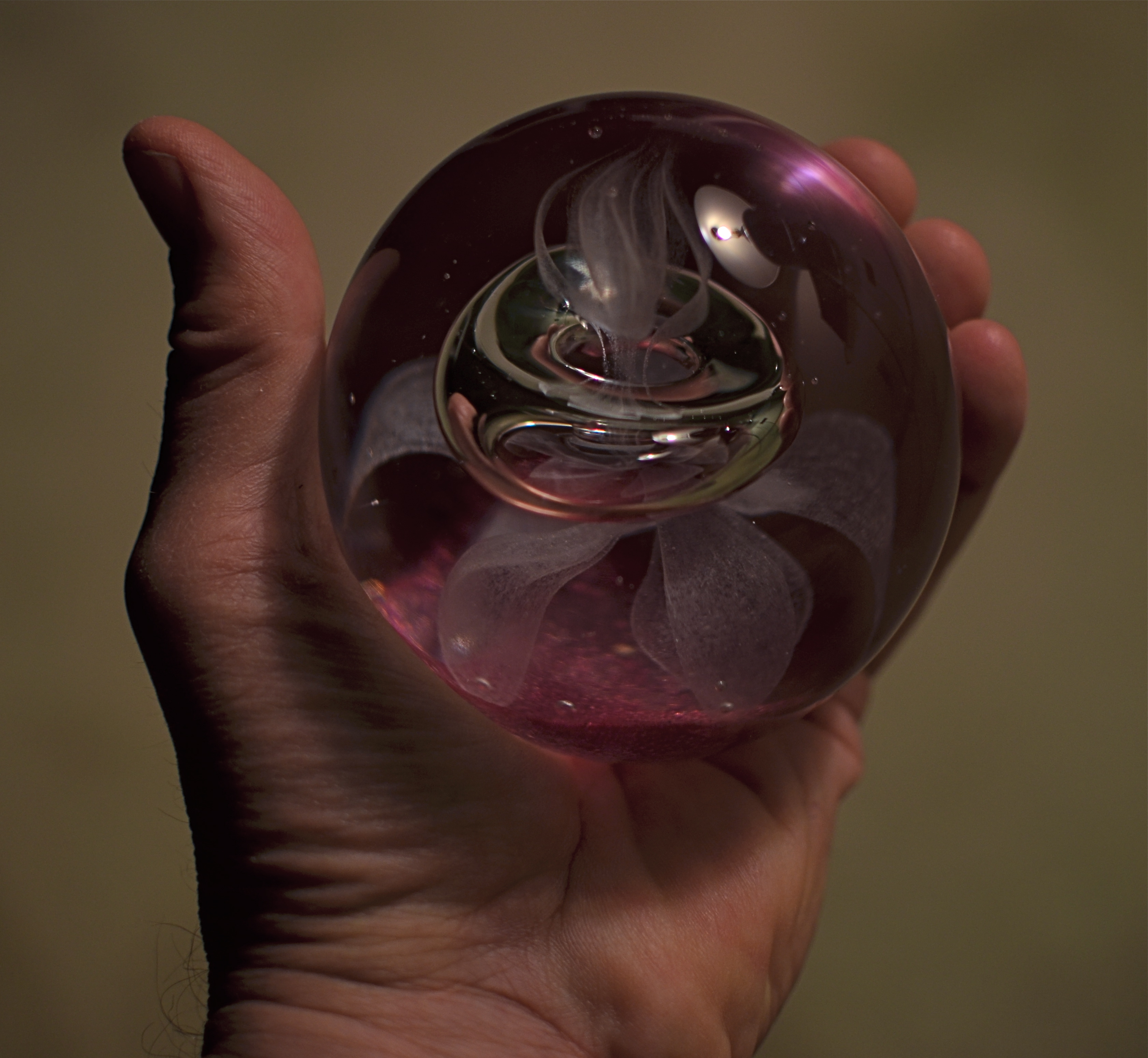
A new piece of glass makes everything look better….even another piece of glass. First day with my new 35mm prime lens, wide open at f/1.8, 1/160 sec., ISO 100.
By MICHAEL PERKINS
I HAVE RECENTLY BEEN EXPERIENCING ONE OF THOSE TIME MACHINE MOMENTS in which I am, again, right back at the beginning of my life as a photographer, aglow with enthusiasm, ripe with innocence, suffused by a feeling that anything can be done with my little black box. This is an intoxication that I call: new lens.
Without fail, every fresh hunk of glass I have ever purchased has produced the same giddy wonder, the same feeling of artistic invincibility. This time out, the toy in question is a Nikon f/1.8 35mm prime lens, and, boy howdy, does this baby perform. For cropped sensor cameras, it “sees” about like the 50mms of old, so its view is almost exactly as the human eye sees, without exaggerated perspective or angular distortion. Like the 50, it is simple, fast, and sharp. Unlike the 50, it doesn’t force me to do as much backing up to get a comfortable framing on people or near objects. The 35 feels a little “roomier”, as if there are a few extra inches of breathing space around my portrait subjects. Also, the focal field of view, even wide open, is fairly wide, so I can get most of your face tack sharp, instead of just an eye and a half. Matter of preference.
All this has made me marvel anew at how fast many of us are generally approaching the age of flashless photography. It’s been a long journey, but soon, outside the realm of formal studio work, where light needs to be deliberately boosted or manipulated, increasingly thirsty lenses and sensors will make available light our willing slave to a greater degree than ever before. For me, a person who believes that flash can create as many problems as it solves, and that it nearly always amounts to a compromise of what I see in my mind, that is good news indeed.
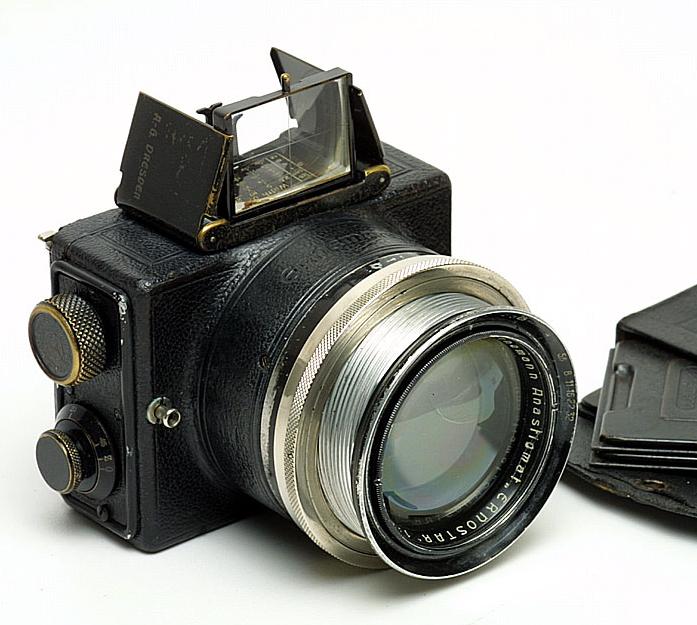
The Ermanox, perhaps the first camera designed to free mankind from the tyranny of flash.
It also makes me think of the first technical efforts to illuminate the dark, such as the camera you see off to the left. The Ermanox, introduced by the German manufacturer Ernemann in 1924, was one of the first big steps in the quest to free humankind of the bulk, unreliability and outright danger of early flash. Its cigarette-pack-sized body was dwarfed by its enormous lens, which, with a focal length of f/2, was speedy enough (1/1000 max shutter) to allow sharp, fast photography in nearly any light. It lost a few points for still being based on the use of (small) glass plates instead of roll film, but it almost single-handedly turned the average man into a stealth shooter, in that you didn’t have to pop in hefting a lotta luggage, as if to scream “HEY, THE PHOTOGRAPHER IS HERE!!” In fact, in the ’20’s and ’30’s, the brilliant amateur shooter Erich Solomon made something of a specialty out of sneaking himself and his tiny Ermanox into high-level government summits and snapping the inner circle at its unguarded best (or worst). Long exposures and blinding flash powders were no longer part of the equation. Candid photography had crawled out of its high chair… and onto the street.
Today or yesterday, this is about more than just technical advancement. The unspoken classism of photography has always been: people with money get great cameras; people without money can make do. Sure, early breakthroughs like the Ermanox made it possible for anyone to take great low-light shots, but at $190.65 in 1920’s dollars, it wasn’t going to be used at most folks’ family picnics. Now, however, that is changing. The walls between “high end” and “entry level” are dissolving. More technical democracy is creeping into the marketplace everyday, and being able to harness available light affordably is a big part of leveling the playing field.
So, lots more of us can feel like a kid with a new toy, er, lens.
Related articles
- Prime Lenses (nikonusa.com)
- Understanding Focal Length (nikonusa.com)
 thenormaleye