COMMANDER-IN-GRIEF
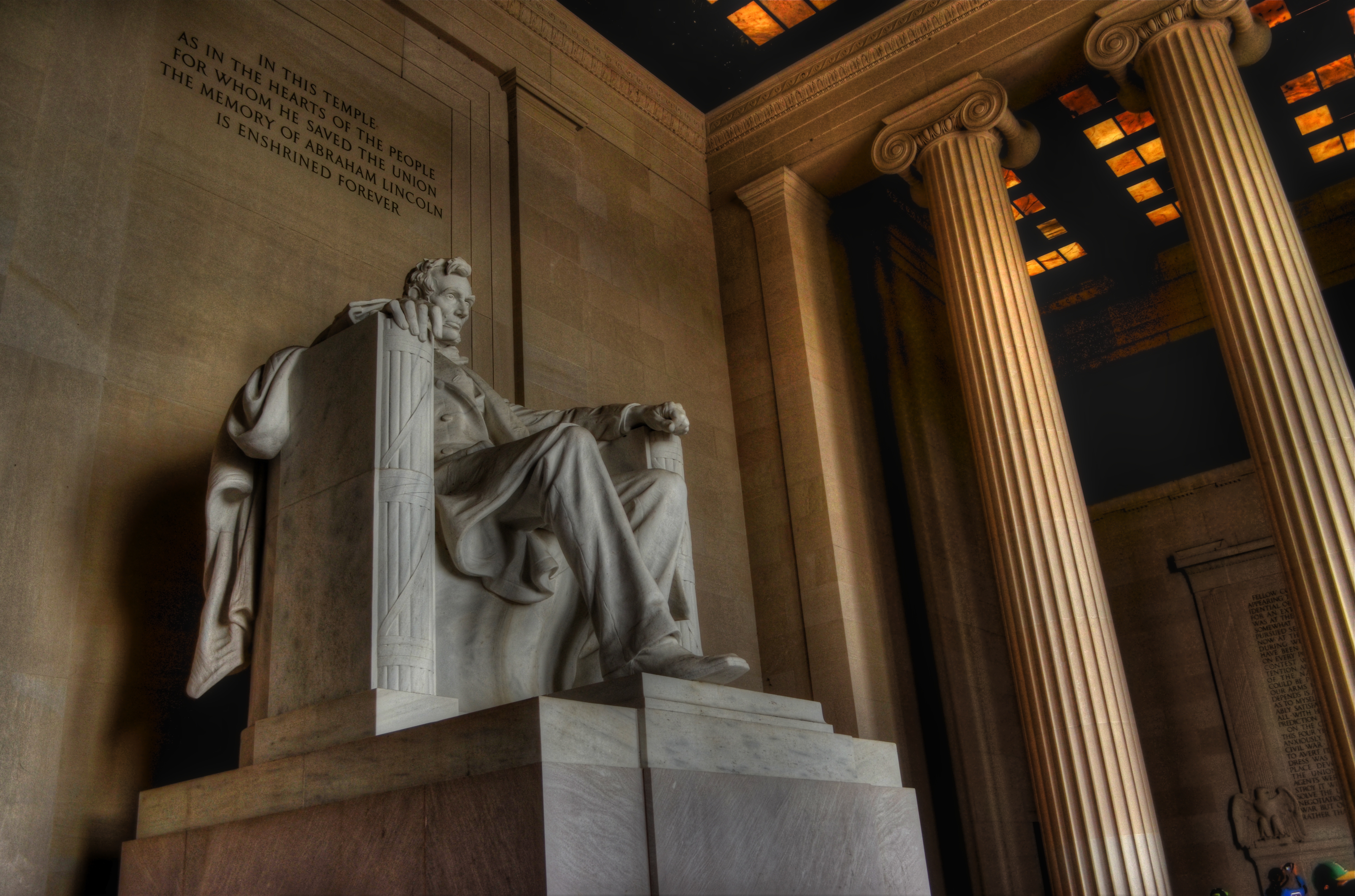
Mr. Lincoln’s vigil continues. See below for details on the making of this image.
By MICHAEL PERKINS
MANY OF THOSE WHO TRAVEL TO WASHINGTON, D.C.’s VARIOUS MONUMENTS each year generally strike me as visitors, while those who throng to the memorial honoring Abraham Lincoln seem more like pilgrims. Scanning the faces of the children and adults who ascend the slow steps to the simple rectangular chamber that contains Daniel Chester French‘s statue of the 16th president, I see that this part of the trip is somehow more important to many, more fraught with a sense of moment, than the other places one may have occasion to view along the National Mall. This is, of course, simply my subjective opinion. However, it seems that this ought to be true, that, even more than Jefferson, Washington or any other single person attendant to the creation of the republic, Lincoln, and the extraordinary nature of his service, should require an extra few seconds of silent awe, and, if you’re a person of faith, maybe a prayer.
This week, one hundred and fifty years ago, the gruesome and horrific savagery of the Civil War filled three whole days with blood, blunder, sacrifice, tragedy, and finally, a glimmer of hope, as the battle of Gettysburg incised a scar across every heart in America. Lincoln’s remarks at the subsequent dedication of the battlefield placed him in the position of official pallbearer for all our sorrows, truly our Commander-In-Grief. Perhaps it’s our awareness of the weight, the loneliness, the dark desolation of that role that makes visitors to the Lincoln Memorial a little more humble, a little quieter and deeper of spirit. Moreover, for photographers, you want more of that statue than a quick snap of visiting school children. You want to get something as right as you can. You want to capture that quiet, that isolation, Lincoln’s ability to act as a national blotter of sadness. And then there is the quiet resolve, the emergence from grief, the way he led us up out of the grave and toward the re-purposing of America.
The statue is a simple object, and making something more eloquent than it is by itself is daunting.
The interior of the monument is actually lit better at night than in the daytime, when there is a sharp fall-off of light from the statue to the pillars and colored glass skylights to its right and left. You can crank up the ISO to retrieve additional detail in these darker areas, but you risk the addition of grainy noise. In turn, you can smooth out the noise later, but, in so doing, you’ll also smear away the beautiful grain in the statue itself.
In my own case, I decided to take three bracketed exposures, all f/5.6, , nice and wide at 20mm, low noise at ISO 100, with shutter speeds of 1/50, 1/100, and 1/200. In blending the three later in Photomatix’ Detail Enhancement mode, I found that the 1/200 exposure had too little information in it, so a composite of the three shots would have rendered the darkest areas as a kind of black mayonnaise, so I did the blend with only two exposures. Stone being the main materials in the subject, I could jack up the HDR intensity fairly high to accentuate textures, and, for a more uniform look across the frame, I gently nudged the color temperature toward the brown/amber end, although the statue itself is typically a gleaming white. The overall look is somewhat more subdued than “reality”, but a little warmer and quieter.
Abraham Lincoln was charged with maintaining a grim and faithful vigil at America’s bedside, in a way that no president before or since has had to do. Given events of the time, it was in no way certain that the patient would pull through. That we are here to celebrate his victory is a modern miracle, and the space his spirit occupies at the Lincoln Memorial is something photographers hunger to snatch away for their own.
What we try to capture is as elusive as a shadow, but we need to own something of it. The commander-in-grief’s legacy demands it.
Follow Michael Perkins on Twitter @mpnormaleye.
Related articles
- Other Proposed Designs for the Lincoln Memorial (ghostsofdc.org)
- Lincoln Memorial Under Construction (ghostsofdc.org)
MUTATION
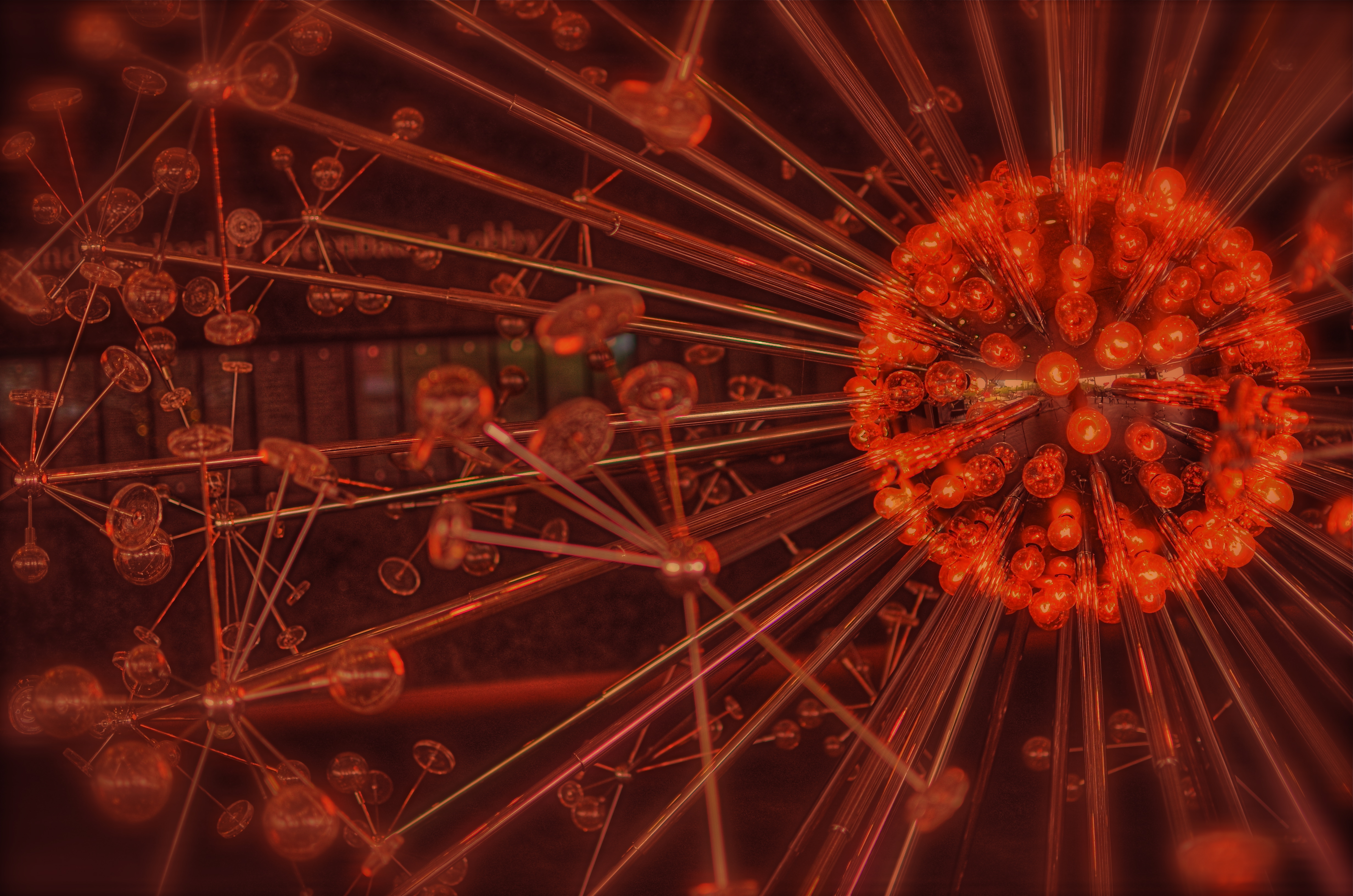
Okay, this has a LOT of processing. Love me or hate me based on whether it worked. 1/500 sec., f/1.8, ISO 100, 35mm.
BY MICHAEL PERKINS
NOT CONTENT TO BE AN ART ON ITS OWN TERMS, PHOTOGRAPHY IS ALSO CONSTANTLY RE-INTERPRETING ALL THE OTHER ARTS AS WELL. Ever since imaging fell out of the cradle in the early 1800’s, several of us have always been looking at the works of others and saying, “eh, I can probably do something with that.”
Yeah, not too presumptuous, right? And the trend has continued (some say worsened) to the present day. Half the time we are creating something. The other half of the time we are tweaking, mocking, honoring, loving, hating, shredding, re-combining, or ragging on somebody else’s work. Are these mashups also art? Are we co-creators or just cheesy thieves?
And does it matter?
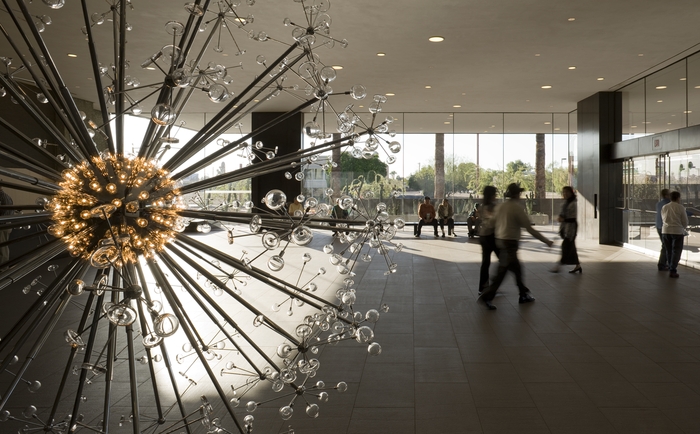
The Last Scattering Surface as it appears in the lobby of the Phoenix Art Museum.
The Phoenix Art Museum greets customers with a stunning original sculpture in glass and plexi right at the entrance to its ticket lobby. A huge installation of light bulbs, mirrored surfaces and reflective discs, Josiah McIlheny’s The Last Scattering Surface resembles a brightly burning orb (planet? asteroid? dwarf star?) surrounded by jutting rods that carry the central sphere’s light along “rays” to a series of circular satellites (moons? craft? debris?) Like many examples of pure design it is both everything and nothing, that is, it is mutative based on your observation. So, in a way, as in the manner of a photographer, you are already a participant in the co-creation of this object just by looking at it. Does this mean that it’s less theif-ish to go ahead and mutate the man’s work?
Well, there’s probably a lively back-and-forth on that.
For my own “take”, I wanted to remove the background walls, visitors, ambient blurry light from other junk, to isolate this nova-like work in “space”. I only had one frame that I liked from my short blast of shots, so I duped it, slammed the contrast real light/real dark on the pair, and did an exposure fusion in Photomatix. Adding a little edge blur and a re-tinting to the composite gave me the look of an interstellar explosion.
I freely advertise that I am making a semi-original re-mix on a completely original work. It’s not much more radical than shooting with a filter on the lens, or choosing black and white for a color subject, and yet, it always feels funny to try and make something beautiful that was beautiful in the first place.
But art is supposed to be about starting conversation, so consider this mine.
I just did my talking with a box instead of a mouth.
follow Michael Perkins on Twitter @ mpnormaleye.com
IT TAKES A THIEF
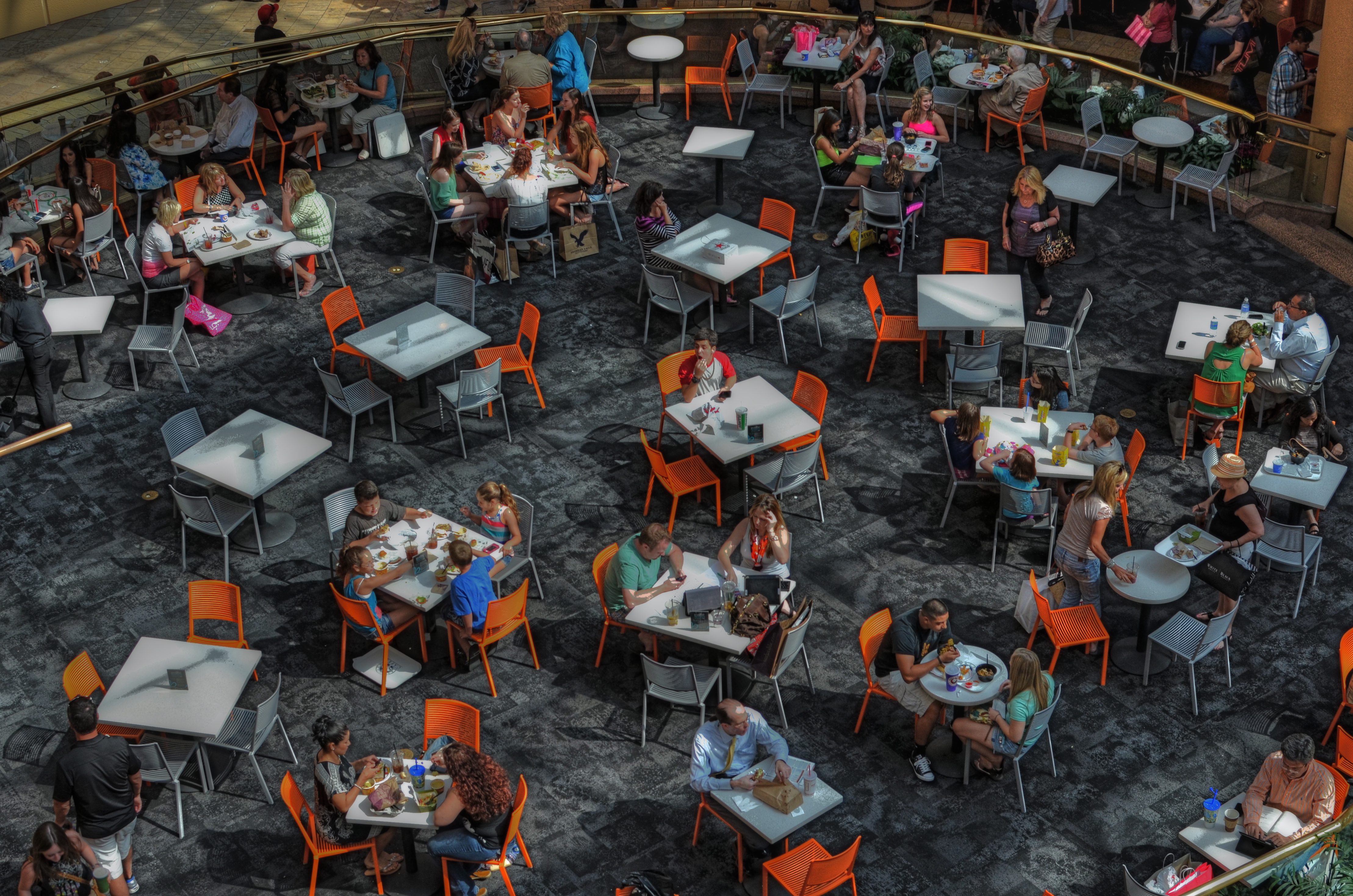
In this composition, people become mere design elements, or props. To get this look, a single exposure was duped, the two images were re-contrasted, and then blended in the HDR program Photomatix for a wider tonal range than in “nature”.
By MICHAEL PERKINS
THE GREAT STREET PHOTOGRAPHERS OF OLD WERE ALL WILY, SLY THIEVES, capturing their prey in emulsion. Yes, I know that the old superstition isn’t literally true. You can’t, in fact, imprison someone’s soul inside that little black box. And yet, in a sense that is very personally felt by many of our subjects today, we are committing an “invasion” of sorts, a kind of artsy assault on the self. Oddly, the same technique that gets you admired when you successfully capture a precious quality of someone else’s face makes you despised when you’re sneaking around to get my picture. Whether street shoots are inspired or reviled is largely a matter of who is being “violated”.
We’ve all heard about Henri Cartier-Bresson, covering the bright chrome trim of his Leica with black electrical tape, the better to keep his camera “invisible” to more of his subjects, as well as the through-the-overcoat candids shot on the New York subway by Walker Evans. And then there is the real risk to personal safety, (including being arrested, jailed, and physically threatened) undertaken by Robert Frank when taking the small-town shots for his legendary street collection, The Americans in the 1950’s. And while most of us aren’t risking incarceration or a punch in the snoot when framing up a stranger, sensitivity has accelerated, as cameras have proliferated into the millions, and personal privacy has, in the digital era, been rendered moot.
Every street shooter must therefore constantly re-negotiate the rules of engagement between himself and the world at large. Is the whole of society his canvas, or is he some kind of media criminal, seeking to advance his own vision at the expense of others’ personhood? I must admit that, at times, I tire of the endless calculation, of the games involved in playing “I’m-here-I’m-not-really-here” with individuals. When my fatigue reaches critical mass, I pull back…..way back, in fact, no longer seeking the stories in individual faces, but framing compositions of largely faceless crowds, basically reducing them to design elements within a larger whole. Malls, streets, festivals…the original context of the crowds’ activities becomes irrelevant, just as the relationship of glass bits in a kaleidoscope is meaningless. In such compositions, the people are rendered into bits, puzzle pieces…things.
And while it’s true that one’s eye can roam around within the frame of such images to “witness” individual stories and dramas, the overall photo can just be light and shapes, arranged agreeably. Using color and tonal modification from processing programs like Photomatix (normally used for HDR tonemapping) renders the people in the shot even more “object-like”, less “subject-like”(see the link below on the “Exposure Fusion” function of Photomatix as well). The resulting look is not unlike studying an ant farm under a magnifying glass, thus a trifle inhuman, but it allows me to distance myself from the process of photostalking individuals, getting some much-needed detachment.
Or maybe I’m kidding myself.
Maybe I just lose my nerve sometimes, needing to avoid one more frosty stare, another challenge from a mall cop, another instance of feeling like a predator rather than an artist. I don’t relish confrontations, and I hate being the source of people’s discomfiture. And, with no eager editors awaiting my next ambush pic of Lindsey Lohan, there isn’t even a profit motive to excuse my intrusions. So what is driving me?
As Yul Brynner says in The King & I, “is a puzzlement.”
(follow Michael Perkins on Twitter @mpnormaleye and on Flickr at http://www.flickr.com/photos/mpnormaleye)
Related articles
GET LOST
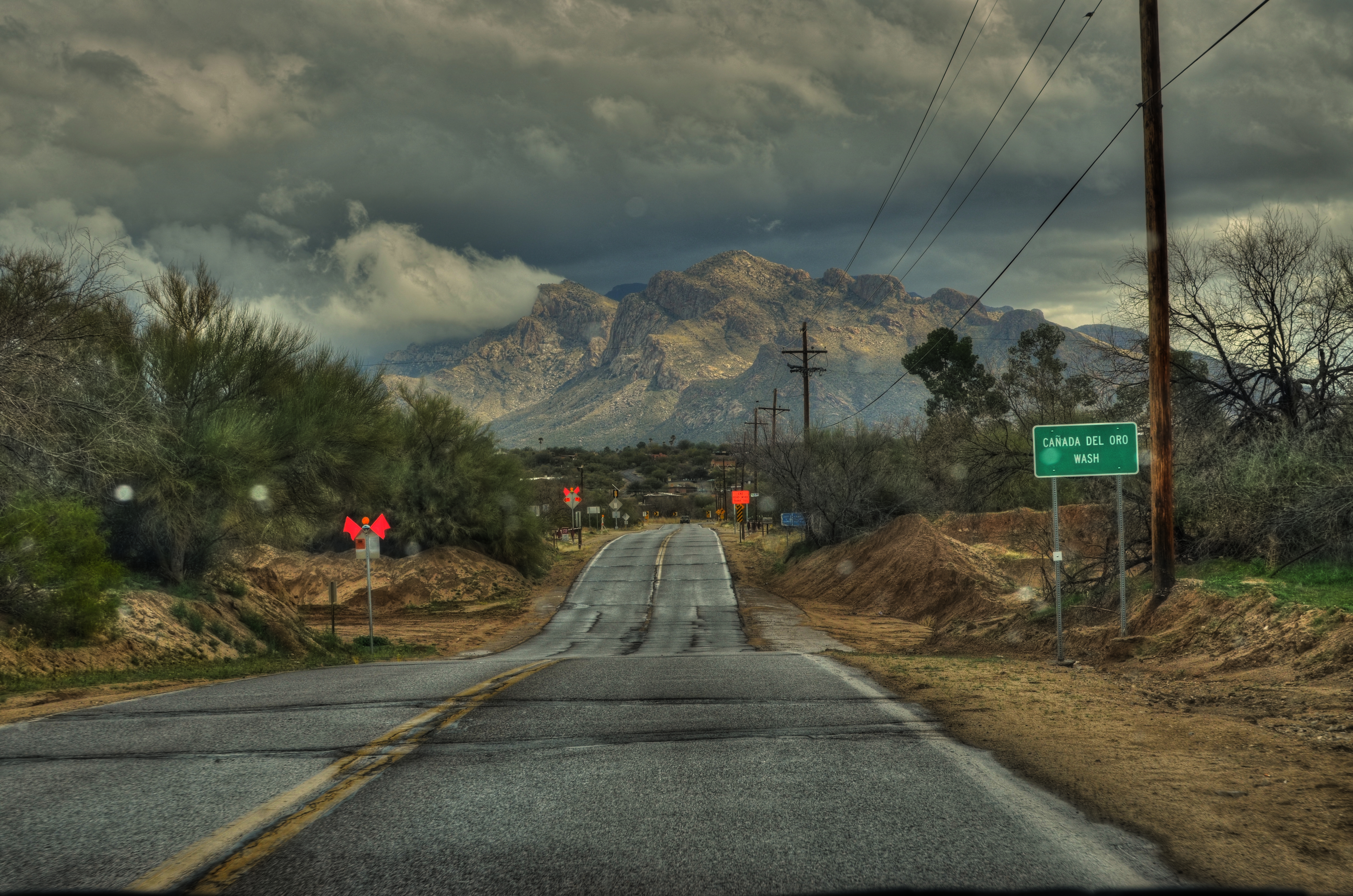
Straight through the windshield, using a technique I like to call “dumb luck”. Original shot specs: 1/320 sec., f/8, ISO 100, 35mm.
By MICHAEL PERKINS
PHOTOGRAPHY IS 10% PLANNING, 90% SERENDIPITY. Yes, I know. we would all rather believe that most of our images spring from brilliant conceptions, master plans, and, ahem, stunning visions. But a lot of what we do amounts to making the most of what fate provides.
There is no shame in this game. In fact, the ability to pivot, to improvise, to make the random look like the intentional…all of these things reveal the best in us. It exercises the eye. It flexes the soul. And, in terms of images, it delivers the goods.
Getting lost (geographically, not emotionally) is less an emergency than in ages past. Armed with smartphones, GPS, and other hedges against our own ignorance, we can get rescued almost as soon as we wander off the ranch. It is easier than ever to follow the electronic trail of crumbs back to where we belong, so drifting from the path of righteousness is no longer cause for panic. Indeed, for shooters, it’s pure opportunity.
Okay, so you’re not where you’re supposed to be. Fine. Re-group and start shooting. There is something in all these “unfamiliar” things that is worth your gaze.
Last week , my wife and I decided to trust her car’s onboard guidance system. The results were wrong but interesting. No danger, just the necessary admission that we’d strayed really far afield of our destination. We’re talking about twenty minutes of back-tracking to set things right.
But first….
One of the rural roads we drifted down, before realizing our error, led us to a stunning view of the back end of Tucson’s Catalina mountains, framed by small town activity, remnants of rainfall, and a portentous sky. I squeezed off a few shots straight out of the windshield and got what I call the “essence” exposure I needed. That single image was relatively well-balanced, but it wouldn’t show the full range of textures from the stormy sky and the mountains. Later, in post, I duplicated the one keeper frame that I got, modifying it in Photomatix, my HDR processing program. Adding underexposure, deeper contrast, and a slight rolloff of highlights on the dupe, I processed it with the original shot to get a composite that accentuated the texture of the clouds, the stone,, even the local foliage. A sheer “wild” shot had given me something that I would have totally missed if the car’s GPS had actually taken us to our “correct” destination.
What was ironic was that, once we got where we were going, most of the “intentional” images that I sweat bullets working on were lackluster, compared to the one I shot by the seat of my pants. Hey, we’ve all been there.
Maybe I should get lost more often.
Actually, people have been suggesting that to me for years.
Especially when I whip out a camera.
Related articles
PRETTY/UGLY
By MICHAEL PERKINS
LEGEND HAS IT THAT ORSON WELLES, STAYING FOR A WHILE AS A GUEST AT PETER BOGDANOVICH’S HOME AROUND 1970, convinced him that the small Texas town he wanted to portray in the bleak drama The Last Picture Show would be “too charming” if shot in color. Bogdanovich went with the starkly toned palette of black and white, and you know the rest. Eight Oscar nominations, two wins, and an honored slot in cinema history.
Bogdanovich made an artistic decision to make something “uglier” in order to make it “real”.
For me, this idea has always been like swimming against the current, since, as a kid, I was influenced initially by scenic photographers, then, somewhat later, photojournalists, who seek a completely different end product. I tend to default to the idea of making things look pretty. Even today, me knowing the impact of recording things as they are, warts and all, is one thing, while me, deliberately manipulating an image in order to change or amplify its darker elements is a stretch. It’s not something I instinctively bend toward.
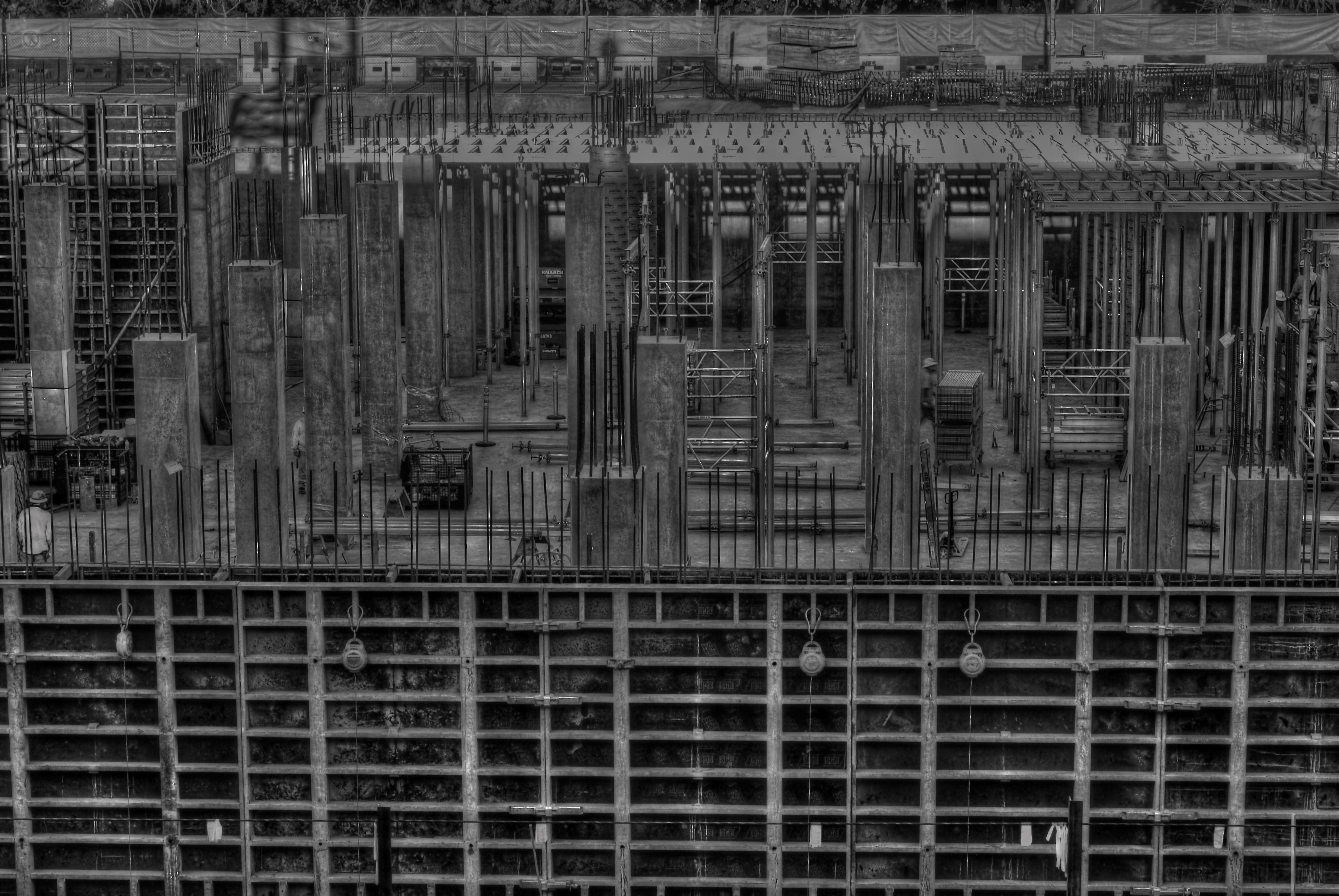
Hideous or wondrous, depending on how you see it. A deliberately “over-cooked” HDR from three exposures, all taken at f/11 for maximum detail, and ISO 100 with a 50mm prime lens.
Still, some stories are told in capture and others are revealed in processing, and while photography is interpretation as well as mere recording, I like to take a crack at changing the context of a picture, to make its parts add up to something drastically different. A few years ago, the parking garage near my job looked out at a massive construction project. My parking slot was situated such that I was about three floors up in the air, peering through the open wall of the garage to easily take in a panoramic view of the entire length of the new building’s emerging structure. I soon got into the habit of getting to work about fifteen minutes early so I could hop out and snap whatever activity I could catch.
The finished building eventually smoothed into something acceptably serviceable, if bland, but, with its raw skeleton mounting day by day, an immense feeling of grim, awful power was climbing out of that place. It couldn’t be seen in color, especially not in the benign, golden light of early morning. This thing was appearing to my eye as a sinewy, dark life force, inevitable, dreadful……an impression I would have to achieve through a complete reworking of tone and texture. I decided to use High Dynamic Range processing, not to merely rescue detail lost in highly contrasted nooks, but to intensify every grain, granule and hobnail of the building, to render it in a surreal, slightly hellish aspect. To make it “ugly” on purpose…..or, more exactly, to my purpose.
Playing at changing the emotional feel of a picture isn’t native to me, so I am always grateful when this part of my brain rouses from sleep and demands to be exercised. The persistent (and false) notion of photography since its inception is that it shows the world as it is, a lie which is debunked with every willful act of picture-taking. No less than painting, the photo image is both document and statement, truth and distortion.
It never has to settle for being mere reality, nor could it claim to be.
And that is its seductive pull.
THE ROOMS DOWN THE HALL
By MICHAEL PERKINS
 FOR THESE PAGES, IT WAS NEVER MY VISION TO MERELY POST PICTURES. Not, at least, without some kind of context. Just meeting a regular deadline with the “picture of the day” held as little interest for me as maintaining a diary, an oppressive regularity that I have resisted my entire life. For the most part, the images on THE NORMAL EYE are here to anchor my thoughts about what it feels like to be enticed, seduced, enthralled, and, yes, disappointed by photography, to caption the frames with some semblance of the creative process, at least as I had the poor power to see it at the time.Like all blogs, it is written on my own very personal terms. I am always thrilled to harvest reaction and comment, since, as Ike Turner once sang, “was my plan from the very began”. But the important thing is to get the thoughts right, or at least to use them as a guide to the shots. Thus, the mission is neither words nor pictures, but some kind of handshake symbiosis between the two.
However, since day one, I have reserved several gallery pages on which visual info is pretty much all there is, since I also believe that it is important to react to photographs on a purely visceral basis. If the blog is the main hall in the house, think of these as the rooms down the hall that you never thought to explore.
I have tried to give each gallery its own general feel, since there are different “themes” which motivate our taking of pictures, and I thought, for this post, it might be helpful to underscore those themes just enough to justify how they were organized. I have now also given them specific names instead of the A-B-C tags they had previously.
Here’s the new rundown:
Gallery A is now “HDR”, since I think that this process affords very specific benefits for reproducing the entire range of visible light in a way that, until recently, has been impracticable for many shooters. No tool is suitable for every kind of shooting situation, but HDR comes close to reproducing what the eye sees, and can enhance detail in fascinating ways. There is a lot controversy over its best use, so, like everywhere else on this blog, your opinions are invited.
The former B gallery is a collection of impulse shots. All of these images were taken in the moment, on a whim, with only instinct to guide me. No real formal prep went into the making of any of them, as they were the product of those instants when something just feels right, and you try to snag it before it vanishes. We’ll call these “SNAP JUDGEMENTS”.
And finally, the photos formerly known as Gallery “C” are now renamed “NATURAL STATE”, as these portraits are all shot using available light, captured without flash or the manipulation of light through reflectors, umbrellas, or other tools.
Let me state here that your participation in this forum was always the centerpiece of my doing it in the first place, and your ideas and suggestions have always inspired me to try to be worthy of the space I’m taking up. I also have enjoyed linking back to your individual sites and visions. It’s a great way to learn.
So please know that, when you click the “like” button at the bottom of these posts, or take the time to type a comment, it does help me see what works, as well as what needs to be done better. I don’t believe that art can grow in a vacuum, and I thank everyone for giving these pages shape and form.
And thanks for exploring all the rooms in my house.
REWORKING THE UNIVERSE
By MICHAEL PERKINS
CONTEXT, FOR A PHOTOGRAPHER, IS LIKE THE CONDUCTOR’S BATON IN MUSIC, that magic wand that dictates fast and slow, soft and loud, ordering a specific world within a confined space. Since it impossible to show the world entire, all shooters decide what part of it, what story within it, that they will frame. Sounds obvious, but without the mastery of this skill, we fail as storytellers, and the eye that we develop for what to include and exclude is, despite all the tools and toys, the only thing that really makes an artistic performance out of a photograph.
It can also be a helluva lot of fun. With some dumb luck thrown in for good measure.
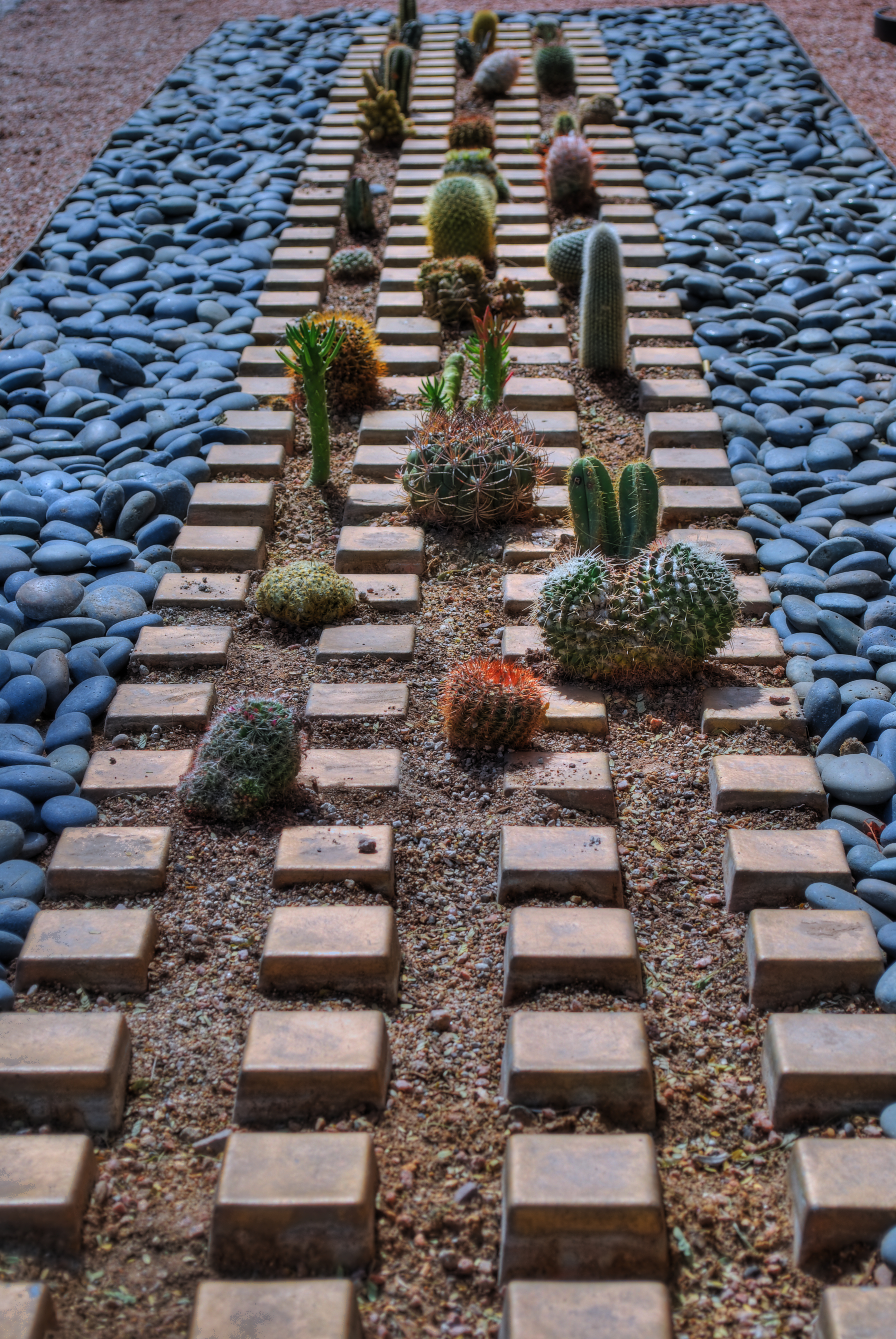
Cactropolis, 2011. A three-exposure HDR blend with a little color and contrast teaking. This whole layout, in reality, is about fifteen feet square, total. Various shutter speeds, f/8, ISO 100, 52mm.
I love opportunities that allow me to disrupt the original visual “place” of objects, to force them to be re-purposed for the viewer. A few years ago, my daily lunch routine involved a short walk across a bustling college campus to my habitual lunch hang, a stroll which took me past one of the school’s busiest crossroads, marked by the intersection of two superwide sidewalks flanked by small patches of landscaping. Since this is Arizona, such short plots of land frequently are not the stuff dreams are made of. We’re talking pink quartz gravel interrupted by the occasional scabby aloe plant or cholla. And that’s what made this one little rectangle, just several feet long on each side, vie for my attention.
An arrangement of several varieties of small cacti has been arranged in rows, regulated by square tiles, grounded in gravel, and bounded by smooth bluish stones. Simple stuff, really, but this was somebody’s deliberate design, a pattern that registered, to my eye, like some kind of fantasy urban streetscape, blocks of tiny, spiny skyscrapers vanishing off toward an unseen horizon….a miniature downtown from Weirdsville, a tabletop diorama from Beetlejuice.
I didn’t really have to compose anything. I was in the framing business. But getting that frame meant getting rid of the surrounding throngs of students, the sidewalks, the buildings, the sky…..anything that seemed outside of the closed world implied by that little rectangle. Changing the context. In fact, I was adding something for everything I was taking away.
So let’s crop this puppy and see what happens.
Now I saw what seemed to be a self-contained world, one in which I was free to imagine what lay “beyond”. I goosed up the hues and texture with HDR processing, but otherwise, what you see is what there was. Maybe it works as pure design. Maybe I conveyed something, but the fact is, we have to make choices as shooters. The only thing that marks us as individuals is what we decide to see, and show.
Like I said…fun….luck….some other somethings…..
(Many Thanks Dept.:The idea for this post was inspired, in part, by a suggestion from my good friend Michael Grivois.)
LOOK THROUGH ANY WINDOW, PART TWO
By MICHAEL PERKINS
I WILL DO ANYTHING TO PHOTOGRAPH BOOKSTORES. Not the generic Costco and Wal-Mart bargain slabs laden with discounted bestsellers. Not the starched and sterile faux-library air of Barnes & Noble. I’m talking musty, dusty, crammed, chaotic collections of mismatched, timeless tomes…. “many a quaint and curious volume of forgotten lore” as Poe labeled them. I’m looking for places run by dotty old men with their glasses high on their forehead, cultural salvage yards layered in multiple stories of seemingly unrelated offerings in random stacks and precarious piles. Something doomed by progress, and beautiful in its fragility.
I almost missed this one.
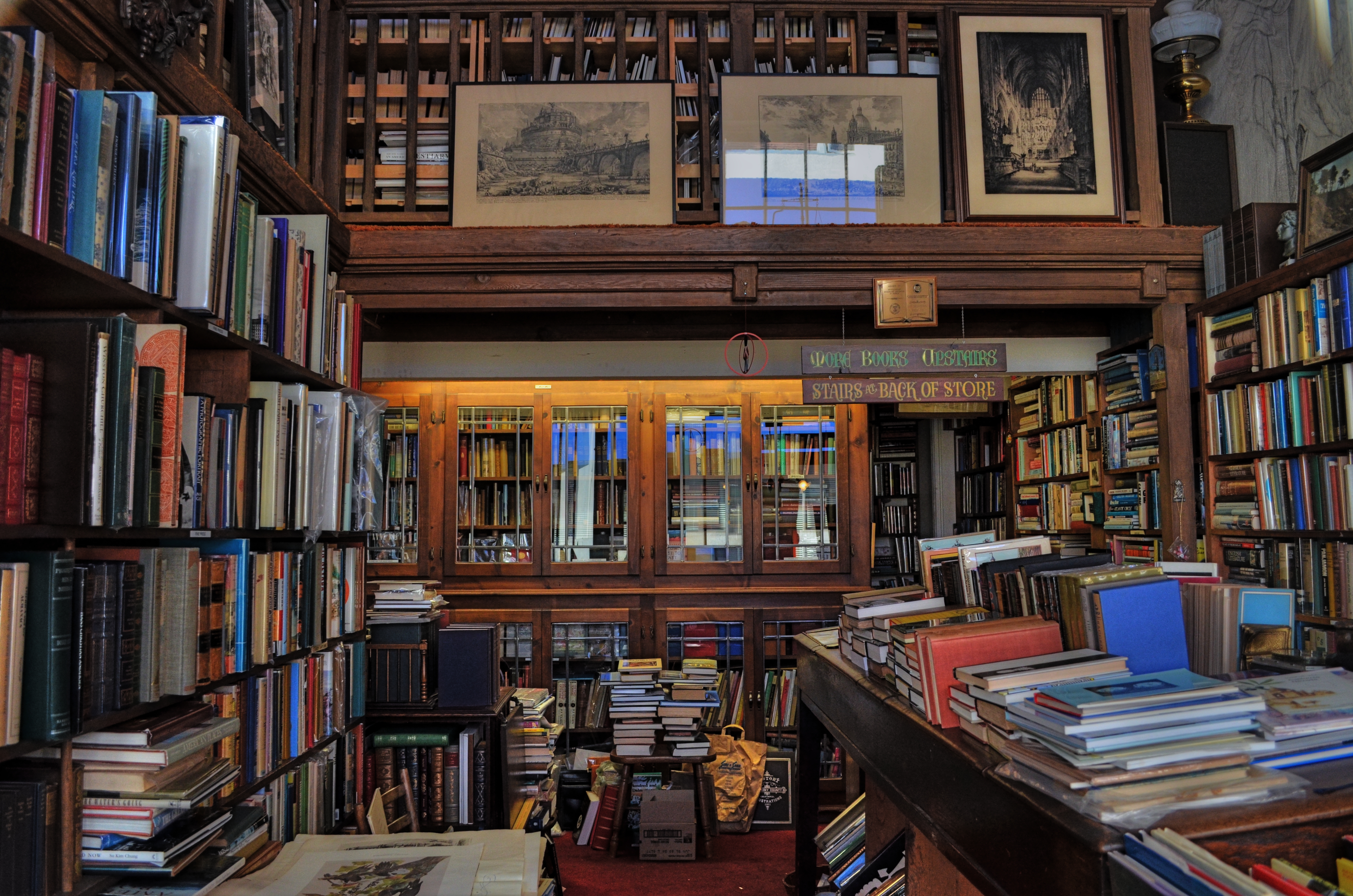
Through the window, and into a forgotten world. A fake two-shot HDR from a single exposure at 1/80 sec., f/5, ISO 400, 18mm.
In my last post, I commented that, even when your photography is rules-based….i.e., always do this, never do that, there are times when you have to shoot on impulse alone and get what you can get. It sometimes begins when you’re presented with something you’re not, but should be, looking for. A few weeks ago, I was spending the afternoon at one of Monterey, California‘s most time-honored weekly rituals..the marvelous, multi-block farmers’ market along Alvarado Street. The sheer number of vendors dictates that some of the booths spill over onto the side streets, and that’s where I found The Book Haven. The interior of the store afforded an all-in-one view of its entire sprawling inventory, but the crush of tourists bustling in and out of its teeny front door meant that any image was going to look like the casting call for The Ten Commandments.
I had to come back, when both the store and I were alone.
With the limited amount of time I had in town, that meant that I would have to stroll by just hours ahead of my plane for home. Heading out at 8:30 in the morning, I had obviously solved the problem of “too many people in the picture”, but I had traded that hassle for a new one: the store would not be open for another three hours.
For the second time in a week (see “Look Through Any Window, Part One”) I was forced to shoot through a window, but at least there was enough light inside to illuminate nearly all of the store’s interior. To avoid a reflection, I would have to cram my lens right up against the glass. Once my autofocus stopped fidgeting, I could only obtain the framing I wanted by shooting through a narrow open place on the center of the front door, standing on tiptoe to hold the composition. I also had to keep the ISO dialed low enough to not create extra noise, but high enough so I could take a fairly fast handheld exposure and get as much detail from the dark corners as possible. Balancing act.
Let’s see what happens.
In viewing the image later, I saw that there wasn’t enough detail to suit me, either in the individual books or the darker spaces around the store, so I pulled a small cheat. Making a copy of the shot, I pulled down the contrast, boosted the exposure, and sucked out some shadow, then loaded both shots into Photomatix, fooling the HDR program into thinking they were two separate exposures. Photomatix is also a detail enhancer program, so I could add sharper textures to the books and a richer range of tones than were seen in the original through-the-window shot.
Hey, you can’t have it all, but, by at least trying, you get more than nothing.
And sometimes that’s everything.
Nice bookstore.
NOT QUITE ALONE
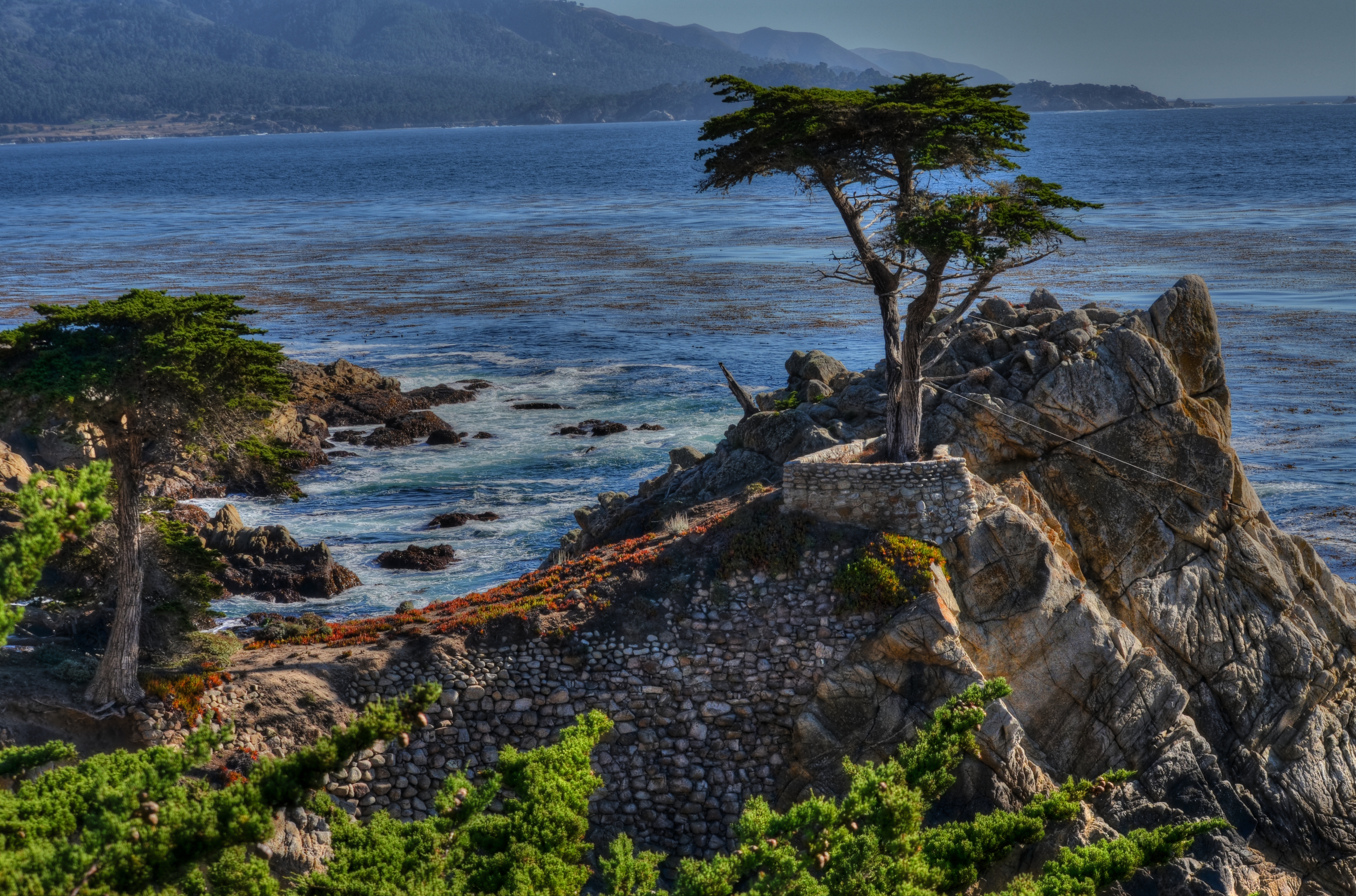
Symbol of survival: Pebble Beach’s legendary “Lone Cypress” braves the elements along the coastline of the Monterey Peninsula.
By MICHAEL PERKINS
ONE OF MY FAVORITE SONG TITLES EVER IS BRIAN WILSON’S You Need A Mess Of Help To Stand Alone. At least in my own life, that is probably the truest sentence in the English language. We love to promote the all-too-American myth of the self-made man (or woman), the rugged pioneer who walks into the dark forest and emerges covered in gold and glory. Our folklore is chock full of legendary giants who seem to have single-handedly crafted their own destiny. All by themselves. Don’t need help, thanks. I got this.
It is, of course, baloney. And it may help, in light of the devastation that is still unfolding this week in the aftermath of Hurricane Sandy, to start emphasizing how crazy it is to talk about our wondrous ability to bend the cosmos to our will. Instead, we might reluctantly admit that we are all part of the same timid bluff against a random universe that regularly delivers knockout punches too strong for any one of us to sustain.
I thought about this last night while reviewing some recent shots of the Monterey Peninsula’s gorgeous visual icon of survival, “The Lone Cypress”. This hardy tree has endured on a barren crag on the coastline between Pacific Grove and Carmel, California since being planted nearly 250 years ago. To call its location “iffy” would be an understatement, given the typical delicate constitution of cypresses, and it has only been able to hold its position against storm and surf by being able to snake its enormous root system down deep into cliff stone, giving it at least a fighting chance.
Adopted nearly a century ago by the Pebble Beach Co., (the golf course people) as its official symbol, the tree has been immortalized on shirts, caps, ads, and promotional materials of every size and type, making the cypress into the botanical equivalent of that “self-made man.” Don’t need nothin’ from nobody. I’m good. I’m gonna do this all by myself.
Only, like the humans it inspires, it doesn’t…really…do that.
The “lone” cypress is bolstered by a brick basin built around its root line. It is tethered and stiffened with steel cables. Most importantly, it is fenced off at some considerable distance from the millions of people who pull off the Seventeen Mile Drive each year to snap it, their multiple accents filling the air with various international versions of, “Gee, ain’t that purty?” Without the fence, the cypress would already be souvenir popsicle sticks hanging from the keychains of every Tom, Dick and Tourist. It comes down to this: the tree is too vital as a symbol to truly be a “lone cypress” any longer.
It, like us, needs a mess of help to stand alone.
Half a country away, this week, we have millions of little lone humans trying to stand alone as well, and, without the rest of us being factored in, regardless of their grit or willpower, some will be blown out to sea. They will crack and snap and wither unless we make their survival as important as…..well, as a tree.
We all have a lot of work to do.
We sink or swim together.
Thoughts?
Related articles
- Hurricane Sandy’s Aftermath How you can help… Millions of… (instagram.com)
GOING POSTAL (CARD)
By MICHAEL PERKINS
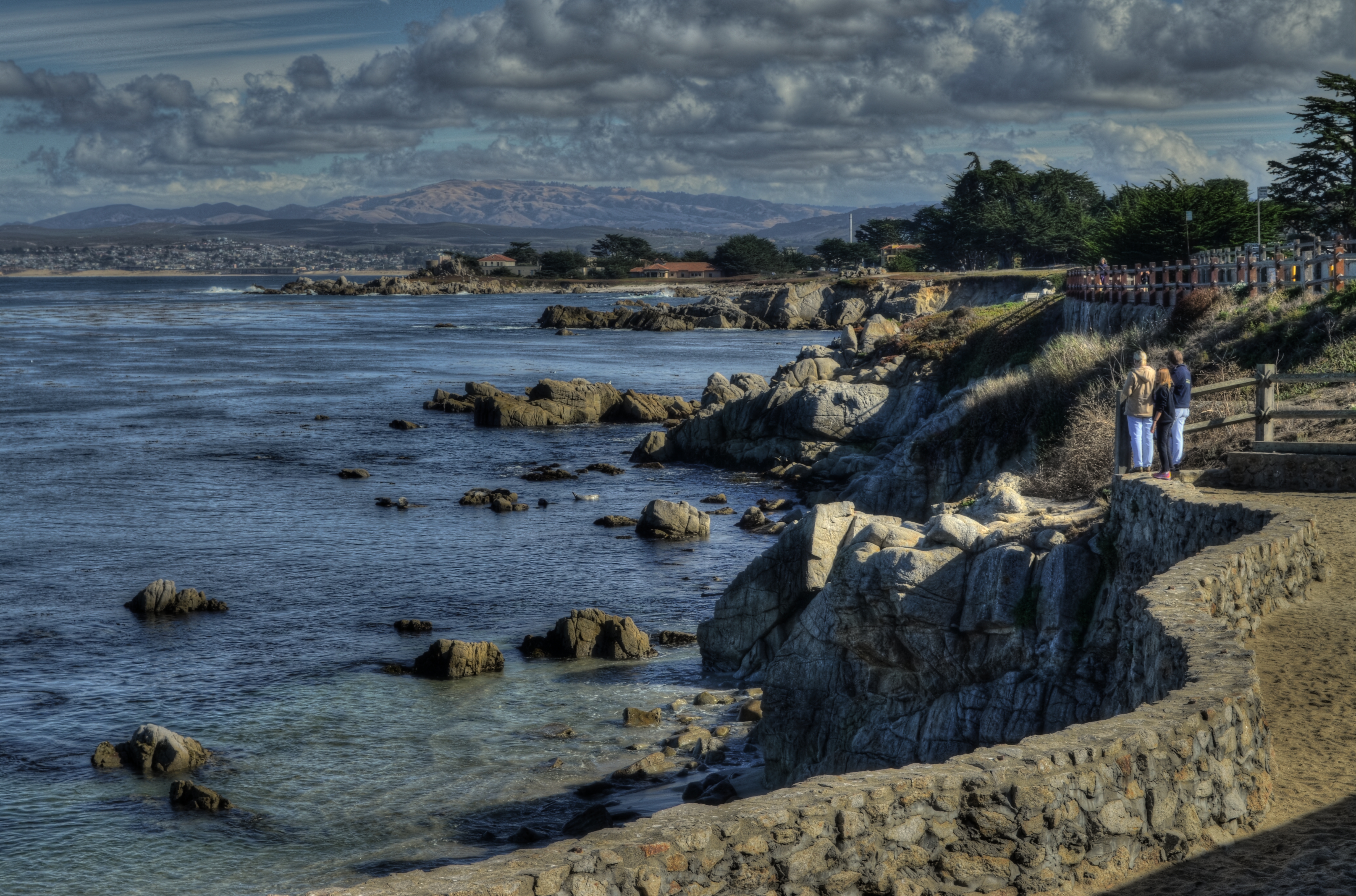
Looking south down Oceanview Boulevard to Monterey from Pacific Grove’s “Lover’s Point” Park. A three-exposure HDR with an average shutter speed of 1/250, f/11, ISO 100, 45mm.
“Ooh, nice. Looks just like a post card!”—98% of everyone who looks at your pictures
MUCH AS I WOULD LOVE TO BE SEEN AS A “SERIOUS” PHOTOGRAPHER (whatever that means), I am, basically, always seeking beauty and some way to freeze it in time.
Come to think of it, that seems pretty “serious” too, although there are schools of thought that seem to profess that making pretty pictures is somehow as insubstantial as crocheting tea cozies or writing haikus about clouds.
Whatever.
My visual sense actually developed along two fairly exclusive tracks. There was the reportorial photography of Life, which reliably came to our house each week chock full of amazing portraiture, riveting war coverage and contentious social issues. That’s the “serious” track. And then there was my early and abiding love for the travel destinations in the illuminated Kodachrome of my View-Master reels, stunning forays into color crafted mostly by unknown shooters working for scale, many of whom sold the company’s “scenic” packets to photo dealers for their real paychecks. These eye-popping tours of France, The Grand Canyon, New York City, and the Holy Land held me spellbound in a way none of VM’s kiddie titles could. Their beauty was their justification. They deserved to be, just because they were a celebration of symmetry, shape, scale, mystery, history.
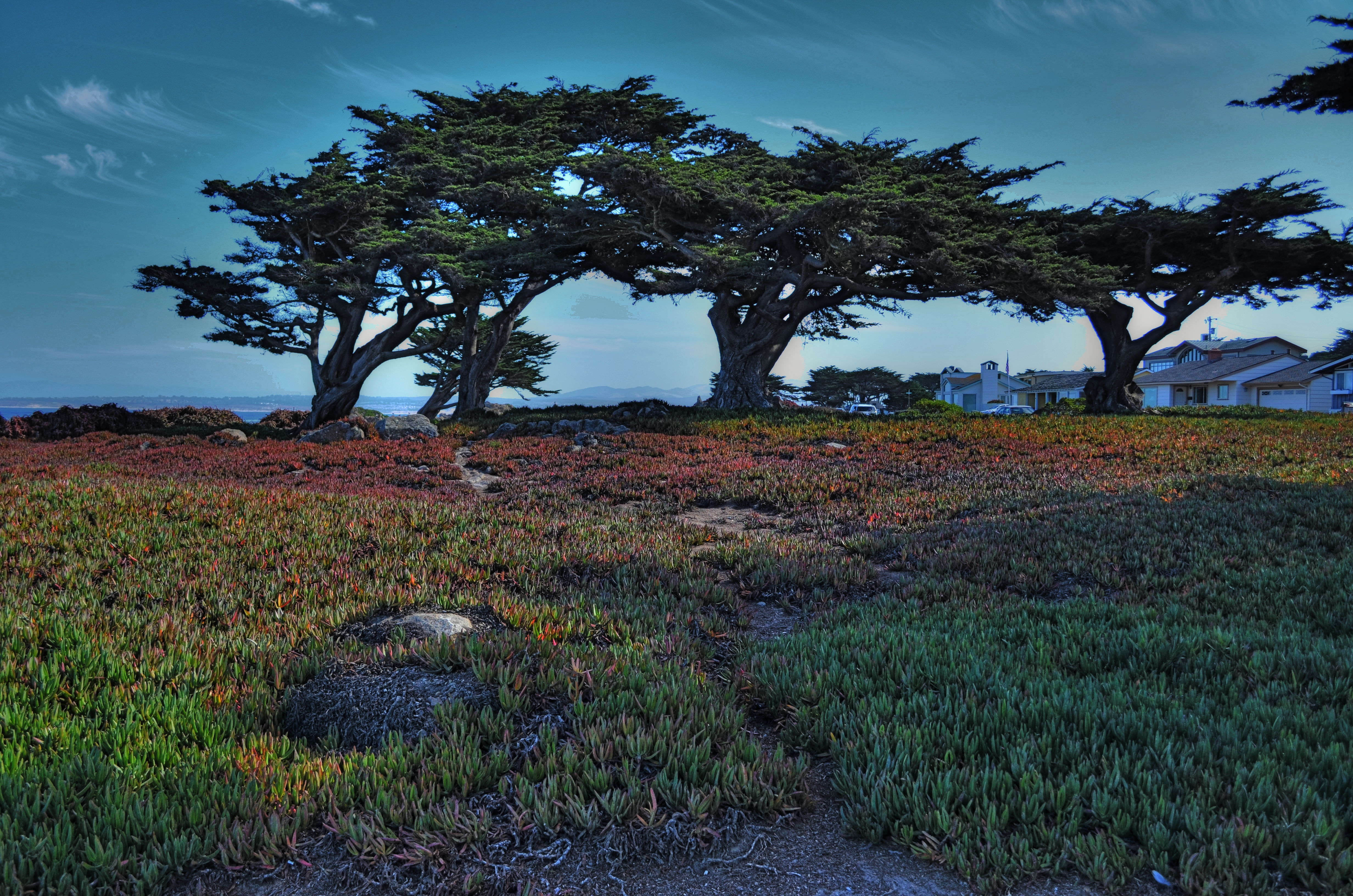
Canopy and Carpet: Eerily majestic cypresses and manzanita ground cover, just inland of the coastline at Pacific Grove, California. Two-exposure HDR shot at f/11, ISO 100, 45mm.
Since my childhood I have seemed to toggle between taking pictures that “matter” (another meaningless distinction) and images that merely delight me because I was able to grab a sliver of something larger than myself, a souvenir that I myself helped create. And, much as I hate the generic and dismissive “looks like a post card” remark I often get on some kinds of photos, it is the iconic view of the iconic object that I consciously go for, attempting to put my own stamp on something even as I realize that creating the image is way above my pay grade or skill set.
Still.
There are times to be a reporter, and there are times to gawk and gape in awe. Anytime I have any chance to be anywhere near the Monterey Peninsula, I vault onto the plane like a ’49-er who heard they just found gold at Sutter’s Mill. The stunning mix of coastal terrain, local botany and color that floods the eye at every turn in Monterey, Pacific Grove and Carmel blows me right out of “documentary” mode and makes my romantic heart beat faster.
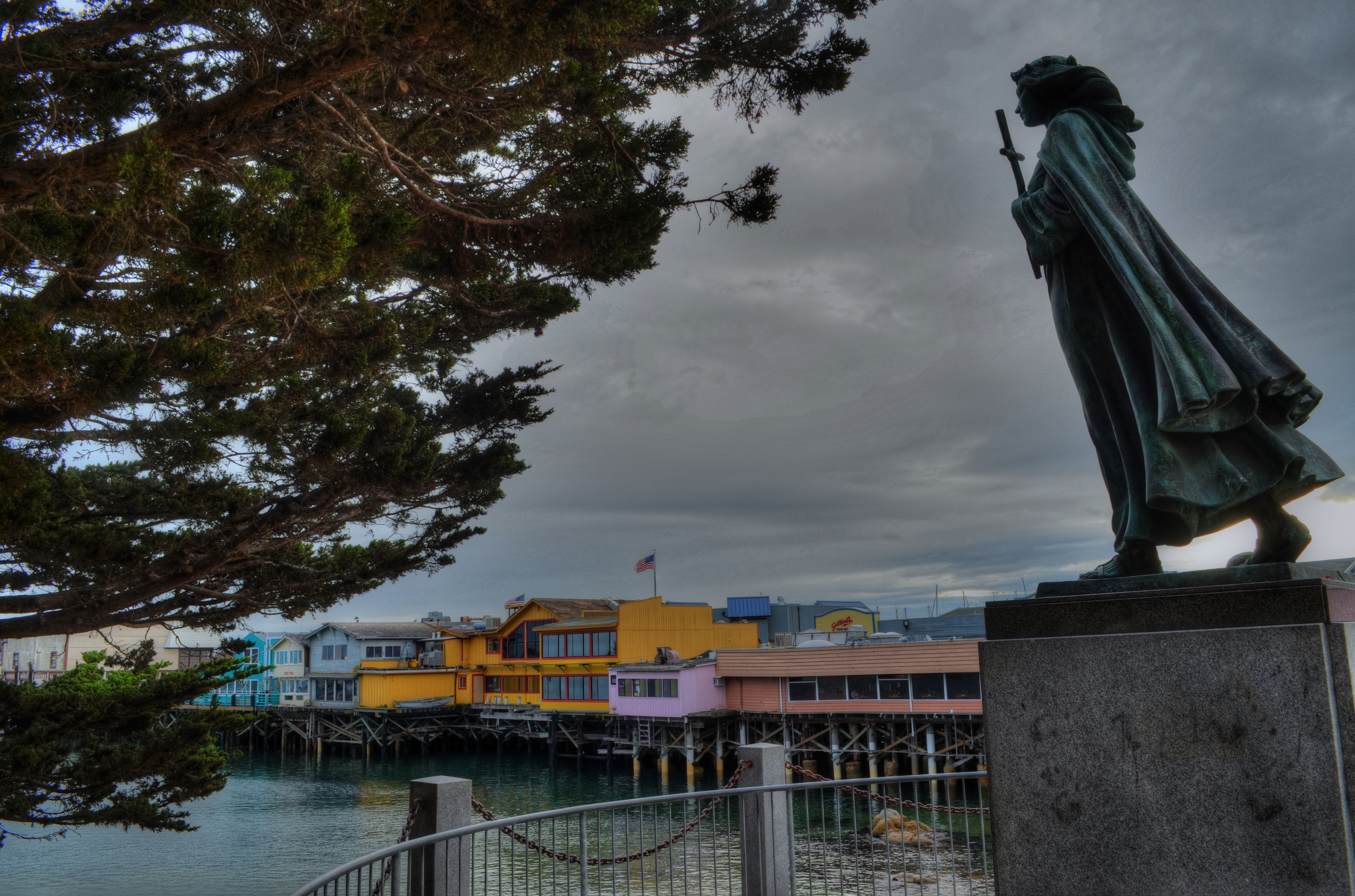
Patron Santa Rosaria watches over the”Fisherman’s Wharf” district of Monterey Bay. A three-shot HDR at f/9, ISO 100, 18mm.
I am going postal, as in postal card. I want the ooh-ahh moment. Later on, I’ll get back to shooting urban decay and despair. Right now, we’re making the ultimate View-Master reel.
“Seven More Wonders Of The World!” So ran the wording on the paper envelopes that held those little 3-d wheels.
Seven more wonders.
That’s all I need.
“Serious”-ly.
BASIC CABLE
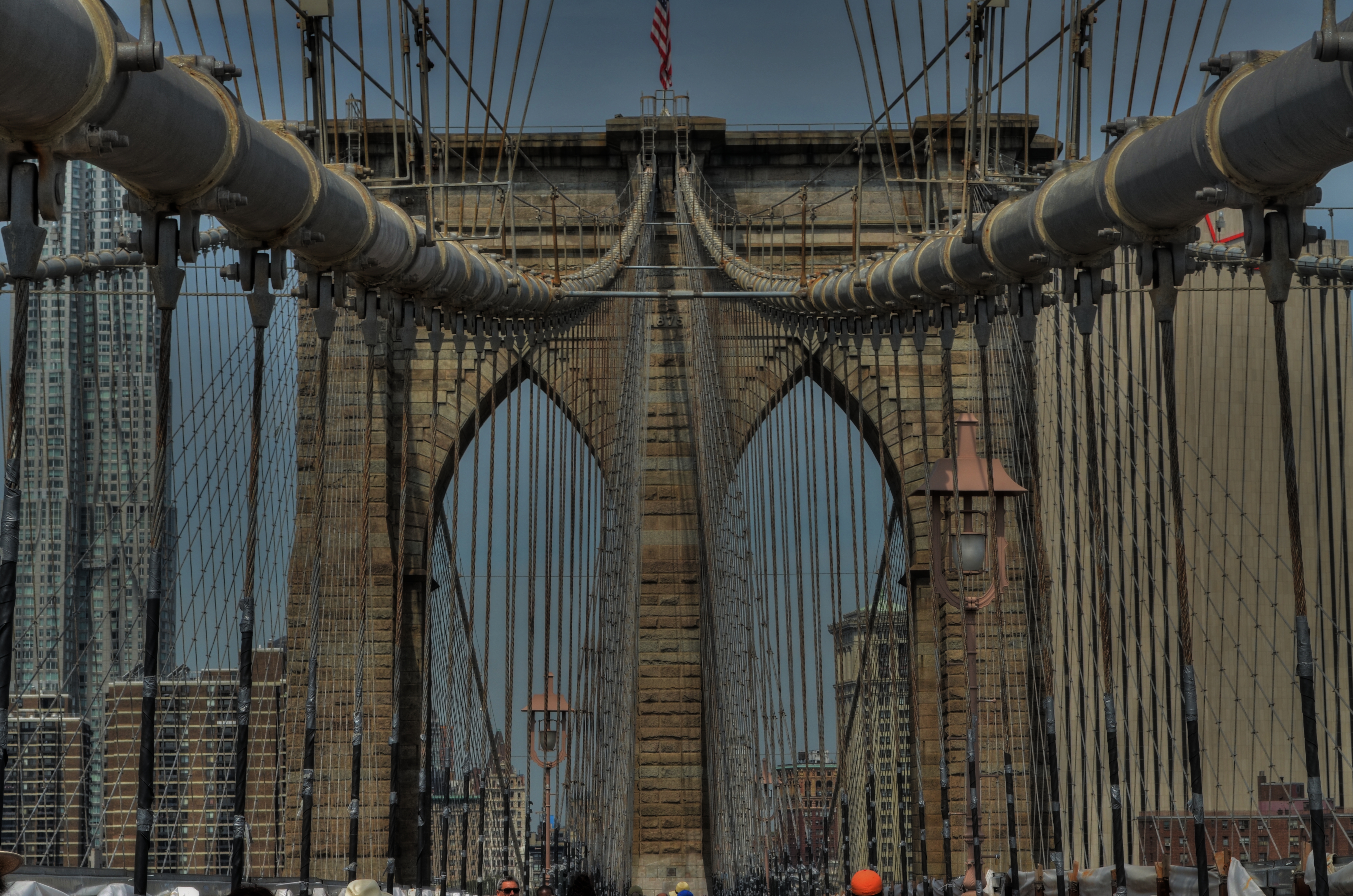
In many ways, the Brooklyn Bridge, although not a “land” edifice, is the first of New York’s skyscrapers, and an elegant reminder of a bygone era. Three-shot HDR blend, shutter speeds of 1/160, 1/200, and 1/250 sec., all F/11, ISO 100, 55mm.
By MICHAEL PERKINS
THERE ARE ANY NUMBER OF LANDMARKS IN THE GREATER NEW YORK AREA which reward repeated viewings. Their mythic impact is such that it is never dulled or diminished. On the contrary, these special places (in a city which boasts so many) actually reveal distinctly different things to different visitors, and, doing so, cannot be exhausted by the millions of interpretations of them that flood the photographic world.
We make pictures of these objects, pictures of the pictures, a tribute picture to someone else’s picture, an impression of someone’s painting. We shoot them at night, in close-up, in fisheye, in smeary Warholian explosions of color, in lonely swaths of shadow.
For me, the Brooklyn Bridge is about two things: texture and materials.
After more than a century over the East River, John and Washington Roebling’s pioneering span, the first steel cable suspension bridge in the world, shows its wear and tear as a proud trophy of its constant service. The delicate and yet sinewy cables, amazingly strong interwoven strands of what Roebling manufactured under the name “steel rope”, are the most amazing design elements in the bridge, presenting an infinite number of kaleidoscopic web patterns depending on when and where you look.
As simply stunning as its two towers are, it is its grid of steel that mutates, shimmers, and hypnotizes the visitor as he makes his way past the crushing mobs of walkers, runners, skaters and cyclists that clog the span’s upper promenade from dawn to dusk. To show the bridge and only the bridge is a challenging trick. To get the dance of angles and rays that the cables have to offer in a way that speaks to you is both frustrating and fun.
Browse through several hundred amateur views of the bridge in one sitting sometime: marvel at how many ways it stamps itself onto the human imagination. Here, I tried to show the steady arc of the master cables as they dip down from the eastern tower, lope into a dramatic dip, then mount to the sky again to pass through the anchors on the western tower. HDR seemed like the way to go on exposure, with three separate shots at f/11, blended to maximize the detail of this most decorated of urban giants.
Next time, some other picture will call out to me, and to you. The bridge will display all the ways it wants to be seen, like a magician fanning out a trick deck. Pick a card, it invites, any card.
Doesn’t matter which one you choose.
They’re all aces.
Thoughts?
Related articles
- Video: Building the Brooklyn Bridge (history.com)
- Brooklyn Bridge Manhattan (markd.typepad.com)
OPTING FOR IMPERFECTION
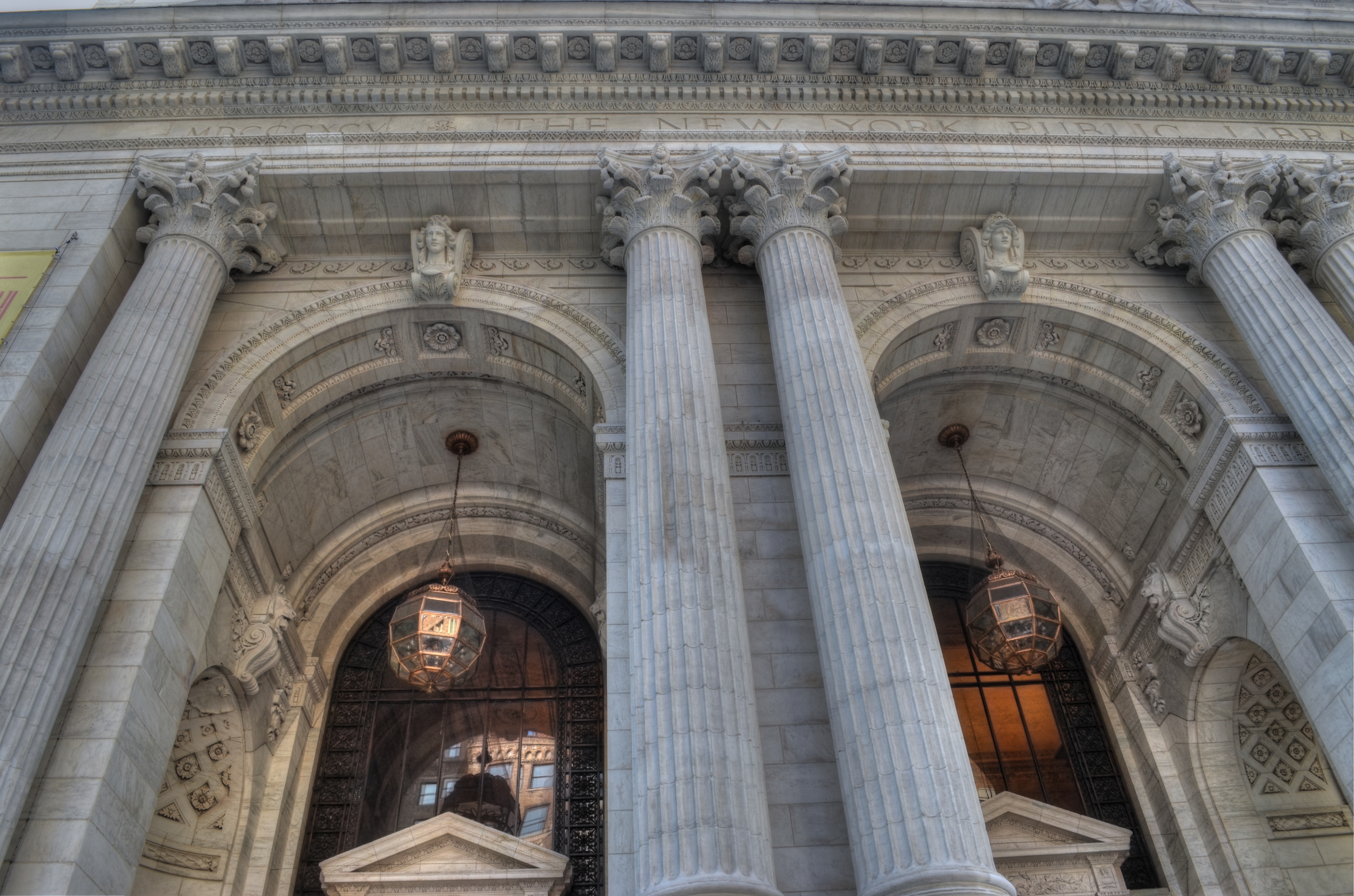
When additional detail needs to be extracted from shadows and from the texture of materials, HDR (High Dynamic Range) is a great solution. This shot of the entrance to the New York Public Library is a three-exposure bracket composited in Photomatix. Is this process great for all images of the same subject? See a different approach below….
By MICHAEL PERKINS
SOMETIMES I LOSE MY WAY, CREATIVELY. Given that cameras are technical devices and not creative entities, we all do. We have been given, in today’s market, wonderful aids to seeing and interpreting what we consider noteworthy. Technological advances are surging so swiftly in the digital era that we are being given scads of pre-packaged effects that are baked into the brains of our cameras, ideally designed to help us calculate and fail less, succeed and create more. To that end, we are awash in not only genuinely beneficial shortcuts like programmable white balance and facial recognition, but “miniature”, sketch, selective desaturation, and, recently, in-camera HDR options as well. Something of a tipping point is occurring in all this, and maybe you feel it as strongly as I do; more and more of our output feels like the camera, the toys, the gimmicks are dictating what gets shot, and what it finally looks like.
Here’s the nugget in all this: I have been wrestling with HDR as both a useful enhancer and a seductive destroyer for about three years now. Be assured that I am no prig who sees the technique as unworthy of “pure” photography. Like the old masters of burning and dodging, multiple exposure, etc., I believe that, armed with a strong concept, you use whatever tool it takes to get the best result. And when it comes to rescuing details in darker patches, crisping up details in certain materials like brick and stone, and gently amplifying color intensity, HDR can be a marvelous tool. Where it becomes like crack is in coming to seem as if it is the single best gateway to a fully realized image. That is wrong, and I have more than a few gooey Elvis-on-black-velvet paintings that once had a chance to be decent pictures, before they were deep-fried in the conceptual Crisco of bad HDR. Full disclosure: I also have a few oh-wow HDR images which delivered the range of tone and detail that I honestly believe would have been beyond my reach with a conventional exposure. The challenge, as always, is in not using the same answer to every situation, and also to avoid using an atomic bomb to swat a fly.
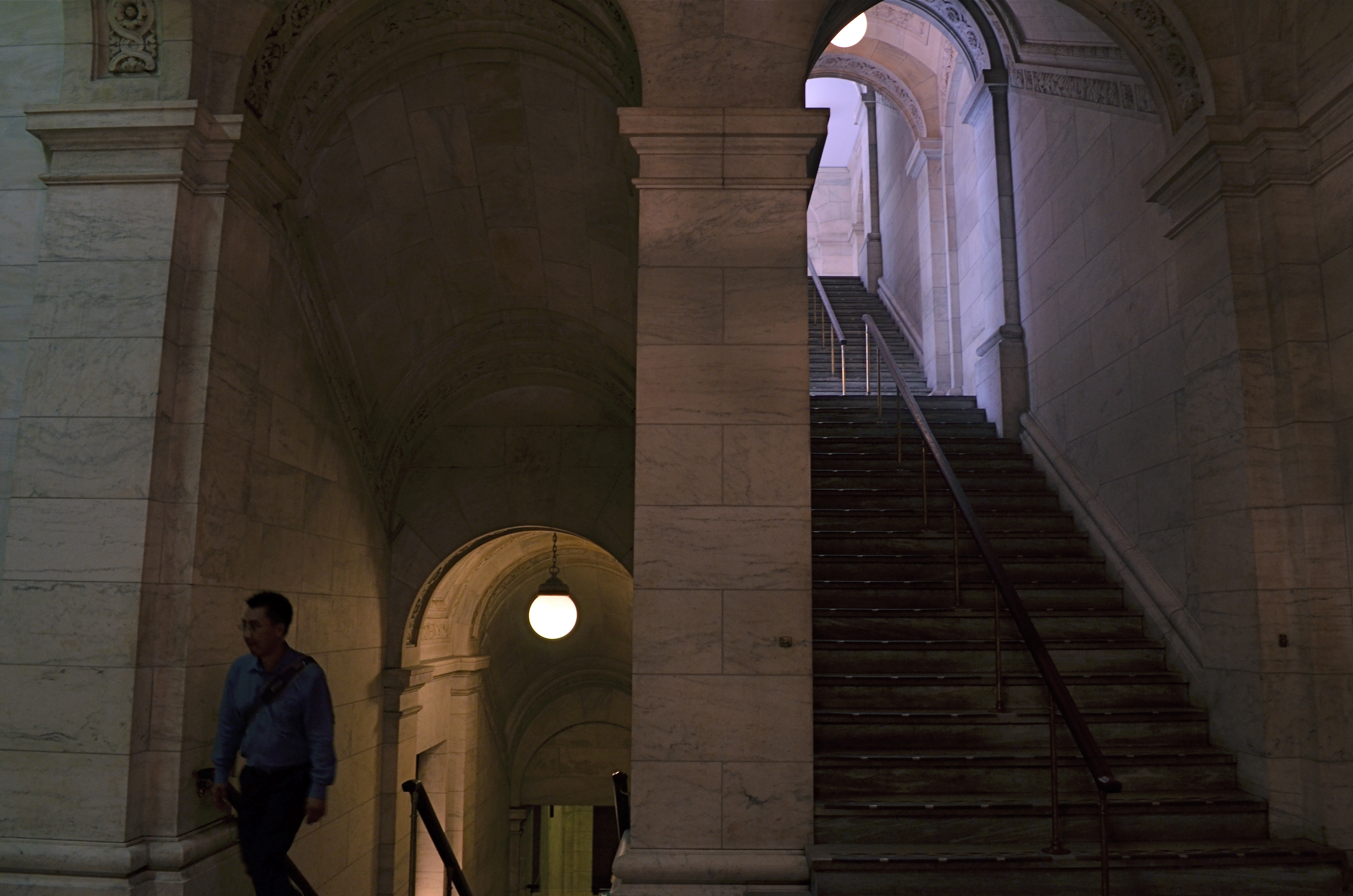
Same library, different solution: I could have processed this in HDR in an attempt to pluck additional detail from the darker areas, but after agonizing over it, I decided to leave well enough alone. The exposure was a lucky one over a wide range of light, and it’s close enough to what I saw without fussing it to death and perhaps making it appear over-baked. 1/30 sec., f/6.3, ISO 320, 18mm.
Recently, I am looking at more pictures that are not, in essence, flawless, and asking, how much solution do I need here? How much do I want people to swoon over my processing prowess versus what I am trying to say? As a consequence, I find that images that I might have reflexively processed in HDR just a few weeks ago, are now agonized over a bit longer, with me often erring on the side of whatever “flaws” may be in the originals. Is there any crime in leaving in a bit more darkness here, a slight blowout in light there, if the overall result feels more organic, or dare I say, more human? Do we have to banish all the mystery in a shot in some blind devotion to uniformity or prettiness?
I know that it was the camera, and not me, that actually “took” the picture, but I have to keep reminding myself to invest as much of my own care and precision ahead of clicking the shutter, not merely relying on the super-toys of the age to breathe life into something, after the fact, that I, in the taking, could not do myself. I’m not swearing off of any one technique, but I always come back to the same central rule of the best kind of photography; do all your best creative work before the snap. Afterwards, all your best efforts are largely compensation, compromise, and clean-up.
It’s already a divine photographic truth that some of the best pictures of all time are flawed, imperfect, incomplete. That’s why you go back, Jack, and do it again.
The journey is as important as the destination, maybe more so.
Thoughts?
Related articles
9/11: ANOTHER KIND OF ANNIVERSARY
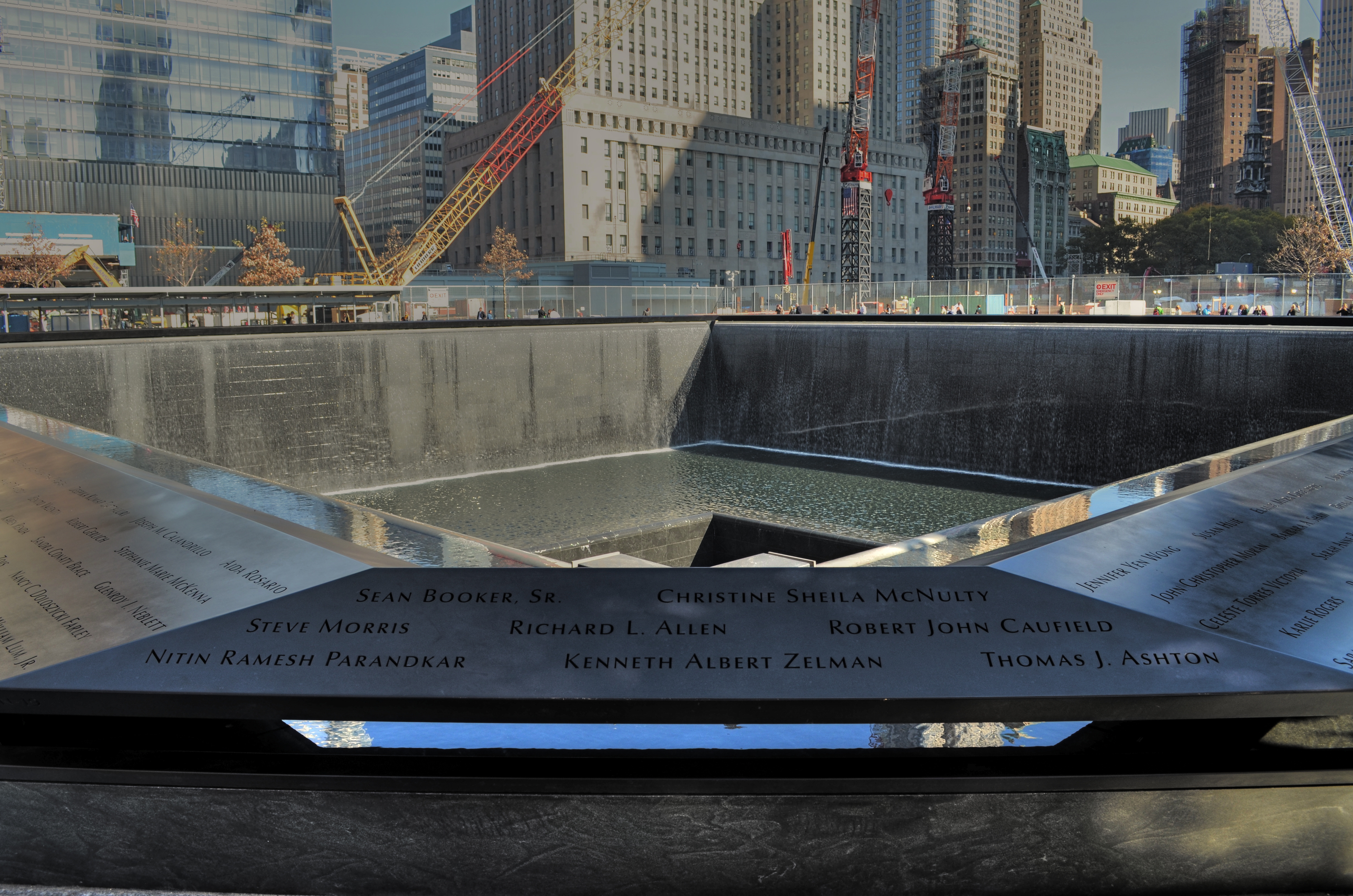
One of the two pools marking the foundations of the original Twin Towers. This began as a single exposure, then was augmented by copying the shot, adjusting the copy, and blending the two into a kind of synthetic HDR image in Photomatix.
By MICHAEL PERKINS
THIS WEEK, THE SPACE AT GROUND ZERO marks an anniversary that is slightly different from the annual reverences afforded the fallen of September 11, 2001. Even as we put a little more chronological, if not emotional, distance between ourselves and the unspeakable and obscene events that tore the fabric of history on that morning, we begin a second era of sorts, as we mark the first year of operation for the 9/11 Memorial that tries so nobly to advance, if not complete, the healing process. The site, specifically the pools marking the foundational footprints of the north and south towers of the World Trade Center, is no less noble because it has been asked to provide an impossible service. Some things are beyond our reach, but that does not mean that the reaching effort should not be made. Something must endure that physically, visually states who our lost brothers and sisters were. And even a compromised version of that effort, wrested from people’s individual hearts and needs in an agonizing discussion, needs to be attempted.
Visiting the site just two months after its opening last year, I asked myself, how could we have done better, or more? Is there enough, just enough here, to fight off our lazy national habit of collective amnesia? Is there at least a start, marked on this spot, at trying to makes these names matter and persist in memory?
Every day, thousands ask that same question, and there are endless versions of the answer. It’s a gravesite, but a gravesite that is missing many of those being remembered. It is a memorial, but unlike most memorials, it is not located on a neutrally designated “elsewhere”, but on the actual place where the victims fell. It is a beautiful thing that evokes horror, and it is a place of horror where beauty is sorely needed to make going forward imaginable. Standing at the pool’s perimeters, you are struck silent, and you worry over the day when silence may not be the first response to this vista, as, properly, it still is at Gettysburg and Pearl Harbor. And we wish we could know that there was even one atom of comfort afforded by this effort to those left behind, many of whom were annihilated no less in spirit than their loved ones were in fact. If you ever pray here, that’s what you pray for.
Shooting the above image, I wanted to wait for the morning surge of visitors to clear away as completely as possible. I felt, and still feel, that the site itself is at last, a noble thing, and neither I nor any other people around it can help breaking the visual serenity it presents. My shot is also, now, a bit of a time machine, since the rebuilding of the WTC site is now nearer completion by a year. The weather that morning was flawless, in a way in which, on every other place on the earth, does not automatically trigger a feeling of foreboding. I wished I was a better photographer, or that, on that morning, I could become one, if even for an instant. Looking around, I saw many others making the same vain wish. And, in the end, I still feel that I left something untold. But, whatever I captured was at least my personal way of seeing it, and it was about as close to “right” as I was going to get.
And getting “as close we can” is what we have to settle for, at this point in time, in processing the events of 9/11. I am always struck, in reading the remembrances from surviving families and spouses, by how absent of hate and anger most of them are. They fight only to understand, to place it all in some kind of workable context for living. Many of us may never get there. However, life is a journey, and, today, as with all of the anniversaries of this tragedy, we have to hope that we can at least stay on the path toward discovery and peace. The memorial is the first step in that journey.
Related articles:
- NYC 9/11 memorial surpasses 4 million visitors (kfwbam.com)
SPLITTING THE DIFFERENCE
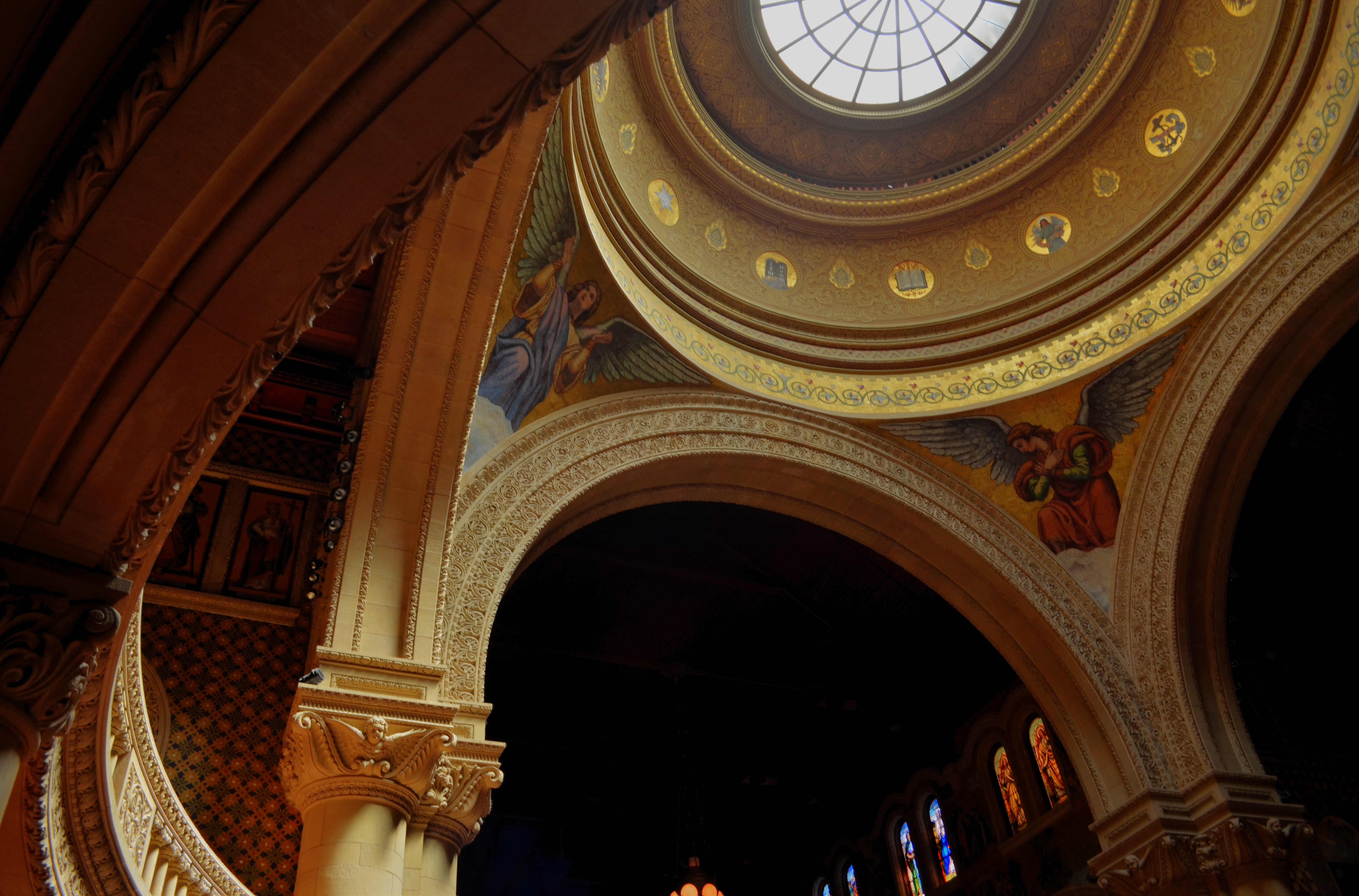
Really dark church, not much time. An HDR composite of just two exposures to refrain from trying to read the darkest areas and thus keep extra noise out of the final image. Shot at 1/15 and 1/30 sec., both exposures at f/5.6, a slight ISO bump to 200 at 18mm. Far from perfect but something less than a total disaster with an impatient tour group wondering where I wandered off to.
By MICHAEL PERKINS
THE MOST EXASPERATING WORDS HEARD ON VACATION: Everyone back on the tour bus.
Damn. Okay, just a second.
Now. We’re going NOW.
I’ve almost got it (maybe a different f-stop….? …..no, I’m just standing in my own light….here, let’s try THIS….
I mean it, we’re leaving without you.
YES, right there, seriously, I’m right behind you. Read a brochure will ya? Geez, NOTHING’S working…….
Sound remotely familiar? There seems to be an inverse proportion of need-to-result that happens when an entire group of tourists is cursing your name and the day you ever set eyes on a camera. The more they tap their collective toe wondering what’s taking so looooong, the farther you are away from anything that will, even for an instant, give you a way to get on that bus with a smile on your face. It’s like the boulder is already bearing down on Indiana Jones, and, even as he runs for his life, he still wonders if there’d be a way to go back for just one more necklace….
Dirty Little Secret: there is no such thing as a photo “stop” when you are part of a traveling group. At best it’s a photo “slow down” unless you literally want to shoot from the hip and hope for the best, which doesn’t work in skeet shooting, horseshoes, brain surgery, ….or photography. Dirty Little Secret Two: you are only marginally welcome at the tomb or cathedral or historically awesome whosis they’re dragging you past, so be grateful we’re letting you in here at all and don’t go all Avedon on us. We know how to handle people like you. We’re taking the next delay out of your bathroom break, wise guy.
A recent trip to the beautiful Memorial Church at Stanford University in Palo Alto, California was that latest of many “back on the bus” scenarios in my life, albeit one with a somewhat happy outcome. Dedicated in 1903 by the surviving widow of the school’s founder, Leland Stanford, the church loads the eye with borrowed styles and decorous detail from a half-dozen different architectural periods, and yet, is majestic rather than noisy, a tranquil oasis within a starkly contemporary and busy campus. And, within seconds of having entered its cavernous space as part of a walking campus tour, it becomes obvious that it will be impossible to do anything, image-wise, other than selecting a small part of the story and working against the clock to make a fast (prayerful) grab. No tripods, no careful contemplation; this will be meatball surgery. And the clock is ticking now.
So we ducked inside. With many of the church’s altars and alcoves shrouded in deep shadow, even at midday, choices were going to be limited. A straight-on flash was going to be an obscene waste of time, unless I wanted to see a blown-out glob of white, three feet in front of me, the effect of lighting a flare in a cave. Likewise, bumping my Nikon’s ISO high enough to read a greater amount of detail was going to be a no-score, since the inner darkness was so stark, away from the skylight of the central basilica dome, that I was inviting enough noise to make the whole thing look like a kid’s smudged watercolor. No, I had to find a way to split the difference; Show some of the light and let the darkness alone.
Instead of bracketing anywhere from 3 to 5 shots in hopes of creating a composite high dynamic range image in post production, I took a narrower bracket of two. I jacked the ISO for both of them just a bit, but not enough to get a lethal grunge gumbo once the two were merged. I shot for the bright highlights and tried to compose so that the light’s falloff would suggest the detail I wouldn’t be able to actually show. At least getting a good angle on the basilica’s arches would allow the mind to sketch out the space that couldn’t be adequately lit on the fly. For insurance, I tried the same trick with several other compositions, but by that time my wife was calling my cel from outside the church, wondering if I had fallen into the baptismal font and drowned.
Yes, right there, I’m coming. Oh, are you all waiting for me? Sorry…..
Perhaps its the worst kind of boorish tourism to forget that, when the doors to the world’s special places are opened to you, you are an invited guest, not some battle-hardened newsie on deadline for an editor. I do really want to be nice. However, I really want to go home with a picture,too, and so I remain a work in progress. Perhaps I can be rehabilitated, and, for the sake of my marriage, I should try.
And yet.
Related articles
- The Ultimate Guide to HDR Photography (pixiq.com)
PLAN B, C, D…..
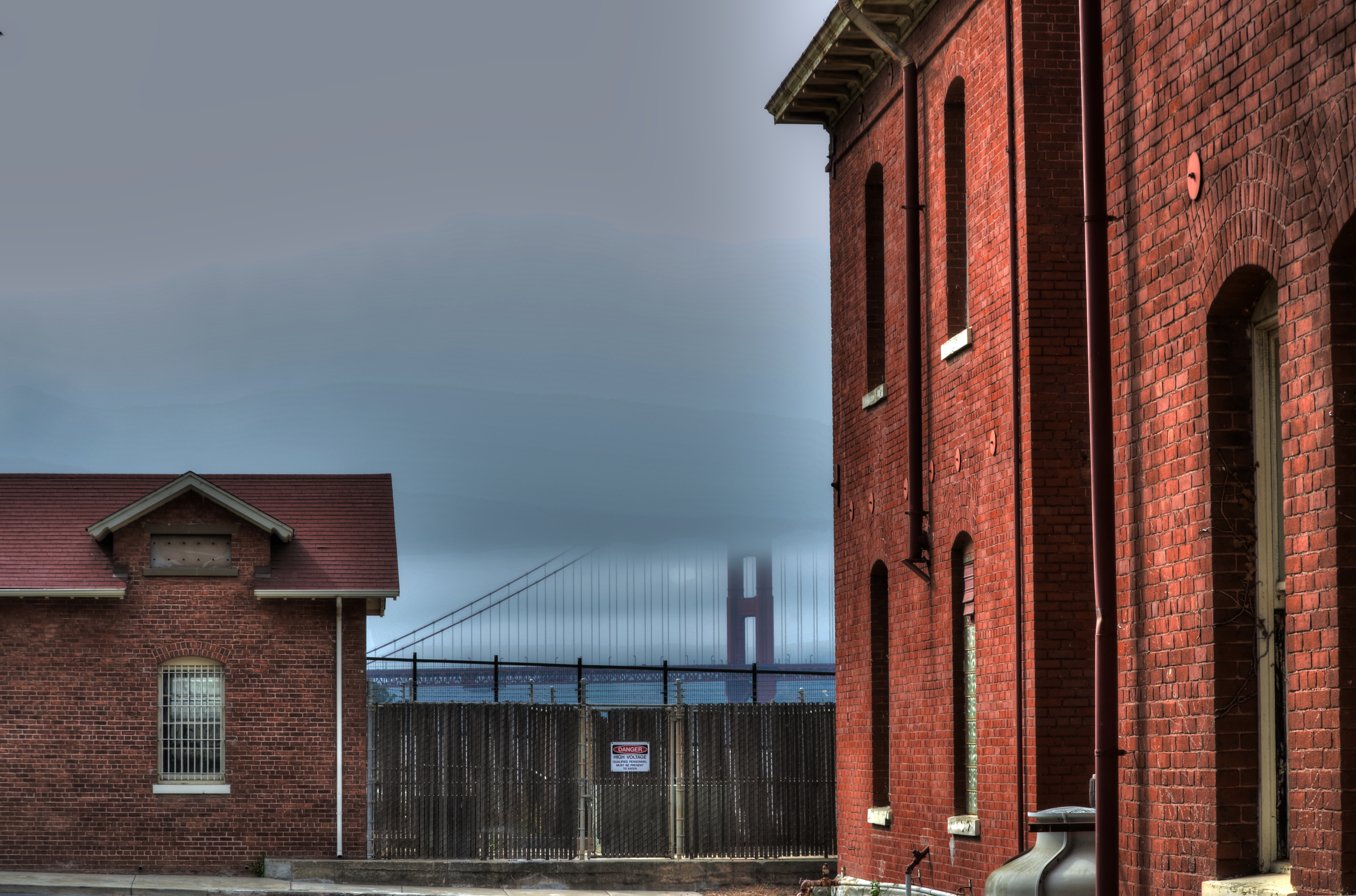
San Francisco decides what to give you, weather-wise. You have decide to accept or reject it, picture-wise.
By MICHAEL PERKINS
SOME ICONIC SUBJECTS ACTUALLY SUBVERT CREATIVE PHOTOGRAPHY, since they fire a normal human urge to record “your take” of an image that literally millions have taken before. There is a strong temptation to merely simulate or re-create the ideal depictions of such objects, be they skyscrapers or mountains, cathedrals or canyons. There is an inherent trap in this process, of course. Why strive to merely match what others have done, to ape or emulate the “ideal” shot? Why settle for the chance to render a Xerox of someone else’s vision?
However, just because I can recognize this trap doesn’t mean I haven’t fallen into it. Indeed, as recently as last week, I found myself despondent because I was being denied the “perfect” shot of San Francisco’s #1 visual trademark…the Golden Gate Bridge. I was visiting the marvelous new Walt Disney Family Museum, housed inside re-purposed buildings in the Presidio, whose severe, spartan brick buildings are an inspiring reminder of their original role as a line of national defense for this vital port. However, for me in 2012, they were attractive chiefly because they were the last layer of urban development before the bridge. I drooled over the images on the museum’s website. It’s right in their backyard! Moreover, the only place in the Disney museum where photography is allowed is along a glass walled gallery specifically designed to serve up the perfect shot of Big Red. Perfect, right?
Except that, on the day I visited the museum, a stubborn canopy of fog had refused to clear the bridge towers, even in the clear light of late afternoon sun. There goes plan A. I left the building convinced that I could shoehorn a telephoto shot in between Presidio buildings and still get my “optimum” shot. I soon realized, however, that plan B was also unworkable. The fog stubbornly persisted in eclipsing the top of the south tower, while the property fence in my immediate view was chopping into a clear shot of its foundations. What remained looked cluttered, wrong, unconventional. Then plan C came into focus. Shoot something. Try to save this. Can I make a composition out of these stark brick blocks of space, with a glimpse of the tower in between? I was on total instinct by this time. My wife was waiting in the car, we were both tired after a day of flying, and it was just a whole helluva lot easier to just walk away. Enter the rationale: The bridge isn’t going anywhere. There have to be a million places to stand and get the “right” shot I want. Run away and live to fight another day.
And yet.
There was just a twinkling of an idea….not really a fully formed concept, just a seed pod. The bridge is, given the local weather, always in the process of being concealed and revealed. Photographers have made great images of the bridge not only when it can be seen but when it coyly hides, like Salome, beneath the veils of weather. In fact, many of the best pictures of the bridge have been made under adverse conditions. Artistically, I was in good company. The bridge is always teasing, always taunting: come and find me. Try to define me. I dare you to capture me. I am not easy.
I am not obvious.
To hell with it.
I decided to wedge the partially visible tower between two dead blocks of brick, and make the picture. Like an immigrant who has to look through a dirty window to see a fast, smeared glimpse of Lady Liberty as he enters New York harbor, I knew I was stealing a view, snatching a fragment, a bit of hope, a shard of truth. I had to settle. I had moved plan C up to A position and was determined to live with the choice. Strangely, I will, upon future visits to San Francisco, feel a little cheap taking the “perfect” shot, if it ever presents itself.
I am no longer so certain of the best way to approach this subject. Whether I really got something or whether I am merely rationalizing my long shot in a lousy situation, I can no longer determine. But I am happy with what happened. And that’s supposed to be what this is all about.
Thoughts?
Related articles
- In The Presidio: Hard To Imagine, But There Wasn’t Always A Bridge Across The Golden Gate (sf.curbed.com)
- Plans Set, Drivers Brace For Golden Gate Bridge 75th Anniversary (sanfrancisco.cbslocal.com)
BEYOND THE PATH OF THE GLACIER
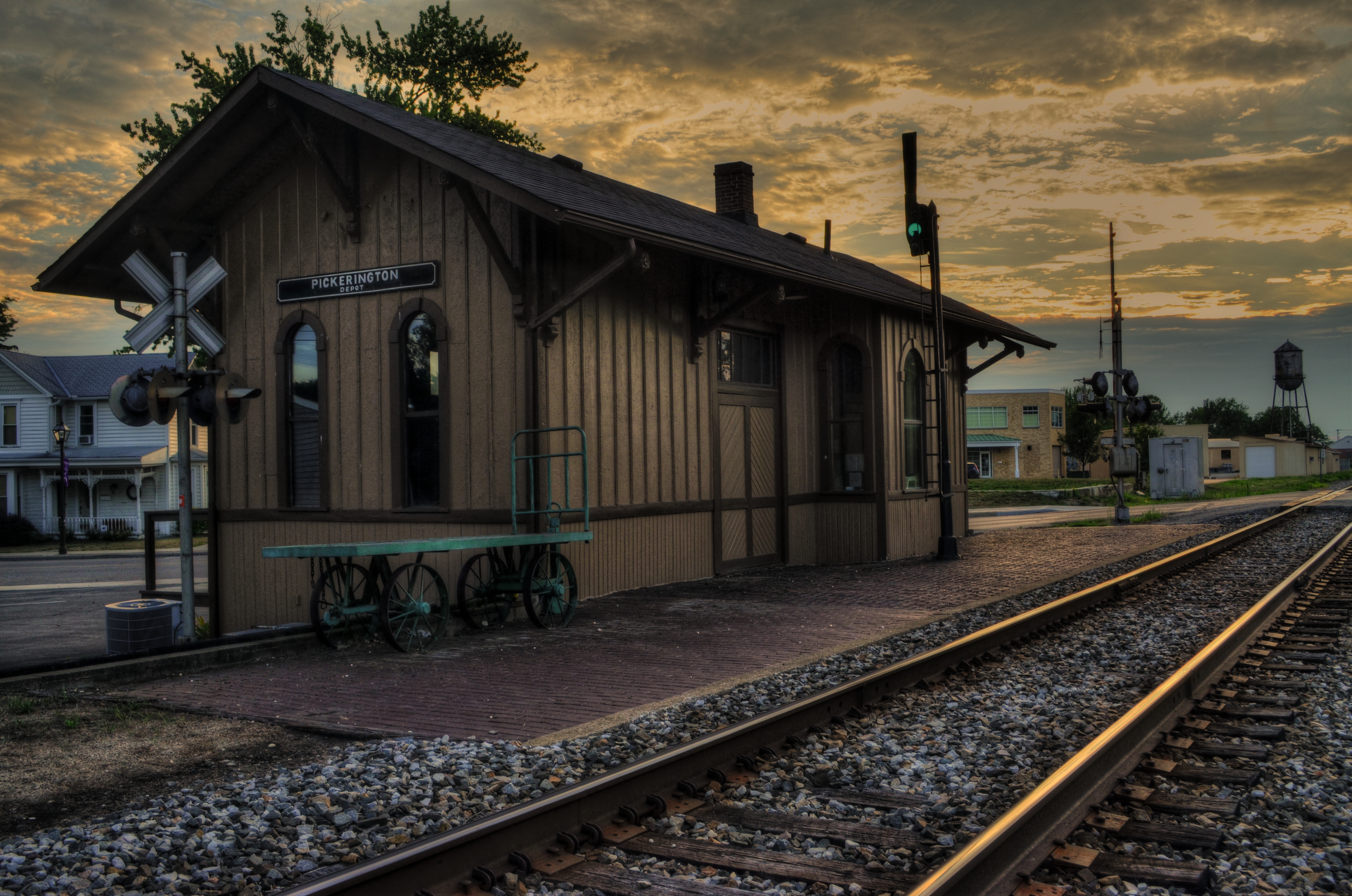
Sentimental Journey: the original depot building for the Toledo & Ohio Central railroad, still standing in Pickerington, Ohio. Just because.
By MICHAEL PERKINS
IN AMERICA WE GET ACCUSTOMED TO SEEING OUR URBAN HISTORY REGULARLY REDUCED TO RUINS, not because our cities are laid to waste by invaders or sacked by conquerors, but because we are such paltry stewards of the architectural legacies we share in this essentially young nation. Obvious nationalistic images aside, the wrecking ball, our answer to the crushing glaciers of history, is the real visual signature of the USA. We get tired of looking at old stuff. We knock the old stuff down. And in doing so, we squander the value of things to which we once attached great importance, rendering them moot, as if we really never cared about them at all.
The change glacier usually sweeps through the vast canyons of our larger cities, cutting a swath of wreckage that levels, implodes or simply knocks down any testimony to history, fashion, flair, whimsey, and the thing we most dread, uselessness. Every town has its casualties; stadiums, grand hotels, transportation hubs, retail centers, neighborhoods…it’s simply not American to get too attached to anything. It’s all going away, all of it, and with it, any sense of continuity, memory, or a contextual place in time.
Fortunately, it is the tendency of the glacier to “think big” that keeps the crushing onslaught of “renewal” concentrated in the larger urban centers, often leaving more survivors in small towns and rural communities. That means that some things in off-track towns, being below the radar of macro-change, are simply left alone, allowed to survive, because they are neglected by the bigger sweep of things.
This means that the “in-between” parts of the country still hold some treasures, a few gentle ties to times we have largely disposed of in the major hub cities. And while no one is suggesting that we bring back the village blacksmith and the local cobbler’s shop, it’s comforting in some way to be able to see and touch what in other parts of the nation are merely footnotes in books. That is, if we haven’t burned the books.
The building pictured at the top of this post is such a survivor. Built in 1879 just as the Toledo & Ohio Central railroad was being cut across the small village of Pickerington, Ohio (just southeast of Columbus), this compact little structure was the nerve center of trade and travel for “Picktown” for more than half a century. Its three rooms included an entry area for freight, an arrival room for passengers, and, in the center, an office for the combined jobs of depot agent and Western Union telegrapher. It was not until the hiring of its first female depot agent in 1947 that the facility could boast indoor plumbing, but the T&O’s tracks, during rail’s heyday, criss-crossed the tiny town with spur lines to a lumberyard, a grain mill, a hoop factory and warehouses.
Amazingly, the depot survived an extended closure from 1958 to 1975, when private money made its restoration possible. Lanterns, tools, bottles, wall maps, schedules, freight wagons, and a fully functional Western Union telegraph key were all assembled to visually cement the station in time. And there it stands to this day, serving no other “function” than to mark where the town, and we, have passed on our way to the inevitable.
Better than my luck in finding this place was in finding it just as dusk was streaking across the sky, giving me the perfect visual complement to the passing of time. And yet, here, out of the path of the glacier, time was allowed to tick just a little slower, slower enough to teach. And remember.
Thoughts?
SMALL MAY BE ALL
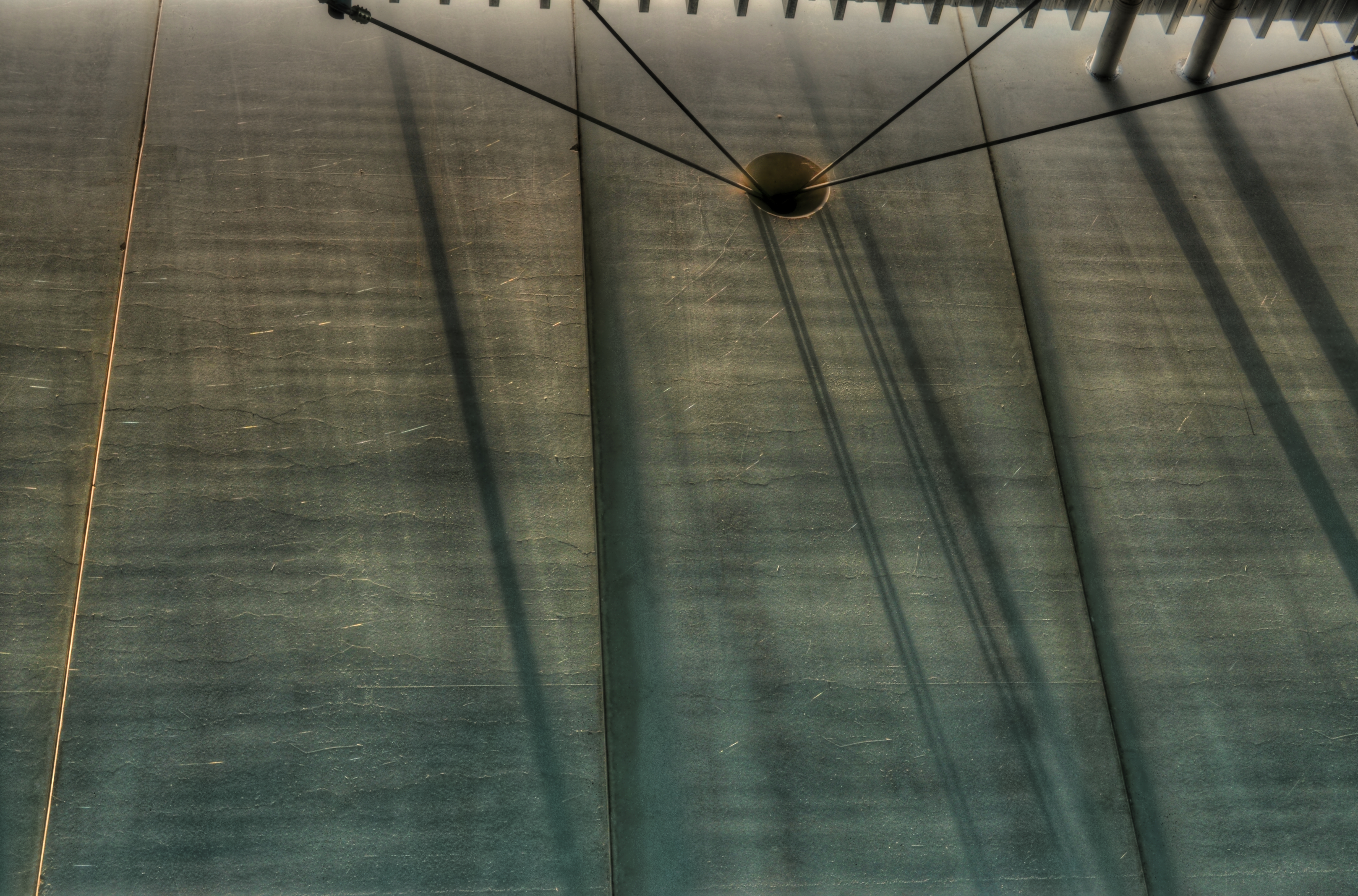
Along came a (light) spider. Intense mid-day light on Summer Solstice 2012 creates dramatic shadows and heightened texture in this HDR image.
By MICHAEL PERKINS
SOME SUBJECTS SEEM AS IF THEY ARE GOING TO FOLLOW A SURE PATH, then dog-leg on you in the doing. Last week I was fascinated to attend a celebration of the summer solstice in a building designed to highlight the drama of its unique light. Phoenix’ Burton Barr Library reading room, an enormous space bordered by shaded glass on its north and south faces and slab concrete for its west and east walls, has, since its opening, hosted an annual midday demonstration by its architect, Will Bruder centered on the longest day of the year. First, a capacity crowd watches intense light crawl dramatically down the library’s west wall, seeming to sweep shadows downward like a rapidly descending curtain until the entire west surface fairly glows with light. For a few minutes, under this enhanced illumination,what normally appears as a seamless monolith of concrete shimmers with a million tiny fractures, creases, and flaws, rendering the usually dull surface alive with small but perceptible dances of color.
Immediately following this subtle but sweet show, as the sun travels to the west over the top of the library, the same display begins in reverse on the east wall, as shadows begin to crawl up from the floor and eventually confine sunlight on the concrete surface to a narrow slit at its top. The same intense reveal on every facet of the slab’s surface is seen again, and, along the ceiling, the library’s carefully designed support pillars, all positioned under individual circular skylights in the reading room’s roof, begin to resemble glowing candles. The entire phenomenon, subtle and quiet, yet beautiful in aspect, is all completed within a half hour.
In that half hour, my original shooting strategy, an overall wide shot to show the amazed onlookers inside the vast room, craning their necks to observe the miracle between rows of book shelves, moved from “sure thing” to “what was I thinking”? As it turned out “the story” was too big to be trusted to a big picture (!), and I came to realize that the heart of the light effect might best be told, for me, in one part of one wall. All the other props inside the structure provided so much visual information that nothing true was going to emerge in any attempt at an overall “coverage” image. I decided to show the shadowy tendrils trailing from a single part of the ceiling structure, but to shoot a three-shot bracket of exposures, all at ISO 100, to be combined later in High Dynamic Range software, to glean as much information (and the widest range of tone) on the texture revealed by the travel of the light across the wall.
The result was a shot that eliminated the rest of the overall solstice story as I tried instead to show object, shadow and detail combining as elements in one integrated design. It’s up to anyone as to whether I made the correct decision, but it’s safe to say that it was correct for me at the time. Sometimes a thing is interesting to look at by itself, for itself, without context or alibi. Of course I realize that I have provided both those things by writing this, but this forum is dedicated to the urge that makes us all throw something at the wall (excuse the expression) to see if anything sticks, so maybe it’s not wrong to give this a bit of backstory. Eventually, however, it’s either a picture or it’s not.
Thoughts?
Related articles
- Spiritual Significance of the Summer Solstice (aquariuschannelings.com)
I WANT TO BE A PART OF IT…..
One belongs to New York instantly. One belongs to it as much in five minutes as in five years.
-Tom Wolfe
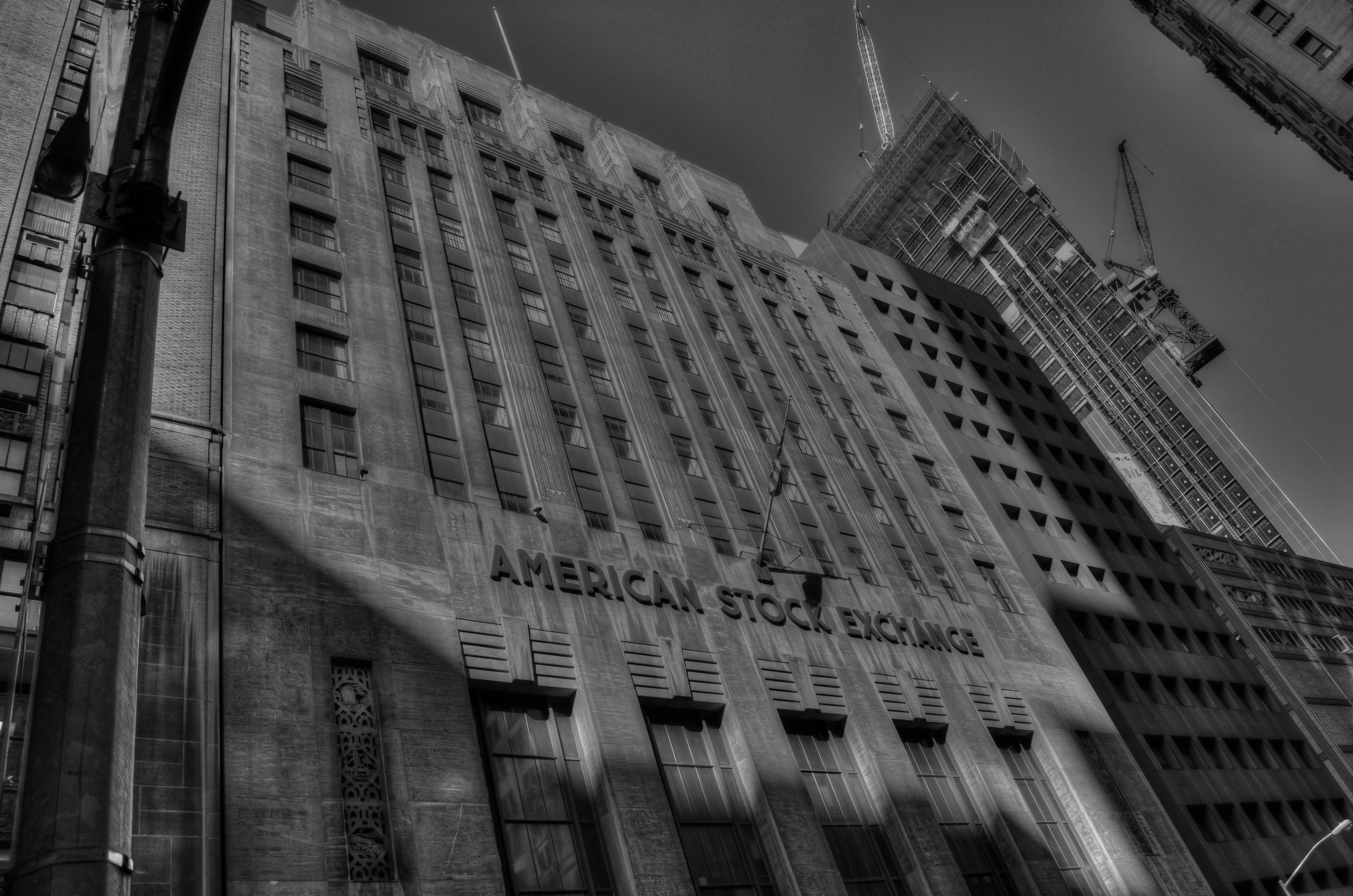
Old power, new power. The American Stock Exchange, a titan of the might of another era, stands in lower Manhattan alongside the ascending symbol of the city’s survival in another age, as the frame of WTC 1 climbs the New York sky. The tower, recently surpassing the height of the Empire State Building, will eventually top out, in 2013, at 1,776 feet. Single-image HDR designed to accentuate detail, then desaturated to black & white. 1/160 sec., f/8, ISO 100, 18mm.
THERE IS NO GREATER CANDY STORE FOR PHOTOGS than New York City. It is the complete range of human experience realized in steel and concrete. It is both a monument to our grandest dreams and a mausoleum for all our transgressions. It casts shadows that hide both joy and fear; it explodes in light that illuminates, in equal measure, the cracked face of the aged contender and the hopeful awe of the greenest newcomer. There is not another laboratory of human striving like it anywhere else on the planet. Period period period. Its collapses and soarings are always news to the observer. Bob Dylan once said that he who is not busy being born is busy dying. New York is, famously, always busy doing both.
I would give the greatest sunset in the world for one sight of New York’s skyline.
-Ayn Rand
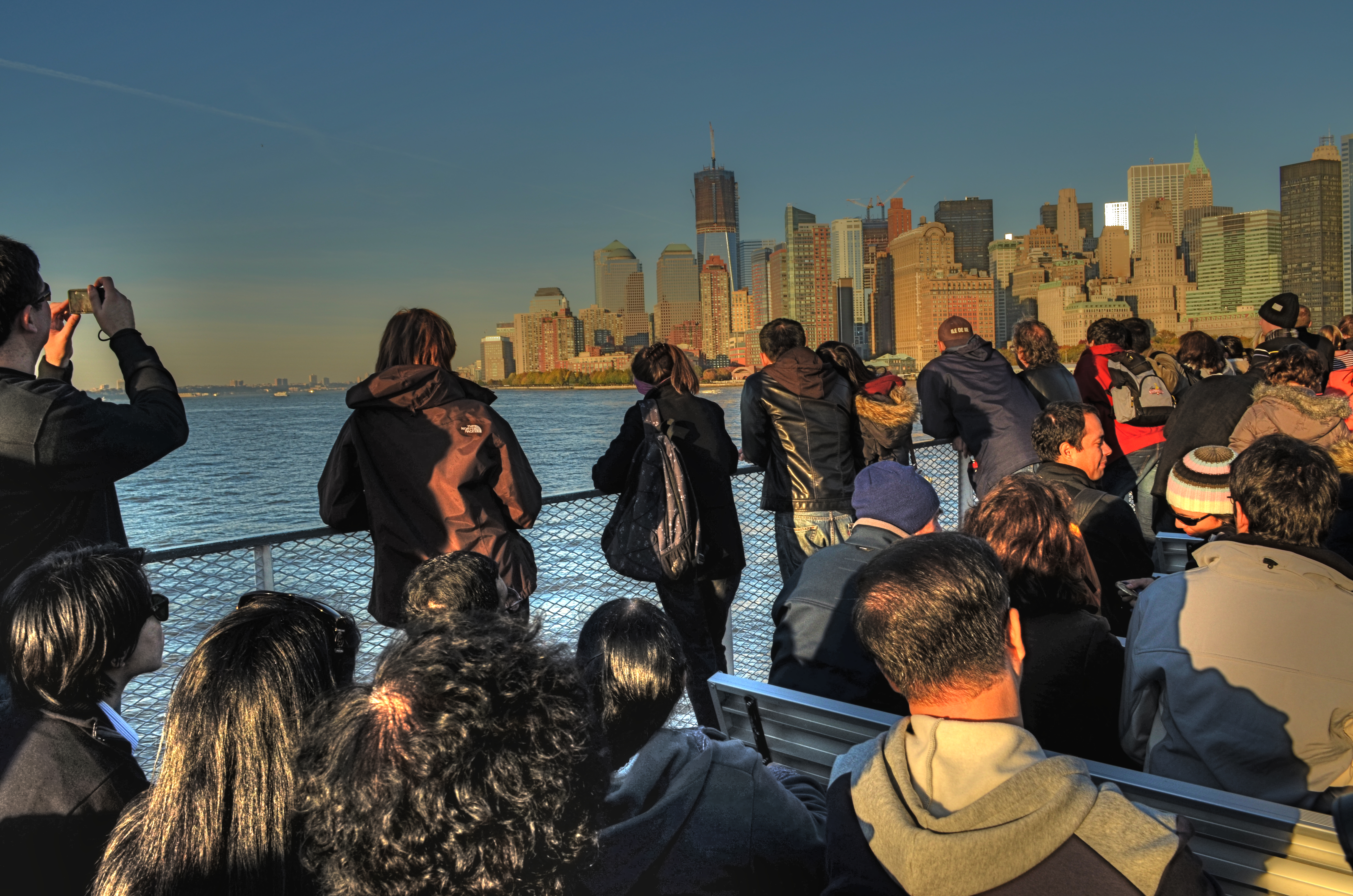
Returning from Liberty Island and Ellis Island in November 2011, a packed tour boat’s passengers crowd the rail for a view of WTC 1, rising as the new king of the New York skyline.
This month’s announcement that the new WTC 1 (built on the site of the old 6 World Trade Center building, itself a rather short edifice) has finally surged past the height of the Empire State Building (a repeat champ for height, given the strange twists of history) is a bittersweet bulletin at best. Cheers turned to tears turned back into cheers. In the long-view, the inevitable breathe-in-breathe-out rhythm of NYC’s centuries-old saga, the site’s entire loop from defeat to defiant rebirth is only a single pulse point. Still, on a purely emotional, even sentimental level, it’s thrilling to see spires spring from the ashes. The buildings themselves, along with their daily purposes and uses, hardly matter. In a city of symbols, they are affirmations in an age when we need to remain busy being born.
Thoughts?
“WHAT” IS THE QUESTION
ONE OF THE MOST FREQUENTLY ASKED QUESTIONS of shooters is, “what’s that supposed to be?”, usually asked of any image that is less obvious than a sunset shot of the Eiffel Tower or a souvenir snap of Mount Rushmore. You may have found, in fact, that the number of times that the question is asked is directly proportional to how intensely personal your vision is exercised on a given project. As much as the hidden aspects of life fascinate us, the obvious recording of familiar objects soothe the eye, like a kind of ocular comfort food. The farther you wander in your own direction as a photographer, the greater journey you also ask of your viewers. Sometimes the invitation is taken. Sometimes you must face “the question”.
What’s that supposed to be?
How, actually, in a world shaped by our own subjective experience, an image is “supposed” to be anything is a little baffling. It’s probably safe to say that what we present, as artists is probably supposed to be the view as one’s mind filters it through his or her accumulated life. When we use the camera as a mere recorder, it may make it easier, presenter-to-viewer, to agree on that image’s terms of engagement, but that may or may not reveal what we actually felt about when creating it. If I use the same three colors to render a picture of the American flag as everyone else uses, I may get into fewer arguments about how appropriate the resulting image is, but then, I don’t get to open up the discussion to any other conceptions of that flag. Back in the first days of the environmental movement, the simple use of green on the original, Old-Glory-derived ecology flag suggested an alternative way of being American, of living your life. As I recall, some viewed the design as sacrilegious, while others embraced it as liberating.
Over 150 years after the first photographs were regarded as a threat to the painter’s domain, we are still most at ease with pictures that ape the painting’s method for framing the world. Oddly, it is always outlaws and amateurs that break free of these pictorial chains first; the professionals must protect the turf they have so carefully mapped out for themselves in the mainstream. There remains, then, an ongoing battle over what should or should not be called a “picture”. Abstractions, arranged or perceived patterns, even selected details or drastic re-imaginings of small parts of the so-called “actual” world must always fight for their place at the table alongside the technically accurate mirroring of easily named subjects. We still regard that which is realistic as being the most real, and the most worthy of praise.
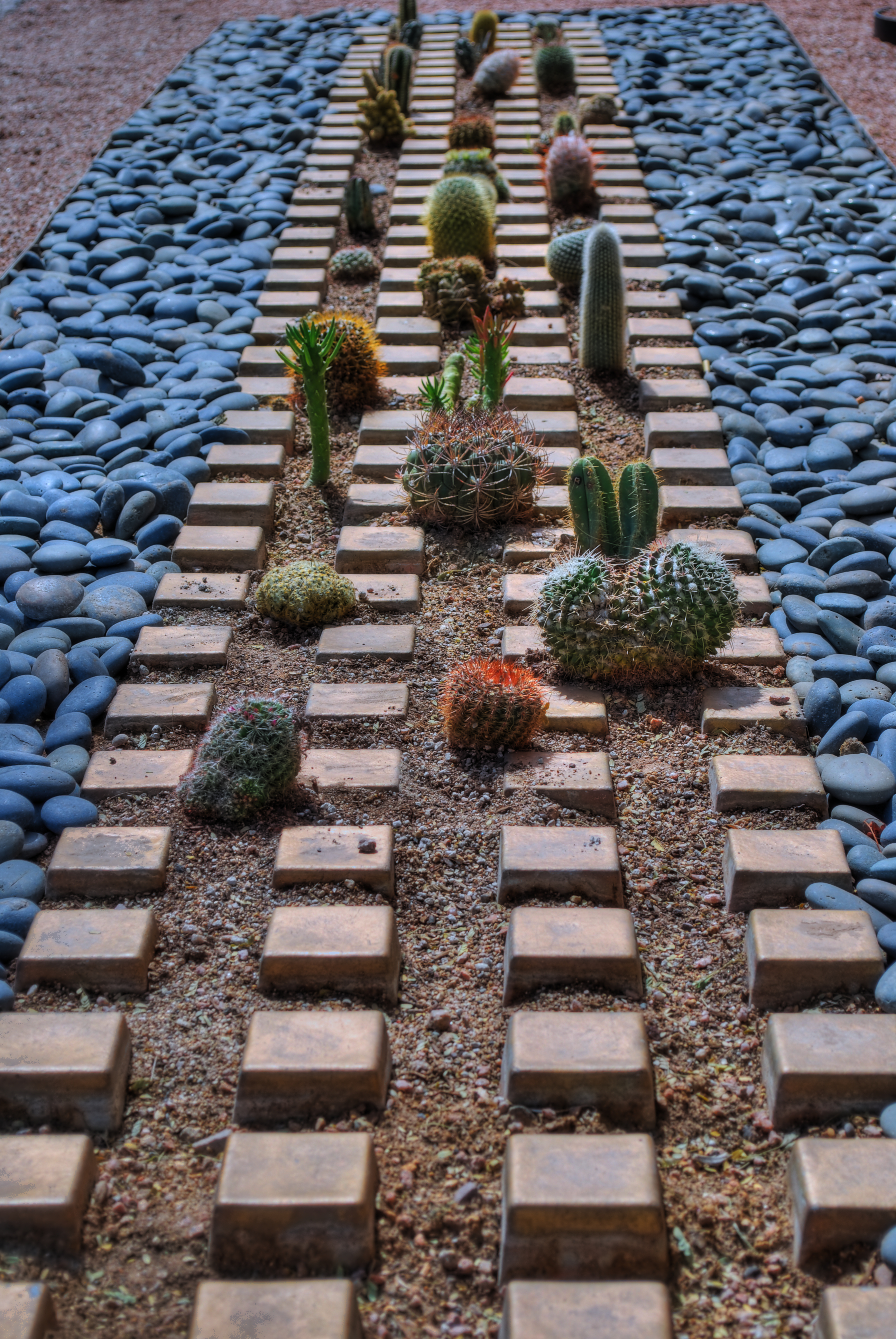
Cactropolis, 2011. Three bracketed shots about a half-stop apart combined into an HDR composite. CLICK TO ENLARGE.
To want to show something for its own sake on our own terms is to move into more personal territory, and hence onto shakier ground for critical evaluation, but occasionally we strike a balance between what people want to see and what we must show. In the above image, I only wanted to focus attention on an arrangement that was a very small and visually ignored accent along a heavily travelled public street. An unsung landscaper’s arrangement of tiles, gravel, paving rock, and succulent plants, was in plain view, and yet, at only a few inches in height, easily missed by the thousands of daily passersby speeding along the street. To me, when framed close to ground level, it resembled a kind of desert cityscape, blocks of abstract skyscrapers, a cactus metropolis, and that’s how I tried to frame and process it. Of course, it us, after all, just a pattern, and anyone who looks at the image can fill in their own blanks with impressions that are just as valid as my kind of toy idea.
The vital point is that no one else’s take on your dream can be wrong, just because it differs with yours. Art is not a science, which is why we don’t become photographers, or as the word implies, “light writers” just by pushing a button.
We become photographers by pushing everyone’s buttons.
What is it “supposed to be”? You tell me, and I’ll tell you.
Thoughts?
 thenormaleye