CHANGE YOUR ATTITUDE
By MICHAEL PERKINS
PHOTOGRAPHY IS OFTEN A GAME OF INCHES, a struggle in which outcomes vary wildly based on small, rather than large issues. Early photographers learned this the hard way, since their limited gear forced them to innovate composition and exposure with tiny tweaks that slowly but gradually added more refined skill to their work and better performance from their equipment. Ernest Haas’ great quote that a wide-angle lens is just as close as taking three steps backward still holds true. What has changed is that we have a greater tendency to think that we need more tech to make better pictures. That concept, simply, is poppycock.
For years, the option of a zoom lens was out of the question for the average photographer. The consumer-level zooms that existed were often optically inferior to standard or wide-angle glass (as testified to by Annie Leibowitz and other heavyweights), and so composition was acquired by physically closing or widening the actual distance between yourself and your subject. This is not to say that zooms didn’t eventually prove amazing tools, because they have. However, they demonstrate and instance in which tech has automated, and thus eliminated, an extra step of mindful concentration that used to reside solely in the photographer’s brain. This can lead, over time to an over-reliance on the gear to bring everything home, something it cannot ever do.
Learning to simply maximize the effect of whatever you have up front of the shutter is the easiest, and yet most overlooked aspect of many people’s work. We’d spend a lot less time lugging and swapping lenses if we knew how far we could push whatever we’ve got attached at the moment, and, indeed, masters like Scott Kelby, author of the best-selling Digital Photography Book series, has several “why change lenses? hunks of glass like the 18-200mm that can get him through an entire day without a swap. This works because he works a little harder at exploiting everything his gear can do.
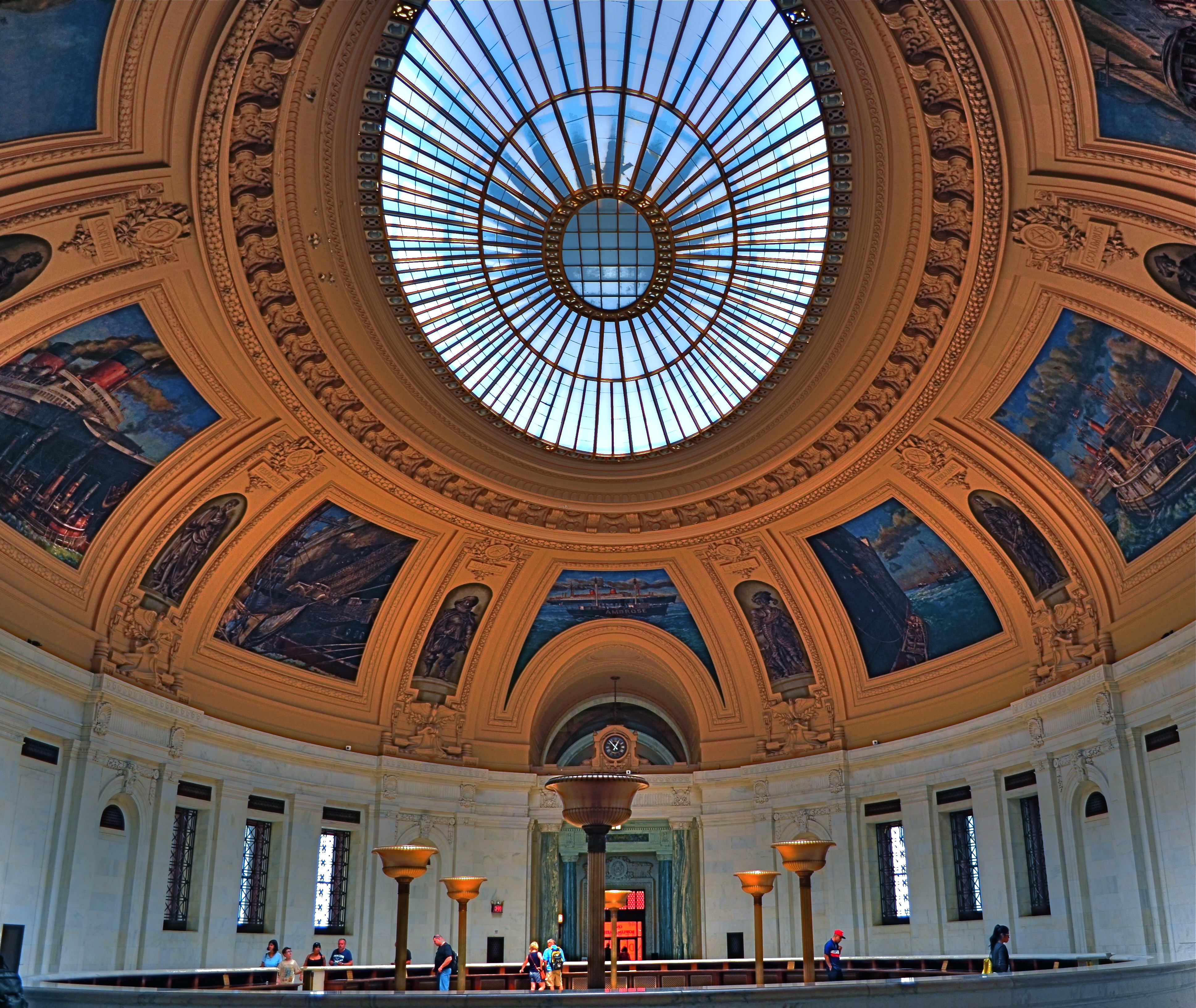
Wide-angle lenses deliver a variety of effects beyond just width.
Consider the above image. It’s taken at 18mm, but, because I arched the shot upwards, instead of maintaining a level horizon line, I forced the lens to do a little more of what it was originally designed to do….exaggerate dimensions and distances. The development of wide-angle lenses was, after all, pursued by shooters who wanted an enhancement, an interpretation, and not a recording, of reality. As such, the wide-angle in this shot over-accentuates the most prominent feature of this room within the old U.S. Customs building in Manhattan…its amazing murals. It also creates an illusion of vastness, front-to-back, in a room that is already pretty huge. And this is all done by pivoting my head upward about 30 degrees.
The game of inches is the great equalizer in photography between pro and amateur, because it gives the advantage to those who plan the best, see the most, and think the widest. And you don’t need a closet full of geegaws to do that.
THE SINGLE BULLET THEORY
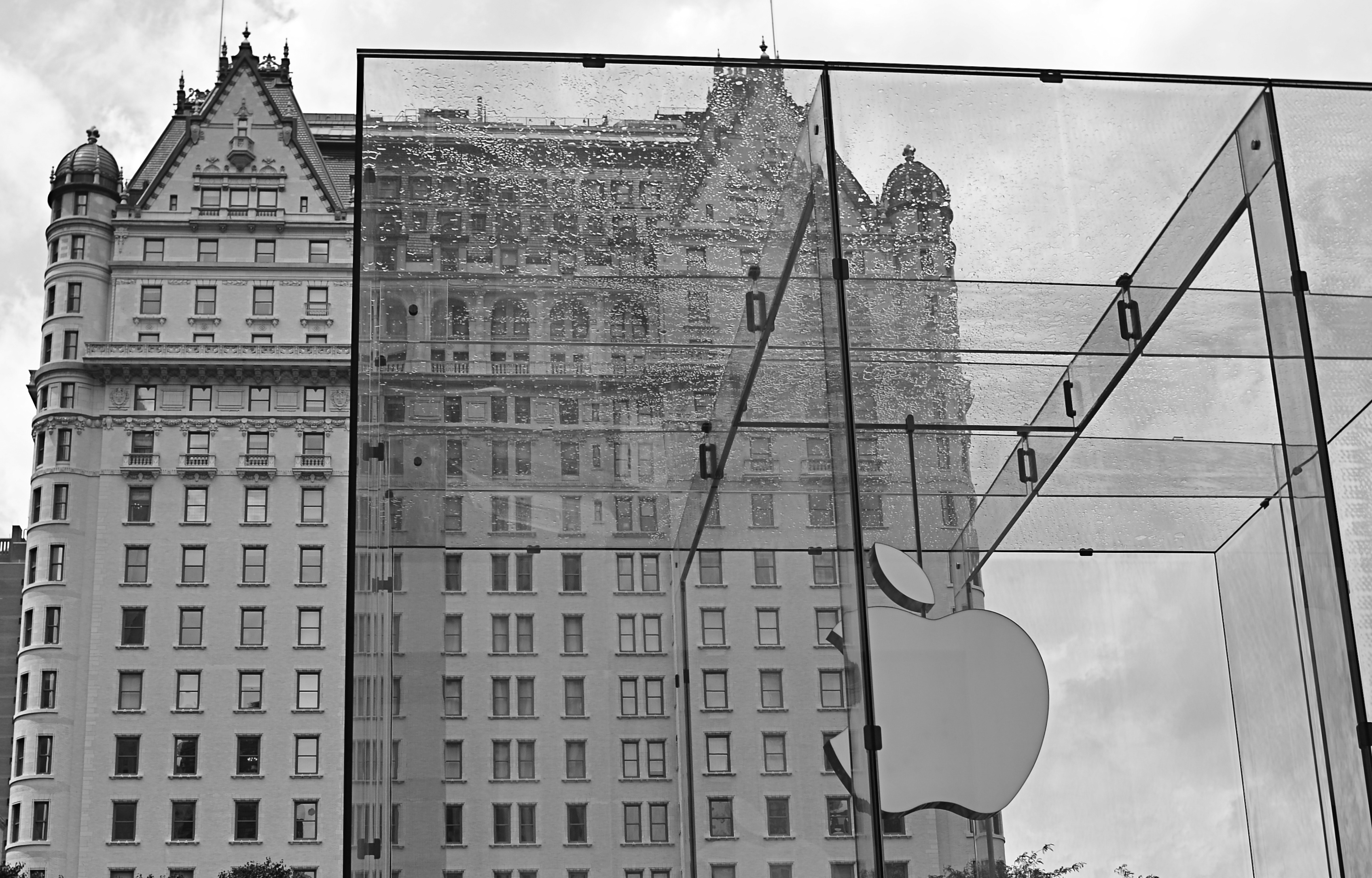
Many of your own best pictures are single-take, all-or-nothing shots. There’s a reason for that.
By MICHAEL PERKINS
Okay, Wang, I think that’s enough pictures of the parking lot. —Rodney Dangerfield, Caddyshack
IF YOU WERE TO EXPRESS TODAY’S PHOTOGRAPHIC FREEDOM IN TERMS OF FIREPOWER, it would be fair to say that many of us have come to shoot in a somewhat scatter-shot fashion, like someone sweeping a machine gun. Indeed, digital allows us to overshoot everything to such a degree that doing so becomes our default action, because why would you take one picture of your child digging into birthday cake when fifty will do just as well?
Some over-shooting is really what pro photogs used to call “coverage” and is actually beneficial for particularly hard subjects. Awe-inspiring sunsets. A stag at bay. The fiery burst from a Hawaiian volcano. Such subjects actually warrant a just-one-more approach to make sure you’ve thought through every possible take on something that can be interpreted in a variety of ways, or which may be vanishing presently. But that’s a lot different from cranking off four dozen clicks of the visitor’s center at Wally World.
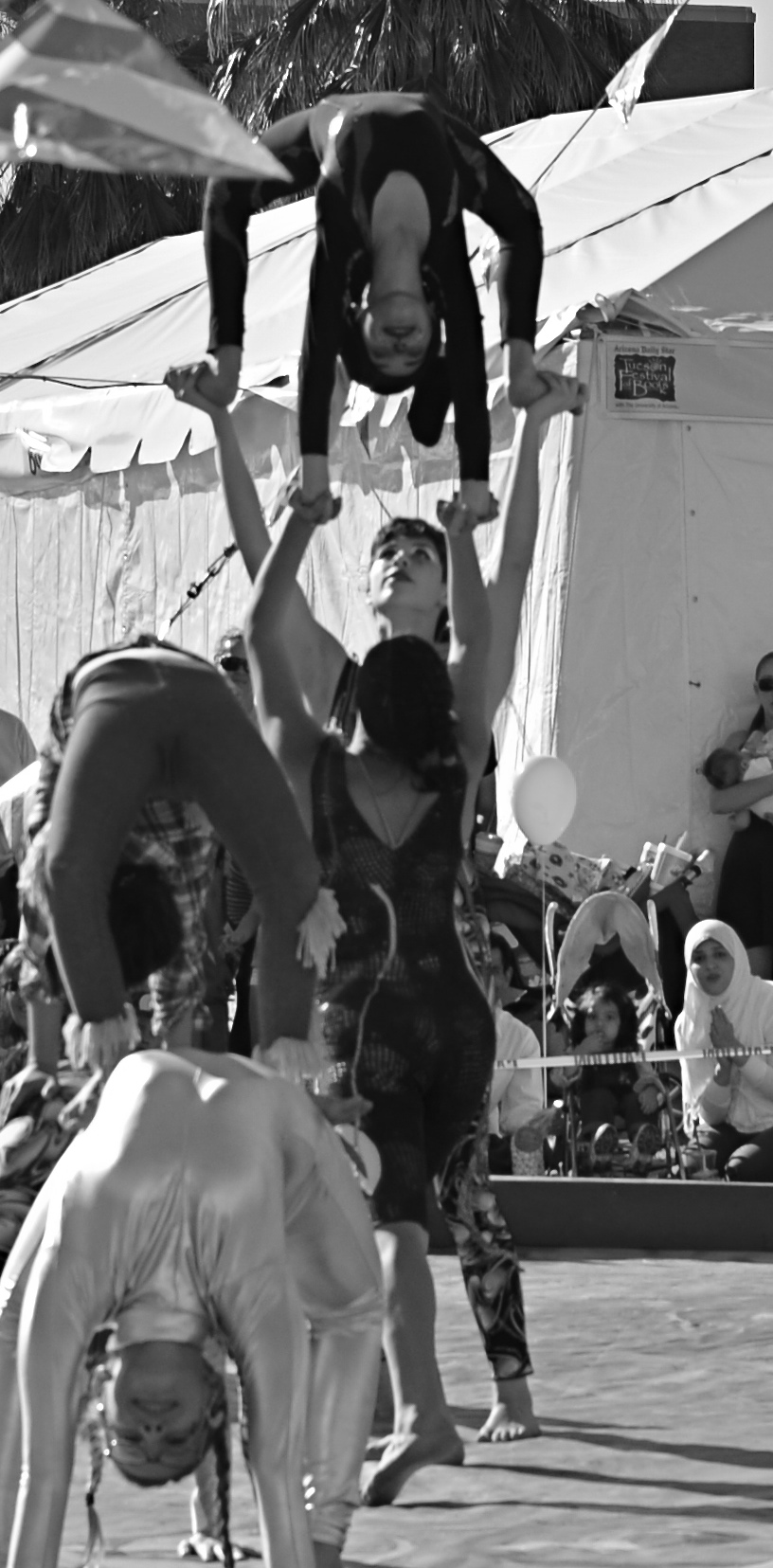
Shoot things reactively.
Shooting better isn’t always assured by merely shooting more. Instead of the machine gun technique, we might actually improve our eye, as well as our ability to strategize a shot, by limiting how many total tries we make at capturing an image. My point is that there are different “budgets” for different subject matter, and that blowing out tons of takes is not a guarantee that Ze Beeg Keeper is lurking there somewhere in the herd.
So put aside the photographic spray-down technique from time to time and opt for the single bullet theory. For you film veterans, this actually should be easy, since you remember what it was like to have to budget a finite number of frames, depending on how many rolls you packed in. Try giving yourself five frames max to capture something you care about, then three, then one. Then go an entire day taking a single crack at things and evaluate the results.
If you’ve ever spent the entire day with a single focal length lens, or fought severe time constraints, or shot only on manual, you’re already accustomed to taking a beat, getting your thinking right, and then shooting. That’s all single-take photography is; an exercise in deliberation, or in mindfulness, if you dig guru-speak. Try it on your own stuff, and, better yet, use the web to view the work of others doing the same thing. Seek out subjects that offer limited access. Shoot before your walk light goes on at an intersection. Frame out a window. Pretend an impatient car-full of relatives is waiting for you with murder in their hearts. Part of the evolution of our photography is learning how to do more with less.
That’s not only convenient, in terms of editing. It’s the very soul of artistry.
TESTIMONY
by MICHAEL PERKINS
I SEE MANY, MANY HOMELESS PEOPLE THESE DAYS. Sometimes on
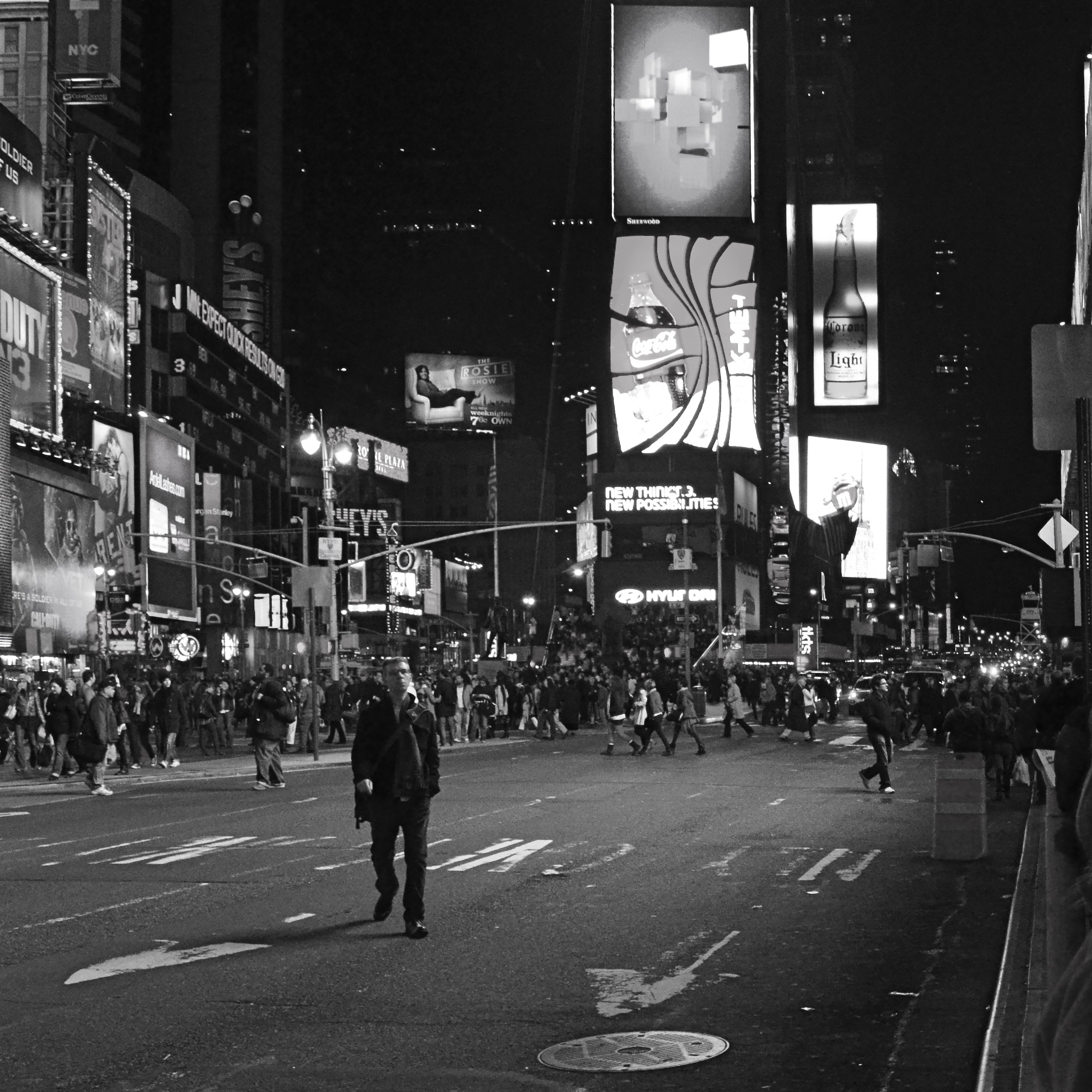
People are not merely props.
the streets of my home city. More occasionally on the streets of other towns. And every single day, without fail, on every photo upload site in the world. Many of the uploaders think this is “street photography”.
Many of the uploaders need to think again. Hard.
The mere freezing in a frame of someone whose lousy luck or bad choices have placed him on the street is not, of and by itself, some kind of visual eloquence. Not that it can’t be, if some kind of story, or context, or statement accompanies the image of a person driven to desperation. But not the careless and heedless snaps that are, I will say, stolen, at people’s expense, every day, then touted as art of some kind. The difference, as always, is in the eye of the photographer.
Many millions of people have been “captured” in photographs with no more revelatory power than a fire hydrant or a tree, and just catching a person unawares with your camera is no guarantee that we will understand him, learn what landed him here, care about his outcome. That’s on you as a photographer.
If all you did was wait until someone was fittingly juxaposed with a row of garbage cans, a grimy brick wall, or an abandoned slum, then lazily clicked, you have contributed nothing to the discussion. Your life, your empathy, your sense of loss or justice….all must interact with your shutter finger, or you have merely committed an act of exploitation. Oh, look at the poor man. Aren’t I a discerning and sensitive artist for alerting humanity to this dire issue?
Well, maybe. But maybe not. Photographs are conversations. If you don’t hold up your end of it, don’t expect the world to pick up the slack. If you care, then make sure we care. After all, you’ve appropriated a human being’s image for your own glory. Make sure he gave that up for something.
PUT YOURSELF OUT THERE
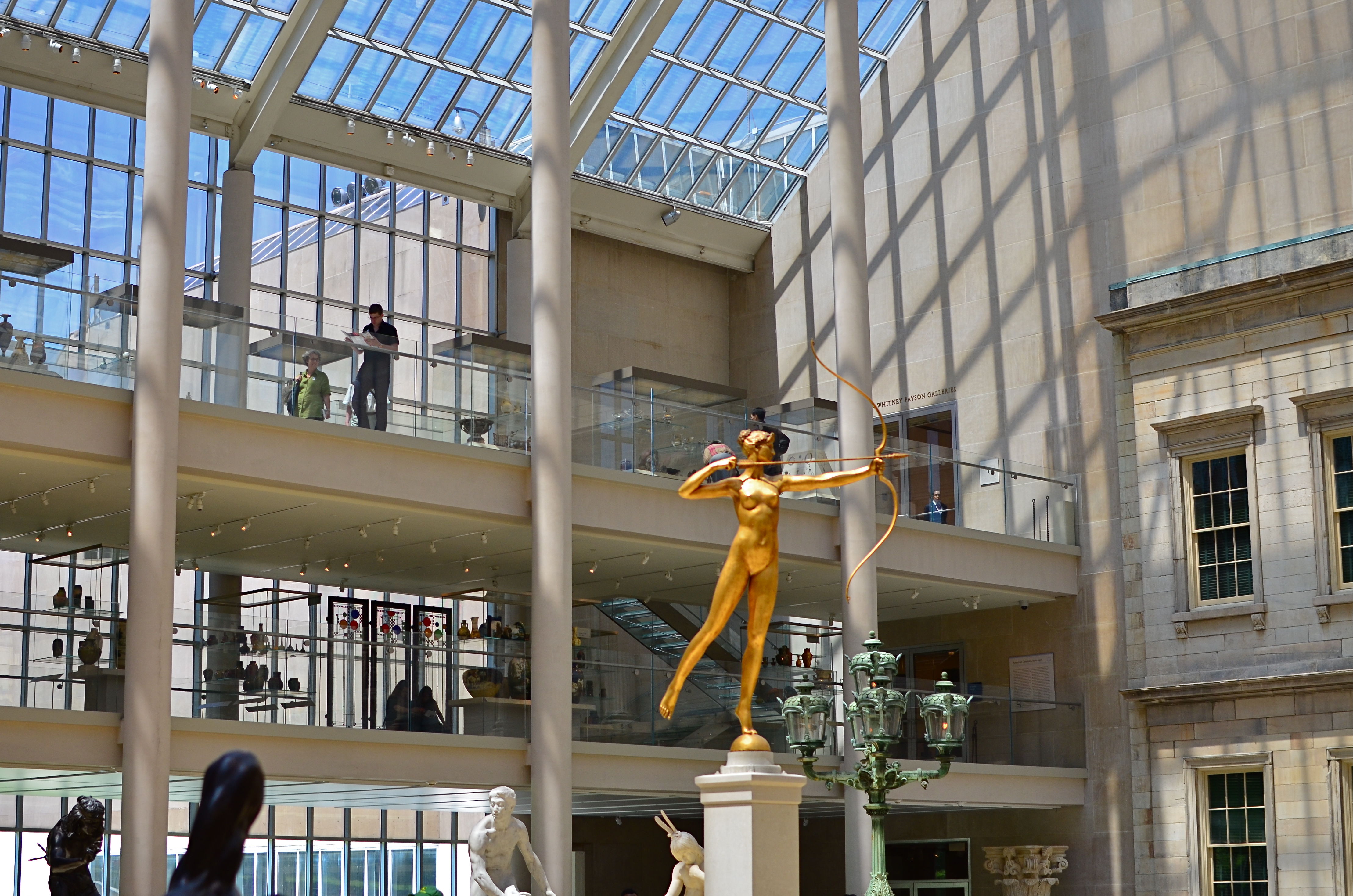
Miles from home, I either had to shoot this with the “wrong” lens, or miss the moment. Hey, I lived.
By MICHAEL PERKINS
PHOTOGRAPHY, IF IT TRULY IS AN ART (and I’m assuming you believe it is), can never get to a place where it’s “done”. There is no Finished, there ain’t no Clock Out, and there shouldn’t be any Good Enough. There is only where you are and the measurable distance between there and where you want to be. And, once you get there, the chains get moved down the field to the next first down, and the whole drill starts over again.
That means that, as photographers, we are always just about to find ourselves uncomfortable, or need to try to make ourselves that way. Standing still equals stale, which, in turn, equals “why bother?” Sure, the first step toward a new plateau always feels like walking off a cliff, but it needs to, if we’re to improve. If your work feels like something you’ve done before, chances are it is. And if a new assignment or challenge doesn’t come from outside yourself, then you’ve got to do something to put the risk back in the process.
You can write your own prescription. Shoot all day with a limited camera. Do everything in b&w. Make yourself compose shots that are the dead opposite of what you believe looks “right”. Use the “wrong” lens for the assignment at hand. Force yourself to do an entire day’s work in the same aperture, shutter speed, or white balance. Just throw some kind of monkey wrench into your routine, before the routine becomes the regular rhythm (spelled “rut”) of your work. The words comfort and create don’t fit comfortably in the same sentence. Be okay with that.
We can’t always count on crazed bosses, tight deadlines or visionary mentors to nudge us toward the next best version of ourselves. Learn how to kick yourself in the butt and you’ll always be in problem-solving mode. That means more mistakes, which in turn means a speedier learning curve. You never learn anything repeating your past successes, so don’t curl up next to them like some comfortable chair. Put it all out there. Make the imperfect day work for you, and pray that there’s another one waiting after that.
THE REVEAL
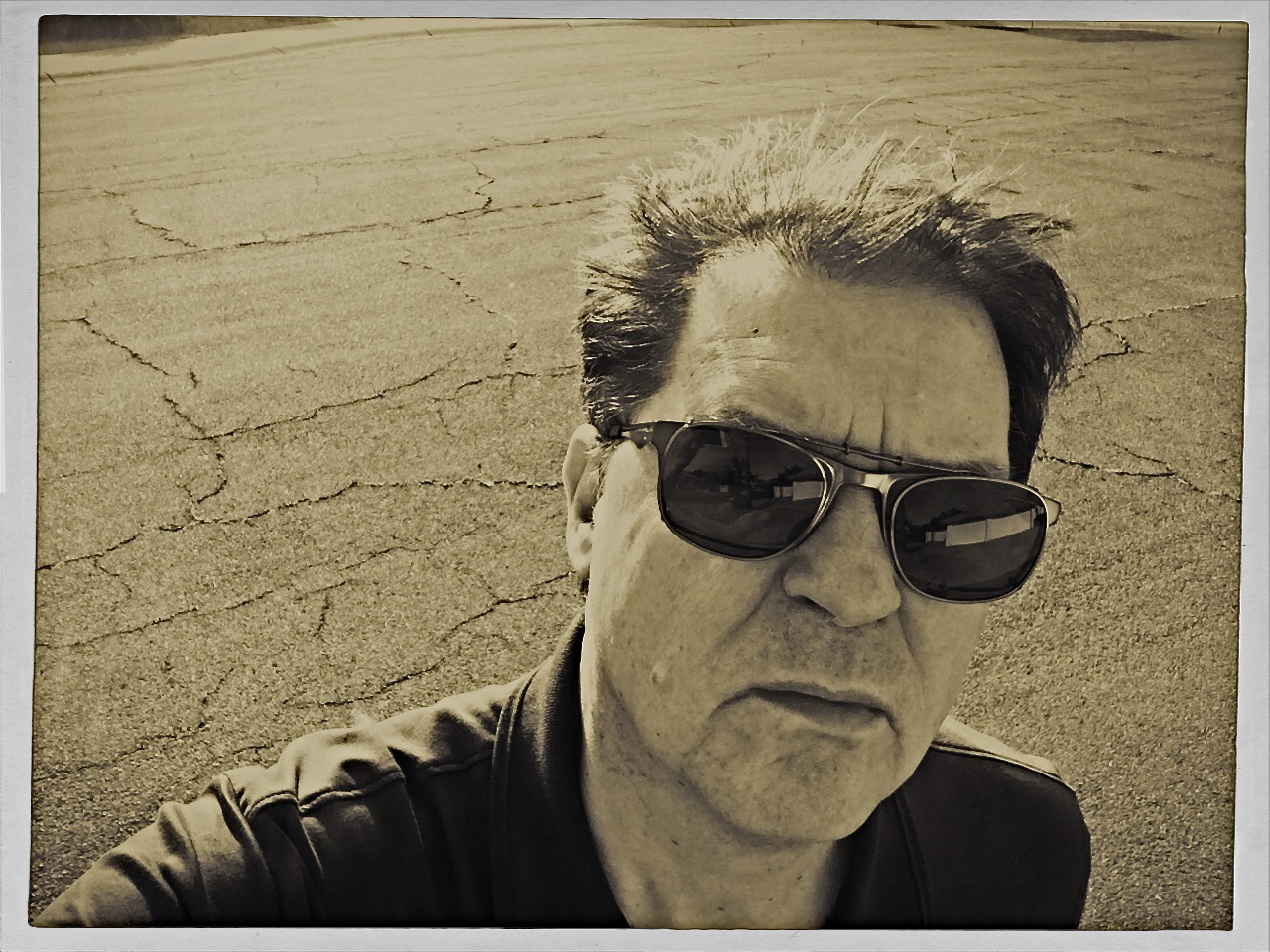
Who is this person? And how do I know? And how do I show it?
By MICHAEL PERKINS
PHOTOGRAPHERS HAVE MANY INSTANCES IN WHICH IT’S HEALTHY TO HAVE A LITTLE HUMILITY, and the biggest one probably is in the decision to depict a human face. It’s the most frequently performed operation in all of photography, and many of us only approach perfection in it a handful of times, if ever. The face is the essence of mystery, and learning how to draw the curtain away from it is the essence of mastery.
Nothing else that we will shoot fights so hard to maintain its inscrutability. It is easier to accurately photograph the microbes that swarm in a drop of water than to penetrate the masks that we manufacture. Even the best portrait artists might never show all of what their subject’s soul really looks like, but sometimes we can catch a fleeting glimpse, and getting even that little peek is enough to keep you behind a camera for a lifetime. It is everything.
Yousuf Karsh, the portraitist who can be said to have made the definitive images of Winston Churchill, Audrey Hepburn, JFK, Ernest Hemingway, and countless other notables, said “within every man and woman. a secret is hidden, and, as a photographer, it is my task to reveal it if I can.” Sounds so simple, and yet decades can go into learning the difference between recording a face and rendering its truths. Sometimes I think it’s impossible to photograph people who are strangers to us. How can that ever happen? Other times I fear that it’s beyond our power to create images of those we know the most intimately. How can we show all?
The human face is a document, a lie, a cipher, a self-created monument, an x-ray. It is the armor we put on in order to do battle with the world. It is the entreaty, the bargain, the arrangement with which we engage with each other. It is a time machine, a testimony, a faith. Photographers need their most exacting wisdom, their most profound knowledge of life, to attempt The Reveal. For many of us, it will always remain that….an attempt. For a fortunate few, there is the chance to freeze something eternal, the chance to certify humanity for everyone else.
Quite a privilege.
Quite a duty.
TEMPORARILY ACTUAL
It’s the truth. It’s actual. Everything is satisfactual. –lyrics from the Oscar-winning song Zip-A-Dee-Doo-Dah
By MICHAEL PERKINS
PHOTOGRAPHY WAS ERRONEOUSLY BILLED, EARLY IN ITS DEVELOPMENT, as a mere recording of reality. This was, of course, an attempt to characterize the picture-making process as more bloodless, less artistic than painting, which was an interpretation of the world. What early haters of the camera failed to realize, of course, was that photographers were just as selective in their depiction of life as painters, since their medium too, was an interpretation…..of isolated moments, of preferred angles, of temporary actuality.
If you look at individual frames within a strip of motion picture film, it becomes perfectly clear that each still image is a self-contained world, with no way to intuit what has come before a given moment nor what will come next. Thus, no one frame is “reality” but a select sample of it. In daily photography, our choice of angle, approach, and especially light can allow us to create an infinite number of “realities” that only exist in the precise moment in which we see and freeze them.
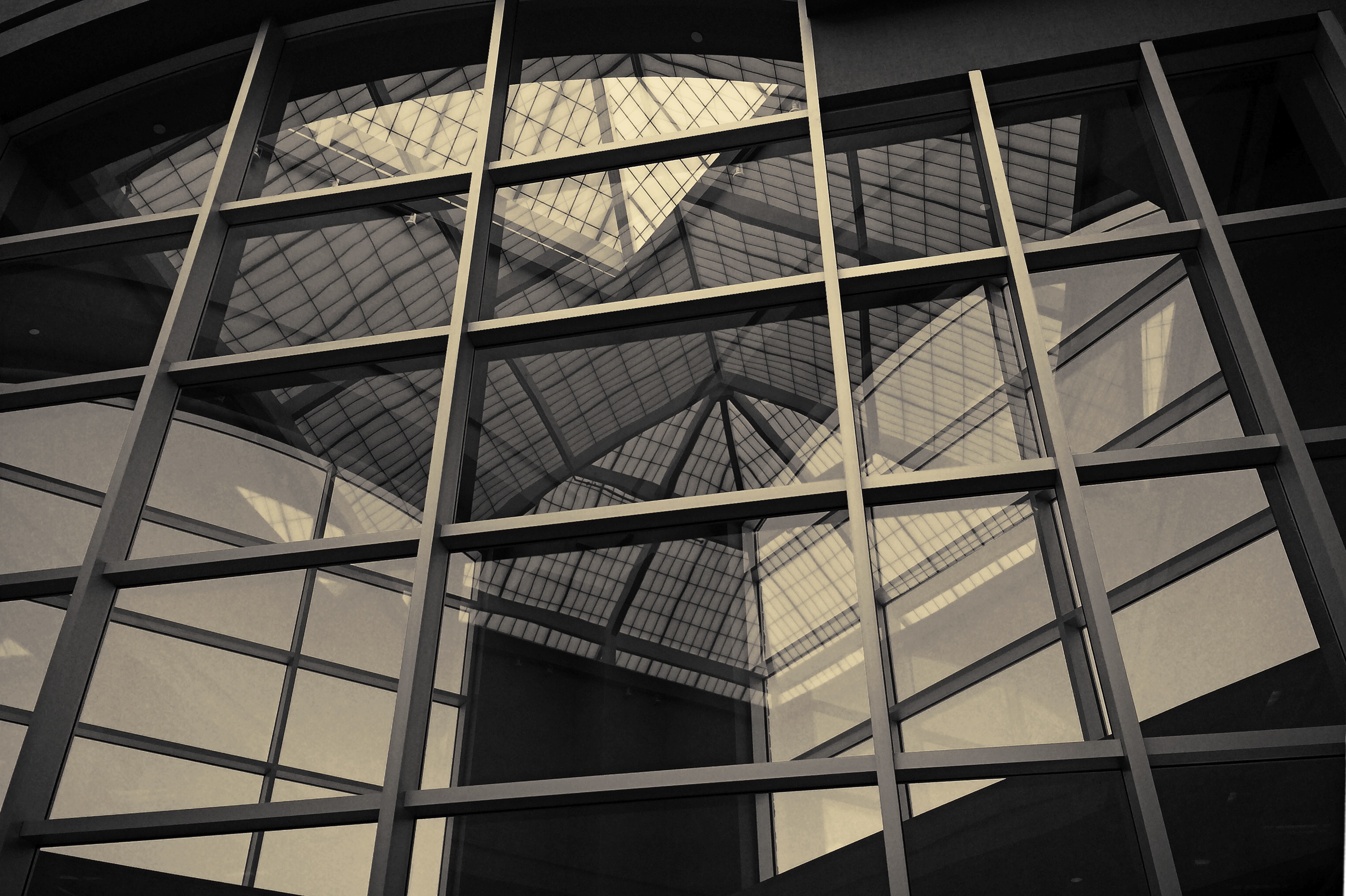
Let’s look specifically at light. As it’s jumbled in multiple reflections, light is particularly precious to the photographer’s eye, since a captured image may recall an effect that even people within inches of the shooter could not see. In the above photo, for example, this mosaic of reflections inside the vestibule of a high-ceilinged building was visible from several specific positions in the foyer. Move yourself three feet either way, however, and this pattern could not be seen at all. In other words, this photographic “reality” came briefly into existence under the most controlled conditions, then was gone.
John Szarkowski, the legendary director of photography for the New York Museum of Modern Art, dedicates an entire section of his essential book The Photographer’s Eye to what he calls “Vantage Point” and its importance to a mastery of the medium. “Pictures (can) reveal not only the clarity but the obscurity of things…and these mysterious and evasive images can also, in their own terms, seem ordered and meaningful.”
Photography is about viewing all of reality and extracting little jewels from within it.
That’s not mere recording.
That’s creation.
DIGGING OUT OF THE DRYS
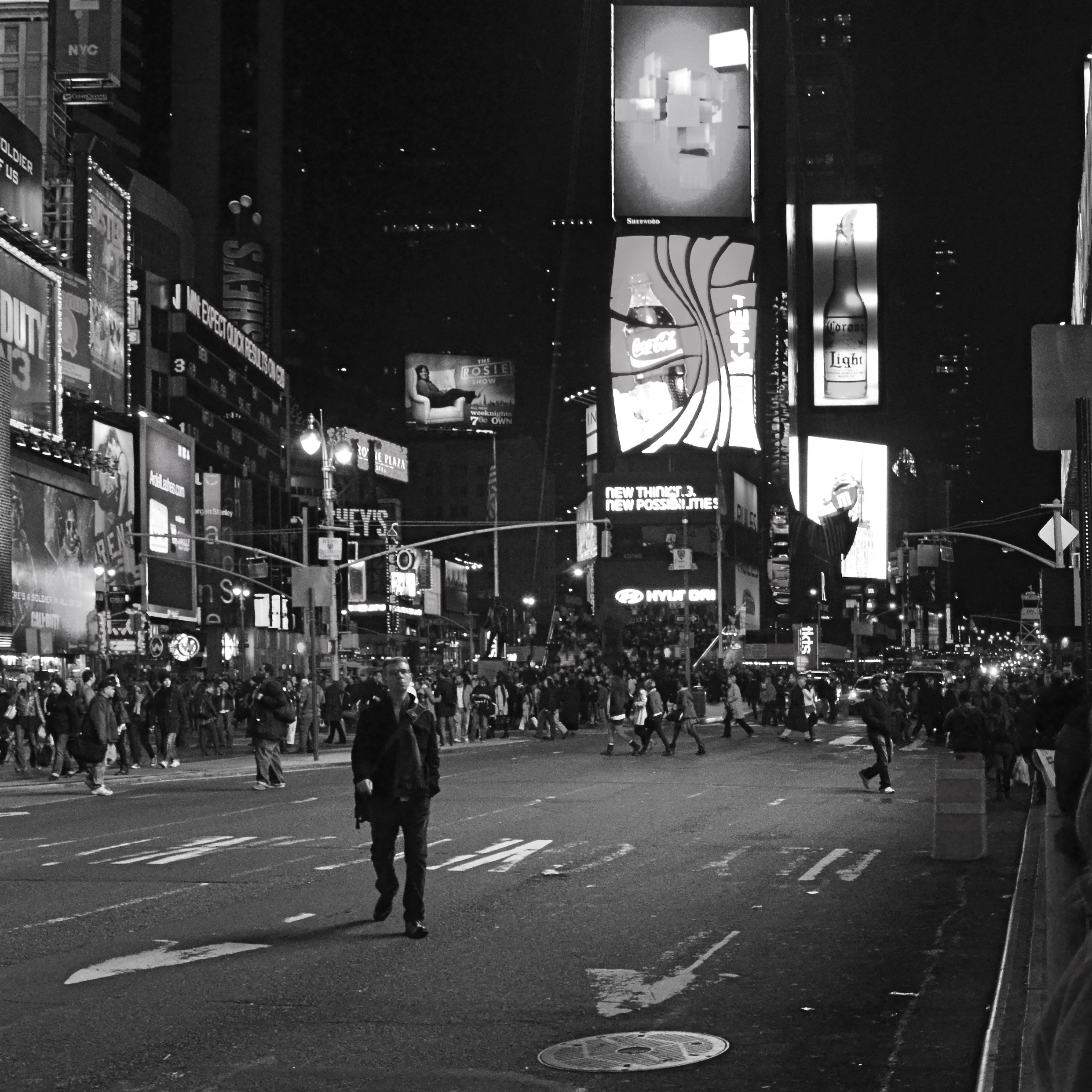
Photography can turn you into a wanderer at times, and not a happy one, either.
By MICHAEL PERKINS
PHOTOGRAPHERS, IN THE NATURAL COURSE OF THEIR CONTINUING DEVELOPMENT, will, at one point or another, get hopelessly lost. Stuck. Stranded on a desert island. Fumbling for the way out of the scary forest. Artistically adrift. Call it a dead spot, a dry spell, or shooter’s cramp, but you can expect to hit a stretch of it at some time. The pictures won’t come. You can’t buy an idea. And, worst of all, you worry that it will last……like forever.
At such times it’s a great idea to turn yourself into a rabid researcher. The answer to how to get unstuck is, really, out there. In your pictures or in someone else’s. Let’s look at both resources.
Your own past photographs are a file folder of both successes and failures. Pore over both. There are specific reasons that some pictures worked, and other’s didn’t. Approach them with a fresh eye, as if a complete stranger had asked you to assess his portfolio. And be both generous and ruthless. You’re looking for truth here, not a security blanket.
Beyond your own stuff, start drilling down to the divinity of your heroes, those legends whose pictures amaze you, and who just might able to kick your butt a little. And, just so we’re being fair, don’t confine yourself to studying just the gold standard guys. Make yourself look at a whole bunch of bad upstarts and find something, even a small thing, that they are doing right that you’re not. Discover a newbie who shoots like an angel, or an Ansel. Empathize with someone who needs even more help than you do. Once you have mercy on someone else’s lack of perfection, it’s a lot easier to forgive it in yourself.
We “artistes” love to believe that all greatness happens in isolation, just our art and us and the great god Inspiration. But even when you shoot alone, you’re in a kind of phantom collaboration with everyone else who ever took a picture. And that’s as it should be. Slumps happen. But the magic will come back. You just need to know how to reboot your mojo.
And smile. It’s photography, after all.
PRACTICE MAKES…?
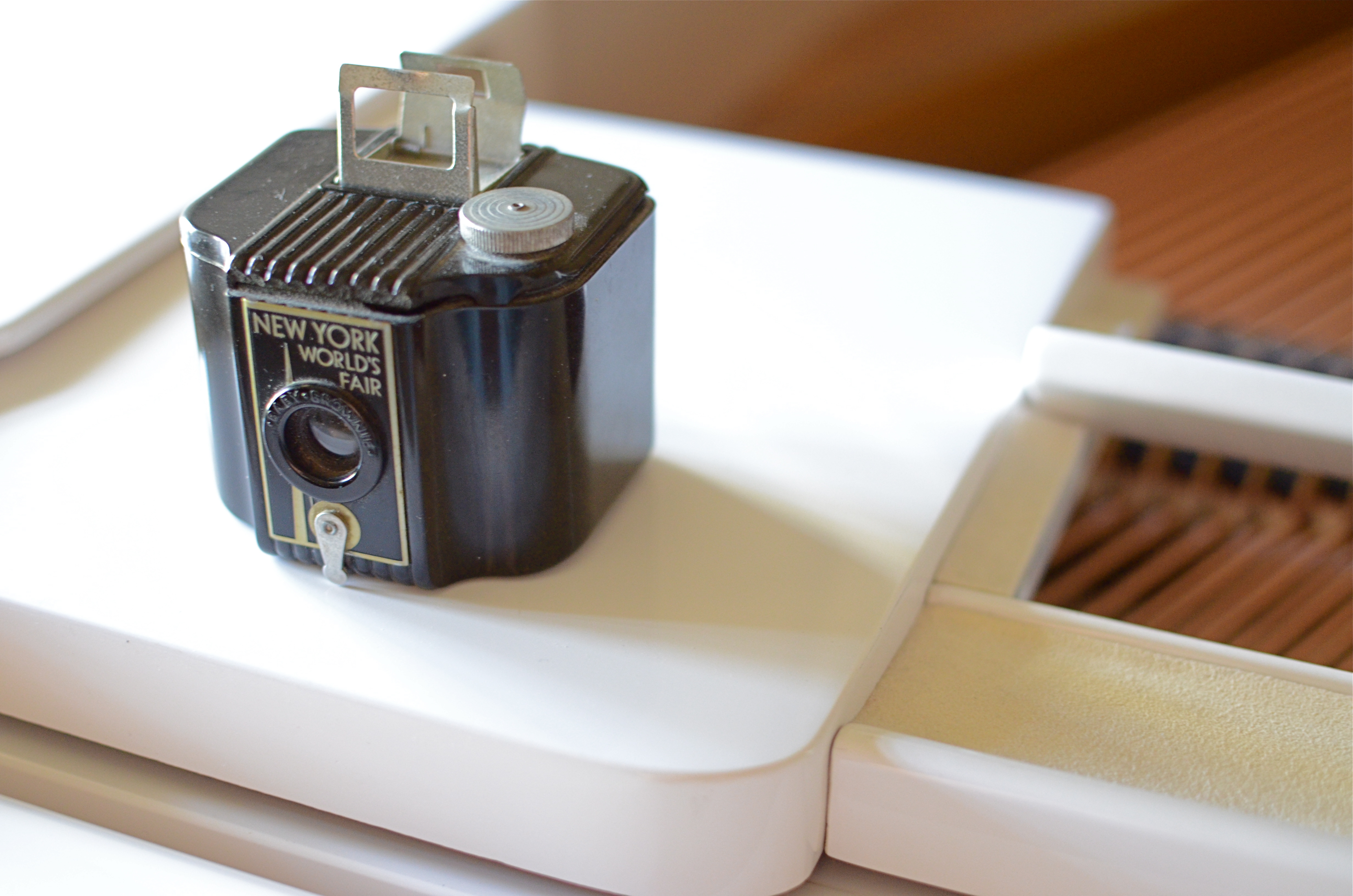
We all start with light and a box. From then on, anything can happen.
By MICHAEL PERKINS
THE BEST SELLER LIST IS THE FASTEST WAY to cement a notion in the public’s mind as indisputable “fact”. We are great at quoting a concept captured in print, then re-quoting the quote, until the “truthfulness” of it becomes plausible. It’s basically a version of the statement, “everybody knows that..” followed by a maxim from whatever hardcover pundit is top in the rotation at a given moment. And it’s about as far from accuracy as you can get.
Ever since pop-psych guru Malcolm Gladwell’s hit book Outliers arrived on shelves a few years back, its main thesis, which is that you need 10,000 hours of practice to become excellent at something, has been trotted out a thousand times to remind everyone to just keep nose to grindstone and, well, practice will make perfect. Gladwell cites Bill Gates’ concentrated stretch of garage tinkering and the Beatles’ months of all-night stands in Hamburg as proof of this fact, and, heck, since it ought to be true, we assume it is.
However, it’s not so true as it is comfortable, and, when it comes to photography, I would never hint that someone could become an excellent artist just by putting in more time shooting than everyone else. If my method is wrong, if I never develop a vision of any kind, or if I merely replicate the same mistakes for the requisite practice period, then I am going to get to my goal older, but not wiser. Time spent, all by itself, is no indication of anything, except time spent. Evolving, constantly learning from negative feedback, and learning how to be your own worst critic are all better uses of the years than just filling out some kind of achievement-based time card.
The perfection of photography is about time, certainly, and you must invest a good deal of it to allow for the mistakes and failures that are inevitable with the acquiring of any skill. But, you must also stir insight, humility, curiosity and daring into the recipe or the end result is just mediocrity. Gladwell’s magical 10,000 hours, a quantity measurement, is only miraculous when coupled with an accompanying quality of work.
There are people who know how to express their soul on their first click of the shutter, just as there are those who slog away for decades and get no closer to imparting anything. It’s how well you learn, not how long you stay in school. It ain’t comforting, but it’s true.
GRADUATING, GRADUALLY
 By MICHAEL PERKINS
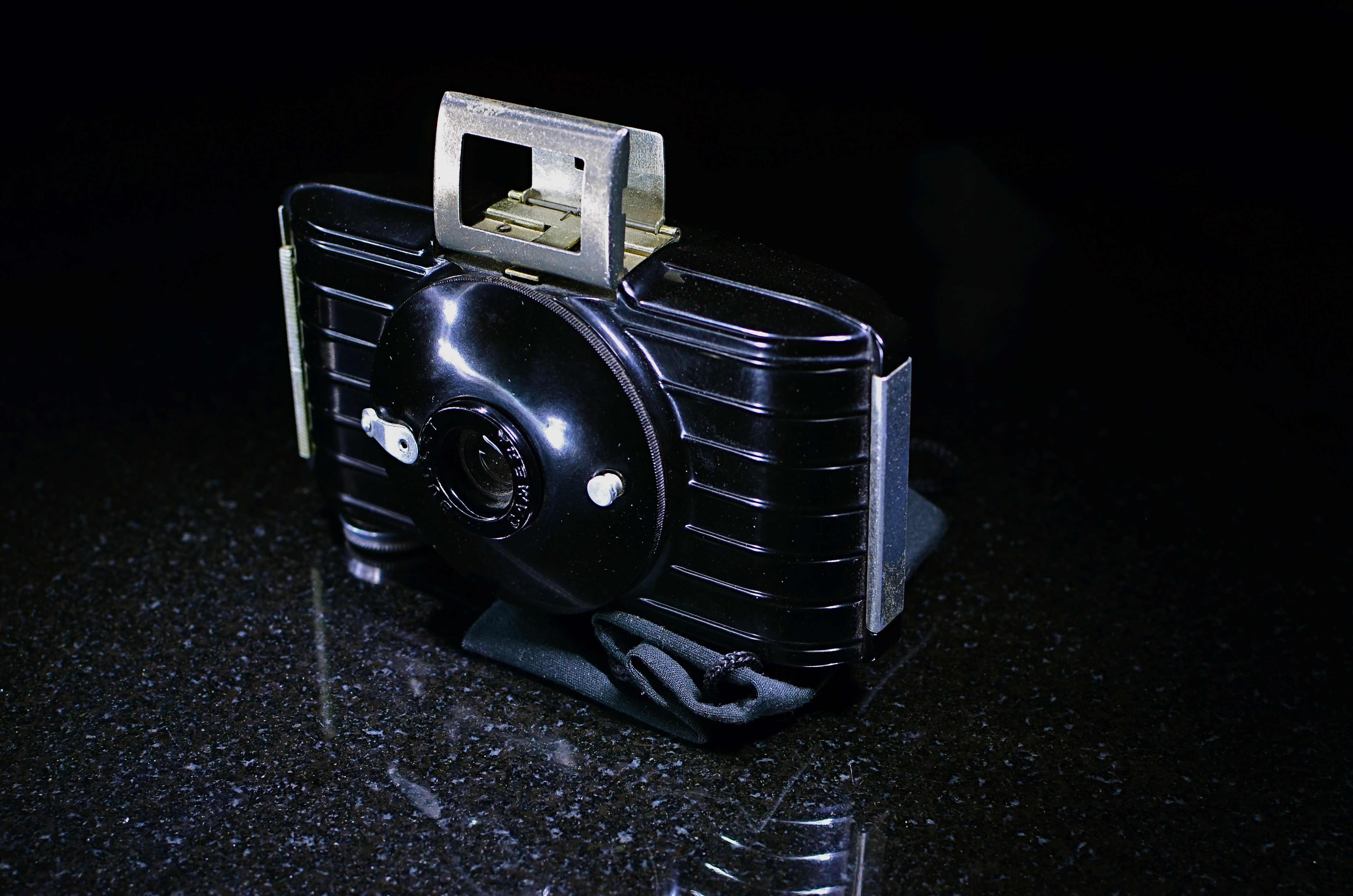
THE DEVELOPMENTAL NATURE OF PHOTOGRAPHY is not unlike that seen in many other crafts that eventually lead to art. Built in layers at a measured pace over years, the photographer’s eye deepens, broadens, becomes both intellectual and instinctual. It is a process, one that some would argue is never complete, and is similar to the way a sculptor’s grip on the chisel goes from brute strength to brain wave, or the halting young painter, over time, converts brush strokes to master strokes.
However, this process is subverted by contemporary culture’s addiction to things…new things, shiny things, latest things. When photography meets consumerism, acquisition, not mastery, becomes the prime objective. How can you take today’s pictures with yesterday’s camera? This new toy, this fresh gadget, changes everything. Adapt, or die a thousand uncool deaths.
This is flawed thinking, but it sweeps many of us up in the frenzy to constantly replace all our gear, placing our faith in the mechanics, rather than the aesthetics, of making pictures. Advertising is about artificially engineering need. If you can be made to have disdain for your old stuff, the people who make new stuff will never run out of customers. It’s just that simple. Fact is, there are many people who presently own perfectly adequate cameras, and, based on where they are as photographers, they do not need to go to the next big thing, since they have not mastered what they presently use. Here is the truth: changing cameras because you have outgrown your current one is the only time such change makes any artistic sense.
Now, I’m not saying that you should “settle” if your camera is so limited that it’s holding you back. There are some gauzy-eyed fantasists out there that love to rhapsodize on how you can make glorious pictures with crappy cameras, and, while I applaud their enthusiasm, I question their sanity. Romantic notions aside, crap usually begets crap. Get a box adequate to your needs. But make sure that it is also proportionate to your ability and involvement. I have seen more newbies over-purchase monstrous mega-machines that they either under-utilize by 90% or which terrify them so much that they lie rotting in drawers (the cameras, not the customers) after a few months of frustration and failure.
Find the camera that defines what kind of photographer you are right now, and pull every ounce of creativity out of it until you know that you need something else in order to grow. Trying to shoot masterpieces with junk usually doesn’t work, but sinking your hopes into a $2,000 thoroughbred that you’re going to use like a point-and-shoot may actually be worse.
MORE THAN FOOD
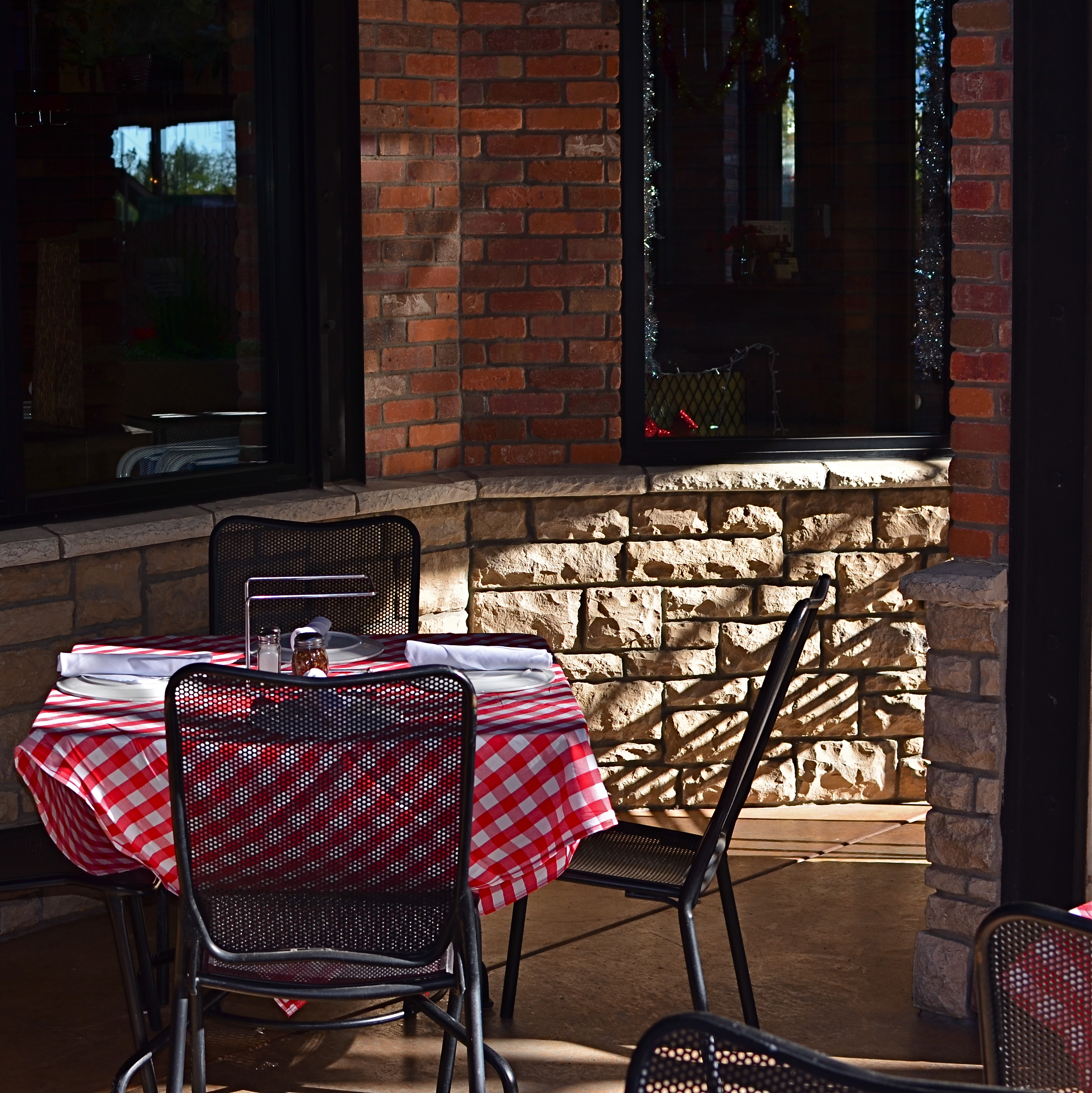
Pre-open, 2015.
By MICHAEL PERKINS
YOU COULD ARGUE ALL DAY ABOUT WHETHER PUBLIC SPACES POSSESS MORE VISUAL POTENTIAL when they are full or when they are dead empty, and, depending on your photographic approach, both arguments would be correct. In other words, instead of a hard-and-fast truth, you have multiple truths, depending on which space is shot by which photographer under such-and-such circumstances. Hey, if ya want a vague premise, I’m your boy.
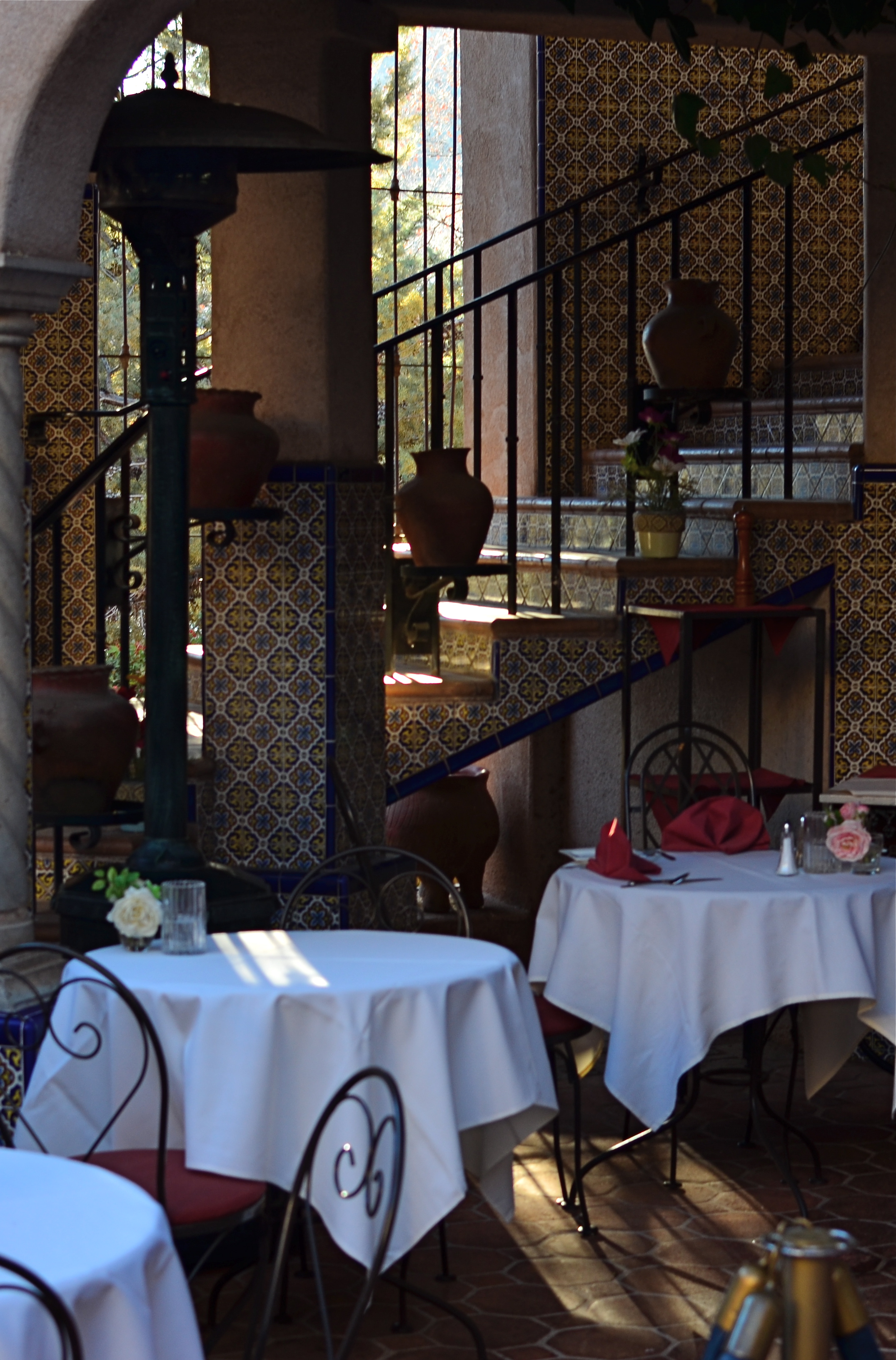
Plaza Cafe, 2015.
Plazas, train platforms, museums, places of worship, restaurants, sports arenas…..all the places where people convene in big mobs have all produced stunning images taken when said places contain no people at all. After hours, before opening, last call, snow days…there are endless reasons why people don’t go to places, and the unfilled space created by their absence is a separate kind of compositional challenge.
I have stated in previous posts on this forum that, for me, museums are tremendous sources of negative space, and yet positive possibilities,when devoid of crowds. Maybe it’s when people are about to be somewhere, when something is nearly ready to happen, that public places possess a certain, well, suspense. Whatever the phenomenon, I feel it, and will always squeeze off a few shots while the moment lasts.
Similarly, eateries are both potentially joyful and potentially lonely, and that kind of uncertainty excites me as a photographer. But you may be on the opposite side of the discussion. I can certainly understand that some would see a bunch of empty tables and chairs as depressing, unmistakably desolate. But I think it depends on the photograph, and I think it always will. There are many images of two people seated together at a cafe who are, sadly, miles apart due to their estrangement, and there are an equal number of pics of a hall just before celebrants from a wedding stream in. As with so much in photography, feeling comes both from what you did and didn’t show.
THE EYE BACK OF THE LENS
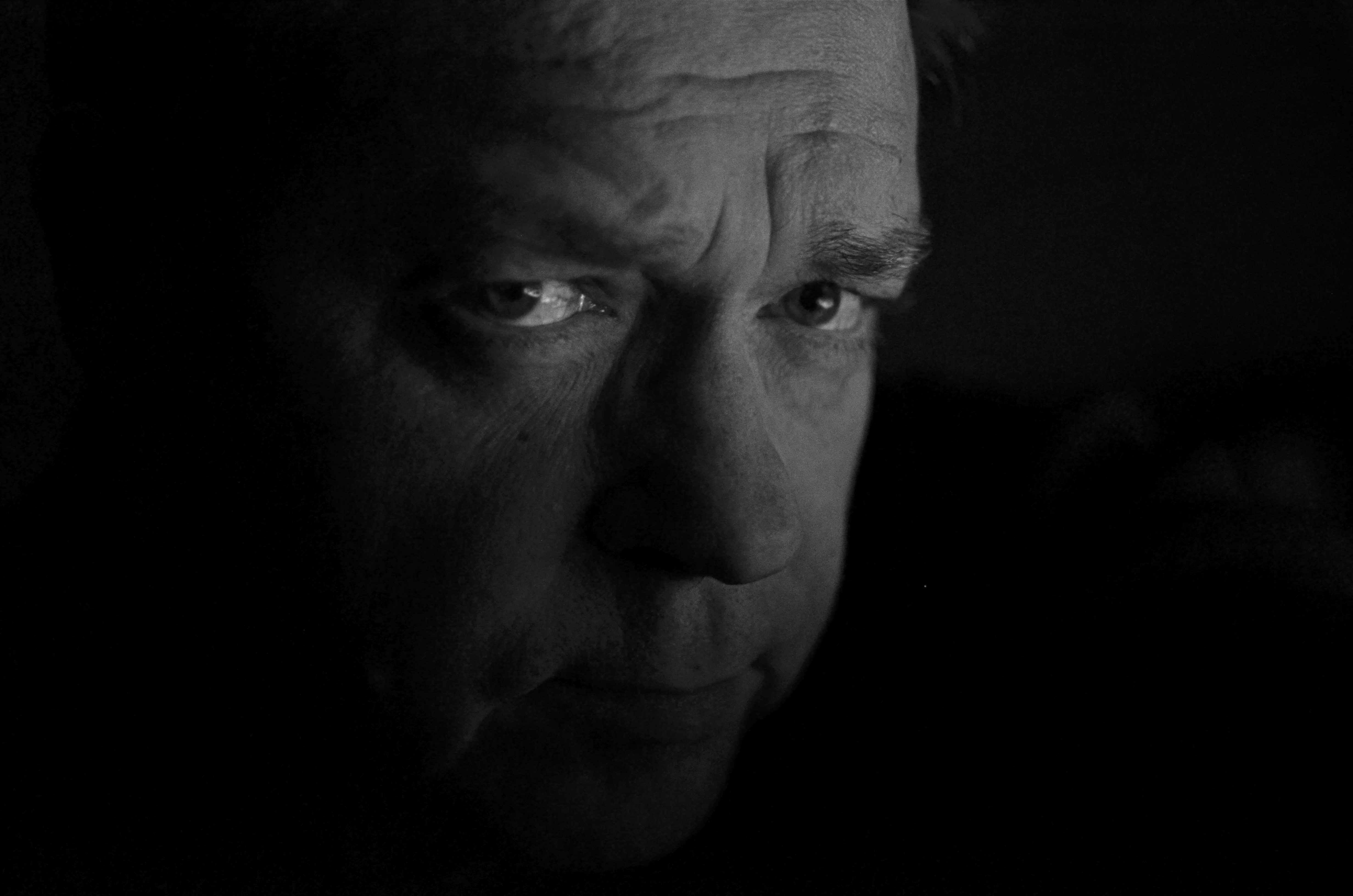
To view your earliest work is to encounter yourself as you would a stranger.
By MICHAEL PERKINS
EVERY YEAR AT THIS TIME, AS I HIT THE RESET BUTTON ON MY LIFE VIA SOME KIND OF BIRTHDAY RITUAL, I pause to wonder, again, whether I’ve really learned anything at all in over fifty years of photography. Surely, by this late date, the habit of shooting constantly should have assured me that I had “arrived” at some place in terms of viewpoint or style, right? And yet, I still feel as if I am just barely inches off the starting line in terms of what there is left to learn, and how much more I need to know about seeing. It’s a great feeling in that it keeps things perpetually fresh, but I often wonder if I’ll ever make it to that mirage I see ever ahead of me.
The aging process, and how that continually remaps your perception, is one of the least pondered areas of criticism as it pertains to photography. And that’s very strange. We track the evolution of technical acuity over a lifetime. We date ourselves in reference to a piece of equipment we acquired, an influential person who crossed our path, or a body of work, but we don’t thoroughly examine how much our photography is being changed completely because the person making the picture is in constant flux. How can we ignore what seems to be the biggest shaper of our vision over time? We don’t even want the same things in an image from one year to the next, so how can we take photos in our maturity anything like those we shot in our youth?
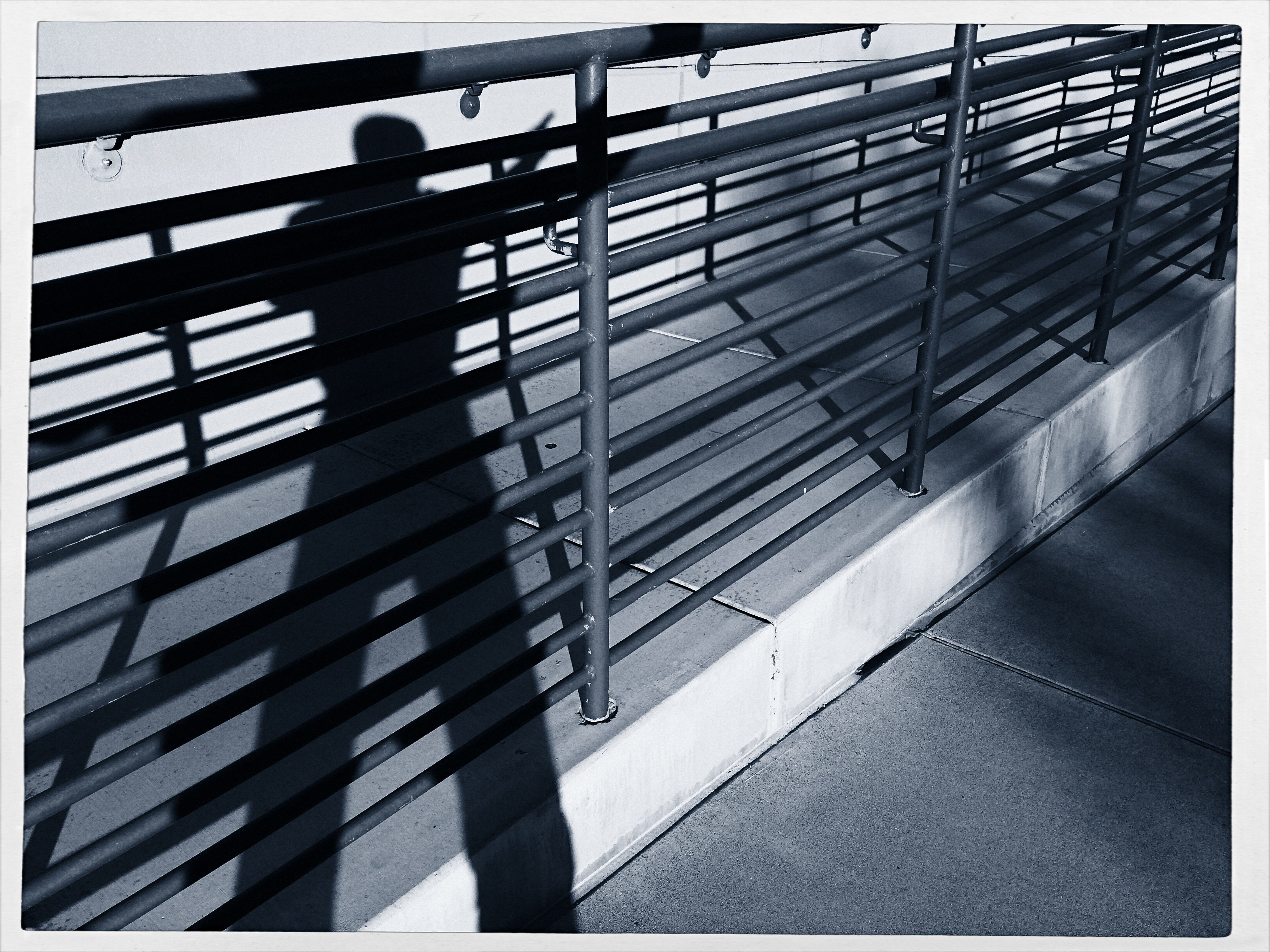
Style is a constantly shifting timeline of approach.
Looking back to my first images, it’s clear that I thought the mere opportunity for a picture plus the act of clicking a shutter would result in a good picture, a kind of “cool view+camera=art” equation. This is to say that, instead of thinking, “I could make a good picture from this”, I was actually thinking, “this would be a good picture.” I know that sounds like hair-splitting of the first order, but the two statements are, in fact, different. The first implies that the camera plus the subject will automatically result in something solid; it’s a snapshot philosophy. The second statement is made by someone who has been frustrated by so many snapshots that he knows he has to step into the process as an active player. That realization can only come with age.
As always, my father’s admonition that art is a process rather than a product emerges as my prime directive. When I look at the pictures made by a twelve-year old me, I can at least see what the little punk was going for, and I can measure whether I’ve gotten any closer to that ideal than he did. The trick is for old me to want it as badly as young me did, and when that happens, I forget how many candles are on the cake, and am just grateful that their light still burns brightly.
EVERYTHING IN ITS PLACE. OR NOT.
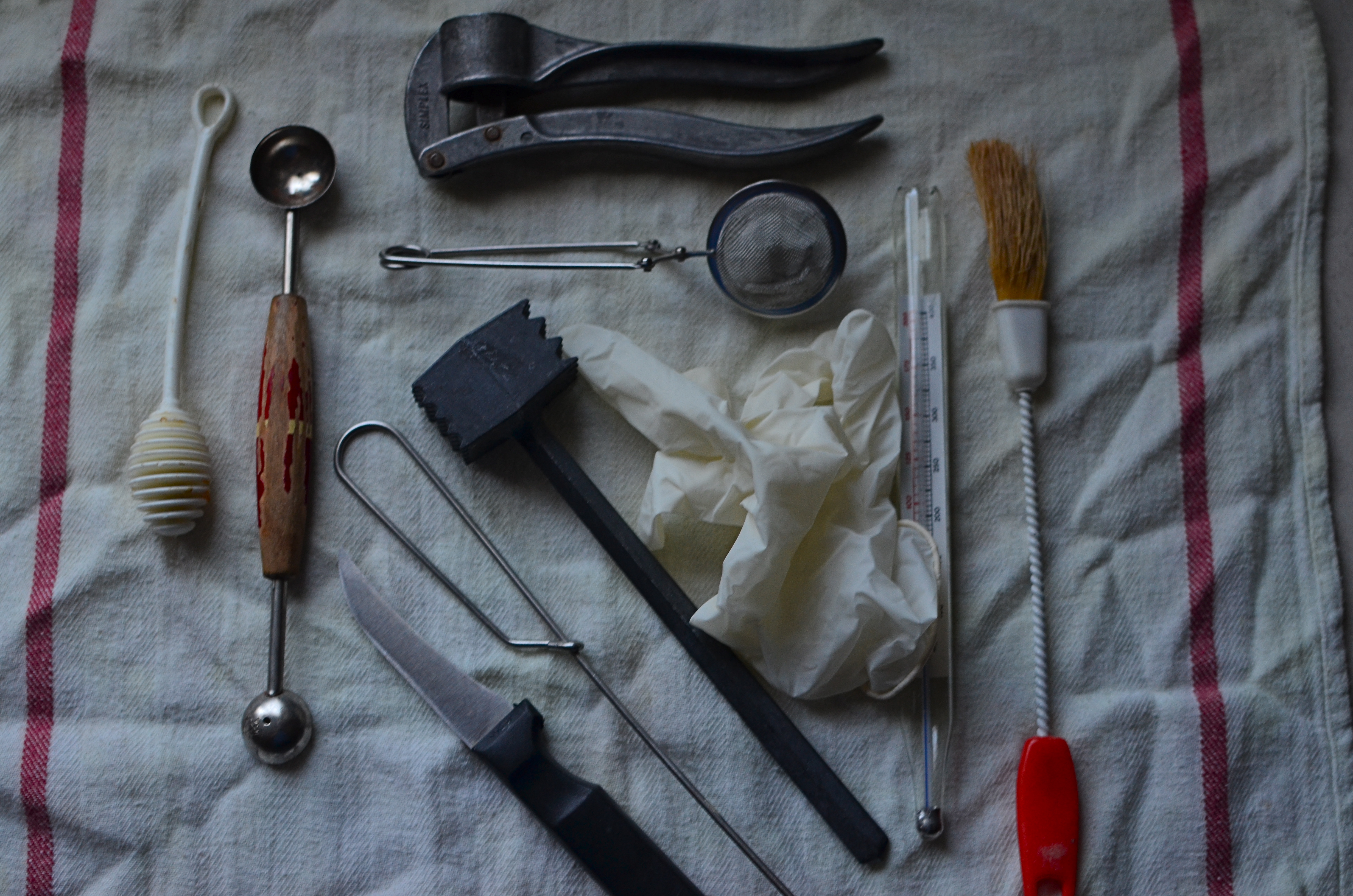
The Instrument Tray, 2015. Surgical equipment or foodie fantasy?
By MICHAEL PERKINS
PART OF THIS BUSINESS OF PHOTOGRAPHY is rifling through the accumulated habits and techniques of a still young art form and trying to not regard any of it as holy law. Relatively speaking, measured against the sprawling annals of painting and sculpture, photography has been on the planet for about a minute and a half, so it’s still not even in its adolescence. Hardly the amount of tradition that designates rules as “essential” or “unbreakable”.
This comes to mind a lot whenever I put together what I call “arrangements” but which others might refer to as “still lifes”. I get into a definition problem in referring to just any combination of inanimate things as a “still life”, since I tend to associate that term with a collection of items that suggest, you, know, a life caught in a “still”……some activity that is suggested just by looking at the objects associated with that activity.
It’s pretty obvious stuff: put together a duck decoy, a hunter’s cap, and a shotgun, and you can almost smell the marshlands where the mallards run. Shove a rubber ball, a doll and a set of blocks up against each other, and it’s “a day in the life of a child”. You don’t show the thrill of a baseball game; instead you suggest it with an antique bubble gum card, a torn stadium ticket, and a weathered ball. It’s Photography 101. When all else fails, throw three pieces of fruit in a bowl and park them next to a hunk of cheese. Inspirational.

Ho bloody hum.
By contrast, I don’t really think of what I assemble in a shot to be suggestive of a narrative in the traditional way. In fact, I have more fun shoving things up together which fight each other a little bit in terms of “why are these objects all here?” I’d rather ask the viewer to supply his/her own idea of what it’s all about instead of doing a Norman Rockwell number that leads them to an obvious association. In fact, every time I take a “typical” still life, I feel like I am making the props, instead of the photograph, supply the needed interest. It feels like set decoration.
In the above image, just as an example, I decided, for my own weird purposes, to do an alternate take on the typical surgical instrument tray, only using kitchen implements. In taking a look at the medical tools of just a century ago, many of them appear as if they are intended to peel or core instead of heal, anyway, and, similarly, some of the gimmicks in your kitchen drawer look as if they could inflict real pain. Strange? Probably. But, hey, I’m old, my mind wanders, and I’m sick of almost everything on TV. Except for that bit with Lucy and Ethel in the candy factory. Now that’s entertainment.
But I digress. Thing is,”still life” is too restrictive a term (or discipline) for lots of arrangements that you might find fascinating. Just pile stuff up and see what happens. Now, if you’ll excuse me, this composition I’ve been working on with the baby grand piano is nearly complete.
If I can just get my hands on two quarts of motor oil and a kumquat.
WATERCOLOR DAYS
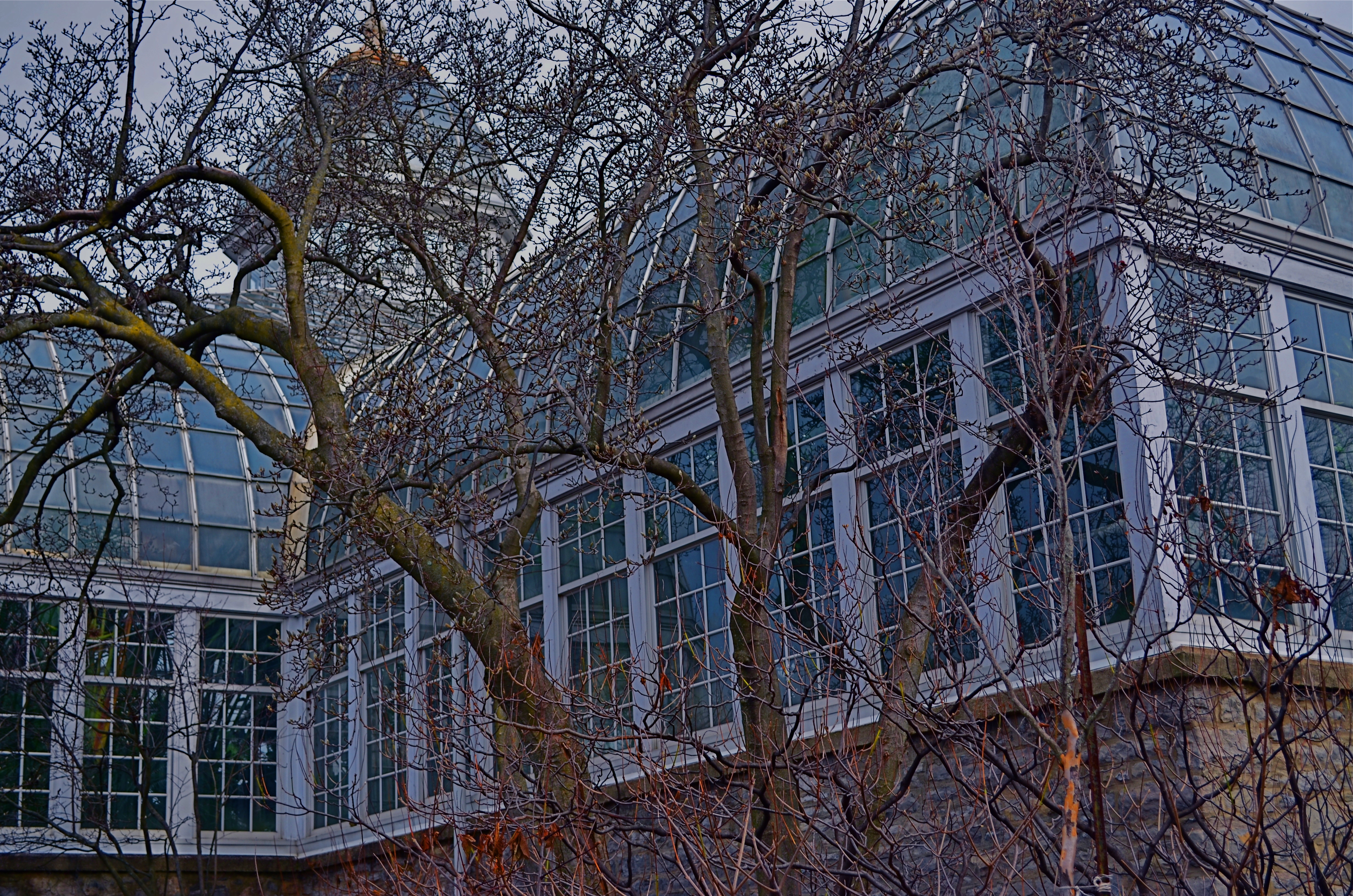
Franklin Park Conservatory, 2015.
By MICHAEL PERKINS
THE FIRST COLOR PHOTOGRAPHS REALLY…WEREN’T. That is to say, the various recording media, from glass plates to film, were technically incapable of rendering color, leaving entrepreneurial craftsmen (mostly post card artists) to lovingly apply hues with paint and brush. It was the Fred Flintstone version of Photoshop, and, boy howdy, did it sell, regardless of the fact that most flesh tones looked like salmon and most skies looked more eggshell than azure. Until the evolution of a film-based process near the end of the 19th century, these watercolor pastels stood in for the real thing.
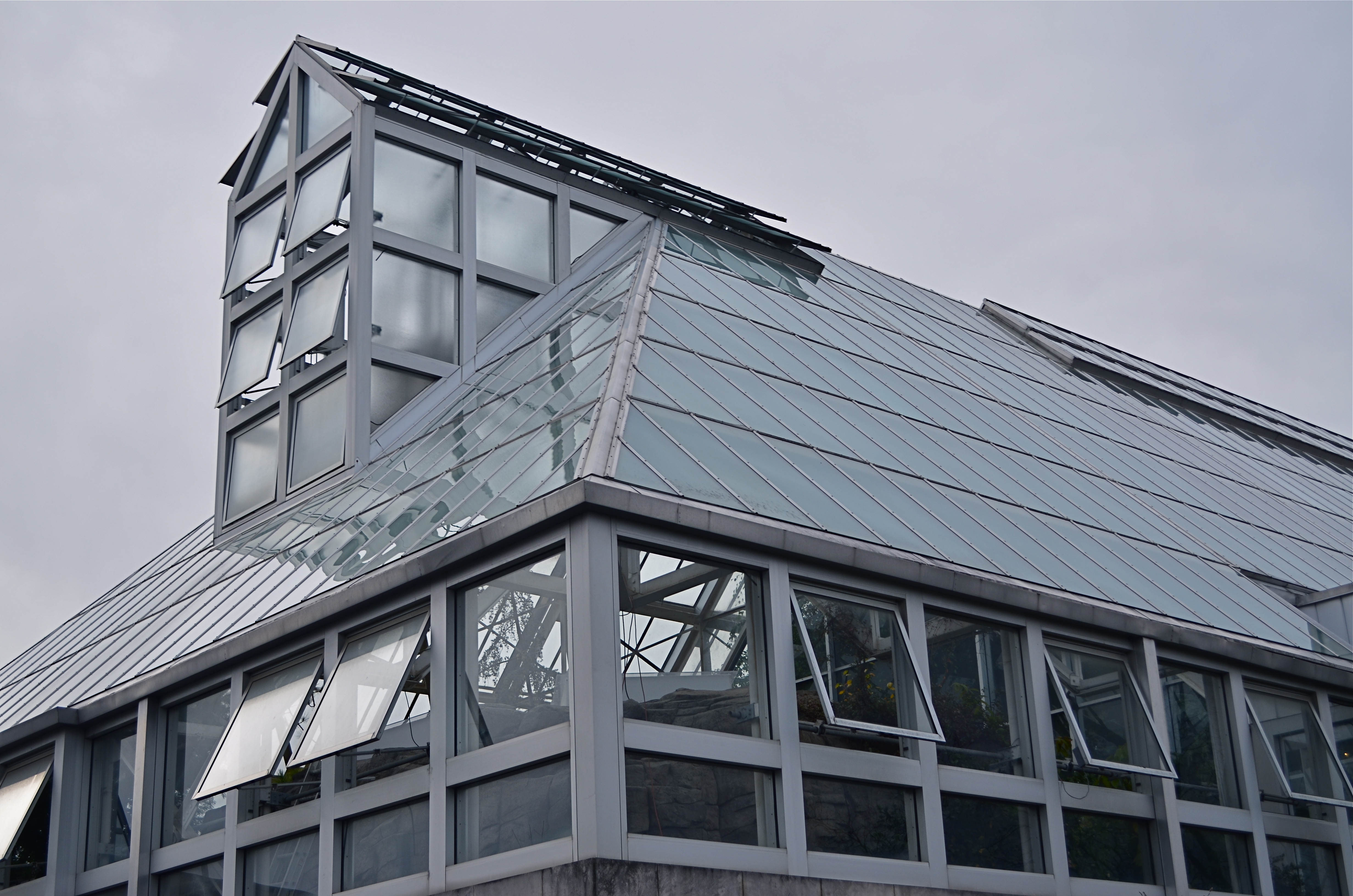
Glass Barn, 2014
Winter’s months-long overcasts and grey days can remind a photographer of what it was like to only be able to capture some of the color in a given subject, as the change in light washes the brilliance out of the world, leaving it like a faded t-shirt and creating the impression that color, as well as botany, goes into the hibernational tomb during winter.
Of course, we can boost the hues in the aftermath just like those patient touch-up artists of the 1800’s, but in fact there are things to be learned from rendering tones on the soft pedal. In fact, reduced color is a kind of alternate reality. Capturing it as it actually appears, rather than amping it up to neon rudeness, can actually be a gentle shaper of mood.
Light that seeps through cloud cover is diffused, and shadows, if they survive at all, are faint and soft. The look is really reminiscent of early impressionism, and, when matched up with the correct subject matter, can complement a scene in a way that a more garish spectrum would only ruin.
Just like volume in music, color in photography is meant to speak at different decibel levels depending on the messaging at hand. Winter is a wonderful way to force ourselves to work out of a distinctly different paint box.
TESTIMONY
By MICHAEL PERKINS
PHOTOGRAPHY WAS IN ITS INFANCY WHEN IT WAS FIRST PRESSED INTO SERVICE as a reportorial tool, a way of bearing witness to wars, disasters, and the passing parade of human folly and fashion. Since that time, at least a part of its role has been as a means of editorial commentary, a light shone on crisis, crime, or social ills. The great urban reformer Jacob Riis used it to chronicle the horrific gulf between poor and rich in the legendary photo essay How The Other Half Lives. Arthur Rothstein, Dorothea Lange and Lewis Hine, among many others, turned their cameras on the desperate need and changing landscape of America’s Great Depression. And now is the time for another great awakening in photography. It’s time to show where our cities need to go next.
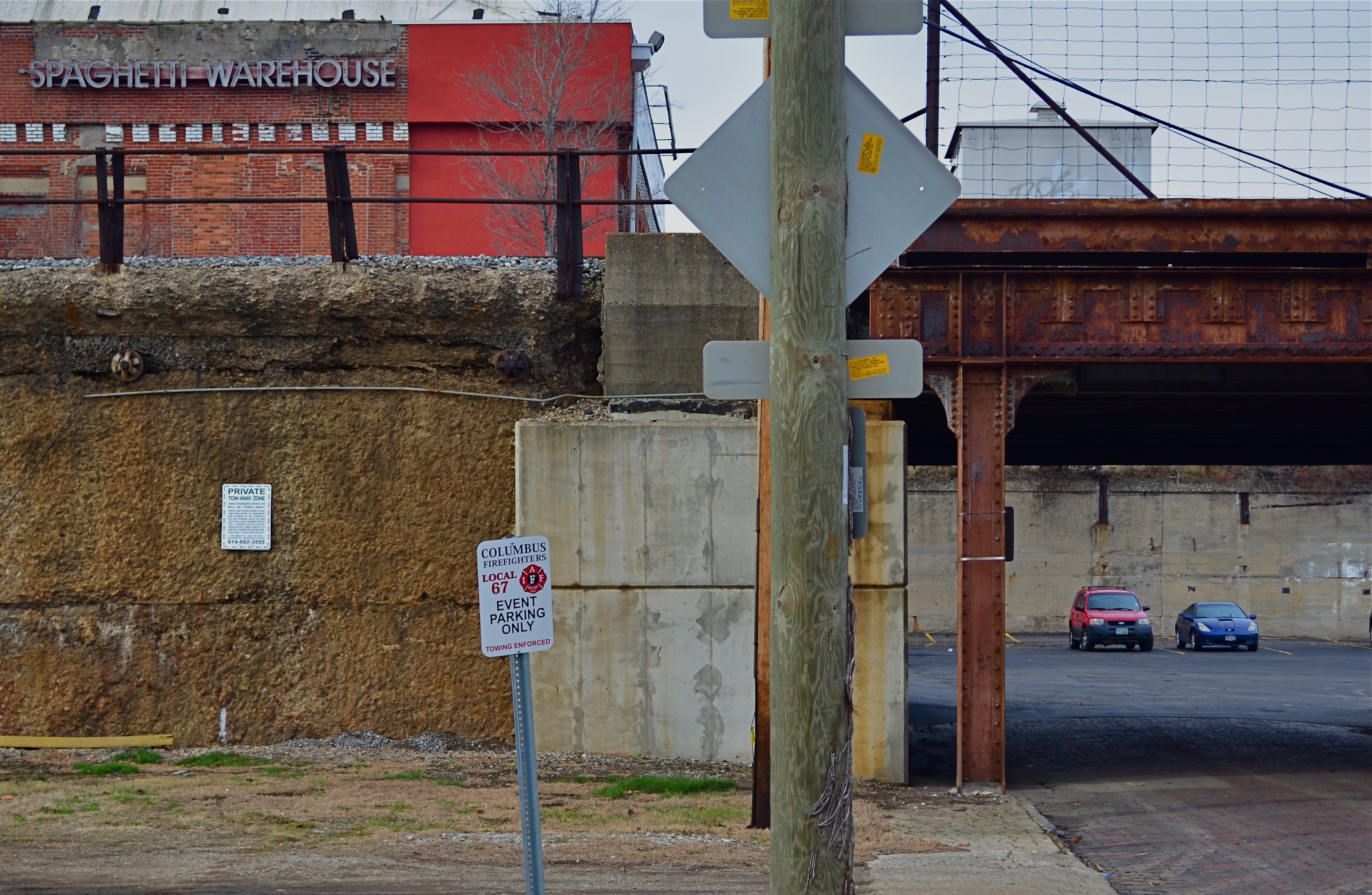
America’s infrastructure is at a crossroads. And that means that photographers are, as well.
Politics aside, the rotting state of our urban infrastructures is an emergency crying out for the visual testimony that photographers brought so eloquently to bear on poverty and war in ages past. The magnifying glass needs to be turned on the neglect that is rapidly turning America’s urban glory into rust and ruin. And no one can tell this story better than the camera.
We can fine-tune all the arguments about how to act, what to fund, and how to proceed. That’s all open to interpretation and policy. But the camera reveals the truths that are beyond abstraction and opinion. The underpinnings of one of the world’s great nations are rapidly dissolving into exposed rebar and pie-crust pavement. If part of photography’s mission is to report the news, then the decline of our infrastructure is one of the most neglected stories in the world’s visual portfolio. Photographers can entice the mind into action, and have done so for nearly two centuries. They have peeled back the protective cover of politeness to reveal mankind at its worst, and things have changed because of it. Agencies have been formed. Action has been accelerated. Lives have been changed. Jobs have been created.
It didn’t used to be an “extra credit” question on the exam of life just to maintain what amazing things we have. Photographers are citizens, and citizens move the world. Not political parties. Not kings or emperors. History is created from the ground up, and the camera is one of the most potent storytelling tools used in shaping that history. The story of why our world is being allowed to disintegrate is one well worth telling. Capturing it in our boxes just might be a way to shake up the conversation.
Again.
THOU SHALT….
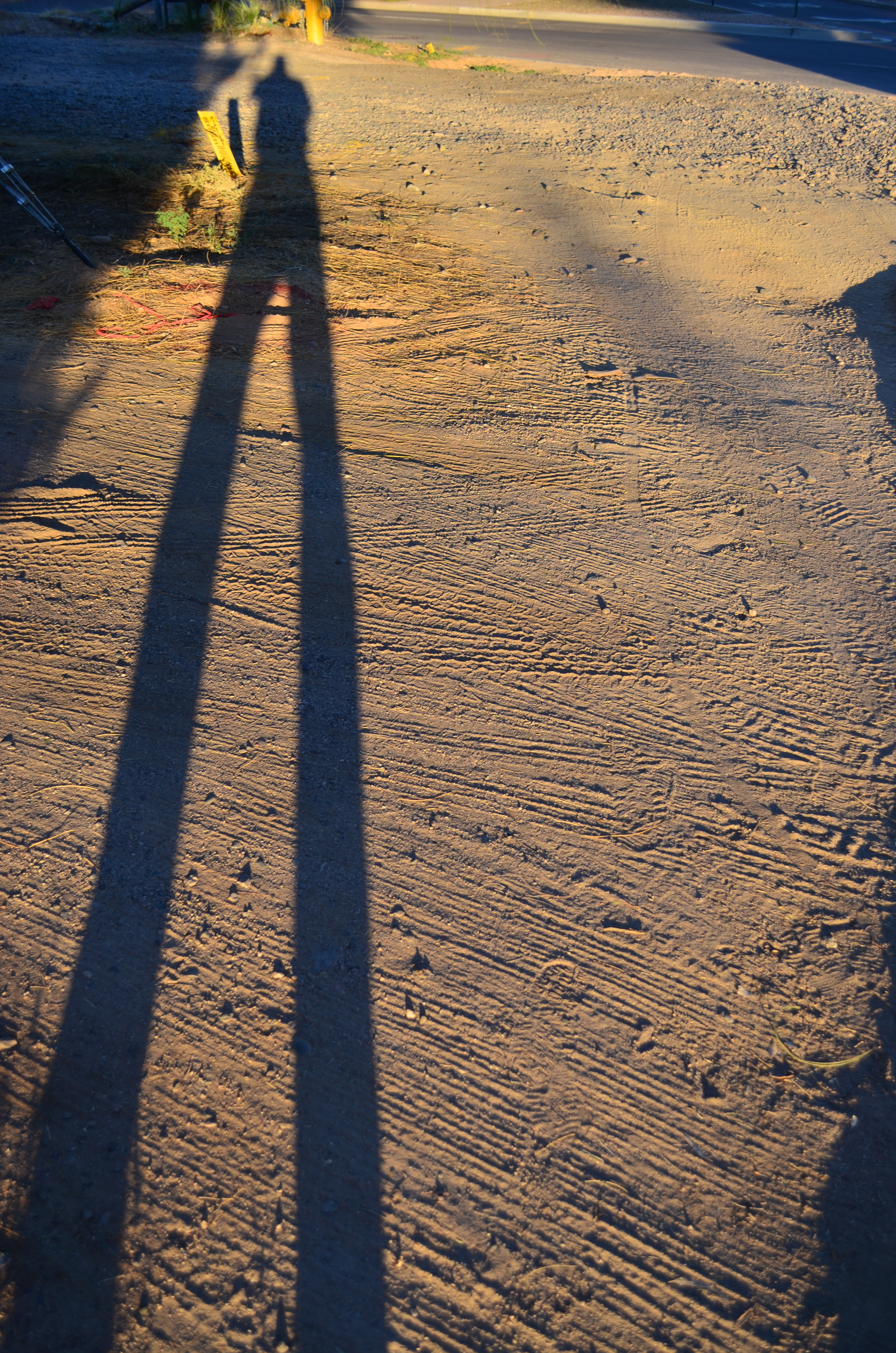
If you don’t have something of yourself in your shots, it’s all just craft, yes?
By MICHAEL PERKINS
BOY HOWDY, DO WE LOVE LISTS. Classifications. Stratifications. Ranks. Pecking Orders. Best Of. Worst Of.
Books you need to read before you die (how could you read them otherwise?). The Ten Biggest Errors in The Phantom Menace (not counting the error in making it in the first place). Guinness Records. Pillsbury Bake-Off Finalists. The number of times Burt Ward said “Holy”-something in Batman. And, for photographers, the inevitable (and ubiquitous) lists of Most Common Photographic Mistakes.
You’ve read ’em. I’ve read ’em. We both probably have actually learned something from one or another of them. And yet, I find something strangely consistent in most of these lists; they nearly all address technical issues only. Everything from selecting the perfect depth-of-field to a kindly reminder to remove your lens cap, but very, very little about the deciding factor in all great photographs, namely, having something to say. Tech tutorials are constantly torturing themselves into tabulated commandments, all the “thou shalts”, but it is rare that the aesthetic issues, the “why shoot?” arguments, are given equal billing. This impoverishes the literature of an art that should be more about intentions and outcomes than gear or settings.
If there has been any one bonanza from the democratization of photography (through smart phones, lomography, etc), it’s been the stunning reminder that your camera doesn’t matter as much as what you can wring out of it. Eventually we’ll be able to interface with our own senses, literally taking a picture in the wink of an eye (or the sniff of a nose, if you prefer), and, with every other device used before that to freeze time, it will rise or fall with the input of the photographer’s mind/heart. If equipment was the only factor that could confer photographic greatness then only rich people would be photographers, but that is obviously not the case.
With that in mind, lists of do’s and don’ts for photographers that only focus on the technical are (1) sending the erroneous message that only the mastery of technology is necessary for great pictures, and (2) ignoring the x-factor in the human spirit that truly makes the pictures come forth. If you can obey all the “thou shalts” and still make lousy images (and you can), then you know there is something else missing.
THE LADDER

By MICHAEL PERKINS
PHOTOGRAPHIC “MASTER THEORIES” ARE ONLY SLIGHTLY LESS PLENTIFUL than donuts at an AA meeting. I can’t hope to add any fresh shimmer to the bright shiny ideas on picture-making that have already been burnished by time, but I do believe that total photography is very tied to total development as a human being. Sounds like a mountaintop audience with the Maharishi, I know, but I think that, as we limit ourselves as people, so do we limit our ability to effectively interpret or record the world around us. This is not the stuff of master theses, for sure, but when it comes to photography as a way of life, I think all the wisdom you need boils down to a three-rung ladder, arranged thus:
TOP RUNG: LIVE MORE THAN YOU READ. Have direct, personal experiences that truly involve you. Do not vicariously re-live other people’s experiences and call that a life. Get your eyes off the screen, your ears out from under the Dr. Dre Beats, and your hands into the dirt. Learn concepts that call upon you to stretch. Try things that hurt. Taste stuff with strange ingredients. Learn to listen to ideas you think you’ll hate. Certainly, academic learning and secondary experiences have their value. We can’t all trek to Katmandu or scale Everest. But our grasp can certainly exceed what’s on Nickelodeon, a simple truth that brings us to:
MIDDLE RUNG. READ MORE THAN YOU SHOOT. You cannot possibly learn everything about photography by merely going out and doing. You have over two centuries of history, art, philosophy and example to absorb, even if your own style eventually goes rogue. You need influences. You need teachers. The shooters that went before you left wheels for you to roll on. Don’t try to re-invent those wheels; learn to steer by them. And do not limit your reading to photography. You cannot shoot what you cannot appreciate, and you cannot appreciate what you know nothing about. Learn the world, thus earning your right to have a point of view. And, finally, we have:
BOTTOM RUNG: SHOOT MORE THAN YOU THINK YOU NEED TO. Certainly shoot more often than when you “have something to shoot”. Shoot when you’re dry. Shoot when you’re bored. Shoot when you’re wired/angry/amazed/frightened/joyful. Be okay looking like a fool for an idea. Most of all, be willing to take more lousy shots than the next ten guys put together. Think of all those bum images as the thick leaves of Christmas paper swaddling your best pictures. You gotta tear away all the layers to get to your shiny toys.
If these three rungs seem grossly over-simplified to you, try them for about forty years and get back to me. Photography cannot evolve unless we refine the person who clicks the shutter. None of these steps are guaranteed to produce immortal images. But you sure as hell can’t create greatness without them.
THE PICTURES I HATE MOST
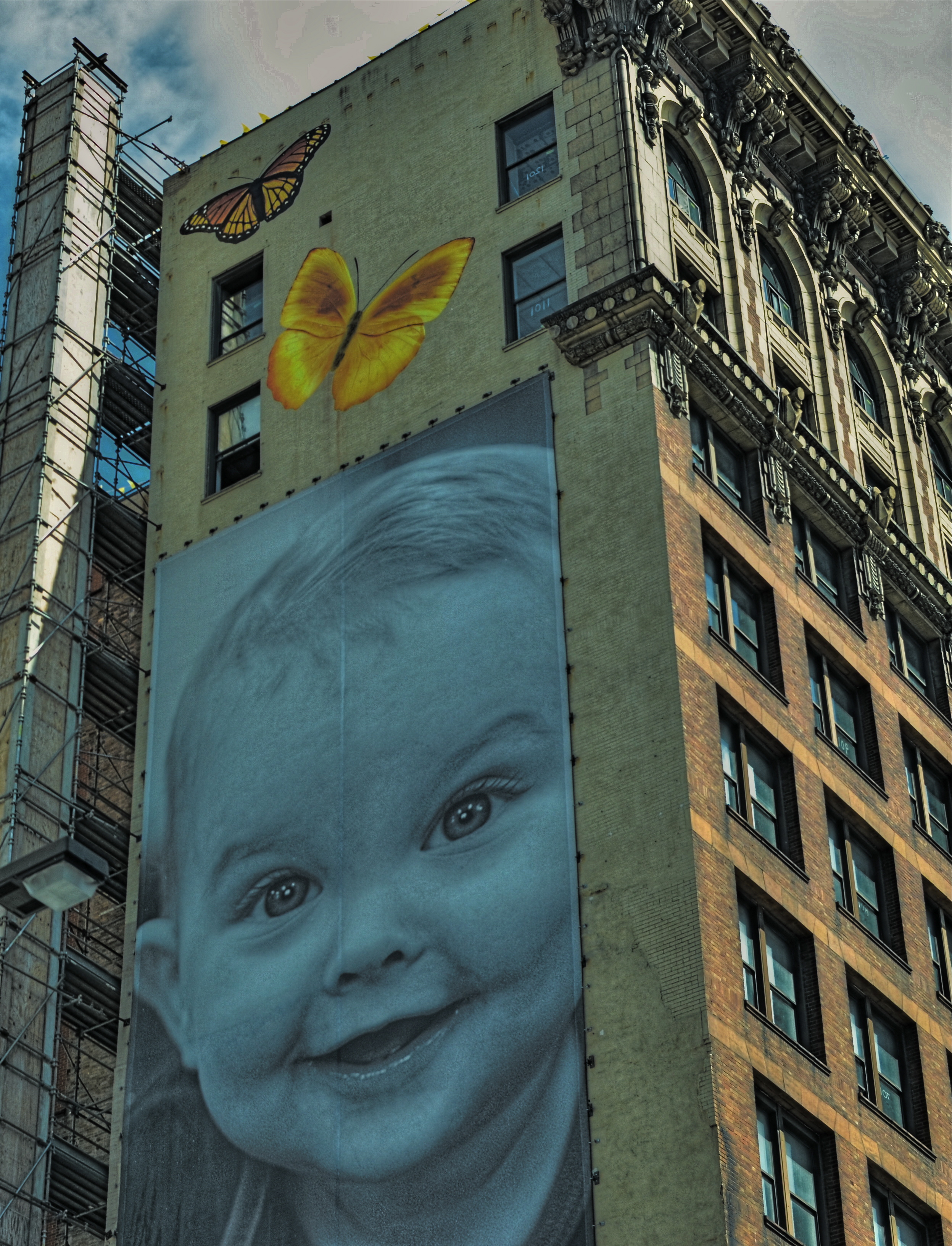
Even the pictures you attempt that come up short can teach you more than the ones you never make.
By MICHAEL PERKINS
IN MY CHILDHOOD, I FIRST HEARD THE BIBLICAL PARABLE OF THE SHEPHERD who, upon finding that one of his flock of one hundred sheep had gone missing, forsook the other ninety-nine to undertake a desperate search for the single lost lamb. It was, certainly, a touching story, with its image of a father who would mourn over the loss of even the most wayward of his flock. And, although it didn’t occur to me at the time, it also came to serve as an early model for my idea of a photographer.
It’s not really that big a stretch. Like the shepherd, shooters always mourn the loss of the one that got away, or in terms of photographs, the shot that was never made. The one angle we forgot to foresee, the light we failed to read, the fleeting truth we neglected to capture. For sure, the photos you attempted and botched really do smart, a lot. A lot a lot. However, there is no pain like the emotional toothache caused by the shots that, for whatever reason, you never even tried to make. These aren’t “lost” images, since they never actually existed, but that doesn’t mean that their absence is any less poignant. One great recent examination of why we fail to shoot is found in a recent collection of essays by Will Steacy called Photographs Not Taken. Check out a capsule review of it here.
I lament the pictures I never made far more than the ones I have attempted and whiffed, since in most cases the contexts that surrounded those non-existent pics are, themselves, no longer, whether we’re talking about missed sunrises or final visits with loved ones. To be sure, re-dos are often off the table even for many of the pictures we did take, but, for some human reason, we mourn more intensely the ones that might have been. Worse yet, even failed images have some teaching value, whereas you learn zilch from the dances that you sat out.
This forum has never been about merely posting my greatest hits for the world to drool over. That is scrapbooking, and serves no purpose. Any honest examination of why we make images has to pause to grieve about failed chances, to sniffle a bit over the things we aimed at and missed. It sometimes has to be about pictures that I hate, and the ones I hate most are the ones I had neither the vision nor the nerve to create.
WORK DIGITAL, THINK ANALOG
By MICHAEL PERKINS
I’M BIG ON CELEBRATING THE FACT THAT DIGITAL TECHNOLOGY HAS REMOVED THE LAST FEW BARRIERS to photography being truly democratic. Just as the introduction of the Kodak Brownie in 1900 moved picture-making out of the salons of the privileged few and into the hands of John Q. Everyman, digital has been another quantum leap toward a level playing field, putting cameras almost literally into everyone’s hand. This, as with all mass movements, has both its pluses and minuses.
Digital photography has actually improved one democracy (everyone can afford to shoot) and created a second one (everyone can afford to fix what they shoot). For nearly the entire film era, processing after the shutter click was, for many of us, a luxury item. For initial developing, we defaulted to the guy at the regional Kodak plant or the corner Rexall. True hobbyists and professionals wielded most of the tools available for drastic makeovers of images, with most of us merely accepting what we got. Our near misses simply went into the loss column, while others‘ near misses could sometimes be revamped into acceptable, even exceptional photos. The titans of the photographic world (Ansel Adams and others) were renowned for their ability to creatively manipulate negatives into prints of rare art. Most of the rest of us clutched our Instamatics tightly and hoped for the best.
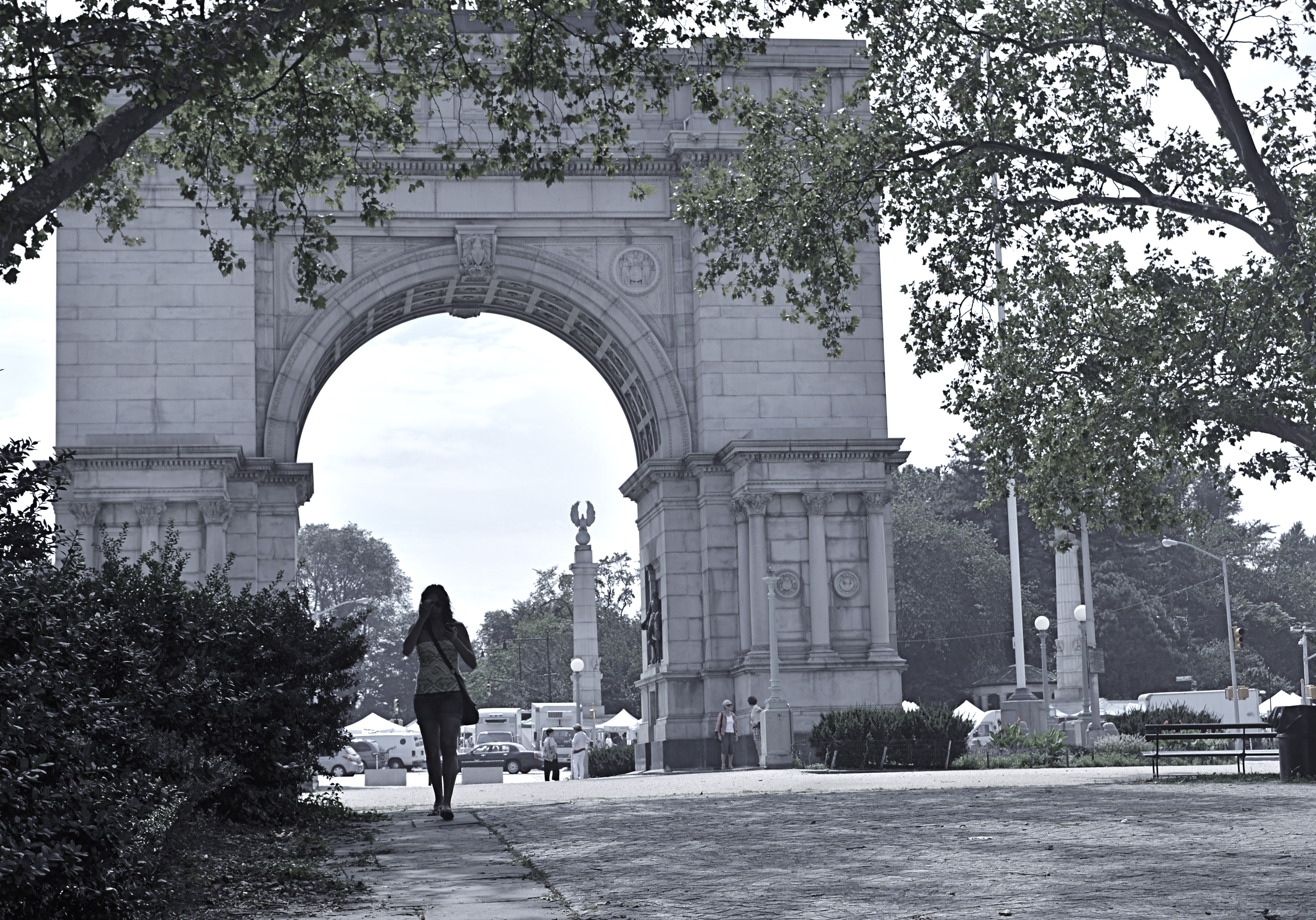
Shoot as if you’ll have to live with the results forever, with no “fixing it later”. 1/320 sec., f/8, ISO 100, 35mm.
Unfortunately, digital has over-corrected a bit in giving Everyman the chance to salvage more shots. Instead of developing habits that are, say, 75% good shooting and 25% good processing, we have instead veered toward the opposite, with more time than ever spent “fixing” shots that were ill-conceived in the first place. Moreover, many of these fixes, mounted on apps, are general, one-click options that deny us the finely tuned control that a good film era darkroom rat would have acquired. We have gained access to the information highway, but we still drive like teenagers. We are all over the road.
I see more professionals advocating a return,not to the format of film, but the shooting discipline of film. How differently would we shoot, for example, if it were still true that we wouldn’t have a lot of options for fixing our shots later? What strategies would develop if we had to make or break our shots in the camera, without any opportunity for tweaking them thereafter? Most importantly, which of our images could stand alone as straight out of the camera executions, as products of real, hard-earned skill rather than the comfort in knowing we could probably crop, resize, re-color or repair almost anything?
Now, I am not suggesting we all go back to making our furniture out of pine logs. I am not the last guy in town to trade in my horse for a Model A. I merely think that we need to re-introduce self-reliance into the picture-making process, to shoot as if it’s all on us, as if no Tech Avenger will ride to the rescue if we blow the shot in-camera. In fact, I am arguing for what I always argue for….personal responsibility for getting the shot right in the moment. Frame it, conceive it, expose it right the first time. It teaches us better habits, it increases our actual knowledge of what we’re doing, and it speeds our advancement as nothing else can.
Digital is a fabulous box of paints. Now we need to re-learn how to hold the brush.
THE JOURNEY OF BECOMING
By MICHAEL PERKINS
ONCE MAN LEARNED TO SLICE A PATH THROUGH THE DARK WITH ANY KIND OF LIGHT, a romance with mystery began that photographers carry ever forward. Darkness and light can never be absolute, but duel with each other in a million interim stages at night, one never quite yielding to each other. A flickering lamp, a blazing torch, ten thousand LEDs, a lonely match, all shape the darkness and add the power of interpretation to the shaded side of the day. Photographers can only rejoice at the possibilities.
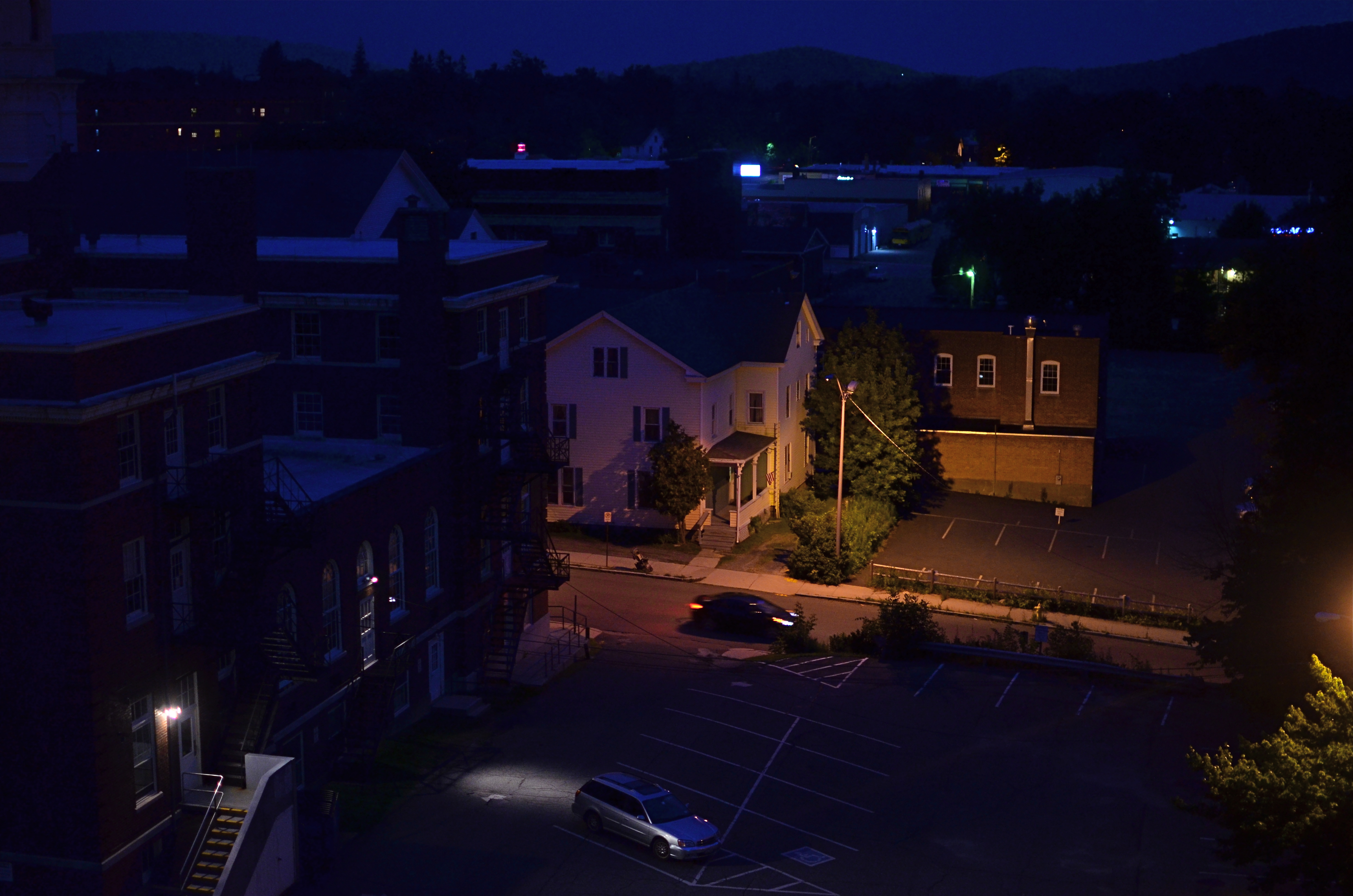
The Late Errand, 2014. 1/40 sec., f/1.8, ISO 640, 35mm.
Spending a recent week in a vacation hotel, I fell into my typical habit of taking shots out the window under every kind of light, since, you know, you only think you understand what a view has to offer until you twist and turn it through variation. You’ve never beheld this scene before, so it’s just too easy to take an impression of it at random, leaving behind all other possibilities. The scene from this particular room, a mix of industrial and residential streets in central Pittsfield, Massachusetts, permits the viewer to see the town in the context of the Berkshire mountains, in which it nestles. Daylight, particularly early morning, renders the town as a charming, warm slice of Americana, not inappropriate in a village that is just a few miles away from the studio of painter Norman Rockwell. However, for me, the area whispered something else entirely after nightfall.
I can only judge the above frame by the combination of light and dark that I saw as I snapped it. Is it significant that the house is largely aglow while the municipal building in front of it is submerged in shadow? Is there anything in the way of mood or story that is conveyed by the lit stairs in the foreground, or the headlamps of the moving or parked cars? If the passing driver is subtracted from the frame, does the feel of the image change completely? Does the subtle outline of the mountains at the horizon lend a particular context?
That’s the point: the picture, any picture of these particular elements can only raise, not answer, questions. Only the viewer can supply the back end of the mystery raised by how it was framed or shot. Some things in the frame are on a journey of becoming, but art is not about supplying solutions, just keeping the conversation going. We’re all on our way somewhere. The camera can only ask, “what happens when we turn down this road?.”
That’s enough.
 thenormaleye
AN OPEN LETTER TO PATIENT WIVES
“…..should I stay, or should I go?….”
By MICHAEL PERKINS
T.S. ELIOT ONCE ASKED, POIGNANTLY, ‘WHAT IS THE SOUND OF ONE HAND CLAPPING?‘ as if there could be no lonelier thing in this weary world. However, had he been a photographer, he might also have mused about the sound of one wife sighing, as her husband assures her that “I just need one more shot“, or “you can all go ahead, I’ll meet you at the gift shop.” Such assurances would be enough to send Mrs. Eliot’s one hand clapping T.S. soundly about the ears.
We really do hear the steam escaping from our wives’ ears as we mutter about whether we need a prime lens or a wide-angle for our next masterpiece. We understand that it’s not much fun watching your beloved stare at a pile of junk in a dark alley, pondering whether it all makes a profound statement about the state of the world. We get the fact that you might prefer that we answer your question about whether your mother should come and live with us, rather than mumble, “if I close down to f/11 to get past that glare, I’m gonna lose two stops of light…”
In short, we know what a colossal pain it is to be with someone who constantly hauls around a mad gaggle of gears, gauges, geegaws and gadgets. We even realize that you might have a hard time remembering the last time you saw us walking around on only two legs…..you know, without the tripod.
We stipulate that, sometimes, a hunk of rock is just a hunk of rock, not a canvas on which to mount our genius, just as “a little light reading” to the rest of the world might mean a beach thriller by Robert Crais, not the flash attachment section of the B&H Video catalog. We even admit that it’s a little catty of us to stare across the room at a restaurant and make our one contribution to the table’s conversation with, “look at that stupid guy. He’s not even framing up his shot!”
Yes, ladies, we need to not so much “get a life” as to get a slightly larger, wider one. So, thank you for reminding us that, if we fall off this mountain by stepping back for the perfect composition, we might make orphan our children. Thank you for occasionally filling us in on certain details of said children’s lives, such as their proper names, birthdays, distinguishing features, etc. Thank you for not wincing when we name the family dog Steiglitz. Thank you for not leaving us for dead when we use the foil cover from your best picnic casserole for a makeshift bounce reflector.
Mostly, as in the above scene, we humbly thank you for not seizing the opportunity to dump us and our dratted gear in the nearest abyss.
And then taking a picture of it.
And then laughing, hysterically.
Share this:
August 12, 2015 | Categories: Composition, Criticism, Hobbies, Humor, Philosophy, Viewpoint | Tags: Commentary, editorial, Essay, Humor, Philosophy, Satire | Leave a comment