NOTHING MEANS EVERYTHING
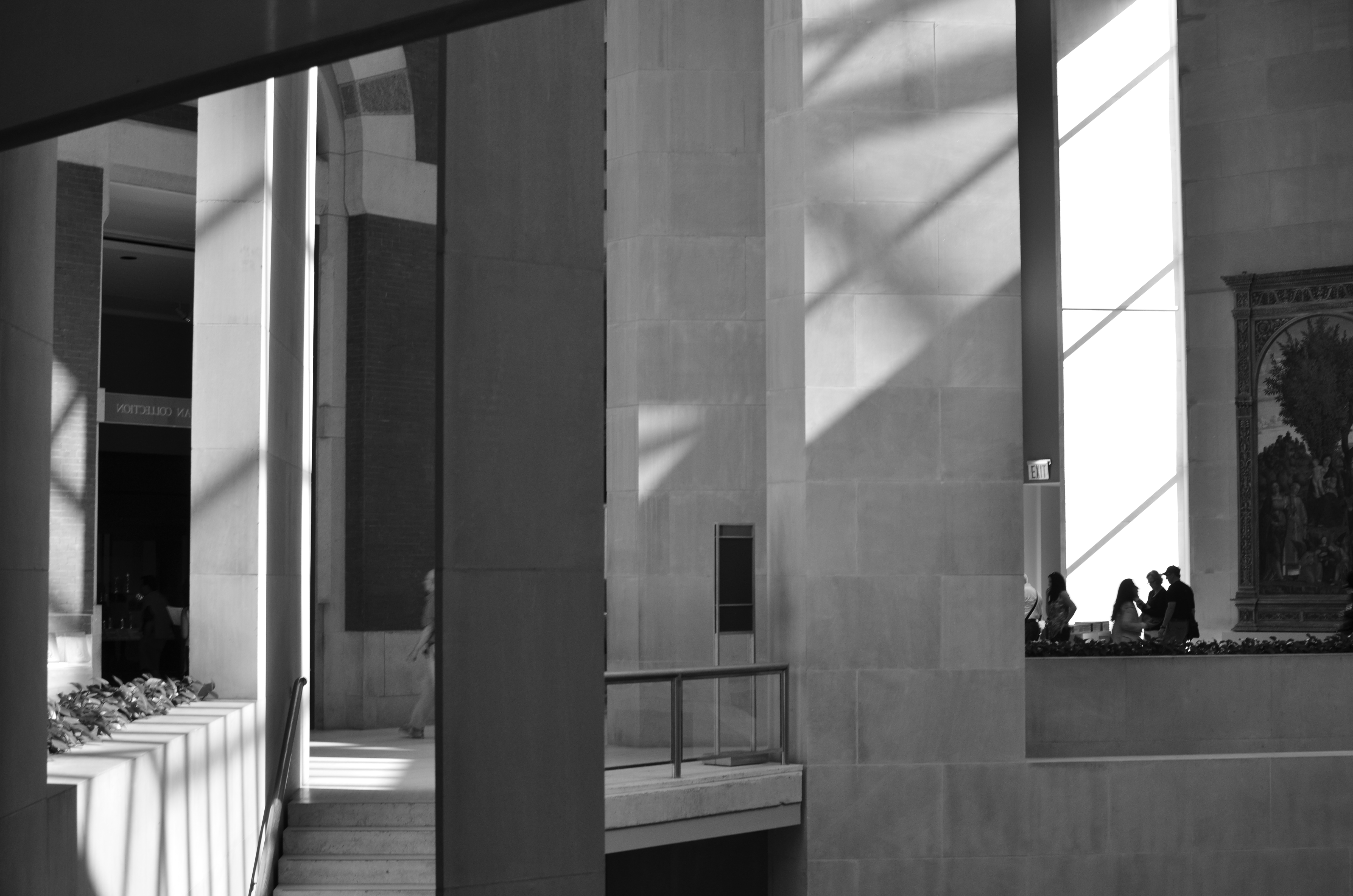
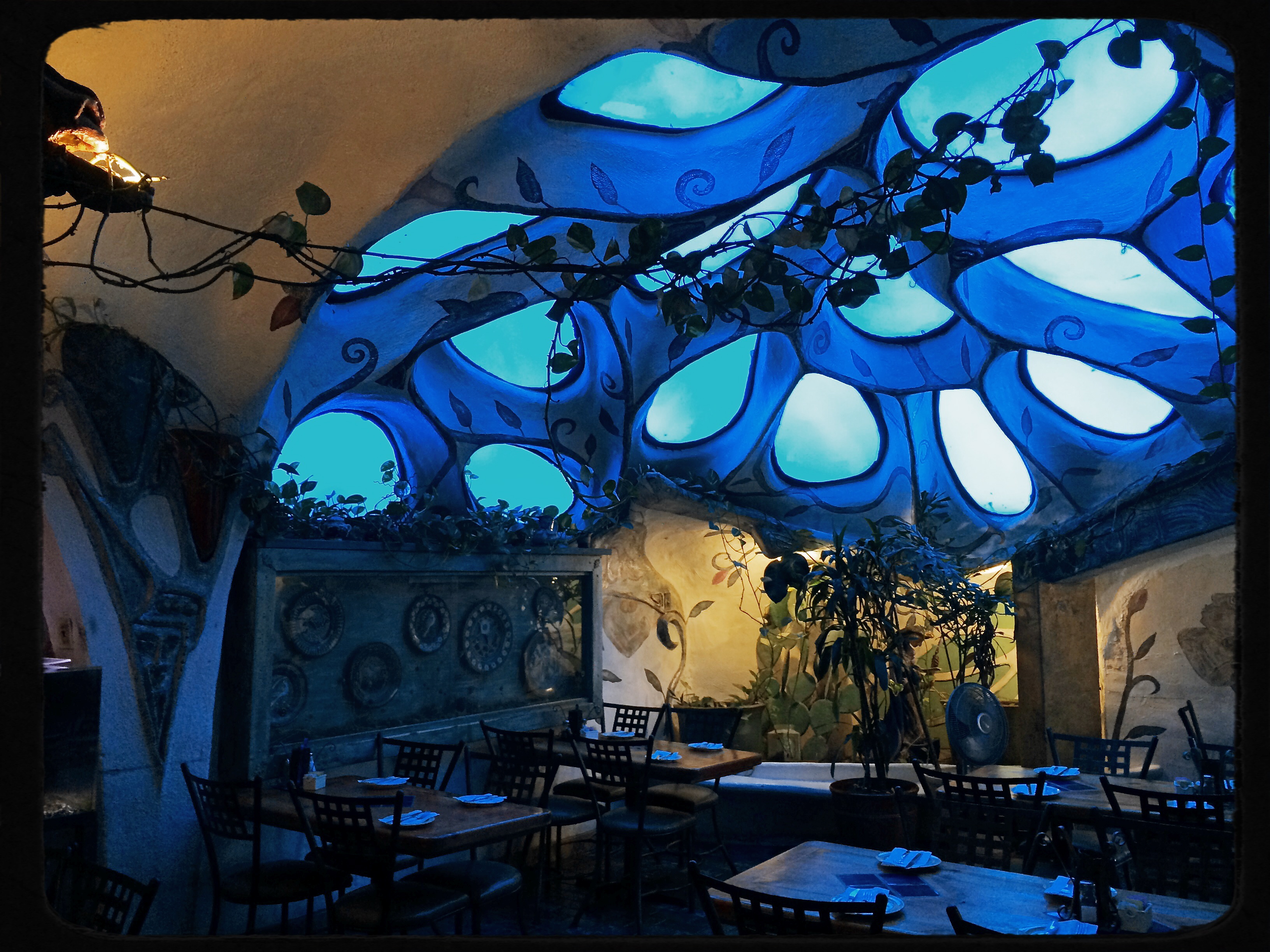
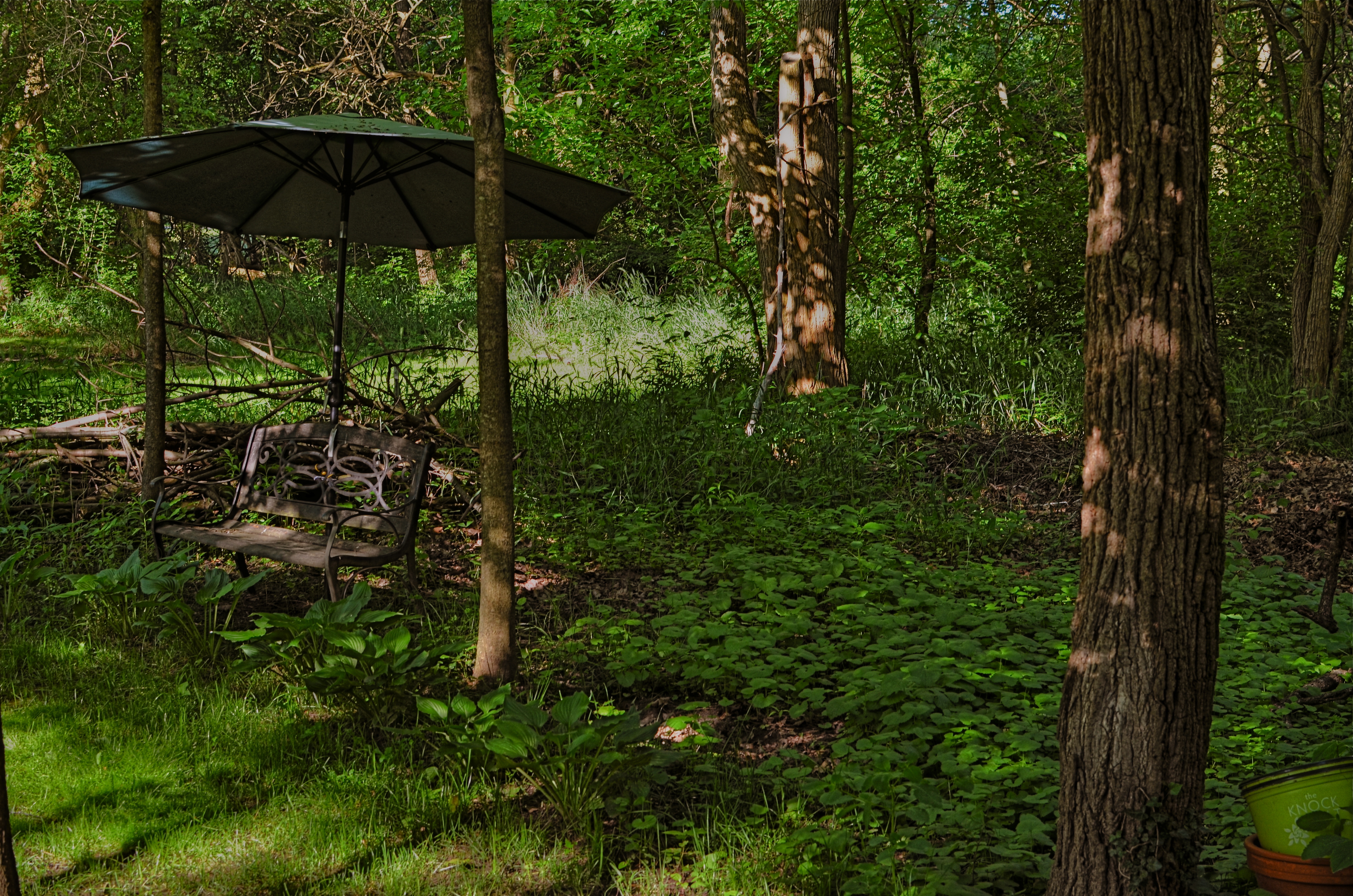
On days when you have nothing to shoot, trying to turn that “nothing” into something can be productive. 1/20 sec., f/5.6, ISO 250, 35mm.
By MICHAEL PERKINS
SOME OF YOUR MOST FORWARD-THINKING DEVELOPMENT AS A PHOTOGRAPHER CAN OFTEN OCCUR on days when you’ve planned exactly…nothing. You may have noticed that you produce an occasional masterpiece in situations where there was “nothing to shoot” or you “didn’t have anywhere special to go.” Phrases like I was just wandering around are sometimes used by people describing how their favorite images wound up inside the camera.
What I’m saying is that, if making something out of nothing is the classic definition of creativity, go find yourself some nothing.. and shoot it.
There’s a strange paradox at play here. When you are photographing something that truly “matters”, your concentration is on the subject, not your technique, almost as if the thing will record itself if you just faithfully point the camera. Kids’ birthday parties or a view of El Capitan come “ready to eat” in a way, and you don’t fester about doing anything bold on your side of the equation. The task becomes, basically, not to screw up….hardly a recipe for excellence. When the subject matter is incomplete, however, or, more importantly, meaningless to you, the work is much harder and more mindful. Say what?
The emphasis shifts to how do I make something out of this, which whips you into a more deliberately creative mode. Suddenly there are things to overcome, from lighting to lousy composition. There are things to improve, since the subject isn’t supplying its own drama or beauty and needs you to shape it. It’s strange. The things that matter most can cause you to take the most lax approach to recording them, while the junk you shot just because it was there can get your juices going.
More importantly, since the “meaningless” is generally unknown to you, you don’t bring any biases to it. You don’t have a usual or traditional way of seeing it (you don’t care about it, remember?) , so you don’t fall into lazy habits or a usual way of photographing it. Its newness makes you innovate, makes you work harder to (here comes the chorus) make something out of nothing.
It’s when you have the most organic, most open attitude toward what you’re shooting that you feel relaxed enough to experiment, which speeds up your learning curve and deepens your involvement. And that means better pictures, since you take yourself, as well as the camera, off automode.
FULL HEART, EMPTY HEAD
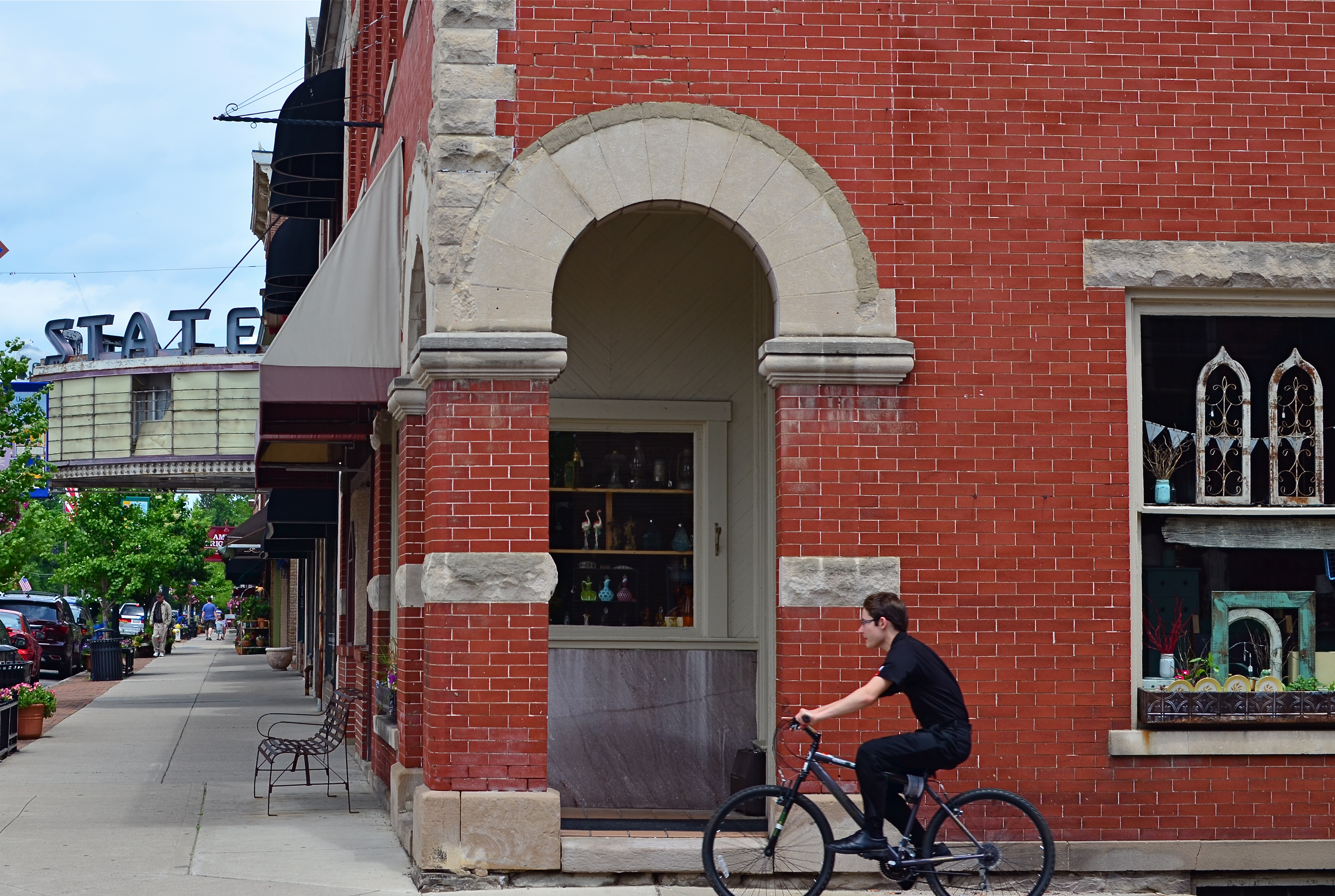
Westerville, Ohio, 2015. 1/250 sec., f/5.6, ISO 100, 35mm.
By MICHAEL PERKINS
THERE USED TO BE A CARTOON THAT SHOWED A MAN WITH A LITERAL HOLE IN HIS HEAD, described by the caption as being “open-minded”, as if that were a negative, rather than a positive, quality. Regardless of what this says of the popular notion regarding the intellectually flexible among us, it actually reminds me that the best approach to some of the best photography in the world can be, as near as possible, no approach at all.
Okay, everyone sit back down. The old village crank isn’t proposing that one should not be mindful, or operate from a plan, when tackling a photo shoot. Merely pointing out that, if you’re honest, you can certainly point to pictures that you’ve over-thought to the point of sterility, draining the results of anything reflexive, impulsive, or instinctual. Moreover, it’s all too easy to map out a procedure for what you hope to do, then fall into desperate love with said procedure for its own sake. My, what a lovely, lovely little blueprint. Let’s not deviate from it an inch.
This little comic book of mine doesn’t have but a few meager themes, but one of them is that the best pictures land on your nose like an errant butterfly while you’re busy planning something very different. You may not select from your favorite phrase for this process, including Dumb Luck, Serendipity, Being At One With Your Chakras, or Accidentally Stepping In Roses. Point is, there are pictures to be extracted everywhere, not just where you feel like looking. Being open-minded doesn’t mean you have a hole in the head.
One really cheap and easy way to remind yourself of this idea is to compile, right here and now, a file of your images that were great in spite of the fact that they were not what you were initially after. Things that distracted you, with delightful results. Things that began by feeling wrong, then turned wonderfully right. Keep that file, label it Who The Hell Shot This?, and add to it over a lifetime to remind you that a stranger sometimes comes into your process and leaves you golden eggs.
Artists love to see themselves as flautists making beautiful music, when, actually, we are, in our luckiest moments, the flute itself, the wind rushing through us to facilitate melody. Now, translate that concept to photography, and ask: what does it matter whether you take the picture or the picture takes you?
OF FOOLS AND TOOLS
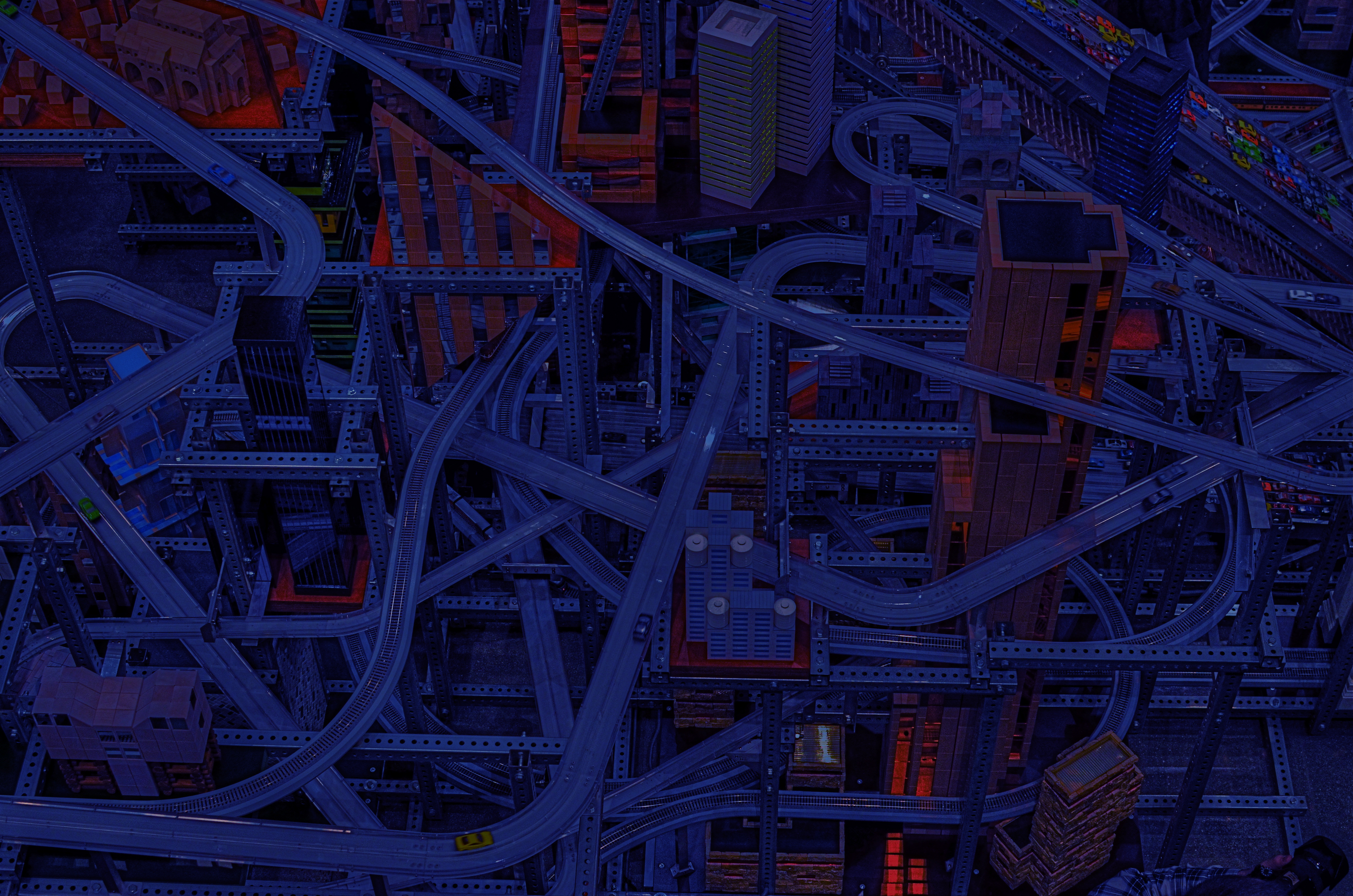
There are many roads to a final image, but only one destination.
By MICHAEL PERKINS
PHOTOGRAPHERS LOVE TO BICKER ENDLESSLY ABOUT WHICH IS THE BEST ROAD TO TRAVEL en route to the making of a picture. I mean they flat-out love it. Here we are entering the third century of a global art that has amply demonstrated that vision, not hardware, is the determinant of excellence, and we are still splitting into warring factions on which camera does this, or which lens or process does that. It’s discouraging because it is wasteful. Put in another context, it’s like arguing whether your marinara won first prize because you stirred it with a spoon instead of a fork.
This ongoing us/them battle over which is the “purer” approach to photography is presently centered on traditional cameras versus mobile devices. Each side calls its star witnesses to testify on a variety of qualifying or disqualifying factors, as if anything matters but the pictures. Can I play that game? Sure, and I’d be lying through my teeth if I said that I had never hurled a bomb or two toward both sides in the skirmish. But when I do that, I’m only serving my own ego….not photography.
I make a distinction between cel phone and conventional cameras based simply on what I want to do in the moment, but such distinctions are never recommended as a universal yardstick. Very generally speaking, if I want the widest number of creative choices before the picture is made, I prefer a DSLR. If I can safely trust my instinct for the greatest part of the picture, adding creative tweaks after the shutter clicks, I am comfortable with a cel. Simple as that. I have made very satisfying images with both kinds of cameras, but my results are purely my own. And that’s really as much as any of us can swear to.
The manufacturers of both kinds of cameras know that different people approach picture-making with priorities, and that’s why they make cameras that have different approaches. Why should this be surprising? Is a Cadillac a better car than a Fiat? Who says so and why? Don’t both accomplish the same baseline task of propelling you from point A to point B? Then they’re, um, cars.
Many pro photographers worship gear the way high priests dig incense and robes, so it’s no wonder that newbies catch the same fever. Looking at their worst pictures, they hate on their gear instead of questioning how they see. You’ve heard the if-only mantras. Maybe you’re mumbled them yourself. If only I had the Big Mama 3000 lens. If only I had a Lightning Bolt BX3 body with a Zeiss diamond cutter attachment! Boy, howdy, then you’d see some pictures. Yeah, well, bull hockey. Develop your eye and your pictures will come out better, whatever kind of camera they come out of. Choose to put yourself on an eternally accelerating learning curve. You’re the real camera, anyway.
Anything else is just a spoon or fork. Stir the pot with what’s at hand and start cooking.
GRABBING THE GLOW
By MICHAEL PERKINS
EVERY PHOTOGRAPH YOU TAKE IS OF CONSEQUENCE.
That doesn’t mean that every subject you shoot will “matter”, or that every mood you capture will be important. Far from it. However, every frame you shoot will yield the most positive thing you could hope for in your development. Feedback. This worked. God, this didn’t. Try again with more of this. One more time, but change the angle. The light. The approach. The objective. Nothing that you shoot is time wasted, since the positive and negative information gleaned is all building toward your next ah-ha miracle.
 Your greatest work has to come as the total of all the building blocks of all the little details you teach yourself to sweat. And that is why you must, I repeat with religious fervor, Always Be Shooting. Something from a photo that won’t change the world will wind up in the photo that will. The what-the-heck experiment of today’s shot is the foundational bedrock of tomorrow’s. You are always going to be your most important teacher, and you get better faster by giving your muscles lots of exercise.
Light changes, those hundreds of shadows, flickers, hot spots and glows that appear around your house for minutes at a time during every day, are the easiest, fastest way to try something…anything. A window throws a stray ray onto your floor for three minutes. Stick something in it and shoot it. A cloud shifts and bathes your living room in gold for thirty seconds. Place a subject in there to see how the light plays over its contours. Shoot it, move it, shoot it again. Lather, rinse, repeat.
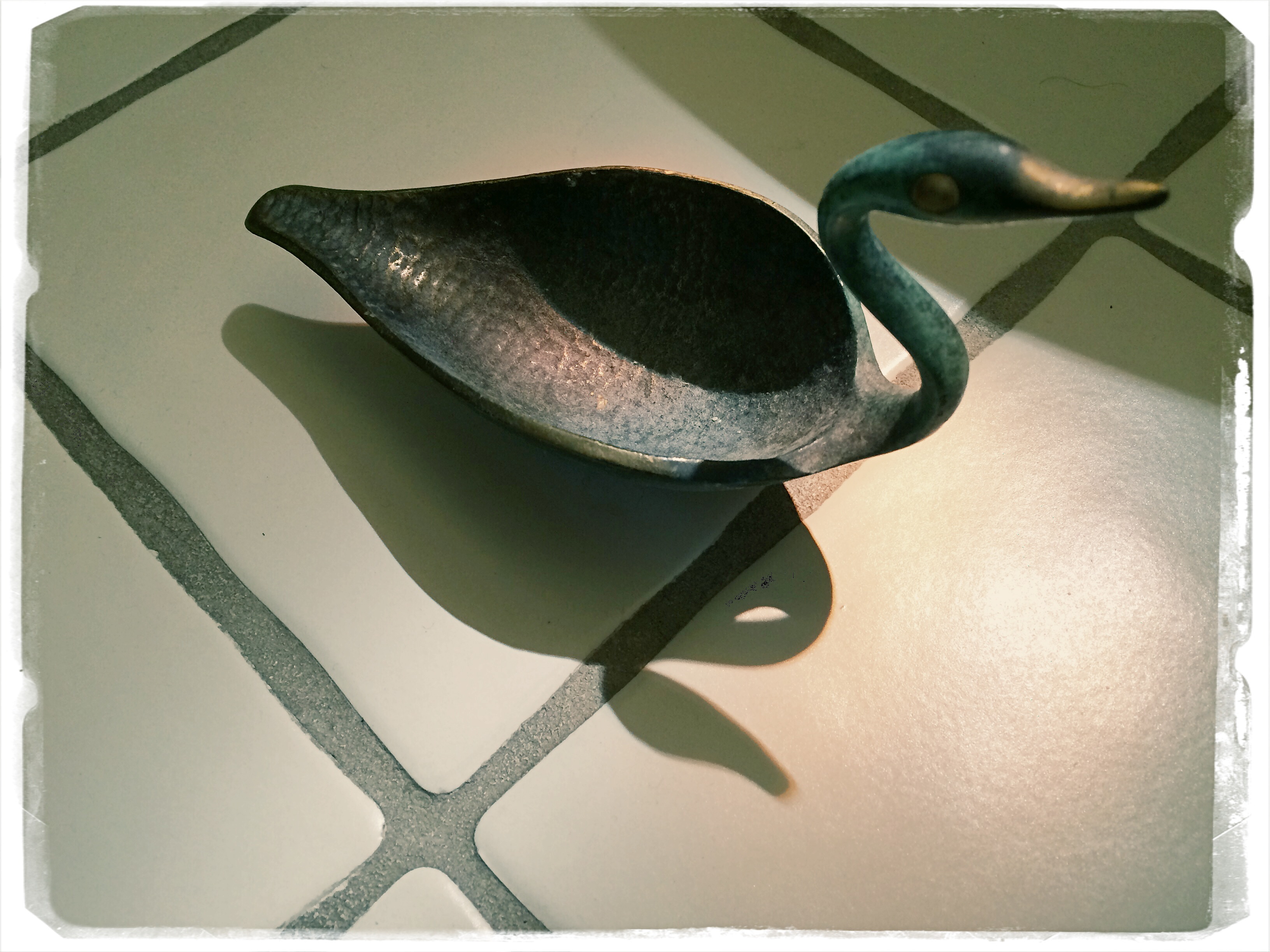
The image at left came when a shaft of late afternoon light shot through my bathroom window for about three minutes. I grabbed the first thing I saw that looked interesting, framed it up, and shot it. Learned a little about shadows in the process. Nothing that will change the world. Still.
Many cheap, simple opportunities for learning get dumped in your lap everyday. Don’t wait for masterpiece subject matter or miracle light. Get incrementally better shooting with what you have on hand. Grab the little glows, and use spare minutes to see what they can do to your pictures. And, on the day when the miracle saunters by, you will be ready.
DIGGING OUT OF THE DRYS
Photography can turn you into a wanderer at times, and not a happy one, either.
By MICHAEL PERKINS
PHOTOGRAPHERS, IN THE NATURAL COURSE OF THEIR CONTINUING DEVELOPMENT, will, at one point or another, get hopelessly lost. Stuck. Stranded on a desert island. Fumbling for the way out of the scary forest. Artistically adrift. Call it a dead spot, a dry spell, or shooter’s cramp, but you can expect to hit a stretch of it at some time. The pictures won’t come. You can’t buy an idea. And, worst of all, you worry that it will last……like forever.
At such times it’s a great idea to turn yourself into a rabid researcher. The answer to how to get unstuck is, really, out there. In your pictures or in someone else’s. Let’s look at both resources.
Your own past photographs are a file folder of both successes and failures. Pore over both. There are specific reasons that some pictures worked, and other’s didn’t. Approach them with a fresh eye, as if a complete stranger had asked you to assess his portfolio. And be both generous and ruthless. You’re looking for truth here, not a security blanket.
Beyond your own stuff, start drilling down to the divinity of your heroes, those legends whose pictures amaze you, and who just might able to kick your butt a little. And, just so we’re being fair, don’t confine yourself to studying just the gold standard guys. Make yourself look at a whole bunch of bad upstarts and find something, even a small thing, that they are doing right that you’re not. Discover a newbie who shoots like an angel, or an Ansel. Empathize with someone who needs even more help than you do. Once you have mercy on someone else’s lack of perfection, it’s a lot easier to forgive it in yourself.
We “artistes” love to believe that all greatness happens in isolation, just our art and us and the great god Inspiration. But even when you shoot alone, you’re in a kind of phantom collaboration with everyone else who ever took a picture. And that’s as it should be. Slumps happen. But the magic will come back. You just need to know how to reboot your mojo.
And smile. It’s photography, after all.
PRACTICE MAKES…?
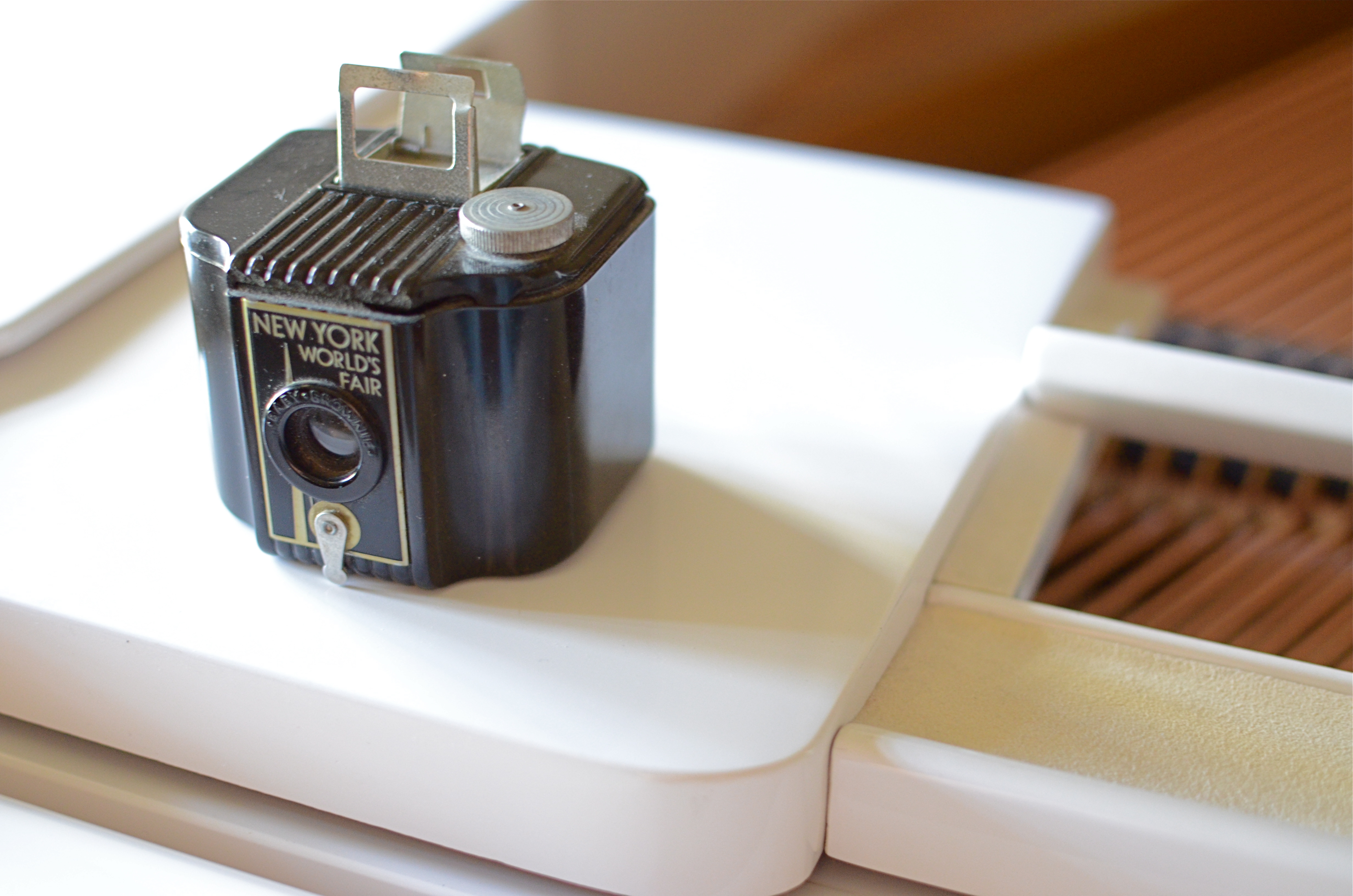
We all start with light and a box. From then on, anything can happen.
By MICHAEL PERKINS
THE BEST SELLER LIST IS THE FASTEST WAY to cement a notion in the public’s mind as indisputable “fact”. We are great at quoting a concept captured in print, then re-quoting the quote, until the “truthfulness” of it becomes plausible. It’s basically a version of the statement, “everybody knows that..” followed by a maxim from whatever hardcover pundit is top in the rotation at a given moment. And it’s about as far from accuracy as you can get.
Ever since pop-psych guru Malcolm Gladwell’s hit book Outliers arrived on shelves a few years back, its main thesis, which is that you need 10,000 hours of practice to become excellent at something, has been trotted out a thousand times to remind everyone to just keep nose to grindstone and, well, practice will make perfect. Gladwell cites Bill Gates’ concentrated stretch of garage tinkering and the Beatles’ months of all-night stands in Hamburg as proof of this fact, and, heck, since it ought to be true, we assume it is.
However, it’s not so true as it is comfortable, and, when it comes to photography, I would never hint that someone could become an excellent artist just by putting in more time shooting than everyone else. If my method is wrong, if I never develop a vision of any kind, or if I merely replicate the same mistakes for the requisite practice period, then I am going to get to my goal older, but not wiser. Time spent, all by itself, is no indication of anything, except time spent. Evolving, constantly learning from negative feedback, and learning how to be your own worst critic are all better uses of the years than just filling out some kind of achievement-based time card.
The perfection of photography is about time, certainly, and you must invest a good deal of it to allow for the mistakes and failures that are inevitable with the acquiring of any skill. But, you must also stir insight, humility, curiosity and daring into the recipe or the end result is just mediocrity. Gladwell’s magical 10,000 hours, a quantity measurement, is only miraculous when coupled with an accompanying quality of work.
There are people who know how to express their soul on their first click of the shutter, just as there are those who slog away for decades and get no closer to imparting anything. It’s how well you learn, not how long you stay in school. It ain’t comforting, but it’s true.
WHOOPS. YAY.
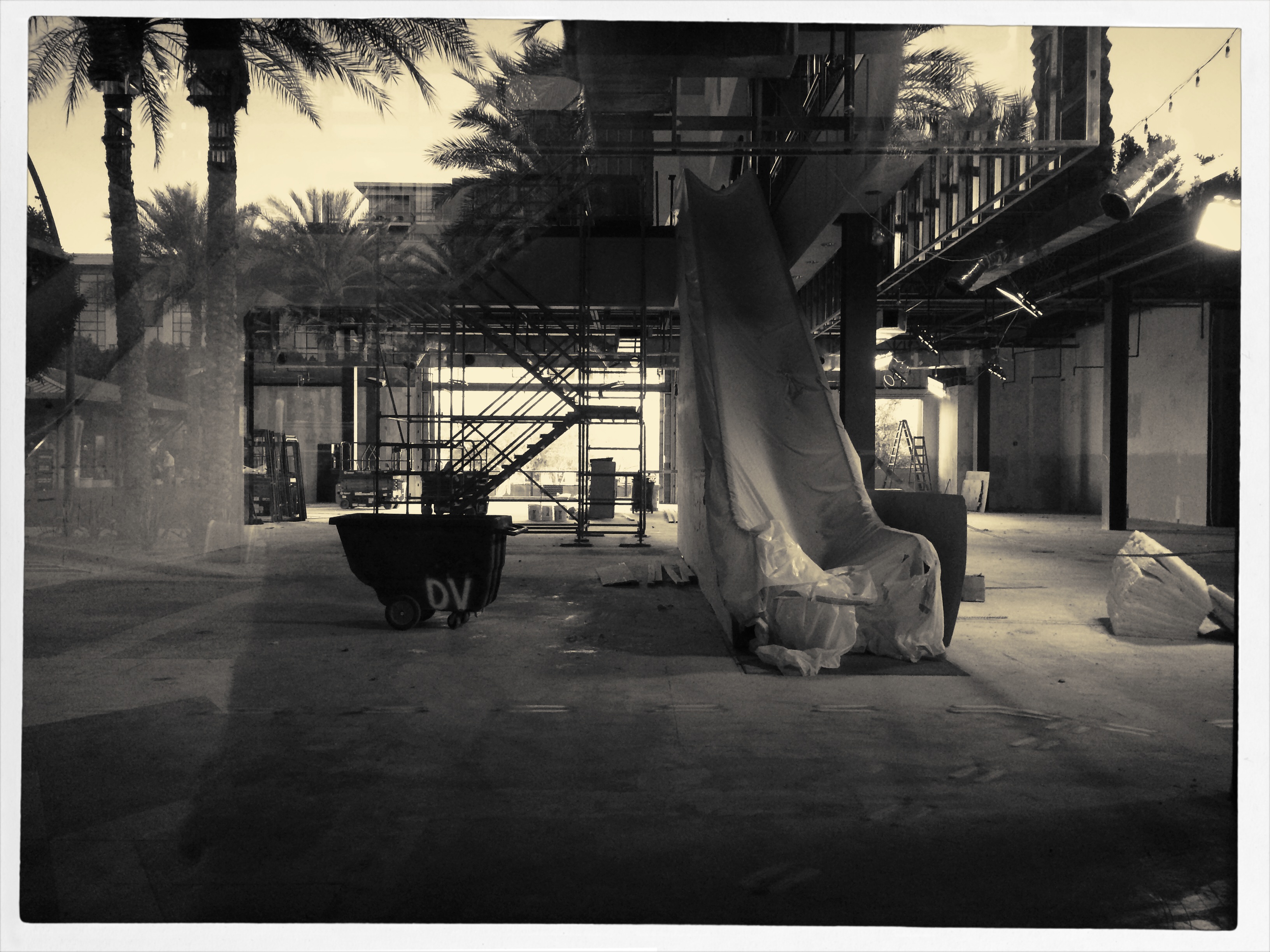
Strike The Set, 2015. A world that never was, and can never be again.
By MICHAEL PERKINS
I HAVE A THEORY THAT “SERENDIPITY” is just “dumb luck” for pretentious people. Somehow it makes our random discoveries and unplanned miracles sound cooler if we attribute them to some grand lining-up of the planets, as if we apes really meant to discover fire. So, fine. Consider this an incident of serendipity, although it’s mainly a case of “I stepped in sugar instead of….” well, you get the idea.
Setting the scene: a suburban mall near me recently closed its enormous bookstore, applying a dark sheet of tint on the building’s huge windows so gawkers couldn’t spy on the joint’s sad makeover as a furniture store. Of course, if you want to make people curious about something, blacking out the windows is a pretty effective tactic, and there are always plenty of people smashing their faces up against the impermeable tint every day to see what a bookstore looks like when it has, you know, no books in it. I am usually first in line for this ritual.
For some reason this week, a small peephole has been opened in the sheeting, allowing one to see the place’s vast, empty floor, its draped escalator, and an iron tangle of scaffolding, as well as a huge infusion of light from an open-work area at the opposite side of the store. It isn’t quite the “ruin porn” that photographers of dead malls love to record just ahead of the wrecking ball, but eerie enough to make me want to shove my phone camera up against the peephole to try to capture it.
Given the very wide-angle of such devices, however, I discovered, after the click, that the lens had also picked up a portion of the window next to the peephole, a portion still covered by tint and capable of reflecting the scene behind me….various buildings and landscaping of the rest of the mall. Even stranger, the “other” reality behind me melded, through the blurred outline of the peephole and variances of light, with the scene inside the store, as if they were all part of one dreamy landscape, a Hollywood set in transition. Giddy at what I had grabbed by accident, I shot a second frame to compose things a bit better, then converted it to monochrome with a filter that simulates a platinum print effect, an effort to eliminate mismatches in color and tone between the two worlds.
Sinatra once said that “the professional is the guy who can do it more than once”, so this image ranks me solidly among the amateurs. But so what. Whoops. Yay.
SWEETER, SHARPER
By MICHAEL PERKINS
AS SOME PHOTOGRAPHERS AGE, THERE IS A STRONG TEMPTATION to do more and more with less and less. For many, this manifests itself as a kind of divestiture, a relinquishing of toys. Maybe it’s just muscle fatigue, but, at some point in a shooter’s life, he or she makes a conscious decision to carry fewer hunks of gear into battle. Your approach to the work gets more complex, and, paradoxically, the mechanical doing of it gets more streamlined.
This is where the idea of a “go to” lens comes from, with photogs deciding that, yes, they can do nearly everything with the same hunk of glass. It becomes a bragging point: I shoot everything with a 24mm prime. I always use a 35. I don’t carry a big bag of stuff around anymore. But here’s the great thing: even a single lens is actually several lenses at once, since its optical properties change dramatically depending on aperture. That’s why, if you’re trying to take more kinds of pictures with fewer lenses, it’s important to do some homework on all the different ways they see.

Everyone has an “go-to” aperture that they use more than any other. For me, it’s f/5.6.
One of the things it’s best to know about your lens is where its “sweet spot”, or optimum sharpness occurs across the aperture range. Turn on your trusty Google machine and you will find more opinions on how to determine this than there are recipes for apple pie, and that’s the tricky part. Optics are a science, to be sure, but they are also somewhat subjective. Translation: if it looks good to you, it’s good. So publishing a table that proves your argument on what “sharp” is to your satisfaction just picks a scab for someone else. You have to get away from the charts and do the field work. Shoot. Look. Compare.
The chart people believe, for example, that the sweet spot for a lens is always two f-stops less light than your maximum wide-open aperture, meaning that, say an f/1.8 prime would hit its sweet spot somewhere around f/3.5. However, on my own 35mm f/1.8, I get the most uniform sharpness, from center to corners, another stop beyond that, so my “go to” aperture on my “go to” lens is more like f/5.6. I know this is true, because I have set up a tripod and shot the same subject from the same distance through the entire range of apertures and visually compared them. You know, the real-world, old-fashioned way….observation.
The better you know every property of your lens, the closer you will get to one that does most of what you want, most of the time. More pictures with fewer toys, with time and labor saved as well.
LOW-TECH LOW LIGHT
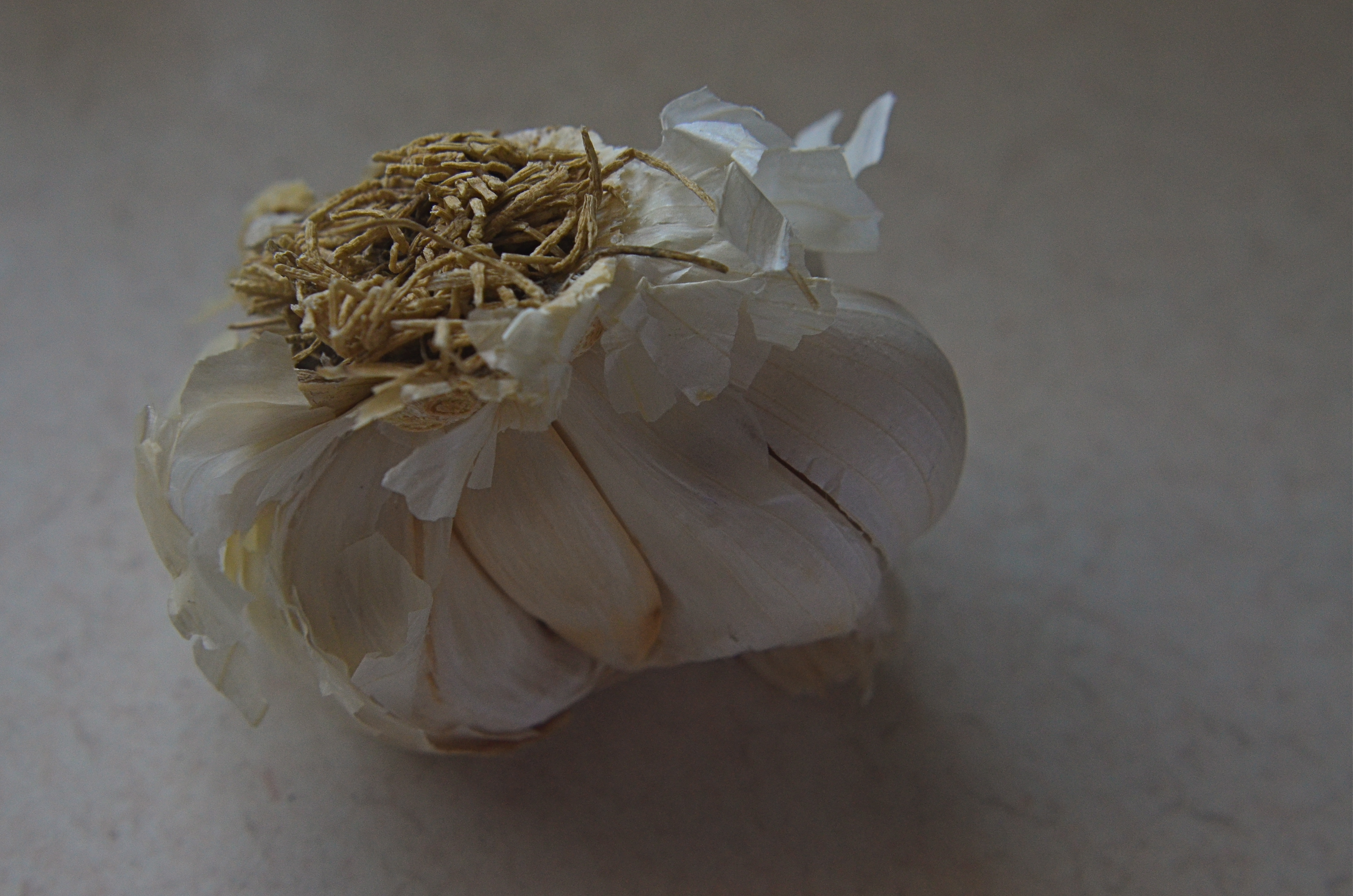
Passion Flower, 2015. Budget macro with magnifying diopters ahead of a 35mm lens. 1/50 sec., f/7.1, ISO 100.
By MICHAEL PERKINS
LIGHT IS THE PRINCIPAL FUEL OF PHOTOGRAPHY, but it needs refinement, just as crude oil needs to be industrially altered before it’s ready for consumer use. It isn’t just enough to record light in its natural form; it has to be corralled, directed, harnessed so that it enhances a photograph in such a way that, ironically, makes it look like you did nothing at all but press the shutter. So, right at the start, making images is a bit of a con job. Good thing is, it’s only dishonorable when you get caught.
Doing macro on the cheap with the use of screw-on magnifying diopters ahead of your regular lens is one of the situations that can create special lighting challenges. There is an incredibly shallow depth of field in these lenses, but if you compensate for it in the camera, by, say, f/8 or higher, you lose light like crazy. Slow down your shutter to compensate, and you’re on a tripod, since the slightest tremor in a hand-held shot looks like 7.8 on the Richter scale. Keep the shorter shutter speed, though, and you’re jacking ISO up, inviting excessive noise. Flood the shot with constant light, and you might alter the color relationships in a naturally lit object, effecting, well, everything that might appeal in a macro shot.
Best thing is, since you’re shooting such a small object, you don’t need all that much of a fix. In the above shot, for example, the garlic bulb was on a counter about two feet from a window which is pretty softened to start with. That gave me the illumination I needed on the top and back of the bulb, but the side facing me was in nearly complete shadow. I just needed the smallest bit of slight light to retrieve some detail and make the light seem to “wrap” around the bulb.
Cheap fix; half a sheet of blank typing paper from my printer’s feed tray, which was right next door. Camera in right hand, paper in left hand, catching just enough window light to bounce back onto the front of the garlic. A few tries to get the light where I wanted it without any flares. The paper’s flat finish gave me even more softening of the already quiet window light, so the result looked reasonably natural.
Again, in photography, we’re shoving light around all the time, acting as if we just walked into perfect conditions by dumb luck. Yeah, it’s fakery, but, as I say, just don’t get caught.
THE TRIANGLE
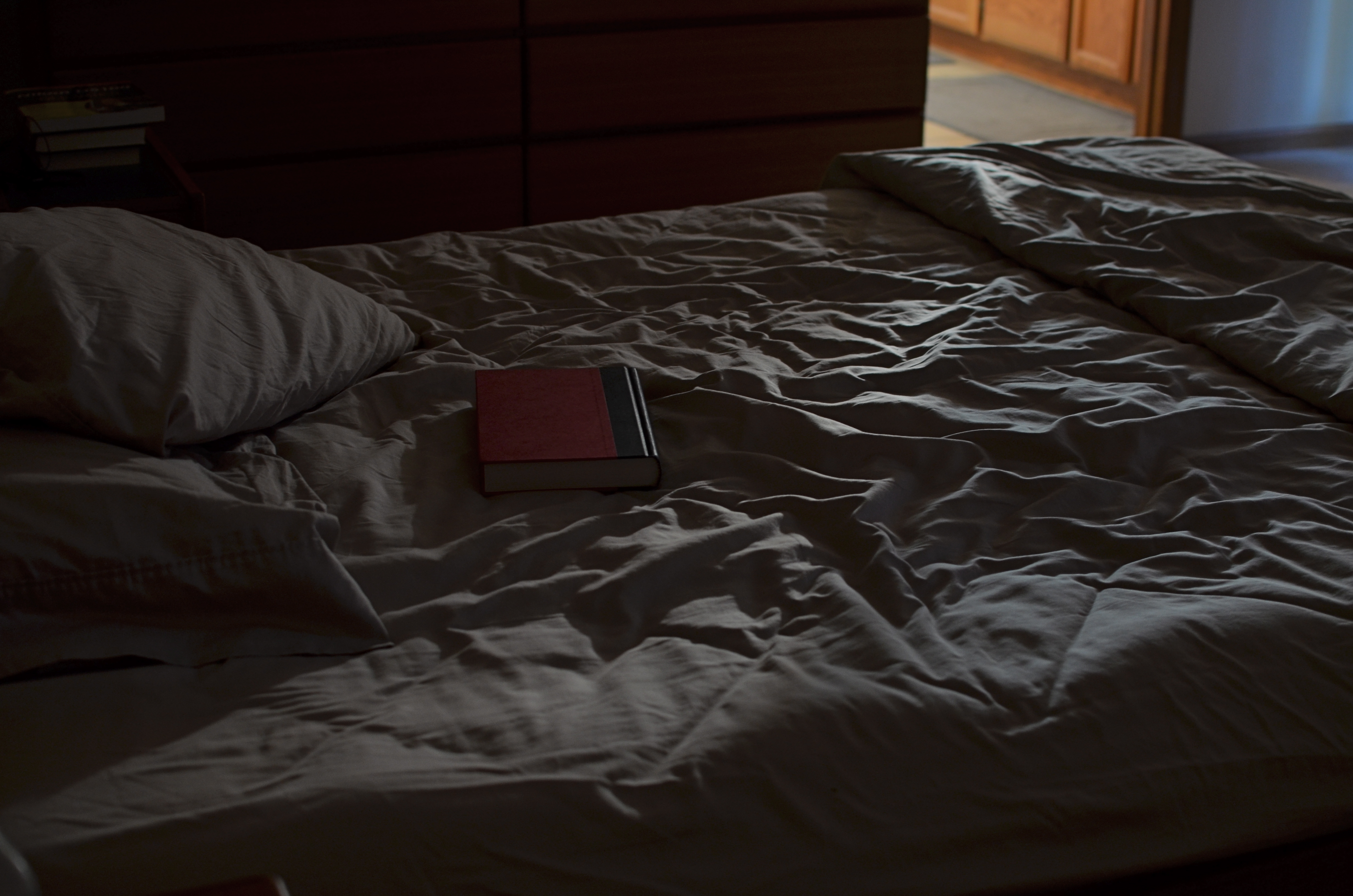
Dark days, dark thoughts.
By MICHAEL PERKINS
WINTER IS A TIME OF MUTED COLORS, DIMINISHED SUNLIGHT and inner struggle. I’ve heard people refer to the leaner, darker months as the feeling of being shut up inside a box, almost like having yourself placed in storage. I would lop one side off of that polygon and say that, to me, it feels more like being locked in a triangle.
As a photographer, I feel as if, in winter, I sustain three distinct emotional “hits” about my work, forming the three sides of the triangle, all three pressing up against, and balancing, each other. These sides can be described as:
Not enough new or compelling ideas coming into my brain. A case of the “drys”.
Too much re-evaluation of all of my images that failed, along with a big fat dose of recrimination.
A near-crippling sadness over the photographic opportunities, many tied to people now departed, that I simply didn’t act upon, and which are now lost to me forever.
The first side of the triangle really isn’t unique to winter-time. I experience 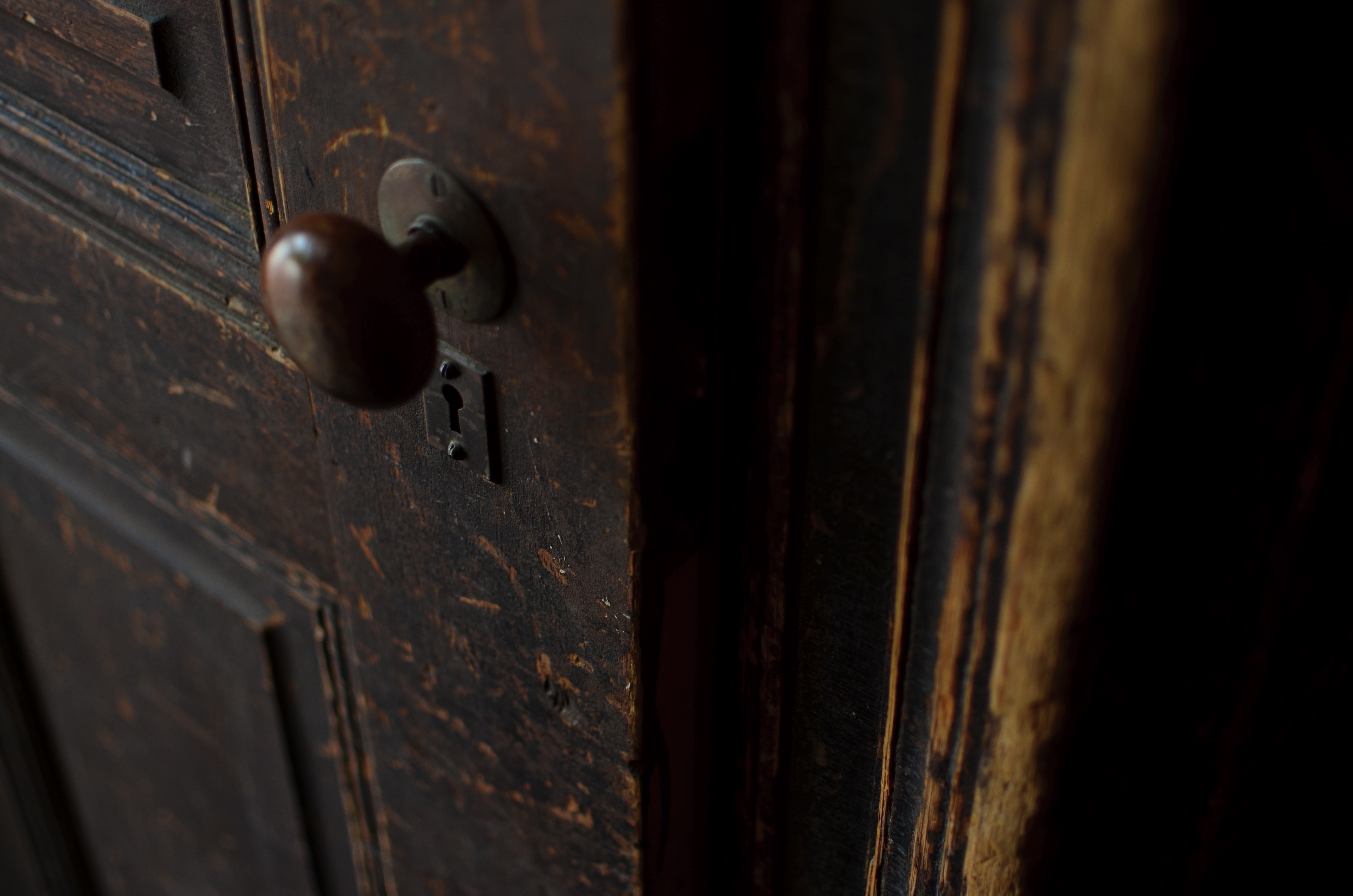 fallow periods throughout the year. They just ache more when amplified by slate-gray skies and dead trees. The second is to be expected, since spending more time indoors means rifling through old boxes of prints and slides, asking myself what the hell I was thinking when I chose this exposure or that subject, and ending the entire process by pitching some of those boxes into the incinerator. A needed exercise, but hardly anyone’s idea of a fun time.
No, it’s the third side of the triangle which is the real killer, since the photos that haunt you the worst are always the ones you didn’t take. Friendships pour additional salt into this particular wound, since, somehow, you never recorded quite enough of the faces which once were the common features of your world, and which time has, one by one, erased.
Your own personal list of pals-not-present grows steadily over the years, and the thought that you could have shot one less sunset to capture just one more portrait of some of them hurts. It’s not as if your emotional souvenirs of them aren’t burned into your mind’s eye. It’s not even that you might have done something magical or singular with their faces beyond another birthday candid. It’s simply that once you could, and now you can’t.
The triangle isn’t all torture. Breaking out of it means taking arms against ghosts, and (as Shakespeare said), by opposing, ending them. You not only have to keep shooting, but keep shooting mindfully. Because when all of this that we call reality finally drains through our fingers, the scraps of it that we leave behind really can matter. Even with triangles, there’s always one more side to the story.
THE CHOICE
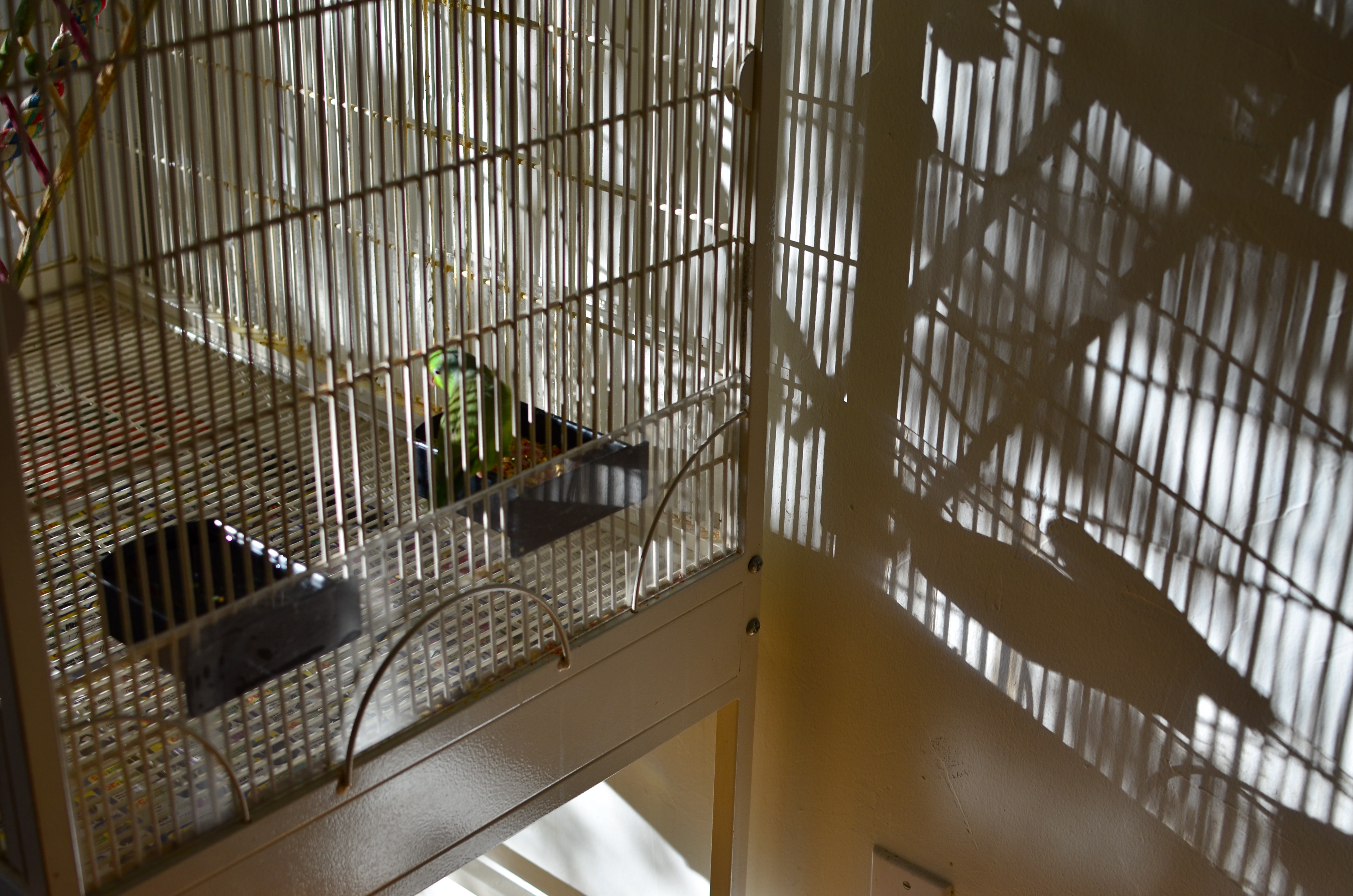
Does the structure of your photography protect you, or contain you?
By MICHAEL PERKINS
ANYONE WHO REGULARLY VISITS THESE PAGES already knows that I advocate of doing as much of your photography in as personal and direct a way as possible. While I am completely astonished by the number of convenience items and automatic settings offered to the casual photographer in today’s cameras, I believe that many of these same features can also delay the process by which people take true hands-on control of their image-making. I regard anything that gets in between the shooter and the shutter as a potential distraction, even a drag on one’s evolution.
Tools are not technique. Here are two parallel truths of photography: (1) some people with every gizmo in the toy store take lousy pictures. (2) some people with no technical options whatsoever create pictures that stun the world.
From my view, you can either subscribe to the statement, “I can’t believe what this camera can do!” or to one which says, “I wonder what I can make my camera do for me!” The very controls built into cameras to make things convenient for newcomers are the first things that must be abandoned once you are ready to move beyond newcomer status. At some point, you learn that there is no way any camera can ever contain enough magic buttons to give you uniformly excellent results without your active participation. You simply cannot engineer a device that will always deliver perfection and perpetually protect you from your own human limits.
Innovators never innovate by surrounding themselves with the comfortable and the familiar. For photographers, that means making decisions with your pictures and living with the uneven results in the name of self-improvement. This is a challenge because manufacturers seductively argue that such decisions can be made painlessly by the camera acting alone. But guess what. If you don’t actively care about your photos, no one else will either. There may not be anything technically wrong with your camera’s “choices”. But they are not your choices, and eventually, you will want more. The structure that at first made you feel safe will, in time, start to feel more like a cage.
Tools are not technique.
HAPPY OLD YEAR
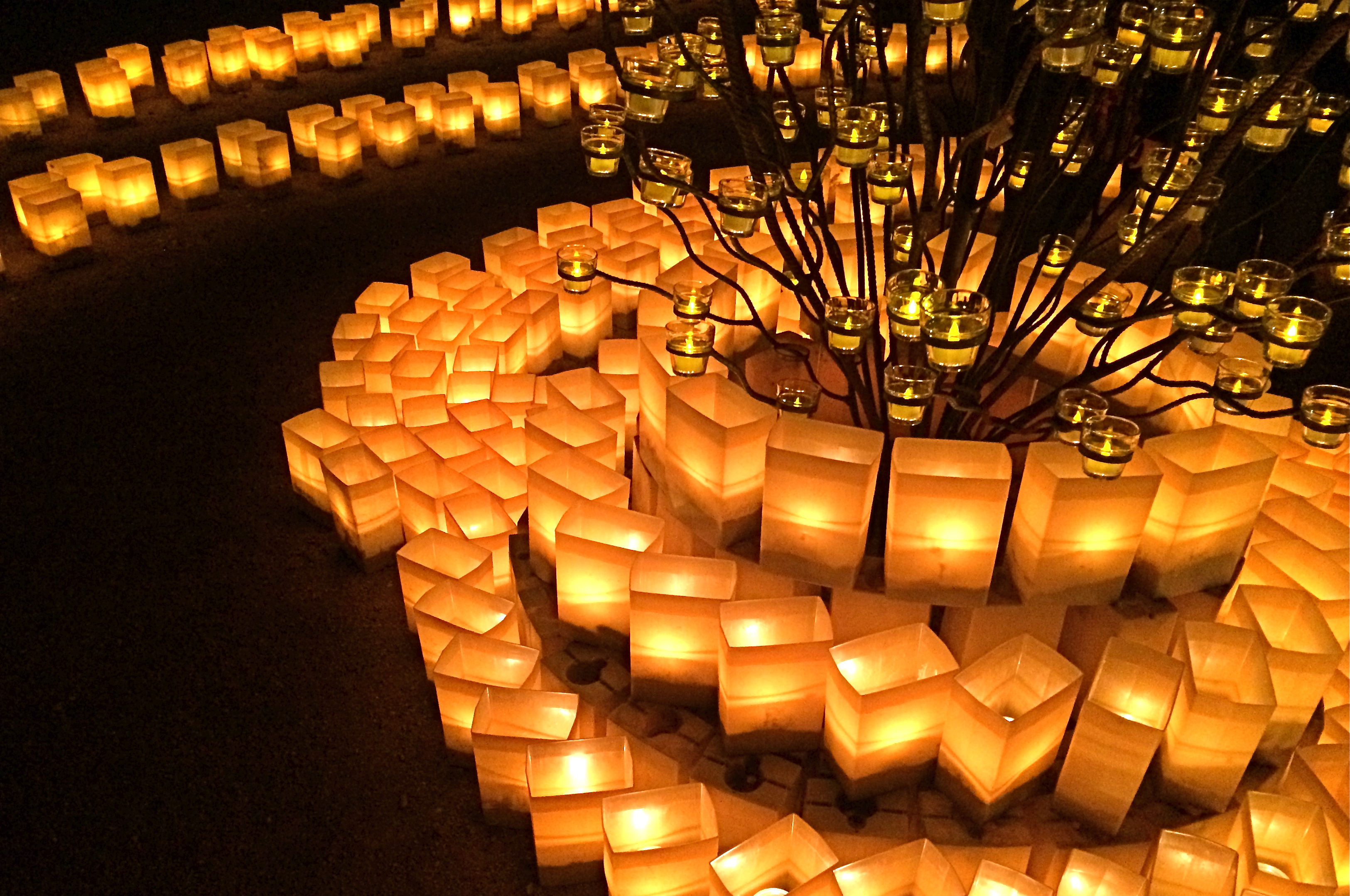
2014. Another year spent chasing the light.
By MICHAEL PERKINS
The White Rabbit put on his spectacles. ‘Where shall I begin, please your Majesty?’ he asked. ‘Begin at the beginning,’ the King said gravely, ‘and go on till you come to the end: then stop.’
IN A SIMPLER WORLD, THE KING OF HEARTS, quoted above in Lewis Carroll’s Alice’s Adventures in Wonderland, would be perfectly correct. All things being equal, the beginning would be the best place to begin. But, in photography, as in all of life, we are always coming upon a series of beginnings. Learning an art is like making a lap in Monopoly. Just when we think we are approaching our destination, we pass “Go” again, and find that one man’s finish line is another man’s starting gate. Photography is all about re-defining where we are and where we need to be. We always begin, and we never finish.
As 2014 comes to an intersection (I can’t really say ‘a close’ after all that, can I?), it’s normal to review what might be either constant, or changed, about one’s approach to making pictures. That, after all, is the stated aim of this blog, making The Normal Eye more about journey than destination. And so, all I can do in reviewing the last twelve months of opportunities or accidents is to try to identify the areas of photography that most define me at this particular juncture, and to reflect on the work that best represents those areas. This is not to say I’ve gained mastery, but rather that I’m gaining on it. If my legs hold out, I may get there yet. But don’t count on it.
The number twelve has become, then, the structure for the blog page we launch today, called (how does he think of these things?) 12 for 14. You’ll notice it as the newest gallery tab at the top of the screen. There is nothing magical about the number by itself, but I think forcing myself to edit, then edit again, until the thousands of images taken this year are winnowed down to some kind of essence is a useful, if ego-bruising, exercise. I just wanted to have one picture for each facet of photography that I find essentially important, at least in my own work, so twelve it is.
Light painting, landscape, HDR, mobile, natural light, mixed focus, portraiture, abstract composition, all these and others show up as repeating motifs in what I love in others’ images, and what I seek in my own. They are products of both random opportunity and obsessive design, divine accident and carefully executed planning. Some are narrative, others are “absolute” in that they have no formalized storytelling function. In other words, they are a year in the life of just another person who hopes to harness light, perfect his vision, and occasionally snag something magical.
So here we are at the finish line, er, the starting gate, or….well, on to the next picture. Happy New Year.
THE UNKNOWN FAMILIAR
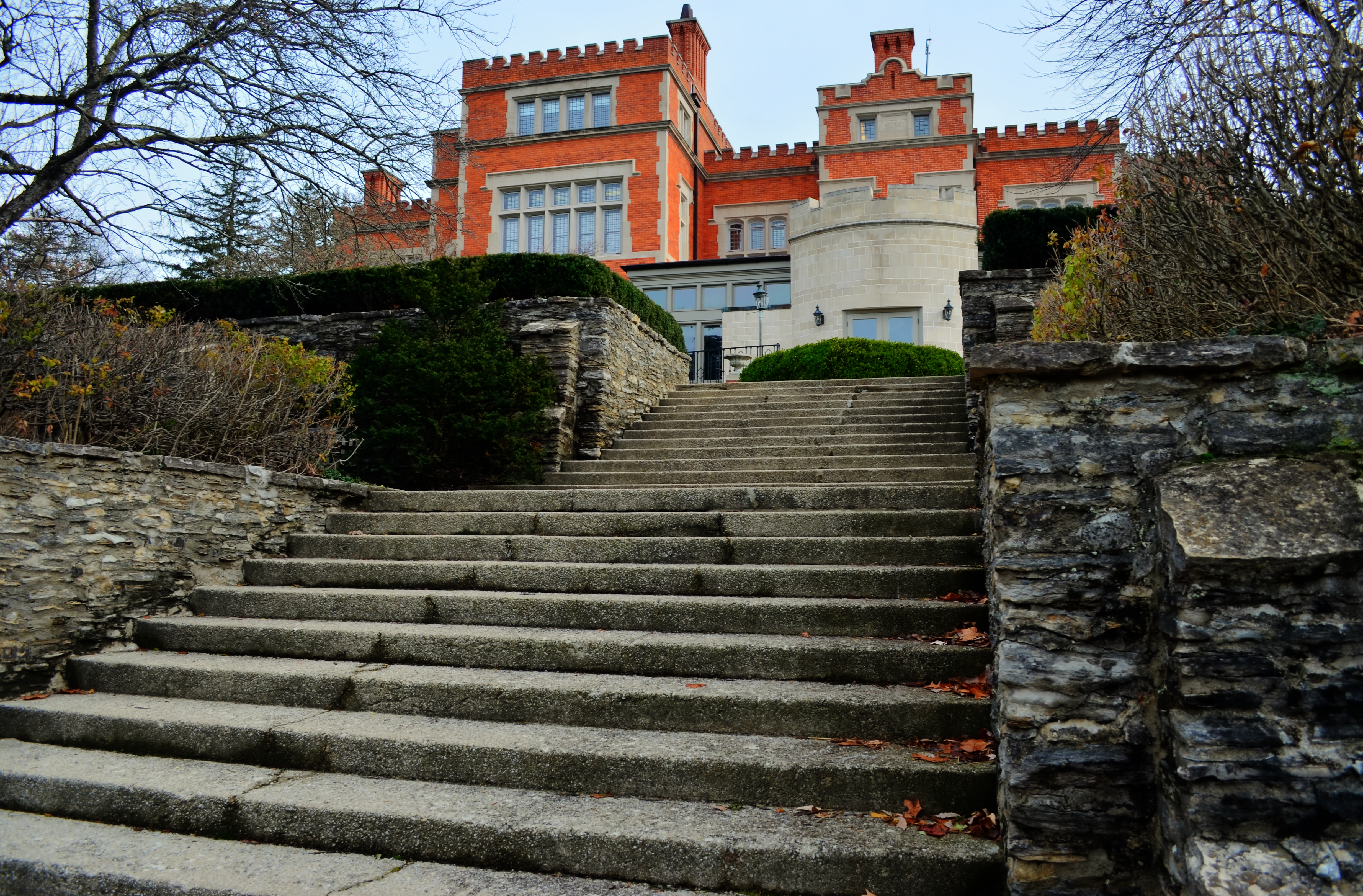
I first photographed Jeffrey Mansion in Bexley, Ohio in the late 1960’s. I look for, and see, very different things in it now. An infusion of three exposures from 1/60-1/160 sec., all f/5.6, ISO 100, 18mm.
By MICHAEL PERKINS
YEARS AGO, RONALD REAGAN, UPON VISITING HIS OLD ELEMENTARY SCHOOL for a presidential photo opportunity, famously asked the local administrators how they managed to shrink the desks in the classrooms. Of course he was joking, but the remark was a telling one; when we return to the scenes of our earliest dramas and farces, we tend to believe that some other outside force sneaked into the place, before our arrival, and somehow re-ordered reality. We laugh at Reagan’s quip because we can see ourselves saying the same thing. It’s all about us.
Just as we are pleasantly shocked to view the graduated pencil marks on our old kitchen wall that logged our increasing height at different ages, we marvel when we take cameras back to the same places where we took cameras in the past. We think we are measuring time in what we shoot, but we are actually measuring ourselves in how we shoot. A recent trip to my hometown afforded me time to roll around to a number of places where I have repeatedly returned over a lifetime, each time approaching photography, and myself, a little differently. In some cases, the first frames I ever shot of these sites go back over forty years, and, good pictures or bad, the results are a few universes away from those first efforts.
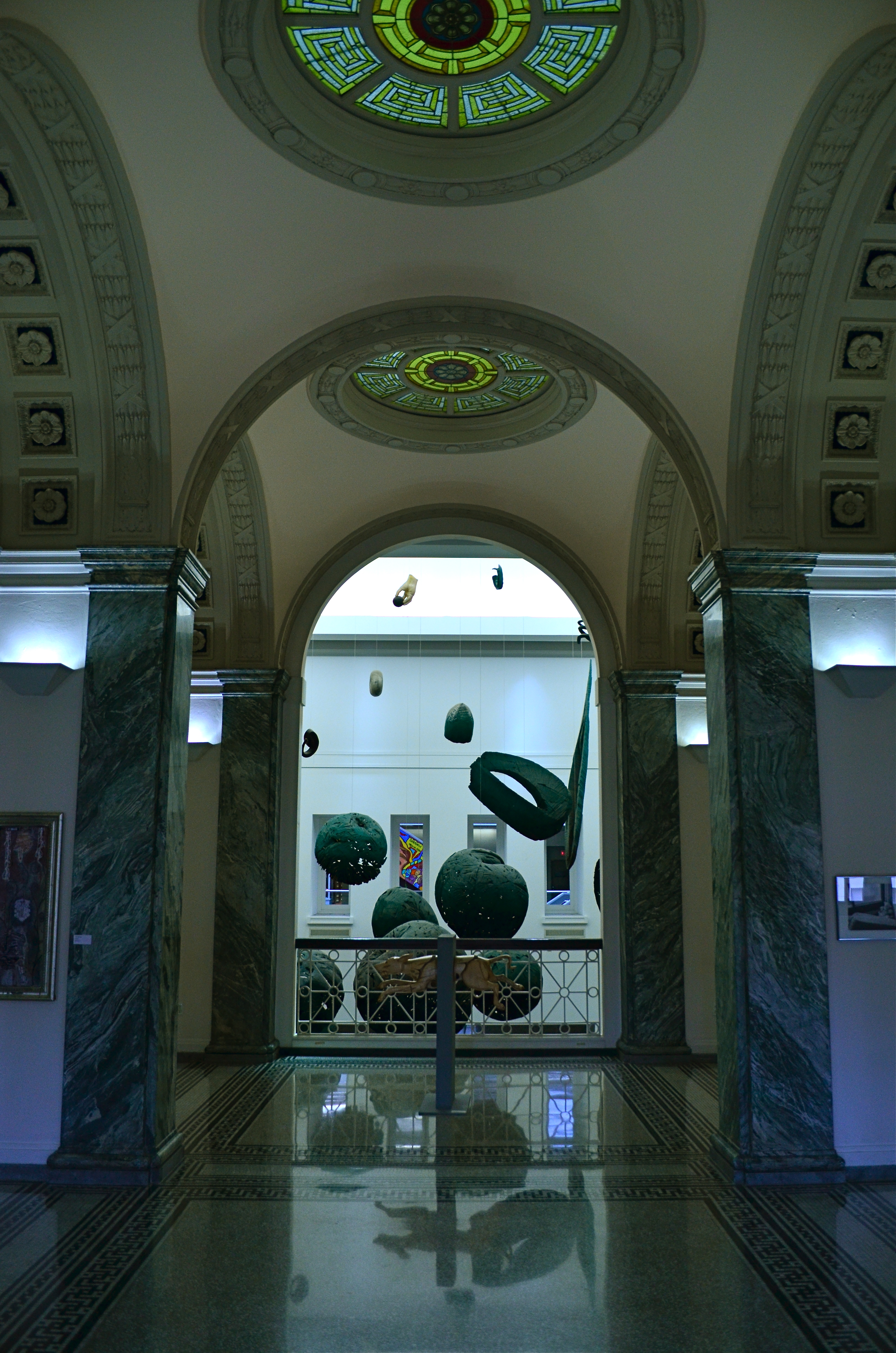
Inside Columbus, Ohio’s Carnegie Library, where I first became a researcher.
How can it be otherwise? I don’t see the same way. I don’t look to see in the same way. Years ago, I was still enthralled with the idea of capturing an image in the box….any image. Hey, it worked. It’s not a stretch to say that, when I first learned to load and wind film or squint into a viewfinder, I was still amazed by the process alone, the idea of freezing time being an inexplicable miracle to me. Beyond hungering to produce my own miracles, I had no concept as to what I should be seeking, or saying.
One thing that has changed over the years is that I no longer try to stop the world with, you know, The Image. There is no “the” anymore, only “the next”. The thing I need to learn to make the picture will come, in time, if I spend long enough thinking or feeling my way through the problem. The photograph, I now know, is already in there, someplace. I just have to carve and peel until it emerges. In the images you see here, I have finally, decades hence, become ready to register the unknown in a familiar place.
To my amazement, I can actually pre-imagine a shot now, with a reasonable hope of eventually making my hand cash the check my eye has written. Back when I started, every picture was an accident….sometimes happy, often frustrating. Now, as I point my lens toward locales that are old friends, I know that they, largely, are constant. It is I who has moved. There’s some comfort, and lots of possibility, in realizing that the desks didn’t really shrink.
I just learned to stand up.
MILE MARKER
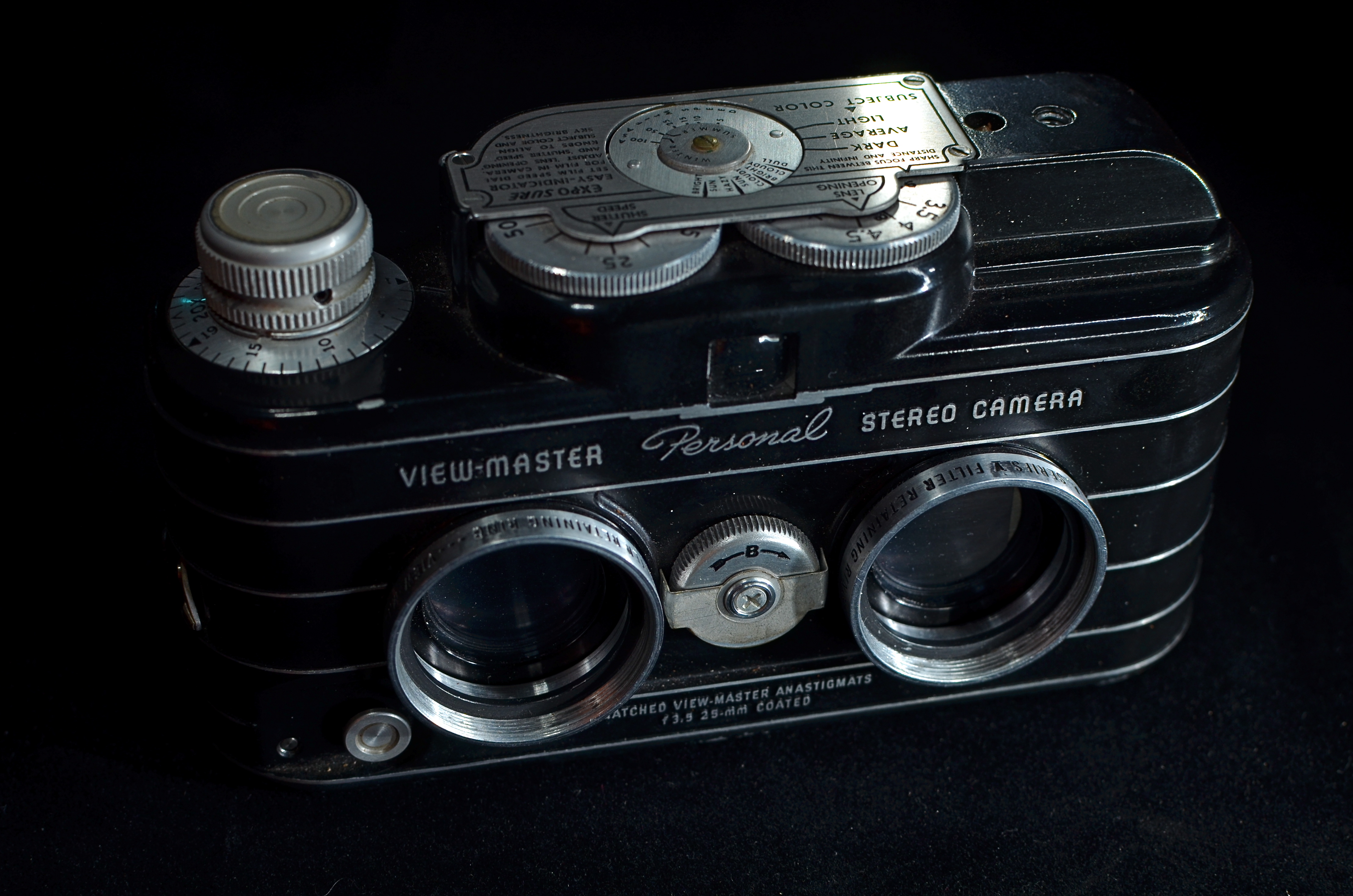
Sawyer’s mid-50’s View-Master Personal Stereo, the only consumer camera able to produce those eye-popping 3-d reels. 15 sec., f/5.6, ISO 100, 35mm.
BY MICHAEL PERKINS
THIS WEEK, THE NORMAL EYE REACHES A LITTLE BASE CAMP OF SORTS, with the welcome arrival of our 1,000th blog follower. A few thoughts before we climb to the next ledge:
I never wanted this forum to be a mere photo diary, a refrigerator on which to tack up my pet pic of the day, because, despite the fact that my photography illustrates the blog, it’s not really about,”look what I did”, so much as it’s about “look at one thing you can try”. It also was never supposed to be a purely technical tutorial, although we do offer a few simple step-by-steps on emerging methods. My thought, then as now, is that there are many, many master technicians in the trade whose command of the pure science is so much stronger than mine, that I’d be better off talking about the part we all understand….the millions of little miracle moments and motivations that shape our visual decisions in the making of images.
Accordingly, your most typical responses to The Normal Eye have been along the lines of “I’ve been there”, or “I came to the same conclusion” or “I never thought of it that way before.” That has sparked dialogue, which was my principal aim in creating TNE in the first place. I use my images to illustrate my ideas because they’re the closest visual equivalent of what’s rattling around in my skull, but not because they’re the ne plus ultra of anything.
From my years as an illustrator, I also love the idea of designing a page, and I try to vary the visual arrangement of the blog to incorporate useful links, historical figures, and, as we go forward, gifs and other tools. I liken it to the front of a newspaper, which, other than the masthead and the familiar type faces, has to be completely new every day. It’s more interesting to make, and, I hope, more fun to read, but it’s still in its infancy.
The most amazing part of this venture has been seeing the numbers change, to realize, day by day, that many of you have chosen, on-purpose, to bring these conversations into your day on a regular basis. I truly appreciate that choice, and am gratified if any of these chicken scratchings have a positive impact, for anyone. Sometimes, online writing is like throwing a pebble down a dark well and listening for at least a splash. Sometimes it’s like waking up to a roomful of birthday presents. So, to everyone who has kept faith or at least sampled The Normal Eye thus far, my sincere thanks. As I’ve stressed before, although solo sermons are often inspiring, this forum only works as a conversation.
Your turn.
THE BOY IN THE BALL CAP
By MICHAEL PERKINS
MORE SHOTS, MORE CHOICES: Photography really is as simple as that. The point has been hammered home by expert and amateur alike since before we could say “Kodak moment”: over-shooting, snapping more coverage from more vantage points, results in a wider ranger of results, which, editorially, can lead to finding that one bit of micro-mood, that miraculous mixture of factors that really does nail the assignment. Editors traditionally know this, and send staffers out to shoot 120 exposures to get four that are worthy of publication. It really, ofttimes, is a numbers game.
For those of us down here in the foot soldier ranks, it’s rare to see instances of creative over-shoot. We step up to the mountain or monument, and wham, bam, there’s your picture. We tend to shoot visual souvenirs: see, I was there, too. Fortunately, one of the times we do shoot dozens upon dozens of frames is in the chronicling of our families, especially the day-to-day development of our children. And that’s vital, since, unlike the unchanging national monument we record on holiday, a child’s face, especially in its earlier years, is a very dynamic subject, revealing vastly different features literally from frame to frame. As a result, we are left with a greater selection of editing choices after those faces dissolve into other faces, after which they are gone in a thrilling and heartbreaking way.
One humbling thing about shooting kids is that, after they have been around a while, you realize that you might have caught something essential, months or years ago, during an event at which you just felt like you were reacting, racing to catch your quarry, get him/her in focus, etc. A feeling of always trying to catch up. It’s one of the only times in our own lives that we shoot like paparazzi. This might be something, better get it. I’ll sort it out later. The process is so frenetic that some images may only reveal their gold several miles down the road.
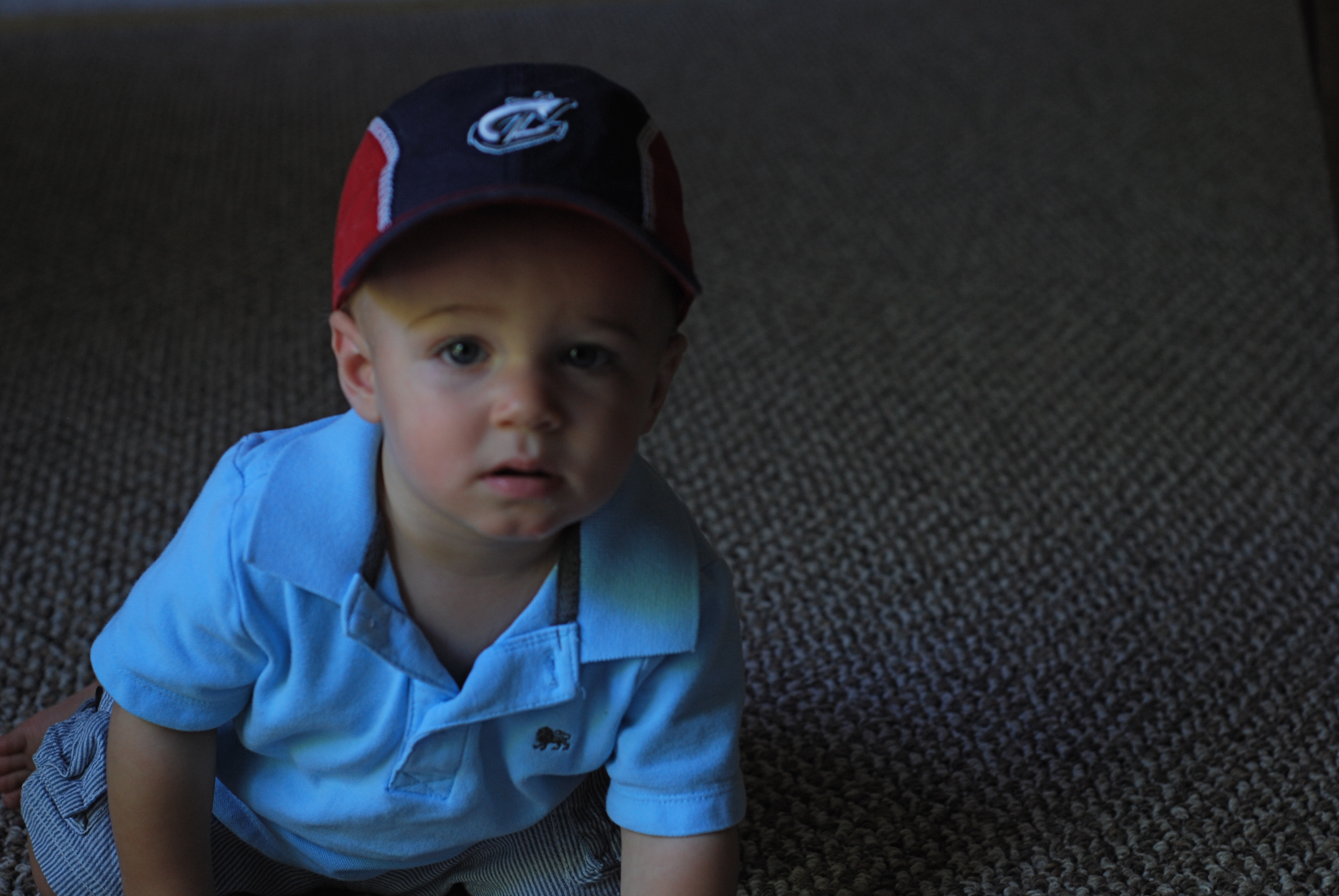
Not the sharpest image I ever shot, but look at that face. Slow shutter to compensate for the dim light. 1/40 sec., f/3.2, ISO 200, 35mm.
My grandson is now entering kindergarten. He’s reading. He’s a compact miniature of his eventual, total self. And, in recently riffing through images of him from early five years ago (and yes, I was sniffling), I found an image where he literally previews the person I now know him to be. This image was always one of my favorite pictures of him, but it is more so now. In it, I see his studious, serious nature, and his intense focus, along with his divine vulnerability and innocence. Technically, the shot is far from perfect, as I was both racing around to catch him during one of his impulse-driven adventures and trying to master a very new lens. As a result, his face is a little soft here, but I don’t know if that’s so bad, now that I view it with new eyes. The light in the room was itself pretty anemic, leaking through a window from a dim day, and running wide open on a 50mm f/1.8 lens at a slow 1/40 was the only way I was going to get anything without flash, so I risked misreading the shallow depth of field, which I kinda did. However, I’ll take this face over the other shots I took that day. Whatever I was lacking as a photographer, Henry more than compensated for as a subject.
Final box score: the boy in the ball cap hit it out of the park.
Thanks, Hank.
PENCIL VS. INK
This iPhone capture is more of a preliminary sketch than a final rendering, since the camera adds too much noise in low light. I’ll return with a Nikon to get this “right”.
By MICHAEL PERKINS
RAISED AS THE SON OF AN ILLUSTRATOR WHO WAS ALSO A PHOTOGRAPHER, I have always been more comfortable with the idea of the photographic image as a work-in-progress rather than as a finished thing. That is, I bring a graphic artist’s approach to any project I do, which is to visualize an idea several different ways before committing myself to the final rendering. Call if sketching, roughing, rehearsing…..whatever…but, both on the page/canvas and the photograph, I see things taking shape over the space of many trial “drafts”. And, just as you don’t just step up and draw a definitive picture, you usually can’t just step up and snap a fully realized photo. I was taught to value process over product, or, if you will, journey over destination.
This belief was embodied in my dad’s advice to lay down as many pencil lines as possible before laying in the ink line. Ink meant commitment. We’re done developing. We’re finished experimenting. Ready to push the button and, for better or worse, live with this thing. Therefore the idea of a sketch pad, or preliminary studies of a subject, eventually led to a refined, official edition. This seems consistent with people like Ansel Adams, who re-imagined some of his negatives more than half a dozen times over decades, each print bearing its own special traits, even though his source material was always the same. Similarly, “studies” in music served as miniature versions of themes later realized in full in symphonies or concertos.
The photo equivalent of a sketch pad, for me in 2014, is the phone camera. It’s easy to carry everywhere, fairly clandestine, and able to generate at least usable images under most conditions. This allows me to quickly knock off a few tries on something that, in some cases, I will later shoot “for real” (or “for good”) with a DSLR, allowing me to use both tools to their respective strengths. The spy-eye-I-can-go-anywhere aspect of iPhones is undeniably convenient, but often as not I have to reject the images I get because, at this point in time, it’s just not possible to exert enough creative control over these cameras to give full voice to everything in my mind. If the phone camera is my sketch pad, my full-function camera is my ink and brush. One conceives, while the other refines and commits.
You write things like this knowing full well that technology will make a monkey out of you at its next possible opportunity, and I actually look forward to the day when I am free of the bulk and baggage of what are, at least now, better cameras overall. But we’re not there yet, and may not be for a while. I still make the distinction between a convenient camera and a “real” camera, and I freely admit that bias. A Porsche is still better than a bicycle, and the first time you’re booked as a pianist into Carnegie Hall, your manager doesn’t insist that they provide you with a state-of-the-art….Casio. It’s a Steinway or the highway.
RAMPING UP
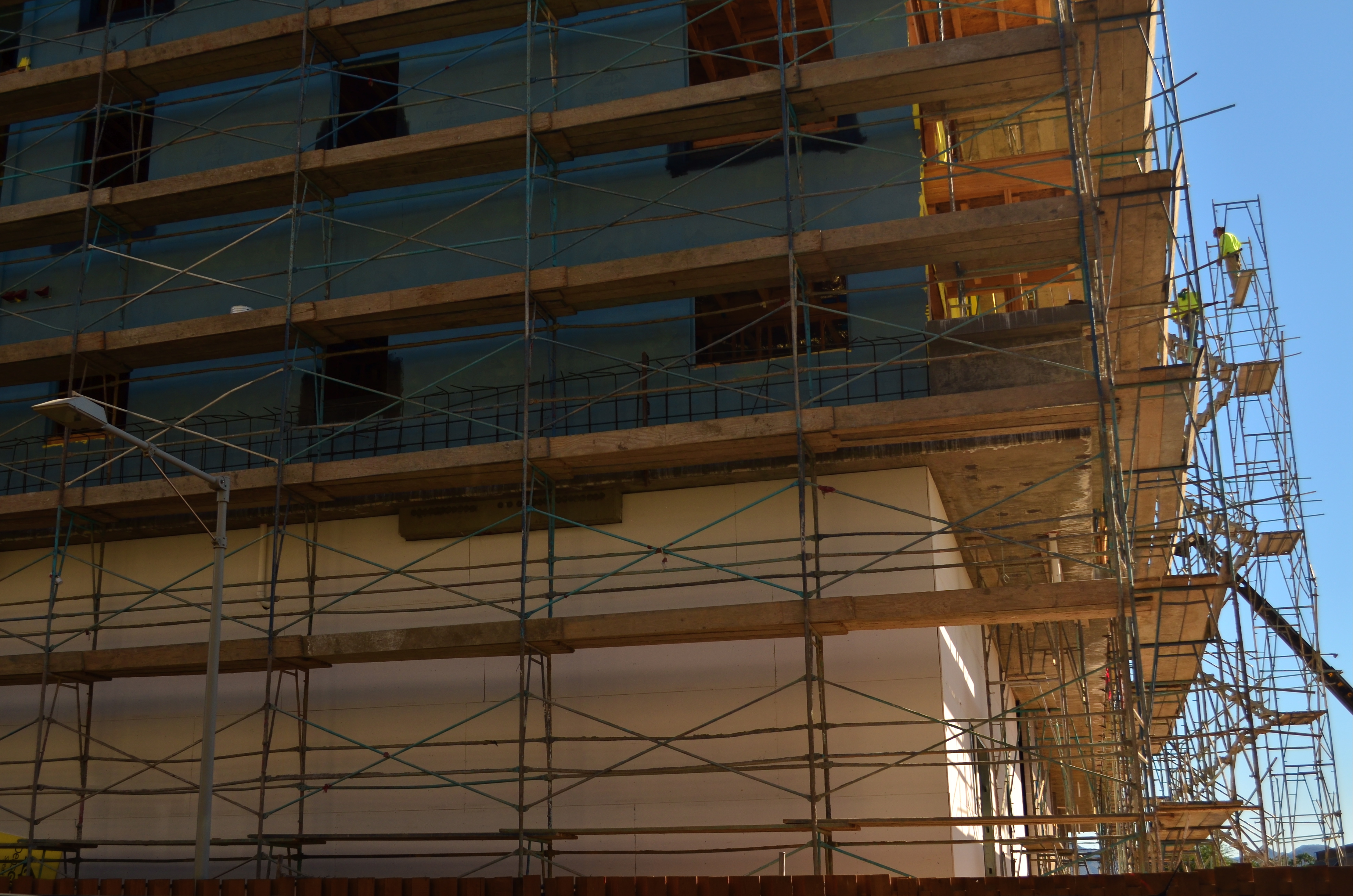
The North Face, 2014. 1/250 sec., f/5.6, ISO 100, 24mm.
By MICHAEL PERKINS
IN THE IMAGINARY PHOTOGRAPHY BOOKSHELF OF MY MIND THERE ARE HUNDREDS OF VOLUMES that speak of nothing else except the exquisite light of early morning, the so-called “golden hour” in which a certain rich warmth bathes all. You’ve read endless articles and posts on this as well, so nothing I can cite about the science or aesthetic aspects of it can add much. However, I think that there is a secondary benefit to shooting early in the day, and it speaks to human rhythm, a factor which creates opportunities for imaging every bit as vital as the quality of available light.
Cities and communities don’t jolt awake in one surge: they gently creep into life, with streets gradually taking on the staging that will define that day. The first signs could be the winking on of lights, or the slow, quiet shuffle of the first shift of cleaners, washers, trimmers and delivery workers. First light brings the photographer a special relationship with the world, as he/she has a very private audience with all the gears that will soon whirr and buzz into the overall noise of the day. You are witness to a different heartbeat of life, and the quieter pace informs your shooting choices, seeping into you in small increments like a light morning dew. You are almost literally forced to move slower, to think more deliberately, and that state always makes for better picture making.
Some atmospheres, like libraries or churches, retain this feel throughout the entire day, imposing a mood of silence (or at least contemplation) that is also conducive to a better thought process for photography, but in most settings, as the day wears on, the magic wears off. Early day is a distinctly different day from the one you’ll experience after 9am. It isn’t merely about light, and, once you learn to re-tune your inner radio for it, you can find yourself going back for more.
This is no mere poetic dreaminess. The more nuances you experience as a living, breathing human, the more you have to pour into your photography. Live fuller and you’ll shoot better. That’s why learning about technical things is no guarantee that you’ll ever do anything with a camera beyond a certain clinical “okay-ness”. On the other hand, we see dreamers who are a solid C+ on the tech stuff deliver A++ images because their soul is part of the workflow.
RELIEF OF PAINFUL G.A.S.
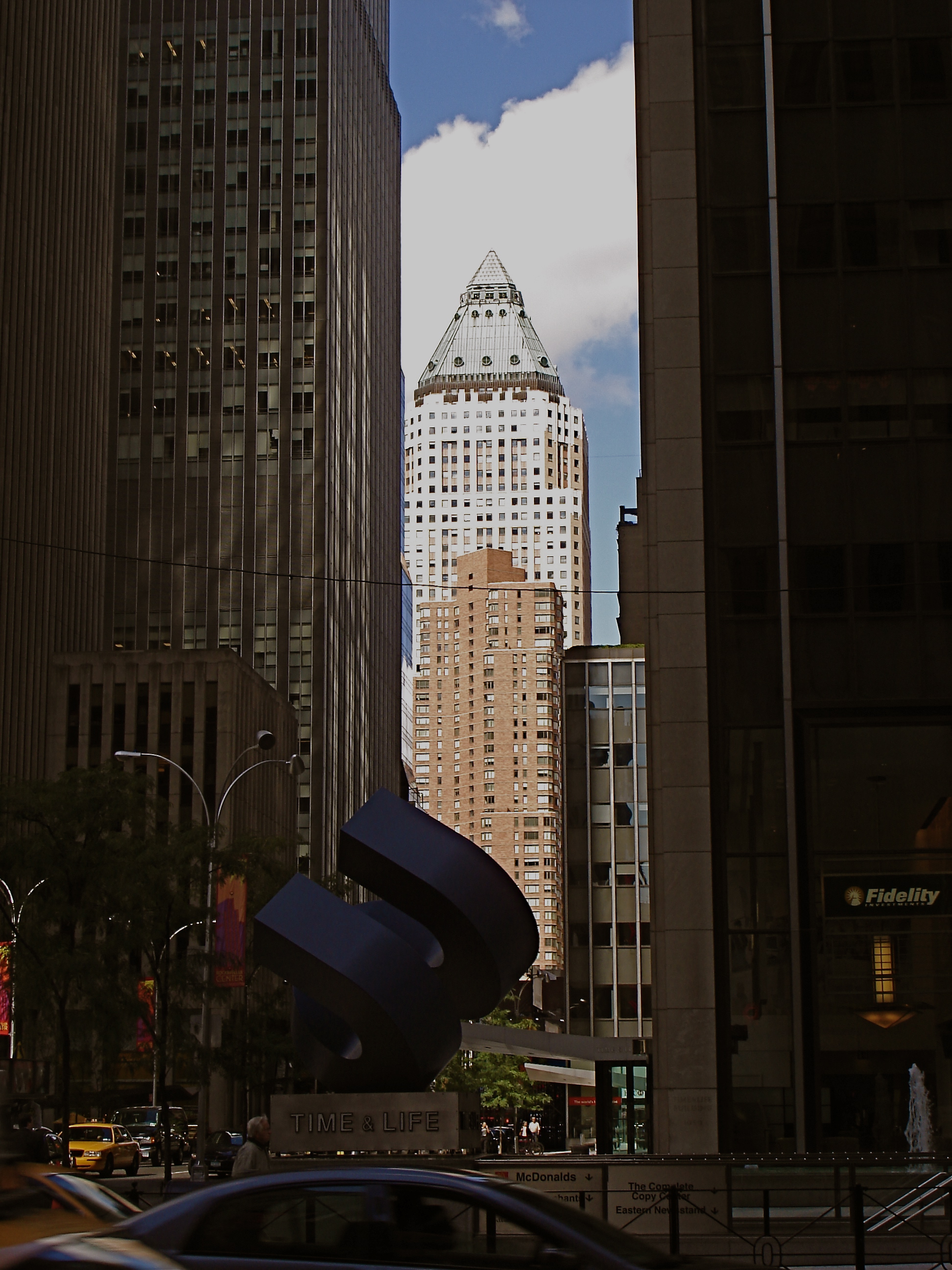
Eight years and three cameras ago. 1/125 sec., f/7.1, ISO 100, 13.7mm.
By MICHAEL PERKINS
HE’S YOUR DAD, YOUR UNCLE, YOUR WACKY SITCOM NEIGHBOR: the guy who has every ratchet,widget and wrench in the Sears Craftsman catalogue, yet who is, strangely, incompetent at any task more complex than the replacement of a light bulb. If he could just get that table saw, that router, he could finally tackle that pet project with real zest. But heck, he explains, I don’t have the right extender, the extra power supply, the magical whatsit that just came out this year. In reality, this guy is not a handyman, he’s an actor playing the part of a handyman. He’s Batman with a utility belt big enough to spill over a city block. He’s a gadget addict.
Now, transfer all that imagery from fix-it toys to optical toys, and you can understand the disease that photographers call G.A.S—-Gear Acquisition Syndrome.
There is no vaccine or twelve-step program for some types of shooters for whom the next lens, the up-and-coming accessory will make all the difference, and catapult their photography from mundane to miraculous. And none of us, even the most rigidly discipline, is completely immune to the siren song of the bright and shiny plaything. Sadly, G.A.S. often sidetracks us for months or even years, taking us off the path of practice and hard work with the tools we have as we wait for the toys we want. It doesn’t seem to impress us that people are making extraordinary pictures with cameras that are, basically, crap. Similarly, It doesn’t seem to faze us to know that people lugging around fifty pounds of lens changes and thousands of dollars in Leica-like bodies are often coming home with a portfolio of poop to show for their efforts. G.A.S., once its fever envelops our tiny minds, creates the hallucination that photography is about equipment. Sure, and Mark Twain wrote better after he graduated from notepads to a typewriter.
It’s almost too simple a truth that practice makes perfect, practice with limited lenses and sad little cameras, practice with nothing to focus on but how well we can teach ourselves to see. G.A.S. fogs up our thinking, making photography a destination (oh, once I get that German glass!) instead of a journey (wonder what I can make happen with what I have). It’s magical thinking. The camera becomes a talisman, a magic monkey’s paw, Harry Potter’s wand. Real, serious development is delayed while we wait for machines to appear and deliver us.
Oddly, looking backwards can often help us move forwards. Now, follow me here a moment. Ever go through the ghostly Shoebox of Shoots Past to find that you actually nailed a biggie on the day that you had bad weather, a lousy subject and a disposable $10 camera? Of course you have. But, wait….how could you take a good picture with all the wrong gear? Because something in you knew how to make that picture, with or without the ease and convenience conferred by better equipment. And the more you developed your eye, the more often you could make a picture that good, on purpose, time after time. As an example, the image at left is eight years and three cameras ago for me. I could certainly shoot it better today, but, even with more primitive machinery, I got most of what I wanted with what I had on hand that day. You have pictures just like this. Yes, you do.
I’m not saying that tools aren’t great, but if your shelves are overfilled (and your wallet is over-depleted) due to Gear Acquisition Syndrome, it’s best to ask how much in the way of toys you really need. None of it can take a great picture unless your mind and your eye are on the steering committee. Ansel Adams’ claim that the most important part of a camera was “the twelve inches behind it” is gospel. Get religion and become a believer, o my brothers.
THE SHORT AND WINDING ROAD
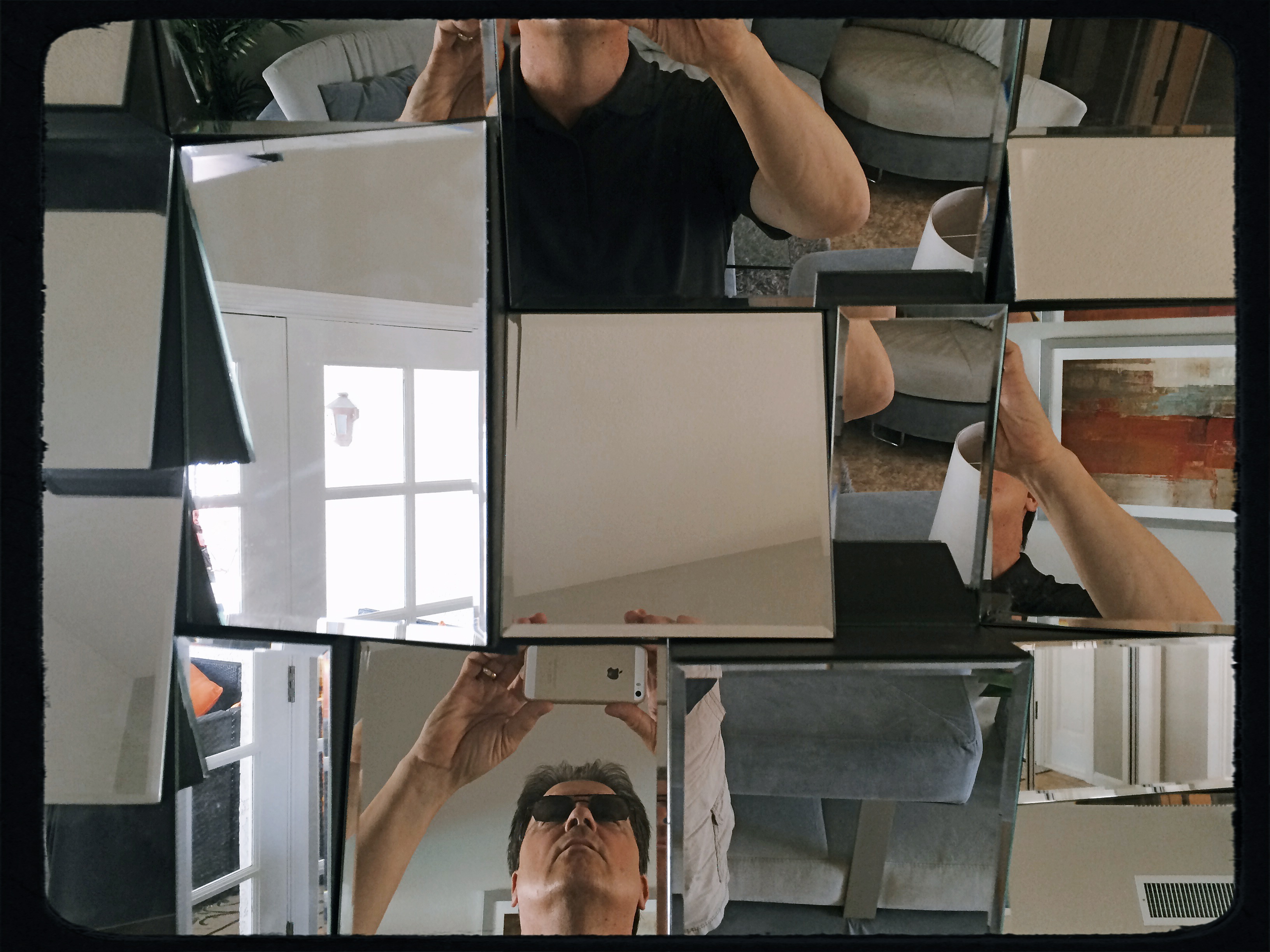
There is no tradition in photography. There is only now.
By MICHAEL PERKINS
PHOTOGRAPHY USED TO LITERALLY BE A MATTER OF MATH. Formulating formulae for harnessing light, predicting the reactivity of chemicals, calculating the interval between wretched and wonderful processing. And all that math, measured in materials, apprenticeship, and learning curves, was expensive. Mistakes were expensive. The time you invested to learn, fail, re-learn, and re-fail was expensive. All of it was a sustained assault on your wallet. It cost you, really cost you, in terms a math whiz could relate to, to be a photographer.
Now, the immediacy of our raw readiness to make a picture is astounding. Well, let’s amend that. To anyone picking up their first camera in the last thirty years, it’s pretty astounding. For those who began shooting ten years ago, it’s kinda cool. And for those falling in love with photography now, today, it’s……normal. Let’s pull that last thought out in the sunshine where we can get a good look at it:
For those just beginning to dabble in photography, the instantaneous gratification of nearly any conceptual wish is normal. Expected. No big deal. And the price of failure? Nil. Non-existent. Was there ever a time when it was a pain, or an effort just to make a picture, you ask Today’s Youth? Answer: not to my knowledge. I think it and I do it. If I don’t like it, I do it again, and again, faster than you can bolt down a burger on a commuter train. It’s just there, like tap water. How can I not be, why should I not be, absolutely fearless?
To take it further, Today’s Youth can learn more in a few months of shooting than their forebears could glean in years. And at an immeasurably small percentage of the sweat, toil, tears and financial investment. They can take a learning curve of rejected photos and failed concepts that used to be a long and winding road for pa and grandpa and compress it into a short and straight walk to the mailbox. And they are not sentimental, since they will not be spending enough time with any technology of any kind long enough to develop a weepy attachment for it, or for “how things used to be”. DSLR? Four-Thirds? Point and Shoot? Hey, anything that lets them take a picture is a camera. Make it so they can flap their eyelash and capture an image, and they’re in.
For some of us, hemmed in by experience, the limits of our technical savvy, and yes, our emotions, photography can be a somewhat formal experience. But for the many coming behind us, it’s just a reflex. A wink of the eye. Any and everything is an extension of their visual brain. Any and everything leads to a picture.
These new shooters will stop at nothing, will quake at nothing, will be awed by nothing, except ideas. They will be bold, because there is no reason not to be. They will take chances, since that, from their vantage point, is the only logical course. Photography is dead, long live photography.
The great awakening is at hand.
NORMALEYE GALLERY UPDATE: HOME, HOME ON THE “RANGE”
A two-exposure HDR image with more emphasis on content than processing.
By MICHAEL PERKINS
HISTORY BUFFS WHO HAVE EXHAUSTIVELY RESEARCHED THE HELLISH ANIMOSITY OF THE AMERICAN CIVIL WAR, a conflict which sowed seeds of resentment that bear bitter fruit to this very day, may have some small grasp of the vitriolic divide between those who espouse High Dynamic Range (HDR) photography and those who believe its practitioners are in league with Beelzebub. Pro-HDR factions believe those who resist this magical art should be forced to declare themselves Amish on the spot, while the opposite camp believes that all cameras that shoot HDR should be pulverized and used as landfill in Hades. We’re talking irreconcilable differences here.
When HDR first came to my attention, I welcomed it, as many others did, as a way to get around a long-standing problem in exposure….how to modulate between blackout and whiteout in extremely contrasty situations in which a single exposure would either blow out the sky through the window or bury the corners of an interior in blackness. My first attempts with it were exciting, as I tried to shoot frames bracketed across a three or five shot range of exposures, then smooth out the drastic differences between light and dark in the final image. The idea of using HDR for a sci-fi look or a painterly effect never appealed to me. I was really trying to use it to make my pictures replicate more closely the adjustment between light and dark that the eye makes instantaneously.
Over the last five years, however, as I review images I’ve made with HDR software. First, I use the program less with each passing year, and second, I no longer use it to retrieve “lost” tones in dark or light areas of an image. The program I have used since day one, Photomatix, has two main choices, Detail Enhancement and Tonal Compression, and, at first, I worked almost exclusively with the former. For wood grain, stone texture, botanical detail and cloud contrast, it’s remarkably effective. However, it’s also easy to produce images which are too dark overall, and accentuate noise in the individual images. Overcook it even a little and it looks like a finger painting done with hot lava. It thus actually works against the original “looks more like reality” objective.
On the other hand, producing the blended image in the Tonal Compression mode retains most of the sharp detail you get in Detail Enhancement without the gooey consistency. It has fewer attenuating controls, but as I go along, I find I am using it more because it simply calls less attention to itself. In either mode, I have made a conscious effort to throttle the heck back and under-process as much as I can. I’m just getting sick of shots that announce “hey, here comes an HDR photo!” two blocks ahead of its arrival.
I’m also in the middle of a back-to-basics phase based on getting things right, in-camera, in a single frame, and learning to be more accepting of dark and light patches rather than artificially mixed goose-ups of rebalanced tones. Anyway, as of this posting, I’ve taken down the original selection of images that was in the HDR gallery tab at the top of this page and loaded in a new batch that, while certainly not a “final” word on anything, shows, I think, that I’m still wrestling with the problem of how best to use this technology. Give them a look if you can, and let me know your thoughts on the use of HDR in your own work. We all have to figure out our own way to be home, home on “the range”.
 thenormaleye