HERD MENTALITY
By MICHAEL PERKINS
AS MUCH AS WE’D LIKE TO PRE-VISUALIZE OR PLAN OUR IMAGES, the practice of photography is still chiefly a test to see how well we calculate and react in the moment. We all love to map out the various itineraries for our respective photo safaris in advance, but are also keenly aware that everything, literally everything in our blueprint can, and should be, blown to bits the moment magic is afoot.
The image you see here is the product of such a moment.
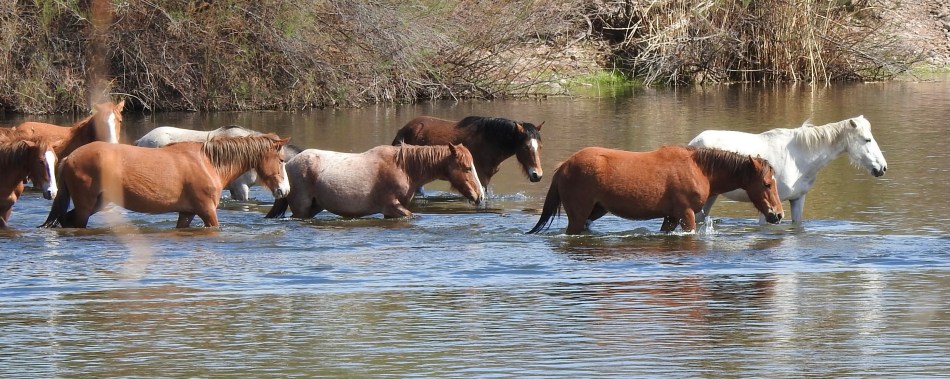
Officially, on the day this was taken, I was at the Coon Bluff Recreation Site in Arizona’s Tonto National Forest to scope out new birdwatching sites. I was a first-timer on the property, wandering pretty much in whichever direction my friends decided to drift. At some point, a smaller portion of our party decided to trek along the edge of the Salt River, in search of what I had no idea, or design. Half a mile or so later, I was surprised to have our point man remark that he had seen two horses wading and munching along the shore.
Barely five more minutes went by before it became clear that an entire small herd of wild mustangs had decided to cross the river from the far shore toward where we were standing. In what swiftly became something out of my own personal chapter of Lonesome Dove, I scrambled for an open space on the river’s sandy beach and, without thinking very much, cranked out as many frames at as many different exposures as I could. The entire parade got across in the space of barely two minutes. There was no way to plan: this was the frontier equivalent of what urban street shooters call “run and gun”. All in or all out.
But here’s the deal: while the appearance of a clutch of wild horses during a casual stroll certainly exemplifies the There Are No Second Chances rule in a very obvious way, all photographers are operating under that same rule all the time, in every situation. We may not be at risk of missing our own personal Wild West Fantasy, but there are thousands of expressions, variances of light, rapid transitions and other immeasurable changes that we stand to lose in every single shooting scenario. We are always being challenged to detect and isolate such moments-within-moments, with big events or small, and we need to calculate and click before the horses reach the opposite shore.
THE YEAR OF UPHILL WALKING
By MICHAEL PERKINS
LIKE MANY, I WOULD HAVE A HARD TIME pinpointing the first photograph I shot after formally going into the Great Hibernation of 2020. The designated do-or-die date for heading ourselves into the bunker was fairly elastic, person-to-person, with some of us taking cover early in the spring, while others were forced to stay in-pattern for longer. I can determine, from the very type of pictures I took in this strange year, which were shot After The Before Times, but it would be mere guesswork to say that this image or the other was the first “confinement” photo per se.
But I can detect a change in the subject matter and viewpoint of those first days. I will always recall the realization that, as my world proceeded to shrink, my photography would become more introspective. This meant that my reaction to the sudden flood of spare time was, at least on good days, to luxuriate in the freedom it gave me; the leisure to select, to plan, to choose in the process of making pictures. As a consequence, in reviewing the year’s photographic yield, I find myself not so much choosing “favorites” or “bests” from the thousands of snaps I took in quarantine, but instead looking for the truest depictions of where my head was, and still is. This is all to say that I resisted getting in a year-to-year contest of some sort with myself over technique or skill and tried to concentrate on emotional accuracy.
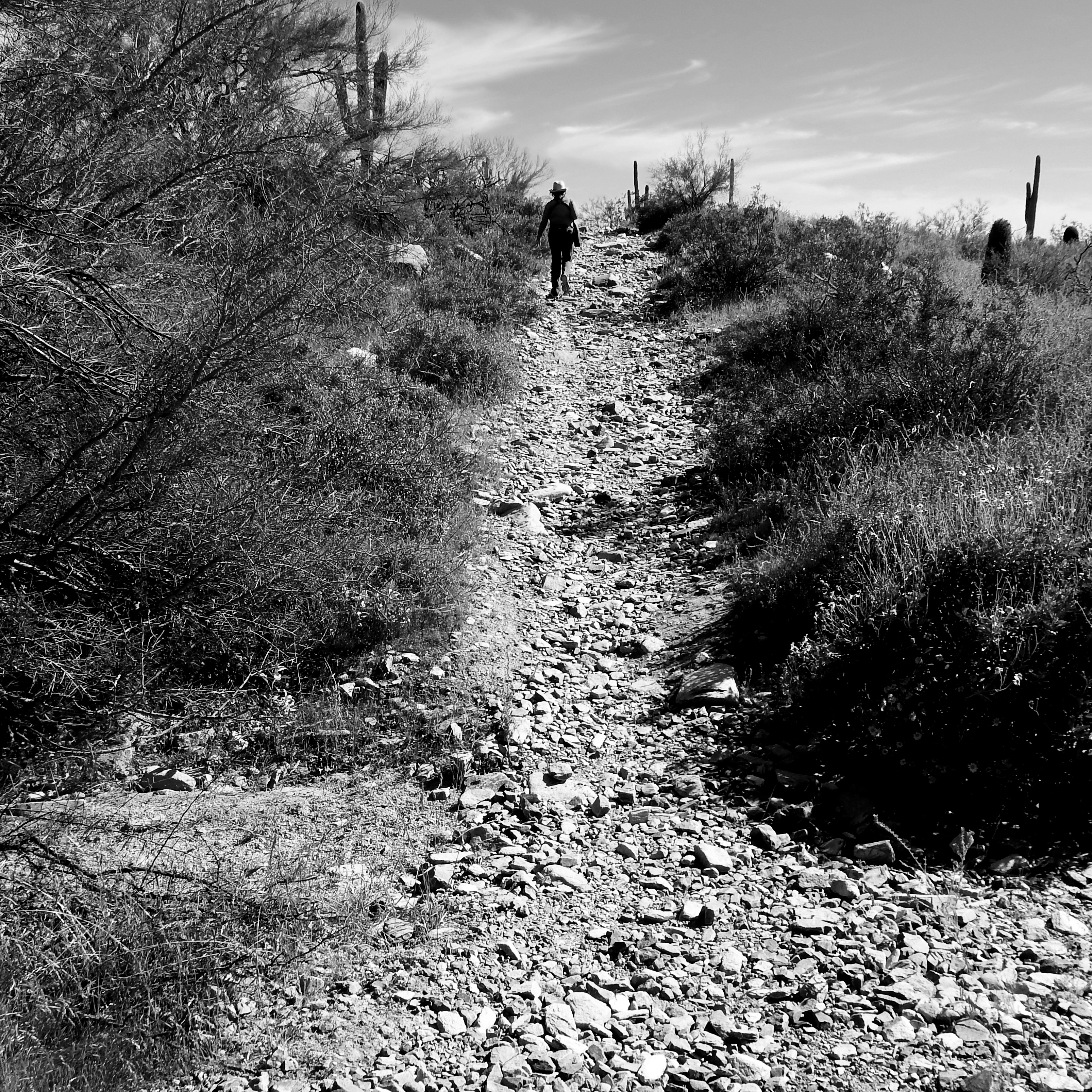
Running Up That Hill, March, 2020
This picture is not technically distinctive by any measure, nor is it particularly original, but it is true to where I was when I made it. In what could be called The Year Of Uphill Walking, it projects that struggle to just keep climbing, across rocky, barren terrain, in anxious anticipation of what may lie over the next horizon, and without the blandishment or warmth of color. No destination is sure, or even promised; no arrival time is predicted; only the journey itself exists. If I had to deliberately try to show what 2020 felt like, I couldn’t have found a more appropriate visual metaphor than this picture. This is not me being a superb planner of shots. This is me, months after the fact, marveling that some measure of this madness somehow organically made it into my camera. I never went out formally looking for a way to give expression for my feelings; I merely let the process happen through me, to be a barometer of what I thought it important to see and record.
Maybe that’s the way I should always make pictures. Sometimes I think I understand my process and other times I feel like it’s leading me around by the nose. I hope to re-discover genuine hope in 2021, but, if I…we, have to settle for less, I pray that I’ll at least find a way to tell stories about how that felt. And I hope I’ll remember how to put one foot in front of the other.
AD SUA ESSENTIA
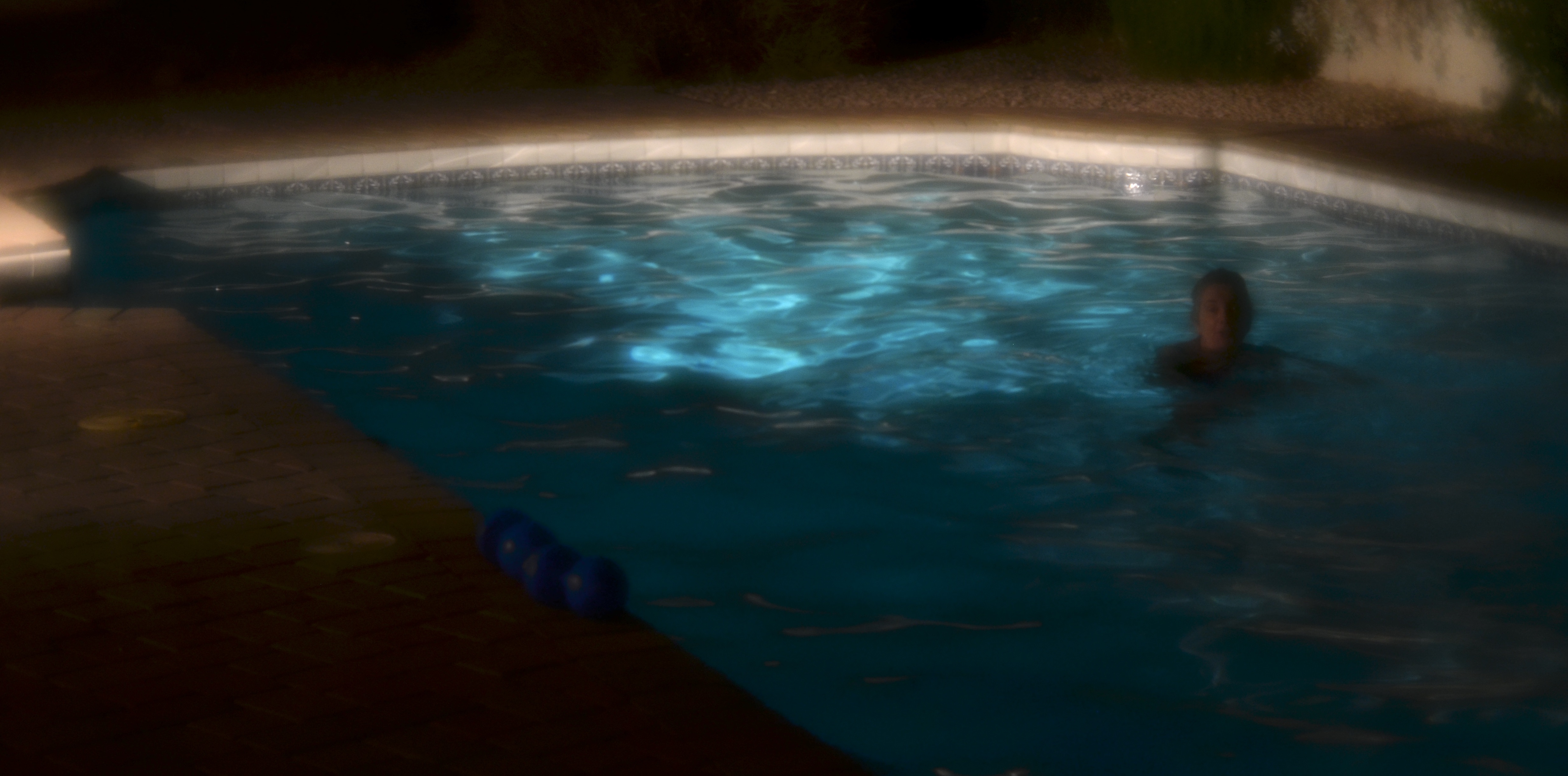
Night Nymph, 2020. f/1.6, 1/20 sec., ISO 250, 56MM
By MICHAEL PERKINS
IT IS SAID THAT THE SOUL ALWAYS RECALLS, AND LONGS FOR , ITS ORIGIN. We begin as something, become something else, and forever ache at the memory of our beginnings. So it is with religion. So too with philosophy. And hometowns. And first loves.
And photography.
I can still remember the pure and uncomplicated thrill of my first attempts to take a picture. I understood so little of how the simple box in my hands worked that the only control I exercised over the process was one of intention. I tried to will good pictures into the camera. Armed with such a simple device, there was nothing for me to calculate or calibrate, even if I had known what those terms even meant. All I had was the things in front of me, and the desire to capture them, to own a small piece of them forever. The act was a simple one because both I and the camera were so utterly simple. The terms of photography were direct, clear. The results were, to be kind, all over the place. But even those failures were magical, in a way. Magic is always more powerful when you don’t quite understand how the trick works. Or if it even will.
I still look for that level of, let’s call it directness. Like anyone trying to master a craft at multiple levels, I have gone far into the arcana and minutia of making pictures over the years, but my favorite pictures are still the ones in which I feel the most and think the least, the ones with simple, even raw tools, and nearly nothing between me and the picture except intention. In the above image, I’m using a lens with one focal length, shot wide open at f/1.6 to allow me to get a soft, handheld image at night with a very glowy sheen and minimal ISO boost. It’s not even close to technically precise work, and yet I love the result, because, at this moment, it’s the kind of picture-making I need to reset my enthusiasm, to re-connect with what used to be native to me. As Bogart said, the stuff that dreams are made of.
Picasso famously remarked that it took his entire adult life to learn how to paint the way a child does. If the Romans had had cameras, they might have said that pictures made in such a fashion were done ad sua essentia…”to their essence”. What that boils down to, for me, is that, every once in a while, I miss that wide-eyed twelve year old that first picked up an Imperial Mark XII camera and tried to will pictures into it. I miss him, and I have to go looking for him.
He has something I want.
A NEW KIND OF INTIMACY
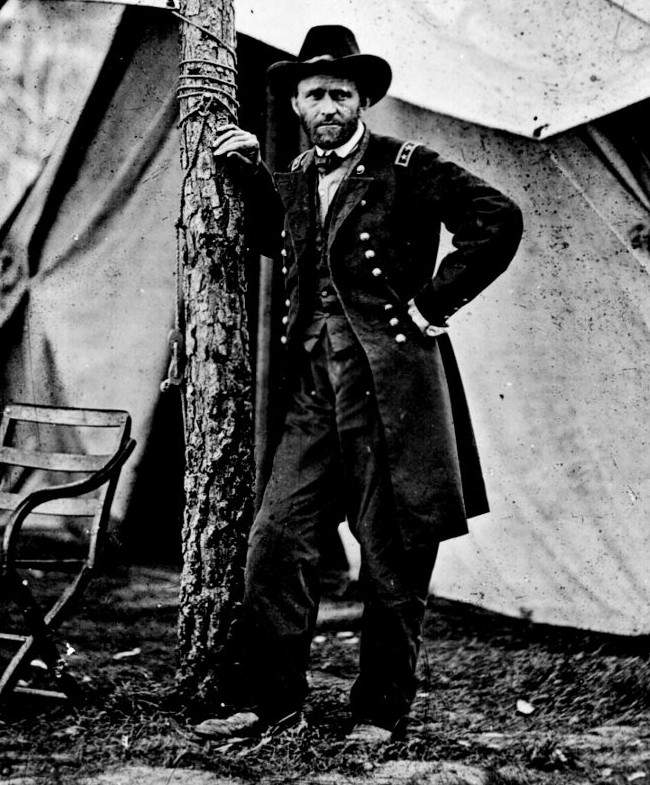
General Ulysses Grant, in camp near the battle of Cold Harbor, 1864.
By MICHAEL PERKINS
ULYSSES S. GRANT HAS BEEN REMEMBERED AS A MAN OF SEVERAL “FIRSTS”. He has been called the first practitioner of “modern” warfare, utilizing methods that rendered the courtly style of his Confederate foes obsolete. He also was the first American president to pen a purely military autobiography. History students can probably agree on other career distinctions. But in watching the recent excellent History Channel miniseries on his life (based on the book by Ron Chernow, author of Alexander Hamilton), it becomes clear that the eighteenth president was also the first to have nearly his entire adult life documented in photographs. In a print world still dominated by illustrations and engravings, Grant was captured on glass plates over three hundred times in the space of about twenty years, twice as often as such luminaries as Abraham Lincoln and Mark Twain. In point of fact, Ulysses S. Grant was the most photographed man in the world over the span of the entire nineteenth century.
At a time when most people lived out their lives without posing for even a single portrait, Grant endured dozens of formal “sittings”, caught as well in photojournalist snaps by Matthew Brady’s roving band of Civil War photographers, who pictured him poring over maps, sitting in tent-side conferences with other officers, conferring with his president in both the field and the capitol, attending that same president’s funeral, welcoming visitors to his own White House, resting with family on his front porch. Consider: being photographed in the 1800’s was, for a time, an occasion, a privilege, maybe even an accident. Certainly, Grant was not the first president to have his picture “made”, but the sheer volume of views of him across his public life was a quantum leap from our visual sense of any public figure up to that time. Chernow’s book (and the miniseries) both reckon with the incredible explosion in notoriety wrought by Grant’s roles as both the general who won the war and the president who tried to preside over the peace. And while some of the incredible trove of photo images of Grant can be accounted for by breakthroughs in the technical growth and expansion of photography during his lifetime, the astonishing bulk of it can only be attributed to the fact that Grant was an international celebrity, one of the first in the Industrial Age.
WIthout his realizing it, Ulysses Grant had come along in one of those transformational transition periods in history in which our established way of viewing things is undergoing a convulsion toward something completely different. Photography, in his time, was slowly re-negotiating our relationship to our leaders. They ceased to operate at a distance or as abstractions. They now had features, dimensions, traits brought to us in a new kind of intimacy that only the camera could create. And as films and lenses improved, the stiff formality of a sitting portrait gave way to images of a much more spontaneous, candid nature. The image seen here (which I love) is itself a transitional one. Grant had to remain still long enough for the still-slow exposure times of the Brady corps’ devices, but already he has to remain at attention for a much shorter span that he might have in a studio just a few years prior. The most important element of the pose, however, is a kind of tell about Grant’s priorities. His face seems to say, take the picture already…I’ve got more important things to do.
First paparazzi prez? Hardly. But over the term of his public life, Ulysses Grant may be the first president to be, almost, our public property, a “person of interest” in purely visual terms. As now, sitting (or standing, or running) for a portrait is no guarantee that the truth will make it through the lens. But there are certain times in the history of photography where a pivot point is glowingly obvious, and the weary resignation in Grant’s face is a kind of seismograph of what was to come, for good or ill, for all of us.
LEFT-HANDED COMPLIMENT
By MICHAEL PERKINS
I COULD HAVE RETIRED VERY COMFORTABLY ON THE SUM CREATED BY EARNING A NICKEL for every time I’ve brought the wrong lens to an event. Few photographers want to spend a day sauntering around with every single hunk of glass they own strapped to their back, and so, in anticipation of a given happening, many of us choose one lens which probably will address most of our needs. You really feel like the Wizard Of Cameras when you guess right. And you “make do” when you guess wrong (and you will).
A recent political rally in Phoenix, Arizona for senatorial candidate Mark Kelly is an example of me bringing a knife to a gun fight. The venue was the large suburban campus of an area church, a place where I’d previously attended various get-out-the-vote events in the recent past and which I assumed I knew pretty well. I decided to use a 24mm wide-angle prime to get the attending crowd for the former astronaut into the shots, emphasizing the turnout, a strategy what would have worked in the smaller multi-function rooms where past meetings had taken place. Upon arriving, however, I realized that, since attendance was anticipated to be very high, the Kelly rally would instead take place in the church’s main tabernacle, a space roughly three times the size of the space I was accustomed to. Having no control over where I’d be seated, I found myself in a pretty cavernous room, quite a distance from the stage. The wide-angle was now going to emphasize my separation from the front, and, without the option for zooming, make facial work pretty nigh impossible. Bright idea, wrong tool.
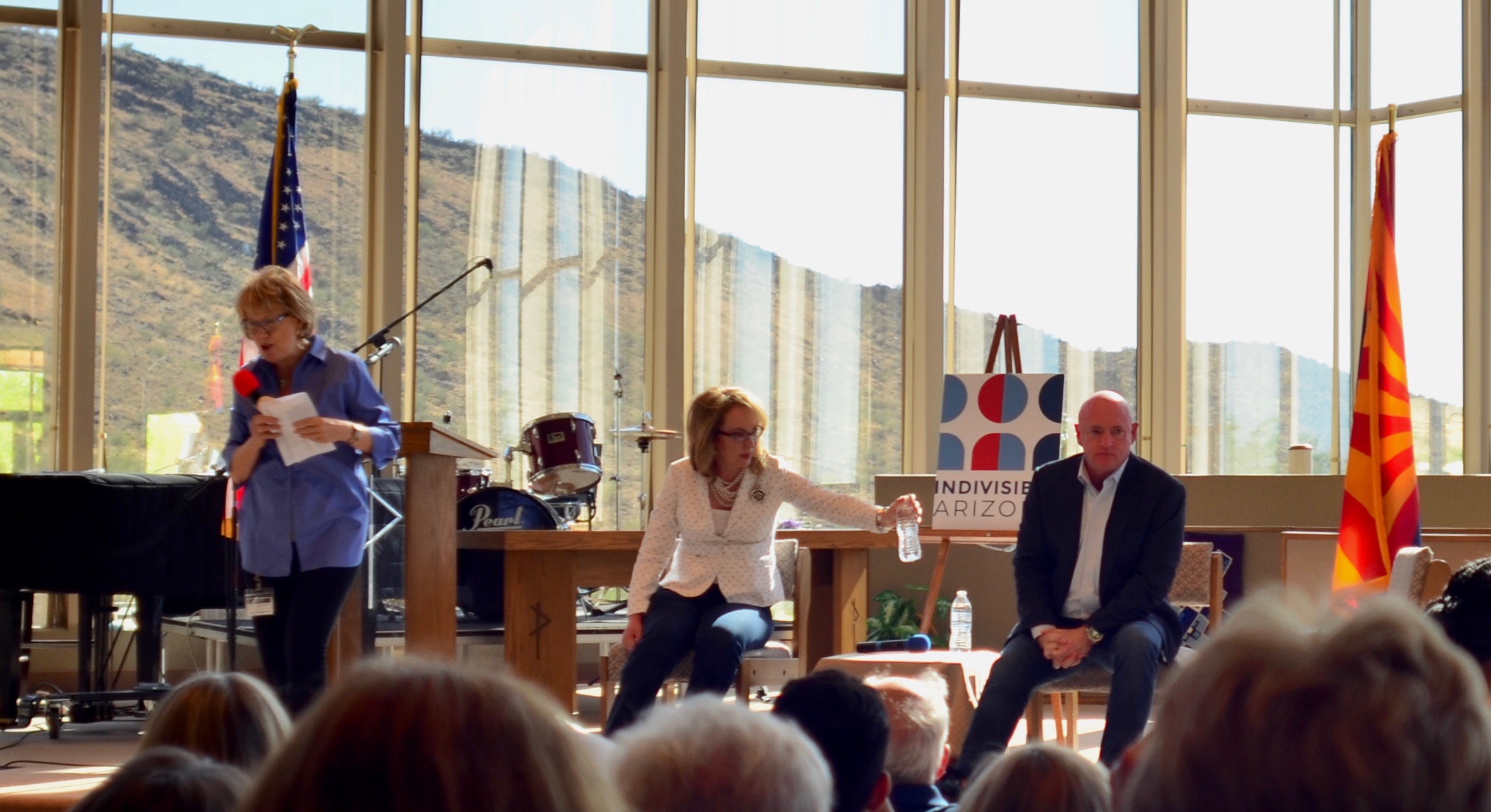
Hold My Bottle, 2019
I decided to snap away nonetheless, since, after all, Kelly was accompanied by his heroic wife, former Representative Gabby Giffords, who is still recovering from the attempt on her life during just such a gathering in Tucson in 2001. Her survival was largely a matter of luck and inches, along with the miraculous efforts of the attending surgeons, but, years after the gunshots have subsided, she is still adjusting to her new normal, which includes partial impairment of her speech and the effective loss of use in her right arm. The astounding grit that it takes to accompany Mark on the road in the selfsame gatherings that nearly cost her her life is enough to make God himself humble. I certainly couldn’t show the mental component of that struggle in what amounted to a few casual and technically limited snapshots, but, in reviewing the images later, I saw something that almost measured a bit of its surface effect.
In the shot you see here, Gabby has almost been introduced by the lady at the left and is preparing to come to the podium for a very brief exhortation to the crowd. She is seen setting her water bottle (a constant must in Arizona from March to October, even indoors) onto a table with her left hand. A perfectly ordinary gesture, until you realize that she’s doing so to free up the one good hand she has left, a hand that has, of necessity, become her go-to for writing, pressing the flesh with amazed crowds, and…. holding a microphone. Seconds after this was snapped, she walked up and made one of the characteristically short introductions that she has delivered for speakers across the nation since she was attacked, partnering in various life-affirming enterprises that have increased exponentially even as she has been forced to work from within a greatly reduced physical envelope. After Mark’s stump speech, the pair spent close to an hour posing for pictures and shaking hands with strangers. The vulnerability of the two in that setting was both inspiring and terrifying.
And so, even on a day when I made mostly bad photographic choices, I am grateful for this unremarkable picture of a remarkable team. I think I need to keep it close at hand the next time I am tempted to bellyache about….well, anything.
CAREFUL WHERE YOU POINT THAT THING
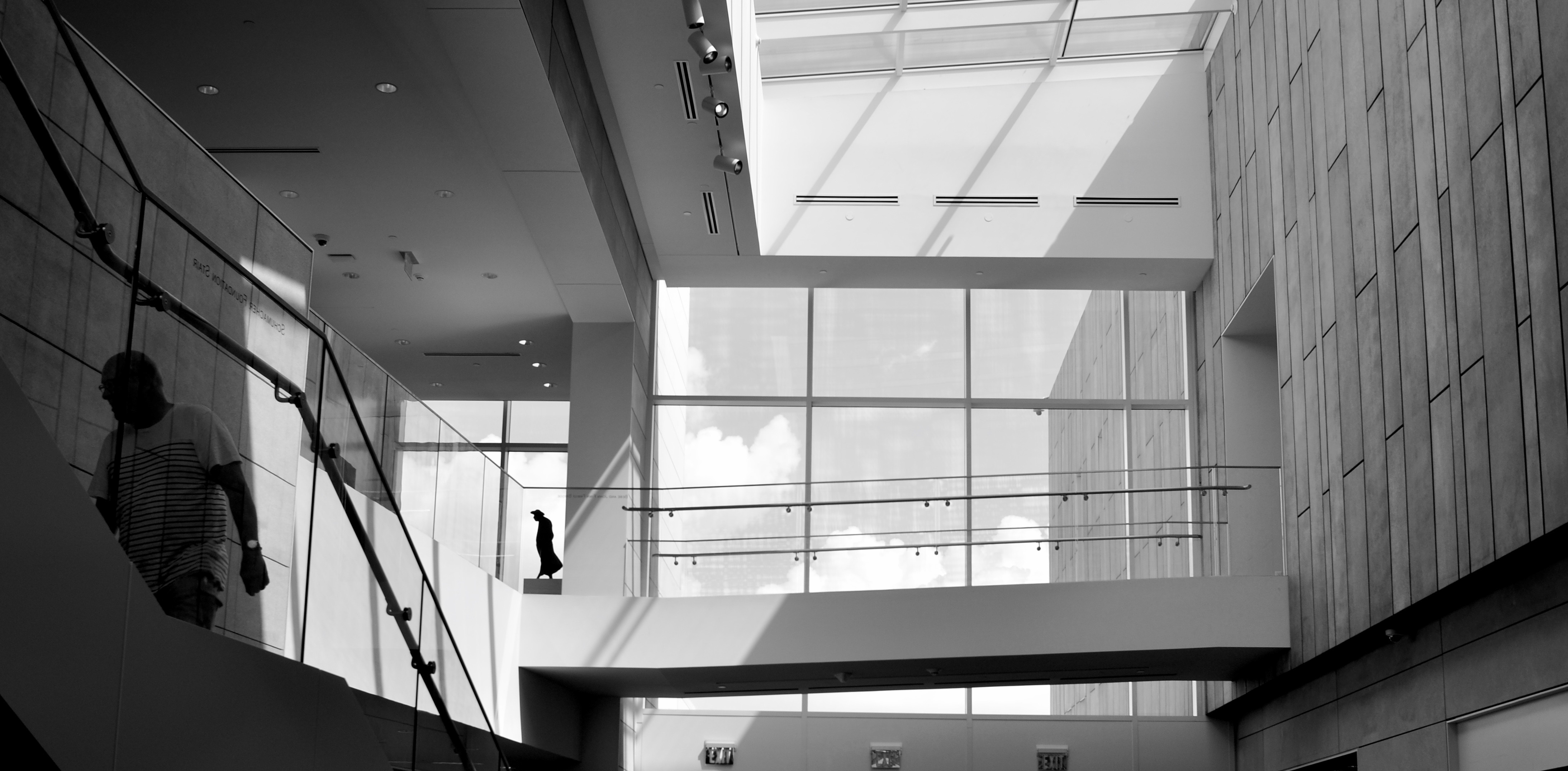
Planes And Pathways, 2018
By MICHAEL PERKINS
THE MUTUALLY AGREED-UPON NAMES FOR THINGS THAT WE HAVE ALL USED “FOREVER” can become quaintly inaccurate over time, as their original descriptions lag behind their gradual re-purposing. Thus, over a century into the age of the internal combustion engine, we still measure the output of an automobile in units of “horsepower”. Similiarly, fifty years since the discontinuation of the rotary telephone, we still refer to numbers that we are to “dial” in order to place a call. And nearly two hundred years after the introduction of photography, we still have only two labels for the orientation of a camera frame…”portrait” and “landscape”.
It once made sense to talk this way. In order for film to become a mass-manufactured medium, some standards had to be established as to the size of a frame, and so P & L were solidified as really just one set of dimensions for all pictures recorded on celluloid. The “two” orientations were effected by simply twisting the camera around to shoot either vertically or horizontally. Likewise, all images we got back from the film processor were standard in measurement, with only the print industry or those who developed their own pictures regularly altering the frame through the editing process that came to be known as cropping. Digital imaging and processing democratized a practice that had formerly been proprietary, with cropping becoming as widespread for billions of shooters as clicking. Final frame size became a creative tool rather than an arbitrary limit.
Each year, fewer and fewer of the photographs we shoot arrive at their final version in the same dimensions in which they were initially shot. The word “portrait” thus describes any image of any dimension that centers upon a face, while the term “landscape” can be applied to any generally linear subject arranged along a horizon line. Beyond that, all bets are off, with photographers using frame size to not only create according to very specific personal styles but to re-create or optimize pictures long after they are first snapped, as witness the above picture, which had nearly half of its original height chopped off the bottom almost a year after it was shot.
Even more importantly, cropping can now be done in multiple optional “takes”, the way some shooters used to make several trial prints of a single shot by re-processing the same negative in a variety of ways. Certainly, camera manufacturers may stubbornly stick to the words “portrait” and “landscape” just as we all continue to “dial” phones, but in reality, a frame is damn near anything we decide it is. Cropping is now an executive decision, just like color correction or exposure compensation, and there is no limit to how tall or how wide an image is “supposed” to be. Like so many other side benefits of digital technology, cropping in the present era has placed more choices in more hands. And that’s as it should be. Every great leap forward in photography across time has granted people wider decision-making powers. This is always a win for everyone. Because, once you can technically do a thing, you are free to choose to do it, pretty much at will, and your photographic vision has a better chance of getting from your eye to your hand intact.
TOGETHER, ALONE
By MICHAEL PERKINS
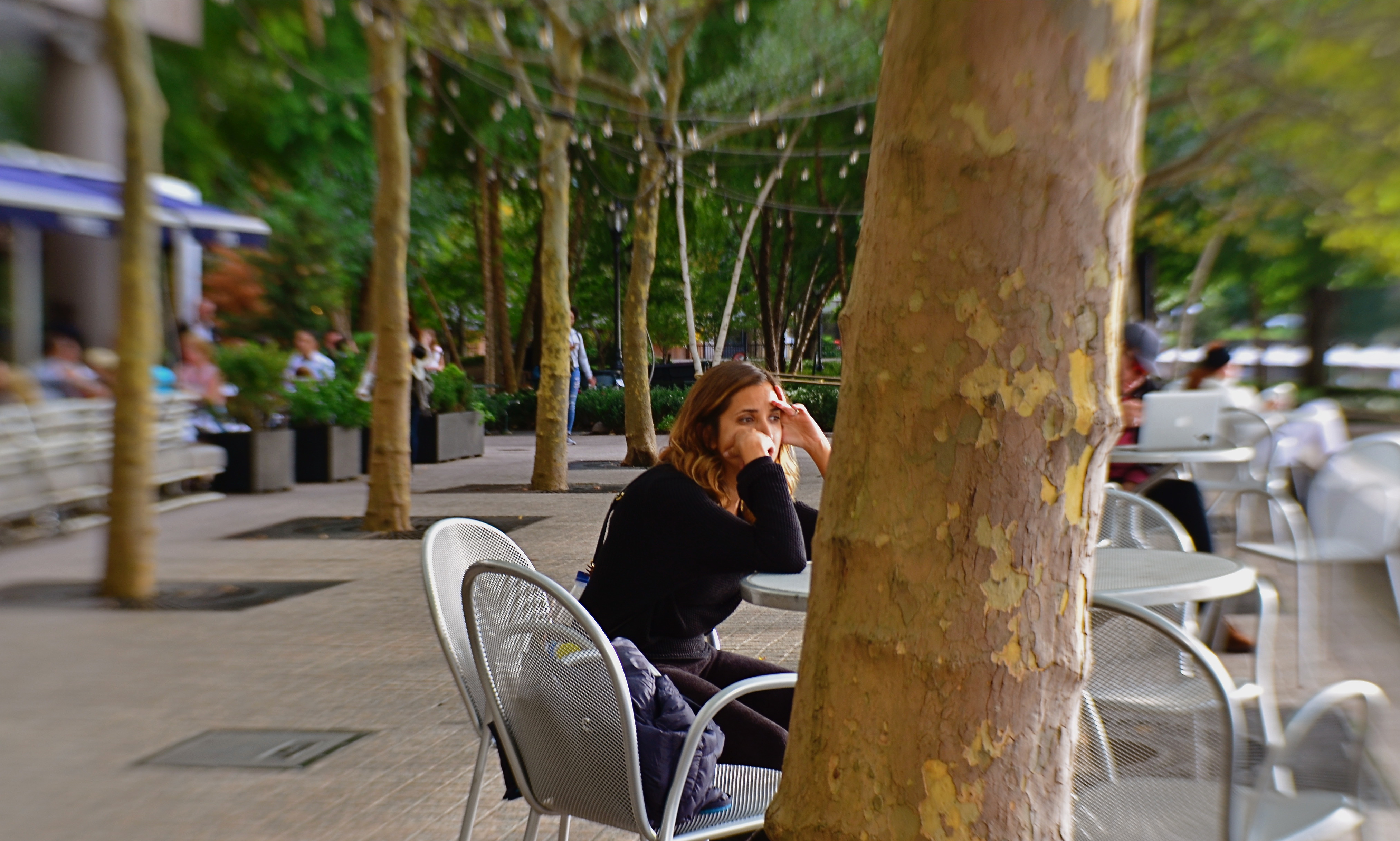
THE IRONIC NOTION THAT PEOPLE, JAMMED BY THE MILLIONS INTO CITIES, COULD ALSO BE DYING OF LONELINESS is not novel. Not to poets. Not to authors. Certainly not to photographers. T.S. Elliot’s contention that most people live lives of quiet desperation resonates with anyone who’s ever felt like the odd man out at a party, or burned a single cupcake candle on their own birthday, or hopelessly tried to bury themselves among the throngs in Times Square. What keeps this idea of “together, alone” so current in the arts is, in fact, its almost cliche level of truth. We are all in this together. And we are in all of this alone.
As photographers, we are always looking for the vision with the vision, the hidden within the apparent. Or, in the case of aloneless, the moment the mask slips, the instant in which we reveal how different, how frightened, even how miraculous we are when separated from the masses, if only for the length of a shutter snap. We pause in reverie. We reflect with sweet comfort and bitter regret. We stop to breathe, to gather our strength up anew. And our faces testify about it all.
We need to belong to things beyond ourselves, but we also need to be sufficient unto ourselves. Those two needs tug us in opposite directions, and the stress of it shows. Photographers teach themselves to see when truth surfaces like a whale coming up for a gulp of air. How strong that creature is, we remind ourselves, and yet how vulnerable. It can rove as the very master of the seas and yet, like ourselves, can drown in a teacup of water.
I look for those registrations on people’s faces, those telltale signs of someone coming up for air. A sigh. A faraway look. A laying down of burdens. Cities both supply us and suck us dry. Some of us can’t serve the two masters of together and alone for a lifetime. Others actually manage to juggle the extremes, but pay a price for their agility. The camera measures all those battles, once we teach ourselves to see. Sometimes the struggle behind our own eyes is so keen that we can’t see outwardly, even inches away, to notice the journeys of others. But with practice, observation creates a graphic map of together/alone, and our individual battles with being components in big things and prisoners of small ones.
FEARFUL URGENCIES
By MICHAEL PERKINS
PHOTOGRAPHS STOP BEING “REALITY” mere seconds after their creation, in that the truths they record have, in every sense, moved on, on their way to becoming a million other versions of themselves. We treasure our fragile little time thefts, those frozen testimonies to what some thing in the world looked like at some time. In this way, every photograph is a souvenir, an after-image of something lost.
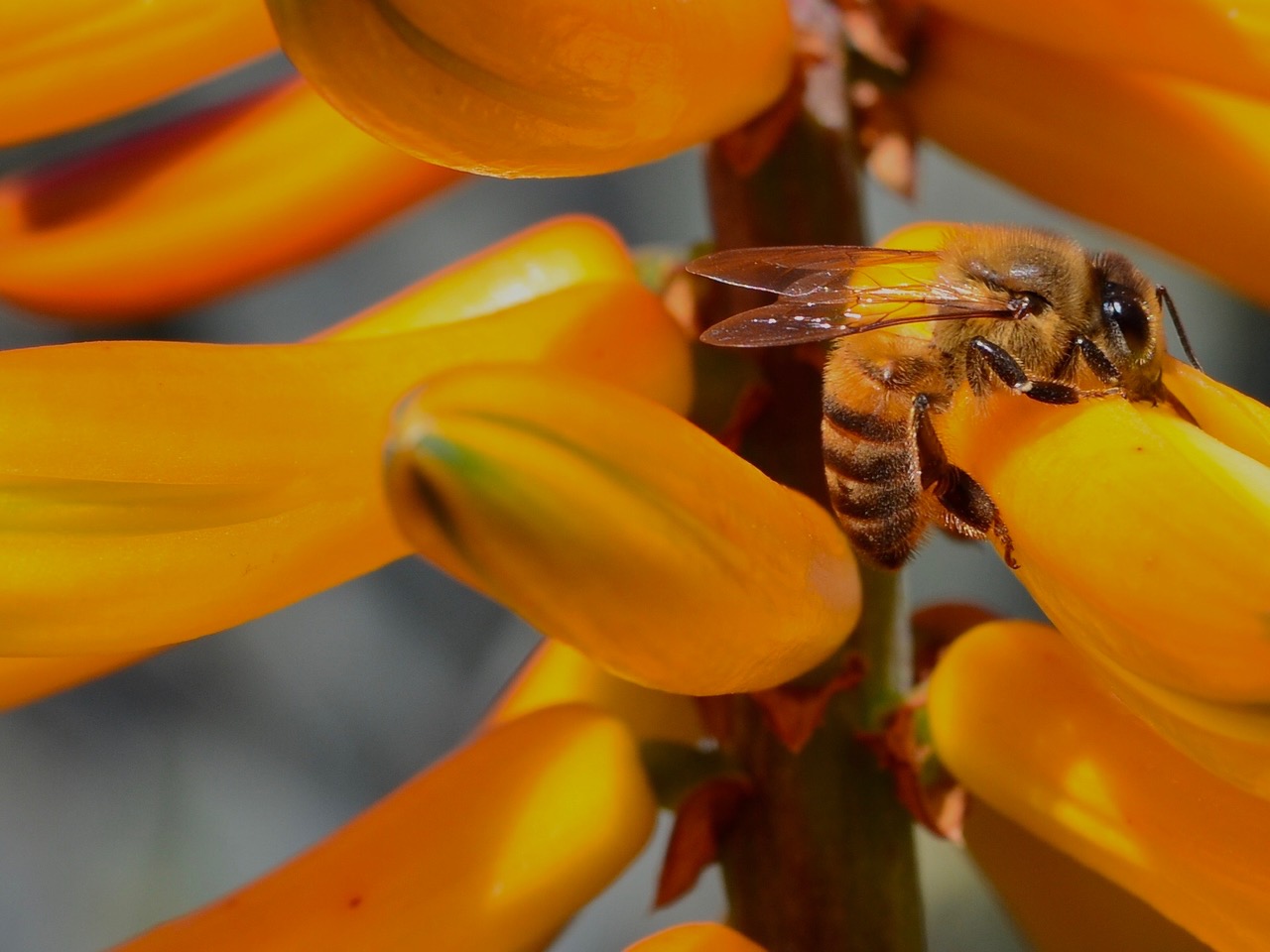
Bee The Flower, 2019
It’s small wonder that photographers often experience a sense of fearful urgency, a hurry-up-and-preserve-it fever bent on chronicling a world that is borning and dying at the same time. It’s hard sometimes not to think of everything as precious or picture-worthy. The beginnings of things are essential, because they cannot last. Vanishings are important because they are so final. Even an image of a person who is still living bears a poignancy…..because it was taken Before The War, When Mamma Was Alive, When We Still Lived Across Town.
And when it comes to the natural world, photographers and non-photographers alike are ever more aware that they may be capturing, for whatever reason, the lasts of things. Species. Coastlines. Remnants of a world whose regular timeline of goodbyes has been accelerated. Photographers always have a mission to immortalize the comings and goings most central to their own lives, and that’s understandably their primary emphasis. But the natural world will also press us to be reporters in a more general sense. As one reality passes away and others begin, our sense of what is real may come down to the images we make as life careens ever on.
FRAMING MEMORY
By MICHAEL PERKINS
THE IDEA OF AMATEUR PHOTOGRAPHY, the once-revolutionary notion that anyone could own a camera and produce good results with it, came about at the exact point in history as the birth of mass-market advertising. Inventors made it possible for the average man to operate the magic machine; marketing made him want to own one, and, by owning, adopt a lifetime habit of documenting more and more moments of his life with it. Some companies in the early days of photography excelled in the technical innovations that ushered in the amateur era. Some others specialized in engineering desire for the amazing new toy. But no company on earth combined both these arts as effectively as the Eastman Kodak Company.
Every December since 2014, The Normal Eye has resurrected advertisements from Kodak’s legendary seasonal campaigns, promotional efforts that portrayed their cameras and films as essential to a happy Christmas. From the beginning of the 20th century, the company’s print ads used key words like “capture”, “keep”, “treasure”, “preserve”, and, most importantly, “remember”, teaching generations that memories were somehow insufficient for recalling good times, less “real” without photographs to document them. The ads didn’t just depict ideal seasonal tableaux: they made sure the scene included someone recording it all with a Kodak. Technically, as is the case with today’s cel phones, the company’s aim was to make it progressively easier to take pictures; unlike today, the long-term goal was to make the lifelong purchasing of film irresistible.
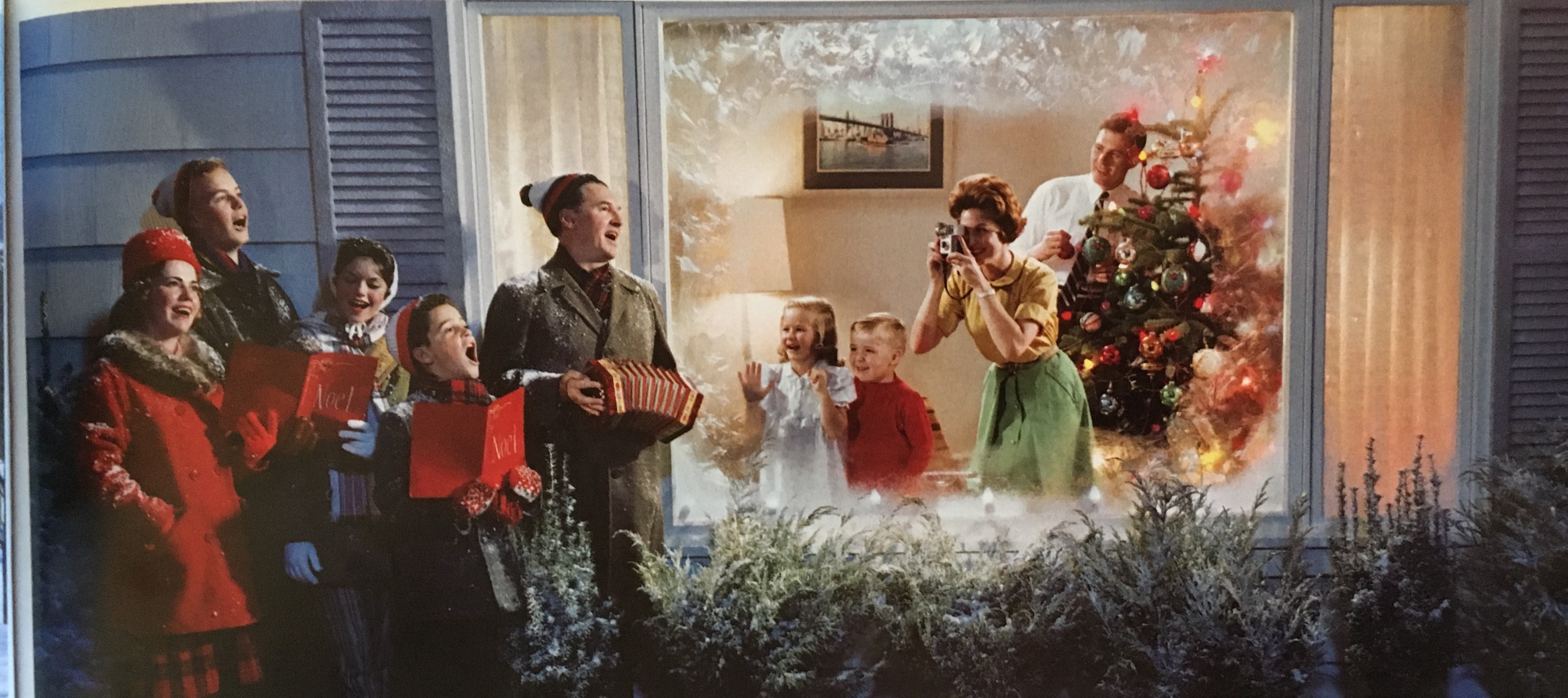
“Christmas Carolers”, a 1961 Kodak Colorama mural by Neil Montanus.
Kodak’s greatest pitch for traveling the world (and clicking off tons of film while doing so) came from 1950 to 1990, with the creation of its massive Colorama transparencies, the biggest and most technically advanced enlargements of their time. Imagine a backlit 18 foot high, 60 foot wide color slide mounted along the east balcony of Grand Central Terminal. Talk about “exposure”(sorry).
Coloramas, sporting the earliest and often best color work by Ansel Adams and other world-class pros, were hardly “candids”: they were, in fact, masterfully staged idealizations of the lives of the new, post-war American middle class. The giant images showed groups of friends, young couples and family members trekking through (and photographing) dream destinations from the American West to snow-sculpted ski resorts in Vermont, creating perfectly exposed panoramas of boat rides, county fairs, beach parties, and, without fail, Christmas traditions that were so rich in wholesome warmth that they made Hallmark seem jaded and cynical. It was a kind of emotional propaganda, a suggestion that, if you only took more pictures, you’d have memories like these, too.
Half a century on, consumers no longer need to be nudged to make them crank out endless snaps of every life event. But when photography was a novelty, they did indeed need to be taught the habit, and advertisers where happy to create one dreamy demonstration after another on how we were to capture, preserve, and remember. The company that put a Brownie in everyone’s hand has largely passed from the world stage, but the concept of that elusive, perfect photo, once coined “the Kodak Moment”, yet persists.
ORIGINATION POINT
By MICHAEL PERKINS
IN THOSE AWKWARD SILENCES during which I anxiously await a viewer’s verdict on a photograph, I find myself mentally reviewing what my motivation for the shot might have been in the first place, as if that really matters. I mean, the picture’s there, in a person’s hand. For better or worse, it’s a finished fact. Whatever my original plan, it’s now largely moot, even though I often feel the need to excuse or explain in some way. More often than not, I really can’t explain it anyway, and so, as a default, what comes out of my mouth is usually:
“I dunno, I just liked what the light was doing…”
Which, as it turns out, is about the most honest thing I could say, anyway.

Enchantment, 2018
I mean, when I think of the main determinant, for me, in making a picture, I must admit that “what the light is doing” is always my invitation to the dance. It overrules every other consideration or aesthetic, be it composition, color, subject, emotion or commentary. I have often taken pictures that fail any or all of those other criteria, but I never even attempt one if the light isn’t talking to me. It shapes and solidifies the impact of every other rule: all other elements in a photograph proceed from how light shapes, highlights, models or modifies everything within the frame.
Light is the elemental grammar of a picture, the framing of whatever argument it’s trying to make. The pursuit of light and its power as a metaphor is what drove the very invention of photography, what allowed a domain that was exclusively that of the graphic artist to become a laboratory for millions who had never wielded brush or pencil. It’s the only component that, once mastered, justifies photography all by itself.
This is all so obvious that, like most things obvious, it can often go unsaid. Photography often spends its time in breaking rules without thinking how said rules were arrived at in the first place. We dig being rebellious without considering what it is we’re rebelling against, our origination points. But even as pilots that soar ever skyward, we still need to be mindful of gravity.
A TRIP TO THE SUPERMARKET
By MICHAEL PERKINS
WE’VE ALL DONE IT: we’re sent to the grocery store for bread and milk, and come back with a six-pack of beef jerky, a gallon tub of guacamole, and a family-sized box of Trix. Sometimes, lost in the sublime and seductive specials inside the store, we even come home without the bread and milk. But, hey, beef jerky.
That’s what happens on some photographic shoots.
The sequence is familiar. You pick the target. You pack the appropriate gear. You may also have to book passage or pay for admission to something. You research the forecast. You even visualize the expected layout or sequence of shots. And then comes the day itself, a day upon which, for whatever reason, the pictures won’t come. A day upon which you can’t buy a usable image for love or money. To further torture my original metaphor, the grocery store is fresh out of bread and milk.
But, fear not: as a photographer, you are nothing if not resilient. Like a lost dad determined to find something of use somewhere in the supermarket, you go looking for deals. The pictorial orphans. The what-the-hell or go-for broke shots. Wild clicks as you’re slinking back to the parking lot. Cripes, at this point, you’re reduced to looking for cute dogs. But will these desperate moves yield pictorial gold?
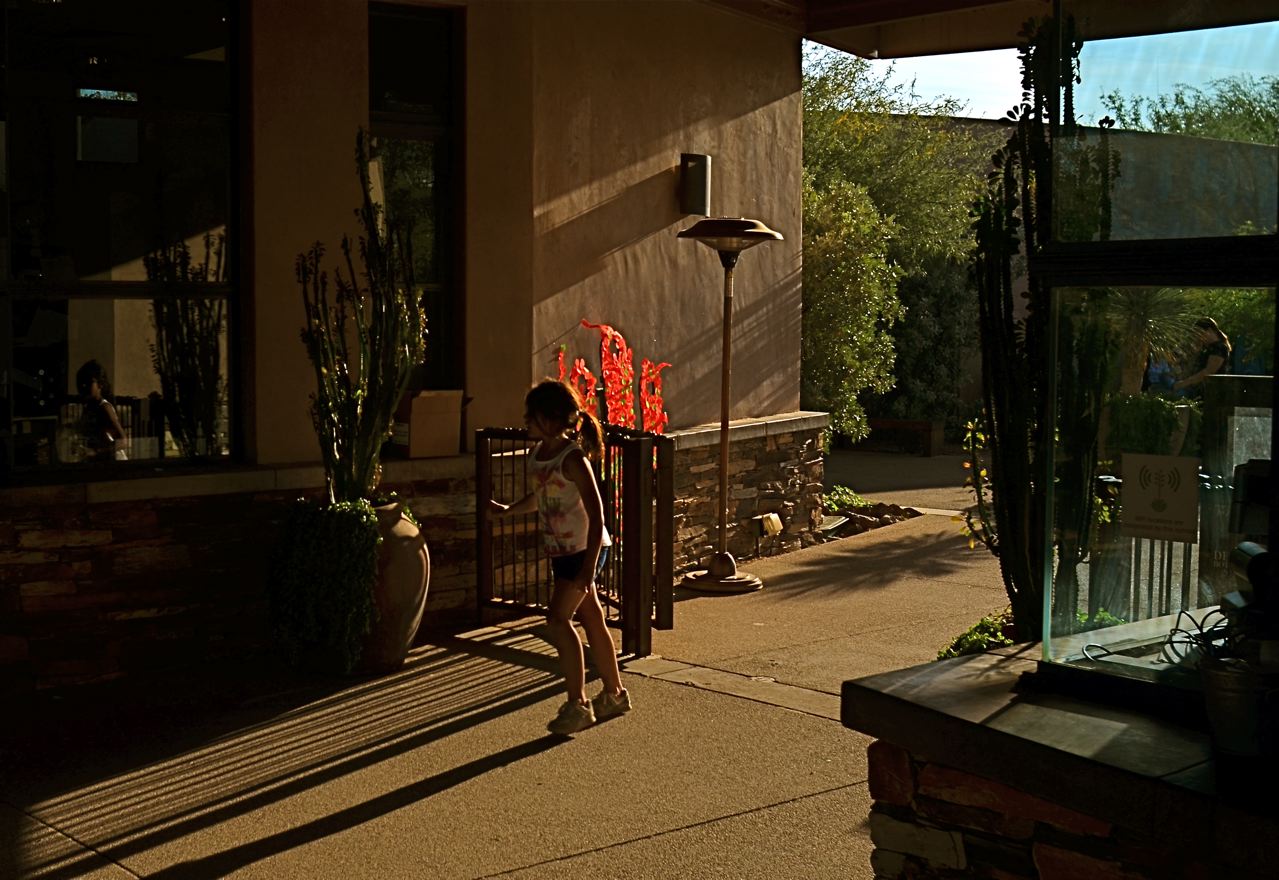 No guarantees. Fate doesn’t dole out consolation prizes. However, the primal panic that results from seeing your Plan “A” go down in flames can make you more open to experimentation, less fastidious about getting the perfect frame. That, in turn, may lead to embracing the accidental over the intentional……of moving your emphasis from the conceptual (your original plan) to the perceptual (flashes of ideas that occur once your mind is open).
The shot seen here, if I’m honest, is neither good nor bad. It was merely workable at the end of a day on which absolutely nothing else was. I liked what the light was ( and wasn’t) doing in the moment, and the girl gave me a small anchor for the viewer’s eye, albeit a small one. Other than that, I had no overarching concept for the picture. An empty grocery cart made me reach for the beef jerky.
Photographs begin with intention, certainly. But we often kid ourselves about what a huge part randomness plays in what happens between Think and Click. We’d love to assume we’re in charge of our process. But let’s also learn to love the disrupters, the detours, and the dreams gone amiss.
PLANE SPEAKING
 By MICHAEL PERKINS
THE CONCEPT OF FOCUS HAS, over my lifetime (and, I’m sure in some of your own), moved through three distinct phases. The first, when I was very new to the making of pictures, was absolute. All or nothing. An image was either sharp from corner to corner, front to back, or it was worthless. My goals at this point all centered on technical mastery, I suspect because I had none.
The second phase for how I viewed focus could be called front plane, rear plane as I got more adept at the selective use of depth-of-field, making decisions to sharpen either the tree in the front plane or the mountain in the rear plane. Here, I started to actually make deliberate choices on what to emphasize within a frame, and thus to prioritize the order in which I wanted people to discover my pictures.
The third and most recent focal phase, one that could be called priorities within the plane, allows for even more controlled decision-making, as objects that are, from left to right, all the same general distance from the lens, rendered in vastly different degrees of sharpness as a matter of interpretation. This kind of selective focus is abetted by lenses like the Lensbaby line of products, many of which allow for the placement of a sharp “sweet spot” in-camera, anywhere within the image. Even more importantly, many remarkable apps allow for the same effect to be applied in post from a cel camera.
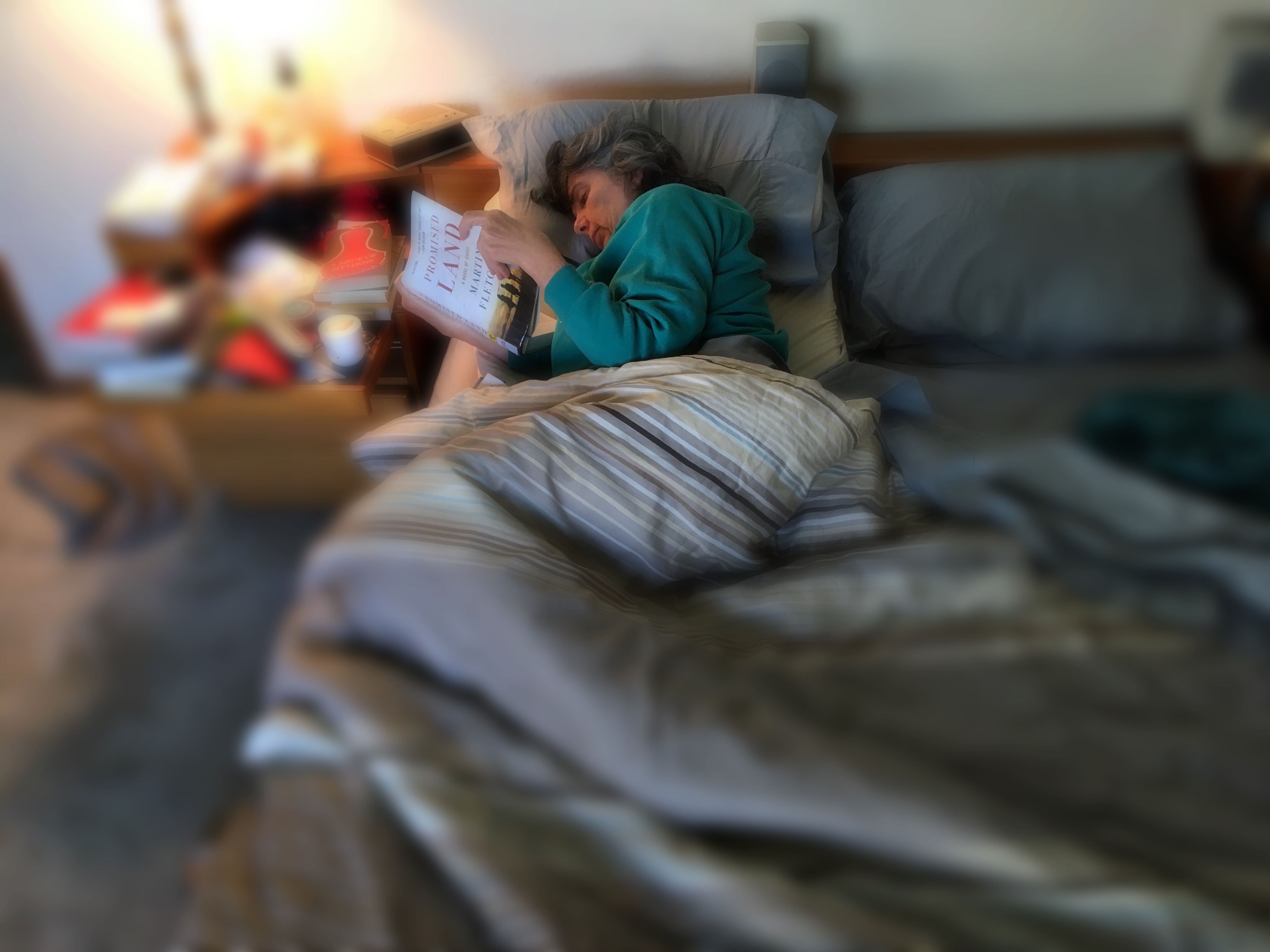
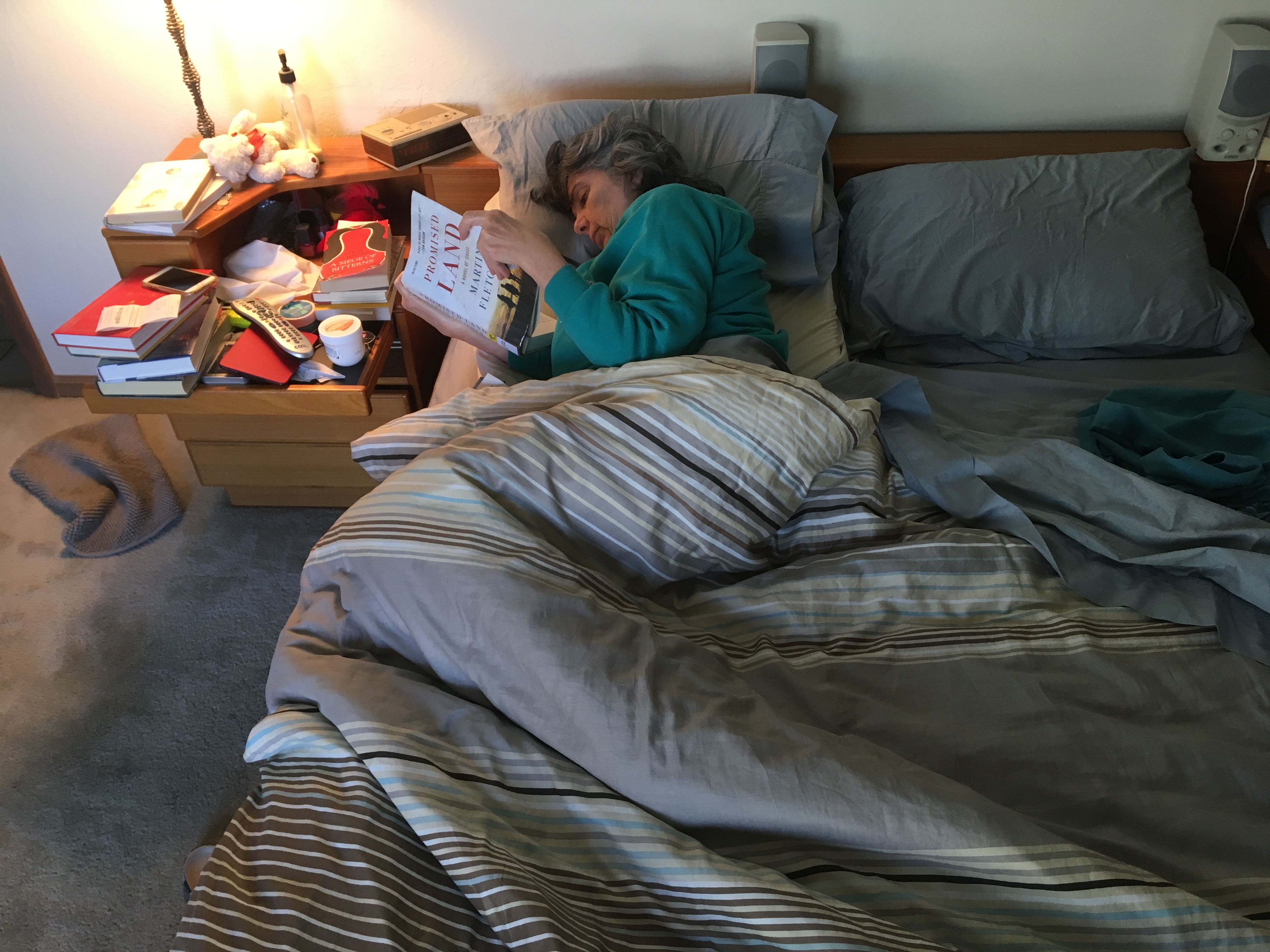
The image at the top left is straight from my iPhone, with all objects across the plane registering in the same depth of field. The larger frame just overhead was rendered using the popular Hipstamatic app, which features a depth-of-field control that can be applied by the same tap-pinch move used by millions for nearly ten years. The effect of the doctored shot is to isolate the subject and her book from the general clutter of the room, suggesting a gauzy dream state as she settles into her chill mode. In inter-plane imagery, even a finished photograph can be re-interpreted endlessly, each “reading” as potentially powerful as a conventionally focused shot, proving, as the best photography always does, that images benefit most from an open approach.
Years after I snapped my first shutter, I try to see myself as being on a journey. Every time I think I’ve arrived at a destination, it’s time to stick out my thumb again.
TABLE FOR ONE
By MICHAEL PERKINS
THE GREAT IRONIC CLICHE OF CITIES is how they smash millions of people together while also keeping them completely isolated from each other, forcing the seeming intersections of lives that, below the surface, are still tragically alienated. Photography, coming of age as it did at roughly the same time as the global rise of cities, became accustomed, early on, with showing both the mad crush and the killing melancholy of these strange streets. We take group shots within which, hidden in plain sight, linger poignant solo portraits. The thrill of learning to speak both messages with a camera in one instant is why we do this thing.
Gray days, especially the fat batch of them I recently harvested in Manhattan, do half of my street photographer’s job for me, deepening colors and shadows in what can quickly become an experiment in underexposure, a lab which, in turn, profoundly alters mood. Things that were somber to begin with become absolutely leaden, with feelings running to extremes on the merest of subjects and forcing every impression through a muted filter. It’s what makes it out the back end of that filter that determines what kind of picture I’ll get.
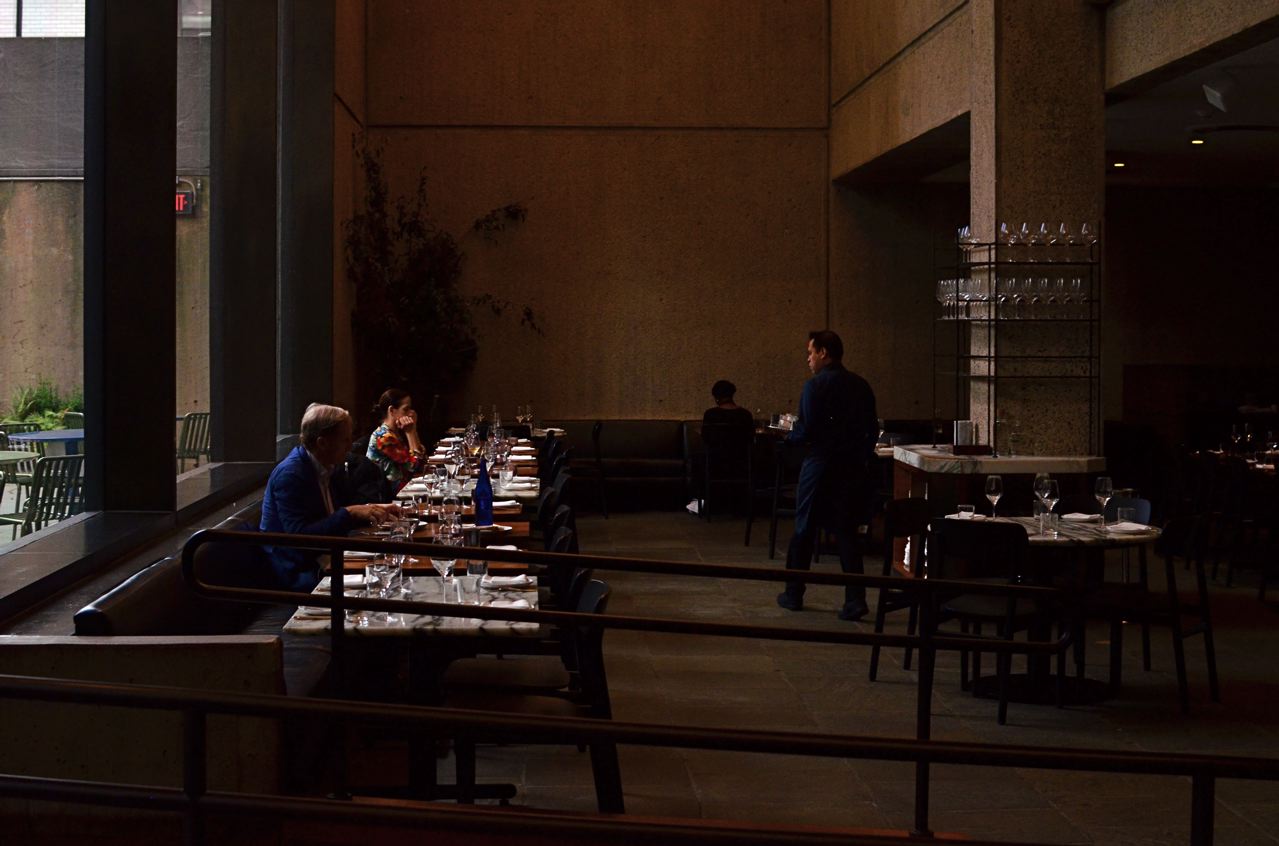
The two diners in this scene are an arbitrary interpretation…..a judgement call that, on a bright day, I might have made completely differently. They are in parallel arrangement, so they both are looking off to the right, never across at each other. Does this make them lonely, or merely alone? The fact that there is one man and one woman in the composition doesn’t necessarily denote desperate or disconnected lives, but isn’t there at least a slight temptation for the viewer to read the image that way? And then there is our habit of seeing this kind of color palette as moody, sad, contemplative. The limited amount of light in the frame, as much as any other element, “tells” us what to feel about the entire scene. Or does it?
Now, of course, if you were to pack a roomful of other photogs into the same room alongside me to shoot the same image under the exact same conditions, you would very likely get a wider variety of readings. One such reading might suggest that both of these people were thoroughly enjoying a pleasant, quiet lunch, part of a lifelong pattern of contented fulfillment. Or not.
Cities are composed of millions of eyes backed by many more millions of inherited viewpoints on what defines big words like lonely, isolated, sad, thoughtful, and so on. But all of us, regardless of approach, are taking the strange city yin/yang of get closer/go away and trying to extract our own meaning from it.
THE TOGGLE
 BY MICHAEL PERKINS
THERE HAS BEEN A PERPETUAL ROMANCE, over the past two hundred years, between the arts of photography and live performance. The camera can’t look away at the magical moments when the transformation of play-acting takes place, and players can’t help inviting the camera to catch them at donning and doffing their various masks. This endless dance produces an infinite number of collisions between the two crafts, teasing miraculous moments from both.
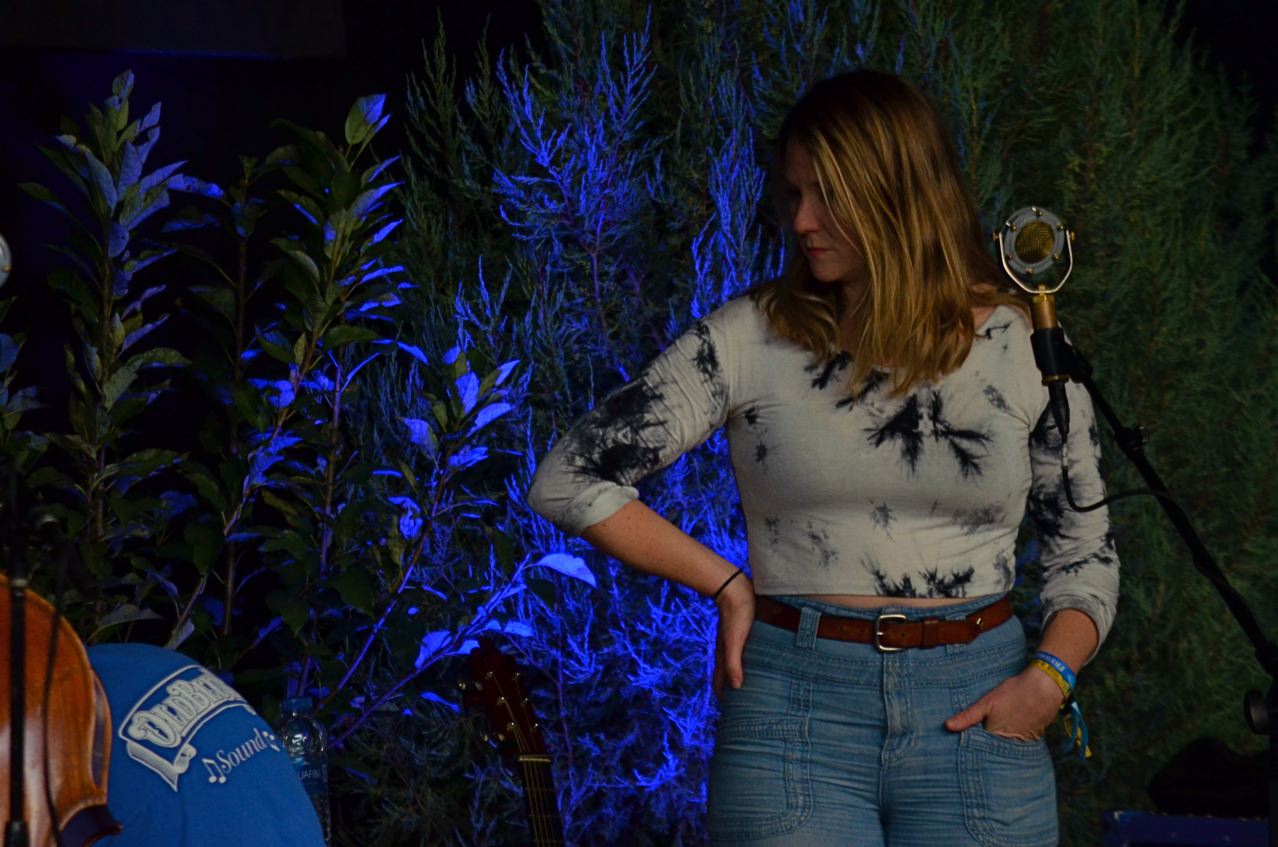
However, when it comes to photographing performers, my perception is that, over decades, the bulk of the images we recall are of the finished product, the final on-stage result of all the unseen practice and prep that precedes showtime. I think this leaves half of the story untold, or at least under-told, because photos of the person that is dominant before the lights go up are no less dramatic, no less revelatory than the persona that springs to life at the opening of the curtain.
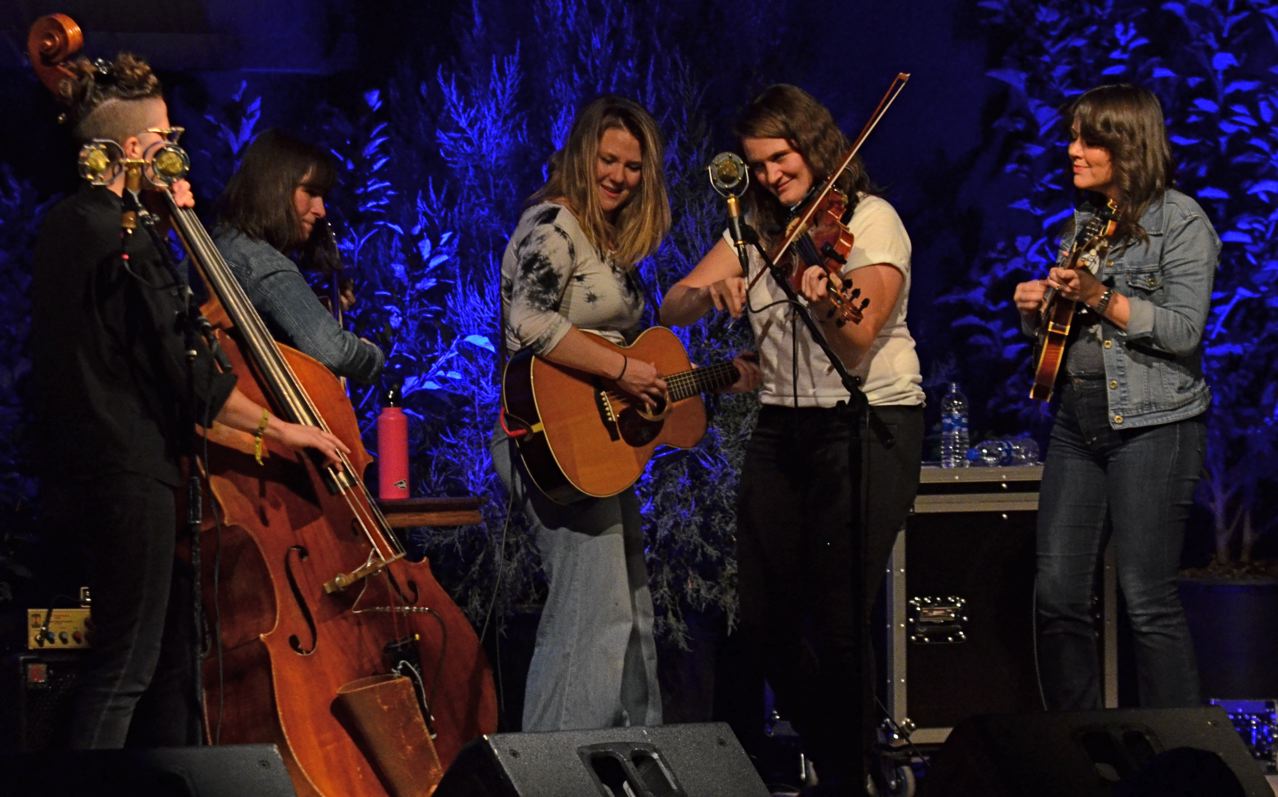
This was all brought home to me anew this week when I had the chance to snap some last-minute sound check shots of Celia Woodsmith, the one-woman power station that is the lead vocalist for the bluegrass-flavored band Della Mae. Like every other member of this all-female troupe, Celia makes a nightly metamorphosis from poet to party girl, worldly-wise dreamer to sassy force of nature, oftimes in the space of a single song. And yet the moments of silent concentration she displays in the last moments before the flag drops (see top image) is itself a profound thing, her face and form encompassing the emotions of every woman, just as her show self does, albeit in a completely different way.
Della Mae is one of the busiest bands in America, careening from weeklong festival gigs in the heartland to State Department-sponsored trips to the world’s hot spots, in years that often find them booked well past the 250-day mark. That’s a ton of transformation from pensive to explosive (see lower image). And the images to be harvested in those moments when performers toggle between selves can be sublime stuff, indeed.
THAT’S THE WAY WE DO IT AROUND HERE
BY MICHAEL PERKINS
“STRANGE” IS IN THE EYE OF THE BEHOLDER, and anytime you and your camera are, in terms of travel, the new kids in town, your time as a street shooter is better spent finding the “weird” things that the locals find….normal. Now, let’s be clear: many times towns will capitalize on their World’s Biggest Ball Of Twine or haunted house tours or such, but that’s just naked capitalism, and everyone deserves to make a fast buck wherever they can. No, the local weirdness you want is something that’s been odd for so long that it’s not only normal to the locals….it’s damn near invisible.
Of course, I concede that one photographer’s instance of Undiscovered Ironic Hipness is another’s Tourist Sucker Bait. This can be an additionally tough call in a town like Portland, Oregon, a town practically marinating in ironic hipness, so the things about the city that recently tickled my fancy may, to real Portlanders, be beneath both notice and contempt. To be sure I was on the right track, I would have to actually be cool, and, sadly, that ship has not only sailed, but it’s struck an iceberg.
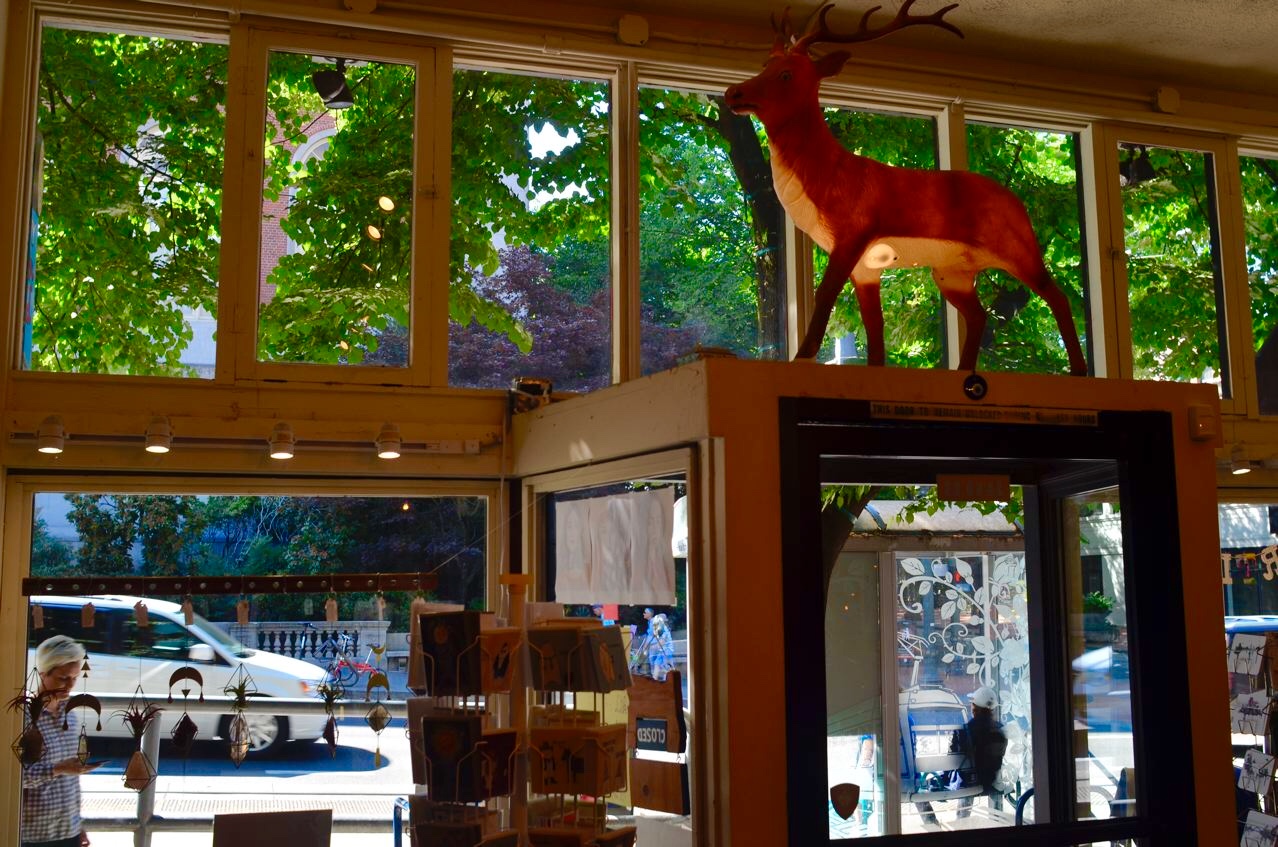
So, in truth, I have no idea if the stag seen here crowning the vestibule of a small area boutique is really freaky or merely play-to-the-visitors freaky. Or both. Hey, this is the city that painted the plea Keep Portland Weird on the whole side of a building (and then turned that phrase into just another way to sell tee shirts). It’s also the city whose visual trademark is a sign featuring a giant leaping neon deer. Soon…as Tower of Power famously sang, “What Is Hip?”
And, again, I repeat, how the hell should I know? My only point is that, when I’m trolling new streets with a camera, I’d rather bypass the sites that the local chamber of commerce is telling me are “points of interest” and try instead to find where the quirkiness truly meets the road…in local shops, bars, neighborhood celebrations, or improvised “traditions” that make a city unforgettable.
Or at least weird.
THE SNARE OF CHEAP REWARD
By MICHAEL PERKINS
SOCIAL NETWORKS HAVE PRODUCED TWO PROFOUND EFFECTS in the world of photography, one essentially beneficial, one essentially harmful. Certainly the ease with which photographs are instantly publishable on every conceivable distribution platform is a boon to communication and art. In one sense, every photographer has the potential to have his/her work seen: the world is now a gallery. However, that very same effortless global forum has the potential to flood the world with images that are ill-conceived, trite, lazy, or just plain banal. The world’s shooters are fully woke, for sure, but the world’s editors have joined the ranks of Rip Van Winkle.
Photographers before the web era were hemmed in by more stringent parameters of quality than is typical of the digital age. In professional circles, editors rejected 90% of a shooter’s work to select the small number of shots that would pass through the narrow neck of available publication platforms. At the same time, cost and technical barriers kept the total number of people who could even be photographers artificially low. The result was an exclusive club limited to only the best people and their best work.
As for the amateur market, people’s good and bad personal pictures had no practical publication platform beyond albums, slide trays and shoeboxes. Good and bad pictures alike seldom traveled beyond one’s own inner circle. Now consider the present landscape: no picture needs remain private or unpublished. Taking pictures is cheap, fast, and technically effortless, as is the kick of instant gratification as we click to make our images the world’s instantaneous and universal property. Equally fast counter-clicks deliver the drug of instant approval through reflexive “likes”, keeping us addicted to the entire feedback loop.
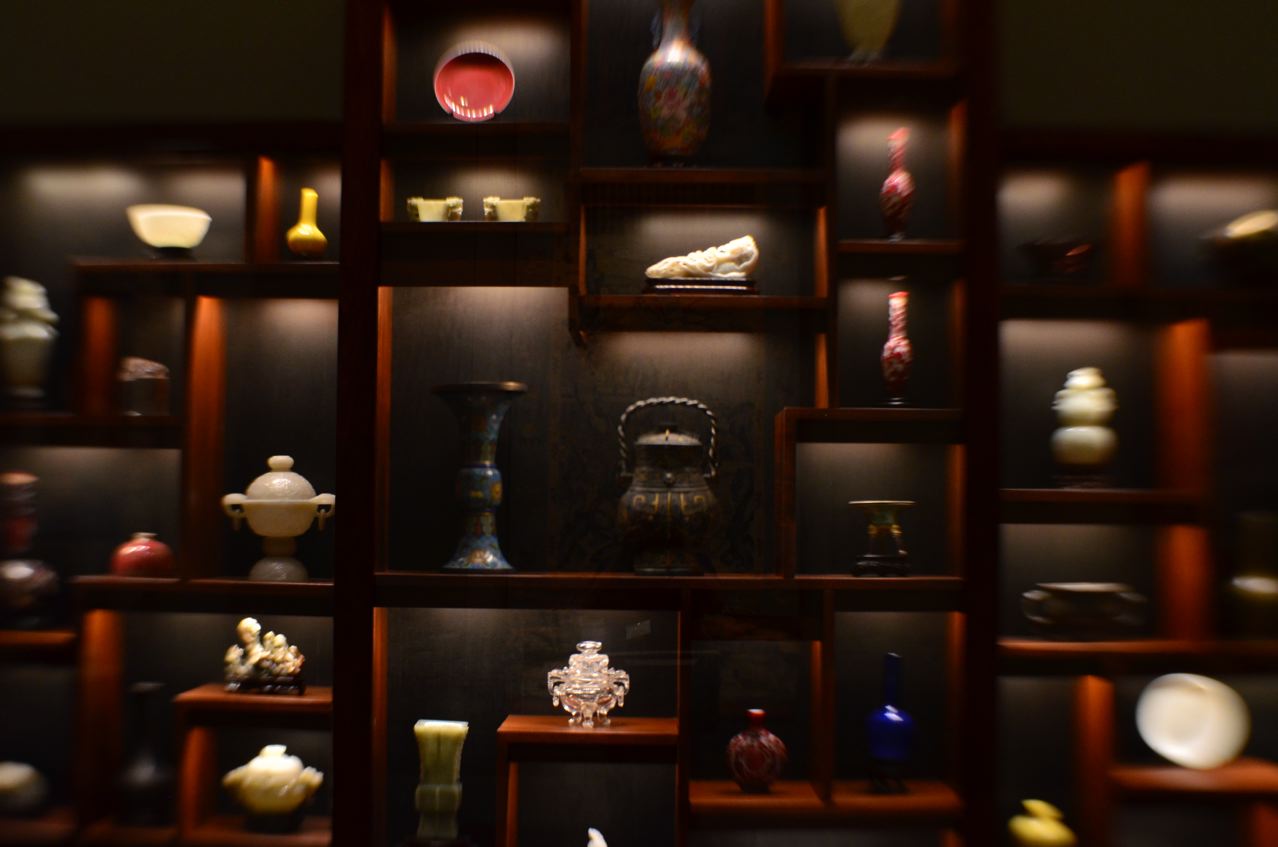
However, just making pictures available does not guarantee that anyone will actually see them. In fact, much of what we’e done on social media is create a vast dumping ground for nearly everything we shoot, a belt of data bits girding the earth like an orbiting loop of space garbage. Art is not improved merely through the generation of tonnage. More is usually less, and even our best work may be hidden in plain sight.
The lifelong perfecting of our own seeing eye, along with a fiercely developed and objective editor’s sensibility, is the only thing that can produce great photographs in an age where excellence and mediocrity are rewarded exactly the same. Social media will continue to snare us with the promise of cheap reward regardless of the quality of our work. The only cure for this slouching toward sloppiness is in ourselves. We need to love ourselves a lot less and love true excellence a lot more.
REFRAMING THE INFINITE
By MICHAEL PERKINS
THE SMARTPHONE–ERA SELFIE, which may comprise the biggest single category in amateur photography, may actually be the worst thing to happen to portraiture since the invention of the flashgun. Make a qualitative pie chart of the general yield. Many are technical misfires which should have been deleted but were not: more are uniformly safe, conforming to an unspoken set of rules on how much of one’s face to crowd into the frame or how “natural” a smile to effect: nearly all fall short of potraiture’s main mission, which is to interpretively reveal new features or new flavors of a familiar subject. The problem with the selfie, finally, is that it’s too important to be entrusted to, well, yourself.
Mainly, it’s a matter of objectivity. Simply, when it comes to evaluating our own faces, we have none. We are untrustworthy narrators. Now, certainly, it sounds counter-intuitive to suggest that others (with cameras!) can know something more of our faces, and what lies behind them, than we ourselves. But we actually only “know” two things about our own surface features: what we believe we look like and what we want to look like. Neither kind of nebulous “knowledge” leads to either accuracy or innovation in the making of a portrait.
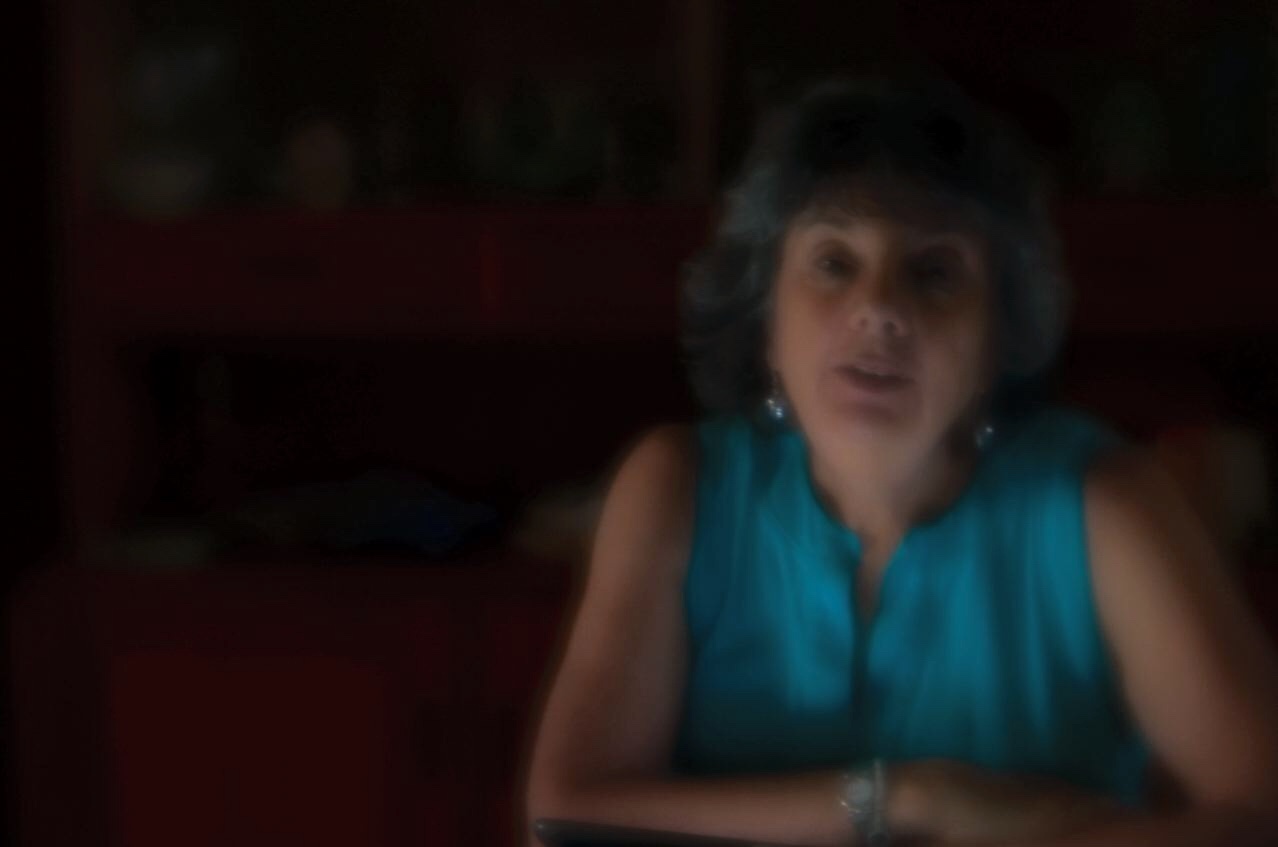
Marian By Maclight (2018)
The answer: outsource the job. For yourself, find someone you trust (not necessarily love) to interpret your face. The evaluative distance gained by reframing your own idea of yourself through others’ eyes far outweighs any minor injury to your vanity. And for others, be that other set of eyes. Of course, as always, these observations are rooted in my own experience, but, really, what else is photography about, anyhow?
To clarify: my wife is a great muse for me, since interpreting her face is an exercise in what I call “reframing the infinite”. Simply put, she is a subject I cannot exhaust, whereas, in self-portraiture, she’s instinctively hemmed in by the what-I-think-I-look-like/what-I-want- to-look-like trap. I can simply see things that she cannot, even though (and this cannot be repeated enough), I’m not even that good.
We’ve all reacted to many a self-portrait with a response that sounds something like get over yourself. However, the precise prescriptive might instead be “get OUTSIDE yourself”. Don’t assume that you’re the lucky, lone photographer born without a blind spot, a perceptual dead zone that includes knowing What’s Best About Your Own Face. Unilaterally banish the selfie? Nope. But ask lots of tough questions.
Especially of yourself.
OF TREASURES AND TORTURES
By MICHAEL PERKINS
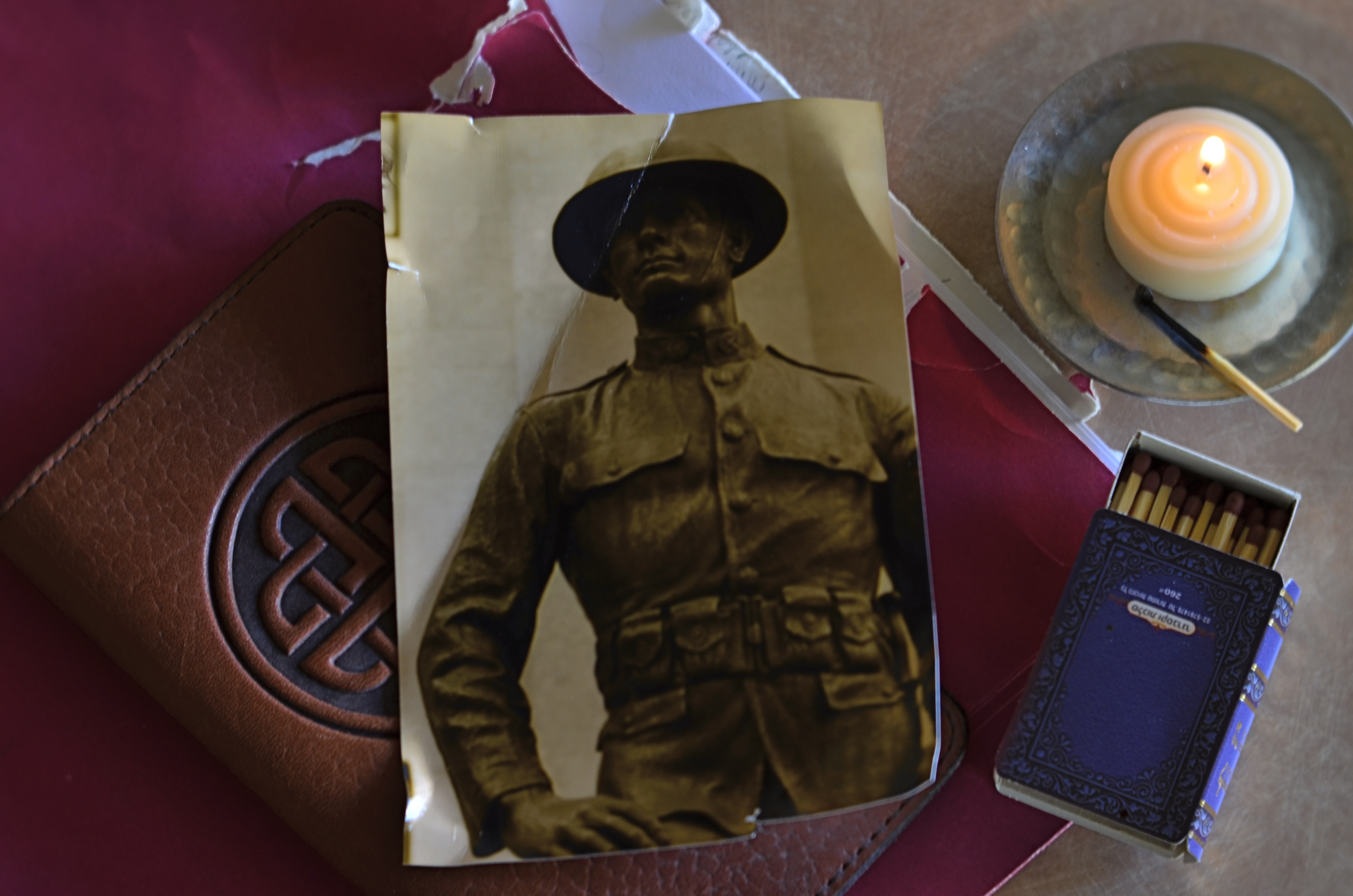
EDWIN M. STANTON, Abraham Lincoln’s Secretary of War, is, regarding photography, in the unique position of having acted both wisely and foolishly following the death of his Commander-in-Chief. Foolishly, because, at the request of the president’s bereaved widow, he reportedly ordered the destruction of the only glass plate negative showing the fallen president lying in state…..and wisely, because he apparently kept a personal print of the image amongst his personal papers, lost to history until a teenage Lincoln afficionado accidentally stumbled upon it in 1952. Stanton’s actions, along with those of the First Lady, betray a very human ambivalence to the camera’s ability to either annihilate or preserve memory, based on one’s viewpoint.
With its power to extract discrete slices of time, the photograph does provide a permanent record for the mournful….but is that comforting, or rather a clinical way of obviating the more personal, if less precise preservation afforded by memory? Did the camera enable us to re-conjure our loved ones at will, or did it deny us the right to keep them in the very private part of our hearts that exists beyond vision?
Essayist and librarian Jean-Noel Jeanneney, writing of the first days of photography, remarked that “the people who lived in the second half of the nineteenth century and the first part of the twentieth are the first in the long history of humanity to be able to see accurate and faithful portraits of their predecessors…..their ancestors are no longer the imagines carried at funeral ceremonies, no longer the painted mementoes devised as aides–memories. Instead, they appear to us as all too horribly true to life: perhaps that is why, today, a greater pathos is attached to our relationship to the departed…..”
The photographer is never merely a chronicler, and so images of the most important people of our experience can never really be mere snapshots. We frame faces in the shadow of our own influence, and time itself re-touches the images years after they are captured. Hence portraiture is never a purely casual act. Mr. Stanton and Mrs. Lincoln were both right, in their own ways. One could not bear the lingering memory of her husband. The other could not endure the idea of a world without his President.
Our last memory of a person may not literally be a shot of them in the coffin, but the impact, many ages on, of even their smallest interactions with this life makes images of them among the most remarkable of human documents. That confers a unique honor, as well as a profound responsibility, upon the photographer.
WE NEVER CLOSE
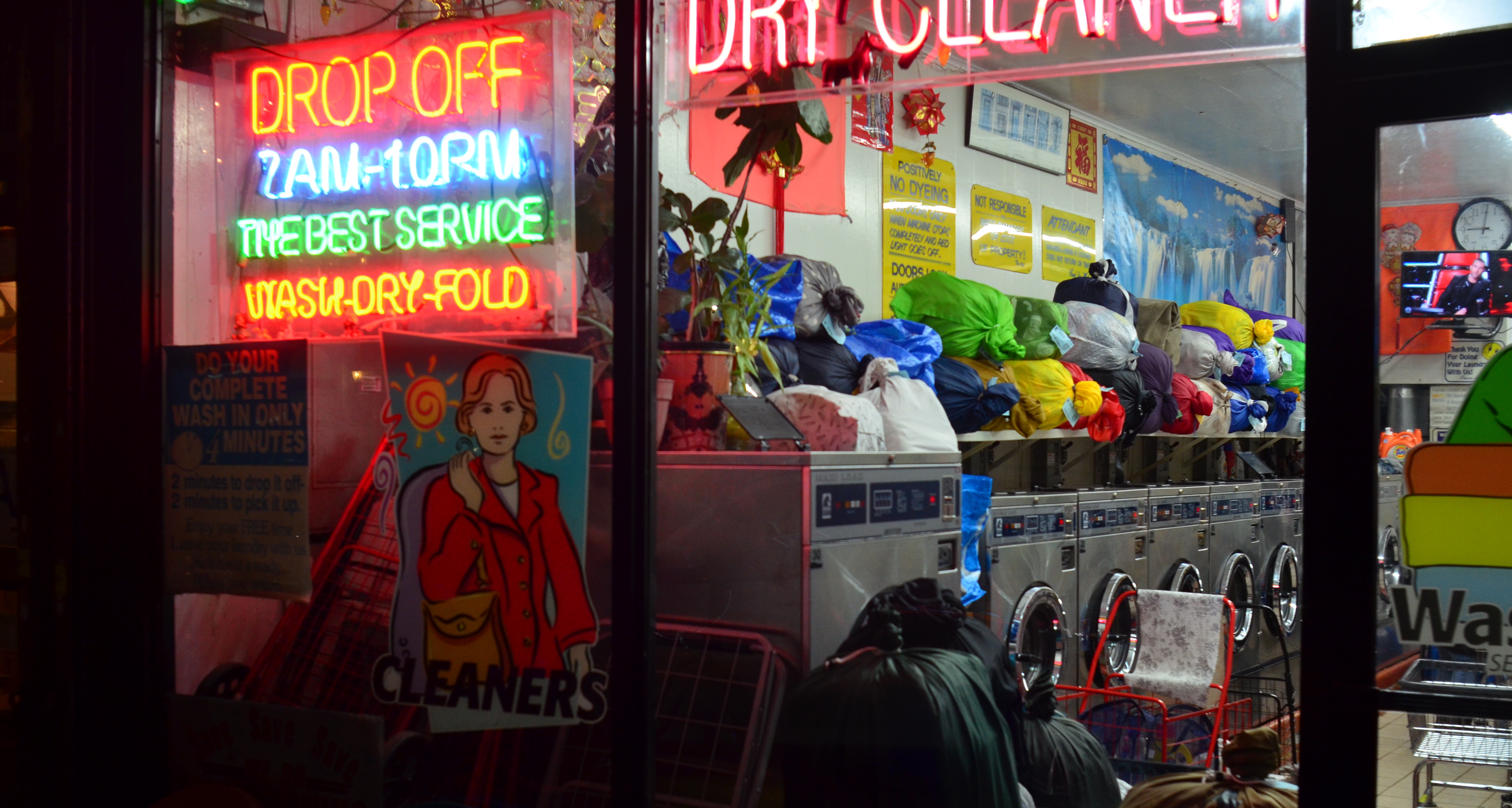
11:30pm, Queens, New York.
By MICHAEL PERKINS
THE DEMIMONDE. The night shift. The third trick. Up with the dawn. Done for the night.
At any given time, some of us are starting our days and heading to work while others are wrapping up their labors and stumbling into bed. Our nights are others’ days, our bustle others’ quiet time. We come at life on the planet from different directions, our suns and moons meeting at the time clock. Wait till coffee break, say some. That’s when things really get going. Hang around till after midnight, say the rest. That’s when this place really start to happen.
Time really comes unmoored in the cities, where our deliveries, destinies and dreams are on all kinds of stop/start cycles. The big town is as photographically alive for the night owls as for the morning glories. People whose days are other people’s nights are forever exotic and strange to each other, the images of their routines as mutually mysterious as the extremes of heat and cold. And always, the same underlying drum beat: got things to do. No day or night, pal: things get done when they get done.
The camera never sleeps because we never close. Open seven days a week, open all night. Last train at midnight, early bird special, full price after six, in by 9, out by 5. Rules of engagement for the breakfast surge, the lunch rush, the dinner crowd. Lives in motion. Pistons rising and falling. Disharmony and sweet accord.
The shutters keep blinking. The moments keep rolling.
24/7.
 thenormaleye
LOVE IS FOR LOSERS
Perfection is not a “product”; it’s a process.
By MICHAEL PERKINS
ONE OF THE MOST REPEATED TROPES IN PHOTOGRAPHIC INSTRUCTION in recent years has been some variant on the “there are no rules” theme, as if all of image-making were some miraculous hybrid of instinct and chance. And while I certainly applaud an attitude of flexibility when it comes to artistic expression, and even allowing for personal preferences for baseline techniques or practices, I would assert that, for nearly all photographers, there is one immutable law, and that is, simply, to allow yourself the opportunity to fail.
Failure is the cheapest and most lasting of educational building blocks. No art happens out of a natural superabundance of talent or taste: it has to be nurtured through the refinement of negative feedback. Even the most advanced AI devices feed off of bad data; evaluating errors, filtering them out, re-designing systems to reject those errors in future iterations. Failure in photography, defined here as “making bad pictures”, is the only correct path to making good ones. There is no technical advancement or ideal toy that can short-cut this process. You simply have to put in the time.
This is means learning to love your losers, to, in fact, have a particular gratitude for the shots you blow. Just as we lament over other mistakes we’ve made in our lives, we naturally linger over our artistic miscalcuations. The mis-read light. The fouled focus. The Compositions From Hell. The gap between what we could see and what we could induce our camera to see. And, most significantly, our own ignorance or life inexperience. Mistakes make us questions things in a way that successes seldom do.
A picture doesn’t even have to be a flat-out flop to gnaw at us, to demand re-takes and re-thinks, as seen in the image above, which neither completely delights or disgusts me, but certainly haunts me. The near misses can sometimes nag us as mercilessly as the missed-by-a-miles. More aggravating still is the fact that some of the very things that drive us mad will totally skate past the casual observer, or even appear to them to be “just fine”. Happily, as we develop, we learn to trust our own eye and dismiss everyone else’s as, well, irrelevant. Buying a more expensive camera, trying to “go with the flow”, following trends….nothing can compete with the slow, gradual, agonizing, and eventually gratifying process of snapping a lot of duds and changing course as we digest what went wrong until the problem is addressed.
The study of photography is fat with experts who swear it’s all about a whole bunch of rules on one end and people on the other extreme who declare that rules are meaningless. The real truth, your truth, is somewhere in between those two poles. But believe this: there is no substitute, formal or otherwise, for doing your homework, loving your losers as if they were wayward children, and working honestly to bring them right.
Share this:
March 28, 2021 | Categories: Uncategorized | Tags: Commentary, Composition, Technique | Leave a comment